Tennessee · freshwater
Fish in Tennessee: what’s worth eating, and what’s garbage
Tennessee is a landlocked reservoir state: TVA and Army Corps lakes such as Kentucky Lake, Old Hickory, Norris and Dale Hollow offer bass, crappie, striped and white bass, walleye, sauger and catfish, and the state fish, the smallmouth bass, holds a world record from Dale Hollow (11 lb 15 oz). Stocked tailwater trout below dams such as Caney Fork and South Holston add a trout fishery that needs a trout supplemental or a license that includes trout.
36 fish rated · limits checked Nov 21, 2026 against TWRA, then re-checked: 444 of 567 details confirmed or corrected on the official pages
Resident $33 Combo Hunt/Fish (ages 16-64), which TWRA calls the minimum license required to fish. Trout need the $21 Annual Trout Supplemental. Full details
Buy a licenseLimits, seasons and size rules from Tennessee Wildlife Resources Agency.
Freshwater limitsSmallmouth bass; Channel catfish
Bobby Wilson Free Fishing Day: Saturday, June 12, 2027, no license needed in public waters, agency lakes and state park facilities. Children 15 and under fish free June 12 to 18, 2027.
The Tennessee table-fare board
Fish Tennessee anglers catch, sorted by how they eat. The bars show how heavily each one is regulated here. Tap a fish for the details.
No limits Light regs Heavy regs No harvest
Best eating16
Just OK17
Garbage fish2
Catch & release
Fish by fish
Why each one sits where it does, the current Tennessee limits, and the bait that works.
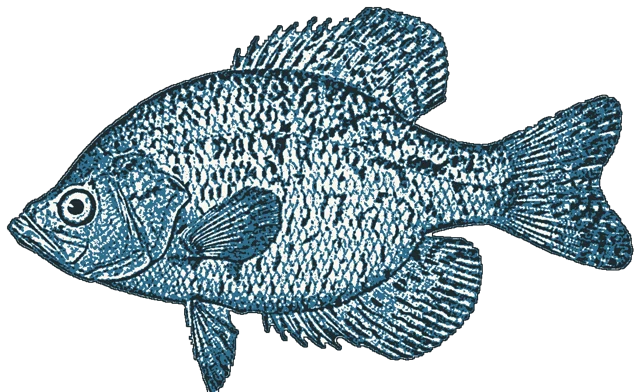
Black crappie
Pomoxis nigromaculatus · Freshwater
One of the classic fish-fry fish: MeatEater counts crappie among the best-eating fish in freshwater.
- Tastes
- mild, sweet, delicate, flaky, white
- Limits
- Light regs. Statewide: 15 per day, all crappie combined, 10 in minimum. Region 1 (West Tennessee) exception unless a water is listed: 30 per day, no minimum. Kentucky Lake, Barkley and Reelfoot: 20 per day, 10 in minimum (Kentucky Lake and Barkley dewatering areas are closed to fishing five days before and during the late waterfowl season); Pickwick and Guntersville (TN): 30 per day, 9 in minimum; Percy Priest, Old Hickory and Cheatham: 30 per day, 10 in minimum; Norris: 10 per day, 10 in minimum; Calderwood: 20 per day, 8 in minimum; Mississippi River: 50 per day, no length limit. Forked Deer, Hatchie, Loosahatchie, Obion and Wolf rivers: 30 per day, no length limit. Other listed waters differ. (2026-27 Tennessee Fishing Guide (eRegulations statewide page last updated Sept. 15, 2026; reservoir pages Sept. 11, 2026)) Source
- Best months
- March to April and October on Center Hill; February to early May on Douglas (TWRA lake pages)
- Where
- TWRA's trophy program has trophy black crappie from 72 locations; the state's Bill Dance Signature Lakes pages name crappie on Reelfoot, Kentucky Lake, Pickwick, Old Hickory, Dale Hollow, Norris, Douglas and Chickamauga.
- live minnows
- small jigs
- tube jigs
- grass shrimp
- small spinners
- Do not eat any fish from the do-not-eat waters on this page, such as McKellar Lake at Memphis.
- Precautionary (children, pregnant women and nursing mothers none, everyone else one meal a month): crappie from Springville Bottom (West Sandy Creek dewatering area, Henry County; mercury), and all fish from stretches of the Emory and Holston rivers and from Mitchell Branch.
- TDEC list, August 2026.
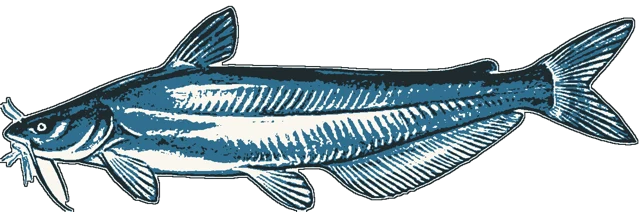
Blue catfish
Ictalurus furcatus · Freshwater
TPWD calls it an excellent food fish; Maryland DNR says blues are very good to eat.
- Tastes
- mild, firm
- Limits
- Light regs. Statewide: only one catfish over 34 in may be kept per day; no limit on catfish 34 in or smaller. Community Fishing Program waters (Cedar Hill Pond, Greenbelt Lake and others): 5 per day, no length limit. South Holston: 20 per day, one over 34 in. Calderwood: no creel or length limit. Beech River lakes: 5 per day, 15 in minimum. Many small lakes and state park lakes: 5 per day. Mississippi River: no limit, only one over 34 in. Other listed waters differ. (2026-27 Tennessee Fishing Guide (eRegulations statewide page last updated Sept. 15, 2026; reservoir pages Sept. 11, 2026)) Source
- Where
- TWRA's trophy program has trophy blue catfish from 49 locations; the Community Fishing Program lists blue and channel catfish at 5 per day.
- cut gizzard shad
- cut skipjack herring
- live shad
- chicken liver
- shrimp
- Large, old blue catfish accumulate contaminants; some water bodies have size-based consumption advisories.
- Do not eat catfish from Fort Loudoun, Melton Hill or the Tennessee River part of Watts Bar, or any fish from the do-not-eat waters on this page, such as the Mississippi River at Memphis.
- Precautionary (children, pregnant women and nursing mothers none, everyone else one meal a month): catfish from Tellico and Woods (do-not-eat on the January 2016 list), the Clinch River arm of Watts Bar with the Emory embayment, Nickajack, Boone, Pickwick, Cheatham, Cherokee, Parksville, Fort Patrick Henry and the Duck River; all fish from stretches of the Emory and Holston rivers and from Mitchell Branch.
- TDEC list, August 2026.
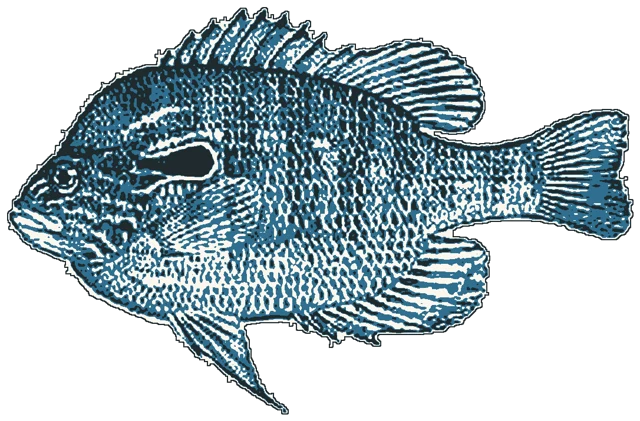
Bluegill
Lepomis macrochirus · also called bream · Freshwater
MeatEater calls the flesh light, delicate and sweet; the original fish-fry panfish.
- Tastes
- mild, sweet, firm, flaky
- Limits
- No limits. Statewide: no creel or length limit (listed as Bluegill and Bream). Listed waters with limits: Norris 30 per day; South Holston 50 per day; Mississippi River 50 per day (sunfish/bream); small state park and fishing lakes 10 to 20 per day with redear in combination (for example Fall Creek Falls Lake 10, Byrd Lake 20). Other reservoirs list "bluegill/warmouth and other sunfishes: no creel or length limit". Other listed waters differ. (2026-27 Tennessee Fishing Guide (eRegulations statewide page last updated Sept. 15, 2026; reservoir pages Sept. 11, 2026)) Source
- Best months
- April to June on Kentucky Lake; full moons in May, June and July on Reelfoot (TWRA lake pages)
- crickets
- earthworms
- mealworms
- wax worms
- little grizzly jig
- small jigs
- Do not eat any fish from the do-not-eat waters listed on this page, such as McKellar Lake and the Mississippi River at Memphis, the North Fork Holston River and the creeks near Oak Ridge.
- Precautionary (children, pregnant women and nursing mothers none, everyone else one meal a month): all fish from listed stretches of the Emory and Holston rivers and from Mitchell Branch.
- TDEC list, August 2026.
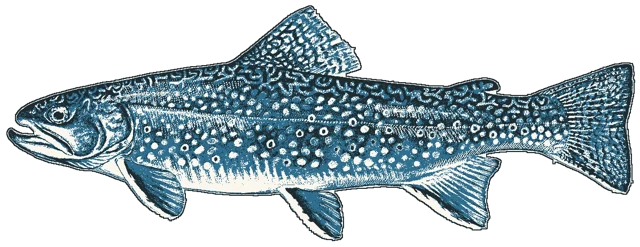
Brook trout
Salvelinus fontinalis · Freshwater
Often called the tastiest trout: MeatEater describes the meat as light and delicate with an almost sweet flavor.
- Tastes
- sweet, delicate, light, delicate
- Limits
- Heavy regs. Statewide: 7 trout per day, all species combined, no minimum length; residents need the trout supplemental on top of a fishing license unless the license includes trout (one-day all-species, junior, senior or sportsman); nonresidents 16 and over use an all-species license. Delayed harvest waters close to harvest and allow only artificial lures in their catch-and-release seasons: Hiwassee River (Apalachia Powerhouse to L&N Railroad Bridge), Tellico River (mouth of North River to state line), Paint Creek and Doe River Oct. 1 to Feb. 28; Buffalo Creek Oct. 1 to Jan. 31; Big Soddy Creek Nov. 1 to Feb. 28; Montgomery Bell Acorn Lake Dec. 1 to Mar. 31. Caney Fork River below Center Hill Dam: 5 per day total. South Fork Holston River and Boone Reservoir: 7 per day, 16 to 22 in slot, only one over 22 in. Clinch River below Norris Dam: 14 to 20 in slot, only one over 20 in. Watauga River quality trout area: 2 per day, 14 in minimum, no bait. Wild trout streams (North River, Bald River and others): 5 per day, single-hook artificial lures only. Gatlinburg permit streams and the Tellico-Citico permit area have their own seasons. Other listed waters differ. Brook trout on the Caney Fork: 5 per day, 14 to 20 in slot, only one over 20 in. (2026-27 Tennessee Fishing Guide (eRegulations trout page last updated Sept. 15, 2026)) Source
- Best months
- Routine stocking: Caney Fork March to December; Hiwassee October to July; Clinch River March to August.
- Where
- Stocked in the Caney Fork, Elk, Hiwassee, Clinch and South Fork Holston (Boone Dam) tailwaters.
- worms
- small spinners
- Do not eat any fish from the do-not-eat waters listed on this page, such as McKellar Lake and the Mississippi River at Memphis, the North Fork Holston River and the creeks near Oak Ridge.
- Precautionary (children, pregnant women and nursing mothers none, everyone else one meal a month): all fish from listed stretches of the Emory and Holston rivers and from Mitchell Branch.
- TDEC list, August 2026.
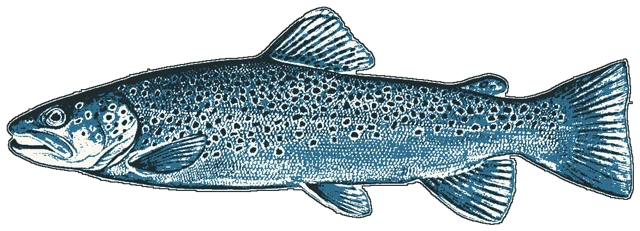
Brown trout
Salmo trutta · Freshwater
Good trout eating like rainbows; most kept browns are stocked fish.
- Tastes
- mild to rich, flaky
- Limits
- Heavy regs. Statewide: 7 trout per day, all species combined, no minimum length; residents need the trout supplemental on top of a fishing license unless the license includes trout (one-day all-species, junior, senior or sportsman); nonresidents 16 and over use an all-species license. Delayed harvest waters close to harvest and allow only artificial lures in their catch-and-release seasons: Hiwassee River (Apalachia Powerhouse to L&N Railroad Bridge), Tellico River (mouth of North River to state line), Paint Creek and Doe River Oct. 1 to Feb. 28; Buffalo Creek Oct. 1 to Jan. 31; Big Soddy Creek Nov. 1 to Feb. 28; Montgomery Bell Acorn Lake Dec. 1 to Mar. 31. Caney Fork River below Center Hill Dam: 5 per day total. South Fork Holston River and Boone Reservoir: 7 per day, 16 to 22 in slot, only one over 22 in. Clinch River below Norris Dam: 14 to 20 in slot, only one over 20 in. Watauga River quality trout area: 2 per day, 14 in minimum, no bait. Wild trout streams (North River, Bald River and others): 5 per day, single-hook artificial lures only. Gatlinburg permit streams and the Tellico-Citico permit area have their own seasons. Other listed waters differ. Brown trout: Caney Fork 1 per day, 24 in minimum; Elk River (Tims Ford Dam to I-65) 1 per day, 20 in minimum; Hiwassee River Mar. 1 to Sept. 30 only 2 of the 7 may be brown trout. (2026-27 Tennessee Fishing Guide (eRegulations trout page last updated Sept. 15, 2026)) Source
- Best months
- Routine stocking: Elk River March to December; Hiwassee October to July; Obey River January to December; Holston River November to April.
- Where
- Caney Fork, Elk, Hiwassee, Obey, Clinch, Holston and South Fork Holston tailwaters.
- nightcrawlers
- spinners
- minnow-imitating flies
- Do not eat any fish from the do-not-eat waters listed on this page, such as McKellar Lake and the Mississippi River at Memphis, the North Fork Holston River and the creeks near Oak Ridge.
- Precautionary (children, pregnant women and nursing mothers none, everyone else one meal a month): all fish from listed stretches of the Emory and Holston rivers and from Mitchell Branch.
- TDEC list, August 2026.
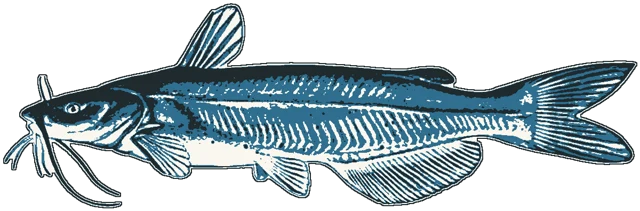
Channel catfish
Ictalurus punctatus · also called spotted cat, fiddler · Freshwater
Very good to eat (Maryland DNR) and delicious when cooked (TPWD), and the basis of US catfish farming.
- Tastes
- mild, sweet, firm, moist
- Limits
- Light regs. Statewide: only one catfish over 34 in may be kept per day; no limit on catfish 34 in or smaller. Community Fishing Program waters (Cedar Hill Pond, Greenbelt Lake and others): 5 per day, no length limit. South Holston: 20 per day, one over 34 in. Calderwood: no creel or length limit. Beech River lakes: 5 per day, 15 in minimum. Many small lakes and state park lakes: 5 per day. Mississippi River: no limit, only one over 34 in. Other listed waters differ. (2026-27 Tennessee Fishing Guide (eRegulations statewide page last updated Sept. 15, 2026; reservoir pages Sept. 11, 2026)) Source
- Best months
- April to June on Center Hill; mid-May to mid-June on Percy Priest (TWRA lake pages)
- Where
- Old Hickory, where the state lists channel catfish among the most popular fish to catch.
- chicken liver
- nightcrawlers
- shrimp
- stinkbait
- cut shad
- cut mullet
- Do not eat catfish from Fort Loudoun, Melton Hill or the Tennessee River part of Watts Bar, or any fish from the do-not-eat waters on this page, such as the Mississippi River at Memphis.
- Precautionary (children, pregnant women and nursing mothers none, everyone else one meal a month): catfish from Tellico and Woods (do-not-eat on the January 2016 list), the Clinch River arm of Watts Bar with the Emory embayment, Nickajack, Boone, Pickwick, Cheatham, Cherokee, Parksville, Fort Patrick Henry and the Duck River; channel catfish from Watauga and the lower Nolichucky and Pigeon rivers; all fish from stretches of the Emory and Holston rivers and from Mitchell Branch.
- TDEC list, August 2026.
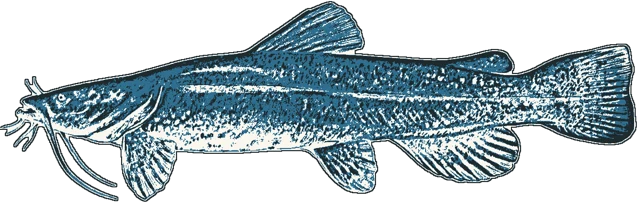
Flathead catfish
Pylodictis olivaris · Freshwater
Widely considered the best-tasting catfish because it eats live fish instead of scavenging; Maryland DNR notes its mild, white flesh.
- Tastes
- mild, clean, firm, white
- Limits
- Light regs. Statewide: only one catfish over 34 in may be kept per day; no limit on catfish 34 in or smaller. South Holston: 20 per day, one over 34 in. Calderwood: no creel or length limit. Beech River lakes: 5 per day, 15 in minimum. Several small lakes and state park lakes: 5 per day for all catfish (others name blue and channel catfish only). Mississippi River: no limit, only one over 34 in. Other listed waters differ. (2026-27 Tennessee Fishing Guide (eRegulations statewide page last updated Sept. 15, 2026; reservoir pages Sept. 11, 2026)) Source
- Where
- TWRA lake pages name flathead catfish on Old Hickory (large flatheads in the Cumberland River channel off Spencer, Station Camp, Cedar, Bledsoe and Drakes creeks), Kentucky Lake, Center Hill, Cordell Hull, Chickamauga and Normandy.
- skipjack herring
- gizzard shad
- threadfin shad
- live or cut bait
- Do not eat catfish from Fort Loudoun, Melton Hill or the Tennessee River part of Watts Bar, or any fish from the do-not-eat waters on this page, such as the Mississippi River at Memphis.
- Precautionary (children, pregnant women and nursing mothers none, everyone else one meal a month): catfish from Tellico and Woods (do-not-eat on the January 2016 list), the Clinch River arm of Watts Bar with the Emory embayment, Nickajack, Boone, Pickwick, Cheatham, Cherokee, Parksville, Fort Patrick Henry and the Duck River; all fish from stretches of the Emory and Holston rivers and from Mitchell Branch.
- TDEC list, August 2026.
Hybrid striped bass
Morone saxatilis x M. chrysops · also called Cherokee bass · Freshwater
Indiana DNR says hybrids make great table fare; mild white fillets like a striper's.
- Tastes
- mild, firm, white
- Limits
- Heavy regs. Statewide: 2 per day, striped and hybrid striped bass in any combination, 15 in minimum. Cordell Hull and Melton Hill: striped bass 32 to 42 in slot, only one over 42 in; hybrids 15 in minimum. Watts Bar: Apr. 1 to Oct. 31, 2 per day, 15 in minimum; Nov. 1 to Mar. 31, 2 per day with only one a striped bass, striped bass 36 in minimum. Norris: the seasonal rule there (1 per day, 36 in minimum Nov. 1 to Mar. 31) is listed for striped bass; hybrids are not named. Boone: 2 per day combined, only one a striped bass, striped bass 1 per day, 36 in minimum; hybrids 15 in minimum. Mississippi River: 6 per day, no length limit. Douglas: white, striped and hybrid bass 15 per day combined, no length limit. Other listed waters differ. (2026-27 Tennessee Fishing Guide (eRegulations statewide page last updated Sept. 15, 2026; reservoir pages Sept. 11, 2026)) Source
- Best months
- Summer on Percy Priest, when hybrids hold in the lower lake (TWRA lake page)
- Where
- Reservoirs with hybrid rules include Cordell Hull, Melton Hill, Watts Bar (do not eat from the Tennessee River part), Boone and Chickamauga.
- live shad
- bucktail jigs
- jigging spoons
- Do not eat hybrid striped bass from the Tennessee River part of Watts Bar (Watts Bar Dam to Fort Loudoun Dam), or any fish from the do-not-eat waters on this page.
- Precautionary (children, pregnant women and nursing mothers none, everyone else one meal a month): all fish from stretches of the Emory and Holston rivers and from Mitchell Branch, and the Big Sandy River with its embayment and the East Fork Stones River, where TDEC says "all bass species".
- TDEC list, August 2026.
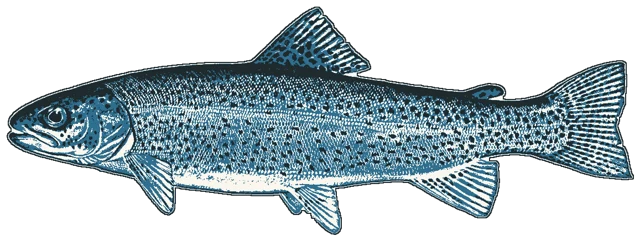
Rainbow trout
Oncorhynchus mykiss · Freshwater
TPWD calls rainbow trout an excellent fish to eat; the most-stocked put-and-take fish in America.
- Tastes
- mild, clean, delicate, flaky
- Limits
- Heavy regs. Statewide: 7 trout per day, all species combined, no minimum length; residents need the trout supplemental on top of a fishing license unless the license includes trout (one-day all-species, junior, senior or sportsman); nonresidents 16 and over use an all-species license. Delayed harvest waters close to harvest and allow only artificial lures in their catch-and-release seasons: Hiwassee River (Apalachia Powerhouse to L&N Railroad Bridge), Tellico River (mouth of North River to state line), Paint Creek and Doe River Oct. 1 to Feb. 28; Buffalo Creek Oct. 1 to Jan. 31; Big Soddy Creek Nov. 1 to Feb. 28; Montgomery Bell Acorn Lake Dec. 1 to Mar. 31. Caney Fork River below Center Hill Dam: 5 per day total. South Fork Holston River and Boone Reservoir: 7 per day, 16 to 22 in slot, only one over 22 in. Clinch River below Norris Dam: 14 to 20 in slot, only one over 20 in. Watauga River quality trout area: 2 per day, 14 in minimum, no bait. Wild trout streams (North River, Bald River and others): 5 per day, single-hook artificial lures only. Gatlinburg permit streams and the Tellico-Citico permit area have their own seasons. Other listed waters differ. Rainbow on the Caney Fork: 5 per day, 14 to 20 in slot, only one over 20 in. (2026-27 Tennessee Fishing Guide (eRegulations trout page last updated Sept. 15, 2026)) Source
- Best months
- TWRA says trout fishing can be good year-round in many tailwaters; routine stocking is March to December (Caney Fork, Watauga), January to December (Obey River), March to September (South Holston) and November to April (Holston River).
- Where
- Tailwaters below Normandy, Tims Ford, Percy Priest, Center Hill, Apalachia, Dale Hollow, Ocoee, Norris, Cherokee, Boone, Ft. Patrick Henry, South Holston and Wilbur dams, plus Gatlinburg streams and wild streams.
- nightcrawlers
- salmon eggs
- corn
- inline spinners
- small spoons
- Do not eat any fish from the do-not-eat waters listed on this page, such as McKellar Lake and the Mississippi River at Memphis, the North Fork Holston River and the creeks near Oak Ridge.
- Precautionary (children, pregnant women and nursing mothers none, everyone else one meal a month): all fish from listed stretches of the Emory and Holston rivers and from Mitchell Branch.
- TDEC list, August 2026.
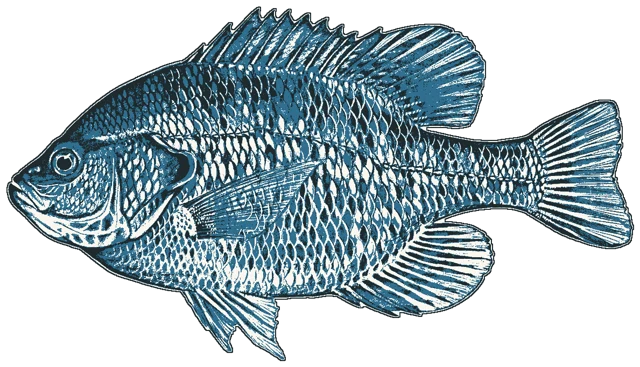
Redear sunfish
Lepomis microlophus · also called shellcracker · Freshwater
Larger than bluegill, with the same sweet fillets; Indiana DNR calls sunfish, redear included, delicious fish.
- Tastes
- mild, sweet, firm, flaky
- Limits
- Light regs. Statewide: 20 per day, no length limit. Calderwood: no creel or length limit. Small lakes and state park lakes with bluegill/redear in combination: 10 to 20 per day depending on lake. Other listed waters differ. (2026-27 Tennessee Fishing Guide (eRegulations statewide page last updated Sept. 15, 2026; reservoir pages Sept. 11, 2026)) Source
- Best months
- April to June on Kentucky Lake; around May on Dale Hollow (TWRA lake pages)
- Where
- Reservoir pages list redear at 20 per day on Kentucky Lake, Barkley, Pickwick, Old Hickory, Center Hill, Watts Bar, Norris and others.
- nightcrawlers
- mill worms
- catawba worms
- crickets
- wax worms
- small jigs
- Do not eat any fish from the do-not-eat waters listed on this page, such as McKellar Lake and the Mississippi River at Memphis, the North Fork Holston River and the creeks near Oak Ridge.
- Precautionary (children, pregnant women and nursing mothers none, everyone else one meal a month): all fish from listed stretches of the Emory and Holston rivers and from Mitchell Branch.
- TDEC list, August 2026.
Sauger
Sander canadensis · Freshwater
The walleye's smaller river cousin, with the same fillets; MeatEater says they taste just as good.
- Tastes
- mild, clean, firm, flaky white
- Limits
- Light regs. Statewide: sauger and sauger/walleye hybrids 10 per day, 15 in minimum. Mississippi River: 6 per day, no length limit. Calderwood: 8 per day, 15 in minimum. French Broad and Pigeon rivers: no minimum, only one over 16 in, 5 per day with walleye. Douglas: 5 per day with walleye, no minimum, only one over 16 in per day. Cherokee and Tellico: combined walleye/sauger limits of 10 per day. Norris upstream to Grissom Island: 5 per day with walleye, 15 in. Other listed waters differ. (2026-27 Tennessee Fishing Guide (eRegulations statewide page last updated Sept. 15, 2026; reservoir pages Sept. 11, 2026)) Source
- Best months
- December to March on Kentucky Lake; January to March on Old Hickory; winter on Cordell Hull (TWRA lake pages)
- Where
- Old Hickory, which TWRA's trophy program ranks number one for sauger; the state points anglers to the upper lake from Hunter's Point to Cordell Hull Dam, January through March. Kentucky Lake, Pickwick, Barkley, Chickamauga and Watts Bar also have sauger rules.
- minnow-tipped jigs
- Lindy rigs with a minnow
- hair jigs
- shad-style crankbaits
- Do not eat any fish from the do-not-eat waters on this page.
- Precautionary (children, pregnant women and nursing mothers none, everyone else one meal a month): Watts Bar (the Tennessee River part and the Clinch River arm), Norris (Clinch River arm), and all fish from stretches of the Emory and Holston rivers and from Mitchell Branch.
- TDEC list, August 2026.
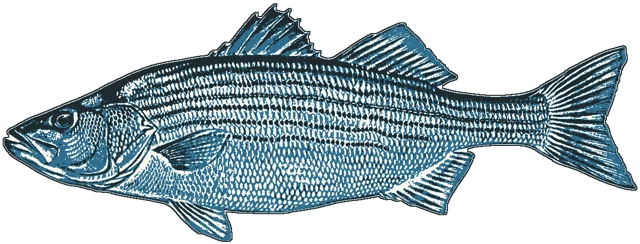
Striped bass
Morone saxatilis · also called rockfish · Freshwater
Firm, large-flaked, slightly sweet white meat; one of the most kept and eaten gamefish in the country, fresh or salt.
- Tastes
- mild, slightly sweet, firm, large flakes
- Limits
- Heavy regs. Statewide: 2 per day, striped and hybrid striped bass in any combination, 15 in minimum. Cordell Hull and Melton Hill: striped bass 32 to 42 in slot, only one over 42 in; hybrids 15 in minimum. Watts Bar: Apr. 1 to Oct. 31, 2 per day, 15 in minimum; Nov. 1 to Mar. 31, 2 per day with only one a striped bass, striped bass 36 in minimum. Norris: Apr. 1 to Oct. 31, 2 per day, 15 in minimum; Nov. 1 to Mar. 31, 1 per day, 36 in minimum. Boone: 2 per day combined, only one a striped bass, striped bass 1 per day, 36 in minimum. Mississippi River: 6 per day, no length limit. Douglas: white, striped and hybrid bass 15 per day combined, no length limit. Other listed waters differ. (2026-27 Tennessee Fishing Guide (eRegulations statewide page last updated Sept. 15, 2026; reservoir pages Sept. 11, 2026)) Source
- Best months
- Winter on Cordell Hull; May near Carthage on Old Hickory; year-round on Norris (TWRA lake pages)
- Where
- Old Hickory, Norris and Tims Ford, which the state lists as striped bass lakes; TWRA sets its own striped bass rules on Cordell Hull, Watts Bar (do not eat from the lake), Melton Hill, Boone and Norris.
- live shad
- live eels (coastal)
- cut bait
- bucktail jig
- silver spoon
- swimbait
- Consumption advisories for striped bass vary from state to state (NOAA).
- Do not eat striped bass from Watts Bar (the Tennessee River part, and the Clinch River arm up to Melton Hill Dam with the Emory River embayment), or any fish from the do-not-eat waters on this page.
- Precautionary (children, pregnant women and nursing mothers none, everyone else one meal a month): Norris (Clinch River arm, Powell River to Indian Creek), all fish from stretches of the Emory and Holston rivers and from Mitchell Branch, and the Big Sandy River with its embayment and the East Fork Stones River, where TDEC says "all bass species".
- TDEC list, August 2026.
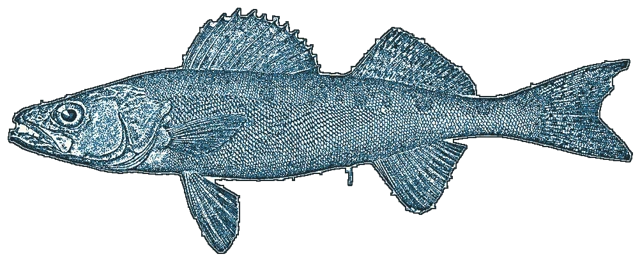
Walleye
Sander vitreus · Freshwater
Widely rated the best-eating freshwater fish: Maryland DNR calls it one of the best tasting, TPWD an excellent food fish.
- Tastes
- mild, clean, firm, tender, flaky white
- Limits
- Heavy regs. Statewide: 5 per day, 16 in minimum. East Fork Obey River (Dale Hollow), Compton boat ramp up to the Highway 52 bridge: 5 per day, 16 in minimum, only one over 20 in (listed with the Jan. 1 to Apr. 15 walleye-run hook rule). South Holston, Watauga and Ft. Patrick Henry: 18 in minimum. Douglas, French Broad and Pigeon rivers: walleye 15 in minimum, walleye and sauger 5 per day combined. Cherokee: walleye/sauger/saugeye 10 per day combined, 15 in minimum. Tellico: 10 per day walleye and sauger combined, no more than 5 walleye, 15 in minimum, one walleye may be 24 in or larger. Norris upstream to Grissom Island: walleye/sauger 5 per day combined, 15 in minimum. Calderwood: 8 per day, no length limit. Other listed waters differ. (2026-27 Tennessee Fishing Guide (eRegulations statewide page last updated Sept. 15, 2026; reservoir pages Sept. 11, 2026)) Source
- Where
- Center Hill, Dale Hollow, Cordell Hull, Old Hickory, Norris, Watts Bar, Cherokee, Douglas and Kentucky Lake have walleye rules.
- nightcrawlers
- live minnows
- leeches
- jig and minnow
- crawler harness
- crankbaits
- Do not eat any fish from the do-not-eat waters on this page.
- Precautionary (children, pregnant women and nursing mothers none, everyone else one meal a month): walleye 19 inches and larger from Center Hill (TDEC, May 2025), any walleye from Dale Hollow (mercury), and all fish from stretches of the Emory and Holston rivers and from Mitchell Branch.
- Where black bass are listed, TDEC says walleye may be high too.
- TDEC list, August 2026.
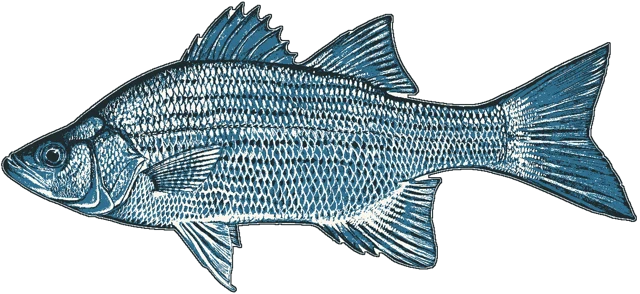
White bass
Morone chrysops · Freshwater
Texas Parks & Wildlife calls white bass superb table fare, and the spring runs fill a lot of coolers; light, flaky meat like walleye.
- Tastes
- mild, light, flaky
- Limits
- Light regs. Statewide: 15 per day, no length limit. Mississippi River: 30 per day, no length limit. Calderwood: 10 per day, 14 in minimum. South Holston: no harvest allowed. Douglas: white, striped and hybrid bass 15 per day combined. Other listed waters differ. (2026-27 Tennessee Fishing Guide (eRegulations statewide page last updated Sept. 15, 2026; reservoir pages Sept. 11, 2026)) Source
- Best months
- January to April on Douglas; March and April on Percy Priest; April and May on Old Hickory (TWRA lake pages)
- Where
- Old Hickory, where the state lists white bass among the most popular fish to catch.
- live minnows
- slab spoon
- inline spinner
- small crankbait
- small topwater
- Do not eat any fish from the do-not-eat waters on this page, such as the Mississippi River at Memphis.
- Precautionary (children, pregnant women and nursing mothers none, everyone else one meal a month): the Tennessee River part of Watts Bar, all fish from stretches of the Emory and Holston rivers and from Mitchell Branch, and the Big Sandy River with its embayment and the East Fork Stones River, where TDEC says "all bass species".
- TDEC list, August 2026.
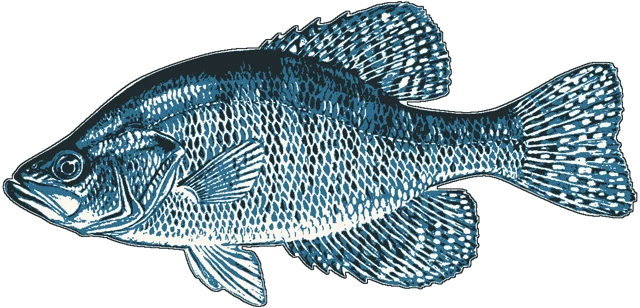
White crappie
Pomoxis annularis · Freshwater
Same top-tier panfish fillets as black crappie; one of the most popular panfish in the country.
- Tastes
- mild, sweet, delicate, flaky, white
- Limits
- Light regs. Statewide: 15 per day, all crappie combined, 10 in minimum. Region 1 (West Tennessee) exception unless a water is listed: 30 per day, no minimum. Kentucky Lake, Barkley and Reelfoot: 20 per day, 10 in minimum (Kentucky Lake and Barkley dewatering areas are closed to fishing five days before and during the late waterfowl season); Pickwick and Guntersville (TN): 30 per day, 9 in minimum; Percy Priest, Old Hickory and Cheatham: 30 per day, 10 in minimum; Norris: 10 per day, 10 in minimum; Calderwood: 20 per day, 8 in minimum; Mississippi River: 50 per day, no length limit. Forked Deer, Hatchie, Loosahatchie, Obion and Wolf rivers: 30 per day, no length limit. Other listed waters differ. (2026-27 Tennessee Fishing Guide (eRegulations statewide page last updated Sept. 15, 2026; reservoir pages Sept. 11, 2026)) Source
- Best months
- March to April and October on Center Hill; February to early May on Douglas (TWRA lake pages)
- Where
- TWRA's trophy program calls Kentucky Lake prime for white crappie and has trophies from 86 locations; the state's Bill Dance Signature Lakes pages name crappie on Reelfoot, Kentucky Lake, Pickwick, Old Hickory, Dale Hollow, Norris, Douglas and Chickamauga.
- live minnows
- small jigs
- tube jigs
- small spinners
- Do not eat any fish from the do-not-eat waters on this page, such as McKellar Lake at Memphis.
- Precautionary (children, pregnant women and nursing mothers none, everyone else one meal a month): crappie from Springville Bottom (West Sandy Creek dewatering area, Henry County; mercury), and all fish from stretches of the Emory and Holston rivers and from Mitchell Branch.
- TDEC list, August 2026.
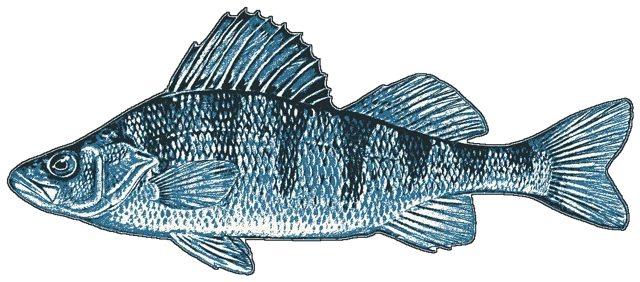
Yellow perch
Perca flavescens · Freshwater
A great food fish (MN DNR) and the centerpiece of Great Lakes perch fries; Iowa DNR calls a fried stringer of perch unsurpassed in flavor.
- Tastes
- mild, sweet, firm, flaky, white
- Limits
- No limits. Statewide: no creel or length limit. Parksville and Chilhowee: 15 per day, no length limit. Other listed waters differ. (2026-27 Tennessee Fishing Guide (eRegulations statewide page last updated Sept. 15, 2026; reservoir pages Sept. 11, 2026)) Source
- Where
- Parksville and Chilhowee list a perch limit.
- worms
- small minnows
- small jigs tipped with maggots or perch eyes
- grubs
- tubes
- Do not eat any fish from the do-not-eat waters listed on this page, such as McKellar Lake and the Mississippi River at Memphis, the North Fork Holston River and the creeks near Oak Ridge.
- Precautionary (children, pregnant women and nursing mothers none, everyone else one meal a month): all fish from listed stretches of the Emory and Holston rivers and from Mitchell Branch.
- TDEC list, August 2026.
Alabama bass
Micropterus henshalli · Freshwater
Edible black bass that agencies outside its native range want anglers to keep: North Carolina removed all size and creel limits so anglers can harvest unlimited numbers.
- Limits
- Heavy regs. Statewide: part of the 5 black bass per day combined limit, no minimum length. Pickwick, Watts Bar, Ft. Loudoun, Tellico and Chilhowee: 15 in minimum for all black bass. Norris: spotted/Alabama bass no creel or length limit. Cherokee: spotted/Alabama bass 15 per day, no length limit. Chickamauga, Nickajack, Guntersville (TN): no minimum for smallmouth, spotted, Alabama and hybrids, only one over 16 in per day. Parksville: no creel or minimum for smallmouth, spotted, Alabama and hybrids, and no black bass may be taken away alive. Other listed waters differ. Live fish may not be intentionally released into Tennessee waters away from where they were harvested. (2026-27 Tennessee Fishing Guide (eRegulations statewide page last updated Sept. 15, 2026; reservoir pages Sept. 11, 2026)) Source
- Where
- TWRA says Alabama bass, an invasive species here, are in waters including Ft. Loudoun, Tellico, Watts Bar, Chickamauga, Nickajack, Pickwick and Kentucky reservoirs.
- crankbaits
- jerkbaits
- float-n-fly
- topwater lures
- plastic worms
- jigs
- Do not eat any fish from the do-not-eat waters on this page.
- Precautionary (children, pregnant women and nursing mothers none, everyone else one meal a month): all bass from the Big Sandy River and embayment and the East Fork Stones River; black bass from Center Hill, Dale Hollow, Cherokee, Normandy, Chilhowee, Cheatham (Nashville stretch), Springville Bottom, the Nolichucky, and stretches of the Duck, French Broad, Little and Hatchie rivers; all fish from stretches of the Emory and Holston rivers and from Mitchell Branch.
- Most black bass rows name largemouth, smallmouth and spotted bass, and TDEC says other bass there may be high too.
- TDEC list, August 2026.
Alligator gar
Atractosteus spatula · Freshwater
The gar people actually keep for meat in Texas and Louisiana, but it is armored, hard to clean and still widely seen as trash.
Worth a try: Cut down the back with shears or a hatchet to get past the armored scales, take the two white backstraps, and fry them or grind them into Louisiana gar balls.
- Tastes
- mild, firm, lean, stringy in large fish
- Limits
- No harvest. Statewide: no harvest allowed; must be returned to the water immediately. Gigging, grabbling, snagging and similar methods also may not take alligator gar. (2026-27 Tennessee Fishing Guide (eRegulations statewide page last updated Sept. 15, 2026; reservoir pages Sept. 11, 2026)) Source
- Gar eggs (roe) are toxic to people and other warm-blooded animals; never eat them (Maryland DNR).
Bigmouth buffalo
Ictiobus cyprinellus · Freshwater
A food fish many people consider worth keeping despite its many bones (TPWD), but and rarely caught on hook and line, so most anglers write it off as a rough fish.
Worth a try: TPWD says many people consider it quite a food fish despite its many bones; smoke it, or fry the rib sections.
- Tastes
- mild, rich, firm, bony
- Limits
- No limits. No statewide limit listed for buffalo by name; the statewide page lists "nongame species" at no limit. (2026-27 Tennessee Fishing Guide (eRegulations statewide page last updated Sept. 15, 2026; reservoir pages Sept. 11, 2026)) Source
- dough baits (cottonseed meal)
- bowfishing
- Do not eat any fish from the do-not-eat waters listed on this page, such as McKellar Lake and the Mississippi River at Memphis, the North Fork Holston River and the creeks near Oak Ridge.
- Precautionary (children, pregnant women and nursing mothers none, everyone else one meal a month): all fish from listed stretches of the Emory and Holston rivers and from Mitchell Branch.
- TDEC list, August 2026.
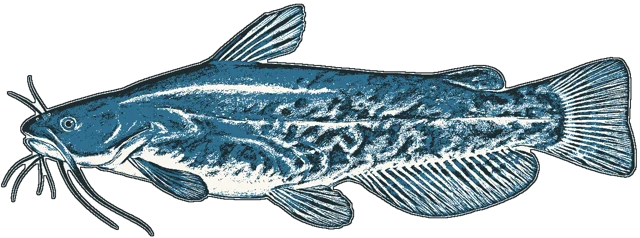
Bullhead (black, brown, yellow)
Ameiurus melas, A. nebulosus, A. natalis · Freshwater
Sweet, delicious catfish meat, but most are small and many come from warm, muddy water, so many anglers dismiss them.
- Tastes
- mild, sweet, firm, moist
- Limits
- No limits. Statewide: no creel or length limit for bullheads. State park lakes without their own rule list catfish at 5 per day; the page does not say whether bullheads count. (2026-27 Tennessee Fishing Guide (eRegulations statewide page last updated Sept. 15, 2026; reservoir pages Sept. 11, 2026)) Source
- nightcrawlers
- chicken livers
- dough balls
- cut bait
- stinkbait
- Do not eat any fish from the do-not-eat waters listed on this page, such as McKellar Lake and the Mississippi River at Memphis.
- TDEC's list says "catfish" without saying whether bullheads count; treat them as catfish and do not eat them from Fort Loudoun, Melton Hill or the Tennessee River part of Watts Bar.
- Precautionary (children, pregnant women and nursing mothers none, everyone else one meal a month): all fish from listed stretches of the Emory and Holston rivers and from Mitchell Branch, and the waters listed for blue catfish.
- TDEC list, August 2026.
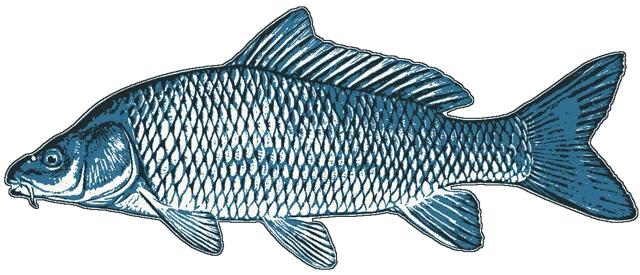
Common carp
Cyprinus carpio · Freshwater
Most US anglers call it a muddy, bony trash fish, but it is a prized food fish in Europe and Asia and eats well from clean, cold water.
Worth a try: Catch from clean water, remove the dark 'mud vein', and either score small fish and fry hard so the Y-bones soften, or hard-smoke large fish over fruitwood (Hank Shaw).
- Tastes
- mild from clean water, strong from muddy water, firm, fatty, Y-bones
- Limits
- No limits. No statewide limit listed for common carp by name; the statewide page lists "nongame species" at no limit. Live silver, bighead and black carp may not be possessed or transported in Tennessee. (2026-27 Tennessee Fishing Guide (eRegulations statewide page last updated Sept. 15, 2026; reservoir pages Sept. 11, 2026)) Source
- dough balls
- canned corn
- worms
- boilies
- bread
- Do not eat carp from Beaver Creek in Sullivan County, or any fish from the do-not-eat waters on this page, such as McKellar Lake at Memphis.
- Precautionary (children, pregnant women and nursing mothers none, everyone else one meal a month): Boone, the Tennessee River part of Watts Bar, and all fish from stretches of the Emory and Holston rivers and from Mitchell Branch.
- TDEC list, August 2026.
Freshwater drum
Aplodinotus grunniens · Freshwater
Many anglers call it a rough fish, but it is prized as food in some areas (TPWD); bled and iced, the boneless fillets eat like a redfish's.
Worth a try: Bleed it, ice it immediately and trim the red lateral meat; then fry thin fillets, grill on the half-shell like redfish, or smoke oily summer fish.
- Tastes
- mild, like other drum, firm but tender, large flake; goes soft if not iced
- Limits
- No limits. No statewide limit listed for freshwater drum by name; the statewide page lists "nongame species" at no limit. Gigging, grabbling and snagging are allowed for nongame fish with no limit in most waters. (2026-27 Tennessee Fishing Guide (eRegulations statewide page last updated Sept. 15, 2026; reservoir pages Sept. 11, 2026)) Source
- Do not eat any fish from the do-not-eat waters listed on this page, such as McKellar Lake and the Mississippi River at Memphis, the North Fork Holston River and the creeks near Oak Ridge.
- Precautionary (children, pregnant women and nursing mothers none, everyone else one meal a month): all fish from listed stretches of the Emory and Holston rivers and from Mitchell Branch.
- TDEC list, August 2026.
Lake trout
Salvelinus namaycush · Freshwater
Edible and widely kept, but it is the trout most often knocked as too greasy; big fish are very fatty and best smoked.
- Tastes
- rich, oily, soft to firm, fatty
- Limits
- Heavy regs. Statewide: only 2 of the 7 trout in a daily limit may be lake trout. Watauga, South Holston and Chilhowee list the same 2-lake-trout cap. Other listed waters differ. (2026-27 Tennessee Fishing Guide (eRegulations trout page last updated Sept. 15, 2026)) Source
- Where
- Watauga, which TWRA's trophy program calls tops for trophy lake trout; lake trout caps appear in the Watauga, South Holston and Chilhowee listings.
- trolled spoons
- Great Lakes and some western lakes carry contaminant advisories for large lake trout; check your state advisory.
- Do not eat any fish from the do-not-eat waters listed on this page, such as McKellar Lake and the Mississippi River at Memphis, the North Fork Holston River and the creeks near Oak Ridge.
- Precautionary (children, pregnant women and nursing mothers none, everyone else one meal a month): all fish from listed stretches of the Emory and Holston rivers and from Mitchell Branch.
- TDEC list, August 2026.
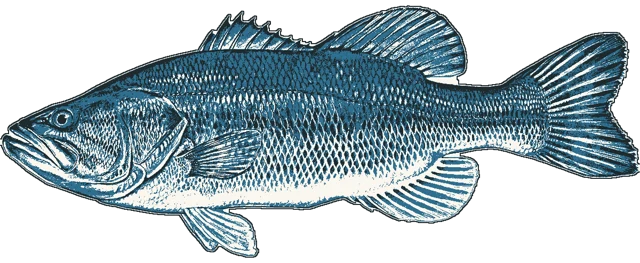
Largemouth bass
Micropterus nigricans (syn. M. salmoides) · Freshwater
Perfectly edible white fillets, but America's top catch-and-release fish and many anglers swear the meat tastes fishy or muddy, so reputation is split.
- Tastes
- mild to slightly 'fishy', firm, thick fillets
- Limits
- Heavy regs. Statewide: 5 black bass per day in any combination (largemouth, smallmouth, spotted, Alabama, Coosa and hybrids), no minimum length. Largemouth minimums by water: 15 in on Kentucky Lake, Barkley, Reelfoot, Pickwick (black bass), Percy Priest, Normandy, Tims Ford, Center Hill, Dale Hollow, Cordell Hull, Great Falls, Watts Bar (black bass), Chickamauga, Nickajack, Guntersville (TN), Parksville, Boone, Cherokee, and Ft. Loudoun, Tellico and Chilhowee (black bass); 14 in on Old Hickory, Cheatham, Melton Hill and Norris; 12 in on Watauga; no length limit on Woods, South Holston, Ft. Patrick Henry and John Sevier. Douglas: 5 per day, no length limit Oct. 1 to May 31, only one largemouth or smallmouth over 16 in June 1 to Sept. 30. Mississippi River: 10 per day, no length limit. Woodhaven Lake and Travis McNatt Lake: catch and release only. Other listed waters differ. (2026-27 Tennessee Fishing Guide (eRegulations statewide page last updated Sept. 15, 2026; reservoir pages Sept. 11, 2026)) Source
- Best months
- March to June on Douglas; March and April on Cherokee (TWRA lake pages)
- Where
- TWRA's reservoir pages list largemouth rules on Kentucky Lake, Old Hickory, Percy Priest and Chickamauga, among others; its trophy program has trophy largemouth from 125 locations.
- live shiners
- nightcrawlers
- live minnows
- Texas-rigged plastic worm
- jig
- spinnerbait
- Water-body mercury advisories commonly list largemouth bass; check your state's advisory before eating large fish.
- Do not eat largemouth over two pounds from Fort Loudoun, any from its Little River embayment, or any fish from the do-not-eat waters on this page.
- Precautionary (children, pregnant women and nursing mothers none, everyone else one meal a month): Center Hill, Dale Hollow, Cherokee, Normandy, Chilhowee, South Holston, Watauga, Beech, Norris (Clinch River arm), Watts Bar (Tennessee River part), upper Fort Loudoun, Cheatham (Nashville stretch), Springville Bottom, the Big Sandy River and embayment, the Nolichucky, and stretches of the Duck, French Broad, Little, Hiwassee, Sequatchie, Hatchie, East Fork Stones and North Fork Forked Deer rivers; Davy Crockett (Humboldt), Gibson County, Herb Parsons, Lajoie, Placid, Fall Creek Falls and Standing Stone lakes; all fish from stretches of the Emory and Holston rivers and from Mitchell Branch.
- TDEC list, August 2026; TDEC says bass not named in a row may be high too.
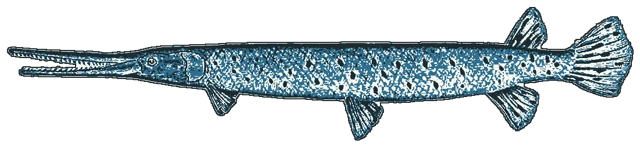
Longnose gar
Lepisosteus osseus · Freshwater
Most anglers treat it as a nuisance and few eat it, but the firm white backstraps are good once you get through the armor.
Worth a try: Cut down the back with shears or a hatchet to get past the armored scales, take the two white backstraps, and fry them or grind them into Louisiana gar balls.
- Tastes
- mild, firm, meaty, almost like alligator
- Limits
- No limits. No statewide limit listed for longnose gar by name; the statewide page lists "nongame species" at no limit. Alligator gar may not be kept. (2026-27 Tennessee Fishing Guide (eRegulations statewide page last updated Sept. 15, 2026; reservoir pages Sept. 11, 2026)) Source
- live minnows suspended near the surface
- rope (frayed nylon) lures
- bowfishing
- Gar eggs (roe) are toxic to people and other warm-blooded animals; never eat them (Maryland DNR).
- Do not eat any fish from the do-not-eat waters listed on this page, such as McKellar Lake and the Mississippi River at Memphis, the North Fork Holston River and the creeks near Oak Ridge.
- Precautionary (children, pregnant women and nursing mothers none, everyone else one meal a month): all fish from listed stretches of the Emory and Holston rivers and from Mitchell Branch.
- TDEC list, August 2026.
Paddlefish
Polyodon spathula · Freshwater
Valued for its caviar. We have no good source on how it eats, so it is rated Just OK by default.
- Tastes
- mild, firm, boneless
- Limits
- Heavy regs. Statewide: open Apr. 24 through May 31, 2 per day, no size limit, culling prohibited. Center Hill and its tributaries: closed to taking or possessing paddlefish. Watts Bar: 1 per day, open May 1 to May 15; Emory River from the mouth to the Highway 299 bridge at Oakdale closed; snagging closed from the U.S. 321 bridge up to Ft. Loudoun Dam Mar. 15 to Apr. 30 and May 16 to 31. Cherokee: 1 per day, open Apr. 1 to Apr. 15, snagging closed on the Holston River below John Sevier Dam Mar. 1 to 31 and Apr. 16 to May 31. Other listed waters differ. (2026-27 Tennessee Fishing Guide (eRegulations statewide page last updated Sept. 15, 2026; reservoir pages Sept. 11, 2026)) Source
- Best months
- Statewide season Apr. 24 to May 31 (shorter or closed on Watts Bar, Cherokee and Center Hill).
- Where
- Reservoirs listed with a paddlefish season include Kentucky Lake, Barkley, Reelfoot, Pickwick, Old Hickory, Cheatham, Cordell Hull, Chickamauga, Ft. Loudoun, Melton Hill, Norris and Tellico.
- snagging with large treble hooks
- Do not eat any fish from the do-not-eat waters listed on this page, such as McKellar Lake and the Mississippi River at Memphis, the North Fork Holston River and the creeks near Oak Ridge.
- Precautionary (children, pregnant women and nursing mothers none, everyone else one meal a month): all fish from listed stretches of the Emory and Holston rivers and from Mitchell Branch.
- TDEC list, August 2026.
Rock bass
Ambloplites rupestris · also called redeye · Freshwater
Light, flaky fillets that some anglers rate highly, while others find them oily and fishy compared with bluegill or crappie.
- Tastes
- mild to slightly fishy, light, flaky
- Limits
- Light regs. Statewide: 20 per day for rock bass, redeye and shadow bass, no length limit. Calderwood: no creel or length limit. Other listed waters differ. (2026-27 Tennessee Fishing Guide (eRegulations statewide page last updated Sept. 15, 2026; reservoir pages Sept. 11, 2026)) Source
- Where
- Rock bass limits are listed on Cheatham, Normandy, Old Hickory, Percy Priest, Tims Ford, Woods, Center Hill, Dale Hollow, Norris, Cherokee and other reservoirs.
- live minnows
- crayfish
- nightcrawlers
- hellgrammites
- inline spinners
- small jigs
- Do not eat any fish from the do-not-eat waters listed on this page, such as McKellar Lake and the Mississippi River at Memphis, the North Fork Holston River and the creeks near Oak Ridge.
- Precautionary (children, pregnant women and nursing mothers none, everyone else one meal a month): all fish from listed stretches of the Emory and Holston rivers and from Mitchell Branch.
- TDEC list, August 2026.
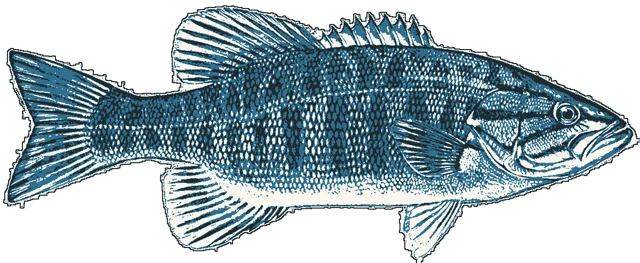
Smallmouth bass
Micropterus dolomieu · also called bronzeback · Freshwater
Firm, white and good, often rated above largemouth, but most smallmouth are released by custom and the flesh has a slight 'fishy' edge some anglers dislike.
- Tastes
- mild, slightly fishy edge, firm, thick white fillets
- Limits
- Heavy regs. Statewide: part of the 5 black bass per day combined limit, no minimum length. Dale Hollow (including the Wolf River up to the South Ford Road bridge): 2 smallmouth per day, 16 to 21 in slot (one under 16 in, one over 21 in); no more than 2 of the 5 black bass may be smallmouth, and no more than 4 rods and reels per angler. 18 in minimum on Center Hill, Cheatham, Old Hickory, Percy Priest, Normandy, Tims Ford, Cordell Hull, Great Falls, Woods, Melton Hill; 15 in on Kentucky Lake, Barkley, Boone, Ft. Patrick Henry, South Holston and Watauga (and black bass 15 in on Pickwick, Watts Bar, Ft. Loudoun, Tellico and Chilhowee). Norris and Cherokee: June 1 to Oct. 15 one per day, 18 in minimum; Oct. 16 to May 31 five per day, 15 in minimum. Chickamauga, Nickajack, Guntersville (TN): no minimum, only one smallmouth, spotted, Alabama or hybrid bass over 16 in per day. Little Pigeon River and Pigeon River (Newport to NC line): 1 per day, 20 in minimum. Several rivers: 13 to 17 in slot, only one over 17 in. Other listed waters differ. (2026-27 Tennessee Fishing Guide (eRegulations statewide page last updated Sept. 15, 2026; reservoir pages Sept. 11, 2026)) Source
- Best months
- Late winter and early spring on Tims Ford Lake (TWRA lake page)
- Where
- Dale Hollow: TWRA's trophy program lists 295 trophy smallmouth from the lake, and trophies from 77 locations statewide. Reservoirs with slot or seasonal smallmouth rules: Dale Hollow, Norris, Cherokee, Douglas and John Sevier.
- crayfish
- hellgrammites
- live minnows
- tube jig
- grub
- jerkbait
- Do not eat any fish from the do-not-eat waters on this page.
- Precautionary (children, pregnant women and nursing mothers none, everyone else one meal a month): Center Hill, Dale Hollow, Cherokee, Normandy, Chilhowee, Norris (Clinch River arm), Cheatham (Nashville stretch), Springville Bottom, the Big Sandy River and embayment, the Nolichucky, Abrams and Daddy's creeks, and stretches of the Buffalo, Duck, French Broad (below Douglas Dam), Little, Pigeon, Hatchie and East Fork Stones rivers; all fish from stretches of the Emory and Holston rivers and from Mitchell Branch.
- TDEC list, August 2026; TDEC says bass not named in a row may be high too.
Smallmouth buffalo
Ictiobus bubalus · Freshwater
Smallmouth buffalo is highly prized in many areas (TPWD), but some anglers still call it a rough fish because of its bones.
Worth a try: Many people do not realize smallmouth buffalo is quite a food fish (TPWD); fry the ribs or smoke it.
- Tastes
- mild, firm, bony
- Limits
- No limits. No statewide limit listed for buffalo by name; the statewide page lists "nongame species" at no limit. (2026-27 Tennessee Fishing Guide (eRegulations statewide page last updated Sept. 15, 2026; reservoir pages Sept. 11, 2026)) Source
- dough baits
- bowfishing
- Do not eat any fish from the do-not-eat waters on this page, such as the Mississippi River at Memphis.
- Precautionary (children, pregnant women and nursing mothers none, everyone else one meal a month): the Tennessee River part of Watts Bar, and all fish from stretches of the Emory and Holston rivers and from Mitchell Branch.
- TDEC list, August 2026.
Spotted bass
Micropterus punctulatus · Freshwater
Eats like other black bass and is kept more often than largemouth because it is abundant and small; agencies in some states encourage harvest.
- Tastes
- mild, firm, white
- Limits
- Heavy regs. Statewide: part of the 5 black bass per day combined limit, no minimum length. Reservoir rules usually add no length limit for spotted bass (Kentucky Lake, Barkley, Cordell Hull, Percy Priest, Old Hickory, Center Hill), but Pickwick, Watts Bar, Ft. Loudoun, Tellico and Chilhowee set a 15 in minimum for all black bass. Norris (spotted/Alabama) and South Holston: no creel or length limit. Boone, Cherokee, Davy Crockett, John Sevier, Melton Hill, Ft. Patrick Henry, Watauga: spotted bass 15 per day, no length limit (Cherokee lists spotted/Alabama). Chickamauga, Nickajack, Guntersville (TN): no minimum, only one smallmouth/spotted/Alabama over 16 in per day. Other listed waters differ. (2026-27 Tennessee Fishing Guide (eRegulations statewide page last updated Sept. 15, 2026; reservoir pages Sept. 11, 2026)) Source
- Best months
- Early spring on Center Hill (TWRA lake page)
- Where
- Reservoirs with spotted bass rules on the TWRA pages include Kentucky Lake, Barkley, Cordell Hull, Percy Priest, Center Hill, Norris and Cherokee.
- jerkbaits
- spinnerbaits
- floating worms
- small white spinners
- plastic grubs on leadhead jigs
- live crayfish
- Do not eat any fish from the do-not-eat waters on this page.
- Precautionary (children, pregnant women and nursing mothers none, everyone else one meal a month): Center Hill, Dale Hollow, Cherokee, Normandy, Chilhowee, Cheatham (Nashville stretch), Springville Bottom, the Big Sandy River and embayment, the Nolichucky, and stretches of the Duck, French Broad (below Douglas Dam), Little, Hatchie and East Fork Stones rivers; all fish from stretches of the Emory and Holston rivers and from Mitchell Branch.
- TDEC list, August 2026; TDEC says bass not named in a row may be high too.
Spotted gar
Lepisosteus oculatus · Freshwater
Small gar with little meat; usually tossed, though the backstraps eat like any gar.
Worth a try: Cut down the back with shears or a hatchet to get past the armored scales, take the two white backstraps, and fry them or grind them into Louisiana gar balls.
- Tastes
- mild, firm, meaty
- Limits
- No limits. No statewide limit listed for spotted gar by name; the statewide page lists "nongame species" at no limit. Alligator gar may not be kept. (2026-27 Tennessee Fishing Guide (eRegulations statewide page last updated Sept. 15, 2026; reservoir pages Sept. 11, 2026)) Source
- Gar eggs (roe) are toxic to people and other warm-blooded animals; never eat them (Maryland DNR).
- Do not eat any fish from the do-not-eat waters listed on this page, such as McKellar Lake and the Mississippi River at Memphis, the North Fork Holston River and the creeks near Oak Ridge.
- Precautionary (children, pregnant women and nursing mothers none, everyone else one meal a month): all fish from listed stretches of the Emory and Holston rivers and from Mitchell Branch.
- TDEC list, August 2026.
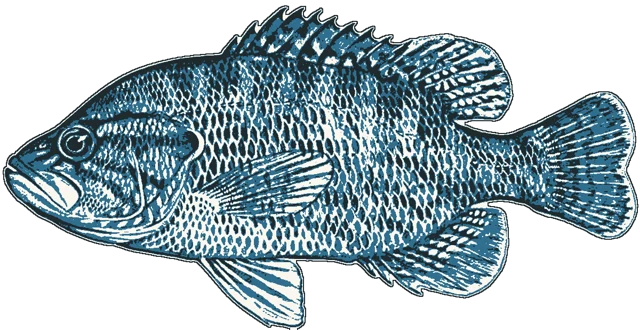
Warmouth
Lepomis gulosus · Freshwater
Good to eat from clean water, but TPWD warns its flesh can have a strong flavor because it lives in muddy, weedy water.
- Tastes
- mild to strong depending on water, flaky
- Limits
- No limits. Statewide: no creel or length limit (listed with bluegill and bream). Norris: 30 per day (bluegill/warmouth and other sunfishes). Other reservoir pages list "bluegill/warmouth and other sunfishes: no creel or length limit". The Mississippi River lists sunfish/bream at 50 per day; the page does not say whether warmouth are counted. (2026-27 Tennessee Fishing Guide (eRegulations statewide page last updated Sept. 15, 2026; reservoir pages Sept. 11, 2026)) Source
- small jigs
- small spinners
- poppers
- wet or dry flies
- Do not eat any fish from the do-not-eat waters listed on this page, such as McKellar Lake and the Mississippi River at Memphis, the North Fork Holston River and the creeks near Oak Ridge.
- Precautionary (children, pregnant women and nursing mothers none, everyone else one meal a month): all fish from listed stretches of the Emory and Holston rivers and from Mitchell Branch.
- TDEC list, August 2026.
Yellow bass
Morone mississippiensis · Freshwater
Small, but schools let anglers fill a cooler fast. We have no good source on how it eats, so it is rated Just OK by default.
- Tastes
- mild, sweet, firm, white
- Limits
- No limits. Statewide: no creel or length limit. Reservoir pages list "yellow bass: no creel or length limit" on Kentucky Lake, Barkley, Pickwick, Reelfoot, Old Hickory, Center Hill, Norris and others. (2026-27 Tennessee Fishing Guide (eRegulations statewide page last updated Sept. 15, 2026; reservoir pages Sept. 11, 2026)) Source
- Best months
- March and April in the Percy Priest headwaters (TWRA lake page)
- Where
- Tims Ford, which TWRA's trophy program says leads for yellow bass; also listed on Kentucky Lake, Barkley, Pickwick and Cheatham reservoir rules.
- light jigs
- soft plastics
- minnows
- Do not eat any fish from the do-not-eat waters listed on this page, such as McKellar Lake and the Mississippi River at Memphis, the North Fork Holston River and the creeks near Oak Ridge.
- Precautionary (children, pregnant women and nursing mothers none, everyone else one meal a month): all fish from listed stretches of the Emory and Holston rivers and from Mitchell Branch, and the Big Sandy River with its embayment and the East Fork Stones River, where TDEC says "all bass species".
- TDEC list, August 2026.
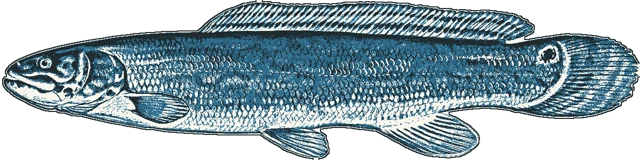
Bowfin
Amia calva (ruddy bowfin) and Amia ocellicauda (emerald bowfin) · Freshwater
TPWD calls it a rough fish rather than one for the table; the soft, pale flesh earned it the nickname 'cottonfish'.
Worth a try: Keep it alive until you clean it, cook it the same day, and use it smoked, fried as patties or stewed; MeatEater serves fried bowfin with a morel cream sauce.
- Tastes
- mild, soft, jelly-like unless very fresh
- Limits
- No limits. No statewide limit listed for bowfin by name; the statewide page lists "nongame species" at no limit. (2026-27 Tennessee Fishing Guide (eRegulations statewide page last updated Sept. 15, 2026; reservoir pages Sept. 11, 2026)) Source
- Where
- Reelfoot Lake, the best bet for a trophy bowfin according to TWRA's trophy program.
- live minnows
- cut bait
- jigs
- topwater lures
- Do not eat any fish from the do-not-eat waters listed on this page, such as McKellar Lake and the Mississippi River at Memphis, the North Fork Holston River and the creeks near Oak Ridge.
- Precautionary (children, pregnant women and nursing mothers none, everyone else one meal a month): all fish from listed stretches of the Emory and Holston rivers and from Mitchell Branch.
- TDEC list, August 2026.
Skipjack herring
Alosa chrysochloris · Freshwater
It is bony and generally considered a rough fish (FWS); anglers mostly catch it for sport on light tackle or for catfish bait.
- Limits
- No limits. Statewide: 100 per day, no length limit; trotline creel limit is also 100. Skipjack may not be taken away from the water alive from the Mississippi River or Barkley, Kentucky and Pickwick reservoirs and their tributaries. The 3-hook rule does not apply to sabiki rigs used for shad or herring. (2026-27 Tennessee Fishing Guide (eRegulations statewide page last updated Sept. 15, 2026; reservoir pages Sept. 11, 2026)) Source
- Some states list it as a species of conservation concern
- Do not eat any fish from the do-not-eat waters listed on this page, such as McKellar Lake and the Mississippi River at Memphis, the North Fork Holston River and the creeks near Oak Ridge.
- Precautionary (children, pregnant women and nursing mothers none, everyone else one meal a month): all fish from listed stretches of the Emory and Holston rivers and from Mitchell Branch.
- TDEC list, August 2026.
Muskellunge
Esox masquinongy · Freshwater
A trophy fish that is almost never kept: high minimum lengths and a strong release ethic mean most muskie anglers let their catch go.
- Limits
- Heavy regs. Statewide: 1 per day, 36 in minimum. 50 in minimum on Center Hill, Dale Hollow, Great Falls, Melton Hill, and the Caney Fork River above Center Hill Dam (with Collins, Calfkiller and Rocky rivers and Cane Creek). Calderwood: 42 in minimum. Watts Bar, Norris, Douglas and Parksville: 36 in minimum. Melton Hill: fish not meant to be kept must be released immediately and culling is not allowed. Other listed waters differ. (2026-27 Tennessee Fishing Guide (eRegulations statewide page last updated Sept. 15, 2026; reservoir pages Sept. 11, 2026)) Source
- Where
- Listed on Center Hill, Dale Hollow, Great Falls, Melton Hill, Watts Bar, Norris, Douglas and Parksville.
- large crankbaits imitating suckers
- bucktail spinners
- large jerkbaits
- live suckers
- Do not eat any fish from the do-not-eat waters listed on this page, such as McKellar Lake and the Mississippi River at Memphis, the North Fork Holston River and the creeks near Oak Ridge.
- Precautionary (children, pregnant women and nursing mothers none, everyone else one meal a month): all fish from listed stretches of the Emory and Holston rivers and from Mitchell Branch.
- TDEC list, August 2026.
Where to fish in Tennessee
Fish named here are what people catch at each spot, not a promise they’re safe to eat. Read the eating advice on the fish’s card before you keep one.
- 1Reelfoot Lake lake · fresh
The state says Reelfoot is famous for its bluegill and crappie, which rank among the best in Tennessee.
Known for: Bluegill, Black crappie, White crappie
Access: Boating, paddling, camping and cabins.
- 2Kentucky Lake (Paris Landing area) reservoir · fresh
The state manages Kentucky Lake for quality bass and crappie fishing and stocks Florida largemouth bass.
Known for: Black crappie, White crappie, Largemouth bass
Access: Boating, paddling, camping and cabins.
- 3Pickwick Lake reservoir · fresh
The state says Pickwick has a reputation for largemouth, smallmouth and spotted bass, bluegill, redear and catfish, and calls the area below the dam a world-class sauger fishery.
Known for: Largemouth bass, Smallmouth bass, Spotted bass, Bluegill, Redear sunfish
Access: Boating, paddling, swimming and camping.
- 4Old Hickory Lake reservoir · fresh
The state lists largemouth bass, crappie, striped bass, sauger, white bass and channel catfish as the most popular fish here, and stocks striped bass and walleye.
Known for: Largemouth bass, Black crappie, White crappie, Striped bass, Sauger
Access: Forty-four public boat access sites with no fee, and eleven marinas.
- 5Percy Priest Lake reservoir · fresh
The state tourism office promotes striper fishing on Percy Priest Lake, outside Nashville.
Known for: Striped bass
- 6Center Hill Lake reservoir · fresh
TWRA sets lake rules here for smallmouth (18 in), largemouth (15 in), walleye (5 per day, 16 in) and muskellunge (50 in); paddlefish may not be taken.
Access: Jan. 1 to Apr. 30, only one single-point hook and three rods are allowed on the Caney Fork from the Rock Island State Park ramp up to Great Falls Dam.
- 7Caney Fork River tailwater (below Center Hill Dam) tailwater · fresh
TWRA stocks rainbow, brown, cutthroat and brook trout here March to December and sets special limits (5 trout per day, brown trout 1 per day, 24 in minimum).
Known for: Rainbow trout, Brown trout, Brook trout
Access: TWRA says to use caution below dams and to call TVA at (800) 238-2264 for generation schedules.
- 8Dale Hollow Lake reservoir · fresh
Home of the world-record smallmouth (11 lb 15 oz); the state says the lake has a reputation for excellent largemouth, crappie, catfish and bluegill fishing and is managed for bass, walleye and crappie.
Known for: Smallmouth bass, Largemouth bass, Black crappie, White crappie, Bluegill
- 9Norris Lake reservoir · fresh
The state manages Norris for quality bass, striped bass, walleye and crappie, and stocks striped bass, walleye and crappie.
Known for: Striped bass, Walleye, Black crappie, White crappie
- 10Cherokee Lake reservoir · fresh
The state tourism office says Cherokee and Douglas lakes are ranked among the nation's best for largemouth bass and crappie fishing.
Known for: Largemouth bass, Black crappie, White crappie
Access: Local guides and charters run trips on the lake.
- 11Douglas Lake reservoir · fresh
The state lists largemouth bass, crappie, bluegill and catfish among the most popular fish here and manages the lake for bass, walleye and crappie.
Known for: Largemouth bass, Black crappie, White crappie, Bluegill, Walleye
- 12Watts Bar Lake reservoir · fresh
TWRA's trophy program has had trophy catches of 19 different species reported from Watts Bar.
- 13Chickamauga Lake reservoir · fresh
The state tourism office says Chickamauga offers some of the best bass fishing opportunities, with spotted, largemouth, smallmouth and striped bass, bluegill, redear and catfish to be expected in July.
Known for: Largemouth bass, Smallmouth bass, Spotted bass, Striped bass, Bluegill
Access: On the tailwater just below Chickamauga Dam (south end): bank fishing and a pier.
- 14South Holston tailwater and Boone Lake trout waters tailwater · fresh
TWRA stocks rainbow trout below South Holston Dam March to September; from that dam to Boone Dam the rule is 7 trout per day, 16 to 22 in slot, only one over 22 in.
Known for: Rainbow trout
Access: Two stretches of the South Fork Holston close to all fishing Nov. 1 to Jan. 31 (Hickory Tree Bridge to Bottom Creek, and the Boy's Island to Webb Road Bridge stretch).
Tennessee fishing license and rules
- Resident: $33 Combo Hunt/Fish (ages 16-64), which TWRA calls the minimum license required to fish. Trout need the $21 Annual Trout Supplemental.
- Nonresident: $49 Annual Fishing (no trout); $98 all species including trout
- Nonresident short-term: 3-day no trout $20 (all species incl. trout $40); 10-day $30 / $61
- Who needs one: Ages 12 and under need no license; ages 13-15 need a Junior license ($9 resident Junior Hunt/Fish/Trap, $10 nonresident Annual Junior Hunt/Fish); full licenses from 16
- Free fishing days: Bobby Wilson Free Fishing Day: Saturday, June 12, 2027, no license needed in public waters, agency lakes and state park facilities. Children 15 and under fish free June 12 to 18, 2027.
More license details
Resident 1-day fishing: $6 no trout (ages 13-64), $11 all species (16-64). County of Residence fishing $10 (ages 13 and over, no trout, natural bait only, no minnows or artificial lures, home county only). Residents 65+: Annual Senior Citizen Hunt/Fish/Trap $4 or permanent $49. A Social Security Number is required to buy a license. Nonresident annual all-species (including trout) $98; nonresident annual no-trout $49; nonresidents 13 to 15 need the $10 Annual Junior Hunt/Fish. Annual licenses are valid one year from the date of purchase. Reciprocal license agreements: Kentucky Lake between the U.S. 79 and U.S. 68 bridges (TN and KY, bank anglers follow the state they stand in), Pickwick Lake from the dam to the mouth of Bear Creek (residents of TN, AL, MS), Mississippi River (AR, MO), Dale Hollow Wolf River arm, Big South Fork, Calderwood (NC, from a boat) and the state-line part of Slickrock Creek (NC). A Reelfoot Lake Preservation Permit ($3 a day, $16 a year) is required on Reelfoot Lake except for those under 16, residents 65 or older, and lifetime or sportsman license holders; gasoline-powered boats are barred there in TWRA posted areas Apr. 1 to May 31.
Buy a license License types and fees
Fees: 2026-27 Tennessee Fishing, Hunting & Trapping Guide (eRegulations fee page updated Sept 10, 2026).
- Trout need the $21 Annual Trout Supplemental on top of a resident Combo Hunt/Fish, county of residence or one-day no-trout license, unless the license already includes trout (one-day all-species, junior, senior or sportsman). Nonresidents 16 and over use an all-species license.
- TWRA calls the $33 Combo Hunt/Fish (ages 16 to 64) the minimum license required to fish. The $10 county license covers natural bait only, no trout, in the angler's county of residence.
- Only one catfish over 34 inches may be kept per day; there is no limit on catfish 34 inches or smaller (statewide; some waters differ).
- Alligator gar and shovelnose sturgeon may not be kept and must be returned to the water immediately.
- Paddlefish season is Apr. 24 to May 31, 2 per day, culling prohibited; Center Hill is closed, Watts Bar is open May 1 to 15 at 1 per day, Cherokee Apr. 1 to 15 at 1 per day.
- Anglers are limited to 3 hooks per rod, pole or hand-held line; sabiki rigs for shad or herring are exempt.
- It is unlawful to possess or transport live silver carp, bighead carp, black carp, snakeheads and several other listed species, or to intentionally release live fish into Tennessee waters away from where they were harvested.
- Some waters close to fishing part of the year: the marked zone above Cherokee Dam (boats, July 1 to Sept. 15), two stretches of the South Fork Holston (Nov. 1 to Jan. 31), the Hiwassee Refuge on Chickamauga (Nov. 15 through February, main river channel open), and Kentucky Lake and Barkley dewatering areas (five days before and during the late waterfowl season).
- You may not carry more than the daily creel limit while afield, and total possession is twice the daily limit.
Limits here are summaries for convenience, checked on the date shown. The official Tennessee regulations govern; check them before you keep a fish.
Before you eat it
Do not eat any fish (TDEC list, August 2026): in Shelby County, McKellar Lake, Cypress Creek, the Wolf River up to Germantown Road, the Loosahatchie River up to Highway 14, Nonconnah Creek … (see the full list)
Do not eat any fish (TDEC list, August 2026): in Shelby County, McKellar Lake, Cypress Creek, the Wolf River up to Germantown Road, the Loosahatchie River up to Highway 14, Nonconnah Creek up to Horn Lake Road, and the Mississippi River from the Mississippi line to just below Meeman-Shelby State Park with Wolf River Harbor (all fish except silver and bighead carp); near Oak Ridge, East Fork Poplar Creek, Bear Creek and Poplar Creek with its embayment; Chattanooga Creek; the North Fork Holston River up to the Virginia line; and Beech Creek in Wayne County. East Fork Poplar, Chattanooga and Cypress creeks, and Beaver Creek in Sullivan County, are also posted for bacteria, so avoid the water, and avoid the sediment in Beech Creek between Leatherwood and Smith branches.
- Do not eat catfish from Fort Loudoun, Melton Hill or the Tennessee River part of Watts Bar, or carp from Beaver Creek in Sullivan County (TDEC list, August 2026). TWRA's January 2016 list also said not to eat catfish from Tellico or Woods; the August 2026 list makes both precautionary.
- Do not eat striped bass from Watts Bar, in the Tennessee River part or the Clinch River arm with the Emory River embayment, or hybrid striped bass from the Tennessee River part. At Fort Loudoun, do not eat largemouth over two pounds, or any largemouth from the Little River embayment (TDEC list, August 2026).
- A precautionary advisory means children, pregnant women and nursing mothers should not eat the fish named and everyone else should limit it to one meal a month. It covers all fish in the Emory River (Highway 27 up to the Obed River), the Holston River (John Sevier weir up to the forks of the Holston) and Mitchell Branch in Roane County, and black bass, walleye, striped bass, white bass, sauger, crappie, catfish, carp and smallmouth buffalo in the waters named with each fish, among them Center Hill, Dale Hollow, Cherokee, Normandy, Norris, Watts Bar, Nickajack, Pickwick and Cheatham.
- Announced Aug. 21, 2026: Beaver Creek (carp), the Duck River from mile 11.5 to Interstate 40 (black bass and catfish), the French Broad River below Douglas Dam (black bass), Mitchell Branch (all fish) and Standing Stone Lake (largemouth).
- Where black bass are listed, TDEC says walleye and other bass not named may be high too, and it advises limiting or avoiding turtles, crayfish and mussels from any listed water. TDEC revised the list on Aug. 25, 2026 and changes it as fish are tested: https://www.tn.gov/content/dam/tn/environment/water/watershed-planning/wr_wq_fish-advisories.pdf or 1-888-891-8332.
Local lingo
- bream (sunfish group)
- shellcracker (redear sunfish)
- redeye (rock bass)
- Cherokee bass (striped bass and white bass hybrid)
- spotted cat or fiddler (channel catfish)
- bronzeback (smallmouth bass)
- rockfish (striped bass)
- skipjack (skipjack herring)
Questions anglers ask about Tennessee
What is the most common fish in Tennessee?
TWRA surveys anglers on Tennessee lakes every year, but this page does not rank fish by that survey, so it does not name one most common fish. TWRA's trophy program, which covers 27 commonly caught species, has had the most entries for smallmouth bass (nearly 1,500); other common entries are white crappie, blue catfish, largemouth bass and black crappie.
What is the best fish to eat in Tennessee?
16 of the 36 fish on our Tennessee board rate Best eating. They include: black crappie, white crappie, bluegill, redear sunfish, striped bass and hybrid striped bass.
What is the state fish of Tennessee?
Smallmouth bass: Tennessee's state fish, in the words of TWRA's 2026-27 guide. Channel catfish: Official state commercial fish.
Does Tennessee have free fishing days?
Bobby Wilson Free Fishing Day: Saturday, June 12, 2027, no license needed in public waters, agency lakes and state park facilities. Children 15 and under fish free June 12 to 18, 2027.
Which Tennessee fish are better to eat than their reputation?
We give the Worth a try badge to freshwater drum, common carp, bigmouth buffalo, smallmouth buffalo, longnose gar, spotted gar, alligator gar and bowfin: fish most anglers toss or rate low that eat well when they're cleaned and cooked right. Each card says how.
Neighboring states
Alabama Arkansas Georgia Kentucky Mississippi Missouri North Carolina Virginia
Sources
Limits, prices and advisories come from these pages, read on or before Nov 21, 2026. Where a line gives its own date, that’s the date it rests on. Eating advice changes: check the state’s current list. Ratings are national and come from the fish’s own page.
53 sources
- billdancelakes.tnvacation.com black crappie: where; white crappie: where
- billdancelakes.tnvacation.com black crappie: where; bluegill: where; fishing spots; white crappie: where
- billdancelakes.tnvacation.com black crappie: where; bluegill: where; fishing spots; white crappie: where
- billdancelakes.tnvacation.com black crappie: where; fishing spots; white crappie: where
- billdancelakes.tnvacation.com black crappie: where; fishing spots; striped bass: where; white crappie: where
- billdancelakes.tnvacation.com black crappie: where; channel catfish: where; fishing spots; striped bass: where; white bass: where; white crappie: where
- billdancelakes.tnvacation.com black crappie: where; bluegill: where; fishing spots; white crappie: where
- billdancelakes.tnvacation.com black crappie: where; bluegill: where; fishing spots; white crappie: where
- billdancelakes.tnvacation.com striped bass: where
- doeic.science.energy.gov blue catfish: advisory; channel catfish: advisory; flathead catfish: advisory
- doeic.science.energy.gov striped bass: advisory
- eregulations.com free fishing days
- eregulations.com black crappie: where; blue catfish: where; bowfin: where; fishing spots; lake trout: where; largemouth bass: where; sauger: where; smallmouth bass: where; state
- eregulations.com black crappie: regs; blue catfish: regs; blue catfish: where; bluegill: regs; bullhead (black, brown, yellow): regs; channel catfish: regs; flathead catfish: re
- eregulations.com license fees
- eregulations.com regs digest pdf
- eregulations.com black crappie: regs; largemouth bass: regs; largemouth bass: where; paddlefish: where; redear sunfish: regs; redear sunfish: where; sauger: regs; sauger: where;
- eregulations.com black crappie: regs; hybrid striped bass: regs; largemouth bass: regs; paddlefish: where; rock bass: where; smallmouth bass: regs; spotted bass: regs; spotted b
- eregulations.com Alabama bass: regs; black crappie: regs; fishing spots; hybrid striped bass: regs; hybrid striped bass: where; largemouth bass: regs; muskellunge: regs; muskell
- eregulations.com Alabama bass: regs; black crappie: regs; bluegill: regs; channel catfish: regs; hybrid striped bass: regs; hybrid striped bass: where; lake trout: regs; lake tr
- eregulations.com Alabama bass: regs; alligator gar: regs; bigmouth buffalo: regs; black crappie: regs; blue catfish: regs; bluegill: names; bluegill: regs; bowfin: regs; bullhea
- eregulations.com Alabama bass: where
- eregulations.com brook trout: months; brook trout: regs; brook trout: where; brown trout: months; brown trout: regs; brown trout: where; fishing spots; lake trout: regs; rainbow
- gooutdoorstennessee.com license buy
- nrc.gov Alabama bass: advisory; blue catfish: advisory; channel catfish: advisory; common carp: advisory; flathead catfish: advisory; hybrid striped bass: advisory; lar
- tn.gov state fish; top species
- tn.gov Alabama bass: advisory; bigmouth buffalo: advisory; black crappie: advisory; blue catfish: advisory; bluegill: advisory; bowfin: advisory; brook trout: advisory
- tn.gov walleye: advisory
- tn.gov alligator gar: regs; top species
- tn.gov hybrid striped bass: names; state records; striped bass: names
- tn.gov license info
- tn.gov black crappie: baits; blue catfish: baits; brown trout: baits; channel catfish: baits; hybrid striped bass: baits; largemouth bass: baits; rainbow trout: baits;
- tn.gov where to fish
- tn.gov black crappie: months; channel catfish: months; flathead catfish: where; spotted bass: baits; spotted bass: months; white crappie: months
- tn.gov flathead catfish: where; redear sunfish: baits
- tn.gov flathead catfish: where; largemouth bass: months; sauger: months; striped bass: months
- tn.gov redear sunfish: baits; redear sunfish: months
- tn.gov Alabama bass: baits
- tn.gov largemouth bass: months
- tn.gov black crappie: months; bluegill: baits; largemouth bass: months; white bass: months; white crappie: months
- tn.gov spotted bass: baits; striped bass: months
- tn.gov lake trout: baits
- tn.gov flathead catfish: where; spotted bass: baits
- tn.gov flathead catfish: baits; flathead catfish: where; sauger: months; striped bass: months; white bass: months
- tn.gov channel catfish: months; hybrid striped bass: months; white bass: months; yellow bass: baits; yellow bass: months
- tn.gov smallmouth bass: months
- tn.gov bluegill: months; flathead catfish: where; redear sunfish: baits; redear sunfish: months; sauger: months
- tn.gov bluegill: baits; bluegill: months
- tn.gov channel catfish: names; smallmouth bass: names
- tnvacation.com fishing spots
- tnvacation.com fishing spots
- tnvacation.com fishing spots
- tnvacation.com sauger: where
Illustrations: stencils we made from public-domain art by John J. Baird (Black crappie); Duane Raver, U.S. Fish and Wildlife Service (Blue catfish, Brook trout, Channel catfish, Flathead catfish, Rainbow trout, Redear sunfish, Striped bass, White bass, White crappie, Yellow perch, Bullhead (black, brown, yellow), Smallmouth bass, Warmouth, Bowfin); NOAA (Bluegill); U.S. Fish and Wildlife Service (Brown trout, Common carp, Largemouth bass); Hugh McCormick Smith (Walleye); C. W. Nash (Longnose gar), via Wikimedia Commons.
Spotted an error or a rule that changed? Tell us and we will check it against the official source.