Arkansas · freshwater
Fish in Arkansas: what’s worth eating, and what’s garbage
Arkansas fishing runs from Ozark and Ouachita reservoirs (Beaver, Bull Shoals, Norfork, Greers Ferry, Ouachita, DeGray) for black bass, crappie, walleye and striped bass to cold dam tailwaters on the White, North Fork and Little Red rivers for rainbow and brown trout. Ozark float streams hold Blue Ribbon smallmouth, and Delta oxbows such as Lake Chicot add bream, catfish and rough fish (bowfin, gar, buffalo and carp). The big rivers hold the alligator gar, the official state primitive fish.
32 fish rated · limits checked Nov 21, 2026 against AGFC, then re-checked: 379 of 383 details confirmed or corrected on the official pages
Resident $10.50 Fisheries Conservation License; Resident Trout Permit $10 to keep trout from any water or to fish listed tailwaters. Nonresident $60 annual; Trout Permit $20.
Buy a licenseAlligator gar
Free Fishing Weekend 2026 was June 12-14 (noon Friday through midnight Sunday): no fishing license or trout permit needed, but all limits and area rules still apply. Full details
The Arkansas table-fare board
Fish Arkansas anglers catch, sorted by how they eat. The bars show how heavily each one is regulated here. Tap a fish for the details.
No limits Light regs Heavy regs No harvest
Best eating13
Just OK17
Garbage fish2
Fish by fish
Why each one sits where it does, the current Arkansas limits, and the bait that works.
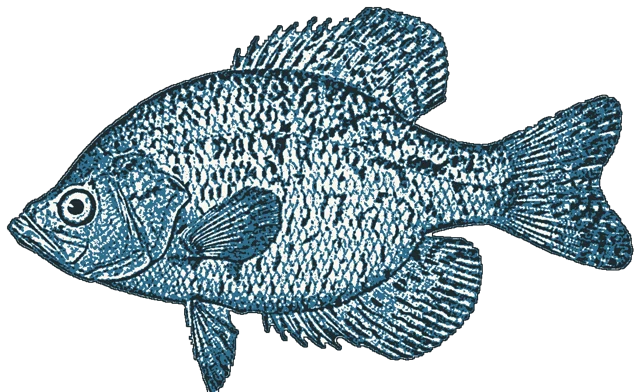
Black crappie
Pomoxis nigromaculatus · Freshwater
One of the classic fish-fry fish: MeatEater counts crappie among the best-eating fish in freshwater.
- Tastes
- mild, sweet, delicate, flaky, white
- Limits
- Light regs. Statewide: black and white crappie combined 30 per day, no statewide minimum length listed. Beaver, Bull Shoals and Norfork: 15 per day combined, crappie under 10 in must be released. Blue Mountain Lake: 20 per day, 9 in minimum. Lake Chicot: 20 per day, under 10 in released. Lake Monticello and Cargile Lake: 15 per day, only 7 may be 12 in or longer. Lake Dardanelle, the Ozark Pool (Pool 12) of the Arkansas River and Horseshoe Lake (Crittenden County): crappie under 10 in released. Mississippi River between the levees: 50 per day. Several lakes (for example Charles and Hogue) list no daily limit. Other listed waters differ. (AGFC statewide limits page (last changed April 28, 2026); water rules: AGFC Code N1.01 and N1.02 (effective Jan. 1, 2025) and AGFC's July 1, 2026 release) Source
- Best months
- Spring (AGFC: crappie can be caught any time of year, but spring is crappie season; its April 14, 2021 article had the spawn in full swing). Early summer: schools move to offshore brush near the thermocline (20-25 ft at DeGray, June 2024).
- Where
- Statewide reservoirs and oxbows: DeGray, Greers Ferry, Nimrod, Greeson, Lake Chicot; brush piles and AGFC fish attractors (GPS files on agfc.com).
- live minnows
- jigs (black/chartreuse, red/chartreuse, pearl)
- 1/16-oz jighead on fluorocarbon
- hair jigs
- Do not eat (anyone): crappie from Moro Bay Creek (mercury).
- Do not eat (anyone): any fish from the all-fish waters on this page (Bayou Meto above Highway 13, Dupree Lake, the Big Creek tributary at Magnolia, Holmes and Smackover creeks below the 2024 oil release, and the Mississippi River at Memphis on Tennessee's list).
- Do not eat (pregnant or may become pregnant, breastfeeding, under 7): any fish from Cut-off Creek, Moro Bay Creek or Dorcheat Bayou (mercury).
Meal limits and other waters (3)
- Limit (everyone), 2 meals a month: crappie from Cut-off Creek or Dorcheat Bayou.
- Limit (pregnant or may become pregnant): one 8-ounce fillet a week of all fish together, the federal advice ADH repeats (January 2023).
- ADH notices and dashboard (updated July 20, 2026).
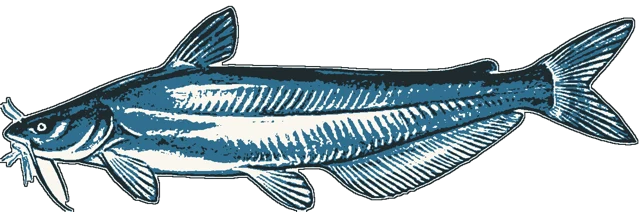
Blue catfish
Ictalurus furcatus · also called cats · Freshwater
TPWD calls it an excellent food fish; Maryland DNR says blues are very good to eat.
- Tastes
- mild, firm
- Limits
- Light regs. Statewide: channel, blue and flathead catfish 10 per day combined, no minimum length listed; no daily limit on bullhead catfish. Many small community lakes and ponds: 3 to 5 per day. No limit on blue and channel catfish on the Little River below Millwood Dam, the Red River and the Sulphur River; no limit on catfish on the Mississippi River between the levees; Lake Chicot: no limit on channel catfish. At Horseshoe Lake (Crittenden County), Lake Pickthorne and the Arkansas River reaches, 10 channel catfish may be taken in addition to the daily limit. Other listed waters differ. (AGFC statewide limits page (last changed April 28, 2026); water rules: AGFC Code N1.01 and 26.25 (effective Jan. 1, 2025) and AGFC's July 1, 2026 release) Source
- Best months
- Summer nights on trotlines, jugs and limblines (AGFC, July 2026).
- Where
- Big rivers of east Arkansas (cut shad and skipjack are the favored baits there); Mississippi River (do not eat from there at Memphis, Tennessee's list); some lakes.
- cut shad
- cut skipjack
- chunks of carp or buffalo
- canned meat (SPAM)
- meaty prepared baits
- Large, old blue catfish accumulate contaminants; some water bodies have size-based consumption advisories.
- Do not eat (anyone): blue catfish from the Saline River (Highway 79 to Stillions Bridge), or any catfish from Moro Bay Creek (mercury).
- Do not eat (anyone): any fish from the all-fish waters on this page (Bayou Meto above Highway 13, Dupree Lake, the Big Creek tributary at Magnolia, Holmes and Smackover creeks below the 2024 oil release, and the Mississippi River at Memphis on Tennessee's list).
- Do not eat (pregnant or may become pregnant, breastfeeding, under 7): blue catfish from Felsenthal Refuge or the Saline River, or 20 inches or longer from Bayou Bartholomew; any fish from Cut-off Creek, Moro Bay Creek or Dorcheat Bayou (mercury).
Meal limits and other waters (3)
- Limit (everyone), 2 meals a month: blue catfish from Felsenthal Refuge; 20 inches or longer from Bayou Bartholomew; catfish from Cut-off Creek or Dorcheat Bayou.
- Limit (pregnant or may become pregnant): one 8-ounce fillet a week of all fish together, the federal advice ADH repeats (January 2023).
- ADH notices and dashboard (updated July 20, 2026).
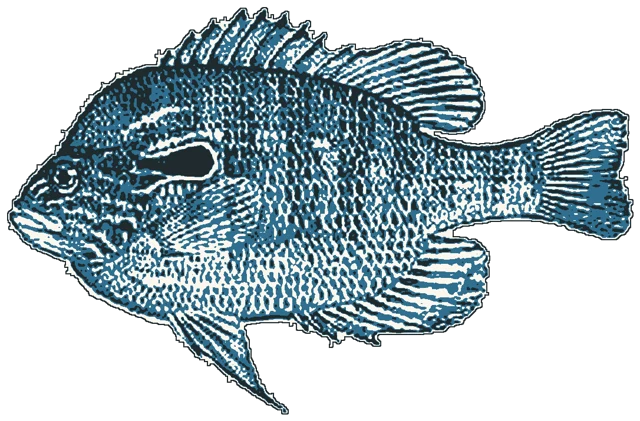
Bluegill
Lepomis macrochirus · also called bream · Freshwater
MeatEater calls the flesh light, delicate and sweet; the original fish-fry panfish.
- Tastes
- mild, sweet, firm, flaky
- Limits
- Light regs. Statewide: bream (bluegill, redear, longear, warmouth and other sunfishes combined) 50 per day, no minimum length; no daily limit on bream shorter than 4 in. Small community lakes and ponds: bream 25 per day. Other listed waters differ. (AGFC statewide limits page (last changed April 28, 2026); community ponds: AGFC Code 26.25 (effective Jan. 1, 2025)) Source
- Best months
- Bream gather in shallow water to spawn in June and July (AGFC panfish page). Best in morning and evening.
- Where
- Ponds, lakes and river backwaters near aquatic vegetation and sunken trees; oxbow lakes behind cypress trees.
- crickets
- redworms
- small garden worms
- wax worms (cold weather)
- small spinners and tiny jigs
- foam spider flies
- Do not eat (anyone): any fish from the all-fish waters on this page (Bayou Meto above Highway 13, Dupree Lake, the Big Creek tributary at Magnolia, Holmes and Smackover creeks below the 2024 oil release, and the Mississippi River at Memphis on Tennessee's list).
- Do not eat (pregnant or may become pregnant, breastfeeding, under 7): any fish from Cut-off Creek, Moro Bay Creek or Dorcheat Bayou (mercury).
Meal limits and other waters (3)
- Limit (everyone), 2 meals a month: bream from Moro Bay Creek.
- Limit (pregnant or may become pregnant): one 8-ounce fillet a week of all fish together, the federal advice ADH repeats (January 2023).
- ADH notices and dashboard (updated July 20, 2026).
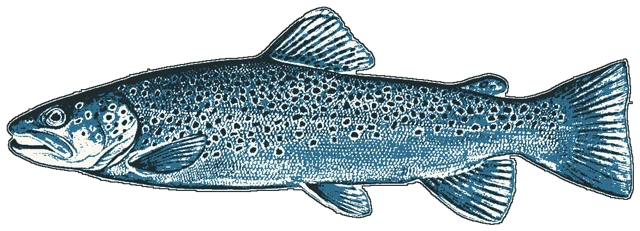
Brown trout
Salmo trutta · Freshwater
Good trout eating like rainbows; most kept browns are stocked fish.
- Tastes
- mild to rich, flaky
- Limits
- Heavy regs. Statewide: 5 trout per day, no more than 2 brown trout; trout permit required to keep any trout. Norfork tailwater and Bull Shoals tailwater from the dam to Norfork Access: all trout other than rainbow must be released. Bull Shoals tailwater below Norfork Access to Guion: brown trout must be 24 in or longer and count as the one trout over 14 in. Greers Ferry and Beaver tailwaters: 2 trout under 14 in; longer trout released. Narrows tailwater: all brown trout released. Spring River: brown trout 16 in minimum. Harvest of any trout other than rainbow is prohibited from 30 min after sunset to 30 min before sunrise in the Bull Shoals, Norfork, Little Red and Beaver tailwaters and the Spring River trout water. Bull Shoals Seasonal Brown Trout Catch-and-Release Area (wing dike at the trout dock to the park boundary): release brown trout Nov. 1-Jan. 31. Other listed waters differ. (Tailwater limits effective Feb. 1, 2026 'until further notice' (AGFC Jan. 2026 vote; repeated in AGFC's July 1, 2026 release); other water rules: AGFC Code N1.01 and N1.03 (effective Jan. 1, 2025)) Source
- Best months
- Year-round in tailwaters; Bull Shoals brown trout have a Nov. 1-Jan. 31 catch-and-release area.
- Where
- Little Red River below Greers Ferry Dam (introduced 1977, self-sustaining), White River (Bull Shoals tailwater), North Fork River; Bull Shoals and Norfork tailwaters can give all four trout species on one trip.
- nightcrawlers
- spinners
- minnow-imitating flies
Before you eat it: Limit (pregnant or may become pregnant): one 8-ounce fillet a week of all fish together, the federal advice ADH repeats (January 2023). No ADH notice names trout.
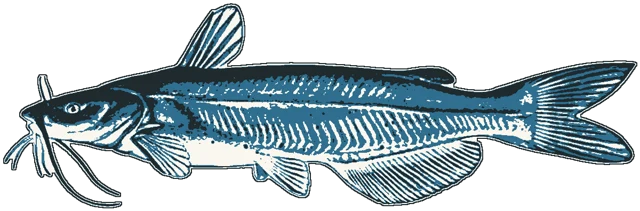
Channel catfish
Ictalurus punctatus · also called cats · Freshwater
Very good to eat (Maryland DNR) and delicious when cooked (TPWD), and the basis of US catfish farming.
- Tastes
- mild, sweet, firm, moist
- Limits
- Light regs. Statewide: channel, blue and flathead catfish 10 per day combined, no minimum length listed; no daily limit on bullhead catfish. Many small community lakes and ponds: 3 to 5 per day. No limit on blue and channel catfish on the Little River below Millwood Dam, the Red River and the Sulphur River; no limit on catfish on the Mississippi River between the levees; Lake Chicot: no limit on channel catfish. At Horseshoe Lake (Crittenden County), Lake Pickthorne and the Arkansas River reaches, 10 channel catfish may be taken in addition to the daily limit. Other listed waters differ. (AGFC statewide limits page (last changed April 28, 2026); water rules: AGFC Code N1.01 and 26.25 (effective Jan. 1, 2025) and AGFC's July 1, 2026 release) Source
- Best months
- Summer nights on trotlines, jugs and limblines set near the bottom in 6 ft or less at creek-channel edges (AGFC, July 2026).
- Where
- Almost all Arkansas waters (AGFC); stocked derby ponds, rivers and lakes.
- stink bait
- chicken liver
- shrimp
- hot dogs
- cheese bait
- nightcrawlers and catalpa worms
- Do not eat (anyone): catfish from Moro Bay Creek (mercury).
- Do not eat (anyone): any fish from the all-fish waters on this page (Bayou Meto above Highway 13, Dupree Lake, the Big Creek tributary at Magnolia, Holmes and Smackover creeks below the 2024 oil release, and the Mississippi River at Memphis on Tennessee's list).
- Do not eat (pregnant or may become pregnant, breastfeeding, under 7): any fish from Cut-off Creek, Moro Bay Creek or Dorcheat Bayou (mercury).
Meal limits and other waters (3)
- Limit (everyone), 2 meals a month: catfish from Cut-off Creek or Dorcheat Bayou.
- Limit (pregnant or may become pregnant): one 8-ounce fillet a week of all fish together, the federal advice ADH repeats (January 2023).
- ADH notices and dashboard (updated July 20, 2026).
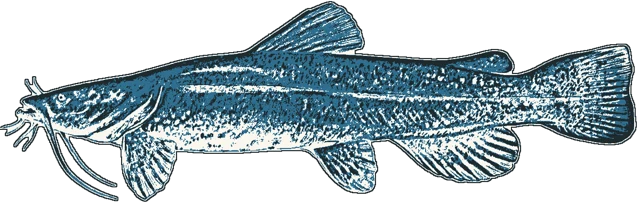
Flathead catfish
Pylodictis olivaris · also called cats · Freshwater
Widely considered the best-tasting catfish because it eats live fish instead of scavenging; Maryland DNR notes its mild, white flesh.
- Tastes
- mild, clean, firm, white
- Limits
- Light regs. Statewide: channel, blue and flathead catfish 10 per day combined, no minimum length listed; no daily limit on bullhead catfish. Many small community lakes and ponds: 3 to 5 per day. No limit on blue and channel catfish on the Little River below Millwood Dam, the Red River and the Sulphur River; no limit on catfish on the Mississippi River between the levees; Lake Chicot: no limit on channel catfish. At Horseshoe Lake (Crittenden County), Lake Pickthorne and the Arkansas River reaches, 10 channel catfish may be taken in addition to the daily limit. Other listed waters differ. Ouachita River from Remmel Dam to Sandy Beach Access (Camden): flathead 20 in minimum. Spearfishing season for flathead catfish July 15-March 15; bowfishing for catfish noon July 15-noon May 1 (half the daily limit). (AGFC statewide limits page (last changed April 28, 2026); water and gear rules: AGFC Code N1.01, N1.02, 26.25 and 28.01 (effective Jan. 1, 2025), AGFC's July 1, 2026 release and its alternative-methods page (last changed Jan. 16, 2026)) Source
- Best months
- Most active after midnight; check lines about midnight (AGFC); summer nights.
- Where
- Flowing waters more often than lakes; Arkansas River.
- live sunfish
- goldfish from a bait dealer
- large live bait
- Do not eat (anyone): flathead from Felsenthal Refuge, the Ouachita River (Camden to Felsenthal), the Saline River (Highway 79 to Stillions Bridge) or Lake Columbia, or any catfish from Moro Bay Creek (mercury).
- Do not eat (anyone): any fish from the all-fish waters on this page (Bayou Meto above Highway 13, Dupree Lake, the Big Creek tributary at Magnolia, Holmes and Smackover creeks below the 2024 oil release, and the Mississippi River at Memphis on Tennessee's list).
- Do not eat (anyone), AGFC's November 2022 stream list: flathead from the Ouachita River, with no reach named.
- Do not eat (pregnant or may become pregnant, breastfeeding, under 7): flathead from those waters, Bayou Bartholomew or Champagnolle Creek, or 26 inches or longer from Grays Lake; any fish from Cut-off Creek, Moro Bay Creek or Dorcheat Bayou (mercury).
Meal limits and other waters (3)
- Limit (everyone), 2 meals a month: flathead from Bayou Bartholomew or Champagnolle Creek, or 26 inches or longer from Grays Lake; catfish from Cut-off Creek or Dorcheat Bayou.
- Limit (pregnant or may become pregnant): one 8-ounce fillet a week of all fish together, the federal advice ADH repeats (January 2023).
- ADH notices and dashboard (updated July 20, 2026).
Hybrid striped bass
Morone saxatilis x M. chrysops · Freshwater
Indiana DNR says hybrids make great table fare; mild white fillets like a striper's.
- Tastes
- mild, firm, white
- Limits
- Light regs. Statewide: striped and hybrid striped bass 6 per day combined. Beaver, Norfork and Ouachita lakes: 3 per day combined. Lake Dardanelle and the Arkansas River reaches: 10 per day combined. Lake Monticello: the statewide limit applies (since Feb. 1, 2026). Other listed waters differ. (AGFC statewide limits page (last changed April 28, 2026); water rules: AGFC Code N1.01 (effective Jan. 1, 2025); Lake Monticello effective Feb. 1, 2026) Source
- Best months
- Summer: hybrids and white bass surface in mornings and evenings (AGFC reports, 2025 and 2026).
- Where
- Greers Ferry Lake (state record 27 lb 5 oz), Lake Chicot, DeGray Lake; AGFC says hybrids are stocked in a couple of lakes.
- Road Runners and grubs for shallow fish
- spoons and inline spinners for deeper fish
- Alabama rig
- Do not eat (anyone), AGFC's November 2022 stream list: 'other species of bass' from the Ouachita and Saline rivers inside Felsenthal Refuge, or the Saline from Stillions Bridge to the Ouachita (read strictly, that includes this fish; confirm with ADH, 501-661-2232).
- Do not eat (anyone): any fish from the all-fish waters on this page (Bayou Meto above Highway 13, Dupree Lake, the Big Creek tributary at Magnolia, Holmes and Smackover creeks below the 2024 oil release, and the Mississippi River at Memphis on Tennessee's list).
- Do not eat (pregnant or may become pregnant, breastfeeding, under 7): any fish from Cut-off Creek, Moro Bay Creek or Dorcheat Bayou (mercury).
Meal limits and other waters (2)
- Limit (pregnant or may become pregnant): one 8-ounce fillet a week of all fish together, the federal advice ADH repeats (January 2023).
- No ADH notice names hybrids; Lake Ouachita's names largemouth, white and striped bass.
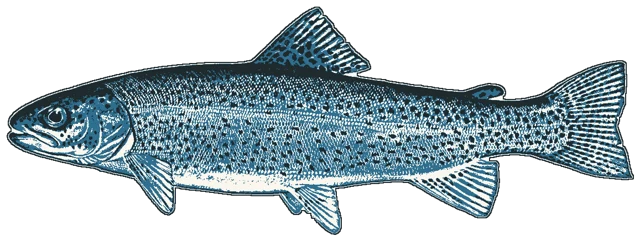
Rainbow trout
Oncorhynchus mykiss · Freshwater
TPWD calls rainbow trout an excellent fish to eat; the most-stocked put-and-take fish in America.
- Tastes
- mild, clean, delicate, flaky
- Limits
- Heavy regs. Statewide: 5 trout per day (no more than 2 each of brown, cutthroat and brook). A trout permit is required to keep trout from any Arkansas water and to fish the tailwaters below Beaver, Bull Shoals, Norfork, Greers Ferry and Greeson dams, the Spring River, and Spavinaw Creek east of Hwy 59. Norfork tailwater (dam to the White River) and Bull Shoals tailwater from the dam to the Norfork Access boat ramp: keep 2 rainbow trout, both under 14 in. Bull Shoals tailwater from Norfork Access to the Hwy 58 bridge at Guion: 2 trout, only one over 14 in. Greers Ferry (Little Red River) and Beaver tailwaters: 2 trout, both under 14 in. Narrows tailwater (Little Missouri River): 5 rainbow. Spring River: 5 trout, only 1 over 14 in. Catch-and-release areas: Bull Shoals (Feb. 1-Oct. 31; closed to fishing Nov. 1-Jan. 31) and Rim Shoals, Norfork, Little Red (JFK, Cow Shoals, Mossy Shoals) and Narrows year-round areas, the Narrows summer area (May 1-Oct. 15), and Big Spring (Cotter), Collins Creek and Dry Run Creek. No natural or scented bait in those areas. Other listed waters differ. (Tailwater limits effective Feb. 1, 2026 'until further notice' (AGFC Jan. 2026 vote; repeated in AGFC's July 1, 2026 release); other water rules: AGFC Code N1.01 and N1.03 (effective Jan. 1, 2025)) Source
- Best months
- Little Red River, July 2026: early morning on falling water is best; Bull Shoals tailwater rainbows were easier to catch at low morning flows (AGFC weekly report, July 30, 2026). Year-round fishery.
- Where
- White River below Bull Shoals Dam (Cotter to Guion), North Fork River below Norfork Dam, Little Red River below Greers Ferry Dam (JFK Park, Barnett Access), Beaver tailwater, Spring River, Narrows tailwater.
- Pheasant Tail Soft Hackles and Hare's Ear nymphs
- midges
- egg patterns
- San Juan worms
- Shad Rap and Countdown crankbaits
- marabou jigs
Before you eat it: Limit (pregnant or may become pregnant): one 8-ounce fillet a week of all fish together, the federal advice ADH repeats (January 2023). No ADH notice names trout.
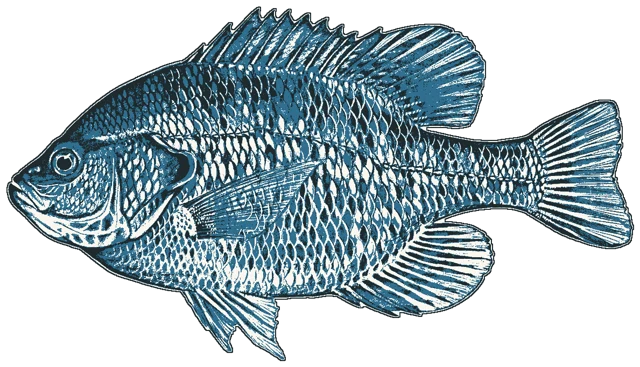
Redear sunfish
Lepomis microlophus · also called bream · Freshwater
Larger than bluegill, with the same sweet fillets; Indiana DNR calls sunfish, redear included, delicious fish.
- Tastes
- mild, sweet, firm, flaky
- Limits
- Light regs. Statewide: bream (bluegill, redear, longear, warmouth and other sunfishes combined) 50 per day, no minimum length; no daily limit on bream shorter than 4 in. Small community lakes and ponds: bream 25 per day. Other listed waters differ. (AGFC statewide limits page (last changed April 28, 2026); community ponds: AGFC Code 26.25 (effective Jan. 1, 2025)) Source
- Best months
- Bream gather in shallow water to spawn in June and July (AGFC panfish page). Best in morning and evening.
- Where
- Ponds, lakes and river backwaters near aquatic vegetation and sunken trees; oxbow lakes behind cypress trees.
- red wigglers
- garden worms
- grubs
- nymphs
- small jigs on bottom
- Do not eat (anyone): any fish from the all-fish waters on this page (Bayou Meto above Highway 13, Dupree Lake, the Big Creek tributary at Magnolia, Holmes and Smackover creeks below the 2024 oil release, and the Mississippi River at Memphis on Tennessee's list).
- Do not eat (pregnant or may become pregnant, breastfeeding, under 7): any fish from Cut-off Creek, Moro Bay Creek or Dorcheat Bayou (mercury).
Meal limits and other waters (3)
- Limit (everyone), 2 meals a month: bream from Moro Bay Creek.
- Limit (pregnant or may become pregnant): one 8-ounce fillet a week of all fish together, the federal advice ADH repeats (January 2023).
- ADH notices and dashboard (updated July 20, 2026).
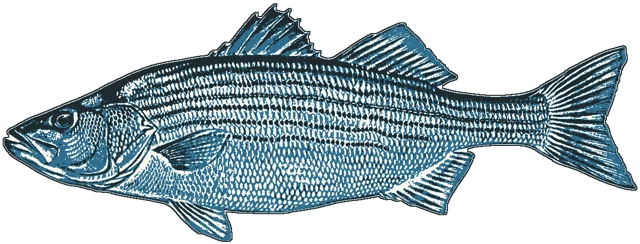
Striped bass
Morone saxatilis · also called stripers · Freshwater
Firm, large-flaked, slightly sweet white meat; one of the most kept and eaten gamefish in the country, fresh or salt.
- Tastes
- mild, slightly sweet, firm, large flakes
- Limits
- Light regs. Statewide: striped and hybrid striped bass 6 per day combined. Beaver Lake: 3 per day combined, striped bass 20 in minimum. Norfork Lake: 3 per day combined, striped bass 20 in minimum. Lake Ouachita: 3 per day combined. Lake Dardanelle and the Arkansas River reaches: 10 per day combined. Lake Monticello: the statewide limit applies (since Feb. 1, 2026). AGFC stocks striped bass in Beaver, Hamilton, Norfork and Ouachita lakes. Other listed waters differ. (AGFC statewide limits page (last changed April 28, 2026); water rules: AGFC Code N1.01 and N1.02 (effective Jan. 1, 2025); Lake Monticello effective Feb. 1, 2026) Source
- Best months
- Beaver Lake, summer: fish bite from sunrise to about 7:30 a.m. and again at dusk into the night, deep around the thermocline (AGFC guide reports, 2025-2026). Stripers migrate up tributary arms to spawn each April (AGFC).
- Where
- Beaver Lake (Starkey area to the dam), Norfork Lake (upper end where river meets lake), Lake Ouachita (main-lake humps, east end), Lake Dardanelle.
- live shad
- brooders (large minnows)
- bluegill
- hair jigs and live bait near main-lake humps
- Consumption advisories for striped bass vary from state to state (NOAA).
- Do not eat (anyone), AGFC's November 2022 stream list: 'other species of bass' from the Ouachita and Saline rivers inside Felsenthal Refuge, or the Saline from Stillions Bridge to the Ouachita (read strictly, that includes this fish; confirm with ADH, 501-661-2232).
- Do not eat (anyone): any fish from the all-fish waters on this page (Bayou Meto above Highway 13, Dupree Lake, the Big Creek tributary at Magnolia, Holmes and Smackover creeks below the 2024 oil release, and the Mississippi River at Memphis on Tennessee's list).
- Do not eat (pregnant or may become pregnant, breastfeeding, under 7): striped bass 25 inches or longer from Lake Ouachita, or any fish from Cut-off Creek, Moro Bay Creek or Dorcheat Bayou (mercury).
Meal limits and other waters (3)
- Limit (everyone), 2 meals a month: striped bass 25 inches or longer from Lake Ouachita.
- Limit (pregnant or may become pregnant): one 8-ounce fillet a week of all fish together, the federal advice ADH repeats (January 2023).
- ADH notices and dashboard (updated July 20, 2026).
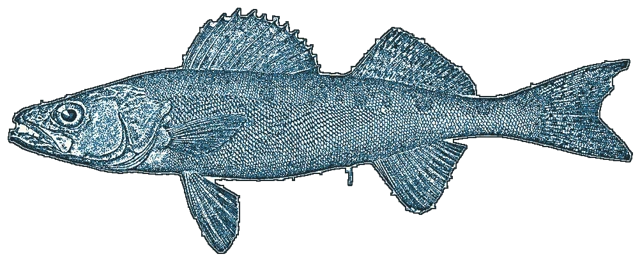
Walleye
Sander vitreus · Freshwater
Widely rated the best-eating freshwater fish: Maryland DNR calls it one of the best tasting, TPWD an excellent food fish.
- Tastes
- mild, clean, firm, tender, flaky white
- Limits
- Light regs. Statewide: walleye 6 per day. Bull Shoals, Norfork and Beaver lakes and the Beaver Lake tributaries: 4 per day, 18 in minimum. Table Rock Lake and its tributaries to Beaver Dam (the White River below Beaver Dam and the Kings River): 4 per day, 18 in minimum. Greers Ferry Lake and its tributaries: walleye under 16 in must be released (the minimum rose from 14 in for 2026-27). Other listed waters differ. (AGFC statewide limits page (last changed April 28, 2026); AGFC Code N1.01 (effective Jan. 1, 2025); Greers Ferry minimum effective July 1, 2026) Source
- Best months
- Spring spawn: males move shallow early to mid-March with the bite peaking about the third week of March at Beaver (AGFC, 2022). Summer: fish on points near deep water, 20-30 ft.
- Where
- Beaver Lake and the White River (Twin Bridges access), War Eagle Creek, Beaver tailwater, Kings River (Romp Hole), Bull Shoals, Norfork and Greers Ferry lakes; Strawberry, Spring and Eleven Point rivers in the northeast.
- jigs tipped with minnows or crawlers
- crawler harnesses
- drop-shot with nightcrawler
- vertically jigged soft plastics
- shad-style crankbaits trolled
- Do not eat (anyone): any fish from the all-fish waters on this page (Bayou Meto above Highway 13, Dupree Lake, the Big Creek tributary at Magnolia, Holmes and Smackover creeks below the 2024 oil release, and the Mississippi River at Memphis on Tennessee's list).
- Do not eat (pregnant or may become pregnant, breastfeeding, under 7): walleye 18 inches or longer from Bull Shoals or Norfork lakes, or any fish from Cut-off Creek, Moro Bay Creek or Dorcheat Bayou (mercury).
Meal limits and other waters (3)
- Limit (everyone), 2 meals a month: walleye 18 inches or longer from Bull Shoals or Norfork lakes, which is every walleye AGFC lets you keep there.
- Limit (pregnant or may become pregnant): one 8-ounce fillet a week of all fish together, the federal advice ADH repeats (January 2023).
- ADH notices and dashboard (updated July 20, 2026).
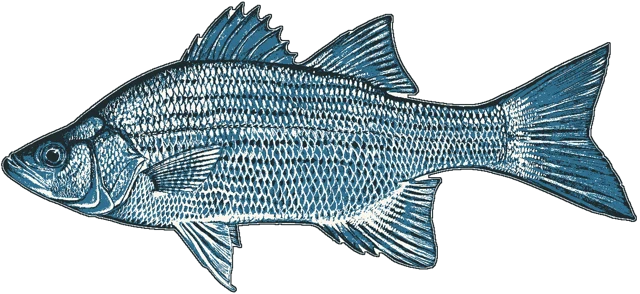
White bass
Morone chrysops · Freshwater
Texas Parks & Wildlife calls white bass superb table fare, and the spring runs fill a lot of coolers; light, flaky meat like walleye.
- Tastes
- mild, light, flaky
- Limits
- Light regs. Statewide: 25 per day, no minimum length listed. No daily limit on white bass in Beaver Lake and its tributaries (including Lake Sequoyah), Greers Ferry Lake and its tributaries, and Ashbaugh and Bob Kidd lakes. Lake Monticello: the statewide limit applies (since Feb. 1, 2026). Mississippi River between the levees: 50 per day. Other listed waters differ. (AGFC statewide limits page (last changed April 28, 2026); water rules: AGFC Code N1.01 (effective Jan. 1, 2025); Lake Monticello effective Feb. 1, 2026) Source
- Best months
- Spring run: talk starts late February to early March; fish gather at stream mouths near 50 F surface water and spawn upstream in the mid-50s. They feed hard just before and after spawning.
- Where
- Beaver Lake river arms (Twin Bridges access on the White River, War Eagle Creek), Millwood Lake (Little River above Yarborough Landing), Greers Ferry (Johnson Hole on the South Fork), Lake Greeson (Self Creek).
- white 2-inch curly shad grub on a 1/16-oz jighead
- white spinner with silver blade
- small suspending jerkbait
- Mister Twister Sassy Shad on a jighead
- Do not eat (anyone), AGFC's November 2022 stream list: 'other species of bass' from the Ouachita and Saline rivers inside Felsenthal Refuge, or the Saline from Stillions Bridge to the Ouachita (read strictly, that includes this fish; confirm with ADH, 501-661-2232).
- Do not eat (anyone): any fish from the all-fish waters on this page (Bayou Meto above Highway 13, Dupree Lake, the Big Creek tributary at Magnolia, Holmes and Smackover creeks below the 2024 oil release, and the Mississippi River at Memphis on Tennessee's list).
- Do not eat (pregnant or may become pregnant, breastfeeding, under 7): white bass 13 inches or longer from Lake Ouachita, or any fish from Cut-off Creek, Moro Bay Creek or Dorcheat Bayou (mercury).
Meal limits and other waters (3)
- Limit (everyone), 2 meals a month: white bass 13 inches or longer from Lake Ouachita.
- Limit (pregnant or may become pregnant): one 8-ounce fillet a week of all fish together, the federal advice ADH repeats (January 2023).
- ADH notices and dashboard (updated July 20, 2026).
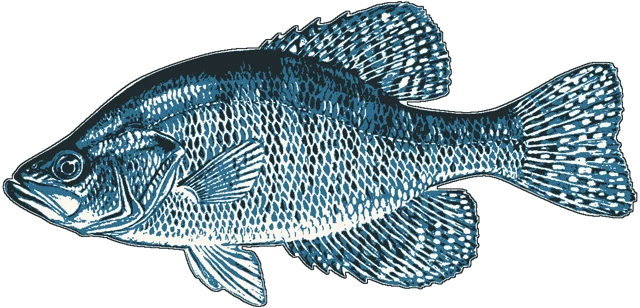
White crappie
Pomoxis annularis · Freshwater
Same top-tier panfish fillets as black crappie; one of the most popular panfish in the country.
- Tastes
- mild, sweet, delicate, flaky, white
- Limits
- Light regs. Statewide: black and white crappie combined 30 per day, no statewide minimum length listed. Beaver, Bull Shoals and Norfork: 15 per day combined, crappie under 10 in must be released. Blue Mountain Lake: 20 per day, 9 in minimum. Lake Chicot: 20 per day, under 10 in released. Lake Monticello and Cargile Lake: 15 per day, only 7 may be 12 in or longer. Lake Dardanelle, the Ozark Pool (Pool 12) of the Arkansas River and Horseshoe Lake (Crittenden County): crappie under 10 in released. Mississippi River between the levees: 50 per day. Several lakes (for example Charles and Hogue) list no daily limit. Other listed waters differ. (AGFC statewide limits page (last changed April 28, 2026); water rules: AGFC Code N1.01 and N1.02 (effective Jan. 1, 2025) and AGFC's July 1, 2026 release) Source
- Best months
- Spring (AGFC: crappie can be caught any time of year, but spring is crappie season; its April 14, 2021 article had the spawn in full swing). Early summer: schools move to offshore brush near the thermocline (20-25 ft at DeGray, June 2024).
- Where
- Statewide reservoirs and oxbows: DeGray, Greers Ferry, Nimrod, Greeson, Lake Chicot; brush piles and AGFC fish attractors (GPS files on agfc.com).
- live minnows
- jigs (black/chartreuse, red/chartreuse, pearl)
- 1/16-oz jighead on fluorocarbon
- hair jigs
- Do not eat (anyone): crappie from Moro Bay Creek (mercury).
- Do not eat (anyone): any fish from the all-fish waters on this page (Bayou Meto above Highway 13, Dupree Lake, the Big Creek tributary at Magnolia, Holmes and Smackover creeks below the 2024 oil release, and the Mississippi River at Memphis on Tennessee's list).
- Do not eat (pregnant or may become pregnant, breastfeeding, under 7): any fish from Cut-off Creek, Moro Bay Creek or Dorcheat Bayou (mercury).
Meal limits and other waters (3)
- Limit (everyone), 2 meals a month: crappie from Cut-off Creek or Dorcheat Bayou.
- Limit (pregnant or may become pregnant): one 8-ounce fillet a week of all fish together, the federal advice ADH repeats (January 2023).
- ADH notices and dashboard (updated July 20, 2026).
Alligator gar
Atractosteus spatula · Freshwater
The gar people actually keep for meat in Texas and Louisiana, but it is armored, hard to clean and still widely seen as trash.
Worth a try: Cut down the back with shears or a hatchet to get past the armored scales, take the two white backstraps, and fry them or grind them into Louisiana gar balls.
- Tastes
- mild, firm, lean, stringy in large fish
- Limits
- Heavy regs. Under 36 in: 1 per day. 36 in or longer (trophy alligator gar): needs a free Alligator Gar Trophy Tag from a drawing (apply Dec. 1-31 with a $5 fee, free if drawn; drawing Jan. 2); the tag allows 1 per calendar year. May not be taken from noon May 1 to noon July 1. Fish 36 in or longer must be tagged on the dorsal fin before leaving the water and the harvest reported within 12 hours, online through the AGFC app. May be taken by bowfishing or gigging under these rules. Other listed waters differ. (AGFC release of Dec. 4, 2025 (2026 season); daily limit: AGFC alligator gar page (last changed Feb. 3, 2026) and AGFC Code N1.01 (effective Jan. 1, 2025)) Source
- Where
- Big river systems: record from the Arkansas River (215 lb, 1964); White River gar drew anglers in the 1940s and 1950s (AGFC).
- Gar eggs (roe) are toxic to people and other warm-blooded animals; never eat them (Maryland DNR).
- Do not eat (anyone): gar from Felsenthal Refuge, the Ouachita River (Camden to Felsenthal), the Saline River (Highway 79 to Stillions Bridge), Lake Columbia or Moro Bay Creek (mercury).
- Do not eat (anyone): any fish from the all-fish waters on this page (Bayou Meto above Highway 13, Dupree Lake, the Big Creek tributary at Magnolia, Holmes and Smackover creeks below the 2024 oil release, and the Mississippi River at Memphis on Tennessee's list).
- Do not eat (anyone), AGFC's November 2022 stream list: gar from the Ouachita River, with no reach named.
- Do not eat (pregnant or may become pregnant, breastfeeding, under 7): gar from those waters, Bayou Bartholomew, Champagnolle Creek or Grays Lake; any fish from Cut-off Creek, Moro Bay Creek or Dorcheat Bayou (mercury).
Meal limits and other waters (3)
- Limit (everyone), 2 meals a month: gar from Bayou Bartholomew, Champagnolle Creek, Grays Lake, Cut-off Creek or Dorcheat Bayou.
- Limit (pregnant or may become pregnant): one 8-ounce fillet a week of all fish together, the federal advice ADH repeats (January 2023).
- ADH notices and dashboard (updated July 20, 2026).
Bigmouth buffalo
Ictiobus cyprinellus · also called buffalo fish · Freshwater
A food fish many people consider worth keeping despite its many bones (TPWD), but and rarely caught on hook and line, so most anglers write it off as a rough fish.
Worth a try: TPWD says many people consider it quite a food fish despite its many bones; smoke it, or fry the rib sections.
- Tastes
- mild, rich, firm, bony
- Limits
- No limits. AGFC's statewide limits page lists no daily limit and no size limit for this fish, and the AGFC Code's daily limits are for game fish only. Hogging and noodling may take buffalo, catfish, carp and drum in season: May 15-Oct. 31 on waters open to commercial fishing, July 15-Oct. 31 elsewhere; Mississippi River May 1-July 15; Lake Charles and the Strawberry River below US Hwy 167 June 1-Oct. 31; none on the Ouachita River from the Little Missouri River to Remmel Dam. It is on AGFC's rough fish list, and rough fish may be taken by bowfishing and gigging (gigging: rough fish only, no game fish possessed). Other listed waters differ. (AGFC statewide limits page (last changed April 28, 2026); AGFC Code N1.01 and 26.05 (effective Jan. 1, 2025) and definitions (effective Aug. 5, 2024)) Source
- Where
- Oxbows and lowland rivers; rod-and-reel record bigmouth 50 lb from Lake Conway (2007).
- dough baits (cottonseed meal)
- bowfishing
- Do not eat (anyone): buffalo from Lake Saracen (PCBs) or Cut-off Creek (mercury).
- Do not eat (anyone): any fish from the all-fish waters on this page (Bayou Meto above Highway 13, Dupree Lake, the Big Creek tributary at Magnolia, Holmes and Smackover creeks below the 2024 oil release, and the Mississippi River at Memphis on Tennessee's list).
- Do not eat (pregnant or may become pregnant, breastfeeding, under 7): buffalo 18 inches or longer from Bayou Bartholomew, or any fish from Cut-off Creek, Moro Bay Creek or Dorcheat Bayou (mercury).
Meal limits and other waters (3)
- Limit (everyone), 2 meals a month: buffalo 18 inches or longer from Bayou Bartholomew, or any from Moro Bay Creek.
- Limit (pregnant or may become pregnant): one 8-ounce fillet a week of all fish together, the federal advice ADH repeats (January 2023).
- ADH notices and dashboard (updated July 20, 2026).
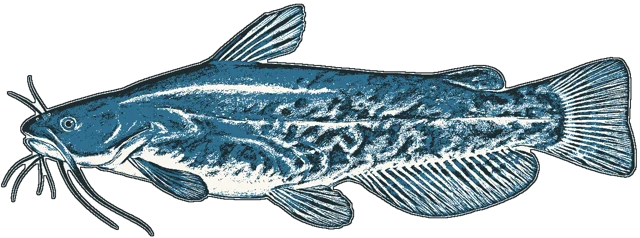
Bullhead (black, brown, yellow)
Ameiurus melas, A. nebulosus, A. natalis · Freshwater
Sweet, delicious catfish meat, but most are small and many come from warm, muddy water, so many anglers dismiss them.
- Tastes
- mild, sweet, firm, moist
- Limits
- No limits. Statewide: no daily limit on bullhead catfish; no minimum length listed. Bullheads (black, yellow) are on AGFC's rough fish list. Other listed waters differ. (AGFC statewide limits page (last changed April 28, 2026); AGFC Code definitions (effective Aug. 5, 2024)) Source
- Where
- Three bullhead species live in Arkansas: black, brown and yellow (AGFC).
- nightcrawlers
- chicken livers
- dough balls
- cut bait
- stinkbait
- Do not eat (anyone): catfish from Moro Bay Creek (mercury).
- Do not eat (anyone): any fish from the all-fish waters on this page (Bayou Meto above Highway 13, Dupree Lake, the Big Creek tributary at Magnolia, Holmes and Smackover creeks below the 2024 oil release, and the Mississippi River at Memphis on Tennessee's list).
- Do not eat (pregnant or may become pregnant, breastfeeding, under 7): any fish from Cut-off Creek, Moro Bay Creek or Dorcheat Bayou (mercury).
Meal limits and other waters (4)
- Limit (everyone), 2 meals a month: catfish from Cut-off Creek or Dorcheat Bayou.
- Limit (pregnant or may become pregnant): one 8-ounce fillet a week of all fish together, the federal advice ADH repeats (January 2023).
- ADH's notices say 'catfish' without naming bullheads, so read it as covering them.
- ADH notices and dashboard (updated July 20, 2026).
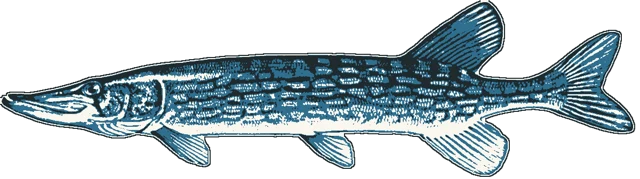
Chain pickerel
Esox niger · Freshwater
White, flaky and good-tasting meat, but quite bony with pike-style Y-bones.
- Tastes
- mild, white, flaky, bony
- Limits
- No limits. AGFC's statewide limits page lists no daily limit and no size limit for chain pickerel, and the AGFC Code lists the fish as neither game fish nor rough fish. Other listed waters differ. (AGFC statewide limits page (last changed April 28, 2026); AGFC Code N1.01 (effective Jan. 1, 2025) and definitions (effective Aug. 5, 2024)) Source
- Where
- State record 7 lb 10 oz from the Little Red River (1979).
- live minnows
- spinnerbaits
- weedless spoons
- surface plugs
- jerkbaits
- Do not eat (anyone): pickerel from Felsenthal Refuge, the Ouachita River (Camden to Felsenthal), the Saline River (Highway 79 to Stillions Bridge), Lake Columbia or Moro Bay Creek (mercury).
- Do not eat (anyone): any fish from the all-fish waters on this page (Bayou Meto above Highway 13, Dupree Lake, the Big Creek tributary at Magnolia, Holmes and Smackover creeks below the 2024 oil release, and the Mississippi River at Memphis on Tennessee's list).
- Do not eat (anyone), AGFC's November 2022 stream list: pickerel from the Ouachita River, with no reach named.
- Do not eat (pregnant or may become pregnant, breastfeeding, under 7): pickerel from those waters, Bayou Bartholomew, Champagnolle Creek or Grays Lake; any fish from Cut-off Creek, Moro Bay Creek or Dorcheat Bayou (mercury).
Meal limits and other waters (3)
- Limit (everyone), 2 meals a month: pickerel from Bayou Bartholomew, Champagnolle Creek, Grays Lake, Cut-off Creek or Dorcheat Bayou.
- Limit (pregnant or may become pregnant): one 8-ounce fillet a week of all fish together, the federal advice ADH repeats (January 2023).
- ADH notices and dashboard (updated July 20, 2026).
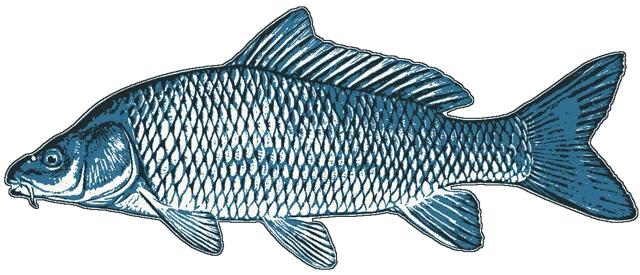
Common carp
Cyprinus carpio · Freshwater
Most US anglers call it a muddy, bony trash fish, but it is a prized food fish in Europe and Asia and eats well from clean, cold water.
Worth a try: Catch from clean water, remove the dark 'mud vein', and either score small fish and fry hard so the Y-bones soften, or hard-smoke large fish over fruitwood (Hank Shaw).
- Tastes
- mild from clean water, strong from muddy water, firm, fatty, Y-bones
- Limits
- No limits. AGFC's statewide limits page lists no daily limit and no size limit for this fish, and the AGFC Code's daily limits are for game fish only. Use of common carp as bait is prohibited at Cane Creek Lake, and possessing live silver, bighead or black carp is illegal. It is on AGFC's rough fish list, and rough fish may be taken by bowfishing and gigging (gigging: rough fish only, no game fish possessed). Other listed waters differ. (AGFC statewide limits page (last changed April 28, 2026); AGFC Code N1.01 (effective Jan. 1, 2025), definitions (effective Aug. 5, 2024), and 26.19 and 26.30 (Code Book of Oct. 30, 2024)) Source
- Where
- Oxbow lakes along lowland rivers (AGFC lists carp among their rough fish).
- dough balls
- canned corn
- worms
- boilies
- bread
- Do not eat (anyone): any fish from the all-fish waters on this page (Bayou Meto above Highway 13, Dupree Lake, the Big Creek tributary at Magnolia, Holmes and Smackover creeks below the 2024 oil release, and the Mississippi River at Memphis on Tennessee's list).
- Do not eat (pregnant or may become pregnant, breastfeeding, under 7): any fish from Cut-off Creek, Moro Bay Creek or Dorcheat Bayou (mercury).
- Limit (pregnant or may become pregnant): one 8-ounce fillet a week of all fish together, the federal advice ADH repeats (January 2023).
- No ADH notice names carp.
Freshwater drum
Aplodinotus grunniens · Freshwater
Many anglers call it a rough fish, but it is prized as food in some areas (TPWD); bled and iced, the boneless fillets eat like a redfish's.
Worth a try: Bleed it, ice it immediately and trim the red lateral meat; then fry thin fillets, grill on the half-shell like redfish, or smoke oily summer fish.
- Tastes
- mild, like other drum, firm but tender, large flake; goes soft if not iced
- Limits
- No limits. AGFC's statewide limits page lists no daily limit and no size limit for this fish, and the AGFC Code's daily limits are for game fish only. It is on AGFC's rough fish list, and rough fish may be taken by bowfishing and gigging (gigging: rough fish only, no game fish possessed). Other listed waters differ. (AGFC statewide limits page (last changed April 28, 2026); AGFC Code N1.01 (effective Jan. 1, 2025) and definitions (effective Aug. 5, 2024)) Source
- Where
- Most rivers, on their spawning run (AGFC); state record 45 lb 7 oz from Lake Wilson (2004).
- worms
- crawdads
- Do not eat (anyone): drum from Felsenthal Refuge, the Saline River (Highway 79 to Stillions Bridge) or Cut-off Creek (mercury).
- Do not eat (anyone): any fish from the all-fish waters on this page (Bayou Meto above Highway 13, Dupree Lake, the Big Creek tributary at Magnolia, Holmes and Smackover creeks below the 2024 oil release, and the Mississippi River at Memphis on Tennessee's list).
- Do not eat (pregnant or may become pregnant, breastfeeding, under 7): drum from those waters or Champagnolle Creek, or any fish from Cut-off Creek, Moro Bay Creek or Dorcheat Bayou (mercury).
Meal limits and other waters (4)
- Limit (everyone), 2 meals a month: drum from Moro Bay Creek.
- AGFC code bars commercial take of drum from the Ouachita River between Smackover Creek and Louisiana because of a state eating advisory (October 2024), so ask ADH (501-661-2232) before eating it from there.
- Limit (pregnant or may become pregnant): one 8-ounce fillet a week of all fish together, the federal advice ADH repeats (January 2023).
- ADH notices and dashboard (updated July 20, 2026).
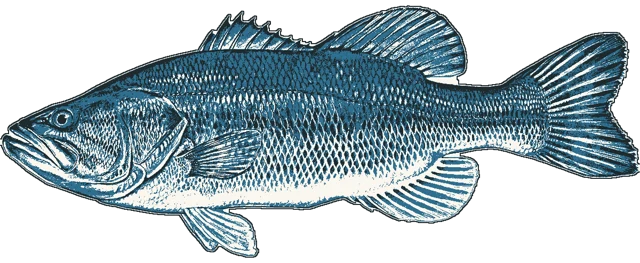
Largemouth bass
Micropterus nigricans (syn. M. salmoides) · also called black bass, Florida bass (stocked strain) · Freshwater
Perfectly edible white fillets, but America's top catch-and-release fish and many anglers swear the meat tastes fishy or muddy, so reputation is split.
- Tastes
- mild to slightly 'fishy', firm, thick fillets
- Limits
- Light regs. Statewide: black bass (largemouth, spotted and smallmouth combined) 10 per day; the statewide table lists no minimum length. Lake rules differ. Beaver and Bull Shoals: largemouth and smallmouth 15 in minimum, largemouth, smallmouth and spotted combined 6 per day. Norfork, Ouachita and DeGray: 13 in minimum, 6 combined (Ouachita and DeGray also allow 10 more spotted bass). Greers Ferry: 12 in minimum. Lake Dardanelle (Arkansas River impoundment): 14 in minimum. Millwood: 6 per day. Lake Monticello: 5 per day, only 1 of them 16 in or longer. Slot waters: Atkins Lake, largemouth 16-21 in must be released (10 per day, 1 over 21 in); Bear Creek Lake, Bob Kidd Lake, Lee Creek Reservoir and Lee Creek below its dam, 13-16 in must be released; Mallard Lake, 14-17 in must be released (10 per day, 1 over 17 in). Listed Arkansas River reaches and streams: largemouth under 14 in must be released. Lake Winona: black bass over 16 in must be released. Many small community lakes: release all largemouth. Other listed waters differ. (AGFC statewide limits page (last changed April 28, 2026); lake and stream rules: AGFC Code N1.01 and N1.02 (effective Jan. 1, 2025), AGFC's July 1, 2026 release and its lake and stream lists on eRegulations (Nov. 2022)) Source
- Best months
- Oxbow lakes: summer, with topwater early or late in the day (AGFC). Greers Ferry: summer bass hold near the thermocline, about 22 ft (AGFC report, Aug. 2025).
- Where
- Reservoirs statewide (DeGray, Ouachita, Millwood, Greers Ferry, Bull Shoals, Beaver) and Delta oxbows such as Lake Chicot; Lake Monticello after its renovation.
- white or chartreuse spinnerbaits
- shad or bluegill crankbaits
- soft plastics that mimic crawdads
- topwater frog
- buzzbait
- jigs
- Water-body mercury advisories commonly list largemouth bass; check your state's advisory before eating large fish.
- Do not eat (anyone): largemouth of any size from the Ouachita River (Camden to Felsenthal) or Moro Bay Creek; 16 inches or longer from Felsenthal Refuge, Dorcheat Bayou or Johnson Hole on the South Fork of the Little Red; over 16 inches from the Saline River (Highway 79 to Stillions Bridge), Grays Lake or Cove Creek Lake; over 20 inches from Lake Fort Smith (mercury).
- Do not eat (anyone): black bass over 16 inches from Lake Winona, which must be released because of mercury (AGFC).
- Do not eat (anyone): any fish from the all-fish waters on this page (Bayou Meto above Highway 13, Dupree Lake, the Big Creek tributary at Magnolia, Holmes and Smackover creeks below the 2024 oil release, and the Mississippi River at Memphis on Tennessee's list).
- Do not eat (anyone), AGFC's November 2022 stream list: largemouth from the Ouachita River, with no reach named.
- Do not eat (pregnant or may become pregnant, breastfeeding, under 7): any fish from Cut-off Creek, Moro Bay Creek or Dorcheat Bayou (mercury).
- Do not eat (same group), largemouth: any size from the Ouachita River; 12 inches or longer from Bayou Bartholomew or Cove Creek Lake; 13 inches or longer from Felsenthal Refuge, the Saline River, Grays Lake, Champagnolle Creek or Lake Ouachita; 16 inches or longer from Lake Columbia, Nimrod Lake, the Fourche La Fave River below Nimrod Dam, Lake Sylvia, Dry Fork Lake, Spring Lake, Lake Winona, Lake Fort Smith or Johnson Hole.
Meal limits and other waters (3)
- Limit (everyone), 2 meals a month: any size from Cut-off Creek; under 16 inches from Dorcheat Bayou; 12 inches or longer from Bayou Bartholomew; 12 to 16 inches from Cove Creek Lake; 13 to 16 inches from Felsenthal Refuge, the Saline River or Grays Lake; 13 inches or longer from Champagnolle Creek or Lake Ouachita; 16 inches or longer from Lake Columbia, Nimrod Lake, the Fourche La Fave River below Nimrod Dam, Lake Sylvia, Dry Fork Lake, Spring Lake or Lake Winona (over 16 must be released); 16 to 20 inches from Lake Fort Smith.
- Limit (pregnant or may become pregnant): one 8-ounce fillet a week of all fish together, the federal advice ADH repeats (January 2023).
- ADH notices and dashboard (updated July 20, 2026).
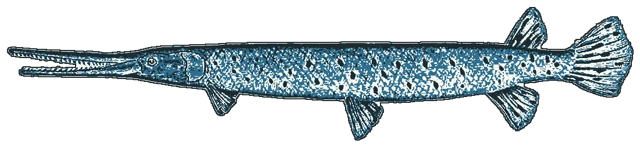
Longnose gar
Lepisosteus osseus · Freshwater
Most anglers treat it as a nuisance and few eat it, but the firm white backstraps are good once you get through the armor.
Worth a try: Cut down the back with shears or a hatchet to get past the armored scales, take the two white backstraps, and fry them or grind them into Louisiana gar balls.
- Tastes
- mild, firm, meaty, almost like alligator
- Limits
- No limits. AGFC's statewide limits page lists no daily limit and no size limit for this fish, and the AGFC Code's daily limits are for game fish only. It is on AGFC's rough fish list, and rough fish may be taken by bowfishing and gigging (gigging: rough fish only, no game fish possessed). Other listed waters differ. (AGFC statewide limits page (last changed April 28, 2026); AGFC Code N1.01 (effective Jan. 1, 2025) and definitions (effective Aug. 5, 2024)) Source
- Where
- Wider range of waters than spotted gar (AGFC); trophy-size fish on large live bait in oxbows; rod-and-reel record from Taylor Old River Lake (35 lb 12 oz).
- large live bait
- crappie jig or minnow
- Gar eggs (roe) are toxic to people and other warm-blooded animals; never eat them (Maryland DNR).
- Do not eat (anyone): gar from Felsenthal Refuge, the Ouachita River (Camden to Felsenthal), the Saline River (Highway 79 to Stillions Bridge), Lake Columbia or Moro Bay Creek (mercury).
- Do not eat (anyone): any fish from the all-fish waters on this page (Bayou Meto above Highway 13, Dupree Lake, the Big Creek tributary at Magnolia, Holmes and Smackover creeks below the 2024 oil release, and the Mississippi River at Memphis on Tennessee's list).
- Do not eat (anyone), AGFC's November 2022 stream list: gar from the Ouachita River, with no reach named.
- Do not eat (pregnant or may become pregnant, breastfeeding, under 7): gar from those waters, Bayou Bartholomew, Champagnolle Creek or Grays Lake; any fish from Cut-off Creek, Moro Bay Creek or Dorcheat Bayou (mercury).
Meal limits and other waters (3)
- Limit (everyone), 2 meals a month: gar from Bayou Bartholomew, Champagnolle Creek, Grays Lake, Cut-off Creek or Dorcheat Bayou.
- Limit (pregnant or may become pregnant): one 8-ounce fillet a week of all fish together, the federal advice ADH repeats (January 2023).
- ADH notices and dashboard (updated July 20, 2026).
Paddlefish
Polyodon spathula · Freshwater
Valued for its caviar. We have no good source on how it eats, so it is rated Just OK by default.
- Tastes
- mild, firm, boneless
- Limits
- Heavy regs. Statewide: 2 per day. Snagging seasons April 15-June 15: White River from the Hwy 45 bridge (Twin Bridges Access) up to the Lake Sequoyah dam (Paddlefish Trophy Tag required, $5 application, drawing March 31, 2 paddlefish per season, 34 in eye-to-fork minimum, tag and report by the AGFC app or game check hotline within 12 hours) and White River below Houseman Access to the Missouri line (34 in eye-to-fork minimum). Black River (Missouri line to Spring River) and St. Francis River (Missouri line to Payneway Structure): Jan. 1-Feb. 15, 1 paddlefish with up to 5 catfish. Elsewhere game fish, paddlefish included, may be snagged only from the bank within 100 yards below a dam, with listed exceptions such as boat snagging below Arkansas River locks and dams. Other listed waters differ. (AGFC statewide limits page (last changed April 28, 2026); snagging seasons: AGFC Code 26.17 (effective Jan. 1, 2025), AGFC release of March 14, 2025 and fee page (last changed Sept. 28, 2026)) Source
- Best months
- Snagging seasons April 15-June 15 (White River sections) and Jan. 1-Feb. 15 (Black and St. Francis rivers).
- Where
- White River above Beaver Lake, White River below Houseman Access to Table Rock Lake, Black River, St. Francis River; Beaver Lake record.
- snagging with large treble hooks
- Do not eat (anyone): any fish from the all-fish waters on this page (Bayou Meto above Highway 13, Dupree Lake, the Big Creek tributary at Magnolia, Holmes and Smackover creeks below the 2024 oil release, and the Mississippi River at Memphis on Tennessee's list).
- Do not eat (pregnant or may become pregnant, breastfeeding, under 7): any fish from Cut-off Creek, Moro Bay Creek or Dorcheat Bayou (mercury).
- Limit (pregnant or may become pregnant): one 8-ounce fillet a week of all fish together, the federal advice ADH repeats (January 2023).
- No ADH notice names paddlefish.
Rock bass
Ambloplites rupestris · Freshwater
Light, flaky fillets that some anglers rate highly, while others find them oily and fishy compared with bluegill or crappie.
- Tastes
- mild to slightly fishy, light, flaky
- Limits
- Light regs. Statewide: rock bass (Ozark and shadow bass) 10 per day; no statewide minimum length listed. Other listed waters differ. (AGFC statewide limits page (last changed April 28, 2026); AGFC Code N1.01 (effective Jan. 1, 2025)) Source
- Where
- Clear mountain streams (AGFC); Crooked Creek is listed as home to Ozark bass.
- Rooster Tails
- small jigs
- live worms
- Do not eat (anyone), AGFC's November 2022 stream list: 'other species of bass' from the Ouachita and Saline rivers inside Felsenthal Refuge, or the Saline from Stillions Bridge to the Ouachita (read strictly, that includes this fish; confirm with ADH, 501-661-2232).
- Do not eat (anyone): any fish from the all-fish waters on this page (Bayou Meto above Highway 13, Dupree Lake, the Big Creek tributary at Magnolia, Holmes and Smackover creeks below the 2024 oil release, and the Mississippi River at Memphis on Tennessee's list).
- Do not eat (pregnant or may become pregnant, breastfeeding, under 7): any fish from Cut-off Creek, Moro Bay Creek or Dorcheat Bayou (mercury).
- Limit (pregnant or may become pregnant): one 8-ounce fillet a week of all fish together, the federal advice ADH repeats (January 2023).
- No ADH notice names rock bass.
Shortnose gar
Lepisosteus platostomus · Freshwater
Small gar with little meat; usually tossed, though the backstraps eat like any gar.
Worth a try: Cut down the back with shears or a hatchet to get past the armored scales, take the two white backstraps, and fry them or grind them into Louisiana gar balls.
- Tastes
- mild, firm, meaty
- Limits
- No limits. AGFC's statewide limits page lists no daily limit and no size limit for this fish, and the AGFC Code's daily limits are for game fish only. It is on AGFC's rough fish list, and rough fish may be taken by bowfishing and gigging (gigging: rough fish only, no game fish possessed). Other listed waters differ. (AGFC statewide limits page (last changed April 28, 2026); AGFC Code N1.01 (effective Jan. 1, 2025) and definitions (effective Aug. 5, 2024)) Source
- Where
- Larger river systems of the state (AGFC); rod-and-reel record from Lake Dardanelle (5 lb 13 oz, 2011).
- Gar eggs (roe) are toxic to people and other warm-blooded animals; never eat them (Maryland DNR).
- Do not eat (anyone): gar from Felsenthal Refuge, the Ouachita River (Camden to Felsenthal), the Saline River (Highway 79 to Stillions Bridge), Lake Columbia or Moro Bay Creek (mercury).
- Do not eat (anyone): any fish from the all-fish waters on this page (Bayou Meto above Highway 13, Dupree Lake, the Big Creek tributary at Magnolia, Holmes and Smackover creeks below the 2024 oil release, and the Mississippi River at Memphis on Tennessee's list).
- Do not eat (anyone), AGFC's November 2022 stream list: gar from the Ouachita River, with no reach named.
- Do not eat (pregnant or may become pregnant, breastfeeding, under 7): gar from those waters, Bayou Bartholomew, Champagnolle Creek or Grays Lake; any fish from Cut-off Creek, Moro Bay Creek or Dorcheat Bayou (mercury).
Meal limits and other waters (3)
- Limit (everyone), 2 meals a month: gar from Bayou Bartholomew, Champagnolle Creek, Grays Lake, Cut-off Creek or Dorcheat Bayou.
- Limit (pregnant or may become pregnant): one 8-ounce fillet a week of all fish together, the federal advice ADH repeats (January 2023).
- ADH notices and dashboard (updated July 20, 2026).
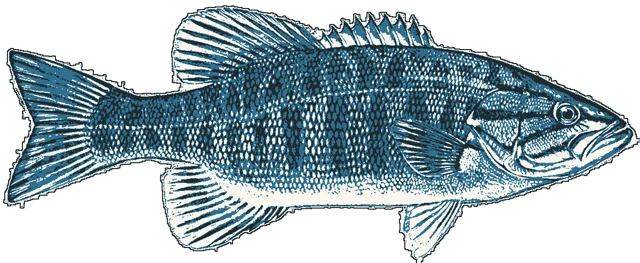
Smallmouth bass
Micropterus dolomieu · Freshwater
Firm, white and good, often rated above largemouth, but most smallmouth are released by custom and the flesh has a slight 'fishy' edge some anglers dislike.
- Tastes
- mild, slightly fishy edge, firm, thick white fillets
- Limits
- Heavy regs. Flowing waters: 2 per day, 12 in minimum (new for 2026-27; the AGFC statewide page still shows 4). Ten Blue Ribbon streams (Buffalo, Caddo, Current, Eleven Point, Illinois, Kings, Spring and White rivers, Crooked Creek and War Eagle Creek): 1 per day, 15 in minimum (War Eagle Creek: black bass 2 combined; Crooked Creek, Arkansas Game and Fish Foundation property near Kelley's Slab: release all). Mulberry River: 2 per day, 12 in. Lakes: AGFC's statewide limits page (last changed April 28, 2026, before the July 1 rule changes) lists 4 per day, hybrids of smallmouth and other bass included, so check the current guidebook. Beaver and Bull Shoals: 15 in minimum. Norfork: 13 in, 6 smallmouth per day. Greers Ferry: 12 in, 6 smallmouth per day. Lake Catherine: release all smallmouth. Meanmouth hybrids follow the same limits. (Flowing waters and Blue Ribbon streams effective July 1, 2026 (AGFC releases of July 1 and July 10, 2026); lake rules: AGFC Code N1.01 and N1.02 (effective Jan. 1, 2025)) Source
- Best months
- Game & Fish (Jan. 2006): January and February for big smallmouth; angling is also good in the warm months.
- Where
- Ozark float streams: Crooked Creek, Buffalo, Kings, Spring, Eleven Point, Illinois, Current and War Eagle Creek (Blue Ribbon streams); also Greers Ferry, Beaver and Bull Shoals lakes.
- crankbaits and spinnerbaits retrieved across riffles
- live bait worked in deep holes with large rocks
- soft plastic lures
- Do not eat (anyone): black bass over 20 inches from Lake Fort Smith (mercury).
- Do not eat (anyone): black bass over 16 inches from Lake Winona, which must be released because of mercury (AGFC).
- Do not eat (anyone), AGFC's November 2022 stream list: 'other species of bass' from the Ouachita and Saline rivers inside Felsenthal Refuge, or the Saline from Stillions Bridge to the Ouachita (confirm with ADH, 501-661-2232).
- Do not eat (anyone): any fish from the all-fish waters on this page (Bayou Meto above Highway 13, Dupree Lake, the Big Creek tributary at Magnolia, Holmes and Smackover creeks below the 2024 oil release, and the Mississippi River at Memphis on Tennessee's list).
- Do not eat (pregnant or may become pregnant, breastfeeding, under 7): black bass 16 inches or longer from Lake Winona or Lake Fort Smith, or any fish from Cut-off Creek, Moro Bay Creek or Dorcheat Bayou (mercury).
Meal limits and other waters (3)
- Limit (everyone), 2 meals a month: black bass 16 inches or longer from Lake Winona (over 16 must be released), or 16 to 20 inches from Lake Fort Smith.
- Limit (pregnant or may become pregnant): one 8-ounce fillet a week of all fish together, the federal advice ADH repeats (January 2023).
- ADH notices and dashboard (updated July 20, 2026).
Smallmouth buffalo
Ictiobus bubalus · also called buffalo fish · Freshwater
Smallmouth buffalo is highly prized in many areas (TPWD), but some anglers still call it a rough fish because of its bones.
Worth a try: Many people do not realize smallmouth buffalo is quite a food fish (TPWD); fry the ribs or smoke it.
- Tastes
- mild, firm, bony
- Limits
- No limits. AGFC's statewide limits page lists no daily limit and no size limit for this fish, and the AGFC Code's daily limits are for game fish only. It is on AGFC's rough fish list, and rough fish may be taken by bowfishing and gigging (gigging: rough fish only, no game fish possessed). Other listed waters differ. (AGFC statewide limits page (last changed April 28, 2026); AGFC Code N1.01 (effective Jan. 1, 2025) and definitions (effective Aug. 5, 2024)) Source
- Where
- Oxbows and lowland rivers; rod-and-reel record smallmouth buffalo 68 lb 8 oz from Lake Hamilton (1984).
- dough baits
- bowfishing
- Do not eat (anyone): buffalo from Lake Saracen (PCBs) or Cut-off Creek (mercury).
- Do not eat (anyone): any fish from the all-fish waters on this page (Bayou Meto above Highway 13, Dupree Lake, the Big Creek tributary at Magnolia, Holmes and Smackover creeks below the 2024 oil release, and the Mississippi River at Memphis on Tennessee's list).
- Do not eat (pregnant or may become pregnant, breastfeeding, under 7): buffalo 18 inches or longer from Bayou Bartholomew, or any fish from Cut-off Creek, Moro Bay Creek or Dorcheat Bayou (mercury).
Meal limits and other waters (3)
- Limit (everyone), 2 meals a month: buffalo 18 inches or longer from Bayou Bartholomew, or any from Moro Bay Creek.
- Limit (pregnant or may become pregnant): one 8-ounce fillet a week of all fish together, the federal advice ADH repeats (January 2023).
- ADH notices and dashboard (updated July 20, 2026).
Spotted bass
Micropterus punctulatus · also called Kentucky bass · Freshwater
Eats like other black bass and is kept more often than largemouth because it is abundant and small; agencies in some states encourage harvest.
- Tastes
- mild, firm, white
- Limits
- Light regs. Statewide: black bass (largemouth, spotted and smallmouth combined) 10 per day, no statewide minimum length listed. Bull Shoals: spotted bass 12 in minimum, 6 bass combined. Beaver and Norfork: 6 bass combined. Ouachita, DeGray and Greeson: 10 spotted bass may be taken in addition to the combined bass limit (Ouachita and DeGray combined 6, Greeson combined 10). Other listed waters differ. (AGFC statewide limits page (last changed April 28, 2026); lake rules: AGFC Code N1.01 and N1.02 (effective Jan. 1, 2025)) Source
- Best months
- Greers Ferry: summer fish hold near the thermocline, about 22 ft (AGFC report, Aug. 2025).
- Where
- Large streams, rivers and impoundments statewide (AGFC); Greers Ferry, Beaver, Bull Shoals and the Kings River can produce largemouth, smallmouth and spotted bass in one outing.
- jigs
- Carolina rig
- football jig
- Texas-rigged plastic worm
- crankbaits
- hair jigs
- Do not eat (anyone): black bass over 20 inches from Lake Fort Smith (mercury).
- Do not eat (anyone): black bass over 16 inches from Lake Winona, which must be released because of mercury (AGFC).
- Do not eat (anyone), AGFC's November 2022 stream list: 'other species of bass' from the Ouachita and Saline rivers inside Felsenthal Refuge, or the Saline from Stillions Bridge to the Ouachita (confirm with ADH, 501-661-2232).
- Do not eat (anyone): any fish from the all-fish waters on this page (Bayou Meto above Highway 13, Dupree Lake, the Big Creek tributary at Magnolia, Holmes and Smackover creeks below the 2024 oil release, and the Mississippi River at Memphis on Tennessee's list).
- Do not eat (pregnant or may become pregnant, breastfeeding, under 7): black bass 16 inches or longer from Lake Winona or Lake Fort Smith, or any fish from Cut-off Creek, Moro Bay Creek or Dorcheat Bayou (mercury).
Meal limits and other waters (3)
- Limit (everyone), 2 meals a month: black bass 16 inches or longer from Lake Winona (over 16 must be released), or 16 to 20 inches from Lake Fort Smith.
- Limit (pregnant or may become pregnant): one 8-ounce fillet a week of all fish together, the federal advice ADH repeats (January 2023).
- ADH notices and dashboard (updated July 20, 2026).
Spotted gar
Lepisosteus oculatus · Freshwater
Small gar with little meat; usually tossed, though the backstraps eat like any gar.
Worth a try: Cut down the back with shears or a hatchet to get past the armored scales, take the two white backstraps, and fry them or grind them into Louisiana gar balls.
- Tastes
- mild, firm, meaty
- Limits
- No limits. AGFC's statewide limits page lists no daily limit and no size limit for this fish, and the AGFC Code's daily limits are for game fish only. It is on AGFC's rough fish list, and rough fish may be taken by bowfishing and gigging (gigging: rough fish only, no game fish possessed). Other listed waters differ. (AGFC statewide limits page (last changed April 28, 2026); AGFC Code N1.01 (effective Jan. 1, 2025) and definitions (effective Aug. 5, 2024)) Source
- Where
- Quiet waters (AGFC); rod-and-reel record from the Little Red River (7 lb 15 oz, 2018).
- crappie jig
- minnow
- Gar eggs (roe) are toxic to people and other warm-blooded animals; never eat them (Maryland DNR).
- Do not eat (anyone): gar from Felsenthal Refuge, the Ouachita River (Camden to Felsenthal), the Saline River (Highway 79 to Stillions Bridge), Lake Columbia or Moro Bay Creek (mercury).
- Do not eat (anyone): any fish from the all-fish waters on this page (Bayou Meto above Highway 13, Dupree Lake, the Big Creek tributary at Magnolia, Holmes and Smackover creeks below the 2024 oil release, and the Mississippi River at Memphis on Tennessee's list).
- Do not eat (anyone), AGFC's November 2022 stream list: gar from the Ouachita River, with no reach named.
- Do not eat (pregnant or may become pregnant, breastfeeding, under 7): gar from those waters, Bayou Bartholomew, Champagnolle Creek or Grays Lake; any fish from Cut-off Creek, Moro Bay Creek or Dorcheat Bayou (mercury).
Meal limits and other waters (3)
- Limit (everyone), 2 meals a month: gar from Bayou Bartholomew, Champagnolle Creek, Grays Lake, Cut-off Creek or Dorcheat Bayou.
- Limit (pregnant or may become pregnant): one 8-ounce fillet a week of all fish together, the federal advice ADH repeats (January 2023).
- ADH notices and dashboard (updated July 20, 2026).
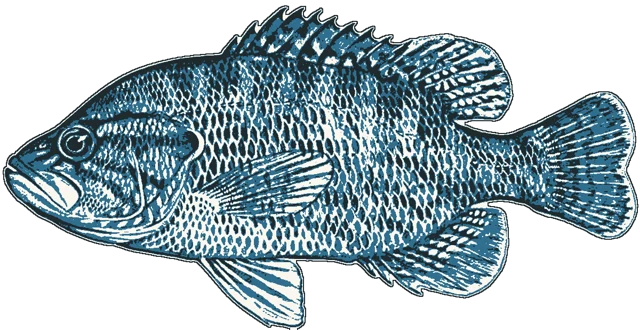
Warmouth
Lepomis gulosus · also called bream · Freshwater
Good to eat from clean water, but TPWD warns its flesh can have a strong flavor because it lives in muddy, weedy water.
- Tastes
- mild to strong depending on water, flaky
- Limits
- Light regs. Statewide: bream (bluegill, redear, longear, warmouth and other sunfishes combined) 50 per day, no minimum length; no daily limit on bream shorter than 4 in. Small community lakes and ponds: bream 25 per day. Other listed waters differ. (AGFC statewide limits page (last changed April 28, 2026); community ponds: AGFC Code 26.25 (effective Jan. 1, 2025)) Source
- Best months
- Bream gather in shallow water to spawn in June and July (AGFC panfish page). Best in morning and evening.
- Where
- Ponds, lakes and river backwaters near aquatic vegetation and sunken trees; oxbow lakes behind cypress trees.
- small jigs
- small spinners
- poppers
- wet or dry flies
- Do not eat (anyone): any fish from the all-fish waters on this page (Bayou Meto above Highway 13, Dupree Lake, the Big Creek tributary at Magnolia, Holmes and Smackover creeks below the 2024 oil release, and the Mississippi River at Memphis on Tennessee's list).
- Do not eat (pregnant or may become pregnant, breastfeeding, under 7): any fish from Cut-off Creek, Moro Bay Creek or Dorcheat Bayou (mercury).
Meal limits and other waters (3)
- Limit (everyone), 2 meals a month: bream from Moro Bay Creek.
- Limit (pregnant or may become pregnant): one 8-ounce fillet a week of all fish together, the federal advice ADH repeats (January 2023).
- ADH notices and dashboard (updated July 20, 2026).
Yellow bass
Morone mississippiensis · Freshwater
Small, but schools let anglers fill a cooler fast. We have no good source on how it eats, so it is rated Just OK by default.
- Tastes
- mild, sweet, firm, white
- Limits
- No limits. AGFC's statewide limits page lists no daily limit and no size limit for this fish, and the AGFC Code's daily limits are for game fish only. An AGFC biologist calls yellow bass undesirable because they rarely reach a decent size for harvest (May 2026). It is on AGFC's rough fish list, and rough fish may be taken by bowfishing and gigging (gigging: rough fish only, no game fish possessed). Other listed waters differ. (AGFC statewide limits page (last changed April 28, 2026); AGFC Code N1.01 (effective Jan. 1, 2025) and definitions (effective Aug. 5, 2024)) Source
- Where
- State record 2 lb 4 oz from Lake Ouachita (Jan. 26, 2022).
- live minnows
- small spoons
- inline spinners
- small jigs
- Do not eat (anyone), AGFC's November 2022 stream list: 'other species of bass' from the Ouachita and Saline rivers inside Felsenthal Refuge, or the Saline from Stillions Bridge to the Ouachita (read strictly, that includes this fish; confirm with ADH, 501-661-2232).
- Do not eat (anyone): any fish from the all-fish waters on this page (Bayou Meto above Highway 13, Dupree Lake, the Big Creek tributary at Magnolia, Holmes and Smackover creeks below the 2024 oil release, and the Mississippi River at Memphis on Tennessee's list).
- Do not eat (pregnant or may become pregnant, breastfeeding, under 7): any fish from Cut-off Creek, Moro Bay Creek or Dorcheat Bayou (mercury).
- Limit (pregnant or may become pregnant): one 8-ounce fillet a week of all fish together, the federal advice ADH repeats (January 2023).
- No ADH notice names yellow bass.
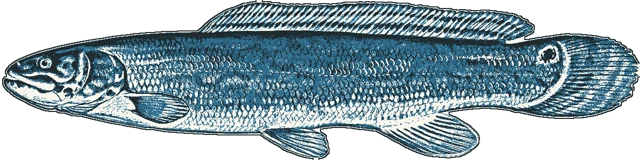
Bowfin
Amia calva (ruddy bowfin) and Amia ocellicauda (emerald bowfin) · also called grinnel, grinnell · Freshwater
TPWD calls it a rough fish rather than one for the table; the soft, pale flesh earned it the nickname 'cottonfish'.
Worth a try: Keep it alive until you clean it, cook it the same day, and use it smoked, fried as patties or stewed; MeatEater serves fried bowfin with a morel cream sauce.
- Tastes
- mild, soft, jelly-like unless very fresh
- Limits
- No limits. AGFC's statewide limits page lists no daily limit and no size limit for bowfin, and the AGFC Code's daily limits are for game fish only; it is on AGFC's rough fish list. Bowfin under 6 in count as baitfish and bowfin over 6 in are 'commercial fish'. May be taken by bowfishing and gigging. Other listed waters differ. (AGFC statewide limits page (last changed April 28, 2026); AGFC Code N1.01 (effective Jan. 1, 2025) and definitions (effective Aug. 5, 2024)) Source
- Where
- Backwaters and oxbows across the state (AGFC); state record from Desha County (17 lb 5 oz, 1977).
- spinnerbaits
- most bass lures
- Do not eat (anyone): bowfin from Felsenthal Refuge, the Ouachita River (Camden to Felsenthal), the Saline River (Highway 79 to Stillions Bridge), Lake Columbia or Moro Bay Creek (mercury).
- Do not eat (anyone): any fish from the all-fish waters on this page (Bayou Meto above Highway 13, Dupree Lake, the Big Creek tributary at Magnolia, Holmes and Smackover creeks below the 2024 oil release, and the Mississippi River at Memphis on Tennessee's list).
- Do not eat (anyone), AGFC's November 2022 stream list: bowfin from the Ouachita River, with no reach named.
- Do not eat (pregnant or may become pregnant, breastfeeding, under 7): bowfin from those waters, Bayou Bartholomew, Champagnolle Creek or Grays Lake; any fish from Cut-off Creek, Moro Bay Creek or Dorcheat Bayou (mercury).
- Do not eat (anyone), Louisiana's list (September 23, 2026): bowfin from Bayou Bartholomew below the state line.
Meal limits and other waters (3)
- Limit (everyone), 2 meals a month: bowfin from Bayou Bartholomew, Champagnolle Creek, Grays Lake, Cut-off Creek or Dorcheat Bayou.
- Limit (pregnant or may become pregnant): one 8-ounce fillet a week of all fish together, the federal advice ADH repeats (January 2023).
- ADH notices and dashboard (updated July 20, 2026).
Redhorse suckers
Moxostoma spp. · Freshwater
Seldom caught on hook and line and written off as bony bottom-feeders; MeatEater notes the bones.
Worth a try: Scored and deep-fried, the Y-bones disappear and the firm, sweet flesh is delicious; MeatEater recommends shorthead, golden or silver redhorse for deep-fried sucker balls.
- Tastes
- mild, sweet, firm, white, Y-bones
- Limits
- Light regs. Statewide: suckers (redhorse, hogsucker, white and spotted suckers) 20 per day; no size limit. May be taken by sport fishing, hogging, snagging or gigging. Snagging for suckers April 1-Feb. 15, sunrise to sunset. Other listed waters differ. (AGFC alternative fishing methods page (last changed Jan. 16, 2026)) Source
- Best months
- Snagging season April 1-Feb. 15.
- Where
- Streams and rivers (state records: silver redhorse, Eleven Point River; river redhorse, Osage Creek).
- worm fished on the bottom
- Several redhorse species are rare or state-protected; harvest only common species.
- Do not eat (anyone): redhorse and other suckers from Cut-off Creek, or redhorse 20 inches or longer from the Saline River (Highway 79 to Stillions Bridge) (mercury).
- Do not eat (anyone): any fish from the all-fish waters on this page (Bayou Meto above Highway 13, Dupree Lake, the Big Creek tributary at Magnolia, Holmes and Smackover creeks below the 2024 oil release, and the Mississippi River at Memphis on Tennessee's list).
- Do not eat (pregnant or may become pregnant, breastfeeding, under 7): redhorse 20 inches or longer from the Saline River, or any fish from Cut-off Creek, Moro Bay Creek or Dorcheat Bayou (mercury).
Meal limits and other waters (3)
- Limit (everyone), 2 meals a month: redhorse and other suckers from Moro Bay Creek.
- Limit (pregnant or may become pregnant): one 8-ounce fillet a week of all fish together, the federal advice ADH repeats (January 2023).
- ADH notices and dashboard (updated July 20, 2026).
Where to fish in Arkansas
Fish named here are what people catch at each spot, not a promise they’re safe to eat. Read the eating advice on the fish’s card before you keep one.
- 1Beaver Lake and White River arms reservoir · fresh
AGFC calls Beaver one of the best white bass runs in the state, with no daily limit on white bass in the lake and its tributaries; walleye run up the White River and War Eagle Creek in March; AGFC stocks striped bass.
Known for: White bass, Walleye, Striped bass
Access: Twin Bridges Access (Hwy 45) on the White River and War Eagle Creek below War Eagle Mill, named by AGFC biologists; bank anglers can walk the White River shoals.
- 2Bull Shoals Lake reservoir · fresh
AGFC's code sets walleye at 4 per day, 18 in minimum; state records for spotted bass (7 lb 15 oz) and smallmouth bass (7 lb 5 oz) came from the lake. Women who are or may become pregnant, breastfeeding women and children under 7 should not eat walleye 18 inches or longer from here, and everyone else no more than 2 meals a month (mercury).
Known for: Walleye, Spotted bass, Smallmouth bass
Access: Arkansas residents with the $10 White River Border Lakes License may fish the Missouri side without a Missouri license (no trout).
- 3White River below Bull Shoals Dam (to Guion) tailwater · fresh
AGFC has stocked rainbow and brown trout here since 1955 and manages the water from the dam to the Hwy 58 bridge at Guion; Bull Shoals and Norfork can give all four trout species on one trip.
Known for: Rainbow trout, Brown trout
Access: Trout permit required; no fishing within 100 yards of the dam; Bull Shoals and Rim Shoals catch-and-release areas (artificial lures, barbless hooks).
- 4Norfork tailwater (North Fork River) tailwater · fresh
AGFC manages the North Fork from Norfork Dam to the White River; rainbow trout stocked since 1948 and brown trout since 1949.
Known for: Rainbow trout, Brown trout
Access: Trout permit required; no fishing within 100 yards of the dam; Norfork Catch-and-Release Area from Long Hole to the Bill Ackerman/River Ridge walk-in access.
- 5Little Red River (Greers Ferry tailwater) tailwater · fresh
The Little Red River tailwater flows about 30 miles; rainbow stocked since 1966, brown trout since 1977 now self-sustaining; it holds the 4-lb-line class world record brown trout.
Known for: Rainbow trout, Brown trout
Access: JFK Park and Barnett Access (the Swinging Bridge) for wading; JFK, Cow Shoals and Mossy Shoals catch-and-release areas; trout permit required.
- 6Greers Ferry Lake reservoir · fresh
State records for walleye (22 lb 11 oz) and hybrid striped bass (27 lb 5 oz) came from the lake; AGFC names the northern river arms for white bass; walleye minimum is 16 in.
Known for: Walleye, Hybrid striped bass, White bass, Smallmouth bass
Access: Johnson Hole Access on the South Fork arm north of Clinton is named by AGFC for the white bass run.
- 7Lake Ouachita reservoir · fresh
AGFC lists Ouachita among the four lakes stocked with striped bass; AGFC's code allows 10 extra spotted bass beyond the combined 6; state channel catfish record (38 lb) is from the lake. Women who are or may become pregnant, breastfeeding women and children under 7 should not eat striped bass 25 inches or longer from here, and everyone else no more than 2 meals a month (mercury).
Known for: Striped bass
Access: AGFC publishes GPS files for its fish attractors in Lake Ouachita; no fishing in the Jim Collins Net Pen area.
- 8DeGray Lake reservoir · fresh
A 12.63-lb, 26.25-in bass caught Feb. 1, 2026 was the largest of 2026's Legacy Lunkers; AGFC describes crappie schools on brush near the thermocline on the 13,800-acre lake.
Known for: Largemouth bass, Black crappie, White crappie
Access: DeGray Lake Resort State Park; Iron Mountain Marina (AGFC reports).
- 9Lake Dardanelle (Arkansas River) reservoir · fresh
Striped and hybrid bass limit is 10 combined and 10 extra channel catfish may be kept; the rod-and-reel shortnose gar record is from this lake and the rod-and-reel flathead record (80 lb) is from the Arkansas River.
Known for: Striped bass, Shortnose gar
Access: An Arkansas River impoundment in Franklin, Pope, Johnson, Logan and Yell counties; snagging rules apply below locks and dams.
- 10Millwood Lake reservoir · fresh
AGFC: known for large Florida-strain largemouth from a long stocking program; the Little River above Yarborough Landing is a white bass run spot; largemouth limit is 6.
Known for: Largemouth bass, White bass
Access: Little River above Yarborough Landing; spearfishing allowed in season.
- 11Lake Chicot reservoir · fresh
AGFC calls it the largest oxbow lake in North America; the July 2026 report lists bluegill, channel catfish, largemouth, hybrid striped bass, redear and crappie; crappie 20 per day with a 10 in minimum, no limit on channel catfish.
Known for: Bluegill, Redear sunfish, Channel catfish, Largemouth bass, Hybrid striped bass
Access: Lake Chicot State Park; open to skiing and personal watercraft.
- 12Crooked Creek (Blue Ribbon smallmouth stream) river · fresh
AGFC's 22-mile Crooked Creek Water Trail is known for smallmouth bass; Ozark bass also live there; smallmouth limit is 1 per day at 15 in.
Known for: Smallmouth bass, Rock bass
Access: Six public access points on the water trail (Lower Pyatt, Upper Pyatt, Snow, Mark Oliver, Kelley's Slab, Yellville); almost all land along the creek is private.
- 13Buffalo River (Blue Ribbon smallmouth stream) river · fresh
One of the ten Blue Ribbon smallmouth streams: 1 per day, 15 in minimum.
Known for: Smallmouth bass
Access: National Park Service rules apply: rod or line closely attended; baitfish only if taken from the Buffalo River or its tributaries or bought from a licensed dealer, and crayfish only if caught there; no gaffing, hogging, noodling or spearfishing; no motors upstream of Erbie Ford and 10 hp maximum from Erbie Ford to the White River.
- 14Spring River (Mammoth Spring to Myatt Creek) river · fresh
AGFC manages about 12 miles of trout water below Dam #1 at Mammoth Spring State Park, fed by 58 F spring water; AGFC lists brown trout at 16 in minimum and the Spring River as a Blue Ribbon smallmouth stream.
Known for: Rainbow trout, Brown trout, Smallmouth bass
Access: Trout permit required in the managed reach; Mammoth Spring State Park.
Arkansas fishing license and rules
- Resident: $10.50 Resident Fisheries Conservation License; Resident Trout Permit $10 to keep trout from any water or to fish listed tailwaters
- Nonresident: $60 annual; Nonresident Trout Permit $20
- Nonresident short-term: 1-day $15; 3-day trip $30 (valid 72 hours from the start time); the $20 Nonresident Trout Permit is also needed for trout
- Who needs one: 16 and older need a license to take aquatic wildlife; trout permit needed at 16 and older to keep trout
- Free fishing days: Free Fishing Weekend 2026 was June 12-14 (noon Friday through midnight Sunday): no fishing license or trout permit needed, but all limits and area rules still apply. It is set each year by governor's proclamation; the 2027 dates were not announced as of Nov 21, 2026.
More license details
Fishing licenses expire one year from purchase unless noted otherwise. Residents 65 and older: $3.50 annual fishing license (valid through June 30; lifetime options also sold). Resident Combination Sportsman's $35.50 (expires June 30). Alligator gar over 36 inches need an Alligator Gar Trophy Tag (apply with a $5 fee; free if drawn). Paddlefish Trophy Tag for the White River snagging season above Beaver Lake ($5 application). White River Border Lakes License $10 lets Arkansas residents fish the Missouri side of Bull Shoals, Norfork and Table Rock (no trout). Anyone 16 and older using AGFC-owned lakes and WMAs needs a hunting or fishing license or the $10.50 WMA/Lake Conservation Permit.
Buy a license License types and fees
Fees: AGFC fee page (last changed Sept. 28, 2026); license term from AGFC's license rules on eRegulations (Oct. 2022).
- Anyone 16 or older needs a fishing license; a trout permit is needed to keep trout from any water and to fish the tailwaters below Beaver, Bull Shoals, Norfork, Greers Ferry and Greeson dams, the Spring River, and Spavinaw Creek east of Hwy 59.
- Alligator gar: 1 per day under 36 in; 36 in or longer needs a free Alligator Gar Trophy Tag (drawn; apply with a $5 fee, free if awarded), 1 per calendar year, and none may be taken from noon May 1 to noon July 1.
- Trout limits since Feb. 1, 2026: Norfork tailwater and Bull Shoals tailwater from the dam to Norfork Access, 2 rainbow trout under 14 in; Norfork Access to Guion, 2 trout with only one over 14 in; Greers Ferry and Beaver tailwaters, 2 trout under 14 in. No natural or scented bait in catch-and-release areas.
- Smallmouth bass: 2 per day, 12 in minimum on flowing waters; 1 per day, 15 in on the ten Blue Ribbon streams; lakes have their own limits.
- Possession limits were eliminated July 1, 2026; daily limits still apply, and fish stored at a final point of consumption no longer count. AGFC's older statewide limits page still mentions a possession limit.
- Game fish may be snagged only from the bank within 100 yards below a dam, with listed exceptions (Arkansas River boat snagging, paddlefish seasons April 15-June 15 on the White River). Gigging is for rough fish (alligator gar may also be gigged under its own rules), and other game fish may not be possessed while gigging.
- Live baitfish must come from the same water, a tributary upstream, or a licensed dealer of certified farm-raised baitfish. Cull no trout; once on the stringer it counts.
- In waters with a length or slot limit and in catch-and-release areas you may not carry fish that have been filleted or had the head or tail removed. Lake Wilhelmina (Polk County) is catch and release for all fish until further notice.
- Norfork, Bull Shoals and Table Rock lakes cross into Missouri, and anglers follow the rules of the state they are fishing in (in Arkansas, striped plus hybrid bass at Norfork is 3 combined).
Limits here are summaries for convenience, checked on the date shown. The official Arkansas regulations govern; check them before you keep a fish.
Before you eat it
- Do not eat (anyone): any fish from Bayou Meto above Highway 13 (Pulaski and Lonoke counties; dioxin), Dupree Lake (Pulaski County; dioxin), the Big Creek tributary in Columbia County from Magnolia to Big Creek (PCBs; closed to fishing), or Holmes and Smackover creeks in Union County, from the oil pipeline release site north of Gas Plant Road and All Gulf Road down to Smackover Creek below the Welsco Bridge.
- Holmes and Smackover creeks are catch and release only (do not eat): ADH called the advisory temporary on July 24, 2024, until clean-up and more sampling are done, and it is on ADH's dashboard (updated July 20, 2026). AGFC's July 25, 2024 release says it does not apply above the release site or past where Smackover Creek meets the Ouachita River.
- Do not eat (anyone), Tennessee's list (2026): any fish except silver carp and bighead carp from the Mississippi River at Memphis, from the Mississippi state line to just downstream of Meeman-Shelby State Park, 31 miles (chlordane, endrin, dieldrin, dioxin, PCBs and mercury). Arkansas's list has no line for the river.
Do not eat (anyone), mercury: gar, bowfin, pickerel and flathead catfish from Felsenthal Refuge (with the Saline River up to Stillions Bridge), the Ouachita River (Camden to Felsenthal … (see the full list)
Do not eat (anyone), mercury: gar, bowfin, pickerel and flathead catfish from Felsenthal Refuge (with the Saline River up to Stillions Bridge), the Ouachita River (Camden to Felsenthal, with its oxbows, backwaters, overflow lakes and borrow ditches), the Saline River (Highway 79 to Stillions Bridge) and Lake Columbia; drum from Felsenthal and the Saline; blue catfish, and redhorse 20 inches or longer, from the Saline; largemouth, catfish, crappie, gar, pickerel and bowfin from Moro Bay Creek (Highway 160 to the Ouachita); drum, buffalo, redhorse and suckers from Cut-off Creek (Highway 35 to Bayou Bartholomew).
- Do not eat (anyone), largemouth bass, mercury: any size from the Ouachita River (Camden to Felsenthal) and Moro Bay Creek; 16 inches or longer from Felsenthal Refuge, Dorcheat Bayou and Johnson Hole on the South Fork of the Little Red; over 16 inches from the Saline River, Grays Lake and Cove Creek Lake. Black bass over 20 inches from Lake Fort Smith are do not eat too, and black bass over 16 inches from Lake Winona must be released because of mercury.
- Do not eat (anyone), PCBs: buffalo from Lake Saracen (Jefferson County).
- Do not eat (anyone), AGFC's stream list (November 2022), broader than ADH's notices: largemouth, flathead catfish, pickerel, gar and bowfin from the Ouachita River, with no reach named; and 'other species of bass' from the Ouachita and Saline rivers inside Felsenthal Refuge and the Saline from Stillions Bridge to the Ouachita. Confirm with ADH at 501-661-2232.
- Do not eat (pregnant or may become pregnant, breastfeeding, under 7), mercury: any fish from Cut-off Creek, Moro Bay Creek or Dorcheat Bayou (Columbia County; AGFC's list runs it from Nevada County to Louisiana).
- Do not eat (same group), largemouth: 12 inches or longer from Bayou Bartholomew and Cove Creek Lake; 13 inches or longer from Felsenthal Refuge, the Saline River, Grays Lake, Champagnolle Creek and Lake Ouachita; 16 inches or longer from Lake Columbia, Nimrod Lake, the Fourche La Fave River (Nimrod Dam to the South Fourche), Lake Sylvia, Dry Fork Lake, Spring Lake and Johnson Hole; black bass 16 inches or longer from Lake Winona and Lake Fort Smith.
Do not eat (same group), other fish: flathead, gar, bowfin and pickerel from Felsenthal Refuge, the Ouachita and Saline rivers, Lake Columbia, Bayou Bartholomew, Champagnolle Creek and … (see the full list)
Do not eat (same group), other fish: flathead, gar, bowfin and pickerel from Felsenthal Refuge, the Ouachita and Saline rivers, Lake Columbia, Bayou Bartholomew, Champagnolle Creek and Grays Lake (flathead there 26 inches or longer); drum from Felsenthal, the Saline and Champagnolle Creek; blue catfish from Felsenthal and the Saline, and 20 inches or longer from Bayou Bartholomew; buffalo 18 inches or longer from Bayou Bartholomew; redhorse 20 inches or longer from the Saline; walleye 18 inches or longer from Bull Shoals and Norfork lakes; white bass 13 inches or longer and striped bass 25 inches or longer from Lake Ouachita.
- Do not eat, Louisiana's list (September 23, 2026), just over the line: no one should eat bowfin from Bayou Bartholomew. Women of childbearing age and children under 7 should also eat no bowfin, crappie, flathead, drum, or largemouth, spotted or white bass from the Ouachita River; no flathead or largemouth or spotted bass from Bayou Dorcheat; and no bowfin, flathead, drum, or largemouth or white bass from Bayou De Loutre. Louisiana limits other fish from them too.
- Limit (everyone), 2 meals a month, mercury: flathead, gar, pickerel and bowfin from Bayou Bartholomew, Champagnolle Creek and Grays Lake (flathead there 26 inches or longer); catfish, crappie, gar, pickerel and bowfin from Cut-off Creek and Dorcheat Bayou; bream, drum, buffalo, redhorse and suckers from Moro Bay Creek; blue catfish from Felsenthal and, 20 inches or longer, Bayou Bartholomew; buffalo 18 inches or longer from Bayou Bartholomew; walleye 18 inches or longer from Bull Shoals and Norfork lakes; white bass 13 inches or longer and striped bass 25 inches or longer from Lake Ouachita.
- Limit (everyone), 2 meals a month of largemouth, mercury: any size from Cut-off Creek; under 16 inches from Dorcheat Bayou; 12 inches or longer from Bayou Bartholomew and 12 to 16 from Cove Creek Lake; 13 to 16 inches from Felsenthal, the Saline and Grays Lake; 13 inches or longer from Champagnolle Creek and Lake Ouachita; 16 inches or longer from Lake Columbia, Nimrod Lake, the Fourche La Fave River, Lake Sylvia, Dry Fork Lake and Spring Lake; black bass 16 to 20 inches from Lake Fort Smith, and 16 inches or longer from Lake Winona (over 16 must be released).
- Limit (women who are pregnant or may become pregnant), any water: one 8-ounce fillet a week of all fish together, the January 2001 EPA and FDA advice ADH repeats in its January 2023 questions and answers.
- Cleaning and cooking do not lower mercury, because it is in the meat and not the fat or skin (ADH brochure, 2009).
AGFC code (October 30, 2024) closes more water to commercial harvest because of State Board of Health eating advisories: Bayou Meto from the Highway 11 bridge up to its headwaters, with … (see the full list)
AGFC code (October 30, 2024) closes more water to commercial harvest because of State Board of Health eating advisories: Bayou Meto from the Highway 11 bridge up to its headwaters, with its tributaries for 5 miles, overflow lakes, sloughs and bayous, and Little Bayou Meto north of Highway 88; Bayou Bartholomew from Highway 35 in Drew County to Highway 82 in Ashley County, where ADH's notice starts at the Drew-Ashley line; and on the Ouachita River, drum from Smackover Creek to Louisiana and blue catfish from Felsenthal to Louisiana. The code sets no meal limit, so ask ADH (501-661-2232) before eating fish from there.
- Lake Monticello's mercury advisory was removed, effective July 2011 (ADH). ADEQ's 2026 water report lists Lake Monticello, Calion Lake and Tri-County Lake as impaired for mercury in fish, and ADH's list has no notice for any of the three, so ask ADH (501-661-2232) before eating fish from them.
- Statewide: ADH, AGFC and ADEQ list mercury notices for 22 waters (PDF of April 2023) and PCB or dioxin notices for 4 (PDF of September 2017). ADH's dashboard (updated July 20, 2026) has the same 26 plus Holmes Creek. Look up the water before keeping fish, or call ADH at 501-661-2232.
- Algae blooms come and go: where a bloom is posted, DEQ says to clean fish well with potable water and eat only the fillet, and AGFC says to throw out all the organs. Check DEQ's bloom advisories page (adeq.state.ar.us/water/planning/hab) before you go.
Local lingo
- Bream: AGFC's catch-all term for bluegill, redear, warmouth, longear and other sunfish; the 50-per-day limit covers them all.
- Grinnel (or grinnell): bowfin (AGFC articles: 'Grinnel (bowfin)' and 'bowfin (grinnell)').
- Kentucky bass: spotted bass (AGFC Code: 'Spotted bass (Kentucky bass)').
- Ozark bass and shadow bass: rock bass relatives counted under one 10-per-day limit.
- Papermouths: crappie (AGFC headline, 2021).
- Limblines, juglines and trotlines: passive night gear for catfish; limblines are lines tied to overhanging green limbs.
- Tailwater: the cold river below a dam, home to the trout fisheries.
- Blue Ribbon stream: one of ten smallmouth streams with a 1-fish, 15 in limit.
Questions anglers ask about Arkansas
What is the most common fish in Arkansas?
AGFC says about 18 percent of statewide sport fishing effort goes to catfish and calls black bass the state's most sought-after game fish (AGFC catfish and black bass pages), and it names crappie and bream as the primary panfish. Those are statements of effort and popularity, not catch counts.
What is the best fish to eat in Arkansas?
13 of the 32 fish on our Arkansas board rate Best eating. They include: white bass, striped bass, hybrid striped bass, black crappie, white crappie and bluegill.
What is the state fish of Arkansas?
Alligator gar: Official state primitive fish (Act 576 of 2019); no general "state fish" designation found.
Does Arkansas have free fishing days?
Free Fishing Weekend 2026 was June 12-14 (noon Friday through midnight Sunday): no fishing license or trout permit needed, but all limits and area rules still apply. It is set each year by governor's proclamation; the 2027 dates were not announced as of Nov 21, 2026.
Which Arkansas fish are better to eat than their reputation?
We give the Worth a try badge to alligator gar, longnose gar, spotted gar, shortnose gar, bowfin, common carp, bigmouth buffalo, smallmouth buffalo, freshwater drum and redhorse suckers: fish most anglers toss or rate low that eat well when they're cleaned and cooked right. Each card says how.
Neighboring states
Sources
Limits, prices and advisories come from these pages, read on or before Nov 21, 2026. Where a line gives its own date, that’s the date it rests on. Eating advice changes: check the state’s current list. Ratings are national and come from the fish’s own page.
70 sources
- ar-licensing.s3licensing.com license buy
- ark-dept-health.maps.arcgis.com alligator gar: advisory; bigmouth buffalo: advisory; black crappie: advisory; blue catfish: advisory; bluegill: advisory; bowfin: advisory; brown trout: advisor
- healthy.arkansas.gov alligator gar: advisory; bigmouth buffalo: advisory; black crappie: advisory; blue catfish: advisory; bluegill: advisory; bowfin: advisory; bullhead (black, bro
- healthy.arkansas.gov consumption advisories; consumption advisory
- healthy.arkansas.gov alligator gar: advisory; bigmouth buffalo: advisory; black crappie: advisory; blue catfish: advisory; bluegill: advisory; bowfin: advisory; brown trout: advisor
- healthy.arkansas.gov alligator gar: advisory; bigmouth buffalo: advisory; black crappie: advisory; blue catfish: advisory; bluegill: advisory; bowfin: advisory; brown trout: advisor
- healthy.arkansas.gov striped bass: advisory; white bass: advisory
- healthy.arkansas.gov alligator gar: advisory; bigmouth buffalo: advisory; black crappie: advisory; blue catfish: advisory; bluegill: advisory; bowfin: advisory; brown trout: advisor
- webftp.blr.arkansas.gov common carp: regs; freshwater drum: advisory; paddlefish: regs
- agfc.com alligator gar: regs; bigmouth buffalo: regs; bowfin: regs; common carp: regs; flathead catfish: regs; freshwater drum: regs; longnose gar: regs; redhorse sucker
- agfc.com alligator gar: where; bigmouth buffalo: where; blue catfish: where; bowfin: where; chain pickerel: where; fishing spots; flathead catfish: where; freshwater dru
- agfc.com alligator gar: where|evidence
- agfc.com bigmouth buffalo: regs; black crappie: regs; blue catfish: regs; bluegill: regs; bowfin: regs; bullhead (black, brown, yellow): regs; chain pickerel: regs; chan
- agfc.com largemouth bass: evidence; spotted bass: where; top species
- agfc.com top species
- agfc.com alligator gar: regs
- agfc.com channel catfish: evidence|where; top species
- agfc.com black crappie: evidence; bluegill: baits|months|where|names; redear sunfish: baits|months|where|names; top species; warmouth: baits|months|where|names; white cr
- agfc.com fishing spots; striped bass: where|months
- agfc.com brown trout: regs; rainbow trout: regs; top species
- agfc.com where to fish
- agfc.com bluegill: regs; largemouth bass: regs; redear sunfish: regs; warmouth: regs
- agfc.com black crappie: where; white crappie: where
- agfc.com fishing spots
- agfc.com fishing spots
- agfc.com fishing spots
- agfc.com fishing spots
- agfc.com smallmouth bass: regs
- agfc.com catch survey
- agfc.com brown trout: regs
- agfc.com brown trout: regs; hybrid striped bass: regs; rainbow trout: regs; striped bass: regs; white bass: regs
- agfc.com alligator gar: regs
- agfc.com paddlefish: regs|months|where
- agfc.com black crappie: regs; blue catfish: regs; brown trout: regs; channel catfish: regs; flathead catfish: regs; largemouth bass: regs; rainbow trout: regs; smallmout
- agfc.com free fishing days
- agfc.com rock bass: baits
- agfc.com brown trout: baits; hybrid striped bass: baits|months|where; largemouth bass: baits|months; rainbow trout: baits; spotted bass: baits|months; striped bass: bait
- agfc.com black crappie: baits; brown trout: baits; fishing spots; hybrid striped bass: where|months|baits; largemouth bass: where; rainbow trout: baits|months|where; str
- agfc.com hybrid striped bass: regs; striped bass: regs; white bass: regs
- agfc.com yellow bass: regs
- agfc.com black crappie: months|where; fishing spots; white crappie: months|where
- agfc.com blue catfish: baits|months; channel catfish: baits|months; flathead catfish: baits
- agfc.com black crappie: baits|months; white crappie: baits|months
- agfc.com black crappie: baits|months; white crappie: baits|months
- agfc.com bowfin: baits|where|names; brown trout: where; bullhead (black, brown, yellow): where; freshwater drum: baits|where; hybrid striped bass: where; longnose gar: b
- agfc.com bigmouth buffalo: where; black crappie: baits|where; bluegill: baits|where; bowfin: baits|names; common carp: where; largemouth bass: baits|months|where; longno
- agfc.com blue catfish: baits|where; channel catfish: baits; flathead catfish: baits|months|where
- agfc.com fishing spots; white bass: baits|months|where
- agfc.com walleye: months|where
- agfc.com freshwater regs
- agfc.com regs digest pdf
- agfc.com license fees; license info; paddlefish: regs; rainbow trout: regs
- agfc.com fishing spots; rock bass: where; smallmouth bass: baits|where
- arkleg.state.ar.us state fish
- deq.louisiana.gov bowfin: advisory
- eregulations.com alligator gar: regs
- eregulations.com alligator gar: advisory; bigmouth buffalo: names; largemouth bass: advisory; largemouth bass: regs; smallmouth bass: advisory; smallmouth buffalo: names; spotte
- eregulations.com alligator gar: advisory; bowfin: advisory; chain pickerel: advisory; flathead catfish: advisory; hybrid striped bass: advisory; largemouth bass: advisory; large
- gameandfishmag.com smallmouth bass: months
- law.cornell.edu rainbow trout: regs
- law.cornell.edu bigmouth buffalo: regs; bowfin: regs; bullhead (black, brown, yellow): regs; chain pickerel: regs; common carp: regs; freshwater drum: regs; longnose gar: regs;
- law.cornell.edu brown trout: regs; rainbow trout: regs
- law.cornell.edu bigmouth buffalo: regs
- law.cornell.edu paddlefish: regs|months|where
- law.cornell.edu black crappie: regs; flathead catfish: regs; largemouth bass: regs; smallmouth bass: regs; spotted bass: regs|names; striped bass: regs; white crappie: regs
- law.cornell.edu blue catfish: regs; bluegill: regs; channel catfish: regs; flathead catfish: regs; redear sunfish: regs; warmouth: regs
- law.cornell.edu alligator gar: regs; bigmouth buffalo: regs; black crappie: regs; blue catfish: regs; bowfin: regs; brown trout: regs; bullhead (black, brown, yellow): regs; ch
- law.cornell.edu flathead catfish: regs
- nps.gov fishing spots
- tn.gov alligator gar: advisory; bigmouth buffalo: advisory; black crappie: advisory; blue catfish: advisory; bluegill: advisory; bowfin: advisory; bullhead (black, bro
Illustrations: stencils we made from public-domain art by John J. Baird (Black crappie); Duane Raver, U.S. Fish and Wildlife Service (Blue catfish, Channel catfish, Flathead catfish, Rainbow trout, Redear sunfish, Striped bass, White bass, White crappie, Bullhead (black, brown, yellow), Chain pickerel, Smallmouth bass, Warmouth, Bowfin); NOAA (Bluegill); U.S. Fish and Wildlife Service (Brown trout, Common carp, Largemouth bass); Hugh McCormick Smith (Walleye); C. W. Nash (Longnose gar), via Wikimedia Commons.
Spotted an error or a rule that changed? Tell us and we will check it against the official source.