New York · fresh and salt
Fish in New York: what’s worth eating, and what’s garbage
New York fishing runs from Great Lakes salmon, steelhead, walleye and smallmouth bass and Adirondack brook trout ponds to Finger Lakes lake trout and St. Lawrence River muskellunge, and from Long Island saltwater fishing for fluke, black sea bass, scup, tautog and striped bass. NOAA MRIP counts scup, summer flounder and black sea bass as the most-caught saltwater fish in New York in 2023 to 2025, with tautog, sea robins, striped bass and dogfish also in the top ranks.
38 fish rated · limits checked Nov 21, 2026 against NYSDEC and federal sources, then re-checked: 434 of 444 details confirmed or corrected on the official pages
Resident $25 (ages 16-69; $5 at 70+), valid 365 days from purchase. Nonresident $50, valid 365 days from purchase.
Buy a licenseFree Recreational Marine Fishing Registry required at 16+ in the Marine and Coastal District, and for migratory fish of the sea (such as striped bass, American eel, hickory shad and river… Full details
Saltwater limitsFreshwater limits, seasons and size rules from New York State Department of Environmental Conservation.
Freshwater limitsBrook trout; Striped bass
Next free fishing weekend: Feb 13-14, 2027. The 2026 days were Feb 14-15, June 27-28, Sept 26 and Nov 11. No freshwater license needed; all other regulations apply.
The New York table-fare board
Fish New York anglers catch, sorted by how they eat. The bars show how heavily each one is regulated here. Tap a fish for the details.
No limits Light regs Heavy regs No harvest
Best eating18
Just OK12
Garbage fish6
Catch & release
What’s actually caught in New York
NOAA Marine Recreational Information Program (MRIP) estimates for New York, averaged over 2023, 2024 and 2025 and counting both kept and released fish. MRIP is a marine (saltwater) survey, so it does not rank inland freshwater fish. Rows are fish rated on this page; Atlantic silverside (about 1.06 million a year) and Atlantic menhaden (about 0.89 million) also ranked above smooth dogfish. Skates together (clearnose, unidentified skate or ray, other skates) averaged about 172,676 a year and oyster toadfish about 49,600. NOAA percent standard errors for total catch are 40 or higher in at least one year for smooth dogfish, northern puffer and the family-level sea robin records, and reach 39 for spiny dogfish, so those counts are rough. NOAA recalibrated its survey in 2026, so its current query tool may show lower totals, and a different order, than the 2023-2025 estimate files used here.
- Scup Just OK12,036,220 fish a year (2023: 12.70 million, 2024: 11.68 million, 2025: 11.72 million); about 5,325,759 a year kept, 56% released.
- Summer flounder Best eating9,090,279 fish a year (2023: 6.58 million, 2024: 9.14 million, 2025: 11.55 million); about 522,440 a year kept, 94% released.
- Black sea bass Best eating7,970,928 fish a year (2023: 9.97 million, 2024: 7.47 million, 2025: 6.47 million); about 477,714 a year kept, 94% released.
- Tautog Best eating5,187,855 fish a year (2023: 6.33 million, 2024: 5.64 million, 2025: 3.60 million); about 467,191 a year kept, 91% released.
- Sea robin Garbage fish3,945,687 fish a year (2023: 5.01 million, 2024: 3.74 million, 2025: 3.09 million); about 130,867 a year kept, 97% released. Striped sea robin, unidentified sea robins and northern sea robin combined.
- Striped bass Best eating2,381,226 fish a year (2023: 3.37 million, 2024: 2.40 million, 2025: 1.37 million); about 222,032 a year kept, 91% released.
- Bluefish Just OK2,116,264 fish a year (2023: 2.36 million, 2024: 2.37 million, 2025: 1.62 million); about 477,744 a year kept, 77% released.
- Smooth dogfish Just OK701,956 fish a year (2023: 903,487, 2024: 615,679, 2025: 586,702); about 14,074 a year kept, 98% released.
- Northern puffer Just OK496,399 fish a year (2023: 675,440, 2024: 329,722, 2025: 484,034); about 123,539 a year kept, 75% released.
- Spiny dogfish Garbage fish228,580 fish a year (2023: 269,448, 2024: 221,059, 2025: 195,234); about 4,017 a year kept, 98% released.
Source: NOAA MRIP . Saltwater only: it does not survey freshwater fishing.
Fish by fish
Why each one sits where it does, the current New York limits, and the bait that works.
Atlantic bluefin tuna
Thunnus thynnus · Saltwater
The most prized tuna for sushi and sashimi; NOAA notes its fat content drives quality.
- Tastes
- rich, distinctive, dark, fatty, steak-like
- Limits
- Heavy regs. Federal rules apply, including in state waters: the vessel needs a NOAA HMS Angling or Charter/Headboat permit, and anglers need the free New York marine registry. Through Dec 31, 2026 a private vessel may keep 2 per day or trip from 27 to under 73 in (curved fork length), only 1 of them 47 in or longer; charter boats 3 and headboats 6, with the same 1-fish cap at 47 to under 73 in. Under 27 in may not be kept, and fish of 73 in or longer (trophy) are closed in all areas for the rest of 2026. Report each bluefin kept or discarded dead within 24 hours. NOAA can change limits or close the season at any time, so check its status page before a trip. (NOAA status page updated Nov 20, 2026; daily limits in effect June 1 to Dec 31, 2026 unless changed) Source
- Best months
- Late May off Montauk (2024); August on jigs (2026 report); first half of November midshore (2025 forecast).
- Where
- South of Montauk, the midshore grounds about 15 to 50 miles off the South Shore of Long Island, and the canyons by December.
- jigs (120 to 200 grams)
- RonZ soft plastics
- butterfish chunks
- sardine chunks
- trolled ballyhoo
- NOAA advises against cooking it through; it develops a strong taste and odor.
- Do not eat (children under 15, people under 50 who can get pregnant): any from the Hudson between Catskill and the Battery, the East, Harlem and Bronx rivers, Newtown Creek, the Gowanus Canal, Upper New York Bay, Raritan Bay west of Wolfe's Pond Park, Arthur Kill, Kill Van Kull or Newark Bay (everyone else 4 meals a month).
Meal limits and other waters (3)
- Limit (that group): 1 meal a month from the tidal Carlls, Carmans and Forge rivers and Quantuck Creek (PFAS).
- Elsewhere in salt water the state sets no number: that group should follow FDA's fish advice (fda.gov/fishadvice), and frequent fish eaters should consider it.
- New York Department of Health, 2026.
Atlantic cod
Gadus morhua · Saltwater
The original white fish: mild, clean, big flakes (NOAA). A headboat staple in New England.
- Tastes
- mild, clean, slightly sweet, large flakes, less firm than haddock
- Limits
- Heavy regs. State waters: 23 in minimum, 5 per day, Sept 1 to May 31. DEC has proposed banning recreational possession of cod in state waters (comments closed Sept 28, 2026) and listed the rule as pending, not adopted, on Nov 22, 2026, so check before keeping one. Federal waters: NOAA allows no recreational cod from the Southern New England stock area, and DEC says possession is already banned in federal waters, where most cod trips go. (DEC saltwater table "last changed on May 12, 2026", read Nov 21, 2026; NOAA list updated Oct 2, 2026; State Register Nov 18, 2026) Source
- Best months
- Open Sept 1 to May 31 in state waters.
- Where
- Wrecks and rough bottom in 100 to 300 ft of water.
- fresh shucked clams
- Do not eat (children under 15, people under 50 who can get pregnant): any from the Hudson between Catskill and the Battery, the East, Harlem and Bronx rivers, Newtown Creek, the Gowanus Canal, Upper New York Bay, Raritan Bay west of Wolfe's Pond Park, Arthur Kill, Kill Van Kull or Newark Bay (everyone else 4 meals a month).
Meal limits and other waters (3)
- Limit (that group): 1 meal a month from the tidal Carlls, Carmans and Forge rivers and Quantuck Creek (PFAS).
- Elsewhere in salt water the state sets no number: that group should follow FDA's fish advice (fda.gov/fishadvice), and frequent fish eaters should consider it.
- New York Department of Health, 2026.
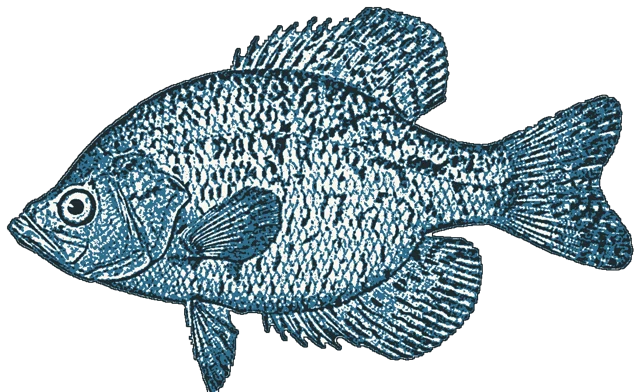
Black crappie
Pomoxis nigromaculatus · also called calico bass, strawberry bass, speck, paper mouth, slab · Freshwater
One of the classic fish-fry fish: MeatEater counts crappie among the best-eating fish in freshwater.
- Tastes
- mild, sweet, delicate, flaky, white
- Limits
- Light regs. Statewide (black and white crappie): all year, 10 in minimum, 25 per day. Exceptions: Lake Champlain 8 in, 25 per day; Greenwood Lake 8 in, 10 per day; listed New York City park lakes (including Prospect Park Lake) are catch and release for all fish. Other listed waters differ. (Statewide regulations effective April 1, 2026; special regulations pages read Nov 21, 2026) Source
- Best months
- Spring before and during the spawn (water into the high 60s F); can be caught through the ice.
- Where
- Peconic River and Prospect Park Lake (catch and release only); Muscoot and New Croton reservoirs; Saratoga Lake and shallow Lake Champlain bays; Oneida Lake (Big Bay, Toad Harbor); Honeoye and Canandaigua lakes; Chautauqua and Cassadaga lakes; spring in Lake Erie and Ontario bays and harbors.
- small minnows
- wax worms
- nightcrawlers
- small jigs (1/32 to 1/8 oz)
- Do not eat (anyone): any from the Hudson between South Glens Falls and Catskill or the other all-fish waters on this page.
- Do not eat (children under 15, people under 50 who can get pregnant): any from Onondaga Lake and the Seneca River below Lock 24 or Moodna Creek below Firthcliffe Dam (everyone else 1 meal a month).
- Do not eat (that group): any from the Hudson below Catskill, the Oswego River from Varick Dam to Fulton, the Black River from Carthage to Herrings, or the other waters this page lists for them (everyone else 4).
Meal limits and other waters (3)
- Limit (everyone): 1 meal a month from Schoharie Reservoir, the Black River below Herrings Dam and Lake Mahopac.
- Limit: unlisted waters, the Adirondacks and the Catskills, 4 meals a month, or 1 for that group.
- New York Department of Health, Sept 2026; other listed waters differ.
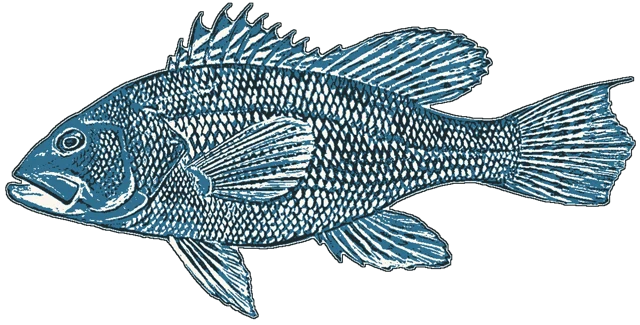
Black sea bass
Centropristis striata · Saltwater
Mild, delicate, firm white fillets; Maine Sea Grant calls it popular for its firm texture and mild, slightly sweet flavor.
- Tastes
- mild, fresh, delicate, tender but firm
- Limits
- Heavy regs. 16 in minimum; 3 per day May 16 to Aug 31 and 6 per day Sept 1 to Dec 31. Measured to the tip of the tail, not including the tail filament. NOAA waives the federal rules for 2026 and 2027, so the rules of the state where you land apply in federal waters too. (Emergency rule in force May 11, 2026 (16 in minimum, season opening May 16), adopted as a permanent rule Sept 30, 2026; DEC table last changed May 12, 2026) Source
- Best months
- Open May 16 to Dec 31; DEC says sea bass move inshore in spring.
- Where
- Artificial reefs, wrecks, rocks and pilings; smaller fish in bays, larger fish offshore.
- squid
- clams
- Do not eat (children under 15, people under 50 who can get pregnant): any from the Hudson between Catskill and the Battery, the East, Harlem and Bronx rivers, Newtown Creek, the Gowanus Canal, Upper New York Bay, Raritan Bay west of Wolfe's Pond Park, Arthur Kill, Kill Van Kull or Newark Bay (everyone else 4 meals a month).
Meal limits and other waters (4)
- Limit (that group): 1 meal a month from the tidal Carlls, Carmans and Forge rivers and Quantuck Creek (PFAS).
- Elsewhere in salt water the state sets no number: that group should follow FDA's fish advice (fda.gov/fishadvice), and frequent fish eaters should consider it.
- To limit mercury, the Department points to FDA's advice for black sea bass.
- New York Department of Health, 2026.
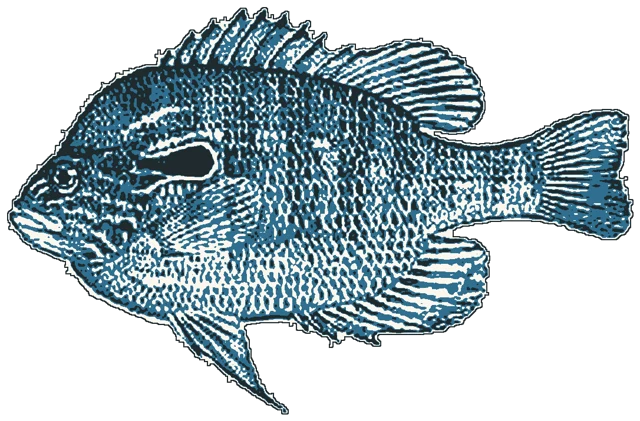
Bluegill
Lepomis macrochirus · also called sunfish · Freshwater
MeatEater calls the flesh light, delicate and sweet; the original fish-fry panfish.
- Tastes
- mild, sweet, firm, flaky
- Limits
- Light regs. Statewide (bluegill, redbreast and pumpkinseed): all year, no minimum size, 25 per day. Exceptions: 8 in minimum and 15 per day in Honeoye Lake, Otisco Lake, Cazenovia Lake, Silver Lake, Blydenburgh Lake, Lake Welch, Red Lake, Sixtown Pond, Canadarago Lake, Goodyear Lake, Saratoga Lake and Fish Creek below it; Lake Champlain any size, any number. Other listed waters differ. (Statewide regulations effective April 1, 2026; special regulations pages read Nov 21, 2026) Source
- Best months
- All year; sunfish spawn June to August over shallow gravel to sand bottoms (males guard the nests).
- Where
- Weeds, rocks, brush, docks and overhanging branches in all types of water statewide; Honeoye and Conesus lakes are noted for large panfish.
- crickets
- grasshoppers
- earthworms
- grubs
- waxworms
- Do not eat (anyone): any from the Hudson between South Glens Falls and Catskill, the other all-fish waters on this page, the Mohawk and Erie Canal from New London to Whitesboro, or Hards Lake.
- Do not eat (anyone): sunfish from Gill Creek or the Carlls River above Argyle Lake Dam.
- Do not eat (children under 15, people under 50 who can get pregnant): any from Onondaga Lake and the Seneca River below Lock 24 (everyone else 1 meal a month, sunfish 4), Moodna Creek below Firthcliffe Dam or the Valatie Kill between Nassau and Kinderhook lakes (everyone else 1).
- Do not eat (that group): any from the Hudson below Catskill, the Oswego River from Varick Dam to Fulton, the Black River from Carthage to Herrings, or the other waters this page lists for them.
Meal limits and other waters (4)
- Limit (everyone): 1 meal a month from Lake Champlain between Cumberland Head and the Peru boat launch, the Salmon River (Clinton County) below Davis Lake Dam, Gill and Ellicott creeks, the Black River below Herrings Dam, Lake Mahopac, and sunfish from the Mohawk and Erie Canal from New London to Whitesboro and below Fivemile Dam, Schoharie Creek included.
- Limit: 4 meals a month, or 1 for that group, from the Adirondacks, Lakes Erie and Ontario, Irondequoit Bay, the St. Lawrence, Niagara and Buffalo rivers, the Mohawk from Whitesboro to Fivemile Dam, the Carmans above Suffolk Club Dam, Peconic Lake and River, Randall Pond, bluegill from the Carlls above Argyle Lake Dam, sunfish from Donahues Pond and Hards and Upper Yaphank lakes, and 11 more.
- Limit: unlisted waters and the Catskills, 4.
- New York Department of Health, Sept 2026; other listed waters differ.
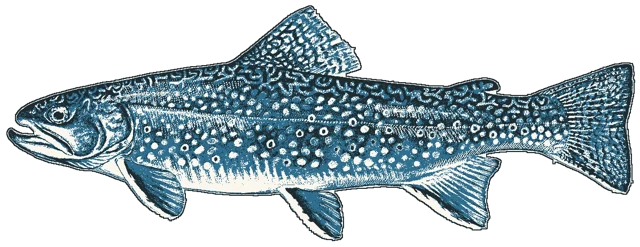
Brook trout
Salvelinus fontinalis · also called speckled trout, brookie · Freshwater
Often called the tastiest trout: MeatEater describes the meat as light and delicate with an almost sweet flavor.
- Tastes
- sweet, delicate, light, delicate
- Limits
- Heavy regs. Lakes and ponds: Apr 1 to Oct 15, no minimum, 5 per day (only 2 longer than 12 in in DEC Regions 7, 8 and 9, and in Herkimer, Lewis, Oneida and St. Lawrence counties except baitfish-prohibited ponds). Listed Long Island streams are catch and release for brook trout. Inland trout streams: Apr 1 to Oct 15, 5 per day with only 2 longer than 12 in; Oct 16 to Mar 31 catch and release only, artificial lures only. Stream reaches are managed in categories: Stocked-Extended and Wild Quality (3 per day, only 1 longer than 12 in), Wild-Premier (1 per day, any size) and Catch and Release (all year, artificial lures only). Great Lakes tributaries: Apr 1 to Oct 15, 5 per day. Finger Lakes: 5 per day with no more than 2 longer than 12 in. Other listed waters differ. (Statewide regulations effective April 1, 2026; trout stream categories read Nov 21, 2026) Source
- Best months
- Streams: Apr 1 to Oct 15 (catch and release in winter). Ponds: DEC says the cool weather of spring and fall often gives the best fishing of the year.
- Where
- Small headwater streams and Adirondack ponds (St. Regis Canoe Area, Pharaoh Lake Wilderness, West Canada Lake Wilderness, Lake George Wild Forest); the forest preserve headwaters of Willowemoc Creek in the Catskills.
- worms
- fish eggs
- grasshoppers
- salted or live minnows
- corn
- small spinners and spoons
- Do not eat (anyone): any from the Hudson between South Glens Falls and Catskill or the other all-fish waters on this page.
- Do not eat (children under 15, people under 50 who can get pregnant): any from Herrick Hollow Creek in Delaware County, Onondaga Lake and the Seneca River below Lock 24 or Moodna Creek below Firthcliffe Dam (everyone else 1 meal a month).
- Do not eat (that group): any from the Hudson below Catskill, the Oswego River from Varick Dam to Fulton, the Black River from Carthage to Herrings, or the other waters this page lists for them.
Meal limits and other waters (4)
- Limit (everyone): 1 meal a month from the Black River below Herrings Dam and Lake Mahopac.
- Limit: 4 meals a month, or 1 for that group, from the Adirondacks, Canadice Lake, the Mohawk below Fivemile Dam and Schoharie Creek, the Raquette below Raymondville Dam, the Carlls and Carmans rivers and Hards Lake.
- Limit: unlisted waters and the Catskills, 4.
- New York Department of Health, Sept 2026; other listed waters differ.
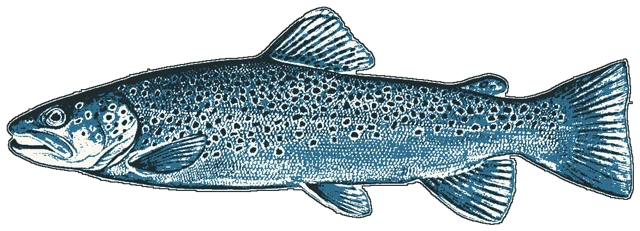
Brown trout
Salmo trutta · Freshwater
Good trout eating like rainbows; most kept browns are stocked fish.
- Tastes
- mild to rich, flaky
- Limits
- Heavy regs. Lakes and ponds (brown, rainbow and splake): all year, no minimum, 5 per day with only 2 longer than 12 in. Inland trout streams: Apr 1 to Oct 15, 5 per day with only 2 longer than 12 in; Oct 16 to Mar 31 catch and release, artificial lures only; stream categories (Stocked-Extended, Wild Quality 3 per day; Wild-Premier 1; Catch and Release) apply on listed reaches. Great Lakes: Lake Erie and tributaries 12 in, 3 per day in any combination with rainbow, coho and Chinook; Lake Ontario, St. Lawrence and tributaries 15 in, 3 in combination (no more than 1 brown trout in the tributaries); Finger Lakes 15 in, 5 in combination (no more than 3 brown trout in Cayuga, Owasco and Skaneateles lakes; Otisco Lake 12 in, 5 trout); Delaware River 1 per day. Other listed waters differ. (Statewide regulations effective April 1, 2026; special regulations pages read Nov 21, 2026) Source
- Best months
- Streams Apr 1 to Oct 15; Lake Ontario spring "means fantastic brown trout fishing" near shore; spawn Oct to Nov.
- Where
- Streams, rivers, ponds and lakes statewide; Finger Lakes (all but Conesus and Honeoye), Lake Ontario shoreline in spring, Catskill streams.
- worms
- fish eggs
- salted or live minnows
- corn
- small spinners and spoons
- trolled spoons and stickbaits (Great Lakes)
- Do not eat (anyone): any from the Hudson between South Glens Falls and Catskill, the other all-fish waters on this page, the Hoosic River from Schaghticoke Dam to Vermont, or Mud or Sauquoit creek (Oneida County).
- Do not eat (children under 15, people under 50 who can get pregnant): any from Canadice Lake, Onondaga Lake and the Seneca River below Lock 24 or Moodna Creek below Firthcliffe Dam (everyone else 1 meal a month).
- Do not eat (that group): any from the Hudson below Catskill, the Oswego River from Varick Dam to Fulton, the Black River from Carthage to Herrings, or the other waters this page lists for them.
Meal limits and other waters (5)
- Limit (everyone): 1 meal a month from lower Eighteenmile Creek (Niagara County), Skaneateles Creek, Neversink and Pepacton reservoirs, the Black River below Herrings Dam and Lake Mahopac.
- Limit: over 20 in 1 a month for everyone and under 20 in 4, or 1 for that group, from Lake Ontario, Irondequoit Bay, the St. Lawrence, the Niagara below the Falls, and Cross River, Titicus and West Branch reservoirs.
- Limit: 4, or 1 for that group, from the Adirondacks, the Catskills, Owasco Lake, the Buffalo River, the Mohawk below Fivemile Dam and Schoharie Creek, the Raquette below Raymondville Dam, the Carlls and Carmans rivers above Argyle Lake and Suffolk Club dams, Hards Lake, and over 20 in from unlisted waters.
- Limit: unlisted under 20 in, 4.
- New York Department of Health, Sept 2026; other listed waters differ.
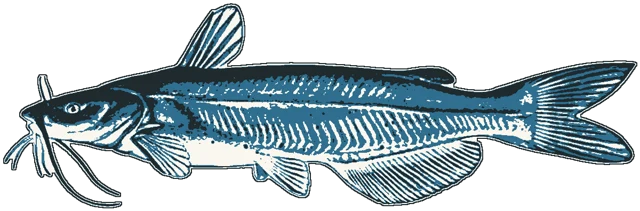
Channel catfish
Ictalurus punctatus · also called big cats · Freshwater
Very good to eat (Maryland DNR) and delicious when cooked (TPWD), and the basis of US catfish farming.
- Tastes
- mild, sweet, firm, moist
- Limits
- No limits. No statewide limit listed: DEC lists no size, season or daily limit for channel catfish (all other species: all year, any number). Exception: Greenwood Lake 12 in minimum, 5 per day, all year. All fish are catch and release only in the Hudson River from Troy Dam to Bakers Falls, the Mohawk River below Rte. 32 and the listed New York City park lakes. (Statewide regulations effective April 1, 2026; Greenwood Lake rule from Border Waters page read Nov 21, 2026) Source
- Best months
- Day and night; best in low light in clear water. Late May to early June runs are mentioned on the Chaumont River.
- Where
- Lake Champlain, Great Sacandaga Lake, Oneida Lake, Susquehanna River (Johnson City, Owego), lower Chaumont River and Black River Bay, Lake Erie (lower Cattaraugus Creek and tributary mouths).
- dead minnows
- cut bait
- chicken livers
- nightcrawlers
- commercial chunk or dip baits
- Do not eat (anyone): any from the Hudson between Corinth Dam and New York City, Moodna Creek below Firthcliffe Dam, the other all-fish waters on this page, Onondaga Lake and the Seneca River below Lock 24, or the Buffalo River and harbor.
- Do not eat (anyone): any from the East, Harlem or Bronx river, Newtown Creek, the Gowanus Canal, Upper New York Bay, Raritan Bay west of Wolfe's Pond Park, Arthur Kill, Kill Van Kull or Newark Bay.
- Do not eat (children under 15, people under 50 who can get pregnant): any from the Oswego River from Varick Dam to Fulton, the Black River from Carthage to Herrings, or the other waters this page lists for them (everyone else 1 meal a month).
Meal limits and other waters (3)
- Limit (everyone): 1 meal a month from unlisted waters, Oneida Lake included, Lake Alice, Lake Mahopac and the Black River below Herrings Dam.
- Limit: Adirondacks (with Lake Champlain) and Catskills, by the any-other-fish number, 4 meals a month, or 1 for that group.
- New York Department of Health, Sept 2026; other listed waters differ.
Chinook salmon
Oncorhynchus tshawytscha · also called king salmon, Pacific salmon · Freshwater
NOAA calls Chinook the most highly prized salmon in the culinary world: rich, buttery and oily.
- Tastes
- rich, buttery, oily, flaky, meaty
- Limits
- Heavy regs. Statewide: see Great Lakes special regulations. Lake Erie and tributaries: all year, 12 in minimum, 3 per day in any combination of brown trout, rainbow trout, coho and Chinook. Lake Ontario, St. Lawrence and tributaries: 15 in, 3 in combination. Lower Niagara River: 15 in, 3 in combination. Upper Niagara River: no minimum, 3 in combination. Tributary seasonal tackle rules apply Sept 1 to Mar 31 (Aug 15 to Apr 14 on the Salmon River below Rte. 52); snatching prohibited; foul-hooked salmon must be released. Other listed waters differ. (Statewide table effective April 1, 2026; Great Lakes special regulations read Nov 21, 2026) Source
- Best months
- Tributary fishing early September to early November, peak often the first two weeks of October (Salmon and Oswego rivers mid-September to mid-October).
- Where
- Salmon River (Oswego County), Oswego River, Black River, Genesee River, Oak Orchard, Sandy and Eighteenmile creeks, lower Niagara; trolling on Lake Ontario.
- salmon egg sacs (dead-drifted)
- spawn sacks
- egg flies and stoneflies
- spoons, plugs and cut-bait attractors (trolling)
- Do not eat (anyone): any from the Hudson between South Glens Falls and Catskill or the other all-fish waters on this page.
- Do not eat (children under 15, people under 50 who can get pregnant): any from the Hudson below Catskill, the Oswego River from Varick Dam to Fulton, the Black River from Carthage to Herrings, or the other waters this page lists for them.
Meal limits and other waters (3)
- Limit (everyone): 1 meal a month from lower Eighteenmile Creek (Niagara County) and the Black River below Herrings Dam.
- Limit: 4 meals a month, or 1 for that group, from Lake Ontario, Irondequoit Bay, the Oswego River up to Varick Dam, the Salmon River (Oswego County) up to its reservoir and the other tributaries up to the first barrier, and by the any-other-fish number Lake Erie and the Niagara.
- New York Department of Health, Sept 2026; other listed waters differ.
Steelhead
Oncorhynchus mykiss (anadromous) · Freshwater
Steelhead are sea-run rainbow trout, and bright fish eat like a mild salmon; hatchery fish are kept as food across the Pacific Northwest and Great Lakes.
- Tastes
- mild, rich, firm, pink-orange
- Limits
- Heavy regs. Lake Erie and tributaries: all year, 12 in minimum, 3 per day in any combination of brown trout, rainbow trout (steelhead), coho and Chinook. Lake Ontario and tributaries: all year, 15 in minimum except rainbow trout or steelhead 21 in in the lake and 25 in in tributaries; 3 in combination, no more than 2 rainbow in the lake and no more than 1 rainbow and 1 brown in the tributaries. Lower Niagara River: 15 in, 21 in for rainbow, 3 per day in combination with no more than 2 rainbow. Upper Niagara River: no minimum, 3 in combination. Sept 1 to Mar 31 tributaries close at night and hooks may have no more than a 1/2 in gap; Lake Ontario tributaries also limit hooks, leaders and weights. On the Salmon River below Rte. 52 these rules run Aug 15 to Apr 14, and it has fly-only catch and release sections. Inland (non-Great Lakes) rainbow trout: lakes and ponds all year, 5 per day with only 2 longer than 12 in; streams Apr 1 to Oct 15. Other listed waters differ. (Great Lakes special regulations read Nov 21, 2026) Source
- Best months
- Lake Ontario tributaries: runs from mid-September, late October through November often best, spawning mid-March to late April, fishable into mid-May. Lake Erie tributaries: from mid-September, bulk of the run mid-October through April; harbors October to April, most productive March and April.
- Where
- Lake Erie: Cattaraugus, Canadaway, Chautauqua and Eighteenmile creeks (limited access on Buffalo, Cayuga, Silver and Walnut creeks). Lake Ontario tributaries including the Salmon River.
- trout or salmon eggs (egg sacs)
- worms
- egg flies, nymphs and streamers (fly)
- spinners, spoons and stickbaits
- Do not eat (anyone): any from the Hudson between South Glens Falls and Catskill or the other all-fish waters on this page.
- Do not eat (children under 15, people under 50 who can get pregnant): any from Onondaga Lake and the Seneca River below Lock 24 or Moodna Creek below Firthcliffe Dam (everyone else 1 meal a month).
- Do not eat (that group): any from the Hudson below Catskill, the Oswego River from Varick Dam to Fulton, the Black River from Carthage to Herrings, or the other waters this page lists for them.
Meal limits and other waters (4)
- Limit (everyone): 1 meal a month from lower Eighteenmile Creek (Niagara County), the Black River below Herrings Dam and Lake Mahopac, and of rainbow trout from the Hoosic River or Skaneateles Creek.
- Limit: 4 meals a month, or 1 for that group, from Lakes Erie and Ontario and their other tributaries up to the first barrier, Irondequoit Bay, the Salmon River (Oswego County), the Niagara (with Ellicott and Gill creeks) and Buffalo rivers, Cayuga and Owasco lakes, the Adirondacks, and rainbow trout from Canadice Lake, the Mohawk below Fivemile Dam and Schoharie Creek, the Raquette below Raymondville Dam, the Carlls River, the Carmans above Suffolk Club Dam and Hards Lake.
- Limit: other rainbow trout, unlisted waters and the Catskills, 4.
- New York Department of Health, Sept 2026; other listed waters differ.
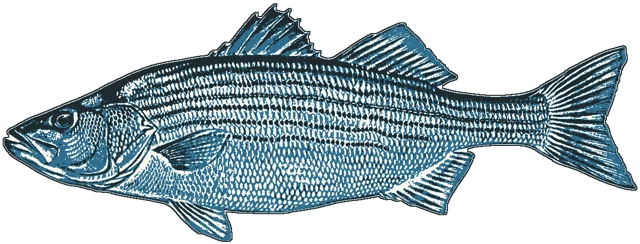
Striped bass
Morone saxatilis · Fresh and salt
Firm, large-flaked, slightly sweet white meat; one of the most kept and eaten gamefish in the country, fresh or salt.
- Tastes
- mild, slightly sweet, firm, large flakes
- Limits
- Heavy regs. Marine waters (from the Hudson River south of the George Washington Bridge): 28 to 31 in slot, 1 per day, Apr 15 to Dec 15. Delaware River: 28 to 31 in slot, 1 per day; DEC's saltwater table shows Apr 15 to Dec 15 and its border-waters table shows all year, so confirm the season with DEC before keeping one. Hudson River north of the George Washington Bridge: 23 to 28 in slot, 1 per day, Apr 1 to Nov 30, and fishing for striped bass (including catch and release) is prohibited Dec 1 to Mar 31 in the Hudson above the Mario M. Cuomo Bridge. Non-offset (in-line) circle hooks are required with natural bait (not with artificial lures). Gaffs may not be used on striped bass in any state waters. Striped bass may not be fished for in federal waters (beyond 3 miles). (DEC saltwater table "last changed on May 12, 2026", read Nov 21, 2026; NOAA list updated Oct 2, 2026) Source
- Best months
- Open Apr 15 to Dec 15 (marine) and Apr 1 to Nov 30 (Hudson north of the George Washington Bridge).
- Where
- Rocky areas near jetties and dropoffs around Long Island; seasonally in the tidal Hudson River (do not eat from Troy to Catskill).
- eels
- large plugs
- spoons
- jigs (surf)
- Consumption advisories for striped bass vary from state to state (NOAA).
- Do not eat (anyone): any from the Hudson between South Glens Falls and the Rip Van Winkle Bridge at Catskill, Arthur Kill, Kill Van Kull or Newark Bay.
- Do not eat (children under 15, people under 50 who can get pregnant): any from the East, Harlem and Bronx rivers, Newtown Creek, the Gowanus Canal, Upper New York Bay, Raritan Bay west of Wolfe's Pond Park, or Moodna Creek below Firthcliffe Dam (everyone else 1 meal a month).
Meal limits and other waters (3)
- Limit: 4 meals a month, or 1 for that group, from the Hudson between Catskill and the Battery (advice issued spring 2026), the ocean, Long Island Sound, Great South Bay and the rest of the South Shore, Block Island Sound, Jamaica, Peconic, Gardiners and Lower New York bays, Raritan Bay east of Wolfe's Pond Park, the tidal Carlls, Carmans and Forge rivers and Quantuck Creek.
- Trim off skin and fat, which hold PCBs.
- New York Department of Health, Sept 2026; other listed waters differ.
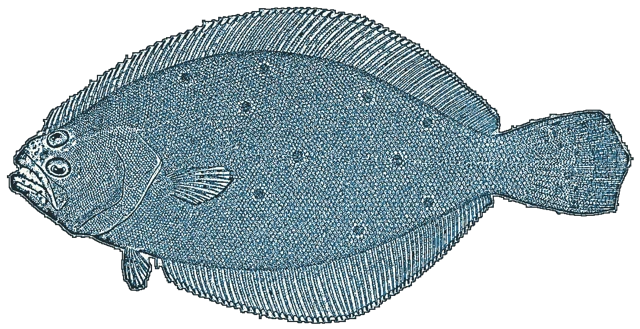
Summer flounder
Paralichthys dentatus · also called fluke · Saltwater
Delicate, fine-flaked white fillets; one of the most sought-after table fish from New England to North Carolina.
- Tastes
- delicate, mild, flaky and fine
- Limits
- Heavy regs. 19 in minimum for May 4 to Aug 1 and 19.5 in for Aug 2 to Oct 15, 3 per day. Fluke may not have heads or tails removed or be cleaned or filleted until brought to shore (only the white-side fillet may be removed for bait; the carcass with the dark side intact must be kept). NOAA waives the federal rules for 2026 and 2027, so the rules of the state where you land apply in federal waters too. (DEC saltwater table "last changed on May 12, 2026", read Nov 21, 2026; NOAA list updated Oct 2, 2026) Source
- Best months
- Open May 4 to Oct 15; DEC says fluke move inshore in spring.
- Where
- Sand or mud bottoms and around wharf pilings or other structure in nearshore waters; anglers use baited bottom rigs.
- spearing
- squid
- bucktails
- Gulp on jigheads
- Do not eat (children under 15, people under 50 who can get pregnant): any from the Hudson between Catskill and the Battery, the East, Harlem and Bronx rivers, Newtown Creek, the Gowanus Canal, Upper New York Bay, Raritan Bay west of Wolfe's Pond Park, Arthur Kill, Kill Van Kull or Newark Bay (everyone else 4 meals a month).
Meal limits and other waters (3)
- Limit (that group): 1 meal a month from the tidal Carlls, Carmans and Forge rivers and Quantuck Creek (PFAS).
- Elsewhere in salt water the state sets no number: that group should follow FDA's fish advice (fda.gov/fishadvice), and frequent fish eaters should consider it.
- New York Department of Health, 2026.
Tautog
Tautoga onitis · also called blackfish · Saltwater
Northeast anglers prize its tasty meat (ASMFC).
- Tastes
- mild, sweet (shellfish diet), firm, white
- Limits
- Heavy regs. 16 in minimum. Long Island Sound region (east of the Throgs Neck Bridge and west of a line from Orient Point to Watch Hill, RI): 2 per day Apr 1 to Apr 30, 3 per day Oct 11 to Dec 9. NY Bight region (all other marine and coastal district waters): 2 per day Apr 1 to Apr 30, 4 per day Oct 15 to Dec 22. NOAA sets no federal limits for tautog. (DEC saltwater table "last changed on May 12, 2026", read Nov 21, 2026; NOAA list updated Oct 2, 2026) Source
- Best months
- April 1 to 30 and in the fall (Oct 11 to Dec 9 in Long Island Sound, Oct 15 to Dec 22 in the NY Bight); DEC says tautog move into shallow water in spring.
- Where
- Rocky sheltered areas near reefs, pilings, jetties and wrecks, and around mussel beds.
- crabs
- clams
- Do not eat (children under 15, people under 50 who can get pregnant): any from the Hudson between Catskill and the Battery, the East, Harlem and Bronx rivers, Newtown Creek, the Gowanus Canal, Upper New York Bay, Raritan Bay west of Wolfe's Pond Park, Arthur Kill, Kill Van Kull or Newark Bay (everyone else 4 meals a month).
Meal limits and other waters (3)
- Limit (that group): 1 meal a month from the tidal Carlls, Carmans and Forge rivers and Quantuck Creek (PFAS).
- Elsewhere in salt water the state sets no number: that group should follow FDA's fish advice (fda.gov/fishadvice), and frequent fish eaters should consider it.
- New York Department of Health, 2026.
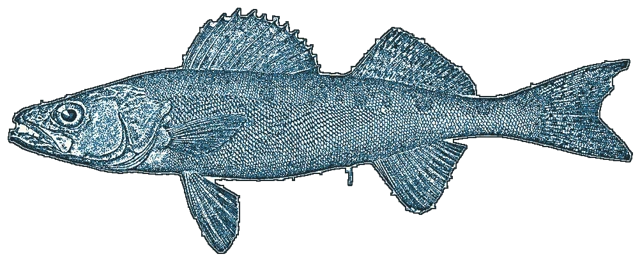
Walleye
Sander vitreus · Freshwater
Widely rated the best-eating freshwater fish: Maryland DNR calls it one of the best tasting, TPWD an excellent food fish.
- Tastes
- mild, clean, firm, tender, flaky white
- Limits
- Heavy regs. Statewide: open May 1 to Mar 15, 15 in minimum, 5 per day. Exceptions: Lake Erie and tributaries 15 in, 6 per day; Lake Ontario, St. Lawrence River and tributaries 18 in, 3 per day; lower Niagara River 18 in, 3 per day May 1 to Dec 31 and 1 per day Jan 1 to Mar 15; all Finger Lakes 18 in, 3 per day, except Skaneateles Lake (12 in, any number, all year); Lake Champlain 18 in, 3 per day (first Saturday in May to Mar 15); Delaware River 18 in, 3 per day; many listed lakes, reservoirs and rivers 18 in, 3 per day (for example Rio, Ashokan, Canadarago, Cross Lake, Whitney Point). Other listed waters differ. (Statewide regulations effective April 1, 2026; special regulations pages read Nov 21, 2026) Source
- Best months
- Season opens May 1; DEC says to start near spawning areas early, fish deeper water in summer, and on Oneida Lake walleye follow gizzard shad inshore from late September through November. Lake Erie: night trolling and casting in May and early June.
- Where
- Oneida Lake, Lake Erie, Lake Ontario, the St. Lawrence River, Finger Lakes (Honeoye, Conesus, Owasco, Otisco) and stocked reservoirs; river pools and spots below dams.
- jigs tipped with minnow or nightcrawler
- nightcrawler spinner rigs
- minnows
- leeches
- deep-diving crankbaits
- stickbaits
- Do not eat (anyone): any from the Hudson between South Glens Falls and New York City, Moodna Creek below Firthcliffe Dam, the other all-fish waters on this page, Onondaga Lake and the Seneca River below Lock 24, the Mohawk and Erie Canal from New London to Whitesboro, Dunham Reservoir or Franklin Falls Flow.
- Do not eat (anyone): any over 19 in from the Adirondacks, the Catskills, Rushford Lake or Loch Sheldrake (smaller ones 1 meal a month).
- Do not eat (children under 15, people under 50 who can get pregnant): any from the Adirondacks, the Catskills, Rushford Lake, Loch Sheldrake, Black Lake, the Unadilla River below Mill Pond Dam, or Boyd Corners, East Branch (Putnam County), Eaton Brook or Swinging Bridge reservoir (everyone else 1 meal a month).
- Do not eat (that group): any from the Mohawk and Erie Canal between Jacksonburg and Fivemile Dam (everyone else 4), the Oswego River from Varick Dam to Fulton, the Black River from Carthage to Herrings, or the other waters this page lists for them.
- Do not eat (that group): any over 19 in from unlisted waters, the Susquehanna below Oneonta, the Chenango River, Owasco Lake, Lake Mahopac, the Grasse above the Massena Power Canal, the Mohawk and Erie Canal from Whitesboro to Jacksonburg or the Black River below Herrings Dam (everyone else 1).
Meal limits and other waters (3)
- Limit: 1 meal a month, for that group only under 19 in, from those rivers and lakes; 1 for everyone from Lakes Erie and Ontario, Irondequoit Bay and the Niagara below the Falls.
- Limit: 4 meals a month, or 1 for that group, from Oneida Lake, the St. Lawrence, the Niagara above the Falls, the Buffalo River and unlisted waters under 19 in.
- New York Department of Health, Sept 2026; other listed waters differ.
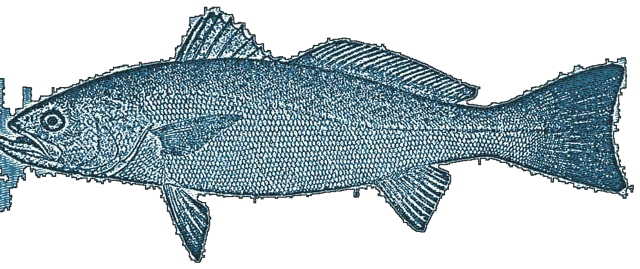
Weakfish
Cynoscion regalis · Saltwater
A close cousin of the speckled trout with the same sweet, delicate fillets; ASMFC describes it as known for its delicious taste.
- Tastes
- mild, sweet
- Limits
- Heavy regs. 16 in minimum (10 in filleted, 12 in dressed), 1 per day, open all year. State waters; federal waters separate. (DEC saltwater table "last changed on May 12, 2026", read Nov 21, 2026; state waters only (federal waters beyond 3 miles may differ)) Source
- Best months
- Enter New York waters in spring and leave in fall; most active at low light and at night.
- Where
- Shallow, sandy-bottom areas along beaches, at inlet mouths and in estuaries.
- squid
- worms
- bucktails
- diamond jigs
- Soft flesh; ice immediately and eat fresh.
- Do not eat (children under 15, people under 50 who can get pregnant): any over 25 in (everyone else 1 meal a month).
- Do not eat (that group): any size from the Hudson between Catskill and the Battery, the East, Harlem and Bronx rivers, Newtown Creek, the Gowanus Canal, Upper New York Bay, Raritan Bay west of Wolfe's Pond Park, Arthur Kill, Kill Van Kull or Newark Bay (everyone else 4).
Meal limits and other waters (2)
- Limit: under 25 in, 4 meals a month, or 1 for that group, from the ocean, Long Island Sound, Great South Bay and the rest of the South Shore, Block Island Sound, Jamaica, Peconic, Gardiners and Lower New York bays, Raritan Bay east of Wolfe's Pond Park, the tidal Carlls, Carmans and Forge rivers and Quantuck Creek.
- New York Department of Health, Sept 2026; other listed waters differ.
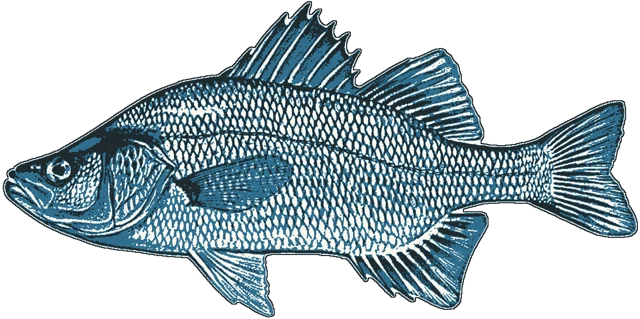
White perch
Morone americana · Freshwater
Maryland DNR calls it a delectable game fish, and it is a staple panfish in the Chesapeake and a prized ice-fishing catch in New England.
- Tastes
- mild, sweet, firm, flaky
- Limits
- No limits. No statewide limit listed: DEC lists no size, season or daily limit for white perch and says all other species not listed are open all year with any number. All fish are catch and release only in the Hudson River from Troy Dam to Bakers Falls, the Mohawk River below Rte. 32 and the listed New York City park lakes. (Statewide regulations effective April 1, 2026; special regulations pages read Nov 21, 2026) Source
- Spawns
- Spawn in late spring in tributary streams or along gravelly shoals.
- Where
- Warm, shallow fresh water and estuaries in the Allegheny, Lake Erie, Lake Ontario, St. Lawrence, Finger Lakes, lower Hudson, Housatonic, Long Island and Lake Champlain watersheds.
- worms
- small jigs
- Do not eat (anyone): any from the Hudson between South Glens Falls and Catskill, the other all-fish waters on this page, Onondaga Lake and the Seneca River below Lock 24, Raritan Bay west of Wolfe's Pond Park, Arthur Kill, Kill Van Kull or Newark Bay.
- Do not eat (children under 15, people under 50 who can get pregnant): any from the East, Harlem or Bronx river, Newtown Creek, the Gowanus Canal, Upper New York Bay, Moodna Creek below Firthcliffe Dam, Lake Taghkanic, Cross River, Titicus or Massapequa reservoir, Smith Pond in Rockville Centre, the Oswego River from Varick Dam to Fulton, the Black River from Carthage to Herrings, or the other waters this page lists for them (everyone else 1 meal a month).
- Do not eat (that group): any from the Adirondacks, by the April 2026 booklet (everyone else 1); the November 2026 page says 4, or 1 for that group.
- Limit (everyone): 1 meal a month from the Hudson below Catskill, the Black River below Herrings Dam, Lake Mahopac, the Catskills and unlisted waters.
- New York Department of Health, Sept 2026; other listed waters differ.
Winter flounder
Pseudopleuronectes americanus · Saltwater
Mild, lean, boneless, flaky fillets (NOAA).
- Tastes
- mild, sweet, lean, boneless, flaky
- Limits
- Heavy regs. 12 in minimum, 2 per day, open Apr 1 to May 30. State waters; federal waters separate. (DEC saltwater table "last changed on May 12, 2026", read Nov 21, 2026; state waters only (federal waters beyond 3 miles may differ)) Source
- Best months
- Open Apr 1 to May 30; fish move to deep water in summer and reappear in shoal water in winter.
- Where
- Sand or muddy bottoms near shellfish beds and grassy areas.
- mussels
- seaworms
- Do not eat (children under 15, people under 50 who can get pregnant): any from the Hudson between Catskill and the Battery, the East, Harlem and Bronx rivers, Newtown Creek, the Gowanus Canal, Upper New York Bay, Raritan Bay west of Wolfe's Pond Park, Arthur Kill, Kill Van Kull or Newark Bay (everyone else 4 meals a month).
Meal limits and other waters (3)
- Limit (that group): 1 meal a month from the tidal Carlls, Carmans and Forge rivers and Quantuck Creek (PFAS).
- Elsewhere in salt water the state sets no number: that group should follow FDA's fish advice (fda.gov/fishadvice), and frequent fish eaters should consider it.
- New York Department of Health, 2026.
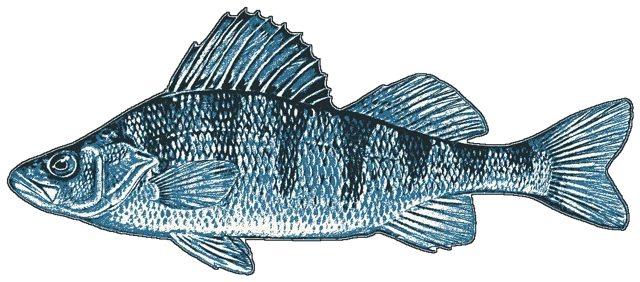
Yellow perch
Perca flavescens · Freshwater
A great food fish (MN DNR) and the centerpiece of Great Lakes perch fries; Iowa DNR calls a fried stringer of perch unsurpassed in flavor.
- Tastes
- mild, sweet, firm, flaky, white
- Limits
- Light regs. Statewide: all year, no minimum size, 50 per day. Exceptions: any number in Lake Champlain and in Jefferson County waters except Sandy Pond (Sandy Pond 50); Canadarago Lake and Goodyear Lake 25 per day. Other listed waters differ. (Statewide regulations effective April 1, 2026; special regulations pages read Nov 21, 2026) Source
- Best months
- All year (open all year, ice fishing included); DEC says to keep bait near bottom.
- Where
- Shallow, weedy, protected sections of rivers, lakes and ponds in all watersheds; Canandaigua, Seneca, Cayuga, Skaneateles, Owasco, Honeoye and Otisco lakes; St. Lawrence River bays.
- small minnows
- worms
- waxworm-tipped jigging spoons
- jigs and spoons
- Do not eat (anyone): any from the Hudson between South Glens Falls and Troy, the other all-fish waters on this page, Lake Champlain between Cumberland Head and the Peru boat launch, the Salmon River (Clinton County) below Davis Lake Dam, or Meacham Lake.
- Do not eat (anyone): any over 10 in from North Lake (Town of Ohio).
- Do not eat (children under 15, people under 50 who can get pregnant): any from the Hudson between Troy and Catskill, Moodna Creek below Firthcliffe Dam, the Mohawk and Erie Canal from New London to Whitesboro, Onondaga Lake and the Seneca River below Lock 24, Cannonsville Reservoir or Peconic Lake and River (everyone else 1 meal a month).
- Do not eat (that group): any from the Oswego River from Varick Dam to Fulton, the Black River from Carthage to Herrings, or the other waters this page lists for them.
- Do not eat (that group): any over 10 in from the Adirondacks or Catskills (everyone else 1); the April 2026 Adirondack booklet says any size there, the November 2026 page 1 a month under 10 in.
Meal limits and other waters (5)
- Limit (everyone): 1 meal a month, any size, from Lake Erie, Seneca Lake, Schoharie Reservoir, Lake Mahopac and the Black River below Herrings Dam; 1, for that group only under 10 in, from Bubb, Cranberry, Fall, Ferris, Lewey, Lower Chateaugay and Sagamore lakes.
- Limit: over 10 in 1 a month for everyone and under 10 in 4, or 1 for that group, from 26 waters (the Erie Canal from Lockport to Lock 21, Black and Red lakes, the St. Regis and upper Grasse rivers, Rushford, Kayuta and Ballston lakes, Salmon River, Rio, Jamesville and New Croton reservoirs and 14 more).
- Limit: any size 4, or 1 for that group, from the Hudson below Catskill, the Mohawk below Whitesboro, Keuka Lake, Hards Lake, the Carlls and Carmans rivers above Argyle Lake and Suffolk Club dams, and 10 more, and under 10 in from the Adirondacks and Catskills.
- Limit: unlisted, 4 (over 10 in, 1 for that group).
- New York Department of Health, Sept 2026; other listed waters differ.
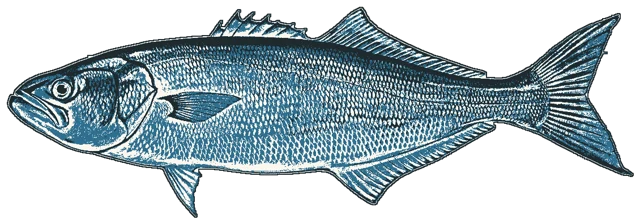
Bluefish
Pomatomus saltatrix · also called snapper (young fish) · Saltwater
Rich, oily and strong-tasting, with soft meat that does not freeze well; Hank Shaw calls it about as polarizing a food as there is.
Worth a try: Bleed and ice it, cook it the same day, and trim the dark strip (NOAA). Fresh blues are excellent grilled or smoked, and smoked bluefish pâté is a New England classic (Hank Shaw). Acid such as citrus or tomato cuts the oil.
- Tastes
- rich, full, coarse, moist
- Limits
- Heavy regs. No size limit; 5 per day (7 per day for anglers aboard licensed party or charter boats), open all year. Young bluefish are called "snappers" and count in the limit. Federal limits are the same (5, or 7 aboard party and charter boats). (Emergency rule in force April 7, 2026, adopted as a permanent rule Aug 26, 2026; DEC table last changed May 12, 2026) Source
- Best months
- Open all year; DEC points anglers to bluefish in the summer months.
- Where
- Fished from boat and shore.
- cut bait
- plugs and lures (use a wire leader)
- Large bluefish can carry higher mercury and PCBs; some states recommend limited consumption (NOAA).
- Raw fillets freeze poorly; cook or smoke before freezing (Hank Shaw).
- Do not eat (anyone): any from the Hudson between Troy and the Rip Van Winkle Bridge at Catskill.
- Do not eat (children under 15, people under 50 who can get pregnant): any from the Hudson between Catskill and the Battery, Moodna Creek below Firthcliffe Dam, the East, Harlem and Bronx rivers, Newtown Creek, the Gowanus Canal, Upper New York Bay, Raritan Bay west of Wolfe's Pond Park, Arthur Kill, Kill Van Kull or Newark Bay (everyone else 1 meal a month).
Meal limits and other waters (3)
- Limit: 4 meals a month, or 1 for that group, from the ocean, Long Island Sound, Great South Bay and the rest of the South Shore, Block Island Sound, Jamaica, Peconic, Gardiners and Lower New York bays, Raritan Bay east of Wolfe's Pond Park, the tidal Carlls, Carmans and Forge rivers and Quantuck Creek.
- Trim off skin and fat, which hold PCBs.
- New York Department of Health, Sept 2026; other listed waters differ.
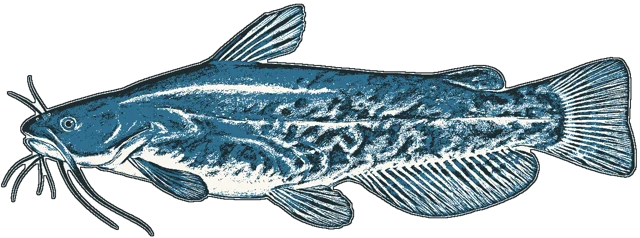
Bullhead (black, brown, yellow)
Ameiurus melas, A. nebulosus, A. natalis · also called brown bullhead · Freshwater
Sweet, delicious catfish meat, but most are small and many come from warm, muddy water, so many anglers dismiss them.
- Tastes
- mild, sweet, firm, moist
- Limits
- No limits. No statewide limit listed: DEC lists no size, season or daily limit for bullheads (all other species: all year, any number). All fish are catch and release only in the Hudson River from Troy Dam to Bakers Falls, the Mohawk River below Rte. 32 and the listed New York City park lakes. (Statewide regulations effective April 1, 2026; special regulations pages read Nov 21, 2026) Source
- Best months
- Spring and summer, evening and night.
- Where
- Still, muddy-bottom water in all watersheds; brown bullhead are caught bottom fishing close to shore.
- doughballs
- nightcrawlers
- chicken livers
- Do not eat (anyone): any from the Hudson between South Glens Falls and Catskill or the other all-fish waters on this page.
- Do not eat (children under 15, people under 50 who can get pregnant): any from Onondaga Lake and the Seneca River below Lock 24 (everyone else 4 meals a month) or Moodna Creek below Firthcliffe Dam (everyone else 1).
- Do not eat (that group): any from the Oswego River from Varick Dam to Fulton, the Black River from Carthage to Herrings, or the other waters this page lists for them.
Meal limits and other waters (3)
- Limit (everyone): 1 meal a month from the Buffalo River and harbor, Delaware Park Lake, the Hoosic River, the Black River below Herrings Dam and Lake Mahopac.
- Limit: 4 meals a month, or 1 for that group, from Lake Erie, the Hudson below Catskill, and unlisted waters statewide and in the Adirondacks and Catskills.
- New York Department of Health, Sept 2026; other listed waters differ.
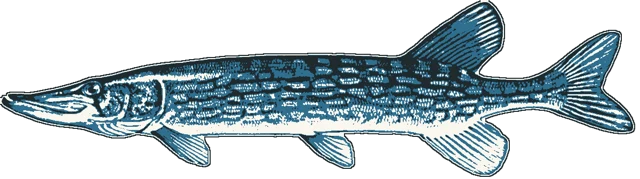
Chain pickerel
Esox niger · Freshwater
White, flaky and good-tasting meat, but quite bony with pike-style Y-bones.
- Tastes
- mild, white, flaky, bony
- Limits
- Heavy regs. Statewide: open May 1 to Mar 15, 15 in minimum, 5 per day. Exceptions: Delaware River 12 in, 5 per day; Lake Champlain any size, 10 per day; Greenwood Lake 15 in, 5 per day all year; Indian Lake (Connecticut border) 15 in, 6 per day (open 3rd Saturday in April through Mar 31). Other listed waters differ. (Statewide regulations effective April 1, 2026; special regulations pages read Nov 21, 2026) Source
- Best months
- DEC: early May through July is best; pickerel stay active through the ice (tip-ups with minnows 1 to 3 ft off bottom in 5 to 15 ft of water).
- Where
- Weedy water 2 to 10 ft deep: Deep Pond, Artist Lake and Forge Pond (Peconic River) on Long Island; Swinging Bridge Reservoir and Harriman lakes; Lake George, Brant Lake, Saratoga Lake, Lake Champlain; Black River; Skaneateles (south end) and Cayuga (north end) lakes.
- 3 to 4 inch live minnows under a bobber
- spinnerbaits
- jerkbaits
- crankbaits
- topwater lures
- Do not eat (anyone): any from the Hudson between South Glens Falls and Catskill, the other all-fish waters on this page, or Sunday Lake.
- Do not eat (anyone): any over 20 in from Effley Falls Pond.
- Do not eat (children under 15, people under 50 who can get pregnant): any from the Adirondacks, with Lakes Champlain and George (everyone else 1 meal a month).
- Do not eat (that group): any from Onondaga Lake and the Seneca River below Lock 24 or Moodna Creek below Firthcliffe Dam (everyone else 1).
- Do not eat (that group): any from the Hudson below Catskill, the Oswego River from Varick Dam to Fulton, the Black River from Carthage to Herrings, or the other waters this page lists for them.
- Do not eat (that group): any over 20 in from Peconic Lake and River (Edwards Avenue Dam to Peconic Lake Dam), Kelsey Creek, Kayuta Lake or Long Pond in Chenango County.
Meal limits and other waters (3)
- Limit: 1 meal a month, for that group only under 20 in, from those four; 1 for everyone from Lake Mahopac and the Black River below Herrings Dam.
- Limit: unlisted waters and the Catskills, over 20 in 1 meal a month for everyone; under 20 in 4, or 1 for that group.
- New York Department of Health, Sept 2026; other listed waters differ.
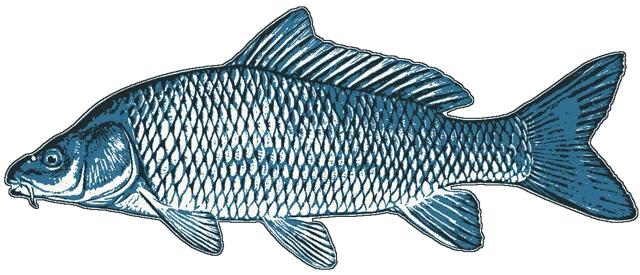
Common carp
Cyprinus carpio · Freshwater
Most US anglers call it a muddy, bony trash fish, but it is a prized food fish in Europe and Asia and eats well from clean, cold water.
Worth a try: Catch from clean water, remove the dark 'mud vein', and either score small fish and fry hard so the Y-bones soften, or hard-smoke large fish over fruitwood (Hank Shaw).
- Tastes
- mild from clean water, strong from muddy water, firm, fatty, Y-bones
- Limits
- No limits. No statewide limit listed: DEC lists no size, season or daily limit for carp (all other species: all year, any number). All fish are catch and release only in the Hudson River from Troy Dam to Bakers Falls, the Mohawk River below Rte. 32 and the listed New York City park lakes. Elsewhere carp may be taken with a longbow or crossbow in any number or size May 15 to Sept 30 where bow discharge is permitted (fishing license, hunting license or license-free status required). (Statewide regulations effective April 1, 2026; General regulations read Nov 21, 2026) Source
- Spawns
- Spawn May to June in very shallow water near vegetation.
- Where
- Almost every water body: Meadow Lake (New York City, catch and release only) and Hempstead Lake (Nassau County), Hudson River (do not eat from there), Tomhannock Reservoir (state record 50 lb 6 oz), Susquehanna River, Seneca and Oneida rivers, Sacandaga Reservoir, Saratoga Lake, South Bay of Lake Champlain, Allegheny River.
- canned or frozen corn
- bread dough balls
- worms
- dry dog food
- puff cereal
- commercial carp baits
- Do not eat (anyone): any from the Hudson between Corinth Dam and New York City, the other all-fish waters on this page, Lake Erie, the Niagara above the Falls, the Buffalo River and harbor, Ellicott Creek below the falls in Amherst State Park, Gill Creek below Hyde Park Lake, the Erie Canal and Tonawanda Creek from Lockport to the Niagara, Lewiston Reservoir or Delaware Park Lake.
- Do not eat (anyone): any from Onondaga Lake and the Seneca River below Lock 24, the Mohawk and Erie Canal from New London to Jacksonburg and from Fivemile Dam to Cohoes Falls, Schoharie Creek below the Blenheim-Gilboa dam, the Hoosic River from Schaghticoke Dam to Vermont, Hall's Pond or Spring Lake.
- Do not eat (children under 15, people under 50 who can get pregnant): any from Lake Ontario, Irondequoit Bay, the Oswego River up to Varick Dam, the Salmon River (Oswego County), the Niagara below the Falls, the St. Lawrence, the Raquette below Raymondville Dam, the Mohawk from Jacksonburg to Fivemile Dam, the Black River from Carthage to Herrings, Moodna Creek below Firthcliffe Dam or Koppers Pond (everyone else 1 meal a month).
- Do not eat (that group): any from the East, Harlem or Bronx river, Newtown Creek, the Gowanus Canal, Upper New York Bay, Raritan Bay west of Wolfe's Pond Park, Arthur Kill, Kill Van Kull, Newark Bay, Freeport or Massapequa reservoir, Grant Park, Lofts, Upper Twin or either Smith pond, or Lake Capri (everyone else 1).
- Do not eat (that group): any from the other waters this page lists for them.
Meal limits and other waters (3)
- Limit (everyone): 1 meal a month from the Black River below Herrings Dam and Lake Mahopac.
- Limit: unlisted waters, the Adirondacks and the Catskills, 4 meals a month, or 1 for that group.
- New York Department of Health, Sept 2026; other listed waters differ.
Freshwater drum
Aplodinotus grunniens · Freshwater
Many anglers call it a rough fish, but it is prized as food in some areas (TPWD); bled and iced, the boneless fillets eat like a redfish's.
Worth a try: Bleed it, ice it immediately and trim the red lateral meat; then fry thin fillets, grill on the half-shell like redfish, or smoke oily summer fish.
- Tastes
- mild, like other drum, firm but tender, large flake; goes soft if not iced
- Limits
- No limits. No statewide limit listed: DEC lists no size, season or daily limit for freshwater drum (all other species: all year, any number). All fish are catch and release only in the Hudson River from Troy Dam to Bakers Falls, the Mohawk River below Rte. 32 and the listed New York City park lakes. (Statewide regulations effective April 1, 2026; special regulations pages read Nov 21, 2026) Source
- Best months
- Summer, around rock piles, humps and drop-offs in about 20 feet of Lake Erie (DEC).
- Do not eat (anyone): any from the Hudson between South Glens Falls and Catskill or the other all-fish waters on this page.
- Do not eat (children under 15, people under 50 who can get pregnant): any from the Hudson below Catskill, Onondaga Lake and the Seneca River below Lock 24, Moodna Creek below Firthcliffe Dam, the Oswego River from Varick Dam to Fulton, the Black River from Carthage to Herrings, or the other waters this page lists for them (everyone else 1 meal a month).
Meal limits and other waters (3)
- Limit (everyone): 1 meal a month from Lake Erie (PFAS), the Black River below Herrings Dam, Lake Mahopac and unlisted waters.
- Limit: Adirondacks (with Lake Champlain) and Catskills, 4 meals a month, or 1 for that group.
- New York Department of Health, Sept 2026; other listed waters differ.
Lake trout
Salvelinus namaycush · Freshwater
Edible and widely kept, but it is the trout most often knocked as too greasy; big fish are very fatty and best smoked.
- Tastes
- rich, oily, soft to firm, fatty
- Limits
- Heavy regs. Statewide (inland lakes): Apr 1 to Oct 15, 21 in minimum, 3 per day. Exceptions: Lake Erie and Upper Niagara River all year, 12 in, 1 per day; Lake Ontario, St. Lawrence River and lower Niagara River Dec 1 to Sept 30, 2 per day (lower Niagara counts within a 3-fish trout and salmon limit), no minimum but no more than 1 between 25 and 30 in; Finger Lakes Seneca, Canandaigua, Keuka, Canadice, Hemlock, Honeoye, Owasco, Cayuga, Skaneateles all year, 15 in, 5 per day in combination with brown and rainbow trout and Atlantic salmon (Skaneateles no more than 3 of any one species); Lake Champlain all year, 15 in, 3; Lake George 23 in, 2; Otsego Lake 23 in, 1. Other listed waters differ. (Statewide regulations effective April 1, 2026; special regulations pages read Nov 21, 2026) Source
- Best months
- Lake Ontario season Dec 1 to Sept 30; lake trout prefer water of 42 to 52 F and sit near bottom; spawning Oct to Dec.
- Where
- Finger Lakes (Skaneateles, Owasco, Cayuga, Seneca, Keuka, Canandaigua, Canadice (do not eat from there), Hemlock), Lake Ontario, Lake Champlain, Lake George, Adirondack lakes.
- spoons
- spinners
- "peanuts" (small plugs or flies)
- dodger and flasher with fly rigs
- cut bait on attractor rigs
- Great Lakes and some western lakes carry contaminant advisories for large lake trout; check your state advisory.
- Do not eat (anyone): any from Canadice Lake, the Niagara River below the Falls, the Hudson between South Glens Falls and Catskill, or the other all-fish waters on this page.
- Do not eat (children under 15, people under 50 who can get pregnant): any from the Adirondacks, with Lakes Champlain and George (everyone else 1 meal a month).
- Do not eat (that group): any from Onondaga Lake and the Seneca River below Lock 24 or Moodna Creek below Firthcliffe Dam (everyone else 1).
- Do not eat (that group): any from the Hudson below Catskill, the Oswego River from Varick Dam to Fulton, the Black River from Carthage to Herrings, or the other waters this page lists for them.
Meal limits and other waters (4)
- Limit (everyone): 1 meal a month from Lakes Erie and Ontario, Irondequoit Bay, the Niagara above the Falls (Ellicott and Gill creeks included), the Black River below Herrings Dam and Lake Mahopac.
- Limit: St. Lawrence, over 25 in 1 for everyone; under 25 in 4, or 1 for that group.
- Limit: unlisted waters, the other Finger Lakes and the Catskills, 4, or 1 for that group.
- New York Department of Health, Sept 2026; other listed waters differ.
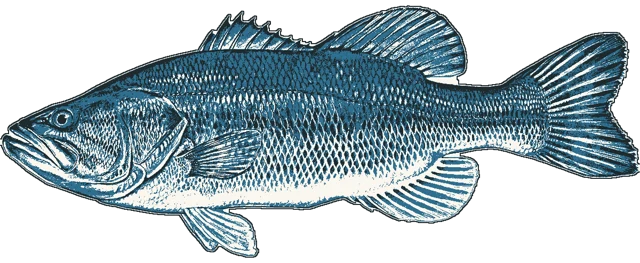
Largemouth bass
Micropterus nigricans (syn. M. salmoides) · also called black bass · Freshwater
Perfectly edible white fillets, but America's top catch-and-release fish and many anglers swear the meat tastes fishy or muddy, so reputation is split.
- Tastes
- mild to slightly 'fishy', firm, thick fillets
- Limits
- Heavy regs. Statewide: open June 15 to Nov 30, 12 in minimum, 5 per day; Dec 1 to June 14 is catch and release only, artificial lures only. Exceptions by water: Lake Erie and its tributaries 20 in minimum and 1 per day Dec 1 to June 14 (12 in and 5 per day June 15 to Nov 30); tidal Hudson River and tributaries 15 in minimum, 5 per day, June 15 to Nov 30, and fishing for black bass (including catch and release) prohibited Dec 1 to June 14; Finger Lakes Canadice, Canandaigua, Conesus, Hemlock, Keuka, Seneca and Honeoye open June 15 to Mar 15 (catch and release, artificial lures only, Mar 16 to June 14); Lake Champlain and tributaries open the second Saturday in June to Nov 30; fishing for black bass (including catch and release) is prohibited Dec 1 to June 14 in all waters of Franklin, Jefferson and St. Lawrence counties, in Hamilton County except Fourth Lake of the Fulton Chain, and in the St. Lawrence River and its tributaries (except those in Clinton County); Black Lake (St. Lawrence County) 15 in; Greenwood Lake opens the third Saturday in June; Indian Lake (Connecticut border) 6 per day; Nassau County lakes and ponds and the listed New York City park lakes catch and release all year. Other listed waters differ. (Statewide regulations effective April 1, 2026; special regulations pages read Nov 21, 2026) Source
- Best months
- Open season June 15 to Nov 30; DEC says best fishing is mid-June through the end of August at water temperatures of 60 to 75 F.
- Where
- Outside edges of weed beds, points on weed edges, drop-offs and downed trees in lakes, ponds and rivers statewide; Finger Lakes shallow weedy areas of Cayuga, Otisco, Conesus and Honeoye.
- plastic stickworm (Ned rig, wacky rig)
- spinnerbait
- live minnows
- live crayfish
- Water-body mercury advisories commonly list largemouth bass; check your state's advisory before eating large fish.
- Do not eat (anyone): any from the Hudson between South Glens Falls and Catskill, the other all-fish waters on this page, Onondaga Lake and the Seneca River below Lock 24, the Mohawk and Erie Canal from Whitesboro to Jacksonburg, Delaware Park Lake, Gill Creek or Hards Lake.
- Do not eat (anyone): any over 15 in from Salmon River Reservoir, Big Reed Pond, Freeport or Massapequa reservoir, Grant Park, Hall's, Lofts, Ridders, Upper Twin or either Smith pond, Lake Capri or Spring Lake (smaller ones 1 meal a month).
- Do not eat (children under 15, people under 50 who can get pregnant): any from the Adirondacks, the Hudson below Catskill, Moodna Creek below Firthcliffe Dam, Salmon River Reservoir, Peconic Lake and River (Edwards Avenue Dam to Peconic Lake Dam), or Dyken, Big Reed or Fresh (Hither Hills) pond (everyone else 1 meal a month).
- Do not eat (that group): any from those Nassau and Suffolk ponds, the Oswego River from Varick Dam to Fulton, the Black River from Carthage to Herrings, or the other waters this page lists for them.
- Do not eat (that group): any over 15 in from Ashokan, Amawalk, Boyd Corners or Cross River reservoir, North-South Lake or Chodikee Lake (otherwise 1 a month for everyone).
Meal limits and other waters (3)
- Limit (everyone): 1 meal a month from the Catskills, Delta Lake, the Buffalo River and harbor, Ellicott Creek, Patroon Creek, the Hoosic River, the Ramapo above Tuxedo Falls Dam, Browns Pond, Lakes Mahopac and Welch, the Black River below Herrings Dam, and over 15 in from any unlisted water.
- Limit: unlisted waters under 15 in, 4 meals a month, or 1 for that group.
- New York Department of Health, Sept 2026; other listed waters differ.
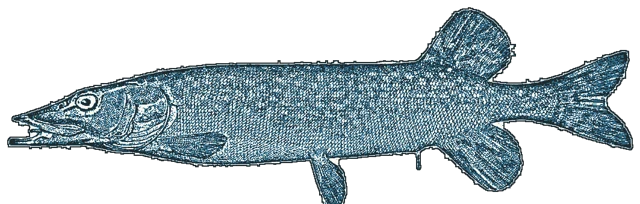
Northern pike
Esox lucius · Freshwater
The meat is white, flaky and great in flavor, but the Y-bones put many anglers off; reputation is split between 'too bony' and 'better than walleye once you learn to clean them'.
Worth a try: Remove the Y-bones with the five-fillet method, or grind, pickle or make fish balls from the meat; Hank Shaw's pike balls grind small pike so the bones vanish.
- Tastes
- mild, clean, firm, flaky white; Y-bones in the upper fillet
- Limits
- Heavy regs. Statewide: open May 1 to Mar 15, 18 in minimum, 5 per day. Exceptions: Lake Erie, Niagara River, Lake Ontario and their tributaries 22 in, 5 per day; St. Lawrence River and tributaries downstream of Tibbetts Point 22 in, 3 per day; all Finger Lakes 22 in, 5 per day; Cross Lake and parts of the Seneca River 22 in, 5 per day; Lake Champlain open all year, 20 in, 5 per day. Other listed waters differ. (Statewide regulations effective April 1, 2026; special regulations pages read Nov 21, 2026) Source
- Best months
- Season opens May 1; DEC says shallow weedy bays and shoals produce in spring on the St. Lawrence River, and tip-ups with large minnows work in winter bays there.
- Where
- Adirondack lakes (Tupper, Schroon, Lake George, Saranac chain, Cranberry, Fulton Chain), Great Sacandaga Lake, northern Lake Champlain (do not eat from Cumberland Head to the Peru boat launch), St. Lawrence River, Indian River lakes, Saratoga Lake, lower Mohawk River, Upper Niagara River, Allegheny River.
- large minnows (tip-ups)
- live shiners or suckers
- surface plugs
- large spinners
- Large pike in parts of northern and western Alaska can carry enough mercury that eating large quantities can be harmful (ADF&G).
- Do not eat (anyone): any from the Hudson between South Glens Falls and Catskill, the other all-fish waters on this page, Lake Champlain between Cumberland Head and the Peru boat launch, or the Salmon River (Clinton County) below Davis Lake Dam.
- Do not eat (anyone): any over 26 in from Lake Flower, Oseetah Lake, Delta Lake, or Rainbow Falls or Stark Falls reservoir (smaller ones 1 meal a month).
- Do not eat (children under 15, people under 50 who can get pregnant): any from the Adirondacks (Lakes Champlain and George and Great Sacandaga Lake included) or Delta Lake (everyone else 1 meal a month).
- Do not eat (that group): any from Moodna Creek below Firthcliffe Dam or Onondaga Lake and the Seneca River below Lock 24 (everyone else 1).
- Do not eat (that group): any from the Hudson below Catskill, the Oswego River from Varick Dam to Fulton, the Black River from Carthage to Herrings, or the other waters this page lists for them.
- Do not eat (that group): any over 26 in from unlisted waters, Lake Mahopac or the Black River below Herrings Dam (everyone else 1).
Meal limits and other waters (3)
- Limit: 1 meal a month, for that group only under 26 in, from Lake Mahopac and the Black River below Herrings Dam.
- Limit: unlisted waters under 26 in, 4 meals a month, or 1 for that group.
- New York Department of Health, Sept 2026; other listed waters differ.
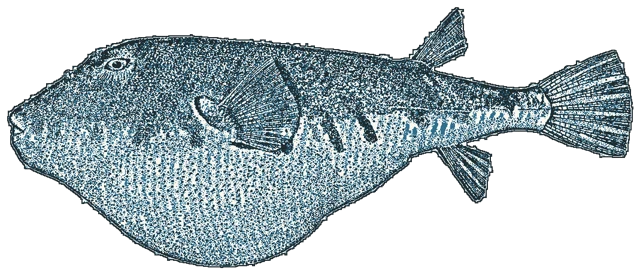
Northern puffer
Sphoeroides maculatus · also called blowfish, swellfish · Saltwater
A small fish most anglers toss because 'puffers are poisonous', though it has long been sold as sea squab in Northeast markets.
Worth a try: The northern puffer is not poisonous like its tropical cousins (NC DMF). Skin it, discard all skin and viscera, and cook the tail section on the bone like a chicken drumstick; On The Water calls them amazingly sweet. Be certain of the ID first.
- Tastes
- sweet, mild, firm, boneless tail (backbone only)
- Limits
- No limits. No statewide limit listed: northern puffer does not appear in DEC's recreational saltwater limits table, so no size, season or possession limit is listed; DEC's species assessment says the recreational harvest is unregulated. (DEC saltwater table "last changed on May 12, 2026", read Nov 21, 2026; state waters only (federal waters beyond 3 miles may differ)) Source
- Best months
- Early May and early October on Long Island (On The Water reports, May 9 and Oct 3, 2019).
- Where
- Bays, estuaries and protected coastal waters.
- clam
- bloodworms
- small pieces of squid
- sandworms
- Remove all skin and viscera before eating; some scientists believe low-level toxins occur there (NC DMF).
- Never eat southern puffer or smooth puffer. Florida bans taking puffers in Volusia, Brevard, Indian River, St. Lucie and Martin counties because of saxitoxin.
- Do not eat (children under 15, people under 50 who can get pregnant): any from the Hudson between Catskill and the Battery, the East, Harlem and Bronx rivers, Newtown Creek, the Gowanus Canal, Upper New York Bay, Raritan Bay west of Wolfe's Pond Park, Arthur Kill, Kill Van Kull or Newark Bay (everyone else 4 meals a month).
Meal limits and other waters (3)
- Limit (that group): 1 meal a month from the tidal Carlls, Carmans and Forge rivers and Quantuck Creek (PFAS).
- Elsewhere in salt water the state sets no number: that group should follow FDA's fish advice (fda.gov/fishadvice), and frequent fish eaters should consider it.
- New York Department of Health, 2026.
Scup
Stenotomus chrysops · also called porgy · Saltwater
Mild, tasty meat (ASMFC), but lots of bones make it hard to fillet, so most are scaled and cooked whole (NOAA).
- Tastes
- mild, lean, flaky, bony
- Limits
- Heavy regs. Open May 1 to Dec 31. Shore-based anglers 9.5 in minimum, vessel-based anglers 11 in, 30 per day. Party and charter boat anglers: 11 in; 30 per day May 1 to Aug 31, 40 per day Sept 1 to Oct 31 and 30 per day Nov 1 to Dec 31 (a customer landing more than 30 Sept 1 to Oct 31 needs a dated original fare receipt). Federal waters: 10 in minimum, 40 per person per trip; boats with a federal permit follow whichever rule is stricter. (DEC saltwater table "last changed on May 12, 2026", read Nov 21, 2026; NOAA list updated Oct 2, 2026) Source
- Best months
- Open May 1 to Dec 31; DEC says scup move inshore in spring.
- Where
- Smooth or rocky bottoms; plentiful around jetties, piers, artificial reefs, offshore ledges and in estuaries.
- clam
- squid
- Do not eat (children under 15, people under 50 who can get pregnant): any from the Hudson between Catskill and the Battery, the East, Harlem and Bronx rivers, Newtown Creek, the Gowanus Canal, Upper New York Bay, Raritan Bay west of Wolfe's Pond Park, Arthur Kill, Kill Van Kull or Newark Bay (everyone else 4 meals a month).
Meal limits and other waters (3)
- Limit (that group): 1 meal a month from the tidal Carlls, Carmans and Forge rivers and Quantuck Creek (PFAS).
- Elsewhere in salt water the state sets no number: that group should follow FDA's fish advice (fda.gov/fishadvice), and frequent fish eaters should consider it.
- New York Department of Health, 2026.
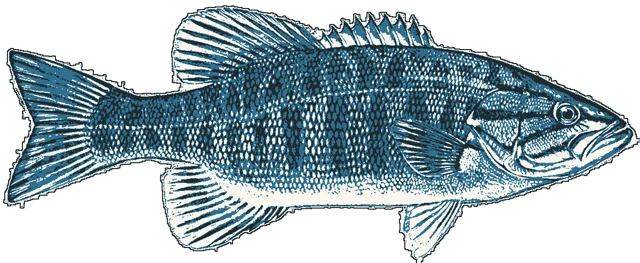
Smallmouth bass
Micropterus dolomieu · also called black bass · Freshwater
Firm, white and good, often rated above largemouth, but most smallmouth are released by custom and the flesh has a slight 'fishy' edge some anglers dislike.
- Tastes
- mild, slightly fishy edge, firm, thick white fillets
- Limits
- Heavy regs. Statewide: open June 15 to Nov 30, 12 in minimum, 5 per day; Dec 1 to June 14 is catch and release only, artificial lures only. Exceptions by water: Lake Erie and its tributaries 20 in minimum and 1 per day Dec 1 to June 14 (12 in and 5 per day June 15 to Nov 30); tidal Hudson River and tributaries 15 in minimum, 5 per day, June 15 to Nov 30, and fishing for black bass (including catch and release) prohibited Dec 1 to June 14; Finger Lakes Canadice, Canandaigua, Conesus, Hemlock, Keuka, Seneca and Honeoye open June 15 to Mar 15 (catch and release, artificial lures only, Mar 16 to June 14); Lake Champlain and tributaries open the second Saturday in June to Nov 30; fishing for black bass (including catch and release) is prohibited Dec 1 to June 14 in all waters of Franklin, Jefferson and St. Lawrence counties, in Hamilton County except Fourth Lake of the Fulton Chain, and in the St. Lawrence River and its tributaries (except those in Clinton County); Black Lake (St. Lawrence County) 15 in; Greenwood Lake opens the third Saturday in June; Indian Lake (Connecticut border) 6 per day; Nassau County lakes and ponds and the listed New York City park lakes catch and release all year. Other listed waters differ. (Statewide regulations effective April 1, 2026; special regulations pages read Nov 21, 2026) Source
- Best months
- Open season June 15 to Nov 30. On Lake Erie DEC says the best smallmouth fishing of the year is spring on nearshore reefs, harbors and tributary streams (tributaries in April and May, harbors in May, reefs and shoals in May and June).
- Where
- Rocky areas of lakes and rivers 5 to 35 ft deep; Lake Erie nearshore reefs and harbors; Finger Lakes (Seneca, Canandaigua, Cayuga, Keuka, Skaneateles, Otisco, Owasco and Hemlock deeper areas); Allegheny and Genesee rivers.
- plastic stickworm (Ned rig, wacky rig)
- spinnerbait
- crankbaits
- jigs
- live crayfish
- live minnows
- Do not eat (anyone): any from the Hudson between South Glens Falls and New York City, Moodna Creek below Firthcliffe Dam, the other all-fish waters on this page, the Mohawk and Erie Canal from Whitesboro to Jacksonburg, or Meacham Lake.
- Do not eat (anyone): any over 15 in from Onondaga Lake and the Seneca River below Lock 24, Fall, Tupper or Stoner lakes, Lake Mahopac, or Moshier, Soft Maple or Dunham reservoir (smaller ones 1 meal a month).
- Do not eat (children under 15, people under 50 who can get pregnant): any from the Adirondacks, the Catskills, the Mohawk and Erie Canal from New London to Whitesboro, the Salmon River (Oswego County) or its reservoir, Dunham Reservoir, Onondaga Lake, the Massena Power Canal, the Oswego River from Varick Dam to Fulton, the Black River from Carthage to Herrings, or the other waters this page lists for them (everyone else 1 meal a month).
- Do not eat (that group): any over 15 in from unlisted waters, Lakes Mahopac and Welch, or the Black River below Herrings Dam.
Meal limits and other waters (3)
- Limit (everyone): 1 meal a month, under 15 in for that group, from unlisted waters, Lakes Mahopac and Welch and the Black River below Herrings Dam.
- Limit: 4 meals a month, or 1 for that group, from Lakes Erie and Ontario, Oneida Lake, and the St. Lawrence and Niagara rivers.
- New York Department of Health, Sept 2026; other listed waters differ.
Smooth dogfish
Mustelus canis · Saltwater
Edible small shark marketed fresh or dried-salted in parts of its range (Florida Museum), but most US anglers release it.
- Tastes
- mild, firm
- Limits
- No limits. No size limit and any number per day; smooth and spiny dogfish are listed together. Gear and handling rules apply (registry required; landed sharks keep head, tail and fins attached; baited hooks for sharks other than spiny dogfish need non-stainless non-offset circle hooks; shore anglers may not use a metal leader over 18 in). State waters; federal waters separate. (Shark table "last changed on August 27, 2025", read Nov 21, 2026; state waters only) Source
- strips of squid
- cut pieces of fish
- peeler crab
- Like all sharks, bleed and ice quickly to avoid ammonia flavor.
- FDA/EPA list shark as a 'Choice to Avoid' (highest mercury).
- Do not eat (children under 15, people under 50 who can get pregnant): any from the Hudson between Catskill and the Battery, the East, Harlem and Bronx rivers, Newtown Creek, the Gowanus Canal, Upper New York Bay, Raritan Bay west of Wolfe's Pond Park, Arthur Kill, Kill Van Kull or Newark Bay (everyone else 4 meals a month).
- FDA and EPA tell people who are pregnant, may become pregnant or are breastfeeding, and young children, to avoid shark.
Meal limits and other waters (3)
- Limit (that group): 1 meal a month from the tidal Carlls, Carmans and Forge rivers and Quantuck Creek (PFAS).
- Elsewhere in salt water the state sets no number: that group should follow FDA's fish advice (fda.gov/fishadvice), and frequent fish eaters should consider it.
- New York Department of Health, 2026.
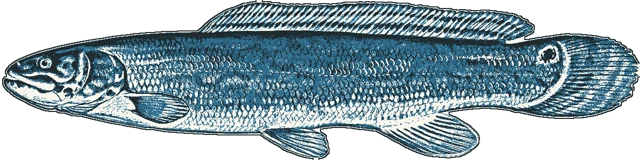
Bowfin
Amia calva (ruddy bowfin) and Amia ocellicauda (emerald bowfin) · Freshwater
TPWD calls it a rough fish rather than one for the table; the soft, pale flesh earned it the nickname 'cottonfish'.
Worth a try: Keep it alive until you clean it, cook it the same day, and use it smoked, fried as patties or stewed; MeatEater serves fried bowfin with a morel cream sauce.
- Tastes
- mild, soft, jelly-like unless very fresh
- Limits
- No limits. No statewide limit listed: DEC lists no size, season or daily limit for bowfin (all other species: all year, any number). All fish are catch and release only in the Hudson River from Troy Dam to Bakers Falls, the Mohawk River below Rte. 32 and the listed New York City park lakes. (Statewide regulations effective April 1, 2026; special regulations pages read Nov 21, 2026) Source
- Spawns
- Spawn May to June in shallow weedy areas.
- Where
- Weedy, clear lakes and rivers in the Lake Erie, Lake Ontario, Finger Lakes, St. Lawrence, Lake Champlain and Black River watersheds; state record 13 lb 8 oz from Yanty Creek, Monroe County.
- live minnows
- cut bait
- jigs
- topwater lures
- Do not eat (anyone): any from the Hudson between South Glens Falls and Catskill or the other all-fish waters on this page.
- Do not eat (children under 15, people under 50 who can get pregnant): any from Onondaga Lake and the Seneca River below Lock 24 or Moodna Creek below Firthcliffe Dam (everyone else 1 meal a month).
- Do not eat (that group): any from the Hudson below Catskill, the Oswego River from Varick Dam to Fulton, the Black River from Carthage to Herrings, or the other waters this page lists for them.
- Bowfin have no line of their own, so the any-other-fish number applies to the rest.
Meal limits and other waters (3)
- Limit (everyone): 1 meal a month from the Black River below Herrings Dam and Lake Mahopac.
- Limit: unlisted waters, the Adirondacks and the Catskills, 4 meals a month, or 1 for that group.
- New York Department of Health, Sept 2026; other listed waters differ.
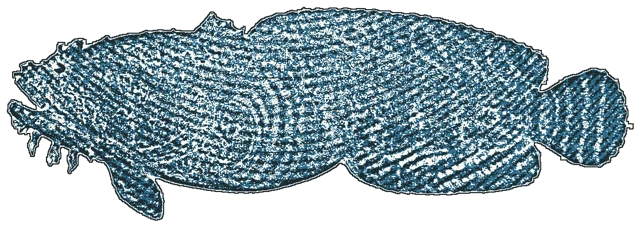
Oyster toadfish
Opsanus tau · Saltwater
An ugly, snapping bycatch fish that almost nobody keeps; toadfishes are generally considered undesirable as food (Florida Museum).
- Tastes
- mild
- Limits
- Heavy regs. 10 in minimum, 3 per day, open July 16 to May 14 (closed May 15 to July 15). (DEC saltwater table "last changed on May 12, 2026", read Nov 21, 2026; state waters only (federal waters beyond 3 miles may differ)) Source
- Best months
- Open July 16 to May 14.
- Where
- New York Harbor, the Hudson along the west side of Manhattan and the bays of Long Island; oyster reefs, shoals and eelgrass beds.
- clam on bottom rigs
- Do not eat (children under 15, people under 50 who can get pregnant): any from the Hudson between Catskill and the Battery, the East, Harlem and Bronx rivers, Newtown Creek, the Gowanus Canal, Upper New York Bay, Raritan Bay west of Wolfe's Pond Park, Arthur Kill, Kill Van Kull or Newark Bay (everyone else 4 meals a month).
Meal limits and other waters (3)
- Limit (that group): 1 meal a month from the tidal Carlls, Carmans and Forge rivers and Quantuck Creek (PFAS).
- Elsewhere in salt water the state sets no number: that group should follow FDA's fish advice (fda.gov/fishadvice), and frequent fish eaters should consider it.
- New York Department of Health, 2026.
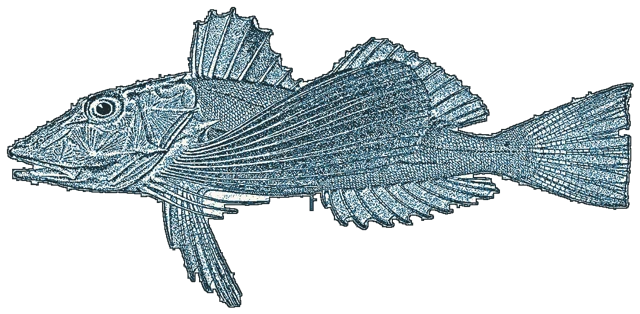
Sea robin
Prionotus spp. (mainly P. carolinus and P. evolans) · also called searobin · Saltwater
Anglers treat sea robins as bait-stealing nuisances and throw them back; few keep one to eat.
Worth a try: On The Water found the fillets delicious, better than fluke or sea bass, if a little darker and firmer. Fillet the tail section (watch the spines) and fry or bake it like fluke.
- Tastes
- mild, sweet, firm, slightly darker than sea bass
- Limits
- No limits. No statewide limit listed: sea robins do not appear in DEC's recreational saltwater limits table, and NOAA's list of recreational rules for the region has no entry for them. (DEC saltwater table "last changed on May 12, 2026", read Nov 21, 2026; NOAA list updated Oct 2, 2026) Source
- Best months
- Late May and late August on Long Island (On The Water reports, May 21, 2020 and Aug 24, 2023).
- squid strips
- cut bait
- cut shrimp
- clams
- Spiny head and fins make it unpleasant to handle.
- Do not eat (children under 15, people under 50 who can get pregnant): any from the Hudson between Catskill and the Battery, the East, Harlem and Bronx rivers, Newtown Creek, the Gowanus Canal, Upper New York Bay, Raritan Bay west of Wolfe's Pond Park, Arthur Kill, Kill Van Kull or Newark Bay (everyone else 4 meals a month).
Meal limits and other waters (3)
- Limit (that group): 1 meal a month from the tidal Carlls, Carmans and Forge rivers and Quantuck Creek (PFAS).
- Elsewhere in salt water the state sets no number: that group should follow FDA's fish advice (fda.gov/fishadvice), and frequent fish eaters should consider it.
- New York Department of Health, 2026.
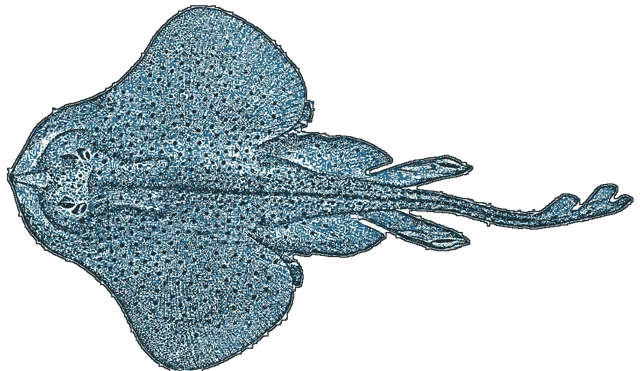
Skate
Rajidae (mainly Raja eglanteria, Leucoraja erinacea, L. ocellata) · Saltwater
Almost every US angler throws skates back or uses them for trap bait; Hank Shaw notes no one he knew growing up in New York and New Jersey kept one.
Worth a try: Kill the fish and cut off the wings right away, refrigerate a day or two so the meat firms up, and brine to remove any ammonia (Hank Shaw). NOAA describes winter skate as mild with a flavor similar to scallops. Classic prep: dredged and sautéed in brown butter with capers.
- Tastes
- mild, scallop-like, firm, stringy, corduroy grain
- Limits
- No limits. No statewide limit listed: skates do not appear in DEC's recreational saltwater limits table, so no size, season or possession limit is listed. Federal waters: no limit on clearnose, little, rosette and winter skates; barndoor, smooth and thorny skates may not be fished for. (DEC saltwater table "last changed on May 12, 2026", read Nov 21, 2026; NOAA list updated Oct 2, 2026) Source
- Best months
- Late August in the Long Island surf (On The Water report, Aug 24, 2023).
- Where
- Little skate: sandy or gravelly bottoms from shallow shoals to nearly 1,000 ft; mostly active in dark conditions, frequently caught by anglers fishing for fluke.
- fluke baits
- bucktails
- small fluke lures
- Poorly handled skates and rays can smell of ammonia; bleed, ice and brine (Hank Shaw).
- Barndoor and thorny skates are protected; possession is prohibited (NOAA).
- Do not eat (children under 15, people under 50 who can get pregnant): any from the Hudson between Catskill and the Battery, the East, Harlem and Bronx rivers, Newtown Creek, the Gowanus Canal, Upper New York Bay, Raritan Bay west of Wolfe's Pond Park, Arthur Kill, Kill Van Kull or Newark Bay (everyone else 4 meals a month).
Meal limits and other waters (3)
- Limit (that group): 1 meal a month from the tidal Carlls, Carmans and Forge rivers and Quantuck Creek (PFAS).
- Elsewhere in salt water the state sets no number: that group should follow FDA's fish advice (fda.gov/fishadvice), and frequent fish eaters should consider it.
- New York Department of Health, 2026.
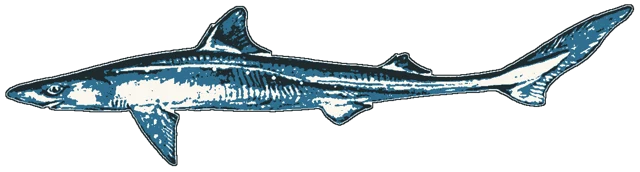
Spiny dogfish
Squalus acanthias · Saltwater
To most US anglers dogfish are a nuisance that swarms baits; NOAA says there is little consumer demand for it in the United States.
Worth a try: NOAA describes the meat as mild, sweet, flaky but firm. It is the fish in British fish and chips, and North Carolina Sea Grant's chef panels served it as 'cape shark' blackened, fried and in chowder. Bleed and gut it quickly like any shark.
- Tastes
- mild, sweet, flaky but firm, oilier than other sharks
- Limits
- No limits. No size limit and any number per day; smooth and spiny dogfish are listed together. Gear and handling rules apply (registry required; landed sharks keep head, tail and fins attached). Spiny dogfish are exempt from the circle-hook rule for sharks. State waters; federal waters separate. (Shark table "last changed on August 27, 2025", read Nov 21, 2026; state waters only) Source
- strips of squid
- cut pieces of fish
- Do not eat (children under 15, people under 50 who can get pregnant): any from the Hudson between Catskill and the Battery, the East, Harlem and Bronx rivers, Newtown Creek, the Gowanus Canal, Upper New York Bay, Raritan Bay west of Wolfe's Pond Park, Arthur Kill, Kill Van Kull or Newark Bay (everyone else 4 meals a month).
- FDA and EPA tell people who are pregnant, may become pregnant or are breastfeeding, and young children, to avoid shark.
Meal limits and other waters (3)
- Limit (that group): 1 meal a month from the tidal Carlls, Carmans and Forge rivers and Quantuck Creek (PFAS).
- Elsewhere in salt water the state sets no number: that group should follow FDA's fish advice (fda.gov/fishadvice), and frequent fish eaters should consider it.
- New York Department of Health, 2026.
White sucker
Catostomus commersonii · Freshwater
Suckers have perhaps the worst reputation of the rough fish (MeatEater) and are mostly raised and sold as bait (MN DNR); the many small bones keep most anglers from eating them.
Worth a try: Spring fish from cold water are light and sweet like walleye (MeatEater); score them deeply and fry hard, pickle them to dissolve the bones, or grind into fish cakes.
- Tastes
- light, sweet, firm, white, many small bones
- Limits
- No limits. No statewide limit listed: DEC lists no size, season or daily limit for white sucker (all other species: all year, any number). All fish are catch and release only in the Hudson River from Troy Dam to Bakers Falls, the Mohawk River below Rte. 32 and the listed New York City park lakes. Suckers may be taken in a dip net up to 14 in across, all year with no daily limit, in tributaries of Cayuga, Seneca and Canandaigua lakes and the Hudson River upstream to Troy Dam (listed exceptions apply). Longnose sucker is a threatened species: possession prohibited. (Statewide regulations effective April 1, 2026; General regulations read Nov 21, 2026) Source
- Spawns
- Spawn April to May in fast-flowing gravel streams (the dip-net season is all year in the listed waters).
- Where
- Gravel and mud bottoms of warm lakes, rivers and streams in all watersheds.
- nightcrawlers drifted on the bottom
- worms
- spearing/netting where legal
- Do not eat (anyone): any from the Hudson between South Glens Falls and Catskill, the other all-fish waters on this page, the Mohawk and Erie Canal from Whitesboro to Jacksonburg, or Mud or Sauquoit creek (Oneida County).
- Do not eat (children under 15, people under 50 who can get pregnant): any from Onondaga Lake and the Seneca River below Lock 24 or Moodna Creek below Firthcliffe Dam (everyone else 1 meal a month).
- Do not eat (that group): any from the Hudson below Catskill, the Oswego River from Varick Dam to Fulton, the Black River from Carthage to Herrings, or the other waters this page lists for them.
Meal limits and other waters (4)
- Limit (everyone): 1 meal a month from Catharine Creek, the Hoosic River, the Mohawk and Erie Canal from New London to Whitesboro, the Black River below Herrings Dam and Lake Mahopac.
- Limit: 4 meals a month, or 1 for that group, from the Adirondacks, the Catskills, Lake Erie, the Niagara above the Falls, Ellicott and Gill creeks, the Erie Canal from Lockport to the Niagara, the Buffalo River, Delaware Park Lake, Lake Alice, Canadice Lake, the Mohawk below Jacksonburg, Schoharie Creek, Patroon Creek, the Raquette below Raymondville Dam and the Carlls above Argyle Lake Dam.
- Limit: unlisted, 4.
- New York Department of Health, Sept 2026; other listed waters differ.
Lake sturgeon
Acipenser fulvescens · Freshwater
Protected across most of its range after overharvest for flesh and caviar; Wisconsin DNR lists many of its lake sturgeon waters as catch and release only and requires a keeper to be at least 60 inches.
- Limits
- No harvest. Closed statewide: fishing for lake sturgeon (including catch and release) or possession is prohibited. Lake sturgeon is on DEC's threatened list; unintentional catches must be unhooked and released immediately. (Statewide regulations effective April 1, 2026; General regulations read Nov 21, 2026) Source
- Where
- Clean sand, gravel or rock bottoms of large lakes and rivers: Lake Erie, Lake Ontario, St. Lawrence River, Black River, Finger Lakes, Lake Champlain, Genesee River.
Muskellunge
Esox masquinongy · also called muskie, musky · Freshwater
A trophy fish that is almost never kept: high minimum lengths and a strong release ethic mean most muskie anglers let their catch go.
- Limits
- Heavy regs. Statewide: open June 1 to Nov 30, 40 in minimum, 1 per day (tiger muskellunge statewide is May 1 to Mar 15, 30 in, 1 per day). Exceptions: Lake Erie, Niagara River, Lake Ontario, St. Lawrence River and tributaries June 15 to Dec 15, 54 in, 1 per day; Delaware River all year, 40 in, 1; Lake Champlain last Saturday in May to Nov 30, 40 in, 1; Greenwood Lake all year, 44 in, 1; tiger muskellunge in Chautauqua Lake (and tributaries to the first road bridge) and the Chadakoin River down to Warner Dam follow the muskellunge rule (June 1 to Nov 30, 40 in, 1); Otisco Lake tiger muskellunge 36 in. Other listed waters differ. (Statewide regulations effective April 1, 2026; special regulations pages read Nov 21, 2026) Source
- Best months
- Season opens June 1 (June 15 on the Great Lakes and St. Lawrence); on the St. Lawrence River DEC says the effort comes in late summer and through fall.
- Where
- St. Lawrence River (do not eat from the Seaway International Bridge to Raquette Point) and tributaries, upper and lower Niagara River, Buffalo Harbor, Lakes Erie and Ontario; stocked Chautauqua Lake, Bear Lake, Findley Lake, Cassadaga Lakes, Waneta Lake, Allegheny River and Conewango Creek.
- large live chubs, shiners or suckers
- large bucktail spinners
- big deep-diving plugs
- Do not eat (anyone): any from the Hudson between South Glens Falls and Catskill, the other all-fish waters on this page (the St. Lawrence from the Seaway International Bridge to Raquette Point among them), or tiger muskellunge from the Mohawk and Erie Canal from Whitesboro to Jacksonburg.
- Do not eat (children under 15, people under 50 who can get pregnant): any from Onondaga Lake and the Seneca River below Lock 24 or Moodna Creek below Firthcliffe Dam (everyone else 1 meal a month).
- Do not eat (that group): any from the Hudson below Catskill, the Oswego River from Varick Dam to Fulton, the Black River from Carthage to Herrings, or the other waters this page lists for them.
- Muskellunge have no line of their own, so the any-other-fish number applies to the rest.
Meal limits and other waters (3)
- Limit (everyone): 1 meal a month from the Black River below Herrings Dam and Lake Mahopac.
- Limit: 4 meals a month, or 1 for that group, from Lakes Erie and Ontario, the Niagara, the rest of the St. Lawrence and unlisted waters.
- New York Department of Health, Sept 2026; other listed waters differ.
Where to fish in New York
Fish named here are what people catch at each spot, not a promise they’re safe to eat. Read the eating advice on the fish’s card before you keep one.
# Salt or brackish# Freshwater
- 1Lake Erie and tributaries (New York shore) lake · fresh
DEC says the best smallmouth fishing of the year is spring on nearshore reefs, harbors and tributaries, describes spring and summer walleye trolling, and names Cattaraugus, Canadaway, Chautauqua and Eighteenmile creeks as the most popular steelhead tributaries. Eating advice: 1 meal of walleye a month for everyone; smallmouth and steelhead 4 a month, or 1 for people under 50 who can get pregnant and children under 15.
Known for: Smallmouth bass, Walleye, Steelhead
Access: Nearshore reefs, harbors and tributary streams; DEC says public access is limited on Buffalo, Cayuga, Silver and Walnut creeks. Tributary seasonal tackle rules apply Sept 1 to Mar 31.
- 2Salmon River (Oswego County) river · fresh
DEC calls it by far the most famous New York stream for Pacific salmon fishing; about 70 percent of angler-caught Chinook there are believed to be wild. DEC also lists it among Lake Ontario steelhead waters with public access. Eating advice: Chinook and steelhead, 4 meals a month, or 1 for people under 50 who can get pregnant and children under 15.
Known for: Chinook salmon, Steelhead
Access: Special regulations apply: night fishing rules, hook and weight limits Aug 15 to Apr 14 below the Rte. 52 bridge, and fly-only catch and release sections (Lower Fly Section Sept 15 to May 15, Upper Fly Section Apr 1 to Nov 30).
- 3St. Lawrence River (Cape Vincent to Alexandria Bay) river · fresh
DEC lists naturally reproducing muskellunge in the St. Lawrence and says pike anglers do well in shallow weedy bays and shoals in spring, with tip-ups and large minnows in winter bays near Cape Vincent, Clayton, Wellesley Island and Alexandria Bay. Eating advice: people under 50 who can get pregnant and children under 15 should not eat pike over 26 in from here (everyone else 1 meal a month); walleye, muskellunge and smaller pike 4 a month, or 1 for that group.
Known for: Muskellunge, Northern pike, Walleye
Access: Bays near Cape Vincent, Clayton, Wellesley Island, Alexandria Bay, Chippewa Bay and Ogdensburg. A New York license is not valid in the Ontario or Quebec portions of the river.
- 4Oneida Lake lake · fresh
DEC says walleye follow gizzard shad inshore on Oneida Lake from late September through November and lists the lake among its best waters for big channel catfish. Eating advice: channel catfish 1 meal a month for everyone; walleye 4, or 1 for people under 50 who can get pregnant and children under 15.
Known for: Walleye, Channel catfish
Access: DEC lists shoreline access at its West Monroe and Godfrey Point boat launches, Oneida Shores County Park and the mouth of Oneida Creek.
- 5Lake Champlain lake · fresh
DEC pages list Lake Champlain for northern pike (increasingly abundant in the northern lake), chain pickerel, black crappie in shallow bays (Monty Bay, Bulwagga Bay, South Bay), big channel catfish and lake trout (mostly Westport to Cumberland Head); the lake has its own special regulations. Eating advice: no pike for anyone from Cumberland Head to the Peru boat launch. No pike, pickerel or lake trout from anywhere in the lake for people under 50 who can get pregnant and children under 15 (everyone else 1 meal a month, outside that bay for pike).
Known for: Northern pike, Chain pickerel, Black crappie, Channel catfish, Lake trout
Access: South Bay Pier is listed by DEC. Border-water rules: a New York license is valid in Vermont waters except the Inland Sea, Mallett's Bay, Missisquoi Bay and all rivers.
- 6Cayuga Lake lake · fresh
DEC says lake trout, brown trout and rainbow trout are fished in Cayuga, with largemouth in its shallow weedy areas, smallmouth in deeper areas, pike at the south end, pickerel at the north end, and yellow perch. Eating advice: people under 50 who can get pregnant and children under 15 should not eat smallmouth over 15 in or pike over 26 in from here; everyone else 1 meal a month of those.
Known for: Lake trout, Brown trout, Smallmouth bass, Largemouth bass, Northern pike
Access: DEC publishes a Cayuga Lake map; tributaries have additional seasonal rules (Fall Creek and Cayuga Inlet special sections).
- 7Chautauqua Lake lake · fresh
DEC says Chautauqua Lake is stocked annually with muskellunge and supplies the eggs for the state muskellunge stocking program; it is on DEC's list of consistently good crappie waters.
Known for: Muskellunge, Black crappie
Access: Shoreline access at Long Point and Tom's Point (state), Prendergast, Mayville and Lakewood. Tiger muskellunge follow the muskellunge rule here (June 1 to Nov 30, 40 in, 1 per day).
- 8Lake George lake · fresh
DEC lists Lake George among its top northern pike lakes and top chain pickerel waters. Eating advice: people under 50 who can get pregnant and children under 15 should not eat pike or pickerel from here; everyone else 1 meal a month.
Known for: Northern pike, Chain pickerel
Access: Lake George has its own rules: lake trout 23 in, 2 per day; Atlantic salmon 18 in, 2 per day; tributaries closed to fishing from 10 PM to 5 AM Apr 1 to May 15.
- 9Great Sacandaga Lake lake · fresh
DEC says Great Sacandaga Lake regularly gives up trophy pike (a number over 20 lb in recent years) and lists it for big channel catfish. Eating advice: people under 50 who can get pregnant and children under 15 should not eat pike from here; everyone else 1 meal a month.
Known for: Northern pike, Channel catfish
Access: State launches at Northville and Broadalbin, Northampton Beach Campground and a Saratoga County launch north of Edinburgh.
- 10Willowemoc Creek and Beaver Kill (Catskills) river · fresh
DEC's Catskills fly-fishing guide says both streams are dominated by brown trout, with brook trout in abundance in the Willowemoc's forest preserve headwaters. A 3.5 mile Willowemoc reach and two Beaver Kill reaches are year-round catch and release. Eating advice (Catskills): brown trout 4 meals a month, or 1 for people under 50 who can get pregnant and children under 15; brook trout 4.
Known for: Brown trout, Brook trout
Access: Reach rules: Stocked-Extended reaches Apr 1 to Oct 15, 3 per day with no more than 1 over 12 in; catch and release reaches all year, artificial lures only; Beaver Kill below Horton closed July 1 to Aug 31 on one reach. Check the DECinfo trout stream map for public fishing rights.
- 11Tidal Hudson River estuary · brackish
DEC says striped bass enter the tidal Hudson each season and calls the estuary an important spawning ground. It lists the river in Dutchess, Orange, Putnam and Ulster counties for carp, and calls it the only DEC Region 3 water with much chance of one over 30 lb, but the Department of Health says no one should eat carp from anywhere on the tidal river, so carp is left off this spot's fish. No one should eat striped bass caught between Troy and Catskill; below Catskill, 4 meals a month, or 1 for people under 50 who can get pregnant and children under 15. See the eating advice on this page before you keep a fish.
Known for: Striped bass
Access: South of the Mario M. Cuomo Bridge (Marine and Coastal District) the free Recreational Marine Fishing Registry covers all species; north of it a freshwater license covers freshwater species and the registry covers migratory marine species.
- 12Peconic River (Long Island) river · fresh
DEC lists Forge Pond on the Peconic River as excellent for chain pickerel and the Peconic River among its consistently good crappie waters. Eating advice: from Edwards Avenue Dam to Peconic Lake Dam, 1 meal of pickerel a month, and none over 20 in for people under 50 who can get pregnant and children under 15; nobody should eat fish from Swan Pond (Suffolk County).
Known for: Chain pickerel, Black crappie
Access: Limited shoreline access; several DEC sites for launching cartop boats.
- 13Captree State Park and Great South Bay surf · salt
DEC ran its 2026 striped bass hook swap for surfcasters at Captree Boat Basin (Oct 24 and 25) and at Captree and Robert Moses (Nov 13). Two of its 16 artificial reefs, Kismet and Yellowbar, are in Great South Bay; DEC says its reefs attract tautog, black sea bass, scup and fluke. Eating advice: striped bass 4 meals a month, or 1 for people under 50 who can get pregnant and children under 15; for fluke, tautog, sea bass and scup that group should follow FDA's advice (fda.gov/fishadvice).
Known for: Striped bass, Summer flounder, Tautog, Black sea bass, Scup
Access: DEC's Long Island boat ramp guide lists a ramp at Captree State Park on Great South Bay (the guide dates from 2009, so confirm with the park). DEC also runs five Long Island marine access sites open 24/7.
New York fishing license and rules
- Resident: $25 (ages 16-69; $5 at 70+), valid 365 days from purchase
- Nonresident: $50, valid 365 days from purchase
- Nonresident short-term: $10 for 1 day, $28 for 7 days
- Saltwater: Free Recreational Marine Fishing Registry required at 16+ in the Marine and Coastal District, and for migratory fish of the sea (such as striped bass, American eel, hickory shad and river herring) in the tidal Hudson and its tributaries and the Delaware and Mohawk rivers; it is not needed aboard a licensed party or charter boat, or for crabs, lobsters, whelk or shellfish. Anglers fishing for shark and tuna also need a NOAA HMS permit.
- Who needs one: 16 and older (freshwater license and marine registry)
- Free fishing days: Next free fishing weekend: Feb 13-14, 2027. The 2026 days were Feb 14-15, June 27-28, Sept 26 and Nov 11. No freshwater license needed; all other regulations apply.
More license details
Resident 1-day $5, 7-day $12. A New York license is not valid in the Ontario, Quebec or Pennsylvania portions of Lake Ontario, Lake Erie, the St. Lawrence River and the Niagara River; it is valid on the Delaware River and, from a boat or the ice only, on the New Jersey side of Greenwood Lake and the Connecticut side of Indian Lake, and in Vermont waters of Lake Champlain except the Inland Sea, Mallett's Bay, Missisquoi Bay and all rivers. Freshwater rules: 2026 Freshwater Fishing Regulations (statewide table effective April 1, 2026); saltwater rules last changed May 12, 2026.
Buy a license License types and fees
Fees: DEC fee table read Nov 21, 2026 (annual license runs 365 days from purchase).
- Black bass are catch and release with artificial lures only from Dec 1 to June 14 on most waters. Lake Erie and its tributaries allow 1 fish of 20 in or more, and seven Finger Lakes stay open to Mar 15. Fishing for black bass at all is prohibited in that period on the tidal Hudson and its tributaries, in all waters of Franklin, Jefferson and St. Lawrence counties, in Hamilton County except Fourth Lake of the Fulton Chain, and on the St. Lawrence River and its tributaries (except those in Clinton County).
- Striped bass: Hudson River north of the George Washington Bridge 23 to 28 in slot, 1 per day, Apr 1 to Nov 30; marine waters 28 to 31 in, 1 per day, Apr 15 to Dec 15; Delaware River 28 to 31 in, 1 per day (DEC's tables disagree on the season). Federal waters are closed to striped bass fishing. Non-offset circle hooks are required with bait, and gaffs may not be used.
- Great Lakes tributaries have seasonal rules from Sept 1 to Mar 31 (Aug 15 to Apr 14 on the Salmon River below Rte. 52): no night fishing, hook gaps of 1/2 in or less and free-swinging lure hooks. Lake Ontario tributaries also allow only one single-point hook on most rigs and no weight more than 4 ft from the hook. Snatching is prohibited and foul-hooked fish must be released.
- Any northern snakehead caught while angling cannot be released: it must be killed immediately and reported to DEC; live possession of snakeheads is prohibited.
- Lake sturgeon, Atlantic sturgeon, shortnose sturgeon, paddlefish and sauger are closed: fishing for them (even catch and release) or possessing them is prohibited. American shad may not be possessed in the Hudson and its tributaries, and in the tidal Hudson fishing for them is prohibited too.
- Fluke may not be headed, tailed, cleaned or filleted until brought to shore; the carcass with the dark side intact must be kept to check size and count.
- Gaffs and gaff hooks are prohibited in freshwater (including the Hudson above the Mario M. Cuomo Bridge) except when ice fishing or bowfishing; an angler may use no more than 3 lines.
- Sharks: tiger, blacktip, bull, lemon, nurse, spinner, blue, porbeagle and common thresher are allowed at 54 in fork length and great, scalloped and smooth hammerheads at 78 in, 1 shark per vessel per trip; sandbar, dusky, shortfin mako, sand tiger and other listed sharks are prohibited; baited shark hooks must be non-stainless non-offset circle hooks.
- All fish are catch and release only in listed New York City park lakes (including Central Park, Prospect Park Lake and Meadow Lake), in the Hudson River from Troy Dam to Bakers Falls and in the Mohawk River below Rte. 32.
Limits here are summaries for convenience, checked on the date shown. The official New York regulations govern; check them before you keep a fish.
Before you eat it
- Do not eat any fish, anyone, from these all-fish waters (New York Department of Health county list, revised September 2026): the Hudson from the South Glens Falls Dam to Troy (catch and release only below Bakers Falls: take no fish, eat no fish) and, except yellow perch, rock bass, alewife and blueback herring, from Troy to the Rip Van Winkle Bridge at Catskill; the St. Lawrence from the Seaway International Bridge, with Turtle Creek Cove, to the north end of Raquette Point; and the Grasse River from its mouth to the Massena Power Canal.
- Do not eat any fish, anyone, from these all-fish waters in the Hudson Valley, Capital Region and Long Island: Newburgh-area waters (Beaverdam Lake and the stream into it from Stewart State Forest, Clark Street Ponds, Crest View Lake, Lockwood Basin/Masterson Park Pond, Moodna Creek above Firthcliffe Dam, Recreation Pond, Silver Stream, Washington Lake); Nassau Lake, the Valatie Kill from County Route 18 to Nassau Lake, and Thayers Pond (Rensselaer); Fallkill Lake and Creek (Dutchess); Shaker Creek (Albany); the unnamed stream from Schenectady Airport; and Swan Pond (Suffolk).
- Do not eat any fish, anyone, from these all-fish waters in western and central New York: Cayuga Creek (Niagara); Eighteenmile Creek (Niagara), except brown trout, rainbow trout, coho and Chinook below Burt Dam (1 meal a month); Scajaquada Creek (Erie); Coldbrook Creek (Chemung); and Threemile Creek and Sixmile Creek below Gulf Road (Oneida).
- Do not eat, anyone, these Hudson River fish: between the Rip Van Winkle Bridge at Catskill and the Battery, walleye, smallmouth bass, channel and white catfish, carp, gizzard shad and eel; from Moodna Creek below Firthcliffe Dam, walleye, smallmouth bass, channel and white catfish and gizzard shad; between Corinth Dam and South Glens Falls, channel catfish and carp; between Troy and Catskill, blue crab too. No eel may be kept for food from the tidal Hudson, East or Harlem river.
- Do not eat, anyone, these New York Harbor fish: eel, gizzard shad and channel and white catfish from the East River (to the Throgs Neck Bridge), the Harlem and Bronx rivers, Newtown Creek, the Gowanus Canal, Upper New York Bay, Raritan Bay west of Wolfe's Pond Park, Arthur Kill, Kill Van Kull or Newark Bay; white perch from the last four; and striped bass from the last three. Nor crab or lobster tomalley (the soft green part), or the water it was cooked in, from any water.
- Do not eat, anyone, these Long Island fish: largemouth bass and bluegill from Hards Lake; eel from Hards Lake, the Carlls River above Argyle Lake Dam or Smith Pond in Roosevelt Park; sunfish from the Carlls above Argyle Lake Dam; carp from Hall's Pond or Spring Lake (Middle Island); goldfish from those two or Ridders Pond; and largemouth over 15 in from Big Reed Pond or, by the Department's March 2026 booklet, Freeport or Massapequa reservoir, Grant Park, Hall's, Lofts, Ridders, Upper Twin or either Smith pond, Lake Capri or Spring Lake.
- Do not eat, anyone, these western New York fish: carp from Lake Erie, the Niagara above the Falls, the Buffalo River and harbor, Ellicott Creek (Erie), Gill Creek below Hyde Park Lake, the Erie Canal and Tonawanda Creek from Lockport to the Niagara, Lewiston Reservoir or Delaware Park Lake; channel catfish from the Buffalo River and harbor; largemouth bass from Delaware Park Lake or Gill Creek; sunfish from Gill Creek; lake trout from the Niagara below the Falls; and walleye over 19 in from Rushford Lake.
- Do not eat, anyone, these central New York fish: walleye, largemouth bass, white perch, channel catfish, carp and smallmouth over 15 in from Onondaga Lake or the Seneca River below Lock 24 at Baldwinsville; lake trout from Canadice Lake; and largemouth over 15 in from Salmon River Reservoir (Oswego).
- Do not eat, anyone, these Mohawk Valley fish: from the Mohawk River and Erie Canal, walleye, bluegill, rock bass or carp between New London (Lock E21 and Feeder Dam 1) and Whitesboro (Lock E20), largemouth or smallmouth bass, tiger muskellunge, white sucker or carp between Whitesboro and Jacksonburg (Lock E18), and carp between Fivemile Dam and Cohoes Falls or from Schoharie Creek below the Blenheim-Gilboa dam; brown trout or white sucker from Mud or Sauquoit creek (Oneida); and pike over 26 in from Delta Lake.
- Do not eat, anyone, these Adirondack and Champlain fish: Adirondack walleye over 19 in, or any from Franklin Falls Flow; pike, yellow perch, rock bass or eel from Lake Champlain between Cumberland Head and the Peru boat launch or Salmon River (Clinton County) below Davis Lake Dam; smallmouth or yellow perch from Meacham Lake; pickerel from Sunday Lake, or over 20 in from Effley Falls Pond; yellow perch over 10 in from North Lake (Ohio); pike over 26 in from Lake Flower, Oseetah Lake, Rainbow Falls or Stark Falls; smallmouth over 15 in from Fall, Tupper or Stoner lakes, Moshier or Soft Maple.
- Do not eat, anyone, these Catskill and Hudson Valley fish: walleye over 19 in from anywhere in the Catskills or from Loch Sheldrake; any walleye, and smallmouth bass over 15 in, from Dunham Reservoir (Rensselaer); smallmouth over 15 in from Lake Mahopac; carp or brown trout from the Hoosic River from Schaghticoke Dam to Vermont; and eel from the Sheldrake River (Westchester).
- Do not eat, people under 50 who can get pregnant and children under 15: statewide, northern pike over 26 in, smallmouth bass over 15 in, walleye over 19 in and weakfish over 25 in; and from the Catskills (parts of Delaware, Greene, Schoharie, Sullivan and Ulster counties), any smallmouth bass or walleye, and yellow perch over 10 in. Everyone else: 1 meal a month of these, but no walleye over 19 in from the Catskills.
- Do not eat, people under 50 who can get pregnant and children under 15, from the Adirondacks (Essex, Fulton, Hamilton, Lewis and Warren counties and parts of Clinton, Franklin, Herkimer, Saratoga, St. Lawrence and Washington): chain pickerel, lake trout, largemouth or smallmouth bass, northern pike, rock bass, any walleye, and yellow perch over 10 in. Everyone else: 1 meal a month of these, but no walleye over 19 in.
Do not eat any fish, people under 50 who can get pregnant and children under 15 (the waters this page lists for them): the Hudson from Troy to the Battery, except yellow perch, white … (see the full list)
Do not eat any fish, people under 50 who can get pregnant and children under 15 (the waters this page lists for them): the Hudson from Troy to the Battery, except yellow perch, white perch, striped bass and brown bullhead below Catskill (1 meal a month); the East, Harlem and Bronx rivers, Upper New York Bay, Newtown Creek, the Gowanus Canal, Raritan Bay west of Wolfe's Pond Park, Arthur Kill, Kill Van Kull and Newark Bay; Onondaga Lake and the Seneca River below Lock 24; the Oswego River from Varick Dam to Fulton; the Black River from Carthage to Herrings; the Massena Power Canal; Lewiston Reservoir; Moodna Creek below Firthcliffe Dam (everyone else 1 meal a month of other fish); Delaware Park Lake, except bluegill, sunfish, suckers and bullhead; Mud and Sauquoit creeks (Oneida County); Kinderhook Lake and the Valatie Kill down to it; Koppers Pond; the Saw Mill River above Mill Street in Yonkers; the Sheldrake River; on Long Island, Freeport and Massapequa reservoirs, Grant Park, Hall's, Lofts, Ridders, Upper Twin and both Smith ponds, Lake Capri and Spring Lake; and, by the Department's March 2026 booklet, most fish from Canadice Lake (its September 2026 list allows that group 1 meal a month, except lake and brown trout).
Salt water (the Department's list, revised April 2026): from the ocean, Block Island and Long Island sounds, Great South Bay and the rest of the South Shore, Jamaica, Peconic, Gardiners … (see the full list)
Salt water (the Department's list, revised April 2026): from the ocean, Block Island and Long Island sounds, Great South Bay and the rest of the South Shore, Jamaica, Peconic, Gardiners and Lower New York bays and Raritan Bay east of Wolfe's Pond Park, striped bass, bluefish, eel and weakfish under 25 in 4 half-pound meals a month, or 1 for people under 50 who can get pregnant and children under 15; for other fish that group should follow FDA's advice (fda.gov/fishadvice). In the harbor waters named in that group's list, everyone else may have 4 a month of most fish not marked do not eat, but 1 of bluefish, carp, white perch, needlefish or smelt, and 1 of striped bass outside the Hudson; blue crab there is do not eat for that group and 4 meals a month (about 6 crabs a week) for others. Tidal Carlls, Carmans and Forge rivers and Quantuck Creek (PFAS): other fish and crabs 1 a month and no eel for that group, eel 1 a month for others. Fresh waters in New York City parks are catch and release only.
Waters without their own advice, half-pound meals a month: 4 for everyone of brook and rainbow trout, brown trout under 20 in, bluegill, pumpkinseed, white sucker and yellow perch under 10 … (see the full list)
Waters without their own advice, half-pound meals a month: 4 for everyone of brook and rainbow trout, brown trout under 20 in, bluegill, pumpkinseed, white sucker and yellow perch under 10 in; 1 for everyone of channel catfish, freshwater drum, white perch, smallmouth under 15 in, largemouth over 15 in and chain pickerel over 20 in; 4, or 1 for people under 50 who can get pregnant and children under 15, of most others and any fish not listed. The Adirondacks and Catskills are stricter. Lake Erie: 1 of walleye, yellow perch, lake trout and drum. Lake Ontario: 1 of walleye and lake trout, and of brown trout over 20 in. The Black River below Herrings Dam and Lake Mahopac: 1 of every fish not marked stricter (PFAS). Many more lakes and rivers have their own numbers, which reach up tributaries to the first dam or falls, so look up your water: https://www.health.ny.gov/environmental/outdoors/fish/health_advisories/ or 518-402-7530.
- To lower PCBs, dioxin and chlordane, remove the skin, trim the fat along the belly, sides and back, and broil, grill or bake so the fat drips off; throw the drippings away. Trimming does not lower mercury or PFOS (a PFAS).
Local lingo
- Fluke: summer flounder.
- Porgy: scup.
- Blackfish: tautog.
- Snappers: young bluefish.
- Brookie: brook trout, the state fish.
- Muskie or musky: muskellunge.
- King salmon: Chinook salmon.
- Bunker: Atlantic menhaden (also mossbunker or pogy).
Questions anglers ask about New York
What is the most common fish in New York?
In NOAA MRIP estimates for 2023 to 2025, scup was the most-caught saltwater fish in New York at about 12.0 million fish a year, followed by summer flounder (9.1 million) and black sea bass (8.0 million); tautog (5.2 million) and sea robins (about 3.9 million combined) ranked next, ahead of bluefish and striped bass. MRIP is a saltwater survey, so it does not rank freshwater fish.
Do I need a saltwater fishing license in New York?
Free Recreational Marine Fishing Registry required at 16+ in the Marine and Coastal District, and for migratory fish of the sea (such as striped bass, American eel, hickory shad and river herring) in the tidal Hudson and its tributaries and the Delaware and Mohawk rivers; it is not needed aboard a licensed party or charter boat, or for crabs, lobsters, whelk or shellfish. Anglers fishing for shark and tuna also need a NOAA HMS permit.
What is the best fish to eat in New York?
18 of the 38 fish on our New York board rate Best eating. Among the fish caught most: summer flounder, black sea bass, tautog, striped bass, walleye and yellow perch.
What is the state fish of New York?
Brook trout: Official fresh-water fish, State Law Section 80. Striped bass: Official marine or salt water fish, State Law Section 80-a.
Does New York have free fishing days?
Next free fishing weekend: Feb 13-14, 2027. The 2026 days were Feb 14-15, June 27-28, Sept 26 and Nov 11. No freshwater license needed; all other regulations apply.
Which New York fish are better to eat than their reputation?
We give the Worth a try badge to northern pike, common carp, white sucker, freshwater drum, bowfin, bluefish, sea robin, skate, spiny dogfish and northern puffer: fish most anglers toss or rate low that eat well when they're cleaned and cooked right. Each card says how.
Neighboring states
Sources
Limits, prices and advisories come from these pages, read on or before Nov 21, 2026. Where a line gives its own date, that’s the date it rests on. Eating advice changes: check the state’s current list. Ratings are national and come from the fish’s own page.
95 sources
- dec.ny.gov striped bass: state fish
- dec.ny.gov black sea bass: regs (16 in, May 16 opening, effective May 11, 2026)
- dec.ny.gov license fees; license info
- dec.ny.gov Atlantic bluefin tuna: regs (registry and HMS permit in state waters)
- dec.ny.gov Atlantic cod: proposed possession ban; black sea bass: regs (adopted Sept 30, 2026); bluefish: regs (rule effective April 7, 2026)
- dec.ny.gov Atlantic cod: proposed ban still pending (read Nov 22, 2026)
- dec.ny.gov black crappie: advisory (Department of Health 2026 advice, pp. 84, 87, 88); bluegill: advisory (Department of Health 2026 advice, pp. 84, 87, 88); brook trout:
- dec.ny.gov black sea bass: regs (size, limit and season pairings); summer flounder: regs (size, limit and season pairings); tautog: regs (size, limit and season pairings)
- dec.ny.gov Atlantic cod: proposed ban and federal waters
- dec.ny.gov bowfin: baits (record entry), where; common carp: record; freshwater drum: baits, where (record entry); state records; white perch: baits (state record caught o
- dec.ny.gov free fishing days
- dec.ny.gov common carp: baits
- dec.ny.gov chain pickerel: baits, months, where, names; fishing spots
- dec.ny.gov black crappie: baits, months, where, names, why_common; fishing spots
- dec.ny.gov largemouth bass: baits, months, where; smallmouth bass: baits, months, where
- dec.ny.gov channel catfish: baits, months, where, names; white perch: baits (worms for white perch)
- dec.ny.gov fishing spots; walleye: baits, months, where, why_common
- dec.ny.gov brook trout: baits, months, where, names
- dec.ny.gov muskellunge: names, where
- dec.ny.gov bluegill: baits, where, names; bullhead (black, brown, yellow): baits, months, where; yellow perch: baits, where
- dec.ny.gov brook trout: baits, where; brown trout: baits, where
- dec.ny.gov where to fish
- dec.ny.gov brook trout: names
- dec.ny.gov common carp: where (Seneca and Oneida rivers)
- dec.ny.gov bluegill: where; brown trout: where; fishing spots; lake trout: where, why_common; largemouth bass: where; smallmouth bass: where; walleye: where; yellow perch:
- dec.ny.gov fishing spots; muskellunge: months; northern pike: baits, months, where; yellow perch: where
- dec.ny.gov smallmouth bass: baits, months, where
- dec.ny.gov freshwater drum: months; walleye: months, where
- dec.ny.gov Chinook salmon: baits, months, where, why_common; fishing spots; steelhead: where
- dec.ny.gov fishing spots; steelhead: baits, months, where
- dec.ny.gov steelhead: baits, months
- dec.ny.gov Chinook salmon: baits; brown trout: months, where; lake trout: baits, months, where
- dec.ny.gov common carp: baits, where, why_common; fishing spots
- dec.ny.gov chain pickerel: where; fishing spots; muskellunge: where, months, names; northern pike: where
- dec.ny.gov common carp: where; largemouth bass: baits (live crayfish, minnows in warmwater rivers); muskellunge: baits; northern pike: baits; smallmouth bass: baits, where
- dec.ny.gov freshwater regs
- dec.ny.gov black crappie: regs; bluegill: regs; brown trout: regs; chain pickerel: regs; channel catfish: Greenwood Lake rule; lake trout: regs; largemouth bass: regs; mus
- dec.ny.gov bluegill: regs; brook trout: regs; brown trout: regs; lake trout: regs; largemouth bass: regs; northern pike: regs; smallmouth bass: regs; walleye: regs
- dec.ny.gov channel catfish: sale rule; common carp: bowfishing rule; lake sturgeon: threatened list; white sucker: dip net rule, threatened species
- dec.ny.gov Chinook salmon: regs; brook trout: regs; brown trout: regs; lake trout: regs; largemouth bass: regs; muskellunge: regs; northern pike: regs; smallmouth bass: re
- dec.ny.gov brook trout: regs, categories; brown trout: regs
- dec.ny.gov bluegill: regs; brook trout: regs (Long Island); largemouth bass: regs; smallmouth bass: regs
- dec.ny.gov black crappie: regs (Prospect Park Lake); bowfin: regs (New York City park lakes); bullhead (black, brown, yellow): regs (New York City park lakes); channel cat
- dec.ny.gov bluegill: regs
- dec.ny.gov bluegill: regs; bowfin: regs (Hudson and Mohawk catch and release); bullhead (black, brown, yellow): regs (Hudson and Mohawk catch and release); channel catfish
- dec.ny.gov bluegill: regs (Saratoga Lake, Fish Creek); lake trout: regs; largemouth bass: regs (Franklin and Hamilton counties); smallmouth bass: regs (Franklin and Hamilt
- dec.ny.gov bluegill: regs; brook trout: regs (Region 6 lakes and ponds); largemouth bass: regs; smallmouth bass: regs; walleye: regs
- dec.ny.gov bluegill: regs; brook trout: regs (Region 7 lakes and ponds); northern pike: regs; walleye: regs
- dec.ny.gov brook trout: regs (Region 8 lakes and ponds)
- dec.ny.gov bluegill: regs; brook trout: regs (Region 9 lakes and ponds); muskellunge: regs
- dec.ny.gov Chinook salmon: regs; black crappie: regs; bluegill: regs; bowfin: regs; brook trout: regs; brown trout: regs; bullhead (black, brown, yellow): regs; chain pick
- dec.ny.gov largemouth bass: regs; smallmouth bass: regs; striped bass: regs (Hudson, closed Dec 1 to Mar 31)
- dec.ny.gov fishing spots; striped bass: regs (gaff ban)
- dec.ny.gov Atlantic bluefin tuna: why_common (record weight and year)
- dec.ny.gov Atlantic bluefin tuna: regs; Atlantic cod: regs; black sea bass: regs; bluefish: regs, names; northern puffer: regs (absence of a listing); oyster toadfish: reg
- dec.ny.gov smooth dogfish: regs (gear rules), where; spiny dogfish: regs (gear rules), where
- decals.east.licensing.app license buy
- dos.ny.gov bluefish: regs (adoption)
- dos.ny.gov black sea bass: regs (rule text: 3 per day May 16 to Aug 31, 6 per day Sept 1 to Dec 31)
- dos.ny.gov Atlantic cod: proposed ban still pending
- dos.ny.gov black sea bass: regs (adoption)
- extapps.dec.ny.gov brook trout: where; brown trout: where (Catskills); fishing spots
- extapps.dec.ny.gov Chinook salmon: names; bluegill: months; bowfin: months, where; brown trout: months; bullhead (black, brown, yellow): where; common carp: months; lake sturgeon:
- extapps.dec.ny.gov oyster toadfish: baits; scup: baits; skate: baits; summer flounder: baits
- extapps.dec.ny.gov Atlantic cod: baits, where; black sea bass: baits, months, where; bluefish: baits, where; northern puffer: where, names; scup: where, months; sea robin: where,
- extapps.dec.ny.gov northern puffer: regs (unregulated harvest)
- extapps.dec.ny.gov oyster toadfish: where, regs (3 per day, 10 in, July 16 to May 14)
- onthewater.com northern puffer: baits
- onthewater.com northern puffer: months; summer flounder: baits
- onthewater.com northern puffer: baits; northern puffer: months
- onthewater.com northern puffer: months
- onthewater.com sea robin: months
- onthewater.com sea robin: months; skate: months
- onthewater.com Atlantic bluefin tuna: baits; Atlantic bluefin tuna: months; summer flounder: baits
- onthewater.com Atlantic bluefin tuna: baits; Atlantic bluefin tuna: months; Atlantic bluefin tuna: where
- onthewater.com scup: baits
- onthewater.com Atlantic bluefin tuna: baits; Atlantic bluefin tuna: months; Atlantic bluefin tuna: where
- fisheries.noaa.gov Atlantic bluefin tuna: regs (limits by vessel type, 24-hour report)
- fisheries.noaa.gov Atlantic bluefin tuna: regs
- fisheries.noaa.gov Atlantic cod: regs (federal waters); black sea bass: regs (federal waters); bluefish: regs (federal waters); scup: regs (federal waters); sea robin: regs (no fe
- health.ny.gov consumption advisories; consumption advisory
- health.ny.gov Atlantic bluefin tuna: advisory; Atlantic cod: advisory; Chinook salmon: advisory; black crappie: advisory; black sea bass: advisory; bluefish: advisory; bluegi
- health.ny.gov Chinook salmon: advisory; black crappie: advisory; bluegill: advisory; bowfin: advisory; brook trout: advisory; brown trout: advisory; bullhead (black, brown, y
- health.ny.gov Chinook salmon: advisory; black crappie: advisory; bluegill: advisory; bowfin: advisory; brook trout: advisory; brown trout: advisory; bullhead (black, brown, y
- health.ny.gov Atlantic bluefin tuna: advisory; Atlantic cod: advisory; Chinook salmon: advisory; black crappie: advisory; black sea bass: advisory; bluefish: advisory; bluegi
- health.ny.gov Atlantic bluefin tuna: advisory; Atlantic cod: advisory; black sea bass: advisory; bluefish: advisory; channel catfish: advisory; common carp: advisory; norther
- health.ny.gov striped bass: advisory
- health.ny.gov white perch: advisory; yellow perch: advisory
- health.ny.gov common carp: advisory
- health.ny.gov Atlantic bluefin tuna: advisory; Atlantic cod: advisory; black sea bass: advisory; bluefish: advisory; bluegill: advisory; brook trout: advisory; brown trout: a
- health.ny.gov bluefish: advisory; striped bass: advisory
- health.ny.gov common carp: advisory
- nysenate.gov state fish
- nysenate.gov state fish; striped bass: state fish
- st.nmfs.noaa.gov Atlantic bluefin tuna: why_common; Atlantic cod: why_common; black sea bass: why_common; bluefish: why_common; catch survey; northern puffer: why_common; oyster
Illustrations: stencils we made from public-domain art by John J. Baird (Black crappie); Duane Raver, U.S. Fish and Wildlife Service (Black sea bass, Brook trout, Channel catfish, Striped bass, White perch, Yellow perch, Bluefish, Bullhead (black, brown, yellow), Chain pickerel, Smallmouth bass, Bowfin, Spiny dogfish); NOAA (Bluegill); U.S. Fish and Wildlife Service (Brown trout, Common carp, Largemouth bass); Hugh McCormick Smith (Summer flounder, Walleye, Northern puffer, Oyster toadfish, Sea robin); James Alexander Henshall (Weakfish); David Starr Jordan (Northern pike); New York Fish and Game Commission (Skate), via Wikimedia Commons.
Spotted an error or a rule that changed? Tell us and we will check it against the official source.