Massachusetts · fresh and salt
Fish in Massachusetts: what’s worth eating, and what’s garbage
Massachusetts anglers fish a long saltwater coast, where striped bass, scup, Atlantic mackerel, black sea bass and tautog lead NOAA's 2023 to 2025 catch counts, and inland waters stocked with trout and holding bass and northern pike, with lake trout in the Quabbin and Wachusett reservoirs. The state fish is Atlantic cod, and many saltwater limits change by season.
55 fish rated · limits checked Nov 21, 2026 against MassWildlife and federal sources, then re-checked: 579 of 597 details confirmed or corrected on the official pages
Resident $40.00 (plus $5 Wildlands Conservation Stamp on the first license each year). Nonresident $50.00 (plus $5 Wildlands Conservation Stamp).
Buy a licenseSeparate recreational saltwater fishing permit: $10 for residents and nonresidents age 16 and older; no fee at 60 and older, but the permit is still required. Full details
Saltwater limitsFreshwater limits, seasons and size rules from Massachusetts Division of Fisheries and Wildlife (MassWildlife).
Freshwater limitsAtlantic cod
Freshwater: June 6-7, 2026, license waived. Saltwater: May 10 and June 21, 2026, no permit needed. All other rules still apply.
The Massachusetts table-fare board
Fish Massachusetts anglers catch, sorted by how they eat. The bars show how heavily each one is regulated here. Tap a fish for the details.
No limits Light regs Heavy regs No harvest
Best eating25
 Black crappie
 Black sea bass
 Bluegill
 Brook trout“eastern brook trout”
 Brown trout“German brown trout”CuskHaddockLandlocked Atlantic salmonMonkfish“goosefish”PollockPumpkinseedRainbow smelt
 Rainbow trout
 Striped bass“schoolies”
 Summer flounder“fluke”Tautog“blackfish”Tiger trout
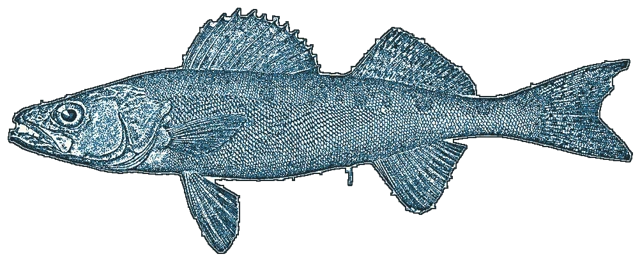 Walleye
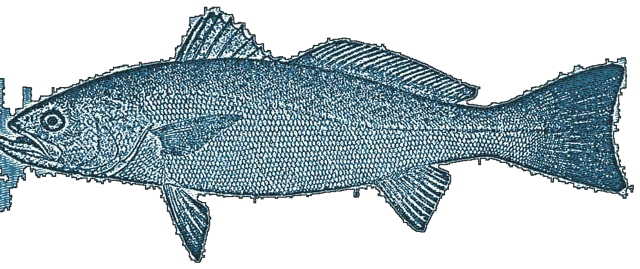 Weakfish“squeteague”White catfish
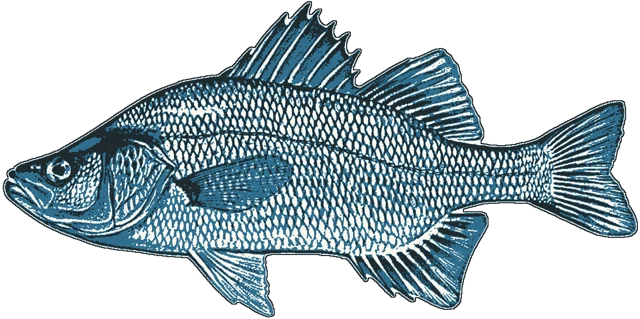 White perchWinter flounder“blackback”
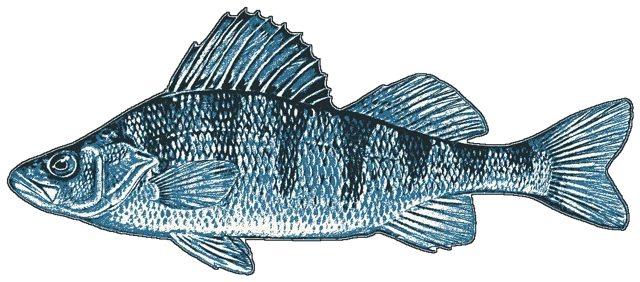 Yellow perch
Just OK20
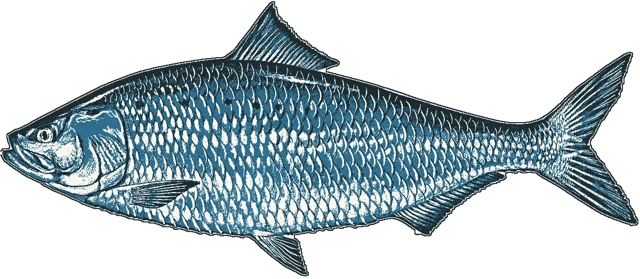 American shadAtlantic bonitoAtlantic mackerel
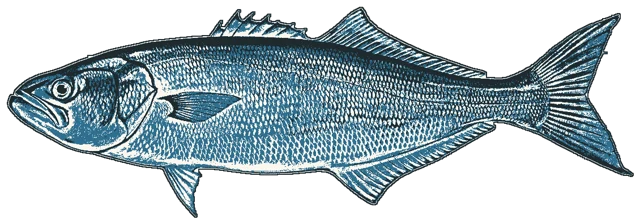 Bluefish“snappers (juveniles)”
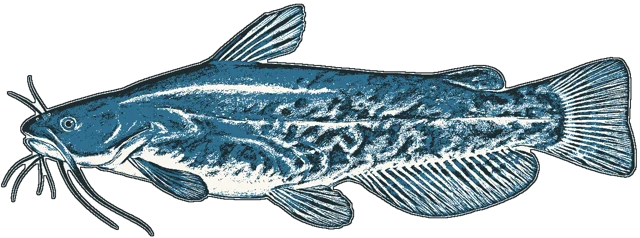 Bullhead (black, brown, yellow)
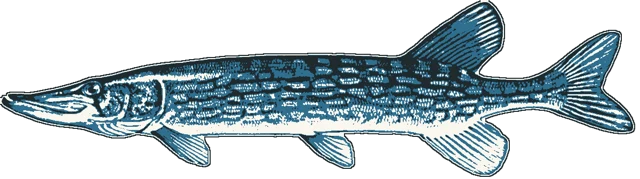 Chain pickerel
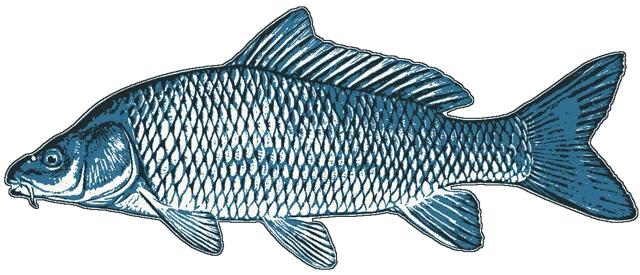 Common carpCunnerFallfishLake trout
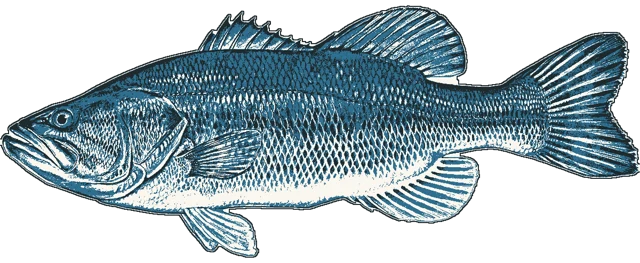 Largemouth bassLonghorn sculpin
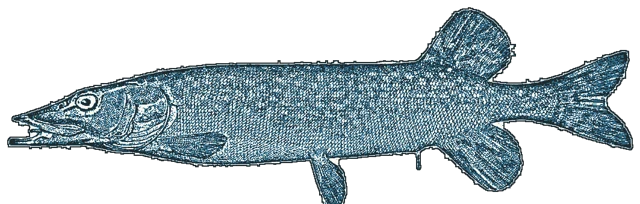 Northern pikeRed hakeRiver herring (alewife and blueback herring)ScupSilver hake
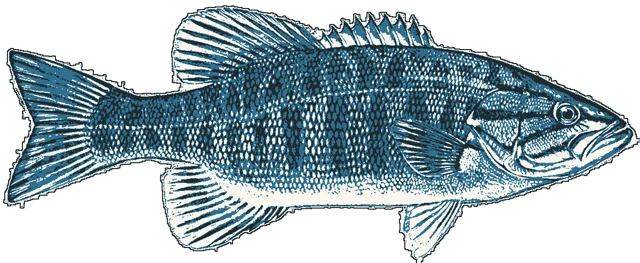 Smallmouth bassSmooth dogfishWhite hake
Garbage fish9
Catch & release
What’s actually caught in Massachusetts
NOAA Marine Recreational Information Program (MRIP) estimates for Massachusetts, averaged over 2023, 2024 and 2025 and counting both kept and released fish, all fishing modes and areas. MRIP is a saltwater survey, so it does not rank inland freshwater fish. Rows are fish rated on this page: Atlantic silverside (about 2.19 million a year, nearly all of it 2023) would rank fifth, and the silverside family (about 0.60 million) would fall just below bluefish. NOAA's percent standard errors for total catch are above 50 in at least one year for cunner and the sea robin genus, so those counts are rough. NOAA recalibrated its survey in 2026, so its current query tool may show lower totals, and a different order, than the 2023-2025 estimate files used here.
- Striped bass Best eating3,489,134 fish a year (2023: 4.46 million, 2024: 3.39 million, 2025: 2.63 million); about 292,075 a year kept, 92% released.
- Scup Just OK3,452,940 fish a year (2023: 2.96 million, 2024: 3.36 million, 2025: 4.04 million); about 1,473,663 a year kept, 57% released.
- Atlantic mackerel Just OK3,441,866 fish a year (2023: 3.02 million, 2024: 3.29 million, 2025: 4.01 million); about 2,763,604 a year kept, 20% released.
- Black sea bass Best eating3,267,437 fish a year (2023: 2.77 million, 2024: 2.97 million, 2025: 4.06 million); about 342,441 a year kept, 90% released.
- Tautog Best eating1,963,740 fish a year (2023: 1.70 million, 2024: 1.44 million, 2025: 2.75 million); about 355,904 a year kept, 82% released.
- Bluefish Just OK705,790 fish a year (2023: 0.98 million, 2024: 0.75 million, 2025: 0.38 million); about 107,871 a year kept, 85% released.
- Cunner Just OK557,308 fish a year (2023: 0.28 million, 2024: 0.12 million, 2025: 1.27 million); about 238,485 a year kept, 57% released.
- Sea robin Garbage fish404,057 fish a year, sea robin genus, northern and striped sea robin combined (2023: 0.27 million, 2024: 0.27 million, 2025: 0.67 million); about 30,178 a year kept, 93% released.
- Summer flounder Best eating383,350 fish a year (2023: 0.32 million, 2024: 0.41 million, 2025: 0.42 million); about 77,693 a year kept, 80% released.
- Haddock Best eating378,211 fish a year (2023: 0.31 million, 2024: 0.53 million, 2025: 0.29 million); about 194,251 a year kept, 49% released.
Source: NOAA MRIP . Saltwater only: it does not survey freshwater fishing.
Fish by fish
Why each one sits where it does, the current Massachusetts limits, and the bait that works.
Acadian redfish
Sebastes fasciatus · also called ocean perch · Saltwater
NOAA Fisheries calls the meat mild and slightly sweet, medium firm, moist and flaky, and says it can stand in for haddock. Maine Sea Grant calls it loved for its mild flavor, with firm white flesh.
- Tastes
- mild, slightly sweet, medium firm, moist, flaky
- Limits
- No limits. State waters: no size limit, season or possession limit. Federal waters: 9 in minimum, no bag limit, all year (NOAA). Winter Cod Conservation Closure (state waters from shore to about 70 40 W, between 42 21.0 N and 42 27.5 N): no hook-and-line fishing that could catch cod, Nov 15 to Jan 31 (322 CMR 8.07). (2026 saltwater digest (eRegulations page last updated Oct 5, 2026); rule in force on Nov 21, 2026) Source
- Where
- The weather buoy area and about 5 miles northeast of the B Buoy (On The Water report, Apr 16, 2026).
- Spoils faster than many fish: Maine Sea Grant says keep it in the coldest part of the fridge and use it within one to two days.
- Do not eat (anyone): any fish from New Bedford Harbor, or bottom-feeding fish from its Area II outside the hurricane barrier, north of a line from Ricketson's Point to Wilbur Point (PCBs; state health department, read Nov 22, 2026).
- Do not eat (anyone): any fish but bluefish and striped bass from the lower Mystic River area (the Mystic below the Amelia Earhart Dam, and Chelsea Creek; PCBs and arsenic; state advisory, July 2018).
- Do not eat (under 12, nursing, pregnant or may become pregnant): any fish from the lower Mystic River area, or from New Bedford Harbor's three closure areas, out to a line from Mishaum Point to West Island (EPA page, Oct 27, 2026; its signs list Area III exceptions).
- Confirm with the state's current list.
Atlantic cod
Gadus morhua · Saltwater
The original white fish: mild, clean, big flakes (NOAA). A headboat staple in New England.
- Tastes
- mild, clean, slightly sweet, large flakes, less firm than haddock
- Limits
- Heavy regs. Western Gulf of Maine: 23 in minimum, 1 fish, Sep 1 to Oct 31; cod must be released on other dates. Southern New England: none may be kept. Federal waters: the same dates, size and limit in the Gulf of Maine and Georges Bank, none in Southern New England (NOAA). Winter Cod Conservation Closure (state waters from shore to about 70 40 W, between 42 21.0 N and 42 27.5 N): no hook-and-line fishing that could catch cod, Nov 15 to Jan 31 (322 CMR 8.07). Spring closure (42 30.0 to 42 33.0 N, 70 38.5 to 70 44.5 W): no cod may be taken, Apr 16 to Jul 21. (2026 saltwater digest (eRegulations page last updated Oct 5, 2026); rule in force on Nov 21, 2026) Source
- Best months
- Around all year; cod may be kept only Sep 1 to Oct 31, in the Western Gulf of Maine.
- Where
- Whole coast in deep water, inshore while the water is cold; Stellwagen Bank and Gloucester party boats.
- sea worms
- clams
- mackerel
- strips of fish
- crabs
- jigs
- Do not eat (anyone): any fish from New Bedford Harbor, or bottom-feeding fish from its Area II outside the hurricane barrier, north of a line from Ricketson's Point to Wilbur Point (PCBs; state health department, read Nov 22, 2026).
- Do not eat (anyone): any fish but bluefish and striped bass from the lower Mystic River area (the Mystic below the Amelia Earhart Dam, and Chelsea Creek; PCBs and arsenic; state advisory, July 2018).
- Do not eat (under 12, nursing, pregnant or may become pregnant): any fish from the lower Mystic River area, or from New Bedford Harbor's three closure areas, out to a line from Mishaum Point to West Island (EPA page, Oct 27, 2026; its signs list Area III exceptions).
- Confirm with the state's current list.
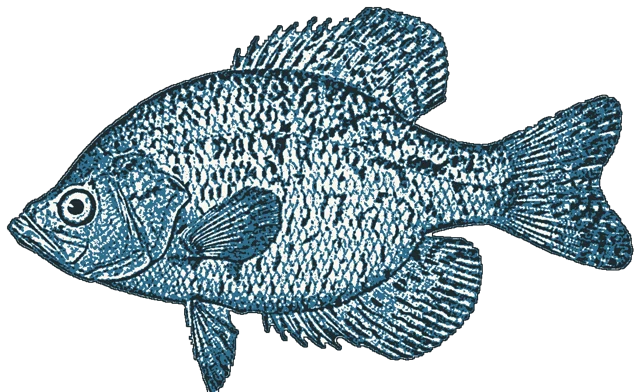
Black crappie
Pomoxis nigromaculatus · Freshwater
One of the classic fish-fry fish: MeatEater counts crappie among the best-eating fish in freshwater.
- Tastes
- mild, sweet, delicate, flaky, white
- Limits
- No limits. No statewide daily limit, minimum length or closed season (MassWildlife's "All Other Freshwater Species" line, Jan 1 to Dec 31). (MassWildlife freshwater regulations page, updated Sep 25, 2026 (new rules in effect fall 2026)) Source
- Best months
- Late spring, when they move shallow to feed and spawn.
- Where
- Brookline Reservoir, Chestnut Hill Reservoir, lower Charles River and other metro Boston waters.
- small crankbaits and spinnerbaits worked along the bank
- Do not eat (anyone): crappie from Pentucket Pond (Georgetown).
- Do not eat (anyone): any fish from the 30 all-fish waters on this page (the Housatonic, Hoosic, Malden, Mystic, Rumford and Sudbury rivers among them).
- Do not eat (under 12, nursing, pregnant or may become pregnant): Massachusetts freshwater fish, unless the state's list gives the water its own line.
- Do not eat (same group): any fish from Quabbin and Wachusett reservoirs or the 128 more waters named for them on this page, or black crappie from Lake Boon, Cleveland, Farrar, Lewin Brook, Little Chauncy, Martins, Red Bridge, Snipituit or Long (Rochester) ponds or the Ballardvale Impoundment.
Meal limits and other waters (5)
- Limit (everyone else): 1 meal a year from Johns Pond, Lake Mirimichi or Studley Pond.
- Limit (everyone else): 1 meal in 6 months from Lake Ripple, Flint Pond (Tyngsborough) or the lower Charles River (South Natick Dam to the Museum of Science Dam).
- Limit (everyone else): 1 meal in 2 months from Lake Boon, 2 a month of black crappie from those other waters, and one 5-ounce meal a week from Quabbin and Wachusett reservoirs.
- Another 131 listed waters have limits of 1 meal in 2 months to 2 a week, named on this page (state list, December 2025).
- Limit (same group): 1 meal in 6 months from the lower Charles, the Merrimack above Lawrence, Lake Quannapowitt, Lake Quinsigamond, Falls Pond (North Attleborough), Forge Pond (Westford) or Pequot Pond; 10 more waters 1 a month to 2 a week.
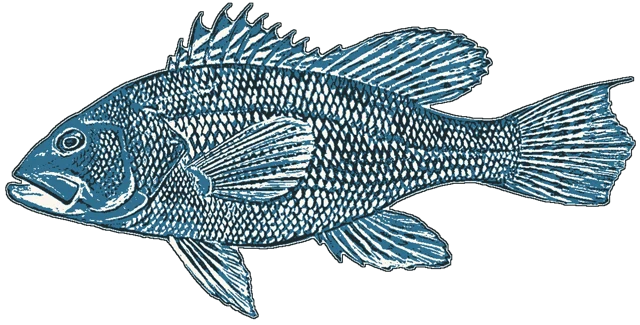
Black sea bass
Centropristis striata · Saltwater
Mild, delicate, firm white fillets; Maine Sea Grant calls it popular for its firm texture and mild, slightly sweet flavor.
- Tastes
- mild, fresh, delicate, tender but firm
- Limits
- Heavy regs. 16 in minimum (tail filament not counted): 4 fish May 16 to Aug 31, 2 fish Sep 1 to Oct 14; none may be kept on other dates. NOAA approved state limits in place of federal ones for 2026. May be filleted at sea but not skinned (no more than two fillets per allowed fish). (2026 saltwater digest (eRegulations page last updated Oct 5, 2026); rule in force on Nov 21, 2026) Source
- Best months
- May to September.
- Where
- South side of Cape Cod, Buzzards Bay to the Rhode Island line and a few in Cape Cod Bay, around reefs, rocks and wrecks.
- cut squid
- clams
- green crabs
- Do not eat (anyone): any fish from New Bedford Harbor, or bottom-feeding fish from its Area II outside the hurricane barrier, north of a line from Ricketson's Point to Wilbur Point (PCBs; state health department, read Nov 22, 2026).
- Do not eat (anyone): any fish but bluefish and striped bass from the lower Mystic River area (the Mystic below the Amelia Earhart Dam, and Chelsea Creek; PCBs and arsenic; state advisory, July 2018).
- Do not eat (under 12, nursing, pregnant or may become pregnant): any fish from the lower Mystic River area, or from New Bedford Harbor's three closure areas, out to a line from Mishaum Point to West Island (EPA page, Oct 27, 2026; its signs list Area III exceptions).
- Confirm with the state's current list.
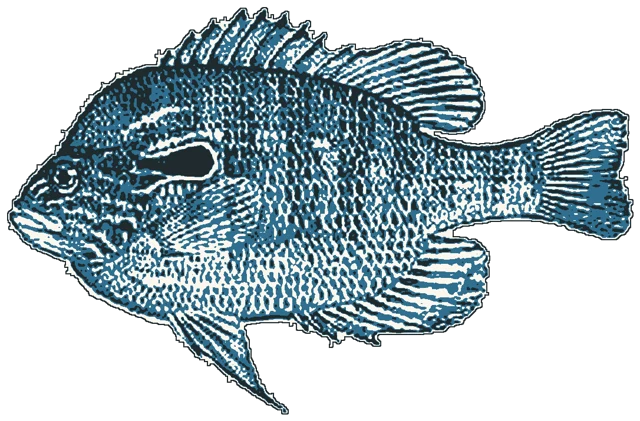
Bluegill
Lepomis macrochirus · Freshwater
MeatEater calls the flesh light, delicate and sweet; the original fish-fry panfish.
- Tastes
- mild, sweet, firm, flaky
- Limits
- No limits. No statewide daily limit, minimum length or closed season (MassWildlife's "All Other Freshwater Species" line, Jan 1 to Dec 31). (MassWildlife freshwater regulations page, updated Sep 25, 2026 (new rules in effect fall 2026)) Source
- Best months
- As lakes and ponds warm into August, for panfish in general (MassWildlife panfish page).
- Earthworms
- Crickets
- Minnows
- Small jigs tipped with artificial grubs or minnows
- Do not eat (anyone): any fish from the 30 all-fish waters on this page (the Housatonic, Hoosic, Malden, Mystic, Rumford and Sudbury rivers among them).
- Do not eat (under 12, nursing, pregnant or may become pregnant): Massachusetts freshwater fish, unless the state's list gives the water its own line.
- Do not eat (same group): any fish from Quabbin and Wachusett reservoirs or the 128 more waters named for them on this page, or bluegill from Whitings Pond.
Meal limits and other waters (5)
- Limit (everyone else): 1 meal a year from Johns Pond, Lake Mirimichi or Studley Pond.
- Limit (everyone else): 1 meal in 6 months from Lake Ripple, Flint Pond (Tyngsborough) or the lower Charles River (South Natick Dam to the Museum of Science Dam).
- Limit (everyone else): 2 meals a month of bluegill from Whitings Pond, and one 5-ounce meal a week from Quabbin and Wachusett reservoirs.
- Another 133 listed waters have limits of 1 meal in 2 months to 2 a week, named on this page (state list, December 2025).
- Limit (same group): 1 meal in 6 months from the lower Charles, the Merrimack above Lawrence, Lake Boon, Lake Quannapowitt, Lake Quinsigamond, Falls Pond (North Attleborough), Forge Pond (Westford) or Pequot Pond; 10 more waters 1 a month to 2 a week.
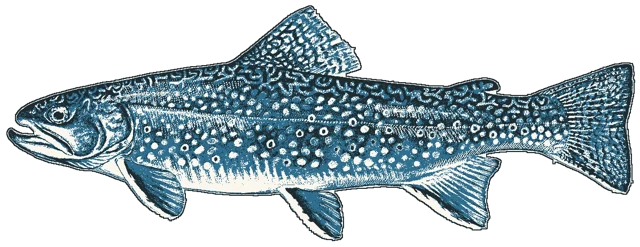
Brook trout
Salvelinus fontinalis · also called eastern brook trout, brookies, square tails, brook char · Freshwater
Often called the tastiest trout: MeatEater describes the meat as light and delicate with an almost sweet flavor.
- Tastes
- sweet, delicate, light, delicate
- Limits
- Heavy regs. Open all year, no minimum length: no more than 3 a day of brook, brown and tiger trout in any combination, within a limit of 6 trout a day in total (brook, brown, rainbow and tiger). Housatonic River from the meeting of its East and West branches to the Connecticut line: 1 trout, 20 in minimum, and none in its catch-and-release stretches. Catch-and-release stretches of the Housatonic, East Branch Westfield, Deerfield, Swift, Millers, Nissitissit and Quashnet rivers and Red Brook allow artificial lures only, with no bait on you, and no fish may be kept; the Nissitissit stretch and the Swift from Winsor Dam to Route 9 are fly fishing only, and the Swift from Route 9 to Cady Lane is catch and release Jul 1 to Dec 31. Quabbin, Wachusett and Sudbury reservoirs are closed except in DCR's season (generally the third Saturday of April to the third Saturday of October at Quabbin, and the first Saturday of April to Nov 30 at Wachusett and Sudbury). Border ponds under New Hampshire, Rhode Island or Connecticut rules differ. (MassWildlife freshwater regulations page, updated Sep 25, 2026 (new rules in effect fall 2026)) Source
- Where
- Swift River (Belchertown); Cliff, Little Cliff, Flax, Higgins and Sheep ponds (Brewster) (MassWildlife trophy brook trout records).
- Flies
- Streamers
- Small spoons
- Small spinners
- Worms
- Grasshoppers
- Do not eat (anyone): any fish, stocked trout included, from the Hoosic River (North Adams to Vermont), Ashumet Pond, Chicopee Reservoir or Lake Winthrop (PFAS), or any fish from the 26 other all-fish waters on this page (the Housatonic, Malden, Mystic, Rumford and Sudbury rivers among them).
- Do not eat (under 12, nursing, pregnant or may become pregnant): Massachusetts freshwater fish, unless the state's list gives the water its own line.
- For stocked trout only PFAS lines and lines naming trout apply.
- Do not eat (same group): any fish, stocked trout included, from the 41 PFAS waters named for them on this page (Jamaica Pond, Asnacomet (Comet) Pond and the Millers and Connecticut rivers among them), wild trout from the other 87 waters named there, or any fish but lake trout under 24 in and salmon from Quabbin and Wachusett reservoirs.
Meal limits and other waters (5)
- Limit (everyone else): 1 meal a year from Johns Pond, Lake Mirimichi or Studley Pond.
- Limit (everyone else): 1 meal in 6 months from Lake Ripple, Flint Pond (Tyngsborough) or the lower Charles River (South Natick Dam to the Museum of Science Dam).
- Limit (everyone else): 1 meal a month from Jamaica Pond, and one 5-ounce meal a week from Quabbin and Wachusett reservoirs.
- Another 52 PFAS waters have limits of 1 meal in 2 months to 2 a week, named on this page (state list, December 2025).
- Limit (same group): 1 meal in 6 months from the lower Charles, the Merrimack above Lawrence, Lake Boon, Lake Quannapowitt, Lake Quinsigamond, Falls Pond (North Attleborough), Forge Pond (Westford) or Pequot Pond; 10 more PFAS waters 1 a month to 2 a week.
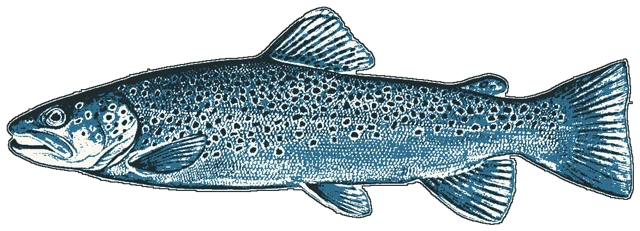
Brown trout
Salmo trutta · also called German brown trout, Loch Leven trout · Freshwater
Good trout eating like rainbows; most kept browns are stocked fish.
- Tastes
- mild to rich, flaky
- Limits
- Heavy regs. Open all year, no minimum length: no more than 3 a day of brown, brook and tiger trout in any combination, within a limit of 6 trout a day in total (brook, brown, rainbow and tiger). South Pond (Quacumquasit) in Brookfield: only 1 of the day's trout may be a brown, 15 in minimum. Housatonic River from the meeting of its East and West branches to the Connecticut line: 1 trout, 20 in minimum, and none in its catch-and-release stretches. Catch-and-release stretches of the Housatonic, East Branch Westfield, Deerfield, Swift, Millers, Nissitissit and Quashnet rivers and Red Brook allow artificial lures only, with no bait on you, and no fish may be kept; the Nissitissit stretch and the Swift from Winsor Dam to Route 9 are fly fishing only, and the Swift from Route 9 to Cady Lane is catch and release Jul 1 to Dec 31. Quabbin, Wachusett and Sudbury reservoirs are closed except in DCR's season (generally the third Saturday of April to the third Saturday of October at Quabbin, and the first Saturday of April to Nov 30 at Wachusett and Sudbury). Border ponds under New Hampshire, Rhode Island or Connecticut rules differ. (MassWildlife freshwater regulations page, updated Sep 25, 2026 (new rules in effect fall 2026)) Source
- Where
- South Pond (Quacumquasit) in Brookfield has its own brown trout rule; Comet Pond and South Pond held brown and rainbow trout in the Nov 5, 2026 On The Water report.
- Minnow-imitating plugs
- Spoons
- Spinners
- Streamers
- Moth imitations (especially at night)
- Live shiners, cast or trolled
- Do not eat (anyone): brown trout from the Millers River and its tributaries (Otter River to the Connecticut River).
- Do not eat (anyone): any fish, stocked trout included, from the Hoosic River (North Adams to Vermont), Ashumet Pond, Chicopee Reservoir or Lake Winthrop (PFAS), or any fish from the 26 other all-fish waters on this page (the Housatonic, Malden, Mystic, Rumford and Sudbury rivers among them).
- Do not eat (under 12, nursing, pregnant or may become pregnant): Massachusetts freshwater fish, unless the state's list gives the water its own line.
- For stocked trout only PFAS lines and lines naming trout apply.
- Do not eat (same group): any fish, stocked trout included, from the 41 PFAS waters named for them on this page (Jamaica Pond, Asnacomet (Comet) Pond and the Millers and Connecticut rivers among them), wild trout from the other 87 waters named there, or any fish but lake trout under 24 in and salmon from Quabbin and Wachusett reservoirs.
- South Pond (Quacumquasit): native fish 2 meals a month, none for that group.
Meal limits and other waters (5)
- Limit (everyone else): 1 meal a year from Johns Pond, Lake Mirimichi or Studley Pond.
- Limit (everyone else): 1 meal in 6 months from Lake Ripple, Flint Pond (Tyngsborough) or the lower Charles River (South Natick Dam to the Museum of Science Dam).
- Limit (everyone else): 1 meal a month from Jamaica Pond, and one 5-ounce meal a week from Quabbin and Wachusett reservoirs.
- Another 51 PFAS waters have limits of 1 meal in 2 months to 2 a week, named on this page (state list, December 2025).
- Limit (same group): 1 meal in 6 months from the lower Charles, the Merrimack above Lawrence, Lake Boon, Lake Quannapowitt, Lake Quinsigamond, Falls Pond (North Attleborough), Forge Pond (Westford) or Pequot Pond; 10 more PFAS waters 1 a month to 2 a week.
Cusk
Brosme brosme · Saltwater
Maine Sea Grant says its firm white flesh has a mild, slightly sweet flavor and holds up well in chowders, stews and baked dishes.
- Limits
- No limits. State waters: no size, season or bag limit for cusk on the 2026 Massachusetts saltwater table. Federal waters: open all year, no minimum size, no bag limit (NOAA). (2026 saltwater digest (eRegulations page last updated Oct 5, 2026); rule in force on Nov 21, 2026) Source
- Best months
- Year round.
- Where
- Rocky ledges and hard bottom in water deeper than 75 ft.
- sea worms
- clams
- mackerel
- strips of fish
- crabs
- jigs
- Do not eat (anyone): any fish from New Bedford Harbor, or bottom-feeding fish from its Area II outside the hurricane barrier, north of a line from Ricketson's Point to Wilbur Point (PCBs; state health department, read Nov 22, 2026).
- Do not eat (anyone): any fish but bluefish and striped bass from the lower Mystic River area (the Mystic below the Amelia Earhart Dam, and Chelsea Creek; PCBs and arsenic; state advisory, July 2018).
- Do not eat (under 12, nursing, pregnant or may become pregnant): any fish from the lower Mystic River area, or from New Bedford Harbor's three closure areas, out to a line from Mishaum Point to West Island (EPA page, Oct 27, 2026; its signs list Area III exceptions).
- Confirm with the state's current list.
Haddock
Melanogrammus aeglefinus · Saltwater
Sweet, firm, finely flaked; Maine Sea Grant calls it prized for its mild, slightly sweet flavor.
- Tastes
- slightly sweet, firm yet tender, fine flake
- Limits
- Heavy regs. Gulf of Maine: 17 in minimum, 15 fish, Apr 1 to Feb 28, closed in March; the same in federal waters. Southern New England: 18 in minimum, no limit, year round; federal waters outside the Gulf of Maine are the same. Winter Cod Conservation Closure (state waters from shore to about 70 40 W, between 42 21.0 N and 42 27.5 N): no hook-and-line fishing that could catch cod, Nov 15 to Jan 31 (322 CMR 8.07). (2026 saltwater digest (eRegulations page last updated Oct 5, 2026); rule in force on Nov 21, 2026) Source
- Best months
- May to November.
- Where
- Whole coast in cool water 140 to 450 ft deep over shell, sand, smooth rock or gravel; Gloucester party boats.
- seaworms
- clams
- Do not eat (anyone): any fish from New Bedford Harbor, or bottom-feeding fish from its Area II outside the hurricane barrier, north of a line from Ricketson's Point to Wilbur Point (PCBs; state health department, read Nov 22, 2026).
- Do not eat (anyone): any fish but bluefish and striped bass from the lower Mystic River area (the Mystic below the Amelia Earhart Dam, and Chelsea Creek; PCBs and arsenic; state advisory, July 2018).
- Do not eat (under 12, nursing, pregnant or may become pregnant): any fish from the lower Mystic River area, or from New Bedford Harbor's three closure areas, out to a line from Mishaum Point to West Island (EPA page, Oct 27, 2026; its signs list Area III exceptions).
- Confirm with the state's current list.
Landlocked Atlantic salmon
Salmo salar (landlocked) · Freshwater
The same species as farmed Atlantic salmon, whose flesh NOAA describes as buttery and rich; landlocked fish are a kept-and-eaten gamefish in northern New England.
- Tastes
- rich, buttery, firm, pink
- Limits
- Heavy regs. 2 per day, 15 in minimum, Jan 1 to Dec 31. Salmon may be kept only from Quabbin Reservoir and its tributaries, the Swift River downstream of Quabbin, and Wachusett Reservoir and its tributaries; Atlantic salmon may not be kept from any other inland water. Quabbin (with its tributary streams inside the Quabbin Reservation) and Wachusett are closed outside DCR's season, generally the third Saturday of April to the third Saturday of October at Quabbin and the first Saturday of April to Nov 30 at Wachusett. (MassWildlife freshwater regulations page, updated Sep 25, 2026 (new rules in effect fall 2026)) Source
- Best months
- After the spawn (On The Water report, Nov 19, 2026).
- Where
- Hop Brook (Quabbin Gate 22) is named for salmon in the Nov 5, 2026 On The Water report.
- Shiners
- Do not eat (anyone): any fish from the 30 all-fish waters on this page (the Housatonic, Hoosic, Malden, Mystic, Rumford and Sudbury rivers among them).
- Do not eat (under 12, nursing, pregnant or may become pregnant): any fish from Quabbin and Wachusett reservoirs except salmon and lake trout under 24 in, or any other Massachusetts freshwater fish unless the state's list gives the water its own line.
- Do not eat (same group): any fish from the 128 more waters named for them on this page.
- For everyone else the list sets no limit on salmon from the two reservoirs ("unlimited amounts").
- Other listed waters differ (state list, December 2025).
Monkfish
Lophius americanus · also called goosefish, anglerfish · Saltwater
NOAA Fisheries calls the tail meat mild, firm, dense and nearly boneless, like lobster meat, and Maine Sea Grant describes a rich, lobster-like flavor and meaty texture. Only the tail is eaten.
- Tastes
- mild, lobster-like, firm, dense, boneless, not flaky
- Limits
- No limits. State waters: no size limit, season or possession limit. Federal waters: 17 in whole or 11 in tails, no bag limit, all year (NOAA). Winter Cod Conservation Closure (state waters from shore to about 70 40 W, between 42 21.0 N and 42 27.5 N): no hook-and-line fishing that could catch cod, Nov 15 to Jan 31 (322 CMR 8.07). (2026 saltwater digest (eRegulations page last updated Oct 5, 2026); rule in force on Nov 21, 2026) Source
- Only the tail meat is eaten (NOAA Fisheries); the liver is sold mainly for export (Maine Sea Grant).
- Remove the blue-gray membrane before cooking; left on, the meat curls and toughens (NOAA Fisheries).
- Handle with care: Maine Sea Grant warns that the bite can be dangerous.
- Do not eat (anyone): any fish from New Bedford Harbor, or bottom-feeding fish from its Area II outside the hurricane barrier, north of a line from Ricketson's Point to Wilbur Point (PCBs; state health department, read Nov 22, 2026).
- Do not eat (anyone): any fish but bluefish and striped bass from the lower Mystic River area (the Mystic below the Amelia Earhart Dam, and Chelsea Creek; PCBs and arsenic; state advisory, July 2018).
- Do not eat (under 12, nursing, pregnant or may become pregnant): any fish from the lower Mystic River area, or from New Bedford Harbor's three closure areas, out to a line from Mishaum Point to West Island (EPA page, Oct 27, 2026; its signs list Area III exceptions).
- Confirm with the state's current list.
Pollock
Pollachius virens · Saltwater
NOAA describes sweet, delicate, firm meat; a regular part of the New England groundfish catch.
- Tastes
- sweet, delicate, firm
- Limits
- No limits. State waters: no size limit or bag limit, year round. Federal waters: 19 in minimum, no bag limit (NOAA). Winter Cod Conservation Closure (state waters from shore to about 70 40 W, between 42 21.0 N and 42 27.5 N): no hook-and-line fishing that could catch cod, Nov 15 to Jan 31 (322 CMR 8.07). (2026 saltwater digest (eRegulations page last updated Oct 5, 2026); rule in force on Nov 21, 2026) Source
- Best months
- May to October, best in May and October.
- Where
- Whole coast, more north of Plymouth; breakwaters inshore, deeper water offshore; Gloucester and Lynn party boats.
- cod baits
- metal lures with a strip of squid
- Do not eat (anyone): any fish from New Bedford Harbor (PCBs; state health department, read Nov 22, 2026).
- Do not eat (anyone): any fish but bluefish and striped bass from the lower Mystic River area (the Mystic below the Amelia Earhart Dam, and Chelsea Creek; PCBs and arsenic; state advisory, July 2018).
- Do not eat (under 12, nursing, pregnant or may become pregnant): any fish from the lower Mystic River area, or from New Bedford Harbor's three closure areas, out to a line from Mishaum Point to West Island (EPA page, Oct 27, 2026; its signs list Area III exceptions).
- Confirm with the state's current list.
Pumpkinseed
Lepomis gibbosus · Freshwater
A standard northern panfish; MeatEater notes pond owners stock it partly for its quality as table fare.
- Tastes
- mild, sweet, flaky
- Limits
- No limits. No statewide daily limit, minimum length or closed season (MassWildlife's "All Other Freshwater Species" line, Jan 1 to Dec 31). Pumpkinseed may also be taken for personal use as bait. (MassWildlife freshwater regulations page, updated Sep 25, 2026 (new rules in effect fall 2026)) Source
- Best months
- As lakes and ponds warm into August, for panfish in general (MassWildlife panfish page).
- Earthworms
- Crickets
- Minnows
- Small jigs tipped with artificial grubs or minnows
- Do not eat (anyone): any fish from the 30 all-fish waters on this page (the Housatonic, Hoosic, Malden, Mystic, Rumford and Sudbury rivers among them).
- Do not eat (under 12, nursing, pregnant or may become pregnant): Massachusetts freshwater fish, unless the state's list gives the water its own line.
- Do not eat (same group): any fish from Quabbin and Wachusett reservoirs or the 128 more waters named for them on this page.
Meal limits and other waters (5)
- Limit (everyone else): 1 meal a year from Johns Pond, Lake Mirimichi or Studley Pond.
- Limit (everyone else): 1 meal in 6 months from Lake Ripple, Flint Pond (Tyngsborough) or the lower Charles River (South Natick Dam to the Museum of Science Dam).
- Limit (everyone else): one 5-ounce meal a week from Quabbin and Wachusett reservoirs.
- Another 133 listed waters have limits of 1 meal in 2 months to 2 a week, named on this page (state list, December 2025).
- Limit (same group): 1 meal in 6 months from the lower Charles, the Merrimack above Lawrence, Lake Boon, Lake Quannapowitt, Lake Quinsigamond, Falls Pond (North Attleborough), Forge Pond (Westford) or Pequot Pond; 10 more waters 1 a month to 2 a week.
Rainbow smelt
Osmerus mordax · Fresh and salt
Maine Sea Grant says smelt are marketed for their sweet, delicate flavor; fried whole, they are a classic northern winter and spring meal.
- Tastes
- mild, sweet (fresh fish smell like cucumber), delicate, fine bones you eat
- Limits
- Heavy regs. Coastal waters: 50 fish per day, hook and line only, Jan 1 to Mar 14 and Jun 16 to Dec 31, closed Mar 15 to Jun 15; no size limit (322 CMR 6.23). Inland waters: hook and line only, Jan 1 to Feb 28 and May 16 to Dec 31, no daily limit or minimum length; in Quabbin Reservoir only in open water where fishing is legal, from May 16 to the end of the Quabbin season (321 CMR 4.01, note 5). Smelt may not be held or used as bait inland out of season. (2026 saltwater digest (eRegulations page last updated Oct 5, 2026); inland: MassWildlife freshwater regulations page, updated Sep 25, 2026) Source
- Best months
- September to February.
- Where
- Whole coast: estuaries, the mouths of coastal rivers and within them; Charles River Locks (saltwater side) and the Summer Street Bridge in Boston.
- blood worms
- sand worms
- grass shrimp
- small local bait fish
- Do not eat (anyone): any fish from New Bedford Harbor (PCBs).
- Do not eat (anyone): any fish but bluefish and striped bass from the lower Mystic River area (the Mystic below the Amelia Earhart Dam, and Chelsea Creek; PCBs and arsenic; state advisory, July 2018).
- Do not eat (anyone): any fish from the 30 all-fish waters on this page (the Housatonic, Hoosic, Malden, Mystic, Rumford and Sudbury rivers among them).
- Do not eat (under 12, nursing, pregnant or may become pregnant): Massachusetts freshwater fish, unless the state's list gives the water its own line.
- Do not eat (same group): smelt from Quabbin and Wachusett reservoirs, or any fish from the 128 more waters named for them on this page.
- Do not eat (same group): any fish from the lower Mystic River area, or from New Bedford Harbor's three closure areas, out to a line from Mishaum Point to West Island (EPA page, Oct 27, 2026; its signs list Area III exceptions).
Meal limits and other waters (3)
- Limit (everyone else): smelt from the two reservoirs, one 5-ounce meal a week.
- Limit (anyone): 1 meal in 6 months from the lower Charles River (South Natick Dam to the Museum of Science Dam).
- Other listed waters differ (state list, December 2025).
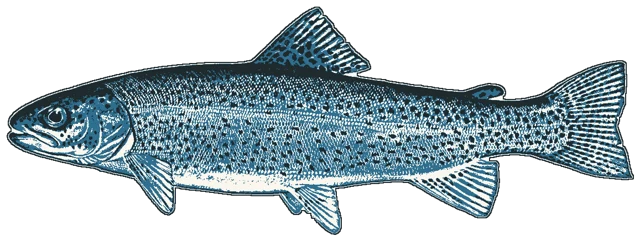
Rainbow trout
Oncorhynchus mykiss · Freshwater
TPWD calls rainbow trout an excellent fish to eat; the most-stocked put-and-take fish in America.
- Tastes
- mild, clean, delicate, flaky
- Limits
- Light regs. Open all year, no minimum length: 6 trout a day in total (brook, brown, rainbow and tiger), and all 6 may be rainbows; no more than 3 may be brook, brown or tiger trout. Housatonic River from the meeting of its East and West branches to the Connecticut line: 1 trout, 20 in minimum, and none in its catch-and-release stretches. Catch-and-release stretches of the Housatonic, East Branch Westfield, Deerfield, Swift, Millers, Nissitissit and Quashnet rivers and Red Brook allow artificial lures only, with no bait on you, and no fish may be kept; the Nissitissit stretch and the Swift from Winsor Dam to Route 9 are fly fishing only, and the Swift from Route 9 to Cady Lane is catch and release Jul 1 to Dec 31. Quabbin, Wachusett and Sudbury reservoirs are closed except in DCR's season (generally the third Saturday of April to the third Saturday of October at Quabbin, and the first Saturday of April to Nov 30 at Wachusett and Sudbury). Border ponds under New Hampshire, Rhode Island or Connecticut rules differ. (MassWildlife freshwater regulations page, updated Sep 25, 2026 (new rules in effect fall 2026)) Source
- Where
- Stocked ponds around Boston, including Jamaica Pond and Brookline Reservoir; Pratt's Pond and Comet Pond in central Massachusetts.
- green Power Bait fished on the bottom
- small spoons such as Thomas Buoyant and Kastmaster
- bubble-and-fly
- Do not eat (anyone): any fish, stocked trout included, from the Hoosic River (North Adams to Vermont), Ashumet Pond, Chicopee Reservoir or Lake Winthrop (PFAS), or any fish from the 26 other all-fish waters on this page (the Housatonic, Malden, Mystic, Rumford and Sudbury rivers among them).
- Do not eat (under 12, nursing, pregnant or may become pregnant): Massachusetts freshwater fish, unless the state's list gives the water its own line.
- For stocked trout only PFAS lines and lines naming trout apply.
- Do not eat (same group): any fish, stocked trout included, from the 41 PFAS waters named for them on this page (Jamaica Pond, Asnacomet (Comet) Pond and the Millers and Connecticut rivers among them), wild trout from the other 87 waters named there, or any fish but lake trout under 24 in and salmon from Quabbin and Wachusett reservoirs.
Meal limits and other waters (5)
- Limit (everyone else): 1 meal a year from Johns Pond, Lake Mirimichi or Studley Pond.
- Limit (everyone else): 1 meal in 6 months from Lake Ripple, Flint Pond (Tyngsborough) or the lower Charles River (South Natick Dam to the Museum of Science Dam).
- Limit (everyone else): 1 meal a month from Jamaica Pond, and one 5-ounce meal a week from Quabbin and Wachusett reservoirs.
- Another 52 PFAS waters have limits of 1 meal in 2 months to 2 a week, named on this page (state list, December 2025).
- Limit (same group): 1 meal in 6 months from the lower Charles, the Merrimack above Lawrence, Lake Boon, Lake Quannapowitt, Lake Quinsigamond, Falls Pond (North Attleborough), Forge Pond (Westford) or Pequot Pond; 10 more PFAS waters 1 a month to 2 a week.
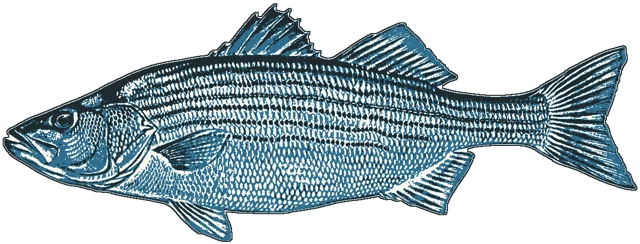
Striped bass
Morone saxatilis · also called schoolies, linesiders · Saltwater
Firm, large-flaked, slightly sweet white meat; one of the most kept and eaten gamefish in the country, fresh or salt.
- Tastes
- mild, slightly sweet, firm, large flakes
- Limits
- Heavy regs. State waters: 1 fish per day and 1 in possession, 28 in to less than 31 in total length, year round. Federal waters are closed to striped bass fishing (NOAA). Inline circle hooks are required with whole or cut natural bait, except bait attached to an artificial lure; no gaff or any tool that can pierce the fish; no high-grading; no filleting at sea except for immediate consumption, or by for-hire captains for their customers with the racks kept. Cape Cod Canal: 1 striped bass per calendar day, and no fish 31 in or larger within 1,000 feet of the canal unless lawfully taken elsewhere and moving to a primary buyer. (2026 saltwater digest (eRegulations page last updated Oct 5, 2026); rule in force on Nov 21, 2026) Source
- Best months
- Mid-April to October; the first fish reach Boston in mid-to-late April and the fall run can last through October.
- Where
- Whole coast: surf, inshore bars, reefs, tide rips, bays and estuaries; Boston Harbor (Castle Island, Long Pier, Charles River Locks).
- seaworms
- eels
- squid
- herring
- mackerel chunks
- pogies (menhaden)
- Consumption advisories for striped bass vary from state to state (NOAA).
- Do not eat (anyone): any fish from New Bedford Harbor (PCBs; state health department, read Nov 22, 2026).
- Do not eat (under 12, nursing, pregnant or may become pregnant): any fish, striped bass included, from the lower Mystic River area (the Mystic below the Amelia Earhart Dam, and Chelsea Creek; PCBs and arsenic; state advisory, July 2018), or from New Bedford Harbor's three closure areas, out to a line from Mishaum Point to West Island (EPA page, Oct 27, 2026; its signs list Area III exceptions).
- The state's 2026 saltwater guide names striped bass among local species considered high in mercury and tells pregnant and breastfeeding women to eat species low in mercury.
- Confirm with the state's current list.
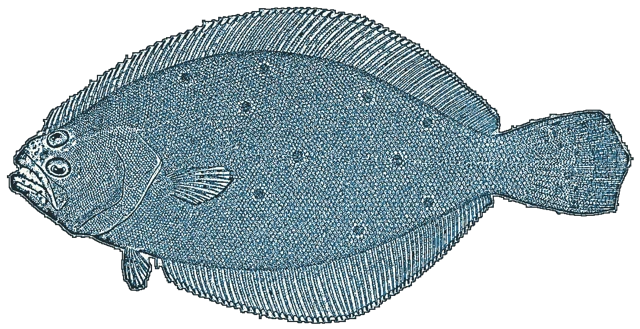
Summer flounder
Paralichthys dentatus · also called fluke, doormats (large fluke) · Saltwater
Delicate, fine-flaked white fillets; one of the most sought-after table fish from New England to North Carolina.
- Tastes
- delicate, mild, flaky and fine
- Limits
- Heavy regs. 16.5 in minimum from shore, 17.5 in from a private or for-hire vessel, 5 fish, open May 24 to Sep 23; none may be kept on other dates. NOAA waives the federal limits for 2026 and 2027, so the rules of the state where you land apply. New Bedford Harbor Areas I and II are closed to taking flounder (105 CMR 260.005). (2026 saltwater digest (eRegulations page last updated Oct 5, 2026); rule in force on Nov 21, 2026) Source
- Best months
- May to September.
- Where
- South side of Cape Cod, the Islands, Cape Cod Bay and Buzzards Bay; sandy or muddy bottom and fast rips with bait.
- minnows
- squid strips
- clams
- shrimp
- spinners
- jigs
- Do not eat (anyone): flounder from New Bedford Harbor's Areas I and II, or any other fish from the harbor (PCBs; state health department, read Nov 22, 2026).
- Do not eat (anyone): any fish but bluefish and striped bass from the lower Mystic River area (the Mystic below the Amelia Earhart Dam, and Chelsea Creek; PCBs and arsenic; state advisory, July 2018).
- Do not eat (under 12, nursing, pregnant or may become pregnant): any fish from the lower Mystic River area, or from New Bedford Harbor's three closure areas, out to a line from Mishaum Point to West Island (EPA page, Oct 27, 2026; its signs list Area III exceptions).
- Do not eat (same group): flounder from Boston Harbor (state poster, 2024).
- State rule 105 CMR 260.005 also bars taking flounder in the harbor's Areas I and II. Confirm with the state's current list.
Tautog
Tautoga onitis · also called blackfish, white chin · Saltwater
Northeast anglers prize its tasty meat (ASMFC).
- Tastes
- mild, sweet (shellfish diet), firm, white
- Limits
- Heavy regs. State waters: 16 in minimum, only one fish over 21 in per day; 3 fish Apr 1 to May 31, 1 fish Jun 1 to Jul 31, 3 fish Aug 1 to Oct 14, 5 fish Oct 15 to Dec 31, closed Jan 1 to Mar 31. Private vessels: 10 fish for the whole boat. Federal waters: no size, season or bag limit (NOAA). New Bedford Harbor Areas I and II are closed to taking tautog (105 CMR 260.005). (2026 saltwater digest (eRegulations page last updated Oct 5, 2026); rule in force on Nov 21, 2026) Source
- Best months
- April to November; in early November 2026 the pattern was crabs around rocks and wrecks.
- Where
- Whole coast: rocky bottom inshore, bays, harbors, jetties and breakwaters; Buzzards Bay and the South Shore rocks.
- crabs
- clams
- shellfish
- Do not eat (anyone): tautog from New Bedford Harbor's Areas I and II, or any other fish from the harbor (PCBs; state health department, read Nov 22, 2026).
- Do not eat (anyone): any fish but bluefish and striped bass from the lower Mystic River area (the Mystic below the Amelia Earhart Dam, and Chelsea Creek; PCBs and arsenic; state advisory, July 2018).
- Do not eat (under 12, nursing, pregnant or may become pregnant): any fish from the lower Mystic River area, or from New Bedford Harbor's three closure areas, out to a line from Mishaum Point to West Island (EPA page, Oct 27, 2026; its signs list Area III exceptions).
- State rule 105 CMR 260.005 also bars taking tautog in the harbor's Areas I and II. Confirm with the state's current list.
Tiger trout
Salmo trutta × Salvelinus fontinalis · Freshwater
A sterile hybrid of brown trout and brook trout, both rated Best eating. We found no agency or cook reviewing tiger trout itself, so this is by parentage.
- Limits
- Heavy regs. Open all year, no minimum length: no more than 3 a day of tiger, brook and brown trout in any combination, within a limit of 6 trout a day in total (brook, brown, rainbow and tiger). Housatonic River from the meeting of its East and West branches to the Connecticut line: 1 trout, 20 in minimum, and none in its catch-and-release stretches. Catch-and-release stretches of the Housatonic, East Branch Westfield, Deerfield, Swift, Millers, Nissitissit and Quashnet rivers and Red Brook allow artificial lures only, with no bait on you, and no fish may be kept; the Nissitissit stretch and the Swift from Winsor Dam to Route 9 are fly fishing only, and the Swift from Route 9 to Cady Lane is catch and release Jul 1 to Dec 31. Quabbin, Wachusett and Sudbury reservoirs are closed except in DCR's season (generally the third Saturday of April to the third Saturday of October at Quabbin, and the first Saturday of April to Nov 30 at Wachusett and Sudbury). Border ponds under New Hampshire, Rhode Island or Connecticut rules differ. (MassWildlife freshwater regulations page, updated Sep 25, 2026 (new rules in effect fall 2026)) Source
- Where
- Ashfield Pond; Cliff, Flax, Higgins and Sheep ponds (Brewster); Quacumquasit Pond (Brookfield) (MassWildlife trophy tiger trout records).
- Minnow-imitating plugs
- Spoons
- Spinners
- Streamers
- Moth imitations (especially at night)
- Live shiners, cast or trolled
- Do not eat (anyone): any fish, stocked trout included, from the Hoosic River (North Adams to Vermont), Ashumet Pond, Chicopee Reservoir or Lake Winthrop (PFAS), or any fish from the 26 other all-fish waters on this page (the Housatonic, Malden, Mystic, Rumford and Sudbury rivers among them).
- Do not eat (under 12, nursing, pregnant or may become pregnant): Massachusetts freshwater fish, unless the state's list gives the water its own line.
- For stocked trout only PFAS lines and lines naming trout apply.
- Do not eat (same group): any fish, stocked trout included, from the 41 PFAS waters named for them on this page (Jamaica Pond, Asnacomet (Comet) Pond and the Millers and Connecticut rivers among them), wild trout from the other 87 waters named there, or any fish but lake trout under 24 in and salmon from Quabbin and Wachusett reservoirs.
Meal limits and other waters (5)
- Limit (everyone else): 1 meal a year from Johns Pond, Lake Mirimichi or Studley Pond.
- Limit (everyone else): 1 meal in 6 months from Lake Ripple, Flint Pond (Tyngsborough) or the lower Charles River (South Natick Dam to the Museum of Science Dam).
- Limit (everyone else): 1 meal a month from Jamaica Pond, and one 5-ounce meal a week from Quabbin and Wachusett reservoirs.
- Another 52 PFAS waters have limits of 1 meal in 2 months to 2 a week, named on this page (state list, December 2025).
- Limit (same group): 1 meal in 6 months from the lower Charles, the Merrimack above Lawrence, Lake Boon, Lake Quannapowitt, Lake Quinsigamond, Falls Pond (North Attleborough), Forge Pond (Westford) or Pequot Pond; 10 more PFAS waters 1 a month to 2 a week.
Walleye
Sander vitreus · Freshwater
Widely rated the best-eating freshwater fish: Maryland DNR calls it one of the best tasting, TPWD an excellent food fish.
- Tastes
- mild, clean, firm, tender, flaky white
- Limits
- Heavy regs. 5 per day, 14 in minimum, open all year. (MassWildlife freshwater regulations page, updated Sep 25, 2026 (new rules in effect fall 2026)) Source
- Where
- Connecticut River at South Hadley, best in low light.
- paddletail soft plastics dragged slowly along the bottom
- Do not eat (anyone): any fish from the 30 all-fish waters on this page (the Housatonic, Hoosic, Malden, Mystic, Rumford and Sudbury rivers among them).
- Do not eat (under 12, nursing, pregnant or may become pregnant): Massachusetts freshwater fish, unless the state's list gives the water its own line.
- Do not eat (same group): any fish from Quabbin and Wachusett reservoirs or the 128 more waters named for them on this page (the Connecticut River among them; PCBs, PFAS).
Meal limits and other waters (5)
- Limit (everyone else): 1 meal a year from Johns Pond, Lake Mirimichi or Studley Pond.
- Limit (everyone else): 1 meal in 6 months from Lake Ripple, Flint Pond (Tyngsborough) or the lower Charles River (South Natick Dam to the Museum of Science Dam).
- Limit (everyone else): 2 meals a month from the Connecticut River.
- Another 133 listed waters have limits of 1 meal in 2 months to 2 a week, named on this page (state list, December 2025).
- Limit (same group): 1 meal in 6 months from the lower Charles, the Merrimack above Lawrence, Lake Boon, Lake Quannapowitt, Lake Quinsigamond, Falls Pond (North Attleborough), Forge Pond (Westford) or Pequot Pond; 10 more waters 1 a month to 2 a week.
Weakfish
Cynoscion regalis · also called squeteague · Saltwater
A close cousin of the speckled trout with the same sweet, delicate fillets; ASMFC describes it as known for its delicious taste.
- Tastes
- mild, sweet
- Limits
- Heavy regs. State waters: 16 in minimum, 1 fish per day, year round. Federal waters: 12 in minimum, no bag limit, all year (NOAA). (2026 saltwater digest (eRegulations page last updated Oct 5, 2026); rule in force on Nov 21, 2026) Source
- Best months
- Late June to September.
- Where
- Southern Massachusetts sandbars, deep water drop offs, channels, bays and estuaries.
- shrimp
- seaworms
- tinker mackerel
- eels
- strips of squid
- plastic shrimp, worms, bucktails, tubes, jigs and sand eel imitations
- Soft flesh; ice immediately and eat fresh.
- Do not eat (anyone): any fish from New Bedford Harbor (PCBs; state health department, read Nov 22, 2026).
- Do not eat (anyone): any fish but bluefish and striped bass from the lower Mystic River area (the Mystic below the Amelia Earhart Dam, and Chelsea Creek; PCBs and arsenic; state advisory, July 2018).
- Do not eat (under 12, nursing, pregnant or may become pregnant): any fish from the lower Mystic River area, or from New Bedford Harbor's three closure areas, out to a line from Mishaum Point to West Island (EPA page, Oct 27, 2026; its signs list Area III exceptions).
- Confirm with the state's current list.
White catfish
Ameiurus catus · Freshwater
Maryland DNR says white catfish are very good to eat; a mid-size cat with the same mild fillets as channel cats.
- Tastes
- mild, firm, moist
- Limits
- No limits. No statewide daily limit, minimum length or closed season (MassWildlife's "All Other Freshwater Species" line, Jan 1 to Dec 31). (MassWildlife freshwater regulations page, updated Sep 25, 2026 (new rules in effect fall 2026)) Source
- Best months
- Summer, at night.
- Where
- Lower Charles River, including the warm-water discharge behind the Royal Sonesta Hotel in Cambridge.
- raw bacon
- nightcrawlers fished on the bottom at night
- Do not eat (anyone): white or channel catfish from the Connecticut River.
- Do not eat (anyone): any fish from the 30 all-fish waters on this page (the Housatonic, Hoosic, Malden, Mystic, Rumford and Sudbury rivers among them).
- Do not eat (under 12, nursing, pregnant or may become pregnant): Massachusetts freshwater fish, unless the state's list gives the water its own line.
- Do not eat (same group): any fish from Quabbin and Wachusett reservoirs or the 128 more waters named for them on this page.
Meal limits and other waters (4)
- Limit (everyone else): 1 meal a year from Johns Pond, Lake Mirimichi or Studley Pond.
- Limit (everyone else): 1 meal in 6 months from Lake Ripple, Flint Pond (Tyngsborough) or the lower Charles River (South Natick Dam to the Museum of Science Dam).
- Another 133 listed waters have limits of 1 meal in 2 months to 2 a week, named on this page (state list, December 2025).
- Limit (same group): 1 meal in 6 months from the lower Charles, the Merrimack above Lawrence, Lake Boon, Lake Quannapowitt, Lake Quinsigamond, Falls Pond (North Attleborough), Forge Pond (Westford) or Pequot Pond; 10 more waters 1 a month to 2 a week.
White perch
Morone americana · Fresh and salt
Maryland DNR calls it a delectable game fish, and it is a staple panfish in the Chesapeake and a prized ice-fishing catch in New England.
- Tastes
- mild, sweet, firm, flaky
- Limits
- Light regs. Coastal waters: 8 in minimum and 25 fish, year round (25 in possession at any time, 322 CMR 6.42). Inland waters: no statewide limit (MassWildlife's "All Other Freshwater Species" line); the state code's version of that line leaves out white perch in Dukes and Nantucket counties (321 CMR 4.01). (2026 saltwater digest (eRegulations page last updated Oct 5, 2026); inland: MassWildlife freshwater regulations page, updated Sep 25, 2026) Source
- Best months
- As lakes and ponds warm into August, for panfish in general (MassWildlife panfish page).
- Where
- Lower Charles River; Malden River (Rivergreen Park; do not eat from there).
- small crankbaits and spinnerbaits worked along the bank
- Do not eat (anyone): white perch from Miacomet Pond, or any fish from the Malden River or New Bedford Harbor (PCBs).
- Do not eat (anyone): any fish but bluefish and striped bass from the lower Mystic River area (the Mystic below the Amelia Earhart Dam, and Chelsea Creek; PCBs and arsenic; state advisory, July 2018).
- Do not eat (anyone): any fish from the 30 all-fish waters on this page (the Housatonic, Hoosic, Malden, Mystic, Rumford and Sudbury rivers among them).
- Do not eat (under 12, nursing, pregnant or may become pregnant): Massachusetts freshwater fish, unless the state's list gives the water its own line.
- Do not eat (same group): any fish from Quabbin and Wachusett reservoirs or the 128 more waters named for them on this page, or white perch from Flax (Lynn), Reservoir (Canton) or Sampsons ponds, or Mechanics and Dodgeville ponds and the Ten Mile River between them.
- Do not eat (same group): any fish from the lower Mystic River area, or from New Bedford Harbor's three closure areas, out to a line from Mishaum Point to West Island (EPA page, Oct 27, 2026; its signs list Area III exceptions).
Meal limits and other waters (5)
- Limit (everyone else): 1 meal a year from Johns Pond, Lake Mirimichi or Studley Pond.
- Limit (everyone else): 1 meal in 6 months from Lake Ripple, Flint Pond (Tyngsborough) or the lower Charles River (South Natick Dam to the Museum of Science Dam).
- Limit (everyone else): 2 meals a month of white perch from Reservoir, Sampsons, Mechanics and Dodgeville ponds and that stretch of river, and one 5-ounce meal a week from Quabbin and Wachusett reservoirs.
- Another 132 listed waters have limits of 1 meal in 2 months to 2 a week, named on this page (state list, December 2025).
- Limit (same group): 1 meal in 6 months from the lower Charles, the Merrimack above Lawrence, Lake Boon, Lake Quannapowitt, Lake Quinsigamond, Falls Pond (North Attleborough), Forge Pond (Westford) or Pequot Pond; 10 more waters 1 a month to 2 a week.
Winter flounder
Pseudopleuronectes americanus · also called blackback, black back · Saltwater
Mild, lean, boneless, flaky fillets (NOAA).
- Tastes
- mild, sweet, lean, boneless, flaky
- Limits
- Heavy regs. State waters: 12 in minimum. Gulf of Maine (north of Cape Cod, including Cape Cod Bay, and east of the Cape north of 42 00 N): 8 fish, year round. Southern New England (south and west of Cape Cod, and east of it south of 42 00 N): 2 fish, Mar 1 to Dec 31. Federal waters: 12 in, no bag limit, all year (NOAA). New Bedford Harbor Areas I and II are closed to taking flounder (105 CMR 260.005). (2026 saltwater digest (eRegulations page last updated Oct 5, 2026); rule in force on Nov 21, 2026) Source
- Best months
- May to February.
- Where
- Whole coast: tidal streams, shallow bays and estuaries; piers, jetties, bridges and breakwaters; Harbor Point near the JFK Museum in Boston.
- sandworms
- bloodworms
- clams
- squid strips
- chum pot of crushed clams
- Do not eat (anyone): flounder from New Bedford Harbor's Areas I and II, or any other fish from the harbor (PCBs; state health department, read Nov 22, 2026).
- Do not eat (anyone): any fish but bluefish and striped bass from the lower Mystic River area (the Mystic below the Amelia Earhart Dam, and Chelsea Creek; PCBs and arsenic; state advisory, July 2018).
- Do not eat (under 12, nursing, pregnant or may become pregnant): any fish from the lower Mystic River area, or from New Bedford Harbor's three closure areas, out to a line from Mishaum Point to West Island (EPA page, Oct 27, 2026; its signs list Area III exceptions).
- Do not eat (same group): flounder from Boston Harbor (state poster, 2024).
- State rule 105 CMR 260.005 also bars taking flounder in the harbor's Areas I and II. Confirm with the state's current list.
Yellow perch
Perca flavescens · Freshwater
A great food fish (MN DNR) and the centerpiece of Great Lakes perch fries; Iowa DNR calls a fried stringer of perch unsurpassed in flavor.
- Tastes
- mild, sweet, firm, flaky, white
- Limits
- No limits. No statewide daily limit, minimum length or closed season (MassWildlife's "All Other Freshwater Species" line, Jan 1 to Dec 31). Yellow perch may also be taken for personal use as bait. (MassWildlife freshwater regulations page, updated Sep 25, 2026 (new rules in effect fall 2026)) Source
- Best months
- As lakes and ponds warm into August, for panfish in general (MassWildlife panfish page).
- Where
- Lower Charles River.
- small crankbaits and spinnerbaits such as a 1/8 oz Beetle Spin
- Do not eat (anyone): yellow perch from the Connecticut River, Aaron River Reservoir, Hood Pond or Sherman Reservoir.
- Do not eat (anyone): any fish from the 30 all-fish waters on this page (the Housatonic, Hoosic, Malden, Mystic, Rumford and Sudbury rivers among them).
- Do not eat (under 12, nursing, pregnant or may become pregnant): Massachusetts freshwater fish, unless the state's list gives the water its own line.
- Do not eat (same group): any fish from Quabbin and Wachusett reservoirs or the 128 more waters named for them on this page, or yellow perch from Ashley Lake or Baker, Browning, Gales, Martins, Round West (Truro) or Spectacle (Wellfleet) ponds.
Meal limits and other waters (5)
- Limit (everyone else): 1 meal a year from Johns Pond, Lake Mirimichi or Studley Pond.
- Limit (everyone else): 1 meal in 6 months from Lake Ripple, Flint Pond (Tyngsborough) or the lower Charles River (South Natick Dam to the Museum of Science Dam).
- Limit (everyone else): 2 meals a month of yellow perch from those seven waters, and one 5-ounce meal a week from Quabbin and Wachusett reservoirs.
- Another 129 listed waters have limits of 1 meal in 2 months to 2 a week, named on this page (state list, December 2025).
- Limit (same group): 1 meal in 6 months from the lower Charles, the Merrimack above Lawrence, Lake Boon, Lake Quannapowitt, Lake Quinsigamond, Falls Pond (North Attleborough), Forge Pond (Westford) or Pequot Pond; 10 more waters 1 a month to 2 a week.
American shad
Alosa sapidissima · Fresh and salt
Some of the best-flavored fish in North America and prized roe, but so bony that most modern anglers do not bother.
Worth a try: Debone, score and deep-fry (Hank Shaw's boneless tempura shad), bake for hours to soften bones, or smoke; the roe sautéed with bacon is a spring classic.
- Tastes
- rich, oily, sweet, soft, extremely bony
- Limits
- Heavy regs. 3 per day in the Connecticut and Merrimack rivers, including their tributaries, no size limit, year round; catch and release only in all other waters. (2026 saltwater digest (eRegulations page last updated Oct 5, 2026); MassWildlife freshwater regulations page, updated Sep 25, 2026) Source
- Best months
- First shad reports at the Holyoke section of the Connecticut River (On The Water report, Apr 16, 2026).
- Where
- Connecticut River (On The Water's Nov 5, 2026 report cites more than 400,000 counted at the Holyoke Dam) and the Merrimack River, the two systems where shad may be kept.
- Willow leaf spoons
- Shad darts
- Do not eat (anyone): any fish from New Bedford Harbor (PCBs), or from the Indian Head and North rivers (Forge Pond Dam in Hanover to Route 3, mercury).
- Do not eat (anyone): any fish but bluefish and striped bass from the lower Mystic River area (the Mystic below the Amelia Earhart Dam, and Chelsea Creek; PCBs and arsenic; state advisory, July 2018).
- Do not eat (anyone): any fish from the 30 all-fish waters on this page (the Housatonic, Hoosic, Malden, Mystic, Rumford and Sudbury rivers among them).
- Do not eat (under 12, nursing, pregnant or may become pregnant): Massachusetts freshwater fish, unless the state's list gives the water its own line.
- Do not eat (same group): any fish from the Connecticut River (PCBs, PFAS), the Millers River and its tributaries, the Chicopee, Concord and Nashua rivers or the 123 more waters named for them on this page.
- Do not eat (same group): any fish from the lower Mystic River area, or from New Bedford Harbor's three closure areas, out to a line from Mishaum Point to West Island (EPA page, Oct 27, 2026; its signs list Area III exceptions).
Meal limits and other waters (4)
- Limit (everyone else): 1 meal a month from the Concord and Nashua rivers, and 2 a month from the Connecticut, Millers and Chicopee rivers.
- Merrimack River from New Hampshire to the Broadway Dam in Lawrence (mercury, PFAS): 1 meal in 6 months for that group, 1 in 2 months for everyone else.
- Limit (anyone): 1 meal in 6 months from the lower Charles River (South Natick Dam to the Museum of Science Dam).
- Other listed waters differ (state list, December 2025).
Atlantic bonito
Sarda sarda · Saltwater
Good to eat (LSU Sea Grant) and milder than false albacore, but small, dark-meated and best eaten very fresh.
- Tastes
- rich, meaty, firm
- Limits
- Heavy regs. 16 in minimum (curved fork length), 5 fish per day with false albacore and Atlantic bonito combined, year round, in state waters. (2026 saltwater digest (eRegulations page last updated Oct 5, 2026); rule in force on Nov 21, 2026) Source
- Best months
- Late July to October.
- Where
- Southern Cape Cod and the Islands, rarely north of Cape Cod.
- strip baits
- squid
- small jigs
- spoons
- plugs
- flies
- Do not eat (anyone): any fish from New Bedford Harbor (PCBs; state health department, read Nov 22, 2026).
- Do not eat (anyone): any fish but bluefish and striped bass from the lower Mystic River area (the Mystic below the Amelia Earhart Dam, and Chelsea Creek; PCBs and arsenic; state advisory, July 2018).
- Do not eat (under 12, nursing, pregnant or may become pregnant): any fish from the lower Mystic River area, or from New Bedford Harbor's three closure areas, out to a line from Mishaum Point to West Island (EPA page, Oct 27, 2026; its signs list Area III exceptions).
- Confirm with the state's current list.
Atlantic mackerel
Scomber scombrus · Saltwater
Rich, oily and strong; eaten fresh, grilled or smoked by those who like oily fish, but used for bait by many anglers.
- Tastes
- rich, pronounced, soft, flaky, moist
- Limits
- Light regs. 25 fish per angler per day, 50 for an angler on a for-hire trip; no size limit; year round. Federal waters: the same 25, and 50 on a for-hire boat carrying customers (NOAA). The limit is for daily harvest and possession while fishing; it does not apply to fish in a freezer, fish car, holding car or shore-based bait well. (2026 saltwater digest (eRegulations page last updated Oct 5, 2026); rule in force on Nov 21, 2026) Source
- Best months
- May to September.
- Where
- Whole coast: deep water to shallow bays, beaches, jetties, the Cape Cod Canal and bridges.
- small baitfish
- crab
- clams
- seaworms
- squid strips
- jigs
- Do not eat (anyone): any fish from New Bedford Harbor (PCBs; state health department, read Nov 22, 2026).
- Do not eat (anyone): any fish but bluefish and striped bass from the lower Mystic River area (the Mystic below the Amelia Earhart Dam, and Chelsea Creek; PCBs and arsenic; state advisory, July 2018).
- Do not eat (under 12, nursing, pregnant or may become pregnant): any fish from the lower Mystic River area, or from New Bedford Harbor's three closure areas, out to a line from Mishaum Point to West Island (EPA page, Oct 27, 2026; its signs list Area III exceptions).
- Confirm with the state's current list.
Bluefish
Pomatomus saltatrix · also called snappers (juveniles) · Saltwater
Rich, oily and strong-tasting, with soft meat that does not freeze well; Hank Shaw calls it about as polarizing a food as there is.
Worth a try: Bleed and ice it, cook it the same day, and trim the dark strip (NOAA). Fresh blues are excellent grilled or smoked, and smoked bluefish pâté is a New England classic (Hank Shaw). Acid such as citrus or tomato cuts the oil.
- Tastes
- rich, full, coarse, moist
- Limits
- Heavy regs. State and federal waters: 5 per day from shore or a private vessel, 7 per day on a for-hire vessel; no size limit; year round. (2026 saltwater digest (eRegulations page last updated Oct 5, 2026); rule in force on Nov 21, 2026) Source
- Best months
- June to mid-October.
- Where
- Whole coast: surf, inshore bars, tide rips, bays and estuaries; larger fish just offshore in the rips.
- small baitfish
- jigs
- spoons
- plugs
- spinners
- flies (wire leader advised)
- Large bluefish can carry higher mercury and PCBs; some states recommend limited consumption (NOAA).
- Raw fillets freeze poorly; cook or smoke before freezing (Hank Shaw).
- Do not eat (anyone): any fish from New Bedford Harbor (PCBs; state health department, read Nov 22, 2026).
- Do not eat (under 12, nursing, pregnant or may become pregnant): bluefish caught off the Massachusetts coast (state poster, 2024).
- Do not eat (same group): any fish, bluefish included, from the lower Mystic River area (the Mystic below the Amelia Earhart Dam, and Chelsea Creek; PCBs and arsenic; state advisory, July 2018), or from New Bedford Harbor's three closure areas, out to a line from Mishaum Point to West Island (EPA page, Oct 27, 2026; its signs list Area III exceptions).
- NOAA says bluefish can accumulate comparatively high levels of mercury and PCBs (page updated Sep 2, 2026).
- Confirm with the state's current list.
Bullhead (black, brown, yellow)
Ameiurus melas, A. nebulosus, A. natalis · Freshwater
Sweet, delicious catfish meat, but most are small and many come from warm, muddy water, so many anglers dismiss them.
- Tastes
- mild, sweet, firm, moist
- Limits
- No limits. No statewide daily limit, minimum length or closed season (MassWildlife's "All Other Freshwater Species" line, Jan 1 to Dec 31). (MassWildlife freshwater regulations page, updated Sep 25, 2026 (new rules in effect fall 2026)) Source
- Where
- Lower Charles River (yellow bullhead).
- raw bacon soaked and fished on the bottom
- nightcrawlers
- Do not eat (anyone): brown bullhead from the Muddy, Cochato (with Ice Pond and Sylvan Lake) and Otter rivers, or yellow bullhead from Whitehall Reservoir.
- Do not eat (anyone): any fish from the 30 all-fish waters on this page (the Housatonic, Hoosic, Malden, Mystic, Rumford and Sudbury rivers among them).
- Do not eat (under 12, nursing, pregnant or may become pregnant): Massachusetts freshwater fish, unless the state's list gives the water its own line.
- Do not eat (same group): any fish from Quabbin and Wachusett reservoirs or the 128 more waters named for them on this page, or brown bullhead from Sampsons Pond or yellow bullhead from Silver Lake (Wilmington).
Meal limits and other waters (5)
- Limit (everyone else): 1 meal a year from Johns Pond, Lake Mirimichi or Studley Pond.
- Limit (everyone else): 1 meal in 6 months from Lake Ripple, Flint Pond (Tyngsborough) or the lower Charles River (South Natick Dam to the Museum of Science Dam).
- Limit (everyone else): 2 meals a month of brown bullhead from Sampsons Pond or yellow bullhead from Silver Lake (Wilmington), and one 5-ounce meal a week from Quabbin and Wachusett reservoirs.
- Another 129 listed waters have limits of 1 meal in 2 months to 2 a week, named on this page (state list, December 2025).
- Limit (same group): 1 meal in 6 months from the lower Charles, the Merrimack above Lawrence, Lake Boon, Lake Quannapowitt, Lake Quinsigamond, Falls Pond (North Attleborough), Forge Pond (Westford) or Pequot Pond; 10 more waters 1 a month to 2 a week.
Chain pickerel
Esox niger · Freshwater
White, flaky and good-tasting meat, but quite bony with pike-style Y-bones.
- Tastes
- mild, white, flaky, bony
- Limits
- Heavy regs. 5 per day, 15 in minimum, open all year. (MassWildlife freshwater regulations page, updated Sep 25, 2026 (new rules in effect fall 2026); Connecticut DEEP prints the same limit for the Massachusetts-rule border lakes (page updated Aug 2026)) Source
- Where
- Chestnut Hill Reservoir in Boston and Camron Pond.
- shiners
- spinnerbaits
- walk-the-dog topwaters
- Do not eat (anyone): chain pickerel from Aaron River Reservoir, Waite Pond or Whitney Pond.
- Do not eat (anyone): any fish from the 30 all-fish waters on this page (the Housatonic, Hoosic, Malden, Mystic, Rumford and Sudbury rivers among them).
- Do not eat (under 12, nursing, pregnant or may become pregnant): Massachusetts freshwater fish, unless the state's list gives the water its own line.
- Do not eat (same group): any fish from Quabbin and Wachusett reservoirs or the 128 more waters named for them on this page, or chain pickerel from Ashmere Lake or Moores, Beaver, Beck, Center (Becket), Damon, Ezekiel, Farrar, Fresh (Plymouth) or Round (Hamilton) ponds.
Meal limits and other waters (5)
- Limit (everyone else): 1 meal a year from Johns Pond, Lake Mirimichi or Studley Pond.
- Limit (everyone else): 1 meal in 6 months from Lake Ripple, Flint Pond (Tyngsborough) or the lower Charles River (South Natick Dam to the Museum of Science Dam).
- Limit (everyone else): 2 meals a month of chain pickerel from those ten waters, and one 5-ounce meal a week from Quabbin and Wachusett reservoirs.
- Another 129 listed waters have limits of 1 meal in 2 months to 2 a week, named on this page (state list, December 2025).
- Limit (same group): 1 meal in 6 months from the lower Charles, the Merrimack above Lawrence, Lake Boon, Lake Quannapowitt, Lake Quinsigamond, Falls Pond (North Attleborough), Forge Pond (Westford) or Pequot Pond; 9 more waters 1 a month to 2 a week.
Common carp
Cyprinus carpio · Freshwater
Most US anglers call it a muddy, bony trash fish, but it is a prized food fish in Europe and Asia and eats well from clean, cold water.
Worth a try: Catch from clean water, remove the dark 'mud vein', and either score small fish and fry hard so the Y-bones soften, or hard-smoke large fish over fruitwood (Hank Shaw).
- Tastes
- mild from clean water, strong from muddy water, firm, fatty, Y-bones
- Limits
- No limits. No statewide daily limit, minimum length or closed season (MassWildlife's "All Other Freshwater Species" line, Jan 1 to Dec 31). Carp may be taken by spear or archery as well as angling (321 CMR 4.01(4)(e)). No fish may be taken from inland waters for sale. (MassWildlife freshwater regulations page, updated Sep 25, 2026 (new rules in effect fall 2026)) Source
- Where
- Most Greater Boston ponds, lakes and rivers, including the lower Charles River (do not eat from there) and Brookline Reservoir.
- breadballs
- doughballs
- corn
- Do not eat (anyone): carp from the Charles River (South Natick Dam to the Museum of Science Dam), the Muddy and Cochato (with Ice Pond and Sylvan Lake) rivers, Leverett, Spy and Rice City ponds or the Rolling Dam Impoundment.
- Do not eat (anyone): any fish from the 30 all-fish waters on this page (the Housatonic, Hoosic, Malden, Mystic, Rumford and Sudbury rivers among them).
- Do not eat (under 12, nursing, pregnant or may become pregnant): Massachusetts freshwater fish, unless the state's list gives the water its own line.
- Do not eat (same group): any fish from Quabbin and Wachusett reservoirs or the 128 more waters named for them on this page, or carp from Alewife Brook, Little River, Mother Brook, the Spicket River, Stevens Pond (Lawrence) or Lake Quannapowitt.
Meal limits and other waters (5)
- Limit (everyone else): 1 meal a year from Johns Pond, Lake Mirimichi or Studley Pond.
- Limit (everyone else): 1 meal in 6 months from Lake Ripple or Flint Pond (Tyngsborough).
- Limit (everyone else): 1 meal a month from Lake Quannapowitt, and 2 a month of carp from those other waters.
- Another 129 listed waters have limits of 1 meal in 2 months to 2 a week, named on this page (state list, December 2025).
- Limit (same group): 1 meal in 6 months from the Merrimack above Lawrence, Lake Boon, Lake Quinsigamond, Falls Pond (North Attleborough), Forge Pond (Westford) or Pequot Pond; 10 more waters 1 a month to 2 a week.
Cunner
Tautogolabrus adspersus · Saltwater
Excellent eating according to On The Water, but few anglers consider eating them; tough skin and small size mean many toss them as bait-stealing short tautog.
- Tastes
- mild, sweet, firm, white
- Limits
- No limits. The 2026 Massachusetts saltwater table lists no size limit, season or possession limit for cunner. Federal rules apply beyond state waters. (2026 saltwater digest (eRegulations page last updated Oct 5, 2026); rule in force on Nov 21, 2026) Source
- Where
- Cape Ann rocks and piers; a consolation catch for tautog anglers.
- bits of clam
- crab
- sea worms
- bloodworms
- grass shrimp
- small strips of squid
- Do not eat (anyone): any fish from New Bedford Harbor, or bottom-feeding fish from its Area II outside the hurricane barrier, north of a line from Ricketson's Point to Wilbur Point (PCBs; state health department, read Nov 22, 2026).
- Do not eat (anyone): any fish but bluefish and striped bass from the lower Mystic River area (the Mystic below the Amelia Earhart Dam, and Chelsea Creek; PCBs and arsenic; state advisory, July 2018).
- Do not eat (under 12, nursing, pregnant or may become pregnant): any fish from the lower Mystic River area, or from New Bedford Harbor's three closure areas, out to a line from Mishaum Point to West Island (EPA page, Oct 27, 2026; its signs list Area III exceptions).
- Confirm with the state's current list.
Fallfish
Semotilus corporalis · Freshwater
The largest native eastern minnow; edible but bony, and Virginia DWR says its taste is much debated, from bland to sweet and delicate. Most are released.
- Tastes
- bland to sweet, soft, small thin bones
- Limits
- No limits. No statewide daily limit, minimum length or closed season (MassWildlife's "All Other Freshwater Species" line, Jan 1 to Dec 31). Fallfish may also be taken for personal use as bait. (MassWildlife freshwater regulations page, updated Sep 25, 2026 (new rules in effect fall 2026)) Source
- small jigs
- small spoons
- live baits
- nymphs and small streamers
- Do not eat (anyone): any fish from the 30 all-fish waters on this page (the Housatonic, Hoosic, Malden, Mystic, Rumford and Sudbury rivers among them).
- Do not eat (under 12, nursing, pregnant or may become pregnant): Massachusetts freshwater fish, unless the state's list gives the water its own line.
- Do not eat (same group): any fish from Quabbin and Wachusett reservoirs or the 128 more waters named for them on this page (the Connecticut River among them).
Meal limits and other waters (5)
- Limit (everyone else): 1 meal a year from Johns Pond, Lake Mirimichi or Studley Pond.
- Limit (everyone else): 1 meal in 6 months from Lake Ripple, Flint Pond (Tyngsborough) or the lower Charles River (South Natick Dam to the Museum of Science Dam).
- Limit (everyone else): 2 meals a month from the Connecticut River, and one 5-ounce meal a week from Quabbin and Wachusett reservoirs.
- Another 132 listed waters have limits of 1 meal in 2 months to 2 a week, named on this page (state list, December 2025).
- Limit (same group): 1 meal in 6 months from the lower Charles, the Merrimack above Lawrence, Lake Boon, Lake Quannapowitt, Lake Quinsigamond, Falls Pond (North Attleborough), Forge Pond (Westford) or Pequot Pond; 10 more waters 1 a month to 2 a week.
Lake trout
Salvelinus namaycush · Freshwater
Edible and widely kept, but it is the trout most often knocked as too greasy; big fish are very fatty and best smoked.
- Tastes
- rich, oily, soft to firm, fatty
- Limits
- Heavy regs. Wachusett Reservoir: 3 per day, no minimum length. Quabbin Reservoir: 2 per day, 18 in minimum. DCR sets the seasons: Quabbin generally opens the third Saturday of April and closes after the third Saturday of October; Wachusett generally opens the first Saturday of April and closes Nov 30, with shoreline fishing only from Gate 6 on Route 70 to Gate 36 on Route 110. Both reservoirs are closed outside those dates. (MassWildlife freshwater regulations page, updated Sep 25, 2026 (new rules in effect fall 2026)) Source
- Best months
- As the spawn wraps up at Wachusett (On The Water report, Nov 19, 2026).
- Where
- Quabbin and Wachusett reservoirs (Wachusett Gates 13 and 19; Quabbin shoreline gates).
- Little Cleo
- Kastmaster
- Krocodile
- Great Lakes and some western lakes carry contaminant advisories for large lake trout; check your state advisory.
- Do not eat (anyone): lake trout over 24 in from Quabbin and Wachusett reservoirs (mercury).
- Do not eat (anyone): any fish from the 30 all-fish waters on this page (the Housatonic, Hoosic, Malden, Mystic, Rumford and Sudbury rivers among them).
- Do not eat (under 12, nursing, pregnant or may become pregnant): any fish from the two reservoirs except lake trout under 24 in and salmon, or any other Massachusetts freshwater fish unless the state's list gives the water its own line.
- Do not eat (same group): any fish from the 128 more waters named for them on this page.
- For everyone else the list sets no limit on lake trout under 24 in from the two reservoirs ("unlimited amounts").
- Other listed waters differ (state list, December 2025).
Largemouth bass
Micropterus nigricans (syn. M. salmoides) · Freshwater
Perfectly edible white fillets, but America's top catch-and-release fish and many anglers swear the meat tastes fishy or muddy, so reputation is split.
- Tastes
- mild to slightly 'fishy', firm, thick fillets
- Limits
- Heavy regs. 5 black bass per day, largemouth and smallmouth combined, 12 in minimum, open all year. (MassWildlife freshwater regulations page, updated Sep 25, 2026 (new rules in effect fall 2026); Connecticut DEEP prints the same limit for the Massachusetts-rule border lakes (page updated Aug 2026)) Source
- Best months
- Late spring in the lower Charles River, when they move shallower to feed and spawn.
- Where
- Lower Charles River, Brookline Reservoir, Jamaica Pond and Quabbin Reservoir (do not eat from there); Webster Lake and Big Alum Pond for black bass.
- shiners
- plastic worm fished slowly
- jerkbaits and wood swimbaits in low light
- small crankbaits and spinnerbaits such as a 1/8 oz Beetle Spin
- Water-body mercury advisories commonly list largemouth bass; check your state's advisory before eating large fish.
- Do not eat (anyone): largemouth from Quabbin and Wachusett reservoirs, the Concord and French rivers, Sudbury Reservoir, Lake Attitash, Lake Nippenicket and 23 more waters (all named on this page).
- Do not eat (anyone): any fish from the 30 all-fish waters on this page (the Housatonic, Hoosic, Malden, Mystic, Rumford and Sudbury rivers among them).
- Do not eat (under 12, nursing, pregnant or may become pregnant): Massachusetts freshwater fish, unless the state's list gives the water its own line.
- Do not eat (same group): any fish from Quabbin and Wachusett reservoirs or the 128 more waters named for them on this page, or largemouth from the lower Charles River (South Natick Dam to the Museum of Science Dam), the Merrimack above Lawrence and 77 more waters (all named on this page).
Meal limits and other waters (5)
- Limit (everyone else): 1 meal a year from Johns Pond, Lake Mirimichi or Studley Pond.
- Limit (everyone else): 1 meal in 6 months from Lake Ripple or the lower Charles.
- Limit (everyone else): 1 meal in 2 months from 13 waters (the Merrimack above Lawrence and Lake Quinsigamond among them), 1 a month from Jamaica Pond and 2 a month from Webster Lake.
- Another 165 listed waters have limits of 1 meal a month to 2 a week, named on this page (state list, December 2025).
- Limit (same group): 1 meal in 6 months from Lake Quannapowitt, Lake Quinsigamond or Pequot Pond; 3 more waters 1 or 2 a month.
Longhorn sculpin
Myoxocephalus octodecemspinosus · Saltwater
We have no good source on how it eats. VIMS calls it a nuisance to cunner and flounder fishermen and says its only commercial use in the Gulf of Maine has been as lobster-pot bait, so it is rated Just OK by default.
- Limits
- No limits. The 2026 Massachusetts saltwater table lists no size limit, season or possession limit for sculpins. Federal rules apply beyond state waters. (2026 saltwater digest (eRegulations page last updated Oct 5, 2026); rule in force on Nov 21, 2026) Source
- Sharp head spines and a long cheek spine: VIMS says one must be cautious in grasping it.
- Maximum length is about 18 in and few exceed 10 to 14 in (VIMS).
- Do not eat (anyone): any fish from New Bedford Harbor, or bottom-feeding fish from its Area II outside the hurricane barrier, north of a line from Ricketson's Point to Wilbur Point (PCBs; state health department, read Nov 22, 2026).
- Do not eat (anyone): any fish but bluefish and striped bass from the lower Mystic River area (the Mystic below the Amelia Earhart Dam, and Chelsea Creek; PCBs and arsenic; state advisory, July 2018).
- Do not eat (under 12, nursing, pregnant or may become pregnant): any fish from the lower Mystic River area, or from New Bedford Harbor's three closure areas, out to a line from Mishaum Point to West Island (EPA page, Oct 27, 2026; its signs list Area III exceptions).
- Confirm with the state's current list.
Northern pike
Esox lucius · Freshwater
The meat is white, flaky and great in flavor, but the Y-bones put many anglers off; reputation is split between 'too bony' and 'better than walleye once you learn to clean them'.
Worth a try: Remove the Y-bones with the five-fillet method, or grind, pickle or make fish balls from the meat; Hank Shaw's pike balls grind small pike so the bones vanish.
- Tastes
- mild, clean, firm, flaky white; Y-bones in the upper fillet
- Limits
- Heavy regs. 1 per day, 28 in minimum, open all year. (MassWildlife freshwater regulations page, updated Sep 25, 2026 (new rules in effect fall 2026); Connecticut DEEP prints the same limit for the Massachusetts-rule border lakes (page updated Aug 2026)) Source
- Best months
- Fall: fish of 36 to 41 in were taken shallow in early November 2026.
- Where
- Lake Quinsigamond, Indian Lake and Flint Pond (Worcester area).
- dead shiners (better than live in the Nov 2026 report)
- spinnerbaits
- inline spinners
- Large pike in parts of northern and western Alaska can carry enough mercury that eating large quantities can be harmful (ADF&G).
- Do not eat (anyone): any fish from the 30 all-fish waters on this page (the Housatonic, Hoosic, Malden, Mystic, Rumford and Sudbury rivers among them).
- Do not eat (under 12, nursing, pregnant or may become pregnant): Massachusetts freshwater fish, unless the state's list gives the water its own line.
- Do not eat (same group): any fish from Quabbin and Wachusett reservoirs or the 128 more waters named for them on this page (the Connecticut River among them).
Meal limits and other waters (5)
- Limit (everyone else): 1 meal a year from Johns Pond, Lake Mirimichi or Studley Pond.
- Limit (everyone else): 1 meal in 6 months from Lake Ripple, Flint Pond (Tyngsborough) or the lower Charles River (South Natick Dam to the Museum of Science Dam).
- Limit (everyone else): 1 meal in 2 months from Lake Quinsigamond (PFAS), and 2 a month from the Connecticut River.
- Another 132 listed waters have limits of 1 meal in 2 months to 2 a week, named on this page (state list, December 2025).
- Limit (same group): 1 meal in 6 months from the lower Charles, the Merrimack above Lawrence, Lake Boon, Lake Quannapowitt, Lake Quinsigamond, Falls Pond (North Attleborough), Forge Pond (Westford) or Pequot Pond; 10 more waters 1 a month to 2 a week.
Red hake
Urophycis chuss · Saltwater
Mild and slightly sweet, but softer and less flaky than cod, haddock or pollock (NOAA).
- Tastes
- mild, slightly sweet, soft
- Limits
- No limits. State waters: no size, season or bag limit for red hake on the 2026 Massachusetts saltwater table. Federal waters: open all year, no minimum size, no bag limit (NOAA). (NOAA Fisheries recreational list for the Greater Atlantic region, updated Oct 2, 2026; the 2026 saltwater digest (updated Oct 5, 2026) has no entry) Source
- Where
- Metro Boston, a common by-catch for smelt anglers in late fall.
- clam
- squid strips
- bergall, sea robin or bluefish strips
- Do not eat (anyone): any fish from New Bedford Harbor, or bottom-feeding fish from its Area II outside the hurricane barrier, north of a line from Ricketson's Point to Wilbur Point (PCBs; state health department, read Nov 22, 2026).
- Do not eat (anyone): any fish but bluefish and striped bass from the lower Mystic River area (the Mystic below the Amelia Earhart Dam, and Chelsea Creek; PCBs and arsenic; state advisory, July 2018).
- Do not eat (under 12, nursing, pregnant or may become pregnant): any fish from the lower Mystic River area, or from New Bedford Harbor's three closure areas, out to a line from Mishaum Point to West Island (EPA page, Oct 27, 2026; its signs list Area III exceptions).
- Confirm with the state's current list.
River herring (alewife and blueback herring)
Alosa pseudoharengus (alewife) and Alosa aestivalis (blueback herring) · Fresh and salt
Maine Sea Grant says the fish carry numerous small bones and are mostly eaten smoked, as the traditional bloaters. A food fish with a big bone problem.
- Tastes
- rich, savory when smoked, bony
- Limits
- No harvest. Harvest and possession are prohibited, coastal and inland (alewife and blueback herring). Only DMF's director may open a spawning run, under an approved harvest plan and the run's own permit (322 CMR 6.17). (2026 saltwater digest (eRegulations page last updated Oct 5, 2026); rule in force on Nov 21, 2026) Source
- Where
- Coastal and estuarine waters, generally seen during spring spawning runs.
- Numerous small bones (Maine Sea Grant).
- Populations are depleted and under habitat restoration (Maine Sea Grant); check your state's rules before keeping any.
- Do not eat (anyone): any fish from New Bedford Harbor (PCBs).
- Do not eat (anyone): any fish but bluefish and striped bass from the lower Mystic River area (the Mystic below the Amelia Earhart Dam, and Chelsea Creek; PCBs and arsenic; state advisory, July 2018).
- Do not eat (anyone): any fish from the 30 all-fish waters on this page (the Housatonic, Hoosic, Malden, Mystic, Rumford and Sudbury rivers among them).
- Do not eat (under 12, nursing, pregnant or may become pregnant): Massachusetts freshwater fish, unless the state's list gives the water its own line.
- Do not eat (same group): any fish from the 128 more waters named for them on this page.
- Do not eat (same group): any fish from the lower Mystic River area, or from New Bedford Harbor's three closure areas, out to a line from Mishaum Point to West Island (EPA page, Oct 27, 2026; its signs list Area III exceptions).
- River herring may not be kept in Massachusetts.
- Other listed waters differ (state list, December 2025).
Scup
Stenotomus chrysops · Saltwater
Mild, tasty meat (ASMFC), but lots of bones make it hard to fillet, so most are scaled and cooked whole (NOAA).
- Tastes
- mild, lean, flaky, bony
- Limits
- Heavy regs. State waters, May 1 to Dec 31: private vessel 11 in minimum, 30 fish and no more than 150 per vessel; shore 9.5 in minimum, 30 fish; for-hire 11 in minimum, 40 fish May 1 to Jun 30 and 30 fish Jul 1 to Dec 31. Federal waters: 10 in, 40 per person (NOAA). May be filleted at sea but not skinned. New Bedford Harbor Areas I and II are closed to taking scup (105 CMR 260.005). (2026 saltwater digest (eRegulations page last updated Oct 5, 2026); rule in force on Nov 21, 2026) Source
- Best months
- May to October.
- Where
- South side of Cape Cod and along the coast to Rhode Island; jetties, piers and bridges.
- clams
- squid strips
- seaworms
- Do not eat (anyone): scup from New Bedford Harbor's Areas I and II, or any other fish from the harbor (PCBs; state health department, read Nov 22, 2026).
- Do not eat (anyone): any fish but bluefish and striped bass from the lower Mystic River area (the Mystic below the Amelia Earhart Dam, and Chelsea Creek; PCBs and arsenic; state advisory, July 2018).
- Do not eat (under 12, nursing, pregnant or may become pregnant): any fish from the lower Mystic River area, or from New Bedford Harbor's three closure areas, out to a line from Mishaum Point to West Island (EPA page, Oct 27, 2026; its signs list Area III exceptions).
- State rule 105 CMR 260.005 also bars taking scup in the harbor's Areas I and II. Confirm with the state's current list.
Silver hake
Merluccius bilinearis · Saltwater
Mild, slightly sweet meat (NOAA), but soft flesh that does not hold up well (NOAA).
- Tastes
- mild, slightly sweet, soft
- Limits
- No limits. State waters: no size, season or bag limit for silver hake on the 2026 Massachusetts saltwater table. Federal waters: open all year, no minimum size, no bag limit (NOAA, offshore, red, white and silver hake). (2026 saltwater digest (eRegulations page last updated Oct 5, 2026); rule in force on Nov 21, 2026) Source
- squid strips
- Do not eat (anyone): any fish from New Bedford Harbor, or bottom-feeding fish from its Area II outside the hurricane barrier, north of a line from Ricketson's Point to Wilbur Point (PCBs; state health department, read Nov 22, 2026).
- Do not eat (anyone): any fish but bluefish and striped bass from the lower Mystic River area (the Mystic below the Amelia Earhart Dam, and Chelsea Creek; PCBs and arsenic; state advisory, July 2018).
- Do not eat (under 12, nursing, pregnant or may become pregnant): any fish from the lower Mystic River area, or from New Bedford Harbor's three closure areas, out to a line from Mishaum Point to West Island (EPA page, Oct 27, 2026; its signs list Area III exceptions).
- Confirm with the state's current list.
Smallmouth bass
Micropterus dolomieu · Freshwater
Firm, white and good, often rated above largemouth, but most smallmouth are released by custom and the flesh has a slight 'fishy' edge some anglers dislike.
- Tastes
- mild, slightly fishy edge, firm, thick white fillets
- Limits
- Heavy regs. 5 black bass per day, largemouth and smallmouth combined, 12 in minimum, open all year. (MassWildlife freshwater regulations page, updated Sep 25, 2026 (new rules in effect fall 2026); Connecticut DEEP prints the same limit for the Massachusetts-rule border lakes (page updated Aug 2026)) Source
- Best months
- Spring before the spawn, and fall in the shallows (MassWildlife bass tips).
- Where
- Connecticut River at South Hadley, Quabbin and Wachusett reservoirs (do not eat from there); Webster Lake and Big Alum Pond for black bass.
- slip float with shiner
- white soft plastic jerkbaits rigged weedless with a 10 to 15 second pause
- Do not eat (anyone): smallmouth from Quabbin and Wachusett reservoirs, Sudbury Reservoir, Johns Pond, Snake Pond or Upper Naukeag Lake.
- Do not eat (anyone): any fish from the 30 all-fish waters on this page (the Housatonic, Hoosic, Malden, Mystic, Rumford and Sudbury rivers among them).
- Do not eat (under 12, nursing, pregnant or may become pregnant): Massachusetts freshwater fish, unless the state's list gives the water its own line.
- Do not eat (same group): any fish from Quabbin and Wachusett reservoirs or the 128 more waters named for them on this page (the Connecticut River and Webster Lake among them), or smallmouth from Bearse, Great Herring, Hamblin, Mashpee-Wakeby or Walden (Concord) ponds or lakes Cochichewick, Lashaway and Wequaquet.
Meal limits and other waters (5)
- Limit (everyone else): 1 meal a year from Lake Mirimichi or Studley Pond.
- Limit (everyone else): 1 meal in 6 months from Lake Ripple, Flint Pond (Tyngsborough) or the lower Charles River (South Natick Dam to the Museum of Science Dam).
- Limit (everyone else): 1 meal in 2 months from Lake Quinsigamond or the Merrimack above Lawrence, and 2 a month from the Connecticut River, Webster Lake or those eight ponds and lakes.
- Another 124 listed waters have limits of 1 meal in 2 months to 2 a week, named on this page (state list, December 2025).
- Limit (same group): 1 meal in 6 months from the lower Charles, the Merrimack above Lawrence, Lake Boon, Lake Quannapowitt, Lake Quinsigamond, Falls Pond (North Attleborough), Forge Pond (Westford) or Pequot Pond; 7 more waters 1 a month to 2 a week.
Smooth dogfish
Mustelus canis · Saltwater
Edible small shark marketed fresh or dried-salted in parts of its range (Florida Museum), but most US anglers release it.
- Tastes
- mild, firm
- Limits
- Heavy regs. State waters (322 CMR 6.37): no minimum size. From shore, one fish among all permitted shark species per trip plus one additional smooth dogfish; from a vessel, one permitted shark per trip for the whole boat plus one additional smooth dogfish per person. Rod and reel or handline only; circle hooks required except with flies or artificial lures; heads, tails and fins must stay naturally attached. Federal waters: NOAA's Highly Migratory Species rules apply. (322 CMR 6.37 as printed by Cornell LII (a 2025 copy); the same limit is on the Division of Marine Fisheries page, updated Apr 28, 2026) Source
- strips of squid
- cut pieces of fish
- peeler crab
- Like all sharks, bleed and ice quickly to avoid ammonia flavor.
- FDA/EPA list shark as a 'Choice to Avoid' (highest mercury).
- Do not eat (anyone): any fish from New Bedford Harbor, or bottom-feeding fish from its Area II outside the hurricane barrier, north of a line from Ricketson's Point to Wilbur Point (PCBs; state health department, read Nov 22, 2026).
- Do not eat (anyone): any fish but bluefish and striped bass from the lower Mystic River area (the Mystic below the Amelia Earhart Dam, and Chelsea Creek; PCBs and arsenic; state advisory, July 2018).
- Do not eat (under 12, nursing, pregnant or may become pregnant): any fish from the lower Mystic River area, or from New Bedford Harbor's three closure areas, out to a line from Mishaum Point to West Island (EPA page, Oct 27, 2026; its signs list Area III exceptions).
- The state's 2026 saltwater guide names shark among local species considered high in mercury and tells pregnant and breastfeeding women to eat species low in mercury.
- Confirm with the state's current list.
White hake
Urophycis tenuis · Saltwater
NOAA Fisheries and Maine Sea Grant both call the flavor mild, but both say the flesh is soft and delicate and does not freeze well, going spongy when thawed. That puts it with red hake and silver hake rather than cod and haddock.
- Tastes
- mild, almost sweet, soft, delicate, flaky
- Limits
- No limits. State waters: no size, season or bag limit for white hake on the 2026 Massachusetts saltwater table. Federal waters: open all year, no minimum size, no bag limit (NOAA). (NOAA Fisheries recreational list for the Greater Atlantic region, updated Oct 2, 2026; the 2026 saltwater digest (updated Oct 5, 2026) has no entry) Source
- Does not freeze well: Maine Sea Grant says white hake tends to become spongy when thawed.
- Do not eat (anyone): any fish from New Bedford Harbor, or bottom-feeding fish from its Area II outside the hurricane barrier, north of a line from Ricketson's Point to Wilbur Point (PCBs; state health department, read Nov 22, 2026).
- Do not eat (anyone): any fish but bluefish and striped bass from the lower Mystic River area (the Mystic below the Amelia Earhart Dam, and Chelsea Creek; PCBs and arsenic; state advisory, July 2018).
- Do not eat (under 12, nursing, pregnant or may become pregnant): any fish from the lower Mystic River area, or from New Bedford Harbor's three closure areas, out to a line from Mishaum Point to West Island (EPA page, Oct 27, 2026; its signs list Area III exceptions).
- Confirm with the state's current list.
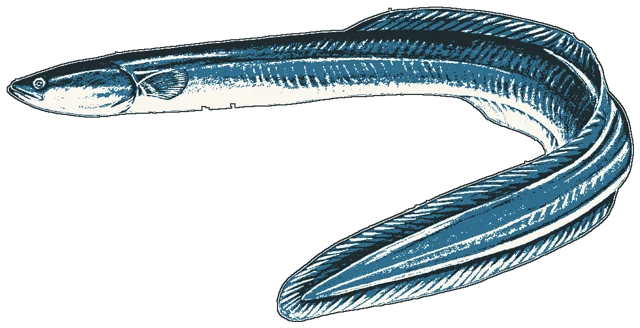
American eel
Anguilla rostrata · Fresh and salt
Few people in the US eat them (Maryland DNR) and most anglers cut them loose or use them as striper and crab bait, even though eel is a delicacy in Europe and Japan.
Worth a try: Eel is a popular food in Europe and Japan (Maryland DNR); skin it and smoke it hard.
- Tastes
- rich, sweet, dense, oily
- Limits
- Light regs. Marine waters: 9 in minimum, 25 eels per day, year round. The 25 is a cap for the whole vessel, however many are aboard (50 on a for-hire vessel, 322 CMR 6.30). Towns may have stricter rules. Inland waters: 25 per day, 9 in minimum, open all year; eels may not be taken there as baitfish for personal use or for commercial purposes (321 CMR 4.03). New Bedford Harbor Areas I and II are closed to taking eels (105 CMR 260.005). (2026 saltwater digest (eRegulations page last updated Oct 5, 2026); inland: MassWildlife freshwater regulations page, updated Sep 25, 2026) Source
- Where
- Almost every freshwater body in Massachusetts and brackish water, per the state species profile; eel is also a striped bass bait.
- cut bait
- nightcrawlers
- Eels in some rivers carry high PCB levels; check local advisories.
- Do not eat (anyone): eels from New Bedford Harbor's Areas I and II, or any other fish from the harbor (PCBs; 105 CMR 260.005 also bars taking eels in Areas I and II).
- Do not eat (anyone): any fish but bluefish and striped bass from the lower Mystic River area (the Mystic below the Amelia Earhart Dam, and Chelsea Creek; PCBs and arsenic; state advisory, July 2018).
- Do not eat (anyone): eels from the Connecticut, Millers (and its tributaries), Muddy, Neponset, Canton, Cochato (with Ice Pond and Sylvan Lake) and Copicut rivers, Mother Brook (Knight Street Dam to the Neponset), the Lowell Canals, lakes Cochituate, Noquochoke and Wenham, or Cornell, Flax (Lynn), Foster (Swampscott) and Whitmans ponds.
- Do not eat (anyone): any fish from the 30 all-fish waters on this page (the Housatonic, Hoosic, Malden, Mystic, Rumford and Sudbury rivers among them).
- Do not eat (under 12, nursing, pregnant or may become pregnant): Massachusetts freshwater fish, unless the state's list gives the water its own line.
- Do not eat (same group): any fish from Quabbin and Wachusett reservoirs or the 128 more waters named for them on this page, or eels from New Bedford Reservoir or Moores and Stiles ponds.
- Do not eat (same group): any fish from the lower Mystic River area, or from New Bedford Harbor's three closure areas, out to a line from Mishaum Point to West Island (EPA page, Oct 27, 2026; its signs list Area III exceptions).
Meal limits and other waters (5)
- Limit (everyone else): 1 meal a year from Johns Pond, Lake Mirimichi or Studley Pond.
- Limit (everyone else): 1 meal in 6 months from Lake Ripple, Flint Pond (Tyngsborough) or the lower Charles River (South Natick Dam to the Museum of Science Dam).
- Limit (everyone else): 2 meals a month of eels from New Bedford Reservoir, Moores Pond or Stiles Pond, and one 5-ounce meal a week from Quabbin and Wachusett reservoirs.
- Another 120 listed waters have limits of 1 meal in 2 months to 2 a week, named on this page (state list, December 2025).
- Limit (same group): 1 meal in 6 months from the lower Charles, the Merrimack above Lawrence, Lake Boon, Lake Quannapowitt, Lake Quinsigamond, Falls Pond (North Attleborough), Forge Pond (Westford) or Pequot Pond; 9 more waters 1 a month to 2 a week.
Atlantic menhaden
Brevoortia tyrannus · also called pogies · Saltwater
NOAA: too small and oily to eat. Menhaden go to fish meal and oil, and they support a major bait fishery (ASMFC).
- Tastes
- very oily, soft, bony
- Limits
- No limits. State waters: no recreational size, season or bag limit in 322 CMR 6.43 or on the 2026 saltwater table; commercial and bait-dealer rules differ. (322 CMR 6.43 as published on Cornell LII (checked Nov 22, 2026)) Source
- Where
- Estuaries during coastal migration in summer or early fall.
- Do not eat (anyone): any fish from New Bedford Harbor (PCBs; state health department, read Nov 22, 2026).
- Do not eat (anyone): any fish but bluefish and striped bass from the lower Mystic River area (the Mystic below the Amelia Earhart Dam, and Chelsea Creek; PCBs and arsenic; state advisory, July 2018).
- Do not eat (under 12, nursing, pregnant or may become pregnant): any fish from the lower Mystic River area, or from New Bedford Harbor's three closure areas, out to a line from Mishaum Point to West Island (EPA page, Oct 27, 2026; its signs list Area III exceptions).
- Confirm with the state's current list.
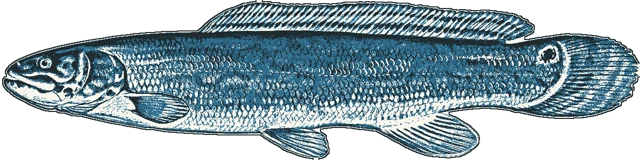
Bowfin
Amia calva (ruddy bowfin) and Amia ocellicauda (emerald bowfin) · Freshwater
TPWD calls it a rough fish rather than one for the table; the soft, pale flesh earned it the nickname 'cottonfish'.
Worth a try: Keep it alive until you clean it, cook it the same day, and use it smoked, fried as patties or stewed; MeatEater serves fried bowfin with a morel cream sauce.
- Tastes
- mild, soft, jelly-like unless very fresh
- Limits
- No limits. No statewide daily limit, minimum length or closed season (MassWildlife's "All Other Freshwater Species" line, Jan 1 to Dec 31). (MassWildlife freshwater regulations page, updated Sep 25, 2026 (new rules in effect fall 2026)) Source
- Where
- The Oxbow and the sloughs and setbacks of the Connecticut River from the Connecticut Valley Region to Hinsdale, New Hampshire (On The Water reports, Apr 16 and Nov 12, 2026).
- live minnows
- cut bait
- jigs
- topwater lures
- Do not eat (anyone): any fish from the 30 all-fish waters on this page (the Housatonic, Hoosic, Malden, Mystic, Rumford and Sudbury rivers among them).
- Do not eat (under 12, nursing, pregnant or may become pregnant): Massachusetts freshwater fish, unless the state's list gives the water its own line.
- Do not eat (same group): any fish from Quabbin and Wachusett reservoirs or the 128 more waters named for them on this page (the Connecticut River (PCBs, PFAS) and Oxbow Pond among them).
Meal limits and other waters (5)
- Limit (everyone else): 1 meal a year from Johns Pond, Lake Mirimichi or Studley Pond.
- Limit (everyone else): 1 meal in 6 months from Lake Ripple, Flint Pond (Tyngsborough) or the lower Charles River (South Natick Dam to the Museum of Science Dam).
- Limit (everyone else): 2 meals a month from the Connecticut River or Oxbow Pond.
- Another 131 listed waters have limits of 1 meal in 2 months to 2 a week, named on this page (state list, December 2025).
- Limit (same group): 1 meal in 6 months from the lower Charles, the Merrimack above Lawrence, Lake Boon, Lake Quannapowitt, Lake Quinsigamond, Falls Pond (North Attleborough), Forge Pond (Westford) or Pequot Pond; 10 more waters 1 a month to 2 a week.
False albacore
Euthynnus alletteratus · also called little tunny · Saltwater
Dark, bloody, strong-tasting meat; most anglers release albies or cut them up for shark and kingfish bait.
Worth a try: Kill it immediately, cut the gills and bleed it in a saltwater bucket, then ice it. Fresh loins make good sashimi (Outdoor Life; Florida Sportsman, where 'bonito' means little tunny), and LSU Sea Grant rates it better than its reputation. Trim all dark meat.
- Tastes
- strong; clean and sweet when bled and very fresh, firm, dark red
- Limits
- Heavy regs. 16 in minimum (curved fork length), 5 fish per day with false albacore and Atlantic bonito combined, year round, in state waters. (2026 saltwater digest (eRegulations page last updated Oct 5, 2026); rule in force on Nov 21, 2026) Source
- Best months
- Late July to October.
- Where
- Mostly the warmer waters on the south side of Cape Cod and the Islands; Edgartown holds the state record.
- strip baits
- squid
- small jigs
- spoons
- plugs
- flies
- Ciguatera has been reported (Florida Museum).
- Do not eat (anyone): any fish from New Bedford Harbor (PCBs; state health department, read Nov 22, 2026).
- Do not eat (anyone): any fish but bluefish and striped bass from the lower Mystic River area (the Mystic below the Amelia Earhart Dam, and Chelsea Creek; PCBs and arsenic; state advisory, July 2018).
- Do not eat (under 12, nursing, pregnant or may become pregnant): any fish from the lower Mystic River area, or from New Bedford Harbor's three closure areas, out to a line from Mishaum Point to West Island (EPA page, Oct 27, 2026; its signs list Area III exceptions).
- Confirm with the state's current list.
Oyster toadfish
Opsanus tau · Saltwater
An ugly, snapping bycatch fish that almost nobody keeps; toadfishes are generally considered undesirable as food (Florida Museum).
- Tastes
- mild
- Limits
- No limits. The 2026 Massachusetts saltwater table lists no size limit, season or possession limit for oyster toadfish. Federal rules apply beyond state waters. (2026 saltwater digest (eRegulations page last updated Oct 5, 2026); rule in force on Nov 21, 2026) Source
- squid
- clams
- bloodworms
- peeler crab
- Do not eat (anyone): any fish from New Bedford Harbor, or bottom-feeding fish from its Area II outside the hurricane barrier, north of a line from Ricketson's Point to Wilbur Point (PCBs; state health department, read Nov 22, 2026).
- Do not eat (anyone): any fish but bluefish and striped bass from the lower Mystic River area (the Mystic below the Amelia Earhart Dam, and Chelsea Creek; PCBs and arsenic; state advisory, July 2018).
- Do not eat (under 12, nursing, pregnant or may become pregnant): any fish from the lower Mystic River area, or from New Bedford Harbor's three closure areas, out to a line from Mishaum Point to West Island (EPA page, Oct 27, 2026; its signs list Area III exceptions).
- Confirm with the state's current list.
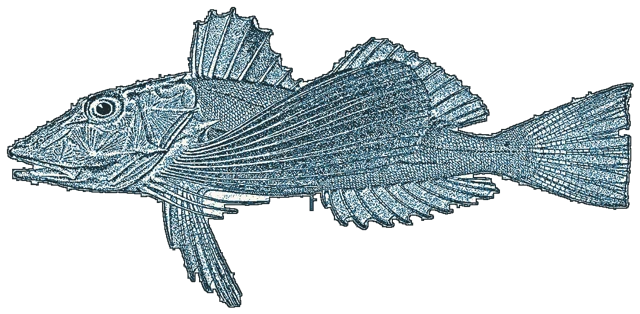
Sea robin
Prionotus spp. (mainly P. carolinus and P. evolans) · Saltwater
Anglers treat sea robins as bait-stealing nuisances and throw them back; few keep one to eat.
Worth a try: On The Water found the fillets delicious, better than fluke or sea bass, if a little darker and firmer. Fillet the tail section (watch the spines) and fry or bake it like fluke.
- Tastes
- mild, sweet, firm, slightly darker than sea bass
- Limits
- No limits. The 2026 Massachusetts saltwater table lists no size limit, season or possession limit for sea robins. Federal rules apply beyond state waters. (2026 saltwater digest (eRegulations page last updated Oct 5, 2026); rule in force on Nov 21, 2026) Source
- squid strips
- cut bait
- cut shrimp
- clams
- Spiny head and fins make it unpleasant to handle.
- Do not eat (anyone): any fish from New Bedford Harbor, or bottom-feeding fish from its Area II outside the hurricane barrier, north of a line from Ricketson's Point to Wilbur Point (PCBs; state health department, read Nov 22, 2026).
- Do not eat (anyone): any fish but bluefish and striped bass from the lower Mystic River area (the Mystic below the Amelia Earhart Dam, and Chelsea Creek; PCBs and arsenic; state advisory, July 2018).
- Do not eat (under 12, nursing, pregnant or may become pregnant): any fish from the lower Mystic River area, or from New Bedford Harbor's three closure areas, out to a line from Mishaum Point to West Island (EPA page, Oct 27, 2026; its signs list Area III exceptions).
- Confirm with the state's current list.
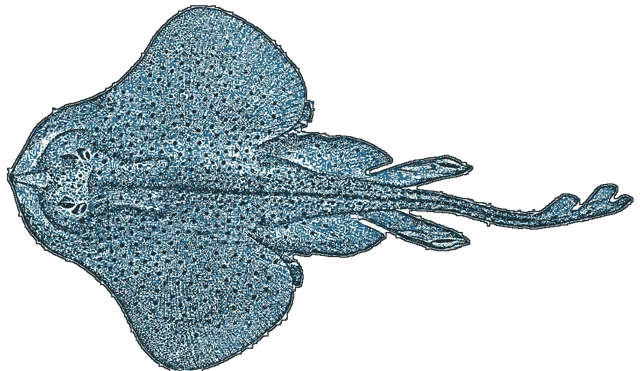
Skate
Rajidae (mainly Raja eglanteria, Leucoraja erinacea, L. ocellata) · Saltwater
Almost every US angler throws skates back or uses them for trap bait; Hank Shaw notes no one he knew growing up in New York and New Jersey kept one.
Worth a try: Kill the fish and cut off the wings right away, refrigerate a day or two so the meat firms up, and brine to remove any ammonia (Hank Shaw). NOAA describes winter skate as mild with a flavor similar to scallops. Classic prep: dredged and sautéed in brown butter with capers.
- Tastes
- mild, scallop-like, firm, stringy, corduroy grain
- Limits
- No limits. State waters: no size limit, season or possession limit on the 2026 saltwater table. Federal waters: barndoor, smooth and thorny skates may not be kept; clearnose, little, rosette and winter skates have no size or bag limit (NOAA). (2026 saltwater digest (eRegulations page last updated Oct 5, 2026); rule in force on Nov 21, 2026) Source
- cut bait
- squid
- clams
- Poorly handled skates and rays can smell of ammonia; bleed, ice and brine (Hank Shaw).
- Barndoor and thorny skates are protected; possession is prohibited (NOAA).
- Do not eat (anyone): any fish from New Bedford Harbor, or bottom-feeding fish from its Area II outside the hurricane barrier, north of a line from Ricketson's Point to Wilbur Point (PCBs; state health department, read Nov 22, 2026).
- Do not eat (anyone): any fish but bluefish and striped bass from the lower Mystic River area (the Mystic below the Amelia Earhart Dam, and Chelsea Creek; PCBs and arsenic; state advisory, July 2018).
- Do not eat (under 12, nursing, pregnant or may become pregnant): any fish from the lower Mystic River area, or from New Bedford Harbor's three closure areas, out to a line from Mishaum Point to West Island (EPA page, Oct 27, 2026; its signs list Area III exceptions).
- Confirm with the state's current list.
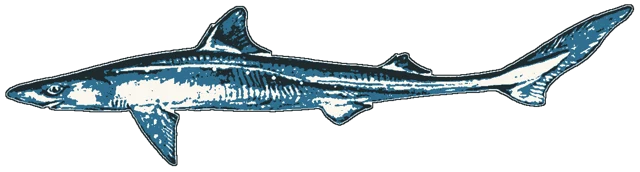
Spiny dogfish
Squalus acanthias · Saltwater
To most US anglers dogfish are a nuisance that swarms baits; NOAA says there is little consumer demand for it in the United States.
Worth a try: NOAA describes the meat as mild, sweet, flaky but firm. It is the fish in British fish and chips, and North Carolina Sea Grant's chef panels served it as 'cape shark' blackened, fried and in chowder. Bleed and gut it quickly like any shark.
- Tastes
- mild, sweet, flaky but firm, oilier than other sharks
- Limits
- No limits. State waters: no size limit, season or possession limit on the 2026 saltwater table. Federal waters: open all year, no minimum size, no bag limit (NOAA; charter and party boats landing dogfish follow the commercial rules). It may not be finned at sea (322 CMR 6.35(7)). (2026 saltwater digest (eRegulations page last updated Oct 5, 2026); rule in force on Nov 21, 2026) Source
- strips of squid
- cut pieces of fish
- Do not eat (anyone): any fish from New Bedford Harbor (PCBs; state health department, read Nov 22, 2026).
- Do not eat (anyone): any fish but bluefish and striped bass from the lower Mystic River area (the Mystic below the Amelia Earhart Dam, and Chelsea Creek; PCBs and arsenic; state advisory, July 2018).
- Do not eat (under 12, nursing, pregnant or may become pregnant): any fish from the lower Mystic River area, or from New Bedford Harbor's three closure areas, out to a line from Mishaum Point to West Island (EPA page, Oct 27, 2026; its signs list Area III exceptions).
- The state's 2026 saltwater guide names shark among local species considered high in mercury and tells pregnant and breastfeeding women to eat species low in mercury.
- Confirm with the state's current list.
White sucker
Catostomus commersonii · Freshwater
Suckers have perhaps the worst reputation of the rough fish (MeatEater) and are mostly raised and sold as bait (MN DNR); the many small bones keep most anglers from eating them.
Worth a try: Spring fish from cold water are light and sweet like walleye (MeatEater); score them deeply and fry hard, pickle them to dissolve the bones, or grind into fish cakes.
- Tastes
- light, sweet, firm, white, many small bones
- Limits
- No limits. No statewide daily limit, minimum length or closed season (MassWildlife's "All Other Freshwater Species" line, Jan 1 to Dec 31). White sucker may be taken for personal use as bait, and by spear or archery as well as angling (321 CMR 4.01(4)(e)). No fish may be taken from inland waters for sale. (MassWildlife freshwater regulations page, updated Sep 25, 2026 (new rules in effect fall 2026)) Source
- Where
- Charles River (On The Water report, March 2026).
- Worm fished on the bottom
- Do not eat (anyone): white sucker from the Canton, Neponset and Otter rivers, Lower Mystic Lake, Mother Brook (Knight Street Dam to the Neponset), Box and Rice City ponds or the Rolling Dam Impoundment.
- Do not eat (anyone): any fish from the 30 all-fish waters on this page (the Housatonic, Hoosic, Malden, Mystic, Rumford and Sudbury rivers among them).
- Do not eat (under 12, nursing, pregnant or may become pregnant): Massachusetts freshwater fish, unless the state's list gives the water its own line.
- Do not eat (same group): any fish from Quabbin and Wachusett reservoirs or the 128 more waters named for them on this page (the Charles between the Medway and South Natick dams among them), or white sucker from Fort Meadow Reservoir, upper Mother Brook, the Spicket River, Stevens Pond (Lawrence) or the Merrimack above Lawrence.
Meal limits and other waters (6)
- Limit (everyone else): 1 meal a year from Johns Pond, Lake Mirimichi or Studley Pond.
- Limit (everyone else): 1 meal in 6 months from Lake Ripple, Flint Pond (Tyngsborough) or the lower Charles River (South Natick Dam to the Museum of Science Dam).
- Limit (everyone else): 1 meal in 2 months from the Merrimack above Lawrence.
- Limit (everyone else): 2 meals a month from the Charles between the Medway and South Natick dams, and of white sucker from Fort Meadow Reservoir, upper Mother Brook, the Spicket River and Stevens Pond (Lawrence).
- Another 126 listed waters have limits of 1 meal in 2 months to 2 a week, named on this page (state list, December 2025).
- Limit (same group): 1 meal in 6 months from the lower Charles, Lake Boon, Lake Quannapowitt, Lake Quinsigamond, Falls Pond (North Attleborough), Forge Pond (Westford) or Pequot Pond; 10 more waters 1 a month to 2 a week.
Tiger muskie
Esox masquinongy x E. lucius · Freshwater
Managed like muskie, as a trophy fish with high size limits; Maryland DNR says most anglers release them.
- Limits
- Heavy regs. 1 per day, 28 in minimum, open all year. (MassWildlife freshwater regulations page, updated Sep 25, 2026 (new rules in effect fall 2026)) Source
- Where
- Spy Pond (On The Water report, Oct 15, 2026).
- Live white suckers
- Do not eat (anyone): any fish from the 30 all-fish waters on this page (the Housatonic, Hoosic, Malden, Mystic, Rumford and Sudbury rivers among them).
- Do not eat (under 12, nursing, pregnant or may become pregnant): Massachusetts freshwater fish, unless the state's list gives the water its own line.
- Do not eat (same group): any fish from Quabbin and Wachusett reservoirs or the 128 more waters named for them on this page.
Meal limits and other waters (4)
- Limit (everyone else): 1 meal a year from Johns Pond, Lake Mirimichi or Studley Pond.
- Limit (everyone else): 1 meal in 6 months from Lake Ripple, Flint Pond (Tyngsborough) or the lower Charles River (South Natick Dam to the Museum of Science Dam).
- Another 133 listed waters have limits of 1 meal in 2 months to 2 a week, named on this page (state list, December 2025).
- Limit (same group): 1 meal in 6 months from the lower Charles, the Merrimack above Lawrence, Lake Boon, Lake Quannapowitt, Lake Quinsigamond, Falls Pond (North Attleborough), Forge Pond (Westford) or Pequot Pond; 10 more waters 1 a month to 2 a week.
Where to fish in Massachusetts
Fish named here are what people catch at each spot, not a promise they’re safe to eat. Read the eating advice on the fish’s card before you keep one.
# Salt or brackish# Freshwater
- 1Quabbin Reservoir reservoir · fresh
The Nov 5, 2026 On The Water report describes lake trout cruising within casting distance and largemouth and smallmouth bass taken on slip floats with shiners; Quabbin has its own lake trout limit (2 fish, 18 in). Do not eat its largemouth, smallmouth or lake trout over 24 in; children under 12 and people who are nursing, pregnant or may become pregnant should eat only lake trout under 24 in or salmon.
Known for: Lake trout
Access: Walk-in access through the launch areas off Gates 8, 31 and 43; Gates 16, 22 and 35 are also named. Fishing is allowed only in the season set by DCR, generally the third Saturday of April to the third Saturday of October; tributary streams inside the Quabbin Reservation close with it (MassWildlife page, updated Sep 25, 2026).
- 2Wachusett Reservoir reservoir · fresh
The Nov 5, 2026 On The Water report has Gates 13 and 19 fishing well for smallmouth bass and lake trout; Wachusett has its own lake trout limit (3 fish). Do not eat its smallmouth, largemouth or lake trout over 24 in; children under 12 and people who are nursing, pregnant or may become pregnant should eat only lake trout under 24 in or salmon.
Known for: Lake trout
Access: Gate access, shoreline fishing only from Gate 6 on Route 70 to Gate 36 on Route 110; open only in the season set by DCR, generally the first Saturday of April to Nov 30 (MassWildlife page, updated Sep 25, 2026).
- 3Connecticut River at South Hadley and the Holyoke Dam river · fresh
The Nov 5, 2026 On The Water report cites smallmouth bass, walleye and a shad count of over 400,000 at the Holyoke Dam; shad may be kept here (3 per day) but not in most other waters. Children under 12 and people who are nursing, pregnant or may become pregnant should eat no fish from the Connecticut River; everyone else, no eel, channel or white catfish or yellow perch, and 2 meals a month of smallmouth, walleye or shad.
Known for: Smallmouth bass, Walleye, American shad
Access: The Robert E. Barrett Fishway at the Holyoke Dam has a glass viewing area open to the public.
- 4Lake Quinsigamond lake · fresh
The Nov 5, 2026 On The Water report cites northern pike of 36 to 41 in from Lake Quinsigamond, Indian Lake and Flint Pond. PFAS: eat any fish from here no more than once in 2 months; children under 12 and people who are nursing, pregnant or may become pregnant, no more than once in 6 months.
Known for: Northern pike
Access: Quinsigamond State Park is on the Worcester side, north and south of Route 9.
- 5Chestnut Hill Reservoir, Boston reservoir · fresh
On The Water names large chain pickerel as the main draw, with some crappie.
Known for: Chain pickerel, Black crappie
Access: Shoreline walk-up from the MBTA Green Line C branch (Cleveland Circle stop).
- 6Lower Charles River, Boston and Cambridge river · fresh
On The Water calls the stretch from the Watertown Dam to the Charlestown locks good year-round fishing for largemouth bass, carp, white catfish and panfish, with yellow and white perch, crappie and yellow bullhead. From the South Natick Dam to the Museum of Science Dam, do not eat carp and eat other fish no more than once in 6 months; children under 12 and people who are nursing, pregnant or may become pregnant should also eat no largemouth.
Known for: Largemouth bass, White perch, Yellow perch, Black crappie, White catfish
Access: Shoreline sites include the Muddy River mouth, the Esplanade and the warm-water discharge behind the Royal Sonesta Hotel in Cambridge, reached by MBTA.
- 7Cape Cod Canal inlet · salt
The state species profile lists the canal as a mackerel spot; striped bass kept from the canal are limited to 1 per day with no fish 31 in or larger within 1,000 ft of it.
Known for: Atlantic mackerel
Access: Shore fishing along the canal; the state Cape Cod access list shows a ramp at Canal Basin, jetties at Canal-East End and a pier at Scusset Beach State Park.
- 8Boston Harbor: Deer Island Pier and Castle Island pier · salt
On The Water names Long Pier, Castle Island and the Charles River Locks for striped bass, and Harbor Point for winter flounder on sea worms. The state tells children under 12 and people who are nursing, pregnant or may become pregnant not to eat flounder from Boston Harbor. Nobody should eat any fish but striped bass and bluefish from the lower Mystic River (below the Amelia Earhart Dam) or Chelsea Creek, which run into the harbor, and that group should eat no fish from there.
Known for: Striped bass, Winter flounder
Access: Deer Island Fishing Pier in Winthrop was built with saltwater permit revenue; Castle Island and Long Pier are reachable by MBTA bus and Blue Line.
- 9Cape Ann and Gloucester offshore · salt
On The Water puts Gloucester party boats on cod, haddock and pollock bottom fishing; the Nov 5, 2026 report adds large cunner at Cape Ann.
Known for: Atlantic cod, Haddock, Pollock
Access: Party boats out of Gloucester; Granite Pier in Rockport and Gloucester town landings appear on the state North Shore access list.
- 10Stellwagen Bank offshore · salt
On The Water names Stellwagen Bank for cod by party boat; cod may be kept only Sep 1 to Oct 31 in the Western Gulf of Maine. The state saltwater records list a 34 lb 4 oz cusk and a 20 lb haddock from the bank.
Known for: Atlantic cod
Access: By party boat.
- 11Buzzards Bay sound · salt
The state species profiles place black sea bass from Buzzards Bay to the Rhode Island line and fluke in Buzzards Bay; Buzzards Bay holds the state black sea bass and weakfish records. Nobody should eat fish from New Bedford Harbor, on the bay's west side (PCBs); children under 12 and people who are nursing, pregnant or may become pregnant should avoid fish from its closure areas out to a line from Mishaum Point to West Island (EPA).
Known for: Black sea bass, Summer flounder
Access: Town and state ramps and shore sites on the state public access list. New Bedford Harbor, on the bay's west side, is closed to taking some or all fish (105 CMR 260.005).
- 12Menemsha and Aquinnah, Martha's Vineyard inlet · salt
The state species profile puts bonito and false albacore around southern Cape Cod and the Islands; the state record false albacore came from Edgartown.
Known for: False albacore, Atlantic bonito
Access: The state Islands access list shows a jetty and a pier at Menemsha, a jetty and ramp at Menemsha Creek, and Dogfish Bar at Aquinnah as a shore fishing area.
Massachusetts fishing license and rules
- Resident: $40.00 (plus $5 Wildlands Conservation Stamp on the first resident license each year)
- Nonresident: $50.00 (plus $5 Wildlands Conservation Stamp)
- Nonresident short-term: $30.50 for 3 days (plus $5 Wildlands Conservation Stamp)
- Saltwater: Separate recreational saltwater fishing permit: $10 for residents and nonresidents age 16 and older; no fee at 60 and older, but the permit is still required. Not needed on a permitted charter or head boat, or for a disabled person as defined in M.G.L. c. 19C. Online purchase adds a small administrative fee.
- Who needs one: Freshwater: anglers 15 and older need a license, which is free at ages 15 to 17 and at 70 and older. Saltwater: 16 and older.
- Free fishing days: Freshwater: June 6-7, 2026, license waived. Saltwater: May 10 and June 21, 2026, no permit needed. All other rules still apply.
More license details
Saltwater permits expire Dec 31 each year. Residents must have lived in Massachusetts at least six consecutive months (M.G.L. c. 131 s. 11). Resident 3-day freshwater $20; resident 65-69 $20. Saltwater permit reciprocity: New Hampshire, Rhode Island and Connecticut in both directions; Maine for Massachusetts permit holders only. With a Massachusetts or New Hampshire license you may fish Lake Monomonac and Robbins Pond (Winchendon), Long Pond (Tyngsborough and Dracut), Bent Pond (Warwick) and Tuxbury Pond (Amesbury) under New Hampshire rules; with a Massachusetts or Connecticut license, Congamond Lake and Hamilton Reservoir (Massachusetts rules) and Colebrook Reservoir, Perry Pond, Muddy Pond and Breakneck Pond (Connecticut rules); with a Massachusetts or Rhode Island license, Wallum Lake (Rhode Island rules). On Sherman Reservoir in Rowe, each state's license and rules apply on its own side (MassWildlife page, updated Sep 25, 2026). The Merrimack River downstream of the I-495 bridge in Haverhill is under Division of Marine Fisheries rules (321 CMR 4.01(7), and the same page).
Buy a license License types and fees
Fees: 2026 and thereafter (801 CMR 4.02).
- Striped bass in state waters: 1 per day at 28 in to less than 31 in; inline circle hooks with whole or cut natural bait; no gaffs; no filleting at sea except for immediate consumption or by for-hire captains. Federal waters are closed to striped bass fishing. In the Cape Cod Canal the limit is still 1 per day and no fish 31 in or larger may be held within 1,000 ft of the canal.
- Cod: Western Gulf of Maine retention is Sep 1 to Oct 31 only (1 fish, 23 in). The Winter Cod Conservation Closure (Nov 15 to Jan 31, state waters between 42 21.0 N and 42 27.5 N out to about 70 40 W) bars hook-and-line fishing that could catch cod, and the spring closure (Apr 16 to Jul 21) bars taking cod. Southern New England cod, wolffish, ocean pout, windowpane flounder and river herring may not be kept.
- Other fish on the 2026 saltwater table: halibut (41 in, 1 fish), dab and gray sole (14 in) and yellowtail flounder (13 in).
- Freshwater gear: no more than 2 hooks in open water or 5 when ice fishing (you must be able to tend your own); no snagging; no jug, toggle or trot lines; no lead sinkers, weights or jigs under 1 oz; no releasing live fish without a permit; no taking inland fish for sale. The only fish allowed as bait, live or dead, are banded killifish, fallfish, fathead minnow, golden shiner, mummichog, pumpkinseed, rainbow smelt (hook and line only, and only in smelt season), yellow perch and white sucker.
- Trout limits changed in fall 2026 (MassWildlife's page updated Sep 25, 2026; the printed guide shows the old ones): 6 trout a day statewide, open all year, no more than 3 of them brook, brown or tiger. Only 1 trout, 20 in or longer, from the Housatonic River below the meeting of its branches, and only 1 brown trout, 15 in or longer, from South Pond (Quacumquasit) in Brookfield.
- Quabbin, Wachusett and Sudbury reservoirs are closed outside DCR's season: generally the third Saturday of April to the third Saturday of October at Quabbin (with its tributary streams inside the Quabbin Reservation), and the first Saturday of April to Nov 30 at Wachusett, Sudbury and West Waushacum.
- Catch-and-release areas (artificial lures only, no bait on you, no fish kept): Housatonic River, Route 20 bridge in Lee to Willow Mill Dam and Glendale Dam to the railroad bridge in Stockbridge; East Branch Westfield River, Chesterfield Gorge to the gate north of the Corps of Engineers parking lot at Knightville; Deerfield River, Fife Brook Dam to Hoosac Tunnel and Pelham Brook to the Mohawk Campground; Millers River, the Templeton/Athol railroad bridge to the first dam in Athol and Wendell Road bridge in Orange to the breached dam in Erving Center; Red Brook, White Island Pond outlet to the inlet of Buttermilk Bay; Quashnet River, John's Pond outlet to 0.1 mile below Route 28; Nissitissit River, New Hampshire line to Prescott Street Bridge (fly fishing only); Swift River, Winsor Dam to Route 9 (fly fishing only) and Route 9 to Cady Lane (Jul 1 to Dec 31; the state page allows harvest and bait there Jan 1 to June 3).
- Housatonic River: no fishing Jun 15 to Aug 31 within 100 feet of the mouths of Beartown, Goose Pond, Hop and Mohawk brooks.
- Release at once, possession is illegal: sturgeon (all species), American brook lamprey, sea-run Atlantic salmon, bridle shiner, burbot, eastern silvery minnow, lake chub, longnose sucker and northern redbelly dace.
- Fishing is unlawful in the Merrimack River from the Essex Dam to the Boston and Maine railroad bridge, and in the Lawrence and Lowell canals in April.
- Sharks: rod and reel or handline only, circle hooks except with flies or lures, heads, tails and fins attached; shortfin mako, sandbar, white, dusky and several other sharks are prohibited species in state waters. Tunas, billfish and swordfish are managed by NOAA's Highly Migratory Species Office, which sets the permit rules.
- Saltwater permit reciprocity: New Hampshire, Rhode Island and Connecticut (both ways) and Maine (Massachusetts permit holders fishing in Maine only). Interstate ponds: New Hampshire rules on Lake Monomonac, Robbins, Long (Tyngsborough and Dracut), Bent and Tuxbury ponds; Rhode Island rules on Wallum Lake; Connecticut rules on Colebrook Reservoir and Breakneck, Perry and Muddy ponds; Massachusetts rules on Congamond Lake and Hamilton Reservoir; each state's own rules and license on its side of Sherman Reservoir.
- Fillets: black sea bass and scup may be filleted at sea but not skinned, with no more than two fillets per allowed fish; groundfish fillets need at least two square inches of skin.
- New Bedford Harbor: 105 CMR 260.005 bars taking any fish except bait fish from Area I (north of the hurricane dike), and lobsters or bottom-feeding fish (eels, scup, flounder and tautog) from Area II, the water generally south of it to a line from Ricketson's Point to Wilbur Point.
- Shore-based shark fishing is unlawful from the northeasternmost point of Plymouth Beach south to the Cape Cod Canal, east to Rock Harbor in Orleans, north to Race Point in Provincetown and south to Stage Harbor in Chatham, including all shores of Chatham Harbor and Monomoy Island. It means rod and reel from shore with a metal or wire leader over 18 in and a hook more than 5/8 in from point to shank. Where it is allowed, chumming from sunrise to sunset is unlawful (322 CMR 6.37). An emergency rule added the Nantucket shoreline for 90 days from Jul 31, 2026, and the Division of Marine Fisheries said it would consider making that permanent for 2027. From any shore, baited hooks may not be sent out with drones, remote-controlled boats, bait cannons or other mechanized devices.
Limits here are summaries for convenience, checked on the date shown. The official Massachusetts regulations govern; check them before you keep a fish.
Before you eat it
Do not eat (anyone): fish, frogs or turtles from the Housatonic River and the tributaries that feed its main stem, from Center Pond Dam in Dalton to the Connecticut line (PCBs). Do not eat … (see the full list)
Do not eat (anyone): fish, frogs or turtles from the Housatonic River and the tributaries that feed its main stem, from Center Pond Dam in Dalton to the Connecticut line (PCBs). Do not eat (anyone): any fish from the Hoosic River (the channelized section in North Adams to Vermont), the Malden River, the Mystic River from Lower Mystic Lake to the Amelia Earhart Dam, the Sudbury River from Ashland to the Assabet with Stern and Bracket reservoirs, the Rumford River (from Glue Factory Pond Dam) with Fulton, Kingman and Cabot ponds and Norton Reservoir, or the Drinkwater, Indian Head and North rivers (Forge Pond Dam in Hanover to Route 3) with Factory Pond. Do not eat (anyone): any fish from Ashumet Pond, Badluck Lake, Chadwicks Pond, Clay Pit Pond (Belmont), Goodrich Pond, Morewood Lake and Silver Lake (Pittsfield), Grove and Plowshop ponds (Ayer), Heard Pond, Hocomonco Pond, Kenoza Lake and Lake Pentucket (Haverhill), Puffer Pond, Lake Winthrop, Duck, Dyer, Great and Long ponds in Wellfleet, Round Pond East and Ryder Pond in Truro, or Chicopee and Copicut reservoirs.
- Do not eat (anyone): any fish except bluefish and striped bass, or any shellfish, from the lower Mystic River area, which is the Mystic below the Amelia Earhart Dam and Chelsea Creek (PCBs, arsenic and other chemicals; state health department advisory, July 2018, still linked on its list). Do not eat (under 12, nursing, pregnant or may become pregnant): any fish at all from there, bluefish and striped bass included. The state's sheet: https://www.mass.gov/lists/lower-mystic-river-area-advisory.
Do not eat (anyone): fish, shellfish or lobsters from New Bedford Harbor (PCBs), or lobster tomalley from anywhere. The state's sheets name all fish, shellfish and lobsters from Area I … (see the full list)
Do not eat (anyone): fish, shellfish or lobsters from New Bedford Harbor (PCBs), or lobster tomalley from anywhere. The state's sheets name all fish, shellfish and lobsters from Area I (north of the hurricane dike), lobsters and bottom-feeding fish (eels, scup, flounder and tautog) from Area II, and lobsters from Area III; state rule 105 CMR 260.005 also bars taking them. Do not eat (under 12, nursing, pregnant or may become pregnant): any fish, shellfish or lobster from all three closure areas, out to a line from Mishaum Point in Dartmouth to Rocky Point on West Island in Fairhaven (EPA page updated Oct 27, 2026; its signs list some Area III exceptions). EPA also recommends that everyone limit some other species from there; its signs name them.
- Do not eat (anyone): carp from the Charles River between the South Natick Dam and the Museum of Science Dam (all other fish there 1 meal in 6 months); American eel, channel catfish, white catfish or yellow perch from the Connecticut River (other fish 2 meals a month); smallmouth bass, largemouth bass or lake trout over 24 in from Quabbin and Wachusett reservoirs (other fish one 5-ounce meal a week, except salmon and smaller lake trout, which have no limit on the list).
Do not eat (anyone): largemouth bass from Ashfield Lake, Lake Attitash, Baldpate Pond, Big Pond (Otis), Buckley Dunton Lake, the Concord River, Crystal Lake (Haverhill), Echo Lake … (see the full list)
Do not eat (anyone): largemouth bass from Ashfield Lake, Lake Attitash, Baldpate Pond, Big Pond (Otis), Buckley Dunton Lake, the Concord River, Crystal Lake (Haverhill), Echo Lake (Hopkinton), Flint Pond (Tyngsborough), the French River (Hodges Village Dam to North Webster Village Pond Dam), Haggetts, Hood and Lowe ponds, Mill Pond (SuAsCo Reservoir, Westborough), Millvale Reservoir, lakes Nippenicket and Noquochoke, Pentucket Pond (Georgetown), Pepperell, Pomps, Quaboag, Rock (Georgetown) and Slough (Truro) ponds, Sudbury Reservoir (any bass), Upper Naukeag Lake, Upper Reservoir (Westminster), Wenham Lake or Windsor Lake (Windsor).
- Do not eat (under 12, nursing, pregnant or may become pregnant): freshwater fish from Massachusetts streams, rivers, lakes and ponds unless the state list gives that water its own line (health department poster, revised 2024; its web page says waters not tested for mercury). Do not eat (same group): any fish from the Connecticut River; any fish from Quabbin and Wachusett except salmon and lake trout under 24 in; largemouth bass or carp from the lower Charles; bluefish caught off the Massachusetts coast; and lobsters, flounder, soft-shell clams and bivalves from Boston Harbor.
Do not eat (under 12, nursing, pregnant or may become pregnant): any fish, stocked trout included, from these 41 PFAS waters, shown with the most anyone else should eat. 1 meal a year: … (see the full list)
Do not eat (under 12, nursing, pregnant or may become pregnant): any fish, stocked trout included, from these 41 PFAS waters, shown with the most anyone else should eat. 1 meal a year: Johns Pond (Mashpee; no smallmouth for anyone), Lake Mirimichi (Plainville) and Studley Pond (Rockland). 1 meal in 6 months: Flint Pond (Tyngsborough; no largemouth for anyone) and Lake Ripple (Grafton). 1 meal in 2 months: Lake Cochituate (no eels for anyone), Crocker Pond (Westminster), Long Pond (Lakeville), Mascuppic Lake (Dracut), Lake Sabbatia (Taunton), South Watuppa Pond (Fall River) and Whitmans Pond (Weymouth; no eels for anyone). 1 meal a month: Ashland Reservoir (Ashland), the Concord River (no largemouth for anyone), Dunn Pond (Gardner), Jamaica Pond (Boston) and the Nashua River. 2 meals a month: Lake Attitash (Amesbury; no largemouth for anyone), the Blackstone River, Buck Pond (Westfield), the Chicopee River, the Connecticut River (no eels, channel catfish, white catfish or yellow perch for anyone), Hopedale Pond (Hopedale), Long Pond (Yarmouth), the Millers River and its tributaries (Otter River to the Connecticut; no eels or brown trout for anyone), Oxbow Pond (Easthampton and Northampton), Robbins Pond (East Bridgewater), Sandy Pond (Ayer), Snake Pond (Sandwich; no smallmouth for anyone), the Ware River and Webster Lake (Webster). 1 meal a week: Asnacomet (Comet) Pond (Hubbardston), Congamond (listed as Congomond) Lake (Southwick), Flax Pond (Picture Lake, Bourne), Houghton's Pond (Milton), Jenkins Pond (Falmouth) and Upper Spectacle Pond (Otis). 2 meals a week: Fearing Pond (Plymouth), Grews Pond (Falmouth), Pearce Lake (Saugus) and West Lake (Sandisfield).
Do not eat (under 12, nursing, pregnant or may become pregnant): any fish from these 14 rivers and streams; everyone else 2 meals a month, apart from the fish marked 'for anyone': the … (see the full list)
Do not eat (under 12, nursing, pregnant or may become pregnant): any fish from these 14 rivers and streams; everyone else 2 meals a month, apart from the fish marked 'for anyone': the Canton River (Neponset Street dam to the Neponset; no eels or white sucker for anyone), the Charles River from the Medway Dam to the South Natick Dam, the Cochato River with Ice Pond and Sylvan Lake (no eels, brown bullhead or carp for anyone), the French River (Hodges Village Dam to North Webster Village Pond Dam; no largemouth for anyone), the Ipswich River (Bostik Findley Dam in Middleton to the Sylvania Dam in Ipswich), the Konkapot River (Mill River Dam to the Housatonic), the Lowell Canals (no eels for anyone), Mill River (Hopedale), Lake Monomonac and the North Branch Millers River down to Whitney Pond (Winchendon), Mother Brook (Knight Street Dam to the Neponset; no eels or white sucker for anyone), the Muddy River (no eels, brown bullhead or carp for anyone), the Neponset River (Hollingsworth & Vose Dam in Walpole to the Walter Baker Dam in Boston; no eels or white sucker for anyone), the Otter River (Seaman Paper Dam to the Millers; no brown bullhead or white sucker for anyone) and the Quinebaug River (Hamilton Reservoir dam through East Brimfield Reservoir and Long Pond). From the Lowell Canals eat only the fillet.
Do not eat (under 12, nursing, pregnant or may become pregnant): any fish from these 33 lakes and ponds; everyone else 2 meals a month, apart from the fish marked 'for anyone': Aaron River … (see the full list)
Do not eat (under 12, nursing, pregnant or may become pregnant): any fish from these 33 lakes and ponds; everyone else 2 meals a month, apart from the fish marked 'for anyone': Aaron River Reservoir (no chain pickerel or yellow perch for anyone), Atkins Reservoir (Amherst), Baldpate Pond (Boxford; no largemouth for anyone), Big Pond (Otis; no largemouth for anyone), Buffumville (listed as Buffomville) Lake (Charlton and Oxford), Cedar Swamp Pond (Milford), Crystal Lake (Haverhill; no largemouth for anyone), East Brimfield Reservoir (Brimfield), Echo Lake (Hopkinton; no largemouth for anyone), Fall Brook Reservoir (Leominster), Fosters Pond (Andover), Gibbs Pond (Nantucket), Great Pond (Truro), Great South Pond (Plymouth), Haggetts Pond (Andover; no largemouth for anyone), Halfway Pond (Plymouth), Hickory Hills Lake (Lunenburg), Holland Pond (Brimfield), Hood Pond (Topsfield and Ipswich; no largemouth or yellow perch for anyone), Hovey's Pond (Boxford), Island Pond (Plymouth), Laurel Lake (Erving), Locust Pond (Tyngsborough), Long Pond (Brimfield), Long Pond (Dracut), Long Pond (Rutland), Lowe Pond (Boxford; no largemouth for anyone), Marys Pond (Rochester), Massapoag Pond (Dunstable), Miacomet Pond (Nantucket; no white perch for anyone), Lake Nippenicket (Bridgewater; no largemouth for anyone), Noquochoke Lake (Dartmouth; no eels or largemouth for anyone) and Nutting Lake (Billerica).
Do not eat (under 12, nursing, pregnant or may become pregnant): any fish from these 33 lakes and ponds; everyone else 2 meals a month, apart from the fish marked 'for anyone': Otis … (see the full list)
Do not eat (under 12, nursing, pregnant or may become pregnant): any fish from these 33 lakes and ponds; everyone else 2 meals a month, apart from the fish marked 'for anyone': Otis Reservoir (Otis), Pentucket Pond (Georgetown; no crappie or largemouth for anyone), Pepperell Pond (Pepperell; no largemouth for anyone), Peters Pond (Sandwich), Pomps Pond (Andover; no largemouth for anyone), Ponkapoag Pond (Canton), Populatic Pond (Franklin), Powder Mill Pond (Barre), Quaboag Pond (Brookfield; no largemouth for anyone), Reservoir #6 (Sutton), Rice City Pond (Northbridge; no carp or white sucker for anyone), Riverdale Pond (Northbridge), Rock Pond (Georgetown; no largemouth for anyone), Lake Rohunta, Rolling Dam Impoundment (Blackstone; no carp or white sucker for anyone), Sheep Pond (Brewster), Sherman Reservoir (Rowe; no yellow perch for anyone), Shirley Lake (Lunenburg), Shubael Pond (Barnstable), Slough Pond (Truro; no largemouth for anyone), South Pond (Quacumquasit, Brookfield and Sturbridge), Spectacle Pond (Sandwich), Tom Nevers Pond (Nantucket), Turner Pond (Dartmouth), Upper Naukeag Lake (Ashburnham; no largemouth or smallmouth for anyone), Upper Reservoir (Westminster; no largemouth for anyone), Waite Pond (Leicester; no chain pickerel for anyone), Lake Wampanoag (Ashburnham), Wenham Lake (Beverly; no eels or largemouth for anyone), White Pond (Dennis), Whitehall Reservoir (Hopkinton; no yellow bullhead for anyone), Whitney Pond (Winchendon; no chain pickerel for anyone) and Wrights Reservoir (Gardner).
- Do not eat (under 12, nursing, pregnant or may become pregnant): any fish from Ashfield Lake, Buckley Dunton Lake (Becket), Mill Pond (SuAsCo Reservoir, Westborough), Millvale Reservoir (Haverhill) or Sudbury Reservoir (for everyone else the list names only largemouth, or any bass at Sudbury Reservoir, as do-not-eat), or from the Copicut River or Cornell Pond (Dartmouth; no eels for anyone, largemouth 2 meals a month for everyone else).
Do not eat (under 12, nursing, pregnant or may become pregnant): largemouth bass from the lower Charles River, the Merrimack River from New Hampshire to the Broadway Dam in Lawrence, Ames … (see the full list)
Do not eat (under 12, nursing, pregnant or may become pregnant): largemouth bass from the lower Charles River, the Merrimack River from New Hampshire to the Broadway Dam in Lawrence, Ames Pond (Tewksbury), Ashmere Lake (Hinsdale), the Ballardvale Impoundment of the Shawsheen River (Andover), Bare Hill Pond (Harvard), Bearse Pond (Barnstable), Beaver Pond (Bellingham), Lake Boon (Hudson), Browning Pond (Oakham), Burr's Pond (Seekonk), Chebacco Lake (Essex), Lake Cochichewick (North Andover), Coonamessett Pond (Falmouth), Damon Pond (Chesterfield), Lake Dennison (Winchendon), East Monponsett Pond (Halifax), Ezekiel Pond (Plymouth), Falls Pond (North Attleborough), Farrar Pond (Lincoln), Forest Lake (Methuen), Forge Pond (Littleton), Fresh Pond (Plymouth), Lake Garfield (Monterey), Hardwick Pond (Hardwick), Heart Pond (Chelmsford), Horn Pond (Woburn), Horseleech Pond (Truro), Johnsons Pond (Groveland), Kendall Pond (Gardner), Knops Pond (Groton), Lake Lashaway (North Brookfield), Lawrence Pond (Sandwich), Lewin Brook Pond (Swansea), Little Chauncy Pond (Northborough), Long Sought-For Pond (Westford), Lake Lorraine (Springfield), Lost Lake (Groton), Manchaug Pond (Douglas) and Martins Pond (North Reading). Everyone else: 2 meals a month of largemouth, except 1 in 6 months from the lower Charles, and 1 in 2 months of any fish from the Merrimack, Lake Boon and Falls and Forge ponds.
Do not eat (under 12, nursing, pregnant or may become pregnant): largemouth bass from Mashpee-Wakeby Pond (Mashpee and Sandwich), Massapoag Lake (Sharon), Mill Pond (Burlington), Mill Pond … (see the full list)
Do not eat (under 12, nursing, pregnant or may become pregnant): largemouth bass from Mashpee-Wakeby Pond (Mashpee and Sandwich), Massapoag Lake (Sharon), Mill Pond (Burlington), Mill Pond (Harwich), Mirror Lake (Harvard), Morses Pond (Wellesley), Mother Brook (Charles River to the Knight Street Dam), Nabnasset Pond (Westford), New Bedford Reservoir (Acushnet), Newfield Pond (Freeman Lake, Chelmsford), Pelham Lake (Rowe), Pettee Pond (Walpole), Plainfield Pond (Plainfield), Pleasant Pond (Hamilton), Plunkett Reservoir (Hinsdale), Pontoosuc Lake (Pittsfield), Red Bridge Pond (Wilbraham), Reservoir Pond (Canton), Round Pond (Hamilton), Lake Saltonstall (Haverhill), Sargent Pond (Leicester), Sawdy Pond (Fall River), Silver Lake (Wilmington), Snipituit and Long ponds (Rochester), Snow Pond (Truro), Stevens Pond (Lawrence) and the Spicket River to the Music Hall Dam, Stevens Pond (North Andover), Stockbridge Bowl (Stockbridge), Texas (Thayer) Pond (Oxford), Wachusett Lake (Princeton), Walden Pond (Concord), Walden Pond (Lynn), Warner's Pond (Concord), Wequaquet Lake (Barnstable), West Monponsett Pond (Halifax), Whitings Pond (North Attleborough), Lake Wickaboag (West Brookfield), Willet Pond (Walpole) and Windsor Lake (Windsor). Everyone else: 2 meals a month of largemouth, except none from Windsor Lake.
Limit (under 12, nursing, pregnant or may become pregnant) at waters where the list gives them a meal limit instead (PFAS, stocked trout included): 1 meal in 6 months of any fish from Lake … (see the full list)
Limit (under 12, nursing, pregnant or may become pregnant) at waters where the list gives them a meal limit instead (PFAS, stocked trout included): 1 meal in 6 months of any fish from Lake Quinsigamond or Pequot Pond, and of fish not named as do-not-eat for them from the lower Charles, the Merrimack above Lawrence, Lake Boon, Falls Pond, Forge Pond or Lake Quannapowitt; 1 a month from Wallum Lake, and of other fish from Lake Cochichewick, Lake Dennison or Walden Pond (Concord); 2 a month from Watson Pond, and of other fish from Hardwick Pond, Moores Pond or Pontoosuc Lake; 1 a week of other fish from Mashpee-Wakeby Pond; 2 a week of other fish from Pelham Lake. Limit (everyone else), same waters: 1 meal in 2 months from Lake Quinsigamond, Pequot Pond, the Merrimack above Lawrence, Lake Boon, Falls Pond (North Attleborough) and Forge Pond (Littleton and Westford); 1 a month from Lake Quannapowitt; 2 a month from Lake Cochichewick, Lake Dennison, Walden Pond (Concord) and Wallum Lake; 1 a week from Watson Pond (Taunton), of fish other than bass from Mashpee-Wakeby Pond, of fish other than eels and pickerel from Moores Pond (Warwick), and of fish other than largemouth from Pontoosuc Lake; 2 a week of fish other than largemouth from Hardwick Pond and Pelham Lake.
Do not eat (anyone), other waters: eels from Flax Pond (Lynn) and Foster Pond (Swampscott); carp from Leverett Pond and Spy Pond; white sucker from Lower Mystic Lake and Box Pond. Do not … (see the full list)
Do not eat (anyone), other waters: eels from Flax Pond (Lynn) and Foster Pond (Swampscott); carp from Leverett Pond and Spy Pond; white sucker from Lower Mystic Lake and Box Pond. Do not eat (under 12, nursing, pregnant or may become pregnant), other fish by water: smallmouth bass from Bearse, Great Herring, Hamblin, Mashpee-Wakeby and Walden (Concord) ponds and lakes Cochichewick, Lashaway and Wequaquet; chain pickerel from Ashmere Lake and Moores, Beaver, Beck, Center (Becket), Damon, Ezekiel, Farrar, Fresh (Plymouth) and Round (Hamilton) ponds; yellow perch from Ashley Lake and Baker, Browning, Gales, Martins, Round West (Truro) and Spectacle (Wellfleet) ponds; black crappie from Lake Boon, Cleveland, Farrar, Lewin Brook, Little Chauncy, Martins, Red Bridge, Snipituit and Long (Rochester) ponds and the Ballardvale Impoundment; white perch from Flax (Lynn), Reservoir (Canton), Sampsons, Mechanics and Dodgeville ponds and the Ten Mile River between the last two; eels from Moores and Stiles ponds and New Bedford Reservoir; carp from Alewife Brook, Little River, upper Mother Brook, the Spicket River, Stevens Pond (Lawrence) and Lake Quannapowitt; white sucker from Fort Meadow Reservoir, upper Mother Brook, the Spicket River, Stevens Pond (Lawrence) and the Merrimack above Lawrence; bluegill from Whitings Pond; brown bullhead from Sampsons Pond; yellow bullhead from Silver Lake (Wilmington). Everyone else (Flax Pond white perch aside): 2 meals a month of those, except 1 in 2 months from Lake Boon and the Merrimack and 1 a month from Lake Quannapowitt.
- PFAS lines cover stocked trout too, and cleaning or cooking does not remove PFAS. The list's other lines leave out stocked trout unless they name it. Nobody should eat any fish from the PFAS waters Ashumet Pond, Chicopee Reservoir, Lake Winthrop or the Hoosic River.
- Do not eat fish from fresh water with a harmful algae bloom: the state does not recommend it while a bloom lasts, and catch-and-release is the lower-risk choice. Its current bloom list: https://www.mass.gov/info-details/harmful-cyanobacterial-bloom-advisories-in-massachusetts.
- A meal is 8 to 12 ounces uncooked for adults and children over 12, less for younger children. The state says to eat the fillet only, without the head, guts, kidneys, liver and fat, and to let fat drain while cooking; that does not remove all chemicals. Fish from any feeder stream of the Housatonic outside the stretch named above should be trimmed of fatty tissue.
- The state's 2026 saltwater guide tells pregnant and breastfeeding women to eat species low in mercury and names striped bass, swordfish, large tunas and shark as local species considered high in mercury.
- The state's December 2025 list has 266 lines of water-by-water advice. Its web table (292 entries, read Nov 22, 2026) is the same list with some waters under more than one name; the one difference is the Concord River, where the table's stricter limit (and a state letter of May 23, 2024) is used here. Check your water before you eat your catch: https://www.mass.gov/lists/fish-consumption-advisories or 617-624-5757.
Local lingo
- tog, blackfish, white chin: tautog
- fluke and doormats: summer flounder and large fluke
- blackbacks: winter flounder
- snappers: juvenile bluefish
- schoolies and linesiders: striped bass
- pogies: Atlantic menhaden
- little tunny: false albacore
- keeper: a fish that meets the legal size
Questions anglers ask about Massachusetts
What is the most common fish in Massachusetts?
In NOAA MRIP estimates for 2023 to 2025, striped bass, scup and Atlantic mackerel were the most-caught saltwater fish in Massachusetts, each at about 3.4 to 3.5 million fish a year; black sea bass (about 3.3 million) and tautog (about 2.0 million) followed. About 92% of the striped bass were released. MRIP is a saltwater survey, so it does not rank freshwater fish.
Do I need a saltwater fishing license in Massachusetts?
Yes. Separate recreational saltwater fishing permit: $10 for residents and nonresidents age 16 and older; no fee at 60 and older, but the permit is still required. Not needed on a permitted charter or head boat, or for a disabled person as defined in M.G.L. c. 19C. Online purchase adds a small administrative fee.
What is the best fish to eat in Massachusetts?
25 of the 55 fish on our Massachusetts board rate Best eating. Among the fish caught most: striped bass, black sea bass, tautog, summer flounder, haddock and brook trout.
What is the state fish of Massachusetts?
Atlantic cod: Fish or fish emblem of the commonwealth, M.G.L. c.2 s.13.
Does Massachusetts have free fishing days?
Freshwater: June 6-7, 2026, license waived. Saltwater: May 10 and June 21, 2026, no permit needed. All other rules still apply.
Which Massachusetts fish are better to eat than their reputation?
We give the Worth a try badge to northern pike, common carp, bowfin, white sucker, American eel, American shad, bluefish, false albacore, spiny dogfish, skate and sea robin: fish most anglers toss or rate low that eat well when they're cleaned and cooked right. Each card says how.
Neighboring states
Sources
Limits, prices and advisories come from these pages, read on or before Nov 21, 2026. Where a line gives its own date, that’s the date it rests on. Eating advice changes: check the state’s current list. Ratings are national and come from the fish’s own page.
58 sources
- concordma.gov black crappie: advisory; bluegill: advisory; bowfin: advisory; brook trout: advisory; brown trout: advisory; bullhead (black, brown, yellow): advisory; chain pi
- malegislature.gov state fish
- massfishhunt.mass.gov license buy
- mysticriver.org American eel: advisory; American shad: advisory; Atlantic bonito: advisory; Atlantic cod: advisory; Atlantic mackerel: advisory; Atlantic menhaden: advisory; ac
- onthewater.com Atlantic cod: where; Atlantic menhaden: names; black crappie: baits; black crappie: months; black crappie: where; bullhead (black, brown, yellow): baits; bullhe
- onthewater.com tiger muskie: baits; tiger muskie: where
- onthewater.com white sucker: baits; white sucker: where
- onthewater.com American shad: baits; American shad: months; acadian redfish: where; bowfin: where
- onthewater.com tiger muskie: where
- onthewater.com bowfin: where
- onthewater.com lake trout: months; landlocked Atlantic salmon: baits; landlocked Atlantic salmon: months
- onthewater.com American shad: where; brown trout: where; chain pickerel: baits; chain pickerel: where; cunner: where; fishing spots; lake trout: baits; lake trout: where; land
- portal.ct.gov chain pickerel: regs; largemouth bass: regs; northern pike: regs; smallmouth bass: regs
- epa.gov American eel: advisory; American shad: advisory; Atlantic bonito: advisory; Atlantic cod: advisory; Atlantic mackerel: advisory; Atlantic menhaden: advisory; ac
- eregulations.com Atlantic bonito: baits; Atlantic bonito: months; Atlantic bonito: where; Atlantic cod: baits; Atlantic cod: months; Atlantic cod: where; Atlantic mackerel: bait
- eregulations.com smooth dogfish: advisory; spiny dogfish: advisory; striped bass: advisory
- eregulations.com American eel: regs; American shad: regs; American shad: where; Atlantic bonito: regs; Atlantic cod: regs; Atlantic mackerel: regs; acadian redfish: regs; black
- eregulations.com false albacore: where
- eregulations.com American eel: where
- fisheries.noaa.gov Atlantic cod: regs; acadian redfish: names; acadian redfish: regs; bluefish: regs; cusk: regs; haddock: regs; monkfish: names; monkfish: regs; pollock: regs; re
- fisheries.noaa.gov Atlantic mackerel: regs
- fisheries.noaa.gov black sea bass: regs
- fisheries.noaa.gov bluefish: advisory
- fisheries.noaa.gov scup: regs
- fisheries.noaa.gov summer flounder: regs
- law.cornell.edu American eel: regs; scup: advisory; scup: regs; summer flounder: advisory; summer flounder: regs; tautog: advisory; tautog: regs; winter flounder: advisory; win
- law.cornell.edu common carp: regs; rainbow smelt: regs; river herring (alewife and blueback herring): regs; white perch: regs; white sucker: regs
- law.cornell.edu common carp: regs; white sucker: regs
- law.cornell.edu American eel: regs
- law.cornell.edu striped bass: regs
- law.cornell.edu river herring (alewife and blueback herring): regs
- law.cornell.edu rainbow smelt: regs
- law.cornell.edu American eel: regs
- law.cornell.edu spiny dogfish: regs
- law.cornell.edu smooth dogfish: regs
- law.cornell.edu weakfish: regs; white perch: regs
- law.cornell.edu Atlantic menhaden: regs
- law.cornell.edu Atlantic cod: regs; acadian redfish: regs; haddock: regs; monkfish: regs; pollock: regs
- law.cornell.edu license fees
- mass.gov American eel: advisory; American shad: advisory; black crappie: advisory; bluegill: advisory; bowfin: advisory; brook trout: advisory; brown trout: advisory; bu
- mass.gov American eel: advisory; American shad: advisory; Atlantic bonito: advisory; Atlantic cod: advisory; acadian redfish: advisory; black crappie: advisory; bluefish
- mass.gov American eel: advisory; American shad: advisory; black crappie: advisory; bluegill: advisory; bowfin: advisory; brook trout: advisory; brown trout: advisory; bu
- mass.gov smallmouth bass: months
- mass.gov brook trout: where; tiger trout: where
- mass.gov American eel: advisory; American shad: advisory; Atlantic mackerel: advisory; Atlantic menhaden: advisory; black crappie: advisory; black sea bass: advisory; bl
- mass.gov American eel: advisory; American shad: advisory; black crappie: advisory; bluegill: advisory; bowfin: advisory; brook trout: advisory; brown trout: advisory; bu
- mass.gov American eel: regs; American shad: regs; black crappie: regs; bluegill: regs; bowfin: regs; brook trout: regs; brown trout: regs; bullhead (black, brown, yellow
- mass.gov where to fish
- mass.gov license info
- mass.gov state records
- mass.gov bluegill: baits; bluegill: months; pumpkinseed: baits; pumpkinseed: months; white perch: months; yellow perch: months
- mass.gov American eel: regs; American shad: regs; Atlantic bonito: regs; Atlantic cod: regs; Atlantic mackerel: regs; acadian redfish: regs; black sea bass: regs; bluefi
- mass.gov brook trout: baits; brook trout: names; brown trout: baits; brown trout: names; tiger trout: baits
- mass.gov consumption advisories; consumption advisory
- mass.gov American eel: advisory; American shad: advisory; Atlantic bonito: advisory; Atlantic cod: advisory; Atlantic mackerel: advisory; Atlantic menhaden: advisory; ac
- mass.gov American eel: advisory; Atlantic mackerel: advisory; Atlantic menhaden: advisory; black sea bass: advisory; bluefish: advisory; cunner: advisory; longhorn sculp
- mass.gov free fishing days
- st.nmfs.noaa.gov catch survey
Illustrations: stencils we made from public-domain art by John J. Baird (Black crappie); Duane Raver, U.S. Fish and Wildlife Service (Black sea bass, Brook trout, Rainbow trout, Striped bass, White perch, Yellow perch, American shad, Bluefish, Bullhead (black, brown, yellow), Chain pickerel, Smallmouth bass, American eel, Bowfin, Spiny dogfish); NOAA (Bluegill); U.S. Fish and Wildlife Service (Brown trout, Common carp, Largemouth bass); Hugh McCormick Smith (Summer flounder, Walleye, Oyster toadfish, Sea robin); James Alexander Henshall (Weakfish); David Starr Jordan (Northern pike); New York Fish and Game Commission (Skate), via Wikimedia Commons.
Spotted an error or a rule that changed? Tell us and we will check it against the official source.