New Jersey · fresh and salt
Fish in New Jersey: what’s worth eating, and what’s garbage
New Jersey fishing is built around the Jersey Shore, where summer flounder (fluke), black sea bass and tautog lead the saltwater catch and striped bass run the surf and back bays in spring and fall. Inland, stocked trout, trophy trout and muskie reservoirs and the Delaware River shad run give anglers year-round options, while northern snakehead and flathead catfish are invasive fish that must be killed.
53 fish rated · limits checked Nov 21, 2026 against NJFW and federal sources, then re-checked: 383 of 387 details confirmed or corrected on the official pages
Resident $22.50 (ages 16 to 64; Buddy License $11.75). Senior residents 65 to 69 pay $12.50; residents 70 and over need no license (a driver license or other proof of age is the license). Full details
Buy a licenseFree registry required: the New Jersey Saltwater Recreational Registry Program… Full details
Saltwater limitsFreshwater limits, seasons and size rules from New Jersey Department of Environmental Protection, Division of Fish and Wildlife.
Freshwater limitsBrook trout; Striped bass
June 6 and Sept 26, 2026: New Jersey residents could fish New Jersey's public fresh waters without a license or trout stamp; all size, season and daily limits stayed in force.
The New Jersey table-fare board
Fish New Jersey anglers catch, sorted by how they eat. The bars show how heavily each one is regulated here. Tap a fish for the details.
No limits Light regs Heavy regs No harvest
Best eating22
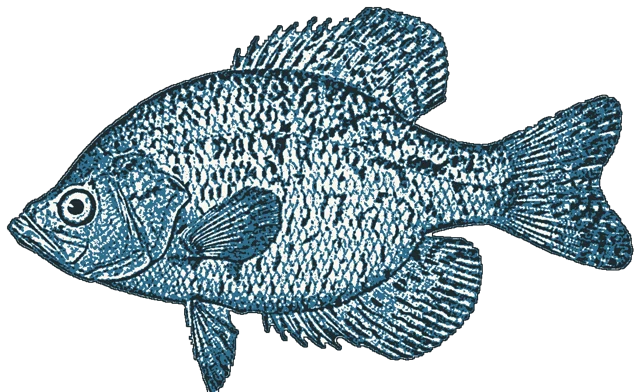 Black crappie
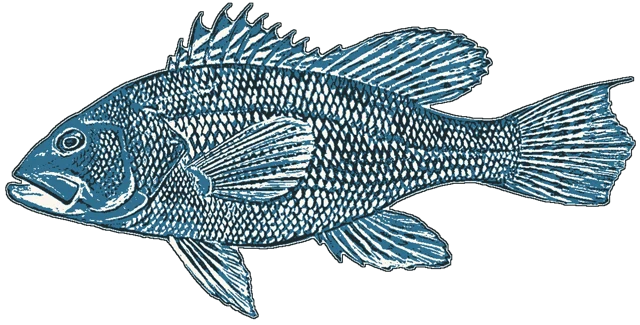 Black sea bass
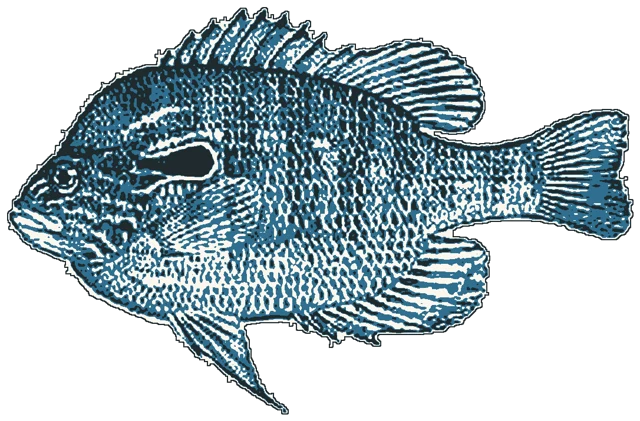 Bluegill“bluegill sunfish”
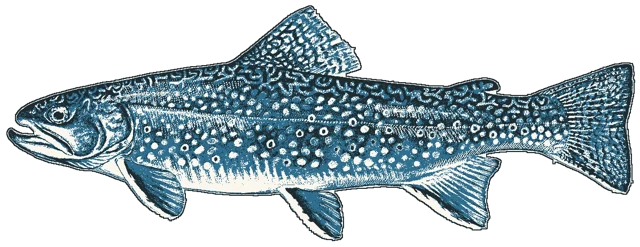 Brook trout“brookie”
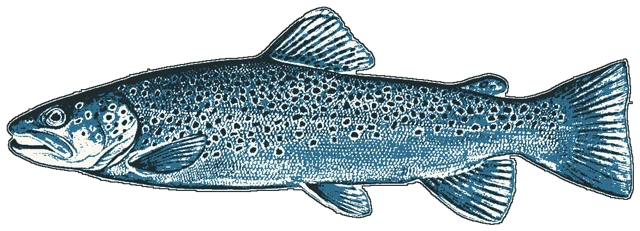 Brown trout
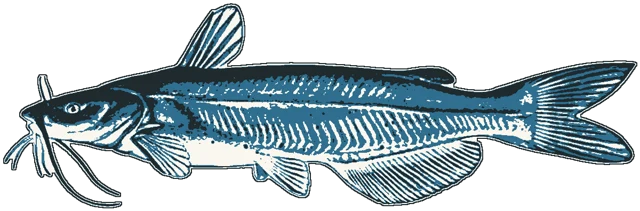 Channel catfish
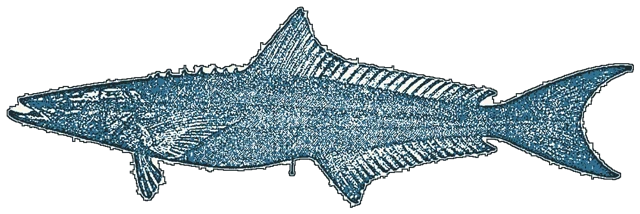 Cobia
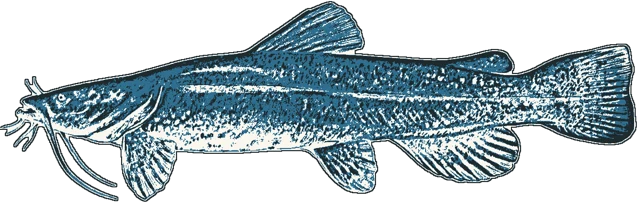 Flathead catfishHybrid striped bass
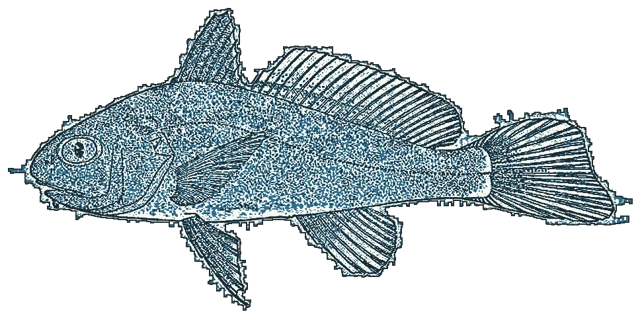 Kingfish (whiting)“northern kingfish”Landlocked Atlantic salmon
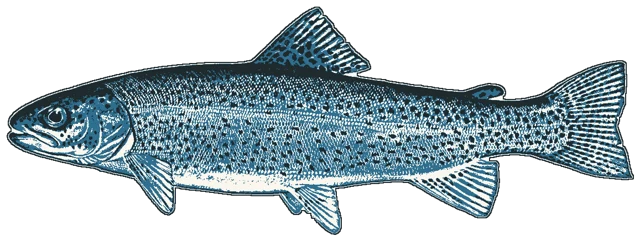 Rainbow trout
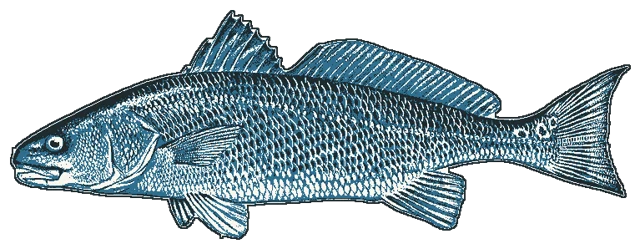 Red drum“redfish”
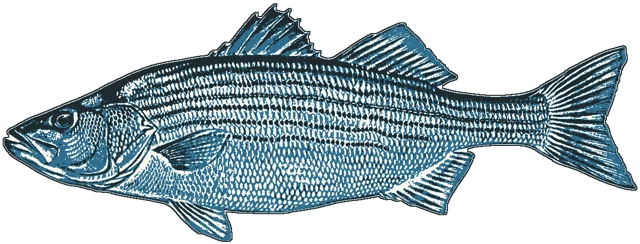 Striped bass“striper”
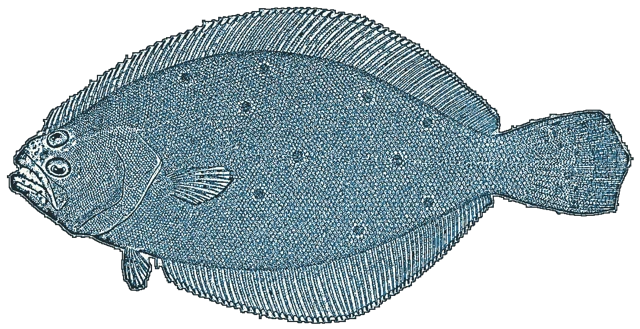 Summer flounder“fluke”Tautog“blackfish”
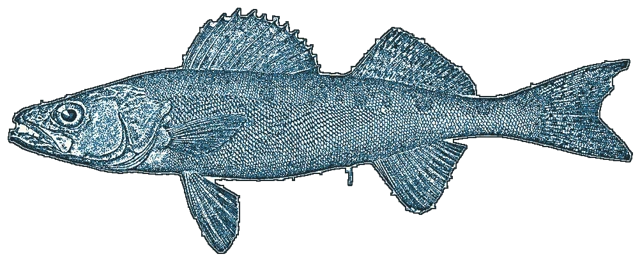 Walleye
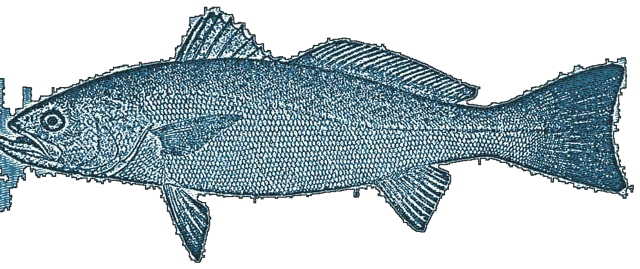 WeakfishWhite catfish
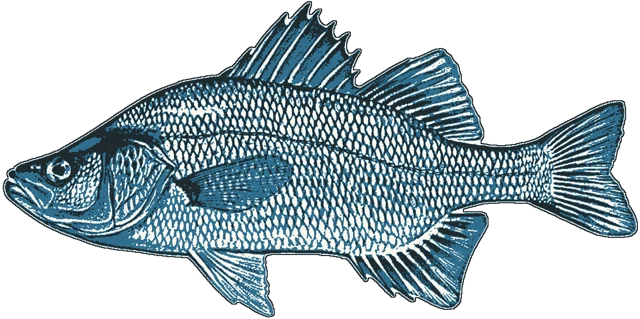 White perchWinter flounder
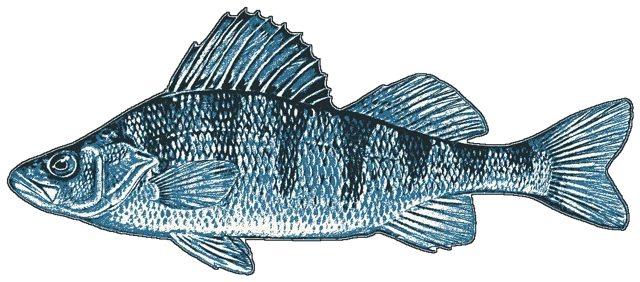 Yellow perch
Just OK20
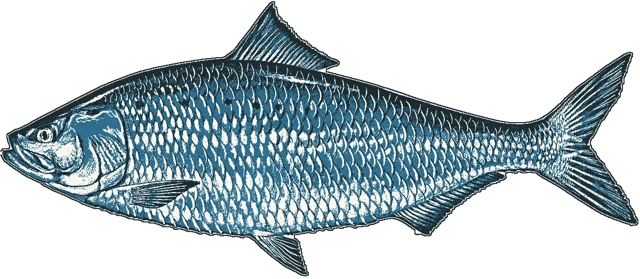 American shad
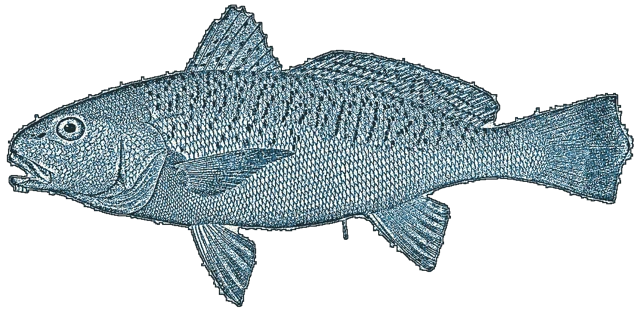 Atlantic croaker
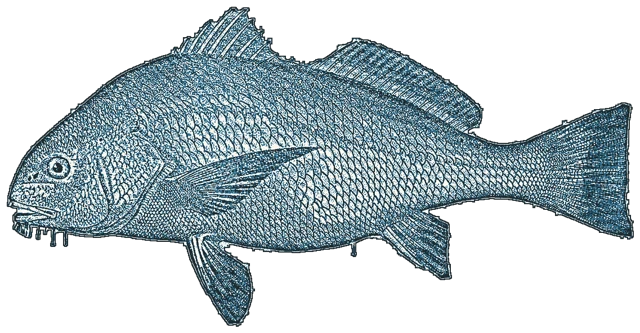 Black drum
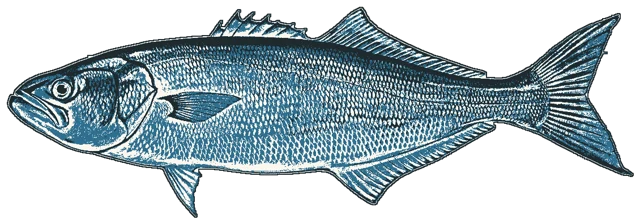 Bluefish“blues”
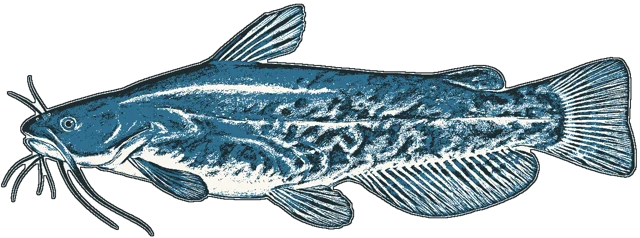 Bullhead (black, brown, yellow)
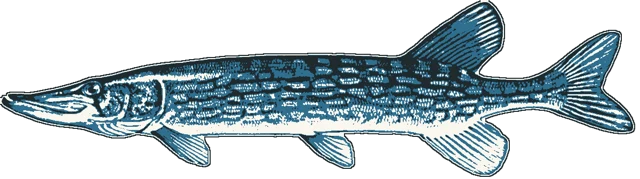 Chain pickerel
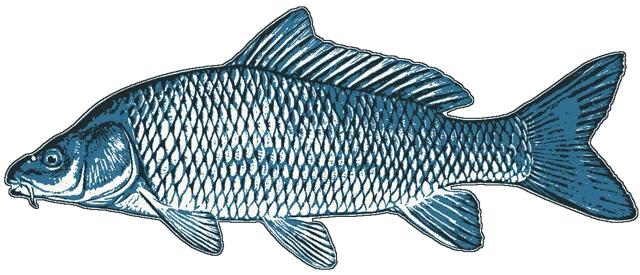 Common carpCunnerLake trout“laker”
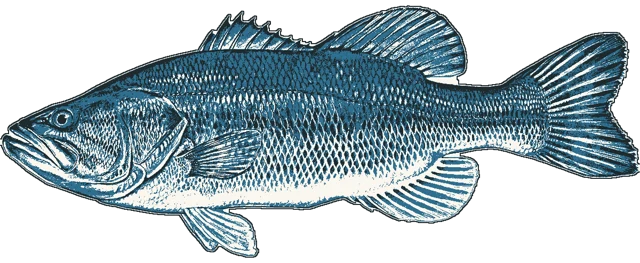 Largemouth bass“black bass”
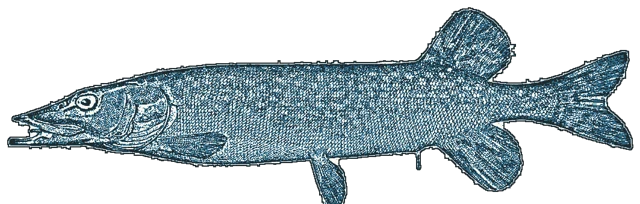 Northern pike
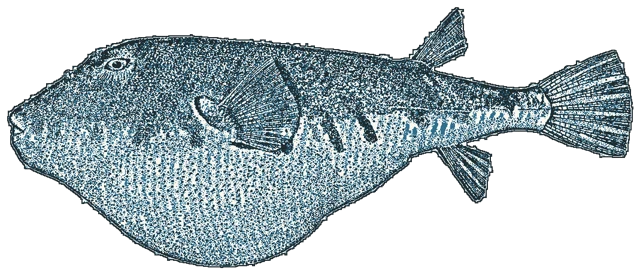 Northern puffer“blowfish”Northern snakeheadRed hake“ling”Rock bassScup“porgy”
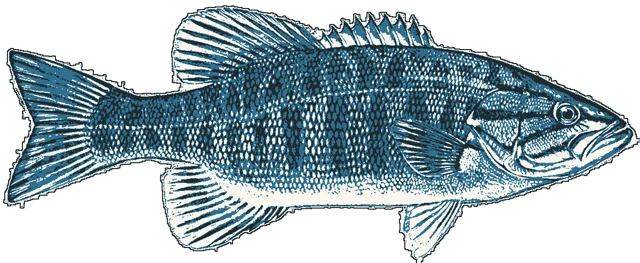 Smallmouth bassSmooth dogfish“smoothie”
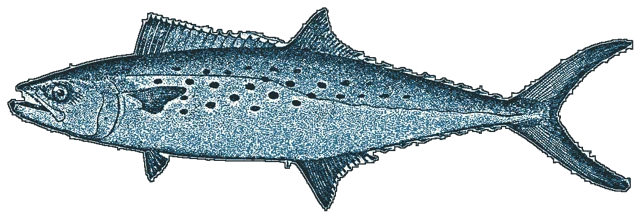 Spanish mackerel
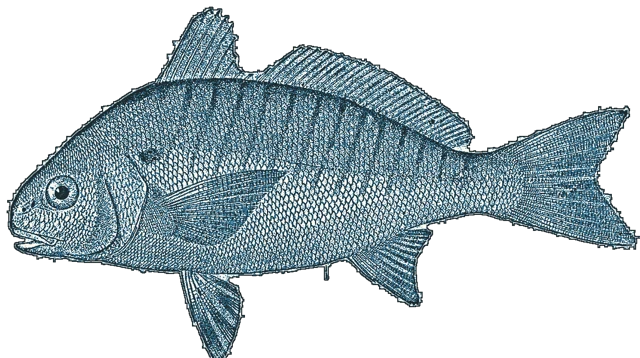 Spot“spots”
Garbage fish10
Catch & release
What’s actually caught in New Jersey
NOAA Marine Recreational Information Program (MRIP) estimates for New Jersey, averaged over 2023, 2024 and 2025 and counting both kept and released fish. MRIP is a marine (saltwater) survey, so it does not rank freshwater fish. Rows are fish rated on this page. Skates and rays together (clearnose, little, winter and unidentified) averaged about 901,583 a year but are left out of the rows because the largest entry mixes skates with rays; spiny dogfish averaged about 529,309, white perch (a tidal-water catch) about 585,355, striped mullet about 524,398 and oyster toadfish about 196,368. NOAA percent standard errors for total catch are 40 or higher in at least one year for spot, menhaden and several smaller species, and reach 36 for the sea robin records, so the counts are rough. NOAA recalibrated its survey in 2026, so its current query tool may show lower totals, and a different order, than the 2023-2025 estimate files used here.
- Summer flounder Best eating13,039,482 fish a year (2023: 12.50 million, 2024: 13.57 million, 2025: 13.05 million); about 1,070,717 a year kept, 92% released.
- Black sea bass Best eating10,041,485 fish a year (2023: 11.17 million, 2024: 8.33 million, 2025: 10.62 million); about 1,508,572 a year kept, 85% released.
- Tautog Best eating7,354,425 fish a year (2023: 6.57 million, 2024: 6.22 million, 2025: 9.27 million); about 380,906 a year kept, 95% released.
- Striped bass Best eating3,199,323 fish a year (2023: 5.16 million, 2024: 2.85 million, 2025: 1.59 million); about 363,622 a year kept, 89% released.
- Bluefish Just OK1,795,761 fish a year (2023: 2.18 million, 2024: 2.01 million, 2025: 1.19 million); about 348,798 a year kept, 81% released.
- Spot Just OK1,491,192 fish a year (2023: 872,684, 2024: 2.75 million, 2025: 853,925); about 620,744 a year kept, 58% released.
- Sea robin Garbage fish1,446,757 fish a year (2023: 1.10 million, 2024: 1.60 million, 2025: 1.63 million); about 35,795 a year kept, 98% released. Unidentified sea robins, northern sea robin and striped sea robin combined.
- Atlantic croaker Just OK972,993 fish a year (2023: 1.14 million, 2024: 1.26 million, 2025: 514,658); about 96,019 a year kept, 90% released.
- Smooth dogfish Just OK712,320 fish a year (2023: 426,303, 2024: 1.16 million, 2025: 549,137); about 8,825 a year kept, 99% released.
- Atlantic menhaden Garbage fish642,152 fish a year (2023: 915,861, 2024: 293,666, 2025: 716,928); about 419,429 a year kept, 35% released.
Source: NOAA MRIP . Saltwater only: it does not survey freshwater fishing.
Fish by fish
Why each one sits where it does, the current New Jersey limits, and the bait that works.
Black crappie
Pomoxis nigromaculatus · Freshwater
One of the classic fish-fry fish: MeatEater counts crappie among the best-eating fish in freshwater.
- Tastes
- mild, sweet, delicate, flaky, white
- Limits
- Light regs. Statewide: 8 in minimum, 10 per day (black and white crappie combined), open year-round. Greenwood Lake: 8 in, 10 per day. (2026 freshwater digest (eRegulations page updated Sept 23, 2026)) Source
- Best months
- October to April, with November and March the two best months (NJDEP).
- Where
- Pompton Lake (state record 4 lb 8 oz, 1996).
- small plastic or hair jigs
- minnows
- killifish
- small shiners
- worms
- twister tail grubs
- 2026 Fish Smart, Eat Smart: do not eat any fish from Bound Brook (Somerset County, including Spring Lake) or the tidal Passaic River.
- Lake Musconetcong one meal per year, Union Lake four meals per year, Hammonton Lake and the Mullica River from Green Bank to Batsto one meal per month (high-risk individuals do not eat from any of these).
- Delaware and Raritan Canal at Lambertville one meal per month for everyone; Strawbridge Lake high-risk one meal per year; other listed waters differ.
- Fresh waters and fish that are not listed: one meal per week, high-risk one meal per month.
Black sea bass
Centropristis striata · Saltwater
Mild, delicate, firm white fillets; Maine Sea Grant calls it popular for its firm texture and mild, slightly sweet flavor.
- Tastes
- mild, fresh, delicate, tender but firm
- Limits
- Heavy regs. 12.5 in minimum, measured snout to the end of the central tail. Per person per day: 10 fish May 15 to June 21; 1 fish June 22 to Sept 22; 10 fish Sept 23 to Oct 31; 15 fish Nov 1 to Dec 31. Closed Jan 1 to May 14. These limits apply to any sea bass possessed in state waters or landed in New Jersey; NOAA uses state rules in place of federal sea bass limits in 2026, and vessels follow the rules of the state where they land. (2026 marine digest (eRegulations page updated Oct 5, 2026); same numbers on the Division's 2026 seasons chart and Attention Anglers sheet (March 2026)) Source
- Best months
- May through November (tips table); December wreck trips for jumbo sea bass on party boats (open through Dec 31).
- Where
- Bays and ocean (tips table); offshore wrecks and rock piles, including party-boat wreck trips from Point Pleasant south to Cape May in December; state record 9 lb (2015).
- clams on a double-hook sea bass rig
- heavy jigs
- 2026 Fish Smart, Eat Smart: do not eat any finfish from the tidal Passaic River.
- Delaware River Estuary (state line to the C&D Canal, all finfish) three meals per year, high-risk individuals do not eat.
- Not on the statewide coastal list.
- Barnegat Bay near the Metedeconk River one meal per week for everyone; Egg Harbor Reef and Sea Girt Reef no restrictions for the general population, high-risk individuals one meal per week.
Bluegill
Lepomis macrochirus · also called bluegill sunfish, sunfish · Freshwater
MeatEater calls the flesh light, delicate and sweet; the original fish-fry panfish.
- Tastes
- mild, sweet, firm, flaky
- Limits
- Light regs. Bluegill, pumpkinseed and redbreast sunfish: no minimum size, 25 per day combined with the perch, bullhead, white catfish, sucker, carp, bowfin and eel group, open year-round. Blackbanded, mud, banded and bluespotted sunfish are protected and may not be taken; green sunfish must be destroyed. Greenwood Lake: no minimum, 50 per day combined. Rainbow Lake and Ryker Lake follow the statewide rule. (2026 freshwater digest (eRegulations page updated Sept 23, 2026)) Source
- Best months
- Winter ice season.
- Where
- Lakes and ponds statewide; the state record bluegill (3 lb) came from a farm pond in Pennington (1990).
- small jigs tipped with spikes
- 2026 Fish Smart, Eat Smart: do not eat any fish from Bound Brook (Somerset County, including Spring Lake) or the tidal Passaic River.
- One meal per year (high-risk individuals do not eat): Pine Lake (pumpkinseed too), Big Pine Lake and Oakford Lake.
- Delaware River Estuary (state line to the C&D Canal, all finfish) three meals per year (high-risk do not eat).
- Four meals per year (high-risk do not eat): Pompton River, Mantua Creek, the Passaic River from Elmwood Park to Dundee Lake, Cranberry Bog Reservoir, and Paulinskill, Greenwich, Mirror, Peddie and Stewart lakes; pumpkinseed from Little Pine Lake and Woodbury Creek; redbreast from the Musconetcong River near Shurts Road.
- One meal per month (high-risk do not eat): East Creek Pond and Wilson Lake (pumpkinseed too).
- One meal per week (high-risk do not eat): Canistear Reservoir and Hammonton, Manahawkin and Union lakes (pumpkinseed too at Union); pumpkinseed from the Ramapo River at Pompton/Wayne.
Meal limits and other waters (4)
- One meal per month: Aeroflex, Assunpink, Cranberry, Deal, Hopatcong, Horicon, Mercer and Newton lakes, Manasquan and Round Valley reservoirs, Whites Pond, Salem Canal, Salem River, D&R Canal at Lambertville, Point Mountain Trout Conservation Area (redbreast too) and Pennsauken Creek (high-risk four per year); pumpkinseed from Forge Pond, Mantua Creek, Delaware River at Woodbury Creek/Fort Mifflin and Passaic River at Fair Lawn; redbreast from Big Timber Creek, D&R Canal at West Trenton and the Musconetcong near New Hampton Road.
- Redbreast from the Pompton River and the Passaic River from Elmwood Park to Dundee Lake one meal per week (high-risk four per year).
- High-risk one meal per month: Branch Brook Park, DOD, Elmer, Green Turtle, Milton, Parvin, Prospertown (pumpkinseed too) and Wawayanda lakes, Evans and Saw Mill ponds, Oak Ridge Reservoir, Maurice River below Millville, Passaic River from Route 280 to Two Bridges (redbreast too) and Rancocas Creek at Riverside; pumpkinseed from Audrey, Barnegat, Carasaljo and Manahawkin lakes, Great Egg Harbor River and Pennsauken Creek; redbreast from Clinton Reservoir, Sheppard Pond, Passaic River at Woodland Park and Ramapo River at Pompton/Wayne.
- Statewide freshwater (bluegill, pumpkinseed, redbreast) no restrictions, high-risk one meal per week, though more than 20 listed waters limit everyone to one meal per week; Pinelands no restrictions, high-risk one meal per month.
Brook trout
Salvelinus fontinalis · also called brookie · Freshwater
Often called the tastiest trout: MeatEater describes the meat as light and delicate with an almost sweet flavor.
- Tastes
- sweet, delicate, light, delicate
- Limits
- Heavy regs. All brook trout caught in the Brook Trout Conservation Zone (all waters west of I-287 and north of Rt. 202, up to but not including the Delaware River) must be released unharmed immediately. Outside the zone the general trout rules apply: 9 in minimum, 2 trout per day combined (6 from opening day to May 31). Native Brook Trout Streams (Beatty's Brook, Bear Swamp Brook, Rinehart Brook, Trout Brook and others on the digest page): brook trout catch and release; 2 brown or rainbow trout combined from Apr 11 at 8 a.m. to Sept 15 and catch and release at all other times; fishing allowed year-round, artificials only, barbless. A trout stamp is required with the fishing license to fish for or possess trout and salmon. (2026 freshwater digest (eRegulations page updated Sept 23, 2026)) Source
- Best months
- Early spring through May, while the water stays cool; wild trout streams offer year-round action (NJDEP).
- Where
- Northwest highlands streams inside the Brook Trout Conservation Zone; the state record brook trout (7 lb 3 oz, 1995) came from the Rockaway River.
- small spinners
- small spoons
- night crawlers
- meal worms
- salmon eggs
Before you eat it: 2026 Fish Smart, Eat Smart: do not eat any fish from Bound Brook (Somerset County, including Spring Lake) or the tidal Passaic River. Statewide freshwater trout (brown, brook, rainbow, hybrids), one meal per week for everyone.
Brown trout
Salmo trutta · Freshwater
Good trout eating like rainbows; most kept browns are stocked fish.
- Tastes
- mild to rich, flaky
- Limits
- Heavy regs. Same river, lake and pond season and limit schedule as rainbow trout (9 in minimum). Brown trout have a 12 in minimum on the Wild Brown Trout Managed stretches (Hakihokake Creek, Lopatcong Creek, Pequannock River Rt. 23 at Smith Mills to the railroad trestle below Appelt Park, Pophandusing Creek, Raritan South Branch, Saddle River) and the Wild Brown Trout Enhancement Streams; on those managed stretches only 2 of the 6 trout kept from Apr 11 to May 31 may be brown. Round Valley and Merrill Creek reservoirs: 15 in, 2 trout combined, open year-round. Trout Conservation Areas 15 in, 1 per day (Apr 11 to May 24 at the Seasonal areas: 9 in, 6; all are catch and release only from Mar 23 to opening day, Apr 11 at 8 a.m.). Wild Trout Streams are artificials only, barbless, 2 brown or rainbow combined Apr 11 at 8 a.m. to Sept 15 and catch and release at all other times; Catch and Release Areas are catch and release, artificials only. Delaware River 5 trout per day, no minimum, Apr 18 at 8 a.m. to Oct 15. A trout stamp is required with the fishing license to fish for or possess trout and salmon. (2026 freshwater digest (eRegulations page updated Sept 23, 2026)) Source
- Best months
- Early spring through May, while the water stays cool enough for trout (NJDEP).
- Where
- Round Valley Reservoir (state record 21 lb 6 oz, 1995), Merrill Creek Reservoir, the Pequannock, Raritan South Branch and other wild brown trout streams listed on the digest page.
- night crawlers
- shiners
- meal worms
- salmon eggs
- minnow-style crankbaits
- 2026 Fish Smart, Eat Smart: do not eat any fish from Bound Brook (Somerset County, including Spring Lake) or the tidal Passaic River.
- Musconetcong River near Shurts Road overpass, and the unnamed tributary there: brown trout four meals per year (high-risk individuals do not eat).
- Point Mountain Trout Conservation Area one meal per month for everyone.
- Statewide freshwater trout, one meal per week for everyone.
- Raritan River South Branch at Flemington and Long Valley, and the Lamington River, no restrictions (high-risk one meal per week).
Channel catfish
Ictalurus punctatus · Freshwater
Very good to eat (Maryland DNR) and delicious when cooked (TPWD), and the basis of US catfish farming.
- Tastes
- mild, sweet, firm, moist
- Limits
- Heavy regs. Statewide: 12 in minimum, 5 per day, open year-round. Delaware River mainstem and Greenwood Lake: 12 in, 5 per day. Bow and arrow fishing for catfish is allowed with a license; size and creel limits still apply. (2026 freshwater digest (eRegulations page updated Sept 23, 2026)) Source
- Best months
- Early spring to early fall; summer is the most consistent, and night is best (NJDEP).
- Where
- Lake Hopatcong (state record 33 lb 3 oz, 1978), Round Valley Reservoir, the Delaware River.
- night crawlers
- chicken liver
- cut bait (gizzard shad)
- stink baits
- cheese baits
- 2026 Fish Smart, Eat Smart: do not eat any fish from Bound Brook (Somerset County, including Spring Lake) or the tidal Passaic River.
- High-risk individuals do not eat from any of these: lower Delaware River tidal section (Trenton to the Pennsylvania line) one meal per year; Delaware Estuary and Bay three meals per year; Delaware River Phillipsburg to Trenton and Big Timber, Little Timber, Oldmans and Woodbury creeks four meals per year; D&R Canal, Raritan Bay Complex, Maurice River below Millville, and Crosswicks, Fenwick, Pennsauken and Rancocas (Riverside) creeks one meal per month; Great Egg Harbor River one meal per week.
Meal limits and other waters (2)
- One meal per month for everyone: Round Valley Reservoir, Mantua Creek, Delaware River at Phillipsburg/Easton, Millstone River at Manville and Raritan River at the Millstone confluence.
- Fresh waters and fish that are not listed: one meal per week, high-risk one meal per month.
Cobia
Rachycentron canadum · Saltwater
Firm, white, sweet meat; TPWD calls it an exceptionally fine food fish.
- Tastes
- sweet, rich, firm, lean, moist
- Limits
- Heavy regs. No closed season, 43 in minimum, 1 per person per day and 2 per vessel. (2026 marine digest (eRegulations page updated Oct 5, 2026); same numbers on the Division's Attention Anglers sheet (March 2026)) Source
- Best months
- August, around the bunker pods (On The Water reports, Aug 14 and 21, 2025).
- Where
- The state record is 90 lb 6 oz from McCries Shoal (2019).
- live eels
- live menhaden
- live pinfish
- bucktail jig
- crabs
- large spoon
- Cobia is not named in the 2026 Fish Smart, Eat Smart guide, but its all-finfish rows apply: do not eat any finfish from the tidal Passaic River, and no more than three meals per year from the Delaware River Estuary (state line to the C&D Canal), where high-risk individuals do not eat any.
- The guide says an unlisted fish is not necessarily free of contamination.
Flathead catfish
Pylodictis olivaris · Freshwater
Widely considered the best-tasting catfish because it eats live fish instead of scavenging; Maryland DNR notes its mild, white flesh.
- Tastes
- mild, clean, firm, white
- Limits
- No limits. Potentially Dangerous Fish: no minimum size, no daily limit, open year-round. Possession or release of a live flathead catfish is prohibited and anglers must destroy it if they catch it. Bow and arrow fishing for catfish is allowed with a license. Blue catfish are on the same list. (2026 freshwater digest (eRegulations page updated Sept 23, 2026)) Source
- Best months
- Midsummer, after dark (On The Water).
- Where
- Delaware River (most reports come from Riegelsville to Lambertville), the Delaware and Raritan Canal and the Raritan River via the canal.
- live small to medium sunfish
- 2026 Fish Smart, Eat Smart: do not eat any fish from Bound Brook (Somerset County, including Spring Lake) or the tidal Passaic River.
- Delaware and Raritan Canal at Lambertville and Big Timber Creek four meals per year (high-risk individuals do not eat).
- Delaware River Estuary (state line to the C&D Canal, all finfish) three meals per year (high-risk do not eat).
- Lower Delaware River tidal section (listed with a Pennsylvania public health advisory), Rancocas Creek at Riverside and Raritan River at the Millstone confluence one meal per month for everyone; Raritan Bay Complex one meal per week (high-risk one meal per month).
- Fresh waters and fish that are not listed: one meal per week, high-risk one meal per month.
Hybrid striped bass
Morone saxatilis x M. chrysops · Freshwater
Indiana DNR says hybrids make great table fare; mild white fillets like a striper's.
- Tastes
- mild, firm, white
- Limits
- Heavy regs. Statewide freshwater: 16 in minimum, 2 per day, open year-round. Raritan River downstream of the Duke Island Park dam: Mar 1 to Dec 31, one fish 28 to 31 in, 1 per day, non-offset circle hooks with bait. Delaware River upstream of the Calhoun St. Bridge: Mar 1 to Dec 31, 28 to 31 in, 1; downstream, Mar 1 to 31 and June 1 to Dec 31. In all marine waters hybrids follow the striped bass rule (28 to 31 in, 1 per day). The digest says the Raritan River rule may change during 2026. (2026 freshwater digest (eRegulations page updated Sept 23, 2026)) Source
- Best months
- Mid-spring into early fall; summer is best, and August at Spruce Run Reservoir (NJDEP).
- Where
- Monksville Reservoir (state record 17 lb 12 oz, 2023). State advisory sampling also lists hybrids in Cranberry Lake, Spruce Run Reservoir and the tidal Delaware River.
- herring (where baitfish rules allow)
- shiners
- minnow-style crankbaits
- topwater spooks and poppers
- night crawlers
- chicken liver
- 2026 Fish Smart, Eat Smart: do not eat any fish from Bound Brook (Somerset County, including Spring Lake) or the tidal Passaic River.
- Delaware River Estuary (state line to the C&D Canal, all finfish) three meals per year (high-risk individuals do not eat).
- Spruce Run Reservoir one meal per month for everyone; Cranberry Lake one meal per week (high-risk one meal per month); lower Delaware River tidal section (Trenton to the Pennsylvania line) no restrictions (high-risk one meal per week).
- Not on the statewide freshwater list (general advice for fresh waters is one meal per week, high-risk individuals one meal per month).
Kingfish (whiting)
Menticirrhus spp. (M. americanus, M. littoralis, M. saxatilis) · also called northern kingfish · Saltwater
Firm, white, mild fillets with good flavor; small, but no smaller than the bluegill and crappie we also rate best. Fried whole or filleted, it's the Carolinas' favorite pier fish ("sea mullet" in NC).
- Tastes
- mild, sweet, firm, white
- Limits
- No limits. No closed season, minimum size or possession limit: the state marine code lists "No Limit" for kingfish, and the 2026 digest table sets none. Under the wanton waste rule, any fish purposely killed counts toward the angler's possession and may not be returned to the water. (2026 marine digest (eRegulations page updated Oct 5, 2026)) Source
- Best months
- July through September.
- Where
- Surf, bays and ocean (tips table); Island Beach and Cape May surf; the state record northern kingfish is 2 lb 8 oz from Barnegat Bay (2004).
- bloodworm
- squid
- Fishbites
- Gulp
Before you eat it: Kingfish is not named in the 2026 Fish Smart, Eat Smart guide, but its all-finfish rows apply: do not eat any finfish from the tidal Passaic River, and no more than three meals per year from the Delaware River Estuary (state line to the C&D Canal), where high-risk individuals do not eat any.
Landlocked Atlantic salmon
Salmo salar (landlocked) · Freshwater
The same species as farmed Atlantic salmon, whose flesh NOAA describes as buttery and rich; landlocked fish are a kept-and-eaten gamefish in northern New England.
- Tastes
- rich, buttery, firm, pink
- Limits
- Heavy regs. Merrill Creek Reservoir: landlocked Atlantic salmon count with brown and rainbow trout, 15 in minimum, 2 combined, open year-round. Holdover Trout Lakes stocked with salmon (Lake Aeroflex, Lake Wawayanda, Tilcon Lake): landlocked Atlantic salmon 12 in minimum, 2 per day, open year-round. A trout stamp is required with the fishing license to fish for or possess trout and salmon. (2026 freshwater digest (eRegulations page updated Sept 23, 2026)) Source
- Best months
- After ice-out near the surface; fall along shorelines and stream mouths (NJDEP).
- Where
- Merrill Creek Reservoir (state record 8 lb 10 oz, 2021) and the salmon-stocked holdover lakes Lake Aeroflex, Lake Wawayanda and Tilcon Lake.
- golden shiners
- alewife herring (where baitfish rules allow)
- crankbaits
- spoons
- streamer flies
Before you eat it: 2026 Fish Smart, Eat Smart: do not eat any fish from Bound Brook (Somerset County, including Spring Lake) or the tidal Passaic River. General advice for fresh waters is one meal per week, high-risk individuals one meal per month; landlocked salmon is not named in the guide.
Rainbow trout
Oncorhynchus mykiss · Freshwater
TPWD calls rainbow trout an excellent fish to eat; the most-stocked put-and-take fish in America.
- Tastes
- mild, clean, delicate, flaky
- Limits
- Heavy regs. Dates are for 2026; opening day is the second Saturday in April. Rivers and streams (9 in minimum): 2 per day Jan 1 to Mar 22; trout-stocked ones closed to all fishing for all species Mar 23 to Apr 11 at 8 a.m. (streams that are not stocked stay open, with all trout released); 6 per day Apr 11 at 8 a.m. to May 31; 2 per day June 1 to Dec 31. Lakes and ponds (9 in minimum) are open year-round: 2 per day to Apr 11 at 8 a.m., 6 per day Apr 11 to May 31, 2 per day June 1 to Dec 31. Exceptions: Trout Conservation Areas 15 in, 1 per day (Year Round areas on the Musconetcong and Toms rivers: artificial lures and flies only, no bait or bait scent; Seasonal areas on the Pequannock and Pequest rivers: same limits except Apr 11 to May 24, 9 in, 6 per day, no gear limits; all are catch and release only from Mar 23 to opening day, Apr 11 at 8 a.m., and the Seasonal areas are closed to fishing from 12:01 to 8 a.m. that day); Catch and Release Areas (Big Flat Brook, Rt. 206 bridge to Roy Bridge; Raritan South Branch in Ken Lockwood Gorge) catch and release, artificials, barbless; Wild Trout Streams 2 brown or rainbow combined from Apr 11 at 8 a.m. to Sept 15, catch and release at all other times, artificials only, barbless; Round Valley and Merrill Creek reservoirs 15 in, 2 combined, open year-round; Holdover Trout Lakes 9 in, 4 per day Apr 11 to May 31 and 2 per day the rest of the year (the digest's general trout page says trout are catch and release there in the three weeks before opening day); Delaware River 5 per day, no minimum, Apr 18 at 8 a.m. to Oct 15. Spring in-season stocking closes listed waters 5 a.m. to 5 p.m. on stocking dates. A trout stamp is required with the fishing license to fish for or possess trout and salmon. (2026 freshwater digest (eRegulations page updated Sept 23, 2026)) Source
- Best months
- April through May after spring stocking (opening day is the second Saturday in April), then from mid-October when fall stocking starts (Oct 13 in 2026).
- Where
- Trout-stocked rivers, streams, lakes and ponds statewide, listed by county on the digest page; Round Valley and Merrill Creek reservoirs hold trout year-round; the state record rainbow (13 lb, 1988) came from Lake Hopatcong.
- earthworms or night crawlers
- meal worms
- salmon eggs
- PowerBait
- minnows
- small spinners
- 2026 Fish Smart, Eat Smart: do not eat any fish from Bound Brook (Somerset County, including Spring Lake) or the tidal Passaic River.
- Musconetcong River near Shurts Road overpass one meal per month for everyone.
Meal limits and other waters (2)
- Statewide freshwater (all waters except the Pinelands) trout (brown, brook, rainbow, hybrids), one meal per week for everyone, the limit also listed for the Musconetcong near New Hampton Road overpass and in the Point Mountain Trout Conservation Area.
- Merrill Creek Reservoir rainbow trout no restrictions (high-risk individuals one meal per week).
Red drum
Sciaenops ocellatus · also called redfish · Saltwater
Slot-size reds are firm, mild, white-fleshed fish that anglers keep specifically to eat; blackened redfish made the species famous.
- Tastes
- mild, slightly sweet, firm, moist, large flakes; coarse in big fish
- Limits
- Heavy regs. No closed season, 18 in to less than 27 in (slot), 1 per person per day. Federal waters (3 to 200 nautical miles): no recreational harvest. (2026 marine digest (eRegulations page updated Oct 5, 2026); same numbers on the Division's Attention Anglers sheet (March 2026)) Source
- Best months
- Fall, in the surf (On The Water).
- Where
- Great Bay produced the state record (55 lb, 1985).
- soft-plastic minnows on jigheads
- live bait on fishfinder or high-low rigs
- spoons
- Slot-size fish eat best; large 'bull reds' are coarse and are usually released.
Before you eat it: Red drum is not named in the 2026 Fish Smart, Eat Smart guide, but its all-finfish rows apply: do not eat any finfish from the tidal Passaic River, and no more than three meals per year from the Delaware River Estuary (state line to the C&D Canal), where high-risk individuals do not eat any.
Striped bass
Morone saxatilis · also called striper · Saltwater
Firm, large-flaked, slightly sweet white meat; one of the most kept and eaten gamefish in the country, fresh or salt.
- Tastes
- mild, slightly sweet, firm, large flakes
- Limits
- Heavy regs. Atlantic Ocean 0 to 3 nautical miles: no closed season, 28 to 31 in, 1 per person per day. All other marine waters (bays and tidal rivers): Mar 1 to Dec 31, 28 to 31 in, 1. Federal waters (3 to 200 nautical miles): prohibited. Delaware River and tributaries upstream of the Calhoun St. Bridge: Mar 1 to Dec 31, 28 to 31 in, 1; Calhoun St. Bridge to the Salem River: Mar 1 to 31 and June 1 to Dec 31. Freshwater (statewide): Mar 1 to Dec 31, one fish 28 to 31 in. Striped Bass Bonus Program permit holders may also keep one fish 24 to under 28 in per permit, May 15 to Dec 31, with harvest reported within 24 hours and a fishing log due Jan 15, 2027 (allocation 200,798 lb; applications for 2026 are closed). Non-offset circle hooks are required with bait; gaffs are illegal; sale is prohibited. (2026 marine digest (eRegulations page updated Oct 5, 2026); same numbers on the Division's 2026 seasons chart and Attention Anglers sheet (March 2026)) Source
- Best months
- March through December; surf run in the fall peaks in November (Monmouth County beaches from late September, Ocean County by late October).
- Where
- Surf, bays and ocean (tips table); Raritan Bay, Sandy Hook and the beaches down to Island Beach State Park in spring; state record 51 lb from the Great Egg Harbor River (2002).
- fresh clams
- bunker chunks or live bunker
- mullet
- plugs, metal lures and soft-plastic sand eels
- Consumption advisories for striped bass vary from state to state (NOAA).
- 2026 Fish Smart, Eat Smart: do not eat any from the tidal Passaic River.
- Mantua Creek one meal per year; Delaware Estuary and Bay three meals per year; Newark Bay Complex, Hudson River, lower Delaware River tidal section, Rancocas Creek at Riverside, the Mullica River from Green Bank to Batsto and the Delaware River from Phillipsburg to Trenton four meals per year; Maurice River below Millville one meal per month (high-risk individuals do not eat from any of these).
- Statewide coastal waters, including Raritan Bay and Sandy Hook Bay, one meal per month, high-risk individuals (infants, children, pregnant and nursing women, women of childbearing age) do not eat.
- Delaware River at Phillipsburg/Easton and Forge Pond one meal per month for everyone; Columbia Lake one meal per week (high-risk one meal per month).
Summer flounder
Paralichthys dentatus · also called fluke · Saltwater
Delicate, fine-flaked white fillets; one of the most sought-after table fish from New England to North Carolina.
- Tastes
- delicate, mild, flaky and fine
- Limits
- Heavy regs. State waters: May 4 to Sept 25, 18 in minimum, 3 per person per day. Delaware Bay and tributaries (west of the COLREGS line): 17 in, 3. Island Beach State Park shore fishing (with a dated park entry receipt): 16 in, 2. Closed Sept 26 to May 3. One legal fluke may be filleted for bait if the rack stays intact. These limits apply to any fluke possessed in state waters or landed in New Jersey; NOAA has waived the federal fluke limits for 2026 and 2027, so vessels follow the rules of the state where they land. (2026 marine digest (eRegulations page updated Oct 5, 2026); same numbers on the Division's 2026 seasons chart and Attention Anglers sheet (March 2026)) Source
- Best months
- May through September (the season).
- Where
- Surf, bays and ocean; reefs and wrecks 20 to 25 miles off Cape May in late summer; Island Beach State Park surf, Shrewsbury and Navesink rivers, Cape May and Fortescue reef sites; state record 19 lb 12 oz off Cape May (1953).
- live killies (mummichogs)
- squid strips
- spearing
- Berkley Gulp on bucktails or jigs
- 2026 Fish Smart, Eat Smart: do not eat any finfish from the tidal Passaic River.
- Delaware River Estuary (state line to the C&D Canal, all finfish) three meals per year and Newark Bay Complex one meal per month (high-risk individuals do not eat from either).
- Not on the statewide coastal list.
Meal limits and other waters (2)
- One meal per week for everyone in the Raritan Bay Complex, Sandy Hook Bay and Lower Bay, Atlantic Ocean from Sandy Hook to Sea Bright, Absecon Bay near the Absecon River and the Upper Bay.
- The guide names fluke and flounder as lower-contaminant choices.
Tautog
Tautoga onitis · also called blackfish · Saltwater
Northeast anglers prize its tasty meat (ASMFC).
- Tastes
- mild, sweet (shellfish diet), firm, white
- Limits
- Heavy regs. 15 in minimum. Per person per day: 4 fish Jan 1 to Feb 28; 4 fish Apr 1 to Apr 30; 1 fish Aug 1 to Nov 15; 5 fish Nov 16 to Dec 31. Closed Mar 1 to 31 and May 1 to July 31. (2026 marine digest (eRegulations page updated Oct 5, 2026); same numbers on the Division's 2026 seasons chart and Attention Anglers sheet (March 2026)) Source
- Best months
- Aug through mid-Nov from shore and back bays; late Nov and Dec on offshore wrecks; Jan and Feb on deep wrecks; April on inshore wrecks and inlets.
- Where
- Jetties, bridges, inlets, wrecks and artificial reefs.
- green crabs
- fiddler crabs and Asian shore crabs
- Jonah (white-legger), rock and hermit crabs offshore
- clams or shrimp in spring and winter
Before you eat it: Tautog is not named in the 2026 Fish Smart, Eat Smart guide, but its all-finfish rows apply: do not eat any finfish from the tidal Passaic River, and no more than three meals per year from the Delaware River Estuary (state line to the C&D Canal), where high-risk individuals do not eat any.
Walleye
Sander vitreus · Freshwater
Widely rated the best-eating freshwater fish: Maryland DNR calls it one of the best tasting, TPWD an excellent food fish.
- Tastes
- mild, clean, firm, tender, flaky white
- Limits
- Heavy regs. Statewide: 18 in minimum, 3 per day; open Jan 1 to Feb 28 and May 1 to Dec 31, catch and release only Mar 1 to Apr 30. Delaware River mainstem: 18 in, 3 per day, open year-round. Greenwood Lake: same season and limit as the statewide rule. (2026 freshwater digest (eRegulations page updated Sept 23, 2026)) Source
- Best months
- Winter ice season at Swartswood Lake; night bite at Greenwood Lake and Lake Hopatcong in July.
- Where
- Swartswood Lake (the Hackettstown Hatchery nets pre-spawn walleye there each spring), Lake Hopatcong, Greenwood Lake, Delaware River (state record 13 lb 9 oz, 1993).
- spoons
- small rattle baits
- jigging minnows (Rapala Jigging Rap)
- blade baits
- night-fishing lures (black bombers)
- 2026 Fish Smart, Eat Smart: do not eat any fish from Bound Brook (Somerset County, including Spring Lake) or the tidal Passaic River.
- Rancocas Creek at Delran four meals per year; Delaware and Raritan Canal at West Trenton and Raritan River at the Millstone confluence one meal per month; Canistear Reservoir one meal per week (high-risk individuals do not eat from any of these).
- Delaware River Estuary (state line to the C&D Canal, all finfish) three meals per year, high-risk do not eat.
- Greenwood Lake and Swartswood Lake one meal per month for everyone; Delaware River Phillipsburg to Trenton two meals per month; other listed waters differ.
- Fresh waters and fish that are not listed: one meal per week, high-risk one meal per month.
Weakfish
Cynoscion regalis · Saltwater
A close cousin of the speckled trout with the same sweet, delicate fillets; ASMFC describes it as known for its delicious taste.
- Tastes
- mild, sweet
- Limits
- Heavy regs. No closed season, 13 in minimum, 1 per person per day. (2026 marine digest (eRegulations page updated Oct 5, 2026); same numbers on the Division's 2026 seasons chart and Attention Anglers sheet (March 2026)) Source
- Best months
- May through November.
- Where
- Surf, bays and ocean (tips table); ocean beach at Sea Bright, jetties and bridges on the Delaware Bay and Cape May side.
- Gulp jerk baits on jig heads
- bloodworm
- Soft flesh; ice immediately and eat fresh.
- 2026 Fish Smart, Eat Smart: do not eat any finfish from the tidal Passaic River.
- Delaware River Estuary (state line to the C&D Canal, all finfish) three meals per year, high-risk individuals do not eat.
- Raritan Bay Complex one meal per month (high-risk do not eat).
- One meal per week for the general population and one meal per month for high-risk individuals in Barnegat Bay at Manahawkin Bay, the Atlantic Ocean from Sea Isle City to Cape May, and the Delaware Estuary and Bay below the C&D Canal.
White catfish
Ameiurus catus · Freshwater
Maryland DNR says white catfish are very good to eat; a mid-size cat with the same mild fillets as channel cats.
- Tastes
- mild, firm, moist
- Limits
- Light regs. Statewide limit for the sunfish, perch, bullhead, white catfish, white sucker, common carp, bowfin and eel group is 25 per day combined, no minimum size, open year-round (American eel has a 9 in minimum). Freshwater limits apply in tidal waters too. Bow and arrow fishing for catfish is allowed with a license. (2026 freshwater digest (eRegulations page updated Sept 23, 2026)) Source
- Best months
- Early spring to early fall; summer is the most consistent, evenings and nights best (NJDEP).
- Where
- Tidal rivers and lakes statewide; state record 14 lb 4 oz from Dallenbach Pond (2004).
- night crawlers
- chicken liver
- cut bait (gizzard shad)
- stink baits
- cheese baits
- 2026 Fish Smart, Eat Smart: do not eat (everyone) from the Hudson River, or any fish from Bound Brook (Somerset County, including Spring Lake) or the tidal Passaic River.
- Newark Bay Complex one meal per year, Delaware Estuary and Bay three meals per year, tidal Raritan and South rivers four meals per year; Raritan Bay Complex, lower Delaware River tidal section, Maurice River below Millville, Rancocas Creek at Delran and Stewart Lake one meal per month (high-risk individuals do not eat from any of these).
- Pennsauken Creek one meal per month (high-risk one per year); Budd Lake, Mullica River from Green Bank to Batsto and Rancocas Creek at Riverside one meal per month for everyone; Union Lake, Wading River and the Delaware River from the Water Gap to Phillipsburg one meal per week (high-risk do not eat).
- Fresh waters and fish that are not listed: one meal per week, high-risk one meal per month.
White perch
Morone americana · Fresh and salt
Maryland DNR calls it a delectable game fish, and it is a staple panfish in the Chesapeake and a prized ice-fishing catch in New England.
- Tastes
- mild, sweet, firm, flaky
- Limits
- Light regs. Statewide limit for the sunfish, perch, bullhead, white catfish, white sucker, common carp, bowfin and eel group is 25 per day combined, no minimum size, open year-round (American eel has a 9 in minimum). Freshwater limits apply in tidal waters. Greenwood Lake: no limit (under "All Other Species"). (2026 freshwater digest (eRegulations page updated Sept 23, 2026)) Source
- Best months
- January through December (bays).
- Where
- Bays and tidal waters (the digest lists white perch in bays year-round); state record 3 lb 1 oz from Forest Hill Lake (1989).
- grass shrimp
- bloodworms
- worms
- minnows
- spinners
- jigs
- 2026 Fish Smart, Eat Smart: do not eat any fish from Bound Brook (Somerset County, including Spring Lake) or the tidal Passaic River.
- Hudson River one meal per year; Delaware River Estuary (all finfish) three meals per year; Newark Bay Complex, tidal Raritan and South rivers, lower Delaware River tidal section and Salem River four meals per year; Delaware Estuary and Bay below the C&D Canal six meals per year; Crosswicks, Little Timber and Pennsauken creeks one meal per month (high-risk individuals do not eat from any of these).
- Union Lake and Monksville Reservoir one meal per week (high-risk do not eat).
Meal limits and other waters (2)
- One meal per month for everyone: Raritan Bay Complex, Absecon Bay near the Absecon River, Maurice River below Millville, Big Timber, Mantua and Oldmans creeks, Assunpink, Deal, Hopatcong and Stewart lakes and Forge Pond.
- Fresh waters and fish that are not listed: one meal per week, high-risk one meal per month.
Winter flounder
Pseudopleuronectes americanus · Saltwater
Mild, lean, boneless, flaky fillets (NOAA).
- Tastes
- mild, sweet, lean, boneless, flaky
- Limits
- Heavy regs. Mar 1 to Dec 31, 12 in minimum, 2 per person per day. Filleting at sea is prohibited for this and every other flatfish (one legal summer flounder may be filleted for bait). (2026 marine digest (eRegulations page updated Oct 5, 2026); same numbers on the Division's 2026 seasons chart and Attention Anglers sheet (March 2026)) Source
- Best months
- March through May and November through December.
- Where
- Bays and ocean; state record 5 lb 11 oz off Barnegat Light (1993).
- bloodworms
- sea worms
- clams
- mussels
Before you eat it: 2026 Fish Smart, Eat Smart: do not eat any finfish from the tidal Passaic River. Delaware River Estuary (state line to the C&D Canal, all finfish) three meals per year, high-risk individuals do not eat. Raritan Bay Complex and Hudson River, one meal per month for everyone.
Yellow perch
Perca flavescens · Freshwater
A great food fish (MN DNR) and the centerpiece of Great Lakes perch fries; Iowa DNR calls a fried stringer of perch unsurpassed in flavor.
- Tastes
- mild, sweet, firm, flaky, white
- Limits
- Light regs. Statewide limit for the sunfish, perch, bullhead, white catfish, white sucker, common carp, bowfin and eel group is 25 per day combined, no minimum size, open year-round (American eel has a 9 in minimum). Greenwood Lake: no minimum, 50 per day. (2026 freshwater digest (eRegulations page updated Sept 23, 2026)) Source
- Best months
- Winter ice season on Lake Hopatcong.
- Where
- Weed-lined coves and bays of Lake Hopatcong. State advisory sampling also lists yellow perch in Union Lake and Cranberry Lake.
- jigs tipped with mousies or butterworms
- 2026 Fish Smart, Eat Smart: do not eat any from the Atlantic City Reservoir at Pomona (closed to fishing), or any fish from Bound Brook (Somerset County, including Spring Lake) or the tidal Passaic River.
- Little Pine Lake at Browns Mills one meal per year; Wilson Lake, East Creek Pond, Hammonton Lake, Lake Manahawkin and Union Lake one meal per month (high-risk individuals do not eat from any of these).
- Delaware River Estuary (state line to the C&D Canal, all finfish) three meals per year, high-risk do not eat.
- Mantua Creek, Pompton River and Forge Pond one meal per month for everyone; Crater Lake and Lake Nummy one meal per week (high-risk do not eat); Cranberry Lake one meal per week (high-risk one meal per month).
- Fresh waters and fish that are not listed: one meal per week, high-risk one meal per month.
American shad
Alosa sapidissima · Fresh and salt
Some of the best-flavored fish in North America and prized roe, but so bony that most modern anglers do not bother.
Worth a try: Debone, score and deep-fry (Hank Shaw's boneless tempura shad), bake for hours to soften bones, or smoke; the roe sautéed with bacon is a spring classic.
- Tastes
- rich, oily, sweet, soft, extremely bony
- Limits
- Heavy regs. Freshwater: Delaware River mainstem only, 2 per day, no minimum, open year-round; closed in all other fresh waters. Marine waters: Delaware River and tributaries 6 shad per day combined (hickory and American shad, no more than 2 American shad), no closed season; all other marine waters 6 per day with no American shad harvested or possessed. River herring (alewife and blueback) may not be taken or possessed in marine waters, rivers or streams; freshwater lakes in Morris, Passaic, Sussex and Warren counties and Spruce Run Reservoir allow 35 a day, 6 in maximum, kept at the lake. (2026 freshwater digest (eRegulations page updated Sept 23, 2026)) Source
- Best months
- The Delaware River spawning run starts in late March (On The Water); shad will not strike until the water reaches the high 40s and are best at 53 to 58 F.
- Where
- Delaware River; the state record (11 lb 1 oz, 1984) came from the Delaware River, and the marine record (7 lb, 1967) from Great Bay.
- shad darts
- flutter spoons
- flies
- 2026 Fish Smart, Eat Smart: do not eat any fish from Bound Brook (Somerset County, including Spring Lake) or the tidal Passaic River; all finfish from the Delaware River Estuary (state line to the Chesapeake and Delaware Canal) three meals per year, high-risk individuals do not eat.
- American shad is not named in the guide.
Atlantic croaker
Micropogonias undulatus · Saltwater
Good mild meat (LSU Sea Grant rates it very good), but most catches are under half a pound, so yield is low and they are usually fried whole or as small fillets.
- Tastes
- mild, slightly sweet, medium-firm, small flakes
- Limits
- No limits. No closed season, minimum size or possession limit: the state marine code lists "No Limit" for croaker, and the 2026 digest table sets none. Under the wanton waste rule, any fish purposely killed counts toward the angler's possession and may not be returned to the water. (2026 marine digest (eRegulations page updated Oct 5, 2026)) Source
- Best months
- July through October.
- Where
- Surf, bays and ocean (tips table); Delaware Bay beaches west to Fortescue; the state record is 5 lb 8 oz from Delaware Bay (1981).
- bloodworm
- squid
- Fishbites
- Gulp
- Do not eat raw; croaker can pass trematode parasites (TPWD).
Before you eat it: Atlantic croaker is not named in the 2026 Fish Smart, Eat Smart guide, but its all-finfish rows apply: do not eat any finfish from the tidal Passaic River, and no more than three meals per year from the Delaware River Estuary (state line to the C&D Canal), where high-risk individuals do not eat any.
Black drum
Pogonias cromis · Saltwater
Small black drum are good eating, but big fish are coarse and often carry harmless but off-putting spaghetti worms, so the species' reputation is mixed.
Worth a try: Keep fish under about 5 lb (TPWD's cutoff) and skip the bulls. Small black drum fillets are white, mild and firm, and work anywhere redfish does: blackened, fried, or grilled on the half shell. LSU Sea Grant rates food value good, especially smaller fish.
- Tastes
- mild, sweet, firm; coarse in large fish
- Limits
- Heavy regs. No closed season, 16 in minimum, 3 per person per day. (2026 marine digest (eRegulations page updated Oct 5, 2026); same numbers on the Division's Attention Anglers sheet (March 2026)) Source
- Best months
- May and June.
- Where
- Surf and bays (tips table); the state record is 109 lb from Delaware Bay (2008).
- clams on a sliding rig with pyramid sinkers at low tide
- Large fish are coarse and often carry larval tapeworms ('spaghetti worms'); harmless to people but unappetizing (LSU Sea Grant).
Before you eat it: Black drum is not named in the 2026 Fish Smart, Eat Smart guide, but its all-finfish rows apply: do not eat any finfish from the tidal Passaic River, and no more than three meals per year from the Delaware River Estuary (state line to the C&D Canal), where high-risk individuals do not eat any.
Bluefish
Pomatomus saltatrix · also called blues · Saltwater
Rich, oily and strong-tasting, with soft meat that does not freeze well; Hank Shaw calls it about as polarizing a food as there is.
Worth a try: Bleed and ice it, cook it the same day, and trim the dark strip (NOAA). Fresh blues are excellent grilled or smoked, and smoked bluefish pâté is a New England classic (Hank Shaw). Acid such as citrus or tomato cuts the oil.
- Tastes
- rich, full, coarse, moist
- Limits
- Heavy regs. No closed season, no minimum size. 5 per person per day for most anglers; 7 per person on a party or charter vessel that holds a federal party/charter permit and is run by a credentialed operator with a U.S. Coast Guard endorsement. (2026 marine digest (eRegulations page updated Oct 5, 2026); same numbers on the Division's 2026 seasons chart and Attention Anglers sheet (March 2026)) Source
- Best months
- April through December.
- Where
- Surf, bays and ocean (tips table); Raritan Bay and the Island Beach State Park surf; state record 27 lb 1 oz from 5 Fathom Bank (1997).
- bunker chunks
- mullet
- metal lures
- Large bluefish can carry higher mercury and PCBs; some states recommend limited consumption (NOAA).
- Raw fillets freeze poorly; cook or smoke before freezing (Hank Shaw).
- 2026 Fish Smart, Eat Smart: do not eat any finfish from the tidal Passaic River.
- Statewide estuarine and marine waters: high-risk individuals do not eat bluefish of any size; general population six meals per year over 6 lb or 24 in and one meal per month under that.
- Delaware River Estuary (state line to the C&D Canal, all finfish) three meals per year, high-risk do not eat; below the canal and in Delaware Bay, over 20 in three meals per year and under 20 in one meal per month (the statewide high-risk line still applies).
- Newark Bay Complex, and fish under 24 in from the Hudson River: one meal per month (high-risk do not eat).
Bullhead (black, brown, yellow)
Ameiurus melas, A. nebulosus, A. natalis · Freshwater
Sweet, delicious catfish meat, but most are small and many come from warm, muddy water, so many anglers dismiss them.
- Tastes
- mild, sweet, firm, moist
- Limits
- Light regs. Statewide limit for the sunfish, rock bass, perch, bullhead, white catfish, white sucker, common carp, bowfin and eel group is 25 per day combined, no minimum size, open year-round (American eel has a 9 in minimum). Freshwater limits apply in tidal waters. (2026 freshwater digest (eRegulations page updated Sept 23, 2026)) Source
- Best months
- Summer evenings are the most popular time (state brown bullhead page).
- Where
- Lakes, ponds and slow-moving waters statewide; the state record brown bullhead (4 lb 8 oz, 1997) came from Lake of Woods, Fort Dix.
- night crawlers
- chicken liver
- cut fish
- stink baits
- cheese baits
- 2026 Fish Smart, Eat Smart: do not eat any fish from Bound Brook (Somerset County, including Spring Lake) or the tidal Passaic River.
- Pine Lake four meals per year (high-risk individuals do not eat).
- Delaware River Estuary (state line to the C&D Canal, all finfish) three meals per year (high-risk do not eat).
- One meal per month (high-risk do not eat): Union Lake, Cooper River Park Lake, Wilson Lake, East Creek Pond, Hammonton Lake, Double Trouble Lake, Horicon Lake, Harrisville Pond, Lake Oswego and Toms River at Ridgeway Branch.
- One meal per week: Davidson's Mill Pond, Stewart Lake and Ramapo River at Pompton/Wayne (high-risk do not eat), Strawbridge Lake and the Passaic River from Elmwood Park to Dundee Lake (high-risk four per year).
- Brown and yellow bullhead statewide freshwater no restrictions, high-risk one meal per month, though more than 20 other listed waters are one meal per week; Pinelands waters (among them Atsion, Batsto and Willow Grove lakes and Wading River) one meal per week, high-risk do not eat.
- One meal per month: Cooper River at Hopkins Pond (high-risk four per year), Oakford Lake and Rahway River at Valley Road Pond.
Chain pickerel
Esox niger · Freshwater
White, flaky and good-tasting meat, but quite bony with pike-style Y-bones.
- Tastes
- mild, white, flaky, bony
- Limits
- Heavy regs. Statewide: 15 in minimum, 5 per day (chain and redfin pickerel combined), open year-round. Delaware River mainstem: 12 in minimum, 5 per day. Greenwood Lake: 15 in, 5 per day. (2026 freshwater digest (eRegulations page updated Sept 23, 2026)) Source
- Best months
- Winter ice season on Lake Hopatcong (On The Water).
- Where
- Weed-lined coves and bays of Lake Hopatcong; Lower Aetna Lake produced the 9 lb 3 oz state record (1957).
- jigs tipped with mousies or butterworms
- 2026 Fish Smart, Eat Smart: do not eat (everyone) from Lake Manahawkin, Wilson Lake or the Atlantic City Reservoir at Pomona (closed to fishing), or any fish from Bound Brook (Somerset County, including Spring Lake) or the tidal Passaic River.
- One meal per year (high-risk individuals do not eat): Pine Lake, Big Pine Lake and Cranberry Bog Reservoir.
- One meal per month (high-risk do not eat): Absegami, Double Trouble, Hammonton, Horicon, Lily, Oswego, Prospertown and Union lakes, East Creek and Harrisville ponds, Monksville Reservoir, Great Egg Harbor River, Mullica River from Green Bank to Batsto and Toms River at Ridgeway Branch.
- High-risk do not eat, others one meal per week: Cedar and Cranberry lakes, Catfish Pond, Cedarville Ponds and Wanaque Reservoir.
- Statewide freshwater one meal per week, high-risk one meal per month; Pinelands waters (among them Batsto, New Brooklyn, Nummy, Success and Willow Grove lakes, Butterfly Bogs and Whitesbog ponds, Stafford Forge and Wading River) one meal per month, high-risk do not eat.
Common carp
Cyprinus carpio · Freshwater
Most US anglers call it a muddy, bony trash fish, but it is a prized food fish in Europe and Asia and eats well from clean, cold water.
Worth a try: Catch from clean water, remove the dark 'mud vein', and either score small fish and fry hard so the Y-bones soften, or hard-smoke large fish over fruitwood (Hank Shaw).
- Tastes
- mild from clean water, strong from muddy water, firm, fatty, Y-bones
- Limits
- Light regs. Statewide limit for the sunfish, perch, bullhead, white catfish, white sucker, common carp, bowfin and eel group is 25 per day combined, no minimum size, open year-round (American eel has a 9 in minimum). Bow and arrow fishing for carp is allowed at any time with a license. Stocking carp or koi is illegal. Common carp are invasive but are not on the Potentially Dangerous Fish list, so they need not be destroyed. (2026 freshwater digest (eRegulations page updated Sept 23, 2026)) Source
- Best months
- Spring and summer; late May to early June for bowfishing (NJDEP).
- Where
- Delaware River, Raritan River and lakes statewide; state record 47 lb from the Raritan River South Branch (1995); bowfishing guides work the Delaware River at Bordentown after dark.
- kernel corn
- dough balls
- 2026 Fish Smart, Eat Smart: do not eat (everyone) from Strawbridge Lake, or any fish from Bound Brook (Somerset County, including Spring Lake) or the tidal Passaic River.
- High-risk individuals do not eat from any of these: D&R Canal at Port Mercer one meal per year; Delaware River Estuary (state line to the C&D Canal, all finfish) three meals per year; Cooper River Park, Farrington, Kirkwood, Oakford and Stewart lakes, Newton and Pennsauken creeks, Pompton River, Salem River, Millstone River at Manville, Rahway River at Milton Lake, Rancocas Creek at Delran and D&R Canal at Bound Brook four meals per year.
- Statewide freshwater one meal per month, high-risk do not eat (the guide names 22 waters at that limit); the Raritan Bay Complex and Delaware River at Woodbury Creek/Fort Mifflin one meal per month.
- Pinelands one meal per week, high-risk one meal per month, but Pemberton Lake one meal per month for everyone.
Cunner
Tautogolabrus adspersus · Saltwater
Excellent eating according to On The Water, but few anglers consider eating them; tough skin and small size mean many toss them as bait-stealing short tautog.
- Tastes
- mild, sweet, firm, white
- Limits
- No limits. The state size and possession table lists no season, minimum size or possession limit for cunner. Under the wanton waste rule, any fish purposely killed counts toward the angler's possession and may not be returned to the water. (2026 marine digest (eRegulations page updated Oct 5, 2026)) Source
- Best months
- Winter on the Shark River Reef, listed as bergalls (On The Water).
- Where
- Atlantic Ocean, where the state record was caught (3 lb 8.8 oz, 2019).
- bits of clam
- crab
- sea worms
- bloodworms
- grass shrimp
- small strips of squid
Before you eat it: Cunner is not named in the 2026 Fish Smart, Eat Smart guide, but its all-finfish rows apply: do not eat any finfish from the tidal Passaic River, and no more than three meals per year from the Delaware River Estuary (state line to the C&D Canal), where high-risk individuals do not eat any.
Lake trout
Salvelinus namaycush · also called laker · Freshwater
Edible and widely kept, but it is the trout most often knocked as too greasy; big fish are very fatty and best smoked.
- Tastes
- rich, oily, soft to firm, fatty
- Limits
- Heavy regs. Lake trout limits are set for two reservoirs, both open year-round: Round Valley 9 per day (8 fish from 15 in to under 24 in, plus 1 fish 24 in or longer); Merrill Creek 4 per day (2 fish from 15 in to under 24 in, plus 2 fish 24 in or longer). A trout stamp is required with the fishing license to fish for or possess trout and salmon. (2026 freshwater digest (eRegulations page updated Sept 23, 2026)) Source
- Best months
- January through March at 70 to 90 feet; early spring at all depths, including near shore (NJDEP).
- Where
- Round Valley Reservoir (state record 32 lb 8 oz, 2002) and Merrill Creek Reservoir; Merrill Creek is closed to ice fishing.
- golden shiners
- alewife herring (where baitfish rules allow)
- flutter spoons
- white bucktail jigs
- metal jigging spoons
- Great Lakes and some western lakes carry contaminant advisories for large lake trout; check your state advisory.
Before you eat it: 2026 Fish Smart, Eat Smart: do not eat any fish from Bound Brook (Somerset County, including Spring Lake) or the tidal Passaic River. Round Valley Reservoir and Merrill Creek Reservoir, one meal per month for everyone.
Largemouth bass
Micropterus nigricans (syn. M. salmoides) · also called black bass · Freshwater
Perfectly edible white fillets, but America's top catch-and-release fish and many anglers swear the meat tastes fishy or muddy, so reputation is split.
- Tastes
- mild to slightly 'fishy', firm, thick fillets
- Limits
- Heavy regs. Statewide: 12 in minimum, 5 black bass per day (largemouth and smallmouth combined); open Jan 1 to Apr 14 and June 16 to Dec 31, catch and release only Apr 15 to June 15 in all waters. Lunker Bass Lakes (Alloway, Assunpink, Parvin and Delaware lakes; Merrill Creek, Round Valley and Splitrock reservoirs): 15 in minimum, 3 combined. Delaware River mainstem: 12 in, 5 combined, catch and release only Apr 18 to June 12 (open Jan 1 to Apr 17 and June 13 to Dec 31). Greenwood Lake: catch and release only Jan 1 to June 19 and Dec 1 to Dec 31, open June 20 to Nov 30 at 12 in, 5 combined. All other black bass species are Potentially Dangerous Fish that must be destroyed. (2026 freshwater digest (eRegulations page updated Sept 23, 2026)) Source
- Best months
- Summer: Monksville Reservoir largemouth were biting on ned rigs in a July report.
- Where
- Statewide lakes and ponds; Monksville Reservoir, Round Valley and Merrill Creek reservoirs (Lunker Bass Lakes), Lake Hopatcong weedy coves; state record 10 lb 14 oz from Menantico Sand Wash Pond (1980).
- live shiners
- nightcrawlers
- live minnows
- Texas-rigged plastic worm
- jig
- spinnerbait
- Water-body mercury advisories commonly list largemouth bass; check your state's advisory before eating large fish.
- 2026 Fish Smart, Eat Smart: do not eat any from the Atlantic City Reservoir at Pomona (closed to fishing), or any fish from Bound Brook (Somerset County, including Spring Lake) or the tidal Passaic River.
- One meal per year (high-risk individuals do not eat): Lake Musconetcong, Pine Lake, Big Pine Lake, Little Pine Lake and Oakford Lake.
- Delaware River Estuary (state line to the C&D Canal, all finfish) three meals per year (high-risk do not eat).
- Four meals per year (high-risk do not eat): Assunpink, Cranberry, DOD, Farrington, Greenwich, Hopatcong, Mirror, Newton, Paulinskill, Peddie, Stewart, Strawbridge and Union lakes, Round Valley Reservoir, Forge Pond, Salem Canal, Mantua and Woodbury creeks, Pompton River and the Passaic River from Elmwood Park to Dundee Lake.
- One meal per month (high-risk do not eat): lower Delaware River tidal section, Audrey, Batsto, Cooper River Park, Hammonton, Lenape, Manahawkin, Prospertown and Wilson lakes, East Creek Pond, Jersey City Reservoir, Little Timber Creek, Maurice River below Millville, Ramapo River at Pompton/Wayne and Rancocas Creek at Riverside.
- High-risk do not eat, others one meal per week: Branch Brook Park, Cedar, Aeroflex, Milton, Parvin, Pohatcong and Pompton lakes, Clinton, Oak Ridge and Splitrock reservoirs, Menantico Sand Pools, Sheppard Pond, Passaic River at Woodland Park, Rancocas Creek at Delran, and the Rockaway River at Powerville and Whippany.
- Statewide freshwater one meal per week, high-risk one meal per month; Pinelands waters (among them Maple and Willow Grove lakes and the Mullica River from Green Bank to Batsto) one meal per month, high-risk do not eat.
- One meal per month for everyone: Alcyon, Deal, Kirkwood, Mercer, Steeny Kill and Swartswood lakes, Manasquan and Merrill Creek reservoirs, Whites Pond, Big Timber and Oldmans creeks, Salem River and the D&R Canal at West Trenton.
Northern pike
Esox lucius · Freshwater
The meat is white, flaky and great in flavor, but the Y-bones put many anglers off; reputation is split between 'too bony' and 'better than walleye once you learn to clean them'.
Worth a try: Remove the Y-bones with the five-fillet method, or grind, pickle or make fish balls from the meat; Hank Shaw's pike balls grind small pike so the bones vanish.
- Tastes
- mild, clean, firm, flaky white; Y-bones in the upper fillet
- Limits
- Heavy regs. Statewide: 24 in minimum, 2 per day, open year-round; catch and release only Mar 20 to May 20 on Echo Lake Reservoir, Mercer Lake, Mountain Lake and Monksville Reservoir. Delaware River mainstem: 24 in, 2 per day. (2026 freshwater digest (eRegulations page updated Sept 23, 2026)) Source
- Best months
- Winter ice season (Pompton Lake).
- Where
- Pompton Lake (state record 30 lb 8.5 oz, 2009; fish near 40 in are not uncommon). State advisory sampling also lists pike in Budd Lake, Spruce Run Reservoir, Saw Mill Pond and the Passaic and Pompton rivers.
- jumbo shiners or small suckers on circle hooks under tip-ups
- Large pike in parts of northern and western Alaska can carry enough mercury that eating large quantities can be harmful (ADF&G).
- 2026 Fish Smart, Eat Smart: do not eat any fish from Bound Brook (Somerset County, including Spring Lake) or the tidal Passaic River.
- Pompton River one meal per week (high-risk individuals do not eat).
- Budd Lake and the Passaic River (Route 280 to Two Bridges, Woodland Park) one meal per week (high-risk one meal per month); Spruce Run Reservoir and Saw Mill Pond no restrictions (high-risk one meal per month).
- Not on the statewide freshwater list (general advice for fresh waters is one meal per week, high-risk individuals one meal per month).
Northern puffer
Sphoeroides maculatus · also called blowfish · Saltwater
A small fish most anglers toss because 'puffers are poisonous', though it has long been sold as sea squab in Northeast markets.
Worth a try: The northern puffer is not poisonous like its tropical cousins (NC DMF). Skin it, discard all skin and viscera, and cook the tail section on the bone like a chicken drumstick; On The Water calls them amazingly sweet. Be certain of the ID first.
- Tastes
- sweet, mild, firm, boneless tail (backbone only)
- Limits
- No limits. The state size and possession table lists no season, minimum size or possession limit for northern puffer. Under the wanton waste rule, any fish purposely killed counts toward the angler's possession and may not be returned to the water. (2026 marine digest (eRegulations page updated Oct 5, 2026)) Source
- Best months
- May through October (surf and bays).
- Where
- Surf and bays; Barnegat Bay north of the research buoy to the BB marker in a September 2026 report.
- clams in small pieces, with clam chum
- tiny chunks of squid
- Remove all skin and viscera before eating; some scientists believe low-level toxins occur there (NC DMF).
- Never eat southern puffer or smooth puffer. Florida bans taking puffers in Volusia, Brevard, Indian River, St. Lucie and Martin counties because of saxitoxin.
Before you eat it: 2026 Fish Smart, Eat Smart: do not eat any finfish from the tidal Passaic River. Delaware River Estuary (state line to the C&D Canal, all finfish) three meals per year, high-risk individuals do not eat. Barnegat Bay near the Metedeconk River and near the Toms River, one meal per week for everyone.
Northern snakehead
Channa argus · Freshwater
Its reputation is a scary invasive monster, yet Maryland DNR calls it nutritious and delicious, and Outdoor Life's writer says it might be his favorite freshwater fish on the table.
Worth a try: Firm, mild white fillets that take any preparation: blackened, fried nuggets, tacos or etouffee (Maryland DNR cookbook).
- Tastes
- mild, clean, firm, white, few bones
- Limits
- No limits. Potentially Dangerous Fish: no minimum size, no daily limit, open year-round. Possession or release of a live snakehead is prohibited; anglers must kill it if they catch it, and the digest asks for a report through the Aquatic Invasive Species form. A killed snakehead may be kept to eat. Bow and arrow fishing for snakeheads is allowed with a license. (2026 freshwater digest (eRegulations page updated Sept 23, 2026)) Source
- Best months
- Summer; On The Water calls the August heat the best time.
- Where
- Delaware River and its southern tributaries (Cooper River Lake, Newton Lake, Crystal Lake at Bordentown, Rancocas Creek, Oldmans Creek, Little Mantua Creek, Raccoon Creek, Big Timber Creek, Crosswicks Creek).
- live shiners hooked behind the dorsal fin
- buzzbaits and popping plugs
- floating stick and propeller baits
- frog imitations
- Parasitic worms can occur in the flesh; cut them out, and they are harmless when the fish is fully cooked (Maryland DNR).
- 2026 Fish Smart, Eat Smart: do not eat any fish from Bound Brook (Somerset County, including Spring Lake) or the tidal Passaic River.
- Newton Lake four meals per year (high-risk individuals do not eat); Delaware River Estuary (state line to the C&D Canal, all finfish) three meals per year, high-risk do not eat.
- DOD Lake at Penns Grove and Stewart Lake one meal per week (high-risk one meal per month); Salem Canal one meal per week for everyone.
Red hake
Urophycis chuss · also called ling · Saltwater
Mild and slightly sweet, but softer and less flaky than cod, haddock or pollock (NOAA).
- Tastes
- mild, slightly sweet, soft
- Limits
- No limits. The state size and possession table lists no season, minimum size or possession limit for red hake. Federal waters (3 to 200 nautical miles): open all year, no minimum size, no possession limit. Under the wanton waste rule, any fish purposely killed counts toward the angler's possession and may not be returned to the water. (NOAA Fisheries page updated Oct 2, 2026; 2026 marine digest (eRegulations page updated Oct 5, 2026)) Source
- Best months
- January through December (ocean).
- Where
- Ocean; June 2026 reports had ling on sea bass trips out of Belmar and Point Pleasant Beach; state record 12 lb 13 oz off Manasquan (2010).
- clam
- sea robin strips
- bergall strips
- bluefish strips
- white or chartreuse grubs
Before you eat it: Red hake is not named in the 2026 Fish Smart, Eat Smart guide, but its all-finfish rows apply: do not eat any finfish from the tidal Passaic River, and no more than three meals per year from the Delaware River Estuary (state line to the C&D Canal), where high-risk individuals do not eat any.
Rock bass
Ambloplites rupestris · Freshwater
Light, flaky fillets that some anglers rate highly, while others find them oily and fishy compared with bluegill or crappie.
- Tastes
- mild to slightly fishy, light, flaky
- Limits
- Light regs. Statewide limit for the sunfish, rock bass, perch, bullhead, white catfish, white sucker, common carp, bowfin and eel group is 25 per day combined, no minimum size, open year-round (American eel has a 9 in minimum). Freshwater limits apply in tidal waters. (2026 freshwater digest (eRegulations page updated Sept 23, 2026)) Source
- Where
- The state record came from the Saddle River (1982). State advisory sampling also lists rock bass in the Delaware, Pompton, Ramapo and Rockaway rivers, the Raritan South Branch, Clinton Reservoir and Sheppard Pond.
- live minnows
- crayfish
- nightcrawlers
- hellgrammites
- inline spinners
- small jigs
- 2026 Fish Smart, Eat Smart: do not eat any fish from Bound Brook (Somerset County, including Spring Lake) or the tidal Passaic River.
- Pompton River and Ramapo River at Pompton/Wayne one meal per week (high-risk individuals do not eat); Delaware River from the New York line to the Morrisville bridge two meals per month for everyone (a Pennsylvania advisory); Clinton Reservoir, Jersey City Reservoir, Raritan South Branch at Neshanic Station and Rockaway River at Powerville no restrictions (high-risk one meal per month); Sheppard Pond no restrictions (high-risk one meal per week).
- Not on the statewide freshwater list (general advice for fresh waters is one meal per week, high-risk one meal per month).
Scup
Stenotomus chrysops · also called porgy · Saltwater
Mild, tasty meat (ASMFC), but lots of bones make it hard to fillet, so most are scaled and cooked whole (NOAA).
- Tastes
- mild, lean, flaky, bony
- Limits
- Heavy regs. Jan 1 to June 30 and Sept 1 to Dec 31, 10 in minimum, 30 per person per day; closed July 1 to Aug 31. (2026 marine digest (eRegulations page updated Oct 5, 2026); same numbers on the Division's 2026 seasons chart and Attention Anglers sheet (March 2026)) Source
- Best months
- August through October.
- Where
- Bays and ocean; state record 5 lb 14 oz from Delaware Bay (1976).
- clam on high-low rigs (offshore wrecks in winter)
Before you eat it: 2026 Fish Smart, Eat Smart: do not eat any finfish from the tidal Passaic River. Delaware River Estuary (state line to the C&D Canal, all finfish) three meals per year, high-risk individuals do not eat. Not on the statewide coastal list. Raritan Bay Complex (listed as porgy) one meal per month for everyone.
Smallmouth bass
Micropterus dolomieu · Freshwater
Firm, white and good, often rated above largemouth, but most smallmouth are released by custom and the flesh has a slight 'fishy' edge some anglers dislike.
- Tastes
- mild, slightly fishy edge, firm, thick white fillets
- Limits
- Heavy regs. Statewide: 12 in minimum, 5 black bass per day (largemouth and smallmouth combined); open Jan 1 to Apr 14 and June 16 to Dec 31, catch and release only Apr 15 to June 15 in all waters. Lunker Bass Lakes (Alloway, Assunpink, Parvin and Delaware lakes; Merrill Creek, Round Valley and Splitrock reservoirs): 15 in minimum, 3 combined. Delaware River mainstem: 12 in, 5 combined, catch and release only Apr 18 to June 12 (open Jan 1 to Apr 17 and June 13 to Dec 31). Greenwood Lake: catch and release only Jan 1 to June 19 and Dec 1 to Dec 31, open June 20 to Nov 30 at 12 in, 5 combined. All other black bass species are Potentially Dangerous Fish that must be destroyed. (2026 freshwater digest (eRegulations page updated Sept 23, 2026)) Source
- Best months
- Fall run on the Delaware River from the first big autumn rain through October and into late fall.
- Where
- Delaware River (fall run behind young American shad), Round Valley Reservoir (state record 7 lb 2 oz, 1990), Merrill Creek Reservoir.
- spinnerbaits
- crankbaits
- jerkbaits
- weightless soft jerkbait (Zoom Super Fluke)
- tubes and hair jigs in cold water
- 2026 Fish Smart, Eat Smart: do not eat any fish from Bound Brook (Somerset County, including Spring Lake) or the tidal Passaic River.
- Four meals per year (high-risk individuals do not eat): Delaware River and D&R Canal at Lambertville, Raritan River at the Millstone confluence, and Passaic River (Route 280 to Two Bridges, Fair Lawn, Elmwood Park to Dundee Lake).
- One meal per month: Wanaque Reservoir (high-risk do not eat), Round Valley Reservoir, Delaware River at Phillipsburg/Easton and Milford/Montague.
- One meal per week (high-risk do not eat): Passaic River at Woodland Park, Ramapo River at Pompton/Wayne.
- Statewide, Pinelands included, one meal per week, high-risk one meal per month.
Smooth dogfish
Mustelus canis · also called smoothie · Saltwater
Edible small shark marketed fresh or dried-salted in parts of its range (Florida Museum), but most US anglers release it.
- Tastes
- mild, firm
- Limits
- No limits. No minimum size and no possession limit: the sharks page sets none for smoothhound, the group that includes smooth dogfish. Shark rules on gear and handling apply: non-offset, corrodible circle hooks except with flies or artificial lures, and head, tail and fins left on until landed. Under the wanton waste rule, any fish purposely killed counts toward the angler's possession and may not be returned to the water. (2026 marine digest (eRegulations sharks page updated May 11, 2026)) Source
- Where
- The state record is 22 lb, from the beach at Strathmere (2020).
- strips of squid
- cut pieces of fish
- peeler crab
- Like all sharks, bleed and ice quickly to avoid ammonia flavor.
- FDA/EPA list shark as a 'Choice to Avoid' (highest mercury).
- Dogfish is not named in the 2026 Fish Smart, Eat Smart guide, but its all-finfish rows apply: do not eat any finfish from the tidal Passaic River, and no more than three meals per year from the Delaware River Estuary (state line to the C&D Canal), where high-risk individuals do not eat any.
- It also repeats federal advice that pregnant women and children do not eat shark.
Spanish mackerel
Scomberomorus maculatus · Saltwater
Very good fresh and bled, but oily with a pronounced flavor that fades fast on ice; better broiled or smoked than fried (LSU Sea Grant).
- Tastes
- rich, pronounced, flaky, moist
- Limits
- Light regs. No closed season, 14 in minimum, 10 per person per day. (2026 marine digest (eRegulations page updated Oct 5, 2026); same numbers on the Division's Attention Anglers sheet (March 2026)) Source
- Best months
- Mid-August to early September (On The Water reports, Aug 20 and Sept 3, 2026).
- Where
- The state record is 9 lb 12 oz off Cape May (1990).
- epoxy jigs
- Deadly Dick metals
- small metals
- Spanish mackerel is not named in the 2026 Fish Smart, Eat Smart guide, but its all-finfish rows apply: do not eat any finfish from the tidal Passaic River, and no more than three meals per year from the Delaware River Estuary (state line to the C&D Canal), where high-risk individuals do not eat any.
- The guide says an unlisted fish is not necessarily free of contamination.
Spot
Leiostomus xanthurus · also called spots · Saltwater
A pier and bridge staple kept by the cooler-full and fried whole; small size and a slightly rich flesh keep it in Just OK.
- Tastes
- medium, small flakes
- Limits
- No limits. The state size and possession table lists no season, minimum size or possession limit for spot. Under the wanton waste rule, any fish purposely killed counts toward the angler's possession and may not be returned to the water. (2026 marine digest (eRegulations page updated Oct 5, 2026)) Source
- Best months
- June through September.
- Where
- Surf and bays (tips table); Delaware Bay beaches west to Fortescue, Barnegat Bay and the Long Beach Island surf.
- bloodworm
- squid
- Fishbites
- 2026 Fish Smart, Eat Smart: do not eat any finfish from the tidal Passaic River.
- Delaware River Estuary (state line to the C&D Canal, all finfish) three meals per year, high-risk individuals do not eat.
- Not on the statewide coastal list.
- Raritan Bay Complex, Barnegat Bay near the Metedeconk River and Delaware Bay near the Cohansey River one meal per month for everyone; Delaware Bay near the Maurice River and the Upper Bay one meal per week for everyone.
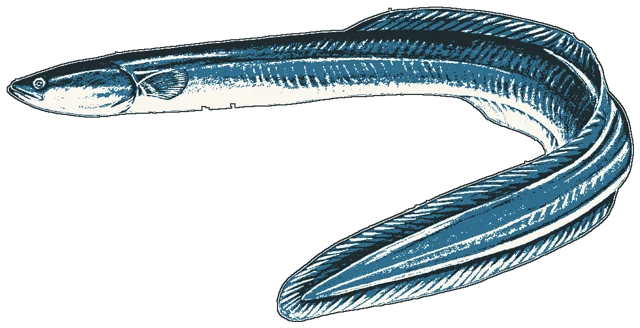
American eel
Anguilla rostrata · Fresh and salt
Few people in the US eat them (Maryland DNR) and most anglers cut them loose or use them as striper and crab bait, even though eel is a delicacy in Europe and Japan.
Worth a try: Eel is a popular food in Europe and Japan (Maryland DNR); skin it and smoke it hard.
- Tastes
- rich, sweet, dense, oily
- Limits
- Light regs. 9 in minimum, 25 per person per day, no closed season; in fresh water eels count in the 25-fish combined group with sunfish, perch, bullheads, white catfish, suckers, carp and bowfin. Party and charter boat employees: 50 per day in marine waters. The 25-fish limit also applies to eels taken for bait. Bow and arrow fishing for eels is allowed with a license. (2026 marine digest (eRegulations page updated Oct 5, 2026); same numbers on the Division's Attention Anglers sheet (March 2026)) Source
- Best months
- Hot, humid summer nights, or daytime in high, muddy water (New Jersey angler in Outdoor Life).
- Where
- Rivers, lakes and estuaries statewide; state records of 9 lb 13 oz (Atlantic City, 1988) and 6 lb 13 oz (Round Valley Reservoir, 2005).
- night crawlers
- herring chunks (where baitfish rules allow)
- shiner chunks
- hot dog chunks
- Eels in some rivers carry high PCB levels; check local advisories.
- 2026 Fish Smart, Eat Smart: do not eat any fish from Bound Brook (Somerset County, including Spring Lake) or the tidal Passaic River.
- High-risk individuals do not eat from any of these: Hudson River, Raritan Bay Complex, lower Delaware River tidal section, Pine Lake, Big Pine Lake and the Musconetcong River's unnamed tributary near Shurts Road one meal per year; Delaware Estuary and Bay three meals per year; statewide coastal waters, Newark Bay Complex, Union, Greenwich, Mirror and Peddie lakes, Salem River, Mantua, Little Mantua and Overpeck creeks and the Musconetcong River near Shurts and New Hampton roads four meals per year; Absegami, Deal and Lenape lakes, Weston Mill Pond, Green Brook, D&R Canal, Delaware River from Phillipsburg to Trenton, Passaic River from Elmwood Park to Dundee Lake, and the Raritan River at the Millstone confluence and on the South Branch (High Bridge, Flemington, Neshanic Station) one meal per month; Maple, Oswego and Pohatcong lakes, East Creek Pond and Menantico Sand Pools one meal per week.
- Metedeconk River North Branch at Siloam four meals per year for everyone; Delaware Bay tributaries one meal per month (high-risk four per year).
Meal limits and other waters (3)
- One meal per month for everyone: Columbia, Manalapan, Shenandoah and Stewart lakes, Davidson's Mill Pond, Round Valley and Swimming River reservoirs, Oldmans Creek, Passaic River at Fair Lawn and Woodland Park, Delaware River at Milford/Montague, and the Musconetcong's Point Mountain Trout Conservation Area.
- The Navesink, Shrewsbury, Shark, Toms and Mullica rivers are also listed at one meal per month; the statewide coastal line is stricter.
- Fresh waters and fish that are not listed: one meal per week, high-risk one meal per month.
Atlantic menhaden
Brevoortia tyrannus · also called bunker · Saltwater
NOAA: too small and oily to eat. Menhaden go to fish meal and oil, and they support a major bait fishery (ASMFC).
- Tastes
- very oily, soft, bony
- Limits
- No limits. The state size and possession table lists no season, minimum size or possession limit for Atlantic menhaden. Under the wanton waste rule, any fish purposely killed counts toward the angler's possession and may not be returned to the water. (2026 marine digest (eRegulations page updated Oct 5, 2026)) Source
- Best months
- Peanut bunker thick in the bay July 9; bunker along the Jersey Shore Nov 5 (On The Water reports, 2026).
- Where
- Inlets, bays and rivers; reports describe peanut bunker in the inlets and bunker off the beaches.
Before you eat it: Menhaden is not named in the 2026 Fish Smart, Eat Smart guide, but its all-finfish rows apply: do not eat any finfish from the tidal Passaic River, and no more than three meals per year from the Delaware River Estuary (state line to the C&D Canal), where high-risk individuals do not eat any.
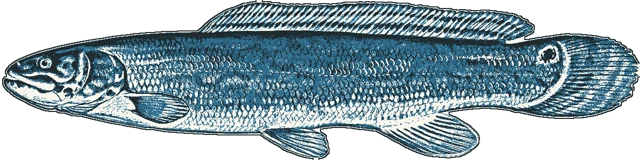
Bowfin
Amia calva (ruddy bowfin) and Amia ocellicauda (emerald bowfin) · Freshwater
TPWD calls it a rough fish rather than one for the table; the soft, pale flesh earned it the nickname 'cottonfish'.
Worth a try: Keep it alive until you clean it, cook it the same day, and use it smoked, fried as patties or stewed; MeatEater serves fried bowfin with a morel cream sauce.
- Tastes
- mild, soft, jelly-like unless very fresh
- Limits
- Light regs. Statewide limit for the sunfish, perch, bullhead, white catfish, white sucker, common carp, bowfin and eel group is 25 per day combined, no minimum size, open year-round (American eel has a 9 in minimum). Bowfin are not on the bow and arrow list. (2026 freshwater digest (eRegulations page updated Sept 23, 2026)) Source
- Where
- Mantua Creek in Gloucester County produced the state record (12 lb 10 oz, Dec 17, 2024); On The Water notes bowfin share some swims with northern snakehead in the Delaware River tributaries of Gloucester and Burlington counties.
- lures with lots of vibration and flash
Before you eat it: 2026 Fish Smart, Eat Smart: do not eat any fish from Bound Brook (Somerset County, including Spring Lake) or the tidal Passaic River. General advice for fresh waters is one meal per week, high-risk individuals one meal per month; bowfin is not named in the guide.
False albacore
Euthynnus alletteratus · also called little tunny · Saltwater
Dark, bloody, strong-tasting meat; most anglers release albies or cut them up for shark and kingfish bait.
Worth a try: Kill it immediately, cut the gills and bleed it in a saltwater bucket, then ice it. Fresh loins make good sashimi (Outdoor Life; Florida Sportsman, where 'bonito' means little tunny), and LSU Sea Grant rates it better than its reputation. Trim all dark meat.
- Tastes
- strong; clean and sweet when bled and very fresh, firm, dark red
- Limits
- No limits. The state size and possession table lists no season, minimum size or possession limit for false albacore. Under the wanton waste rule, any fish purposely killed counts toward the angler's possession and may not be returned to the water. (2026 marine digest (eRegulations page updated Oct 5, 2026)) Source
- Best months
- August through October.
- Where
- Surf and ocean; the state record (24 lb 15 oz, 1977) came from off Sea Bright.
- Deadly Dick and other small metals
- peanut bunker
- spearing
- small trolling feathers
- Clark spoons
- small baitfish flies
- Ciguatera has been reported (Florida Museum).
Before you eat it: False albacore is not named in the 2026 Fish Smart, Eat Smart guide, but its all-finfish rows apply: do not eat any finfish from the tidal Passaic River, and no more than three meals per year from the Delaware River Estuary (state line to the C&D Canal), where high-risk individuals do not eat any.
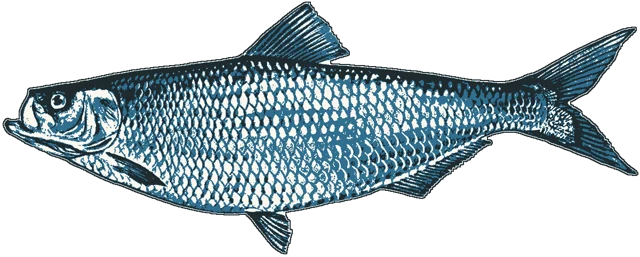
Hickory shad
Alosa mediocris · Fresh and salt
A spring sport fish that most anglers release: South Carolina DNR says hickory shad are not used as food for humans, and Virginia notes the few that are kept mostly become catfish bait.
- Limits
- Light regs. Marine waters: 6 shad per day, hickory and American combined, no minimum size, no closed season; American shad count in that limit only in the Delaware River and tributaries (2 at most), and none may be kept elsewhere. Delaware River mainstem fresh water: closed to hickory shad. (2026 marine digest (eRegulations page updated Oct 5, 2026); same numbers on the Division's Attention Anglers sheet (March 2026)) Source
- Best months
- Early December in the surf; mid-November with other baitfish (On The Water reports, Dec 4, 2025 and Nov 19, 2026).
- Where
- The state record (2 lb 13 oz, 2011) came from Mantoloking; hickory shad run up New Jersey rivers to spawn.
- diamond jigs
- Kastmasters
- resin or epoxy jigs
- Sabiki rigs
- Hickory shad is not named in the 2026 Fish Smart, Eat Smart guide, but its all-fish rows apply: do not eat any fish from Bound Brook (Somerset County, including Spring Lake) or the tidal Passaic River, and no more than three meals per year from the Delaware River Estuary (state line to the C&D Canal), where high-risk individuals do not eat any.
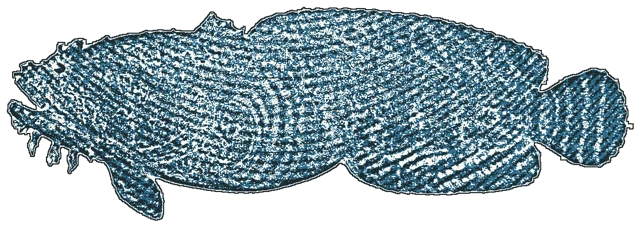
Oyster toadfish
Opsanus tau · Saltwater
An ugly, snapping bycatch fish that almost nobody keeps; toadfishes are generally considered undesirable as food (Florida Museum).
- Tastes
- mild
- Limits
- No limits. The state size and possession table lists no season, minimum size or possession limit for oyster toadfish. Under the wanton waste rule, any fish purposely killed counts toward the angler's possession and may not be returned to the water. (2026 marine digest (eRegulations page updated Oct 5, 2026)) Source
- Where
- Around oyster reefs, docks and rocky bottom in coastal waters.
- squid
- clams
- bloodworms
- peeler crab
- 2026 Fish Smart, Eat Smart: do not eat any finfish from the tidal Passaic River.
- Delaware River Estuary (state line to the C&D Canal, all finfish) three meals per year, high-risk individuals do not eat.
- Newark Bay Complex, Absecon Bay near the Absecon River and Delaware Bay near the Cohansey River, one meal per month for everyone; Delaware Bay near the Maurice River, one meal per week for everyone.
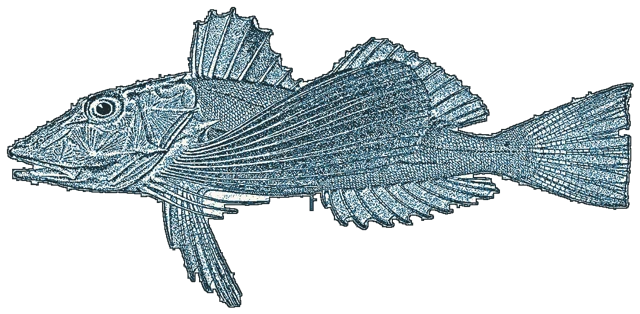
Sea robin
Prionotus spp. (mainly P. carolinus and P. evolans) · also called searobin · Saltwater
Anglers treat sea robins as bait-stealing nuisances and throw them back; few keep one to eat.
Worth a try: On The Water found the fillets delicious, better than fluke or sea bass, if a little darker and firmer. Fillet the tail section (watch the spines) and fry or bake it like fluke.
- Tastes
- mild, sweet, firm, slightly darker than sea bass
- Limits
- No limits. The state size and possession table lists no season, minimum size or possession limit for sea robin. Under the wanton waste rule, any fish purposely killed counts toward the angler's possession and may not be returned to the water. (2026 marine digest (eRegulations page updated Oct 5, 2026)) Source
- Best months
- Around Sept 1 on bay trips out of Waretown (On The Water report, Sept 3, 2026).
- Where
- On the bottom in sandy coastal waters and offshore.
- chunk bait
- strip bait
- Spiny head and fins make it unpleasant to handle.
Before you eat it: Sea robin is not named in the 2026 Fish Smart, Eat Smart guide, but its all-finfish rows apply: do not eat any finfish from the tidal Passaic River, and no more than three meals per year from the Delaware River Estuary (state line to the C&D Canal), where high-risk individuals do not eat any.
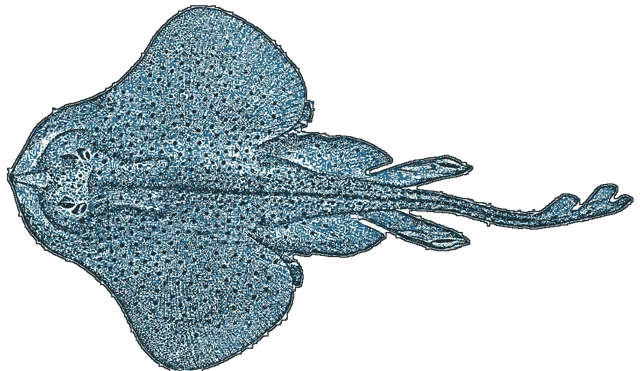
Skate
Rajidae (mainly Raja eglanteria, Leucoraja erinacea, L. ocellata) · Saltwater
Almost every US angler throws skates back or uses them for trap bait; Hank Shaw notes no one he knew growing up in New York and New Jersey kept one.
Worth a try: Kill the fish and cut off the wings right away, refrigerate a day or two so the meat firms up, and brine to remove any ammonia (Hank Shaw). NOAA describes winter skate as mild with a flavor similar to scallops. Classic prep: dredged and sautéed in brown butter with capers.
- Tastes
- mild, scallop-like, firm, stringy, corduroy grain
- Limits
- No limits. The state size and possession table lists no season, minimum size or possession limit for skates. Federal waters: barndoor, smooth and thorny skates may not be kept; clearnose, little, rosette and winter skates have no limit. Under the wanton waste rule, any fish purposely killed counts toward the angler's possession and may not be returned to the water. (2026 marine digest (eRegulations page updated Oct 5, 2026)) Source
- Best months
- Clearnose skates are off the coast from late spring to early fall (NJ Bureau of Marine Fisheries).
- Where
- Bays and waters close to shore along the coast; clearnose, little and winter skates are among the common ones.
- cut bait
- squid
- clams
- Poorly handled skates and rays can smell of ammonia; bleed, ice and brine (Hank Shaw).
- Barndoor and thorny skates are protected; possession is prohibited (NOAA).
Before you eat it: Skate is not named in the 2026 Fish Smart, Eat Smart guide, but its all-finfish rows apply: do not eat any finfish from the tidal Passaic River, and no more than three meals per year from the Delaware River Estuary (state line to the C&D Canal), where high-risk individuals do not eat any.
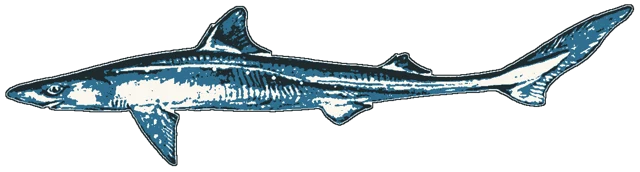
Spiny dogfish
Squalus acanthias · Saltwater
To most US anglers dogfish are a nuisance that swarms baits; NOAA says there is little consumer demand for it in the United States.
Worth a try: NOAA describes the meat as mild, sweet, flaky but firm. It is the fish in British fish and chips, and North Carolina Sea Grant's chef panels served it as 'cape shark' blackened, fried and in chowder. Bleed and gut it quickly like any shark.
- Tastes
- mild, sweet, flaky but firm, oilier than other sharks
- Limits
- No limits. The state size and possession table lists no season, minimum size or possession limit for spiny dogfish. NOAA sets no recreational season, size or possession limit in federal waters. Under the wanton waste rule, any fish purposely killed counts toward the angler's possession and may not be returned to the water. (2026 marine digest (eRegulations page updated Oct 5, 2026)) Source
- Best months
- March and April, then again in fall as the water cools (state marine digest, 2009).
- Where
- Ocean; the state record is 15 lb 12 oz off Cape May (1990).
- strips of squid
- cut pieces of fish
- Dogfish is not named in the 2026 Fish Smart, Eat Smart guide, but its all-finfish rows apply: do not eat any finfish from the tidal Passaic River, and no more than three meals per year from the Delaware River Estuary (state line to the C&D Canal), where high-risk individuals do not eat any.
- It also repeats federal advice that pregnant women and children do not eat shark.
White sucker
Catostomus commersonii · Freshwater
Suckers have perhaps the worst reputation of the rough fish (MeatEater) and are mostly raised and sold as bait (MN DNR); the many small bones keep most anglers from eating them.
Worth a try: Spring fish from cold water are light and sweet like walleye (MeatEater); score them deeply and fry hard, pickle them to dissolve the bones, or grind into fish cakes.
- Tastes
- light, sweet, firm, white, many small bones
- Limits
- Light regs. Statewide limit for the sunfish, perch, bullhead, white catfish, white sucker, common carp, bowfin and eel group is 25 per day combined, no minimum size, open year-round (American eel has a 9 in minimum). Bow and arrow fishing for suckers is allowed at any time with a license; crossbows may be used for bowfishing except at Greenwood Lake. (2026 freshwater digest (eRegulations page updated Sept 23, 2026)) Source
- Where
- Streams, rivers and lakes statewide (the digest); sampled by the state in the Delaware and Musconetcong rivers.
- nightcrawlers drifted on the bottom
- worms
- spearing/netting where legal
- 2026 Fish Smart, Eat Smart: do not eat any fish from Bound Brook (Somerset County, including Spring Lake) or the tidal Passaic River.
- Musconetcong River near Shurts Road overpass four meals per year (high-risk individuals do not eat); Delaware River Phillipsburg to Trenton one meal per month (high-risk do not eat).
Meal limits and other waters (3)
- One meal per month for everyone: Delaware River from the New York line to the Water Gap and the Musconetcong's Point Mountain Trout Conservation Area.
- Budd Lake no restrictions for everyone; Clinton Reservoir no restrictions (high-risk one meal per month).
- Not on the statewide freshwater list (general advice for fresh waters is one meal per week, high-risk individuals one meal per month).
Muskellunge
Esox masquinongy · also called musky, muskie, tiger muskie · Freshwater
A trophy fish that is almost never kept: high minimum lengths and a strong release ethic mean most muskie anglers let their catch go.
- Limits
- Heavy regs. Muskellunge and tiger muskie combined: 40 in minimum, 1 per day statewide; 44 in minimum on the trophy muskie waters (Echo Lake Reservoir, Greenwood Lake, Lake Hopatcong and Monksville Reservoir). Delaware River mainstem: muskellunge and hybrids 40 in, 1 per day. Greenwood Lake: 44 in, 1. Catch and release only Mar 20 to May 20 on Echo Lake Reservoir, Mercer Lake, Mountain Lake and Monksville Reservoir. Trout may not be used as bait in the Pequest River drainage. (2026 freshwater digest (eRegulations page updated Sept 23, 2026)) Source
- Best months
- Late spring to mid-fall; the state calls September and October two of the best months.
- Where
- Lake Hopatcong, Monksville Reservoir (state record 42 lb 13 oz, 1997, caught ice fishing), Greenwood Lake, Echo Lake Reservoir, Mercer Lake, Mountain Lake and the Delaware River (tiger muskie record 29 lb, 1990).
- bucktails
- crankbaits
- jerkbaits
- 2026 Fish Smart, Eat Smart: do not eat any fish from Bound Brook (Somerset County, including Spring Lake) or the tidal Passaic River.
- Not on the statewide freshwater list (general advice for fresh waters is one meal per week, high-risk individuals one meal per month).
- Delaware River from the New York line to the Water Gap: no restrictions (high-risk individuals one meal per month); Mountain Lake: no restrictions (high-risk one meal per week).
Where to fish in New Jersey
Fish named here are what people catch at each spot, not a promise they’re safe to eat. Read the eating advice on the fish’s card before you keep one.
# Salt or brackish# Freshwater
- 1Delaware River at Lambertville river · fresh
The Delaware River holds the state records for American shad (11 lb 1 oz, 1984), walleye (13 lb 9 oz, 1993) and tiger muskie (29 lb, 1990).
Known for: American shad, Walleye, Muskellunge
Access: New Jersey and Pennsylvania licenses are both valid shoreline to shoreline on the mainstem; no more than three rods, and anglers follow the rules of the state they are fishing in.
- 2Lake Hopatcong lake · fresh
On The Water says the lake holds pickerel, perch and bass all winter in shallow, weed-lined coves and bays; the digest lists it as a trophy muskie water and the 33 lb 3 oz channel catfish record came from here.
Known for: Chain pickerel, Yellow perch, Largemouth bass
Access: The digest lists Lake Hopatcong in the spring trout stocking program (3 in-season stockings).
- 3Round Valley Reservoir reservoir · fresh
State records for lake trout (32 lb 8 oz, 2002), brown trout (21 lb 6 oz, 1995), smallmouth bass (7 lb 2 oz, 1990) and American eel (6 lb 13 oz, 2005) all came from this reservoir.
Known for: Lake trout, Brown trout, Smallmouth bass, American eel
Access: A Trophy Trout Lake open to year-round fishing; also on the Lunker Bass Lake list (15 in, 3 bass).
- 4Merrill Creek Reservoir reservoir · fresh
A Trophy Trout Lake with its own rules for brown and rainbow trout, landlocked Atlantic salmon (15 in, 2 combined) and lake trout (2 fish of 15 to under 24 in plus 2 of 24 in or longer).
Known for: Landlocked Atlantic salmon, Lake trout, Brown trout, Rainbow trout
Access: Open to year-round fishing; closed to ice fishing (On The Water).
- 5Monksville Reservoir reservoir · fresh
The 42 lb 13 oz state record muskellunge (1997, caught ice fishing) and the 17 lb 12 oz record hybrid striped bass (2023) came from Monksville; it is also a trophy muskie water.
Known for: Muskellunge, Hybrid striped bass
Access: The digest's Freshwater Fishing Explorer app maps public access points; northern pike are catch and release Mar 20 to May 20.
- 6Swartswood Lake lake · fresh
On The Water calls Swartswood the state's best walleye lake; the Hackettstown Hatchery nets pre-spawn walleye there each spring to raise stocked fish.
Known for: Walleye
Access: Winter anglers jig for walleye through the ice; the Freshwater Fishing Explorer app maps public access points.
- 7Pompton Lake lake · fresh
Pompton Lake produced the state record northern pike (30 lb 8.5 oz, 2009) and black crappie (4 lb 8 oz, 1996); On The Water says the state stocks pike there and fish near 40 in are not uncommon.
Known for: Northern pike, Black crappie
Access: On The Water says parts of the lake get crowded on winter weekends and some popular spots now have No Parking signs.
- 8Raritan River South Branch, Ken Lockwood Gorge river · fresh
The 2.2-mile stretch inside Ken Lockwood Gorge Wildlife Management Area is a Catch and Release Area (artificial lures and flies, barbless hooks); the South Branch above it from Long Valley is managed for wild brown trout (12 in minimum).
Known for: Brown trout
Access: The road through the gorge is closed to through traffic; park only in designated areas.
- 9Cooper River Park Lake lake · fresh
On The Water names Cooper River Lake among the Delaware River basin waters where northern snakeheads are now established; every snakehead caught must be killed.
Known for: Northern snakehead
Access: A county park lake (Cooper River Park); snakeheads may be kept to eat once killed, and live possession is illegal.
- 10Great Egg Harbor River river · brackish
The 51 lb state record striped bass came from the Great Egg Harbor River in 2002.
Known for: Striped bass
Access: A freshwater license is required at and upstream of the power lines at the confluence of Gravelly Run; below that the water is saline and the free saltwater registry applies.
- 11Delaware Bay and Fortescue beaches estuary · salt
Delaware Bay holds the state records for black drum (109 lb, 2008), Atlantic croaker (5 lb 8 oz, 1981) and porgy (5 lb 14 oz, 1976); July 2025 reports had croakers and spot off the beaches west to Fortescue.
Known for: Black drum, Atlantic croaker, Scup
Access: Delaware Bay and its tributaries have a 17 in summer flounder minimum; nonresidents need a Delaware license on Delaware waters but not when fishing from the New Jersey shore.
- 12Island Beach State Park surf surf · salt
A July 2025 On The Water report had the Island Beach surf producing flounder, kingfish and cocktail-size bluefish; a May 2026 report had stripers on the beaches from Manasquan Inlet to Island Beach State Park.
Known for: Summer flounder, Kingfish (whiting), Bluefish
Access: Shore fishing for fluke at Island Beach State Park has its own limit: 16 in, 2 per day (May 4 to Sept 25), with a dated park entry receipt.
- 13Sandy Hook and Raritan Bay estuary · salt
A May 7, 2026 On The Water report had bass on the Sandy Hook beaches and around Raritan Bay, and keeper fluke in the Shrewsbury and Navesink rivers.
Known for: Striped bass, Summer flounder
Access: Beaches, Raritan Bay shoreline and the Shrewsbury and Navesink rivers named in the report; the free saltwater registry applies.
- 14Cape May reef sites offshore · salt
Cape May and Fortescue reef sites gave up summer flounder to 7 lb on bucktails, jigs and Gulp in a Sept 2026 report; late-summer fluke sit on wrecks in 90 to 125 ft, 20 to 25 miles out.
Known for: Summer flounder
Access: Charter and head boats and private boats fish the artificial reefs the state built from decommissioned vessels, train cars and reef balls.
New Jersey fishing license and rules
- Resident: $22.50 (ages 16 to 64; Buddy License $11.75). Senior residents 65 to 69 pay $12.50; residents 70 and over need no license (a driver license or other proof of age is the license).
- Nonresident: $34.00 (Buddy License $17.50)
- Nonresident short-term: $9.00 for a 2-day vacation license; $19.50 for a 7-day vacation license
- Saltwater: Free registry required: the New Jersey Saltwater Recreational Registry Program, for anglers 16 and older fishing recreationally in marine waters (not needed when fishing only from a for-hire vessel). Registration is online only and expires Dec 31 each year. No fishing license is needed in waters the digest lists as saline.
- Who needs one: Freshwater license: residents 16 through 69 and all nonresidents 16 and older (residents 70 and over are exempt, nonresidents 70 and over must buy one). Trout stamp: same ages. Saltwater registry: 16 and older.
- Free fishing days: June 6 and Sept 26, 2026: New Jersey residents could fish New Jersey's public fresh waters without a license or trout stamp; all size, season and daily limits stayed in force.
More license details
Trout stamp (needed to fish for or possess trout and salmon): $10.50 resident (16 to 69), $20.00 nonresident. All-Around Sportsman (resident fishing, firearm and bow hunting) $72.25 (Buddy $62.50). Licenses and stamps are valid from the date of purchase through Dec 31; the license must be displayed on outer clothing. Residency needs six months of domicile in New Jersey; active-duty military may buy resident licenses; resident disabled veterans and totally blind residents can get free licenses; farmers and family living on the farm may fish their own farm without a license. A freshwater license covers all fresh waters including privately owned waters; the digest's boundary-line list names where each river changes from saltwater (no license) to freshwater (license required at and upstream of the listed point). Delaware River: New Jersey and Pennsylvania licenses are both valid from either shoreline or by boat on the mainstem, and anglers follow the rules of the state they are fishing in; the three-rod limit applies to boat and shore. Greenwood Lake: New York and New Jersey licenses are both recognized anywhere on the lake or shoreline. Delaware: nonresident anglers 16 and older need a Delaware fishing license in Delaware fresh or tidal waters, including Delaware Bay and the Delaware River between the upstream tip of Artificial Island and the Pennsylvania line, but not when fishing from the New Jersey shore along that stretch. New York offers a free marine registry for New York waters. License purchases require a child support certification. A WMA boat ramp permit is $15. Some water-supply reservoirs (Echo Lake, Clinton, Oak Ridge, Canistear, Oradell and others) are fishable by permit only, bought from the reservoir owner. Free fishing days waive the license for residents on public fresh waters.
Buy a license License types and fees
Fees: 2026 (valid from purchase to Dec 31, 2026).
- Trout and salmon need a trout stamp on top of the fishing license (residents 16 to 69, all nonresidents 16 and older). Trout-stocked rivers and streams are closed to all fishing for every species for the three weeks before 8 a.m. on opening day (the second Saturday in April; Mar 23 to Apr 11 in 2026), except the Catch and Release Areas and Trout Conservation Areas; lakes and ponds stay open. All brook trout caught west of I-287 and north of Rt. 202 must be released.
- Largemouth and smallmouth bass are catch and release only Apr 15 to June 15 in all waters (Apr 18 to June 12 on the Delaware River; Jan 1 to June 19 and Dec 1 to 31 on Greenwood Lake). The Lunker Bass Lakes (15 in, 3 fish) are Alloway, Assunpink, Parvin and Delaware lakes and Merrill Creek, Round Valley and Splitrock reservoirs.
- Striped bass: 28 to 31 in, 1 per day in state waters; federal waters (3 to 200 nautical miles) are closed. Bonus Program permit holders may keep one fish of 24 to under 28 in per permit, May 15 to Dec 31, reported within 24 hours. Non-offset circle hooks are required with bait, gaffs are illegal and sale is prohibited.
- New Jersey's saltwater limits apply to any fish possessed in state waters or landed in New Jersey, no matter where it was caught. In federal waters (3 to 200 nautical miles) striped bass and red drum may not be kept.
- Cod (NOAA, Oct 2, 2026): no cod may be kept in federal waters (3 to 200 nautical miles) off New Jersey; the Southern New England stock area is closed to recreational harvest (Amendment 25, effective June 30, 2026).
- Northern snakehead, flathead and blue catfish, freshwater drum, bighead, silver and diploid grass carp, green sunfish, warmouth and all black bass other than largemouth and smallmouth are Potentially Dangerous Fish: anglers must destroy them, and possessing or releasing one alive is prohibited. Common carp are not on the list.
- No fish with a minimum size, and no flatfish of any kind, may be filleted or cleaned at sea, except on party boats with a state fillet permit. The one exception for anglers: one legal fluke may be filleted for bait if its rack is kept intact.
- In fresh water, only one daily creel of any species may be in possession. Boats may hold only the combined daily limit of each legal angler aboard. From shore, no more than three rods or handlines (three rods on the Delaware River from boat or shore).
- American shad: 2 per day, only from the Delaware River mainstem in fresh water and, within a 6-shad limit, the tidal Delaware River and its tributaries. River herring (alewife and blueback) cannot be taken or possessed in marine waters, rivers or streams; lakes in Morris, Passaic, Sussex and Warren counties and Spruce Run Reservoir allow 35 a day up to 6 in, kept at the lake.
- Sharks: aggregated large coastal and hammerhead groups are closed in state waters May 15 to July 15; heads, tails and fins must stay attached until landed; non-offset corrodible circle hooks are required except with flies or lures. Vessels that fish for or may keep Atlantic HMS (tunas, sharks, swordfish, billfish) need a federal HMS permit, and shark fishing needs a shark endorsement.
- Tautog is closed Mar 1 to 31 and May 1 to July 31; the limit is 4 fish in Jan, Feb and April, 1 fish Aug 1 to Nov 15 and 5 fish Nov 16 to Dec 31.
- Native freshwater fish with no limit of their own are protected (limit 0). The digest says of endangered, threatened and special concern species "and other native species with no specified creel limits" that "It is illegal to take, possess, land, purchase, or sell any of these species."
Limits here are summaries for convenience, checked on the date shown. The official New Jersey regulations govern; check them before you keep a fish.
Before you eat it
Do not eat (everyone, 2026 guide): any finfish or shellfish from the tidal Passaic River (head of tide at Garfield to Newark Bay, and tidal tributaries); any fish from Bound Brook in … (see the full list)
Do not eat (everyone, 2026 guide): any finfish or shellfish from the tidal Passaic River (head of tide at Garfield to Newark Bay, and tidal tributaries); any fish from Bound Brook in Somerset County, including Spring Lake; white catfish or gizzard shad from the Hudson River; gizzard shad from the Newark Bay or Raritan Bay complexes; chain pickerel from Lake Manahawkin or Wilson Lake; common carp from Strawbridge Lake; largemouth bass, chain pickerel or yellow perch from the Atlantic City Reservoir at Pomona (closed to fishing). Blue crab: do not eat or harvest any from the Newark Bay Complex or the tidal Passaic River. Elsewhere remove the green gland before cooking and discard the cooking water; the guide lists one meal of 7 crabs per week in the Hudson River and one meal of 7 crabs per month in the Raritan Bay Complex.
- Statewide, all coastal waters (2026 guide): high-risk individuals (infants, children, pregnant and nursing women, women of childbearing age) do not eat striped bass, American eel or bluefish. General population: striped bass one meal per month, American eel four meals per year, bluefish over 6 lb or 24 in six meals per year and smaller bluefish one meal per month. Do not eat the green gland of American lobster.
- Delaware River: Phillipsburg to Trenton striped bass and channel catfish four meals per year; lower tidal section (Trenton to the Pennsylvania line) striped bass and white perch four meals per year, channel catfish and American eel one meal per year, largemouth bass and white catfish one meal per month; Delaware River Estuary (state line to the C&D Canal) all finfish three meals per year; Delaware Estuary and Bay below the canal striped bass, white catfish, channel catfish, eel and bluefish over 20 in three meals per year, white perch six. High-risk individuals do not eat any of these.
Statewide freshwater (all waters except the Pinelands): trout one meal per week for everyone; largemouth bass, smallmouth bass and chain pickerel one meal per week (high-risk individuals … (see the full list)
Statewide freshwater (all waters except the Pinelands): trout one meal per week for everyone; largemouth bass, smallmouth bass and chain pickerel one meal per week (high-risk individuals one meal per month); sunfish no restrictions (high-risk one meal per week); brown and yellow bullheads no restrictions (high-risk one meal per month); common carp one meal per month (high-risk do not eat). Pinelands waters: largemouth bass and chain pickerel one meal per month and bullheads one meal per week (high-risk do not eat any of these); smallmouth bass and common carp one meal per week and sunfish no restrictions (high-risk one meal per month of each). Fresh waters and fish that are not listed: one meal per week, high-risk one meal per month.
- Newark Bay Complex (Newark Bay, tidal Hackensack River, Arthur Kill, Kill Van Kull and tidal tributaries): striped bass, white perch and American eel four meals per year, white catfish one meal per year, summer flounder, bluefish, Atlantic needlefish and rainbow smelt one meal per month, all with high-risk individuals told not to eat (needlefish and smelt carry the same limit in the Hudson River and the Raritan Bay Complex); oyster toadfish one meal per month for everyone.
- A meal is an 8 oz fillet; eat only skinless fillets, trim fat and dark meat, and cook so juices drain. Cooking does not remove mercury. If you eat more than one listed fish, use the lowest limit. Not every water or fish has been tested. NJDEP's current list is at FishSmartEatSmartNJ.org.
Local lingo
- Fluke: summer flounder.
- Blackfish or tog: tautog.
- Porgy: scup.
- Bunker: Atlantic menhaden, used as cut and live bait for stripers and bluefish.
- Ling: red hake.
- Killies: mummichogs, a live bait for fluke.
- Musky: muskellunge and tiger muskie.
Questions anglers ask about New Jersey
What is the most common fish in New Jersey?
In NOAA MRIP estimates for 2023 to 2025, summer flounder was the most-caught saltwater fish in New Jersey at about 13.0 million fish a year, followed by black sea bass (10.0 million) and tautog (7.4 million); striped bass (3.2 million), bluefish (1.8 million), spot (1.5 million) and sea robins (about 1.4 million combined) came next. MRIP is a saltwater survey, so it does not rank freshwater fish.
Do I need a saltwater fishing license in New Jersey?
Free registry required: the New Jersey Saltwater Recreational Registry Program, for anglers 16 and older fishing recreationally in marine waters (not needed when fishing only from a for-hire vessel). Registration is online only and expires Dec 31 each year. No fishing license is needed in waters the digest lists as saline.
What is the best fish to eat in New Jersey?
22 of the 53 fish on our New Jersey board rate Best eating. Among the fish caught most: summer flounder, black sea bass, tautog, striped bass, rainbow trout and brown trout.
What is the state fish of New Jersey?
Brook trout: NJ State Freshwater Fish (redesignated by P.L. 2017, c.194; originally state fish, P.L. 1991). Striped bass: NJ State Saltwater Fish, P.L. 2017, c.194.
Does New Jersey have free fishing days?
June 6 and Sept 26, 2026: New Jersey residents could fish New Jersey's public fresh waters without a license or trout stamp; all size, season and daily limits stayed in force.
Which New Jersey fish are better to eat than their reputation?
We give the Worth a try badge to northern pike, American shad, common carp, white sucker, bowfin, northern snakehead, bluefish, black drum, false albacore, sea robin, northern puffer, spiny dogfish, skate and American eel: fish most anglers toss or rate low that eat well when they're cleaned and cooked right. Each card says how.
Neighboring states
Sources
Limits, prices and advisories come from these pages, read on or before Nov 21, 2026. Where a line gives its own date, that’s the date it rests on. Eating advice changes: check the state’s current list. Ratings are national and come from the fish’s own page.
92 sources
- dep.nj.gov consumption advisories; consumption advisory
- dep.nj.gov black crappie: baits; black crappie: months
- dep.nj.gov bullhead (black, brown, yellow): baits; bullhead (black, brown, yellow): months
- dep.nj.gov license info
- dep.nj.gov common carp: baits; common carp: months
- dep.nj.gov channel catfish: baits; channel catfish: months; channel catfish: names
- dep.nj.gov muskellunge: baits; muskellunge: months
- dep.nj.gov bowfin: baits
- dep.nj.gov hybrid striped bass: baits; hybrid striped bass: months
- dep.nj.gov brook trout: months; brook trout: names; brown trout: months
- dep.nj.gov where to fish
- dep.nj.gov white catfish: baits; white catfish: months
- dep.nj.gov white perch: baits
- dep.nj.gov striped bass: regs
- dep.nj.gov American eel: regs; Spanish mackerel: regs; black drum: regs; black sea bass: regs; bluefish: regs; cobia: regs; hickory shad: regs; red drum: regs; scup: regs;
- dep.nj.gov American eel: advisory; American shad: advisory; Atlantic croaker: advisory; Atlantic menhaden: advisory; Spanish mackerel: advisory; black crappie: advisory; b
- dep.nj.gov brook trout: regs; brown trout: regs; lake trout: regs; landlocked Atlantic salmon: regs; rainbow trout: regs
- dep.nj.gov American eel: regs; American shad: regs; black crappie: regs; bluegill: regs; bowfin: regs; brook trout: regs; brown trout: regs; bullhead (black, brown, yellow
- dep.nj.gov sea robin: baits
- dep.nj.gov lake trout: baits; lake trout: months; lake trout: names; landlocked Atlantic salmon: baits; landlocked Atlantic salmon: months
- dep.nj.gov brook trout: baits; brook trout: months; brown trout: baits; brown trout: months; rainbow trout: baits
- dep.nj.gov black sea bass: regs; bluefish: regs; scup: regs; striped bass: regs; summer flounder: regs; tautog: regs; weakfish: regs; winter flounder: regs
- dspace.njstatelib.org American eel: advisory; American shad: advisory; Atlantic croaker: advisory; Atlantic menhaden: advisory; Spanish mackerel: advisory; black crappie: advisory; b
- en.wikipedia.org false albacore: names: little tunny is false albacore
- nj.aspirafocus.com license buy
- onthewater.com cunner: months
- onthewater.com American shad: baits
- onthewater.com northern puffer: names, baits
- onthewater.com summer flounder: baits
- onthewater.com largemouth bass: baits, months, where; walleye: baits, months: black bombers; weakfish: baits, where
- onthewater.com spiny dogfish: months
- onthewater.com Atlantic croaker: baits, where; Atlantic menhaden: why_common: bunker for crabbing; bluefish: where: Island Beach surf; fishing spots; kingfish (whiting): baits
- onthewater.com cobia: months
- onthewater.com cobia: months
- onthewater.com hickory shad: months
- onthewater.com Atlantic menhaden: where, why_common: bunker as bait; bluefish: baits; fishing spots; striped bass: baits, where; summer flounder: where
- onthewater.com black drum: baits; bluefish: baits; red hake: where; striped bass: baits
- onthewater.com Atlantic menhaden: months
- onthewater.com Spanish mackerel: baits; Spanish mackerel: months
- onthewater.com Atlantic croaker: baits; Atlantic menhaden: where; fishing spots; kingfish (whiting): baits, where; northern puffer: where, baits; summer flounder: where; weakf
- onthewater.com Spanish mackerel: baits; Spanish mackerel: months; sea robin: months
- onthewater.com hickory shad: months
- onthewater.com Atlantic menhaden: months
- onthewater.com smallmouth bass: baits, months, where
- onthewater.com hickory shad: baits
- onthewater.com red drum: baits; red drum: months
- onthewater.com false albacore: baits
- onthewater.com striped bass: baits, months
- onthewater.com scup: baits
- onthewater.com summer flounder: baits, where
- onthewater.com bowfin: where; common carp: where: Delaware River bowfishing; fishing spots; northern snakehead: baits, months, where, why_common
- onthewater.com tautog: baits, months, where
- onthewater.com bluegill: baits, months; chain pickerel: baits, months, where; fishing spots; lake trout: where: Merrill Creek closed to ice fishing; largemouth bass: where: La
- onthewater.com black sea bass: baits, months
- onthewater.com flathead catfish: baits, months, where, why_common
- onthewater.com red hake: baits
- onthewater.com American shad: baits, months
- onthewater.com white perch: baits; winter flounder: baits
- pub.njleg.gov brook trout: why_common: state freshwater fish designation; state fish; striped bass: why_common: state saltwater fish
- eregulations.com freshwater regs
- eregulations.com American shad: regs: river herring
- eregulations.com American shad: regs, why_common; chain pickerel: regs: Delaware River; channel catfish: regs: Delaware River, where; hickory shad: regs: Delaware River closed;
- eregulations.com bluegill: names, why_common; brook trout: names; bullhead (black, brown, yellow): where, why_common; hickory shad: where: spawn in rivers; landlocked Atlantic s
- eregulations.com license boundary lines
- eregulations.com brown trout: months: fall stocking start; free fishing days; rainbow trout: months: fall stocking start date
- eregulations.com brook trout: regs, state fish; brown trout: regs, months; rainbow trout: where, months, stocking
- eregulations.com black crappie: regs: Greenwood Lake; bluegill: regs: Greenwood Lake; chain pickerel: regs: Greenwood Lake; channel catfish: regs: Greenwood Lake; largemouth bas
- eregulations.com American eel: regs: eel bait limit; bluegill: regs: Rainbow Lake and Ryker Lake; channel catfish: regs: bowfishing; lake trout: regs, why_common; rainbow trout:
- eregulations.com license fees
- eregulations.com American eel: regs: freshwater; American shad: regs; black crappie: regs; bluegill: regs; bowfin: regs; bullhead (black, brown, yellow): regs; chain pickerel: r
- eregulations.com American eel: where: freshwater record; American shad: where: state record; black crappie: where: state record; bluegill: where: state record; bowfin: where, wh
- eregulations.com rainbow trout: why_common: 21 counties; months: fall stocking
- eregulations.com American eel: regs: bowfishing; bowfin: regs: bow and arrow list; common carp: regs: bowfishing, Potentially Dangerous Fish, stocking; flathead catfish: regs: b
- eregulations.com brook trout: regs; brown trout: regs; fishing spots; lake trout: regs; landlocked Atlantic salmon: regs; rainbow trout: regs; top species
- eregulations.com saltwater regs
- eregulations.com black sea bass: regs: landed in New Jersey; red hake: regs: wanton waste; summer flounder: regs: landed in New Jersey; winter flounder: regs: filleting rule
- eregulations.com Atlantic croaker: months, where; black drum: months, where; black sea bass: months, where; bluefish: months, where; false albacore: months, where; kingfish (whi
- eregulations.com hickory shad: why_common; kingfish (whiting): names; northern puffer: why_common; oyster toadfish: where, names; sea robin: where, names
- eregulations.com saltwater registry
- eregulations.com smooth dogfish: regs: smoothhound limits, shark gear and handling rules; spiny dogfish: regs: shark rules do not cover dogfish
- eregulations.com American eel: where: marine record; American shad: where: marine record; Atlantic croaker: where: state record; Spanish mackerel: where: state record; black dru
- eregulations.com American eel: regs; American shad: regs: marine shad limits; Atlantic croaker: regs; Atlantic menhaden: regs; Spanish mackerel: regs; black drum: regs; black se
- eregulations.com striped bass: regs: Bonus Program, gaffs, circle hooks
- fisheries.noaa.gov black sea bass: regs: federal waters; red drum: regs: federal waters; red hake: regs: federal waters; skate: regs: federal waters; spiny dogfish: regs: federal
- inquirer.com bowfin: baits
- law.cornell.edu Atlantic croaker: regs: No Limit; hickory shad: regs: the shad line covers hickory and American shad; kingfish (whiting): regs: No Limit; smooth dogfish: regs:
- nj.gov red drum: baits; red drum: names
- nj.gov skate: months; skate: where
- nj.gov smooth dogfish: names; spiny dogfish: months
- outdoorlife.com bowfin: baits
- outdoorlife.com American eel: baits; American eel: months
- st.nmfs.noaa.gov American eel: why_common; Atlantic croaker: why_common; Atlantic menhaden: why_common; Spanish mackerel: why_common; black sea bass: why_common; bluefish: why_c
Illustrations: stencils we made from public-domain art by John J. Baird (Black crappie); Duane Raver, U.S. Fish and Wildlife Service (Black sea bass, Brook trout, Channel catfish, Flathead catfish, Rainbow trout, Red drum, Striped bass, White perch, Yellow perch, American shad, Bluefish, Bullhead (black, brown, yellow), Chain pickerel, Smallmouth bass, American eel, Bowfin, Hickory shad, Spiny dogfish); NOAA (Bluegill); U.S. Fish and Wildlife Service (Brown trout, Common carp, Largemouth bass); James Alexander Henshall (Cobia, Weakfish); William Welsh (Kingfish (whiting)); Hugh McCormick Smith (Summer flounder, Walleye, Atlantic croaker, Black drum, Northern puffer, Spanish mackerel, Spot, Oyster toadfish, Sea robin); David Starr Jordan (Northern pike); New York Fish and Game Commission (Skate), via Wikimedia Commons.
Spotted an error or a rule that changed? Tell us and we will check it against the official source.