Rhode Island · fresh and salt
Fish in Rhode Island: what’s worth eating, and what’s garbage
Rhode Island saltwater fishing centers on Narragansett Bay and the waters off Block Island; scup, black sea bass and tautog are the state's most-caught saltwater fish in NOAA's survey, and the state fish, striped bass, may be kept only from 28 in to under 31 in. Inland, DEM stocks designated trout waters before the April opener and again in the fall, and the ponds hold largemouth bass, chain pickerel, panfish and a stocked northern pike fishery.
47 fish rated · limits checked Nov 21, 2026 against RIDEM DFW and federal sources, then re-checked: 474 of 479 details confirmed or corrected on the official pages
Resident $24.00 online / $26.00 at vendors (license year ends the last day of February)… Full details
Buy a licenseSeparate recreational saltwater license: $7 resident, $10 nonresident, $5 for 7 days. Free for RI residents over 65 and active military stationed in RI. Full details
Saltwater limitsFreshwater limits, seasons and size rules from Rhode Island Department of Environmental Management, Division of Fish and Wildlife.
Freshwater limitsStriped bass
Freshwater: the first full weekend in May each year (May 2 and 3 in 2026, when neither a freshwater license nor a Trout Conservation Stamp was required for residents or nonresidents). Full details
The Rhode Island table-fare board
Fish Rhode Island anglers catch, sorted by how they eat. The bars show how heavily each one is regulated here. Tap a fish for the details.
No limits Light regs Heavy regs No harvest
Best eating19
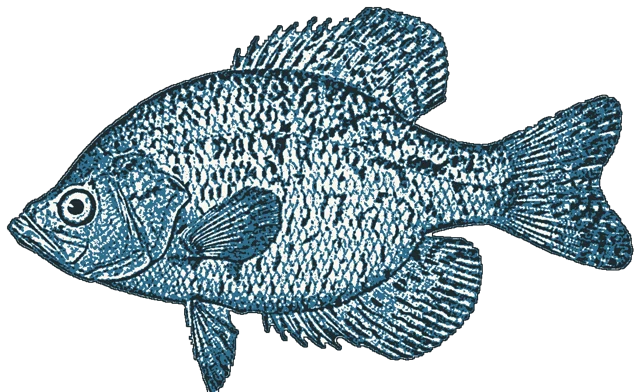 Black crappie
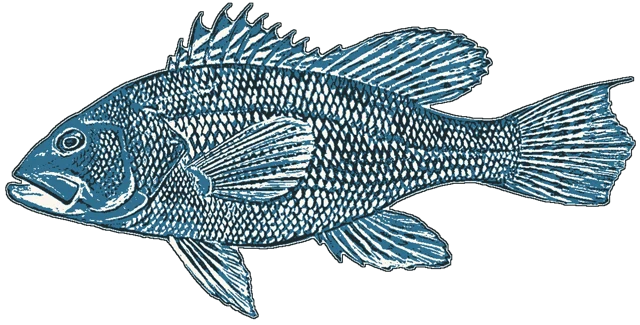 Black sea bass“hammers (big fish)”
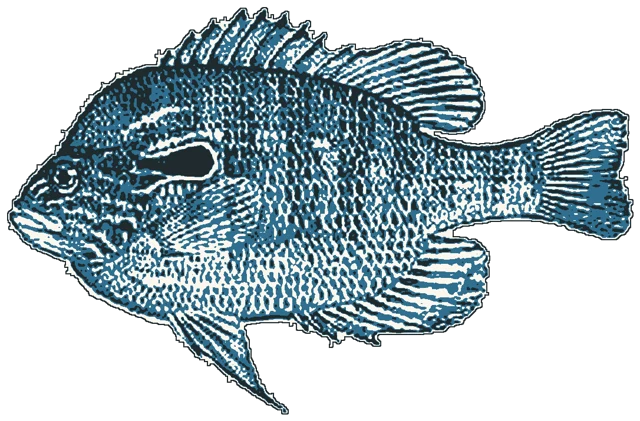 Bluegill“sunfish”
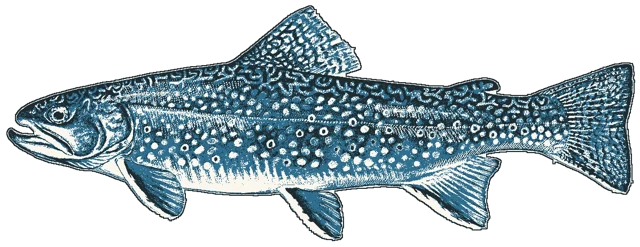 Brook trout
 Brown troutLandlocked Atlantic salmon“domestic Atlantic salmon”Monkfish“goosefish”Pumpkinseed“sunfish”
 Rainbow trout“golden rainbow (palomino)”
 Redbreast sunfish
 Striped bass“striper”
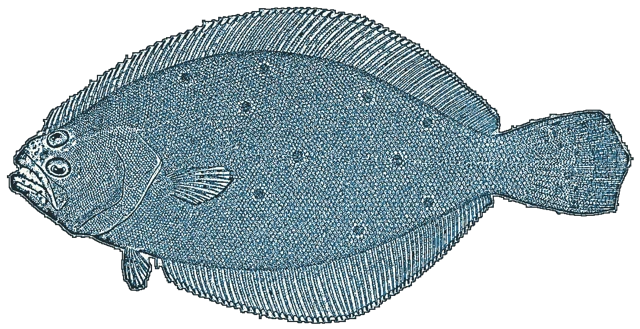 Summer flounder“fluke”Tautog“blackfish”
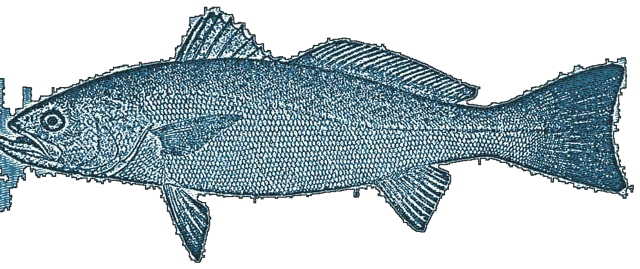 Weakfish“squeteague”White catfish
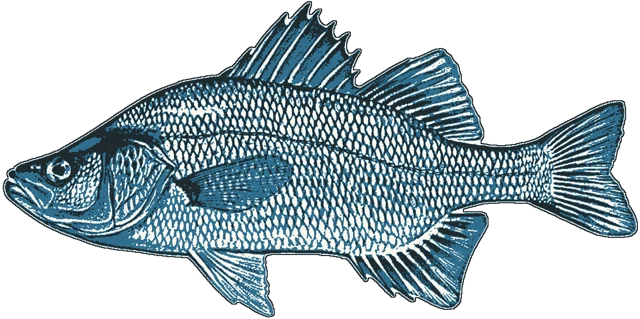 White perchWinter flounder“blackback”
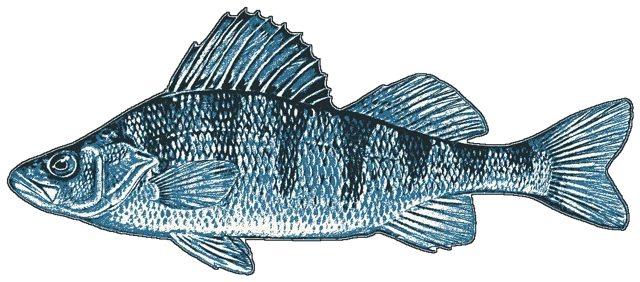 Yellow perch
Just OK19
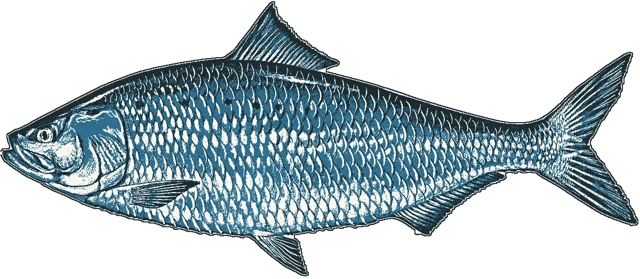 American shadAtlantic bonitoAtlantic mackerel
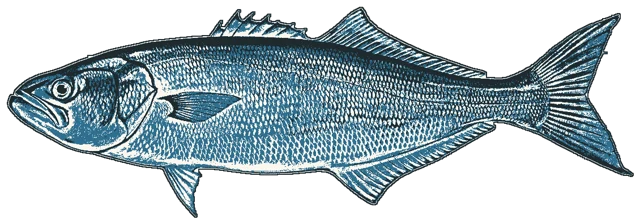 Bluefish“blues”
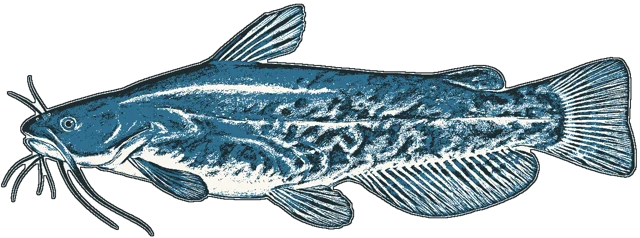 Bullhead (black, brown, yellow)“brown bullhead”
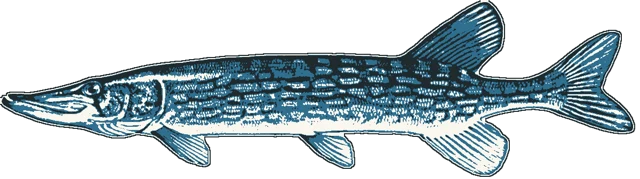 Chain pickerel
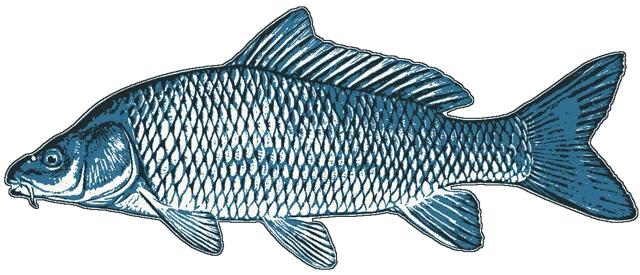 Common carpCunner“bergall”Fallfish
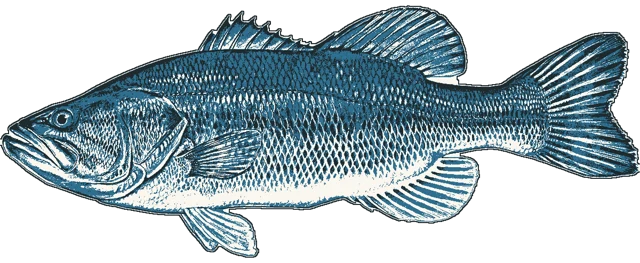 Largemouth bass“black bass”Longhorn sculpin
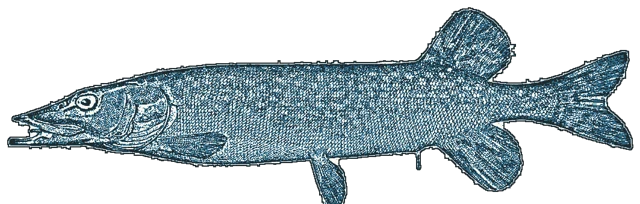 Northern pike
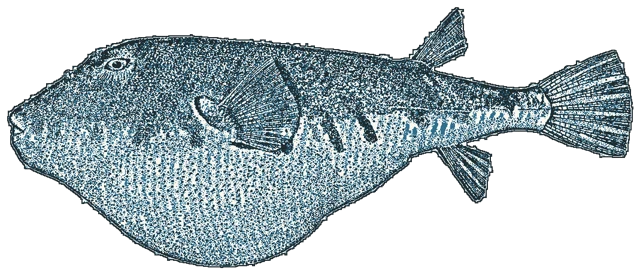 Northern pufferRiver herring (alewife and blueback herring)Scup“porgy”Sea ravenSilver hake
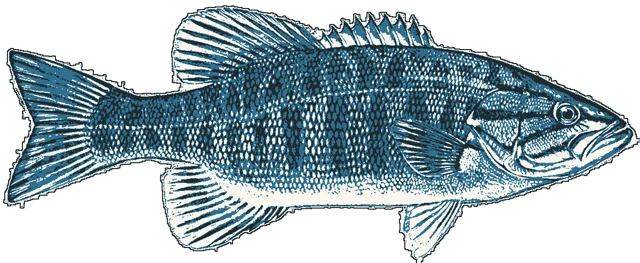 Smallmouth bass“black bass”Smooth dogfish“smoothhound”
Garbage fish9
What’s actually caught in Rhode Island
NOAA Marine Recreational Information Program (MRIP) estimates for Rhode Island, averaged over 2023, 2024 and 2025, counting kept plus released fish (all modes, state and federal waters). MRIP is a saltwater survey, so it does not rank freshwater fish. The ten rows are the most-caught fish rated on this page; hickory shad (about 103,400 a year, 99% released), little tunny (false albacore, about 70,800) and dolphinfish (about 56,300) come next. NOAA's percent standard error is above 50 in at least one year for Atlantic mackerel, hickory shad, dolphinfish and part of the searobin group, so those counts are rough. NOAA recalibrated its survey in 2026, so its current query tool may show lower totals, and a different order, than the 2023-2025 estimate files used here.
- Scup Just OK4,127,247 fish a year (2023: 3.81 million, 2024: 4.79 million, 2025: 3.78 million); about 1,928,900 a year kept, about 53% released.
- Black sea bass Best eating4,005,825 fish a year (2023: 3.22 million, 2024: 4.26 million, 2025: 4.54 million); about 219,800 a year kept, about 95% released.
- Tautog Best eating2,658,287 fish a year (2023: 3.00 million, 2024: 2.75 million, 2025: 2.22 million); about 453,800 a year kept, about 83% released.
- Striped bass Best eating926,326 fish a year (2023: 982,412, 2024: 969,690, 2025: 826,877); about 46,500 a year kept, about 95% released.
- Summer flounder Best eating734,557 fish a year (2023: 530,060, 2024: 864,733, 2025: 808,879); about 65,200 a year kept, about 91% released.
- Sea robin Garbage fish329,448 fish a year for striped searobin (about 188,900), unidentified searobin (about 90,300), northern searobin (about 48,300) and searobin family (about 2,100) together; about 17,900 a year kept, about 95% released.
- Bluefish Just OK311,936 fish a year (2023: 542,033, 2024: 151,706, 2025: 242,069); about 80,400 a year kept, about 74% released.
- Atlantic mackerel Just OK177,217 fish a year (2023: 73,866, 2024: 142,267, 2025: 315,519); about 124,000 a year kept, about 30% released.
- Atlantic bonito Just OK143,415 fish a year (2023: 43,644, 2024: 128,181, 2025: 258,419); about 61,300 a year kept, about 57% released.
- Smooth dogfish Just OK110,273 fish a year (2023: 113,897, 2024: 128,075, 2025: 88,848); about 5,400 a year kept, about 95% released.
Source: NOAA MRIP . Saltwater only: it does not survey freshwater fishing.
Fish by fish
Why each one sits where it does, the current Rhode Island limits, and the bait that works.
Atlantic cod
Gadus morhua · Saltwater
The original white fish: mild, clean, big flakes (NOAA). A headboat staple in New England.
- Tastes
- mild, clean, slightly sweet, large flakes, less firm than haddock
- Limits
- No harvest. Harvest, landing and possession of cod in the marine waters of Rhode Island are prohibited while fishing recreationally. Federal waters have separate NOAA Fisheries rules. (250-RICR-90-00-3 (Finfish) as amended effective May 17, 2026; in force Nov 21, 2026; same numbers on DEM's size and possession table (rev. Nov 19, 2026)) Source
- Where
- The tautog grounds (On The Water report, Nov 19, 2026).
- fresh clam
- diamond jigs
- jelly worms on a jig rig
- Limit (everyone): about two to three servings a week, a serving being 4 ounces; cod is in Best Choices on both RIDOH's 2019 brochure and the federal chart on its fish page (updated Aug 6, 2026).
Meal limits and other waters (2)
- Limit (children over 2): one to two servings a week, 2 ounces each at ages 4 to 7 (RIDOH brochure).
- Tighter for pregnant women and young children: from salt water the 2026 freshwater guide names only salmon, light tuna, shrimp, pollock and catfish as low in mercury.
Black crappie
Pomoxis nigromaculatus · Freshwater
One of the classic fish-fry fish: MeatEater counts crappie among the best-eating fish in freshwater.
- Tastes
- mild, sweet, delicate, flaky, white
- Limits
- No limits. No statewide creel, size or season rule: the guide lists All Other Freshwater Fish at None for creel and minimum size, with no closed season. Designated trout waters are closed to all fishing from the last day of February until 6 AM on the second Saturday in April. No sale of freshwater fish. (2026-27 RI freshwater guide on eRegulations (page updated Sept 23, 2026); same numbers in 250-RICR-60-00-10, effective July 28, 2026) Source
- Best months
- January through the ice and March in open water (2026 reports).
- Where
- The state record (3 lb, 1976) came from Watchaug Pond, Charlestown.
- live minnows
- small jigs
- tube jigs
- grass shrimp
- small spinners
- Do not eat (anyone): any freshwater fish but stocked trout from Rhode Island lakes and streams (RIDOH brochure, 2019, still posted; the 2026 guide says the same for pregnant women and young children).
- Do not eat (anyone): crappie from the Woonasquatucket River below the Johnston/Smithfield line (near the Cricket Field dam), Grills Preserve Pond (Westerly), Roger Williams Park ponds (Providence), Yawgoog, Windcheck or Meadowbrook ponds, Quidnick Reservoir, or private ponds (no public access, or not stocked by the state).
- Do not eat (anyone): organs of any Pawcatuck River fish.
- Do not eat (under 12, nursing, pregnant or may become pregnant): any Blackstone River fish (Massachusetts list, December 2025, PFAS).
- Catch and release is recommended (2026 guide): Mashapaug Pond, the rest of the Woonasquatucket River and other urban ponds and rivers.
- Limit (everyone): native fish, once a month from the Pawcatuck River below Burdickville Road (PFAS, mercury; RIDOH).
- Limit (everyone): black crappie, one meal a month at most from any water (2026 guide).
Black sea bass
Centropristis striata · also called hammers (big fish) · Saltwater
Mild, delicate, firm white fillets; Maine Sea Grant calls it popular for its firm texture and mild, slightly sweet flavor.
- Tastes
- mild, fresh, delicate, tender but firm
- Limits
- Heavy regs. Shore and private boat: 16 in minimum (tendril not counted), 3 per person per day, season May 16 to December 31 (closed January 1 to May 15). Licensed party and charter boats: 16 in, 4 per person per day May 16 to August 31 and 6 per person per day September 1 to December 31. State-water rule. (RIDEM marine rules 250-RICR-90-00-3 as amended effective May 17, 2026; eRegulations size, season and possession table updated Oct 5, 2026; in force Nov 21, 2026; same numbers on DEM's size and possession table (rev. Nov 19, 2026)) Source
- Best months
- Picks up in June; some of the largest sea bass of the year came in November in 2026 reports.
- Where
- Off Block Island and near Prudence Island in Narragansett Bay, on the deeper sides of humps, on South Shore reefs, and mixed in with tautog in fall.
- squid strips
- clams
- crabs
- bloodworms
- sandworms
- jigs
- Limit (everyone): one serving a week at most, a serving being 4 ounces (RIDOH brochure, 2019, Good Choices).
Meal limits and other waters (3)
- The federal chart on RIDOH's fish page (updated Aug 6, 2026) is easier, with black sea bass in Best Choices, 2 to 3 servings a week, so follow the stricter line.
- Women of childbearing age and children: RIDOH's brochure says choose from its Best Choices list instead.
- Tighter for pregnant women and young children: from salt water the 2026 freshwater guide names only salmon, light tuna, shrimp, pollock and catfish as low in mercury.
Bluegill
Lepomis macrochirus · also called sunfish · Freshwater
MeatEater calls the flesh light, delicate and sweet; the original fish-fry panfish.
- Tastes
- mild, sweet, firm, flaky
- Limits
- No limits. No statewide creel, size or season rule: the guide lists All Other Freshwater Fish at None for creel and minimum size, with no closed season. Designated trout waters are closed to all fishing from the last day of February until 6 AM on the second Saturday in April. (2026-27 RI freshwater guide on eRegulations (page updated Sept 23, 2026); same numbers in 250-RICR-60-00-10, effective July 28, 2026) Source
- red worms
- nightcrawlers
- crickets
- grass shrimp
- small jigs
- popping bugs
- Do not eat (anyone): any freshwater fish but stocked trout from Rhode Island lakes and streams (RIDOH brochure, 2019, still posted; the 2026 guide says the same for pregnant women and young children).
- Do not eat (anyone): bluegill from the Woonasquatucket River below the Johnston/Smithfield line (near the Cricket Field dam), Grills Preserve Pond (Westerly), Roger Williams Park ponds (Providence), Yawgoog, Windcheck or Meadowbrook ponds, Quidnick Reservoir, or private ponds (no public access, or not stocked by the state).
- Do not eat (anyone): organs of any Pawcatuck River fish.
- Do not eat (under 12, nursing, pregnant or may become pregnant): any Blackstone River fish (Massachusetts list, December 2025, PFAS).
- Catch and release is recommended (2026 guide): Mashapaug Pond, the rest of the Woonasquatucket River and other urban ponds and rivers.
Meal limits and other waters (2)
- Limit (everyone): native fish, once a month from the Pawcatuck River below Burdickville Road (PFAS, mercury; RIDOH).
- RIDOH's 2026 page says many sunfish such as bluegill are generally safe to eat but to check its table first; its stricter 2019 line is printed above.
Brook trout
Salvelinus fontinalis · Freshwater
Often called the tastiest trout: MeatEater describes the meat as light and delicate with an almost sweet flavor.
- Tastes
- sweet, delicate, light, delicate
- Limits
- Heavy regs. Trout, salmon and char share one limit: 5 per person per day from the second Saturday in April (April 11, 2026) through Nov 30, then 2 per day Dec 1 to the last day of February, 8 in minimum. Designated trout waters are closed to all fishing from the last day of February until 6 AM on the second Saturday of April. A Trout Conservation Stamp is needed to keep a trout. Wood River between Route 165 and Barberville Dam is limited to 2 trout from the second Saturday in May through the last day of February. The Falls River in Exeter (from the Austin Farm Road bridge about 2 miles downstream) and the Beaver River in Richmond (from the Pawcatuck River upstream to the New London Turnpike) are catch and release, artificial lures with a single barbless or crimped hook. Deep Pond, A.L. Mowry Pond and Upper Rochambeau Pond are fly fishing only. No corn and no chumming in designated trout waters. (2026-27 RI freshwater guide on eRegulations (page updated Sept 23, 2026); same numbers in 250-RICR-60-00-10, effective July 28, 2026) Source
- Where
- Native to streams and cold waters; the state record (3 lb 12 oz, 1984) came from Wyoming Pond.
- worms
- small spinners
- Do not eat (anyone): any fish, trout included, from the Woonasquatucket River below the Johnston/Smithfield line (near the Cricket Field dam), Grills Preserve Pond (Westerly) or any Roger Williams Park pond (Providence).
- Do not eat (anyone): wild trout (RIDOH's 2019 brochure, its strictest line, allows only stocked trout) or organs of any Pawcatuck River fish.
- Do not eat (anyone): fish from private ponds with no public access or not stocked by the state, unless they are trout stocked there by a private vendor (2026 guide).
- Do not eat (under 12, nursing, pregnant or may become pregnant): any fish, stocked trout included, from the Blackstone River (Massachusetts list, December 2025, PFAS).
- Catch and release is recommended (2026 guide): Mashapaug Pond, the rest of the Woonasquatucket River and other urban ponds and rivers.
Meal limits and other waters (6)
- Limit (under 12, nursing, pregnant or may become pregnant): any Wallum Lake fish, 1 meal a month (Massachusetts list).
- Limit (everyone else): 2 meals a month of any fish from Wallum Lake or the Blackstone River (Massachusetts list).
- RIDOH has no PFAS data to advise on trout stocked in Rhode Island ponds (Gorton, Tiogue and Stafford are stocked and had PFAS of concern in bass) or in the Pawcatuck River below Burdickville Road, where it withdrew a once-a-month line for stocked trout in April 2025.
- PFAS is also elevated in Upper and Lower Melville Ponds (Portsmouth); a trout study there reports in 2027.
- Elsewhere choose stocked trout (2026 freshwater guide).
- That advice is for stocked fish, never wild brook trout.
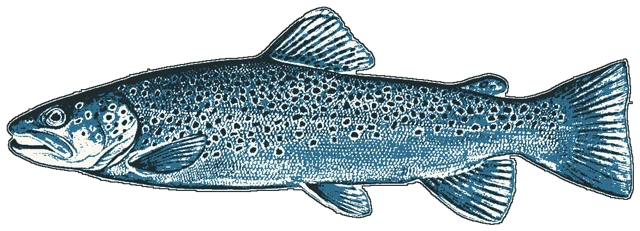
Brown trout
Salmo trutta · Freshwater
Good trout eating like rainbows; most kept browns are stocked fish.
- Tastes
- mild to rich, flaky
- Limits
- Heavy regs. Trout, salmon and char share one limit: 5 per person per day from the second Saturday in April (April 11, 2026) through Nov 30, then 2 per day Dec 1 to the last day of February, 8 in minimum. Designated trout waters are closed to all fishing from the last day of February until 6 AM on the second Saturday of April. A Trout Conservation Stamp is needed to keep a trout. Wood River between Route 165 and Barberville Dam is limited to 2 trout from the second Saturday in May through the last day of February. The Falls River in Exeter (from the Austin Farm Road bridge about 2 miles downstream) and the Beaver River in Richmond (from the Pawcatuck River upstream to the New London Turnpike) are catch and release, artificial lures with a single barbless or crimped hook. Deep Pond, A.L. Mowry Pond and Upper Rochambeau Pond are fly fishing only. No corn and no chumming in designated trout waters. (2026-27 RI freshwater guide on eRegulations (page updated Sept 23, 2026); same numbers in 250-RICR-60-00-10, effective July 28, 2026) Source
- Where
- The state record (7 lb 9 oz, 2000) came from Wallum Lake, Burrillville.
- nightcrawlers
- spinners
- minnow-imitating flies
- Do not eat (anyone): any fish, trout included, from the Woonasquatucket River below the Johnston/Smithfield line (near the Cricket Field dam), Grills Preserve Pond (Westerly) or any Roger Williams Park pond (Providence).
- Do not eat (anyone): wild trout (RIDOH's 2019 brochure, its strictest line, allows only stocked trout) or organs of any Pawcatuck River fish.
- Do not eat (anyone): fish from private ponds with no public access or not stocked by the state, unless they are trout stocked there by a private vendor (2026 guide).
- Do not eat (under 12, nursing, pregnant or may become pregnant): any fish, stocked trout included, from the Blackstone River (Massachusetts list, December 2025, PFAS).
- Catch and release is recommended (2026 guide): Mashapaug Pond, the rest of the Woonasquatucket River and other urban ponds and rivers.
Meal limits and other waters (5)
- Limit (under 12, nursing, pregnant or may become pregnant): any Wallum Lake fish, 1 meal a month (Massachusetts list).
- Limit (everyone else): 2 meals a month of any fish from Wallum Lake or the Blackstone River (Massachusetts list).
- RIDOH has no PFAS data to advise on trout stocked in Rhode Island ponds (Gorton, Tiogue and Stafford are stocked and had PFAS of concern in bass) or in the Pawcatuck River below Burdickville Road, where it withdrew a once-a-month line for stocked trout in April 2025.
- PFAS is also elevated in Upper and Lower Melville Ponds (Portsmouth); a trout study there reports in 2027.
- Elsewhere choose stocked trout (2026 freshwater guide).
Landlocked Atlantic salmon
Salmo salar (landlocked) · also called domestic Atlantic salmon · Freshwater
The same species as farmed Atlantic salmon, whose flesh NOAA describes as buttery and rich; landlocked fish are a kept-and-eaten gamefish in northern New England.
- Tastes
- rich, buttery, firm, pink
- Limits
- Heavy regs. Domestic (landlocked) Atlantic salmon: 2 per person per day, counted inside the daily trout, salmon and char limit, 11 in minimum, season April 11, 2026 to Feb 28, 2027, Trout Conservation Stamp required. Beach Pond (Exeter): 1 Atlantic salmon a day under the Connecticut rule. Migratory Atlantic salmon are closed, and no Atlantic salmon may be taken from the Pawcatuck River below the Potter Hill Dam. (2026-27 RI freshwater guide on eRegulations (page updated Sept 23, 2026); same numbers in 250-RICR-60-00-10, effective July 28, 2026) Source
- Where
- The state record (21 lb 9 oz, 2004) came from Barber Pond, South Kingstown.
- smelt-imitating streamers
- Do not eat (anyone): any freshwater fish but stocked trout from Rhode Island lakes and streams (RIDOH brochure, 2019, still posted; the 2026 guide says the same for pregnant women and young children).
- Do not eat (anyone): salmon from the Woonasquatucket River below the Johnston/Smithfield line (near the Cricket Field dam), Grills Preserve Pond (Westerly), Roger Williams Park ponds (Providence), Yawgoog, Windcheck or Meadowbrook ponds, Quidnick Reservoir, or private ponds (no public access, or not stocked by the state).
- Do not eat (anyone): organs of any Pawcatuck River fish.
- Do not eat (under 12, nursing, pregnant or may become pregnant): any Blackstone River fish (Massachusetts list, December 2025, PFAS).
- Catch and release is recommended (2026 guide): Mashapaug Pond, the rest of the Woonasquatucket River and other urban ponds and rivers.
- Limit (everyone): native fish, once a month from the Pawcatuck River below Burdickville Road (PFAS, mercury; RIDOH).
Monkfish
Lophius americanus · also called goosefish · Saltwater
NOAA Fisheries calls the tail meat mild, firm, dense and nearly boneless, like lobster meat, and Maine Sea Grant describes a rich, lobster-like flavor and meaty texture. Only the tail is eaten.
- Tastes
- mild, lobster-like, firm, dense, boneless, not flaky
- Limits
- Light regs. 17 in total length or 11 in tail length minimum; 50 lb tail weight or 166 lb whole weight (gutted, head and tail attached) per person and per vessel per day. State-water rule; federal waters have separate NOAA Fisheries rules. (250-RICR-90-00-3 (Finfish) as amended effective May 17, 2026; in force Nov 21, 2026; same numbers on DEM's size and possession table (rev. Nov 19, 2026)) Source
- Where
- Offshore Rhode Island fishing grounds.
- Only the tail meat is eaten (NOAA Fisheries); the liver is sold mainly for export (Maine Sea Grant).
- Remove the blue-gray membrane before cooking; left on, the meat curls and toughens (NOAA Fisheries).
- Handle with care: Maine Sea Grant warns that the bite can be dangerous.
- Limit (everyone): one serving a week at most, a serving being 4 ounces; monkfish is in Good Choices on both RIDOH's 2019 brochure and the federal chart on its fish page (updated Aug 6, 2026).
Meal limits and other waters (2)
- Women of childbearing age and children: RIDOH's brochure says choose from its Best Choices list instead.
- Tighter for pregnant women and young children: from salt water the 2026 freshwater guide names only salmon, light tuna, shrimp, pollock and catfish as low in mercury.
Pumpkinseed
Lepomis gibbosus · also called sunfish · Freshwater
A standard northern panfish; MeatEater notes pond owners stock it partly for its quality as table fare.
- Tastes
- mild, sweet, flaky
- Limits
- No limits. No statewide creel, size or season rule: the guide lists All Other Freshwater Fish at None for creel and minimum size, with no closed season. Designated trout waters are closed to all fishing from the last day of February until 6 AM on the second Saturday in April. (2026-27 RI freshwater guide on eRegulations (page updated Sept 23, 2026); same numbers in 250-RICR-60-00-10, effective July 28, 2026) Source
- Where
- The state record (13.6 oz, 2020) came from Block Island.
- garden worms
- red wigglers
- grubs
- crickets
- wet flies
- nymphs
- Do not eat (anyone): any freshwater fish but stocked trout from Rhode Island lakes and streams (RIDOH brochure, 2019, still posted; the 2026 guide says the same for pregnant women and young children).
- Do not eat (anyone): pumpkinseed from the Woonasquatucket River below the Johnston/Smithfield line (near the Cricket Field dam), Grills Preserve Pond (Westerly), Roger Williams Park ponds (Providence), Yawgoog, Windcheck or Meadowbrook ponds, Quidnick Reservoir, or private ponds (no public access, or not stocked by the state).
- Do not eat (anyone): organs of any Pawcatuck River fish.
- Do not eat (under 12, nursing, pregnant or may become pregnant): any Blackstone River fish (Massachusetts list, December 2025, PFAS).
- Catch and release is recommended (2026 guide): Mashapaug Pond, the rest of the Woonasquatucket River and other urban ponds and rivers.
Meal limits and other waters (2)
- Limit (everyone): native fish, once a month from the Pawcatuck River below Burdickville Road (PFAS, mercury; RIDOH).
- RIDOH's 2026 page says many sunfish such as pumpkinseed are generally safe to eat but to check its table first; its stricter 2019 line is printed above.
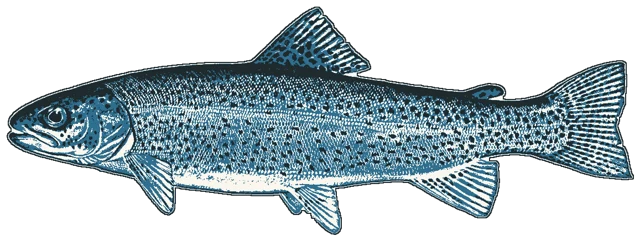
Rainbow trout
Oncorhynchus mykiss · also called golden rainbow (palomino) · Freshwater
TPWD calls rainbow trout an excellent fish to eat; the most-stocked put-and-take fish in America.
- Tastes
- mild, clean, delicate, flaky
- Limits
- Heavy regs. Trout, salmon and char share one limit: 5 per person per day from the second Saturday in April (April 11, 2026) through Nov 30, then 2 per day Dec 1 to the last day of February, 8 in minimum, wild or stocked. Designated trout waters are closed to all fishing from the last day of February until 6 AM on the second Saturday of April. A Trout Conservation Stamp is needed to keep a trout. Wood River between Route 165 and Barberville Dam is limited to 2 trout from the second Saturday in May through the last day of February. The Falls River in Exeter (from the Austin Farm Road bridge about 2 miles downstream) and the Beaver River in Richmond (from the Pawcatuck River upstream to the New London Turnpike) are catch and release, artificial lures with a single barbless or crimped hook. Deep Pond, A.L. Mowry Pond and Upper Rochambeau Pond are fly fishing only. No corn and no chumming in designated trout waters. (2026-27 RI freshwater guide on eRegulations (page updated Sept 23, 2026); same numbers in 250-RICR-60-00-10, effective July 28, 2026) Source
- Best months
- Opening day (second Saturday in April) and spring; in fall 2026 DEM began stocking the week of Oct 22.
- Where
- Designated trout waters across the state, including the Wood River, Pawcatuck River, Wyoming Pond and Olney Pond.
- nightcrawlers
- salmon eggs
- corn
- inline spinners
- small spoons
- Do not eat (anyone): any fish, trout included, from the Woonasquatucket River below the Johnston/Smithfield line (near the Cricket Field dam), Grills Preserve Pond (Westerly) or any Roger Williams Park pond (Providence).
- Do not eat (anyone): wild trout (RIDOH's 2019 brochure, its strictest line, allows only stocked trout) or organs of any Pawcatuck River fish.
- Do not eat (anyone): fish from private ponds with no public access or not stocked by the state, unless they are trout stocked there by a private vendor (2026 guide).
- Do not eat (under 12, nursing, pregnant or may become pregnant): any fish, stocked trout included, from the Blackstone River (Massachusetts list, December 2025, PFAS).
- Catch and release is recommended (2026 guide): Mashapaug Pond, the rest of the Woonasquatucket River and other urban ponds and rivers.
Meal limits and other waters (5)
- Limit (under 12, nursing, pregnant or may become pregnant): any Wallum Lake fish, 1 meal a month (Massachusetts list).
- Limit (everyone else): 2 meals a month of any fish from Wallum Lake or the Blackstone River (Massachusetts list).
- RIDOH has no PFAS data to advise on trout stocked in Rhode Island ponds (Gorton, Tiogue and Stafford are stocked and had PFAS of concern in bass) or in the Pawcatuck River below Burdickville Road, where it withdrew a once-a-month line for stocked trout in April 2025.
- PFAS is also elevated in Upper and Lower Melville Ponds (Portsmouth); a trout study there reports in 2027.
- Elsewhere choose stocked trout (2026 freshwater guide).
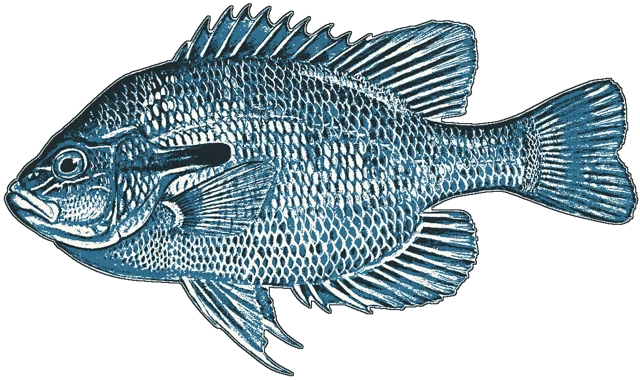
Redbreast sunfish
Lepomis auritus · Freshwater
A favorite river panfish across the Southeast; MeatEater counts panfish among the best-eating fish in freshwater.
- Tastes
- mild, sweet, flaky
- Limits
- No limits. No statewide creel, size or season rule: the guide lists All Other Freshwater Fish at None for creel and minimum size, with no closed season. Designated trout waters are closed to all fishing from the last day of February until 6 AM on the second Saturday in April. (2026-27 RI freshwater guide on eRegulations (page updated Sept 23, 2026); same numbers in 250-RICR-60-00-10, effective July 28, 2026) Source
- Where
- Rivers and streams (RIDEM commonly caught species list).
- red worms
- crickets
- small spinners
- grubs
- tiny crankbaits
- Do not eat (anyone): any freshwater fish but stocked trout from Rhode Island lakes and streams (RIDOH brochure, 2019, still posted; the 2026 guide says the same for pregnant women and young children).
- Do not eat (anyone): sunfish from the Woonasquatucket River below the Johnston/Smithfield line (near the Cricket Field dam), Grills Preserve Pond (Westerly), Roger Williams Park ponds (Providence), Yawgoog, Windcheck or Meadowbrook ponds, Quidnick Reservoir, or private ponds (no public access, or not stocked by the state).
- Do not eat (anyone): organs of any Pawcatuck River fish.
- Do not eat (under 12, nursing, pregnant or may become pregnant): any Blackstone River fish (Massachusetts list, December 2025, PFAS).
- Catch and release is recommended (2026 guide): Mashapaug Pond, the rest of the Woonasquatucket River and other urban ponds and rivers.
Meal limits and other waters (2)
- Limit (everyone): native fish, once a month from the Pawcatuck River below Burdickville Road (PFAS, mercury; RIDOH).
- RIDOH's 2026 page says many sunfish are generally safe to eat but to check its table first; its stricter 2019 line is printed above.
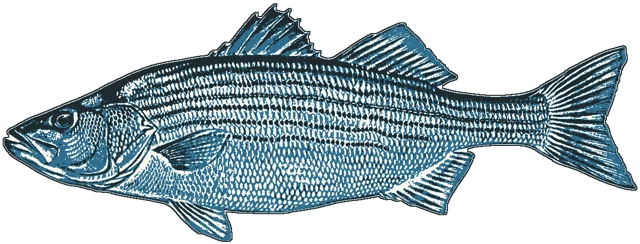
Striped bass
Morone saxatilis · also called striper, schoolie (small fish) · Fresh and salt
Firm, large-flaked, slightly sweet white meat; one of the most kept and eaten gamefish in the country, fresh or salt.
- Tastes
- mild, slightly sweet, firm, large flakes
- Limits
- Heavy regs. Rhode Island rule: 28 in minimum and under 31 in maximum (measured with the tail pinched), 1 per person per day, open all year, state-water rule. Circle hooks are required when fishing with bait (not on artificial lures with bait attached). Gaffing is prohibited. No filleting or racks or fillets in possession while lines are in the water; racks stay whole until the boat is secured or the fish is offloaded, and no more than 2 fillets per legal fish. A striped bass caught in a freshwater river follows the same marine rule. (RIDEM marine rules 250-RICR-90-00-3 as amended effective May 17, 2026; eRegulations size, season and possession table updated Oct 5, 2026; in force Nov 21, 2026; striped bass page updated May 20, 2026; total-length definition (250-RICR-90-00-1) effective Aug 2, 2026; same numbers on DEM's size and possession table (rev. Nov 19, 2026)) Source
- Best months
- Schoolies from about the second week of April, bigger fish from early May, trophy fish at Block Island from mid-June into October, fall storm blitzes in September and October.
- Where
- Narragansett Bay and the Providence and Seekonk rivers in spring, South County beaches, and Block Island.
- clams
- squid
- eels
- mackerel
- menhaden (bunker)
- flutter spoons
- Consumption advisories for striped bass vary from state to state (NOAA).
- Do not eat (women of childbearing age and children): striped bass caught in Rhode Island or elsewhere (RIDOH brochure, 2019).
- Do not eat (anyone): any fish from the Woonasquatucket River below the Johnston/Smithfield line (near the Cricket Field dam), or organs of any Pawcatuck River fish.
Meal limits and other waters (2)
- Limit (everyone else): one serving a month at most (RIDOH brochure, 2019, highest mercury or PCB levels).
- The federal chart on RIDOH's fish page (updated Aug 6, 2026) is easier, one serving a week of ocean striped bass for pregnant or breastfeeding women, so follow the stricter line.
Summer flounder
Paralichthys dentatus · also called fluke · Saltwater
Delicate, fine-flaked white fillets; one of the most sought-after table fish from New England to North Carolina.
- Tastes
- delicate, mild, flaky and fine
- Limits
- Heavy regs. 19 in minimum, 6 per person per day, season April 1 to December 31 (closed January 1 to March 31). At special shore sites (India Point Park, Conimicut Park, Rocky Point in Warwick, Stone Bridge in Tiverton, the East and West Walls at the Harbor of Refuge, Fort Wetherill, Fort Adams) 2 of the 6 may be 17 in or longer. State-water rule. (RIDEM marine rules 250-RICR-90-00-3 as amended effective May 17, 2026; eRegulations size, season and possession table updated Oct 5, 2026; in force Nov 21, 2026; same numbers on DEM's size and possession table (rev. Nov 19, 2026)) Source
- Best months
- Improving through June in 2026 reports, with August prime off Block Island.
- Where
- Block Island grounds near the wind farm, the Sakonnet River, and South Shore reefs and rips.
- squid
- spearing
- chub mackerel strips
- bucktail jigs with soft-plastic trailers
- Limit (everyone): about two to three servings a week, a serving being 4 ounces; flounder is in Best Choices on both RIDOH's 2019 brochure and the federal chart on its fish page (updated Aug 6, 2026).
Meal limits and other waters (2)
- Limit (children over 2): one to two servings a week, 2 ounces each at ages 4 to 7 (RIDOH brochure).
- Tighter for pregnant women and young children: from salt water the 2026 freshwater guide names only salmon, light tuna, shrimp, pollock and catfish as low in mercury.
Tautog
Tautoga onitis · also called blackfish, white chin (large fish) · Saltwater
Northeast anglers prize its tasty meat (ASMFC).
- Tastes
- mild, sweet (shellfish diet), firm, white
- Limits
- Heavy regs. 16 in minimum, only 1 fish over 21 in. Seasons: closed January 1 to March 31, April 1 to May 31 is 3 per person per day, closed June 1 to July 31, August 1 to October 14 is 3 per person per day, October 15 to December 31 is 5 per person per day. A vessel may hold 10 fish per day at most (not licensed party and charter boats). State-water rule. (RIDEM marine rules 250-RICR-90-00-3 as amended effective May 17, 2026; eRegulations size, season and possession table updated Oct 5, 2026; in force Nov 21, 2026; same numbers on DEM's size and possession table (rev. Nov 19, 2026)) Source
- Best months
- April and May in the spring season; fall fishing ramps up in late September and runs strongest from October into November.
- Where
- Newport and the mouth of Narragansett Bay, rock piles along the South Shore, and Providence River structure such as the Sabin Point reef; from 15 to 100 ft in November 2026 reports, with the better fish at 40 ft and deeper.
- green crabs
- Asian shore crabs
- white-legger crabs
- fiddler or hermit crabs
- crab-tipped tog jigs
- Limit (everyone): one serving a week at most, a serving being 4 ounces (RIDOH brochure, 2019, Good Choices).
Meal limits and other waters (2)
- Women of childbearing age and children: RIDOH's brochure says choose from its Best Choices list instead.
- Tighter for pregnant women and young children: from salt water the 2026 freshwater guide names only salmon, light tuna, shrimp, pollock and catfish as low in mercury.
Weakfish
Cynoscion regalis · also called squeteague, weakie · Saltwater
A close cousin of the speckled trout with the same sweet, delicate fillets; ASMFC describes it as known for its delicious taste.
- Tastes
- mild, sweet
- Limits
- Heavy regs. 16 in minimum, 1 per person per day, open all year. State-water rule. (RIDEM marine rules 250-RICR-90-00-3 as amended effective May 17, 2026; eRegulations size, season and possession table updated Oct 5, 2026; in force Nov 21, 2026; same numbers on DEM's size and possession table (rev. Nov 19, 2026)) Source
- Best months
- A short spring run, reported in May in 2026.
- Where
- Narragansett Bay.
- soft plastic on a jighead
- bucktail
- Stingsilver-type metal jig
- spec rig
- squid strip
- peeler crab
- Soft flesh; ice immediately and eat fresh.
- Limit (everyone): 1 meal a month from Long Island Sound and connected rivers, Connecticut's waters next door (Connecticut guide, Jan 30, 2025, PCBs).
Meal limits and other waters (3)
- Limit (everyone): one serving a week at most elsewhere, a serving being 4 ounces; weakfish is in Good Choices on both RIDOH's 2019 brochure and the federal chart on its fish page (updated Aug 6, 2026).
- Women of childbearing age and children: RIDOH's brochure says choose from its Best Choices list instead.
- Tighter for pregnant women and young children: from salt water the 2026 freshwater guide names only salmon, light tuna, shrimp, pollock and catfish as low in mercury.
White catfish
Ameiurus catus · Freshwater
Maryland DNR says white catfish are very good to eat; a mid-size cat with the same mild fillets as channel cats.
- Tastes
- mild, firm, moist
- Limits
- No limits. No statewide creel, size or season rule: the guide lists All Other Freshwater Fish at None for creel and minimum size, with no closed season. Designated trout waters are closed to all fishing from the last day of February until 6 AM on the second Saturday in April. (2026-27 RI freshwater guide on eRegulations (page updated Sept 23, 2026); same numbers in 250-RICR-60-00-10, effective July 28, 2026) Source
- Where
- The state record (16 lb 12 oz, 1994) came from Tiogue Lake, Coventry.
- worms
- shrimp
- chicken liver
- cut fish
- live minnows
- Do not eat (anyone): any freshwater fish but stocked trout from Rhode Island lakes and streams (RIDOH brochure, 2019, still posted; the 2026 guide says the same for pregnant women and young children).
- Do not eat (anyone): catfish from the Woonasquatucket River below the Johnston/Smithfield line (near the Cricket Field dam), Grills Preserve Pond (Westerly), Roger Williams Park ponds (Providence), Yawgoog, Windcheck or Meadowbrook ponds, Quidnick Reservoir, or private ponds (no public access, or not stocked by the state).
- Do not eat (anyone): organs of any Pawcatuck River fish.
- Do not eat (under 12, nursing, pregnant or may become pregnant): any Blackstone River fish (Massachusetts list, December 2025, PFAS).
- Catch and release is recommended (2026 guide): Mashapaug Pond, the rest of the Woonasquatucket River and other urban ponds and rivers.
- Limit (everyone): native fish, once a month from the Pawcatuck River below Burdickville Road (PFAS, mercury; RIDOH).
White perch
Morone americana · Fresh and salt
Maryland DNR calls it a delectable game fish, and it is a staple panfish in the Chesapeake and a prized ice-fishing catch in New England.
- Tastes
- mild, sweet, firm, flaky
- Limits
- No limits. Fresh water: no statewide creel, size or season rule; the guide lists All Other Freshwater Fish at None for creel and minimum size, with no closed season. Designated trout waters are closed to all fishing from the last day of February until 6 AM on the second Saturday in April. Marine waters: the finfish rules (250-RICR-90-00-3) set no white perch limit for hook-and-line anglers. (2026-27 RI freshwater guide on eRegulations (page updated Sept 23, 2026); same numbers in 250-RICR-60-00-10, effective July 28, 2026) Source
- Best months
- March in brackish rivers and salt ponds, fished on an outgoing tide (2026 reports).
- Where
- Brackish rivers and salt ponds where resident striped bass also sit; the state record (2 lb 7.28 oz, 2018) came from the Narrow River.
- small paddletails
- hair jigs
- 3 to 4 in curly-tail grubs
- Do not eat (anyone): any freshwater fish but stocked trout from Rhode Island lakes and streams (RIDOH brochure, 2019, still posted; the 2026 guide says the same for pregnant women and young children).
- Do not eat (anyone): perch from the Woonasquatucket River below the Johnston/Smithfield line (near the Cricket Field dam), Grills Preserve Pond (Westerly), Roger Williams Park ponds (Providence), Yawgoog, Windcheck or Meadowbrook ponds, Quidnick Reservoir, or private ponds (no public access, or not stocked by the state).
- Do not eat (anyone): organs of any Pawcatuck River fish.
- Do not eat (pregnant, planning a pregnancy, breastfeeding or under 6): white perch, named by RIDOH for elevated mercury (page updated Aug 6, 2026).
- Do not eat (under 12, nursing, pregnant or may become pregnant): any Blackstone River fish (Massachusetts list, December 2025, PFAS).
- Catch and release is recommended (2026 guide): Mashapaug Pond, the rest of the Woonasquatucket River and other urban ponds and rivers.
- Limit (everyone): perch, once a month from the Pawcatuck River below Burdickville Road (PFAS, mercury; RIDOH).
Winter flounder
Pseudopleuronectes americanus · also called blackback · Saltwater
Mild, lean, boneless, flaky fillets (NOAA).
- Tastes
- mild, sweet, lean, boneless, flaky
- Limits
- Heavy regs. 12 in minimum, 2 per person per day, season March 1 to December 31. Harvest and possession are prohibited in Narragansett Bay north of the COLREGS line, the Harbor of Refuge, Point Judith Pond and Potter Pond. Taking winter flounder is also banned from one hour after sunset until one hour before sunrise in the coastal salt ponds and their channels, the Narrow River, Little Narragansett Bay and the Pawcatuck River. State-water rule. (RIDEM marine rules 250-RICR-90-00-3 as amended effective May 17, 2026; eRegulations size, season and possession table updated Oct 5, 2026; in force Nov 21, 2026; same numbers on DEM's size and possession table (rev. Nov 19, 2026)) Source
- clam
- mussel
- bloodworm
- marine worm
- clam and mussel chum
- Limit (everyone): about two to three servings a week, a serving being 4 ounces; flounder is in Best Choices on both RIDOH's 2019 brochure and the federal chart on its fish page (updated Aug 6, 2026).
Meal limits and other waters (2)
- Limit (children over 2): one to two servings a week, 2 ounces each at ages 4 to 7 (RIDOH brochure).
- Tighter for pregnant women and young children: from salt water the 2026 freshwater guide names only salmon, light tuna, shrimp, pollock and catfish as low in mercury.
Yellow perch
Perca flavescens · Freshwater
A great food fish (MN DNR) and the centerpiece of Great Lakes perch fries; Iowa DNR calls a fried stringer of perch unsurpassed in flavor.
- Tastes
- mild, sweet, firm, flaky, white
- Limits
- No limits. No statewide creel, size or season rule: the guide lists All Other Freshwater Fish at None for creel and minimum size, with no closed season. Designated trout waters are closed to all fishing from the last day of February until 6 AM on the second Saturday in April. No sale of freshwater fish, yellow perch included. (2026-27 RI freshwater guide on eRegulations (page updated Sept 23, 2026); same numbers in 250-RICR-60-00-10, effective July 28, 2026) Source
- Best months
- January to early March through the ice (2026 reports).
- Where
- The state record (2 lb 4 oz, 1987) came from Pascoag Reservoir.
- worms
- small minnows
- small jigs tipped with maggots or perch eyes
- grubs
- tubes
- Do not eat (anyone): any freshwater fish but stocked trout from Rhode Island lakes and streams (RIDOH brochure, 2019, still posted; the 2026 guide says the same for pregnant women and young children).
- Do not eat (anyone): perch from the Woonasquatucket River below the Johnston/Smithfield line (near the Cricket Field dam), Grills Preserve Pond (Westerly), Roger Williams Park ponds (Providence), Yawgoog, Windcheck or Meadowbrook ponds, Quidnick Reservoir, or private ponds (no public access, or not stocked by the state).
- Do not eat (anyone): organs of any Pawcatuck River fish.
- Do not eat (pregnant, planning a pregnancy, breastfeeding or under 6): yellow perch, named by RIDOH for elevated mercury (page updated Aug 6, 2026).
- Do not eat (under 12, nursing, pregnant or may become pregnant): any Blackstone River fish (Massachusetts list, December 2025, PFAS).
- Catch and release is recommended (2026 guide): Mashapaug Pond, the rest of the Woonasquatucket River and other urban ponds and rivers.
- Limit (everyone): perch, once a month from the Pawcatuck River below Burdickville Road (PFAS, mercury; RIDOH).
American shad
Alosa sapidissima · Fresh and salt
Some of the best-flavored fish in North America and prized roe, but so bony that most modern anglers do not bother.
Worth a try: Debone, score and deep-fry (Hank Shaw's boneless tempura shad), bake for hours to soften bones, or smoke; the roe sautéed with bacon is a spring classic.
- Tastes
- rich, oily, sweet, soft, extremely bony
- Limits
- No harvest. Prohibited species: no taking or possession of American shad in Rhode Island marine waters or fresh waters. Alewives and blueback herring (river herring) are also closed in fresh and marine waters. (RIDEM marine rules 250-RICR-90-00-3 as amended effective May 17, 2026; eRegulations size, season and possession table updated Oct 5, 2026; in force Nov 21, 2026) Source
- shad darts
- spoons
- flies
- small plastic worms
- spinners
- Do not eat (anyone): any fish from the Woonasquatucket River below the Johnston/Smithfield line (near the Cricket Field dam) or Grills Preserve Pond (Westerly), or organs of any Pawcatuck River fish.
Meal limits and other waters (3)
- Limit (pregnant or breastfeeding, and children): one serving of a caught fish with no advice of its own, and no other fish that week (federal chart on RIDOH's fish page, updated Aug 6, 2026).
- RIDOH has no line for American shad.
- Tighter for pregnant women and young children: from salt water the 2026 freshwater guide names only salmon, light tuna, shrimp, pollock and catfish as low in mercury.
Atlantic bonito
Sarda sarda · Saltwater
Good to eat (LSU Sea Grant) and milder than false albacore, but small, dark-meated and best eaten very fresh.
- Tastes
- rich, meaty, firm
- Limits
- No limits. No Rhode Island size, season or possession limit. DEM's 2026 saltwater guide says Atlantic bonito and false albacore are not managed in state or federal waters, and the state finfish rules (250-RICR-90-00-3, effective May 17, 2026) have no section for Atlantic bonito. Rule 3.5(D) caps net-caught fish with no rule of their own at 2 quarts per person per day. (2026 RI saltwater guide on eRegulations, Tagging Projects page (updated May 20, 2026); 250-RICR-90-00-3 effective May 17, 2026 (sections 3.1 to 3.35)) Source
- Best months
- First fish in mid-June in 2026, with more expected in July; numbers held from midsummer to late fall in 2024 and 2025.
- Where
- Block Island and the Sakonnet River.
- Clark spoon (trolled)
- epoxy jigs
- small trolling feathers
- small topwater plugs
- Limit (pregnant or breastfeeding, and children): one serving of a caught fish with no advice of its own, and no other fish that week (federal chart on RIDOH's fish page, updated Aug 6, 2026).
- RIDOH has no line for Atlantic bonito.
- Tighter for pregnant women and young children: from salt water the 2026 freshwater guide names only salmon, light tuna, shrimp, pollock and catfish as low in mercury.
Atlantic mackerel
Scomber scombrus · Saltwater
Rich, oily and strong; eaten fresh, grilled or smoked by those who like oily fish, but used for bait by many anglers.
- Tastes
- rich, pronounced, soft, flaky, moist
- Limits
- No limits. No Rhode Island size, season or possession limit for hook-and-line anglers: the finfish rules (250-RICR-90-00-3) have no section for Atlantic mackerel. Rule 3.5(D) caps net-caught fish with no rule of their own at 2 quarts per person per day. Caution: the state Division of Marine Fisheries' June 2025 baitfish article says 2 quarts per person per day for finfish with no rule of their own, while the rule text covers net-caught fish, so ask the division if you keep more. State-water rule; federal waters have separate NOAA Fisheries rules. (250-RICR-90-00-3 (Finfish) as amended effective May 17, 2026) Source
- Best months
- April off the beaches and November from shore at the approaches to the bay (2026 reports); big schools held around Block Island for most of summer 2025.
- Where
- Block Island, the bay approaches, and ocean beaches.
- mackerel rigs
- Limit (everyone): about two to three servings a week, a serving being 4 ounces; Atlantic mackerel is in Best Choices on both RIDOH's 2019 brochure and the federal chart on its fish page (updated Aug 6, 2026).
Meal limits and other waters (2)
- Limit (children over 2): one to two servings a week, 2 ounces each at ages 4 to 7 (RIDOH brochure).
- Tighter for pregnant women and young children: from salt water the 2026 freshwater guide names only salmon, light tuna, shrimp, pollock and catfish as low in mercury.
Bluefish
Pomatomus saltatrix · also called blues · Saltwater
Rich, oily and strong-tasting, with soft meat that does not freeze well; Hank Shaw calls it about as polarizing a food as there is.
Worth a try: Bleed and ice it, cook it the same day, and trim the dark strip (NOAA). Fresh blues are excellent grilled or smoked, and smoked bluefish pâté is a New England classic (Hank Shaw). Acid such as citrus or tomato cuts the oil.
- Tastes
- rich, full, coarse, moist
- Limits
- Heavy regs. Shore and private or rental boat: 5 per person per day, no minimum size, open all year. Licensed party and charter boats: 7 per person per day. State-water rule. (RIDEM marine rules 250-RICR-90-00-3 as amended effective May 17, 2026; eRegulations size, season and possession table updated Oct 5, 2026; in force Nov 21, 2026; same numbers on DEM's size and possession table (rev. Nov 19, 2026)) Source
- Best months
- Mid-May arrival in upper Narragansett Bay, then through the summer.
- Where
- Greenwich Bay flats and upper Narragansett Bay; rocky points around Jamestown.
- eels
- topwater plugs
- poppers
- paddletail swim shad
- Large bluefish can carry higher mercury and PCBs; some states recommend limited consumption (NOAA).
- Raw fillets freeze poorly; cook or smoke before freezing (Hank Shaw).
- Do not eat (women of childbearing age and children): bluefish caught in Rhode Island or elsewhere (RIDOH brochure, 2019).
- Do not eat (anyone): any fish from the Woonasquatucket River below the Johnston/Smithfield line (near the Cricket Field dam).
Meal limits and other waters (2)
- Limit (everyone else): one serving a month at most (RIDOH brochure, 2019, highest mercury or PCB levels).
- The federal chart on RIDOH's fish page (updated Aug 6, 2026) is easier, one serving a week for pregnant or breastfeeding women, so follow the stricter line.
Bullhead (black, brown, yellow)
Ameiurus melas, A. nebulosus, A. natalis · also called brown bullhead · Freshwater
Sweet, delicious catfish meat, but most are small and many come from warm, muddy water, so many anglers dismiss them.
- Tastes
- mild, sweet, firm, moist
- Limits
- No limits. No statewide creel, size or season rule: the guide lists All Other Freshwater Fish at None for creel and minimum size, with no closed season. Designated trout waters are closed to all fishing from the last day of February until 6 AM on the second Saturday in April. (2026-27 RI freshwater guide on eRegulations (page updated Sept 23, 2026); same numbers in 250-RICR-60-00-10, effective July 28, 2026) Source
- Where
- Lakes, ponds and slow rivers (RIDEM commonly caught species list).
- nightcrawlers
- chicken livers
- dough balls
- cut bait
- stinkbait
- Do not eat (anyone): any freshwater fish but stocked trout from Rhode Island lakes and streams (RIDOH brochure, 2019, still posted; the 2026 guide says the same for pregnant women and young children).
- Do not eat (anyone): bullhead from the Woonasquatucket River below the Johnston/Smithfield line (near the Cricket Field dam), Grills Preserve Pond (Westerly), Roger Williams Park ponds (Providence), Yawgoog, Windcheck or Meadowbrook ponds, Quidnick Reservoir, or private ponds (no public access, or not stocked by the state).
- Do not eat (anyone): organs of any Pawcatuck River fish.
- Do not eat (under 12, nursing, pregnant or may become pregnant): any Blackstone River fish (Massachusetts list, December 2025, PFAS).
- Catch and release is recommended (2026 guide): Mashapaug Pond, the rest of the Woonasquatucket River and other urban ponds and rivers.
- Limit (everyone): native fish, once a month from the Pawcatuck River below Burdickville Road (PFAS, mercury; RIDOH).
Chain pickerel
Esox niger · Freshwater
White, flaky and good-tasting meat, but quite bony with pike-style Y-bones.
- Tastes
- mild, white, flaky, bony
- Limits
- Heavy regs. 5 per person per day, 14 in minimum, no closed season, no sale. Designated trout waters are closed to all fishing from the last day of February until 6 AM on the second Saturday in April. Beach Pond, Killingly Pond, Hazard Pond and Wallum Lake follow Rhode Island chain pickerel rules. (2026-27 RI freshwater guide on eRegulations (page updated Sept 23, 2026); same numbers in 250-RICR-60-00-10, effective July 28, 2026) Source
- Best months
- January to March in 2026 reports, through the ice and in open water, with fast action just before the early-spring spawn.
- Where
- The state record (6 lb 14 oz, 2005) came from Beach Pond.
- jerkbaits
- jigs
- small swimbaits
- chatterbaits
- Do not eat (anyone): any freshwater fish but stocked trout from Rhode Island lakes and streams (RIDOH brochure, 2019, still posted; the 2026 guide says the same for pregnant women and young children).
- Do not eat (anyone): pickerel from the Woonasquatucket River below the Johnston/Smithfield line (near the Cricket Field dam), Grills Preserve Pond (Westerly), Roger Williams Park ponds (Providence), Yawgoog, Windcheck or Meadowbrook ponds, Quidnick Reservoir, or private ponds (no public access, or not stocked by the state).
- Do not eat (anyone): organs of any Pawcatuck River fish.
- Do not eat (pregnant, planning a pregnancy, breastfeeding or under 6): chain pickerel, named by RIDOH for elevated mercury (page updated Aug 6, 2026).
- Do not eat (under 12, nursing, pregnant or may become pregnant): any Blackstone River fish (Massachusetts list, December 2025, PFAS).
- Avoid pickerel from any water (most mercury; 2026 guide).
- Catch and release is recommended (2026 guide): Mashapaug Pond, the rest of the Woonasquatucket River (RIDOH: limit pickerel there) and other urban ponds and rivers.
- Limit (everyone): pickerel, once a month from the Pawcatuck River below Burdickville Road (PFAS, mercury; RIDOH).
Common carp
Cyprinus carpio · Freshwater
Most US anglers call it a muddy, bony trash fish, but it is a prized food fish in Europe and Asia and eats well from clean, cold water.
Worth a try: Catch from clean water, remove the dark 'mud vein', and either score small fish and fry hard so the Y-bones soften, or hard-smoke large fish over fruitwood (Hank Shaw).
- Tastes
- mild from clean water, strong from muddy water, firm, fatty, Y-bones
- Limits
- No limits. No statewide creel, size or season rule: the guide lists All Other Freshwater Fish at None for creel and minimum size, with no closed season. Designated trout waters are closed to all fishing from the last day of February until 6 AM on the second Saturday in April. Carp, suckers and fallfish may also be taken by snare, spear or bow and arrow. (2026-27 RI freshwater guide on eRegulations (page updated Sept 23, 2026); same numbers in 250-RICR-60-00-10, effective July 28, 2026) Source
- Best months
- May and June in 2026 reports; the bite had not started by mid-April, and in late June first light and evenings were best.
- Where
- The state record (32 lb 8 oz, 2001) came from Tiogue Lake, Coventry.
- dough balls
- canned corn
- worms
- boilies
- bread
- Do not eat (anyone): any freshwater fish but stocked trout from Rhode Island lakes and streams (RIDOH brochure, 2019, still posted; the 2026 guide says the same for pregnant women and young children).
- Do not eat (anyone): carp from the Woonasquatucket River below the Johnston/Smithfield line (near the Cricket Field dam), Grills Preserve Pond (Westerly), Roger Williams Park ponds (Providence), Yawgoog, Windcheck or Meadowbrook ponds, Quidnick Reservoir, or private ponds (no public access, or not stocked by the state).
- Do not eat (anyone): organs of any Pawcatuck River fish.
- Do not eat (anyone): carp from the Rolling Dam impoundment on the Blackstone, just over the Massachusetts line (PCBs, DDT).
- Do not eat (under 12, nursing, pregnant or may become pregnant): any Blackstone River fish (Massachusetts list, December 2025, PFAS).
- Catch and release is recommended (2026 guide): Mashapaug Pond, the rest of the Woonasquatucket River and other urban ponds and rivers.
- Limit (everyone): native fish, once a month from the Pawcatuck River below Burdickville Road (PFAS, mercury; RIDOH).
Cunner
Tautogolabrus adspersus · also called bergall · Saltwater
Excellent eating according to On The Water, but few anglers consider eating them; tough skin and small size mean many toss them as bait-stealing short tautog.
- Tastes
- mild, sweet, firm, white
- Limits
- No limits. No Rhode Island size, season or possession limit for hook-and-line anglers: the finfish rules (250-RICR-90-00-3) have no section for cunner. Rule 3.5(D) caps net-caught fish with no rule of their own at 2 quarts per person per day. Caution: the state Division of Marine Fisheries' June 2025 baitfish article says 2 quarts per person per day for finfish with no rule of their own, while the rule text covers net-caught fish, so ask the division if you keep more. State-water rule. (250-RICR-90-00-3 (Finfish) as amended effective May 17, 2026) Source
- Best months
- Winter, when the Frances Fleet sails for them as conditions allow (January 2026).
- Where
- Headboats such as the Frances Fleet; they also pick at tautog baits.
- bits of clam
- crab
- sea worms
- bloodworms
- grass shrimp
- small strips of squid
- Limit (pregnant or breastfeeding, and children): one serving of a caught fish with no advice of its own, and no other fish that week (federal chart on RIDOH's fish page, updated Aug 6, 2026).
- RIDOH has no line for cunner.
- Tighter for pregnant women and young children: from salt water the 2026 freshwater guide names only salmon, light tuna, shrimp, pollock and catfish as low in mercury.
Fallfish
Semotilus corporalis · Freshwater
The largest native eastern minnow; edible but bony, and Virginia DWR says its taste is much debated, from bland to sweet and delicate. Most are released.
- Tastes
- bland to sweet, soft, small thin bones
- Limits
- No limits. No statewide creel, size or season rule: the guide lists All Other Freshwater Fish at None for creel and minimum size, with no closed season. Designated trout waters are closed to all fishing from the last day of February until 6 AM on the second Saturday in April. Fallfish, carp and suckers may also be taken by snare, spear or bow and arrow. (2026-27 RI freshwater guide on eRegulations (page updated Sept 23, 2026); same numbers in 250-RICR-60-00-10, effective July 28, 2026) Source
- small jigs
- small spoons
- live baits
- nymphs and small streamers
- Do not eat (anyone): any freshwater fish but stocked trout from Rhode Island lakes and streams (RIDOH brochure, 2019, still posted; the 2026 guide says the same for pregnant women and young children).
- Do not eat (anyone): fallfish from the Woonasquatucket River below the Johnston/Smithfield line (near the Cricket Field dam), Grills Preserve Pond (Westerly), Roger Williams Park ponds (Providence), Yawgoog, Windcheck or Meadowbrook ponds, Quidnick Reservoir, or private ponds (no public access, or not stocked by the state).
- Do not eat (anyone): organs of any Pawcatuck River fish.
- Do not eat (under 12, nursing, pregnant or may become pregnant): any Blackstone River fish (Massachusetts list, December 2025, PFAS).
- Catch and release is recommended (2026 guide): Mashapaug Pond, the rest of the Woonasquatucket River and other urban ponds and rivers.
- Limit (everyone): native fish, once a month from the Pawcatuck River below Burdickville Road (PFAS, mercury; RIDOH).
Largemouth bass
Micropterus nigricans (syn. M. salmoides) · also called black bass · Freshwater
Perfectly edible white fillets, but America's top catch-and-release fish and many anglers swear the meat tastes fishy or muddy, so reputation is split.
- Tastes
- mild to slightly 'fishy', firm, thick fillets
- Limits
- Heavy regs. Black bass (largemouth and smallmouth together): 5 per person per day in total, 12 in minimum, no closed season, no sale. Designated trout waters are closed to all fishing from the last day of February until 6 AM on the second Saturday in April. Beach Pond, Killingly Pond, Hazard Pond and Wallum Lake follow Rhode Island black bass rules. Tournaments of 6 or more anglers or 3 or more boats at state access areas, Johnson's Pond or Waterman Reservoir need a DFW permit. (2026-27 RI freshwater guide on eRegulations (page updated Sept 23, 2026); same numbers in 250-RICR-60-00-10, effective July 28, 2026) Source
- Best months
- March to May before and during the spawn in 2026 reports (slow finesse baits first, moving baits from April); first light and evenings in late June; still biting in late October.
- Where
- Herring ponds in April and May (2026 reports); the state record (11 lb 3.2 oz, 2016) came from Johnson's Pond (Flat River Reservoir), Coventry.
- glidebaits
- wakebaits
- jerkbaits
- chatterbaits
- swimbaits
- jigs
- Water-body mercury advisories commonly list largemouth bass; check your state's advisory before eating large fish.
- Do not eat (anyone): any freshwater fish but stocked trout from Rhode Island lakes and streams (RIDOH brochure, 2019, still posted; the 2026 guide says the same for pregnant women and young children).
- Do not eat (anyone): largemouth bass from the Woonasquatucket River below the Johnston/Smithfield line (near the Cricket Field dam), Grills Preserve Pond (Westerly), Roger Williams Park ponds (Providence), Yawgoog, Windcheck or Meadowbrook ponds, Quidnick Reservoir, or private ponds (no public access, or not stocked by the state).
- Do not eat (anyone): organs of any Pawcatuck River fish.
- Do not eat (pregnant, planning a pregnancy, breastfeeding or under 6): largemouth bass, named by RIDOH for elevated mercury (page updated Aug 6, 2026).
- Do not eat (under 12, nursing, pregnant or may become pregnant): any Blackstone River fish (Massachusetts list, December 2025, PFAS).
- Avoid bass from any water (most mercury; 2026 guide).
- Catch and release is recommended (2026 guide): Mashapaug Pond, the rest of the Woonasquatucket River (RIDOH: limit largemouth there) and other urban ponds and rivers.
Meal limits and other waters (2)
- Limit (everyone): bass, once a month from the Pawcatuck River below Burdickville Road (PFAS, mercury; RIDOH).
- RIDOH's June 2026 report has PFAS of concern in largemouth from all nine waters tested: Belleville, Bowdish, Chapman, Gorton, Roger Williams Park, Slatersville, Stafford, Tiogue and (highest) Warwick, with no meal limits set.
Longhorn sculpin
Myoxocephalus octodecemspinosus · Saltwater
We have no good source on how it eats. VIMS calls it a nuisance to cunner and flounder fishermen and says its only commercial use in the Gulf of Maine has been as lobster-pot bait, so it is rated Just OK by default.
- Limits
- No limits. No Rhode Island size, season or possession limit for hook-and-line anglers: the finfish rules (250-RICR-90-00-3) have no section for longhorn sculpin. Rule 3.5(D) caps net-caught fish with no rule of their own at 2 quarts per person per day. Caution: the state Division of Marine Fisheries' June 2025 baitfish article says 2 quarts per person per day for finfish with no rule of their own, while the rule text covers net-caught fish, so ask the division if you keep more. State-water rule. (250-RICR-90-00-3 (Finfish) as amended effective May 17, 2026) Source
- Sharp head spines and a long cheek spine: VIMS says one must be cautious in grasping it.
- Maximum length is about 18 in and few exceed 10 to 14 in (VIMS).
- Limit (pregnant or breastfeeding, and children): one serving of a caught fish with no advice of its own, and no other fish that week (federal chart on RIDOH's fish page, updated Aug 6, 2026).
- RIDOH has no line for sculpin.
- Tighter for pregnant women and young children: from salt water the 2026 freshwater guide names only salmon, light tuna, shrimp, pollock and catfish as low in mercury.
Northern pike
Esox lucius · Freshwater
The meat is white, flaky and great in flavor, but the Y-bones put many anglers off; reputation is split between 'too bony' and 'better than walleye once you learn to clean them'.
Worth a try: Remove the Y-bones with the five-fillet method, or grind, pickle or make fish balls from the meat; Hank Shaw's pike balls grind small pike so the bones vanish.
- Tastes
- mild, clean, firm, flaky white; Y-bones in the upper fillet
- Limits
- Heavy regs. 2 per person per day, 24 in minimum, no closed season, no sale. Pike are stocked, with no natural reproduction found. The program has kept up five waters: Waterman Reservoir (Glocester), Stump Pond (Smithfield), Johnson's Pond (Coventry), Worden Pond (South Kingstown) and Chapman Pond (Westerly); the 2025 stocking went to Worden, Stump and Chapman ponds. (2026-27 RI freshwater guide on eRegulations (page updated Sept 23, 2026); same numbers in 250-RICR-60-00-10, effective July 28, 2026) Source
- Best months
- Late winter through the ice; pike stage to spawn from late February through March (DFW).
- Where
- Worden, Stump and Chapman ponds, stocked in 2025, plus Waterman Reservoir and Johnson's Pond from earlier stocking; some pike also turn up in the Blackstone River from bordering states.
- large spoons
- minnow crankbaits
- spinnerbaits
- live or dead baitfish under tip-ups
- suckers
- Large pike in parts of northern and western Alaska can carry enough mercury that eating large quantities can be harmful (ADF&G).
- Do not eat (anyone): any freshwater fish but stocked trout from Rhode Island lakes and streams (RIDOH brochure, 2019, still posted; the 2026 guide says the same for pregnant women and young children).
- Do not eat (anyone): pike from the Woonasquatucket River below the Johnston/Smithfield line (near the Cricket Field dam), Grills Preserve Pond (Westerly), Roger Williams Park ponds (Providence), Yawgoog, Windcheck or Meadowbrook ponds, Quidnick Reservoir, or private ponds (no public access, or not stocked by the state).
- Do not eat (anyone): organs of any Pawcatuck River fish.
- Do not eat (under 12, nursing, pregnant or may become pregnant): any Blackstone River fish (Massachusetts list, December 2025, PFAS).
- Avoid pike from any water (most mercury; 2026 guide).
- Catch and release is recommended (2026 guide): Mashapaug Pond, the rest of the Woonasquatucket River (RIDOH: limit northern pike there) and other urban ponds and rivers.
- Limit (everyone): native fish, once a month from the Pawcatuck River below Burdickville Road (PFAS, mercury; RIDOH).
Northern puffer
Sphoeroides maculatus · Saltwater
A small fish most anglers toss because 'puffers are poisonous', though it has long been sold as sea squab in Northeast markets.
Worth a try: The northern puffer is not poisonous like its tropical cousins (NC DMF). Skin it, discard all skin and viscera, and cook the tail section on the bone like a chicken drumstick; On The Water calls them amazingly sweet. Be certain of the ID first.
- Tastes
- sweet, mild, firm, boneless tail (backbone only)
- Limits
- No limits. No Rhode Island size, season or possession limit for hook-and-line anglers: the finfish rules (250-RICR-90-00-3) have no section for northern puffer. Rule 3.5(D) caps net-caught fish with no rule of their own at 2 quarts per person per day. Caution: the state Division of Marine Fisheries' June 2025 baitfish article says 2 quarts per person per day for finfish with no rule of their own, while the rule text covers net-caught fish, so ask the division if you keep more. State-water rule. (250-RICR-90-00-3 (Finfish) as amended effective May 17, 2026) Source
- shrimp
- bloodworms
- squid
- Remove all skin and viscera before eating; some scientists believe low-level toxins occur there (NC DMF).
- Never eat southern puffer or smooth puffer. Florida bans taking puffers in Volusia, Brevard, Indian River, St. Lucie and Martin counties because of saxitoxin.
- Limit (pregnant or breastfeeding, and children): one serving of a caught fish with no advice of its own, and no other fish that week (federal chart on RIDOH's fish page, updated Aug 6, 2026).
- RIDOH has no line for northern puffer.
- Tighter for pregnant women and young children: from salt water the 2026 freshwater guide names only salmon, light tuna, shrimp, pollock and catfish as low in mercury.
River herring (alewife and blueback herring)
Alosa pseudoharengus (alewife) and Alosa aestivalis (blueback herring) · Fresh and salt
Maine Sea Grant says the fish carry numerous small bones and are mostly eaten smoked, as the traditional bloaters. A food fish with a big bone problem.
- Tastes
- rich, savory when smoked, bony
- Limits
- No harvest. Prohibited species: no harvest, landing or possession of river herring (alewife and blueback herring) in Rhode Island marine waters, and no taking or possession from fresh waters at any time. Fishing is banned within half a mile of a fish ladder mouth or outlet unless Division of Fish and Wildlife signs allow it. (250-RICR-90-00-3 (Finfish) as amended effective May 17, 2026; 250-RICR-60-00-10 effective July 28, 2026) Source
- Numerous small bones (Maine Sea Grant).
- Populations are depleted and under habitat restoration (Maine Sea Grant); check your state's rules before keeping any.
- Do not eat (anyone): any fish from the Woonasquatucket River below the Johnston/Smithfield line (near the Cricket Field dam) or Grills Preserve Pond (Westerly), or organs of any Pawcatuck River fish.
Meal limits and other waters (3)
- Limit (pregnant or breastfeeding, and children): one serving of a caught fish with no advice of its own, and no other fish that week (federal chart on RIDOH's fish page, updated Aug 6, 2026).
- RIDOH has no line for river herring.
- Tighter for pregnant women and young children: from salt water the 2026 freshwater guide names only salmon, light tuna, shrimp, pollock and catfish as low in mercury.
Scup
Stenotomus chrysops · also called porgy · Saltwater
Mild, tasty meat (ASMFC), but lots of bones make it hard to fillet, so most are scaled and cooked whole (NOAA).
- Tastes
- mild, lean, flaky, bony
- Limits
- Heavy regs. Private or rental boat: 11 in minimum, 30 per person per day, season May 1 to December 31. Shore: 9.5 in minimum, 30 per person per day, same season. Licensed party and charter boats: 11 in, 30 per person per day May 1 to August 31, 40 per person per day September 1 to October 31 and 30 per person per day November 1 to December 31. Closed January 1 to April 30. State-water rule. (RIDEM marine rules 250-RICR-90-00-3 as amended effective May 17, 2026; eRegulations size, season and possession table updated Oct 5, 2026; in force Nov 21, 2026; same numbers on DEM's size and possession table (rev. Nov 19, 2026)) Source
- Best months
- The inner-bay bite improved through June in 2026 reports.
- Where
- Colt State Park (Bristol) and Rocky Point Park (Warwick) inside the bay, and the rocks at Fort Wetherill, Jamestown.
- squid
- seaworms
- clams
- bloodworms
- Limit (everyone): about two to three servings a week, a serving being 4 ounces (RIDOH brochure, 2019, Best Choices).
Meal limits and other waters (2)
- Limit (children over 2): one to two servings a week, 2 ounces each at ages 4 to 7 (RIDOH brochure).
- Tighter for pregnant women and young children: from salt water the 2026 freshwater guide names only salmon, light tuna, shrimp, pollock and catfish as low in mercury.
Sea raven
Hemitripterus americanus · Saltwater
We have no good source on how it eats. FishBase lists it as a gamefish and an occasional bait fish, which says nothing about the table, so it is rated Just OK by default.
- Limits
- No limits. No Rhode Island size, season or possession limit for hook-and-line anglers: the finfish rules (250-RICR-90-00-3) have no section for sea ravens. Rule 3.5(D) caps net-caught fish with no rule of their own at 2 quarts per person per day. Caution: the state Division of Marine Fisheries' June 2025 baitfish article says 2 quarts per person per day for finfish with no rule of their own, while the rule text covers net-caught fish, so ask the division if you keep more. State-water rule. (250-RICR-90-00-3 (Finfish) as amended effective May 17, 2026) Source
- Limit (pregnant or breastfeeding, and children): one serving of a caught fish with no advice of its own, and no other fish that week (federal chart on RIDOH's fish page, updated Aug 6, 2026).
- RIDOH has no line for sea raven.
- Tighter for pregnant women and young children: from salt water the 2026 freshwater guide names only salmon, light tuna, shrimp, pollock and catfish as low in mercury.
Silver hake
Merluccius bilinearis · Saltwater
Mild, slightly sweet meat (NOAA), but soft flesh that does not hold up well (NOAA).
- Tastes
- mild, slightly sweet, soft
- Limits
- No limits. No Rhode Island size, season or possession limit for hook-and-line anglers: the finfish rules (250-RICR-90-00-3) have no section for silver hake. Rule 3.5(D) caps net-caught fish with no rule of their own at 2 quarts per person per day. Caution: the state Division of Marine Fisheries' June 2025 baitfish article says 2 quarts per person per day for finfish with no rule of their own, while the rule text covers net-caught fish, so ask the division if you keep more. State-water rule. (250-RICR-90-00-3 (Finfish) as amended effective May 17, 2026) Source
- squid strips
- Limit (everyone): about two to three servings a week, a serving being 4 ounces; hake and whiting are in Best Choices on both RIDOH's 2019 brochure and the federal chart on its fish page (updated Aug 6, 2026).
Meal limits and other waters (2)
- Limit (children over 2): one to two servings a week, 2 ounces each at ages 4 to 7 (RIDOH brochure).
- Tighter for pregnant women and young children: from salt water the 2026 freshwater guide names only salmon, light tuna, shrimp, pollock and catfish as low in mercury.
Smallmouth bass
Micropterus dolomieu · also called black bass · Freshwater
Firm, white and good, often rated above largemouth, but most smallmouth are released by custom and the flesh has a slight 'fishy' edge some anglers dislike.
- Tastes
- mild, slightly fishy edge, firm, thick white fillets
- Limits
- Heavy regs. Black bass (largemouth and smallmouth together): 5 per person per day in total, 12 in minimum, no closed season, no sale. Designated trout waters are closed to all fishing from the last day of February until 6 AM on the second Saturday in April. Beach Pond, Killingly Pond, Hazard Pond and Wallum Lake follow Rhode Island black bass rules. (2026-27 RI freshwater guide on eRegulations (page updated Sept 23, 2026); same numbers in 250-RICR-60-00-10, effective July 28, 2026) Source
- Where
- The state record (5 lb 15 oz, 1977) came from Wash Pond.
- crayfish
- hellgrammites
- live minnows
- tube jig
- grub
- jerkbait
- Do not eat (anyone): any freshwater fish but stocked trout from Rhode Island lakes and streams (RIDOH brochure, 2019, still posted; the 2026 guide says the same for pregnant women and young children).
- Do not eat (anyone): smallmouth bass from the Woonasquatucket River below the Johnston/Smithfield line (near the Cricket Field dam), Grills Preserve Pond (Westerly), Roger Williams Park ponds (Providence), Yawgoog, Windcheck or Meadowbrook ponds, Quidnick Reservoir, or private ponds (no public access, or not stocked by the state).
- Do not eat (anyone): organs of any Pawcatuck River fish.
- Do not eat (under 12, nursing, pregnant or may become pregnant): any Blackstone River fish (Massachusetts list, December 2025, PFAS).
- Avoid bass from any water (most mercury; 2026 guide).
- Catch and release is recommended (2026 guide): Mashapaug Pond, the rest of the Woonasquatucket River and other urban ponds and rivers.
- Limit (everyone): bass, once a month from the Pawcatuck River below Burdickville Road (PFAS, mercury; RIDOH).
Smooth dogfish
Mustelus canis · also called smoothhound · Saltwater
Edible small shark marketed fresh or dried-salted in parts of its range (Florida Museum), but most US anglers release it.
- Tastes
- mild, firm
- Limits
- No limits. No minimum size and no possession limit for smoothhound sharks (smooth dogfish) from shore or from a vessel. Sharks must keep head, tail and fins attached naturally, may be gutted and bled but not filleted or cut up at sea, and may be taken only by rod and reel or handline; vessels fishing rod and reel must use corrodible circle hooks except with flies or lures. State-water rule. (250-RICR-90-00-3 (Finfish) as amended effective May 17, 2026; in force Nov 21, 2026) Source
- strips of squid
- cut pieces of fish
- peeler crab
- Like all sharks, bleed and ice quickly to avoid ammonia flavor.
- FDA/EPA list shark as a 'Choice to Avoid' (highest mercury).
- Do not eat (women of childbearing age and children): shark, which takes in smooth dogfish (RIDOH brochure, 2019).
- The federal chart on RIDOH's fish page (updated Aug 6, 2026) also lists shark under Choices to Avoid, highest mercury levels, for people who are pregnant or breastfeeding and for children.
- Limit (everyone else): one serving a month at most (RIDOH brochure, 2019, highest mercury or PCB levels).
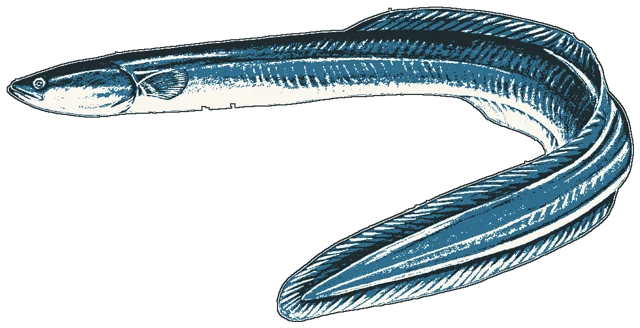
American eel
Anguilla rostrata · Fresh and salt
Few people in the US eat them (Maryland DNR) and most anglers cut them loose or use them as striper and crab bait, even though eel is a delicacy in Europe and Japan.
Worth a try: Eel is a popular food in Europe and Japan (Maryland DNR); skin it and smoke it hard.
- Tastes
- rich, sweet, dense, oily
- Limits
- Light regs. 25 per person per day, 9 in minimum, no closed season, in fresh water (freshwater license needed) and in marine waters. Aboard licensed party and charter boats the captain and each crew member may have 50 a day and each paying customer 25 (marine rule 3.11.1). Designated trout waters are closed to all fishing from the last day of February until 6 AM on the second Saturday in April. (2026-27 RI freshwater guide on eRegulations (page updated Sept 23, 2026); same numbers in 250-RICR-60-00-10, effective July 28, 2026; marine rule 250-RICR-90-00-3 s.3.11.1 effective May 17, 2026; DEM's size and possession table (rev. Nov 19, 2026) has the same 9 in and 25 a person) Source
- Where
- Rivers, lakes and coastal waters (RIDEM commonly caught species list).
- cut bait
- nightcrawlers
- Eels in some rivers carry high PCB levels; check local advisories.
- Do not eat (anyone): eels, or any other freshwater fish but stocked trout, from Rhode Island lakes and streams (RIDOH brochure, 2019, still posted; the 2026 guide says the same for pregnant women and young children).
- Do not eat (anyone): eels from the Woonasquatucket River below the Johnston/Smithfield line (near the Cricket Field dam), Grills Preserve Pond (Westerly), Roger Williams Park ponds (Providence), Yawgoog, Windcheck or Meadowbrook ponds, Quidnick Reservoir, or private ponds (no public access, or not stocked by the state).
- Do not eat (anyone): organs of any Pawcatuck River fish.
- Do not eat (pregnant, planning a pregnancy, breastfeeding or under 6): American eel, named by RIDOH for elevated mercury (page updated Aug 6, 2026).
- Do not eat (under 12, nursing, pregnant or may become pregnant): any Blackstone River fish (Massachusetts list, December 2025, PFAS).
- Catch and release is recommended (2026 guide): Mashapaug Pond, the rest of the Woonasquatucket River and other urban ponds and rivers.
- Limit (everyone): eel, one meal a month at most from anywhere else (2026 guide and RIDOH's 2019 brochure, highest mercury or PCB levels).
Atlantic menhaden
Brevoortia tyrannus · also called bunker, pogy, peanut bunker (juveniles) · Saltwater
NOAA: too small and oily to eat. Menhaden go to fish meal and oil, and they support a major bait fishery (ASMFC).
- Tastes
- very oily, soft, bony
- Limits
- Light regs. No minimum size, open all year. Fish 4 in or smaller: no limit. Fish over 4 in: 200 per person per day. State-water rule. (250-RICR-90-00-3 (Finfish) as amended effective May 17, 2026; in force Nov 21, 2026) Source
- Best months
- Arrive in May and peak in August and September; most leave by October.
- Where
- Widely distributed through Rhode Island waters while they are present, including the Providence River.
- Do not eat (anyone): any fish from the Woonasquatucket River below the Johnston/Smithfield line (near the Cricket Field dam).
Meal limits and other waters (3)
- Limit (pregnant or breastfeeding, and children): one serving of a caught fish with no advice of its own, and no other fish that week (federal chart on RIDOH's fish page, updated Aug 6, 2026).
- RIDOH has no line for menhaden.
- Tighter for pregnant women and young children: from salt water the 2026 freshwater guide names only salmon, light tuna, shrimp, pollock and catfish as low in mercury.
False albacore
Euthynnus alletteratus · also called albie, little tunny · Saltwater
Dark, bloody, strong-tasting meat; most anglers release albies or cut them up for shark and kingfish bait.
Worth a try: Kill it immediately, cut the gills and bleed it in a saltwater bucket, then ice it. Fresh loins make good sashimi (Outdoor Life; Florida Sportsman, where 'bonito' means little tunny), and LSU Sea Grant rates it better than its reputation. Trim all dark meat.
- Tastes
- strong; clean and sweet when bled and very fresh, firm, dark red
- Limits
- No limits. No Rhode Island size, season or possession limit. DEM's 2026 saltwater guide says Atlantic bonito and false albacore are not managed in state or federal waters, and the state finfish rules (250-RICR-90-00-3, effective May 17, 2026) have no section for false albacore. Rule 3.5(D) caps net-caught fish with no rule of their own at 2 quarts per person per day. (2026 RI saltwater guide on eRegulations, Tagging Projects page (updated May 20, 2026); 250-RICR-90-00-3 effective May 17, 2026 (sections 3.1 to 3.35)) Source
- Best months
- Action starts around the last week of August, usually peaks in the first couple of weeks of September, and can run into November.
- Where
- From Sakonnet Point to Watch Hill; in good years they run up Narragansett Bay.
- epoxy jigs
- Ciguatera has been reported (Florida Museum).
- Limit (everyone): one serving a month at most, RIDOH's 2019 line for fresh and frozen tuna (Seafood to Avoid, highest mercury or PCB levels); RIDOH does not name false albacore, a small tuna.
- Tighter for pregnant women and young children: from salt water the 2026 freshwater guide names only salmon, light tuna, shrimp, pollock and catfish as low in mercury.
- Ask RIDOH if you eat it often.
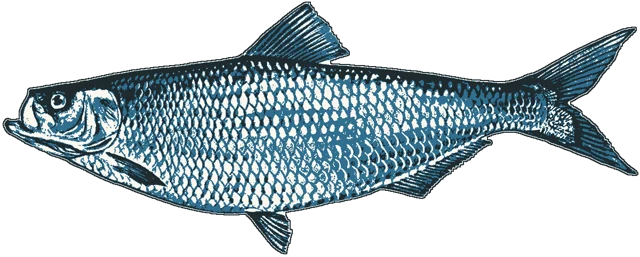
Hickory shad
Alosa mediocris · Saltwater
A spring sport fish that most anglers release: South Carolina DNR says hickory shad are not used as food for humans, and Virginia notes the few that are kept mostly become catfish bait.
- Limits
- No limits. No Rhode Island size, season or possession limit for hook-and-line anglers in marine waters: the finfish rules (250-RICR-90-00-3) ban American shad and river herring and have no section for hickory shad. Rule 3.5(D) caps net-caught fish with no rule of their own at 2 quarts per person per day. Fresh water: the state guide's table lists shad as closed. Caution: the state Division of Marine Fisheries' June 2025 baitfish article says 2 quarts per person per day for finfish with no rule of their own, while the rule text covers net-caught fish, so ask the division if you keep more. State-water rule. (250-RICR-90-00-3 (Finfish) as amended effective May 17, 2026) Source
- Best months
- Showing in mid-November in a 2026 report.
- Where
- The state record (2 lb 11 oz, 1989) came from the Narrow River.
- shad darts
- small spoons
- wet flies
- small Clouser minnows
- Do not eat (anyone): any fish from the Woonasquatucket River below the Johnston/Smithfield line (near the Cricket Field dam), or organs of any Pawcatuck River fish.
Meal limits and other waters (3)
- Limit (pregnant or breastfeeding, and children): one serving of a caught fish with no advice of its own, and no other fish that week (federal chart on RIDOH's fish page, updated Aug 6, 2026).
- RIDOH has no line for hickory shad.
- Tighter for pregnant women and young children: from salt water the 2026 freshwater guide names only salmon, light tuna, shrimp, pollock and catfish as low in mercury.
Oyster toadfish
Opsanus tau · Saltwater
An ugly, snapping bycatch fish that almost nobody keeps; toadfishes are generally considered undesirable as food (Florida Museum).
- Tastes
- mild
- Limits
- No limits. No Rhode Island size, season or possession limit for hook-and-line anglers: the finfish rules (250-RICR-90-00-3) have no section for toadfish. Rule 3.5(D) caps net-caught fish with no rule of their own at 2 quarts per person per day. Caution: the state Division of Marine Fisheries' June 2025 baitfish article says 2 quarts per person per day for finfish with no rule of their own, while the rule text covers net-caught fish, so ask the division if you keep more. State-water rule. (250-RICR-90-00-3 (Finfish) as amended effective May 17, 2026) Source
- squid
- clams
- bloodworms
- peeler crab
- Limit (pregnant or breastfeeding, and children): one serving of a caught fish with no advice of its own, and no other fish that week (federal chart on RIDOH's fish page, updated Aug 6, 2026).
- RIDOH has no line for oyster toadfish.
- Tighter for pregnant women and young children: from salt water the 2026 freshwater guide names only salmon, light tuna, shrimp, pollock and catfish as low in mercury.
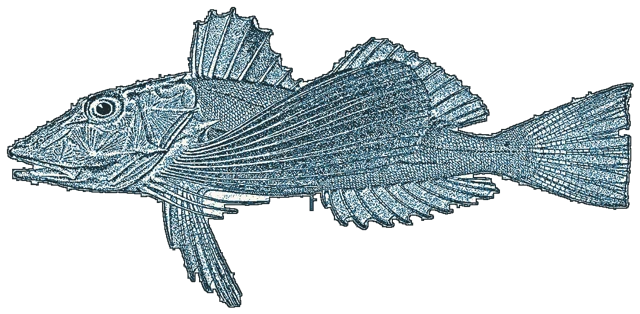
Sea robin
Prionotus spp. (mainly P. carolinus and P. evolans) · also called searobin, striped searobin, northern searobin · Saltwater
Anglers treat sea robins as bait-stealing nuisances and throw them back; few keep one to eat.
Worth a try: On The Water found the fillets delicious, better than fluke or sea bass, if a little darker and firmer. Fillet the tail section (watch the spines) and fry or bake it like fluke.
- Tastes
- mild, sweet, firm, slightly darker than sea bass
- Limits
- No limits. No Rhode Island size, season or possession limit for hook-and-line anglers: the finfish rules (250-RICR-90-00-3) have no section for sea robins. Rule 3.5(D) caps net-caught fish with no rule of their own at 2 quarts per person per day. Caution: the state Division of Marine Fisheries' June 2025 baitfish article says 2 quarts per person per day for finfish with no rule of their own, while the rule text covers net-caught fish, so ask the division if you keep more. State-water rule. (250-RICR-90-00-3 (Finfish) as amended effective May 17, 2026) Source
- Where
- On tautog bottom, where it steals bait along with scup and cunners.
- squid strips
- cut bait
- cut shrimp
- clams
- Spiny head and fins make it unpleasant to handle.
- Limit (pregnant or breastfeeding, and children): one serving of a caught fish with no advice of its own, and no other fish that week (federal chart on RIDOH's fish page, updated Aug 6, 2026).
- RIDOH has no line for sea robin.
- Tighter for pregnant women and young children: from salt water the 2026 freshwater guide names only salmon, light tuna, shrimp, pollock and catfish as low in mercury.
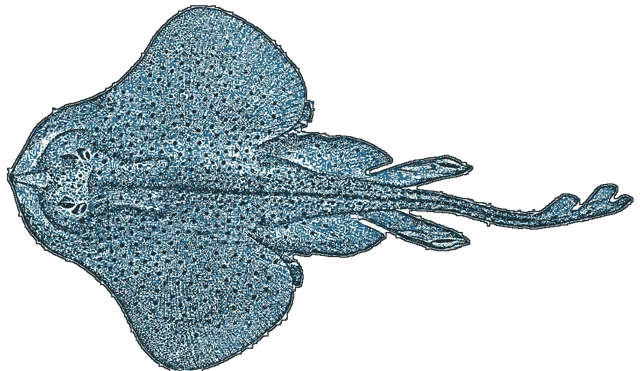
Skate
Rajidae (mainly Raja eglanteria, Leucoraja erinacea, L. ocellata) · Saltwater
Almost every US angler throws skates back or uses them for trap bait; Hank Shaw notes no one he knew growing up in New York and New Jersey kept one.
Worth a try: Kill the fish and cut off the wings right away, refrigerate a day or two so the meat firms up, and brine to remove any ammonia (Hank Shaw). NOAA describes winter skate as mild with a flavor similar to scallops. Classic prep: dredged and sautéed in brown butter with capers.
- Tastes
- mild, scallop-like, firm, stringy, corduroy grain
- Limits
- Light regs. 10 per person per day, no minimum size listed. Thorny skate may not be kept. State-water rule. (250-RICR-90-00-3 (Finfish) as amended effective May 17, 2026; in force Nov 21, 2026; same numbers on DEM's size and possession table (rev. Nov 19, 2026)) Source
- Where
- Clearnose skates turn up on light tackle north of the Newport Bridge (kayak catch in RIDEM's notable catches).
- cut bait
- squid
- clams
- Poorly handled skates and rays can smell of ammonia; bleed, ice and brine (Hank Shaw).
- Barndoor and thorny skates are protected; possession is prohibited (NOAA).
- Limit (everyone): about two to three servings a week, a serving being 4 ounces; skate is in Best Choices on both RIDOH's 2019 brochure and the federal chart on its fish page (updated Aug 6, 2026).
Meal limits and other waters (2)
- Limit (children over 2): one to two servings a week, 2 ounces each at ages 4 to 7 (RIDOH brochure).
- Tighter for pregnant women and young children: from salt water the 2026 freshwater guide names only salmon, light tuna, shrimp, pollock and catfish as low in mercury.
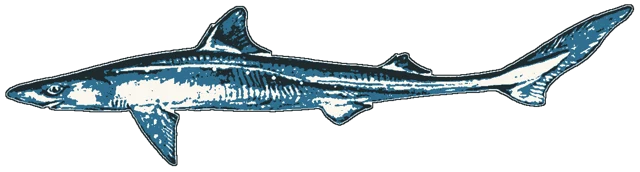
Spiny dogfish
Squalus acanthias · Saltwater
To most US anglers dogfish are a nuisance that swarms baits; NOAA says there is little consumer demand for it in the United States.
Worth a try: NOAA describes the meat as mild, sweet, flaky but firm. It is the fish in British fish and chips, and North Carolina Sea Grant's chef panels served it as 'cape shark' blackened, fried and in chowder. Bleed and gut it quickly like any shark.
- Tastes
- mild, sweet, flaky but firm, oilier than other sharks
- Limits
- No limits. No Rhode Island size, season or possession limit for recreational hook-and-line anglers: the finfish rules (250-RICR-90-00-3) give spiny dogfish a commercial section only. Finning is banned, and any spiny dogfish landed must have its fins and tail naturally attached. Rule 3.5(D) caps net-caught fish with no rule of their own at 2 quarts per person per day. Caution: the state Division of Marine Fisheries' June 2025 baitfish article says 2 quarts per person per day for finfish with no rule of their own, while the rule text covers net-caught fish, so ask the division if you keep more. State-water rule. (250-RICR-90-00-3 (Finfish) as amended effective May 17, 2026) Source
- strips of squid
- cut pieces of fish
- Do not eat (women of childbearing age and children): shark, which takes in spiny dogfish (RIDOH brochure, 2019).
- The federal chart on RIDOH's fish page (updated Aug 6, 2026) also lists shark under Choices to Avoid, highest mercury levels, for people who are pregnant or breastfeeding and for children.
- Limit (everyone else): one serving a month at most (RIDOH brochure, 2019, highest mercury or PCB levels).
White sucker
Catostomus commersonii · Freshwater
Suckers have perhaps the worst reputation of the rough fish (MeatEater) and are mostly raised and sold as bait (MN DNR); the many small bones keep most anglers from eating them.
Worth a try: Spring fish from cold water are light and sweet like walleye (MeatEater); score them deeply and fry hard, pickle them to dissolve the bones, or grind into fish cakes.
- Tastes
- light, sweet, firm, white, many small bones
- Limits
- No limits. No statewide creel, size or season rule: the guide lists All Other Freshwater Fish at None for creel and minimum size, with no closed season. Designated trout waters are closed to all fishing from the last day of February until 6 AM on the second Saturday in April. Suckers, carp and fallfish may also be taken by snare, spear or bow and arrow. The guide says suckers without naming the species. (2026-27 RI freshwater guide on eRegulations (page updated Sept 23, 2026); same numbers in 250-RICR-60-00-10, effective July 28, 2026) Source
- nightcrawlers drifted on the bottom
- worms
- spearing/netting where legal
- Do not eat (anyone): any freshwater fish but stocked trout from Rhode Island lakes and streams (RIDOH brochure, 2019, still posted; the 2026 guide says the same for pregnant women and young children).
- Do not eat (anyone): suckers from the Woonasquatucket River below the Johnston/Smithfield line (near the Cricket Field dam), Grills Preserve Pond (Westerly), Roger Williams Park ponds (Providence), Yawgoog, Windcheck or Meadowbrook ponds, Quidnick Reservoir, or private ponds (no public access, or not stocked by the state).
- Do not eat (anyone): organs of any Pawcatuck River fish.
- Do not eat (anyone): white sucker from the Rolling Dam impoundment on the Blackstone, just over the Massachusetts line (PCBs, DDT).
- Do not eat (under 12, nursing, pregnant or may become pregnant): any Blackstone River fish (Massachusetts list, December 2025, PFAS).
- Catch and release is recommended (2026 guide): Mashapaug Pond, the rest of the Woonasquatucket River and other urban ponds and rivers.
- Limit (everyone): native fish, once a month from the Pawcatuck River below Burdickville Road (PFAS, mercury; RIDOH).
Where to fish in Rhode Island
Fish named here are what people catch at each spot, not a promise they’re safe to eat. Read the eating advice on the fish’s card before you keep one.
# Salt or brackish# Freshwater
- 1Narragansett Bay estuary · salt
On The Water calls it a destination fishery for spring and fall blackfish, with a striper run from April, bluefish from mid-May, a spring weakfish bite, albies and bonito in late summer, and fluke, sea bass and scup on the bottom.
Known for: Striped bass, Tautog, Bluefish, Weakfish, Summer flounder
Access: Kayak and small-boat launches include Salter Grove Memorial Park (Warwick), Wickford Cove (North Kingstown), Compass Rose Beach (North Kingstown), South Ferry Road at the URI Bay Campus (Narragansett) and Third Beach (Middletown).
- 2Block Island and the waters south of it offshore · salt
Trophy striped bass arrive from mid-June, and August fluke fishing is prime near the Block Island wind farm, with sea bass and porgies on the same grounds.
Known for: Striped bass, Summer flounder, Black sea bass, Scup
Access: The Frances Fleet runs full-day trips from Port Galilee to the fluke grounds south of the island; the island's coast has shallow coves, reefs, rock piles, rips and deep ledges.
- 3Galilee and Point Judith inlet · salt
The Frances Fleet sails from Point Judith for tautog in fall and for fluke, sea bass and scup in summer.
Known for: Tautog, Black sea bass, Scup, Summer flounder
Access: State boat ramps at Galilee (corner of Galilee Rd. and Great Island Rd., southeast side of the Great Island Bridge, double linked concrete plank ramp, about 4 ft at mean low water) and Monahan's Dock.
- 4Providence and Seekonk rivers (Sabin Point, Festival Pier, Bold Point) estuary · salt
The Nature Conservancy and DMF seine survey documents tautog, scup, black sea bass, menhaden, bluefish, schoolie striped bass and summer flounder in the rivers; the artificial reef at Sabin Point holds tautog, sea bass and scup from spring through fall.
Known for: Tautog, Black sea bass, Scup, Striped bass, Bluefish
Access: Sabin Point Park; Festival Pier in Pawtucket and Bold Point in Providence have boat ramp access and ample parking.
- 5Fort Adams, Newport surf · salt
Fort Adams is one of the special shore angling sites where 2 of the 6 summer flounder may be 17 in or longer.
Known for: Summer flounder
Access: A Fort Adams boat ramp off Harrison Ave. is on the state access site list (about 3 ft at mean low water).
- 6Sakonnet River and Third Beach estuary · salt
Launching from Third Beach puts anglers on the Sakonnet River, where On The Water lists striped bass, fluke, albies and bonito.
Known for: Striped bass, Summer flounder, False albacore, Atlantic bonito
Access: Third Beach in Middletown has a concrete boat ramp; a parking fee applies when the beach is open.
- 7Narrow River (Pettaquamscutt River) river · brackish
The state white perch record (2 lb 7.28 oz, 2018) and the hickory shad record came from the Narrow River. Eating advice: RIDOH names white perch for elevated mercury in certain waters, and anyone pregnant, planning a pregnancy, breastfeeding or under 6 should not eat it.
Known for: White perch
Access: Narrow River boat ramp off Middlebridge Rd. on Pollock Ave. (concrete planks, about 3 ft at mean low water).
- 8Worden Pond lake · fresh
One of the five waters where DFW maintains the stocked northern pike fishery; DFW fyke-nets it for pike soon after ice-out in February and March. Eating advice: RIDOH's strictest line (2019 brochure) is no freshwater fish but stocked trout from Rhode Island lakes and streams, and the 2026 freshwater guide says avoid pike (mercury).
Known for: Northern pike
- 9Johnson's Pond (Flat River Reservoir) reservoir · fresh
One of five waters the state's pike program has kept up (the 2025 stocking went to three others), and the source of the state largemouth bass record (11 lb 3.2 oz, 2016). Eating advice: RIDOH's strictest line (2019 brochure) is no freshwater fish but stocked trout from Rhode Island lakes and streams, and the 2026 freshwater guide says avoid bass and pike (mercury).
Known for: Northern pike, Largemouth bass
Access: Listed as a private access area where organized tournaments of 6 or more people or 3 or more boats need a DFW permit.
- 10Wood River river · fresh
A stocked, designated trout water with its own limit: 2 trout between Route 165 and Barberville Dam from the second Saturday in May through the last day of February.
Access: The river flows through the Arcadia Management Area.
- 11Watchaug Pond lake · fresh
The state black crappie record (3 lb, 1976) came from Watchaug Pond, and it is a designated trout water. Eating advice: RIDOH's strictest line (2019 brochure) is no freshwater fish but stocked trout from Rhode Island lakes and streams, and the 2026 freshwater guide limits black crappie to one meal a month.
Known for: Black crappie
Access: Public cement boat ramp on Sanctuary Road.
- 12Wallum Lake lake · fresh
The state brown trout record (7 lb 9 oz, 2000) came from Wallum Lake, and Rhode Island regulations apply there. Eating advice (Massachusetts list, December 2025, PFAS, stocked trout included): 1 meal a month of any Wallum Lake fish if you are under 12, nursing, pregnant or may become pregnant, and 2 a month for everyone else.
Known for: Brown trout
Access: Paved boat ramp at the southern end in Burrillville; a Rhode Island freshwater license is honored here with Massachusetts.
- 13Olney Pond, Lincoln Woods State Park lake · fresh
A stocked designated trout water; the state golden rainbow trout record (12 lb 9.12 oz, 2019) came from Olney Pond.
Known for: Rainbow trout
Access: Wheelchair accessible fishing area in the park.
Rhode Island fishing license and rules
- Resident: $24.00 online / $26.00 at vendors (license year ends the last day of February); free permanent license for residents over 65, veterans with a 100% disability rating and people 100% permanently disabled
- Nonresident: $41.00 online / $43.00 at vendors
- Nonresident short-term: $20.00 online / $22.00 at vendors for a 3 consecutive day tourist license (freshwater)
- Saltwater: Separate recreational saltwater license: $7 resident, $10 nonresident, $5 for 7 days. Free for RI residents over 65 and active military stationed in RI. Not needed under 16 or on a licensed party or charter boat. A federal saltwater angler registration or a license from a reciprocal state (New York, Connecticut, Massachusetts, Maine) also counts, and Rhode Island residents may use their Rhode Island license in those four states. It applies in all RI waters and offshore federal waters.
- Who needs one: Freshwater: 15 and older. Saltwater: 16 and older. Freshwater exemptions: blind people, and landowners and family members fishing from property where they live. Saltwater exemptions: people who are blind or permanently disabled, people on leave from active military duty, holders of an Atlantic HMS permit, and anglers on licensed party and charter boats.
- Free fishing days: Freshwater: the first full weekend in May each year (May 2 and 3 in 2026, when neither a freshwater license nor a Trout Conservation Stamp was required for residents or nonresidents). Saltwater: license-free days are whichever days the DEM Director designates (250-RICR-90-00-3, section 3.4.1(D)).
More license details
Trout Conservation Stamp ($6.00 online / $6.50 vendor, resident and nonresident) is required to keep a trout, salmon or char or to fish catch and release or fly fishing only waters; not required under 15, over 65, with a 100% disability, for landowners and family fishing where they live, for trout from a lake or pond that shares a border with another state, or for privately owned trout from private ponds. Combination hunting and fishing license $43.00 online / $45.00 vendor. Freshwater license and stamp expire the last day of February. Freshwater licenses are honored with Connecticut only at Beach Pond, Killingly Pond, Hazard Pond and Peck Pond, and with Massachusetts at Wallum Lake. Buy at the Rhode Island Outdoors (RIO) system, bait and tackle shops and some town clerks.
Buy a license License types and fees
Fees: 2026 (freshwater license year ends the last day of February; pages updated Sept 23, 2026 and May 20, 2026).
- Saltwater license: needed from age 16 on shore or private boats, not on licensed party or charter boats. A federal saltwater registration or a New York, Connecticut, Massachusetts or Maine license also works.
- Striped bass: 28 in to under 31 in, 1 per person per day, circle hooks required with bait, no gaffing, no filleting while lines are in the water, racks kept whole and no more than 2 fillets per fish.
- Tautog (state waters): closed January 1 to March 31 and June 1 to July 31; 3 per person April 1 to May 31 and August 1 to October 14; 5 per person October 15 to December 31; 16 in minimum, only 1 over 21 in; no more than 10 per vessel per day except licensed party and charter boats.
- Black sea bass: closed January 1 to May 15; shore and private anglers keep 3 at 16 in from May 16 to December 31; party and charter boats keep 4 until August 31 and 6 from September 1.
- Winter flounder cannot be kept in Narragansett Bay north of the COLREGS line, the Harbor of Refuge, Point Judith Pond or Potter Pond; elsewhere the limit is 2 at 12 in from March 1 to December 31, with no taking at night in the coastal salt ponds, the Narrow River, Little Narragansett Bay or the Pawcatuck River.
- River herring (alewives and blueback herring) and American shad are closed in both fresh and marine waters, and fishing is banned within half a mile of a fish ladder mouth or outlet unless DFW signs allow it.
- Designated trout waters are closed to all fishing from the last day of February until 6 AM on the second Saturday in April, a Trout Conservation Stamp is needed to keep trout, and corn and chumming are banned in them.
- Wading boots with felt or other absorbent soles are banned in Rhode Island fresh waters, and releasing live bait, using goldfish as bait or possessing non-native bait fish is illegal.
- Carp, suckers and fallfish may be taken by snare, spear or bow and arrow in fresh water; otherwise freshwater anglers may use no more than 2 rods with 3 hooks each, and up to 5 single-hook lines through the ice.
- Fluorescent orange: everyone using a State Management Area, anglers included, must wear 200 square inches of solid fluorescent orange above the waist, visible from all sides, from the second Saturday in September to the last day of February, from the third Saturday in April to the last day of May, and during mourning dove and wild turkey seasons. It is 500 square inches in management areas and undeveloped state parks during shotgun deer seasons (2026-27 freshwater guide; 250-RICR-60-00-10, section 10.6.1(A)(22)).
- Northern snakehead: one was caught in Asa Pond, South Kingstown, in early summer 2026. Transporting or releasing live snakeheads is prohibited; DEM asks anglers to kill any they catch, never return it to the water, and contact the Division of Fish & Wildlife at 401-789-0281.
Limits here are summaries for convenience, checked on the date shown. The official Rhode Island regulations govern; check them before you keep a fish.
Before you eat it
Do not eat any fish (anyone) from the Woonasquatucket River below the Johnston/Smithfield line (near the Cricket Field dam in Johnston), down to Providence, with Allendale, Lyman Mill … (see the full list)
Do not eat any fish (anyone) from the Woonasquatucket River below the Johnston/Smithfield line (near the Cricket Field dam in Johnston), down to Providence, with Allendale, Lyman Mill, Manton and Dyerville ponds (dioxins, furans and PCBs; no turtles, eels or plants either), or from Grills Preserve Pond on the Pawcatuck River in Westerly (PFAS and mercury) (Rhode Island Department of Health, RIDOH, page updated Aug 6, 2026, and its January 2026 report). EPA's June 2, 2026 reminder, for North Providence and Johnston, says not to eat fish, turtles, eels, other wildlife or plants from the Woonasquatucket. Eating fish from any Roger Williams Park pond in Providence is not recommended (park guidance, in RIDOH's June 2026 report).
Do not eat any fish except trout (anyone) from Yawgoog Pond, Windcheck Pond, Meadowbrook Pond or Quidnick Reservoir, and do not eat fish from private ponds with no public access or not … (see the full list)
Do not eat any fish except trout (anyone) from Yawgoog Pond, Windcheck Pond, Meadowbrook Pond or Quidnick Reservoir, and do not eat fish from private ponds with no public access or not stocked by the state (trout from private vendors stocked into private ponds may be eaten). Catch and release is recommended in Mashapaug Pond, the whole Woonasquatucket River and other urban ponds and rivers (2026 freshwater guide, updated Sept 23, 2026), and RIDOH's mercury page says to avoid fish from urban ponds. RIDOH's fish page is easier on the Woonasquatucket above the Johnston/Smithfield line but says to limit largemouth bass, northern pike and pickerel there.
- Do not eat freshwater fish other than stocked trout (anyone), from any Rhode Island lake or stream: that is RIDOH's strictest line, from its 2019 brochure, still linked on its mercury page (its 2026 page is easier on trout and sunfish). The 2026 guide says choose stocked trout, vary where and what you eat, eat smaller fish, avoid bass, pike and pickerel, and limit black crappie and eel to one meal a month.
- Do not eat fish known for elevated mercury (pregnant, planning a pregnancy, breastfeeding or under 6): RIDOH names American eel, chain pickerel, largemouth bass, white perch and yellow perch from certain Rhode Island waters (page updated Aug 6, 2026). Pregnant women and young children should keep to fish low in mercury (stocked trout from fresh water; salmon, light tuna, shrimp, pollock and catfish from salt water; 2026 guide). The federal chart on RIDOH's page says only one serving of a caught fish that has no advice, and no other fish that week.
Do not eat shark, swordfish, bluefish or striped bass caught in Rhode Island or elsewhere (women of childbearing age and children; RIDOH brochure, 2019). Everyone else should limit those … (see the full list)
Do not eat shark, swordfish, bluefish or striped bass caught in Rhode Island or elsewhere (women of childbearing age and children; RIDOH brochure, 2019). Everyone else should limit those, and eel and fresh tuna, to one serving a month. Black sea bass, tautog, weakfish and monkfish: up to one serving a week (the federal chart on RIDOH's 2026 page is easier on some). Next door, Connecticut's guide (Jan 30, 2025) for Long Island Sound and connected rivers has weakfish and bluefish of 13 to 25 in at 1 meal a month for everyone, and no striped bass, and no bluefish over 25 in, for children under six and anyone pregnant, nursing or who could become pregnant.
Do not eat the organs of any Pawcatuck River fish (RIDOH, April 2025). Pawcatuck River downstream of Burdickville Road: native fish (perch, bass and pickerel) no more than once a month … (see the full list)
Do not eat the organs of any Pawcatuck River fish (RIDOH, April 2025). Pawcatuck River downstream of Burdickville Road: native fish (perch, bass and pickerel) no more than once a month (PFAS, mercury). RIDOH has no recommendation for other parts of the river, withdrew its once-a-month line for stocked trout there in April 2025, and has no data to advise on them or on PFAS in trout stocked in Rhode Island ponds. PFAS is also elevated in Upper and Lower Melville Ponds (Portsmouth) and, in RIDOH's June 2026 report, in largemouth bass from all nine waters tested (Belleville, Chapman, Gorton, Roger Williams Park, Stafford and Warwick ponds, Bowdish and Slatersville reservoirs and Tiogue Lake; highest at Warwick Pond); the samples are too few and too old to set meal limits, and RIDOH has issued no new advice from them (July 2026).
Do not eat any fish, stocked trout included, from the Blackstone River if you are under 12, nursing, pregnant or may become pregnant (Massachusetts list, December 2025, for its stretch … (see the full list)
Do not eat any fish, stocked trout included, from the Blackstone River if you are under 12, nursing, pregnant or may become pregnant (Massachusetts list, December 2025, for its stretch down to the Rhode Island line; PFAS); everyone else, 2 meals a month. Wallum Lake, shared with Massachusetts: 1 meal a month of any fish for that group and 2 for everyone else (PFAS). In the Rolling Dam impoundment on the Blackstone, just over the line, nobody should eat carp or white sucker and that group should eat no fish (PCBs, DDT). Connecticut's side of Beach, Hazard and Killingly ponds (guide of Jan 30, 2025): freshwater fish other than trout and sunfish, 1 meal a month for children under six and anyone pregnant, nursing or who could become pregnant, and 1 a week for everyone else; Rhode Island's own line above is stricter.
- Do not fish in, or eat fish from, water with an algae (cyanobacteria) bloom; advisories change week to week, so check dem.ri.gov/bluegreen before you go. On Oct 30, 2026 the state advised against fishing Willow Lake and urged caution at all Roger Williams Park Ponds until further notice. Confirm all advice with RIDOH's current list (health.ri.gov/fish) or the Health Hotline, 1 (800) 942-7434.
Local lingo
- Tog or blackfish: tautog.
- Fluke: summer flounder.
- Squeteague: weakfish.
- Porgy: scup.
- Bunker or pogy: Atlantic menhaden.
- Albie: false albacore.
- Bergall: cunner.
- Schoolie: a small striped bass.
Questions anglers ask about Rhode Island
What is the most common fish in Rhode Island?
In NOAA MRIP estimates for 2023 to 2025, scup was the most-caught saltwater fish in Rhode Island at about 4.1 million fish a year, with black sea bass close behind at about 4.0 million and tautog at about 2.7 million. Scup is also the one most often kept (about 1.9 million a year); 95% of black sea bass were released. MRIP is a saltwater survey, so it does not rank freshwater fish.
Do I need a saltwater fishing license in Rhode Island?
Yes. Separate recreational saltwater license: $7 resident, $10 nonresident, $5 for 7 days. Free for RI residents over 65 and active military stationed in RI. Not needed under 16 or on a licensed party or charter boat. A federal saltwater angler registration or a license from a reciprocal state (New York, Connecticut, Massachusetts, Maine) also counts, and Rhode Island residents may use their Rhode Island license in those four states. It applies in all RI waters and offshore federal waters.
What is the best fish to eat in Rhode Island?
19 of the 47 fish on our Rhode Island board rate Best eating. Among the fish caught most: black sea bass, tautog, striped bass, summer flounder, black crappie and bluegill.
What is the state fish of Rhode Island?
Striped bass: Official state fish, R.I. Gen. Laws § 42-4-16 (P.L. 2000, ch. 201).
Does Rhode Island have free fishing days?
Freshwater: the first full weekend in May each year (May 2 and 3 in 2026, when neither a freshwater license nor a Trout Conservation Stamp was required for residents or nonresidents). Saltwater: license-free days are whichever days the DEM Director designates (250-RICR-90-00-3, section 3.4.1(D)).
Which Rhode Island fish are better to eat than their reputation?
We give the Worth a try badge to northern pike, common carp, American eel, white sucker, bluefish, spiny dogfish, skate, sea robin, northern puffer, American shad and false albacore: fish most anglers toss or rate low that eat well when they're cleaned and cooked right. Each card says how.
Neighboring states
Sources
Limits, prices and advisories come from these pages, read on or before Nov 21, 2026. Where a line gives its own date, that’s the date it rests on. Eating advice changes: check the state’s current list. Ratings are national and come from the fish’s own page.
59 sources
- dem.ri.gov license info
- dem.ri.gov where to fish
- dem.ri.gov state records
- dem.ri.gov American eel: regs; Atlantic cod: regs; black sea bass: regs; bluefish: regs; monkfish: regs; scup: regs; skate: regs; striped bass: regs; summer flounder: regs
- dem.ri.gov brook trout: advisory; brown trout: advisory; rainbow trout: advisory
- health.ri.gov American eel: advisory; American shad: advisory; Atlantic bonito: advisory; Atlantic cod: advisory; Atlantic mackerel: advisory; Atlantic menhaden: advisory; bl
- health.ri.gov brook trout: advisory; brown trout: advisory; rainbow trout: advisory
- health.ri.gov American eel: advisory; American shad: advisory; black crappie: advisory; bluegill: advisory; brook trout: advisory; brown trout: advisory; bullhead (black, bro
- health.ri.gov American eel: advisory; American shad: advisory; Atlantic menhaden: advisory; black crappie: advisory; bluefish: advisory; bluegill: advisory; brook trout: advi
- health.ri.gov American eel: advisory; black crappie: advisory; bluegill: advisory; brook trout: advisory; brown trout: advisory; bullhead (black, brown, yellow): advisory; ch
- health.ri.gov American shad: advisory; Atlantic bonito: advisory; Atlantic cod: advisory; Atlantic mackerel: advisory; Atlantic menhaden: advisory; black sea bass: advisory;
- health.ri.gov American eel: advisory; Atlantic cod: advisory; Atlantic mackerel: advisory; black crappie: advisory; black sea bass: advisory; bluefish: advisory; bluegill: ad
- onthewater.com Atlantic bonito: months; Atlantic mackerel: baits; Atlantic mackerel: where; striped bass: baits; striped bass: months; striped bass: where; tautog: months
- onthewater.com black sea bass: baits
- onthewater.com fishing spots; summer flounder: baits; summer flounder: months; summer flounder: where
- onthewater.com Atlantic bonito: where; bluefish: baits; bluefish: months; bluefish: where; fishing spots; striped bass: months; striped bass: where; weakfish: where
- onthewater.com Atlantic cod: regs; black crappie: months; chain pickerel: months; cunner: months; cunner: names; cunner: where; yellow perch: months
- onthewater.com black crappie: months; chain pickerel: baits; chain pickerel: months; largemouth bass: baits; largemouth bass: months; northern pike: months; tautog: baits; whi
- onthewater.com Atlantic mackerel: months; common carp: months
- onthewater.com largemouth bass: where; rainbow trout: months; striped bass: baits
- onthewater.com striped bass: baits; tautog: where; weakfish: months
- onthewater.com common carp: months; largemouth bass: where
- onthewater.com black sea bass: months; summer flounder: where
- onthewater.com Atlantic bonito: months; black sea bass: where
- onthewater.com black sea bass: where; common carp: months; largemouth bass: months; scup: baits; scup: months; scup: where; summer flounder: where
- onthewater.com largemouth bass: months; rainbow trout: months
- onthewater.com Atlantic mackerel: months; black sea bass: months; black sea bass: where; fishing spots; hickory shad: months; tautog: baits; tautog: months; tautog: where
- onthewater.com Atlantic cod: where
- onthewater.com false albacore: months; false albacore: names; false albacore: where
- onthewater.com bluefish: baits; scup: where
- onthewater.com tautog: baits; tautog: where
- onthewater.com cunner: where; sea robin: where; tautog: baits
- portal.ct.gov weakfish: advisory
- rio.ri.gov license buy
- rules.sos.ri.gov American eel: regs; black crappie: regs; bluegill: regs; brook trout: regs; brown trout: regs; bullhead (black, brown, yellow): regs; chain pickerel: regs; comm
- rules.sos.ri.gov river herring (alewife and blueback herring): names; striped bass: regs
- rules.sos.ri.gov American eel: regs; American shad: regs; Atlantic bonito: regs; Atlantic cod: regs; Atlantic mackerel: regs; Atlantic menhaden: regs; black sea bass: regs; blue
- webserver.rilegislature.gov state fish
- eregulations.com freshwater regs
- eregulations.com American eel: names; American eel: where; black crappie: names; bluegill: names; brook trout: names; brook trout: where; brown trout: names; bullhead (black, br
- eregulations.com largemouth bass: regs
- eregulations.com American shad: regs; landlocked Atlantic salmon: regs; river herring (alewife and blueback herring): regs
- eregulations.com American eel: advisory; American shad: advisory; Atlantic bonito: advisory; Atlantic cod: advisory; Atlantic mackerel: advisory; Atlantic menhaden: advisory; bl
- eregulations.com license fees
- eregulations.com fishing spots; northern pike: months; northern pike: names; northern pike: where
- eregulations.com American eel: regs; black crappie: regs; bluegill: regs; brook trout: regs; brown trout: regs; bullhead (black, brown, yellow): regs; chain pickerel: regs; comm
- eregulations.com black crappie: where; brook trout: where; brown trout: where; chain pickerel: where; common carp: where; fishing spots; hickory shad: where; landlocked Atlantic
- eregulations.com fishing spots; rainbow trout: where
- eregulations.com saltwater regs
- eregulations.com Atlantic mackerel: regs; cunner: regs; oyster toadfish: regs; sea robin: regs; spiny dogfish: regs
- eregulations.com Atlantic mackerel: regs; Atlantic menhaden: months; Atlantic menhaden: names; Atlantic menhaden: where; cunner: regs; hickory shad: regs; longhorn sculpin: regs
- eregulations.com Atlantic bonito: where; black sea bass: where; false albacore: baits; skate: where
- eregulations.com fishing spots; tautog: where
- eregulations.com Atlantic cod: names; black sea bass: names; bluefish: names; monkfish: names; monkfish: where; river herring (alewife and blueback herring): names; scup: names;
- eregulations.com American eel: regs; American shad: regs; black sea bass: regs; bluefish: regs; fishing spots; river herring (alewife and blueback herring): regs; scup: regs; st
- eregulations.com striped bass: regs
- eregulations.com Atlantic bonito: regs; false albacore: regs
- mass.gov American eel: advisory; black crappie: advisory; bluegill: advisory; brook trout: advisory; brown trout: advisory; bullhead (black, brown, yellow): advisory; ch
- st.nmfs.noaa.gov catch survey; hickory shad: catch; longhorn sculpin: catch; monkfish: catch; northern puffer: catch; sea raven: catch; silver hake: catch
Illustrations: stencils we made from public-domain art by John J. Baird (Black crappie); Duane Raver, U.S. Fish and Wildlife Service (Black sea bass, Brook trout, Rainbow trout, Redbreast sunfish, Striped bass, White perch, Yellow perch, American shad, Bluefish, Bullhead (black, brown, yellow), Chain pickerel, Smallmouth bass, American eel, Hickory shad, Spiny dogfish); NOAA (Bluegill); U.S. Fish and Wildlife Service (Brown trout, Common carp, Largemouth bass); Hugh McCormick Smith (Summer flounder, Northern puffer, Oyster toadfish, Sea robin); James Alexander Henshall (Weakfish); David Starr Jordan (Northern pike); New York Fish and Game Commission (Skate), via Wikimedia Commons.
Spotted an error or a rule that changed? Tell us and we will check it against the official source.