Oregon · fresh and salt
Fish in Oregon: what’s worth eating, and what’s garbage
Oregon fishing is known for Chinook and coho salmon and steelhead (Chinook is the state fish) in the Columbia River, the Willamette system and short coastal rivers, along with ocean rockfish, lingcod, halibut and albacore out of ports such as Newport, Depoe Bay and Garibaldi. Inland, anglers fish trout and kokanee in Cascade lakes, smallmouth bass and walleye in the Columbia, and crappie and catfish in Snake River reservoirs.
38 fish rated · limits checked Nov 21, 2026 against ODFW and federal sources, then re-checked: 581 of 591 details confirmed or corrected on the official pages
Resident $50 annual angling license (valid Jan 1 – Dec 31); senior (70+, Oregon resident 5 years) $34; youth 12-17 license $10. Nonresident $138 annual angling license.
Buy a licenseCovered by the same angling license. An Ocean Endorsement is required to fish in the ocean from beaches… Full details
Saltwater limitsFreshwater limits, seasons and size rules from Oregon Department of Fish and Wildlife.
Freshwater limitsChinook salmon
Free Fishing Days (no license, Combined Angling Tag, endorsement, or Two-Rod or Rogue-South Coast validation needed; all other rules apply): Nov 27-28, 2026 (Thanksgiving weekend)… Full details
The Oregon table-fare board
Fish Oregon anglers catch, sorted by how they eat. The bars show how heavily each one is regulated here. Tap a fish for the details.
No limits Light regs Heavy regs No harvest
Best eating21
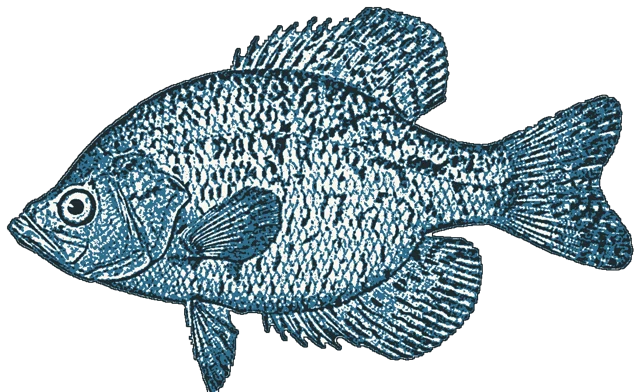 Black crappie
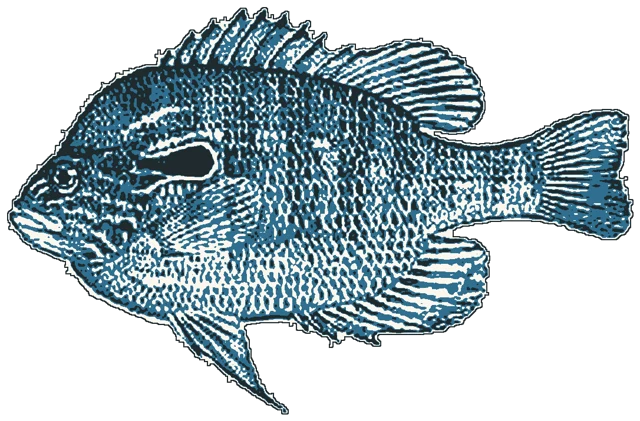 Bluegill“sunfish”
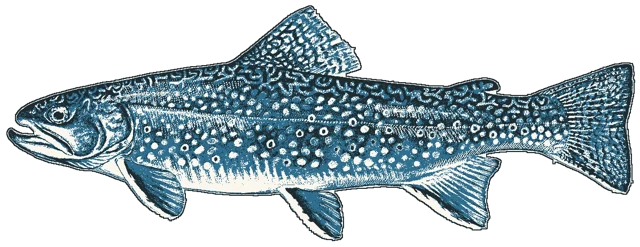 Brook trout
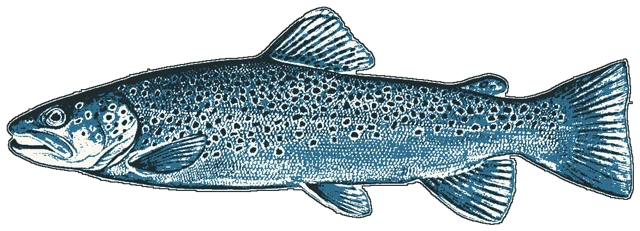 Brown troutCabezon
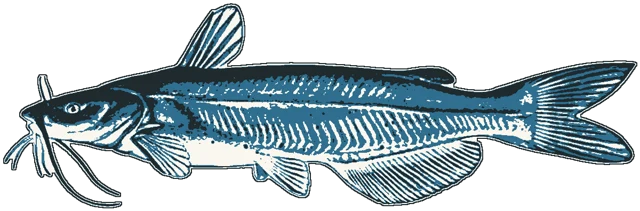 Channel catfishChinook salmon“king salmon”Coho salmonCutthroat trout“sea-run cutthroat”Kelp greenling“sea trout (greenling)”Kokanee salmon“landlocked sockeye salmon”LingcodPacific halibut
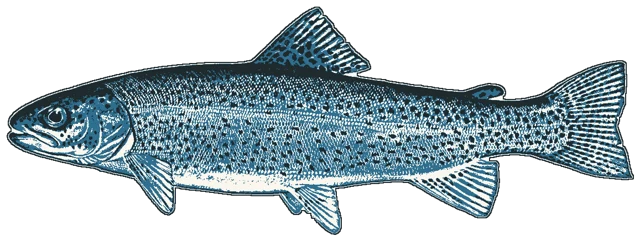 Rainbow trout“redband trout (inland native rainbow)”Rockfish“sea bass”Sablefish“black cod”Steelhead“sea-run rainbow or redband trout”
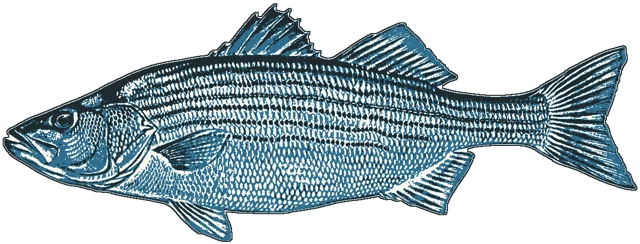 Striped bass“striper”
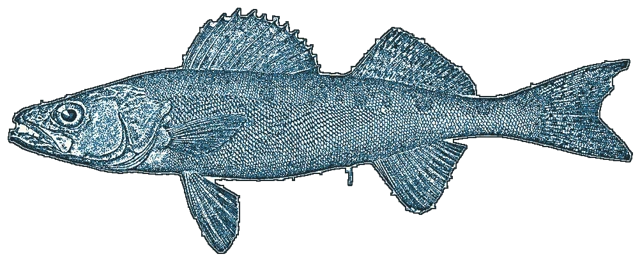 Walleye
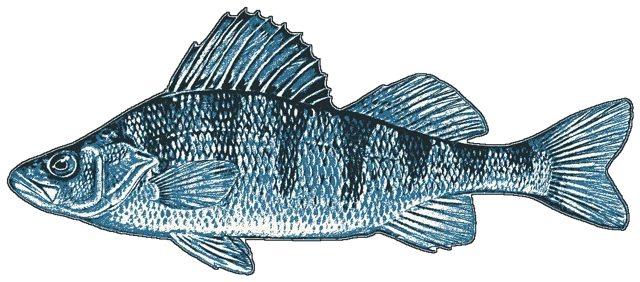 Yellow perch
Just OK12
Garbage fish3
Catch & release
What’s actually caught in Oregon
Three fish are counted here. The numbers average 2024 and 2025 and are fish landed (kept) on ocean bottomfish trips, from ODFW's sport bottomfish newsletters, which use its Ocean Recreational Boat Survey. Salmon, halibut, albacore, shore-caught and freshwater fish are not in these numbers.
- Rockfish Best eatingBlack rockfish about 239,600 landed in 2024 and 224,500 in 2025 (average 232,050); blue and deacon rockfish combined 45,400 and 44,300 (average 44,850); yellowtail rockfish 46,800 and 29,400 (average 38,100); canary rockfish 31,100 and 16,300 (average 23,700); nearshore China and copper rockfish 9,600 and 9,500 (average 9,550)
- Lingcod Best eatingLingcod landed 52,200 in 2024 and 58,500 in 2025: about 55,350 a year
- Cabezon Best eatingCabezon landed 4,100 in 2024 and 3,600 in 2025: about 3,850 a year
Source: ODFW Marine Resources Program Sport Bottomfish Newsletters (Ocean Recreational Boat Survey) .
Fish by fish
Why each one sits where it does, the current Oregon limits, and the bait that works.
Albacore tuna
Thunnus alalunga · Saltwater
ODFW calls the meat excellent barbecued, canned or smoked; the Hawaii Seafood Council calls it the lightest, mildest tuna.
- Tastes
- mild, light, firm; softer than other tunas raw
- Limits
- Light regs. Offshore pelagic species (all tuna and mackerels, swordfish, billfish, jacks, opah, dorado, pomfret and most sharks): 25 fish a day in aggregate, no minimum length listed. Beyond 3 miles from shore, chumming and any number of rods are allowed if only offshore pelagic species are kept; albacore may be partly cleaned at sea (head and entrails only, collar and tail intact). An Ocean Endorsement is required. From Jan 1, 2027: same limit; the Ocean Endorsement price changes (see license costs). (2026 Oregon Sport Fishing Regulations, in force through Dec 31, 2026 (2026 pamphlet PDF on eRegulations); from Jan 1, 2027 the 2027 edition (eRegulations, Nov 20, 2026) lists the same rule) Source
- Best months
- ODFW: albacore generally show up 15 to 200 or more miles offshore in mid-July and stay through September.
- Where
- Offshore, 15 to 200 miles or more off the coast where the surface water is at least 59 F and a clear blue.
- cedar plugs or diving plugs trolled at 5 knots
- live or dead bait
- metal jigs
- Dries out quickly if overcooked (Hawaii Seafood Council)
Before you eat it: Limit: 1 meal a week of albacore caught by troll or pole off Washington, Oregon and California (OHA Fish and Seafood Guide, March 2017). OHA's advisory tables list no ocean finfish, and OHA says a water with no advisory has not necessarily been tested.
Black crappie
Pomoxis nigromaculatus · Freshwater
One of the classic fish-fry fish: MeatEater counts crappie among the best-eating fish in freshwater.
- Tastes
- mild, sweet, delicate, flaky, white
- Limits
- No limits. No daily limit and no minimum length in the zone tables. Exceptions: Henry Hagg Lake and Willow Creek Reservoir 25 crappie a day; Vernonia Pond and many Willamette Valley and lower Columbia ponds (Adair, Bond Butte, Commonwealth, East Salish, Hartman, St. Louis, Smith and Bybee, Wilsonville and Woodburn) 10 crappie a day. Stream angling is limited to artificial flies and lures in most zones; Southeast Zone streams are open during trout season only. From Jan 1, 2027: no change in the 2027 tables. (2026 Oregon Sport Fishing Regulations, in force through Dec 31, 2026 (2026 pamphlet PDF on eRegulations); from Jan 1, 2027 the 2027 edition (eRegulations, Nov 20, 2026) lists the same rule) Source
- Best months
- ODFW: best in early spring when they are in shallow coves, and again in the fall; early morning or evening.
- Where
- Brownlee, Oxbow and Hells Canyon reservoirs on the Snake; Southeast Zone waters such as Warner Lakes, Gerber and Owyhee reservoirs; Willamette Valley reservoirs.
- small jigs (red and white, green and white, chartreuse) under a bobber
- crickets
- grasshoppers
- worms
- bits of worm or shrimp on a small lure
- Do not eat (anyone): crappie from the Columbia between Bonneville Dam and Ruckel Creek (PCBs).
- Do not eat (anyone): whole crappie from the Columbia Slough (fillet only, 1 meal a month).
- Do not eat (anyone): any fish from areas with an active algae bloom (check OHA's current list).
- Do not eat (under 6, pregnant or may become pregnant, nursing, thyroid or immune problems): crappie from Antelope or Cottage Grove reservoirs or Jordan Creek (everyone else 1 meal a month).
Meal limits and other waters (4)
- Limit (everyone): lower Willamette (Sellwood Bridge to the Columbia) and Multnomah Channel down to the Sauvie Island Bridge 2 meals a month, 4 if fillet only.
- Limit (that group / everyone else, meals a month): Owyhee and Emigrant reservoirs 1 / 3; Willamette River to Eugene and Cooper Creek, Galesville and Dorena reservoirs 1 / 4; Plat I Reservoir and Owyhee River 2 / 6; Snake River, Brownlee included, 3 / 8; Applegate Lake 4 / 13; Fern Ridge Reservoir 4 / 4; Henry Hagg Lake 5 / 5; Freeway Lakes 6 / 6; Prineville Reservoir 6 / 17; Big Cliff Reservoir panfish 21 / no limit.
- Limit (everyone): Columbia from Ruckel Creek to McNary Dam 1 meal a week of all resident fish together; Multnomah Channel below the Sauvie Island Bridge and Scappoose Bay 1 meal a month of whole fish (fillet 4 / 6).
- OHA list (Dec 31, 2025) and 2027 regulations table.
Bluegill
Lepomis macrochirus · also called sunfish · Freshwater
MeatEater calls the flesh light, delicate and sweet; the original fish-fry panfish.
- Tastes
- mild, sweet, firm, flaky
- Limits
- No limits. No daily limit and no minimum length in the zone tables. Stream angling is limited to artificial flies and lures in most zones; Southeast Zone streams are open during trout season only. From Jan 1, 2027: no change in the 2027 tables. (2026 Oregon Sport Fishing Regulations, in force through Dec 31, 2026 (2026 pamphlet PDF on eRegulations); from Jan 1, 2027 the 2027 edition (eRegulations, Nov 20, 2026) lists the same rule) Source
- Best months
- ODFW: best in late spring when they spawn in shallow water (spawning begins near 68 F).
- Where
- Lower-elevation ponds, lakes, reservoirs and slow-stream backwaters statewide; ODFW names Dog Lake and Lake of the Woods as easy beginner waters in the Southeast Zone.
- worms
- mealworms
- crickets
- pieces of nightcrawler
- small jigs and spinners
- small flies
- Do not eat (anyone): bluegill from the Columbia between Bonneville Dam and Ruckel Creek, or from the lower Willamette (Sellwood Bridge to the Columbia) and Multnomah Channel down to the Sauvie Island Bridge (PCBs).
- Do not eat (anyone): whole bluegill from the Columbia Slough (fillet only, 1 meal a month).
- Do not eat (anyone): any fish from areas with an active algae bloom (check OHA's current list).
- Do not eat (under 6, pregnant or may become pregnant, nursing, thyroid or immune problems): bluegill from Antelope or Cottage Grove reservoirs or Jordan Creek (everyone else 1 meal a month).
Meal limits and other waters (3)
- Limit (that group / everyone else, meals a month): Owyhee and Emigrant reservoirs 1 / 3; Willamette River to Eugene and Cooper Creek, Galesville and Dorena reservoirs 1 / 4; Plat I Reservoir and Owyhee River 2 / 6; Snake River, Brownlee included, 3 / 8; Applegate Lake 4 / 13; Fern Ridge Reservoir 4 / 4; Henry Hagg Lake 5 / 5; Walter Wirth Lake 6 / 6; Prineville Reservoir 6 / 17; Freeway Lakes 10 / 10; Big Cliff Reservoir panfish 21 / no limit.
- Limit (everyone): Columbia from Ruckel Creek to McNary Dam 1 meal a week of all resident fish together; Multnomah Channel below the Sauvie Island Bridge and Scappoose Bay 1 meal a month of whole fish (fillet 4 / 6).
- OHA list (Dec 31, 2025) and 2027 regulations table.
Brook trout
Salvelinus fontinalis · Freshwater
Often called the tastiest trout: MeatEater describes the meat as light and delicate with an almost sweet flavor.
- Tastes
- sweet, delicate, light, delicate
- Limits
- Heavy regs. Streams: no limit on size or number of brook trout unless an exception says otherwise, during the stream trout season (May 22-Oct 31 in most zones; Southeast streams open all year). Lakes: part of the 5-trout limit in the Northwest, Southwest, Willamette, Central and Southeast zones; the Northeast Zone lists no limit on size or number of brook trout. Listed high lakes have no limit: Willamette National Forest lakes such as Blair, Blue, Corner and Linton, Bull of the Woods Wilderness lakes (Beth, Big Slide, Lenore, Pansy, Lower Twin and Upper Twin), and Timothy Lake. McKenzie River below Tamolitch Falls: wild trout, including brook trout, must be released. The Columbia Zone is closed to trout unless a water is listed. From Jan 1, 2027: no change in the 2027 tables. (2026 Oregon Sport Fishing Regulations, in force through Dec 31, 2026 (2026 pamphlet PDF on eRegulations); from Jan 1, 2027 the 2027 edition (eRegulations, Nov 20, 2026) lists the same rule) Source
- Where
- High mountain lakes and headwater tributaries; ODFW record fish: Deschutes River (9 lb 6 oz, 1980).
- flies that mimic insect larvae and nymphs
- lures and bait (brook trout are aggressive biters)
- Do not eat (anyone): any fish from areas with an active algae bloom (check OHA's current list).
- Do not eat (under 6, pregnant or may become pregnant, nursing, thyroid or immune problems): brook trout or any other resident fish from Antelope Reservoir or Jordan Creek; everyone else 1 meal a month (mercury).
Meal limits and other waters (3)
- Limit (that group / everyone else, meals a month): all resident fish from East Lake and Emigrant Reservoir 1 / 3, and from Big Cliff Reservoir 4 / 7.
- OHA lists waters rather than brook trout by name; where a water says all resident fish, the limit covers brook trout that live there.
- OHA list (Dec 31, 2025) and 2027 regulations table.
Brown trout
Salmo trutta · Freshwater
Good trout eating like rainbows; most kept browns are stocked fish.
- Tastes
- mild to rich, flaky
- Limits
- Heavy regs. Streams: no limit on size or number of brown trout unless an exception says otherwise, during the stream trout season (May 22-Oct 31 in most zones; Southeast streams open all year). Lakes: part of the 5-trout limit with an 8 in minimum in the Northwest, Southwest, Willamette, Central and Southeast zones; the Northeast Zone lists no limit on size or number of brown trout. Exceptions: Lake Billy Chinook no limit on size or number of brown trout; Diamond Lake and the Owyhee River catch-and-release for brown trout; Wood River 2 brown trout a day. The Columbia Zone is closed to trout unless a water is listed. From Jan 1, 2027: no change in the 2027 tables. (2026 Oregon Sport Fishing Regulations, in force through Dec 31, 2026 (2026 pamphlet PDF on eRegulations); from Jan 1, 2027 the 2027 edition (eRegulations, Nov 20, 2026) lists the same rule) Source
- Where
- Cold, spring-fed tributaries and large rivers and lakes; ODFW record fish: Paulina Lake (28 lb 5 oz, 2002); also Miller Lake near Crescent.
- spinners
- flies that mimic minnows
- Do not eat (anyone): resident brown trout from the Columbia between Bonneville Dam and Ruckel Creek (PCBs).
- Do not eat (anyone): any fish from areas with an active algae bloom (check OHA's current list).
- Do not eat (under 6, pregnant or may become pregnant, nursing, thyroid or immune problems): brown trout 16 in or longer from East Lake (Deschutes County); everyone else 1 meal a month (mercury).
- Do not eat (that group): brown trout from Antelope Reservoir or Jordan Creek; everyone else 1 meal a month.
Meal limits and other waters (3)
- Limit (that group / everyone else, meals a month): shorter brown trout from East Lake, and brown trout from Owyhee and Emigrant reservoirs, 1 / 3; Owyhee River to Three Forks 2 / 6; Columbia from Ruckel Creek to McNary Dam 4 / 4; Big Cliff Reservoir 4 / 7.
- Other listed waters set limits for all resident fish.
- OHA list (Dec 31, 2025) and 2027 regulations table.
Cabezon
Scorpaenichthys marmoratus · Saltwater
Hank Shaw calls the 'mighty cabezon' the best of the sculpins; the meat is white and lean like lingcod and rockfish.
- Limits
- Heavy regs. 2026: 1 cabezon a day as a sub-limit within the 4-fish general marine species limit, 16 in minimum, no retention Jan 1-June 30, open from July 1. Cabezon has an annual harvest cap, so ODFW can change it in-season. Cabezon roe is poisonous to humans. From Jan 1, 2027: 16 in minimum in the 2027 table; the season and bag limit are set after the pamphlet is printed (Fish and Wildlife Commission, Dec 11, 2026). (ODFW 2026 sport groundfish limits, effective Jan 1, 2026 and in force through Dec 31, 2026; from Jan 1, 2027 the 2027 edition applies, and ODFW sets the bag limits after that book is printed) Source
- Best months
- ODFW: retention opens July 1 in 2026; fish within a foot or two of the bottom.
- Where
- Kelp beds, rocky headlands and hard bottoms; ODFW names hooking cabezon from a rocky jetty.
- rubber-tailed jigs tipped with bait
- Never eat the roe: cabezon eggs are poisonous and can make a person violently ill (ODFW, pierfishing.com)
- Do not eat (anyone): cabezon roe, which is poisonous to humans (ODFW).
- ODFW says cabezon meat can be safely eaten.
Meal limits and other waters (2)
- Limit: 1 serving a week for women 18 to 49 and children under 18, 2 for everyone else (California coastal list, Nov 2016, which OHA's page links for near-shore fish).
- OHA's advisory tables list no ocean finfish, and OHA says a water with no advisory has not necessarily been tested.
Channel catfish
Ictalurus punctatus · Freshwater
Very good to eat (Maryland DNR) and delicious when cooked (TPWD), and the basis of US catfish farming.
- Tastes
- mild, sweet, firm, moist
- Limits
- No limits. No daily limit and no minimum length in the zone tables. Exceptions: Willamette Valley and lower Columbia ponds (Adair, Bond Butte, Commonwealth, East Salish, Smith and Bybee, St. Louis, Wilsonville, Woodburn and Hartman ponds) 2 channel catfish a day. Stream angling is limited to artificial flies and lures in most zones; Southeast Zone streams are open during trout season only. From Jan 1, 2027: no change in the 2027 tables. (2026 Oregon Sport Fishing Regulations, in force through Dec 31, 2026 (2026 pamphlet PDF on eRegulations); from Jan 1, 2027 the 2027 edition (eRegulations, Nov 20, 2026) lists the same rule) Source
- Where
- Columbia and Snake rivers and their impoundments, John Day River, Owyhee Reservoir and River, and the lower Willamette (do not eat from there below the Sellwood Bridge); ODFW record fish: McKay Reservoir (36 lb 8 oz, 1980).
- worms
- strips of fish belly
- liver
- commercial stink bait
- Do not eat (anyone): catfish from the Columbia between Bonneville Dam and Ruckel Creek, or from the lower Willamette (Sellwood Bridge to the Columbia) and Multnomah Channel down to the Sauvie Island Bridge (PCBs).
- Do not eat (anyone): whole catfish from the Columbia Slough (fillet only, 1 meal a month).
- Do not eat (anyone): any fish from areas with an active algae bloom (check OHA's current list).
- Do not eat (under 6, pregnant or may become pregnant, nursing, thyroid or immune problems): catfish from Antelope or Cottage Grove reservoirs or Jordan Creek (everyone else 1 meal a month).
Meal limits and other waters (4)
- Limit (that group / everyone else, meals a month): Owyhee and Emigrant reservoirs 1 / 3; Willamette River to Eugene and Cooper Creek, Galesville and Dorena reservoirs 1 / 4; Plat I Reservoir and Owyhee River 2 / 6; Snake River, Brownlee included, 3 / 8; Big Cliff Reservoir 4 / 7.
- Limit (everyone): Columbia from Ruckel Creek to McNary Dam 1 meal a week of all resident fish together; Multnomah Channel below the Sauvie Island Bridge and Scappoose Bay 1 meal a month of whole fish (fillet 2).
- Idaho also has catfish advice for Brownlee and Hells Canyon reservoirs (1-800-445-8647).
- OHA list (Dec 31, 2025) and 2027 regulations table.
Chinook salmon
Oncorhynchus tshawytscha · also called king salmon, spring Chinook, fall Chinook, jack (small precocious male) · Fresh and salt
NOAA calls Chinook the most highly prized salmon in the culinary world: rich, buttery and oily.
- Tastes
- rich, buttery, oily, flaky, meaty
- Limits
- Heavy regs. Northwest, Southwest, Willamette (below Willamette Falls) and Columbia zones: 2 adult salmon or steelhead a day in any combination; Central Zone 1 more if it is a hatchery steelhead; above Willamette Falls 2 adult salmon. 5 jacks a day, and 20 salmon and steelhead a year on the Combined Angling Tag (fish logged on Hatchery Harvest Tags do not count). Adult Chinook are longer than 24 in; jacks are 15 to 24 in (12 in minimum in the Columbia River Zone). Most waters are closed unless listed. 2026 wild Chinook rules: Necanicum, Nehalem and Tillamook Bay rivers 1 adult a day and 5 for the period, and Nestucca 1 a day and 2 for the period, through Nov 30, with all Chinook closed there Dec 1-31; Salmon, Siletz, Yaquina and Alsea 10 for the period Aug 1-Dec 31; Siuslaw 1 a day and 5 Aug 1-Dec 31; Umpqua and Smith 1 a day and 5 July 1-Nov 30; Coos system 10 July 1-Dec 31, and Oct 19-Dec 31 3 adult salmon a day with no more than 2 wild Chinook; Pistol, Chetco and Winchuck 1 a day and 5 Sep 1-Dec 31. Umatilla below Threemile Dam: fall Chinook closed Sep 22-Nov 30. Columbia River: all Chinook released Nov 1-Dec 31 from Buoy 10 to The Dalles Dam and Oct 1-Dec 31 from there to the state line; spring and summer seasons keep hatchery fish only. Deschutes: closed to salmon from the mouth to the upper trestle below Sherars Falls Aug 15-Dec 31. Ocean: the 2026 seasons ended Sep 8 north of Cape Falcon, Oct 31 from there to Humbug Mountain and Aug 31 farther south; minimum 22 in north of Cape Falcon and 24 in south of it, no more than 2 single-point barbless hooks. A Combined Angling Tag is needed at any age, the Columbia River Basin Endorsement for the Columbia and its tributaries, and an Ocean Endorsement in the ocean unless you fish for and keep only salmon or steelhead. From Jan 1, 2027: the 2027 tables list the same zone limits; wild Chinook and ocean rules are set again during 2027. (2026 Oregon Sport Fishing Regulations, in force through Dec 31, 2026 (2026 pamphlet PDF on eRegulations), plus ODFW in-season rules for 2026 (update page last changed Nov 13, 2026); from Jan 1, 2027 the 2027 edition (eRegulations, Nov 20, 2026) applies and in-season rules are set again; ocean seasons per ODFW (map updated Sep 17, 2026)) Source
- Best months
- ODFW: spring Chinook April-July and fall Chinook August through October or November on the Umpqua and Rogue; Columbia spring Chinook season starts in March, summer Chinook June 15, fall Chinook Aug 1; ocean salmon fishing is usually best in July and August. Dates change each year.
- Where
- Columbia River (Buoy 10 and the lower river), north coast bays and rivers from Tillamook south to the Siletz, the Umpqua and Rogue rivers, Sandy, Clackamas, McKenzie and Santiam rivers, and the ocean.
- spinners (rivers)
- shrimp (rivers)
- anchovies (rivers)
- whole herring or anchovy behind a dodger or flasher (ocean)
- spoons and imitation squid (ocean)
- cured salmon eggs
- Do not eat (anyone): any fish from areas with an active algae bloom (check OHA's current list).
- Chinook shut in behind a dam count as resident fish in OHA's rules, so that water's line for all resident fish applies (Big Cliff Reservoir: 4 meals a month for children under 6, anyone pregnant, nursing or who may become pregnant, and people with thyroid or immune problems; 7 for everyone else).
- OHA's Fish and Seafood Guide (March 2017) lists coastal Chinook as safe to eat 2 to 3 meals a week.
- OHA's Columbia River and lower Willamette advisories cover resident fish.
- OHA says salmon, steelhead and shad are not included and calls them a healthy choice from the Columbia; for the lower Willamette it says salmon or steelhead are the best options to eat (OHA pages, as listed Nov 22, 2026).
Coho salmon
Oncorhynchus kisutch · Fresh and salt
High oil content, firm and flaky when cooked; NOAA notes smaller coho have a delicate flavor.
- Tastes
- mild to delicate, soft raw, firm and flaky cooked
- Limits
- Heavy regs. Adult coho are longer than 20 in and jacks 15 to 20 in; they count in the same daily salmon and steelhead limit as Chinook (2 adults a day, 20 a year on the Combined Angling Tag, 5 jacks a day). Northwest and Southwest zones: hatchery coho may be kept where Chinook or steelhead are open; wild coho only in announced seasons, 1 wild adult and 1 wild jack a day and no more than 5 wild adults a year across both zones. 2026 wild coho: Siltcoos, Tahkenitch and Tenmile lakes Oct 1-Dec 31; Beaver Creek (Lincoln Co.) Nov 1-30, and Floras Creek and New River from the Storm Ranch boat ramp to the Floras Lake outlet Nov 1-Dec 31, each 3 wild adults for the period. Columbia River 2026: Buoy 10 to Bonneville Dam Nov 1-Dec 31, hatchery coho and hatchery steelhead only, 2 a day; Bonneville to The Dalles Dam Nov 1-Dec 31, coho and hatchery steelhead, 2 a day, and wild coho caught downstream of the Hood River Bridge must be released Oct 16-Dec 31; The Dalles Dam to the state line Oct 1-Dec 31, coho only, 2 a day. Deschutes River Aug 15-Dec 31, 2026: closed to salmon and steelhead from the mouth to the upper trestle about 3 miles below Sherars Falls, closed to steelhead from the trestle to the falls, and closed to steelhead and coho from the falls to the Pelton Reregulating Reservoir. Ocean: 16 in minimum; 2026 coho retention ended Sep 26, and ocean seasons are set each April. From Jan 1, 2027: the 2027 tables list the same zone limits; wild coho, Columbia and ocean seasons are announced during the year. (2026 Oregon Sport Fishing Regulations, in force through Dec 31, 2026 (2026 pamphlet PDF on eRegulations), plus ODFW in-season rules for 2026 (update page last changed Nov 13, 2026); from Jan 1, 2027 the 2027 edition (eRegulations, Nov 20, 2026) applies and in-season rules are set again; ocean seasons per ODFW (map updated Sep 17, 2026, action notice Sep 22, 2026)) Source
- Best months
- ODFW: ocean salmon fishing is usually best in July and August; fall coho return to the Willamette, Clackamas, Sandy and Santiam rivers from September and to southern coast rivers August through October or November; Buoy 10 coho fishing is in August.
- Where
- Buoy 10 and the lower Columbia River, coastal rivers and bays, Willamette-system rivers (Willamette, Clackamas, Sandy, Santiam), Tenmile, Siltcoos and Tahkenitch lakes, and the ocean.
- bait bounced along the bottom (drift fishing)
- spoons or spinners (plunking)
- spoon or artificial squid tipped with herring or anchovy (ocean)
- dodger or flasher ahead of a squid (ocean)
- Do not eat (anyone): any fish from areas with an active algae bloom (check OHA's current list).
- OHA's Fish and Seafood Guide (March 2017) lists coho as safe to eat 2 to 3 meals a week.
- OHA's Columbia River and lower Willamette advisories cover resident fish.
- OHA says salmon, steelhead and shad are not included and calls them a healthy choice from the Columbia; for the lower Willamette it says salmon or steelhead are the best options to eat (OHA pages, as listed Nov 22, 2026).
Cutthroat trout
Oncorhynchus clarkii · also called sea-run cutthroat, coastal cutthroat trout, Lahontan cutthroat trout, westslope cutthroat trout · Fresh and salt
Eats like other trout; kept where legal, especially stocked fish and coastal sea-run cutts.
- Tastes
- mild, clean, delicate, flaky
- Limits
- Heavy regs. Counts toward the zone trout limit. Northwest and Southwest zones (tidewaters and bays included) and Central, Northeast and Southeast zones: lakes 5 a day and streams 2 a day, 8 in minimum, only 1 trout over 20 in a day, streams open May 22-Oct 31 except where listed (Southeast streams open all year). Willamette Zone streams are catch-and-release unless an exception says otherwise. Coastal streams above tidewater are limited to artificial flies and lures May 22-Aug 31 unless an exception allows bait. Columbia Zone: closed to trout unless a water is listed; hatchery cutthroat are open from the Tongue Point line to the I-5 bridge Jan 1-Mar 31 and May 22-Dec 31, 2 a day, 12 in minimum. Many waters differ: the Umpqua River mainstem is catch-and-release for trout; wild cutthroat must be released in the Rogue below Cole Rivers Hatchery dam, the Applegate below Applegate Dam and the Illinois River; and many coastal creeks are catch-and-release with artificial flies and lures only in their upper reaches (for example Big Creek above the hatchery and Hunt Creek above Hunt Creek Falls). From Jan 1, 2027: no change in the 2027 tables. (2026 Oregon Sport Fishing Regulations, in force through Dec 31, 2026 (2026 pamphlet PDF on eRegulations); from Jan 1, 2027 the 2027 edition (eRegulations, Nov 20, 2026) lists the same rule) Source
- Best months
- ODFW: sea-run cutthroat return to fresh water in late summer (July and August); coastal streams open May 22.
- Where
- Coastal rivers and streams (Northwest and Southwest zones), estuaries, John Day Basin (westslope), Mann Lake and southeast Oregon (Lahontan).
- Do not eat (anyone): resident cutthroat from the Columbia between Bonneville Dam and Ruckel Creek (PCBs).
- Do not eat (anyone): any fish from areas with an active algae bloom (check OHA's current list).
- Do not eat (under 6, pregnant or may become pregnant, nursing, thyroid or immune problems): cutthroat from Antelope or Cottage Grove reservoirs or Jordan Creek (everyone else 1 meal a month).
Meal limits and other waters (3)
- Limit (that group / everyone else, meals a month): East Lake, Owyhee Reservoir and Emigrant Reservoir 1 / 3; Willamette River to Eugene and Cooper Creek, Galesville and Dorena reservoirs 1 / 4; Plat I Reservoir and Owyhee River to Three Forks 2 / 6; Columbia from Ruckel Creek to McNary Dam 4 / 4; Big Cliff Reservoir 4 / 7.
- OHA lists waters rather than cutthroat by name; its lines for all resident fish cover cutthroat that live there all year.
- OHA list (Dec 31, 2025) and 2027 regulations table.
Kelp greenling
Hexagrammos decagrammus · also called sea trout (greenling) · Saltwater
Lingcod's smaller cousin with the same white, mild meat; good quality and especially good pan-fried (pierfishing.com, Hank Shaw).
- Tastes
- mild, large flakes, moderate fat
- Limits
- Heavy regs. Counts in the general marine species limit: 4 a day per angler in 2026, open at all depths year-round; greenlings also have an annual harvest cap that can trigger in-season changes. From Jan 1, 2027: ODFW sets the bag limit after the 2027 pamphlet is printed; the Fish and Wildlife Commission takes up 2027 groundfish rules on Dec 11, 2026. (ODFW 2026 sport groundfish limits, effective Jan 1, 2026 and in force through Dec 31, 2026; from Jan 1, 2027 the 2027 edition applies, and ODFW sets the bag limits after that book is printed) Source
- Best months
- ODFW: fish an incoming tide near rocky shorelines, pilings and kelp.
- Where
- Rocky inshore areas, kelp beds and sand bottoms to 150 ft; ODFW says shore anglers take them near pilings and rocky shorelines.
- clams
- worms
- sand shrimp
- mussels
- Flesh is sometimes turquoise; it cooks white (Hank Shaw)
Before you eat it: OHA's advisory tables list no ocean finfish, and OHA says a water with no advisory has not necessarily been tested. OHA's page links California's coastal list for near-shore fish, and that list does not name greenling.
Kokanee salmon
Oncorhynchus nerka (landlocked) · also called landlocked sockeye salmon · Freshwater
Landlocked sockeye with vivid orange, rich flesh; kokanee anglers fish specifically to fill a cooler.
- Tastes
- rich, salmon-like, slightly soft, orange
- Limits
- Light regs. Willamette, Central, Northeast and Southeast zones: 10 a day, no size limit, open all year, unless a water is listed. 25 a day at Green Peter Reservoir and Timothy, Elk, Suttle, Odell and Wallowa lakes (Odell Lake is open Apr 22-Oct 31). Kokanee over 16 in must be released at Lake Billy Chinook and Suttle Lake. From Jan 1, 2027: the same limits, but kokanee are listed as game fish and may be fished for only in daylight hours (one hour before sunrise to one hour after sunset), except where a water is listed. (2026 Oregon Sport Fishing Regulations, in force through Dec 31, 2026 (2026 pamphlet PDF on eRegulations); from Jan 1, 2027 the 2027 edition (eRegulations, Nov 20, 2026) applies, with the change shown) Source
- Best months
- ODFW: kokanee can be fished year-round but most anglers target them April through August; at Wallowa Lake fishing is best May through early July.
- Where
- Detroit, Green Peter, Foster, Timothy and Waldo lakes (Willamette), Odell, Crescent, Paulina, East, Suttle lakes, Wickiup, Crane Prairie and Lake Billy Chinook (Central), Wallowa Lake (Northeast).
- white shoepeg corn on the hooks
- shrimp
- maggots
- worm
- corn on a gang spinner (Wallowa Lake)
- Do not eat (anyone): any fish from areas with an active algae bloom (check OHA's current list).
Meal limits and other waters (5)
- Limit (under 6, pregnant or may become pregnant, nursing, thyroid or immune problems / everyone else, meals a month): East Lake, all resident fish, 1 / 3 (mercury); Big Cliff Reservoir, rainbow trout and other resident fish, 4 / 7 (PCBs and mercury).
- Kokanee live in the lake all year, so lines for all resident fish cover them.
- OHA's map says it has no kokanee samples from East Lake and expects kokanee to be the healthiest choice there.
- OHA says a water with no advisory has not necessarily been tested.
- OHA list (Dec 31, 2025) and 2027 regulations table.
Lingcod
Ophiodon elongatus · Saltwater
Mild, lean, large-flaked white meat; Hank Shaw rates it tastier than rockfish, and NOAA describes it as mild and tender.
- Tastes
- mild, tender, large flakes
- Limits
- Heavy regs. 3 a day per angler with a 22 in minimum length, not part of the general marine species limit, open at all depths year-round (ODFW limit effective Jan 1, 2026; the 2026 pamphlet, printed earlier, shows 2). Lingcod cannot be kept on offshore long-leader trips. Stonewall Bank Yelloweye Rockfish Conservation Area is closed. When halibut are aboard on all-depth halibut days, lingcod and black rockfish may be kept only on a traditional bottomfish trip, not a long-leader trip. Descending device and Ocean Endorsement required in the ocean. In-season changes are possible. From Jan 1, 2027: the 2027 marine table lists 3 a day, 22 in minimum. (ODFW 2026 sport groundfish limits, effective Jan 1, 2026 and in force through Dec 31, 2026; from Jan 1, 2027 the 2027 edition applies, and ODFW sets the bag limits after that book is printed) Source
- Best months
- ODFW: open at all depths year-round.
- Where
- Rocky reefs and nearshore bottom from every Oregon port; adults sit near rocks inshore to 230 fathoms, young lingcod on sand and mud in bays.
- bait bounced along the bottom on 5/0 or 6/0 hooks with a 4 to 6 oz sinker
- live bait
- Fillets occasionally hold worms (Hank Shaw)
Before you eat it: Limit: 1 serving a week for women 18 to 49 and children under 18, 2 for everyone else (California coastal list, Nov 2016, which OHA's page links for near-shore fish). OHA's advisory tables list no ocean finfish, and OHA says a water with no advisory has not necessarily been tested.
Pacific halibut
Hippoglossus stenolepis · Saltwater
Very mild, sweet white meat that cooks up flaky and firm, in thick boneless fillets. One of the most prized table fish on the coast.
- Tastes
- very mild, sweet, flaky, tender and firm when cooked
- Limits
- Heavy regs. All 2026 seasons have ended (the last on Oct 31). 2026 rules: Central Oregon Coast subarea (Humbug Mountain to Cape Falcon) all-depth seasons May 1-July 31 and Aug 1-Oct 31 (or until the quota is caught), 2 a day, with a nearshore season May 1-Oct 31 if an all-depth season closes early; Southern Oregon subarea (Oregon-California border to Humbug Mountain) May 1-Oct 31, 2 a day; Columbia River subarea (Cape Falcon to Leadbetter Point) 1 a day, closed for the remainder of 2026. No length limit. Annual limit 6. Possession 1 daily limit aboard a vessel, 3 on land. A Combined Angling Tag and an Ocean Endorsement are required; single line with no more than 2 hooks, or spear; descending device aboard; halibut can only be landed at ports in areas open to halibut. From Jan 1, 2027: the 2027 pamphlet lists the same annual and possession limits; 2027 seasons are set in the spring and can close early. (ODFW and NOAA 2026 Pacific halibut seasons (ODFW page updated Oct 30, 2026; all 2026 seasons ended by Oct 31, 2026); 2027 seasons are set in spring 2027) Source
- Best months
- ODFW: seasons are announced early in the year and fishing generally occurs May through August but can last into October; quota fishery that can close early.
- Where
- Offshore of Newport and Depoe Bay on gravel bottom 150 to 500 ft; ODFW notes soft-bottom halibut areas out of Newport and Depoe Bay with low yelloweye bycatch.
- large herring
- jigs
- spoons
- shrimp flies on wire or heavy monofilament leaders
Before you eat it: Limit: 1 meal a week (OHA Fish and Seafood Guide, March 2017). OHA's advisory tables list no ocean finfish, and OHA says a water with no advisory has not necessarily been tested.
Rainbow trout
Oncorhynchus mykiss · also called redband trout (inland native rainbow), coastal rainbow trout, hatchery rainbow · Freshwater
TPWD calls rainbow trout an excellent fish to eat; the most-stocked put-and-take fish in America.
- Tastes
- mild, clean, delicate, flaky
- Limits
- Heavy regs. Northwest, Southwest, Central, Northeast and Southeast zones: lakes 5 a day, streams 2 a day, 3 daily limits in possession, 8 in minimum, only 1 trout over 20 in a day (lakes only in the Northeast Zone); streams are open May 22-Oct 31 (Southeast streams open all year). Streams are limited to artificial flies and lures May 22-Aug 31 above tidewater in the Northwest and Southwest zones, and all year for trout in the Willamette, Central, Northeast and Southeast zones, unless an exception allows bait. Willamette Zone: lakes 5 a day, streams catch-and-release unless an exception says otherwise. Snake Zone: 6 a day, no minimum length, open all year, only 1 over 20 in upstream of Hells Canyon Dam (Hells Canyon Reservoir: 3 hatchery trout over 20 in). Columbia Zone: closed to trout unless a water is listed; where listed, 2 a day, 12 in minimum and barbless hooks. In streams a rainbow over 16 in (Northwest and Southwest) or over 20 in (other zones) is counted as a steelhead. Many waters differ: Deschutes River from I-84 to the Pelton Regulating Reservoir 2 a day, 10 to 13 in; Metolius River catch-and-release; Wallowa River 5 hatchery rainbow a day with wild fish released; Lake Billy Chinook rainbow over 20 in must be released; Klamath Lake 1 a day, 15 in minimum. From Jan 1, 2027: no change in the 2027 tables. (2026 Oregon Sport Fishing Regulations, in force through Dec 31, 2026 (2026 pamphlet PDF on eRegulations); from Jan 1, 2027 the 2027 edition (eRegulations, Nov 20, 2026) lists the same rule) Source
- Best months
- ODFW: there is good trout fishing somewhere in Oregon 365 days a year; valley ponds are stocked from January to May, then higher lakes from June or July; Diamond Lake fishes best in April and May; rivers and streams open May 22 in most zones.
- Where
- Stocked lakes and ponds statewide, Diamond Lake, Detroit Lake, the upper Rogue River, lower Deschutes and Metolius rivers (native redband), Wallowa Lake, Upper Klamath Lake (redband).
- PowerBait or similar dough bait
- nightcrawlers
- worm under a bobber
- spinners
- spoons
- Do not eat (anyone): resident rainbow trout from the Columbia between Bonneville Dam and Ruckel Creek (PCBs).
- Do not eat (anyone): any fish from areas with an active algae bloom (check OHA's current list).
- Do not eat (under 6, pregnant or may become pregnant, nursing, thyroid or immune problems): rainbow trout from Antelope Reservoir or Jordan Creek, or from Cottage Grove Reservoir unless stocked, fin-clipped and 12 in or less (everyone else 1 meal a month).
Meal limits and other waters (4)
- Limit (that group / everyone else, meals a month): East Lake and Owyhee Reservoir 1 / 3; Willamette River to Eugene, Cooper Creek and Galesville reservoirs, and Dorena Reservoir (same stocked-fish exception) 1 / 4; Plat I Reservoir and Owyhee River to Three Forks 2 / 6; Snake River from Adrian to the Washington line 3 / 8; Columbia from Ruckel Creek to McNary Dam 4 / 4; Big Cliff Reservoir 4 / 7.
- Emigrant Reservoir's limit exempts rainbow trout.
- OHA's lines for all resident fish cover trout that live in the water all year.
- OHA list (Dec 31, 2025) and 2027 regulations table.
Rockfish
Sebastes spp. (more than 70 species) · also called sea bass, snapper, rockcod, black rockfish, blue rockfish, deacon rockfish, yellowtail rockfish, canary rockfish · Saltwater
White, firm, lean meat that works in any white-fish recipe; rockfish are the backbone of West Coast bottom-fishing limits.
- Tastes
- firm, lean, white
- Limits
- Heavy regs. Ocean and bays, open at all depths year-round. 2026 limits: general marine species (rockfish, cabezon, greenling, skates and others) 4 a day per angler; canary rockfish 2 a day within that limit; yelloweye and quillback rockfish may not be kept at any time. A descending device is required aboard any vessel fishing for or possessing bottomfish, flatfish or halibut in the ocean and must be used on rockfish released outside the 30-fathom line. Offshore long-leader fishery (seaward of the 40-fathom line, year-round): 10 fish a day from a listed set of midwater rockfish, no more than 2 canary, no lingcod, natural bait not allowed. Stonewall Bank Yelloweye Rockfish Conservation Area is closed. Annual quotas can trigger in-season changes, and some ocean fisheries are co-managed with the federal government, so rules can apply out to 200 miles. An Ocean Endorsement is required in the ocean. From Jan 1, 2027: the 2027 pamphlet also bars yelloweye and quillback and says bag limits are set after it is printed; the Fish and Wildlife Commission takes up 2027 groundfish rules on Dec 11, 2026, including a proposal to allow 1 yelloweye in May. (ODFW 2026 sport groundfish limits, effective Jan 1, 2026 and in force through Dec 31, 2026; from Jan 1, 2027 the 2027 edition applies, and ODFW sets the bag limits after that book is printed) Source
- Best months
- ODFW: open all depths year-round with no seasonal depth restriction; black rockfish are common along jetties and in estuaries, and charter fleets run day-long rockfish trips.
- Where
- Jetties and ocean reefs from every port; most effort is out of Newport, Depoe Bay, Garibaldi, Charleston and Brookings. ODFW's 2025 bottomfish newsletter: Depoe Bay and Newport carried 44 percent of angler trips, Gold Beach and Brookings 22 percent, Garibaldi and Pacific City 17 percent, Charleston 10 percent; Florence and Winchester Bay 3 percent.
- shrimp flies or Farallon Feathers on a high-low rig
- squid strip on a bare hook
- rubber-tailed leadhead jigs
- Spiny fins; handle with care
- Fish brought up from depth suffer barotrauma; release with a descending device (NOAA)
- Do not eat (women 18 to 49 and children under 18): China, copper, gopher, and black and yellow rockfish; everyone else 1 serving a week (California coastal list, Nov 2016, which OHA's page links for near-shore fish).
Meal limits and other waters (3)
- Limit: OHA's Fish and Seafood Guide (March 2017) puts trawl-caught rockfish at 1 meal a week.
- California's list for black, blue, brown, kelp, olive, rosethorn and vermilion rockfish: 1 serving a week for women 18 to 49 and children, 4 for everyone else.
- OHA's advisory tables list no ocean finfish, and OHA says a water with no advisory has not necessarily been tested.
Sablefish
Anoplopoma fimbria · also called black cod · Saltwater
Oil-rich, buttery, melt-in-your-mouth meat with large white flakes; NOAA calls it exceptionally flavorful.
- Tastes
- rich, buttery, soft, velvety, large flakes
- Limits
- Light regs. 10 a day per angler, not part of the general marine species limit, and can be combined with halibut and long-leader trips. From Jan 1, 2027: 10 a day in the 2027 table; sablefish are named in the groundfish group, and the Stonewall Bank Yelloweye Rockfish Conservation Area is closed to sablefish. (2026 Oregon Sport Fishing Regulations, in force through Dec 31, 2026 (2026 pamphlet PDF on eRegulations); from Jan 1, 2027 the 2027 edition (eRegulations, Nov 20, 2026) applies, with the change shown) Source
Before you eat it: Limit: 1 meal a week (OHA Fish and Seafood Guide, March 2017). OHA's advisory tables list no ocean finfish, and OHA says a water with no advisory has not necessarily been tested.
Steelhead
Oncorhynchus mykiss (anadromous) · also called sea-run rainbow or redband trout, summer steelhead, winter steelhead, hatchery steelhead, wild steelhead · Fresh and salt
Steelhead are sea-run rainbow trout, and bright fish eat like a mild salmon; hatchery fish are kept as food across the Pacific Northwest and Great Lakes.
- Tastes
- mild, rich, firm, pink-orange
- Limits
- Heavy regs. Northeast Zone: 3 hatchery steelhead a day, wild steelhead released, no annual limit on fish logged on Hatchery Harvest Tags. Northwest, Southwest, Willamette (below Willamette Falls) and Columbia zones: 2 adult salmon or steelhead a day in the aggregate, plus 1 more hatchery steelhead in the Central Zone and, Jan 1-Apr 30 and Dec 1-31, in the Coos, Coquille and Tenmile systems; above Willamette Falls 3 steelhead a day on top of the salmon limit. In streams steelhead are longer than 20 in (longer than 16 in in the Northwest and Southwest zones). Wild steelhead are released in the Central, Northeast, Snake and Columbia zones and in the Northwest Zone except Big Elk Creek and the Salmon River (1 a day, 3 a year). Willamette Zone exceptions let some waters keep wild steelhead, 2 a day (over 24 in in the McKenzie and upper Willamette; July 1-Aug 31 in the Santiam and Molalla). In the Southwest Zone only listed rivers keep wild steelhead; Rogue-South Coast wild steelhead need a $20 resident or $40 nonresident harvest tag (1 a day, 3 a season), and anyone fishing for steelhead there Dec 1-Apr 30 needs the Rogue-South Coast Steelhead Validation. Southeast Zone: closed to salmon and steelhead angling. 2026 in-season rules: John Day River and tributaries closed to all steelhead Sep 1-Dec 31; Umatilla River (Hwy 730 bridge to Threemile Dam) 1 hatchery steelhead a day Nov 13, 2026-Apr 30, 2027; Snake River state line to Hells Canyon Dam 2 hatchery steelhead a day Sep 23-Dec 31 (3 in the permanent rules); North Umpqua mouth to Soda Springs Dam closed to steelhead Aug 10-Nov 30; Deschutes closed to steelhead Aug 15-Dec 31; Columbia River, hatchery steelhead count in the 2-fish limit from Buoy 10 to The Dalles Dam Nov 1-Dec 31, and all steelhead are released from The Dalles Dam to the state line Sep 1-Dec 31. Barbless hooks are required on the Columbia and the Snake. From Jan 1, 2027: steelhead angling is closed on the Columbia from The Dalles Dam to the state line Jan 1-Mar 31, 2027; the Southeast Zone closure covers only the southwest corner of that zone; and the Coquille River's June 1-Oct 31 bait dates are dropped, so bait is allowed there. (2026 Oregon Sport Fishing Regulations, in force through Dec 31, 2026 (2026 pamphlet PDF on eRegulations), plus ODFW in-season rules for 2026 (update page last changed Nov 13, 2026); from Jan 1, 2027 the 2027 edition (eRegulations, Nov 20, 2026) applies and in-season rules are set again; Columbia River Joint State Action of Nov 13, 2026) Source
- Best months
- ODFW: summer-run steelhead return May to October and winter-run November to April; lower Deschutes fish enter from July and are caught as late as December; Hood River winter run February to June; Northeast Zone summer run season opens Sept 1 and peaks Oct-Nov; Snake River at Hells Canyon October through March; winter season on the Coos, Coquille, Umpqua and Rogue starts in December.
- Where
- Coastal rivers from the Nehalem to the Chetco, Rogue and North Umpqua rivers, lower Deschutes and Hood rivers, Sandy and Clackamas rivers, the Umatilla, Grande Ronde and Wallowa rivers, and the Snake River below Hells Canyon Dam.
- bobber and jig or bait
- drift-fished bait
- plunked spinners
- spinners
- cured salmon eggs
- Do not eat (anyone): any fish from areas with an active algae bloom (check OHA's current list).
- OHA's Columbia River and lower Willamette advisories cover resident fish.
- OHA says salmon, steelhead and shad are not included and calls them a healthy choice from the Columbia; for the lower Willamette it says salmon or steelhead are the best options to eat (OHA pages, as listed Nov 22, 2026).
Striped bass
Morone saxatilis · also called striper · Fresh and salt
Firm, large-flaked, slightly sweet white meat; one of the most kept and eaten gamefish in the country, fresh or salt.
- Tastes
- mild, slightly sweet, firm, large flakes
- Limits
- No limits. No daily limit and no minimum length in the Northwest, Southwest, Willamette and Columbia zone tables and in the Marine Zone (may be taken by angling). Stream angling above tidewater is limited to artificial flies and lures May 22-Aug 31 in the Northwest and Southwest zones. Hybrid striped bass are separate: Ana Reservoir 1 a day, 15 in minimum. From Jan 1, 2027: no change in the 2027 tables. (2026 Oregon Sport Fishing Regulations, in force through Dec 31, 2026 (2026 pamphlet PDF on eRegulations); from Jan 1, 2027 the 2027 edition (eRegulations, Nov 20, 2026) lists the same rule) Source
- Best months
- ODFW: stripers are nearer the surface in spring and fall and deeper in summer.
- Where
- Coquille and Umpqua/Smith rivers and the Coos River system on the south coast; ODFW record fish: Umpqua River (68 lb, 1973).
- dead minnows
- nightcrawlers (spring and fall)
- flashy bait fished deeper in summer
- Consumption advisories for striped bass vary from state to state (NOAA).
- Do not eat (anyone): any fish from areas with an active algae bloom (check OHA's current list).
- OHA keeps a permanent recreation advisory for algae in bedrock pools on the South Umpqua from Canyonville and the main Umpqua to Sawyers Rapids.
- OHA's statewide mercury line says only "bass" (2 meals a month for children under 6, anyone pregnant, nursing or who may become pregnant, and people with thyroid or immune problems; 6 for everyone else), and its map and report show largemouth and smallmouth.
- OHA's advisory table (as listed Nov 22, 2026) lists no advisory for the Coquille, Coos or Smith rivers, or for striped bass from the Umpqua.
- OHA says a water with no advisory has not necessarily been tested.
Walleye
Sander vitreus · Freshwater
Widely rated the best-eating freshwater fish: Maryland DNR calls it one of the best tasting, TPWD an excellent food fish.
- Tastes
- mild, clean, firm, tender, flaky white
- Limits
- No limits. No bag limit and no size limit in the eight inland zone tables (Northwest, Southwest, Willamette, Central, Northeast, Southeast, Snake and Columbia). Columbia River Zone: open all year. Stream angling is limited to artificial flies and lures in most zones, and in the Southeast Zone streams are open during trout season only. Spearfishing for walleye is allowed in waters with no size or bag limits. From Jan 1, 2027: no change in the 2027 tables. (2026 Oregon Sport Fishing Regulations, in force through Dec 31, 2026 (2026 pamphlet PDF on eRegulations); from Jan 1, 2027 the 2027 edition (eRegulations, Nov 20, 2026) lists the same rule) Source
- Best months
- ODFW: walleye can be fished almost year-round on the Columbia; the best Gorge fishing begins in May, the bite slows in warm summer months and picks up again in October; walleye feed mostly at night and move inshore at dusk.
- Where
- Columbia River near Portland, the Dalles and John Day pools and the Gorge (do not eat from Bonneville Dam up to Ruckel Creek); Willamette River below Willamette Falls (do not eat from there below the Sellwood Bridge); Snake River.
- minnow-spinner or worm-spinner combinations
- nightcrawlers
- plugs
- spoons
- plain spinners
- Do not eat (anyone): walleye from the Columbia between Bonneville Dam and Ruckel Creek, or from the lower Willamette (Sellwood Bridge to the Columbia) and Multnomah Channel down to the Sauvie Island Bridge (PCBs).
- Do not eat (anyone): whole walleye from the Columbia Slough (fillet only, 1 meal a month).
- Do not eat (anyone): any fish from areas with an active algae bloom (check OHA's current list).
- Do not eat (under 6, pregnant or may become pregnant, nursing, thyroid or immune problems): walleye or any other resident fish from Antelope or Cottage Grove reservoirs or Jordan Creek (everyone else 1 meal a month).
Meal limits and other waters (3)
- Limit (that group / everyone else, meals a month): Owyhee and Emigrant reservoirs 1 / 3; Willamette River to Eugene and Cooper Creek, Galesville and Dorena reservoirs 1 / 4; Plat I Reservoir and Owyhee River 2 / 6; Snake River, Brownlee included, 3 / 8; Big Cliff Reservoir 4 / 7.
- Limit (everyone): Columbia from Ruckel Creek to McNary Dam 1 meal a week of all resident fish together; above McNary Dam 2 a month (Washington DOH, 2017); Multnomah Channel below the Sauvie Island Bridge and Scappoose Bay 1 meal a month of whole fish (fillet 4 / 6).
- OHA list (Dec 31, 2025) and 2027 regulations table.
Yellow perch
Perca flavescens · Freshwater
A great food fish (MN DNR) and the centerpiece of Great Lakes perch fries; Iowa DNR calls a fried stringer of perch unsurpassed in flavor.
- Tastes
- mild, sweet, firm, flaky, white
- Limits
- No limits. No daily limit and no minimum length in the zone tables. Stream angling is limited to artificial flies and lures in most zones; Southeast Zone streams are open during trout season only. From Jan 1, 2027: no change in the 2027 tables. (2026 Oregon Sport Fishing Regulations, in force through Dec 31, 2026 (2026 pamphlet PDF on eRegulations); from Jan 1, 2027 the 2027 edition (eRegulations, Nov 20, 2026) lists the same rule) Source
- Best months
- ODFW: spring and fall near shore around weed beds, docks and sunken logs; in winter near the bottom in deeper water or through the ice in eastern Oregon.
- Where
- Lakes, reservoirs and slow streams with cool, clean water and vegetation; Brownlee Reservoir (around points and coves) and Phillips Reservoir.
- whole or piece of nightcrawler on a size 10 or 12 hook
- Do not eat (anyone): yellow perch from the Columbia between Bonneville Dam and Ruckel Creek, or from the lower Willamette (Sellwood Bridge to the Columbia) and Multnomah Channel down to the Sauvie Island Bridge (PCBs).
- Do not eat (anyone): whole perch from the Columbia Slough (fillet only, 1 meal a month).
- Do not eat (anyone): any fish from areas with an active algae bloom (check OHA's current list).
- Do not eat (under 6, pregnant or may become pregnant, nursing, thyroid or immune problems): perch from Antelope or Cottage Grove reservoirs or Jordan Creek (everyone else 1 meal a month).
Meal limits and other waters (4)
- Limit (that group / everyone else, meals a month): Owyhee and Emigrant reservoirs 1 / 3; Willamette River to Eugene and Cooper Creek, Galesville and Dorena reservoirs 1 / 4; Plat I Reservoir and Owyhee River 2 / 6; Snake River, Brownlee included, 3 / 8; Phillips Reservoir and Applegate Lake 2 / 5; Big Cliff Reservoir 4 / 7; Henry Hagg Lake 5 / 5.
- Limit (everyone): Columbia from Ruckel Creek to McNary Dam 1 meal a week of all resident fish together; Multnomah Channel below the Sauvie Island Bridge and Scappoose Bay 1 meal a month of whole fish (fillet 4 / 6).
- Idaho also has perch advice for Brownlee Reservoir (1-800-445-8647).
- OHA list (Dec 31, 2025) and 2027 regulations table.
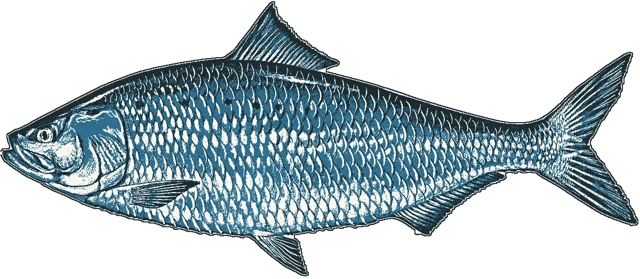
American shad
Alosa sapidissima · Fresh and salt
Some of the best-flavored fish in North America and prized roe, but so bony that most modern anglers do not bother.
Worth a try: Debone, score and deep-fry (Hank Shaw's boneless tempura shad), bake for hours to soften bones, or smoke; the roe sautéed with bacon is a spring classic.
- Tastes
- rich, oily, sweet, soft, extremely bony
- Limits
- Heavy regs. No daily limit and no minimum length in the Northwest, Southwest, Willamette, Northeast, Snake and Columbia zone tables. Columbia River: open all year except closed from the Buoy 10 line upstream to Bonneville Dam Apr 1-May 15. Shad are game fish, so angling is allowed only in daylight hours (one hour before sunrise to one hour after sunset), and stream angling is limited to artificial flies and lures in most zones. From Jan 1, 2027: no change in the 2027 tables. (2026 Oregon Sport Fishing Regulations, in force through Dec 31, 2026 (2026 pamphlet PDF on eRegulations); from Jan 1, 2027 the 2027 edition (eRegulations, Nov 20, 2026) lists the same rule) Source
- Best months
- ODFW: the best time to fish for shad is May until mid-July, when they return to spawn.
- Where
- Columbia, Willamette, Umpqua and Siuslaw rivers (ODFW record fish: Willamette River, 6 lb 6 oz, 2004).
- small bright jigs with or without bucktail or plastic grub tails
- small lures
- flies
- Do not eat (anyone): any fish from areas with an active algae bloom (check OHA's current list).
- OHA's Columbia River and lower Willamette advisories cover resident fish.
- OHA says salmon, steelhead and shad are not included and calls them a healthy choice from the Columbia; for the lower Willamette it says salmon or steelhead are the best options to eat (OHA pages, as listed Nov 22, 2026).
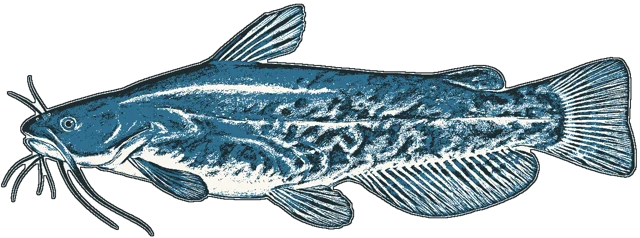
Bullhead (black, brown, yellow)
Ameiurus melas, A. nebulosus, A. natalis · also called yellow bullhead, black bullhead, brown bullhead · Freshwater
Sweet, delicious catfish meat, but most are small and many come from warm, muddy water, so many anglers dismiss them.
- Tastes
- mild, sweet, firm, moist
- Limits
- No limits. No daily limit and no minimum length in the zone tables (listed under catfish). Willamette Valley and lower Columbia ponds limit channel catfish to 2 a day. Stream angling is limited to artificial flies and lures in most zones. From Jan 1, 2027: no change in the 2027 tables. (2026 Oregon Sport Fishing Regulations, in force through Dec 31, 2026 (2026 pamphlet PDF on eRegulations); from Jan 1, 2027 the 2027 edition (eRegulations, Nov 20, 2026) lists the same rule) Source
- Best months
- ODFW: caught any month but best from the first warm days of February through October; most active at night.
- Where
- Mud-bottomed ponds, lakes, reservoirs and river backwaters: brown bullhead throughout the state, yellow bullhead mainly in the Willamette basin, black bullhead mainly in Snake River reservoirs and tributaries.
- worms
- chicken liver
- Do not eat (anyone): bullhead from the Columbia between Bonneville Dam and Ruckel Creek, or from the lower Willamette (Sellwood Bridge to the Columbia) and Multnomah Channel down to the Sauvie Island Bridge (PCBs).
- Do not eat (anyone): whole bullhead from the Columbia Slough (fillet only, 1 meal a month).
- Do not eat (anyone): any fish from areas with an active algae bloom (check OHA's current list).
- Do not eat (under 6, pregnant or may become pregnant, nursing, thyroid or immune problems): bullhead from Antelope or Cottage Grove reservoirs or Jordan Creek (everyone else 1 meal a month).
- Limit (that group / everyone else, meals a month): Owyhee and Emigrant reservoirs 1 / 3; Willamette River to Eugene and Cooper Creek, Galesville and Dorena reservoirs 1 / 4; Plat I Reservoir and Owyhee River 2 / 6; Snake River, Brownlee included, 3 / 8; Fern Ridge Reservoir 3 / 3 (PFOS); Henry Hagg Lake 5 / 5; Detroit Lake 5 / 15; Walter Wirth Lake 11 / 11; Big Cliff Reservoir 12 / 12, muscle only (do not eat the heads or internal juices).
Meal limits and other waters (2)
- Limit (everyone): Columbia from Ruckel Creek to McNary Dam 1 meal a week of all resident fish together; Multnomah Channel below the Sauvie Island Bridge and Scappoose Bay 1 meal a month of whole fish (fillet 2).
- OHA list (Dec 31, 2025) and 2027 regulations table.
Chum salmon
Oncorhynchus keta · Fresh and salt
ADF&G says chum are generally regarded as one of the less desirable salmon: lower oil and paler flesh than the others (NOAA).
- Tastes
- mild, lean, firm, meaty, pale
- Limits
- Heavy regs. Rivers and bays: closed to angling for chum salmon, including jacks, in the Northwest Zone except catch-and-release on the Kilchis and Miami rivers Sep 16-Nov 15; closed in the Columbia River Zone; the other zone tables name no water open to keeping chum. Ocean: chum count in the 2-salmon daily limit when an ocean season is open for all salmon, with no minimum length (all 2026 ocean salmon seasons ended by Oct 31). A Combined Angling Tag is required. From Jan 1, 2027: the 2027 tables list the same river closures; ocean seasons are set each April. (2026 Oregon Sport Fishing Regulations, in force through Dec 31, 2026 (2026 pamphlet PDF on eRegulations); from Jan 1, 2027 the 2027 edition (eRegulations, Nov 20, 2026) lists the same rule; ocean rule per ODFW 2026 ocean salmon seasons) Source
- Best months
- Kilchis and Miami rivers: catch-and-release season Sep 16-Nov 15.
- Where
- Kilchis and Miami rivers (Tillamook Bay) on the north coast.
- spoons
- jigs (bobber and jig fishing)
- Do not eat (anyone): any fish from areas with an active algae bloom (check OHA's current list).
- OHA's Fish and Seafood Guide (March 2017) lists chum as safe to eat 2 to 3 meals a week.
- OHA's Columbia River and lower Willamette advisories cover resident fish.
- OHA says salmon, steelhead and shad are not included and calls them a healthy choice from the Columbia; for the lower Willamette it says salmon or steelhead are the best options to eat (OHA pages, as listed Nov 22, 2026).
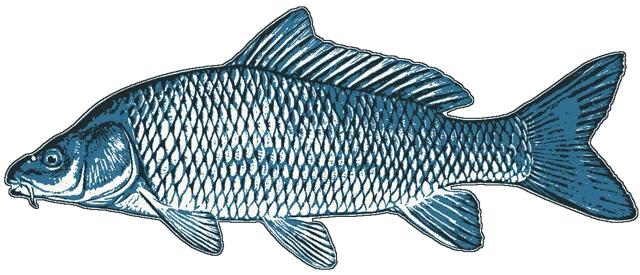
Common carp
Cyprinus carpio · Freshwater
Most US anglers call it a muddy, bony trash fish, but it is a prized food fish in Europe and Asia and eats well from clean, cold water.
Worth a try: Catch from clean water, remove the dark 'mud vein', and either score small fish and fry hard so the Y-bones soften, or hard-smoke large fish over fruitwood (Hank Shaw).
- Tastes
- mild from clean water, strong from muddy water, firm, fatty, Y-bones
- Limits
- No limits. No daily limit and no minimum length in the zone tables. Carp may be taken by angling, hand, bow and arrow, crossbow, spear, spear gun, gaff or snag hook (in-line method feeders are allowed only when angling for carp). Devils Lake: no harvest of grass carp. Stream angling is limited to artificial flies and lures in most zones. Fish caught for personal use may not be sold. From Jan 1, 2027: no change in the 2027 tables. (2026 Oregon Sport Fishing Regulations, in force through Dec 31, 2026 (2026 pamphlet PDF on eRegulations); from Jan 1, 2027 the 2027 edition (eRegulations, Nov 20, 2026) lists the same rule) Source
- Where
- Large, slow or still waters with soft sediments and aquatic vegetation, throughout the state.
- canned corn
- bread dough balls
- flies and lures when sight-fishing
- Do not eat (anyone): carp from the Columbia between Bonneville Dam and Ruckel Creek, or from the lower Willamette (Sellwood Bridge to the Columbia) and Multnomah Channel down to the Sauvie Island Bridge (PCBs).
- Do not eat (anyone): whole carp from the Columbia Slough (fillet only, 1 meal a month).
- Do not eat (anyone): any fish from areas with an active algae bloom (check OHA's current list).
- Do not eat (under 6, pregnant or may become pregnant, nursing, thyroid or immune problems): carp from Antelope or Cottage Grove reservoirs or Jordan Creek (everyone else 1 meal a month).
Meal limits and other waters (4)
- Limit (that group / everyone else, meals a month): Owyhee and Emigrant reservoirs 1 / 3; Willamette River to Eugene and Cooper Creek, Galesville and Dorena reservoirs 1 / 4; Plat I Reservoir and Owyhee River 2 / 6; Snake River, Brownlee included, 3 / 8; Fern Ridge Reservoir 3 / 3 (PFOS); Big Cliff Reservoir 4 / 7.
- Limit (everyone): Columbia from Ruckel Creek to McNary Dam 1 meal a week of all resident fish together; above McNary Dam 1 a month (Washington DOH, 2017); Multnomah Channel below the Sauvie Island Bridge and Scappoose Bay 1 meal a month of whole fish (fillet 2).
- Idaho also has carp advice for Brownlee and Hells Canyon reservoirs (1-800-445-8647).
- OHA list (Dec 31, 2025) and 2027 regulations table.
Lake trout
Salvelinus namaycush · also called mackinaw · Freshwater
Edible and widely kept, but it is the trout most often knocked as too greasy; big fish are very fatty and best smoked.
- Tastes
- rich, oily, soft to firm, fatty
- Limits
- Heavy regs. Crescent Lake and Odell Lake: 1 lake trout a day, 24 in minimum (Odell Lake is open Apr 22-Oct 31). Wallowa Lake: no limit on size or number of lake trout. Elsewhere lake trout are covered by the zone trout limits (lakes 5 a day, 8 in minimum, only 1 trout over 20 in). From Jan 1, 2027: no change in the 2027 tables. (2026 Oregon Sport Fishing Regulations, in force through Dec 31, 2026 (2026 pamphlet PDF on eRegulations); from Jan 1, 2027 the 2027 edition (eRegulations, Nov 20, 2026) lists the same rule) Source
- Best months
- ODFW: many anglers target lake trout in spring when they are near the surface; at other times they troll deep, cool water. Odell Lake season opens Apr 22.
- Where
- Odell Lake, Crescent Lake (Central Zone) and Wallowa Lake (Northeast Zone); ODFW record fish: Odell Lake (40 lb 8 oz, 1984).
- trolled spoons
- jigged bait
- dead bait under tip-ups
- Great Lakes and some western lakes carry contaminant advisories for large lake trout; check your state advisory.
Before you eat it: Do not eat (anyone): any fish from areas with an active algae bloom (check OHA's current list). OHA's advisory table and the 2027 regulations table list no mercury or PCB advisory for Odell, Crescent or Wallowa lakes. OHA says a water with no advisory has not necessarily been tested.
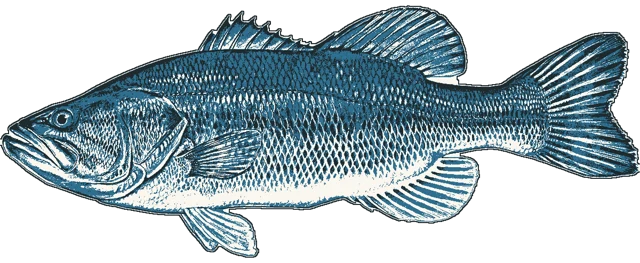
Largemouth bass
Micropterus nigricans (syn. M. salmoides) · Freshwater
Perfectly edible white fillets, but America's top catch-and-release fish and many anglers swear the meat tastes fishy or muddy, so reputation is split.
- Tastes
- mild to slightly 'fishy', firm, thick fillets
- Limits
- Heavy regs. Lakes and reservoirs: 5 a day, 3 daily limits in possession, no more than 3 over 15 in (Northwest, Willamette, Central, Northeast and Southeast zones; no limit in the southwest corner of the Southeast Zone); Southwest Zone lakes no more than 1 over 15 in; Snake Zone reservoirs 6 a day with no more than 3 over 15 in. Streams: no limit and no minimum length, open during trout, salmon or steelhead seasons. Columbia River Zone: no limit, open all year. Exceptions: 1 bass a day at Cape Meares Lake, Lake Lytle, Sunset Lake, Town Lake, Vernonia Pond, Selmac Lake, Henry Hagg Lake and many Willamette Valley and lower Columbia ponds; Garrison Lake 1 bass a day, 15 in minimum; Brownlee Reservoir 12 in minimum; Prineville, McKay, Willow Creek and Unity reservoirs, Dog Lake and Lake of the Woods 5 a day with only 1 over 15 in. From Jan 1, 2027: no change in the 2027 tables. (2026 Oregon Sport Fishing Regulations, in force through Dec 31, 2026 (2026 pamphlet PDF on eRegulations); from Jan 1, 2027 the 2027 edition (eRegulations, Nov 20, 2026) lists the same rule) Source
- Best months
- ODFW: largemouth can be caught most of the year but are hard to catch below 50 F; they move shallow to spawn near 60 F; early spring is best with worms or jigs, then surface lures early and late in summer.
- Where
- Shallow ponds, lakes and river backwater sloughs with cover; Willamette Valley reservoirs and ponds, Prineville Reservoir and southern Oregon lakes.
- nightcrawlers
- plastic worms
- jigs
- surface lures such as poppers and darters
- crankbaits and spinnerbaits
- Water-body mercury advisories commonly list largemouth bass; check your state's advisory before eating large fish.
- Do not eat (anyone): bass from the Columbia between Bonneville Dam and Ruckel Creek, or from the lower Willamette (Sellwood Bridge to the Columbia) and Multnomah Channel down to the Sauvie Island Bridge (PCBs).
- Do not eat (anyone): whole bass from the Columbia Slough (fillet only, 1 meal a month).
- Do not eat (anyone): any fish from areas with an active algae bloom (check OHA's current list).
- Do not eat (under 6, pregnant or may become pregnant, nursing, thyroid or immune problems): bass from Antelope or Cottage Grove reservoirs or Jordan Creek (everyone else 1 meal a month).
Meal limits and other waters (5)
- Limit, every Oregon water (that group / everyone else, meals a month): 2 / 6 (mercury).
- Tighter: Owyhee and Emigrant reservoirs 1 / 3; Willamette River to Eugene and Cooper Creek, Galesville and Dorena reservoirs 1 / 4; Applegate Lake 2 / 5; Fern Ridge Reservoir 4 / 4 (PFOS); Henry Hagg Lake 5 / 5.
- Limit (everyone): Columbia from Ruckel Creek to McNary Dam 1 meal a week of all resident fish together; above McNary Dam 2 a month (Washington DOH, 2017); Multnomah Channel below the Sauvie Island Bridge and Scappoose Bay 1 meal a month of whole fish (fillet 4 / 6).
- Other listed waters (same order): Plat I Reservoir and Owyhee River 2 / 6; Snake River 3 / 8; Big Cliff Reservoir 4 / 7; Freeway and Walter Wirth lakes 6 / 6 (PFOS); Prineville Reservoir 6 / 17.
- OHA list (Dec 31, 2025) and 2027 regulations table.
Largescale sucker
Catostomus macrocheilus · Freshwater
FishBase calls it edible but not highly favored, and Idaho Fish and Game says suckers are bony but a food fish in parts of the country. No good source on how it eats, so it's rated Just OK by default.
- Limits
- No limits. The zone tables list 'Sucker' with no limit (Willamette, Central, Northeast, Southeast, Snake, Columbia, Northwest and Southwest zones). Southeast Zone: closed to take and possession of any sucker species in the southwest corner of the zone (see the zone map), and Warner sucker and Tahoe sucker are closed. Suckers may be taken by angling, hand, bow and arrow, crossbow, spear, spear gun, gaff or snag hook. From Jan 1, 2027: no change in the 2027 tables. (2026 Oregon Sport Fishing Regulations, in force through Dec 31, 2026 (2026 pamphlet PDF on eRegulations); from Jan 1, 2027 the 2027 edition (eRegulations, Nov 20, 2026) lists the same rule) Source
- nightcrawlers fished on the bottom
- lures
- flies
- Native species: Idaho Fish and Game asks anglers not to throw suckers up on the bank; keep one to eat or release it.
- Do not eat (anyone): sucker from the Columbia between Bonneville Dam and Ruckel Creek, or from the lower Willamette (Sellwood Bridge to the Columbia) and Multnomah Channel down to the Sauvie Island Bridge (PCBs).
- Do not eat (anyone): whole largescale sucker from the Columbia Slough (fillet only, 2 meals a month).
- Do not eat (anyone): any fish from areas with an active algae bloom (check OHA's current list).
- Do not eat (under 6, pregnant or may become pregnant, nursing, thyroid or immune problems): sucker from Antelope or Cottage Grove reservoirs or Jordan Creek (everyone else 1 meal a month).
Meal limits and other waters (3)
- Limit (that group / everyone else, meals a month): Owyhee and Emigrant reservoirs 1 / 3; Willamette River to Eugene and Cooper Creek, Galesville and Dorena reservoirs 1 / 4; Plat I Reservoir and Owyhee River 2 / 6; Snake River, Brownlee included, 3 / 8; Big Cliff Reservoir 4 / 7.
- Limit (everyone): Columbia from Ruckel Creek to McNary Dam 1 meal a week of all resident fish together; Multnomah Channel below the Sauvie Island Bridge and Scappoose Bay 1 meal a month of whole fish (fillet 2).
- OHA list (Dec 31, 2025) and 2027 regulations table.
Mountain whitefish
Prosopium williamsoni · also called Oregon whitefish, Rocky Mountain whitefish · Freshwater
Tasty but admittedly bony (Idaho Fish and Game), so many trout anglers dismiss them as trash; excellent smoked or pickled.
Worth a try: Smoke or pickle it like Great Lakes whitefish; smoking makes the bones easy to pick out. Idaho and MeatEater both push anglers to keep them.
- Tastes
- light, mild, soft, very bony
- Limits
- No limits. Willamette, Central, Northeast, Southeast, Snake and Columbia zone tables list whitefish with no limit and no size limit. The Northwest and Southwest tables do not name whitefish. Whitefish are game fish: taken only by angling during daylight hours (one hour before sunrise to one hour after sunset), and stream angling is limited to artificial flies and lures in most zones. From Jan 1, 2027: no change in the 2027 tables. (2026 Oregon Sport Fishing Regulations, in force through Dec 31, 2026 (2026 pamphlet PDF on eRegulations); from Jan 1, 2027 the 2027 edition (eRegulations, Nov 20, 2026) lists the same rule) Source
- Where
- Many Oregon streams and lakes with clear, cold water; ODFW record fish: Deschutes River (5 lb 12 oz, 2021).
- flashy flies
- Do not eat (anyone): whitefish from the Columbia between Bonneville Dam and Ruckel Creek, or from the lower Willamette (Sellwood Bridge to the Columbia) and Multnomah Channel down to the Sauvie Island Bridge (PCBs).
- Do not eat (anyone): any fish from areas with an active algae bloom (check OHA's current list).
- Do not eat (under 6, pregnant or may become pregnant, nursing, thyroid or immune problems): whitefish or any other resident fish from Jordan Creek below Antelope Reservoir (everyone else 1 meal a month).
Meal limits and other waters (3)
- Limit (that group / everyone else, meals a month): Willamette River to Eugene 1 / 4; Owyhee River to Three Forks 2 / 6; Snake River from Adrian to the Washington line 3 / 8; Big Cliff Reservoir 4 / 7.
- Limit (everyone): Columbia from Ruckel Creek to McNary Dam 1 meal a week of all resident fish together; above McNary Dam 1 meal a month (Washington DOH, 2017); Multnomah Channel below the Sauvie Island Bridge and Scappoose Bay 1 meal a month of whole fish.
- OHA list (Dec 31, 2025) and 2027 regulations table.
Pacific herring
Clupea pallasii · Saltwater
Small, oily and bony, with soft, dark, strong-flavored flesh; most people see it as bait.
Worth a try: Hank Shaw argues herring are essentially winter sardines: grilled, fried in oats and butter, or pickled, with fried roe as a bonus. Ken Jones notes many people eat them fresh and consider pickled herring a delicacy. Keep them cold and eat them fresh.
- Tastes
- robust, strong, soft, small flakes
- Limits
- Light regs. Herring, anchovy, sardine, topsmelt, jacksmelt and true smelts: 25 pounds a day in aggregate, taken by dip net, cast net, angling or herring jig. Eulachon smelt may not be taken in inland waters unless emergency rules allow it. From Jan 1, 2027: no change in the 2027 tables. (2026 Oregon Sport Fishing Regulations, in force through Dec 31, 2026 (2026 pamphlet PDF on eRegulations); from Jan 1, 2027 the 2027 edition (eRegulations, Nov 20, 2026) lists the same rule) Source
- Best months
- ODFW: Yaquina Bay herring are available February through March.
- Where
- Docks, piers and boats in bays; public fishing docks at South Beach Marina in Yaquina Bay.
- multiple-hook herring jig
- bare hook with yarn (jigged)
Before you eat it: OHA's Fish and Seafood Guide (March 2017) lists herring as safe to eat 2 to 3 meals a week. OHA's advisory tables list no ocean finfish, and OHA says a water with no advisory has not necessarily been tested.
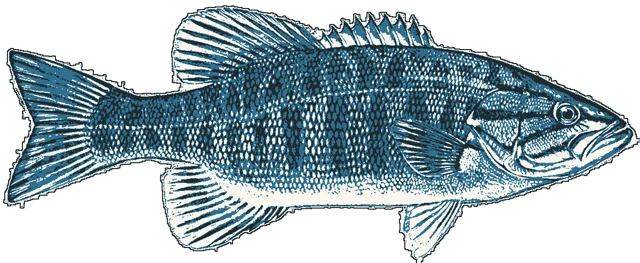
Smallmouth bass
Micropterus dolomieu · Freshwater
Firm, white and good, often rated above largemouth, but most smallmouth are released by custom and the flesh has a slight 'fishy' edge some anglers dislike.
- Tastes
- mild, slightly fishy edge, firm, thick white fillets
- Limits
- Heavy regs. Lakes and reservoirs: 5 a day, 3 daily limits in possession, no more than 3 over 15 in (Northwest, Willamette, Central, Northeast and Southeast zones; no limit in the southwest corner of the Southeast Zone); Southwest Zone lakes no more than 1 over 15 in; Snake Zone reservoirs 6 a day with no more than 3 over 15 in. Streams: no limit and no minimum length, open during trout, salmon or steelhead seasons (open all year in the Columbia, the mainstem Willamette, the John Day below the North Fork and some tidewaters). Columbia River Zone: no limit, open all year. Exceptions: Brownlee Reservoir 12 in minimum on bass; Oxbow Reservoir 2 bass a day and no harvest between 12 and 16 in; Prineville, McKay and Willow Creek reservoirs 5 a day with only 1 over 15 in; Henry Hagg Lake and many Willamette Valley and Columbia ponds 1 bass a day; no bass limit at Foster Reservoir, Lake Billy Chinook, Lake Simtustus and Suttle Lake. Spearfishing for bass is allowed in waters with no size or bag limits. From Jan 1, 2027: no change in the 2027 tables. (2026 Oregon Sport Fishing Regulations, in force through Dec 31, 2026 (2026 pamphlet PDF on eRegulations); from Jan 1, 2027 the 2027 edition (eRegulations, Nov 20, 2026) lists the same rule) Source
- Best months
- ODFW: bass fishing starts heating up in May once water reaches about 50 F (Northeast Zone); smallmouth are much harder to catch below 50 F, and spawning begins at about 58 F.
- Where
- Columbia River (the Dalles and John Day pools, and the Gorge, but do not eat from Bonneville Dam up to Ruckel Creek), John Day River, Umpqua River mainstem, Willamette River (do not eat from there below the Sellwood Bridge) and Valley reservoirs, Snake River reservoirs.
- plastic grubs
- crankbaits
- spinners
- Do not eat (anyone): bass from the Columbia between Bonneville Dam and Ruckel Creek, or from the lower Willamette (Sellwood Bridge to the Columbia) and Multnomah Channel down to the Sauvie Island Bridge (PCBs).
- Do not eat (anyone): whole bass from the Columbia Slough (fillet only, 1 meal a month).
- Do not eat (anyone): any fish from areas with an active algae bloom (check OHA's current list).
- Do not eat (under 6, pregnant or may become pregnant, nursing, thyroid or immune problems): bass from Antelope or Cottage Grove reservoirs or Jordan Creek (everyone else 1 meal a month).
Meal limits and other waters (5)
- Limit, every Oregon water (that group / everyone else, meals a month): 2 / 6 (mercury).
- Tighter: Owyhee and Emigrant reservoirs 1 / 3; Willamette River to Eugene and Cooper Creek, Galesville and Dorena reservoirs 1 / 4; Applegate Lake 2 / 5; Fern Ridge Reservoir 4 / 4; Henry Hagg Lake 5 / 5.
- Limit (everyone): Columbia from Ruckel Creek to McNary Dam 1 meal a week of all resident fish together; above McNary Dam 4 a month (Washington DOH, 2017); Multnomah Channel below the Sauvie Island Bridge and Scappoose Bay 1 meal a month of whole fish (fillet 4 / 6).
- Other listed waters (same order): Plat I Reservoir and Owyhee River 2 / 6; Snake River 3 / 8; Big Cliff Reservoir 4 / 7; Prineville Reservoir 6 / 17.
- OHA list (Dec 31, 2025) and 2027 regulations table.
Starry flounder
Platichthys stellatus · Fresh and salt
Generally good, though some fish have only a fair flavor (pierfishing.com); best fried or baked.
- Tastes
- mild to fair, medium flake
- Limits
- Light regs. Flatfish (flounders, soles, sanddabs, turbots and California halibut, not Pacific halibut): 25 a day in aggregate, open at all depths year-round. Skates and rays are not flatfish. From Jan 1, 2027: no change in the 2027 tables. (2026 Oregon Sport Fishing Regulations, in force through Dec 31, 2026 (2026 pamphlet PDF on eRegulations); from Jan 1, 2027 the 2027 edition (eRegulations, Nov 20, 2026) lists the same rule) Source
- small jig
- shrimp
- marine worm
- mussel on a #2 hook over sand or mud
- May be unsafe to eat from heavily polluted areas (pierfishing.com)
- Do not eat (anyone): any resident fish from the lower Willamette (Sellwood Bridge to the Columbia) and Multnomah Channel down to the Sauvie Island Bridge (PCBs).
- Do not eat (anyone): any fish from areas with an active algae bloom (check OHA's current list).
Meal limits and other waters (3)
- Limit (everyone): 1 meal a month of whole resident fish, flounder included, from Multnomah Channel below the Sauvie Island Bridge and Scappoose Bay (fillet 4 for children under 6, anyone pregnant, nursing or who may become pregnant, and people with thyroid or immune problems; 6 for everyone else).
- OHA's Fish and Seafood Guide (March 2017) lists flounder and sole as safe to eat 2 to 3 meals a week.
- OHA's advisory tables list no ocean finfish, and OHA says a water with no advisory has not necessarily been tested.
Surfperch
Embiotocidae (Amphistichus argenteus, A. rhodoterus and others) · also called marine perch, redtail surfperch, silver surfperch, striped perch, pile perch · Saltwater
Mild, lean white meat, but small fillets with a soft texture; usually fried (pierfishing.com).
- Tastes
- mild, soft, small flakes
- Limits
- Light regs. 15 fish a day in aggregate for all surfperch (marine perch) species, no minimum length listed, open all year, 24 hours a day, unless a marine management area says otherwise. An Ocean Endorsement is required on ocean beaches and jetties. From Jan 1, 2027: same limit; shore angling is closed in the intertidal areas of Redfish Rocks Marine Reserve and in more of the Cascade Head and Otter Rock marine reserves. (2026 Oregon Sport Fishing Regulations, in force through Dec 31, 2026 (2026 pamphlet PDF on eRegulations); from Jan 1, 2027 the 2027 edition (eRegulations, Nov 20, 2026) applies, with the change shown) Source
- Where
- Redtail and silver surfperch in the surf off sandy beaches (between the 2nd and 4th row of breakers near holes); striped and pile perch around rocks, jetties, docks and pilings in bays.
- sand worms
- kelp worms
- sand shrimp
- clam necks
- mussels
- shrimp-pattern flies
- Limit: 2 servings a week for women 18 to 49 and children under 18; for everyone else 2 of shiner, silver or walleye surfperch, or 6 of barred, black, pile, rainbow, spotfin or white surfperch (California coastal list, Nov 2016, which OHA's page links for near-shore fish; it does not name redtail).
- OHA's advisory tables list no ocean finfish, and OHA says a water with no advisory has not necessarily been tested.
Northern pikeminnow
Ptychocheilus oregonensis · Freshwater
A bounty fish, not a food fish: the Pikeminnow Sport-Reward Program pays anglers per fish to remove them, and very few of the tens of thousands caught each year reach the dinner table (MeatEater).
- Tastes
- bland
- Limits
- No limits. No daily limit and no minimum length in the zone tables (Southwest Zone lists the Umpqua pikeminnow the same way). Sport-Reward Program, Columbia and Snake rivers: fish 9 in or longer pay $6 each for the first 25, $8 after 25 and $10 after 200 in a season, and verified tagged fish pay up to $500; the 2026 season ran Apr 20-Sep 30. Reward fish must be caught by the angler who turns them in, anglers register at a station before fishing each day, and vouchers must be received by Nov 15 of each year. Oregon fishing rules and licensing apply. From Jan 1, 2027: no change in the 2027 tables. (2026 Oregon Sport Fishing Regulations, in force through Dec 31, 2026 (2026 pamphlet PDF on eRegulations); from Jan 1, 2027 the 2027 edition (eRegulations, Nov 20, 2026) lists the same rule; reward rules per the program site (2026 season)) Source
- Where
- Columbia River (do not eat from there); Oregon stations of the Sport-Reward Program include Rainier, Chinook Landing, Cascade Locks, The Dalles, Giles French (Rufus) and Umatilla.
- worms
- chicken liver
- cut bait
- fish entrails
- salmon eggs
- shrimp
- Do not eat (anyone): northern pikeminnow from anywhere on the Columbia River (mercury; OHA and Washington DOH).
- Do not eat (anyone): pikeminnow from the lower Willamette (Sellwood Bridge to the Columbia) and Multnomah Channel down to the Sauvie Island Bridge (PCBs).
- Do not eat (anyone): whole pikeminnow from the Columbia Slough (fillet only, 1 meal a month).
- Do not eat (anyone): any fish from areas with an active algae bloom (check OHA's current list).
- Do not eat (women who are or may become pregnant, nursing mothers, children): pikeminnow from any Washington water (Washington DOH).
- Do not eat (under 6, pregnant or may become pregnant, nursing, thyroid or immune problems): pikeminnow from Antelope or Cottage Grove reservoirs or Jordan Creek (everyone else 1 meal a month).
Meal limits and other waters (3)
- Limit (that group / everyone else, meals a month): Owyhee and Emigrant reservoirs 1 / 3; Willamette River to Eugene and Cooper Creek, Galesville and Dorena reservoirs 1 / 4; Plat I Reservoir and Owyhee River 2 / 6; Snake River, Brownlee included, 3 / 8; Big Cliff Reservoir 4 / 7.
- Limit (everyone): Multnomah Channel below the Sauvie Island Bridge and Scappoose Bay 1 meal a month of whole fish (fillet 4 / 6).
- OHA list (Dec 31, 2025), Mid-Columbia fact sheet (Oct 2025) and Bonneville fact sheet (May 2023).
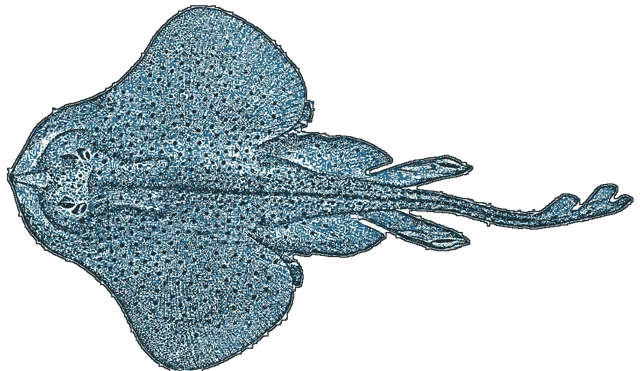
Skate
Rajidae (mainly Raja eglanteria, Leucoraja erinacea, L. ocellata) · Saltwater
Almost every US angler throws skates back or uses them for trap bait; Hank Shaw notes no one he knew growing up in New York and New Jersey kept one.
Worth a try: Kill the fish and cut off the wings right away, refrigerate a day or two so the meat firms up, and brine to remove any ammonia (Hank Shaw). NOAA describes winter skate as mild with a flavor similar to scallops. Classic prep: dredged and sautéed in brown butter with capers.
- Tastes
- mild, scallop-like, firm, stringy, corduroy grain
- Limits
- Heavy regs. Skates and rays are not flatfish; they belong to the general marine species group, 4 a day per angler in 2026, open at all depths. From Jan 1, 2027: ODFW sets the bag limit after the 2027 pamphlet is printed; the Fish and Wildlife Commission takes up 2027 groundfish rules on Dec 11, 2026. (ODFW 2026 sport groundfish limits, effective Jan 1, 2026 and in force through Dec 31, 2026; from Jan 1, 2027 the 2027 edition applies, and ODFW sets the bag limits after that book is printed) Source
- cut bait
- squid
- clams
- Poorly handled skates and rays can smell of ammonia; bleed, ice and brine (Hank Shaw).
- Barndoor and thorny skates are protected; possession is prohibited (NOAA).
Before you eat it: OHA's advisory tables (as listed Nov 21, 2026) list no ocean finfish; the coast entries are for softshell and gaper clams. OHA says a water with no advisory has not necessarily been tested.
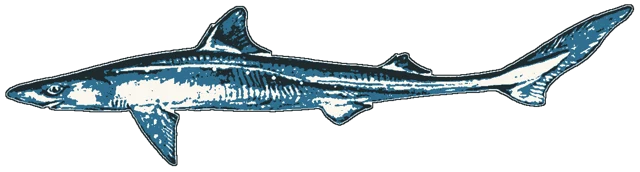
Spiny dogfish
Squalus acanthias · Saltwater
To most US anglers dogfish are a nuisance that swarms baits; NOAA says there is little consumer demand for it in the United States.
Worth a try: NOAA describes the meat as mild, sweet, flaky but firm. It is the fish in British fish and chips, and North Carolina Sea Grant's chef panels served it as 'cape shark' blackened, fried and in chowder. Bleed and gut it quickly like any shark.
- Tastes
- mild, sweet, flaky but firm, oilier than other sharks
- Limits
- Heavy regs. Part of the general marine species group (rockfish, greenling, Pacific cod, cabezon, skates, spiny dogfish, leopard shark, soupfin shark and others), which carries a 4-fish daily limit in 2026. Sharks other than spiny dogfish must keep fins and tail attached. White, basking, megamouth and oceanic whitetip sharks must be released. From Jan 1, 2027: ODFW sets the bag limit after the 2027 pamphlet is printed; the Fish and Wildlife Commission takes up 2027 groundfish rules on Dec 11, 2026. (ODFW 2026 sport groundfish limits, effective Jan 1, 2026 and in force through Dec 31, 2026; from Jan 1, 2027 the 2027 edition applies, and ODFW sets the bag limits after that book is printed) Source
- Where
- Over soft bottoms where they school around prey, from intertidal waters to deep water.
- strips of squid
- cut pieces of fish
- Do not eat (women who are or may become pregnant, nursing mothers, children): shark (OHA Fish and Seafood Guide, March 2017; it names California and Hawaii shark, mako and thresher, and does not name dogfish).
- Do not eat (women 18 to 49 and children under 18): sharks; everyone else 1 serving a week (California coastal list, Nov 2016, which OHA's page links for near-shore fish).
- OHA's advisory tables list no ocean finfish, and OHA says a water with no advisory has not necessarily been tested.
Bull trout
Salvelinus confluentus · Freshwater
Federally threatened; in most waters it cannot be fished for or kept, and incidental catches must be released in the water.
- Limits
- Heavy regs. Closed to angling for bull trout in the Willamette, Columbia, Snake and Southeast zones, and in the Central and Northeast zones unless an exception opens a water. Lake Billy Chinook: the trout limit may include 1 bull trout, 24 in minimum (the Metolius Arm is open Mar 1-Oct 31 and needs a Warm Springs tribal permit). Metolius River sections are catch-and-release for trout including bull trout; the Imnaha and Wenaha rivers have catch-and-release sections for bull trout. Harvest is prohibited at Odell Lake, and any bull trout not kept must be released unharmed. From Jan 1, 2027: no change in the 2027 tables. (2026 Oregon Sport Fishing Regulations, in force through Dec 31, 2026 (2026 pamphlet PDF on eRegulations); from Jan 1, 2027 the 2027 edition (eRegulations, Nov 20, 2026) lists the same rule) Source
- Best months
- ODFW: bull trout spawn in fall when water drops below 50 F; the Central Zone page notes a winter bull trout fishery on the Metolius River.
- Where
- Metolius River, Lake Billy Chinook, and the Imnaha and Wenaha rivers (the places ODFW lists for fishing specifically for bull trout); ODFW record fish: Lake Billy Chinook (23 lb 2 oz, 1989).
- lures or flies that mimic large minnows or small fish
- Do not eat (anyone): resident bull trout from the Columbia between Bonneville Dam and Ruckel Creek (PCBs).
- Do not eat (anyone): any fish from areas with an active algae bloom (check OHA's current list).
Meal limits and other waters (4)
- Limit (under 6, pregnant or may become pregnant, nursing, thyroid or immune problems / everyone else, meals a month): all resident fish from the Snake River, Adrian to the Washington line, 3 / 8, and from the Columbia, Ruckel Creek to McNary Dam, 4 / 4.
- OHA's advisory table lists no mercury or PCB advisory for Lake Billy Chinook or the Metolius, Imnaha and Wenaha rivers.
- OHA lifted its 2026 algae precaution for Lake Billy Chinook on Oct 12, 2026.
- OHA says a water with no advisory has not necessarily been tested.
White sturgeon
Acipenser transmontanus · Fresh and salt
Most white sturgeon must be released: Washington allows no recreational harvest in Willapa Bay, Grays Harbor, Puget Sound or other coastal areas, and other fisheries are slot-limited or catch-and-release.
- Limits
- Heavy regs. Catch-and-release only in the Northwest, Southwest, Central, Northeast, Southeast, Snake and Columbia zones and in the Marine Zone. Columbia River, Buoy 10 to McNary Dam: retention closed in ODFW's 2026 update (Nov 3, 2026); catch-and-release is allowed except in the spawning sanctuaries May 1-Aug 31. When retention opens above Bonneville Dam, the size is 38 to 54 in fork length (Bonneville to The Dalles) or 43 to 54 in (The Dalles to McNary). Willamette River from Willamette Falls to the Coast Fork: open for white sturgeon, 1 a day and 2 a year, 38 in minimum and 54 in maximum fork length; below the falls (mouth to Willamette Falls, including Multnomah Channel) it is catch-and-release, and sturgeon angling is closed May 1-Aug 31 from the Lake Oswego-Oak Grove railroad bridge to the falls. Closed to sturgeon angling: Tillamook Bay above the Hwy 131 bridge and the Tillamook River, the Sandy River, the Gilbert River and Sturgeon Lake. Statewide: annual limit 2, one single-point barbless hook, no gaffing, sturgeon over 54 in cannot be removed from the water (none may be in the Central, Northeast, Southeast and Snake zones), and a Combined Angling Tag (plus the Columbia River Basin Endorsement in Columbia waters) is required. From Jan 1, 2027: the 2027 tables list the same rules; Columbia retention seasons are set each year. (2026 Oregon Sport Fishing Regulations, in force through Dec 31, 2026 (2026 pamphlet PDF on eRegulations), plus ODFW in-season rules for 2026 (update page last changed Nov 13, 2026); from Jan 1, 2027 the 2027 edition (eRegulations, Nov 20, 2026) applies and in-season rules are set again) Source
- Where
- Lower Columbia River and the pools above Bonneville Dam (do not eat from the dam up to Ruckel Creek), the Willamette River, and coastal bays and estuaries such as Tillamook Bay.
- stinky bait fished on the bottom
- Do not eat (anyone): sturgeon from the Columbia between Bonneville Dam and Ruckel Creek (PCBs).
- Do not eat (anyone): any fish from areas with an active algae bloom (check OHA's current list).
Meal limits and other waters (4)
- Limit (everyone): 1 meal a month from Willamette Falls to the Columbia and from all of Multnomah Channel (PCBs).
- Limit (everyone): Columbia from Ruckel Creek to McNary Dam 1 meal a week of all resident fish together; above McNary Dam 1 meal a month (Washington DOH, 2017).
- Limit (under 6, pregnant or may become pregnant, nursing, thyroid or immune problems / everyone else, meals a month): Columbia from the mouth to Bonneville Dam 4 / 6; all resident fish, sturgeon included, Willamette River from the Falls up to Eugene 1 / 4 and Snake River from Adrian to the Washington line 3 / 8.
- OHA list (Dec 31, 2025) and 2027 regulations table.
Where to fish in Oregon
Fish named here are what people catch at each spot, not a promise they’re safe to eat. Read the eating advice on the fish’s card before you keep one.
# Salt or brackish# Freshwater
- 1Lower Columbia River at Astoria and Buoy 10 estuary · brackish
ODFW: fall Chinook season opens Aug 1, coho make up a good part of the popular Buoy 10 fishery in August, and sturgeon below Bonneville Dam are generally catch-and-release. OHA: no more than 4 meals a month of lower Columbia sturgeon for children under 6, anyone who is or may become pregnant or is nursing, and people with thyroid or immune problems, and 6 for everyone else.
Known for: Chinook salmon, Coho salmon, White sturgeon
Access: ODFW: most anglers fish the Columbia from a boat, but there is plenty of good bank access at parks, boat launches and beaches.
- 2Tillamook Bay estuary · brackish
ODFW: well known for Chinook runs, with white sturgeon, rockfish, surfperch, greenling and lingcod, coho and sea-run cutthroat also listed; spring Chinook April through July, fall Chinook from late August.
Known for: Chinook salmon, Coho salmon, Cutthroat trout, Rockfish, Surfperch
Access: Several public bank access points and boat launches (Memaloose Boat Ramp), the north jetty, an ADA fishing platform on the Tillamook River along Hwy 131, and the south jetty by foot or bike along Bayocean Spit; Hospital Hole on the Trask is private and charges a small fee.
- 3Yaquina Bay and Newport estuary · brackish
ODFW: one of the most popular and productive bays on the coast, with marine perch, rockfish, herring (February through March), sturgeon and fall Chinook (September to early November).
Known for: Rockfish, Surfperch, Pacific herring, White sturgeon, Chinook salmon
Access: South Beach Marina (fishing pier, fish cleaning stations, boat ramp), a fishing pier on the north shore, South Beach State Park beach and jetty access; both jetties can be fished year-round.
- 4Umpqua River at River Forks Park (Roseburg) river · fresh
ODFW: half a mile of bank water at the North and South Umpqua confluence for year-round fishing for Chinook, summer and winter steelhead and smallmouth bass. OHA: no more than 2 meals a month of bass for children under 6, anyone who is or may become pregnant or is nursing, and people with thyroid or immune problems, and 6 for everyone else. OHA keeps a permanent algae advisory for bedrock pools on the South Umpqua and main Umpqua here, and advises against eating fish from areas with an active bloom.
Known for: Chinook salmon, Steelhead, Smallmouth bass
Access: River Forks County Park: boat ramp, picnic area and restrooms; 3 miles west of Roseburg off Garden Valley Blvd.
- 5Rogue River (mouth at Gold Beach) river · fresh
ODFW: good spring Chinook runs on the Umpqua and Rogue April through July, fall Chinook beginning in August, and a renowned summer steelhead run beginning in July on the Rogue.
Known for: Chinook salmon, Steelhead
- 6Willamette River at Willamette Falls river · fresh
eRegulations: the mainstem from Willamette Falls upstream to the Coast Fork is open for white sturgeon (1 a day, 2 a year, 38 to 54 in), while the river below the falls is catch-and-release for sturgeon. OHA: no more than 1 meal a month of sturgeon for anyone from the Falls down to the Columbia. From the Falls up to Eugene it is 1 for children under 6, anyone who is or may become pregnant or is nursing, and people with thyroid or immune problems, and 4 for everyone else.
Known for: White sturgeon
- 7Columbia River Gorge and The Dalles pool (Lake Celilo) reservoir · fresh
ODFW: some of the most popular walleye fisheries are in the Gorge, with the best fishing beginning in May, and the Columbia has a nationwide reputation for excellent smallmouth bass fishing. OHA: no more than 1 meal a week of all resident fish together, walleye and bass included, for anyone, and no other fish that week. Do not eat any resident fish from Bonneville Dam up to Ruckel Creek.
Known for: Walleye, Smallmouth bass
Access: ODFW: most anglers fish the Columbia from a boat, but there is plenty of good bank access at parks, boat launches and beaches.
- 8Lower Deschutes River river · fresh
ODFW: the lower Deschutes hosts one of the most famous summer steelhead runs in the state, with early fish in July and catches as late as December, plus Chinook and native redband rainbow trout.
Known for: Steelhead, Chinook salmon, Rainbow trout
- 9Lake Billy Chinook reservoir · fresh
eRegulations: the trout limit may include 1 bull trout (24 in minimum), kokanee over 16 in and rainbow trout over 20 in must be released, and there is no limit on brown trout or bass.
Known for: Kokanee salmon, Bull trout, Brown trout
Access: Tribal angling permits are required on the Metolius Arm (Confederated Tribes of Warm Springs), which is open Mar 1-Oct 31.
- 10Detroit Lake reservoir · fresh
ODFW: 125,000 legal-size rainbow trout released between April and October, along with fingerling rainbow, kokanee and Chinook; by late July or August most kokanee may be 80 to 100 ft deep. OHA listed an algae bloom here in 2026 and says not to eat fish from areas with an active bloom.
Known for: Rainbow trout, Kokanee salmon, Chinook salmon
Access: Detroit Lake State Recreation Area (boat ramp, campground), USFS campgrounds, Mongold Day Use Area boat ramp, USFS Upper Arm fishing pier, and Kane's Marina and Detroit Lake Resort rentals.
- 11Wallowa Lake lake · fresh
ODFW: naturally reproducing kokanee and lake trout, and stocked rainbow trout May through early September; kokanee fishing is best May through early July.
Known for: Kokanee salmon, Lake trout, Rainbow trout
Access: Wallowa County Park (boat ramp, fishing pier), Wallowa Lake State Park (campground, boat ramp) and Wallowa Lake Marina (ramp and boat rentals); Hwy 82 from La Grande through Joseph.
- 12Upper Klamath Lake lake · fresh
ODFW: native redband trout can grow to 24 inches in Upper Klamath Lake. OHA listed an algae bloom here in 2026 and says not to eat fish from areas with an active bloom.
Known for: Rainbow trout
- 13Brownlee Reservoir reservoir · fresh
ODFW: a 57-mile impoundment of the Snake River renowned for crappie, smallmouth bass and catfish; crappie, bass and perch are best around points and in coves. OHA listed an algae bloom here in 2026 and says not to eat fish from areas with an active bloom. Mercury limit for all resident fish: 3 meals a month for children under 6, anyone who is or may become pregnant or is nursing, and people with thyroid or immune problems, and 8 for everyone else.
Known for: Black crappie, Smallmouth bass, Channel catfish, Yellow perch
Access: Farewell Bend State Recreation Area (campground, boat launch, picnic area) at the south end with bank fishing, and turnouts along Snake River Rd; exit 345 off I-84 to Huntington.
- 14Diamond Lake lake · fresh
ODFW: stocked regularly with rainbow trout that can grow big and fat, open year-round with some of the best fishing in April and May. OHA listed an algae bloom here in 2026 and says not to eat fish from areas with an active bloom.
Known for: Rainbow trout
Access: USFS campgrounds (Broken Arrow, Thielson View, Diamond Lake Campground with boat ramps) and Diamond Lake Resort boat rentals; bank fishing near the resort and Lake Creek; Hwy 138.
Oregon fishing license and rules
- Resident: $50 annual angling license (valid Jan 1 – Dec 31); resident senior (70+, Oregon resident 5 years) $34; youth 12-17 license $10
- Nonresident: $138 annual angling license
- Nonresident short-term: One-day angling and shellfish combo $29 (one price listed for residents and nonresidents); two-day angling $48; three-day angling $68; nonresident seven-day angling $117. Daily and multi-day licenses include a Combined Angling Tag.
- Saltwater: Covered by the same angling license. An Ocean Endorsement is required to fish in the ocean from beaches, jetties and boats unless you are only fishing for and keeping salmon or steelhead (not needed for shellfish, under age 12 or on Free Fishing Days; free with Youth, Pioneer and Disabled Veteran licenses): $9 annual or $4 daily in 2026. From Jan 1, 2027: $7 with a license, $9 bought separately or $2 daily. A Combined Angling Tag ($69 resident, $89 nonresident, $5 youth; included with daily and multi-day licenses) is required at any age for salmon, steelhead, sturgeon and halibut. Shellfish need a separate shellfish license ($13 resident, $37 nonresident).
- Who needs one: 12 and older need an angling license; youth 12-17 license is $10 and includes angling, shellfish, hunting, Columbia River Basin and Ocean endorsements; under 12 needs no license, but a Combined Angling Tag is needed at any age for salmon, steelhead, sturgeon and halibut.
- Free fishing days: Free Fishing Days (no license, Combined Angling Tag, endorsement, or Two-Rod or Rogue-South Coast validation needed; all other rules apply): Nov 27-28, 2026 (Thanksgiving weekend); Feb 13-14, June 5-6 and Nov 26-27, 2027
More license details
Columbia River Basin Endorsement $9.75 with a license ($11.75 bought separately, $1 daily) for salmon, steelhead and sturgeon in the mainstem Columbia from Buoy 10 upstream and in rivers flowing into the Columbia. Two-Rod Validation $34 (lakes, ponds and reservoirs, plus streams where ODFW authorizes it; not the Columbia, bays or ocean). Hatchery Harvest Tag $43. Rogue-South Coast Steelhead Validation $4 resident / $8 nonresident; Rogue-South Coast wild steelhead harvest tag $20 / $40. Waterway Access Permit for all non-motorized boats, from ODFW including a $2 fee: $8 weekly, $22 annual, $37 two-year; not needed at age 13 and younger. Aquatic Invasive Species Prevention Permit for nonresident trailered motorboats: $22 in the 2026 regulations. From Jan 1, 2027: $32 ($30 plus a $2 fee). Licenses are valid Jan 1-Dec 31; 2027 licenses go on sale Dec 1, 2026. Washington and Oregon licenses are both valid in the Columbia boundary waters and within three miles of shore from Cape Falcon to Leadbetter Point; anyone other than a Washington resident needs an Oregon license to land fish by boat in Oregon.
Buy a license License types and fees
Fees: 2026 fee table (2026 pamphlet); the 2027 fee table (eRegulations, Nov 20, 2026) lists the same license and tag prices, with the Ocean Endorsement and Aquatic Invasive Species Permit changes shown.
- A Combined Angling Tag ($69 resident, $89 nonresident, $5 youth; included with daily and multi-day licenses) is needed at any age to fish for salmon, steelhead, sturgeon or halibut; adult wild fish must be logged on it immediately, and there is a 20 salmon and steelhead annual limit (white sturgeon 2, halibut 6).
- Columbia River Basin Endorsement ($9.75 with a license) is required for salmon, steelhead and sturgeon in the mainstem Columbia from Buoy 10 upstream and in every river that flows into the Columbia; an Ocean Endorsement ($9 annual or $4 daily in 2026; from Jan 1, 2027: $7 with a license, $9 separately or $2 daily) is required to fish in the ocean from beaches, jetties and boats unless you only fish for and keep salmon or steelhead.
- Streams are limited to artificial flies and lures in most zones (above tidewater May 22-Aug 31 in the Northwest and Southwest zones; all year in the Willamette, Central and Southeast zones and for trout in the Northeast Zone); bait is allowed where an exception lists it, and bays and tidewater allow bait year-round.
- Most rivers and streams open for trout May 22-Oct 31 (Southeast Zone streams are open all year); from Jan 1, 2027 kokanee are game fish that may be fished for only in daylight hours (one hour before sunrise to one hour after sunset); many are catch-and-release or closed, and wild steelhead and wild salmon can be kept only where a river exception or in-season rule says so, so read the rule for the exact water.
- 2026 in-season rules through Dec 31: all Chinook closed Dec 1-31 on the Necanicum, Nehalem, Tillamook Bay and Nestucca rivers; all Chinook released in the Columbia from Buoy 10 to The Dalles Dam Nov 1-Dec 31; Deschutes closed to steelhead Aug 15-Dec 31 and John Day Sep 1-Dec 31. From Jan 1, 2027: Columbia steelhead closed from The Dalles Dam to the state line Jan 1-Mar 31, 2027.
- Sturgeon: one single-point barbless hook, no gaffing, and fish over 54 in fork length cannot be taken out of the water; Columbia sturgeon retention was closed in ODFW's update as of Nov 3, 2026, and sturgeon angling is closed May 1-Aug 31 in the Columbia spawning sanctuaries.
- Ocean: a descending device must be on board any vessel fishing for bottomfish, flatfish or halibut and used on rockfish released outside the 30-fathom line; yelloweye and quillback rockfish cannot be kept; sharks other than spiny dogfish must keep fins and tail attached; each angler on a boat may keep fishing until the boat limit is reached, but no one may exceed a personal limit.
- Fish with no rule of their own: in the ocean and bays, marine fish not listed separately (sculpins, tomcod, ratfish, skates and others) count in the 4-fish general marine species limit in 2026; in fresh water the zone tables list no limit for nongame fish such as suckers, carp, chub and sculpin, except the protected species some zones name.
- Live fish may not be used as bait except nongame fish in the ocean, bays and tidewaters from the same waters; lamprey and live crayfish are not allowed as bait, and goldfish and live leeches may not be used or possessed while angling.
- Non-motorized boats of all kinds need a Waterway Access Permit ($8 weekly, $22 annual, $37 two-year from ODFW; not needed at age 13 and younger), and boats must stop at open invasive species inspection stations or face a $110 fine.
Limits here are summaries for convenience, checked on the date shown. The official Oregon regulations govern; check them before you keep a fish.
Before you eat it
- Do not eat, everyone (OHA, PCBs): any resident fish, sturgeon included, from the Columbia River between Bonneville Dam at Bradford Island and Ruckel Creek, one mile upstream.
- Do not eat, everyone (OHA, PCBs): carp, brown bullhead, bass, walleye and every other resident fish except crappie and sturgeon from the lower Willamette River, Sellwood Bridge to the Columbia, and Multnomah Channel down to the Sauvie Island Bridge. Crappie there: 2 meals a month, 4 if fillet only. Sturgeon from Willamette Falls to the Columbia and all of Multnomah Channel: 1. Freshwater clams there should not be eaten, and taking them is illegal. OHA says it will advise no resident fish or shellfish there once Portland Harbor cleanup dredging starts.
- Do not eat, everyone (OHA and Washington DOH, mercury): northern pikeminnow from anywhere on the Columbia River.
- Do not eat, everyone (OHA, PCBs and PFOS): whole resident fish from the Columbia Slough. Fillets there: 1 meal a month, largescale sucker 2.
- Do not eat, everyone: fish or shellfish from areas with an active cyanobacteria (algae) bloom (OHA). Blooms come and go: Detroit, Brownlee and Hells Canyon reservoirs, Upper Klamath Lake, Diamond Lake and more than 30 other waters had a 2026 advisory or precaution. Bedrock pools on the South Umpqua River from Canyonville and the main Umpqua to Sawyers Rapids have a permanent one. OHA says anyone who eats such fish anyway should remove the fat, skin and organs and rinse the fillets. Check OHA's current cyanobacteria advisories before you go.
- Do not eat, vulnerable group (children under 6, people who are or may become pregnant or are nursing, and people with thyroid or immune problems), and 1 meal a month for everyone else (OHA, mercury): brown trout 16 in or longer from East Lake (Deschutes County); all resident fish from Antelope Reservoir and from Jordan Creek below it to the Owyhee River; all resident fish from Cottage Grove Reservoir except stocked, fin-clipped rainbow trout 12 in or less.
- Do not eat, women who are or may become pregnant, nursing mothers and children: shark (OHA Fish and Seafood Guide, March 2017). California's coastal list, which OHA's page links for near-shore fish, tells women 18 to 49 and children not to eat sharks or China, copper, gopher, and black and yellow rockfish.
- Columbia River above McNary Dam, shared with Washington (Washington DOH, 2017): do not eat northern pikeminnow; 1 meal a month of carp, mountain whitefish or white sturgeon, 2 of largemouth bass, walleye or bridgelip sucker, 4 of smallmouth bass.
- Statewide, all waters (OHA, mercury): bass 2 meals a month for the vulnerable group and 6 for everyone else. A water with its own line uses that line.
- Columbia River (OHA): sturgeon from the mouth to Bonneville Dam 4 meals a month for the vulnerable group and 6 for everyone else; Ruckel Creek to McNary Dam 1 meal a week of all resident fish together, sturgeon included, and no other fish that week; lamprey 2 and 4 on the Columbia and its Oregon tributaries. OHA says salmon, steelhead and shad are a healthy choice from the Columbia.
- Other rivers (OHA, all resident fish, meals a month for the vulnerable group and for everyone else): Willamette River from its mouth to Eugene and the Coast Fork to Cottage Grove Reservoir 1 and 4; Owyhee River upstream to Three Forks 2 and 6; Snake River from just south of Adrian to the Washington line, Brownlee Reservoir and the Powder River arm included, 3 and 8. Multnomah Channel below the Sauvie Island Bridge and Scappoose Bay: 1 meal of whole fish for everyone; fillets 4 and 6, but 2 of carp, catfish and sucker.
- Lakes and reservoirs (OHA, all resident fish unless named): East Lake, Owyhee and Emigrant 1 and 3 (Emigrant exempts rainbow trout); Cooper Creek, Galesville and Dorena 1 and 4 (Dorena exempts stocked, fin-clipped rainbow trout 12 in or less); Plat I 2 and 6; Applegate bass and yellow perch 2 and 5, bluegill and crappie 4 and 13; Phillips yellow perch 2 and 5.
- In the 2027 regulations table (Nov 2026) but not in OHA's web table dated Dec 31, 2025: Fern Ridge carp and brown bullhead 3 and 3, bass, bluegill and crappie 4 and 4, goldfish 7; Big Cliff rainbow trout and other resident fish 4 and 7, brown bullhead 12 (muscle only), panfish 21 and no limit; Detroit brown bullhead 5 and 15; Henry Hagg bass, bullhead, bluegill, crappie and perch 5; Freeway Lakes bass and crappie 6, bluegill 10; Walter Wirth bass and bluegill 6, bullhead 11; Prineville bass, bluegill and crappie 6 and 17.
- Cleaning (OHA): throw away the skin, fat, head and organs and cook so the fat drips off to cut PCBs. Mercury stays in the meat whatever you do.
- Ocean: OHA's tables list no ocean finfish. Its Fish and Seafood Guide (March 2017) puts albacore, Pacific halibut, sablefish and trawl-caught rockfish at 1 meal a week. Softshell and gaper clams are limited for arsenic (siphon skin intact 1 meal a month on the north coast, 2 central, 4 south). Cabezon roe is poisonous. Oregon Department of Agriculture may close shellfish harvest for biotoxins at any time: 1-800-448-2474.
- OHA says a water with no advisory has not necessarily been sampled (1-877-290-6767). Idaho keeps its own list for shared Snake River waters: Brownlee (crappie, catfish, perch, carp) and Hells Canyon (catfish, carp), 1-800-445-8647.
Local lingo
- jack: a small, precocious male salmon (Chinook 15 to 24 in, coho 15 to 20 in) with its own daily limit
- Buoy 10: the Columbia River fishery at the river mouth, named for the navigation buoy that marks the zone boundary
- hatchery vs wild: fish with a clipped adipose fin are hatchery fish; most salmon and steelhead rules depend on this
- kokanee: landlocked sockeye salmon
- bottomfish: ODFW's word for ocean groundfish such as rockfish, lingcod and cabezon
- long-leader fishery: a midwater rockfish fishery seaward of 40 fathoms with three-hook gear and a 30-foot leader
- sea trout: ODFW's nickname for greenling; sea-run cutthroat are a different fish
Questions anglers ask about Oregon
What is the most common fish in Oregon?
ODFW's sport bottomfish newsletters put black rockfish first on ocean bottomfish trips, at about 232,050 fish landed a year (2024 and 2025 average), followed by lingcod (about 55,350) and then blue and deacon, yellowtail and canary rockfish. The newsletters count only bottomfish trips, so salmon, halibut, tuna and freshwater fish are not ranked.
Do I need a saltwater fishing license in Oregon?
Covered by the same angling license. An Ocean Endorsement is required to fish in the ocean from beaches, jetties and boats unless you are only fishing for and keeping salmon or steelhead (not needed for shellfish, under age 12 or on Free Fishing Days; free with Youth, Pioneer and Disabled Veteran licenses): $9 annual or $4 daily in 2026. From Jan 1, 2027: $7 with a license, $9 bought separately or $2 daily. A Combined Angling Tag ($69 resident, $89 nonresident, $5 youth; included with daily and multi-day licenses) is required at any age for salmon, steelhead, sturgeon and halibut. Shellfish need a separate shellfish license ($13 resident, $37 nonresident).
What is the best fish to eat in Oregon?
21 of the 38 fish on our Oregon board rate Best eating. They include: Chinook salmon, Coho salmon, steelhead, rainbow trout, cutthroat trout and brown trout.
What is the state fish of Oregon?
Chinook salmon: Official state fish, declared by the 1961 Legislature.
Does Oregon have free fishing days?
Free Fishing Days (no license, Combined Angling Tag, endorsement, or Two-Rod or Rogue-South Coast validation needed; all other rules apply): Nov 27-28, 2026 (Thanksgiving weekend); Feb 13-14, June 5-6 and Nov 26-27, 2027
Which Oregon fish are better to eat than their reputation?
We give the Worth a try badge to mountain whitefish, American shad, common carp, spiny dogfish, skate and Pacific herring: fish most anglers toss or rate low that eat well when they're cleaned and cooked right. Each card says how.
Neighboring states
Sources
Limits, prices and advisories come from these pages, read on or before Nov 21, 2026. Where a line gives its own date, that’s the date it rests on. Eating advice changes: check the state’s current list. Ratings are national and come from the fish’s own page.
109 sources
- apps.state.or.us mountain whitefish: advisory; starry flounder: advisory
- apps.state.or.us Chinook salmon: advisory; Coho salmon: advisory; Pacific halibut: advisory; Pacific herring: advisory; albacore tuna: advisory; chum salmon: advisory; rockfish:
- content.govdelivery.com black crappie: advisory; bluegill: advisory; bullhead (black, brown, yellow): advisory; channel catfish: advisory; common carp: advisory; largemouth bass: advis
- doh.wa.gov northern pikeminnow: advisory
- doh.wa.gov common carp: advisory; largemouth bass: advisory; mountain whitefish: advisory; smallmouth bass: advisory; walleye: advisory; white sturgeon: advisory
- experience.arcgis.com Kokanee salmon: advisory; northern pikeminnow: advisory; striped bass: advisory
- idfg.idaho.gov channel catfish: advisory; common carp: advisory; yellow perch: advisory
- myodfw.com Kokanee salmon: baits; Kokanee salmon: months; fishing spots; lake trout: where
- myodfw.com Pacific herring: baits; Pacific herring: months; Pacific herring: where; fishing spots
- myodfw.com black crappie: where; fishing spots; yellow perch: where
- myodfw.com fishing spots; rainbow trout: months; rainbow trout: where
- myodfw.com fishing spots; rainbow trout: where
- myodfw.com Kokanee salmon: baits; Kokanee salmon: months; Kokanee salmon: names; Kokanee salmon: where
- myodfw.com American shad: where; brown trout: where; bull trout: where; channel catfish: where; lake trout: where; state records; top species
- myodfw.com Chinook salmon: regs; Coho salmon: regs; steelhead: regs; white sturgeon: regs
- myodfw.com bull trout: months; fishing spots; rainbow trout: where; steelhead: months; steelhead: where
- myodfw.com Chinook salmon: months; Chinook salmon: where; Coho salmon: months; Coho salmon: where; fishing spots; smallmouth bass: where; walleye: months; white sturgeon:
- myodfw.com license info
- myodfw.com Chinook salmon: months; Coho salmon: months; Pacific halibut: months; Pacific herring: regs; albacore tuna: regs; cabezon: where; marine regs odfw; rockfish: mo
- myodfw.com smallmouth bass: months; smallmouth bass: where; steelhead: months; steelhead: where
- myodfw.com Chinook salmon: names; Chinook salmon: where; cutthroat trout: months; rainbow trout: months
- myodfw.com freshwater regs
- myodfw.com black crappie: where; smallmouth bass: where; steelhead: months; steelhead: where
- myodfw.com black crappie: where; bluegill: where; brown trout: where; fishing spots; rainbow trout: where; striped bass: names
- myodfw.com Chinook salmon: months; Chinook salmon: where; Coho salmon: months; Coho salmon: where; fishing spots; smallmouth bass: where; steelhead: months; steelhead: whe
- myodfw.com top species
- myodfw.com albacore tuna: baits; albacore tuna: months; albacore tuna: where
- myodfw.com American shad: baits; American shad: months; American shad: where
- myodfw.com brook trout: baits; brook trout: where
- myodfw.com brown trout: baits
- myodfw.com bull trout: baits; bull trout: months; bull trout: where
- myodfw.com cabezon: advisory; cabezon: baits; cabezon: where
- myodfw.com bullhead (black, brown, yellow): baits; bullhead (black, brown, yellow): months; bullhead (black, brown, yellow): names; bullhead (black, brown, yellow): where;
- myodfw.com Chinook salmon: baits; Chinook salmon: names
- myodfw.com chum salmon: baits; chum salmon: months; chum salmon: where
- myodfw.com Coho salmon: baits
- myodfw.com common carp: baits; common carp: where
- myodfw.com black crappie: baits; black crappie: months
- myodfw.com cutthroat trout: baits; cutthroat trout: months; cutthroat trout: names; cutthroat trout: where
- myodfw.com starry flounder: baits; starry flounder: where
- myodfw.com kelp greenling: baits; kelp greenling: months; kelp greenling: where
- myodfw.com lake trout: months; lake trout: names
- myodfw.com largemouth bass: baits; largemouth bass: months; largemouth bass: where
- myodfw.com lingcod: baits; lingcod: where
- myodfw.com mountain whitefish: baits; mountain whitefish: names; mountain whitefish: where
- myodfw.com Pacific halibut: baits; Pacific halibut: where
- myodfw.com Pacific herring: baits; Pacific herring: where
- myodfw.com rainbow trout: baits; rainbow trout: names
- myodfw.com surfperch: baits; surfperch: months; surfperch: where
- myodfw.com rockfish: baits; rockfish: where
- myodfw.com spiny dogfish: where
- myodfw.com smallmouth bass: baits; smallmouth bass: months
- myodfw.com steelhead: baits; steelhead: months; steelhead: names
- myodfw.com striped bass: baits; striped bass: months; striped bass: where
- myodfw.com white sturgeon: baits; white sturgeon: where
- myodfw.com bluegill: baits; bluegill: months; bluegill: names; bluegill: where
- myodfw.com rainbow trout: months
- myodfw.com walleye: baits; walleye: months; walleye: where
- myodfw.com yellow perch: baits; yellow perch: months; yellow perch: where
- myodfw.com Chinook salmon: where; Coho salmon: months; Coho salmon: where; largemouth bass: where; rainbow trout: months; smallmouth bass: where
- myodfw.com where to fish
- myodfw.com cabezon: regs; kelp greenling: regs; rockfish: regs; skate: regs; spiny dogfish: regs
- myodfw.com Chinook salmon: regs; Coho salmon: regs; chum salmon: regs
- myodfw.com Pacific halibut: regs; Pacific halibut: where; lingcod: regs
- myodfw.com cabezon: catch; lingcod: catch; rockfish: catch
- myodfw.com kelp greenling: regs; rockfish: regs; skate: regs; spiny dogfish: regs
- myodfw.com cabezon: catch; catch survey; kelp greenling: regs; lingcod: catch; rockfish: catch; rockfish: where
- myodfw.com cabezon: months; cabezon: regs; kelp greenling: regs; lingcod: months; lingcod: regs; rockfish: months; rockfish: regs; sablefish: regs; skate: regs; spiny dogf
- myodfw.com free fishing days
- odfw.huntfishoregon.com license buy
- oehha.ca.gov cabezon: advisory; kelp greenling: advisory; lingcod: advisory; rockfish: advisory; spiny dogfish: advisory; surfperch: advisory
- sharedsystems.dhsoha.state.or.us northern pikeminnow: advisory
- sharedsystems.dhsoha.state.or.us white sturgeon: advisory
- sos.oregon.gov state fish
- dfw.state.or.us cabezon: regs; kelp greenling: regs; lingcod: regs; rockfish: regs; sablefish: regs; skate: regs; spiny dogfish: regs
- dfw.state.or.us steelhead: regs
- dfw.state.or.us Chinook salmon: regs; Coho salmon: regs; chum salmon: regs
- dfw.state.or.us Chinook salmon: regs; Coho salmon: regs
- eregulations.com American shad: regs; Chinook salmon: regs; Coho salmon: regs; Kokanee salmon: regs; Pacific halibut: regs; Pacific herring: regs; albacore tuna: regs; black cra
- eregulations.com American shad: advisory; Chinook salmon: advisory; Coho salmon: advisory; Kokanee salmon: advisory; black crappie: advisory; bluegill: advisory; brook trout: ad
- eregulations.com Kokanee salmon: regs; Pacific halibut: regs; steelhead: regs; top species; white sturgeon: regs
- eregulations.com Chinook salmon: regs; Coho salmon: regs; Kokanee salmon: regs; bluegill: regs; brown trout: regs; bull trout: regs; fishing spots; lake trout: regs; mountain wh
- eregulations.com American shad: regs; Chinook salmon: regs; Coho salmon: regs; black crappie: regs; brook trout: regs; brown trout: regs; channel catfish: regs; chum salmon: reg
- eregulations.com American shad: regs; Chinook salmon: baits; Kokanee salmon: regs; common carp: regs; largescale sucker: regs; mountain whitefish: regs; smallmouth bass: regs; s
- eregulations.com license fees
- eregulations.com sablefish: regs; surfperch: regs
- eregulations.com Pacific halibut: regs; Pacific herring: regs; albacore tuna: regs; cabezon: regs; kelp greenling: names; kelp greenling: regs; lingcod: regs; rockfish: names; r
- eregulations.com Kokanee salmon: regs; black crappie: regs; bull trout: regs; lake trout: regs; largescale sucker: regs; mountain whitefish: regs; rainbow trout: regs; smallmout
- eregulations.com American shad: regs; Chinook salmon: regs; Coho salmon: regs; black crappie: regs; bluegill: regs; brook trout: regs; brown trout: regs; bullhead (black, brown,
- eregulations.com kelp greenling: regs; rockfish: regs
- eregulations.com mountain whitefish: regs; rainbow trout: regs; smallmouth bass: regs; steelhead: regs
- eregulations.com Kokanee salmon: regs; black crappie: regs; brook trout: regs; brown trout: regs; largescale sucker: regs; mountain whitefish: regs; rainbow trout: regs; smallmo
- eregulations.com Coho salmon: regs; brown trout: regs; cutthroat trout: regs; largemouth bass: regs; northern pikeminnow: regs; rainbow trout: regs; smallmouth bass: regs; steel
- eregulations.com American shad: regs; Kokanee salmon: regs; black crappie: regs; bluegill: regs; brook trout: regs; bull trout: regs; bullhead (black, brown, yellow): regs; chan
- fisheries.noaa.gov Pacific halibut: regs
- oregon.gov northern pikeminnow: advisory
- oregon.gov black crappie: advisory; bluegill: advisory; bullhead (black, brown, yellow): advisory; channel catfish: advisory; common carp: advisory; largemouth bass: advis
- oregon.gov American shad: advisory; Chinook salmon: advisory; Coho salmon: advisory; black crappie: advisory; bluegill: advisory; brown trout: advisory; bull trout: adviso
- oregon.gov American shad: advisory; Chinook salmon: advisory; Coho salmon: advisory; black crappie: advisory; bluegill: advisory; bullhead (black, brown, yellow): advisory
- oregon.gov American shad: advisory; Chinook salmon: advisory; Coho salmon: advisory; black crappie: advisory; bluegill: advisory; bullhead (black, brown, yellow): advisory
- oregon.gov largemouth bass: advisory; smallmouth bass: advisory; striped bass: advisory
- oregon.gov Chinook salmon: advisory
- oregon.gov American shad: advisory; Chinook salmon: advisory; Coho salmon: advisory; Kokanee salmon: advisory; black crappie: advisory; bluegill: advisory; brook trout: ad
- oregon.gov American shad: advisory; Chinook salmon: advisory; Coho salmon: advisory; Kokanee salmon: advisory; black crappie: advisory; bluegill: advisory; brook trout: ad
- oregon.gov American shad: advisory; Chinook salmon: advisory; Coho salmon: advisory; Kokanee salmon: advisory; Pacific halibut: advisory; Pacific herring: advisory; albaco
- pikeminnow.org northern pikeminnow: months; northern pikeminnow: regs
- pikeminnow.org northern pikeminnow: regs; northern pikeminnow: where
- pikeminnow.org northern pikeminnow: baits
- pikeminnow.org northern pikeminnow: where
Illustrations: stencils we made from public-domain art by John J. Baird (Black crappie); NOAA (Bluegill); Duane Raver, U.S. Fish and Wildlife Service (Brook trout, Channel catfish, Rainbow trout, Striped bass, Yellow perch, American shad, Bullhead (black, brown, yellow), Smallmouth bass, Spiny dogfish); U.S. Fish and Wildlife Service (Brown trout, Common carp, Largemouth bass); Hugh McCormick Smith (Walleye); New York Fish and Game Commission (Skate), via Wikimedia Commons.
Spotted an error or a rule that changed? Tell us and we will check it against the official source.