California · fresh and salt
Fish in California: what’s worth eating, and what’s garbage
California fishing covers Pacific surf, pier and boat fishing, with kelp bass, white seabass, yellowtail, halibut, rockfish and lingcod at sea and surfperch, corbina and croakers from the beach. Inland it ranges from Delta striped bass and Central Valley salmon to Sierra trout lakes, with the California golden trout as the state freshwater fish.
38 fish rated · limits checked Nov 21, 2026 against CDFW and federal sources, then re-checked: 363 of 377 details confirmed or corrected on the official pages
Resident $64.54 sport fishing license (2026 price; valid 365 days from purchase); $66.96 posted for 2027. Nonresident $174.14 sport fishing license (2026 price); $180.36 posted for 2027.
Buy a licenseCovered by the same sport fishing license. An Ocean Enhancement Validation ($7.30 in 2026, $7.56 in 2027) is required to fish ocean waters south of Point Arguello… Full details
Saltwater limitsFreshwater limits, seasons and size rules from California Department of Fish and Wildlife.
Freshwater limitsCalifornia golden trout
2026: Saturday July 4 and Saturday September 5 (license waived). 2027: Saturday July 3 and Saturday September 4. All other regulations and report cards still apply.
The California table-fare board
Fish California anglers catch, sorted by how they eat. The bars show how heavily each one is regulated here. Tap a fish for the details.
No limits Light regs Heavy regs No harvest
Best eating22
 Black crappie
 Bluegill
 Brown troutCabezonCalifornia halibutCalifornia scorpionfish“sculpin”California yellowtail
 Channel catfishChinook salmon“king salmon”Golden troutKelp bassKokanee salmon“landlocked sockeye salmon”LingcodPacific bluefin tunaPacific sanddab
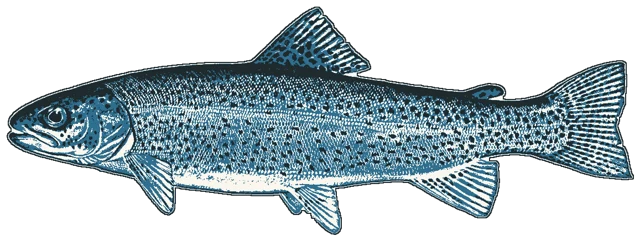 Rainbow troutRockfishSteelhead
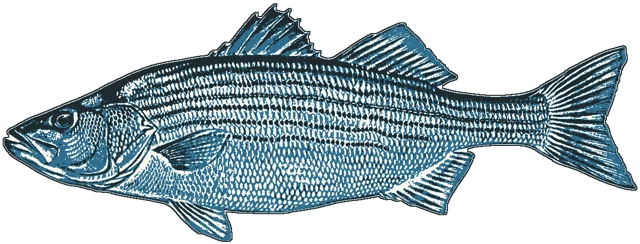 Striped bassWhite seabassYellowfin tuna
Just OK14
Garbage fish1
Catch & release
Fish by fish
Why each one sits where it does, the current California limits, and the bait that works.
Albacore tuna
Thunnus alalunga · Saltwater
ODFW calls the meat excellent barbecued, canned or smoked; the Hawaii Seafood Council calls it the lightest, mildest tuna.
- Tastes
- mild, light, firm; softer than other tunas raw
- Limits
- Light regs. South of Point Conception: 10 per day. North of Point Conception: 25 per day. In addition to the 20-fish general limit. No size limit. Open all year. (2026 Ocean Sport Fishing Regulations booklet, last updated July 17, 2026) Source
- cedar plugs trolled at 5+ knots
- diving plugs
- live or dead bait drifted
- metal jigs cast or dropped
- Dries out quickly if overcooked (Hawaii Seafood Council)
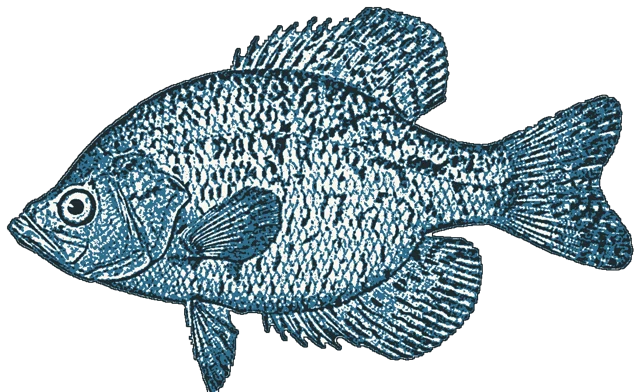
Black crappie
Pomoxis nigromaculatus · Freshwater
One of the classic fish-fry fish: MeatEater counts crappie among the best-eating fish in freshwater.
- Tastes
- mild, sweet, delicate, flaky, white
- Limits
- Light regs. Crappie (all species) share the combined limit of 25 sunfish and crappie per day, open all year. No size limit except Hodges and El Capitan lakes (San Diego Co.), where crappie must be 10 in. Barrett and Upper Otay lakes: 0. (2026 Freshwater Sport Fishing Regulations booklet, updated July 10, 2026) Source
- live minnows
- small jigs
- tube jigs
- grass shrimp
- small spinners
- Do not eat (anyone): crappie from the lower Cosumnes River (Sacramento County).
- Do not eat (anyone): any fish from the all-fish waters on this page, such as the Guadalupe River system, Bear Creek (Colusa County) and the Port of Stockton.
- Do not eat (women 18-49 and children 1-17): crappie from Cache Creek, Lake Nacimiento, Soulajule Reservoir or Stevens Creek Reservoir.
Meal limits and other waters (4)
- Limit (everyone else): one serving a week from those four.
- Limit (women 18-49 and children 1-17): one serving a week from lakes with no line of their own, the Sacramento River, the Delta and 11 listed lakes, Clear Lake among them.
- Limit (everyone else): two servings a week from lakes with no line of their own and the Sacramento River and northern Delta; three from Clear Lake and the Central and South Delta.
- Other listed waters differ (OEHHA site advisories).
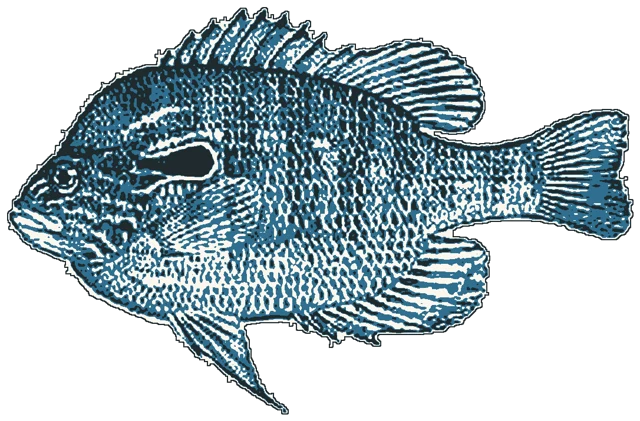
Bluegill
Lepomis macrochirus · Freshwater
MeatEater calls the flesh light, delicate and sweet; the original fish-fry panfish.
- Tastes
- mild, sweet, firm, flaky
- Limits
- Light regs. Sunfish (includes bluegill, green sunfish, redear sunfish, pumpkinseed, warmouth and Sacramento perch) and crappie share a combined limit of 25 per day, open all year, no size limit. Barrett and Upper Otay lakes: 0. (2026 Freshwater Sport Fishing Regulations booklet, updated July 10, 2026) Source
- red worms
- nightcrawlers
- crickets
- grass shrimp
- small jigs
- popping bugs
- Do not eat (anyone): any fish from the all-fish waters on this page, such as the Guadalupe River system, Bear Creek (Colusa County) and the Port of Stockton.
- Do not eat (women 18-49 and children 1-17): sunfish, bluegill included, from Silverwood Lake or Lake Pillsbury.
Meal limits and other waters (5)
- Limit (everyone else): one serving a week from Silverwood Lake and Lake Pillsbury.
- Limit (everyone): one serving a week from Ferguson Lake (Imperial County).
- Limit (women 18-49 and children 1-17): one serving a week from lakes and rivers with no line of their own and 32 listed waters, such as Clear and Pyramid lakes and the Sacramento River and northern Delta; two from the Central and South Delta, Folsom and Oroville; three from Shasta and Castaic.
- Limit (everyone else): two servings a week from lakes and rivers with no line of their own and 16 listed waters; three from Clear and Castaic.
- Other listed waters differ (OEHHA site advisories).
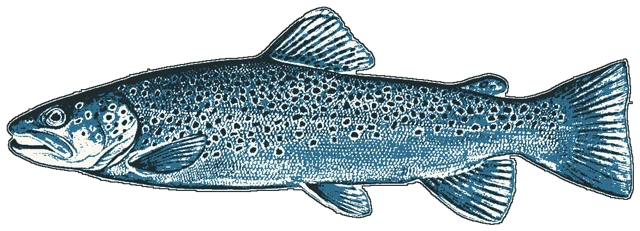
Brown trout
Salmo trutta · Freshwater
Good trout eating like rainbows; most kept browns are stocked fish.
- Tastes
- mild to rich, flaky
- Limits
- Heavy regs. Counts in the statewide 5 trout per day, 10 in possession combined limit (same seasons as rainbow trout). Sacramento River below Keswick Dam sections: 5 brown trout per day, 10 in possession, in addition to the hatchery trout and steelhead limit; Klamath Basin brown trout possession limit is 20. (2026 Freshwater Sport Fishing Regulations booklet, updated July 10, 2026) Source
- Where
- Introduced widely and present in many interior waters, especially on both sides of the Sierra Nevada (CDFW).
- nightcrawlers
- spinners
- minnow-imitating flies
- Do not eat (anyone): brown trout over 16 in from Hell Hole Reservoir.
- Do not eat (women 18-49 and children 1-17): brown trout over 16 in from any water with no OEHHA brown trout line of its own, such as Lake Tahoe, Crowley Lake and Convict Lake.
Meal limits and other waters (3)
- Limit (women 18-49 and children 1-17): one serving a week of smaller ones from those waters and Hell Hole Reservoir, and of any size from Donner Lake, French Meadows Reservoir, Mammoth Creek, Deer Creek (Nevada County) and the Bear River; two from Trinity Lake.
- Limit (everyone else): one serving a week of fish over 16 in from lakes with no line of their own, and of any size from Donner Lake; two from Mammoth Creek and rivers with no line of their own; three of smaller fish from lakes with no line of their own and Hell Hole, and from French Meadows, Deer Creek and the Bear River; five from Trinity.
- Other listed waters differ (OEHHA site advisories).
Cabezon
Scorpaenichthys marmoratus · Saltwater
Hank Shaw calls the 'mighty cabezon' the best of the sculpins; the meat is white and lean like lingcod and rockfish.
- Limits
- Heavy regs. Counts in the 10-fish Rockfish, Cabezon and Greenling (RCG) complex limit; no minimum size. 2026 season: Northern, Mendocino, San Francisco and Central areas are closed Jan 1-Mar 31 (unlawful to possess in all waters) and open at all depths Apr 1-Dec 31. Southern area: nearshore rockfish, cabezon and greenlings closed Jan 1-Mar 31, open all depths Apr 1-Jun 30, inside the 50-fathom line only Jul 1-Sep 30, closed Oct 1-Dec 31; shelf and slope rockfish and lingcod closed Jan 1-Mar 31, open all depths Apr 1-Jun 30, inside 50 fathoms Jul 1-Sep 30, outside 50 fathoms only Oct 1-Dec 31. Shore anglers and spear divers are exempt from seasons and depths. A descending device is required aboard when taking federal groundfish from a boat. (CDFW groundfish summary page, updated June 23, 2026 (subject to in-season change); 2026 ocean booklet updated July 17, 2026) Source
- Where
- Statewide ocean, by groundfish management area. Management areas: Northern (Oregon border to Cape Mendocino, 40 deg 10 min N), Mendocino (Cape Mendocino to Point Arena), San Francisco (Point Arena to Pigeon Point), Central (Pigeon Point to Point Conception) and Southern (Point Conception to the Mexico border).
- small crabs
- fresh mussels
- rubber-tailed jig tipped with bait
- Never eat the roe: cabezon eggs are poisonous and can make a person violently ill (ODFW, pierfishing.com)
- Do not eat (anyone): any fish from Lauritzen Channel in Richmond (San Francisco Bay).
- CDFW's 2025 nearshore fish ID flyer notes the cabezon's roe is poisonous.
- Limit (women 18-49 and children 1-17): one serving a week of the fillet from the coast.
- Limit (everyone else): two servings a week.
- OEHHA statewide coastal advisory, November 2016.
California halibut
Paralichthys californicus · Saltwater
White, mild, large-flaked fillets; Ken Jones calls it one of the best-tasting fish in California waters, good fried or any other way.
- Tastes
- mild, sweet, fine flake, tender
- Limits
- Heavy regs. 22 in minimum total length. North of Point Sur (Monterey Co.): 2 per day. South of Point Sur: 5 per day. Open all year. (2026 Ocean Sport Fishing Regulations booklet, last updated July 17, 2026) Source
- Best months
- Southern California beaches Jun-Oct; Central California beaches May-Aug (CDFW beach guides, 2009 brochures).
- Where
- Southern and Central California beaches; CDFW's beach guides say to look for baitfish, feeding birds and marine mammals and cast there.
- live anchovies
- live sardines
- frozen anchovies
- Lean meat dries out if overcooked (pierfishing.com)
- Most pier-caught fish are below the legal size; check the current CDFW minimum
- Do not eat (anyone): any fish from Lauritzen Channel in Richmond (San Francisco Bay).
Meal limits and other waters (3)
- Limit (women 18-49 and children 1-17): one serving a week from San Francisco, Tomales and Humboldt bays and the coast from Ventura Harbor to San Mateo Point.
- Limit (everyone else): two servings a week from San Francisco Bay and that coast, three from Tomales and Humboldt bays.
- OEHHA (Humboldt Bay updated Nov. 19, 2026).
California scorpionfish
Scorpaena guttata · also called sculpin · Saltwater
Excellent eating: mild, dense, low-fat white meat, often steamed whole or used for sushi (pierfishing.com).
- Tastes
- mild, dense, firm
- Limits
- Heavy regs. 5 per day, no minimum size, open year round in all depths except the Groundfish Exclusion Areas (Southern area). (2026 Ocean Sport Fishing Regulations booklet, last updated July 17, 2026) Source
- squid
- shrimp
- ghost shrimp
- cut anchovy or mackerel
- Venomous fin spines: soak a puncture in hot water and get medical care for multiple stings (pierfishing.com)
Before you eat it: One serving a week, for everyone, from Ventura Harbor to San Mateo Point (OEHHA, June 2009).
California yellowtail
Seriola dorsalis · Saltwater
Mild, firm, off-white meat with moderate fat that grills and barbecues well; Ken Jones rates it a good eating fish.
- Tastes
- mild, firm, small flakes, moderate fat
- Limits
- Light regs. 10 per day, 24 in minimum fork length, except 5 fish may be under 24 in. Open all year. (2026 Ocean Sport Fishing Regulations booklet, last updated July 17, 2026) Source
- Best months
- Usually April to September, with a second season in winter near spawning squid (Sport Fishing)
- Where
- Off Catalina Island: rocky areas, kelp beds and open bottom, typically in 120 feet or less (Salt Water Sportsman).
- live squid
- sardines
- mackerel
- surface iron jigs
- yo-yo metal jigs
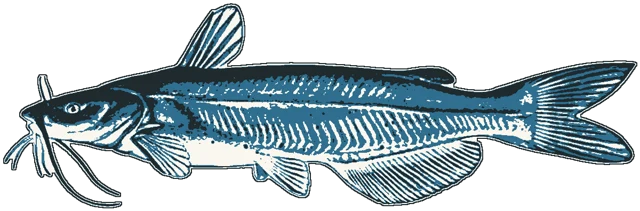
Channel catfish
Ictalurus punctatus · Freshwater
Very good to eat (Maryland DNR) and delicious when cooked (TPWD), and the basis of US catfish farming.
- Tastes
- mild, sweet, firm, moist
- Limits
- No limits. Statewide: no limit, open all year (catfish includes channel, white, blue and flathead). Limits apply in some waters: Colorado River District and Southern District 10; Mono County 10; Los Angeles County park lakes 5; San Diego County (except Barrett and Upper Otay lakes, which are 0) 5; Santa Clara County 5. (2026 Freshwater Sport Fishing Regulations booklet, updated July 10, 2026) Source
- mealworms
- marshmallows
- night crawlers
- cut bait
- shrimp
- stinkbaits
- Do not eat (anyone): catfish from Lake Evans (Riverside), Lake Merced (north or south lake, San Francisco), Lake Natoma or San Pablo Reservoir.
- Do not eat (anyone): any fish from the all-fish waters on this page, such as the Guadalupe River system, Bear Creek (Colusa County) and the Port of Stockton.
- Do not eat (women 18-49 and children 1-17): catfish from any lake, river or stream with no OEHHA catfish line of its own, or from Anderson, Berryessa, Castaic, Folsom, Hensley, McClure, Nacimiento, Oroville, Shasta or Silverwood lakes, Camp Far West Reservoir, the lower Cosumnes or lower Feather rivers, the New River (Imperial County), or the Sacramento River and northern Delta.
Meal limits and other waters (3)
- Limit (everyone else): one serving a week from those waters (two from the Sacramento River and northern Delta) and O'Neill Forebay; two from 16 more, such as Pyramid Lake and the San Joaquin River; three from Clear Lake and the Central and South Delta.
- Limit (women 18-49 and children 1-17): one serving a week from 21 waters, such as Clear and Pyramid lakes, the San Joaquin River and the Central and South Delta.
- Other listed waters differ (OEHHA site advisories).
Chinook salmon
Oncorhynchus tshawytscha · also called king salmon · Fresh and salt
NOAA calls Chinook the most highly prized salmon in the culinary world: rich, buttery and oily.
- Tastes
- rich, buttery, oily, flaky, meaty
- Limits
- Heavy regs. Ocean (state and federal ocean waters): over for 2026. The season was 2 salmon per day, no coho, 24 in minimum total length through May 15 and 20 in after that (fall 20 in). 2026 dates: OR/CA border to 40 deg 10 min line (KMZ) Jun 13-Jul 19 (the planned Aug 1-31 period was closed after the 3,900-fish guideline was reached); 40 deg 10 min line to Point Arena Jun 13-Jul 19 and Aug 1-9; Point Arena to Pigeon Point Jun 27-Jul 22 and Aug 1-23; Pigeon Point to the Mexico border Apr 11-Aug 31; fall, Point Reyes (38 deg 02 min N) to Pigeon Point Sep 1-Oct 31 and Pigeon Point to the border Sep 1-30. Central Valley rivers, 2026: 2 Chinook per day, 4 in possession (the Sacramento reopened after three years closed; the Feather, American and Mokelumne had a shortened 2025 season). Open into December: Sacramento River, Deschutes Road bridge to Woodson Bridge Aug 1-Dec 31 and Woodson Bridge to Carquinez Bridge Jul 16-Dec 16; Feather River below Live Oak Jul 16-Dec 16; American River, Ancil Hoffman Park to Jibboom Street Jul 16-Dec 31 and Jibboom Street to the mouth Jul 16-Dec 16; Mokelumne River, Elliot Road to Woodbridge Dam including Lodi Lake Jul 16-Dec 31 and Lower Sacramento Road bridge to the mouth Jul 16-Dec 16 (between the dam and that bridge is closed to all fishing). Over: Feather, Thermalito Afterbay outfall to Live Oak ramp (Jul 16-Oct 31); American above Ancil Hoffman Park (Jul 16-Oct 31); Mokelumne, Camanche Dam to Elliot Road (Jul 16-Oct 15). Klamath-Trinity spring run: over for 2026, 1 Chinook per day and 2 in possession (Klamath below the Highway 96 bridge at Weitchpec Jul 1-Aug 14; Trinity, Old Lewiston Bridge to the South Fork Trinity, Jul 1-Aug 31). Fall run: Aug 15-Dec 31 on the Klamath and Sep 1-Dec 31 on the Trinity under a 3,248-fish adult quota for the basin, 2 per day with 1 over 23 in until a reach meets its sub-quota, then only Chinook 23 in or under; 6 in possession, no more than 3 over 23 in. Adult fall fishing is over on the lower Klamath below Weitchpec (Sep 13), the lower Trinity below Hawkins Bar (Oct 16) and the upper Trinity from the Old Lewiston Bridge to Cedar Flat (Oct 28); the Klamath mouth spit closed to all fishing Sep 2. The Trinity from Cedar Flat to Hawkins Bar is closed to all fishing Sep 1-Dec 31. Klamath from Lakeview Road bridge to the I-5 bridge has a 0 quota and is closed to Chinook. Smith River: 1 Chinook per day and no more than 5 wild Chinook over 22 in per year, fourth Saturday in May through Apr 30 on the main stem, Middle Fork to Patrick Creek and the listed South Fork reaches, through Mar 31 on the North Fork to Stony Creek; low-flow closures apply. North Coast Salmon Report Card required in the Klamath-Trinity and Smith systems. (2026 Ocean Salmon Sport Regulations, updated Aug 19, 2026 (v. 10/06/26); inland from the 2026 Freshwater Sport Fishing Regulations booklet, updated July 10, 2026 and CDFW news release of May 12, 2026; Klamath-Trinity quota status from CDFW news releases of Aug 28, Sep 11, Oct 15 and Oct 26, 2026) Source
- Where
- Ocean from the Oregon border south to Mexico by area; Sacramento, Feather, American, Klamath and Trinity rivers (see regs).
- Do not eat (anyone): any fish from the all-fish waters on this page, including the Guadalupe River and Guadalupe Creek, the Port of Stockton and Smith Canal, and Lauritzen Channel in Richmond.
- Do not eat (women 18-49 and children 1-17): Chinook salmon from Lake Berryessa, Folsom Lake, Lake Natoma or Lake McClure.
Meal limits and other waters (3)
- Limit (women 18-49 and children 1-17): one serving a week from Shasta Lake; two from rivers, bays and the ocean.
- Limit (everyone else): one serving a week from Berryessa, Folsom, Natoma and McClure; two from Shasta; five from rivers, bays and the ocean.
- OEHHA advisory for fish that migrate (November 2022) and lake advisories: https://oehha.ca.gov/fish/advisories/advisory-fish-migrate.
Golden trout
Oncorhynchus mykiss aguabonita · Freshwater
A small high-country trout eaten like any stream trout where harvest is allowed.
- Tastes
- mild, clean, delicate
- Limits
- Heavy regs. Counts in the statewide 5 trout per day, 10 in possession combined limit. Golden Trout Wilderness Area (Tulare Co., excluding the main stem Kern River and the Tule River drainage): open all year, artificial lures only, 2 trout. (2026 Freshwater Sport Fishing Regulations booklet, updated July 10, 2026) Source
- Where
- Native to Golden Trout Creek and the South Fork Kern River (Tulare Co.); stocked into high-elevation Sierra Nevada lakes and streams (CDFW).
- dry flies and terrestrials
- small lures
Before you eat it: Women 18 to 49 and children: six servings a week from South Lake (Inyo County). Everyone else: seven. OEHHA, December 2023.
Kelp bass
Paralabrax clathratus · Saltwater
Mild white fillets suited to almost any cooking; a Dana Point charter outfit calls it excellent table fare, and Ken Jones says a keeper makes a good meal.
- Tastes
- mild, white, medium flake
- Limits
- Heavy regs. 5 per day, kelp, barred sand and spotted sand bass combined, 14 in minimum total length (10 in alternate length through Dec 31, 2026; total length only from Jan 1, 2027); only 4 may be barred sand bass. Open all year. Fillets brought ashore must be at least 7.5 in with a 1-in skin patch. (2026 Ocean Sport Fishing Regulations booklet, last updated July 17, 2026) Source
- Best months
- Late spring and early summer, when water is at least 62 degrees (Sport Fishing, calico bass)
- Where
- Shallow reefs and kelp beds in coastal waters to about 70 ft, and the offshore islands (CDFW).
- live squid
Before you eat it: Women 18 to 49 and children: one serving a week along the whole coast. Everyone else: one serving a week from Ventura Harbor to San Mateo Point, two on the rest of the coast. OEHHA (Southern California, June 2009; statewide coast, November 2016).
Kokanee salmon
Oncorhynchus nerka (landlocked) · also called landlocked sockeye salmon · Freshwater
Landlocked sockeye with vivid orange, rich flesh; kokanee anglers fish specifically to fill a cooler.
- Tastes
- rich, salmon-like, slightly soft, orange
- Limits
- Heavy regs. Landlocked salmon (includes kokanee): open all year, 5 per day, 10 in possession, no size limit. Bucks Lake (Plumas Co.), New Bullards Bar Reservoir (Yuba Co.), Pardee Lake (Amador Co.) and Trinity Lake (Trinity Co.): 10 per day, 20 in possession. (2026 Freshwater Sport Fishing Regulations booklet, updated July 10, 2026) Source
- Best months
- Anglers usually start in spring, with peak effort in summer; in the weeks before spawning in fall they school near tributary mouths (CDFW).
- Where
- Open water of reservoirs, mostly fished from a boat (CDFW); CDFW publishes creel reports for Stampede, New Melones, Whiskeytown and Lake Berryessa.
- small spinners
- soft plastic tubes ('hoochies' or 'squids')
- small spoons
- dodger or flasher ahead of the lure
- lure tipped with a kernel of white shoepeg corn
Before you eat it: Women 18 to 49 and children: one serving a week from Bass Lake and Hell Hole Reservoir; two from Donner Lake, Lake McClure and New Bullards Bar Reservoir. Everyone else: two from Donner, three from Hell Hole, four from Bass Lake and McClure, five from New Bullards Bar. OEHHA; those five lakes have kokanee rows.
Lingcod
Ophiodon elongatus · Saltwater
Mild, lean, large-flaked white meat; Hank Shaw rates it tastier than rockfish, and NOAA describes it as mild and tender.
- Tastes
- mild, tender, large flakes
- Limits
- Heavy regs. 2 per day, 22 in minimum total length (fillets at least 14 in with skin on). 2026 season: Northern, Mendocino, San Francisco and Central areas are closed Jan 1-Mar 31 (unlawful to possess in all waters) and open at all depths Apr 1-Dec 31. Southern area: nearshore rockfish, cabezon and greenlings closed Jan 1-Mar 31, open all depths Apr 1-Jun 30, inside the 50-fathom line only Jul 1-Sep 30, closed Oct 1-Dec 31; shelf and slope rockfish and lingcod closed Jan 1-Mar 31, open all depths Apr 1-Jun 30, inside 50 fathoms Jul 1-Sep 30, outside 50 fathoms only Oct 1-Dec 31. Shore anglers and spear divers are exempt from seasons and depths. A descending device is required aboard when taking federal groundfish from a boat. (CDFW groundfish summary page, updated June 23, 2026 (subject to in-season change); 2026 ocean booklet updated July 17, 2026) Source
- Where
- Statewide ocean, by groundfish management area. Management areas: Northern (Oregon border to Cape Mendocino, 40 deg 10 min N), Mendocino (Cape Mendocino to Point Arena), San Francisco (Point Arena to Pigeon Point), Central (Pigeon Point to Point Conception) and Southern (Point Conception to the Mexico border).
- swimbait on a heavy leadhead jig
- live sanddab or small fish where legal
- bait bounced on the bottom
- Fillets occasionally hold worms (Hank Shaw)
Before you eat it: Do not eat (anyone): any fish from Lauritzen Channel in Richmond (San Francisco Bay). Limit (women 18-49 and children 1-17): one serving a week from the coast and Humboldt Bay. Limit (everyone else): two servings a week. OEHHA statewide coastal advisory (November 2016) and Humboldt Bay advisory (Nov. 19, 2026).
Pacific bluefin tuna
Thunnus orientalis · Saltwater
The darkest, fattiest tuna and prized for sashimi; NOAA also calls it a delicious seared steak.
- Tastes
- distinctive, rich, dark, fatty
- Limits
- Heavy regs. 2 per day, no size limit, in addition to the 20-fish general limit; applies to all bluefin tuna possessed, wherever taken. Open all year. (2026 Ocean Sport Fishing Regulations booklet, last updated July 17, 2026) Source
- Best months
- Typically April into October or even November (Sport Fishing)
- rigged flying fish under a kite
- high-speed trolling plugs
- clear poppers
- stickbaits
Pacific sanddab
Citharichthys sordidus · Saltwater
Excellent: mild, soft and low-fat, a classic pan-fried delicacy (pierfishing.com).
- Tastes
- mild, soft, low fat
- Limits
- No limits. No limit and no size limit; open year round in all depths except the Groundfish Exclusion Areas. A federal groundfish exempt from seasons and depths. (2026 Ocean Sport Fishing Regulations booklet, last updated July 17, 2026) Source
- squid strips
- almost any small bait
Before you eat it: OEHHA's coastal rows name longfin and speckled sanddab: six servings a week for everyone (November 2016). Pacific sanddab has no row of its own.
Rainbow trout
Oncorhynchus mykiss · Freshwater
TPWD calls rainbow trout an excellent fish to eat; the most-stocked put-and-take fish in America.
- Tastes
- mild, clean, delicate, flaky
- Limits
- Heavy regs. Statewide, trout combined (rainbow, golden, brown, cutthroat): 5 per day and 10 in possession. Lakes, reservoirs and ponds: open all year. Streams, rivers and canals not listed otherwise: last Saturday in April through Nov 15; from Nov 16 through the Friday before the last Saturday in April the trout bag limit is zero and only barbless artificial lures may be used. Listed waters differ, for example Crowley Lake (Mono Co.): last Saturday in April through Jul 31, 5 trout; Aug 1 through Nov 15, 2 trout, artificial lures only, 18 in minimum. Convict Lake: last Saturday in April through Nov 15, 5 trout. (2026 Freshwater Sport Fishing Regulations booklet, updated July 10, 2026) Source
- Where
- Most widely distributed trout in California, in watersheds draining to the Pacific Ocean (CDFW).
- dough baits such as Power Bait
- insects
- small live bait fish
- Do not eat (anyone): any fish from the all-fish waters on this page, such as the Guadalupe River system, Bear Creek (Colusa County) and the Port of Stockton.
- Do not eat (women 18-49 and children 1-17): rainbow trout over 16 in from Folsom Lake or Lake Natoma.
Meal limits and other waters (4)
- Limit (everyone else): one serving a week of those over 16 in.
- Limit (women 18-49 and children 1-17): one serving a week from Crowley Lake, Lake Berryessa, Lake Pillsbury, Topaz Lake, Little Rock Reservoir and rivers with no line of their own; two from Shasta and Trinity lakes and lakes with no line of their own.
- Limit (everyone else): two servings a week from Crowley Lake; three from Berryessa, Pillsbury, Topaz, Little Rock and rivers with no line of their own; four from lakes with no line of their own; five from Trinity and six from Shasta.
- Other listed waters differ (OEHHA site advisories).
Rockfish
Sebastes spp. (more than 70 species) · Saltwater
White, firm, lean meat that works in any white-fish recipe; rockfish are the backbone of West Coast bottom-fishing limits.
- Tastes
- firm, lean, white
- Limits
- Heavy regs. Rockfish count in the 10-fish RCG complex (any combination with cabezon and greenlings), no minimum size. Sub-limits: copper rockfish 1; canary rockfish 2; vermilion/sunset rockfish 4 in the Northern area and 2 elsewhere. Bronzespotted, cowcod, quillback and yelloweye rockfish may not be taken. 2026 season: Northern, Mendocino, San Francisco and Central areas are closed Jan 1-Mar 31 (unlawful to possess in all waters) and open at all depths Apr 1-Dec 31. Southern area: nearshore rockfish, cabezon and greenlings closed Jan 1-Mar 31, open all depths Apr 1-Jun 30, inside the 50-fathom line only Jul 1-Sep 30, closed Oct 1-Dec 31; shelf and slope rockfish and lingcod closed Jan 1-Mar 31, open all depths Apr 1-Jun 30, inside 50 fathoms Jul 1-Sep 30, outside 50 fathoms only Oct 1-Dec 31. Shore anglers and spear divers are exempt from seasons and depths. A descending device is required aboard when taking federal groundfish from a boat. (CDFW groundfish summary page, updated June 23, 2026 (subject to in-season change); 2026 ocean booklet updated July 17, 2026) Source
- Where
- Statewide ocean, by groundfish management area. Management areas: Northern (Oregon border to Cape Mendocino, 40 deg 10 min N), Mendocino (Cape Mendocino to Point Arena), San Francisco (Point Arena to Pigeon Point), Central (Pigeon Point to Point Conception) and Southern (Point Conception to the Mexico border).
- shrimp flies or Farallon Feathers on a high-low rig
- squid strip on a bare hook
- rubber-tailed leadhead jigs
- Spiny fins; handle with care
- Fish brought up from depth suffer barotrauma; release with a descending device (NOAA)
- Do not eat (women 18-49 and children 1-17): black and yellow, China, copper or gopher rockfish.
- Do not eat (anyone): any fish from Lauritzen Channel in Richmond (San Francisco Bay).
Meal limits and other waters (3)
- Limit (women 18-49 and children 1-17): one serving a week of black, blue, brown, kelp, olive, rosethorn and vermilion rockfish, or of any other rockfish from Ventura Harbor to San Mateo Point.
- Limit (everyone else): one serving a week of black and yellow, China, copper and gopher rockfish; two of other rockfish from Ventura Harbor to San Mateo Point; four of black, blue, brown, kelp, olive, rosethorn and vermilion rockfish from the rest of the coast.
- OEHHA statewide coastal advisory, November 2016, and Southern California advisories, June 2009.
Steelhead
Oncorhynchus mykiss (anadromous) · Fresh and salt
Steelhead are sea-run rainbow trout, and bright fish eat like a mild salmon; hatchery fish are kept as food across the Pacific Northwest and Great Lakes.
- Tastes
- mild, rich, firm, pink-orange
- Limits
- Heavy regs. Inland, in most listed anadromous waters: 2 hatchery trout or hatchery steelhead per day (healed adipose fin clip, adipose absent), 4 in possession (Mokelumne River: 1 per day); wild steelhead and all other trout must be released unless a water says otherwise. Steelhead means a rainbow trout over 16 in in anadromous waters (16 in or more from Jan 1, 2027). A Steelhead Fishing Report and Restoration Card is required ($10.29, valid through Dec 31, 2026). From Jan 1, 2027 the card is required Aug 1 to Apr 30 for steelhead or rainbow trout in anadromous waters and not May 1 to Jul 31. Steelhead may not be kept in ocean waters. (2026 Freshwater Sport Fishing Regulations booklet, updated July 10, 2026; 2027 card rule from CDFW fishing license page) Source
- Where
- Anadromous waters of watersheds draining to the Pacific, including the Sacramento, Feather, American and Trinity rivers (CDFW booklet and rainbow trout page).
- Do not eat (anyone): any fish from the all-fish waters on this page, including the Guadalupe River and Guadalupe Creek, the Port of Stockton and Smith Canal, and Lauritzen Channel in Richmond.
- Limit (women 18-49 and children 1-17): two servings a week of steelhead from rivers, bays and the ocean.
- Limit (everyone else): five servings a week.
- OEHHA advisory for fish that migrate, November 2022.
Striped bass
Morone saxatilis · Fresh and salt
Firm, large-flaked, slightly sweet white meat; one of the most kept and eaten gamefish in the country, fresh or salt.
- Tastes
- mild, slightly sweet, firm, large flakes
- Limits
- Heavy regs. Inland: 2 per day, 18 in minimum total length; a striped bass hybridized with white bass counts as striped bass. Colorado River District, Southern District and New Hogan, San Antonio and Santa Margarita lakes: 10 per day, no size limit. Ocean (state waters, 2026 ocean booklet): 2 per day; 18 in minimum north of Point Conception, no size limit south of it. (2026 Freshwater Sport Fishing Regulations booklet, updated July 10, 2026; ocean rule from 2026 Ocean Sport Fishing Regulations booklet, last updated July 17, 2026) Source
- Best months
- Summer and fall peak in San Francisco Bay; spring in the Delta and Sacramento River; fall migration to the Delta can start as early as October (CDFW). CDFW's Central California beach guide lists peak months Apr-Sep.
- Where
- Sacramento-San Joaquin Delta; San Francisco Bay; Sacramento River from Courtland to Colusa in spring; San Joaquin River near Stockton (do not eat any fish from the Port of Stockton or Smith Canal) in spring and fall (CDFW).
- threadfin shad (Delta)
- sardines
- anchovies
- bloodworms
- pile worms
- live shiner perch or anchovies (San Francisco Bay)
- Consumption advisories for striped bass vary from state to state (NOAA).
- Do not eat (anyone): striped bass from Silverwood Lake.
- Do not eat (anyone): any fish from the Port of Stockton and Smith Canal, Lauritzen Channel in Richmond, or the Guadalupe River and Guadalupe Creek.
- Do not eat (women 18-49 and children 1-17): striped bass from any river, bay, the Delta or the ocean.
- Do not eat (women 18-49 and children 1-17): striped bass from lakes with no OEHHA striped bass line of their own, or from Pyramid Lake, Lake Del Valle, Lake Mendocino, Lake San Antonio or San Luis Reservoir.
- Limit (everyone else): one serving a week from all those rivers, bays, ocean waters and do-not-eat lakes; two from Havasu, O'Neill Forebay and Senator Wash; three from Ferguson and Xanyō Xamshré; four from Castaic.
Meal limits and other waters (2)
- Limit (women 18-49 and children 1-17): one serving a week from Castaic Lake, O'Neill Forebay and Ferguson Lake; two from Lake Havasu, Senator Wash Reservoir and Xanyō Xamshré (formerly Squaw Lake).
- OEHHA advisory for fish that migrate (November 2022) and lake advisories.
White seabass
Atractoscion nobilis · Saltwater
Excellent, mild, firm, low-fat white meat (pierfishing.com); a prized Southern California table fish.
- Tastes
- mild, firm, low fat
- Limits
- Heavy regs. 3 per day, except only 1 may be taken south of Point Conception between Mar 15 and Jun 15. 28 in minimum total length. Open all year. (2026 Ocean Sport Fishing Regulations booklet, last updated July 17, 2026) Source
- Best months
- Spring and early summer, when squid visit the islands (Sport Fishing)
- Where
- Waters around the Southern California offshore islands: Santa Barbara, Santa Catalina, San Clemente, Santa Cruz and Santa Rosa, including the kelp beds that rim them (Sport Fishing).
- live squid
- fresh dead or thawed frozen squid
- metal jigs with live squid pinned on
- Flesh discolors quickly; ice it and eat it fresh (pierfishing.com)
- Undersized fish must be released; check the CDFW minimum
Yellowfin tuna
Thunnus albacares · Saltwater
Clean, meaty, red flesh prized raw and seared; Florida Sportsman's pick for best offshore eating fish.
- Tastes
- mild, meaty, firm, moist, large flakes
- Limits
- Light regs. 10 per day (yellowfin, bigeye and other tunas not listed), no size limit, counted toward the 20-fish general limit. Open all year. (2026 Ocean Sport Fishing Regulations booklet, last updated July 17, 2026) Source
- Best months
- August and September, mostly recreational off San Diego (California Sea Grant)
- rigged ballyhoo
- skirted trolling lures
- chunked butterfish or sardines
- live bait
- popper or stickbait
- jig
Barred sand bass
Paralabrax nebulifer · Saltwater
Mild white meat that cooks any way, but firmer and drier than calico or spotted bay bass, so it mostly ends up in fish tacos.
- Tastes
- mild, firm, somewhat dry
- Limits
- Heavy regs. 5 per day, kelp, barred sand and spotted sand bass combined, with no more than 4 barred sand bass; 14 in minimum total length (10 in alternate length through Dec 31, 2026; total length only from Jan 1, 2027). Open all year. (2026 Ocean Sport Fishing Regulations booklet, last updated July 17, 2026) Source
- live anchovies or smelt
- strip bait
- ghost shrimp
- swimbaits
- EPA's Palos Verdes Shelf program lists barred sand bass among five species California says are unsafe to eat from the Santa Monica Pier to Seal Beach Pier 'red zone' (DDT/PCBs)
- Do not eat barred sand bass from Santa Monica Beach south of the pier to Seal Beach Pier (OEHHA, June 2009; EPA's Fish Contamination Education Collaborative lists it as Do Not Eat at those piers because of DDT and PCBs).
- Women 18 to 49 and children: do not eat it from San Diego Bay; one serving a week on the rest of the coast.
- Everyone else: one serving a week from San Diego Bay, two on the rest of the coast.
Bat ray
Myliobatis californica · Saltwater
Most anglers call it inedible ('mud marlin'), but properly handled wings eat like skate. Only the wings are used and cleaning is a chore, so the reputation is split.
Worth a try: Hank Shaw found bat ray wings 'just like a regular skate wing': tender, meaty, no off flavor. Kill and clean it quickly, keep only the wings, and brine them before cooking (brown butter is classic). Ken Jones also rates it good eating.
- Tastes
- clean, no off flavor, tender, corduroy-grained like skate wing
- Limits
- Light regs. No species rule: general limit of 20 finfish combined, no more than 10 of one species; no size limit. Finfish include sharks, skates and rays. (2026 Ocean Sport Fishing Regulations booklet, last updated July 17, 2026) Source
- Where
- Southern California surf (CDFW beach guide).
- squid
- mackerel
- Like sharks, rays can smell of ammonia if not cleaned and iced fast (Hank Shaw)
- Do not eat (women 18-49 and children 1-17): bat ray from Tomales Bay, or bat ray 24 in wide or more from Elkhorn Slough.
- Do not eat (anyone): any fish from Lauritzen Channel in Richmond (San Francisco Bay).
Meal limits and other waters (3)
- Limit (women 18-49 and children 1-17): one serving a week of smaller bat rays from Elkhorn Slough.
- Limit (everyone else): one serving a week from Tomales Bay and of the larger Elkhorn Slough rays, four of the smaller.
- OEHHA (March 2009; July 2016).
California corbina
Menticirrhus undulatus · Saltwater
A good, mild, low-fat fish but soft-textured and best fried (pierfishing.com).
- Tastes
- mild, soft, low fat
- Limits
- Light regs. No minimum size; 10 per day as part of the 20-fish general limit. Open all year. (2026 Ocean Sport Fishing Regulations booklet, last updated July 17, 2026) Source
- Best months
- Southern California peak Jul-Sep (CDFW beach guide, 2009 brochure).
- Where
- Southern California surf, near sand crab beds and in the white wash (CDFW).
- soft-shell sand crabs
- bloodworms
- lugworms
- clams
- fresh mussels
- ghost shrimp
- Bottom feeder; some areas advise limiting how much you eat (pierfishing.com)
Before you eat it: One serving a week, for everyone, on the coast outside the Southern California advisory areas; two servings a week, for everyone, from Ventura Harbor to San Mateo Point. OEHHA (November 2016; June 2009).
California lizardfish
Synodus lucioceps · Saltwater
Opinion is split: California Sea Grant calls it bony but tasty, while some anglers find the flesh fishy with an iodine taste.
- Tastes
- mild to fishy; some report iodine, white, slightly flaky, bony
- Limits
- Light regs. No species rule: general limit of 20 finfish combined, no more than 10 of one species; no size limit. (2026 Ocean Sport Fishing Regulations booklet, last updated July 17, 2026) Source
- strips of squid
- cut bait
- pile worms
- Sabiki rigs
- Bony
- Some people report a strong fishy smell and an iodine taste
California sheephead
Semicossyphus pulcher · Saltwater
White, mild meat but soft, and it grows coarse and watery in big fish (pierfishing.com); smaller fish are the ones worth keeping.
- Tastes
- mild, soft; coarse in large fish
- Limits
- Heavy regs. 2 per day, 12 in minimum total length. Boat-based anglers: Mar 1-Dec 31 (closed Jan 1 through the last day of February); divers and shore-based anglers: year round. (2026 Ocean Sport Fishing Regulations booklet, last updated July 17, 2026) Source
- Where
- Rocky reefs and kelp beds, normally 3 to 30 m (10 to 100 ft) deep (California Sea Grant).
- shrimp
- ghost shrimp
- bloodworms
- fresh mussels
- cut squid
- Large males get coarse and watery (pierfishing.com)
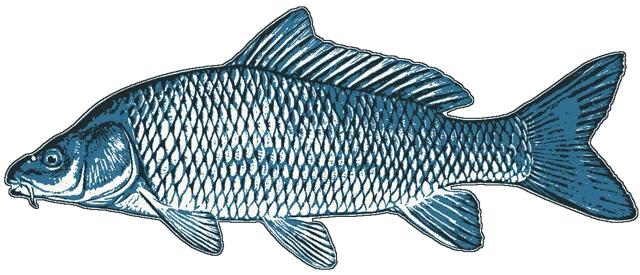
Common carp
Cyprinus carpio · Freshwater
Most US anglers call it a muddy, bony trash fish, but it is a prized food fish in Europe and Asia and eats well from clean, cold water.
Worth a try: Catch from clean water, remove the dark 'mud vein', and either score small fish and fry hard so the Y-bones soften, or hard-smoke large fish over fruitwood (Hank Shaw).
- Tastes
- mild from clean water, strong from muddy water, firm, fatty, Y-bones
- Limits
- No limits. No species rule: other species may be taken in any number at any time of year by angling, except where a district or special regulation closes the water. Grass carp may not be kept except as the booklet allows (separate rule). (2026 Freshwater Sport Fishing Regulations booklet, updated July 10, 2026) Source
- dough balls (plain bread or prepared baits)
- worms
- insects
- crayfish
- cut bait
- Do not eat (anyone): carp from Lake Temescal (Oakland), Magic Johnson Lakes (Los Angeles County) or San Pablo Reservoir.
- Do not eat (anyone): any fish from the all-fish waters on this page, such as the Guadalupe River system, Bear Creek (Colusa County) and the Port of Stockton.
- Do not eat (women 18-49 and children 1-17): carp from any lake, river or stream with no OEHHA carp line of its own, or from Anderson Lake, Lake Chabot (Alameda County), Lake Nacimiento, Indian Valley, Little Rock, New Bullards Bar or San Luis reservoirs, Thermalito Forebay and Afterbay, or Vasona Lake and Camden Ponds.
Meal limits and other waters (3)
- Limit (everyone else): one serving a week from those waters (two from Anderson Lake) and from Alondra Park, Diamond Valley, Legg, Perris and Shadow Cliffs lakes and Puddingstone Reservoir; two from 27 more, such as Oroville and the Sacramento and San Joaquin rivers; three from Clear, Shasta and the Central and South Delta.
- Limit (women 18-49 and children 1-17): one serving a week from 43 waters, such as Clear, Shasta, Castaic, Oroville and Diamond Valley lakes, the Sacramento and San Joaquin rivers and the Delta.
- Other listed waters differ (OEHHA site advisories).
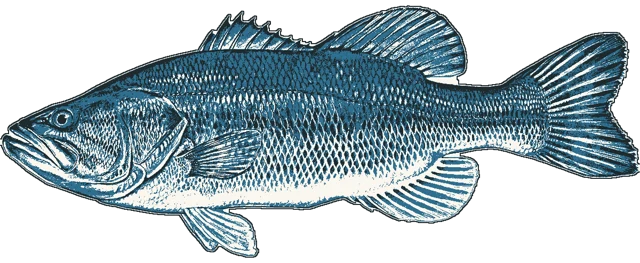
Largemouth bass
Micropterus nigricans (syn. M. salmoides) · Freshwater
Perfectly edible white fillets, but America's top catch-and-release fish and many anglers swear the meat tastes fishy or muddy, so reputation is split.
- Tastes
- mild to slightly 'fishy', firm, thick fillets
- Limits
- Heavy regs. Black bass (largemouth, smallmouth, redeye and spotted bass combined): 5 per day. Lakes, reservoirs and the Sacramento-San Joaquin Delta: 12 in minimum total length. Rivers, streams, canals and private ponds: no size limit. Exceptions include the Colorado River District (13 in minimum, 6 per day), Casitas Lake (12 in minimum, only one over 22 in), Hodges Lake (15 in minimum), Barrett Lake and Upper Otay Lake (catch and release only, 0), and some Inyo County streams and Mono County streams (closed to bass Nov 16 through the Friday before the last Saturday in April; Mono streams have no size limit). From Jan 1, 2027 Modoc County and Lassen County (except Mountain Meadows Reservoir) have no size limit, 5 per day. (2026 Freshwater Sport Fishing Regulations booklet, updated July 10, 2026) Source
- Best months
- CDFW gives seasons, not months: bass move shallow in spring, deeper or shaded water in summer, and feed heavily in fall.
- Where
- Found throughout California (CDFW); the 21 lb 12 oz fish from Castaic Lake in 1991 is cited as one of many over 10 lb.
- soft plastic worms and creature baits
- spinnerbaits and chatterbaits
- crankbaits and jerkbaits
- topwater lures such as frogs and poppers
- Water-body mercury advisories commonly list largemouth bass; check your state's advisory before eating large fish.
- Do not eat (anyone): black bass (largemouth, smallmouth and spotted) from the Russian River, Lake Pillsbury, Soulajule Reservoir, Stevens Creek Reservoir or Little Rock Reservoir.
- Do not eat (anyone): any fish from the all-fish waters on this page, such as the Guadalupe River system, Bear Creek (Colusa County) and the Port of Stockton.
- Do not eat (women 18-49 and children 1-17): black bass from any lake, river or stream with no OEHHA black bass line of its own, or from 63 more listed waters, all named in this page's eating advice.
- The 63 include Clear, Folsom, Oroville, Berryessa, Castaic, Trinity, Don Pedro, New Melones, San Luis, Diamond Valley and Pyramid lakes, and the Sacramento, San Joaquin, lower Feather and lower American rivers.
Meal limits and other waters (3)
- Limit (women 18-49 and children 1-17): one serving a week from 34 waters, such as Shasta Lake and the Central and South Delta.
- Limit (everyone else): one serving a week from waters with no line of their own and 63 listed waters; two from 30 more, Shasta Lake and the Central and South Delta among them.
- Other listed waters differ (OEHHA site advisories).
Pacific barracuda
Sphyraena argentea · Saltwater
Fair to good: white, bland, small-flaked meat that softens quickly unless cleaned and iced soon after capture (pierfishing.com).
- Tastes
- mild, bland, firm when fresh, small flakes
- Limits
- Light regs. 28 in minimum total length (17 in alternate length through Dec 31, 2026; total length only from Jan 1, 2027), 10 per day as part of the 20-fish general limit. Open all year. Fillets brought ashore must be at least 17 in with a skin patch. (2026 Ocean Sport Fishing Regulations booklet, last updated July 17, 2026) Source
- Best months
- Schools first show in mid-March and peak between May and late September or early October (California Sea Grant)
- Where
- Coastal areas near reefs or kelp, in water to about 120 ft (California Sea Grant).
- live anchovies
- gold Krocodile or Kastmaster spoons
- small live smelt
- EPA's Palos Verdes program lists Pacific barracuda among five species California says are unsafe to eat from the Los Angeles 'red zone'
- Clean soon after capture; the flesh softens in the sun (pierfishing.com)
- EPA's Fish Contamination Education Collaborative lists barracuda as Do Not Eat at piers from Santa Monica Pier to Seal Beach Pier, and also at piers in Ventura, Malibu, Huntington Beach and San Mateo Point, because of DDT and PCBs.
- OEHHA's June 2009 advisories for Ventura Harbor to San Mateo Point say women 18 to 49 and children should not eat barracuda, and everyone else one serving a week; EPA's pier list is the stricter.
Pacific bonito
Sarda lineolata · Saltwater
Dark, bloody, strong-flavored meat that turns mushy and fishy fast if not bled and iced, so many anglers treat it as bait or a lesser tuna.
Worth a try: Bled and iced on the spot, it eats like a small tuna. Hank Shaw blames its 'undeserved reputation' on poor handling, and Ken Jones calls it quite tasty as sashimi, broiled, barbecued or smoked.
- Tastes
- rich, tuna-like; dark meat strong, firm when fresh, soft if mishandled
- Limits
- Light regs. 10 per day. 24 in fork length or 5 lb minimum, except 5 fish under 24 in or under 5 lb may be kept (from Jan 1, 2027 only the 24 in length counts). Open all year. (2026 Ocean Sport Fishing Regulations booklet, last updated July 17, 2026) Source
- Where
- Offshore, in 300 to 600 feet of water (California Sea Grant).
- live anchovies or small sardines
- bonito feathers behind a bubble
- spoons and jigs (Megabait, Jigpara)
- Bleed and ice immediately or the meat goes soft and strong (Hank Shaw)
Pacific mackerel
Scomber japonicus · also called chub mackerel · Saltwater
Rich, strong, oily meat with a soft texture (NOAA, pierfishing.com); good only if iced at once and eaten within a couple of days.
- Tastes
- rich, pronounced, soft, oily
- Limits
- No limits. No limit and no size limit, open all year (Pacific chub and jack mackerel). (2026 Ocean Sport Fishing Regulations booklet, last updated July 17, 2026) Source
- Best months
- More abundant inshore July to November and offshore March to May (California Sea Grant)
- squid or mackerel strip on a small hook
- live anchovies
- sabiki or Lucky Lura rigs
- small bonito jig or bucktail behind a bubble
- Spoils quickly; ice immediately (pierfishing.com)
Before you eat it: Women 18 to 49 and children: do not eat Pacific chub mackerel from San Diego Bay; two servings a week from Ventura Harbor to San Mateo Point. Everyone else: one serving a week from San Diego Bay, four from Ventura Harbor to San Mateo Point. OEHHA (July 2018; June 2009).
Shovelnose guitarfish
Pseudobatos productus · Saltwater
The two long tail fillets are very good, mild and scallop-like (pierfishing.com), but that is all the usable meat, so the yield is low.
- Tastes
- mild, scallop-like, firm
- Limits
- Light regs. No species rule: general limit of 20 finfish combined, no more than 10 of one species; no size limit. (2026 Ocean Sport Fishing Regulations booklet, last updated July 17, 2026) Source
- Where
- Southern California surf (CDFW beach guide).
- live anchovies, smelt or shinerperch
- ghost shrimp
- squid
- clams
- cut mackerel or anchovy
Before you eat it: Women 18 to 49 and children: one serving a week from San Diego Bay and from Ventura Harbor to San Mateo Point. Everyone else: two. OEHHA (July 2018; June 2009).
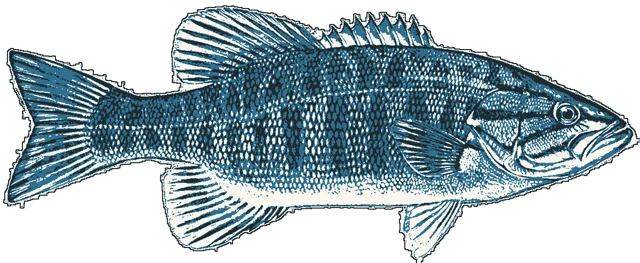
Smallmouth bass
Micropterus dolomieu · Freshwater
Firm, white and good, often rated above largemouth, but most smallmouth are released by custom and the flesh has a slight 'fishy' edge some anglers dislike.
- Tastes
- mild, slightly fishy edge, firm, thick white fillets
- Limits
- Heavy regs. Black bass (largemouth, smallmouth, redeye and spotted bass combined): 5 per day. Lakes, reservoirs and the Sacramento-San Joaquin Delta: 12 in minimum total length. Rivers, streams, canals and private ponds: no size limit. Exceptions include the Colorado River District (13 in minimum, 6 per day), Casitas Lake (12 in minimum, only one over 22 in), Hodges Lake (15 in minimum), Barrett Lake and Upper Otay Lake (catch and release only, 0), and some Inyo County streams and Mono County streams (closed to bass Nov 16 through the Friday before the last Saturday in April; Mono streams have no size limit). Cuyamaca Lake (San Diego Co.): smallmouth bass catch and release only. From Jan 1, 2027 Modoc County and Lassen County (except Mountain Meadows Reservoir) have no size limit, 5 per day. (2026 Freshwater Sport Fishing Regulations booklet, updated July 10, 2026) Source
- Best months
- CDFW gives seasons, not months: bass move shallow in spring, deeper or shaded water in summer, and feed heavily in fall.
- Where
- Most trophy-size smallmouth have been caught in northern California waters; state record 9 lb 13 oz from Pardee Reservoir, 2007 (CDFW).
- soft plastic worms and creature baits
- spinnerbaits and chatterbaits
- crankbaits and jerkbaits
- topwater lures such as frogs and poppers
- Do not eat (anyone): black bass (largemouth, smallmouth and spotted) from the Russian River, Lake Pillsbury, Soulajule Reservoir, Stevens Creek Reservoir or Little Rock Reservoir.
- Do not eat (anyone): any fish from the all-fish waters on this page, such as the Guadalupe River system, Bear Creek (Colusa County) and the Port of Stockton.
- Do not eat (women 18-49 and children 1-17): black bass from any lake, river or stream with no OEHHA black bass line of its own, or from 63 more listed waters, all named in this page's eating advice.
- The 63 include Clear, Folsom, Oroville, Berryessa, Castaic, Trinity, Don Pedro, New Melones, San Luis, Diamond Valley and Pyramid lakes, and the Sacramento, San Joaquin, lower Feather and lower American rivers.
Meal limits and other waters (3)
- Limit (women 18-49 and children 1-17): one serving a week from 34 waters, such as Shasta Lake and the Central and South Delta.
- Limit (everyone else): one serving a week from waters with no line of their own and 63 listed waters; two from 30 more, Shasta Lake and the Central and South Delta among them.
- Other listed waters differ (OEHHA site advisories).
Spotted bass
Micropterus punctulatus · also called Kentucky bass (northern spotted bass), Alabama spotted bass · Freshwater
Eats like other black bass and is kept more often than largemouth because it is abundant and small; agencies in some states encourage harvest.
- Tastes
- mild, firm, white
- Limits
- Heavy regs. Black bass (largemouth, smallmouth, redeye and spotted bass combined): 5 per day. Lakes, reservoirs and the Sacramento-San Joaquin Delta: 12 in minimum total length. Rivers, streams, canals and private ponds: no size limit. Exceptions include the Colorado River District (13 in minimum, 6 per day), Casitas Lake (12 in minimum, only one over 22 in), Hodges Lake (15 in minimum), Barrett Lake and Upper Otay Lake (catch and release only, 0), and some Inyo County streams and Mono County streams (closed to bass Nov 16 through the Friday before the last Saturday in April; Mono streams have no size limit). From Jan 1, 2027 Modoc County and Lassen County (except Mountain Meadows Reservoir) have no size limit, 5 per day. (2026 Freshwater Sport Fishing Regulations booklet, updated July 10, 2026) Source
- Best months
- CDFW gives seasons, not months: bass move shallow in spring, deeper or shaded water in summer, and feed heavily in fall.
- Where
- Pine Flat Lake produced a 10 lb 4 oz Alabama spotted bass in 2001 (CDFW); the species is introduced in many California waters.
- soft plastic worms and creature baits
- spinnerbaits and chatterbaits
- crankbaits and jerkbaits
- topwater lures such as frogs and poppers
- Do not eat (anyone): black bass (largemouth, smallmouth and spotted) from the Russian River, Lake Pillsbury, Soulajule Reservoir, Stevens Creek Reservoir or Little Rock Reservoir.
- Do not eat (anyone): any fish from the all-fish waters on this page, such as the Guadalupe River system, Bear Creek (Colusa County) and the Port of Stockton.
- Do not eat (women 18-49 and children 1-17): black bass from any lake, river or stream with no OEHHA black bass line of its own, or from 63 more listed waters, all named in this page's eating advice.
- The 63 include Clear, Folsom, Oroville, Berryessa, Castaic, Trinity, Don Pedro, New Melones, San Luis, Diamond Valley and Pyramid lakes, and the Sacramento, San Joaquin, lower Feather and lower American rivers.
Meal limits and other waters (3)
- Limit (women 18-49 and children 1-17): one serving a week from 34 waters, such as Shasta Lake and the Central and South Delta.
- Limit (everyone else): one serving a week from waters with no line of their own and 63 listed waters; two from 30 more, Shasta Lake and the Central and South Delta among them.
- Other listed waters differ (OEHHA site advisories).
Surfperch
Embiotocidae (Amphistichus argenteus, A. rhodoterus and others) · Saltwater
Mild, lean white meat, but small fillets with a soft texture; usually fried (pierfishing.com).
- Tastes
- mild, soft, small flakes
- Limits
- Light regs. 20 surfperch per day combined (not counting shiner perch), no more than 10 of one species; redtail surfperch 10.5 in minimum. In San Francisco and San Pablo bays: 5 surfperch combined, and surfperch may not be taken or possessed there Apr 1-Jul 31. Shiner perch: 20 in addition to the general limit. (2026 Ocean Sport Fishing Regulations booklet, last updated July 17, 2026) Source
- Best months
- Central California Oct-Jun; Southern California Sep-May (CDFW beach guides, 2009 brochures).
- Where
- Beaches statewide; CDFW says to cast near sand crab beds.
- live sand crabs
- plastic grubs
- sand shrimp
- clam necks
- mussels
- sea worms
- Do not eat (anyone): shiner perch from San Francisco Bay or San Diego Bay.
- Do not eat (anyone): any fish from Lauritzen Channel in Richmond (San Francisco Bay).
Meal limits and other waters (5)
- Limit (women 18-49 and children 1-17): one serving a week of other surfperch from San Francisco Bay, of black perch from San Diego Bay, and of pile perch, shiner perch, walleye or white surfperch from Humboldt Bay; two from the open coast and Tomales Bay; three from Mission Bay and Elkhorn Slough.
- Limit (everyone else): one serving a week of walleye surfperch from San Francisco Bay.
- Limit (everyone else): two servings a week from Ventura Harbor to San Mateo Point, of black perch from San Diego Bay, of shiner perch or white surfperch from Humboldt Bay, and of shiner, silver and walleye surfperch from the rest of the coast.
- Limit (everyone else): three a week of other San Francisco Bay surfperch, of pile perch or walleye surfperch from Humboldt Bay and of shiner perch from Mission Bay; four from Elkhorn Slough; six of other kinds from the rest of the coast.
- Other bays and kinds differ (OEHHA).
White croaker
Genyonemus lineatus · also called kingfish, tomcod · Saltwater
A small, soft-fleshed bottom feeder that Southern California anglers mostly cut up or fish live as bait, and it heads California's do-not-eat list for the Los Angeles coast.
- Tastes
- mild, soft, low fat
- Limits
- Light regs. No species rule: general limit of 20 finfish combined, no more than 10 of one species; no size limit. Open all year. (2026 Ocean Sport Fishing Regulations booklet, last updated July 17, 2026) Source
- Where
- Coastal waters; the OEHHA advice covers Santa Monica Beach south of the pier to Seal Beach Pier (do not eat from there).
- small strip or chunk of anchovy or mackerel
- bloodworms or pile worms
- EPA's Palos Verdes Shelf program: California has determined white croaker unsafe to eat from the Santa Monica Pier to Seal Beach Pier 'red zone' (DDT/PCBs)
- Warning signs about white croaker are posted at piers in Southern California and the San Francisco Bay Area (pierfishing.com)
- Do not eat (anyone): white croaker from Santa Monica Beach south of the pier to Seal Beach Pier (OEHHA and EPA's Fish Contamination Education Collaborative), because of DDT and PCBs from the Palos Verdes Shelf.
- Do not eat (anyone): any fish from Lauritzen Channel in Richmond (San Francisco Bay).
- EPA's 2024 report found levels still above its cleanup levels.
Meal limits and other waters (2)
- Limit (women 18-49 and children 1-17): one serving a week from San Francisco Bay, Ventura Harbor to Santa Monica Pier and Seal Beach Pier to San Mateo Point; two on the rest of the coast.
- Limit (everyone else): one serving a week from San Francisco Bay, two from those stretches, four on the rest of the coast.
White sturgeon
Acipenser transmontanus · Fresh and salt
Most white sturgeon must be released: Washington allows no recreational harvest in Willapa Bay, Grays Harbor, Puget Sound or other coastal areas, and other fisheries are slot-limited or catch-and-release.
- Limits
- No harvest. Catch and release only, zero fish a day and zero a year, in both inland and ocean waters. Inland season Oct 1-Jun 30 from the west Carquinez Bridge to just downstream of the Feather River confluence on the Sacramento River and downstream of the I-5 bridge on the San Joaquin River; Oct 1-Dec 31 upstream of the Feather confluence to the Highway 162 bridge and upstream of I-5 on the San Joaquin. Inland, all tributaries of the Sacramento and San Joaquin rivers, the North Coast District (Humboldt, Del Norte, Trinity and Siskiyou counties) and the Yolo Bypass, Toe Drain and Tule Canal above Lisbon Weir are closed to sturgeon fishing all year. Ocean and San Francisco Bay season Oct 1-Jun 30, except that the part of San Francisco Bay inside a line from Pt. Chauncy to Pt. Richmond, the Bay Bridge and a line from Pt. Lobos to Pt. Bonita is closed Jan 1-Mar 15. Sturgeon over 60 in fork length may not be removed from the water. One barbless single hook, no snagging or gaffing. Sturgeon Fishing Report Card required ($8.13 for the 2026-27 season; $8.38 listed for 2027). (2026 Freshwater Sport Fishing Regulations booklet, updated July 10, 2026; ocean rule from 2026 Ocean Sport Fishing Regulations booklet, last updated July 17, 2026) Source
- Best months
- Inland open Oct 1-Jun 30 in the lower rivers and Oct 1-Dec 31 in the upper reaches (CDFW).
- Where
- Areas of strong current in the Sacramento and San Joaquin rivers and the Delta (CDFW).
- shrimp (ghost, mud or grass)
- lamprey ('eel')
- salmon roe
- pile worms
- nightcrawlers
- shad or herring
- Do not eat (anyone): any fish from the Port of Stockton and Smith Canal or Lauritzen Channel in Richmond.
- Do not eat (women 18-49 and children 1-17): white sturgeon from any river, bay or the ocean.
- OEHHA advisory for fish that migrate, November 2022; the state allows catch and release only.
- Limit (everyone else): one serving a week.
Where to fish in California
Fish named here are what people catch at each spot, not a promise they’re safe to eat. Read the eating advice on the fish’s card before you keep one.
# Salt or brackish# Freshwater
- 1San Diego Bay piers (Embarcadero, Shelter Island, Coronado) estuary · salt
CDFW lists the Embarcadero, Shelter Island and Coronado piers as public fishing piers; OEHHA publishes a San Diego Bay advisory. Do not eat (anyone): shiner perch from San Diego Bay; women 18-49 and children 1-17, no more than one serving a week of black perch, two for everyone else (OEHHA).
Known for: California halibut, Surfperch
Access: Public piers: no license needed, all other rules apply (CDFW).
- 2Catalina Island (Avalon Pier and Cabrillo Mole) pier · salt
Avalon Pier and Cabrillo Mole are on CDFW's public pier list. OEHHA's statewide coast advice covers the Channel Islands: one serving a week of kelp bass for women 18-49 and children 1-17, two for everyone else.
Known for: California sheephead, Kelp bass
Access: Public piers: no license needed, all other rules apply (CDFW).
- 3Huntington Beach and Newport Beach piers pier · salt
Huntington Beach Pier, Newport Beach Pier and Balboa Pier are on CDFW's public pier list; CDFW's Southern California beach guide covers surf fishing for surfperch, croakers, corbina and halibut. Limit (everyone): two servings a week of corbina or surfperch from this stretch, Seal Beach Pier to San Mateo Point (OEHHA).
Known for: California corbina, Surfperch
Access: Public piers: no license needed, all other rules apply (CDFW).
- 4Redondo Beach Pier and King Harbor breakwater pier · salt
Redondo Beach lies inside OEHHA's Santa Monica Beach to Seal Beach Pier advisory area. Do not eat (anyone): white croaker from here, so it is left off this spot's fish. One serving a week of halibut is the limit for women 18-49 and children 1-17, two for everyone else.
Known for: California halibut
Access: Pier and breakwater are on CDFW's public pier list; see the OEHHA white croaker advice.
- 5Ventura Pier and Port Hueneme Pier pier · salt
Ventura Pier and Port Hueneme Pier are on CDFW's public pier list.
Access: Public piers: no license needed, all other rules apply (CDFW).
- 6Morro Bay estuary · salt
CDFW lists the Morro Bay North and South T-piers, Anchor Memorial Park Pier and both jetties as public fishing structures.
Known for: California halibut, Surfperch
Access: Public piers: no license needed; jetties are public piers only where CDFW lists them (CDFW).
- 7Monterey Municipal Wharf 2 and Coast Guard Breakwater pier · salt
Both are on CDFW's public pier list; CDFW's Central California beach guide covers surfperch, striped bass and halibut from the beach.
Access: Public pier and breakwater: no license needed, all other rules apply (CDFW).
- 8Half Moon Bay and San Francisco Bay piers estuary · salt
CDFW names San Francisco Bay as the summer and fall peak for striped bass; Pillar Point Harbor Fishing Pier, the Halfmoon Bay jetties and many Bay piers are on the public pier list. OEHHA: do not eat shiner perch from San Francisco Bay. Do not eat (anyone): any fish from Lauritzen Channel in Richmond. Women 18-49 and children 1-17 should not eat striped bass from here, and one serving a week is their limit for halibut or other surfperch from San Francisco Bay; everyone else, one serving a week of striped bass and two of San Francisco Bay halibut.
Known for: Striped bass, California halibut, Surfperch
Access: Public piers: no license needed, all other rules apply. Surfperch may not be taken in San Francisco and San Pablo bays Apr 1-Jul 31.
- 9Sacramento-San Joaquin Delta estuary · brackish
CDFW lists the Delta as a main striped bass area; it has its own black bass rule (12 in minimum, 5 per day) and sturgeon is catch and release only. Do not eat (anyone): any fish from the Port of Stockton or Smith Canal. Women 18-49 and children 1-17 should not eat striped bass or sturgeon anywhere in the Delta, or black bass north of Highway 12 (one serving a week south of it); everyone else, one serving a week of striped bass, and of black bass north of Highway 12 (two south of it) (OEHHA).
Known for: Striped bass, Largemouth bass, White sturgeon
Access: Public waters; sport fishing license required at 16 and older.
- 10Clear Lake lake · fresh
OEHHA lists a site-specific advisory for Clear Lake. Women 18-49 and children 1-17 should not eat largemouth bass from here, and one serving a week is their limit for crappie or bluegill; everyone else, one a week of bass or three of crappie or bluegill.
Known for: Largemouth bass, Black crappie, Bluegill
Access: Public waters; sport fishing license required at 16 and older.
- 11Shasta Lake reservoir · fresh
The 2026 booklet has special grass carp handling rules for waters above and including Lake Shasta. OEHHA limit for women 18-49 and children 1-17: one serving a week of black bass or two of rainbow trout; everyone else, two of black bass or six of rainbow trout.
Known for: Largemouth bass, Spotted bass, Rainbow trout
Access: Public waters; sport fishing license required at 16 and older.
- 12Lake Tahoe lake · fresh
The booklet says anglers 16 or older fishing Lake Tahoe or Topaz Lake need either a California or a Nevada sport fishing license. OEHHA has no advisory of its own for Lake Tahoe, so its statewide lake advice applies: women 18-49 and children 1-17 should not eat brown trout over 16 in, and two servings a week is their limit for rainbow trout; everyone else, one serving a week of brown trout over 16 in and four of rainbow trout.
Known for: Rainbow trout, Brown trout
Access: California or Nevada license accepted (booklet license provisions).
- 13Crowley Lake and Convict Lake lake · fresh
Both have their own listings in the 2026 booklet: Crowley Lake is closed to fishing within 1,800 ft of the outlet dam and has an 18 in minimum Aug 1-Nov 15; Convict Lake is open the last Saturday in April through Nov 15, 5 trout. OEHHA: women 18-49 and children 1-17 should not eat brown trout over 16 in from either lake, and one serving a week is their limit for Crowley rainbow trout (two for everyone else).
Known for: Rainbow trout, Brown trout
Access: Public waters; sport fishing license required at 16 and older.
- 14Castaic Lake reservoir · fresh
CDFW cites a 21 lb 12 oz largemouth from Castaic Lake in 1991; special rule of 12 in minimum and 5 per day. Women 18-49 and children 1-17 should not eat largemouth bass from here; everyone else, one serving a week (OEHHA).
Known for: Largemouth bass
Access: Public waters; sport fishing license required at 16 and older. OEHHA lists a Castaic Lake advisory.
California fishing license and rules
- Resident: $64.54 resident sport fishing license (2026 price; valid 365 days from purchase); $66.96 posted for 2027
- Nonresident: $174.14 nonresident sport fishing license (2026 price); $180.36 posted for 2027
- Nonresident short-term: One-day license $21.09 (2026) and $21.86 (2027), resident or nonresident; two-day $32.40 (2026) and $33.48 (2027); ten-day nonresident $64.54 (2026) and $66.96 (2027)
- Saltwater: Covered by the same sport fishing license. An Ocean Enhancement Validation ($7.30 in 2026, $7.56 in 2027) is required to fish ocean waters south of Point Arguello, except with a one- or two-day license. No license is needed when angling from a public pier in ocean or bay waters, but all other rules and report cards still apply.
- Who needs one: A license is required at 16 and older. Report cards are required for everyone fishing for the covered species, including anglers under 16.
- Free fishing days: 2026: Saturday July 4 and Saturday September 5 (license waived). 2027: Saturday July 3 and Saturday September 4. All other regulations and report cards still apply.
More license details
2026 and 2027 prices are the amounts CDFW lists on its fishing license page; each price above is labeled with its year. Report cards: Steelhead $10.29 (valid through Dec 31, 2026; a Short Season card Jan 1-Apr 30, 2027 is also $10.29); Sturgeon $8.13 for the 2026-27 season (Oct 1-Jun 30) and $8.38 listed for 2027, catch and release only; North Coast Salmon (Smith and Klamath-Trinity) $9.21 in 2026 and $9.46 in 2027. Second Rod Validation $20.26 (2026), $21.09 (2027), for inland waters. Reduced-fee licenses: disabled veteran $10.04 at CDFW offices or $10.54 at agents (2026), $10.30 or $10.80 (2027); low-income senior (65+, SSI or CAPI) $10.04 (2026), $10.30 (2027). Anyone 16 or older fishing Lake Tahoe or Topaz Lake needs either a California or a Nevada license. Steelhead report card rules change Jan 1, 2027: required Aug 1-Apr 30 for steelhead or rainbow trout in anadromous waters.
Buy a license License types and fees
Fees: 2026 prices and posted 2027 prices, each labeled by year.
- White sturgeon is catch and release only, zero a year, in inland and ocean waters; a Sturgeon Fishing Report Card ($8.13 for the 2026-27 season, Oct 1-Jun 30) is required, sturgeon over 60 in fork length stay in the water, and only a single barbless hook may be used.
- A public pier in ocean or bay waters needs no license, but bag and size limits, report cards and seasons all apply; a rock wall touching land next to a jetty or breakwater may still need a license. Only two rods per person are allowed on a public pier.
- Groundfish (rockfish, cabezon, lingcod, greenlings) are closed Jan 1-Mar 31 in all five management areas in 2026; the Southern area changes depth and season again on Jul 1 and Oct 1. A descending device must be aboard. Shore anglers and spear divers are exempt from seasons and depths.
- Salmon: coho and ocean steelhead cannot be kept. The 2026 ocean season has concluded; 2027 rules are set at the March and April 2027 Pacific Fishery Management Council meetings. Inland, a North Coast Salmon Report Card is required on the Klamath-Trinity and Smith systems.
- Steelhead: in listed anadromous waters only hatchery fish (adipose fin absent) may be kept, 2 per day in most waters (1 on the Mokelumne River). A report card is required, and from Jan 1, 2027 it covers steelhead and rainbow trout in anadromous waters Aug 1-Apr 30.
- Ocean Enhancement Validation ($7.30 in 2026) is required to fish ocean waters south of Point Arguello unless you hold a one- or two-day license.
- White seabass: 3 per day, but only 1 south of Point Conception between Mar 15 and Jun 15; 28 in minimum.
- Black bass in lakes, reservoirs and the Delta need 12 in and 5 per day combined; Barrett and Upper Otay lakes are catch and release only.
- Salton Sea has its own limits: corvina 2 per day (4 in possession, 18 in minimum); gulf croaker and sargo 6 each per day (12 in possession).
- Emergency gear rule, Jul 3-Dec 31, 2026: south of Pigeon Point (San Mateo Co.) to the Mexico border, wire or metal lines and leaders and hooks wider than 1.5 in at the inside are banned when fishing from shore (beaches, piers, jetties, breakwaters, docks) or within 1,000 yards of the high-tide line. The Fish and Game Commission adopted an extension on Oct 14, 2026; its dates are pending.
- From Jan 1, 2027: alternate length no longer counts for barracuda, white seabass, kelp bass and sand bass; the 5 lb option for bonito ends; a steelhead is a rainbow trout of 16 in or more in anadromous waters; and Lassen (except Mountain Meadows Reservoir) and Modoc counties drop the black bass size limit. The 2026 limits on this page apply until then.
Limits here are summaries for convenience, checked on the date shown. The official California regulations govern; check them before you keep a fish.
Before you eat it
- Do not eat any fish or shellfish (anyone) from Lauritzen Channel in Richmond, the Port of Stockton and Smith Canal, or Bear Creek (Colusa County). Do not eat any fish (anyone) from the Guadalupe River or Guadalupe Creek, Guadalupe, Almaden or Calero reservoirs, Almaden Lake, Alamitos or Calero creeks, or the percolation ponds along that river and those creeks (Santa Clara County) (OEHHA).
Do not eat (anyone), lakes and rivers (OEHHA): black bass from the Russian River, Lake Pillsbury (Lake County), Soulajule Reservoir (Marin County), Stevens Creek Reservoir (Santa Clara … (see the full list)
Do not eat (anyone), lakes and rivers (OEHHA): black bass from the Russian River, Lake Pillsbury (Lake County), Soulajule Reservoir (Marin County), Stevens Creek Reservoir (Santa Clara County) or Little Rock Reservoir (Los Angeles County); catfish from Lake Evans (Riverside County), Lake Merced, north or south lake (San Francisco), Lake Natoma (Sacramento County) or San Pablo Reservoir (Contra Costa County); carp from Lake Temescal (Alameda County), Magic Johnson Lakes (Los Angeles County) or San Pablo Reservoir; crappie from the lower Cosumnes River (Sacramento County); striped bass from Silverwood Lake; bullhead from Silverwood or Pyramid lakes; brown trout over 16 in from Hell Hole Reservoir.
- Do not eat (anyone), salt water (OEHHA): white croaker, barred sand bass or topsmelt from Santa Monica Beach south of the pier to Seal Beach Pier; shiner perch or topsmelt from San Francisco or San Diego bays; sardines or Mississippi silversides from San Francisco Bay; brown smoothhound shark from Tomales Bay.
- White croaker, barred sand bass and barracuda: EPA's Fish Contamination Education Collaborative lists all three, with black croaker and topsmelt, as Do Not Eat at piers from Santa Monica Pier to Seal Beach Pier because of DDT and PCBs from the Palos Verdes Shelf. Barracuda and black croaker are also Do Not Eat at piers in Ventura, Malibu, Huntington Beach and San Mateo Point.
- Do not eat (women 18-49 and children 1-17), statewide (OEHHA): striped bass or white sturgeon from any river, bay or the ocean; sharks, or black and yellow, China, copper or gopher rockfish, from the coast; black bass, catfish or carp from any lake, river or stream with no OEHHA line of its own for that fish; striped bass from lakes with no line of their own; and brown trout over 16 in from any water with no brown trout line of its own. Everyone else (women 50 and over, men 18 and over): one serving a week of those, or two of brown trout from rivers.
Do not eat (women 18-49 and children 1-17): black bass from these 63 waters too (everyone else, one serving a week, or two from Lafayette). Rivers and creeks: the lower American, Bear … (see the full list)
Do not eat (women 18-49 and children 1-17): black bass from these 63 waters too (everyone else, one serving a week, or two from Lafayette). Rivers and creeks: the lower American, Bear, lower Cosumnes, lower Feather, lower Mokelumne and South Yuba rivers, the Yuba River with its North and Middle forks, the San Joaquin River from Friant Dam to the Port of Stockton, the Sacramento River and northern Delta, Cache Creek, lower Putah Creek with Lake Solano, and Laguna de Santa Rosa. Lakes and reservoirs: Anderson, Berryessa, Black Butte, Bon Tempe, Cachuma, Camanche, Camp Far West, Castaic, Chabot (Alameda County), Chabot (Solano County), Clear Lake (Lake County), Collins, Combie, Coyote, Del Valle, Diamond Valley, Don Pedro, El Capitan, Englebright, Folsom, Hensley, Herman, Indian Valley, Lafayette, Lexington, Los Banos, Los Vaqueros, Magic Johnson, McClure, McSwain, Mendocino, Merced, Morena, Nacimiento, Natoma, New Bullards Bar, New Hogan, New Melones, Nicasio, Oroville, Piru, Pyramid, Rollins, San Luis, San Pablo, Santa Fe Dam, Shadow Cliffs, Silverwood, Sonoma, Topaz and Trinity (with the East Fork Trinity River).
Do not eat (women 18-49 and children 1-17), other freshwater fish: catfish from Anderson, Berryessa, Castaic, Folsom, Hensley, McClure, Nacimiento, Oroville, Shasta or Silverwood lakes … (see the full list)
Do not eat (women 18-49 and children 1-17), other freshwater fish: catfish from Anderson, Berryessa, Castaic, Folsom, Hensley, McClure, Nacimiento, Oroville, Shasta or Silverwood lakes, Camp Far West Reservoir, the lower Cosumnes or lower Feather rivers, the New River (Imperial County), or the Sacramento River and northern Delta; carp from Anderson Lake, Lake Chabot (Alameda County), Lake Nacimiento, Indian Valley, Little Rock, New Bullards Bar or San Luis reservoirs, Thermalito Forebay and Afterbay, or Vasona Lake and Camden Ponds; crappie from Cache Creek, Lake Nacimiento, Soulajule Reservoir or Stevens Creek Reservoir; sunfish from Silverwood Lake or Lake Pillsbury; striped bass from Pyramid Lake, Lake Del Valle, Lake Mendocino, Lake San Antonio or San Luis Reservoir; Chinook salmon from Berryessa, Folsom, Natoma or McClure lakes; rainbow trout over 16 in from Folsom Lake or Lake Natoma. Everyone else: one serving a week of those, or two of catfish from the Sacramento River and northern Delta and of carp from Anderson Lake.
- Do not eat (women 18-49 and children 1-17), salt water: barred sand bass or Pacific (chub) mackerel from San Diego Bay; barracuda from Ventura Harbor to San Mateo Point; bat ray from Tomales Bay, or 24 in wide or more from Elkhorn Slough. Everyone else: one serving a week of those, and EPA's pier list is stricter for barracuda.
- Salton Sea: two servings a week of any fish, for everyone (selenium). Cabezon: CDFW's 2025 nearshore fish flyer says the roe is poisonous. Anchovies: when CDFW lifted Monterey Bay's bait-only rule on Nov. 17, 2026, state health agencies strongly recommended not eating the guts (domoic acid). OEHHA advises eating only the skinless fillet, not the skin, fat or guts, trimming the fat where PCBs or DDTs are the concern, and not eating eggs or roe very often.
- Domoic acid and algae-bloom warnings change through the year. Before eating ocean fish, shellfish or crab, check CDFW's health advisories page (https://wildlife.ca.gov/Fishing/Ocean/Health-Advisories) or call the state shellfish line, 800-553-4133. For lakes and rivers, check the state's algae-bloom portal (https://mywaterquality.ca.gov/habs/). OEHHA says to rinse the fillet with tap or bottled water before cooking if you think a bloom is present.
- A serving is 8 ounces before cooking, about the size and thickness of your hand, smaller for children. The groups on an advisory are joined by OR: choose one group a week, and count fish from stores and other waters in it. OEHHA lists 156 site advisories plus four statewide lists for lakes, rivers, the coast and fish that migrate; Humboldt Bay was updated Nov. 19, 2026. Look up your water: https://oehha.ca.gov/fish/advisories
Local lingo
- Sculpin: California scorpionfish (CDFW fish ID flyer).
- Calico bass: kelp bass (CDFW).
- Kingfish or tomcod: white croaker (EPA Palos Verdes Shelf program).
- Hoochies or squids: soft plastic tubes used for kokanee (CDFW).
- Eel: lamprey, a sturgeon bait (CDFW).
- Kentucky bass: northern spotted bass; Alabama spotted bass is the other form stocked in California (CDFW).
- Shoepeg corn: the white corn kernel anglers tip kokanee lures with (CDFW).
- Dodger: a flasher run ahead of a kokanee lure (CDFW).
Questions anglers ask about California
What is the most common fish in California?
California's marine catch is measured by the California Recreational Fisheries Survey (CRFS) and published through RecFIN, but its species ranking could not be pulled for this page, so no single fish is named most common. CDFW's Southern California beach guide lists surfperch, croakers, California corbina and California halibut as favorite surf species, and its Central California guide lists surfperch, striped bass, halibut and jacksmelt.
Do I need a saltwater fishing license in California?
Covered by the same sport fishing license. An Ocean Enhancement Validation ($7.30 in 2026, $7.56 in 2027) is required to fish ocean waters south of Point Arguello, except with a one- or two-day license. No license is needed when angling from a public pier in ocean or bay waters, but all other rules and report cards still apply.
What is the best fish to eat in California?
22 of the 38 fish on our California board rate Best eating. They include: striped bass, rainbow trout, brown trout, golden trout, steelhead and Kokanee salmon.
What is the state fish of California?
California golden trout: State freshwater fish of California.
Does California have free fishing days?
2026: Saturday July 4 and Saturday September 5 (license waived). 2027: Saturday July 3 and Saturday September 4. All other regulations and report cards still apply.
Which California fish are better to eat than their reputation?
We give the Worth a try badge to common carp, Pacific bonito and bat ray: fish most anglers toss or rate low that eat well when they're cleaned and cooked right. Each card says how.
Neighboring states
Sources
Limits, prices and advisories come from these pages, read on or before Nov 21, 2026. Where a line gives its own date, that’s the date it rests on. Eating advice changes: check the state’s current list. Ratings are national and come from the fish’s own page.
113 sources
- apps.wildlife.ca.gov where to fish
- caseagrant.ucsd.edu bat ray: baits
- caseagrant.ucsd.edu Pacific barracuda: months; Pacific barracuda: where
- caseagrant.ucsd.edu California sheephead: where
- caseagrant.ucsd.edu Pacific bonito: where
- caseagrant.ucsd.edu Pacific mackerel: months
- caseagrant.ucsd.edu yellowfin tuna: months
- fgc.ca.gov Pacific barracuda: regs; Pacific bonito: regs; barred sand bass: regs; kelp bass: regs; largemouth bass: regs; smallmouth bass: regs; spotted bass: regs; steelh
- marinespecies.wildlife.ca.gov kelp bass: where
- nrm.dfg.ca.gov Chinook salmon: regs inland; Kokanee salmon: regs; black crappie: regs; bluegill: regs; brown trout: regs; channel catfish: regs; common carp: regs; fishing spo
- nrm.dfg.ca.gov California corbina: regs; California halibut: regs; California lizardfish: regs; California scorpionfish: regs; California sheephead: regs; California yellowtai
- nrm.dfg.ca.gov Chinook salmon: regs
- nrm.dfg.ca.gov Pacific barracuda: regs; Pacific bonito: regs; barred sand bass: regs; kelp bass: regs; largemouth bass: regs; smallmouth bass: regs; spotted bass: regs; steelh
- nrm.dfg.ca.gov channel catfish: baits; common carp: baits; rainbow trout: baits
- nrm.dfg.ca.gov California halibut: baits
- nrm.dfg.ca.gov California halibut: months; striped bass: months; surfperch: months
- nrm.dfg.ca.gov California corbina: months; California corbina: where; California halibut: months; California halibut: where; bat ray: where; shovelnose guitarfish: where; surf
- nrm.dfg.ca.gov California scorpionfish: names; cabezon: advisory
- oehha.ca.gov fishing spots
- oehha.ca.gov consumption advisories; consumption advisory
- oehha.ca.gov Chinook salmon: advisory; steelhead: advisory; striped bass: advisory; white sturgeon: advisory
- oehha.ca.gov Kokanee salmon: advisory
- oehha.ca.gov brown trout: advisory
- oehha.ca.gov black crappie: advisory
- oehha.ca.gov striped bass: advisory
- oehha.ca.gov black crappie: advisory; bluegill: advisory; largemouth bass: advisory
- oehha.ca.gov black crappie: advisory
- oehha.ca.gov rainbow trout: advisory
- oehha.ca.gov brown trout: advisory
- oehha.ca.gov Kokanee salmon: advisory; brown trout: advisory
- oehha.ca.gov bat ray: advisory; surfperch: advisory
- oehha.ca.gov bluegill: advisory
- oehha.ca.gov Chinook salmon: advisory; rainbow trout: advisory
- oehha.ca.gov brown trout: advisory
- oehha.ca.gov Chinook salmon: advisory; steelhead: advisory; striped bass: advisory
- oehha.ca.gov Kokanee salmon: advisory; brown trout: advisory
- oehha.ca.gov California halibut: advisory; lingcod: advisory; surfperch: advisory
- oehha.ca.gov Chinook salmon: advisory; channel catfish: advisory; smallmouth bass: advisory
- oehha.ca.gov striped bass: advisory
- oehha.ca.gov channel catfish: advisory
- oehha.ca.gov Chinook salmon: advisory; Kokanee salmon: advisory
- oehha.ca.gov striped bass: advisory
- oehha.ca.gov channel catfish: advisory
- oehha.ca.gov black crappie: advisory; common carp: advisory
- oehha.ca.gov Chinook salmon: advisory; channel catfish: advisory; rainbow trout: advisory
- oehha.ca.gov spotted bass: advisory
- oehha.ca.gov bluegill: advisory; largemouth bass: advisory; rainbow trout: advisory; smallmouth bass: advisory; spotted bass: advisory
- oehha.ca.gov striped bass: advisory
- oehha.ca.gov common carp: advisory
- oehha.ca.gov California halibut: advisory; bat ray: advisory; cabezon: advisory; lingcod: advisory; rockfish: advisory; striped bass: advisory; surfperch: advisory; white cr
- oehha.ca.gov largemouth bass: advisory; rainbow trout: advisory; smallmouth bass: advisory; spotted bass: advisory
- oehha.ca.gov common carp: advisory
- oehha.ca.gov brown trout: advisory
- oehha.ca.gov surfperch: advisory
- oehha.ca.gov common carp: advisory
- oehha.ca.gov striped bass: advisory; white sturgeon: advisory
- oehha.ca.gov striped bass: advisory
- oehha.ca.gov largemouth bass: advisory; smallmouth bass: advisory; spotted bass: advisory
- oehha.ca.gov steelhead: advisory
- oehha.ca.gov Pacific mackerel: advisory; barred sand bass: advisory; shovelnose guitarfish: advisory; surfperch: advisory
- oehha.ca.gov California halibut: advisory; surfperch: advisory; white croaker: advisory; white sturgeon: advisory
- oehha.ca.gov striped bass: advisory
- oehha.ca.gov channel catfish: advisory; common carp: advisory
- oehha.ca.gov California corbina: advisory; California halibut: advisory; California scorpionfish: advisory; Pacific barracuda: advisory; Pacific mackerel: advisory; barred s
- oehha.ca.gov channel catfish: advisory
- oehha.ca.gov bluegill: advisory; striped bass: advisory
- oehha.ca.gov black crappie: advisory; largemouth bass: advisory; smallmouth bass: advisory; spotted bass: advisory
- oehha.ca.gov golden trout: advisory
- oehha.ca.gov California corbina: advisory; California scorpionfish: advisory; Pacific barracuda: advisory; Pacific mackerel: advisory; barred sand bass: advisory; kelp bass:
- oehha.ca.gov California corbina: advisory; Pacific sanddab: advisory; barred sand bass: advisory; cabezon: advisory; kelp bass: advisory; lingcod: advisory; rockfish: adviso
- oehha.ca.gov bluegill: advisory; brown trout: advisory; channel catfish: advisory; common carp: advisory; largemouth bass: advisory; rainbow trout: advisory; smallmouth bass
- oehha.ca.gov black crappie: advisory; bluegill: advisory; brown trout: advisory; channel catfish: advisory; common carp: advisory; largemouth bass: advisory; rainbow trout:
- oehha.ca.gov black crappie: advisory; largemouth bass: advisory; smallmouth bass: advisory; spotted bass: advisory
- oehha.ca.gov California halibut: advisory; bat ray: advisory; surfperch: advisory
- oehha.ca.gov rainbow trout: advisory
- oehha.ca.gov California corbina: advisory; California scorpionfish: advisory; Pacific barracuda: advisory; Pacific mackerel: advisory; kelp bass: advisory; rockfish: advisor
- oehha.ca.gov California halibut: advisory; Chinook salmon: advisory; bat ray: advisory; black crappie: advisory; bluegill: advisory; brown trout: advisory; cabezon: advisory
- oehha.ca.gov brown trout: advisory; common carp: advisory; largemouth bass: advisory; smallmouth bass: advisory; spotted bass: advisory
- oehha.ca.gov kelp bass: names; white croaker: advisory; white croaker: names
- oehha.ca.gov white croaker: advisory
- pvsfish.org white croaker: advisory
- pvsfish.org white croaker: names
- pvsfish.org Pacific barracuda: advisory; barred sand bass: advisory; white croaker: advisory
- pvsfish.org Pacific barracuda: advisory; barred sand bass: advisory; white croaker: advisory
- wildlife.ca.gov catch survey
- wildlife.ca.gov fishing spots; largemouth bass: baits; largemouth bass: months; largemouth bass: where; largemouth bass: why_common; smallmouth bass: baits; smallmouth bass: mo
- wildlife.ca.gov brown trout: where; top species
- wildlife.ca.gov golden trout: baits; golden trout: where; state fish; top species
- wildlife.ca.gov rainbow trout: where; steelhead: where; top species
- wildlife.ca.gov Kokanee salmon: baits; Kokanee salmon: months; Kokanee salmon: names; Kokanee salmon: where; Kokanee salmon: why_common; top species
- wildlife.ca.gov fishing spots; striped bass: baits; striped bass: months; striped bass: where; top species
- wildlife.ca.gov top species; white sturgeon: baits; white sturgeon: where
- wildlife.ca.gov fishing spots
- wildlife.ca.gov saltwater regs
- wildlife.ca.gov white sturgeon: ocean season 2026-27
- wildlife.ca.gov cabezon: regs; cabezon: where; lingcod: regs; lingcod: where; rockfish: regs; rockfish: where; top species
- wildlife.ca.gov Chinook salmon: KMZ closed July 28, 2026
- wildlife.ca.gov Chinook salmon: ocean season concluded; top species
- wildlife.ca.gov state records
- wildlife.ca.gov license fees; license info; steelhead: 2027 report card rule; white sturgeon: report card fees
- wildlife.ca.gov free fishing days
- wildlife.ca.gov Chinook salmon: Klamath mouth closure
- wildlife.ca.gov Chinook salmon: 2026 reopening
- wildlife.ca.gov Chinook salmon: lower Klamath quota met
- wildlife.ca.gov Chinook salmon: lower Trinity quota met
- wildlife.ca.gov Chinook salmon: upper Trinity quota met
- wildlife.ca.gov freshwater regs
- wonews.com kelp bass: baits
- licenses.wildlife.ca.gov license buy
- saltwatersportsman.com California yellowtail: where
- sportfishingmag.com white seabass: baits; white seabass: months; white seabass: where
- sportfishingmag.com California yellowtail: baits; California yellowtail: months
- sportfishingmag.com California yellowtail: baits; Pacific bluefin tuna: baits; Pacific bluefin tuna: months; kelp bass: months
Illustrations: stencils we made from public-domain art by John J. Baird (Black crappie); NOAA (Bluegill); U.S. Fish and Wildlife Service (Brown trout, Common carp, Largemouth bass); Duane Raver, U.S. Fish and Wildlife Service (Channel catfish, Rainbow trout, Striped bass, Smallmouth bass), via Wikimedia Commons.
Spotted an error or a rule that changed? Tell us and we will check it against the official source.