Washington · fresh and salt
Fish in Washington: what’s worth eating, and what’s garbage
Washington fishing is known for Pacific salmon and steelhead (the state fish), caught from ocean ports such as Westport, Ilwaco and Neah Bay, at the Columbia River mouth and throughout Puget Sound, along with halibut, lingcod and coastal black rockfish. East of the Cascades, Columbia basin waters such as Banks Lake, Moses Lake, Potholes Reservoir and Lake Roosevelt hold walleye, smallmouth bass, kokanee and rainbow trout, and the Columbia and Lake Roosevelt hold white sturgeon.
37 fish rated · limits checked Nov 22, 2026 against WDFW and federal sources, then re-checked: 496 of 498 details confirmed or corrected on the official pages
Resident $39.95 freshwater license (includes a Vehicle Access Pass); $74.37 combination license (freshwater, saltwater and shellfish/seaweed)… Full details
Buy a licenseSeparate saltwater license ($40.71 resident, $81.70 nonresident) or a combination license ($74.37 resident, $170.00 nonresident). A freshwater license does not cover saltwater. Full details
Saltwater limitsFreshwater limits, seasons and size rules from Washington Department of Fish and Wildlife.
Freshwater limitsSteelhead trout
Free Fishing Weekend: June 12-13, 2027 (each year the first weekend in June after the first Monday in June, per the state pamphlet). Full details
The Washington table-fare board
Fish Washington anglers catch, sorted by how they eat. The bars show how heavily each one is regulated here. Tap a fish for the details.
No limits Light regs Heavy regs No harvest
Best eating19
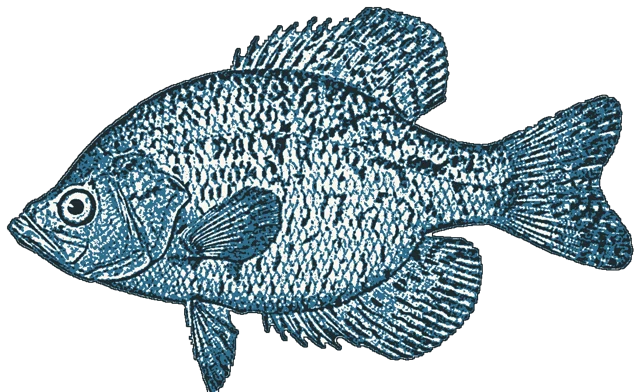 Black crappieCabezon“bullhead”
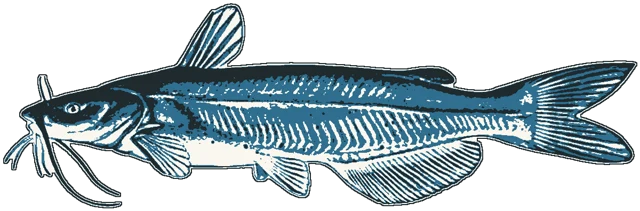 Channel catfishChinook salmon“king”Coho salmon“silver salmon”Cutthroat trout“coastal cutthroat”Kelp greenling“kelp cod”Kokanee salmon“silver trout”Lingcod“cultus cod”Pacific cod“true cod”Pacific halibut
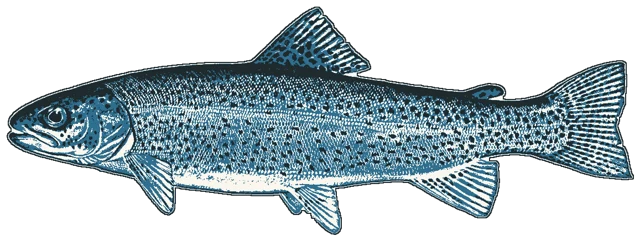 Rainbow troutRockfish“sea bass or black bass (black rockfish)”Sablefish“black cod”Sockeye salmon“red salmon”Steelhead“sea-run rainbow trout”
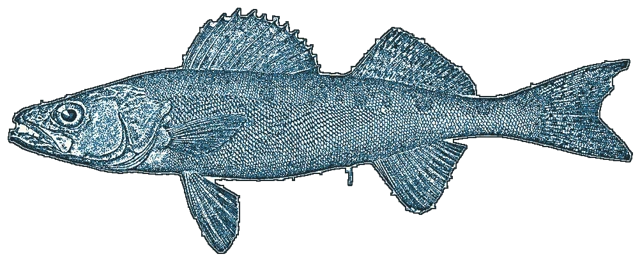 Walleye“walleyed pike”Wolf-eel
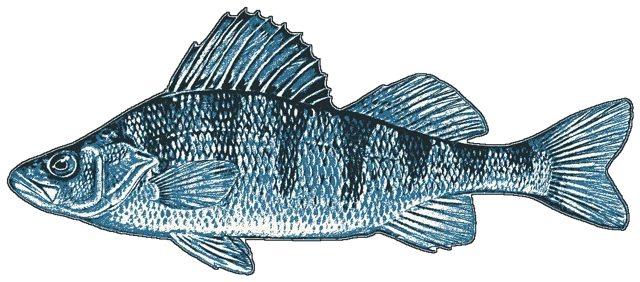 Yellow perch
Just OK13
Garbage fish2
What’s actually caught in Washington
NOAA Fisheries' Fisheries Economics of the United States 2021 estimates the fish kept by Washington's marine anglers, from several state and federal surveys. The numbers here are the average of 2019, 2020 and 2021, worked from its tables of thousands of fish. NOAA chose the species it lists, so this is not a full ranking, and it does not cover freshwater fishing. Neah Bay and La Push were closed or restricted for parts of 2020 and 2021 because of COVID-19 (Pacific Fishery Management Council).
- Rockfish Best eatingRockfish kept, about 230,000 a year: black rockfish about 165,000 and other rockfish about 65,000
- Coho salmon Best eatingCoho kept, about 99,000 a year (124,000 in 2019, 80,000 in 2020, 94,000 in 2021)
- Lingcod Best eatingLingcod kept, about 50,000 a year
- Albacore tuna Best eatingAlbacore tuna kept, about 42,000 a year, with a big 2019 (88,000) and a small 2021 (11,000)
- Chinook salmon Best eatingChinook kept, about 41,000 a year
- Pacific halibut Best eatingPacific halibut kept, about 13,000 a year
- Kelp greenling Best eatingGreenlings kept (all species except lingcod), about 4,700 a year
- Cabezon Best eatingCabezon kept, about 4,300 a year
Source: NOAA Fisheries, Fisheries Economics of the United States 2021 (Marine Recreational tables, Washington) . Saltwater only: it does not survey freshwater fishing.
Fish by fish
Why each one sits where it does, the current Washington limits, and the bait that works.
Black crappie
Pomoxis nigromaculatus · Freshwater
One of the classic fish-fry fish: MeatEater counts crappie among the best-eating fish in freshwater.
- Tastes
- mild, sweet, delicate, flaky, white
- Limits
- Light regs. Statewide: no min size and no daily limit. Listed waters set limits: Banks Lake, Moses Lake, Eloika Lake and several others min 9 in, daily limit 10; Coffeepot Lake and Downs Lake min 9 in, daily limit 10 (Mar 1-Sept 30); Potholes Reservoir and Sprague Lake min 9 in, daily limit up to 25 bluegill and crappie combined. Other listed waters differ. (2026-27 pamphlet (statewide species page updated June 18, 2026; special rules pages updated Oct 5, 2026)) Source
- Where
- Banks Lake, Moses Lake, Potholes Reservoir and Lake Washington.
- live minnows
- small jigs
- tube jigs
- grass shrimp
- small spinners
- Do not eat (anyone): crappie or any other resident fish from the Columbia River at Bradford Island, Bonneville Dam to Fort Raines and Ruckel Creek (PCBs), or any fish from the other all-fish waters on this page.
Meal limits and other waters (4)
- Limit (everyone): 1 meal a month of any fish from the Spokane River, Upriver Dam to Nine Mile Dam (2009).
- Limit (everyone): 1 meal a week from the Columbia, Ruckel Creek to McNary Dam, with no other fish that week.
- Limit (everyone): 4 meals a month from Lake Washington, Green Lake and Lake Sammamish (Public Health – Seattle & King County).
- Other listed waters differ (DOH fish advisory table, Nov. 22, 2026).
Cabezon
Scorpaenichthys marmoratus · also called bullhead · Saltwater
Hank Shaw calls the 'mighty cabezon' the best of the sculpins; the meat is white and lean like lingcod and rockfish.
- Limits
- Heavy regs. Coast (Marine Areas 1-4): daily limit 1, no min size, Mar 14 to Oct 17, 2026 (Area 4 east of the Bonilla-Tatoosh line open year-round; no bottomfish seaward of 20 fathoms June 1-July 31 in Areas 3 and 4 west). Marine Areas 5-11 and 13: May 1 to Nov 30, min 18 in, daily limit 1. Marine Area 12 (Hood Canal) closed. Count within the bottomfish limit. (2026-27 pamphlet (marine area pages updated Oct 5, 2026); state rule WAC 220-314-020, in force since May 25, 2025) Source
- Best months
- Coast Mar 14 to Oct 17, 2026; Puget Sound May 1 to Nov 30.
- Where
- Shallow rocky and sandy bottoms (3 to 80 feet) throughout Washington salt water.
- squid
- ghost shrimp
- crabs
- jigs
- rubber worms
- Never eat the roe: cabezon eggs are poisonous and can make a person violently ill (ODFW, pierfishing.com)
- Do not eat (anyone): cabezon eggs, which are poisonous (NOAA Fisheries, Puget Sound fish guide).
- Do not eat (anyone): any fish but salmon from the Lower Duwamish River, or bottom-feeding fish from Commencement Bay's Thea Foss, Blair and Hylebos waterways (DOH).
- Limit (everyone): where there is no advisory, DOH recommends up to 4 fish meals a month (Aug. 2017).
Channel catfish
Ictalurus punctatus · Freshwater
Very good to eat (Maryland DNR) and delicious when cooked (TPWD), and the basis of US catfish farming.
- Tastes
- mild, sweet, firm, moist
- Limits
- Heavy regs. Statewide in lakes, ponds and reservoirs: no min size, daily limit 5; no size or daily limit in rivers, streams and beaver ponds (the pamphlet treats the Columbia and Snake as rivers). Lake Washington, Lake Sammamish, Lake Sawyer, Osoyoos Lake and many other listed lakes allow 10. Other listed waters differ. (2026-27 pamphlet (statewide species page updated June 18, 2026; special rules pages updated Oct 5, 2026)) Source
- Where
- Potholes Reservoir and Lake Washington.
- chicken liver
- nightcrawlers
- shrimp
- stinkbait
- cut shad
- cut mullet
- Do not eat (anyone): channel catfish from Lake Wallula, the Columbia from McNary Dam up to the Yakima River (dioxins, PCBs), catfish or any other resident fish from the Columbia River at Bradford Island, Bonneville Dam to Fort Raines and Ruckel Creek (PCBs), or any fish from the other all-fish waters on this page.
Meal limits and other waters (4)
- Limit (everyone): 1 meal a month of any fish from the Spokane River, Upriver Dam to Nine Mile Dam (2009).
- Limit (everyone): 1 meal a week from the Columbia, Ruckel Creek to McNary Dam, with no other fish that week (2013).
- Limit (everyone): 4 meals a month from Lake Washington, Green Lake and Lake Sammamish (Public Health – Seattle & King County).
- Other listed waters differ (DOH fish advisory table, Nov. 22, 2026).
Chinook salmon
Oncorhynchus tshawytscha · also called king, tyee, blackmouth (resident Chinook) · Fresh and salt
NOAA calls Chinook the most highly prized salmon in the culinary world: rich, buttery and oily.
- Tastes
- rich, buttery, oily, flaky, meaty
- Limits
- Heavy regs. Seasons, limits and minimum sizes are set by marine area and by river, a catch record card is required, and emergency rules override the pamphlet; they cut several 2026 seasons short. Ocean 2026: Marine Area 1 (Ilwaco) opened June 20 with Chinook min 22 in and a daily limit of 2 salmon with no more than 1 Chinook, closed to Chinook Aug 18 and to all salmon Aug 25 (coho only Sept 4-8). Area 2 (Westport): daily limit 1 from June 20 to 28, then the same 2-salmon limit from June 29; Chinook closed Aug 22. Areas 3 (La Push) and 4 (Neah Bay) west of the Bonilla-Tatoosh line: Chinook min 24 in, daily limit 1 June 20-30, then 2 from July 1; Area 3 ran to Sept 30 and Area 4 closed to salmon Aug 24. Puget Sound is mostly release or hatchery-only: Area 11 July 23 to Aug 14, min 22 in, daily limit 2 with no more than 1 Chinook, release wild Chinook (closed to Chinook Aug 15 except at four year-round piers); Area 13 July 1 to Sept 30 min 20 in and Oct 1 to June 30 min 22 in, daily limit 2 salmon, release wild Chinook; Area 10 hatchery Chinook July 23-25 and Mar 31 to Apr 30 (Wed-Sat only). Areas 10 and 11 are closed to salmon Nov 16 to Mar 30 except at eight year-round piers (min 22 in, daily limit 2 salmon with no more than 1 Chinook). Columbia River from Buoy 10 to the Rocky Point-Tongue Point line, 2026: any Chinook Aug 1-9 and Sept 26-27, hatchery Chinook only Aug 10 to Sept 2, min 24 in, no more than 1 a day; Chinook must be released the rest of the time to Dec 31. Hanford Reach, from Sept 23, 2026: daily limit 6 with no more than 1 adult, release wild adult Chinook (to Dec 31 from the Hwy 395 Bridge at Pasco to the Old Hanford Townsite powerline crossing, and to Oct 15 above that to Priest Rapids Dam). Green (Duwamish) River from Tukwila International Boulevard to the South 212th Street Bridge: release Chinook from Aug 20, 2026 until further notice. Closed to all fishing until further notice: Marine Area 2-1 (Willapa Bay) and Area 2-2 (Grays Harbor) east of the Buoy 13 line, except the Westport and Ocean Shores boat basins, and the Willapa Bay and Grays Harbor rivers (from Oct 24, 2026), and the Hoh and Quillayute river systems (from Oct 19, 2026). Area 12 closed to all salmon Nov 5-30, 2026. Stop fishing for salmon once the adult part of the limit is kept. Columbia River and tributaries need the Columbia River salmon and steelhead endorsement (age 15 and older). 2027 ocean seasons are set in spring 2027. (2026-27 pamphlet (marine area pages updated Oct 5, 2026); emergency rules in the Washington State Register through Nov 4, 2026) Source
- Best months
- Ocean: from June 20 in 2026, with Chinook closing Aug 18 in Area 1, Aug 22 in Area 2, Aug 24 in Area 4 and Sept 30 in Area 3. Buoy 10: Aug 1 to Sept 2 and Sept 26-27, 2026. Puget Sound 2026-27 listings: Area 13 all year (hatchery Chinook, min 22 in from Oct 1 to June 30), and Areas 10 and 11 Mar 31 to Apr 30 (Wed-Sat). Dates change each year.
- Where
- Ocean ports at Westport, Neah Bay and Ilwaco, the Strait of Juan de Fuca (Marine Area 5), Puget Sound, Buoy 10 at the Columbia River mouth, and the Hanford Reach for fall Chinook.
- Limit (everyone), Puget Sound Marine Areas 6-13 and the Lower Duwamish River: Chinook 1 serving a week, or resident Chinook (blackmouth) 2 servings a month, with no other fish that week.
Meal limits and other waters (3)
- DOH's Healthy Fish Guide has coastal Chinook at 2 to 3 meals a week.
- DOH lists salmon from the Columbia, Bonneville Dam to McNary Dam and the Hanford Reach, as a healthy choice.
- DOH has no advisory page for Marine Areas 1-5.
Coho salmon
Oncorhynchus kisutch · also called silver salmon · Fresh and salt
High oil content, firm and flaky when cooked; NOAA notes smaller coho have a delicate flavor.
- Tastes
- mild to delicate, soft raw, firm and flaky cooked
- Limits
- Heavy regs. Seasons, limits and minimum sizes are set by marine area and by river, a catch record card is required, and emergency rules override the pamphlet. Ocean 2026 (coho min 16 in, daily limit 2 salmon, release wild coho): Marine Area 1 (Ilwaco) June 20 to Aug 24, then Sept 4-8 offshore; Area 2 (Westport) June 29 to Sept 30 (release all coho June 20-28); Area 3 (La Push) July 1 to Sept 30; Area 4 (Neah Bay) west of the Bonilla-Tatoosh line July 1 to Aug 23. Puget Sound rules change by area and date: Areas 8-1 (Aug 1-Oct 11), 8-2 (Aug 1-Sept 25), 10 and 11 (to Nov 15) let you keep wild coho; Areas 5 and 6 (to Sept 24), 7 (to Aug 31) and 9 (to Sept 18) release wild coho, then allow any coho until they close; Area 13 releases wild coho all year. The daily limit is 2 salmon in most of these areas, cut to 1 in Areas 8-2 and 9 from Sept 21, 2026. Columbia River from Buoy 10 to the Rocky Point-Tongue Point line, hatchery coho only: 3 salmon a day Sept 12-30 (min 16 in), 6 with up to 3 adults Oct 1-31, and from Nov 1 to Dec 31 6 salmon with no more than 2 adults (min 12 in). Westport and Ocean Shores boat basins: Aug 16 to Jan 31, min 12 in, daily limit 6 with no more than 4 adults, release Chinook. Closed to all fishing until further notice: Marine Area 2-1 (Willapa Bay) and Area 2-2 (Grays Harbor) east of the Buoy 13 line, except the Westport and Ocean Shores boat basins, and the Willapa Bay and Grays Harbor rivers (from Oct 24, 2026), and the Hoh and Quillayute river systems (from Oct 19, 2026). The state said coho harvest there ran well below projection. Closed to salmon: Area 12 Nov 5-30, 2026 and the Skykomish River (mouth to Big Eddy) Nov 1-30, 2026. Dungeness River: 2 hatchery coho a day Oct 23 to Nov 30, 2026. Columbia River and tributaries need the Columbia River salmon and steelhead endorsement (age 15 and older). 2027 ocean seasons are set in spring 2027. (2026-27 pamphlet (marine area pages updated Oct 5, 2026); emergency rules in the Washington State Register through Nov 4, 2026) Source
- Best months
- Ocean: coho seasons opened between June 20 and July 1, 2026 and closed Aug 24 in Area 4, Aug 25 in Area 1 and Sept 30 in Areas 2 and 3. Puget Sound varies by area, from Aug 1 to Sept 25 in Area 8-2 to Nov 15 in Areas 10 and 11. Buoy 10: Aug 1 into the fall.
- Where
- Ocean ports at Westport, Ilwaco and Neah Bay, the Strait of Juan de Fuca, Puget Sound (including Seacrest Park pier in Seattle), and Buoy 10 at the Columbia River mouth.
- Limit (everyone), Puget Sound Marine Areas 6-13 and the Lower Duwamish River: coho, chum, pink and sockeye salmon 2-3 servings a week, with no other fish that week.
Meal limits and other waters (3)
- DOH's Healthy Fish Guide has coho at 2 to 3 meals a week.
- DOH lists salmon from the Columbia, Bonneville Dam to McNary Dam and the Hanford Reach, as a healthy choice.
- DOH has no advisory page for Marine Areas 1-5.
Cutthroat trout
Oncorhynchus clarkii · also called coastal cutthroat, westslope cutthroat · Fresh and salt
Eats like other trout; kept where legal, especially stocked fish and coastal sea-run cutts.
- Tastes
- mild, clean, delicate, flaky
- Limits
- Heavy regs. Statewide trout rule applies: lakes, ponds and reservoirs no min size, daily limit 5; rivers, streams and beaver ponds min 8 in, daily limit 2 (combined 5 per day with no more than 2 from rivers). New for 2026, most Puget Sound and coastal river listings require release of cutthroat Nov 1 to Mar 31. Many rivers and lakes release wild cutthroat or set their own limits; Lake Chelan trout follow the statewide limit but release wild cutthroat. Lake Washington (Mar 1-June 30) min 12 in, daily limit 5, release rainbow over 20 in. In every marine area (1-13) trout are catch-and-release year-round in the 2026 listings. Other listed waters differ. (2026-27 pamphlet (statewide species page updated June 18, 2026; special rules pages updated Oct 5, 2026)) Source
- Where
- Lake Chelan (westslope cutthroat), the Stehekin and Skagit rivers, Ross, Diablo and Gorge lakes, and Lake Washington (do not eat from there).
- Do not eat (anyone): cutthroat of any size from Lake Washington (PFOS, Nov. 2022), or any fish from the all-fish waters on this page.
Meal limits and other waters (4)
- Limit (everyone): 1 meal a month of any fish from the Spokane River, Upriver Dam to Nine Mile Dam (2009).
- Limit (everyone): 4 meals a month from Lake Sammamish or Green Lake (Public Health – Seattle & King County).
- Limit (women 18-45, children): 1 serving a week of cutthroat or brook trout from Olympic National Park mountain lakes (mercury); 3 a week for other adults.
- Other listed waters differ (DOH fish advisory table, Nov. 22, 2026).
Kelp greenling
Hexagrammos decagrammus · also called kelp cod, rock trout · Saltwater
Lingcod's smaller cousin with the same white, mild meat; good quality and especially good pan-fried (pierfishing.com, Hank Shaw).
- Tastes
- mild, large flakes, moderate fat
- Limits
- Light regs. Greenling is listed as bottomfish with no separate limit on the 2026 area pages, so it counts toward the daily bottomfish total: 9 in Marine Areas 1-4 (subject to individual limits) and 15 in Areas 5-11 and 13. Coast (Areas 1-3 and 4 west of the Bonilla-Tatoosh line): Mar 14 to Oct 17, 2026, closed from the third Saturday in October to the second Saturday in March (Mar 13, 2027). Area 4 east of the line and Areas 5-11 and 13 are open year-round, none deeper than 120 ft in Areas 7-11, 13 and eastern Area 6 (Area 5 and western Area 6 use the Bottomfish Closure line). Marine Area 12 (Hood Canal) is closed to bottomfish except flounder, sole and sanddabs in Dabob Bay. Descending device required. (2026-27 pamphlet (marine area pages updated Oct 5, 2026); state rule WAC 220-314-020, in force since May 25, 2025) Source
- Best months
- Coast Mar 14 to Oct 17, 2026; Puget Sound year-round.
- Where
- Kelp beds and reefs in shallow water: the outer coast, Neah Bay, the Strait of Juan de Fuca, the San Juan Islands, the Bellingham area and Puget Sound.
- herring
- candlefish
- rubber worms
- Flesh is sometimes turquoise; it cooks white (Hank Shaw)
Before you eat it: Do not eat (anyone): any fish but salmon from the Lower Duwamish River, or bottom-feeding fish from Commencement Bay's Thea Foss, Blair and Hylebos waterways (DOH). Limit (everyone): where there is no advisory, DOH recommends up to 4 fish meals a month (Aug. 2017).
Kokanee salmon
Oncorhynchus nerka (landlocked) · also called silver trout, land-locked salmon · Freshwater
Landlocked sockeye with vivid orange, rich flesh; kokanee anglers fish specifically to fill a cooler.
- Tastes
- rich, salmon-like, slightly soft, orange
- Limits
- Light regs. Statewide: no min size, daily limit 10; with bait, kokanee at or above the minimum size count toward the limit whether kept or released. Exceptions: Lake Roosevelt daily limit 6 with no more than 2 that have an intact adipose fin; Lake Washington and the Ship Canal, Lake Pleasant and Lake Sutherland min 8 in, max 18 in, daily limit 5; American Lake 5 a day combined with trout; Baker Lake min 8 in, max 12 in, daily limit 10 (4th Saturday in April to Oct 31); Lake Cushman min 8 in, max 18 in; Lake Sammamish catch-and-release; Cle Elum Lake and Lake Wenatchee closed. Other listed waters differ. (2026-27 pamphlet (statewide species page updated June 18, 2026; special rules pages updated Oct 5, 2026)) Source
- Where
- Lake Roosevelt, Lake Chelan, Banks Lake, Rufus Woods Lake, and Conconully Reservoir.
- Do not eat (anyone): any fish from the all-fish waters on this page.
Meal limits and other waters (5)
- Limit (everyone): 1 meal a month of any fish from the Spokane River, Upriver Dam to Nine Mile Dam (2009).
- Limit (everyone): 2 meals a month from Lake Meridian (PFOS, Nov. 2022).
- Limit (everyone): 4 meals a month of sockeye or kokanee from Lake Sammamish or Green Lake (Public Health – Seattle & King County).
- Limit (women 18-45, children): 2-3 servings a week from Lake Roosevelt; 7 a week for other adults (June 2021).
- Other listed waters differ (DOH fish advisory table, Nov. 22, 2026).
Lingcod
Ophiodon elongatus · also called cultus cod · Saltwater
Mild, lean, large-flaked white meat; Hank Shaw rates it tastier than rockfish, and NOAA describes it as mild and tender.
- Tastes
- mild, tender, large flakes
- Limits
- Heavy regs. Coast (Marine Areas 1-3 and 4 west of the Bonilla-Tatoosh line), Mar 14 to Oct 17, 2026: daily limit 2, no min size, counted within the 9-fish bottomfish limit, with depth restrictions (Area 1 and 2 deepwater closures; Areas 3 and 4 west: no bottomfish seaward of 20 fathoms June 1-July 31 unless halibut is open). Area 4 east of the line: open Mar 14-Oct 17, daily limit 2. Puget Sound (Areas 5-11 and 13): May 1 to June 15 hook-and-line, min 26 in, max 36 in, daily limit 1 (spearfishing May 21 to June 15); no bottomfish deeper than 120 ft in Areas 7-11 and 13 and eastern Area 6 (Area 5 and western Area 6 use the Bottomfish Closure line). Marine Area 12 (Hood Canal) closed to lingcod. A descending device must be aboard. The coast is closed from the third Saturday in October to the second Saturday in March (Mar 13, 2027). (2026-27 pamphlet (marine area pages updated Oct 5, 2026); state rule WAC 220-314-020, in force since May 25, 2025) Source
- Best months
- Coast Mar 14 to Oct 17, 2026; Puget Sound May 1 to June 15.
- Where
- Most common along the coast, the western Strait of Juan de Fuca and the San Juan Islands, on rocky bottoms with strong current; Neah Bay is a port for it.
- herring
- plugs
- jigs
- spoons
- rubber worms
- Fillets occasionally hold worms (Hank Shaw)
Before you eat it: Do not eat (anyone): any fish but salmon from the Lower Duwamish River, or bottom-feeding fish from Commencement Bay's Thea Foss, Blair and Hylebos waterways (DOH). DOH's Puget Sound advice does not cover lingcod. Limit (everyone): where there is no advisory, DOH recommends up to 4 fish meals a month (Aug. 2017).
Pacific cod
Gadus macrocephalus · also called true cod, gray cod · Saltwater
Mild, lean, flaky white meat (NOAA), a little softer and moister than Atlantic cod.
- Tastes
- mild, lean, flaky; less firm than Atlantic cod
- Limits
- Heavy regs. Marine Areas 1-4: counted within the 9-fish bottomfish limit (coast Mar 14 to Oct 17, 2026). Marine Areas 5-7: no min size, daily limit 2 each of Pacific cod, pollock and hake, year-round. Marine Areas 8-1, 8-2, 9, 10, 11, 12 and 13: closed to retention. Descending device required. (2026-27 pamphlet (marine area pages updated Oct 5, 2026); state rule WAC 220-314-020, in force since May 25, 2025) Source
- Where
- Strait of Juan de Fuca and San Juan Islands (Marine Areas 5-7) and the outer coast.
- herring
- jigs
- rubber worms
Before you eat it: Do not eat (anyone): any fish but salmon from the Lower Duwamish River, or bottom-feeding fish from Commencement Bay's Thea Foss, Blair and Hylebos waterways (DOH). Limit (everyone): 2 to 3 meals a week of US Pacific cod (DOH Healthy Fish Guide).
Pacific halibut
Hippoglossus stenolepis · Saltwater
Very mild, sweet white meat that cooks up flaky and firm, in thick boneless fillets. One of the most prized table fish on the coast.
- Tastes
- very mild, sweet, flaky, tender and firm when cooked
- Limits
- Heavy regs. Daily limit 1, no min size, annual limit 6, and the catch must go on a Catch Record Card + Halibut ($7.59 with an annual combination or saltwater license, free with a short-term license). Seasons open only by emergency rule. 2026 dates: North Coast (Areas 3 and 4) Apr 30-May 16 (Thu-Sat), May 22-24, May 28-30, June 4-28 (Thu-Sun) and Aug 16-Sept 30 daily; South Coast (Area 2) Apr 30, selected days May 1-June 30, and Aug 8-Sept 30 daily; Columbia River (Area 1) Apr 30-May 31 (Thu, Fri, Sun), June 4-28 (Thu, Fri, Sun, plus June 8, 9, 15, 16, 22 and 23) and Aug 8-Sept 30 daily; Puget Sound (Areas 5-10) Apr 2-June 30 and Aug 16-Sept 30 daily. Areas 11 to 13 are closed to halibut, and the last 2026 day was Sept 30. A descending device must be aboard, barbless hooks are required in Areas 5-13, and from 2026 you cannot land both a Canadian and a Washington halibut limit on the same day. 2027 dates come in March (Areas 5-10) or April (Areas 1-4); the pamphlet's number to call is (360) 902-2700. (2026 season rules (NOAA Fisheries; WSR 26-08-034 to 26-17-009); 2026-27 pamphlet updated Oct 5, 2026) Source
- Best months
- Spring (Apr 2 to June 30 in Puget Sound; Apr 30 to June 30 on the coast) and late summer (Aug 8 or Aug 16 to Sept 30) in 2026.
- Where
- Most common along the Strait of Juan de Fuca; also Neah Bay, the outer coast, the San Juan Islands and Admiralty Inlet, generally in water deeper than 80 feet.
- herring
- jigs
- spoons
- plugs
Before you eat it: Limit (everyone): 1 meal a week of Pacific halibut, with no other fish that week (DOH Healthy Fish Guide).
Rainbow trout
Oncorhynchus mykiss · Freshwater
TPWD calls rainbow trout an excellent fish to eat; the most-stocked put-and-take fish in America.
- Tastes
- mild, clean, delicate, flaky
- Limits
- Heavy regs. Statewide (rainbow, cutthroat, brown, golden and tiger trout, and grayling): in lakes, ponds and reservoirs no min size, daily limit 5; in rivers, streams and beaver ponds min 8 in, daily limit 2; the combined daily limit for an angler who fishes both on the same day is 5 trout with no more than 2 from rivers. With bait, every legal-size trout counts toward the limit whether kept or released. Lakes are open year-round and rivers open the Saturday before Memorial Day through Oct 31, unless a special rule says otherwise. Listed waters differ: Rufus Woods Lake trout daily limit is 2 (the pamphlet lists no minimum size); Lake Roosevelt below Little Dalles allows 5 trout but only adipose fin-clipped fish may be kept; Lake Washington (Mar 1-June 30) min 12 in, daily limit 5, release rainbow over 20 in. Many small lakes have a 4th Saturday in April to Oct 31 season. New for 2026, most Puget Sound and coastal river listings require release of wild rainbow and cutthroat trout Nov 1 to Mar 31. Other listed waters differ. (2026-27 pamphlet (statewide species page updated June 18, 2026; special rules pages updated Oct 5, 2026)) Source
- Best months
- From the lowland lake opener, the fourth Saturday in April (April 24, 2027); the state's Trout Derby runs April 24 to Oct 31, 2027.
- Where
- Hundreds of stocked lakes statewide; Lake Roosevelt, Banks Lake, Potholes Reservoir, Rufus Woods Lake, Conconully Reservoir, and Ross, Diablo and Gorge lakes.
- nightcrawlers
- salmon eggs
- corn
- inline spinners
- small spoons
- Do not eat (anyone): any fish from the all-fish waters on this page, the Spokane River from the Idaho border to Upriver Dam among them.
Meal limits and other waters (6)
- Limit (everyone): 1 meal a month of any fish from the Spokane River, Upriver Dam to Nine Mile Dam (2009); DOH's table says 2 for rainbow.
- Limit (everyone): 4 meals a month from Lake Spokane, the Spokane arm of Lake Roosevelt up to Little Falls Dam, and Lake Sammamish (Public Health – Seattle & King County).
- Limit (everyone): 8 meals a month from Green Lake and from Elton Pond in East Selah (PFOS, May 2026; 2 for East Selah residents with PFAS in their water).
- Limit (pregnant, may become pregnant, nursing, children): 4 meals a month from Ross Lake; 8 from Battalion Lake, Deer Lake (Stevens County) and Lake Roosevelt.
- Limit (other adults): 7 servings a week from Lake Roosevelt (June 2021).
- Other listed waters differ (DOH fish advisory table, Nov. 22, 2026).
Rockfish
Sebastes spp. (more than 70 species) · also called sea bass or black bass (black rockfish), red snapper (yelloweye) · Saltwater
White, firm, lean meat that works in any white-fish recipe; rockfish are the backbone of West Coast bottom-fishing limits.
- Tastes
- firm, lean, white
- Limits
- Heavy regs. Coast (Marine Areas 1-3 and 4 west of the Bonilla-Tatoosh line), Mar 14 to Oct 17, 2026: no min size, daily limit 7 with no more than 5 canary; copper, quillback and vermilion rockfish may not be kept in May, June and July; yelloweye rockfish may not be kept in any marine area in 2026; depth restrictions apply seaward of set lines. The coast is closed from the third Saturday in October to the second Saturday in March (Mar 13, 2027). Marine Area 4 east of the line: year-round, daily limit 7, only blue/deacon, yellowtail, widow and black rockfish, landward of the Bottomfish Closure. Marine Area 5 (Sekiu): May 1 to Sept 30, only black or blue/deacon rockfish, first 3 caught west of Slip Point and first 1 east of it. Marine Areas 6-13: unlawful to fish for, retain or possess any rockfish. Descending device required. The pamphlet leaves the 2027 sub-bag limits to be announced. (2026-27 pamphlet (marine area pages updated Oct 5, 2026); state rule WAC 220-314-020, in force since May 25, 2025) Source
- Best months
- Coast Mar 14 to Oct 17, 2026; Marine Area 5 May 1 to Sept 30 (black and blue/deacon only).
- Where
- Kelp beds and rocky shorelines on the outer coast, at Neah Bay and in the western Strait of Juan de Fuca; Puget Sound (Areas 6-13) is closed.
- herring
- squid
- plugs
- spoons
- spinners
- flies
- Spiny fins; handle with care
- Fish brought up from depth suffer barotrauma; release with a descending device (NOAA)
- Do not eat (anyone): rockfish from Puget Sound, Marine Areas 6-13 (DOH; keeping them is illegal there for conservation reasons).
- Do not eat (anyone): any fish but salmon from the Lower Duwamish River, or bottom-feeding fish from Commencement Bay's Thea Foss, Blair and Hylebos waterways.
- Do not eat (pregnant, may become pregnant, nursing, children): rockfish from Elliott Bay, Sinclair Inlet, the Duwamish Waterway or inner Commencement Bay (mercury).
- Limit (everyone), coast: 1 meal a week of rockfish, with no other fish that week (DOH Healthy Fish Guide).
Sablefish
Anoplopoma fimbria · also called black cod, butterfish · Saltwater
Oil-rich, buttery, melt-in-your-mouth meat with large white flakes; NOAA calls it exceptionally flavorful.
- Tastes
- rich, buttery, soft, velvety, large flakes
- Limits
- Light regs. Sablefish is listed in the pamphlet's bottomfish definition and has no separate line on the area pages, so it counts toward the daily bottomfish total (9 in Marine Areas 1-4, 15 in Areas 5-11 and 13). Coast (Areas 1-3 and 4 west of the Bonilla-Tatoosh line): Mar 14 to Oct 17, 2026, closed from the third Saturday in October to the second Saturday in March (Mar 13, 2027). In Area 3 and Area 4 west, June 1 to July 31, no bottomfish may be kept seaward of 20 fathoms except sablefish, Pacific cod, lingcod and five rockfish species on days open to halibut. Areas 5-11 and 13 are open year-round, with depth limits. Marine Area 12 is closed to bottomfish. Descending device required. (2026-27 pamphlet (marine area pages updated Oct 5, 2026); state rule WAC 220-314-020, in force since May 25, 2025) Source
- Best months
- Coast Mar 14 to Oct 17, 2026.
- Where
- Deep water off the coast for adults; juveniles in the Strait of Juan de Fuca and northern Puget Sound.
- herring
Before you eat it: Limit (everyone): 1 meal a week of sablefish (black cod), with no other fish that week (DOH Healthy Fish Guide).
Sockeye salmon
Oncorhynchus nerka · also called red salmon, blueback · Fresh and salt
The reddest, richest flesh of the wild salmon; NOAA says its flavor rivals Chinook.
- Tastes
- rich, firm, fatty, deep red
- Limits
- Heavy regs. Sockeye must be released in Marine Areas 5, 6 and 7 (except Bellingham Bay and Hale Pass) and, into the fall, in Area 12 (to Oct 15 north of Ayock Point, to Sept 30 south of it); they are not on the release list in Areas 8-1, 8-2, 9, 10, 11 and 13. 2026 seasons: Baker Lake (Whatcom Co.) July 11 to Aug 31, min 12 in, daily limit 4 sockeye, release all other salmon; and the Skagit River from Mount Vernon to Concrete, opened June 16 by emergency rule and run to July 31 with short closures above Gilligan Creek, daily limit 4, release all salmon other than sockeye. The Columbia River was mostly closed to sockeye by a June 20, 2026 emergency rule: sockeye could be kept only June 27 to July 5 from the Megler-Astoria Bridge to The Dalles Dam and from just above The Dalles Dam to the Hwy 395 Bridge at Pasco (within a limit of 2 adult salmon or steelhead), Columbia Point to Priest Rapids Dam was closed to salmon June 20 to July 31, and Priest Rapids Dam to Chief Joseph Dam was closed July 1 to Aug 31. In an open year the pamphlet lists 4 sockeye a day on those upper reaches in July and August. Lake Washington salmon (Sept 11-Oct 31, north of Hwy 520) allows coho only. A catch record card is required, and Columbia River anglers 15 and older need the salmon and steelhead endorsement. Emergency rules override the pamphlet; check before fishing. (2026-27 pamphlet (marine area pages updated Oct 5, 2026); emergency rules in the Washington State Register through Nov 4, 2026 (Columbia sockeye: WSR 26-14-018)) Source
- Best months
- June 16 to July 31 on the Skagit River and July 11 to Aug 31 on Baker Lake in 2026.
- Where
- Baker Lake, the Skagit River from Mount Vernon to Concrete, and the Columbia River in years it opens.
- Limit (everyone): 4 meals a month of sockeye or kokanee from Lake Sammamish or Green Lake (Public Health – Seattle & King County).
Meal limits and other waters (5)
- Limit (everyone), Puget Sound Marine Areas 6-13 and the Lower Duwamish River: coho, chum, pink and sockeye salmon 2-3 servings a week, with no other fish that week.
- DOH's Healthy Fish Guide has sockeye at 2 to 3 meals a week.
- DOH lists sockeye from Lake Washington as a healthy choice.
- DOH lists salmon from the Columbia, Bonneville Dam to McNary Dam and the Hanford Reach, as a healthy choice.
- DOH has no advisory page for Marine Areas 1-5.
Steelhead
Oncorhynchus mykiss (anadromous) · also called sea-run rainbow trout · Fresh and salt
Steelhead are sea-run rainbow trout, and bright fish eat like a mild salmon; hatchery fish are kept as food across the Pacific Northwest and Great Lakes.
- Tastes
- mild, rich, firm, pink-orange
- Limits
- Heavy regs. Statewide default: release all wild steelhead; hatchery steelhead min 20 in, daily limit 2, open during salmon or game fish seasons unless a special rule says otherwise; a catch record card is required. All marine areas: year-round, daily limit 2 hatchery steelhead (Areas 2-1 and 2-2 east of the Buoy 13 line are closed to all fishing from Oct 24, 2026 until further notice). Emergency rules override the pamphlet and can cut hatchery limits or close rivers, so check before fishing. From Sept 18, 2026 until further notice: 1 hatchery steelhead a day on the Snake River from its mouth to Lower Granite Dam and on the Tucannon River up to the Tucannon Hatchery Road bridge, and 2 a day on the Snake from Lower Granite Dam to the Oregon state line, barbless hooks required. The Hoh, Quillayute, Willapa Bay and Grays Harbor river systems are closed to all fishing until further notice (from Oct 19 and Oct 24, 2026). An Oregon-Washington notice of Nov 13, 2026 prohibits steelhead fishing and retention Jan 1 to Mar 31, 2027 on the mainstem Columbia from The Dalles Dam to the Oregon/Washington state line above McNary Dam. The pamphlet lists steelhead as closed year-round on the Columbia around Pasco, from the Old Hanford townsite to Priest Rapids Dam, and from Priest Rapids Dam up to Chief Joseph Dam. Columbia River and tributaries need the salmon and steelhead endorsement (age 15 and older). Individual rivers have their own seasons, gear rules and limits (many are catch-and-release or closed). (2026-27 pamphlet (updated Oct 5, 2026); emergency rules in the Washington State Register through Nov 4, 2026; Oregon-Washington Columbia River notice of Nov 13, 2026) Source
- Best months
- Steelhead run in both summer and winter seasons; on the lower Columbia in 2026 the kept catch came from Feb 1 to July 31.
- Where
- The lower Columbia River below Bonneville Dam, the Snake and Tucannon rivers, and other rivers the pamphlet opens for hatchery fish.
Before you eat it: Do not eat (anyone): any fish but salmon from the Lower Duwamish River (DOH). DOH lists steelhead from the Columbia River as a healthy choice (table rows from Bonneville Dam to McNary Dam; Hanford Reach fact sheet). Limit (everyone): where there is no advisory, DOH recommends up to 4 fish meals a month (Aug. 2017).
Walleye
Sander vitreus · also called walleyed pike · Freshwater
Widely rated the best-eating freshwater fish: Maryland DNR calls it one of the best tasting, TPWD an excellent food fish.
- Tastes
- mild, clean, firm, tender, flaky white
- Limits
- Light regs. Statewide in lakes, ponds and reservoirs: min 12 in, daily limit 8, and only 1 over 22 in may be kept; no size or daily limit in rivers, streams and beaver ponds, and the pamphlet treats the Columbia and Snake as rivers (Lake Roosevelt and Rufus Woods Lake are listed with the lakes). Banks Lake, Moses Lake and Potholes Reservoir follow the statewide rule. Listed waters allow more: Lake Roosevelt daily limit 16, no size restriction; Osoyoos Lake, Lake Washington, Lake Sammamish, Lake Sawyer and many other listed westside lakes daily limit 16 with only 1 over 22 in. Other listed waters differ. (2026-27 pamphlet (statewide species page updated June 18, 2026; special rules pages updated Oct 5, 2026)) Source
- Best months
- Open all year. On the Columbia in the gorge the best fishing begins in May, can slow in the warm summer months and picks up again in October (ODFW); dusk to dawn is the best time of day (National Park Service).
- Where
- The Columbia River (do not eat from Bonneville Dam to Ruckel Creek), Lake Roosevelt, Banks Lake, Moses Lake, Potholes Reservoir and Rufus Woods Lake.
- nightcrawlers on a jig head (Columbia River)
- worm harnesses behind a bottom walker
- trolled crankbaits
- jigs with artificial grubs
- Do not eat (anyone): walleye or any other resident fish from the Columbia River at Bradford Island, Bonneville Dam to Fort Raines and Ruckel Creek (PCBs), or any fish from the other all-fish waters on this page.
Meal limits and other waters (6)
- Limit (everyone): 1 meal a month of any fish from the Spokane River, Upriver Dam to Nine Mile Dam (2009).
- Limit (everyone): 2 meals a month from Liberty Lake (Spokane County; mercury, PCBs) and the Hanford Reach, McNary Dam to the I-90 bridge (2017).
- Limit (everyone): 1 meal a week from the Columbia, Ruckel Creek to McNary Dam, with no other fish that week (2013).
- Limit (pregnant, may become pregnant, nursing, children): 4 meals a month from Lake Roosevelt and the Columbia from Wanapum Dam to Grand Coulee Dam, Rufus Woods Lake included (mercury); 8 from Horsethief Lake.
- Limit (other adults): 3 servings a week from Lake Roosevelt (June 2021).
- Other listed waters differ (DOH fish advisory table, Nov. 22, 2026).
Wolf-eel
Anarrhichthys ocellatus · Saltwater
CDFW calls it a good-eating fish and Ken Jones rates the mild, white, dense meat delicious; a wolffish rather than a true eel, without an eel's oily meat.
- Tastes
- mild, clean, white, dense
- Limits
- Heavy regs. Marine Areas 1 to 3: counted in the daily limit of 9 bottomfish, with no separate limit, from the second Saturday in March to the third Saturday in October (Mar 14 to Oct 17 in 2026). Areas 4 to 11 and 13: closed to retention (the state rule's coast limit is 0 fish from Area 4). Area 12 (Hood Canal): closed to fishing for, keeping or possessing it. Descending device required on vessels. Emergency rules override these limits. (2026-27 pamphlet (marine area pages updated Oct 5, 2026); state rule WAC 220-314-020, in force since May 25, 2025) Source
- shrimp
- small crabs
- squid
- mussels
- anchovy
- Recreational harvest is closed in Puget Sound marine areas
- Powerful jaws and canine teeth: keep hands clear; a big one can give a painful bite (FishBase, ODFW)
Before you eat it: Limit (everyone): where there is no advisory, DOH recommends up to 4 fish meals a month (Aug. 2017).
Yellow perch
Perca flavescens · Freshwater
A great food fish (MN DNR) and the centerpiece of Great Lakes perch fries; Iowa DNR calls a fried stringer of perch unsurpassed in flavor.
- Tastes
- mild, sweet, firm, flaky, white
- Limits
- Light regs. Statewide: no min size and no daily limit. Listed waters set a limit: Banks Lake, Moses Lake, Potholes Reservoir and two reaches of Crab Creek (Moses Lake outlets to Sand Dunes Rd., and Alder Street fill to Grant County Rd. 7 NE) daily limit 25, no min size. Other listed waters may differ. (2026-27 pamphlet (statewide species page updated June 18, 2026; special rules pages updated Oct 5, 2026)) Source
- Where
- Lake Roosevelt, Banks Lake, Moses Lake, Potholes Reservoir, Curlew Lake and Lake Washington.
- worms
- small minnows
- small jigs tipped with maggots or perch eyes
- grubs
- tubes
- Do not eat (anyone): yellow perch or any other resident fish from the Columbia River at Bradford Island, Bonneville Dam to Fort Raines and Ruckel Creek (PCBs), or any fish from the other all-fish waters on this page.
Meal limits and other waters (5)
- Limit (everyone): 1 meal a month from Lake Washington, Lake Sammamish and Lake Meridian (PFOS, 2022, any size), and of any fish from the Spokane River, Upriver Dam to Nine Mile Dam (2009).
- Limit (everyone): 1 meal a week from the Columbia, Ruckel Creek to McNary Dam, with no other fish that week; 4 meals a month from Green Lake (Public Health – Seattle & King County); 8 from Lake Spokane.
- Limit (pregnant, may become pregnant, nursing, children): 4 meals a month from Lake Ozette, Lake Samish, Lake St. Clair and Lake Whatcom (mercury); 8 from Leland Lake and Liberty Lake.
- Limit (other adults): 3 servings a week from Lake Ozette (Sept. 2015).
- Other listed waters differ (DOH fish advisory table, Nov. 22, 2026).
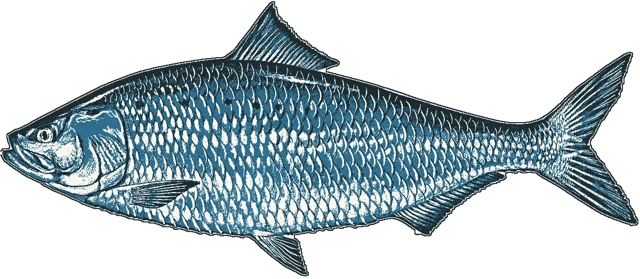
American shad
Alosa sapidissima · Fresh and salt
Some of the best-flavored fish in North America and prized roe, but so bony that most modern anglers do not bother.
Worth a try: Debone, score and deep-fry (Hank Shaw's boneless tempura shad), bake for hours to soften bones, or smoke; the roe sautéed with bacon is a spring classic.
- Tastes
- rich, oily, sweet, soft, extremely bony
- Limits
- Heavy regs. Statewide: no min size, no daily limit and no possession limit. Rivers are open to shad only during open game fish or salmon seasons, and the mainstem Columbia River downstream of Bonneville Dam is closed Apr 1 to May 15 (open May 16 to Mar 31). (2026-27 pamphlet (statewide species page updated June 18, 2026; special rules pages updated Oct 5, 2026)) Source
- Best months
- Mid-May to early July; the run starts around Mother's Day and tapers off by Independence Day (ODFW), and the Columbia below Bonneville Dam opens May 16.
- Where
- The Columbia River, mostly near the Bonneville and John Day dams.
- shad darts (Columbia River)
- tiny spoons
- small grubs on jig heads
Before you eat it: DOH lists shad from the Columbia River as a healthy choice (Middle Columbia fact sheet, 2013; Hanford Reach fact sheet, 2017; table rows from Bonneville Dam to McNary Dam).
Burbot
Lota lota · also called freshwater ling · Freshwater
Many anglers still throw back the slimy, eel-like 'eelpout' as trash, yet Alaskans keep them for their delicate white meat.
Worth a try: A freshwater cod: skin it, take the white loins and the liver, and boil-and-butter it like 'poor man's lobster', fry it or put it in chowder (Hank Shaw).
- Tastes
- mild, sweet, firm, white, lobster-like
- Limits
- Heavy regs. Statewide: no min size, daily limit 5. Listed waters may differ. (2026-27 pamphlet (statewide species page updated June 18, 2026; special rules pages updated Oct 5, 2026)) Source
- Where
- Lake Roosevelt, Lake Chelan, Rufus Woods Lake and Potholes Reservoir.
- cut sucker or cisco
- live minnows (gold shiners)
- jigging spoons tipped with bait
- bucktail jigs
- Burbot are among the large predators that can carry elevated mercury in parts of northern and western Alaska (ADF&G).
- Limit (pregnant, may become pregnant, nursing, children): 4 meals a month from Lake Roosevelt and the Columbia from Wanapum Dam to Grand Coulee Dam, Rufus Woods Lake included (mercury).
- Limit (other adults): 3 servings a week from Lake Roosevelt (June 2021).
- DOH lists Lake Chelan burbot as unrestricted (healthy choice).
- Other listed waters differ (DOH fish advisory table, Nov. 22, 2026).
Chum salmon
Oncorhynchus keta · also called dog salmon, calico salmon, keta · Fresh and salt
ADF&G says chum are generally regarded as one of the less desirable salmon: lower oil and paler flesh than the others (NOAA).
- Tastes
- mild, lean, firm, meaty, pale
- Limits
- Heavy regs. Chum seasons are set by marine area and river, a catch record card is required, and emergency rules override the pamphlet. In the pamphlet, Area 10 and most of Area 11 allow chum Oct 1 to Nov 15 (Commencement Bay to Oct 31), daily limit 2 salmon, and some piers allow it longer: four piers each in Areas 10 and 11 from Oct 1 to Apr 30 and the Edmonds pier in Area 9 from Oct 1 to July 31. Area 12 (Hood Canal) allows chum from Oct 16, daily limit 4 salmon, but is closed to all salmon Nov 5-30, 2026 because returns to the Hoodsport and McKernan hatcheries were well below broodstock goals. Release chum in Areas 5, 6, 8-1, 8-2 and 13, the rest of Area 9, and Area 7 (except Bellingham Bay Aug 1-Sept 30 and Hale Pass Sept 1-30, daily limit 3 salmon). Ocean Areas 1 and 2 count chum in the salmon limit (Area 1 closed to salmon Aug 25, 2026; Area 2 to Sept 30); Areas 3 and 4 release it Aug 1-Sept 30. Marine Areas 2-1 and 2-2 (east of the Buoy 13 line) are closed to all fishing from Oct 24, 2026 until further notice. Rivers have separate fall chum seasons and limits. 2027 seasons are set in spring 2027. (2026-27 pamphlet (marine area pages updated Oct 5, 2026); emergency rules in the Washington State Register through Nov 4, 2026) Source
- Best months
- October and November: the pamphlet's main chum dates are Oct 1 to Nov 15 in Areas 10 and 11 and from Oct 16 in Hood Canal (Area 12, closed Nov 5-30 in 2026).
- Where
- Puget Sound (Marine Areas 10 and 11 and their piers, including Seacrest Park pier in Seattle) and Hood Canal near the Hoodsport and McKernan hatcheries.
- Limit (everyone), Puget Sound Marine Areas 6-13 and the Lower Duwamish River: coho, chum, pink and sockeye salmon 2-3 servings a week, with no other fish that week.
Meal limits and other waters (3)
- DOH's Healthy Fish Guide has chum at 2 to 3 meals a week.
- DOH lists salmon from the Columbia, Bonneville Dam to McNary Dam and the Hanford Reach, as a healthy choice.
- DOH has no advisory page for Marine Areas 1-5.
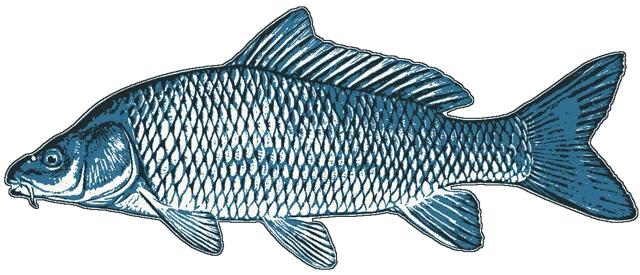
Common carp
Cyprinus carpio · Freshwater
Most US anglers call it a muddy, bony trash fish, but it is a prized food fish in Europe and Asia and eats well from clean, cold water.
Worth a try: Catch from clean water, remove the dark 'mud vein', and either score small fish and fry hard so the Y-bones soften, or hard-smoke large fish over fruitwood (Hank Shaw).
- Tastes
- mild from clean water, strong from muddy water, firm, fatty, Y-bones
- Limits
- No limits. Statewide: no min size, no daily limit and no possession limit; may also be taken by spear or bow-and-arrow; open only during open game fish or salmon seasons (lakes are open year-round, rivers from the Saturday before Memorial Day to Oct 31 unless a special rule says otherwise). No fishing license is needed for common carp in Moses Lake or Vancouver Lake. (2026-27 pamphlet (statewide species page updated June 18, 2026; special rules pages updated Oct 5, 2026)) Source
- Where
- Moses Lake, Vancouver Lake, Potholes Reservoir, Rufus Woods Lake, Lake Roosevelt and Lake Washington (do not eat from there).
- dough balls
- canned corn
- worms
- boilies
- bread
- Do not eat (anyone): carp from Lake Washington (PFOS, PCBs) or Lake Spokane (Long Lake; PCBs), carp or any other resident fish from the Columbia River at Bradford Island, Bonneville Dam to Fort Raines and Ruckel Creek (PCBs), or any fish from the other all-fish waters on this page.
Meal limits and other waters (4)
- Limit (everyone): 1 meal a month from Green Lake, the Hanford Reach and Lake Wallula (McNary Dam to the I-90 bridge), the Walla Walla River below Dry Creek, the Okanogan River from Malott Bridge down with Lake Pateros, and of any fish from the Spokane River, Upriver Dam to Nine Mile Dam (2009).
- Limit (everyone): 1 meal a week from the Columbia, Ruckel Creek to McNary Dam, with no other fish that week; 1 meal a week from the Yakima River below Prosser; 4 meals a month from Lake Sammamish (Public Health – Seattle & King County); 8 from the Columbia, Wanapum Dam to Grand Coulee Dam.
- Limit (pregnant, may become pregnant, nursing, children): 4 meals a month from Banks Lake (mercury).
- Other listed waters differ (DOH fish advisory table, Nov. 22, 2026).
Lake trout
Salvelinus namaycush · also called mackinaw · Freshwater
Edible and widely kept, but it is the trout most often knocked as too greasy; big fish are very fatty and best smoked.
- Tastes
- rich, oily, soft to firm, fatty
- Limits
- No limits. Statewide: no min size and no daily limit. Listed waters differ: Deer Lake (Stevens Co.) daily limit 5 with no more than 1 over 26 in. Other listed waters may differ. (2026-27 pamphlet (statewide species page updated June 18, 2026; special rules pages updated Oct 5, 2026)) Source
- Where
- Lake Chelan; the pamphlet also sets a lake trout limit for Deer Lake (Stevens Co.).
- trolled spoons
- jigged bait
- dead bait under tip-ups
- Great Lakes and some western lakes carry contaminant advisories for large lake trout; check your state advisory.
Before you eat it: DOH: Lake Chelan lake trout, no more than 1 meal a week, with no other fish that week (DDT, June 2010). Confirm with DOH's current list.
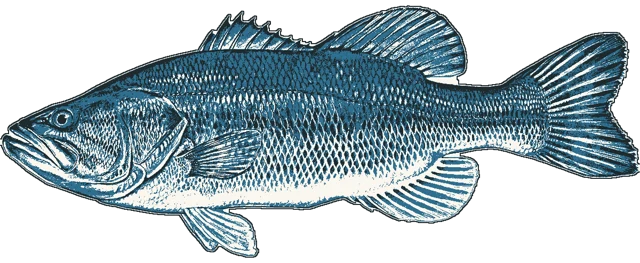
Largemouth bass
Micropterus nigricans (syn. M. salmoides) · Freshwater
Perfectly edible white fillets, but America's top catch-and-release fish and many anglers swear the meat tastes fishy or muddy, so reputation is split.
- Tastes
- mild to slightly 'fishy', firm, thick fillets
- Limits
- Heavy regs. Statewide in lakes, ponds and reservoirs: no min size, daily limit 5, and only bass under 12 in may be kept except 1 over 17 in (a protected 12-17 in slot); no size or daily limit in rivers, streams and beaver ponds. Listed waters allow more: Lake Washington, Lake Sammamish, Lake Sawyer, Osoyoos Lake and many other listed lakes daily limit 10 with max size 12 in except 1 over 17 in. Other listed waters differ. (2026-27 pamphlet (statewide species page updated June 18, 2026; special rules pages updated Oct 5, 2026)) Source
- Where
- Banks Lake, Moses Lake, Potholes Reservoir, Lake Chelan, Lake Washington (do not eat from there) and Mayfield Lake.
- live shiners
- nightcrawlers
- live minnows
- Texas-rigged plastic worm
- jig
- spinnerbait
- Water-body mercury advisories commonly list largemouth bass; check your state's advisory before eating large fish.
- Do not eat (anyone): largemouth from Lake Washington or Lake Sammamish (PFOS, 2022) or Lake Ozette (mercury), bass or any other resident fish from the Columbia River at Bradford Island, Bonneville Dam to Fort Raines and Ruckel Creek (PCBs), or any fish from the other all-fish waters on this page.
- Do not eat (East Selah residents with PFAS in their water): largemouth from Elton Pond (May 2026).
Meal limits and other waters (5)
- Limit (everyone): 1 meal a month from Lake Meridian and Elton Pond (PFOS), and of any fish from the Spokane River, Upriver Dam to Nine Mile Dam (2009).
- Limit (pregnant, may become pregnant, nursing, children): 1 meal a month from Lake St. Clair (Thurston County); 2 a month of largemouth or smallmouth bass from any Washington water (statewide, mercury).
- Limit (everyone): 2 meals a month from Green Lake (Public Health – Seattle & King County), the Hanford Reach, the Pend Oreille River and the Walla Walla River; 1 meal a week from the Columbia, Ruckel Creek to McNary Dam, with no other fish that week.
- Limit (women 18-45, children): 2 servings a month from Lake Roosevelt; 5 a month for other adults (June 2021).
- Other listed waters differ (DOH fish advisory table, Nov. 22, 2026).
Mountain whitefish
Prosopium williamsoni · Freshwater
Tasty but admittedly bony (Idaho Fish and Game), so many trout anglers dismiss them as trash; excellent smoked or pickled.
Worth a try: Smoke or pickle it like Great Lakes whitefish; smoking makes the bones easy to pick out. Idaho and MeatEater both push anglers to keep them.
- Tastes
- light, mild, soft, very bony
- Limits
- Light regs. Statewide: no min size, daily limit 15 (whitefish). Rivers are open the Saturday before Memorial Day to Oct 31, and listed rivers (such as the Methow, Entiat, Chewuch, Naches, Yakima, Klickitat, Similkameen and White) have a Dec 1 to end of February whitefish-only season with whitefish gear rules (one single-point hook, size 14 or smaller; bait allowed); the Kettle River's runs Nov 1 to the end of February. Listed waters may differ. (2026-27 pamphlet (statewide species page updated June 18, 2026; special rules pages updated Oct 5, 2026)) Source
- Best months
- December through February, the pamphlet's whitefish-only river seasons.
- Where
- Rivers with winter whitefish seasons (Methow, Entiat, Chewuch, Naches, Yakima, Klickitat, Similkameen, Kettle and White); DOH also has eating advice for mountain whitefish from the Wenatchee River (do not eat from Icicle Creek to the Columbia), the Hanford Reach, Lake Spokane and Lake Roosevelt.
- maggots
- salmon eggs
- worm pieces
- small nymphs
- Do not eat (anyone): mountain whitefish from the Wenatchee River, Icicle Creek (Leavenworth) to the Columbia (PCBs), or any fish from the all-fish waters on this page, the Spokane River from the Idaho border to Upriver Dam among them.
Meal limits and other waters (5)
- Limit (everyone): 1 meal a month from the Hanford Reach, McNary Dam to the I-90 bridge (2017), and of any fish from the Spokane River, Upriver Dam to Nine Mile Dam (2009).
- Limit (everyone): 2 meals a month from Lake Spokane and the Columbia from Wanapum Dam to Grand Coulee Dam, Rufus Woods Lake included (dioxins, PCBs).
- Limit (everyone): 4 meals a month from the Little Spokane River; 1 meal a week from the Columbia, Ruckel Creek to McNary Dam, with no other fish that week; 8 meals a month from the Okanogan River.
- Limit (women 18-45, children): 1 serving a week from Lake Roosevelt; 3 a week for other adults (June 2021).
- Other listed waters differ (DOH fish advisory table, Nov. 22, 2026).
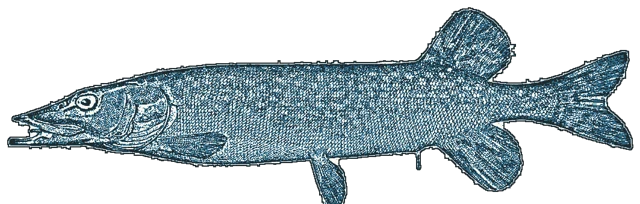
Northern pike
Esox lucius · Freshwater
The meat is white, flaky and great in flavor, but the Y-bones put many anglers off; reputation is split between 'too bony' and 'better than walleye once you learn to clean them'.
Worth a try: Remove the Y-bones with the five-fillet method, or grind, pickle or make fish balls from the meat; Hank Shaw's pike balls grind small pike so the bones vanish.
- Tastes
- mild, clean, firm, flaky white; Y-bones in the upper fillet
- Limits
- No limits. Statewide: no min size, no daily limit and no possession limit, but a pike must be dead before it is removed from the riparian area (the immediate vicinity of the water body). It is a prohibited species: the pamphlet says to kill every one caught, not release it, and that moving a live one can bring a fine of up to $5,000 and a year in prison. Report a catch at 1-888-WDFW-AIS, invasivespecies.wa.gov or the WA Invasives app. (2026-27 pamphlet (statewide species page updated June 18, 2026; special rules pages updated Oct 5, 2026)) Source
- Where
- Pend Oreille River (do not eat pike over 24 in from there), Spokane River (do not eat from the Idaho border to Upriver Dam), Lake Roosevelt and a couple of lakes in Spokane County; it has also turned up in Lake Washington.
- large spoons
- minnow crankbaits
- spinnerbaits
- live or dead baitfish under tip-ups
- suckers
- Large pike in parts of northern and western Alaska can carry enough mercury that eating large quantities can be harmful (ADF&G).
- Do not eat (anyone): pike over 24 in from the Pend Oreille River (mercury, July 2012), or any fish from the all-fish waters on this page, the Spokane River from the Idaho border to Upriver Dam among them.
Meal limits and other waters (4)
- Limit (everyone): 1 meal a month of any fish from the Spokane River, Upriver Dam to Nine Mile Dam (2009).
- Limit (everyone): 2 meals a month of pike under 24 in from the Pend Oreille River.
- Limit (women 18-45, children): 2 servings a week (8 meals a month) from Lake Roosevelt; 7 a week for other adults (June 2021).
- Other listed waters differ (DOH fish advisory table, Nov. 22, 2026).
Pacific herring
Clupea pallasii · Saltwater
Small, oily and bony, with soft, dark, strong-flavored flesh; most people see it as bait.
Worth a try: Hank Shaw argues herring are essentially winter sardines: grilled, fried in oats and butter, or pickled, with fried roe as a bonus. Ken Jones notes many people eat them fresh and consider pickled herring a delicacy. Keep them cold and eat them fresh.
- Tastes
- robust, strong, soft, small flakes
- Limits
- Light regs. Marine Areas 1-4: herring, sand lance and smelt 10 lb daily combined, no min size, year-round (anchovy and sardine 25 lb separately). Areas 5 and 7-11 and 13: herring, anchovy, sardine, sand lance and smelt 10 lb daily combined, year-round (Area 7 herring closed year-round north of a line from Sandy Point to Patos Island). Area 6: 10 lb combined; herring closed south of a line from Ediz Hook to Partridge Point Jan 16 to Apr 15. Marine Area 12 (Hood Canal) closed. Forage fish jig or forage fish dip net only (cast net for anchovy and sardine in Areas 1-4). (2026-27 pamphlet (marine area pages updated Oct 5, 2026)) Source
- sabiki or Lucky Lura rigs with a chrome torpedo sinker
- size 8-12 bait hooks
- Do not eat (anyone): any fish but salmon from the Lower Duwamish River (DOH).
Meal limits and other waters (4)
- Limit (everyone): 2 meals a month of herring from Marine Areas 10 (Seattle-Bremerton, with Elliott Bay), 11 (Tacoma-Vashon) and 13 (South Puget Sound), and from Puget Sound in King County (PCBs).
- Limit (everyone): 4 meals a month from Areas 8-1 (Deception Pass, Skagit Bay) and 8-2 (Port Susan, Port Gardner).
- Limit (everyone): 8 meals a month from Areas 9 (Admiralty Inlet) and 12 (Hood Canal).
- DOH lists herring from Areas 6 and 7 as unrestricted (healthy choice).
Pink salmon
Oncorhynchus gorbuscha · also called humpy, humpback salmon · Fresh and salt
Lean and mild with softer meat than other salmon (NOAA); good fresh from salt water, but quality falls fast once fish enter rivers and hump up.
- Tastes
- mild, lean, soft, small flake
- Limits
- Heavy regs. Seasons and limits are set by marine area and river, a catch record card is required, and emergency rules override the pamphlet. In 2026 the extra pink salmon allowance was removed in Areas 5 to 13, so pinks count toward the regular salmon limit (2 a day in most areas). 2026 examples: Area 5 (Sekiu) Aug 1-Sept 24, no min size, daily limit 2, release Chinook, chum, sockeye and wild coho; Area 7 Aug 1-31 same; Area 9 Aug 1-Sept 18 daily limit 2 (release Chinook, chum, wild coho); Area 8-2 Aug 1-Sept 25 daily limit 2, cut to 1 from Sept 21 (release Chinook and chum); Marine Area 1 (June 20 to Aug 24) and Area 2 (June 29 to Sept 30; limit 1 June 20-28) count pink as an 'other salmon species' in a daily limit of 2. River rules differ: the 2026 Skagit River listings allow only sockeye (July) and coho (and hatchery Chinook upstream), so pinks must be released there. Closed by emergency rule: Area 12 to salmon Nov 5-30, 2026, and Marine Areas 2-1 and 2-2 (east of the Buoy 13 line) to all fishing from Oct 24, 2026 until further notice. The pamphlet says the majority of pink salmon return in odd-numbered years; 2027 seasons are set in spring 2027. (2026-27 pamphlet (marine area pages updated Oct 5, 2026); emergency rules in the Washington State Register through Nov 4, 2026) Source
- Best months
- August and September in odd years; the 2026 Strait and Puget Sound listings ran mostly Aug 1 to late September. 2027 dates are set in spring 2027.
- Where
- Strait of Juan de Fuca and Puget Sound marine areas, including Seacrest Park pier in Seattle.
- spoons
- spinners
- pink, orange and chartreuse jigs
- sand lance fly patterns
- Limit (everyone), Puget Sound Marine Areas 6-13 and the Lower Duwamish River: coho, chum, pink and sockeye salmon 2-3 servings a week, with no other fish that week.
Meal limits and other waters (3)
- DOH's Healthy Fish Guide has pink salmon at 2 to 3 meals a week.
- DOH lists salmon from the Columbia, Bonneville Dam to McNary Dam and the Hanford Reach, as a healthy choice.
- DOH has no advisory page for Marine Areas 1-5.
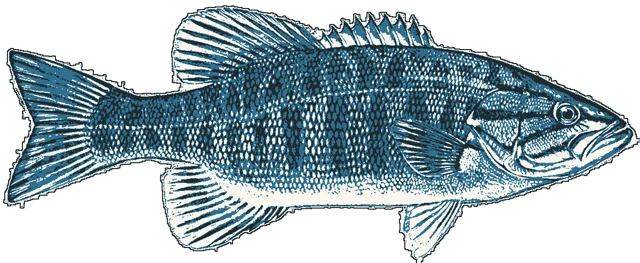
Smallmouth bass
Micropterus dolomieu · Freshwater
Firm, white and good, often rated above largemouth, but most smallmouth are released by custom and the flesh has a slight 'fishy' edge some anglers dislike.
- Tastes
- mild, slightly fishy edge, firm, thick white fillets
- Limits
- Light regs. Statewide in lakes, ponds and reservoirs: no min size, daily limit 10, and only 1 over 14 in may be kept; no size or daily limit in rivers, streams and beaver ponds. Listed waters allow more: Lake Washington, Lake Sammamish, Lake Sawyer, Osoyoos Lake and many other listed lakes daily limit 15 with only 1 over 14 in. Other listed waters differ. (2026-27 pamphlet (statewide species page updated June 18, 2026; special rules pages updated Oct 5, 2026)) Source
- Where
- The Columbia River (do not eat from Bonneville Dam to Ruckel Creek), Banks Lake, Moses Lake, Potholes Reservoir, Rufus Woods Lake, Lake Chelan, Conconully Reservoir and Lake Washington (do not eat from there).
- crayfish
- hellgrammites
- live minnows
- tube jig
- grub
- jerkbait
- Do not eat (anyone): smallmouth from Lake Washington or Lake Meridian (PFOS, 2022), bass or any other resident fish from the Columbia River at Bradford Island, Bonneville Dam to Fort Raines and Ruckel Creek (PCBs), or any fish from the other all-fish waters on this page.
- Do not eat (pregnant, may become pregnant, nursing, children): smallmouth from Lake Whatcom (mercury).
Meal limits and other waters (5)
- Limit (everyone): 1 meal a month of any fish from the Spokane River, Upriver Dam to Nine Mile Dam (2009).
- Limit (pregnant, may become pregnant, nursing, children): 2 meals a month of largemouth or smallmouth bass from any Washington water (statewide, mercury).
- Limit (everyone): 2 meals a month from Lake Sammamish, Green Lake (Public Health – Seattle & King County), the Pend Oreille River and the Walla Walla River; 4 from the Hanford Reach; 1 meal a week from the Columbia, Ruckel Creek to McNary Dam, with no other fish that week.
- Limit (other adults): 3 servings a week from Lake Roosevelt (June 2021).
- Other listed waters differ (DOH fish advisory table, Nov. 22, 2026).
Starry flounder
Platichthys stellatus · also called flatfish, rough jacket · Saltwater
Generally good, though some fish have only a fair flavor (pierfishing.com); best fried or baked.
- Tastes
- mild to fair, medium flake
- Limits
- Light regs. Flatfish (dabs, sole and flounder, not halibut) in Marine Areas 1-3 and 4 west of the Bonilla-Tatoosh line: no min size, 5 flatfish in addition to the 9-fish bottomfish limit (Mar 14 to Oct 17, 2026); closed from the third Saturday in October to the second Saturday in March (Mar 13, 2027). Area 4 east of the line: year-round, daily limit 9. Areas 5-11 and 13: year-round, counted within the 15-fish bottomfish total. Marine Area 12 allows flounder, sole and sanddabs only north of a line from Turner Creek to the Toandos Peninsula in water shallower than 120 ft, daily limit 15. Barbless hooks are required in Areas 5-13. (2026-27 pamphlet (marine area pages updated Oct 5, 2026); state rule WAC 220-314-020, in force since May 25, 2025) Source
- Best months
- Coast Mar 14 to Oct 17, 2026; Puget Sound year-round.
- Where
- Shallow mud and sand throughout Washington salt water, often in the lower reaches of streams.
- herring
- jigs
- spinners
- May be unsafe to eat from heavily polluted areas (pierfishing.com)
- Do not eat (anyone): flatfish from Budd Inlet, any fish but salmon from the Lower Duwamish River (East and West waterways included), or bottom-feeding fish from Commencement Bay's Thea Foss, Blair and Hylebos waterways (DOH).
Meal limits and other waters (4)
- Limit (everyone): 1 serving a month of flatfish from Sinclair Inlet.
- Limit (everyone): 2 servings a month from Elliott Bay, inner Commencement Bay, the Everett waterfront and Port Gardner (Mukilteo ferry dock to Everett).
- Limit (everyone): 1 serving a week from Eagle Harbor, Port Orchard Waterway and outer Commencement Bay.
- Limit (everyone): 2-3 servings a week of flatfish (English sole, starry flounder, rock sole) from the rest of Marine Areas 6-13, with no other fish that week.
Surfperch
Embiotocidae (Amphistichus argenteus, A. rhodoterus and others) · also called seaperch · Saltwater
Mild, lean white meat, but small fillets with a soft texture; usually fried (pierfishing.com).
- Tastes
- mild, soft, small flakes
- Limits
- Light regs. Marine Areas 1-4: daily limit 12 surfperch, shiner perch 15, no min size, not counted in the bottomfish limit; open Mar 14 to Oct 17, 2026 (boat) and year-round from the beach; Area 4 east of the Bonilla-Tatoosh line is open year-round. Surfperch fishing from the Columbia River north jetty is prohibited while bottomfish is closed. Areas 5-11 and 13: year-round, daily limit 10 (shiner perch 15). Marine Area 12 (Hood Canal): closed. Barbless hooks are required in Areas 5-13. (2026-27 pamphlet (marine area pages updated Oct 5, 2026); state rule WAC 220-314-020, in force since May 25, 2025) Source
- Best months
- Year-round from the beach on the coast; in Puget Sound, shallow-water schools in summer and fall.
- Where
- Sandy beaches on the outer coast; docks, jetties, kelp and eelgrass in Puget Sound.
- clams
- mussels
- shrimp
- worms
- small spinners
- flies
- Do not eat (anyone): any fish but salmon from the Lower Duwamish River, shiner perch included (DOH; Public Health – Seattle & King County), or bottom-feeding fish from Commencement Bay's Thea Foss, Blair and Hylebos waterways (DOH).
Meal limits and other waters (2)
- Limit (everyone): 4 meals a month of shiner perch from Elliott Bay and from Puget Sound in King County (Public Health – Seattle & King County).
- Limit (everyone): where there is no advisory, DOH recommends up to 4 fish meals a month (Aug. 2017).
Northern pikeminnow
Ptychocheilus oregonensis · Freshwater
A bounty fish, not a food fish: the Pikeminnow Sport-Reward Program pays anglers per fish to remove them, and very few of the tens of thousands caught each year reach the dinner table (MeatEater).
- Tastes
- bland
- Limits
- No limits. Statewide: no min size and no daily limit. The Northern Pikeminnow Sport-Reward Fishery pays anglers for fish at least 9 in long caught on the Columbia River from its mouth to the restricted zone below Priest Rapids Dam and the Snake River from its mouth to Hells Canyon: $6 each for the first 25 in a season, $8 for fish 26 to 200 and $10 for each fish over 200, plus $500 for a verified external tag and $200 for a fish with only a verified PIT tag. Registration each fishing day, before fishing, is required. The 2026 season started at select stations Apr 20 and ended Sept 30; vouchers had to arrive by Nov 15. Dates and rates for 2027 are announced at pikeminnow.org. (2026-27 pamphlet (June 18, 2026); 2026 Sport-Reward season pages) Source
- Best months
- Late April to the end of September, the reward season; in 2026 the weekly turn-in was highest in early June (7,458 in the week ending June 7) and mid-September (7,738 in the week ending Sept 20). Sunrise, sunset and night are best.
- Where
- Rocky areas with fast current near dams, islands, stream mouths, points, eddies, rows of pilings and ledges or bars on the Columbia River (do not eat from there up to the I-90 bridge), most in 7 to 25 feet of water; the program covers the Columbia to Priest Rapids Dam and the Snake to Hells Canyon.
- worms
- chicken liver
- cut bait
- salmon eggs
- grasshoppers
- crayfish tails
- Do not eat (anyone): northern pikeminnow from Lake Washington, Lake Sammamish, Lake Meridian, Green Lake (Public Health – Seattle & King County), Lake Ozette, Lake Roosevelt, the Pend Oreille River, or the Columbia River up to the I-90 bridge, the Hanford Reach included (DOH's table names the Lower Columbia with no reach).
- Do not eat (anyone): any fish from the all-fish waters on this page.
- Do not eat (pregnant, may become pregnant, nursing, children): northern pikeminnow from any Washington water (statewide, mercury).
Meal limits and other waters (3)
- Limit (everyone): 1 meal a month from the upper Walla Walla River, Dry Creek to the Oregon border (PCBs, 2006), and of any fish from the Spokane River, Upriver Dam to Nine Mile Dam (2009).
- Limit (everyone): 2 meals a month from Lake Spokane and the Columbia from Wanapum Dam to Grand Coulee Dam; 4 from the Little Spokane River and the Spokane River between Long Lake Dam and Little Falls Dam.
- Other listed waters differ (DOH fish advisory table, Nov. 22, 2026).
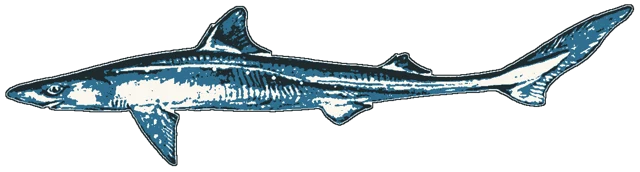
Spiny dogfish
Squalus acanthias · also called spur dog, grayfish · Saltwater
To most US anglers dogfish are a nuisance that swarms baits; NOAA says there is little consumer demand for it in the United States.
Worth a try: NOAA describes the meat as mild, sweet, flaky but firm. It is the fish in British fish and chips, and North Carolina Sea Grant's chef panels served it as 'cape shark' blackened, fried and in chowder. Bleed and gut it quickly like any shark.
- Tastes
- mild, sweet, flaky but firm, oilier than other sharks
- Limits
- Light regs. North Pacific spiny dogfish is listed in the pamphlet's bottomfish definition and has no separate limit on the area pages, so it counts toward the daily bottomfish total (9 in Marine Areas 1-4, 15 in Areas 5-11 and 13); a gaff may be used to land a legally hooked dogfish that will be kept. Coast (Areas 1-3 and 4 west of the Bonilla-Tatoosh line): Mar 14 to Oct 17, 2026, closed from the third Saturday in October to the second Saturday in March (Mar 13, 2027). Areas 5-11 and 13 are open year-round, with depth limits. Marine Area 12 is closed to bottomfish. Sixgill, sevengill and thresher sharks are closed everywhere. (2026-27 pamphlet (marine area pages updated Oct 5, 2026); state rule WAC 220-314-020, in force since May 25, 2025) Source
- Best months
- Coast Mar 14 to Oct 17, 2026; Puget Sound year-round.
- Where
- Puget Sound and the outer coast.
- strips of squid
- cut pieces of fish
- Do not eat (pregnant, may become pregnant, nursing, children): shark (DOH mercury advice; spiny dogfish is a small shark).
- Do not eat (anyone): any fish but salmon from the Lower Duwamish River, or bottom-feeding fish from Commencement Bay's Thea Foss, Blair and Hylebos waterways (DOH).
- Limit (everyone else): after a meal of shark, eat only Healthy Choice fish for the rest of the month (DOH Healthy Fish Guide).
Bull trout
Salvelinus confluentus · also called Dolly Varden (grouped with bull trout in the pamphlet) · Freshwater
Federally threatened; in most waters it cannot be fished for or kept, and incidental catches must be released in the water.
- Limits
- No harvest. Statewide default: closed unless a special rule says otherwise. In fresh water an angler who catches one that must be released may not take it all the way out of the water. The 2026 pamphlet lists limited exceptions where Dolly Varden/bull trout may be kept as part of the trout daily limit, mostly min 20 in and only in set months: sections of the Skagit, Suiattle, Skykomish, Snohomish, Sultan, Wallace and White Chuck rivers, and the Lost River (Okanogan Co.) Sat. before Memorial Day to Aug 15. Some Skagit-system waters close retention for part of the year, and emergency rules closed it on parts of the Skagit and Cascade in 2026 (Nov 1-15 the latest). Olympic National Park: fishing for them is prohibited. Check the exact reach before keeping one. (2026-27 pamphlet (statewide species page updated June 18, 2026; special rules pages updated Oct 5, 2026); emergency rules in the Washington State Register through Nov 4, 2026) Source
- Where
- Rivers where the pamphlet allows retention: parts of the Skagit system, Skykomish, Snohomish, Sultan, Wallace and Lost rivers.
- Do not eat (anyone): any fish from the all-fish waters on this page.
Meal limits and other waters (3)
- Limit (everyone): 1 meal a month of any fish from the Spokane River, Upriver Dam to Nine Mile Dam (2009).
- Limit (pregnant, may become pregnant, nursing, children): 2 meals a month from Ross Lake (mercury).
- Limit (everyone): where there is no advisory, DOH recommends up to 4 fish meals a month (Aug. 2017).
Tiger muskie
Esox masquinongy x E. lucius · also called tiger muskellunge · Freshwater
Managed like muskie, as a trophy fish with high size limits; Maryland DNR says most anglers release them.
- Limits
- Heavy regs. Statewide: min size 50 in, daily limit 1. Listed waters may differ. Tell tiger muskie apart from northern pike (prohibited, kill rule): the Washington Invasive Species Council says they look similar but are regulated differently. (2026-27 pamphlet (statewide species page updated June 18, 2026; special rules pages updated Oct 5, 2026)) Source
- Where
- Curlew Lake (Ferry Co.) and Mayfield Lake (Lewis Co.).
- large crankbaits imitating suckers
- bucktail spinners
- large jerkbaits
Before you eat it: Do not eat (anyone): any fish from the all-fish waters on this page. Limit (everyone): 1 meal a month of any fish from the Spokane River, Upriver Dam to Nine Mile Dam (2009). Limit (everyone): where there is no advisory, DOH recommends up to 4 fish meals a month (Aug. 2017).
White sturgeon
Acipenser transmontanus · Fresh and salt
Most white sturgeon must be released: Washington allows no recreational harvest in Willapa Bay, Grays Harbor, Puget Sound or other coastal areas, and other fisheries are slot-limited or catch-and-release.
- Limits
- Heavy regs. A catch record card is required, annual limit 2 sturgeon statewide, one single-point barbless hook with bait, night closure, and sturgeon over 55 in fork length cannot be removed from the water. Keep seasons are short or by emergency rule. Columbia River Bonneville Dam to McNary Dam (when open): min 38 in fork length below The Dalles Dam and 43 in above it, max 54 in, daily limit 1. In 2026 the retention days were Bonneville Pool Feb 16 only, The Dalles Pool Feb 16, 22, 26 and Mar 3, and John Day Pool Jan 1-9; emergency rules then closed all three through Apr 30. The 2026-27 pamphlet lists retention in those pools from Jan 1 to Apr 30 unless closed in season, and catch-and-release May 1 to Dec 31 (some reaches close May 1 to Aug 31). Below Bonneville Dam, McNary Dam to Chief Joseph Dam, the Snake River, the coast and Puget Sound: catch-and-release only. Rufus Woods Lake, above Chief Joseph Dam, is closed to sturgeon. Lake Roosevelt: Sept 16 to Nov 30, 55-63 in fork length, daily limit 1; stop fishing for the day after one and for the season after the annual limit. Green sturgeon cannot be fished for or kept. Reaches just below Bonneville Dam, from Navigation Marker 82 up, are closed to sturgeon fishing May 1 to Aug 31. (2026-27 pamphlet (June 18 and Oct 5, 2026); emergency rules WSR 26-03-016 to 26-06-053 (Jan to Mar 2026)) Source
- Best months
- To keep one: Lake Roosevelt Sept 16 to Nov 30; Columbia pool days in 2026 were Jan 1-9 and Feb 16 to Mar 3. Catch-and-release on the Columbia runs most of the year.
- Where
- Columbia River pools (Bonneville, The Dalles, John Day; do not eat from Bonneville Dam to Ruckel Creek) and Lake Roosevelt for keepers; catch-and-release in the lower Columbia and elsewhere.
- herring (Columbia River)
- smelt
- clams
- sand shrimp
- squid
- Do not eat (anyone): sturgeon from the Columbia River at Bradford Island, Bonneville Dam to Fort Raines and Ruckel Creek (PCBs, mercury).
Meal limits and other waters (6)
- Limit (everyone): 1 meal a month from the Hanford Reach, McNary Dam to the I-90 bridge (2017).
- Limit (pregnant, nursing, children): 4 meals a month from the lower Columbia, mouth to Bonneville Dam (PCBs, March 2023).
- Limit (other adults): 6 meals a month from the lower Columbia, mouth to Bonneville Dam.
- Limit (everyone): 1 meal a week of resident fish, sturgeon included, from Ruckel Creek to McNary Dam, with no other fish that week (2013).
- Limit (women 18-45, children): 2 servings a week (8 meals a month) from Lake Roosevelt; 7 a week for other adults (June 2021).
- Other listed waters differ (DOH fish advisory table, Nov. 22, 2026).
Where to fish in Washington
Fish named here are what people catch at each spot, not a promise they’re safe to eat. Read the eating advice on the fish’s card before you keep one.
# Salt or brackish# Freshwater
- 1Neah Bay and Cape Flattery (Marine Area 4) offshore · salt
The Makah Tribe says to fish the ocean or the Strait here for halibut, lingcod, rockfish, greenling and salmon, with bottomfish on rocky reefs in 50 to 90 feet. Anglers kept 9,627 Chinook and 10,127 coho from the border to Cape Alava in 2025 (Pacific Fishery Management Council, preliminary).
Known for: Pacific halibut, Lingcod, Rockfish, Kelp greenling, Chinook salmon
Access: A state saltwater license is required; shore fishing inside the Makah Reservation also needs a tribal permit, sold at the Makah Fisheries office and Washburn's General Store. NOAA lists Neah Bay among the ports with fishing charters.
- 2Westport and Grays Harbor (Marine Area 2) offshore · salt
Westport had more ocean salmon trips than any other Washington port area in 2025, about 31,000; anglers kept 14,040 Chinook and 33,718 coho from the Queets River to Leadbetter Point (Pacific Fishery Management Council, preliminary). NOAA lists it among the ports with charters for salmon, halibut and lingcod.
Known for: Chinook salmon, Coho salmon, Lingcod, Pacific halibut
Access: Westport Marina (Port of Grays Harbor) is home to a charter fleet; Westport Light State Park has 1,215 feet of shoreline for saltwater fishing. Grays Harbor east of the Buoy 13 line closed to all fishing Oct 24, 2026 until further notice, except the Westport and Ocean Shores boat basins.
- 3Ilwaco and the Columbia River mouth (Marine Area 1) offshore · salt
At Buoy 10, just inside the river mouth, Oregon and Washington anglers kept 33,283 Chinook and 64,490 coho from Aug 1 to Oct 31, 2026 (preliminary); Ilwaco and the Columbia ports logged about 20,200 Washington ocean salmon trips in 2025.
Known for: Chinook salmon, Coho salmon
Access: The Port of Ilwaco has an 800-slip marina; Cape Disappointment State Park has one boat ramp and 135 feet of dock on Baker Bay. Either a Washington or an Oregon license is valid from a boat in the shared waters.
- 4Sekiu and Pillar Point (Marine Area 5) sound · salt
NOAA's Olympic Coast sanctuary lists Sekiu among the ports with charters for salmon, halibut and lingcod. In the 2025 Area 5 selective fisheries anglers kept 4,040 Chinook (July 1 to Aug 12) and 18,287 coho (July 1 to Sept 26), per the Pacific Fishery Management Council (preliminary).
Known for: Chinook salmon, Coho salmon, Pacific halibut, Lingcod
Access: Charters run from Sekiu. Area 5 runs from the mouth of the Sekiu River east to Low Point; waters south of a Kydaka Point line have their own salmon dates.
- 5Seacrest Park pier and Alki, Seattle (Marine Area 10) sound · salt
Public Health – Seattle & King County lists Seacrest Park Pier at Alki Beach as a fishing site, with Chinook, coho, chum and pink salmon from Elliott Bay. The pier is open to salmon all year: Chinook min 22 in, daily limit 2 with no more than 1 Chinook, and release chum May 1 to Sept 30. Everyone: no more than 1 serving a week of Chinook, or 2 a month of resident Chinook (blackmouth), from Marine Area 10 (DOH).
Known for: Chinook salmon, Coho salmon, Chum salmon, Pink salmon
Access: Seacrest Park fishing pier, 1660 Harbor Ave SW; Seattle Parks also lists a Golden Gardens pier. Limit Elliott Bay flatfish to 2 servings a month (DOH), and eat no resident fish from the Lower Duwamish.
- 6Lake Washington lake · fresh
King County's fishing guide lists cutthroat and rainbow trout, black crappie, yellow perch, channel catfish and both basses here, and the pamphlet opens coho north of the Highway 520 Bridge Sept 11 to Oct 31 (4 a day). Two-pole fishing is not allowed, and DOH says not to eat cutthroat, bass, carp or pikeminnow from the lake. Everyone: no more than 1 meal a month of yellow perch (DOH) and 4 a month of black crappie (Public Health – Seattle & King County).
Known for: Yellow perch, Black crappie, Coho salmon
Access: Seattle fishing piers at Seward Park, Stan Sayres, Lake Washington Boulevard, Mount Baker Park, Madison Park and Magnuson Park, with boat ramps at Stan Sayres and Magnuson; Gene Coulon Park in Renton. The pamphlet marks the lake with its public boat ramp symbol.
- 7Banks Lake reservoir · fresh
The Bureau of Reclamation's page lists smallmouth and largemouth bass, yellow perch, rainbow trout, walleye, kokanee, black crappie and whitefish in this 27-mile reservoir of 27,000 acres. Women who are or may become pregnant, nursing mothers and children: no more than 2 meals a month of largemouth or smallmouth bass (DOH statewide; its Banks Lake line for smallmouth is 4).
Known for: Smallmouth bass, Largemouth bass, Walleye, Kokanee salmon, Rainbow trout
Access: Steamboat Rock State Park has seven boat launches at three locations with 320 feet of dock and fish cleaning stations.
- 8Moses Lake lake · fresh
The Bureau of Reclamation lists walleye, both basses, yellow perch, black crappie, bluegill and rainbow trout in this natural lake of up to 6,800 acres, with common carp dominant (2007).
Known for: Walleye, Smallmouth bass, Largemouth bass, Yellow perch, Black crappie
Access: The pamphlet marks Moses Lake with its public boat ramp symbol. No fishing license is needed for common carp here.
- 9Potholes Reservoir reservoir · fresh
The Bureau of Reclamation calls it renowned for its warmwater fishery, with smallmouth bass of major importance (2007), and its recreation page lists yellow perch, crappie, largemouth bass, rainbow trout and walleye. Women who are or may become pregnant, nursing mothers and children: no more than 2 meals a month of largemouth or smallmouth bass (DOH statewide).
Known for: Walleye, Smallmouth bass, Largemouth bass, Rainbow trout, Yellow perch
Access: Potholes State Park: fishing is open year-round, with fish cleaning stations May 1 to Sept 30. The pamphlet marks the reservoir with its public boat ramp symbol.
- 10Lake Chelan lake · fresh
The National Park Service lists burbot, lake trout, westslope cutthroat, kokanee, largemouth and smallmouth bass as its common fish. The pamphlet allows 1 landlocked salmon a day, min 15 in, with no catch record card. Everyone: no more than 1 meal a week of lake trout, with no other fish that week (DOH, DDT); women who are or may become pregnant, nursing mothers and children, no more than 2 meals a month of bass (statewide).
Known for: Kokanee salmon, Lake trout, Cutthroat trout, Burbot, Smallmouth bass
Access: Lake Chelan State Park on the 50-mile lake; the pamphlet marks it with its public boat ramp symbol. No fishing licenses are sold in the national park complex at the upper end.
- 11Lake Roosevelt (Franklin D. Roosevelt Lake) reservoir · fresh
The National Park Service names rainbow trout, white sturgeon, yellow perch, lake whitefish, kokanee and burbot as the common fish, and calls walleye a popular sport fish here. Keep season for sturgeon is Sept 16 to Nov 30 (55-63 in fork length, 1 a day). Women 18 to 45 and children: no more than 1 serving a week of walleye or burbot; other adults, 3 (DOH, mercury and PCBs).
Known for: Rainbow trout, Walleye, Kokanee salmon, White sturgeon, Burbot
Access: Bank fishing is allowed anywhere outside harbors and designated swim areas; ask the Colville or Spokane tribe about a tribal license along the reservation shoreline.
- 12Rufus Woods Lake reservoir · fresh
The Colville Tribes stock rainbow trout in this 51-mile reservoir above Chief Joseph Dam and list walleye, kokanee, burbot and smallmouth bass; the trout daily limit is 2. Women who are or may become pregnant, nursing mothers and children: no more than 4 meals a month of walleye or burbot (DOH, the Columbia from Wanapum Dam to Grand Coulee Dam) and 2 a month of smallmouth bass (statewide).
Known for: Rainbow trout, Walleye, Kokanee salmon, Smallmouth bass, Burbot
Access: Bridgeport State Park has 7,500 feet of shoreline here. A state license covers the Douglas County shore, a state or tribal license works on the water, and the reservation shore needs a tribal permit outside signed Designated Fishing Areas.
- 13Columbia River below Bonneville Dam river · fresh
ODFW says Columbia shad anglers on the bank fish mostly near the Bonneville and John Day dams, from about Mother's Day to Independence Day.
Known for: American shad
Access: Shad fishing is closed Apr 1 to May 15 below Bonneville Dam. On the boundary water either state's license is valid, but an angler with only an Oregon license may not fish from the Washington shore.
Washington fishing license and rules
- Resident: $39.95 freshwater license (includes a Vehicle Access Pass); $74.37 combination license (freshwater, saltwater and shellfish/seaweed); $101.88 Fish Washington package (annual combination plus Puget Sound crab, two-pole and Columbia River salmon and steelhead endorsements, residents only)
- Nonresident: $115.85 freshwater license; $170.00 combination license
- Nonresident short-term: Combination licenses by the day: 1-day $27.05 nonresident ($14.90 resident); 2-day $39.19 ($20.98); 3-day $48.30 ($25.53). Short-term licenses do not include a Vehicle Access Pass and must be used on consecutive days.
- Saltwater: Separate saltwater license ($40.71 resident, $81.70 nonresident) or a combination license ($74.37 resident, $170.00 nonresident). A freshwater license does not cover saltwater. In Marine Areas 2-1 (Willapa Bay) and 2-2 (Grays Harbor), and in the Columbia River between Buoy 10 and the Rocky Point-Tongue Point line, a freshwater, saltwater or combination license is valid; the Columbia River north jetty needs a saltwater or combination license.
- Who needs one: A license is required at 16 and older. Anglers 15 and under need no license but must still carry a catch record card for salmon, steelhead, sturgeon and halibut; since Jan 1, 2026, 15-year-olds also need the Columbia River salmon and steelhead endorsement to fish for salmon or steelhead on the Columbia River or its tributaries. Seniors 70 and older and some disabled residents and veterans pay reduced fees.
- Free fishing days: Free Fishing Weekend: June 12-13, 2027 (each year the first weekend in June after the first Monday in June, per the state pamphlet). Licenses, endorsements and parking passes are not required for some fish, but all shellfish and fish that need a catch record card (sturgeon, salmon, steelhead, halibut) still need a license, and the card is still required. All other rules apply.
More license details
Annual licenses are valid April 1, 2026 to March 31, 2027. Endorsements: two-pole $20.23 (ages 16 and older, not valid in most rivers and marine areas); Columbia River salmon and steelhead endorsement $8.75, or $7.10 for seniors and 15-year-olds (new for 2026, age 15 and older); Puget Sound Dungeness crab endorsement $11.89 with an annual license. Catch record cards are free for salmon, steelhead and sturgeon; the halibut card is $7.59 with an annual combination or saltwater license and free with a short-term license. Aquatic invasive species prevention permit $24 (boats registered outside Washington); Discover Pass $51.50. No license is needed to fish for common carp in Moses Lake or Vancouver Lake. Resident means a Washington driver license or ID plus 90 days at a Washington address, and no resident license elsewhere. Buy at fishhunt.dfw.wa.gov, by phone at 360-902-2464 or 866-246-9453, in the MyWDFW app, or from a license dealer; phone and online card purchases add 2.9%. Catch record cards must be returned by April 30 even with no catch.
Buy a license License types and fees
Fees: Annual licenses valid April 1, 2026 to March 31, 2027 (pamphlet fee page updated Oct 5, 2026).
- Catch record cards are required for salmon, steelhead, sturgeon and halibut (free with a license, except $7.59 for the halibut card with an annual license) and must be returned by April 30 even if you caught nothing. Halibut has a 1 a day, 6 a year limit; white sturgeon has a 2 a year limit statewide.
- Since Jan 1, 2026, anglers 15 and older need the Columbia River salmon and steelhead endorsement ($8.75, or $7.10 for seniors and 15-year-olds) to fish for salmon or steelhead in the Columbia River and its tributaries; the two-pole endorsement ($20.23) is for ages 16 and older and is not valid in most rivers and marine areas.
- Salmon: single-point barbless hooks are required in all marine areas, and you must stop fishing for salmon once you keep the adult part of your daily limit. In Marine Areas 5-13 you may not bring a wild or protected salmon aboard (inside the gunwale) if it is unlawful to keep it.
- Barbless hooks are required for all species in Marine Areas 5-13 (except forage fish jig gear), and a descending device must be aboard and rigged when fishing for or holding halibut or bottomfish.
- Rockfish: unlawful to fish for, keep or possess any rockfish in Marine Areas 6-13; yelloweye rockfish cannot be kept anywhere in 2026. Wolf-eel is closed to retention in Marine Areas 4-13; in Areas 1-3 it counts in the bottomfish limit. Coastal bottomfish (Areas 1-3 and Area 4 west of the Bonilla-Tatoosh line) is closed from the third Saturday in October to the second Saturday in March, except surfperch from shore. Pacific cod, pollock and hake are closed to retention in Areas 8-13.
- Emergency rules override the pamphlet. Closed to all fishing until further notice: Marine Area 2-1 (Willapa Bay), Area 2-2 (Grays Harbor) east of the Buoy 13 line except the Westport and Ocean Shores boat basins, and the Willapa Bay and Grays Harbor rivers (from Oct 24, 2026), the Clearwater River (Jefferson Co., from Oct 16) and the Hoh and Quillayute systems (from Oct 19). Also in the Oct 24 rule: the Copalis, Moclips and Salmon rivers, Joe Creek and the Quinault above Lake Quinault. Marine Area 12 is closed to salmon Nov 5-30, 2026 and the Skykomish River (mouth to Big Eddy) Nov 1-30. Steelhead closes Jan 1 to Mar 31, 2027 on the Columbia from The Dalles Dam to the Oregon/Washington state line. Check for newer rules before you go: (360) 902-2700.
- Northern pike are a prohibited invasive species and must be dead before they leave the water's edge; tiger muskie (min 50 in, 1 a day) look similar, so learn the difference.
- White sturgeon below Bonneville Dam are catch-and-release only; sturgeon over 55 in fork length cannot be taken out of the water; sturgeon fishing is closed May 1 to Aug 31 from Navigation Marker 82 up to Bonneville Dam. Only one single-point barbless hook with bait may be used.
- From 2026 you cannot land both a Canadian and a Washington halibut limit on the same day. Northern pikeminnow pays a bounty in the Columbia and Snake rivers (2026: $6, $8 or $10 a fish by tier, 9 in or longer; season Apr 20 at select stations to Sept 30).
- Hatchery steelhead on the Snake River below Lower Granite Dam and on the lower Tucannon River: 1 a day from Sept 18, 2026 until further notice, barbless hooks.
Limits here are summaries for convenience, checked on the date shown. The official Washington regulations govern; check them before you keep a fish.
Before you eat it
- Do not eat any fish (anyone) from the all-fish waters: the Spokane River from the Idaho border to Upriver Dam (catch and release only; PCBs, PBDEs, lead); the Columbia River at Bradford Island, from Bonneville Dam up to Fort Raines (Washington's list) and Ruckel Creek (Oregon's list), any resident fish, with sturgeon, bass, walleye, catfish, carp, crappie, bluegill, sucker and yellow perch named (PCBs, mercury; salmon, steelhead and shad are not part of it); and the Lower Duwamish River from its mouth to river mile 5, any fish but salmon, plus crab and shellfish (PCBs).
Do not eat (anyone): northern pikeminnow from Lake Washington, Lake Sammamish, Lake Meridian, Green Lake, Lake Ozette, Lake Roosevelt, the Pend Oreille River and the Columbia River up to … (see the full list)
Do not eat (anyone): northern pikeminnow from Lake Washington, Lake Sammamish, Lake Meridian, Green Lake, Lake Ozette, Lake Roosevelt, the Pend Oreille River and the Columbia River up to the I-90 bridge near Vantage, the Hanford Reach included; largemouth bass from Lake Washington, Lake Sammamish and Lake Ozette; smallmouth bass from Lake Washington and Lake Meridian; cutthroat trout from Lake Washington; common carp from Lake Washington and Lake Spokane (Long Lake); channel catfish from Lake Wallula, the Columbia from McNary Dam up to the Yakima River; mountain whitefish from the Wenatchee River, Icicle Creek to the Columbia; northern pike over 24 in from the Pend Oreille River; largescale sucker from the Spokane River, Upriver Dam to Nine Mile Dam (2009).
- Do not eat (anyone), salt water: rockfish from Marine Areas 6-13 (DOH; harvest is illegal there); flatfish from Budd Inlet and the Duwamish Waterway, East and West waterways included; crab, shellfish or bottom-feeding fish from Commencement Bay's Thea Foss, Blair and Hylebos waterways; shellfish or crab butter from Port Angeles Harbor. Also freshwater clams from the Columbia at the former Vanalco site (river mile 102-104). A NOAA Fisheries guide to Puget Sound fish warns that cabezon eggs are poisonous.
- Do not eat (women who are or may become pregnant, nursing mothers, children): northern pikeminnow from all waterbodies in Washington, the Walla Walla River included (statewide, mercury); smallmouth bass from Lake Whatcom; rockfish from Elliott Bay, Sinclair Inlet, the Duwamish Waterway and inner Commencement Bay; shark, king mackerel, swordfish, tilefish or tuna steaks. East Selah residents with PFAS in their drinking water: no largemouth bass from Elton Pond.
- Statewide limits: the same people should eat no more than 2 meals a month of largemouth or smallmouth bass from any Washington water (mercury). Where there is no advisory, DOH recommends up to 4 fish meals a month (Hanford Reach fact sheet, Aug. 2017). Its Healthy Fish Guide sets 1 meal a week, with no other fish that week, for Pacific halibut, sablefish, rockfish and Puget Sound Chinook.
1 meal a month (everyone): any fish from the Spokane River, Upriver Dam to Nine Mile Dam (2009); yellow perch from Lake Washington, Lake Sammamish and Lake Meridian; largemouth from Lake … (see the full list)
1 meal a month (everyone): any fish from the Spokane River, Upriver Dam to Nine Mile Dam (2009); yellow perch from Lake Washington, Lake Sammamish and Lake Meridian; largemouth from Lake Meridian and Elton Pond in East Selah; carp from Green Lake, the Hanford Reach, Lake Wallula, the lower Walla Walla River and the lower Okanogan River with Lake Pateros; mountain whitefish and white sturgeon from the Hanford Reach; northern pikeminnow from the upper Walla Walla River; flatfish from Sinclair Inlet. Women who are or may become pregnant, nursing mothers and children: also largemouth from Lake St. Clair (Thurston County).
2 meals a month (everyone): walleye from Liberty Lake and the Hanford Reach; mountain whitefish and northern pikeminnow from Lake Spokane and from the Columbia, Wanapum Dam to Grand Coulee … (see the full list)
2 meals a month (everyone): walleye from Liberty Lake and the Hanford Reach; mountain whitefish and northern pikeminnow from Lake Spokane and from the Columbia, Wanapum Dam to Grand Coulee Dam; smallmouth from Lake Sammamish; largemouth and bridgelip sucker from the Hanford Reach; bass, and pike under 24 in, from the Pend Oreille River; bass from the Walla Walla River; kokanee from Lake Meridian; herring from Marine Areas 10, 11 and 13; resident Chinook (blackmouth) from Marine Areas 6-13; flatfish from Elliott Bay, inner Commencement Bay, the Everett waterfront and Port Gardner; bass from Green Lake (Public Health – Seattle & King County). Women who are or may become pregnant, nursing mothers and children: also bull trout from Ross Lake.
4 meals a month or 1 a week (everyone): lake trout from Lake Chelan; rainbow trout from Lake Spokane, the Spokane arm of Lake Roosevelt and Lake Sammamish; mountain whitefish from the … (see the full list)
4 meals a month or 1 a week (everyone): lake trout from Lake Chelan; rainbow trout from Lake Spokane, the Spokane arm of Lake Roosevelt and Lake Sammamish; mountain whitefish from the Little Spokane River; smallmouth from the Hanford Reach; carp from the Yakima River below Prosser and Lake Sammamish; brown bullhead from Lake Washington; black crappie, channel catfish and rock bass from Lake Washington, Green Lake and Lake Sammamish, yellow perch from Green Lake, and sockeye, kokanee or cutthroat from Lake Sammamish and Green Lake (Public Health – Seattle & King County); Chinook from Marine Areas 6-13; herring from Marine Areas 8-1 and 8-2; shiner perch from Elliott Bay and Puget Sound in King County; flatfish from Eagle Harbor, Port Orchard Waterway and outer Commencement Bay.
- Women who are or may become pregnant, nursing mothers and children, 4 meals a month (mercury): walleye and burbot from Lake Roosevelt and from the Columbia, Wanapum Dam to Grand Coulee Dam (Rufus Woods Lake included); rainbow trout from Ross Lake; yellow perch from Lake Ozette, Lake Samish, Lake St. Clair and Lake Whatcom; carp from Banks Lake; cutthroat and brook trout from Olympic National Park mountain lakes.
- Columbia River: sturgeon from the mouth to Bonneville Dam, 4 meals a month for people who are pregnant or nursing and for children, 6 for other adults (March 2023). Ruckel Creek to McNary Dam: 1 meal a week of all resident fish combined, with no other fish that week (2013). DOH lists salmon, steelhead and shad from the Columbia as healthy choices. Oregon's list, for the shared river, also limits bass to 6 meals a month for everyone else.
- Lake Roosevelt (DOH, June 2021): women 18-45 and children, kokanee, rainbow trout, white sturgeon and northern pike 2-3 servings a week, or walleye, smallmouth bass, burbot and mountain whitefish 1 serving a week, or largemouth bass 2 servings a month; DOH's table reads the first group as 8 meals a month (kokanee unrestricted). Other adults: 7 a week, 3 a week or 5 a month.
- Puget Sound Marine Areas 6-13 (DOH): coho, chum, pink and sockeye salmon and flatfish (English sole, starry flounder, rock sole) 2-3 servings a week, or Chinook salmon 1 serving a week, or resident Chinook (blackmouth) 2 servings a month. If you eat the recommended amount, eat no other fish, shellfish or crab that week. Local limits for flatfish, herring and shiner perch are in the lines above.
- Elton Pond in East Selah (PFOS, May 2026, newer than DOH's table): largemouth bass 1 meal a month and rainbow trout 8, with stricter advice for East Selah residents who have PFAS in their water.
- DOH's fish advisory table (363 lines for 46 waters, read Nov. 22, 2026) is its full list. Where the table, DOH's fact sheets and its marine area pages differ, this page prints the stricter line. DOH has no advisory page for Marine Areas 1-5. Check doh.wa.gov/fishmap or call 1-877-485-7316 before you eat fish from any water.
- Removing the skin, fat and organs and letting the fat drip off while cooking lowers PCBs and other chemicals held in fat, but not mercury (DOH).
Local lingo
- Blackmouth: resident Chinook salmon, caught in winter (DOH; Public Health – Seattle & King County).
- Mooching: letting current, wind or waves on the boat work the bait (NOAA Fisheries, Puget Sound fish guide).
- Humpies: pink salmon (NOAA Fisheries).
- Silver salmon: coho salmon (NOAA Fisheries).
- Dog salmon: chum salmon (NOAA Fisheries).
- Mackinaw: lake trout (DOH, Lake Chelan advisory).
- Blueback: sockeye salmon (NOAA Fisheries).
- Freshwater ling: burbot (pamphlet).
Questions anglers ask about Washington
What is the most common fish in Washington?
By NOAA's estimates of Washington's marine fishing (fish kept, 2019 to 2021 average), rockfish lead the species it tracks at about 230,000 a year, mostly black rockfish, followed by coho salmon (about 99,000), flatfish other than halibut (about 93,000), lingcod (about 50,000), albacore (about 42,000) and Chinook salmon (about 41,000). NOAA's list is not a full ranking and leaves out fresh water, so trout, bass, walleye and perch are not ranked; the state's 2026 pamphlet does say an estimated 125,000 anglers turned out for the late-April lowland lakes trout fishery.
Do I need a saltwater fishing license in Washington?
Yes. Separate saltwater license ($40.71 resident, $81.70 nonresident) or a combination license ($74.37 resident, $170.00 nonresident). A freshwater license does not cover saltwater. In Marine Areas 2-1 (Willapa Bay) and 2-2 (Grays Harbor), and in the Columbia River between Buoy 10 and the Rocky Point-Tongue Point line, a freshwater, saltwater or combination license is valid; the Columbia River north jetty needs a saltwater or combination license.
What is the best fish to eat in Washington?
19 of the 37 fish on our Washington board rate Best eating. They include: Chinook salmon, Coho salmon, sockeye salmon, steelhead, rainbow trout and cutthroat trout.
What is the state fish of Washington?
Steelhead trout: Official Washington state fish (state symbols, Washington State Legislature).
Does Washington have free fishing days?
Free Fishing Weekend: June 12-13, 2027 (each year the first weekend in June after the first Monday in June, per the state pamphlet). Licenses, endorsements and parking passes are not required for some fish, but all shellfish and fish that need a catch record card (sturgeon, salmon, steelhead, halibut) still need a license, and the card is still required. All other rules apply.
Which Washington fish are better to eat than their reputation?
We give the Worth a try badge to northern pike, burbot, mountain whitefish, American shad, common carp, spiny dogfish and Pacific herring: fish most anglers toss or rate low that eat well when they're cleaned and cooked right. Each card says how.
Neighboring states
Sources
Limits, prices and advisories come from these pages, read on or before Nov 22, 2026. Where a line gives its own date, that’s the date it rests on. Eating advice changes: check the state’s current list. Ratings are national and come from the fish’s own page.
151 sources
- cdn.kingcounty.gov Coho salmon: where; Kokanee salmon: advisory; Kokanee salmon: names; Pacific herring: advisory; black crappie: advisory; black crappie: where; channel catfish:
- doh.wa.gov Chinook salmon: advisory; Coho salmon: advisory; chum salmon: advisory; consumption advisory; pink salmon: advisory; sockeye salmon: advisory
- doh.wa.gov Chinook salmon: advisory; Coho salmon: advisory; Pacific cod: advisory; cabezon: advisory; chum salmon: advisory; kelp greenling: advisory; lingcod: advisory; p
- doh.wa.gov Pacific cod: advisory; cabezon: advisory; kelp greenling: advisory; lingcod: advisory; rockfish: advisory; spiny dogfish: advisory; starry flounder: advisory; s
- doh.wa.gov starry flounder: advisory
- doh.wa.gov starry flounder: advisory
- doh.wa.gov Chinook salmon: advisory; Coho salmon: advisory; Pacific cod: advisory; Pacific halibut: advisory; chum salmon: advisory; pink salmon: advisory; rockfish: advis
- doh.wa.gov largemouth bass: advisory; northern pikeminnow: advisory; smallmouth bass: advisory; spiny dogfish: advisory
- doh.wa.gov American shad: advisory; Chinook salmon: advisory; Coho salmon: advisory; Kokanee salmon: advisory; Pacific herring: advisory; black crappie: advisory; bull tro
- doh.wa.gov Kokanee salmon: advisory; common carp: advisory; cutthroat trout: advisory; largemouth bass: advisory; northern pikeminnow: advisory; smallmouth bass: advisory;
- doh.wa.gov white sturgeon: advisory
- doh.wa.gov largemouth bass: advisory; rainbow trout: advisory
- doh.wa.gov lake trout: advisory; lake trout: names
- doh.wa.gov common carp: advisory
- doh.wa.gov largemouth bass: advisory; northern pikeminnow: advisory; smallmouth bass: advisory
- doh.wa.gov lingcod: advisory
- doh.wa.gov mountain whitefish: advisory; mountain whitefish: where
- doh.wa.gov Pacific cod: advisory; Pacific herring: advisory; cabezon: advisory; kelp greenling: advisory; lingcod: advisory; spiny dogfish: advisory; steelhead: advisory;
- doh.wa.gov Kokanee salmon: advisory; black crappie: advisory; bull trout: advisory; channel catfish: advisory; common carp: advisory; cutthroat trout: advisory; largemouth
- doh.wa.gov common carp: advisory
- doh.wa.gov common carp: advisory
- doh.wa.gov common carp: advisory
- doh.wa.gov Kokanee salmon: advisory; burbot: advisory; largemouth bass: advisory; mountain whitefish: advisory; northern pike: advisory; northern pikeminnow: advisory; rai
- doh.wa.gov largemouth bass: advisory; northern pike: advisory; northern pikeminnow: advisory; smallmouth bass: advisory
- doh.wa.gov American shad: advisory; black crappie: advisory; channel catfish: advisory; common carp: advisory; largemouth bass: advisory; northern pikeminnow: advisory; sm
- doh.wa.gov largemouth bass: advisory; northern pikeminnow: advisory; yellow perch: advisory
- doh.wa.gov cutthroat trout: advisory
- doh.wa.gov American shad: advisory; bull trout: advisory; cabezon: advisory; common carp: advisory; kelp greenling: advisory; largemouth bass: advisory; lingcod: advisory;
- fishhunt.dfw.wa.gov license buy
- invasivespecies.wa.gov northern pike: where; northern pike: why_common; tiger muskie: regs
- lawfilesext.leg.wa.gov white sturgeon: regs
- lawfilesext.leg.wa.gov white sturgeon: regs
- lawfilesext.leg.wa.gov white sturgeon: regs
- lawfilesext.leg.wa.gov white sturgeon: months; white sturgeon: regs
- lawfilesext.leg.wa.gov Pacific halibut: regs
- lawfilesext.leg.wa.gov Pacific halibut: regs
- lawfilesext.leg.wa.gov sablefish: regs
- lawfilesext.leg.wa.gov sockeye salmon: regs
- lawfilesext.leg.wa.gov Pacific halibut: regs
- lawfilesext.leg.wa.gov Chinook salmon: regs; Coho salmon: regs; pink salmon: regs
- lawfilesext.leg.wa.gov sockeye salmon: months; sockeye salmon: regs
- lawfilesext.leg.wa.gov sockeye salmon: regs
- lawfilesext.leg.wa.gov sockeye salmon: regs
- lawfilesext.leg.wa.gov sockeye salmon: regs
- lawfilesext.leg.wa.gov sockeye salmon: regs
- lawfilesext.leg.wa.gov Pacific halibut: regs
- lawfilesext.leg.wa.gov Chinook salmon: regs
- lawfilesext.leg.wa.gov Chinook salmon: regs
- lawfilesext.leg.wa.gov Chinook salmon: regs
- lawfilesext.leg.wa.gov Chinook salmon: regs
- lawfilesext.leg.wa.gov Chinook salmon: regs; Coho salmon: regs; chum salmon: regs; pink salmon: regs
- lawfilesext.leg.wa.gov Chinook salmon: regs; Coho salmon: regs
- lawfilesext.leg.wa.gov Coho salmon: regs
- lawfilesext.leg.wa.gov steelhead: regs
- lawfilesext.leg.wa.gov Coho salmon: regs; pink salmon: regs
- lawfilesext.leg.wa.gov Chinook salmon: regs
- lawfilesext.leg.wa.gov Coho salmon: regs
- lawfilesext.leg.wa.gov Chinook salmon: regs; Coho salmon: regs
- lawfilesext.leg.wa.gov Chinook salmon: regs; Coho salmon: regs; steelhead: regs
- lawfilesext.leg.wa.gov Chinook salmon: regs; Coho salmon: regs; chum salmon: regs; pink salmon: regs; steelhead: regs
- lawfilesext.leg.wa.gov Chinook salmon: regs; Coho salmon: regs; chum salmon: regs; pink salmon: regs; steelhead: regs
- lawfilesext.leg.wa.gov Coho salmon: regs
- lawfilesext.leg.wa.gov Coho salmon: regs
- lawfilesext.leg.wa.gov bull trout: regs
- lawfilesext.leg.wa.gov Chinook salmon: regs; Coho salmon: regs; chum salmon: regs; chum salmon: where; pink salmon: regs
- leg.wa.gov state fish; steelhead: why_common
- makah.com Pacific halibut: where; fishing spots; kelp greenling: where; lingcod: where; rockfish: where
- myodfw.com walleye: baits
- myodfw.com white sturgeon: regs
- myodfw.com American shad: baits; American shad: months; American shad: where; fishing spots
- myodfw.com white sturgeon: baits
- myodfw.com Chinook salmon: where; Coho salmon: months; smallmouth bass: where; smallmouth bass: why_common; walleye: months
- myodfw.com Chinook salmon: catch; Coho salmon: catch; fishing spots; steelhead: catch; steelhead: months; steelhead: where
- nas.er.usgs.gov walleye: names
- olympiccoast.noaa.gov Pacific halibut: where; fishing spots; surfperch: where
- parks.wa.gov Kokanee salmon: where; rainbow trout: where; smallmouth bass: where
- parks.wa.gov tiger muskie: where; yellow perch: where
- parks.wa.gov largemouth bass: where; tiger muskie: where
- repository.library.noaa.gov Pacific cod: baits; Pacific cod: why_common; Pacific halibut: baits; Pacific halibut: where; cabezon: advisory; cabezon: baits; cabezon: names; cabezon: where;
- cct-fnw.com Kokanee salmon: where; burbot: where; common carp: where; fishing spots; rainbow trout: where; smallmouth bass: where; walleye: where
- dfw.state.or.us steelhead: regs
- dfw.state.or.us white sturgeon: catch; white sturgeon: where
- eregulations.com regs digest pdf
- eregulations.com where to fish
- eregulations.com yellow perch: regs
- eregulations.com American shad: regs; Chinook salmon: regs; Coho salmon: regs; sockeye salmon: regs; steelhead: regs; top species; white sturgeon: regs
- eregulations.com mountain whitefish: regs
- eregulations.com bull trout: regs; mountain whitefish: months; mountain whitefish: regs
- eregulations.com steelhead: regs
- eregulations.com mountain whitefish: regs; mountain whitefish: where
- eregulations.com bull trout: regs; kelp greenling: regs; mountain whitefish: regs; sablefish: regs; spiny dogfish: regs; steelhead: names; wolf-eel: regs
- eregulations.com Kokanee salmon: regs; black crappie: regs; cutthroat trout: regs; lake trout: regs; lake trout: where; walleye: regs; yellow perch: regs
- eregulations.com black crappie: regs; common carp: regs; smallmouth bass: regs; walleye: regs; yellow perch: regs
- eregulations.com Kokanee salmon: regs; black crappie: regs; rainbow trout: regs; walleye: regs; white sturgeon: regs
- eregulations.com black crappie: advisory; channel catfish: advisory; common carp: advisory; largemouth bass: advisory; mountain whitefish: advisory; rainbow trout: advisory; sma
- eregulations.com cutthroat trout: names; northern pike: regs; steelhead: names
- eregulations.com Pacific halibut: regs; license fees
- eregulations.com Pacific halibut: regs; common carp: regs; free fishing days; license info; rainbow trout: months; top species
- eregulations.com Chinook salmon: regs; Coho salmon: regs; Pacific halibut: regs; Pacific herring: regs; chum salmon: regs; cutthroat trout: regs; kelp greenling: regs; lingcod:
- eregulations.com Chinook salmon: regs; Coho salmon: regs; Pacific cod: regs; chum salmon: regs; lingcod: regs; rockfish: regs; top species
- eregulations.com Chinook salmon: regs; Coho salmon: regs; Pacific halibut: regs; chum salmon: regs
- eregulations.com Pacific cod: regs; Pacific herring: regs; cabezon: regs; chum salmon: regs; kelp greenling: regs; lingcod: regs; pink salmon: regs; sablefish: regs; sockeye sal
- eregulations.com Chinook salmon: regs; Coho salmon: regs; chum salmon: regs
- eregulations.com Chinook salmon: regs; Coho salmon: regs; cabezon: regs; chum salmon: regs; lingcod: regs; pink salmon: regs; rockfish: regs; wolf-eel: regs
- eregulations.com Chinook salmon: regs; Coho salmon: regs; cabezon: regs; chum salmon: regs; lingcod: regs; rockfish: regs; sablefish: regs; wolf-eel: regs
- eregulations.com cabezon: regs; kelp greenling: regs; lingcod: regs; rockfish: regs; starry flounder: regs; surfperch: regs; wolf-eel: regs
- eregulations.com Coho salmon: regs; Pacific cod: regs; Pacific halibut: regs; cabezon: regs; chum salmon: regs; kelp greenling: regs; pink salmon: regs; rockfish: regs; sablefis
- eregulations.com Coho salmon: regs; Pacific cod: regs; Pacific herring: regs; chum salmon: regs; lingcod: regs
- eregulations.com Coho salmon: regs; Pacific cod: regs; Pacific cod: where; Pacific herring: regs; chum salmon: regs; kelp greenling: regs; pink salmon: regs; sockeye salmon: reg
- eregulations.com Coho salmon: regs; Pacific cod: regs; chum salmon: regs; pink salmon: regs
- eregulations.com Coho salmon: regs; chum salmon: regs; pink salmon: regs
- eregulations.com Pacific halibut: regs; Pacific herring: regs; rockfish: regs; saltwater regs; sockeye salmon: regs; spiny dogfish: regs; starry flounder: regs; top species; whi
- eregulations.com rainbow trout: why_common
- eregulations.com bull trout: regs; rainbow trout: regs
- eregulations.com bull trout: regs; bull trout: where; cutthroat trout: regs; pink salmon: regs; sockeye salmon: regs
- eregulations.com rockfish: names
- eregulations.com pink salmon: months
- eregulations.com Pacific cod: names
- eregulations.com channel catfish: regs; common carp: regs; freshwater regs; mountain whitefish: regs; rainbow trout: regs; walleye: regs; white sturgeon: regs
- eregulations.com American shad: regs; Kokanee salmon: regs; black crappie: regs; bull trout: regs; burbot: names; burbot: regs; channel catfish: regs; common carp: regs; cutthro
- eregulations.com Kokanee salmon: regs; channel catfish: regs; sockeye salmon: months; sockeye salmon: regs; sockeye salmon: where
- eregulations.com Kokanee salmon: regs
- eregulations.com Kokanee salmon: regs; channel catfish: regs; cutthroat trout: regs; largemouth bass: regs; rainbow trout: regs; smallmouth bass: regs; sockeye salmon: regs; wal
- fisheries.noaa.gov Pacific halibut: regs
- fisheries.noaa.gov Chinook salmon: catch; Coho salmon: catch; Pacific halibut: catch; cabezon: catch; catch survey; kelp greenling: catch; lingcod: catch; rockfish: catch; starry
- fisheries.noaa.gov Chinook salmon: names
- fisheries.noaa.gov chum salmon: names; chum salmon: why_common
- fisheries.noaa.gov Coho salmon: names
- fisheries.noaa.gov lingcod: names; lingcod: why_common
- fisheries.noaa.gov Pacific halibut: why_common
- fisheries.noaa.gov spiny dogfish: names; spiny dogfish: where; spiny dogfish: why_common
- fisheries.noaa.gov pink salmon: names; pink salmon: why_common
- fisheries.noaa.gov sablefish: names
- fisheries.noaa.gov sockeye salmon: names; sockeye salmon: why_common
- law.cornell.edu Pacific cod: regs; cabezon: regs; kelp greenling: regs; lingcod: regs; rockfish: regs; sablefish: regs; spiny dogfish: regs; starry flounder: regs; surfperch: r
- nps.gov walleye: months; walleye: where; walleye: why_common
- nps.gov Kokanee salmon: where; burbot: where; burbot: why_common; common carp: where; fishing spots; rainbow trout: where; white sturgeon: where; yellow perch: where; y
- nps.gov bull trout: why_common
- nps.gov Kokanee salmon: names; Kokanee salmon: where; burbot: where; cutthroat trout: where; cutthroat trout: why_common; fishing spots; lake trout: where; largemouth b
- nps.gov bull trout: regs
- oregon.gov black crappie: advisory; channel catfish: advisory; common carp: advisory; largemouth bass: advisory; mountain whitefish: advisory; northern pikeminnow: advisor
- pcouncil.org Chinook salmon: catch; Chinook salmon: where; Coho salmon: catch; Coho salmon: where; fishing spots; pink salmon: catch
- pikeminnow.org northern pikeminnow: regs
- pikeminnow.org northern pikeminnow: catch; northern pikeminnow: months
- pikeminnow.org northern pikeminnow: regs
- pikeminnow.org northern pikeminnow: where
- pikeminnow.org northern pikeminnow: baits
- pikeminnow.org northern pikeminnow: baits
- recreation.gov Kokanee salmon: where; black crappie: where; fishing spots; largemouth bass: where; rainbow trout: where; smallmouth bass: where; walleye: where; yellow perch:
- recreation.gov black crappie: where; fishing spots; largemouth bass: where; rainbow trout: where; yellow perch: where
- usbr.gov black crappie: where; black crappie: why_common; burbot: where; channel catfish: where; channel catfish: why_common; common carp: where; common carp: why_common
Illustrations: stencils we made from public-domain art by John J. Baird (Black crappie); Duane Raver, U.S. Fish and Wildlife Service (Channel catfish, Rainbow trout, Yellow perch, American shad, Smallmouth bass, Spiny dogfish); Hugh McCormick Smith (Walleye); U.S. Fish and Wildlife Service (Common carp, Largemouth bass); David Starr Jordan (Northern pike), via Wikimedia Commons.
Spotted an error or a rule that changed? Tell us and we will check it against the official source.