Oklahoma · freshwater
Fish in Oklahoma: what’s worth eating, and what’s garbage
Oklahoma's fishing is built on big reservoirs: Texoma for striped bass and blue catfish, Eufaula, Grand and Tenkiller for crappie, white bass (the state fish) and catfish, plus walleye in the west. Specialty fisheries include spring paddlefish snagging, tightly managed alligator gar, and year-round trout fishing in the Lower Mountain Fork and Lower Illinois rivers.
32 fish rated · limits checked Nov 21, 2026 against ODWC, then re-checked: 504 of 515 details confirmed or corrected on the official pages
Resident $31 (Annual Fishing, residents 18+, valid 365 days). Nonresident $81 (Annual Fishing).
Buy a licenseLimits, seasons and size rules from Oklahoma Department of Wildlife Conservation.
Freshwater limitsWhite bass (sand bass)
June 5-6, 2027: anyone may fish in Oklahoma without a state license; a free paddlefish permit is still required and some city permits may still apply.
The Oklahoma table-fare board
Fish Oklahoma anglers catch, sorted by how they eat. The bars show how heavily each one is regulated here. Tap a fish for the details.
No limits Light regs Heavy regs No harvest
Best eating15
Just OK15
Garbage fish2
Fish by fish
Why each one sits where it does, the current Oklahoma limits, and the bait that works.
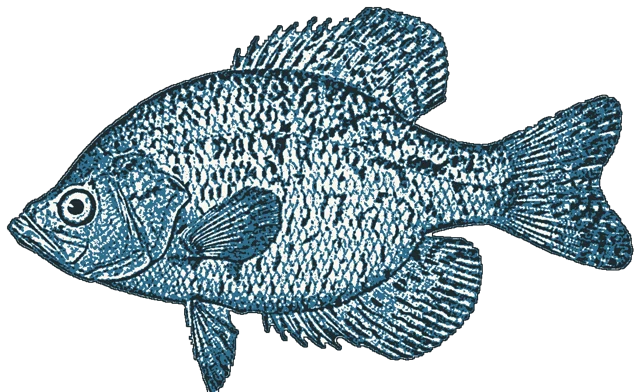
Black crappie
Pomoxis nigromaculatus · Freshwater
One of the classic fish-fry fish: MeatEater counts crappie among the best-eating fish in freshwater.
- Tastes
- mild, sweet, delicate, flaky, white
- Limits
- Light regs. Statewide 37 white and/or black crappie combined, no size limit. Lake Texoma: 37 combined, 10 in minimum. 15 per day and 10 in minimum: Fort Gibson, Grand Lake (including tributaries upstream to the state line and below Pensacola Dam to the SH 82 bridge), Tenkiller (Horseshoe Bend boat ramp downstream to the dam), Arbuckle and Hudson. 20 per day: Eufaula, Atoka. No daily limit at Boomer, Dahlgren, Holdenville, Purcell, Shell, Wewoka and the Close To Home waters. Blue River PFHA: 6 per day, no size limit. Other listed waters differ. (2026-27 ODWC regulations; web pages and PDF checked Nov 21, 2026) Source
- Best months
- A favorite winter fish and caught year-round (ODWC). Pre-spawn staging as water warms from 45-55F, spawning at 55-65F; best bank fishing April and May.
- Where
- Lakes with standing timber and brush; ODWC lists crappie at Texoma, Eufaula, Grand, Tenkiller, Broken Bow, Murray, Kaw, Skiatook, Fort Gibson and Canton.
- live minnows
- hair jigs
- tube jigs
- soft-plastic swimbaits
- curly tail grubs
- inline spinners
- Limit (sensitive group: women of child-bearing age, pregnant or nursing, children to 15), mercury, 2 meals a month: any black crappie from Birch or Hugo; 9 in and over from Bixhoma or Sportsman; 10 in and over from Pine Creek; 11 in and over from Clayton; 12 in and over from Carl Albert; 13 in and over from Broken Bow or Wister.
Meal limits and other waters (5)
- Limit (Tar Creek area residents), lead: 14 meals a month of crappie with bones from the mill ponds (DEQ poster, 2008).
- Everyone else: no advisory at those lakes.
- DEQ lists black crappie among its lower-mercury choices unless a lake has its own advisory.
- Sampled and safe to eat for mercury (DEQ): Eufaula, Tenkiller, Grand, Keystone, Sardis, Fort Gibson and Canton, among others.
- DEQ mercury guide, May 2026 (a meal is 8 oz).
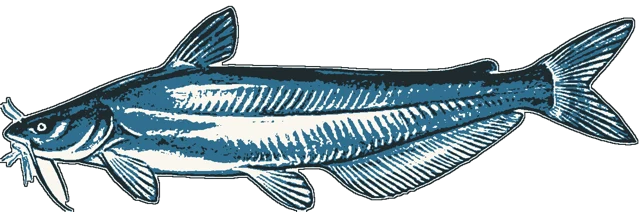
Blue catfish
Ictalurus furcatus · Freshwater
TPWD calls it an excellent food fish; Maryland DNR says blues are very good to eat.
- Tastes
- mild, firm
- Limits
- Light regs. Statewide 15 channel and/or blue catfish combined per day, only 1 blue catfish over 30 in; no size limit on channel catfish. WMA ponds, Oklahoma state park ponds, Blue River PFHA, the Wichita Mountains refuge and the small lakes ODWC lists: 6 channel and/or blue catfish combined. Close To Home waters: 3 panfish, rainbow trout and channel catfish combined. Noodling uses the statewide limits. Other listed waters differ. (2026-27 ODWC regulations; web pages and PDF checked Nov 21, 2026) Source
- Best months
- Targeted year-round; some of the biggest fish are caught in the dead of winter (ODWC).
- Where
- Large rivers and major reservoirs with sand, gravel or rock bottoms; ODWC lists blue catfish at Texoma, Eufaula, Grand, Tenkiller, Kaw, Keystone, Skiatook, Sardis and Fort Gibson.
- cut shad
- live shad
- other live or dead natural bait
- crankbaits
- Large, old blue catfish accumulate contaminants; some water bodies have size-based consumption advisories.
- Do not eat (sensitive group: women of child-bearing age, pregnant or nursing, children to 15), mercury: blue catfish over 29 in from Skiatook or over 30 in from Meeker.
- Do not eat catfish from Bitter Creek (Jackson County) until you ask DEQ at (866) 412-3057: the state lists the creek for DDT and toxaphene in fish, and we couldn't read its meal advice.
Meal limits and other waters (5)
- Limit (sensitive group: women of child-bearing age, pregnant or nursing, children to 15), mercury, 2 meals a month: 20 to 29 in from Skiatook; 20 to 30 in from Meeker; any size from Atoka, Birch or Heyburn; 20 in and over from Frederick; 21 in and over from Holdenville or Stanley Draper; 24 in and over from Coalgate; 26 in and over from Wister; 27 in and over from Hugo or Sportsman; 30 in and over from Kaw; 32 in and over from Keystone.
- Limit (everyone else), mercury, 2 meals a month: 29 in and over from Skiatook or 30 in and over from Meeker.
- Limit (Tar Creek area residents), lead: 9 meals a month of blue catfish with bones from the Spring River (unrestricted for others, and for all at Grand Lake and on the Neosho).
- Sampled and safe to eat for mercury (DEQ): Eufaula, Tenkiller, Texoma, Sardis and Fort Gibson, among others.
- DEQ mercury guide, May 2026 (a meal is 8 oz).
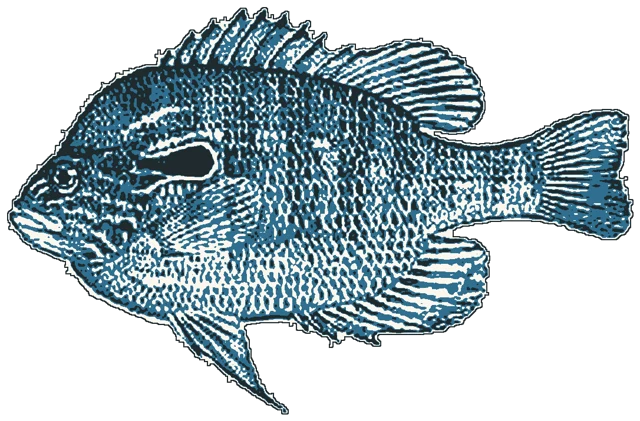
Bluegill
Lepomis macrochirus · Freshwater
MeatEater calls the flesh light, delicate and sweet; the original fish-fry panfish.
- Tastes
- mild, sweet, firm, flaky
- Limits
- No limits. No statewide daily or size limit listed for sunfish. Rivers and streams: ODWC's Rivers & Streams rules make it unlawful to take or possess more than 25 nongame fish harvested from a river or stream, and ODWC counts every species not on its game fish list, this one included, as nongame; the statewide table words the 25 cap as nongame bait fish. Close To Home waters (45 ponds and small lakes) have a combined limit of 3 panfish, rainbow trout and channel catfish per person per day. Other listed waters may differ. (2026-27 ODWC regulations; web pages and PDF checked Nov 21, 2026) Source
- Best months
- May and June are the top months for spawning sunfish (ODWC); good from late spring to late fall, with most fish in shallow water April to mid-June.
- Where
- Statewide in nearly every lake and pond; ODWC lists bluegill at Eufaula, Tenkiller, Broken Bow, Murray, Sardis and Fort Gibson.
- worms
- nightcrawlers
- corn kernels
- crickets and grasshoppers
- Crappie Nibbles
- small minnows
- Limit (Tar Creek area residents), lead, bluegill with bones: 2 meals a month from the mill ponds, 5 from the Spring River.
Meal limits and other waters (6)
- Limit (everyone else), lead, bluegill with bones: 5 meals a month from the mill ponds, 8 from the Spring River.
- Limit (sensitive group: women of child-bearing age, pregnant or nursing, children to 15), mercury: 2 meals a month of bluegill 7 in and over from Bixhoma, Broken Bow or Rush.
- Unrestricted for lead at Grand Lake and on the Neosho River.
- DEQ lists bluegill among its lower-mercury choices unless a lake has its own advisory.
- Sampled and safe to eat for mercury (DEQ): Eufaula, Tenkiller, Grand, Sardis, Murray and Skiatook, among others.
- DEQ mercury guide, May 2026 (a meal is 8 oz).
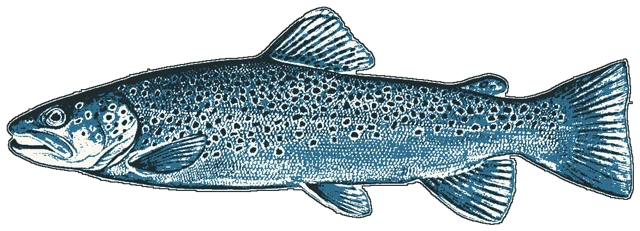
Brown trout
Salmo trutta · Freshwater
Good trout eating like rainbows; most kept browns are stocked fish.
- Tastes
- mild to rich, flaky
- Limits
- Heavy regs. Statewide trout areas: 3 rainbow and brown trout combined, no minimum size except on parts of the Lower Illinois and Lower Mountain Fork, one rod during trout season, no culling, no snagging; possession in the field is one daily limit, then 6 after the first day. Lower Mountain Fork River (barbless hooks only): Area 1 (spillway to the Old State Park Dam) 3 combined, only 1 of them a rainbow over 25 in and only 1 of them a brown, and that brown must be over 30 in; Area 2 (Old State Park Dam to the US 70 bridge) 1 rainbow that must be over 25 in and 1 brown that must be over 30 in, counted toward the 3. Lower Illinois River: 3 trout, only 1 a brown over 20 in; from the USGS stream gauge to Gravel Pit County Road, 1 trout, 20 in minimum; in the Watts unit from the stream gauge to E 1000 Rd, flies and artificial lures with barbless hooks only. Blue River catch-and-release area Nov. 1 through the end of February: flies and artificial lures with barbless hooks only. Other trout areas differ. Possession limit for brown trout is 1 at the Lower Mountain Fork and Lower Illinois rivers. (2026-27 ODWC regulations; web pages and PDF checked Nov 21, 2026) Source
- Best months
- Best on overcast days, early morning and at night; most active when water is 50-60F (ODWC). No spawning documented in Oklahoma waters.
- Where
- Stocked when available in the Lower Mountain Fork River below Broken Bow Lake and the Lower Illinois River below Tenkiller; ODWC has temporarily suspended trout stocking on the Lower Illinois (notice checked Nov. 21, 2026).
- artificial flies
- the same methods used for rainbow trout
Before you eat it: Brown trout is not named in the DEQ 2026 mercury guide, which lists rainbow trout among its lower-mercury choices. DEQ's advice for every water: eat younger, smaller, non-predatory fish.
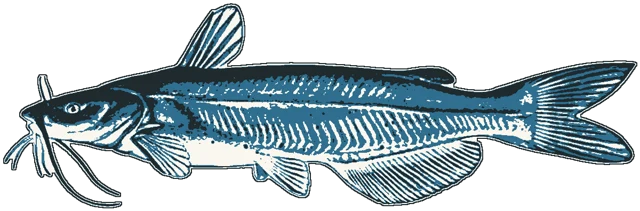
Channel catfish
Ictalurus punctatus · Freshwater
Very good to eat (Maryland DNR) and delicious when cooked (TPWD), and the basis of US catfish farming.
- Tastes
- mild, sweet, firm, moist
- Limits
- Light regs. Statewide 15 channel and/or blue catfish combined per day, only 1 blue catfish over 30 in; no size limit on channel catfish. WMA ponds, Oklahoma state park ponds, Blue River PFHA, the Wichita Mountains refuge and the small lakes ODWC lists: 6 channel and/or blue catfish combined. Close To Home waters: 3 panfish, rainbow trout and channel catfish combined. Noodling uses the statewide limits. Other listed waters differ. (2026-27 ODWC regulations; web pages and PDF checked Nov 21, 2026) Source
- Best months
- Pre-spawn from late April into May along dam riprap; spawning late May into July (ODWC). More active at night.
- Where
- Statewide; best along dam riprap and creek channels (ODWC). Listed at Eufaula, Grand, Tenkiller, Broken Bow, Murray, Kaw, Keystone, Skiatook, Sardis, Fort Gibson and Canton.
- worm and bobber
- punch bait
- stink bait
- cut bait
- dough bait
- Do not eat (anyone), mercury: channel catfish over 22 in from Sardis or over 26 in from Heyburn.
- Do not eat (sensitive group: women of child-bearing age, pregnant or nursing, children to 15): over 17 in from Sardis or over 22 in from Heyburn.
- Do not eat catfish from Bitter Creek (Jackson County) until you ask DEQ at (866) 412-3057: the state lists the creek for DDT and toxaphene in fish, and we couldn't read its meal advice.
Meal limits and other waters (6)
- Limit (sensitive group: women of child-bearing age, pregnant or nursing, children to 15), mercury, 2 meals a month: under 17 in from Sardis; under 22 in from Heyburn; any size from Carl Albert, Dripping Springs, Hugo or Pine Creek; 21 in and over from Okemah; 22 in and over from Waurika; 24 in and over from Shell.
- Limit (everyone else), mercury, 2 meals a month: 17 to 22 in from Sardis or 22 to 26 in from Heyburn.
- Limit (Tar Creek area residents), lead: 9 meals a month of channel catfish with bones from the Spring River (unrestricted for others).
- DEQ lists channel catfish among its lower-mercury choices unless a lake has its own advisory.
- Sampled and safe to eat for mercury (DEQ): Eufaula, Tenkiller, Texoma, Grand, Kaw, Keystone, Murray, Fort Gibson, Canton and Broken Bow, among others.
- DEQ mercury guide, May 2026 (a meal is 8 oz).
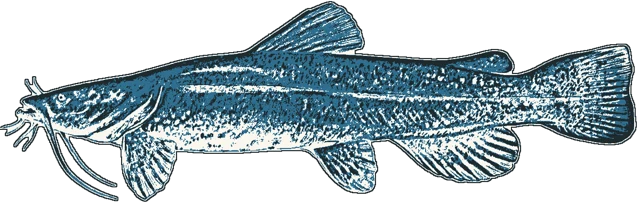
Flathead catfish
Pylodictis olivaris · also called mud-cats · Freshwater
Widely considered the best-tasting catfish because it eats live fish instead of scavenging; Maryland DNR notes its mild, white flesh.
- Tastes
- mild, clean, firm, white
- Limits
- Heavy regs. Statewide 5 per day, no size limit (noodling uses the same limit). Lake Texoma: 5 per day, 20 in minimum. Speargun taking of flatheads is closed June 15 through July 15 on Tenkiller from the Horseshoe Bend boat ramp to the dam. Other listed waters differ. (2026-27 ODWC regulations; web pages and PDF checked Nov 21, 2026) Source
- Where
- Most large impoundments and streams, near brushy tangles, submerged logs and undercut banks; ODWC lists them at Texoma, Eufaula, Grand, Tenkiller, Broken Bow, Kaw, Keystone, Skiatook and Fort Gibson.
- live bluegill
- Do not eat (anyone), mercury: flathead over 39 in from Stanley Draper or over 40 in from Wayne Wallace.
- Do not eat (sensitive group: women of child-bearing age, pregnant or nursing, children to 15): over 23 in from Skiatook or Stanley Draper; over 27 in from Heyburn or Wayne Wallace; over 28 in from Broken Bow or Pine Creek; over 29 in from Sardis; over 30 in from Okemah; over 34 in from Lone Chimney or Talawanda 2; over 37 in from Shawnee Twin 1 or 2.
- Do not eat catfish from Bitter Creek (Jackson County) until you ask DEQ at (866) 412-3057: the state lists the creek for DDT and toxaphene in fish, and we couldn't read its meal advice.
- The Tar Creek lead limits name blue and channel catfish, not flathead; for fish they do not name, DEQ's 2003 advice was to avoid whole fish there.
Meal limits and other waters (6)
- Limit (sensitive group: women of child-bearing age, pregnant or nursing, children to 15), 2 meals a month: smaller flathead from those lakes (from 17 in at Stanley Draper, 19 in at Sardis and Lone Chimney, 20 in at Okemah, 21 in at Talawanda 2, 23 in at Shawnee Twin, any size at the rest); any size from Birch, Dripping Springs or McGee Creek; under 38 in from Okmulgee (the guide has no line for bigger ones: ask DEQ, (866) 412-3057).
- Limit (sensitive group), 2 meals a month: bigger flathead (from 20 to 46 in and over) from 25 more lakes, all named on this page, with Eufaula (26 in), Tenkiller (27), Keystone (28) and Kaw (30) among them.
- Limit (everyone else), 2 meals a month: 23 in and over from Skiatook; 23 to 39 in from Stanley Draper; 27 in and over from Heyburn; 27 to 40 in from Wayne Wallace; 28 in and over from Broken Bow or Pine Creek (the Pine Creek line stops at no advisory under 28 in); 29 in and over from Sardis; 30 in and over from Okemah; 34 in and over from Lone Chimney or Talawanda 2; 37 in and over from Shawnee Twin.
- Limit (sensitive group), statewide: 1 meal a week of predator fish in all, flathead included, from any lake, pond or stream where DEQ has not tested it.
- Sampled and safe to eat for mercury (DEQ): Texoma, Fort Gibson and Canton, among others.
- Other listed lakes differ (DEQ mercury guide, May 2026; a meal is 8 oz).
Hybrid striped bass
Morone saxatilis x M. chrysops · Freshwater
Indiana DNR says hybrids make great table fare; mild white fillets like a striper's.
- Tastes
- mild, firm, white
- Limits
- Light regs. Statewide 20 per day, only 5 over 20 in. Lake Texoma: 10 striped bass and/or hybrids combined, only 2 of them 20 in or longer. Arcadia and Skiatook: 5 striped bass and/or hybrids combined, only 2 of them 20 in or longer. No culling. Other listed waters differ. (2026-27 ODWC regulations; web pages and PDF checked Nov 21, 2026) Source
- Best months
- May shad spawn and fall pre-winter gorge (ODWC angler guide, June 13, 2024)
- Where
- Stocked lakes statewide, including Sooner, Grand, Heyburn, Atoka, Fort Cobb and Waurika (ODWC); also Skiatook, Broken Bow, Kaw, Fort Gibson and Canton.
- lipless crankbaits
- swimbaits
- lipped crankbaits
- marabou jigs
- curly tail grubs
- live minnow or shad
- Limit (sensitive group: women of child-bearing age, pregnant or nursing, children to 15), mercury, 2 meals a month: any hybrid from Sahoma; 15 in and over from Birch; 18 in and over from Skiatook; 29 in and over from Overholser.
Meal limits and other waters (4)
- Limit (sensitive group), statewide: 1 meal a week of predator fish in all, hybrids included, from any lake, pond or stream where DEQ has not tested it.
- Everyone else: no advisory at those four lakes.
- Sampled and safe to eat for mercury (DEQ): Fort Gibson, Hudson, Robert S. Kerr, Carl Blackwell and Sooner.
- DEQ mercury guide, May 2026 (a meal is 8 oz).
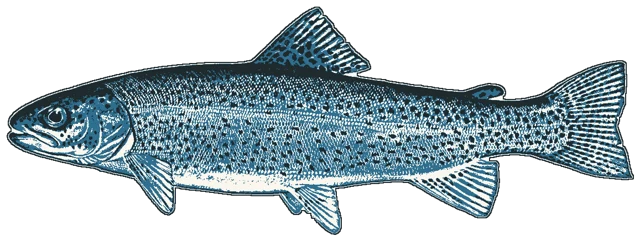
Rainbow trout
Oncorhynchus mykiss · Freshwater
TPWD calls rainbow trout an excellent fish to eat; the most-stocked put-and-take fish in America.
- Tastes
- mild, clean, delicate, flaky
- Limits
- Heavy regs. Statewide trout areas: 3 rainbow and brown trout combined, no minimum size except on parts of the Lower Illinois and Lower Mountain Fork, one rod during trout season, no culling, no snagging; possession in the field is one daily limit, then 6 after the first day. Lower Mountain Fork River (barbless hooks only): Area 1 (spillway to the Old State Park Dam) 3 combined, only 1 of them a rainbow over 25 in and only 1 of them a brown, and that brown must be over 30 in; Area 2 (Old State Park Dam to the US 70 bridge) 1 rainbow that must be over 25 in and 1 brown that must be over 30 in, counted toward the 3. Lower Illinois River: 3 trout, only 1 a brown over 20 in; from the USGS stream gauge to Gravel Pit County Road, 1 trout, 20 in minimum; in the Watts unit from the stream gauge to E 1000 Rd, flies and artificial lures with barbless hooks only. Blue River catch-and-release area Nov. 1 through the end of February: flies and artificial lures with barbless hooks only. Other trout areas differ. (2026-27 ODWC regulations; web pages and PDF checked Nov 21, 2026) Source
- Best months
- ODWC lists year-round stocking for the Lower Mountain Fork; it has temporarily suspended stocking on the Lower Illinois (ODWC notice, checked Nov. 21, 2026). Blue River, Sunset Lake and the Carl Blackwell Turtle Pond are stocked Nov. 1 through March 31, Robbers Cave and Medicine Creek Nov. 1 through March 15, OKC and Jenks ponds Dec. through Feb. Early morning and late afternoon are favored.
- Where
- Lower Mountain Fork River below Broken Bow Dam; Lower Illinois River below Tenkiller Dam; Blue River; Robbers Cave; Sunset Lake (Guymon); Medicine Creek; Lake Carl Blackwell Turtle Pond; Close To Home sites.
- whole-kernel corn
- cheese
- salmon eggs
- worms
- small spinners
- spoons
Before you eat it: DEQ's 2026 mercury guide lists rainbow trout among its lower-mercury choices unless a lake has its own advisory, and it has no lake-specific trout line.
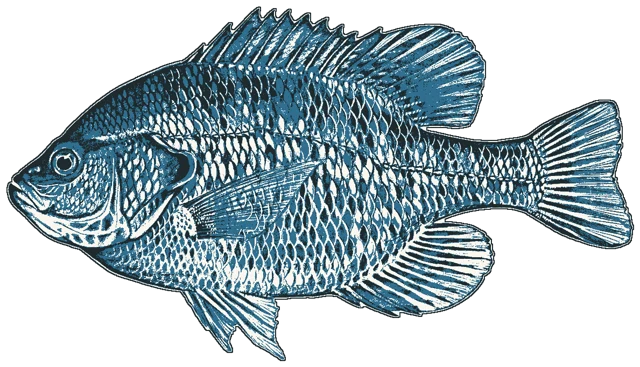
Redear sunfish
Lepomis microlophus · Freshwater
Larger than bluegill, with the same sweet fillets; Indiana DNR calls sunfish, redear included, delicious fish.
- Tastes
- mild, sweet, firm, flaky
- Limits
- No limits. No statewide daily or size limit listed for sunfish. Rivers and streams: ODWC's Rivers & Streams rules make it unlawful to take or possess more than 25 nongame fish harvested from a river or stream, and ODWC counts every species not on its game fish list, this one included, as nongame; the statewide table words the 25 cap as nongame bait fish. Close To Home waters (45 ponds and small lakes) have a combined limit of 3 panfish, rainbow trout and channel catfish per person per day. Other listed waters may differ. (2026-27 ODWC regulations; web pages and PDF checked Nov 21, 2026) Source
- Best months
- May and June are the top months for spawning sunfish (ODWC); good from late spring to late fall, with most fish in shallow water April to mid-June.
- Where
- Statewide in nearly every lake and pond; ODWC lists redear sunfish at Eufaula, Tenkiller, Broken Bow and Fort Gibson.
- worms
- nightcrawlers
- corn kernels
- crickets and grasshoppers
- Crappie Nibbles
- small minnows
- Limit (sensitive group: women of child-bearing age, pregnant or nursing, children to 15), mercury, 2 meals a month: redear 8 in and over from McGee Creek, or 9 in and over from Ozzie Cobb.
Meal limits and other waters (5)
- Limit, lead: the Tar Creek area sunfish limits (2 meals a month with bones from the mill ponds and 5 from the Spring River for area residents, 5 and 8 for everyone else) name bluegill, green and hybrid sunfish, not redear.
- Everyone else: no mercury advisory at those two lakes.
- DEQ names redear among the fish known to have less mercury.
- Sampled and safe to eat for mercury (DEQ): Eufaula, Grand, Murray and Broken Bow, among others.
- DEQ mercury guide, May 2026 (a meal is 8 oz).
Sauger
Sander canadensis · Freshwater
The walleye's smaller river cousin, with the same fillets; MeatEater says they taste just as good.
- Tastes
- mild, clean, firm, flaky white
- Limits
- Light regs. Statewide 6 walleye, sauger and/or saugeye combined, 14 in minimum. 16 in minimum: Arkansas River from Keystone Dam to the state line (including reservoirs and unimpounded tributaries), Lower Illinois River (Tenkiller Dam to the Arkansas River), Robert S. Kerr, W.D. Mayo and Webbers Falls. 18 in minimum: Carl Blackwell, Ponca, Thunderbird, Sooner. Great Salt Plains: 6, no size limit. Other listed waters differ. (2026-27 ODWC regulations; web pages and PDF checked Nov 21, 2026) Source
- Where
- Primarily rivers and streams, preferring the clear eastern rivers: Poteau, Illinois, Red and Neosho; listed on the Lower Illinois River page.
- grubs
- swimbaits
Before you eat it: DEQ's 2026 mercury guide has no sauger line, and its list of predator fish names walleye and saugeye but not sauger. DEQ's advice for every water: eat younger, smaller, non-predatory fish. Ask DEQ about sauger at (866) 412-3057 or [email protected].
Saugeye
Sander vitreus x S. canadensis · Freshwater
Oklahoma's wildlife department says saugeye make first-class table fare.
- Tastes
- mild, clean, firm, flaky white
- Limits
- Light regs. Statewide 6 walleye, sauger and/or saugeye combined, 14 in minimum. 16 in minimum: Arkansas River from Keystone Dam to the state line (including reservoirs and unimpounded tributaries), Lower Illinois River (Tenkiller Dam to the Arkansas River), Robert S. Kerr, W.D. Mayo and Webbers Falls. 18 in minimum: Carl Blackwell, Ponca, Thunderbird, Sooner. Great Salt Plains: 6, no size limit. Other listed waters differ. (2026-27 ODWC regulations; web pages and PDF checked Nov 21, 2026) Source
- Best months
- Winter at Thunderbird from dusk to about two hours after sunset (ODWC).
- Where
- Stocked lakes including Thunderbird, Carl Blackwell, Sooner, Fort Cobb, Lawtonka, Tom Steed, Atoka and Great Salt Plains.
- jigs
- jig-and-minnow combinations
- crankbaits
- shallow-running minnow baits retrieved slowly
- Limit (sensitive group: women of child-bearing age, pregnant or nursing, children to 15), mercury, 2 meals a month: saugeye 19 in and over from Lawtonka; 21 in and over from Jean Neustadt or Shawnee Twin 1 or 2; 22 in and over from Pawnee or Thunderbird; 23 in and over from Carl Blackwell.
Meal limits and other waters (4)
- Limit (sensitive group), statewide: 1 meal a week of predator fish in all, saugeye included, from any lake, pond or stream where DEQ has not tested it.
- Everyone else: no advisory at those lakes.
- Sampled and safe to eat for mercury (DEQ): Arcadia, El Reno, Ponca, Tom Steed, Waurika and Wewoka.
- DEQ mercury guide, May 2026 (a meal is 8 oz).
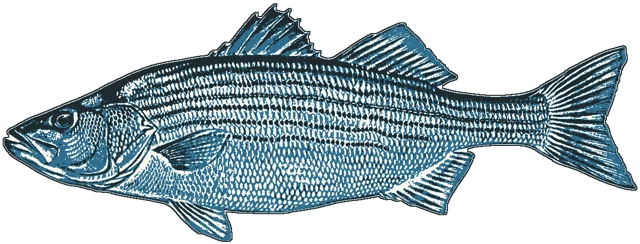
Striped bass
Morone saxatilis · Freshwater
Firm, large-flaked, slightly sweet white meat; one of the most kept and eaten gamefish in the country, fresh or salt.
- Tastes
- mild, slightly sweet, firm, large flakes
- Limits
- Heavy regs. Statewide 5 per day except Lake Texoma, no size limit. Lake Texoma: 10 striped bass and/or hybrids combined, only 2 of them 20 in or longer. Arcadia and Skiatook: 5 striped bass and/or hybrids combined, only 2 of them 20 in or longer. Sooner Lake: 5 per day, 20 in minimum. No culling: a striped bass on a stringer or in a livewell cannot be released. The Arkansas River listing sets no striped bass rule of its own. Other listed waters differ. (2026-27 ODWC regulations; web pages and PDF checked Nov 21, 2026) Source
- Best months
- May shad spawn and fall pre-winter gorge (ODWC angler guide, June 13, 2024); June at Texoma (Game & Fish, Mar 19, 2019)
- Where
- Lake Texoma, Keystone Lake and the Arkansas River Navigation System (naturally reproducing); also on ODWC species lists for Kaw, Lower Illinois River and Keystone.
- live shad
- live eels (coastal)
- cut bait
- bucktail jig
- silver spoon
- swimbait
- Consumption advisories for striped bass vary from state to state (NOAA).
- Limit (sensitive group: women of child-bearing age, pregnant or nursing, children to 15), mercury: 2 meals a month of striped bass 30 in and over from Texoma.
Meal limits and other waters (4)
- Limit (sensitive group), statewide: 1 meal a week of predator fish in all, striped bass included, from any lake, pond or stream where DEQ has not tested it.
- Everyone else: no advisory at Texoma.
- Sampled and safe to eat for mercury (DEQ): Keystone and Robert S. Kerr.
- DEQ mercury guide, May 2026 (a meal is 8 oz).
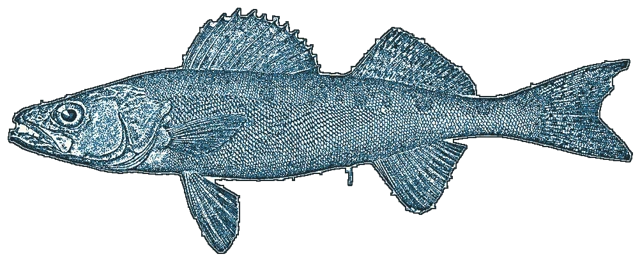
Walleye
Sander vitreus · Freshwater
Widely rated the best-eating freshwater fish: Maryland DNR calls it one of the best tasting, TPWD an excellent food fish.
- Tastes
- mild, clean, firm, tender, flaky white
- Limits
- Light regs. Statewide 6 walleye, sauger and/or saugeye combined, 14 in minimum. 16 in minimum: Arkansas River from Keystone Dam to the state line (including reservoirs and unimpounded tributaries), Lower Illinois River (Tenkiller Dam to the Arkansas River), Robert S. Kerr, W.D. Mayo and Webbers Falls. 18 in minimum: Carl Blackwell, Ponca, Thunderbird, Sooner. Great Salt Plains: 6, no size limit. Other listed waters differ. (2026-27 ODWC regulations; web pages and PDF checked Nov 21, 2026) Source
- Best months
- Walleye spawn in early March on rip-rap, when jigs work well; ODWC names late February and March at Waurika and March and November at Hefner.
- Where
- Western half of the state is best (ODWC); Canton, Skiatook, Murray, Broken Bow, Sardis and Tenkiller list walleye, and Kaw is stocked. Rip-rap on dams in spring; tailwaters in heavy flow.
- jigs
- jig-and-minnow combinations
- deep-diving crankbaits
- stick baits with jig-and-grub combinations
- Do not eat (sensitive group: women of child-bearing age, pregnant or nursing, children to 15), mercury: walleye over 17 in from Broken Bow.
Meal limits and other waters (5)
- Limit (sensitive group): 2 meals a month of walleye under 17 in from Broken Bow.
- Limit (everyone else): 2 meals a month of walleye 17 in and over from Broken Bow.
- Limit (sensitive group), statewide: 1 meal a week of predator fish in all, walleye included, from any lake, pond or stream where DEQ has not tested it.
- Sampled and safe to eat for mercury (DEQ): Canton, Fort Supply and Stanley Draper.
- DEQ mercury guide, May 2026 (a meal is 8 oz).
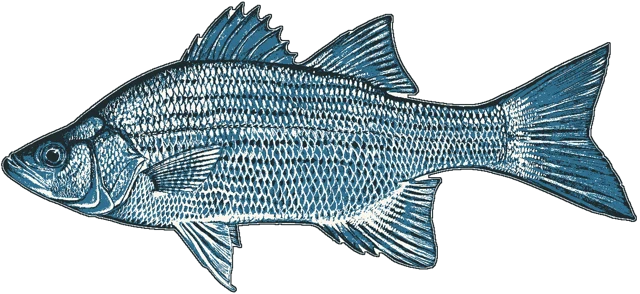
White bass
Morone chrysops · also called sand bass · Freshwater
Texas Parks & Wildlife calls white bass superb table fare, and the spring runs fill a lot of coolers; light, flaky meat like walleye.
- Tastes
- mild, light, flaky
- Limits
- No limits. No statewide daily or size limit. Lake Texoma: 25 per day, no size limit. ODWC says most Oklahoma waters have no creel limit. Other listed waters differ. (2026-27 ODWC regulations; web pages and PDF checked Nov 21, 2026) Source
- Best months
- Mid-March through early May is the best window, once water reaches 50F (peak near 55F) (ODWC).
- Where
- Statewide; ODWC lists it at Texoma, Eufaula, Grand, Tenkiller, Broken Bow, Murray, Kaw, Keystone, Sardis, Fort Gibson and Canton. Look for gulls working over shad and creek mouths.
- curly tail grubs
- inline spinners
- spoons
- slabs
- lipless crankbaits
- hair jigs
- Do not eat (anyone), mercury: white bass over 14 in from McGee Creek or over 16 in from Hugo.
- Do not eat (sensitive group: women of child-bearing age, pregnant or nursing, children to 15): over 12 in from Hugo or McGee Creek; over 13 in from Broken Bow; over 16 in from McMurtry; over 19 in from Tom Steed.
Meal limits and other waters (6)
- Limit (sensitive group), 2 meals a month: smaller ones from Hugo, McGee Creek, Broken Bow or McMurtry; any size from Frederick, Lone Chimney or Skiatook; 10 in and over from Dripping Springs; 12 in and over from Arbuckle or Stanley Draper; 13 in and over from Fort Supply; 14 to 19 in from Tom Steed; 15 in and over from Keystone, Lawtonka or Tenkiller.
- Limit (everyone else), 2 meals a month: any under 14 in from McGee Creek; 12 to 16 in from Hugo; 13 in and over from Broken Bow; 19 in and over from Tom Steed.
- Limit (sensitive group), statewide: 1 meal a week of predator fish in all, white bass included, from any lake, pond or stream where DEQ has not tested it.
- Limit (Tar Creek area residents), lead: 14 meals a month of white bass with bones from the mill ponds.
- Sampled and safe to eat for mercury (DEQ): Eufaula, Kaw, Texoma, Grand, Sardis, Fort Gibson and Canton, among others.
- DEQ mercury guide, May 2026 (a meal is 8 oz).
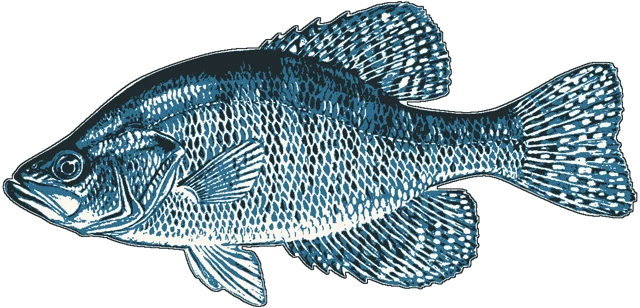
White crappie
Pomoxis annularis · Freshwater
Same top-tier panfish fillets as black crappie; one of the most popular panfish in the country.
- Tastes
- mild, sweet, delicate, flaky, white
- Limits
- Light regs. Statewide 37 white and/or black crappie combined, no size limit. Lake Texoma: 37 combined, 10 in minimum. 15 per day and 10 in minimum: Fort Gibson, Grand Lake (including tributaries upstream to the state line and below Pensacola Dam to the SH 82 bridge), Tenkiller (Horseshoe Bend boat ramp downstream to the dam), Arbuckle and Hudson. 20 per day: Eufaula, Atoka. No daily limit at Boomer, Dahlgren, Holdenville, Purcell, Shell, Wewoka and the Close To Home waters. Blue River PFHA: 6 per day, no size limit. Other listed waters differ. (2026-27 ODWC regulations; web pages and PDF checked Nov 21, 2026) Source
- Best months
- A favorite winter fish and caught year-round (ODWC). Pre-spawn staging as water warms from 45-55F, spawning at 55-65F; best bank fishing April and May.
- Where
- Lakes with standing timber and brush; ODWC lists crappie at Texoma, Eufaula, Grand, Tenkiller, Broken Bow, Murray, Kaw, Skiatook, Fort Gibson and Canton.
- live minnows
- hair jigs
- tube jigs
- soft-plastic swimbaits
- curly tail grubs
- inline spinners
- Do not eat (sensitive group: women of child-bearing age, pregnant or nursing, children to 15), mercury: white crappie over 11 in from McGee Creek.
- Limit (sensitive group), 2 meals a month: under 11 in from McGee Creek; any size from Broken Bow; any size from Ozzie Cobb (the guide gives two conflicting lines for fish under 11 in and none for bigger ones); 9 in and over from Okemah; 10 in and over from Pine Creek; 12 in and over from Heyburn or Wister; 13 in and over from Kaw or Stroud; 14 in and over from Carlton or Hulah.
Meal limits and other waters (5)
- Limit (everyone else), 2 meals a month: 11 in and over from McGee Creek.
- Limit (Tar Creek area residents), lead: 14 meals a month of crappie with bones from the mill ponds (DEQ poster, 2008).
- DEQ lists white crappie among its lower-mercury choices unless a lake has its own advisory.
- Sampled and safe to eat for mercury (DEQ): Eufaula, Tenkiller, Keystone, Sardis, Fort Gibson, Grand and Canton, among others.
- DEQ mercury guide, May 2026 (a meal is 8 oz).
Alligator gar
Atractosteus spatula · Freshwater
The gar people actually keep for meat in Texas and Louisiana, but it is armored, hard to clean and still widely seen as trash.
Worth a try: Cut down the back with shears or a hatchet to get past the armored scales, take the two white backstraps, and fry them or grind them into Louisiana gar balls.
- Tastes
- mild, firm, lean, stringy in large fish
- Limits
- Heavy regs. 1 per day, no size limit, statewide. The attempt to take or harvest alligator gar is prohibited statewide May 1-31. Harvest must be reported within 24 hours through E-Check. Legal by rod and reel, trotline and throwline; gar taken by bow, gig, spear or speargun cannot be released. Lower Red River and Texoma: same reporting; on the Texas side of the Red River and Lake Texoma no one may take or possess alligator gar in May. (2026-27 ODWC regulations; web pages and PDF checked Nov 21, 2026) Source
- Where
- Lake Texoma and the Red River and its tributaries (ODWC).
- Gar eggs (roe) are toxic to people and other warm-blooded animals; never eat them (Maryland DNR).
Before you eat it: Not named in the DEQ 2026 mercury guide or the Tar Creek lead advisory. DEQ's advice for every water: eat younger, smaller, non-predatory fish.
Bigmouth buffalo
Ictiobus cyprinellus · Freshwater
A food fish many people consider worth keeping despite its many bones (TPWD), but and rarely caught on hook and line, so most anglers write it off as a rough fish.
Worth a try: TPWD says many people consider it quite a food fish despite its many bones; smoke it, or fry the rib sections.
- Tastes
- mild, rich, firm, bony
- Limits
- No limits. No daily or size limit listed in the statewide table for species not named in it. Rivers and streams: ODWC's Rivers & Streams rules make it unlawful to take or possess more than 25 nongame fish harvested from a river or stream, and ODWC counts every species not on its game fish list, this one included, as nongame; the statewide table words the 25 cap as nongame bait fish. For species of special concern (alligator gar, black buffalo, blue sucker, brown bullhead, chain pickerel, mooneye, shorthead redhorse, shovelnose sturgeon and others on the list) the limit is 1 with harvest reporting. Black buffalo, a different fish, is a species of special concern with a limit of 1 and a harvest report. Gigs and spears are legal for nongame fish year-round in reservoirs but only Dec. 1 through March 31 in rivers and streams (gigs year-round in Delaware and Mayes counties); snagging is legal year-round for nongame fish, but closed 10 p.m. to 6 a.m. east of I-35 and north of I-40 except at Miami City Park. Other listed waters differ. (2026-27 ODWC regulations; web pages and PDF checked Nov 21, 2026) Source
- Where
- Records from Greenleaf Lake.
- dough baits (cottonseed meal)
- bowfishing
- Not named in the DEQ mercury guide (May 2026); the Tar Creek lead limits name smallmouth buffalo (3 meals a month with bones from the Spring River, 6 from Grand Lake and 8 from the Neosho River for area residents; 5 and 11 for everyone else at the first two).
- People who want less lead should eat portions without bones or skin there (DEQ).
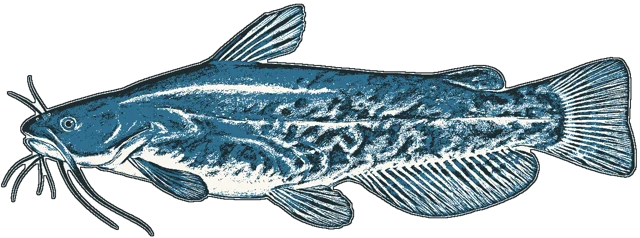
Bullhead (black, brown, yellow)
Ameiurus melas, A. nebulosus, A. natalis · Freshwater
Sweet, delicious catfish meat, but most are small and many come from warm, muddy water, so many anglers dismiss them.
- Tastes
- mild, sweet, firm, moist
- Limits
- No limits. No daily or size limit listed in the statewide table for species not named in it. Rivers and streams: ODWC's Rivers & Streams rules make it unlawful to take or possess more than 25 nongame fish harvested from a river or stream, and ODWC counts every species not on its game fish list, this one included, as nongame; the statewide table words the 25 cap as nongame bait fish. For species of special concern (alligator gar, black buffalo, blue sucker, brown bullhead, chain pickerel, mooneye, shorthead redhorse, shovelnose sturgeon and others on the list) the limit is 1 with harvest reporting. Brown bullhead is a species of special concern: limit 1, harvest reported. Gigs and spears are legal for nongame fish year-round in reservoirs but only Dec. 1 through March 31 in rivers and streams (gigs year-round in Delaware and Mayes counties); snagging is legal year-round for nongame fish, but closed 10 p.m. to 6 a.m. east of I-35 and north of I-40 except at Miami City Park. Other listed waters differ. (2026-27 ODWC regulations; web pages and PDF checked Nov 21, 2026) Source
- Where
- Black bullhead in slow, muddy lakes, ponds, reservoirs and river sections; yellow bullhead in clear, weedy backwaters and overflow pools (ODWC). Records from Jackson County and Okfuskee County ponds.
- nightcrawlers
- chicken livers
- dough balls
- cut bait
- stinkbait
- Do not eat catfish from Bitter Creek (Jackson County) until you ask DEQ at (866) 412-3057: the state lists the creek for DDT and toxaphene in fish, and we couldn't read its meal advice.
- The Tar Creek lead limits name blue and channel catfish, not bullhead; for fish they do not name, DEQ's 2003 advice was to avoid whole fish there.
Meal limits and other waters (3)
- Limit (sensitive group: women of child-bearing age, pregnant or nursing, children to 15), mercury: 2 meals a month of yellow bullhead 12 in and over from Quanah Parker (everyone else: no advisory).
- Sampled and safe to eat for mercury (DEQ): yellow bullhead at Rush Lake, black bullhead at the Oklahoma City Zoo.
- DEQ mercury guide, May 2026 (a meal is 8 oz).
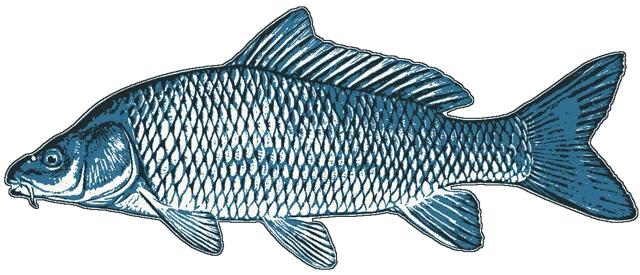
Common carp
Cyprinus carpio · Freshwater
Most US anglers call it a muddy, bony trash fish, but it is a prized food fish in Europe and Asia and eats well from clean, cold water.
Worth a try: Catch from clean water, remove the dark 'mud vein', and either score small fish and fry hard so the Y-bones soften, or hard-smoke large fish over fruitwood (Hank Shaw).
- Tastes
- mild from clean water, strong from muddy water, firm, fatty, Y-bones
- Limits
- No limits. No daily or size limit listed in the statewide table for species not named in it. Rivers and streams: ODWC's Rivers & Streams rules make it unlawful to take or possess more than 25 nongame fish harvested from a river or stream, and ODWC counts every species not on its game fish list, this one included, as nongame; the statewide table words the 25 cap as nongame bait fish. For species of special concern (alligator gar, black buffalo, blue sucker, brown bullhead, chain pickerel, mooneye, shorthead redhorse, shovelnose sturgeon and others on the list) the limit is 1 with harvest reporting. Gigs and spears are legal for nongame fish year-round in reservoirs but only Dec. 1 through March 31 in rivers and streams (gigs year-round in Delaware and Mayes counties); snagging is legal year-round for nongame fish, but closed 10 p.m. to 6 a.m. east of I-35 and north of I-40 except at Miami City Park. Other listed waters differ. (2026-27 ODWC regulations; web pages and PDF checked Nov 21, 2026) Source
- Where
- The state records came from a Grady County pond (rod and reel) and Broken Bow Lake (bow).
- dough balls
- canned corn
- worms
- boilies
- bread
- Limit (Tar Creek area residents), lead, carp with bones: 3 meals a month from the Spring River (9 of boneless fillets), 6 from Grand Lake, 8 from the Neosho River.
Meal limits and other waters (3)
- Limit (everyone else), lead, carp with bones: 5 meals a month from the Spring River, 11 from Grand Lake (Neosho River unrestricted).
- Grand Lake and Neosho limits are from the DEQ poster (2008) and booklet (2010) its Tar Creek page points to.
- Not named in the DEQ mercury guide (May 2026).
Freshwater drum
Aplodinotus grunniens · Freshwater
Many anglers call it a rough fish, but it is prized as food in some areas (TPWD); bled and iced, the boneless fillets eat like a redfish's.
Worth a try: Bleed it, ice it immediately and trim the red lateral meat; then fry thin fillets, grill on the half-shell like redfish, or smoke oily summer fish.
- Tastes
- mild, like other drum, firm but tender, large flake; goes soft if not iced
- Limits
- No limits. No daily or size limit listed in the statewide table for species not named in it. Rivers and streams: ODWC's Rivers & Streams rules make it unlawful to take or possess more than 25 nongame fish harvested from a river or stream, and ODWC counts every species not on its game fish list, this one included, as nongame; the statewide table words the 25 cap as nongame bait fish. For species of special concern (alligator gar, black buffalo, blue sucker, brown bullhead, chain pickerel, mooneye, shorthead redhorse, shovelnose sturgeon and others on the list) the limit is 1 with harvest reporting. Tar Creek lead advisory: Spring River freshwater drum 3 meals/month with bones or 9 boneless for residents of the Tar Creek area, 5 meals/month for non-residents. Gigs and spears are legal for nongame fish year-round in reservoirs but only Dec. 1 through March 31 in rivers and streams (gigs year-round in Delaware and Mayes counties); snagging is legal year-round for nongame fish, but closed 10 p.m. to 6 a.m. east of I-35 and north of I-40 except at Miami City Park. Other listed waters differ. (2026-27 ODWC regulations; web pages and PDF checked Nov 21, 2026) Source
- Where
- Medium to large rivers and lakes at 20-60 ft over sand or gravel; the 38 lb record came from Tenkiller.
- Limit (Tar Creek area residents), lead, drum with bones: 3 meals a month from the Spring River (9 of boneless fillets), 6 from Grand Lake, 8 from the Neosho River.
Meal limits and other waters (3)
- Limit (everyone else), lead, drum with bones: 5 meals a month from the Spring River, 11 from Grand Lake (Neosho River unrestricted).
- Grand Lake and Neosho limits are from the DEQ poster (2008) and booklet (2010) its Tar Creek page points to.
- Not named in the DEQ mercury guide (May 2026).
Grass carp
Ctenopharyngodon idella · Freshwater
TPWD says grass carp are excellent table fare despite their bones, but as a 'carp' most anglers never consider eating one.
Worth a try: Illinois markets grass, silver and bighead carp as 'Copi', which Seafood Watch recommends; score or grind the fillets to deal with the bones.
- Tastes
- mild, clean, firm white, with intermuscular bones
- Limits
- No limits. No daily or size limit listed in the statewide table for species not named in it. Rivers and streams: ODWC's Rivers & Streams rules make it unlawful to take or possess more than 25 nongame fish harvested from a river or stream, and ODWC counts every species not on its game fish list, this one included, as nongame; the statewide table words the 25 cap as nongame bait fish. For species of special concern (alligator gar, black buffalo, blue sucker, brown bullhead, chain pickerel, mooneye, shorthead redhorse, shovelnose sturgeon and others on the list) the limit is 1 with harvest reporting. Gigs and spears are legal for nongame fish year-round in reservoirs but only Dec. 1 through March 31 in rivers and streams (gigs year-round in Delaware and Mayes counties); snagging is legal year-round for nongame fish, but closed 10 p.m. to 6 a.m. east of I-35 and north of I-40 except at Miami City Park. Other listed waters differ. (2026-27 ODWC regulations; web pages and PDF checked Nov 21, 2026) Source
- Where
- Records from Chelsea City Lake and Arbuckle Lake.
- Limit (Tar Creek area residents), lead, carp with bones: 3 meals a month from the Spring River (9 of boneless fillets), 6 from Grand Lake, 8 from the Neosho River.
Meal limits and other waters (3)
- Limit (everyone else), lead, carp with bones: 5 meals a month from the Spring River, 11 from Grand Lake (Neosho River unrestricted).
- DEQ's list says carp without naming the kind.
- Not named in the DEQ mercury guide (May 2026).
Green sunfish
Lepomis cyanellus · Freshwater
Edible like any sunfish but usually stunted; many anglers treat it as a pest that steals bait meant for bigger fish.
- Tastes
- mild, flaky
- Limits
- No limits. No statewide daily or size limit listed for sunfish. Rivers and streams: ODWC's Rivers & Streams rules make it unlawful to take or possess more than 25 nongame fish harvested from a river or stream, and ODWC counts every species not on its game fish list, this one included, as nongame; the statewide table words the 25 cap as nongame bait fish. Close To Home waters (45 ponds and small lakes) have a combined limit of 3 panfish, rainbow trout and channel catfish per person per day. Other listed waters may differ. (2026-27 ODWC regulations; web pages and PDF checked Nov 21, 2026) Source
- Best months
- May and June are the top months for spawning sunfish (ODWC); good from late spring to late fall, with most fish in shallow water April to mid-June.
- Where
- Statewide in nearly every lake and pond; ODWC lists green sunfish at Eufaula, Tenkiller and Fort Gibson.
- worms
- nightcrawlers
- corn kernels
- crickets and grasshoppers
- Crappie Nibbles
- small minnows
- Limit (Tar Creek area residents), lead, green sunfish with bones: 2 meals a month from the mill ponds, 5 from the Spring River.
Meal limits and other waters (5)
- Limit (everyone else), lead, green sunfish with bones: 5 meals a month from the mill ponds, 8 from the Spring River.
- Unrestricted for lead at Grand Lake and on the Neosho River.
- DEQ lists green sunfish among its lower-mercury choices unless a lake has its own advisory.
- Sampled and safe to eat for mercury (DEQ): Eufaula, Lloyd Church, Pawnee and Rush.
- DEQ mercury guide, May 2026 (a meal is 8 oz).
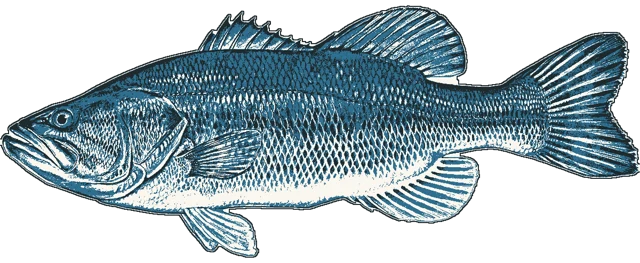
Largemouth bass
Micropterus nigricans (syn. M. salmoides) · Freshwater
Perfectly edible white fillets, but America's top catch-and-release fish and many anglers swear the meat tastes fishy or muddy, so reputation is split.
- Tastes
- mild to slightly 'fishy', firm, thick fillets
- Limits
- Light regs. Lakes and reservoirs: 6 largemouth and/or smallmouth bass combined per day, only 1 over 16 in; no minimum size. Rivers and streams: 6 black bass (largemouth, smallmouth, spotted) combined, only 1 of them a smallmouth, largemouth and smallmouth 14 in or longer. ODWC says the one-over-16 rule does not apply to rivers and streams, Lake Texoma or Doc Hollis Lake. Lake Texoma: 5 black bass combined (spotted included), 14 in minimum for largemouth and smallmouth. Doc Hollis Lake: all largemouth bass must be released. Echota, Stunkard and the Upper Illinois River and tributaries use the river rule. Other listed waters differ. (2026-27 ODWC regulations; web pages and PDF checked Nov 21, 2026) Source
- Spawns
- Spawns April and May in Oklahoma as water reaches 62-65F; ODWC says fish move deeper in hot summer and cold winter.
- Where
- Statewide in ponds, lakes, rivers and streams; ODWC lists it as a species of interest at Texoma, Eufaula, Grand, Tenkiller, Broken Bow, Murray, Keystone, Skiatook, Sardis, Fort Gibson and Canton.
- grasshoppers
- nightcrawlers
- live bait under a bobber or on the bottom
- artificial lures under 3 inches
- Water-body mercury advisories commonly list largemouth bass; check your state's advisory before eating large fish.
- Do not eat (anyone), mercury: largemouth over 19 in from Carl Albert, Clayton or Heyburn, or over 20 in from Okemah.
- Do not eat (sensitive group: women of child-bearing age, pregnant or nursing, children to 15): any largemouth from Bixhoma; over 13 in from Clayton; over 14 in from Carl Albert; over 15 in from Broken Bow or Heyburn; over 16 in from Okmulgee, Ozzie Cobb or Pine Creek; over 17 in from Birch, Lone Chimney, McGee Creek or Okemah; over 18 in from Keystone or Sahoma; over 19 in from Meeker, Stanley Draper or Wetumka; over 21 in from Carlton.
- Limit (sensitive group), 2 meals a month: smaller largemouth from those lakes (none from Bixhoma; no limit under 18 in at Keystone); any size from Cedar (LeFlore County), Coalgate, Dripping Springs, Lloyd Church, Quanah Parker, Rush, Wayne Wallace or Wister; under 18 in from Murray and under 19 in from Sportsman (the guide has no line for bigger ones: ask DEQ, (866) 412-3057).
Meal limits and other waters (6)
- Limit (sensitive group), 2 meals a month: bigger largemouth (from 14 to 24 in and over) from 33 more lakes, all named on this page, with Sardis (16 in), Tenkiller (18), Kaw (20) and Eufaula (22) among them.
- Limit (everyone else), 2 meals a month: 13 to 19 in from Clayton; 14 in and over from Bixhoma; 14 to 19 in from Carl Albert; 15 in and over from Broken Bow; any under 19 in from Heyburn; 16 in and over from Okmulgee, Ozzie Cobb or Pine Creek; 17 in and over from Birch, Lone Chimney or McGee Creek; 17 to 20 in from Okemah; 18 in and over from Sahoma; 19 in and over from Meeker or Wetumka; 21 in and over from Carlton.
- Limit (sensitive group), statewide: 1 meal a week of predator fish in all, largemouth included, from any lake, pond or stream where DEQ has not tested it.
- Limit (Tar Creek area residents), lead: 14 meals a month of largemouth with bones from the mill ponds.
- Sampled and safe to eat for mercury (DEQ): Texoma, Grand, Fort Gibson, Canton and Skiatook, among others.
- Other listed lakes differ (DEQ mercury guide, May 2026; a meal is 8 oz).
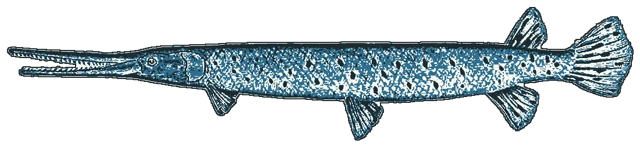
Longnose gar
Lepisosteus osseus · Freshwater
Most anglers treat it as a nuisance and few eat it, but the firm white backstraps are good once you get through the armor.
Worth a try: Cut down the back with shears or a hatchet to get past the armored scales, take the two white backstraps, and fry them or grind them into Louisiana gar balls.
- Tastes
- mild, firm, meaty, almost like alligator
- Limits
- No limits. No daily or size limit listed in the statewide table for species not named in it. Rivers and streams: ODWC's Rivers & Streams rules make it unlawful to take or possess more than 25 nongame fish harvested from a river or stream, and ODWC counts every species not on its game fish list, this one included, as nongame; the statewide table words the 25 cap as nongame bait fish. For species of special concern (alligator gar, black buffalo, blue sucker, brown bullhead, chain pickerel, mooneye, shorthead redhorse, shovelnose sturgeon and others on the list) the limit is 1 with harvest reporting. Gigs and spears are legal for nongame fish year-round in reservoirs but only Dec. 1 through March 31 in rivers and streams (gigs year-round in Delaware and Mayes counties); snagging is legal year-round for nongame fish, but closed 10 p.m. to 6 a.m. east of I-35 and north of I-40 except at Miami City Park. Other listed waters differ. (2026-27 ODWC regulations; web pages and PDF checked Nov 21, 2026) Source
- Where
- The state record came from Eufaula.
- live minnows suspended near the surface
- rope (frayed nylon) lures
- bowfishing
- Gar eggs (roe) are toxic to people and other warm-blooded animals; never eat them (Maryland DNR).
Before you eat it: Not named in the DEQ 2026 mercury guide or the Tar Creek lead advisory. DEQ's advice for every water: eat younger, smaller, non-predatory fish.
Paddlefish
Polyodon spathula · Freshwater
Valued for its caviar. We have no good source on how it eats, so it is rated Just OK by default.
- Tastes
- mild, firm, boneless
- Limits
- Heavy regs. Free paddlefish permit required of everyone fishing for paddlefish, in addition to a fishing license, regardless of age or lifetime license (permits expire Dec. 31). 1 per day, 2 per angler per year. Once you keep one you must stop snagging for the day, tag it with your customer ID and report it within 24 hours through E-Check. One rod, barbless single or treble hook; no culling. Spring River from SH 60 upstream to Kansas: all paddlefish angling closed. Snagging closed 10 p.m. to 6 a.m. east of I-35 and north of I-40 (Miami City Park excepted). Snagging is prohibited in the first 1,000 ft below federal and Grand River Dam Authority dams, except the Fort Gibson tailwater, and for one mile below Eufaula Dam. Catch and release by rod and reel, trotline and throwline is allowed year-round. (2026-27 ODWC regulations; web pages and PDF checked Nov 21, 2026) Source
- Best months
- Snagging usually runs from March to late April during the spawning run; late March through April is best at Miami Park (ODWC).
- Where
- Neosho (Grand), Arkansas and Red river systems; ODWC names spots below the dams at Grand, Hudson, Fort Gibson, Oologah and Kaw, but snagging is prohibited in the first 1,000 ft below those dams except at Fort Gibson; Miami Park on the Neosho; ODWC also lists Grand Lake, Fort Gibson and Kaw.
- none: snagged with a barbless treble hook (8/0 to 14/0)
Before you eat it: Tar Creek lead advisory: paddlefish and paddlefish eggs unrestricted for residents and non-residents on the Spring River, Neosho River and Grand Lake (mill ponds not sampled). The DEQ mercury guide does not name paddlefish.
Shortnose gar
Lepisosteus platostomus · Freshwater
Small gar with little meat; usually tossed, though the backstraps eat like any gar.
Worth a try: Cut down the back with shears or a hatchet to get past the armored scales, take the two white backstraps, and fry them or grind them into Louisiana gar balls.
- Tastes
- mild, firm, meaty
- Limits
- No limits. No daily or size limit listed in the statewide table for species not named in it. Rivers and streams: ODWC's Rivers & Streams rules make it unlawful to take or possess more than 25 nongame fish harvested from a river or stream, and ODWC counts every species not on its game fish list, this one included, as nongame; the statewide table words the 25 cap as nongame bait fish. For species of special concern (alligator gar, black buffalo, blue sucker, brown bullhead, chain pickerel, mooneye, shorthead redhorse, shovelnose sturgeon and others on the list) the limit is 1 with harvest reporting. Gigs and spears are legal for nongame fish year-round in reservoirs but only Dec. 1 through March 31 in rivers and streams (gigs year-round in Delaware and Mayes counties); snagging is legal year-round for nongame fish, but closed 10 p.m. to 6 a.m. east of I-35 and north of I-40 except at Miami City Park. Other listed waters differ. (2026-27 ODWC regulations; web pages and PDF checked Nov 21, 2026) Source
- Where
- Atoka Lake and Fort Gibson hold the state records.
- Gar eggs (roe) are toxic to people and other warm-blooded animals; never eat them (Maryland DNR).
Before you eat it: Not named in the DEQ 2026 mercury guide or the Tar Creek lead advisory. DEQ's advice for every water: eat younger, smaller, non-predatory fish.
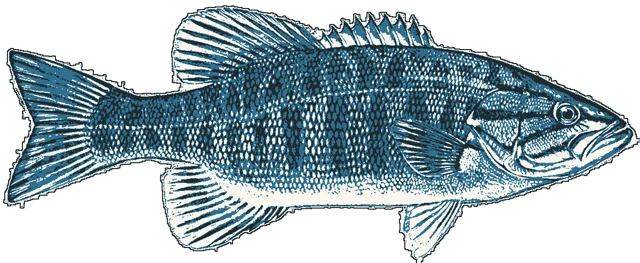
Smallmouth bass
Micropterus dolomieu · Freshwater
Firm, white and good, often rated above largemouth, but most smallmouth are released by custom and the flesh has a slight 'fishy' edge some anglers dislike.
- Tastes
- mild, slightly fishy edge, firm, thick white fillets
- Limits
- Light regs. Lakes and reservoirs: 6 largemouth and/or smallmouth bass combined per day, only 1 over 16 in; no minimum size. Rivers and streams: 6 black bass (largemouth, smallmouth, spotted) combined, only 1 of them a smallmouth, largemouth and smallmouth 14 in or longer. ODWC says the one-over-16 rule does not apply to rivers and streams, Lake Texoma or Doc Hollis Lake. Lake Texoma: 5 black bass combined (spotted included), 14 in minimum for largemouth and smallmouth. Doc Hollis Lake: all largemouth bass must be released. Echota, Stunkard and the Upper Illinois River and tributaries use the river rule. Other listed waters differ. (2026-27 ODWC regulations; web pages and PDF checked Nov 21, 2026) Source
- Spawns
- Spawns in spring as water reaches 60-75F (ODWC).
- Where
- Eastern Oklahoma Ozark and Ouachita streams (clear, gravel-bottom) and the lakes Grand, Tenkiller, Murray, Eufaula, Texoma and Broken Bow.
- soft plastic grubs and tubes
- swimbaits
- crankbaits and jerkbaits
- inline spinnerbaits
- topwater poppers and walk-the-dog lures
- Clouser Minnow flies
- Do not eat (anyone), mercury: smallmouth over 17 in from Broken Bow or over 15 in from McGee Creek.
- Do not eat (sensitive group: women of child-bearing age, pregnant or nursing, children to 15): any smallmouth from McGee Creek, or over 15 in from Broken Bow.
Meal limits and other waters (5)
- Limit (sensitive group), 2 meals a month: under 15 in from Broken Bow; any size from Murray; 14 in and over from Skiatook; 17 in and over from Tenkiller; 20 in and over from Lawtonka.
- Limit (everyone else), 2 meals a month: under 17 in from Broken Bow or under 15 in from McGee Creek.
- Limit (sensitive group), statewide: 1 meal a week of predator fish in all, smallmouth included, from any lake, pond or stream where DEQ has not tested it.
- Sampled and safe to eat for mercury (DEQ): Texoma, Arbuckle and Fort Cobb.
- DEQ mercury guide, May 2026 (a meal is 8 oz).
Smallmouth buffalo
Ictiobus bubalus · Freshwater
Smallmouth buffalo is highly prized in many areas (TPWD), but some anglers still call it a rough fish because of its bones.
Worth a try: Many people do not realize smallmouth buffalo is quite a food fish (TPWD); fry the ribs or smoke it.
- Tastes
- mild, firm, bony
- Limits
- No limits. No daily or size limit listed in the statewide table for species not named in it. Rivers and streams: ODWC's Rivers & Streams rules make it unlawful to take or possess more than 25 nongame fish harvested from a river or stream, and ODWC counts every species not on its game fish list, this one included, as nongame; the statewide table words the 25 cap as nongame bait fish. For species of special concern (alligator gar, black buffalo, blue sucker, brown bullhead, chain pickerel, mooneye, shorthead redhorse, shovelnose sturgeon and others on the list) the limit is 1 with harvest reporting. Black buffalo, a different fish, is a species of special concern with a limit of 1 and a harvest report. Gigs and spears are legal for nongame fish year-round in reservoirs but only Dec. 1 through March 31 in rivers and streams (gigs year-round in Delaware and Mayes counties); snagging is legal year-round for nongame fish, but closed 10 p.m. to 6 a.m. east of I-35 and north of I-40 except at Miami City Park. Other listed waters differ. (2026-27 ODWC regulations; web pages and PDF checked Nov 21, 2026) Source
- Where
- Broken Bow Lake holds the rod-and-reel record; found in Grand Lake and the Neosho River.
- dough baits
- bowfishing
- Limit (Tar Creek area residents), lead, smallmouth buffalo with bones: 3 meals a month from the Spring River (9 of boneless fillets), 6 from Grand Lake, 8 from the Neosho River.
Meal limits and other waters (3)
- Limit (everyone else), lead, smallmouth buffalo with bones: 5 meals a month from the Spring River, 11 from Grand Lake (Neosho River unrestricted).
- The Spring River limits are from the DEQ poster (2008) and booklet (2010) its Tar Creek page points to.
- Not named in the DEQ mercury guide (May 2026).
Spotted bass
Micropterus punctulatus · also called Kentuckies, redeye bass · Freshwater
Eats like other black bass and is kept more often than largemouth because it is abundant and small; agencies in some states encourage harvest.
- Tastes
- mild, firm, white
- Limits
- Light regs. Lakes: no daily or size limit. Rivers and streams: 6 black bass combined (largemouth, smallmouth, spotted), only 1 a smallmouth, no size limit on spotted bass. Lake Texoma: 5 black bass combined (spotted included). Echota, Stunkard and the Upper Illinois River and tributaries: 6 combined, no size limit on spotted. Lee Creek and Little Lee Creek: 6 combined, all 14 in or longer, only 1 a smallmouth. Other listed waters differ. (2026-27 ODWC regulations; web pages and PDF checked Nov 21, 2026) Source
- Spawns
- Spawns in spring as water reaches 63-68F (ODWC).
- Where
- Flowing streams in eastern Oklahoma and deeper water in clear lakes with rocky, steeply sloping banks; ODWC lists it at Texoma, Eufaula, Tenkiller, Broken Bow, Murray and Sardis.
- tubes
- curly tail grubs
- Do not eat (sensitive group: women of child-bearing age, pregnant or nursing, children to 15), mercury: any spotted bass from Bixhoma; over 13 in from Broken Bow; over 15 in from Birch, McGee Creek or Pine Creek.
Meal limits and other waters (6)
- Limit (sensitive group), 2 meals a month: smaller ones from Broken Bow, Birch, McGee Creek or Pine Creek; any size from Hugo, Skiatook, Waurika, Wayne Wallace, Wetumka or Wister; under 13 in from Okmulgee (the guide has no line for bigger ones: ask DEQ, (866) 412-3057); 11 in and over from Dripping Springs or Stanley Draper; 14 in and over from Sardis, Tenkiller or Wewoka; 15 in and over from Copan or Holdenville; 16 in and over from Shawnee Twin 1 or 2.
- Limit (everyone else), 2 meals a month: any spotted bass from Bixhoma; 13 in and over from Broken Bow; 15 in and over from Birch, McGee Creek or Pine Creek.
- Limit (sensitive group), statewide: 1 meal a week of predator fish in all, spotted bass included, from any lake, pond or stream where DEQ has not tested it.
- Limit (Tar Creek area residents), lead: 14 meals a month of spotted bass with bones from the mill ponds.
- Sampled and safe to eat for mercury (DEQ): Eufaula, Kaw, Texoma, Grand and Fort Gibson, among others.
- DEQ mercury guide, May 2026 (a meal is 8 oz).
Spotted gar
Lepisosteus oculatus · Freshwater
Small gar with little meat; usually tossed, though the backstraps eat like any gar.
Worth a try: Cut down the back with shears or a hatchet to get past the armored scales, take the two white backstraps, and fry them or grind them into Louisiana gar balls.
- Tastes
- mild, firm, meaty
- Limits
- No limits. No daily or size limit listed in the statewide table for species not named in it. Rivers and streams: ODWC's Rivers & Streams rules make it unlawful to take or possess more than 25 nongame fish harvested from a river or stream, and ODWC counts every species not on its game fish list, this one included, as nongame; the statewide table words the 25 cap as nongame bait fish. For species of special concern (alligator gar, black buffalo, blue sucker, brown bullhead, chain pickerel, mooneye, shorthead redhorse, shovelnose sturgeon and others on the list) the limit is 1 with harvest reporting. Gigs and spears are legal for nongame fish year-round in reservoirs but only Dec. 1 through March 31 in rivers and streams (gigs year-round in Delaware and Mayes counties); snagging is legal year-round for nongame fish, but closed 10 p.m. to 6 a.m. east of I-35 and north of I-40 except at Miami City Park. Other listed waters differ. (2026-27 ODWC regulations; web pages and PDF checked Nov 21, 2026) Source
- Best months
- August, when gar are active on the hottest summer days (Game & Fish, Mar 19, 2019)
- Where
- Lake Texoma produced the rod-and-reel record; the unrestricted record came from Arbuckle Lake.
- lures that imitate shad
- Gar eggs (roe) are toxic to people and other warm-blooded animals; never eat them (Maryland DNR).
Before you eat it: Not named in the DEQ 2026 mercury guide or the Tar Creek lead advisory. DEQ's advice for every water: eat younger, smaller, non-predatory fish.
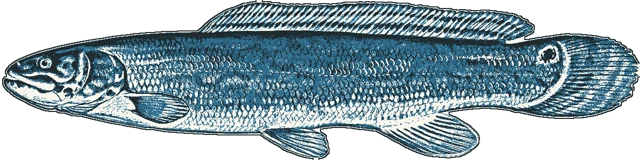
Bowfin
Amia calva (ruddy bowfin) and Amia ocellicauda (emerald bowfin) · Freshwater
TPWD calls it a rough fish rather than one for the table; the soft, pale flesh earned it the nickname 'cottonfish'.
Worth a try: Keep it alive until you clean it, cook it the same day, and use it smoked, fried as patties or stewed; MeatEater serves fried bowfin with a morel cream sauce.
- Tastes
- mild, soft, jelly-like unless very fresh
- Limits
- No limits. No daily or size limit listed in the statewide table for species not named in it. Rivers and streams: ODWC's Rivers & Streams rules make it unlawful to take or possess more than 25 nongame fish harvested from a river or stream, and ODWC counts every species not on its game fish list, this one included, as nongame; the statewide table words the 25 cap as nongame bait fish. For species of special concern (alligator gar, black buffalo, blue sucker, brown bullhead, chain pickerel, mooneye, shorthead redhorse, shovelnose sturgeon and others on the list) the limit is 1 with harvest reporting. Gigs and spears are legal for nongame fish year-round in reservoirs but only Dec. 1 through March 31 in rivers and streams (gigs year-round in Delaware and Mayes counties); snagging is legal year-round for nongame fish, but closed 10 p.m. to 6 a.m. east of I-35 and north of I-40 except at Miami City Park. Other listed waters differ. (2026-27 ODWC regulations; web pages and PDF checked Nov 21, 2026) Source
- Where
- The state record came from Hugo; DEQ sampled bowfin at New Spiro Lake.
- live minnows
- cut bait
- jigs
- topwater lures
Before you eat it: Limit (sensitive group: women of child-bearing age, pregnant or nursing, children to 15), mercury: 2 meals a month of bowfin 19 in and over from Hugo Lake (everyone else: no advisory). Sampled and safe to eat for mercury (DEQ): New Spiro Lake. DEQ mercury guide, May 2026 (a meal is 8 oz).
Goldeye
Hiodon alosoides · Freshwater
MeatEater describes its flesh as soft and bony, and US anglers mostly treat it as a trash fish or cut bait.
Worth a try: Brine and hot-smoke it: smoking firms the soft, bony flesh, which is how Winnipeg goldeye became a delicacy (MeatEater).
- Tastes
- rich, mild when smoked, soft, bony
- Limits
- No limits. No daily or size limit listed in the statewide table for species not named in it. Rivers and streams: ODWC's Rivers & Streams rules make it unlawful to take or possess more than 25 nongame fish harvested from a river or stream, and ODWC counts every species not on its game fish list, this one included, as nongame; the statewide table words the 25 cap as nongame bait fish. For species of special concern (alligator gar, black buffalo, blue sucker, brown bullhead, chain pickerel, mooneye, shorthead redhorse, shovelnose sturgeon and others on the list) the limit is 1 with harvest reporting. Gigs and spears are legal for nongame fish year-round in reservoirs but only Dec. 1 through March 31 in rivers and streams (gigs year-round in Delaware and Mayes counties); snagging is legal year-round for nongame fish, but closed 10 p.m. to 6 a.m. east of I-35 and north of I-40 except at Miami City Park. Other listed waters differ. (2026-27 ODWC regulations; web pages and PDF checked Nov 21, 2026) Source
- Where
- The Arkansas River produced the state record.
- flies
- fly-and-spinner combos
- grasshoppers
- crickets
- small minnows
Before you eat it: Not named in the DEQ 2026 mercury guide or the Tar Creek lead advisory. DEQ's advice for every water: eat younger, smaller, non-predatory fish.
Where to fish in Oklahoma
Fish named here are what people catch at each spot, not a promise they’re safe to eat. Read the eating advice on the fish’s card before you keep one.
- 1Lake Texoma reservoir · fresh
ODWC lists striped bass, white bass, catfish, black bass, crappie and alligator gar as species of interest; the lake has its own limits for bass, stripers, white bass, crappie and flathead. DEQ (mercury): women of child-bearing age, pregnant or nursing mothers and children to 15 should eat no more than 2 meals a month of its striped bass 30 in or longer.
Known for: Striped bass, White bass, Blue catfish, Flathead catfish, Largemouth bass
Access: US Army Corps of Engineers and Oklahoma State Parks campgrounds, boat ramps and fishing docks.
- 2Lake Eufaula reservoir · fresh
ODWC lists crappie, black bass, white bass, catfish and sunfish; crappie limit is 20 per day; fish attractors are maintained. DEQ (mercury): women of child-bearing age, pregnant or nursing mothers and children to 15 should eat no more than 2 meals a month of its largemouth 22 in or longer or flathead 26 in or longer.
Known for: Black crappie, White crappie, Largemouth bass, Smallmouth bass, White bass
Access: Corps of Engineers and Oklahoma State Parks campgrounds, boat ramps and marinas.
- 3Grand Lake O' the Cherokees reservoir · fresh
ODWC lists largemouth bass, crappie, paddlefish, white bass, hybrids and catfish; hybrid striped bass are regularly stocked. DEQ (mercury): women of child-bearing age, pregnant or nursing mothers and children to 15 should eat no more than 1 meal a week of its flathead or hybrids, which DEQ's guide does not list as tested here. DEQ (lead): no more than 6 meals a month for Tar Creek area residents, and 11 for others, of its carp, drum, smallmouth buffalo or redhorse cooked with bones.
Known for: Largemouth bass, Black crappie, White crappie, Paddlefish, White bass
Access: Grand River Dam Authority and Oklahoma State Parks campgrounds, boat ramps and fishing docks.
- 4Tenkiller Lake reservoir · fresh
ODWC lists three black bass, crappie, white bass, catfish, walleye and sunfish; crappie must be 10 in with a limit of 15 on the lower lake. DEQ (mercury): women of child-bearing age, pregnant or nursing mothers and children to 15 should eat no more than 2 meals a month of its spotted bass 14 in or longer, white bass 15 in, smallmouth 17 in, largemouth 18 in or flathead 27 in.
Known for: Largemouth bass, Smallmouth bass, Spotted bass, Black crappie, White crappie
Access: Corps of Engineers and Oklahoma State Parks campgrounds and boat ramps.
- 5Broken Bow Lake reservoir · fresh
ODWC lists black bass, white bass, hybrids, catfish, walleye, crappie and sunfish. DEQ (mercury): nobody should eat its smallmouth over 17 in, and women of child-bearing age, pregnant or nursing mothers and children to 15 should not eat its spotted or white bass over 13 in, largemouth or smallmouth over 15 in, walleye over 17 in or flathead over 28 in.
Known for: Largemouth bass, Smallmouth bass, Spotted bass, White bass, Hybrid striped bass
Access: Corps of Engineers campgrounds and boat ramps; Beavers Bend State Park cabins.
- 6Lake Murray reservoir · fresh
ODWC lists black bass, white bass, crappie, channel catfish, bluegill and walleye; Florida-strain largemouth are stocked annually. DEQ (mercury): women of child-bearing age, pregnant or nursing mothers and children to 15 should eat no more than 2 meals a month of its smallmouth of any size or largemouth under 18 in, and the guide gives no line for bigger largemouth.
Known for: Largemouth bass, Smallmouth bass, Spotted bass, White bass, White crappie
Access: Lake Murray State Park campgrounds, boat ramps and marina.
- 7Kaw Lake reservoir · fresh
ODWC lists white bass, crappie, catfish, striped bass, hybrids and paddlefish; walleye are stocked and brush piles added. DEQ (mercury): women of child-bearing age, pregnant or nursing mothers and children to 15 should eat no more than 2 meals a month of its white crappie 13 in or longer or its blue or flathead catfish 30 in or longer.
Known for: White bass, Black crappie, White crappie, Blue catfish, Flathead catfish
Access: Corps of Engineers campgrounds and boat ramps, 11 miles east of Ponca City on SH 11.
- 8Keystone Lake reservoir · fresh
ODWC lists largemouth, white crappie, white bass, striped bass and three catfish. DEQ (mercury): women of child-bearing age, pregnant or nursing mothers and children to 15 should not eat its largemouth over 18 in, and should eat no more than 2 meals a month of its white bass 15 in or longer, flathead 28 in or blue catfish 32 in.
Known for: Largemouth bass, White crappie, White bass, Striped bass, Channel catfish
Access: Keystone State Park and Corps of Engineers campgrounds and boat ramps, 8 miles west of Sand Springs.
- 9Skiatook Lake reservoir · fresh
ODWC lists black bass, hybrids, catfish, crappie and walleye; Florida largemouth, hybrids and walleye are stocked. Striped bass and hybrids are 5 per day, only 2 at 20 in or longer. DEQ (mercury): women of child-bearing age, pregnant or nursing mothers and children to 15 should not eat its flathead over 23 in or blue catfish over 29 in, and everyone else should eat no more than 2 meals a month of those sizes.
Known for: Largemouth bass, Smallmouth bass, Hybrid striped bass, Channel catfish, Blue catfish
Access: Corps of Engineers campgrounds, boat ramps and swimming areas, 10 miles west of Skiatook on US 20.
- 10Sardis Lake reservoir · fresh
ODWC lists largemouth, spotted bass, white bass, catfish, white crappie, bluegill and walleye. DEQ (mercury): nobody should eat its channel catfish over 22 in, and women of child-bearing age, pregnant or nursing mothers and children to 15 should not eat its channel catfish over 17 in.
Known for: Largemouth bass, Spotted bass, White bass, Blue catfish, Channel catfish
Access: Corps of Engineers campgrounds, a swim beach and fishing docks, 3.5 miles north of Clayton.
- 11Fort Gibson Lake reservoir · fresh
ODWC lists largemouth, crappie, white bass, paddlefish, three catfish, hybrids and sunfish; crappie are 15 per day with a 10 in minimum.
Known for: Largemouth bass, Black crappie, White crappie, White bass, Paddlefish
Access: Corps of Engineers and Oklahoma State Parks campgrounds and boat ramps, 7 miles east of Wagoner on SH 51.
- 12Canton Lake reservoir · fresh
ODWC lists walleye first, then channel catfish, crappie, hybrids, white bass and largemouth. DEQ (mercury): women of child-bearing age, pregnant or nursing mothers and children to 15 should eat no more than 1 meal a week of its hybrids, which DEQ's guide does not list as tested here.
Known for: Walleye, Channel catfish, White crappie, Black crappie, Hybrid striped bass
Access: Corps of Engineers campgrounds, boat ramps and swimming beaches; Canton WMA has primitive access to the North Canadian River.
- 13Lower Mountain Fork River trout area river · fresh
ODWC sets rainbow and brown trout rules here; the designated trout area is a 12-mile stretch from the Broken Bow Reservoir spillway to the US 70 bridge, with a year-round trout stocking season.
Known for: Rainbow trout, Brown trout
Access: Unlimited bank access in Beavers Bend State Park and down to the re-regulation dam; barbless hooks only; boat ramps near the re-regulation dam.
- 14Lower Illinois River (below Tenkiller Dam) tailrace · fresh
ODWC lists rainbow trout, striped bass, white bass, sauger, walleye, largemouth and smallmouth bass on this 7.75-mile tailwater below Tenkiller Dam; one rod per person down to the US 64 bridge. ODWC has temporarily suspended trout stocking here (notice on its page, checked Nov. 21, 2026).
Known for: Rainbow trout, White bass, Sauger, Walleye, Largemouth bass
Access: Corps of Engineers and ODWC public access sites, 5.5 miles northeast of Gore on SH 100.
Oklahoma fishing license and rules
- Resident: $31 (Annual Fishing, residents 18+, valid 365 days)
- Nonresident: $81 (Nonresident Annual Fishing)
- Nonresident short-term: $26 (Nonresident 1-Day Fishing)
- Who needs one: 18 and older; residents and nonresidents 17 and younger are exempt from the fishing license.
- Free fishing days: June 5-6, 2027: anyone may fish in Oklahoma without a state license; a free paddlefish permit is still required and some city permits may still apply.
More license details
A free paddlefish permit is required for anyone fishing for paddlefish, regardless of age or residency (lifetime holders included). Lake Texoma license ($12) allows fishing both the Oklahoma and Texas portions of the lake (not valid below the dam). No separate trout license or stamp is listed. Resident 1-day is $11. Prices on the ODWC license fee page (Nov 21, 2026): resident annual $31 and 1-day $11 (age 18+), nonresident annual $81 and 1-day $26 (age 18+), Lake Texoma license $12 for residents and nonresidents. Fishing license exemptions on the ODWC page: residents and nonresidents 17 or younger; nonresidents 65 and older who live in Texas; residents and nonresidents 15 or younger are also exempt from the Texoma permit. Fishing on the Honobia Creek, Three Rivers and Herron Family WMAs needs a Land Access Permit: residents 18 to 63, and nonresidents of any age.
Buy a license License types and fees
Fees: 2026-27 (ODWC license fee page and 2026-27 Oklahoma Fishing and Hunting Regulations).
- Paddlefish need a free permit for every angler, any age or license type, plus the fishing license; 1 per day, 2 per year, reported through E-Check within 24 hours.
- Attempting to take or harvest alligator gar is prohibited statewide May 1-31; the limit is 1 a day and the harvest must be reported within 24 hours through E-Check.
- No culling of paddlefish, trout, striped bass or hybrid striped bass: a fish put on a stringer or in a livewell cannot be released.
- Lake Texoma has its own limits (5 black bass at 14 in, 10 stripers and hybrids with only 2 at 20 in or longer, 25 white bass, flathead 20 in minimum), and the $12 Texoma license is not valid below Denison Dam.
- The one-bass-over-16-inches rule for lakes does not apply to rivers and streams, Lake Texoma or Doc Hollis Lake, which have their own rules; at Doc Hollis all largemouth must be released.
- Gigs and spears are legal for nongame fish and white bass only, year-round in reservoirs but Dec. 1 through March 31 in rivers and streams (gigs year-round in Delaware and Mayes counties); grabhooks are prohibited in all state waters; snagging is for nongame fish only, closed 10 p.m. to 6 a.m. east of I-35 and north of I-40 except at Miami City Park. Listed waters can be stricter.
- In the first 1,000 feet below federal and Grand River Dam Authority dams you are limited to two rods, snagging is prohibited except at the Fort Gibson tailwater, and you cannot keep a foul-hooked fish unless the tailwater is open to snagging (nongame fish only).
- Nonresidents must check in and out when using certain public hunting and fishing areas.
- Silver carp and bighead carp are on ODWC's prohibited aquatic nuisance species list; shad may not be moved from Grand Lake, the Neosho River from Grand Lake to the Kansas line, the Red River below Texoma or the Kiamichi below Hugo.
Limits here are summaries for convenience, checked on the date shown. The official Oklahoma regulations govern; check them before you keep a fish.
Before you eat it
- Do not eat (anyone), mercury (DEQ guide, May 2026): smallmouth bass over 17 in from Broken Bow and over 15 in from McGee Creek; largemouth bass over 19 in from Carl Albert, Clayton and Heyburn and over 20 in from Okemah; channel catfish over 22 in from Sardis and over 26 in from Heyburn; white bass over 16 in from Hugo and over 14 in from McGee Creek; flathead catfish over 39 in from Stanley Draper and over 40 in from Wayne Wallace.
- Do not eat (sensitive group: women of child-bearing age, pregnant or nursing mothers, children to 15), largemouth bass, mercury: any size from Bixhoma; over 13 in from Clayton; over 14 in from Carl Albert; over 15 in from Broken Bow and Heyburn; over 16 in from Okmulgee, Ozzie Cobb and Pine Creek; over 17 in from Birch, Lone Chimney, McGee Creek and Okemah; over 18 in from Keystone and Sahoma; over 19 in from Meeker, Stanley Draper and Wetumka; over 21 in from Carlton.
- Do not eat (sensitive group), other bass, walleye and crappie, mercury: any smallmouth from McGee Creek and over 15 in from Broken Bow; any spotted bass from Bixhoma, over 13 in from Broken Bow and over 15 in from Birch, McGee Creek and Pine Creek; white bass over 12 in from Hugo and McGee Creek, 13 in from Broken Bow, 16 in from McMurtry and 19 in from Tom Steed; walleye over 17 in from Broken Bow; white crappie over 11 in from McGee Creek.
- Do not eat (sensitive group), catfish, mercury: flathead over 23 in from Skiatook and Stanley Draper, 27 in from Heyburn and Wayne Wallace, 28 in from Broken Bow and Pine Creek, 29 in from Sardis, 30 in from Okemah, 34 in from Lone Chimney and Talawanda 2, and 37 in from Shawnee Twin 1 and 2; blue catfish over 29 in from Skiatook and 30 in from Meeker; channel catfish over 17 in from Sardis and 22 in from Heyburn.
- Bitter Creek (Jackson County): the state's 2024 impaired-waters list, approved May 27, 2026, lists it for DDT and toxaphene in fish. We couldn't read DEQ's own meal advice for its catfish, so eat none until you ask DEQ at (866) 412-3057.
- Limit (sensitive group: women of child-bearing age, pregnant or nursing mothers, children to 15), statewide: no more than one meal a week of predator fish (flathead catfish, hybrid striped bass, largemouth, smallmouth and spotted bass, saugeye, striped bass, walleye, white bass) from any lake, pond or stream where DEQ has not tested that fish. A meal is 8 oz.
Limit (sensitive group), 2 meals a month of largemouth bass: any size from Cedar (LeFlore County), Coalgate, Dripping Springs, Lloyd Church, Quanah Parker, Rush, Wayne Wallace and Wister … (see the full list)
Limit (sensitive group), 2 meals a month of largemouth bass: any size from Cedar (LeFlore County), Coalgate, Dripping Springs, Lloyd Church, Quanah Parker, Rush, Wayne Wallace and Wister; under 18 in from Murray and under 19 in from Sportsman (no line for bigger ones: ask DEQ); 14 in and over from Frederick, Greenleaf and Hugo; 15 in from Atoka, Elmer Thomas and Tom Steed; 16 in from Fort Supply, Nanih Waiya, Prague, Sardis, Shell and Wewoka; 17 in from Arbuckle, Boomer, Hominy, Hulah, John Wells, McAlester, McMurtry, Shawnee Twin 1 and 2 and Stilwell; 18 in from Chandler, Cleveland, Holdenville, Talawanda 1 and Tenkiller; 19 in from Copan, Lawtonka and Thunderbird; 20 in from Kaw; 22 in from Eufaula and Schooler; 24 in from Fuqua; and smaller fish from the lakes in the largemouth warning above (except Keystone and Bixhoma).
Limit (sensitive group), 2 meals a month of flathead catfish: any size from Birch, Dripping Springs and McGee Creek; under 38 in from Okmulgee (no line for bigger ones: ask DEQ); 20 in and … (see the full list)
Limit (sensitive group), 2 meals a month of flathead catfish: any size from Birch, Dripping Springs and McGee Creek; under 38 in from Okmulgee (no line for bigger ones: ask DEQ); 20 in and over from Coalgate, Sahoma and Stroud; 22 in from Hefner and Wister; 23 in from Atoka and Hugo; 24 in from Frederick; 25 in from Sooner; 26 in from Eufaula and Hominy; 27 in from Tenkiller; 28 in from John Wells and Keystone; 29 in from Cushing and McMurtry; 30 in from Kaw and Tom Steed; 32 in from Shell; 33 in from Raymond Gary; 34 in from Ponca; 35 in from Hulah and Thunderbird; 44 in from Copan; 46 in from Bell Cow; and smaller fish from the lakes in the flathead warning above (from 17 in at Stanley Draper, 19 in at Sardis and Lone Chimney, 20 in at Okemah, 21 in at Talawanda 2, 23 in at Shawnee Twin, any size at the rest).
- Lead, Tar Creek area (mill ponds, Spring River, Neosho River, Grand Lake), meals a month with bones, area residents then everyone else: bluegill, green and hybrid sunfish 2 and 5 from the mill ponds, 5 and 8 from the Spring River; carp, drum, smallmouth buffalo and redhorse 3 and 5 from the Spring River (9 of boneless fillets for residents), 6 and 11 from Grand Lake, 8 and unrestricted from the Neosho; blue and channel catfish 9 and unrestricted from the Spring River; largemouth, spotted and white bass and crappie 14 and unrestricted from the mill ponds.
- DEQ says lead collects in fish bones and organs, so people who want less of it should eat portions without bones or skin from the Tar Creek area; the limits are set to protect children, but adults should follow them too. For fish the lead list does not name, DEQ's 2003 study told everyone to avoid whole fish, gutted or not, from the mill ponds and the Spring and Neosho rivers above Grand Lake.
- Broken Bow has mercury advisories on largemouth, smallmouth and spotted bass, white bass, walleye, flathead, black and white crappie and bluegill; Skiatook has them on blue and flathead catfish, hybrids and smallmouth, spotted and white bass; Texoma on striped bass 30 in and over.
- Unless a lake has its own advisory, DEQ lists black crappie, channel catfish, rainbow trout, sunfish and white crappie as lower-mercury choices. For every water it says to eat younger, smaller, non-predatory fish.
- Lakes DEQ lists with no mercury advisories (19): Arcadia, Canton, El Reno, Ellsworth, Eucha, Foss, Fort Cobb, Fort Gibson, Grand, Guthrie, Hudson, Konawa, New Spiro, Oologah, Robert S. Kerr, Spavinaw, W.D. Mayo, Wes Watkins and the Oklahoma City Zoo lake. Grand Lake does have the lead advisory above.
- Blue-green algae comes and goes: the state health department says to stay out of discolored water and water with foam, scum or algae mats, and to follow any closure DEQ or the Grand River Dam Authority announces. The Oklahoma tourism department posts lake notices at travelok.com/state-parks/lake-conditions.
Local lingo
- Sand bass: white bass, the state fish.
- Kentuckies: spotted bass (also called redeye bass).
- Mud-cats: flathead catfish.
- Noodling: taking catfish and nongame fish by hand, legal in daylight in most waters.
- Snagging: dragging a barbless hook to take paddlefish.
- Trotlines, juglines, limblines and yo-yos: set lines ODWC allows for game and nongame fish, with limits on lines and hooks and your customer ID on each; they must be attended every 24 hours (yo-yos every 6).
Questions anglers ask about Oklahoma
What is the most common fish in Oklahoma?
ODWC's field guide says bluegill, redear and green sunfish are without a doubt the most common fish in Oklahoma and turn up in about any lake, and it calls largemouth bass the most sought-after game fish in the state. White bass is the official state fish.
What is the best fish to eat in Oklahoma?
15 of the 32 fish on our Oklahoma board rate Best eating. They include: white bass, striped bass, hybrid striped bass, black crappie, white crappie and bluegill.
What is the state fish of Oklahoma?
White bass (sand bass): Labeled 'Oklahoma's Official State Fish' in ODWC's 2026-27 Oklahoma Fishing and Hunting Regulations.
Does Oklahoma have free fishing days?
June 5-6, 2027: anyone may fish in Oklahoma without a state license; a free paddlefish permit is still required and some city permits may still apply.
Which Oklahoma fish are better to eat than their reputation?
We give the Worth a try badge to alligator gar, longnose gar, spotted gar, shortnose gar, freshwater drum, common carp, grass carp, bigmouth buffalo, smallmouth buffalo, bowfin and goldeye: fish most anglers toss or rate low that eat well when they're cleaned and cooked right. Each card says how.
Neighboring states
Sources
Limits, prices and advisories come from these pages, read on or before Nov 21, 2026. Where a line gives its own date, that’s the date it rests on. Eating advice changes: check the state’s current list. Ratings are national and come from the fish’s own page.
75 sources
- license.gooutdoorsoklahoma.com license buy
- oklahoma.gov flathead catfish: advisory; hybrid striped bass: advisory; largemouth bass: advisory; saugeye: advisory; smallmouth bass: advisory; spotted bass: advisory; stri
- oklahoma.gov bullhead (black, brown, yellow): advisory; flathead catfish: advisory
- oklahoma.gov alligator gar: advisory; bigmouth buffalo: advisory; black crappie: advisory; blue catfish: advisory; bluegill: advisory; bowfin: advisory; brown trout: advisor
- oklahoma.gov bigmouth buffalo: advisory; black crappie: advisory; common carp: advisory; freshwater drum: advisory; grass carp: advisory; paddlefish: advisory; redear sunfis
- oklahoma.gov bigmouth buffalo: advisory; black crappie: advisory; common carp: advisory; freshwater drum: advisory; grass carp: advisory; paddlefish: advisory; redear sunfis
- oklahoma.gov blue catfish: advisory; bullhead (black, brown, yellow): advisory; channel catfish: advisory; flathead catfish: advisory
- oklahoma.gov consumption advisories; consumption advisory
- oklahoma.gov bigmouth buffalo: advisory; blue catfish: advisory; bluegill: advisory; channel catfish: advisory; common carp: advisory; freshwater drum: advisory; grass carp:
- oklahoma.gov bigmouth buffalo: advisory; blue catfish: advisory; bluegill: advisory; bullhead (black, brown, yellow): advisory; channel catfish: advisory; common carp: advis
- oklahoma.gov blue catfish: advisory; bluegill: advisory; channel catfish: advisory; green sunfish: advisory; largemouth bass: advisory; paddlefish: advisory; white bass: adv
- wildlifedepartment.com sauger: baits
- gameandfishmag.com spotted gar: baits; spotted gar: months; striped bass: months
- wildlifedepartment.com black crappie: regs, water-body exceptions (pp. 25-28); blue catfish: regs, water-body exceptions (pp. 25-28); channel catfish: regs, water-body exceptions (pp.
- wildlifedepartment.com freshwater regs
- wildlifedepartment.com bigmouth buffalo: regs (game fish list: species not listed are nongame); bluegill: regs (game fish list: species not listed are nongame); bowfin: regs (game fis
- wildlifedepartment.com bigmouth buffalo: regs (gigs, spears, snagging); bowfin: regs (gigs, spears, snagging); bullhead (black, brown, yellow): regs (gigs, spears, snagging); common c
- wildlifedepartment.com paddlefish: regs
- wildlifedepartment.com bigmouth buffalo: regs; blue catfish: regs; bluegill: regs (25 nongame fish from rivers and streams); bowfin: regs; bullhead (black, brown, yellow): regs; chann
- wildlifedepartment.com alligator gar: regs (Lower Red River); black crappie: regs; bluegill: regs; flathead catfish: regs (Texoma, Tenkiller); green sunfish: regs; hybrid striped bass
- wildlifedepartment.com black crappie: regs (crappie limit changes); white crappie: regs (crappie limit changes)
- wildlifedepartment.com alligator gar: regs; bigmouth buffalo: regs; black crappie: regs; blue catfish: regs; bluegill: regs; bowfin: regs; bullhead (black, brown, yellow): regs; chann
- wildlifedepartment.com brown trout: regs; fishing spots; rainbow trout: regs (Lower Mountain Fork, Lower Illinois, Blue River)
- wildlifedepartment.com brown trout: regs; rainbow trout: regs
- wildlifedepartment.com largemouth bass: regs (one-over-16 exceptions); smallmouth bass: regs
- wildlifedepartment.com paddlefish: why_common
- wildlifedepartment.com brown trout: where
- wildlifedepartment.com alligator gar: state record; bigmouth buffalo: where (records); blue catfish: state record; bowfin: where (records); brown trout: state record; bullhead (black,
- wildlifedepartment.com where to fish
- wildlifedepartment.com fishing spots
- wildlifedepartment.com fishing spots
- wildlifedepartment.com fishing spots
- wildlifedepartment.com fishing spots
- wildlifedepartment.com brown trout: where (Lower Illinois stocking suspended); fishing spots; rainbow trout: months (Lower Illinois stocking suspended); sauger: where
- wildlifedepartment.com fishing spots
- wildlifedepartment.com fishing spots
- wildlifedepartment.com fishing spots
- wildlifedepartment.com fishing spots
- wildlifedepartment.com fishing spots
- wildlifedepartment.com fishing spots
- wildlifedepartment.com fishing spots
- wildlifedepartment.com alligator gar: regs, where; fishing spots; striped bass: baits (ODWC Nov 15, 2026 weekly report: striper good on live shad)
- wildlifedepartment.com license fees; license info
- wildlifedepartment.com largemouth bass: baits
- wildlifedepartment.com blue catfish: baits, months; channel catfish: baits, months; flathead catfish: baits
- wildlifedepartment.com black crappie: baits, months; white crappie: baits, months
- wildlifedepartment.com paddlefish: baits, months, where
- wildlifedepartment.com smallmouth bass: baits; spotted bass: baits
- wildlifedepartment.com hybrid striped bass: baits; hybrid striped bass: months; striped bass: months
- wildlifedepartment.com bluegill: baits, months; green sunfish: baits, months; redear sunfish: baits, months
- wildlifedepartment.com rainbow trout: baits, months, where
- wildlifedepartment.com white bass: baits, months, names, where
- wildlifedepartment.com largemouth bass: why_common, months, where
- wildlifedepartment.com smallmouth bass: why_common, months, where
- wildlifedepartment.com spotted bass: names, months, where
- wildlifedepartment.com striped bass: why_common, where
- wildlifedepartment.com hybrid striped bass: why_common, where
- wildlifedepartment.com white bass: why_common
- wildlifedepartment.com bullhead (black, brown, yellow): where
- wildlifedepartment.com blue catfish: where
- wildlifedepartment.com channel catfish: why_common
- wildlifedepartment.com flathead catfish: why_common, where, months
- wildlifedepartment.com black crappie: why_common, where
- wildlifedepartment.com white crappie: why_common, where
- wildlifedepartment.com freshwater drum: why_common, where
- wildlifedepartment.com alligator gar: why_common, where
- wildlifedepartment.com sauger: where
- wildlifedepartment.com saugeye: why_common, baits, months, where
- wildlifedepartment.com bluegill: why_common, where
- wildlifedepartment.com green sunfish: why_common, where
- wildlifedepartment.com redear sunfish: why_common, where
- wildlifedepartment.com brown trout: why_common, baits, months, where
- wildlifedepartment.com rainbow trout: why_common, baits
- wildlifedepartment.com walleye: baits, months, where
- wildlifedepartment.com bullhead (black, brown, yellow): where
Illustrations: stencils we made from public-domain art by John J. Baird (Black crappie); Duane Raver, U.S. Fish and Wildlife Service (Blue catfish, Channel catfish, Flathead catfish, Rainbow trout, Redear sunfish, Striped bass, White bass, White crappie, Bullhead (black, brown, yellow), Smallmouth bass, Bowfin); NOAA (Bluegill); U.S. Fish and Wildlife Service (Brown trout, Common carp, Largemouth bass); Hugh McCormick Smith (Walleye); C. W. Nash (Longnose gar), via Wikimedia Commons.
Spotted an error or a rule that changed? Tell us and we will check it against the official source.