Missouri · freshwater
Fish in Missouri: what’s worth eating, and what’s garbage
Missouri fishing centers on the Ozark reservoirs (Table Rock, Lake of the Ozarks, Truman, Stockton) for black bass, crappie, white bass, walleye, catfish and a spring paddlefish snagging season, plus cold spring-fed trout parks and Lake Taneycomo. Ozark streams hold smallmouth bass and goggle-eye, and the Missouri and Mississippi rivers hold blue, flathead and channel catfish, shovelnose sturgeon and nongame fish that Missouri lets anglers take by line, gig, bow and, in season, snagging.
35 fish rated · limits checked Nov 22, 2026 against MDC, then re-checked: 840 of 840 details confirmed or corrected on the official pages
Limits, seasons and size rules from Missouri Department of Conservation.
Freshwater limitsChannel catfish; Paddlefish
The Saturday and Sunday after the first Monday in June every year, set in the Wildlife Code; in 2027 that is June 12 and 13. Full details
The Missouri table-fare board
Fish Missouri anglers catch, sorted by how they eat. The bars show how heavily each one is regulated here. Tap a fish for the details.
No limits Light regs Heavy regs No harvest
Best eating14
Just OK18
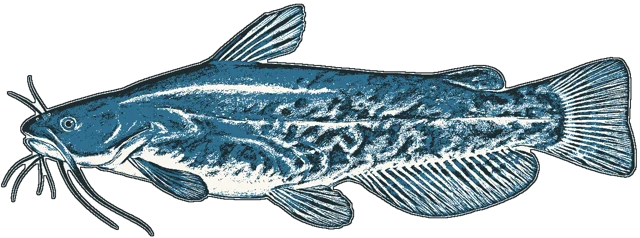 Bullhead (black, brown, yellow)
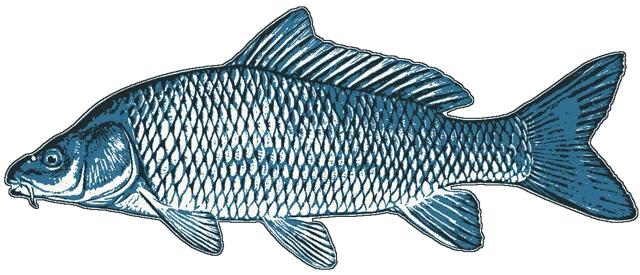 Common carpFreshwater drumGreen sunfish
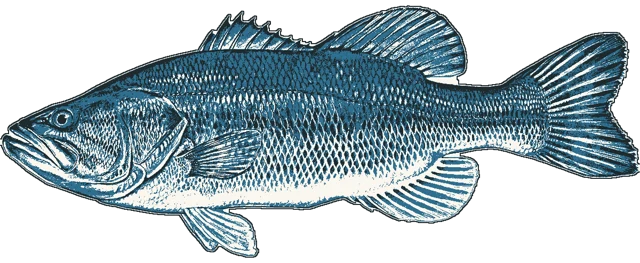 Largemouth bass“lineside bass”Longear sunfish
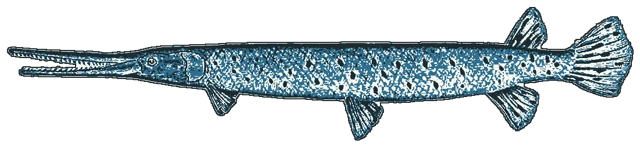 Longnose garPaddlefish“spoonbill”Rock bass“goggle-eye”Shortnose garShovelnose sturgeon“hackleback”Silver carp
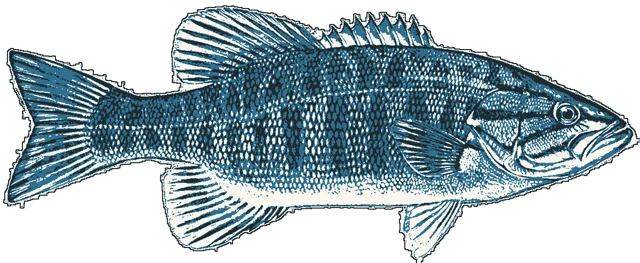 Smallmouth bass“brown bass”Smallmouth buffaloSpotted bass“Kentucky bass”Spotted gar
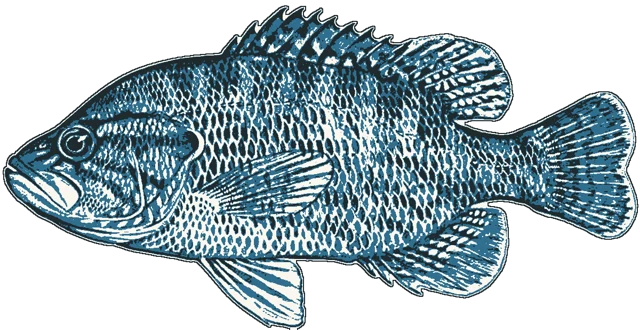 Warmouth
Garbage fish3
Fish by fish
Why each one sits where it does, the current Missouri limits, and the bait that works.
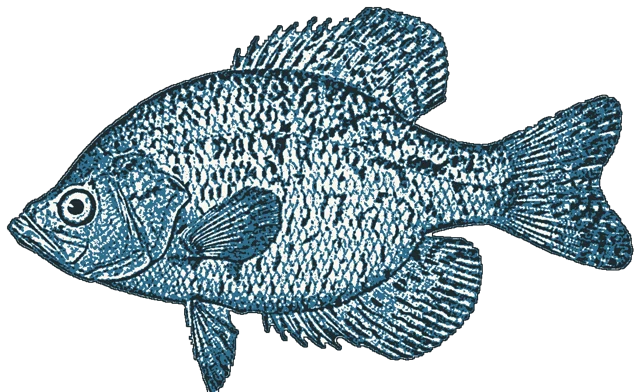
Black crappie
Pomoxis nigromaculatus · Freshwater
One of the classic fish-fry fish: MeatEater counts crappie among the best-eating fish in freshwater.
- Tastes
- mild, sweet, delicate, flaky, white
- Limits
- Light regs. Statewide: 30 per day (60 in possession), black and white crappie together, no length limit, open all year. Lake of the Ozarks, Truman and Pomme de Terre: 9-inch minimum, 15 per day. Bull Shoals, Norfork, Table Rock and Stockton: 10-inch minimum, 15 per day. Long Branch, Mark Twain, Montrose and Thomas Hill: 15 per day, no minimum. Smithville and Wappapello: 30 per day, no more than 15 of them over 9 inches. MDC area lakes (conservation-area lakes, and city, county and park lakes MDC manages): 30 per day, or 15 at listed lakes. Other listed waters differ. (Wildlife Code 3 CSR 10-6.515, amended effective March 1, 2019; Secretary of State copy revised March 31, 2026) Source
- Best months
- February and March at Lake of the Ozarks, Truman and Table Rock; spawn in March and April in southern lakes, mid-April to mid-May at Mark Twain and the first half of May at Smithville. Winter at docks and brushpiles.
- Where
- Lake of the Ozarks, Table Rock, Pomme de Terre, the clear lower end of Smithville, and smaller lakes rated for black crappie such as Blue Springs, Hazel Hill, Happy Holler, Lake Showme, Mozingo and the Wakonda State Park lakes.
- minnows
- tube jigs
- 1/32 to 1/8 ounce jigs with soft plastics
- marabou jigs
- small crankbaits
- Do not eat (anyone): any fish from the all-fish waters on this page (Hager, Giessing and Thomas lakes in Farmington among them).
- Do not eat (anyone): fish eggs of any kind.
Meal limits and other waters (7)
- Limit (sensitive group: under 13, pregnant, nursing or may become pregnant): 1 meal a month of crappie over 9 inches from Clearwater Lake, Reynolds County (mercury).
- Limit (sensitive group): 1 meal a week of other crappie and any other fish (mercury).
- Limit (everyone): 1 meal a month of any fish from Lake Buteo, Knob Noster State Park (mercury).
- Limit (everyone): 1 meal a week of locally caught fish where no local advisory exists (DHSS mercury page).
- Lead counties on this page: cut out the larger bones before you cook it.
- DHSS lists crappie, except Clearwater Lake's, among fish that typically have very low mercury, PCB and chlordane levels.
- DHSS guide, March 2024; confirm with its current list.
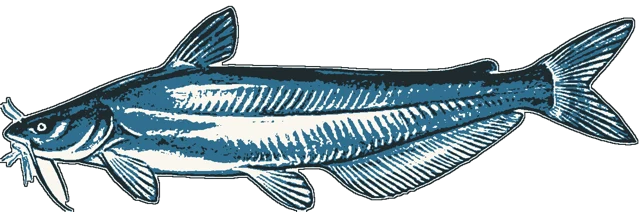
Blue catfish
Ictalurus furcatus · also called white cat, Fulton cat, Mississippi cat · Freshwater
TPWD calls it an excellent food fish; Maryland DNR says blues are very good to eat.
- Tastes
- mild, firm
- Limits
- Heavy regs. Statewide: 5 per day (10 in possession), no length limit, open all year. Lake of the Ozarks and Harry S. Truman Reservoir (lake and tributaries): 26 to 34 inch protected slot (release those), 10 a day and in possession, no more than 2 over 34 inches in the daily limit. Mark Twain Lake: 26-inch minimum. Bull Shoals, Norfork and Table Rock: 10 per day, channel, blue and flathead combined. Mississippi River: 20 a day and in possession, blue and channel combined. MDC area lakes (lakes and ponds on conservation areas, and city, county and park lakes MDC manages): 4 per day, channel, blue and flathead combined. Other listed waters differ. (Wildlife Code 3 CSR 10-6.510, amended effective Feb. 28, 2022; Secretary of State copy revised March 31, 2026) Source
- Best months
- June and July behind Missouri River wing dams, and late June on around Kansas City; summer on the flats at Lake of the Ozarks and Truman.
- Where
- The Mississippi, Missouri and Osage rivers and the lower Grand, Gasconade and Salt; Lake of the Ozarks and Truman Lake. Below wing dikes, logjams and cut banks at the Missouri and Mississippi confluence.
- cut gizzard shad
- skipjack herring
- shad heads and sides (drifted)
- Large, old blue catfish accumulate contaminants; some water bodies have size-based consumption advisories.
- Do not eat (anyone): catfish or other bottom feeders from Adair Creek, Sweetwater Creek or Logan Creek from Adair to Susie Creek, Reynolds County (lead).
- Do not eat (anyone): any fish from the all-fish waters on this page (Hager, Giessing and Thomas lakes in Farmington among them).
- Do not eat (anyone): fish eggs of any kind.
Meal limits and other waters (9)
- Limit (everyone): 1 meal a month of catfish from the Blue River (Minor Park to the Missouri River, with Indian Creek up to Holmes Road; PCBs, chlordane), Lake Springfield (PCBs) or Lake Buteo, Knob Noster State Park (mercury).
- Limit (everyone): 1 meal a week of flathead, channel or blue catfish over 17 inches from the Mississippi and Missouri rivers (PCBs, chlordane, mercury).
- Limit (sensitive group: under 13, pregnant, nursing or may become pregnant): 1 meal a month of flathead, channel or blue catfish over 30 inches, from any Missouri water (mercury).
- Limit (sensitive group): 1 meal a week of smaller catfish and any other fish (mercury).
- Limit (everyone): 1 meal a week of locally caught fish where no local advisory exists (DHSS mercury page).
- Madison County's St. Francis and Little St. Francis rivers and Fredericktown City Lake: take out the vertebrae and ribs before any preparation (lead).
- Lead counties on this page: cut out the larger bones before you cook it.
- Limits assume a skinned, trimmed fillet.
- DHSS guide, March 2024; confirm with its current list.
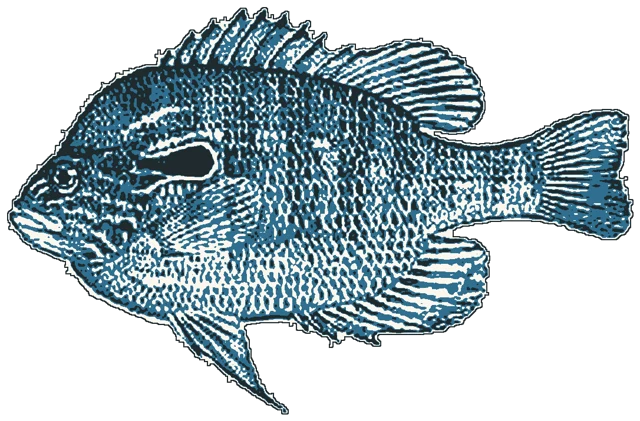
Bluegill
Lepomis macrochirus · Freshwater
MeatEater calls the flesh light, delicate and sweet; the original fish-fry panfish.
- Tastes
- mild, sweet, firm, flaky
- Limits
- Light regs. Nongame fish ('other fish' in the Wildlife Code: every fish that is not a game fish, an alligator gar or endangered) share one daily limit: 50 a day in total by pole and line, trotline, throwline, limb line, bank line or jug line, open all year, or 20 a day in total by gig, bow, crossbow, atlatl, snagging, snaring, grabbing or underwater spearfishing, which have their own seasons and hours. Mississippi River: 100 a day and in possession. Elsewhere possession is two daily limits. Common carp, grass carp, goldfish and invasive fish (such as bighead and silver carp) may be taken in any number. No statewide length limits by these methods. On MDC area lakes (lakes and ponds on conservation areas, and city, county and park lakes MDC manages) the limit is usually 20 a day in total, or 10 at listed lakes. Bluegill minimums apply at General Watkins Conservation Area, Tobacco Hills Lake and Stephens Park Lake (8 inches) and McCredie Lake (9 inches), and General Watkins and Tobacco Hills allow 10 sunfish a day. (Wildlife Code 3 CSR 10-6.550, amended effective Feb. 28, 2025; Secretary of State copy revised March 31, 2026) Source
- Best months
- Late May to early June on spawning beds; summer in 12 to 20 feet of water at Stockton; January through the ice on northern ponds.
- Where
- Every federal reservoir, MDC-stocked lakes and farm ponds; Table Rock (beds 10 to 15 feet deep on protected gravel), Stockton, Mozingo, Harrison County and Manito lakes.
- crickets
- worms
- red wigglers
- wax worms
- mealworms
- small jigs
- Do not eat (anyone): bluegill of any size from the Big River (St. Francois and Jefferson counties) or the Flat River (St. Francois County, Highway B to the Big River) (lead).
- Do not eat (anyone): bluegill from Big Creek near Glover, Iron County, Hogan to Chloride (lead).
- Do not eat (anyone): any fish from the all-fish waters on this page (Hager, Giessing and Thomas lakes in Farmington among them).
- Do not eat (anyone): fish eggs of any kind.
Meal limits and other waters (6)
- Limit (everyone): 1 meal a month of any fish from Lake Buteo, Knob Noster State Park (mercury).
- Limit (sensitive group: under 13, pregnant, nursing or may become pregnant): 1 meal a week of any fish (mercury).
- Limit (everyone): 1 meal a week of locally caught fish where no local advisory exists (DHSS mercury page).
- Lead counties on this page: cut out the larger bones before you cook it.
- DHSS lists most sunfish among fish that typically have very low mercury, PCB and chlordane levels.
- DHSS guide, March 2024; confirm with its current list.
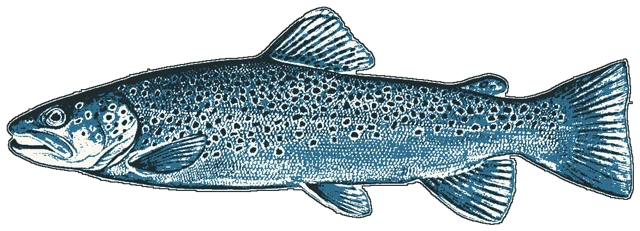
Brown trout
Salmo trutta · also called German brown · Freshwater
Good trout eating like rainbows; most kept browns are stocked fish.
- Tastes
- mild to rich, flaky
- Limits
- Heavy regs. Statewide: 4 trout a day (8 in possession), no length limit on rainbow, 15-inch minimum on brown trout in streams. A trout permit is needed to possess trout except where a daily trout tag is required. Trout parks (Bennett Spring, Maramec Spring, Montauk, Roaring River): March 1 to Oct. 31 with a daily trout tag ($5 age 16 and over, $3 age 15 and under), 4 trout, and you must stop fishing for any species once you have 4 trout. Winter in the parks, from the second Friday in November through the second Monday in February (Nov. 13, 2026 to Feb. 8, 2027): catch and release only, flies only, 8 a.m. to 4 p.m., trout permit required (Friday to Monday at the three state parks, daily at Maramec Spring). 1 trout a day, 18-inch minimum, flies and artificial lures only: listed sections of the Current River, North Fork of the White, Eleven Point, and Barren Fork, Blue Springs, Crane, Little Piney, Mill and Spring creeks. 2 a day, 15-inch minimum: the Meramec River from the Highway 8 bridge to Scotts Ford (flies and artificial lures only) and the North Fork of the White from Patrick Bridge to Norfork Lake. Lake Taneycomo: 4 a day with only 1 brown, brown 20-inch minimum; from 760 feet below Table Rock Dam to the mouth of Fall Creek, rainbows 12 to 20 inches must be released and only flies and artificial lures are allowed. Other listed waters differ. (Wildlife Code 3 CSR 10-6.535, amended effective Feb. 28, 2025; Secretary of State copy revised March 31, 2026; 3 CSR 10-12.150 (trout parks), Feb. 29, 2024) Source
- Best months
- October, when browns move up to spawn at Taneycomo, the upper Current and the North Fork of the White; August nights below Table Rock Dam.
- Where
- Lake Taneycomo, the Current River below Montauk State Park, the North Fork of the White and the Meramec River below Maramec Spring.
- large streamers
- stickbaits and jerkbaits
- marabou jigs
- small jigs
- flies
- Do not eat (anyone): any fish from the all-fish waters on this page (Hager, Giessing and Thomas lakes in Farmington among them).
- Do not eat (anyone): fish eggs of any kind.
Meal limits and other waters (5)
- Limit (sensitive group: under 13, pregnant, nursing or may become pregnant): 1 meal a week of any fish (mercury).
- Limit (everyone): 1 meal a week of locally caught fish where no local advisory exists (DHSS mercury page).
- Lead counties on this page: cut out the larger bones before you cook it.
- DHSS lists trout among fish that typically have very low mercury, PCB and chlordane levels.
- DHSS guide, March 2024; confirm with its current list.
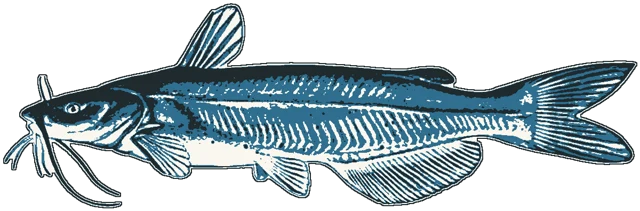
Channel catfish
Ictalurus punctatus · also called spotted cat, willow cat, fiddler cat · Freshwater
Very good to eat (Maryland DNR) and delicious when cooked (TPWD), and the basis of US catfish farming.
- Tastes
- mild, sweet, firm, moist
- Limits
- Light regs. Statewide: 10 per day (20 in possession), no length limit, open all year. Mississippi River: 20 a day and in possession, blue and channel combined. Bull Shoals, Norfork and Table Rock lakes: 10 per day, channel, blue and flathead combined. MDC area lakes (lakes and ponds on conservation areas, and city, county and park lakes MDC manages): 4 per day, channel, blue and flathead combined, with a 16-inch channel cat minimum at a few. Other listed waters differ. (Wildlife Code 3 CSR 10-6.510, amended effective Feb. 28, 2022; Secretary of State copy revised March 31, 2026) Source
- Best months
- Summer, best in the evening and at night at Lake of the Ozarks; July on the Grand River.
- Where
- Nearly every lake, river, stream and pond; especially the prairie streams of north and west Missouri (Grand, Lamine), the Mississippi and Missouri rivers and the lowland streams and ditches of the southeast.
- nightcrawlers
- stink bait
- dough bait
- dip bait
- chicken liver
- hot dogs
- Do not eat (anyone): catfish or other bottom feeders from Adair Creek, Sweetwater Creek or Logan Creek from Adair to Susie Creek, Reynolds County (lead).
- Do not eat (anyone): any fish from the all-fish waters on this page (Hager, Giessing and Thomas lakes in Farmington among them).
- Do not eat (anyone): fish eggs of any kind.
Meal limits and other waters (9)
- Limit (everyone): 1 meal a month of catfish from the Blue River (Minor Park to the Missouri River, with Indian Creek up to Holmes Road; PCBs, chlordane), Lake Springfield (PCBs) or Lake Buteo, Knob Noster State Park (mercury).
- Limit (everyone): 1 meal a week of flathead, channel or blue catfish over 17 inches from the Mississippi and Missouri rivers (PCBs, chlordane, mercury).
- Limit (sensitive group: under 13, pregnant, nursing or may become pregnant): 1 meal a month of flathead, channel or blue catfish over 30 inches, from any Missouri water (mercury).
- Limit (sensitive group): 1 meal a week of smaller catfish and any other fish (mercury).
- Limit (everyone): 1 meal a week of locally caught fish where no local advisory exists (DHSS mercury page).
- Madison County's St. Francis and Little St. Francis rivers and Fredericktown City Lake: take out the vertebrae and ribs before any preparation (lead).
- Lead counties on this page: cut out the larger bones before you cook it.
- Limits assume a skinned, trimmed fillet.
- DHSS guide, March 2024; confirm with its current list.
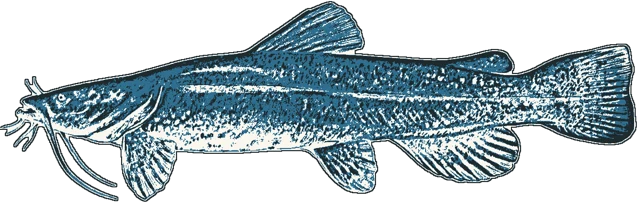
Flathead catfish
Pylodictis olivaris · also called goujon, yellow cat, river cat · Freshwater
Widely considered the best-tasting catfish because it eats live fish instead of scavenging; Maryland DNR notes its mild, white flesh.
- Tastes
- mild, clean, firm, white
- Limits
- Heavy regs. Statewide: 5 per day (10 in possession), no length limit, open all year. Mark Twain Lake: 26-inch minimum. Bull Shoals, Norfork and Table Rock: 10 per day, channel, blue and flathead combined. Mississippi River: 10 a day and in possession. MDC area lakes (lakes and ponds on conservation areas, and city, county and park lakes MDC manages): 4 per day, channel, blue and flathead combined, with a 24-inch flathead minimum at a few. Other listed waters differ. (Wildlife Code 3 CSR 10-6.510, amended effective Feb. 28, 2022; Secretary of State copy revised March 31, 2026) Source
- Best months
- Summer nights; July on the Missouri and Mississippi rivers.
- Where
- Large streams around the state and the Mississippi and Missouri rivers (most numerous above Kansas City), near root wads, drift piles, wing dikes and riprap; also Truman Lake.
- live sunfish and bluegill
- live shad and skipjack
- goldfish
- crayfish
- nightcrawlers
- Do not eat (anyone): catfish or other bottom feeders from Adair Creek, Sweetwater Creek or Logan Creek from Adair to Susie Creek, Reynolds County (lead).
- Do not eat (anyone): any fish from the all-fish waters on this page (Hager, Giessing and Thomas lakes in Farmington among them).
- Do not eat (anyone): fish eggs of any kind.
Meal limits and other waters (11)
- Limit (everyone): 1 meal a month of catfish from the Blue River (Minor Park to the Missouri River, with Indian Creek up to Holmes Road; PCBs, chlordane), Lake Springfield (PCBs) or Lake Buteo, Knob Noster State Park (mercury).
- Limit (everyone): 1 meal a week of flathead, channel or blue catfish over 17 inches from the Mississippi and Missouri rivers (PCBs, chlordane, mercury).
- Limit (everyone): 1 meal a week of flathead over 24 inches from Montrose Lake, Henry County (PCBs).
- Limit (sensitive group: under 13, pregnant, nursing or may become pregnant): 1 meal a month of flathead, channel or blue catfish over 30 inches, from any Missouri water (mercury).
- Limit (sensitive group): 1 meal a month of large predatory fish over 12 inches (Missouri DNR fact sheet, March 2026).
- Limit (sensitive group): 1 meal a week of smaller catfish and any other fish (mercury).
- Limit (everyone): 1 meal a week of locally caught fish where no local advisory exists (DHSS mercury page).
- Madison County's St. Francis and Little St. Francis rivers and Fredericktown City Lake: take out the vertebrae and ribs before any preparation (lead).
- Lead counties on this page: cut out the larger bones before you cook it.
- Limits assume a skinned, trimmed fillet.
- DHSS guide, March 2024; confirm with its current list.
Hybrid striped bass
Morone saxatilis x M. chrysops · also called wiper · Freshwater
Indiana DNR says hybrids make great table fare; mild white fillets like a striper's.
- Tastes
- mild, firm, white
- Limits
- Light regs. Statewide: 15 per day (30 in possession), white, yellow and striped bass and their hybrids combined, and no more than 4 of them longer than 18 inches, open all year. Mississippi River: 30 a day and in possession combined, no length limit. Thomas Hill and Long Branch lakes: 4 a day combined, 20-inch minimum. Some MDC area lakes (Busch and Reed memorial areas, Belcher Branch, Harmony Mission, Lake Paho, Little Compton, Limpp, Nodaway County and Perry County lakes, and others): 4 white bass, striped bass and hybrids a day, 20-inch minimum. Bull Shoals and Norfork lakes and their tributaries: no length limit on hybrids. Other listed waters differ. (Wildlife Code 3 CSR 10-6.545, amended effective March 1, 2014; Secretary of State copy revised March 31, 2026) Source
- Best months
- November and December at the Thomas Hill warm-water discharge, best on the coldest days.
- Where
- Thomas Hill Reservoir (Brush Creek arm and the power plant discharge), Truman Lake, Lake of the Ozarks, Bull Shoals and Norfork.
- chicken liver
- bait shrimp
- shad-imitating lures
- Do not eat (anyone): any fish from the all-fish waters on this page (Hager, Giessing and Thomas lakes in Farmington among them).
- Do not eat (anyone): fish eggs of any kind.
Meal limits and other waters (6)
- Limit (sensitive group: under 13, pregnant, nursing or may become pregnant): 1 meal a month of large predatory fish over 12 inches (Missouri DNR fact sheet, March 2026).
- Limit (sensitive group): 1 meal a week of smaller ones and any other fish (mercury).
- Limit (everyone): 1 meal a month of any fish from Lake Buteo, Knob Noster State Park (mercury).
- Limit (everyone): 1 meal a week of locally caught fish where no local advisory exists (DHSS mercury page).
- Lead counties on this page: cut out the larger bones before you cook it.
- DHSS guide, March 2024; confirm with its current list.
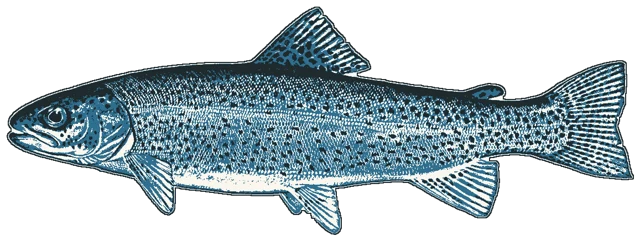
Rainbow trout
Oncorhynchus mykiss · Freshwater
TPWD calls rainbow trout an excellent fish to eat; the most-stocked put-and-take fish in America.
- Tastes
- mild, clean, delicate, flaky
- Limits
- Heavy regs. Statewide: 4 trout a day (8 in possession), no length limit on rainbow, 15-inch minimum on brown trout in streams. A trout permit is needed to possess trout except where a daily trout tag is required. Trout parks (Bennett Spring, Maramec Spring, Montauk, Roaring River): March 1 to Oct. 31 with a daily trout tag ($5 age 16 and over, $3 age 15 and under), 4 trout, and you must stop fishing for any species once you have 4 trout. Winter in the parks, from the second Friday in November through the second Monday in February (Nov. 13, 2026 to Feb. 8, 2027): catch and release only, flies only, 8 a.m. to 4 p.m., trout permit required (Friday to Monday at the three state parks, daily at Maramec Spring). 1 trout a day, 18-inch minimum, flies and artificial lures only: listed sections of the Current River, North Fork of the White, Eleven Point, and Barren Fork, Blue Springs, Crane, Little Piney, Mill and Spring creeks. 2 a day, 15-inch minimum: the Meramec River from the Highway 8 bridge to Scotts Ford (flies and artificial lures only) and the North Fork of the White from Patrick Bridge to Norfork Lake. Lake Taneycomo: 4 a day with only 1 brown, brown 20-inch minimum; from 760 feet below Table Rock Dam to the mouth of Fall Creek, rainbows 12 to 20 inches must be released and only flies and artificial lures are allowed. Other listed waters differ. (Wildlife Code 3 CSR 10-6.535, amended effective Feb. 28, 2025; Secretary of State copy revised March 31, 2026; 3 CSR 10-12.150 (trout parks), Feb. 29, 2024) Source
- Best months
- Trout parks March 1 to Oct. 31 for harvest and Nov. 13, 2026 to Feb. 8, 2027 for catch and release (flies only); Lake Taneycomo all year.
- Where
- Bennett Spring, Maramec Spring, Montauk and Roaring River trout parks, Lake Taneycomo below Table Rock Dam, the North Fork of the White (wild rainbows) and the Current River below Montauk.
- marabou jigs
- PowerBait and dough baits
- salmon eggs
- worms
- minnows
- flies
- Do not eat (anyone): any fish from the all-fish waters on this page (Hager, Giessing and Thomas lakes in Farmington among them).
- Do not eat (anyone): fish eggs of any kind.
Meal limits and other waters (5)
- Limit (sensitive group: under 13, pregnant, nursing or may become pregnant): 1 meal a week of any fish (mercury).
- Limit (everyone): 1 meal a week of locally caught fish where no local advisory exists (DHSS mercury page).
- Lead counties on this page: cut out the larger bones before you cook it.
- DHSS lists trout among fish that typically have very low mercury, PCB and chlordane levels.
- DHSS guide, March 2024; confirm with its current list.
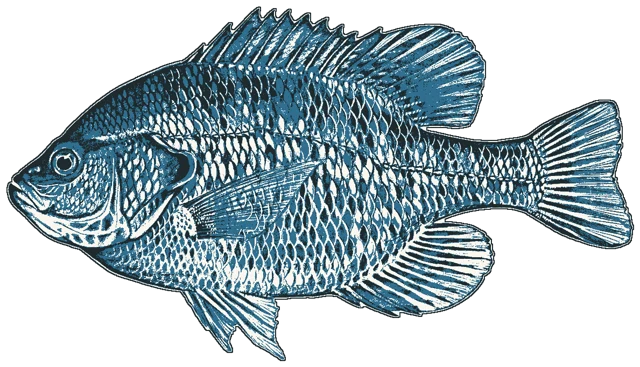
Redear sunfish
Lepomis microlophus · Freshwater
Larger than bluegill, with the same sweet fillets; Indiana DNR calls sunfish, redear included, delicious fish.
- Tastes
- mild, sweet, firm, flaky
- Limits
- Light regs. Nongame fish ('other fish' in the Wildlife Code: every fish that is not a game fish, an alligator gar or endangered) share one daily limit: 50 a day in total by pole and line, trotline, throwline, limb line, bank line or jug line, open all year, or 20 a day in total by gig, bow, crossbow, atlatl, snagging, snaring, grabbing or underwater spearfishing, which have their own seasons and hours. Mississippi River: 100 a day and in possession. Elsewhere possession is two daily limits. Common carp, grass carp, goldfish and invasive fish (such as bighead and silver carp) may be taken in any number. No statewide length limits by these methods. On MDC area lakes (lakes and ponds on conservation areas, and city, county and park lakes MDC manages) the limit is usually 20 a day in total, or 10 at listed lakes. (Wildlife Code 3 CSR 10-6.550, amended effective Feb. 28, 2025; Secretary of State copy revised March 31, 2026) Source
- Best months
- Spring and summer, with the spawn in late May and early June; September on the bottom at Council Bluff Lake.
- Where
- Council Bluff, Sims Valley, Hunnewell, Cypress, Jamesport Community and Lake Showme, and several Busch and Weldon Spring lakes; a deep-water fish, usually near the bottom.
- worms
- crickets
- small minnows
- crayfish
- Do not eat (anyone): any fish from the all-fish waters on this page (Hager, Giessing and Thomas lakes in Farmington among them).
- Do not eat (anyone): fish eggs of any kind.
- DHSS's do-not-eat lead lines for the Big River, Flat River and Big Creek name longear, green sunfish, bluegill, warmouth and rock bass, not redear.
Meal limits and other waters (6)
- Limit (everyone): 1 meal a month of any fish from Lake Buteo, Knob Noster State Park (mercury).
- Limit (sensitive group: under 13, pregnant, nursing or may become pregnant): 1 meal a week of any fish (mercury).
- Limit (everyone): 1 meal a week of locally caught fish where no local advisory exists (DHSS mercury page).
- Lead counties on this page: cut out the larger bones before you cook it.
- DHSS lists most sunfish among fish that typically have very low mercury, PCB and chlordane levels.
- DHSS guide, March 2024; confirm with its current list.
Sauger
Sander canadensis · also called jack salmon, spotted jack, sand pike · Freshwater
The walleye's smaller river cousin, with the same fillets; MeatEater says they taste just as good.
- Tastes
- mild, clean, firm, flaky white
- Limits
- Heavy regs. Statewide: 4 per day, walleye and sauger combined (8 in possession), 15-inch minimum, open all year. 18-inch minimum on Bull Shoals, Norfork and Wappapello lakes and their tributaries (including the St. Francis River and its tributaries above Wappapello Dam), on Table Rock and Long Branch lakes, and on the Current and Eleven Point rivers and their tributaries. Mississippi River: 8 a day and in possession, walleye and sauger combined, no length limit. The Feb. 20 to April 14 daylight-only rule was taken out of the Code on April 30, 2026. (Wildlife Code 3 CSR 10-6.540, amended effective April 30, 2026; Secretary of State copy revised March 31, 2026) Source
- Best months
- October through February, and into March, in the pools below Mississippi River dams.
- Where
- Mississippi River tailwaters in Pools 20 to 25 (below Winfield and Clarksville dams among them), the Missouri River and suitable tributaries, and the Eleven Point River; usually in strong current.
- jig and minnow
- nightcrawlers
- minnows
- leeches
- crankbaits
- Do not eat (anyone): any fish from the all-fish waters on this page (Hager, Giessing and Thomas lakes in Farmington among them).
- Do not eat (anyone): fish eggs of any kind.
Meal limits and other waters (5)
- Limit (sensitive group: under 13, pregnant, nursing or may become pregnant): 1 meal a month of large predatory fish over 12 inches (Missouri DNR fact sheet, March 2026).
- Limit (sensitive group): 1 meal a week of smaller sauger and any other fish (mercury).
- Limit (everyone): 1 meal a week of locally caught fish where no local advisory exists (DHSS mercury page).
- Lead counties on this page: cut out the larger bones before you cook it.
- DHSS guide, March 2024; confirm with its current list.
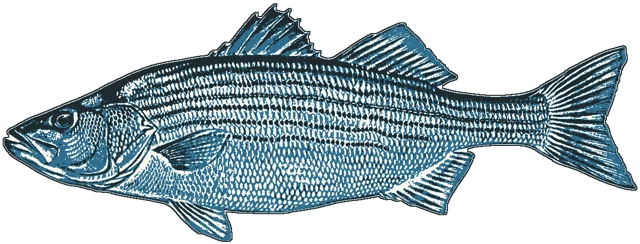
Striped bass
Morone saxatilis · also called striper · Freshwater
Firm, large-flaked, slightly sweet white meat; one of the most kept and eaten gamefish in the country, fresh or salt.
- Tastes
- mild, slightly sweet, firm, large flakes
- Limits
- Light regs. Statewide: 15 per day (30 in possession), white, yellow and striped bass and their hybrids combined, and no more than 4 of them longer than 18 inches, open all year. Mississippi River: 30 a day and in possession combined, no length limit. Thomas Hill and Long Branch lakes: 4 a day combined, 20-inch minimum. Some MDC area lakes (Busch and Reed memorial areas, Belcher Branch, Harmony Mission, Lake Paho, Little Compton, Limpp, Nodaway County and Perry County lakes, and others): 4 white bass, striped bass and hybrids a day, 20-inch minimum. Bull Shoals and Norfork lakes and their tributaries: 20-inch minimum and only 3 striped bass in the 15-fish limit. Other listed waters differ. (Wildlife Code 3 CSR 10-6.545, amended effective March 1, 2014; Secretary of State copy revised March 31, 2026) Source
- Best months
- February, at dawn and dusk across the mouths of coves at Bull Shoals.
- Where
- Bull Shoals Lake (deep water near the river channel by day) and Norfork Lake; they school with white bass chasing shad at the surface.
- plastic swimbaits
- deep-diving crankbaits
- trolled jointed minnows
- lipless crankbaits
- Consumption advisories for striped bass vary from state to state (NOAA).
- Do not eat (anyone): any fish from the all-fish waters on this page (Hager, Giessing and Thomas lakes in Farmington among them).
- Do not eat (anyone): fish eggs of any kind.
Meal limits and other waters (5)
- Limit (sensitive group: under 13, pregnant, nursing or may become pregnant): 1 meal a month of large predatory fish over 12 inches (Missouri DNR fact sheet, March 2026).
- Limit (sensitive group): 1 meal a week of smaller ones and any other fish (mercury).
- Limit (everyone): 1 meal a week of locally caught fish where no local advisory exists (DHSS mercury page).
- Lead counties on this page: cut out the larger bones before you cook it.
- DHSS guide, March 2024; confirm with its current list.
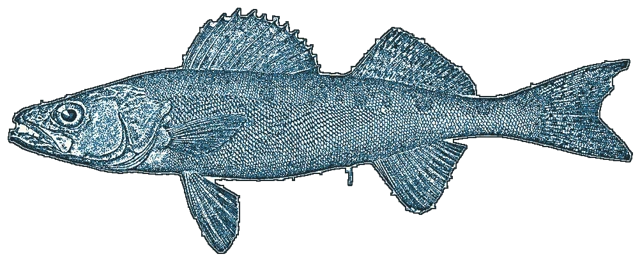
Walleye
Sander vitreus · Freshwater
Widely rated the best-eating freshwater fish: Maryland DNR calls it one of the best tasting, TPWD an excellent food fish.
- Tastes
- mild, clean, firm, tender, flaky white
- Limits
- Heavy regs. Statewide: 4 per day, walleye and sauger combined (8 in possession), 15-inch minimum, open all year. 18-inch minimum on Bull Shoals, Norfork and Wappapello lakes and their tributaries (including the St. Francis River and its tributaries above Wappapello Dam), on Table Rock and Long Branch lakes, and on the Current and Eleven Point rivers and their tributaries, and, for walleye, on Lake Showme at Memphis. Mississippi River: 8 a day and in possession, walleye and sauger combined, no length limit. The Feb. 20 to April 14 daylight-only rule was taken out of the Code on April 30, 2026. (Wildlife Code 3 CSR 10-6.540, amended effective April 30, 2026; Secretary of State copy revised March 31, 2026) Source
- Best months
- February in the lower Current River; February and March spawning runs at Stockton and into the Niangua and Osage arms of Lake of the Ozarks; May, June and October at Stockton; November at Table Rock.
- Where
- Stockton, Lake of the Ozarks, Bull Shoals, Table Rock (James River arm), Smithville, Long Branch and Truman lakes, and deep rocky pools of the lower Current River around Doniphan.
- jigs or spoons tipped with minnows or nightcrawlers
- nightcrawlers on bottom
- suspending jerkbaits
- trolled crankbaits
- plastic grubs
- Do not eat (under 7, pregnant, breastfeeding or planning pregnancy), Arkansas's list: walleye 18 inches or longer from Bull Shoals or Norfork lakes, which reach into Missouri (mercury).
- Do not eat (anyone): any fish from the all-fish waters on this page (Hager, Giessing and Thomas lakes in Farmington among them).
- Do not eat (anyone): fish eggs of any kind.
Meal limits and other waters (7)
- Limit (everyone), Arkansas's list: 2 meals a month of walleye 18 inches or longer from Bull Shoals or Norfork lakes (mercury).
- Limit (sensitive group: under 13, pregnant, nursing or may become pregnant): 1 meal a month of walleye over 12 inches, from any Missouri water (mercury).
- Limit (sensitive group): 1 meal a week of smaller walleye and any other fish (mercury).
- Limit (everyone): 1 meal a month of any fish from Lake Buteo, Knob Noster State Park (mercury).
- Limit (everyone): 1 meal a week of locally caught fish where no local advisory exists (DHSS mercury page).
- Lead counties on this page: cut out the larger bones before you cook it.
- DHSS guide, March 2024; confirm with its current list.
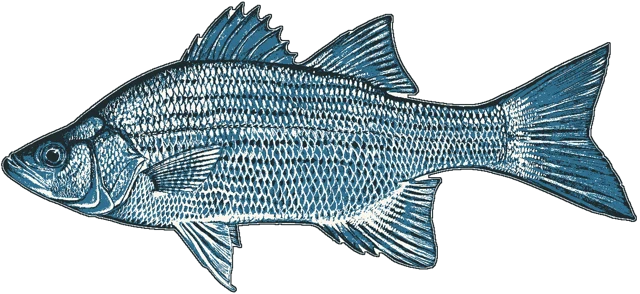
White bass
Morone chrysops · also called streaker, silver bass, sand bass · Freshwater
Texas Parks & Wildlife calls white bass superb table fare, and the spring runs fill a lot of coolers; light, flaky meat like walleye.
- Tastes
- mild, light, flaky
- Limits
- Light regs. Statewide: 15 per day (30 in possession), white, yellow and striped bass and their hybrids combined, and no more than 4 of them longer than 18 inches, open all year. Mississippi River: 30 a day and in possession combined, no length limit. Thomas Hill and Long Branch lakes: 4 a day combined, 20-inch minimum. Some MDC area lakes (Busch and Reed memorial areas, Belcher Branch, Harmony Mission, Lake Paho, Little Compton, Limpp, Nodaway County and Perry County lakes, and others): 4 white bass, striped bass and hybrids a day, 20-inch minimum. Bull Shoals and Norfork lakes and their tributaries: no length limits on white bass, yellow bass or hybrids. Other listed waters differ. (Wildlife Code 3 CSR 10-6.545, amended effective March 1, 2014; Secretary of State copy revised March 31, 2026) Source
- Best months
- Mid-March to late April in tributary streams (peak mid-April); summer schools at dawn and dusk; fall on windy points and banks.
- Where
- Table Rock, Bull Shoals, Norfork, Stockton (Big Sac, Little Sac, Turnback Creek), Lake of the Ozarks, Truman and Smithville lakes, and the Mississippi River around the locks and dams above St. Louis.
- jigs with white curlytail grubs
- shad-colored lipless crankbaits
- topwater plugs
- jigging spoons
- small crankbaits
- Do not eat (anyone): any fish from the all-fish waters on this page (Hager, Giessing and Thomas lakes in Farmington among them).
- Do not eat (anyone): fish eggs of any kind.
Meal limits and other waters (7)
- Limit (sensitive group: under 13, pregnant, nursing or may become pregnant): 1 meal a month of white bass over 15 inches from Clearwater Lake, Reynolds County (mercury).
- Limit (sensitive group): 1 meal a month of large predatory fish over 12 inches (Missouri DNR fact sheet, March 2026).
- Limit (sensitive group): 1 meal a week of smaller white bass and any other fish (mercury).
- Limit (everyone): 1 meal a month of any fish from Lake Buteo, Knob Noster State Park (mercury).
- Limit (everyone): 1 meal a week of locally caught fish where no local advisory exists (DHSS mercury page).
- Lead counties on this page: cut out the larger bones before you cook it.
- DHSS guide, March 2024; confirm with its current list.
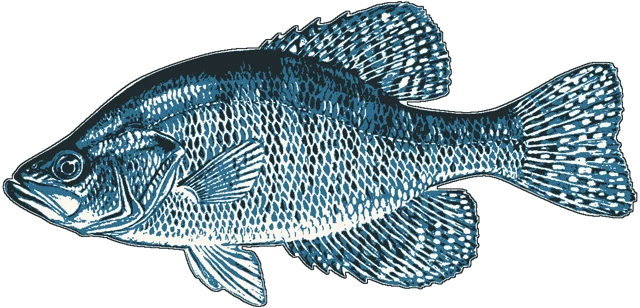
White crappie
Pomoxis annularis · also called papermouth, bachelor perch · Freshwater
Same top-tier panfish fillets as black crappie; one of the most popular panfish in the country.
- Tastes
- mild, sweet, delicate, flaky, white
- Limits
- Light regs. Statewide: 30 per day (60 in possession), black and white crappie together, no length limit, open all year. Lake of the Ozarks, Truman and Pomme de Terre: 9-inch minimum, 15 per day. Bull Shoals, Norfork, Table Rock and Stockton: 10-inch minimum, 15 per day. Long Branch, Mark Twain, Montrose and Thomas Hill: 15 per day, no minimum. Smithville and Wappapello: 30 per day, no more than 15 of them over 9 inches. MDC area lakes (conservation-area lakes, and city, county and park lakes MDC manages): 30 per day, or 15 at listed lakes. Other listed waters differ. (Wildlife Code 3 CSR 10-6.515, amended effective March 1, 2019; Secretary of State copy revised March 31, 2026) Source
- Best months
- February and March at Lake of the Ozarks, Truman and Table Rock; spawn in March and April in southern lakes, mid-April to mid-May at Mark Twain and the first half of May at Smithville. Winter at docks and brushpiles.
- Where
- Mark Twain Lake (large numbers), the muddier upper arms of Smithville, Table Rock and Pomme de Terre, and smaller lakes such as Longview, Lake Jacomo, Lake Paho, Indian Creek and Maple Leaf.
- minnows
- tube jigs
- 1/32 to 1/8 ounce jigs with soft plastics
- marabou jigs
- small crankbaits
- Do not eat (anyone): any fish from the all-fish waters on this page (Hager, Giessing and Thomas lakes in Farmington among them).
- Do not eat (anyone): fish eggs of any kind.
Meal limits and other waters (7)
- Limit (sensitive group: under 13, pregnant, nursing or may become pregnant): 1 meal a month of crappie over 9 inches from Clearwater Lake, Reynolds County (mercury).
- Limit (sensitive group): 1 meal a week of other crappie and any other fish (mercury).
- Limit (everyone): 1 meal a month of any fish from Lake Buteo, Knob Noster State Park (mercury).
- Limit (everyone): 1 meal a week of locally caught fish where no local advisory exists (DHSS mercury page).
- Lead counties on this page: cut out the larger bones before you cook it.
- DHSS lists crappie, except Clearwater Lake's, among fish that typically have very low mercury, PCB and chlordane levels.
- DHSS guide, March 2024; confirm with its current list.
Bigmouth buffalo
Ictiobus cyprinellus · Freshwater
A food fish many people consider worth keeping despite its many bones (TPWD), but and rarely caught on hook and line, so most anglers write it off as a rough fish.
Worth a try: TPWD says many people consider it quite a food fish despite its many bones; smoke it, or fry the rib sections.
- Tastes
- mild, rich, firm, bony
- Limits
- Light regs. Nongame fish ('other fish' in the Wildlife Code: every fish that is not a game fish, an alligator gar or endangered) share one daily limit: 50 a day in total by pole and line, trotline, throwline, limb line, bank line or jug line, open all year, or 20 a day in total by gig, bow, crossbow, atlatl, snagging, snaring, grabbing or underwater spearfishing, which have their own seasons and hours. Mississippi River: 100 a day and in possession. Elsewhere possession is two daily limits. Common carp, grass carp, goldfish and invasive fish (such as bighead and silver carp) may be taken in any number. No statewide length limits by these methods. On MDC area lakes (lakes and ponds on conservation areas, and city, county and park lakes MDC manages) the limit is usually 20 a day in total, or 10 at listed lakes. (Wildlife Code 3 CSR 10-6.550, amended effective Feb. 28, 2025; Secretary of State copy revised March 31, 2026) Source
- Where
- The Missouri and Mississippi rivers, including the banks at Confluence Point State Park; every year of USGS surveys (1993 to 2002) in Mississippi River Pool 26 (river miles 202 to 242) and the open river below St. Louis (miles 29 to 80).
- dough baits (cottonseed meal)
- bowfishing
- Do not eat (anyone): suckers of any type, the family buffalo belong to, from the Big River (St. Francois and Jefferson counties) or the Flat River (St. Francois County, Highway B to the Big River) (lead).
- Do not eat (anyone): buffalo, suckers or other bottom feeders from Adair Creek, Sweetwater Creek or Logan Creek from Adair to Susie Creek, Reynolds County (lead).
- Do not eat (anyone): any fish from the all-fish waters on this page (Hager, Giessing and Thomas lakes in Farmington among them).
- Do not eat (anyone): fish eggs of any kind.
Meal limits and other waters (9)
- Limit (everyone): 1 meal a month of any buffalo from the Mississippi and Missouri rivers (PCBs, chlordane, mercury).
- Limit (everyone): 1 meal a month of buffalo over 16 inches from Simpson Park Lake, St. Louis County (chlordane, mercury, PCBs).
- Limit (everyone): 1 meal a month of any fish from Lake Buteo, Knob Noster State Park (mercury).
- Limit (sensitive group: under 13, pregnant, nursing or may become pregnant): 1 meal a week of any fish (mercury).
- Limit (everyone): 1 meal a week of locally caught fish where no local advisory exists (DHSS mercury page).
- Madison County's St. Francis and Little St. Francis rivers and Fredericktown City Lake: take out the vertebrae and ribs before any preparation (lead).
- Jasper, Madison, Jefferson, St. Francois, Washington and Iron counties: cut out as much of the larger bones as you can before you prepare it (lead).
- Limits assume a skinned, trimmed fillet.
- DHSS guide, March 2024; confirm with its current list.
Bullhead (black, brown, yellow)
Ameiurus melas, A. nebulosus, A. natalis · Freshwater
Sweet, delicious catfish meat, but most are small and many come from warm, muddy water, so many anglers dismiss them.
- Tastes
- mild, sweet, firm, moist
- Limits
- Light regs. Nongame fish ('other fish' in the Wildlife Code: every fish that is not a game fish, an alligator gar or endangered) share one daily limit: 50 a day in total by pole and line, trotline, throwline, limb line, bank line or jug line, open all year, or 20 a day in total by gig, bow, crossbow, atlatl, snagging, snaring, grabbing or underwater spearfishing, which have their own seasons and hours. Mississippi River: 100 a day and in possession. Elsewhere possession is two daily limits. Common carp, grass carp, goldfish and invasive fish (such as bighead and silver carp) may be taken in any number. No statewide length limits by these methods. On MDC area lakes (lakes and ponds on conservation areas, and city, county and park lakes MDC manages) the limit is usually 20 a day in total, or 10 at listed lakes. Bullheads are not game fish in Missouri (channel, blue and flathead catfish are). (Wildlife Code 3 CSR 10-6.550, amended effective Feb. 28, 2025; Secretary of State copy revised March 31, 2026) Source
- Where
- Missouri River waters of Big Muddy National Fish and Wildlife Refuge and Locust Creek at Pershing State Park; black and yellow bullheads both turn up in USGS surveys of the Mississippi.
- nightcrawlers
- chicken livers
- dough balls
- cut bait
- stinkbait
- Do not eat (anyone): bullheads or other bottom feeders from Adair Creek, Sweetwater Creek or Logan Creek from Adair to Susie Creek, Reynolds County (lead).
- Do not eat (anyone): any fish from the all-fish waters on this page (Hager, Giessing and Thomas lakes in Farmington among them).
- Do not eat (anyone): fish eggs of any kind.
Meal limits and other waters (7)
- Limit (everyone): 1 meal a month of catfish, which takes in bullheads, from the Blue River (Minor Park to the Missouri River, with Indian Creek up to Holmes Road; PCBs, chlordane), Lake Springfield (PCBs) or Lake Buteo, Knob Noster State Park (mercury).
- Limit (sensitive group: under 13, pregnant, nursing or may become pregnant): 1 meal a week of any fish (mercury).
- Limit (everyone): 1 meal a week of locally caught fish where no local advisory exists (DHSS mercury page).
- Madison County's St. Francis and Little St. Francis rivers and Fredericktown City Lake: take out the vertebrae and ribs before any preparation (lead).
- Lead counties on this page: cut out the larger bones before you cook it.
- Limits assume a skinned, trimmed fillet.
- DHSS guide, March 2024; confirm with its current list.
Common carp
Cyprinus carpio · Freshwater
Most US anglers call it a muddy, bony trash fish, but it is a prized food fish in Europe and Asia and eats well from clean, cold water.
Worth a try: Catch from clean water, remove the dark 'mud vein', and either score small fish and fry hard so the Y-bones soften, or hard-smoke large fish over fruitwood (Hank Shaw).
- Tastes
- mild from clean water, strong from muddy water, firm, fatty, Y-bones
- Limits
- No limits. Statewide: common carp may be taken and possessed in any number, with no daily, possession or length limit, all year by line methods. Bow, gig and snagging follow the nongame seasons (gigging Sept. 15 to Feb. 15, snagging March 15 to May 15 and Sept. 15 to Feb. 15, shorter on some rivers and lakes). Carp may be taken by hand net, and carp that jump into a boat or onto land may be kept. On MDC area lakes (lakes and ponds on conservation areas, and city, county and park lakes MDC manages) the Code caps other fish at 20 a day in total, or 10 at listed lakes, and names no exception for carp. (Wildlife Code 3 CSR 10-6.550, amended effective Feb. 28, 2025; Secretary of State copy revised March 31, 2026) Source
- Where
- The Missouri and Mississippi rivers (Confluence Point State Park), Big Lake State Park, Mark Twain Lake and Locust Creek at Pershing State Park; more abundant in lakes and slow, muddy streams than in clear, steep ones.
- dough balls
- whole kernel corn
- worms
- Do not eat (anyone): carp of any size from the Big River (St. Francois and Jefferson counties) or the Flat River (St. Francois County, Highway B to the Big River) (lead).
- Do not eat (anyone): carp or other bottom feeders from Adair Creek, Sweetwater Creek or Logan Creek from Adair to Susie Creek, Reynolds County (lead).
- Do not eat (anyone): any fish from the all-fish waters on this page (Hager, Giessing and Thomas lakes in Farmington among them).
- Do not eat (anyone): fish eggs of any kind.
Meal limits and other waters (9)
- Limit (everyone): 1 meal a month of carp from the Blue River (Minor Park to the Missouri River, with Indian Creek up to Holmes Road; PCBs, chlordane), Lake Springfield (PCBs) or Lake Buteo, Knob Noster State Park (mercury).
- Limit (everyone), Illinois's list (April 2026): 1 meal a week of common carp of any size from the Mississippi River (PCBs).
- Limit (everyone): 1 meal a week of common carp over 21 inches from the Mississippi and Missouri rivers (PCBs, chlordane, mercury).
- Limit (sensitive group: under 13, pregnant, nursing or may become pregnant): 1 meal a week of any fish (mercury).
- Limit (everyone): 1 meal a week of locally caught fish where no local advisory exists (DHSS mercury page).
- Madison County's St. Francis and Little St. Francis rivers and Fredericktown City Lake: take out the vertebrae and ribs before any preparation (lead).
- Jasper, Madison, Jefferson, St. Francois, Washington and Iron counties: cut out as much of the larger bones as you can before you prepare it (lead).
- Limits assume a skinned, trimmed fillet.
- DHSS guide, March 2024; confirm with its current list.
Freshwater drum
Aplodinotus grunniens · Freshwater
Many anglers call it a rough fish, but it is prized as food in some areas (TPWD); bled and iced, the boneless fillets eat like a redfish's.
Worth a try: Bleed it, ice it immediately and trim the red lateral meat; then fry thin fillets, grill on the half-shell like redfish, or smoke oily summer fish.
- Tastes
- mild, like other drum, firm but tender, large flake; goes soft if not iced
- Limits
- Light regs. Nongame fish ('other fish' in the Wildlife Code: every fish that is not a game fish, an alligator gar or endangered) share one daily limit: 50 a day in total by pole and line, trotline, throwline, limb line, bank line or jug line, open all year, or 20 a day in total by gig, bow, crossbow, atlatl, snagging, snaring, grabbing or underwater spearfishing, which have their own seasons and hours. Mississippi River: 100 a day and in possession. Elsewhere possession is two daily limits. Common carp, grass carp, goldfish and invasive fish (such as bighead and silver carp) may be taken in any number. No statewide length limits by these methods. On MDC area lakes (lakes and ponds on conservation areas, and city, county and park lakes MDC manages) the limit is usually 20 a day in total, or 10 at listed lakes. (Wildlife Code 3 CSR 10-6.550, amended effective Feb. 28, 2025; Secretary of State copy revised March 31, 2026) Source
- Where
- The Missouri and Mississippi rivers (Confluence Point State Park), the Meramec River at Onondaga Cave State Park and Locust Creek at Pershing State Park.
- Do not eat (anyone): drum or other bottom feeders from Adair Creek, Sweetwater Creek or Logan Creek from Adair to Susie Creek, Reynolds County (lead).
- Do not eat (anyone): any fish from the all-fish waters on this page (Hager, Giessing and Thomas lakes in Farmington among them).
- Do not eat (anyone): fish eggs of any kind.
Meal limits and other waters (6)
- Limit (everyone): 1 meal a month of any fish from Lake Buteo, Knob Noster State Park (mercury).
- Limit (sensitive group: under 13, pregnant, nursing or may become pregnant): 1 meal a week of any fish (mercury).
- Limit (everyone): 1 meal a week of locally caught fish where no local advisory exists (DHSS mercury page).
- Madison County's St. Francis and Little St. Francis rivers and Fredericktown City Lake: take out the vertebrae and ribs before any preparation (lead).
- Lead counties on this page: cut out the larger bones before you cook it.
- DHSS guide, March 2024; confirm with its current list.
Green sunfish
Lepomis cyanellus · Freshwater
Edible like any sunfish but usually stunted; many anglers treat it as a pest that steals bait meant for bigger fish.
- Tastes
- mild, flaky
- Limits
- Light regs. Nongame fish ('other fish' in the Wildlife Code: every fish that is not a game fish, an alligator gar or endangered) share one daily limit: 50 a day in total by pole and line, trotline, throwline, limb line, bank line or jug line, open all year, or 20 a day in total by gig, bow, crossbow, atlatl, snagging, snaring, grabbing or underwater spearfishing, which have their own seasons and hours. Mississippi River: 100 a day and in possession. Elsewhere possession is two daily limits. Common carp, grass carp, goldfish and invasive fish (such as bighead and silver carp) may be taken in any number. No statewide length limits by these methods. On MDC area lakes (lakes and ponds on conservation areas, and city, county and park lakes MDC manages) the limit is usually 20 a day in total, or 10 at listed lakes. (Wildlife Code 3 CSR 10-6.550, amended effective Feb. 28, 2025; Secretary of State copy revised March 31, 2026) Source
- Where
- Docks and seawalls at Lake of the Ozarks; the Mississippi River in Pool 26 (river miles 202 to 242) and the open river below St. Louis (miles 29 to 80), every year of USGS surveys from 1993 to 2002.
- worms
- grubs
- grasshoppers
- small jigs
- Do not eat (anyone): green sunfish of any size from the Big River (St. Francois and Jefferson counties) or the Flat River (St. Francois County, Highway B to the Big River) (lead).
- Do not eat (anyone): green sunfish from Big Creek near Glover, Iron County, Hogan to Chloride (lead).
- Do not eat (anyone): any fish from the all-fish waters on this page (Hager, Giessing and Thomas lakes in Farmington among them).
- Do not eat (anyone): fish eggs of any kind.
Meal limits and other waters (6)
- Limit (everyone): 1 meal a month of any fish from Lake Buteo, Knob Noster State Park (mercury).
- Limit (sensitive group: under 13, pregnant, nursing or may become pregnant): 1 meal a week of any fish (mercury).
- Limit (everyone): 1 meal a week of locally caught fish where no local advisory exists (DHSS mercury page).
- Lead counties on this page: cut out the larger bones before you cook it.
- DHSS leaves green sunfish off its list of sunfish with typically very low mercury, PCB and chlordane levels.
- DHSS guide, March 2024; confirm with its current list.
Largemouth bass
Micropterus nigricans (syn. M. salmoides) · also called lineside bass, black bass · Freshwater
Perfectly edible white fillets, but America's top catch-and-release fish and many anglers swear the meat tastes fishy or muddy, so reputation is split.
- Tastes
- mild to slightly 'fishy', firm, thick fillets
- Limits
- Light regs. Black bass (largemouth, smallmouth, spotted and their hybrids) share one limit: 6 per day, 12 in possession. Lakes: open all year with no length limit, except the big lakes listed below and MDC area lakes (lakes and ponds on conservation areas, and city, county and park lakes MDC manages). On MDC area lakes, bass over 12 and under 15 inches must be released unless the lake has its own limit, and listed lakes allow only 2 a day. Most streams south of the Missouri River: 12-inch minimum, and black bass from these streams may not be possessed from March 1 through the Friday before the fourth Saturday in May each year (catch and release only; March 1 to May 21 in 2027). The harvest season that opened May 23, 2026 runs to Feb. 28, 2027. Streams open all year with a 12-inch minimum: the Mississippi River, streams north of the south bank of the Missouri River, the St. Francis River below Wappapello Dam, and streams in southeast Missouri inside a line from Cape Girardeau along Highways 74 and 25, U.S. Highways 60, 67 and 160 and the west bank of the Little Black River to the Arkansas line. Lake of the Ozarks, Truman, Bull Shoals, Norfork, Stockton and Table Rock: 15-inch minimum for largemouth and smallmouth, 12-inch for spotted (at Table Rock since April 30, 2026). Mark Twain, Blue Springs, Long Branch, Longview, Smithville and Thomas Hill: 15-inch minimum on all black bass. Pomme de Terre: 13-inch. Montrose Lake: 18-inch minimum and 2 per day. Clarence Cannon Reregulation Pool below Mark Twain Lake dam: 12-inch. Meramec, Big and Bourbeuse rivers and their tributaries: 12 black bass a day and in possession, no more than 6 of them largemouth and smallmouth combined, no minimum on spotted bass. Other listed waters differ. Largemouth bass follow these numbers; the 6-bass limit counts all three black bass species together. (Wildlife Code 3 CSR 10-6.505, amended effective April 30, 2026; Secretary of State copy revised March 31, 2026) Source
- Best months
- Lake of the Ozarks: May to mid-June, October and November (bass spawn there in late April and May). Bull Shoals: May. Clearwater: August.
- Where
- Artificial lakes of all sizes, lowland lakes, permanent stream pools and quiet big-river backwaters. Named for bass: Lake of the Ozarks (Niangua and Glaize arms), Table Rock, Stockton, Bull Shoals, Mark Twain, Wappapello and Clearwater.
- jerkbaits
- jigs
- spinnerbaits
- crankbaits
- topwater plugs
- buzzbaits
- Water-body mercury advisories commonly list largemouth bass; check your state's advisory before eating large fish.
- Do not eat (anyone): largemouth or smallmouth bass of any size from Lake Buteo, Knob Noster State Park (mercury).
- Do not eat (anyone): any fish from the all-fish waters on this page (Hager, Giessing and Thomas lakes in Farmington among them).
- Do not eat (anyone): fish eggs of any kind.
Meal limits and other waters (6)
- Limit (sensitive group: under 13, pregnant, nursing or may become pregnant): 1 meal a month of largemouth, spotted or smallmouth bass over 12 inches, from any Missouri water (mercury).
- Limit (sensitive group): 1 meal a week of smaller bass and any other fish (mercury).
- Limit (everyone): 1 meal a month of any other fish from Lake Buteo, Knob Noster State Park (mercury).
- Limit (everyone): 1 meal a week of locally caught fish where no local advisory exists (DHSS mercury page).
- Lead counties on this page: cut out the larger bones before you cook it.
- DHSS guide, March 2024; confirm with its current list.
Longear sunfish
Lepomis megalotis · Freshwater
Tasty like other sunfish but rarely big enough to fillet; TPWD calls it an important fish for young anglers, easy to catch on earthworms.
- Tastes
- mild, flaky
- Limits
- Light regs. Nongame fish ('other fish' in the Wildlife Code: every fish that is not a game fish, an alligator gar or endangered) share one daily limit: 50 a day in total by pole and line, trotline, throwline, limb line, bank line or jug line, open all year, or 20 a day in total by gig, bow, crossbow, atlatl, snagging, snaring, grabbing or underwater spearfishing, which have their own seasons and hours. Mississippi River: 100 a day and in possession. Elsewhere possession is two daily limits. Common carp, grass carp, goldfish and invasive fish (such as bighead and silver carp) may be taken in any number. No statewide length limits by these methods. On MDC area lakes (lakes and ponds on conservation areas, and city, county and park lakes MDC manages) the limit is usually 20 a day in total, or 10 at listed lakes. (Wildlife Code 3 CSR 10-6.550, amended effective Feb. 28, 2025; Secretary of State copy revised March 31, 2026) Source
- Where
- Ozark streams throughout (USGS), including the Current and Jacks Fork rivers.
- earthworms
- small poppers
- small jigs
- Do not eat (anyone): longear sunfish of any size from the Big River (St. Francois and Jefferson counties) or the Flat River (St. Francois County, Highway B to the Big River) (lead).
- Do not eat (anyone): longear sunfish from Big Creek near Glover, Iron County, Hogan to Chloride (lead).
- Do not eat (anyone): any fish from the all-fish waters on this page (Hager, Giessing and Thomas lakes in Farmington among them).
- Do not eat (anyone): fish eggs of any kind.
Meal limits and other waters (6)
- Limit (everyone): 1 meal a month of any fish from Lake Buteo, Knob Noster State Park (mercury).
- Limit (sensitive group: under 13, pregnant, nursing or may become pregnant): 1 meal a week of any fish (mercury).
- Limit (everyone): 1 meal a week of locally caught fish where no local advisory exists (DHSS mercury page).
- Lead counties on this page: cut out the larger bones before you cook it.
- DHSS lists most sunfish among fish that typically have very low mercury, PCB and chlordane levels.
- DHSS guide, March 2024; confirm with its current list.
Longnose gar
Lepisosteus osseus · Freshwater
Most anglers treat it as a nuisance and few eat it, but the firm white backstraps are good once you get through the armor.
Worth a try: Cut down the back with shears or a hatchet to get past the armored scales, take the two white backstraps, and fry them or grind them into Louisiana gar balls.
- Tastes
- mild, firm, meaty, almost like alligator
- Limits
- Light regs. Nongame fish ('other fish' in the Wildlife Code: every fish that is not a game fish, an alligator gar or endangered) share one daily limit: 50 a day in total by pole and line, trotline, throwline, limb line, bank line or jug line, open all year, or 20 a day in total by gig, bow, crossbow, atlatl, snagging, snaring, grabbing or underwater spearfishing, which have their own seasons and hours. Mississippi River: 100 a day and in possession. Elsewhere possession is two daily limits. Common carp, grass carp, goldfish and invasive fish (such as bighead and silver carp) may be taken in any number. No statewide length limits by these methods. On MDC area lakes (lakes and ponds on conservation areas, and city, county and park lakes MDC manages) the limit is usually 20 a day in total, or 10 at listed lakes. Alligator gar are not in the nongame group: the Code opens no season for them, so they may not be taken. (Wildlife Code 3 CSR 10-6.550, amended effective Feb. 28, 2025; Secretary of State copy revised March 31, 2026) Source
- Where
- The Mississippi River in Pool 26 (river miles 202 to 242) and the open river below St. Louis (miles 29 to 80), every year of USGS surveys from 1993 to 2002; also on the federal fish list for the Current and Jacks Fork rivers.
- live minnows suspended near the surface
- rope (frayed nylon) lures
- bowfishing
- Gar eggs (roe) are toxic to people and other warm-blooded animals; never eat them (Maryland DNR).
- Do not eat (anyone): gar eggs (roe), which are toxic to people and other animals.
- Do not eat (anyone): any fish from the all-fish waters on this page (Hager, Giessing and Thomas lakes in Farmington among them).
- Do not eat (anyone): fish eggs of any kind.
Meal limits and other waters (6)
- Limit (sensitive group: under 13, pregnant, nursing or may become pregnant): 1 meal a month of large predatory fish over 12 inches (Missouri DNR fact sheet, March 2026).
- Limit (sensitive group): 1 meal a week of smaller gar and any other fish (mercury).
- Limit (everyone): 1 meal a month of any fish from Lake Buteo, Knob Noster State Park (mercury).
- Limit (everyone): 1 meal a week of locally caught fish where no local advisory exists (DHSS mercury page).
- Lead counties on this page: cut out the larger bones before you cook it.
- DHSS guide, March 2024; confirm with its current list.
Paddlefish
Polyodon spathula · also called spoonbill · Freshwater
Valued for its caviar. We have no good source on how it eats, so it is rated Just OK by default.
- Tastes
- mild, firm, boneless
- Limits
- Heavy regs. Season March 15 to April 30 each year: 2 per day (4 in possession), 32-inch minimum measured from eye to fork of tail. Lake of the Ozarks, Table Rock Lake, Truman Reservoir and their tributaries: 34-inch minimum. Mississippi River: March 15 to May 15 and Sept. 15 to Dec. 15, 2 per day, 32-inch minimum. A legal paddlefish taken by snagging or grabbing must be kept and counted. On Lake of the Ozarks and Truman and their tributaries, Table Rock Lake and the Osage River below U.S. Highway 54, no one may keep snagging, snaring or grabbing for any species after taking 2 paddlefish. May not be possessed on the water or banks from Truman Dam through the no-boating zone or on the Little Platte River from Smithville Dam to U.S. Highway 169. Extracted paddlefish eggs may not be possessed on the water or banks or transported, and paddlefish may not be used as bait. (Wildlife Code 3 CSR 10-6.525, amended effective Feb. 28, 2022; Secretary of State copy revised March 31, 2026) Source
- Best months
- March 15 to April 30; males move up at about 50 F and larger females near 55 F after warm spring rains. The Mississippi River is also open March 15 to May 15 and Sept. 15 to Dec. 15.
- Where
- Upper Truman Lake (Horseshoe Bend to Weaubleau Creek, Osceola to Taberville Access), Lake of the Ozarks below Truman Dam, the Osage River below Bagnell Dam, the James River arm of Table Rock, and the Mississippi and Missouri rivers.
- no bait: snagged with size 10 treble hooks and an 8 to 16 ounce sinker
- Do not eat (anyone): any fish from the all-fish waters on this page (Hager, Giessing and Thomas lakes in Farmington among them).
- Do not eat (anyone): fish eggs of any kind, paddlefish roe included.
Meal limits and other waters (5)
- Limit (sensitive group: under 13, pregnant, nursing or may become pregnant): 1 meal a week of any fish (mercury).
- Limit (everyone): 1 meal a week of locally caught fish where no local advisory exists (DHSS mercury page).
- Lead counties on this page: cut out the larger bones before you cook it.
- Limits assume a skinned, trimmed fillet.
- DHSS guide, March 2024; confirm with its current list.
Rock bass
Ambloplites rupestris · also called goggle-eye · Freshwater
Light, flaky fillets that some anglers rate highly, while others find them oily and fishy compared with bluegill or crappie.
- Tastes
- mild to slightly fishy, light, flaky
- Limits
- Light regs. Goggle-eye (Ozark, rock and shadow bass) and warmouth share one limit: 15 per day (30 in possession), 7-inch minimum, open all year. Big Piney (Highway 17 bridge to the Gasconade), Courtois Creek (Highway 8 bridge to Huzzah Creek), Eleven Point (Thomasville Access to the Arkansas line), Huzzah Creek (Willhite Road to the Meramec) and the Meramec (Highway 19 bridge to Pacific Palisades Conservation Area): 8-inch minimum. Other listed waters differ. (Wildlife Code 3 CSR 10-6.530, amended effective March 1, 2018; Secretary of State copy revised March 31, 2026) Source
- Best months
- April, before the spawn; July on the Gasconade; summer at Table Rock.
- Where
- Ozark streams: the Gasconade, Big Piney and Meramec rivers, Elk River tributaries, and Sinking Creek at Echo Bluff State Park; also Table Rock Lake.
- minnows
- small jigs
- spinners (Rooster Tails)
- small plastic worms
- crawfish-colored crankbaits
- Do not eat (anyone): rock bass (goggle-eye) of any size from the Big River (St. Francois and Jefferson counties) or the Flat River (St. Francois County, Highway B to the Big River) (lead).
- Do not eat (anyone): rock bass (goggle-eye) from Big Creek near Glover, Iron County, Hogan to Chloride (lead).
- Do not eat (anyone): any fish from the all-fish waters on this page (Hager, Giessing and Thomas lakes in Farmington among them).
- Do not eat (anyone): fish eggs of any kind.
Meal limits and other waters (6)
- Limit (everyone): 1 meal a month of any fish from Lake Buteo, Knob Noster State Park (mercury).
- Limit (sensitive group: under 13, pregnant, nursing or may become pregnant): 1 meal a week of any fish (mercury).
- Limit (everyone): 1 meal a week of locally caught fish where no local advisory exists (DHSS mercury page).
- Lead counties on this page: cut out the larger bones before you cook it.
- DHSS lists most sunfish among fish that typically have very low mercury, PCB and chlordane levels.
- DHSS guide, March 2024; confirm with its current list.
Shortnose gar
Lepisosteus platostomus · Freshwater
Small gar with little meat; usually tossed, though the backstraps eat like any gar.
Worth a try: Cut down the back with shears or a hatchet to get past the armored scales, take the two white backstraps, and fry them or grind them into Louisiana gar balls.
- Tastes
- mild, firm, meaty
- Limits
- Light regs. Nongame fish ('other fish' in the Wildlife Code: every fish that is not a game fish, an alligator gar or endangered) share one daily limit: 50 a day in total by pole and line, trotline, throwline, limb line, bank line or jug line, open all year, or 20 a day in total by gig, bow, crossbow, atlatl, snagging, snaring, grabbing or underwater spearfishing, which have their own seasons and hours. Mississippi River: 100 a day and in possession. Elsewhere possession is two daily limits. Common carp, grass carp, goldfish and invasive fish (such as bighead and silver carp) may be taken in any number. No statewide length limits by these methods. On MDC area lakes (lakes and ponds on conservation areas, and city, county and park lakes MDC manages) the limit is usually 20 a day in total, or 10 at listed lakes. Alligator gar are not in the nongame group: the Code opens no season for them, so they may not be taken. (Wildlife Code 3 CSR 10-6.550, amended effective Feb. 28, 2025; Secretary of State copy revised March 31, 2026) Source
- Where
- The Mississippi River in Pool 26 (river miles 202 to 242) and the open river below St. Louis (miles 29 to 80), every year of USGS surveys from 1993 to 2002.
- Gar eggs (roe) are toxic to people and other warm-blooded animals; never eat them (Maryland DNR).
- Do not eat (anyone): gar eggs (roe), which are toxic to people and other animals.
- Do not eat (anyone): any fish from the all-fish waters on this page (Hager, Giessing and Thomas lakes in Farmington among them).
- Do not eat (anyone): fish eggs of any kind.
Meal limits and other waters (6)
- Limit (sensitive group: under 13, pregnant, nursing or may become pregnant): 1 meal a month of large predatory fish over 12 inches (Missouri DNR fact sheet, March 2026).
- Limit (sensitive group): 1 meal a week of smaller gar and any other fish (mercury).
- Limit (everyone): 1 meal a month of any fish from Lake Buteo, Knob Noster State Park (mercury).
- Limit (everyone): 1 meal a week of locally caught fish where no local advisory exists (DHSS mercury page).
- Lead counties on this page: cut out the larger bones before you cook it.
- DHSS guide, March 2024; confirm with its current list.
Shovelnose sturgeon
Scaphirhynchus platorynchus · also called hackleback, sand sturgeon · Freshwater
Indiana DNR says sturgeon flesh has an excellent flavor and is often smoked, but this small river sturgeon is rarely targeted and harvest is closed in some reaches.
- Tastes
- mild, firm
- Limits
- Light regs. 10 per day (20 in possession), 30-inch maximum length (snout to fork of tail), open all year. Fish must stay whole and intact while on the water or banks. Missouri River from Carl R. Noren Access downstream to Chamois Access: all shovelnose must be released. Extracted eggs may not be possessed on the water or banks or transported, and shovelnose may not be used as bait. Lake sturgeon and pallid sturgeon are endangered and may not be taken. (Wildlife Code 3 CSR 10-6.533, amended effective April 30, 2009; Secretary of State copy revised March 31, 2026) Source
- Where
- The Mississippi River (USGS surveys from 1993 to 2002 caught it every year in the open river below St. Louis and in 9 of 10 years in Pool 26) and the Missouri River.
- Do not eat (anyone): sturgeon eggs from the Mississippi or Missouri rivers (PCBs, chlordane, mercury).
- Do not eat (anyone): any fish from the all-fish waters on this page (Hager, Giessing and Thomas lakes in Farmington among them).
- Do not eat (anyone): fish eggs of any kind.
Meal limits and other waters (7)
- Limit (everyone): 1 meal a month of shovelnose sturgeon of any size, eggs left out, from the Mississippi and Missouri rivers (PCBs, chlordane, mercury).
- Illinois's list (April 2026) has the same limit on the Mississippi from Lock and Dam 22 to Cairo.
- Limit (sensitive group: under 13, pregnant, nursing or may become pregnant): 1 meal a week of any fish (mercury).
- Limit (everyone): 1 meal a week of locally caught fish where no local advisory exists (DHSS mercury page).
- Lead counties on this page: cut out the larger bones before you cook it.
- Limits assume a skinned, trimmed fillet.
- DHSS guide, March 2024; confirm with its current list.
Silver carp
Hypophthalmichthys molitrix · Freshwater
A clean, mild white fish that most US anglers only encounter while bowfishing and throw away because it is extremely bony and invasive.
Worth a try: Sold as 'Copi' and recommended by Seafood Watch; grind or score the fillets to beat the bones.
- Tastes
- mild, clean, white, many intermuscular bones
- Limits
- No limits. Statewide: silver carp may be taken and possessed in any number, with no daily, possession or length limit. They may be taken by hand net, and fish that jump into a boat or onto land may be kept. Live silver carp may not be transported from the water unconfined or in water, and may not be used as live bait (dead or cut bait is allowed). On MDC area lakes (lakes and ponds on conservation areas, and city, county and park lakes MDC manages) the Code caps other fish at 20 a day in total, or 10 at listed lakes, and names no exception for carp. (Wildlife Code 3 CSR 10-6.550, amended effective Feb. 28, 2025; Secretary of State copy revised March 31, 2026) Source
- Where
- USGS records cover the Missouri, Mississippi, lower Osage, Meramec, Grand, Lamine, Blackwater and Salt river drainages.
- Leaping silver carp injure boaters; the hazard is physical, not dietary.
- Do not eat (anyone): carp of any kind from the Big River (St. Francois and Jefferson counties) or the Flat River (St. Francois County, Highway B to the Big River) (lead).
- Do not eat (anyone): any fish from the all-fish waters on this page (Hager, Giessing and Thomas lakes in Farmington among them).
- Do not eat (anyone): fish eggs of any kind.
Meal limits and other waters (7)
- Limit (everyone): 1 meal a month of carp from Lake Springfield, Greene County (PCBs).
- Limit (sensitive group: under 13, pregnant, nursing or may become pregnant): 1 meal a week of any fish (mercury).
- Limit (everyone): 1 meal a week of locally caught fish where no local advisory exists (DHSS mercury page).
- Madison County's St. Francis and Little St. Francis rivers and Fredericktown City Lake: take out the vertebrae and ribs before any preparation (lead).
- Jasper, Madison, Jefferson, St. Francois, Washington and Iron counties: cut out as much of the larger bones as you can before you prepare it (lead).
- Limits assume a skinned, trimmed fillet.
- DHSS guide, March 2024; confirm with its current list.
Smallmouth bass
Micropterus dolomieu · also called brown bass, brownie, bronzeback · Freshwater
Firm, white and good, often rated above largemouth, but most smallmouth are released by custom and the flesh has a slight 'fishy' edge some anglers dislike.
- Tastes
- mild, slightly fishy edge, firm, thick white fillets
- Limits
- Heavy regs. Black bass (largemouth, smallmouth, spotted and their hybrids) share one limit: 6 per day, 12 in possession. Lakes: open all year with no length limit, except the big lakes listed below and MDC area lakes (lakes and ponds on conservation areas, and city, county and park lakes MDC manages). On MDC area lakes, bass over 12 and under 15 inches must be released unless the lake has its own limit, and listed lakes allow only 2 a day. Most streams south of the Missouri River: 12-inch minimum, and black bass from these streams may not be possessed from March 1 through the Friday before the fourth Saturday in May each year (catch and release only; March 1 to May 21 in 2027). The harvest season that opened May 23, 2026 runs to Feb. 28, 2027. Streams open all year with a 12-inch minimum: the Mississippi River, streams north of the south bank of the Missouri River, the St. Francis River below Wappapello Dam, and streams in southeast Missouri inside a line from Cape Girardeau along Highways 74 and 25, U.S. Highways 60, 67 and 160 and the west bank of the Little Black River to the Arkansas line. Lake of the Ozarks, Truman, Bull Shoals, Norfork, Stockton and Table Rock: 15-inch minimum for largemouth and smallmouth, 12-inch for spotted (at Table Rock since April 30, 2026). Mark Twain, Blue Springs, Long Branch, Longview, Smithville and Thomas Hill: 15-inch minimum on all black bass. Pomme de Terre: 13-inch. Montrose Lake: 18-inch minimum and 2 per day. Clarence Cannon Reregulation Pool below Mark Twain Lake dam: 12-inch. Meramec, Big and Bourbeuse rivers and their tributaries: 12 black bass a day and in possession, no more than 6 of them largemouth and smallmouth combined, no minimum on spotted bass. Other listed waters differ. 15-inch smallmouth minimum and only 1 smallmouth in the daily limit on sections of the Big Piney, Jacks Fork, Eleven Point, Gasconade, James and Elk rivers, Osage Fork of the Gasconade, and Joachim and Tenmile creeks (6-bass limit), and of the Big River (Council Bluff Lake Dam to the Meramec), Meramec River (Highway 8 bridge to the railroad crossing at Bird's Nest) and Mineral Fork (12-bass limit). (Wildlife Code 3 CSR 10-6.505, amended effective April 30, 2026; Secretary of State copy revised March 31, 2026) Source
- Best months
- Ozark streams: March to June, then September and October; in August, early and late in the day. Spawn runs mid-April into June, peaking in May.
- Where
- Cool, clear Ozark streams (the Current, Gasconade, Big Piney, Jacks Fork, James, Elk, Meramec and Big rivers) and large Ozark reservoirs such as Table Rock; sparingly in the upper Mississippi River and its clear prairie tributaries.
- crawfish-colored crankbaits
- soft plastic craws and grubs on jigs
- spinnerbaits
- buzzbaits
- small topwater lures
- woolly buggers
- Do not eat (anyone): largemouth or smallmouth bass of any size from Lake Buteo, Knob Noster State Park (mercury).
- Do not eat (anyone): any fish from the all-fish waters on this page (Hager, Giessing and Thomas lakes in Farmington among them).
- Do not eat (anyone): fish eggs of any kind.
Meal limits and other waters (6)
- Limit (sensitive group: under 13, pregnant, nursing or may become pregnant): 1 meal a month of largemouth, spotted or smallmouth bass over 12 inches, from any Missouri water (mercury).
- Limit (sensitive group): 1 meal a week of smaller bass and any other fish (mercury).
- Limit (everyone): 1 meal a month of any other fish from Lake Buteo, Knob Noster State Park (mercury).
- Limit (everyone): 1 meal a week of locally caught fish where no local advisory exists (DHSS mercury page).
- Lead counties on this page: cut out the larger bones before you cook it.
- DHSS guide, March 2024; confirm with its current list.
Smallmouth buffalo
Ictiobus bubalus · Freshwater
Smallmouth buffalo is highly prized in many areas (TPWD), but some anglers still call it a rough fish because of its bones.
Worth a try: Many people do not realize smallmouth buffalo is quite a food fish (TPWD); fry the ribs or smoke it.
- Tastes
- mild, firm, bony
- Limits
- Light regs. Nongame fish ('other fish' in the Wildlife Code: every fish that is not a game fish, an alligator gar or endangered) share one daily limit: 50 a day in total by pole and line, trotline, throwline, limb line, bank line or jug line, open all year, or 20 a day in total by gig, bow, crossbow, atlatl, snagging, snaring, grabbing or underwater spearfishing, which have their own seasons and hours. Mississippi River: 100 a day and in possession. Elsewhere possession is two daily limits. Common carp, grass carp, goldfish and invasive fish (such as bighead and silver carp) may be taken in any number. No statewide length limits by these methods. On MDC area lakes (lakes and ponds on conservation areas, and city, county and park lakes MDC manages) the limit is usually 20 a day in total, or 10 at listed lakes. (Wildlife Code 3 CSR 10-6.550, amended effective Feb. 28, 2025; Secretary of State copy revised March 31, 2026) Source
- Where
- The Missouri and Mississippi rivers, including the banks at Confluence Point State Park; every year of USGS surveys (1993 to 2002) in Mississippi River Pool 26 (river miles 202 to 242) and the open river below St. Louis (miles 29 to 80).
- dough baits
- bowfishing
- Do not eat (anyone): suckers of any type, the family buffalo belong to, from the Big River (St. Francois and Jefferson counties) or the Flat River (St. Francois County, Highway B to the Big River) (lead).
- Do not eat (anyone): buffalo, suckers or other bottom feeders from Adair Creek, Sweetwater Creek or Logan Creek from Adair to Susie Creek, Reynolds County (lead).
- Do not eat (anyone): any fish from the all-fish waters on this page (Hager, Giessing and Thomas lakes in Farmington among them).
- Do not eat (anyone): fish eggs of any kind.
Meal limits and other waters (9)
- Limit (everyone): 1 meal a month of any buffalo from the Mississippi and Missouri rivers (PCBs, chlordane, mercury).
- Limit (everyone): 1 meal a month of buffalo over 16 inches from Simpson Park Lake, St. Louis County (chlordane, mercury, PCBs).
- Limit (everyone): 1 meal a month of any fish from Lake Buteo, Knob Noster State Park (mercury).
- Limit (sensitive group: under 13, pregnant, nursing or may become pregnant): 1 meal a week of any fish (mercury).
- Limit (everyone): 1 meal a week of locally caught fish where no local advisory exists (DHSS mercury page).
- Madison County's St. Francis and Little St. Francis rivers and Fredericktown City Lake: take out the vertebrae and ribs before any preparation (lead).
- Jasper, Madison, Jefferson, St. Francois, Washington and Iron counties: cut out as much of the larger bones as you can before you prepare it (lead).
- Limits assume a skinned, trimmed fillet.
- DHSS guide, March 2024; confirm with its current list.
Spotted bass
Micropterus punctulatus · also called Kentucky bass · Freshwater
Eats like other black bass and is kept more often than largemouth because it is abundant and small; agencies in some states encourage harvest.
- Tastes
- mild, firm, white
- Limits
- Heavy regs. Black bass (largemouth, smallmouth, spotted and their hybrids) share one limit: 6 per day, 12 in possession. Lakes: open all year with no length limit, except the big lakes listed below and MDC area lakes (lakes and ponds on conservation areas, and city, county and park lakes MDC manages). On MDC area lakes, bass over 12 and under 15 inches must be released unless the lake has its own limit, and listed lakes allow only 2 a day. Most streams south of the Missouri River: 12-inch minimum, and black bass from these streams may not be possessed from March 1 through the Friday before the fourth Saturday in May each year (catch and release only; March 1 to May 21 in 2027). The harvest season that opened May 23, 2026 runs to Feb. 28, 2027. Streams open all year with a 12-inch minimum: the Mississippi River, streams north of the south bank of the Missouri River, the St. Francis River below Wappapello Dam, and streams in southeast Missouri inside a line from Cape Girardeau along Highways 74 and 25, U.S. Highways 60, 67 and 160 and the west bank of the Little Black River to the Arkansas line. Lake of the Ozarks, Truman, Bull Shoals, Norfork, Stockton and Table Rock: 15-inch minimum for largemouth and smallmouth, 12-inch for spotted (at Table Rock since April 30, 2026). Mark Twain, Blue Springs, Long Branch, Longview, Smithville and Thomas Hill: 15-inch minimum on all black bass. Pomme de Terre: 13-inch. Montrose Lake: 18-inch minimum and 2 per day. Clarence Cannon Reregulation Pool below Mark Twain Lake dam: 12-inch. Meramec, Big and Bourbeuse rivers and their tributaries: 12 black bass a day and in possession, no more than 6 of them largemouth and smallmouth combined, no minimum on spotted bass. Other listed waters differ. Spotted bass have no minimum length on the Meramec, Big and Bourbeuse rivers and their tributaries. (Wildlife Code 3 CSR 10-6.505, amended effective April 30, 2026; Secretary of State copy revised March 31, 2026) Source
- Best months
- February at Bull Shoals, June at Lake of the Ozarks, November and December at Table Rock.
- Where
- Permanent-flowing streams that run warmer and slightly cloudier than smallmouth water, and the Ozark reservoirs: Table Rock, Bull Shoals, Lake of the Ozarks (rocky bluffs and docks) and Stockton.
- crayfish imitations
- jigs
- plastic worms
- deep-diving crankbaits
- drop-shot worms
- Do not eat (anyone): largemouth or smallmouth bass of any size from Lake Buteo, Knob Noster State Park (mercury).
- Do not eat (anyone): any fish from the all-fish waters on this page (Hager, Giessing and Thomas lakes in Farmington among them).
- Do not eat (anyone): fish eggs of any kind.
Meal limits and other waters (6)
- Limit (everyone): 1 meal a month of spotted bass or any other fish from Lake Buteo (mercury).
- Limit (sensitive group: under 13, pregnant, nursing or may become pregnant): 1 meal a month of largemouth, spotted or smallmouth bass over 12 inches, from any Missouri water (mercury).
- Limit (sensitive group): 1 meal a week of smaller bass and any other fish (mercury).
- Limit (everyone): 1 meal a week of locally caught fish where no local advisory exists (DHSS mercury page).
- Lead counties on this page: cut out the larger bones before you cook it.
- DHSS guide, March 2024; confirm with its current list.
Spotted gar
Lepisosteus oculatus · Freshwater
Small gar with little meat; usually tossed, though the backstraps eat like any gar.
Worth a try: Cut down the back with shears or a hatchet to get past the armored scales, take the two white backstraps, and fry them or grind them into Louisiana gar balls.
- Tastes
- mild, firm, meaty
- Limits
- Light regs. Nongame fish ('other fish' in the Wildlife Code: every fish that is not a game fish, an alligator gar or endangered) share one daily limit: 50 a day in total by pole and line, trotline, throwline, limb line, bank line or jug line, open all year, or 20 a day in total by gig, bow, crossbow, atlatl, snagging, snaring, grabbing or underwater spearfishing, which have their own seasons and hours. Mississippi River: 100 a day and in possession. Elsewhere possession is two daily limits. Common carp, grass carp, goldfish and invasive fish (such as bighead and silver carp) may be taken in any number. No statewide length limits by these methods. On MDC area lakes (lakes and ponds on conservation areas, and city, county and park lakes MDC manages) the limit is usually 20 a day in total, or 10 at listed lakes. Alligator gar are not in the nongame group: the Code opens no season for them, so they may not be taken. (Wildlife Code 3 CSR 10-6.550, amended effective Feb. 28, 2025; Secretary of State copy revised March 31, 2026) Source
- Where
- The Mississippi River in Pool 26 (river miles 202 to 242) and the open river below St. Louis (miles 29 to 80), every year of USGS surveys from 1993 to 2002.
- Gar eggs (roe) are toxic to people and other warm-blooded animals; never eat them (Maryland DNR).
- Do not eat (anyone): gar eggs (roe), which are toxic to people and other animals.
- Do not eat (anyone): any fish from the all-fish waters on this page (Hager, Giessing and Thomas lakes in Farmington among them).
- Do not eat (anyone): fish eggs of any kind.
Meal limits and other waters (6)
- Limit (sensitive group: under 13, pregnant, nursing or may become pregnant): 1 meal a month of large predatory fish over 12 inches (Missouri DNR fact sheet, March 2026).
- Limit (sensitive group): 1 meal a week of smaller gar and any other fish (mercury).
- Limit (everyone): 1 meal a month of any fish from Lake Buteo, Knob Noster State Park (mercury).
- Limit (everyone): 1 meal a week of locally caught fish where no local advisory exists (DHSS mercury page).
- Lead counties on this page: cut out the larger bones before you cook it.
- DHSS guide, March 2024; confirm with its current list.
Warmouth
Lepomis gulosus · Freshwater
Good to eat from clean water, but TPWD warns its flesh can have a strong flavor because it lives in muddy, weedy water.
- Tastes
- mild to strong depending on water, flaky
- Limits
- Light regs. Warmouth and goggle-eye (rock bass) share one limit: 15 per day (30 in possession), 7-inch minimum, open all year. Big Piney (Highway 17 bridge to the Gasconade), Courtois Creek (Highway 8 bridge to Huzzah Creek), Eleven Point (Thomasville Access to the Arkansas line), Huzzah Creek (Willhite Road to the Meramec) and the Meramec (Highway 19 bridge to Pacific Palisades Conservation Area): 8-inch minimum. Other listed waters differ. (Wildlife Code 3 CSR 10-6.530, amended effective March 1, 2018; Secretary of State copy revised March 31, 2026) Source
- Where
- The Mississippi River in Pool 26 (river miles 202 to 242) and the open river below St. Louis (miles 29 to 80), every year of USGS surveys from 1993 to 2002.
- small jigs
- small spinners
- poppers
- wet or dry flies
- Do not eat (anyone): warmouth of any size from the Big River (St. Francois and Jefferson counties) or the Flat River (St. Francois County, Highway B to the Big River) (lead).
- Do not eat (anyone): warmouth from Big Creek near Glover, Iron County, Hogan to Chloride (lead).
- Do not eat (anyone): any fish from the all-fish waters on this page (Hager, Giessing and Thomas lakes in Farmington among them).
- Do not eat (anyone): fish eggs of any kind.
Meal limits and other waters (6)
- Limit (everyone): 1 meal a month of any fish from Lake Buteo, Knob Noster State Park (mercury).
- Limit (sensitive group: under 13, pregnant, nursing or may become pregnant): 1 meal a week of any fish (mercury).
- Limit (everyone): 1 meal a week of locally caught fish where no local advisory exists (DHSS mercury page).
- Lead counties on this page: cut out the larger bones before you cook it.
- DHSS lists most sunfish among fish that typically have very low mercury, PCB and chlordane levels.
- DHSS guide, March 2024; confirm with its current list.
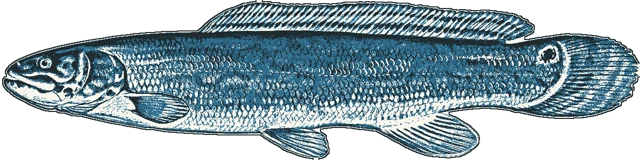
Bowfin
Amia calva (ruddy bowfin) and Amia ocellicauda (emerald bowfin) · Freshwater
TPWD calls it a rough fish rather than one for the table; the soft, pale flesh earned it the nickname 'cottonfish'.
Worth a try: Keep it alive until you clean it, cook it the same day, and use it smoked, fried as patties or stewed; MeatEater serves fried bowfin with a morel cream sauce.
- Tastes
- mild, soft, jelly-like unless very fresh
- Limits
- Light regs. Nongame fish ('other fish' in the Wildlife Code: every fish that is not a game fish, an alligator gar or endangered) share one daily limit: 50 a day in total by pole and line, trotline, throwline, limb line, bank line or jug line, open all year, or 20 a day in total by gig, bow, crossbow, atlatl, snagging, snaring, grabbing or underwater spearfishing, which have their own seasons and hours. Mississippi River: 100 a day and in possession. Elsewhere possession is two daily limits. Common carp, grass carp, goldfish and invasive fish (such as bighead and silver carp) may be taken in any number. No statewide length limits by these methods. On MDC area lakes (lakes and ponds on conservation areas, and city, county and park lakes MDC manages) the limit is usually 20 a day in total, or 10 at listed lakes. Bowfin must stay whole and intact while on the water or banks. Bowfin and their parts may not be used as bait. (Wildlife Code 3 CSR 10-6.550, amended effective Feb. 28, 2025; Secretary of State copy revised March 31, 2026) Source
- Where
- The Mississippi River in Pool 26 (river miles 202 to 242) and the open river below St. Louis (miles 29 to 80), every year of USGS surveys from 1993 to 2002.
- live minnows
- cut bait
- jigs
- topwater lures
- Do not eat (anyone): any fish from the all-fish waters on this page (Hager, Giessing and Thomas lakes in Farmington among them).
- Do not eat (anyone): fish eggs of any kind.
Meal limits and other waters (6)
- Limit (sensitive group: under 13, pregnant, nursing or may become pregnant): 1 meal a month of large predatory fish over 12 inches (Missouri DNR fact sheet, March 2026).
- Limit (sensitive group): 1 meal a week of smaller ones and any other fish (mercury).
- Limit (everyone): 1 meal a month of any fish from Lake Buteo, Knob Noster State Park (mercury).
- Limit (everyone): 1 meal a week of locally caught fish where no local advisory exists (DHSS mercury page).
- Lead counties on this page: cut out the larger bones before you cook it.
- DHSS guide, March 2024; confirm with its current list.
Redhorse suckers
Moxostoma spp. · Freshwater
Seldom caught on hook and line and written off as bony bottom-feeders; MeatEater notes the bones.
Worth a try: Scored and deep-fried, the Y-bones disappear and the firm, sweet flesh is delicious; MeatEater recommends shorthead, golden or silver redhorse for deep-fried sucker balls.
- Tastes
- mild, sweet, firm, white, Y-bones
- Limits
- Light regs. Nongame fish ('other fish' in the Wildlife Code: every fish that is not a game fish, an alligator gar or endangered) share one daily limit: 50 a day in total by pole and line, trotline, throwline, limb line, bank line or jug line, open all year, or 20 a day in total by gig, bow, crossbow, atlatl, snagging, snaring, grabbing or underwater spearfishing, which have their own seasons and hours. Mississippi River: 100 a day and in possession. Elsewhere possession is two daily limits. Common carp, grass carp, goldfish and invasive fish (such as bighead and silver carp) may be taken in any number. No statewide length limits by these methods. On MDC area lakes (lakes and ponds on conservation areas, and city, county and park lakes MDC manages) the limit is usually 20 a day in total, or 10 at listed lakes. Gigging is open Sept. 15 to Feb. 15 (sunrise to midnight) on streams and impounded waters, and the rest of the year on impounded waters only (sunrise to sunset). Snagging, grabbing and snaring are open March 15 to May 15 and Sept. 15 to Feb. 15 (to Dec. 15 on the Mississippi River); on Lake of the Ozarks, Truman and the Osage River below U.S. Highway 54, March 15 to April 30 only. Current River from the Dent County Road 6510 crossing at Cedargrove to the Arkansas line: no more than 5 hog suckers in a daily limit. Other listed waters differ. (Wildlife Code 3 CSR 10-6.550, amended effective Feb. 28, 2025; Secretary of State copy revised March 31, 2026) Source
- Best months
- Fall and winter nights; the stream gigging season runs Sept. 15 to Feb. 15.
- Where
- Ozark streams such as the Meramec; golden, shorthead and river redhorse are all on USGS lists for Missouri waters.
- no bait: gigged at night from a lighted boat
- Several redhorse species are rare or state-protected; harvest only common species.
- Do not eat (anyone): redhorse or other suckers from the Big River (St. Francois and Jefferson counties) or the Flat River (St. Francois County, Highway B to the Big River) (lead).
- Do not eat (anyone): suckers or other bottom feeders from Adair Creek, Sweetwater Creek or Logan Creek from Adair to Susie Creek, Reynolds County (lead).
- Do not eat (anyone): any fish from the all-fish waters on this page (Hager, Giessing and Thomas lakes in Farmington among them).
- Do not eat (anyone): fish eggs of any kind.
Meal limits and other waters (7)
- Limit (everyone): 1 meal a month of any fish from Lake Buteo, Knob Noster State Park (mercury).
- Limit (sensitive group: under 13, pregnant, nursing or may become pregnant): 1 meal a week of any fish (mercury).
- Limit (everyone): 1 meal a week of locally caught fish where no local advisory exists (DHSS mercury page).
- Madison County's St. Francis and Little St. Francis rivers and Fredericktown City Lake: take out the vertebrae and ribs before any preparation (lead).
- Jasper, Madison, Jefferson, St. Francois, Washington and Iron counties: cut out as much of the larger bones as you can before you prepare it (lead).
- DHSS lists suckers among fish that typically have very low mercury, PCB and chlordane levels.
- DHSS guide, March 2024; confirm with its current list.
White sucker
Catostomus commersonii · Freshwater
Suckers have perhaps the worst reputation of the rough fish (MeatEater) and are mostly raised and sold as bait (MN DNR); the many small bones keep most anglers from eating them.
Worth a try: Spring fish from cold water are light and sweet like walleye (MeatEater); score them deeply and fry hard, pickle them to dissolve the bones, or grind into fish cakes.
- Tastes
- light, sweet, firm, white, many small bones
- Limits
- Light regs. Nongame fish ('other fish' in the Wildlife Code: every fish that is not a game fish, an alligator gar or endangered) share one daily limit: 50 a day in total by pole and line, trotline, throwline, limb line, bank line or jug line, open all year, or 20 a day in total by gig, bow, crossbow, atlatl, snagging, snaring, grabbing or underwater spearfishing, which have their own seasons and hours. Mississippi River: 100 a day and in possession. Elsewhere possession is two daily limits. Common carp, grass carp, goldfish and invasive fish (such as bighead and silver carp) may be taken in any number. No statewide length limits by these methods. On MDC area lakes (lakes and ponds on conservation areas, and city, county and park lakes MDC manages) the limit is usually 20 a day in total, or 10 at listed lakes. Gigging is open Sept. 15 to Feb. 15 (sunrise to midnight) on streams and impounded waters, and the rest of the year on impounded waters only (sunrise to sunset). Snagging, grabbing and snaring are open March 15 to May 15 and Sept. 15 to Feb. 15 (to Dec. 15 on the Mississippi River); on Lake of the Ozarks, Truman and the Osage River below U.S. Highway 54, March 15 to April 30 only. Other listed waters differ. (Wildlife Code 3 CSR 10-6.550, amended effective Feb. 28, 2025; Secretary of State copy revised March 31, 2026) Source
- Best months
- Fall and winter nights; the stream gigging season runs Sept. 15 to Feb. 15.
- Where
- Ozark streams such as the Meramec; also caught in USGS surveys of the Missouri River at Lisbon Bottom.
- no bait: gigged at night from a lighted boat
- Do not eat (anyone): suckers of any type from the Big River (St. Francois and Jefferson counties) or the Flat River (St. Francois County, Highway B to the Big River) (lead).
- Do not eat (anyone): suckers or other bottom feeders from Adair Creek, Sweetwater Creek or Logan Creek from Adair to Susie Creek, Reynolds County (lead).
- Do not eat (anyone): any fish from the all-fish waters on this page (Hager, Giessing and Thomas lakes in Farmington among them).
- Do not eat (anyone): fish eggs of any kind.
Meal limits and other waters (7)
- Limit (everyone): 1 meal a month of any fish from Lake Buteo, Knob Noster State Park (mercury).
- Limit (sensitive group: under 13, pregnant, nursing or may become pregnant): 1 meal a week of any fish (mercury).
- Limit (everyone): 1 meal a week of locally caught fish where no local advisory exists (DHSS mercury page).
- Madison County's St. Francis and Little St. Francis rivers and Fredericktown City Lake: take out the vertebrae and ribs before any preparation (lead).
- Jasper, Madison, Jefferson, St. Francois, Washington and Iron counties: cut out as much of the larger bones as you can before you prepare it (lead).
- DHSS lists suckers among fish that typically have very low mercury, PCB and chlordane levels.
- DHSS guide, March 2024; confirm with its current list.
Where to fish in Missouri
Fish named here are what people catch at each spot, not a promise they’re safe to eat. Read the eating advice on the fish’s card before you keep one.
- 1Table Rock Lake reservoir · fresh
The state tourism guide calls it a bass factory for spotted, smallmouth and largemouth bass; Game & Fish adds crappie, walleye and white bass, deep bluegill beds, goggle-eye, and paddlefish snagging in the James River arm.
Known for: Largemouth bass, Spotted bass, Smallmouth bass, Black crappie, White crappie
Access: Boat ramp and marina at Table Rock State Park; fishing is open 24 hours there except in the day-use area.
- 2Lake of the Ozarks reservoir · fresh
State parks list bass, crappie, walleye, bluegill and catfish; Game & Fish covers its blue, channel and flathead catfish, white bass and paddlefish, and the record hybrid striped bass came from here.
Known for: Largemouth bass, Spotted bass, Black crappie, White crappie, Blue catfish
Access: Lake of the Ozarks State Park has three paved boat ramps (Grand Glaize Beach and Public Beach #1 open all year, Pa He Tsi March through October); launch fees apply. Ha Ha Tonka State Park has an accessible fishing dock.
- 3Truman Lake reservoir · fresh
State parks list crappie, bass, spoonbill, catfish, hybrids and white bass on this 55,600-acre lake; the state tourism guide calls it a crappie powerhouse.
Known for: White crappie, Black crappie, Blue catfish, Channel catfish, Flathead catfish
Access: Harry S Truman State Park has a four-lane public boat ramp near the marina, open all year, with no launch fee.
- 4Lake Taneycomo reservoir · fresh
The state tourism site says more than 700,000 rainbow and brown trout are stocked each year; Game & Fish puts the catch at about 90 percent rainbows and 7 percent browns.
Known for: Rainbow trout, Brown trout
Access: Bank, dock and boat fishing; access points at Historic Downtown Branson, Hollister, Fall Creek, Rockaway Beach, Powersite and Forsyth.
- 5Mark Twain Lake reservoir · fresh
Missouri State Parks calls the fishing excellent for crappie, catfish, largemouth bass, bluegill, carp, walleye and perch on the 18,000-acre lake; the state tourism guide calls it one of the most consistent crappie spots in Missouri.
Known for: White crappie, Black crappie, Largemouth bass, Bluegill, Walleye
Access: Mark Twain State Park has two four-lane boat ramps; 4-acre Tom Sawyer Lake offers shore fishing.
- 6Stockton Lake reservoir · fresh
State parks list bass, white bass, crappie, walleye, catfish and bluegill; the state tourism guide points to spotted, smallmouth and largemouth bass and walleye in its clear water.
Known for: White crappie, Black crappie, Walleye, White bass, Largemouth bass
Access: Stockton State Park has concrete boat ramps at the marina and Hartley Cove, with no launch fee.
- 7Smithville Lake reservoir · fresh
Game & Fish covers white crappie in the muddier upper arms, black crappie in the clear lower lake, fall white bass on the main points, and walleye.
Known for: Black crappie, White crappie, White bass, Walleye, Bluegill
Access: Two full-service marinas; park passes start at $5 per car. Fishing is closed Oct. 15 to Jan. 31 in posted units of the Smithville Lake Waterfowl Refuge.
- 8Wappapello Lake reservoir · fresh
State parks list crappie, bass and catfish as the common catch and February to June, September and October as the best months; state tourism names largemouth bass and catfish.
Known for: White crappie, Black crappie, Largemouth bass
Access: Lake Wappapello State Park has three concrete boat launches and a courtesy dock, with no launch fee.
- 9Clearwater Lake reservoir · fresh
State tourism says the 1,600-acre lake is noted for its fishing, with crappie and catfish in summer; Game & Fish rates its summer largemouth bass fishing great. DHSS: no more than 1 meal a month of crappie over 9 inches, or largemouth bass over 12 inches, if you are under 13, pregnant, nursing or may become pregnant (mercury).
Known for: Largemouth bass, White crappie, Black crappie
Access: Campsites around the lake and a floating marina.
- 10Bennett Spring State Park river · fresh
More than 100 million gallons of spring water a day form a spring branch stocked daily with rainbow trout from March 1 through Oct. 31.
Known for: Rainbow trout
Access: State park trout park with three accessible fishing piers: fishing permit (unless exempt) plus a daily trout tag March 1 to Oct. 31, or a trout permit for catch and release Nov. 13, 2026 to Feb. 8, 2027 (Friday to Monday, 8 a.m. to 4 p.m.).
- 11Roaring River State Park river · fresh
One of three state parks stocked with rainbow trout.
Known for: Rainbow trout
Access: State park trout park: fishing permit (unless exempt) plus a daily trout tag March 1 to Oct. 31 (a daily tag or a trout permit may be used from the first bridge below the old dam in Zone 3 to the downstream park boundary), or a trout permit in the winter catch-and-release season.
- 12Montauk State Park river · fresh
The park sits at the headwaters of the Current River, where springs add more than 40 million gallons a day; Missouri State Parks says the river here holds both rainbow and brown trout.
Known for: Rainbow trout, Brown trout
Access: State park trout park with five accessible fishing sites: fishing permit (unless exempt) plus a daily trout tag March 1 to Oct. 31, or a trout permit in the winter catch-and-release season.
- 13Big River (Council Bluff Lake Dam to the Meramec River) river · fresh
The Code makes this whole stretch a 15-inch, one-smallmouth section; state parks say smallmouth bass and catfish are caught most at St. Francois and list largemouth bass and crappie at Washington State Park. DHSS: nobody should eat sunfish, carp, redhorse or other suckers from the Big River in St. Francois or Jefferson counties (lead).
Known for: Smallmouth bass, Largemouth bass
Access: More than 3 miles of wadeable river and two access points at St. Francois State Park, and a boat launch at Washington State Park.
- 14Lower Missouri River at Columbia Bottom Conservation Area river · fresh
State parks list carp, buffalo, catfish and drum where the Missouri meets the Mississippi; Game & Fish calls both rivers world-class for blue catfish here. DHSS, everyone: no more than 1 meal a month of buffalo, and 1 meal a week of flathead, channel or blue catfish over 17 inches or common carp over 21 inches, from the Missouri and Mississippi rivers.
Known for: Blue catfish, Flathead catfish, Channel catfish, Freshwater drum, Common carp
Access: Boat ramps at Columbia Bottom Conservation Area and below Melvin Price Locks and Dam; bank fishing at Confluence Point State Park, but not within 300 feet of the point.
Missouri fishing license and rules
- Resident: $14 (Resident Fishing Permit)
- Nonresident: $57 (Nonresident Fishing Permit)
- Nonresident short-term: $9 per day (Daily Fishing Permit, residents or nonresidents, may be bought for multiple days)
- Who needs one: 16 and older. Anyone 15 or younger and Missouri residents 65 or older are exempt from the fishing permit, but still need a trout permit or daily trout tag where required.
- Free fishing days: The Saturday and Sunday after the first Monday in June every year, set in the Wildlife Code; in 2027 that is June 12 and 13. Anyone may fish without a fishing permit, trout permit or daily trout tag. The waiver covers permits and tags; seasons and limits still apply.
More license details
Trout permit: $12 resident and $24 nonresident (age 16 and over), $6 for age 15 and younger. It is needed to possess trout except where a daily trout tag is required, to fish Lake Taneycomo from 760 feet below Table Rock Dam to the Highway 65 bridge, and for winter fishing in the trout parks. From March 1 to Oct. 31 the four trout parks require a daily trout tag ($5 age 16 and over, $3 age 15 and under). The nonresident trout permit took effect Jan. 1, 2026. White River Border Lakes Permit, $10: lets a licensed Arkansas resident fish Missouri's part of Bull Shoals, Norfork and Table Rock lakes, and a licensed Missouri resident fish Arkansas's part (no trout may be kept on it). Permits are valid from purchase through the last day of February 2027. Telephone and online sales carry a convenience fee.
Buy a license License types and fees
Fees: Wildlife Code 3 CSR 10-5.950, effective Jan. 1, 2026; permit year through Feb. 28, 2027.
- Permit: anyone 16 and older needs a fishing permit ($14 resident, $57 nonresident, $9 daily). Missouri residents 65 and older and anyone 15 or younger are exempt. To possess trout outside the trout parks you also need a trout permit ($12 resident, $24 nonresident, $6 age 15 and under); trout parks need a daily trout tag ($5, or $3 age 15 and under) March 1 to Oct. 31 and a trout permit instead in the winter catch-and-release season.
- Border waters: an Iowa, Illinois, Tennessee, Kansas or Nebraska license is honored on Missouri's part of the Des Moines, Mississippi and Missouri rivers next to that state, a Kentucky license on the Mississippi River next to Kentucky, and an Arkansas license on the St. Francis River boundary. Visitors follow the stricter of the two states' rules and need a Missouri permit for the tributaries. On Bull Shoals, Norfork and Table Rock, a $10 White River Border Lakes Permit lets licensed Arkansas and Missouri residents fish each other's water, but not keep trout.
- Black bass from most streams south of the Missouri River may not be possessed from March 1 through the Friday before the fourth Saturday in May (March 1 to May 21 in 2027): catch and release only. The rest of the year there is a 12-inch minimum and a limit of 6 black bass a day in total (12 on the Meramec, Big and Bourbeuse rivers and their tributaries).
- Lakes carry their own limits that differ from the statewide rules: for example 15-inch largemouth and smallmouth at most big reservoirs, 12-inch spotted bass at Table Rock since April 30, 2026, and a 26 to 34 inch blue catfish slot at Truman and Lake of the Ozarks. Conservation-area lakes and other lakes MDC manages usually have a 12 to 15 inch protected slot on black bass and limits of 4 catfish and 20 nongame fish a day. Check the area rules before you keep fish.
- Paddlefish season is March 15 to April 30 each year (Mississippi River: March 15 to May 15 and Sept. 15 to Dec. 15), with a 2 per day limit; a legal fish taken by snagging or grabbing must be kept and counted. On Lake of the Ozarks and Truman and their tributaries, Table Rock Lake and the Osage River below U.S. Highway 54 you must stop snagging for any species once you have 2 paddlefish. Extracted paddlefish and shovelnose eggs cannot be possessed on the water or transported.
- Nongame fish (suckers, buffalo, drum, gar, bluegill and the rest) share one limit: 50 a day in total by line methods (100 on the Mississippi River), or 20 a day in total by gig, bow, snagging and similar methods. Gigging runs Sept. 15 to Feb. 15 (and in daylight on impounded waters the rest of the year); snagging runs March 15 to May 15 and Sept. 15 to Feb. 15, with shorter seasons on the Mississippi River, the Osage River below U.S. Highway 54, Lake of the Ozarks and Truman. Common and grass carp, goldfish and invasive fish such as bighead and silver carp may be taken in any number. Alligator gar may not be taken.
- Any fish not hooked in the mouth or jaw must be released at once, unless it was legally taken by snagging, gig, bow or a similar method. You cannot cull: a fish you keep counts toward your limit unless you release it unharmed right after catching it. You may hold one daily limit on the water and two daily limits in all. Shovelnose sturgeon and bowfin must stay whole and intact on the water.
- Trotlines, throwlines, limb lines, bank lines and jug lines need a tag with your full name and address or Conservation Number; no more than 33 hooks at once (50 on the Mississippi River), and no more than 3 unlabeled poles (2 on the Mississippi). Unanchored jug lines must be attended at all times on streams and at least once an hour on lakes.
- Porous-soled (felt) waders are banned at the trout parks, Lake Taneycomo and more than a dozen trout streams named in the Code. Flies and artificial lures only, for any species, on the streams with a 1-trout limit, the Meramec River from the Highway 8 bridge to Scotts Ford, Dry Fork Creek and upper Lake Taneycomo.
Limits here are summaries for convenience, checked on the date shown. The official Missouri regulations govern; check them before you keep a fish.
Before you eat it
- Do not eat (anyone): any fish from Hager, Giessing or Thomas lakes in Farmington, St. Francois County. The city found PFAS above EPA's draft health criteria and says eating fish from them is not recommended (Oct. 16, 2025).
- Do not eat (anyone): any fish or other aquatic life from wastewater outfalls, waste treatment lagoons or stormwater retention ponds, or fish eggs of any kind, sturgeon eggs from the Mississippi and Missouri rivers included (state health department, DHSS).
- Do not eat (anyone): sunfish (bluegill, green sunfish, longear, warmouth and rock bass), carp, redhorse or other suckers of any size from the Big River in St. Francois and Jefferson counties, or from the Flat River in St. Francois County (Highway B, six miles down to the Big River) (lead). DHSS's map draws the Big River line without a break to the Meramec River, past St. Francois and Washington state parks.
- Do not eat (anyone): those five sunfish from Big Creek near Glover, Iron County, from Hogan to Chloride, or suckers and other bottom feeders (carp, catfish, bullhead, buffalo and drum among them) from Adair, Sweetwater and Logan creeks, Reynolds County, Logan from Adair Creek to Susie Creek (lead). Where fish carry lead, DHSS says to assume crayfish and mussels do too.
- Do not eat (anyone): largemouth or smallmouth bass of any size from Lake Buteo at Knob Noster State Park, Johnson County (mercury). Limit (everyone): 1 meal a month of any other fish from there.
- Do not eat (under 7, pregnant, breastfeeding or planning pregnancy), Arkansas's list: walleye 18 inches or longer from Bull Shoals or Norfork lakes, which reach into Missouri (mercury). Everyone else: 2 meals a month.
- Limit (everyone), Mississippi and Missouri rivers (PCBs, chlordane, mercury): 1 meal a month of shovelnose sturgeon or buffalo of any size; 1 meal a week of flathead, channel or blue catfish over 17 inches or common carp over 21 inches. Illinois's list (April 2026) is stricter for common carp from the Mississippi: 1 meal a week, any size.
- Limit (everyone), other waters: 1 meal a month of common carp or catfish from the Blue River (Minor Park to the Missouri River, Jackson County, with Indian Creek up to Holmes Road), of catfish or carp from Lake Springfield (Greene County), or of buffalo over 16 inches from Simpson Park Lake (St. Louis County); 1 meal a week of flathead catfish over 24 inches from Montrose Lake (Henry County).
- Limit (under 13, pregnant, nursing or may become pregnant), every Missouri water (mercury): 1 meal a month of largemouth, spotted or smallmouth bass or walleye over 12 inches, or flathead, channel or blue catfish over 30 inches; 1 meal a week of any other fish. Clearwater Lake in Reynolds County: 1 meal a month of white bass over 15 inches or crappie over 9 inches.
- Limit (everyone): DHSS's mercury page advises keeping locally caught fish to 1 meal a week where no local advisory exists. For anyone under 13, pregnant, nursing or who may become pregnant, Missouri DNR's mercury fact sheet (March 2026) puts 1 meal a month on all large predatory fish over 12 inches.
- Lead in bones: take out the vertebrae and ribs of suckers, carp and other bottom feeders from the St. Francis River, Little St. Francis River and Fredericktown City Lake (Madison County) before any preparation, canning, pickling and grinding included. The lead counties are Jasper, Madison, Jefferson, St. Francois, Washington and Iron: cut out as much of the larger bones as you can from any fish caught there.
- Meal limits assume a skinned, trimmed fillet: DHSS says to take off the skin, the fat along the back, sides and belly, and all the organs, cook on a rack, and not use the juices or reuse frying oil. Trimming and cooking do not lower mercury. One meal is 8 ounces uncooked for a 150-pound adult, 3 ounces for a 40-pound child.
- Follow any posted warning sign; DHSS's list leaves out local warnings. Algae blooms come and go: Missouri DNR recommends not eating fish from an affected area until two weeks after the bloom is gone, and keeps a bloom map at https://dnr.mo.gov/water/alerts-hazards/harmful-algal-bloom-hab-reports-map
- DHSS lists trout, crappie (except Clearwater Lake), sunfish (except green sunfish and black bass) and suckers among fish that typically have very low mercury, PCB and chlordane levels. These lines come from its guide, last updated March 2024, and its map; DHSS updates them as needed rather than on a schedule, so check its current list or call 573-751-6102 or 866-628-9891.
Local lingo
- goggle-eye: rock bass, Ozark bass and shadow bass, all under one 15-a-day limit with warmouth
- Kentucky bass or spot: spotted bass, with its own length limit on several large lakes
- brownie or bronzeback: smallmouth bass
- spoonbill: paddlefish, snagged March 15 to April 30
- gigging: spearing suckers and other nongame fish with a gig, Sept. 15 to Feb. 15 on streams, until midnight
- jug line and limb line: legal catfish methods that must be labeled and tended
- Blue, Red and White Ribbon trout areas: special-regulation trout streams, each with its own limit
- wiper: hybrid striped bass, sought in winter at Thomas Hill Reservoir's warm-water discharge
Questions anglers ask about Missouri
What is the best fish to eat in Missouri?
14 of the 35 fish on our Missouri board rate Best eating. They include: black crappie, white crappie, bluegill, redear sunfish, channel catfish and blue catfish.
What is the state fish of Missouri?
Channel catfish: Official state fish (RSMo 10.135). Paddlefish: Official state aquatic animal (RSMo 10.130), not the state fish.
Does Missouri have free fishing days?
The Saturday and Sunday after the first Monday in June every year, set in the Wildlife Code; in 2027 that is June 12 and 13. Anyone may fish without a fishing permit, trout permit or daily trout tag. The waiver covers permits and tags; seasons and limits still apply.
Which Missouri fish are better to eat than their reputation?
We give the Worth a try badge to freshwater drum, common carp, silver carp, bigmouth buffalo, smallmouth buffalo, longnose gar, spotted gar, shortnose gar, bowfin, redhorse suckers and white sucker: fish most anglers toss or rate low that eat well when they're cleaned and cooked right. Each card says how.
Neighboring states
Arkansas Illinois Iowa Kansas Kentucky Nebraska Oklahoma Tennessee
Sources
Limits, prices and advisories come from these pages, read on or before Nov 22, 2026. Where a line gives its own date, that’s the date it rests on. Eating advice changes: check the state’s current list. Ratings are national and come from the fish’s own page.
70 sources
- dnr.maryland.gov longnose gar: advisory (gar eggs); shortnose gar: advisory (gar eggs); spotted gar: advisory (gar eggs)
- dnr.mo.gov bowfin: advisory; flathead catfish: advisory; hybrid striped bass: advisory; longnose gar: advisory; sauger: advisory; shortnose gar: advisory; spotted gar: adv
- dph.illinois.gov common carp: advisory; shovelnose sturgeon: advisory
- fieldandstream.com redhorse suckers: baits, months, where, why common; white sucker: baits, months, where, why common
- health.mo.gov bigmouth buffalo: advisory; black crappie: advisory; blue catfish: advisory; bluegill: advisory; bowfin: advisory; brown trout: advisory; bullhead (black, brown
- health.mo.gov bigmouth buffalo: advisory; black crappie: advisory; blue catfish: advisory; bluegill: advisory; bowfin: advisory; brown trout: advisory; bullhead (black, brown
- health.mo.gov bigmouth buffalo: advisory; black crappie: advisory; blue catfish: advisory; bluegill: advisory; bowfin: advisory; brown trout: advisory; bullhead (black, brown
- healthy.arkansas.gov walleye: advisory
- mdc.mo.gov license buy
- mostateparks.com where to fish
- mostateparks.com fishing spots
- mostateparks.com rainbow trout: where, why common
- mostateparks.com common carp: where
- mostateparks.com bigmouth buffalo: where, why common; common carp: where; fishing spots; freshwater drum: where; smallmouth buffalo: where, why common
- mostateparks.com rock bass: where
- mostateparks.com fishing spots
- mostateparks.com fishing spots
- mostateparks.com walleye: where
- mostateparks.com common carp: where; fishing spots; largemouth bass: where
- mostateparks.com brown trout: where; fishing spots; rainbow trout: where
- mostateparks.com freshwater drum: where
- mostateparks.com bullhead (black, brown, yellow): where; common carp: where; freshwater drum: where
- mostateparks.com fishing spots
- mostateparks.com rainbow trout: where
- mostateparks.com fishing spots; smallmouth bass: where
- mostateparks.com fishing spots; white bass: where
- mostateparks.com fishing spots; hybrid striped bass: where
- mostateparks.com white bass: where
- nas.er.usgs.gov common carp: where
- nas.er.usgs.gov silver carp: where, why common
- pubs.usgs.gov longear sunfish: where; smallmouth bass: why common
- pubs.usgs.gov longear sunfish: where; longnose gar: where; redhorse suckers: where
- pubs.usgs.gov common carp: where, why common; freshwater drum: where, why common; white sucker: where
- pubs.usgs.gov longear sunfish: where
- umesc.usgs.gov bigmouth buffalo: where; bowfin: where, why common; bullhead (black, brown, yellow): where; freshwater drum: where; green sunfish: where; longnose gar: where, w
- eregulations.com brown trout: names; common carp: baits; largemouth bass: where; sauger: names, where; smallmouth bass: names, where; spotted bass: names, where; white bass: nam
- explorebranson.com rainbow trout: baits, where
- farmington-mo.gov bigmouth buffalo: advisory; black crappie: advisory; blue catfish: advisory; bluegill: advisory; bowfin: advisory; brown trout: advisory; bullhead (black, brown
- fws.gov blue catfish: why common; bullhead (black, brown, yellow): where
- gameandfishmag.com channel catfish: baits; flathead catfish: baits, months; hybrid striped bass: where; paddlefish: months, where; rainbow trout: where; spotted bass: baits, month
- gameandfishmag.com blue catfish: baits, where; bluegill: baits, months; brown trout: baits, months; channel catfish: months, where, baits; flathead catfish: baits, months; hybrid
- gameandfishmag.com largemouth bass: baits, months; smallmouth bass: baits, months, where
- gameandfishmag.com black crappie: where; bluegill: baits; brown trout: months, where; flathead catfish: months; largemouth bass: months, where; rainbow trout: why common, where; r
- gameandfishmag.com hybrid striped bass: where; striped bass: where; white bass: baits, months, where
- gameandfishmag.com blue catfish: baits; flathead catfish: baits, where
- gameandfishmag.com blue catfish: months
- gameandfishmag.com redear sunfish: where
- gameandfishmag.com bluegill: baits, months, where; redear sunfish: baits, months, where
- gameandfishmag.com black crappie: baits, months; bluegill: months; brown trout: baits, months, where; paddlefish: where; rainbow trout: where; rock bass: baits, months; sauger: mo
- gameandfishmag.com sauger: baits, months, where
- gameandfishmag.com hybrid striped bass: where
- gameandfishmag.com channel catfish: baits, where; flathead catfish: baits, where; hybrid striped bass: names, baits, months, where; smallmouth bass: baits, where; striped bass: ba
- gameandfishmag.com striped bass: why common
- gameandfishmag.com black crappie: baits, months, where; fishing spots; white crappie: baits, months, where
- gameandfishmag.com brown trout: baits; green sunfish: where; rainbow trout: baits; rock bass: baits, where; spotted bass: why common; walleye: where
- gameandfishmag.com blue catfish: months, baits; largemouth bass: months; rainbow trout: baits; spotted bass: baits; walleye: months, baits
- gameandfishmag.com black crappie: baits, months, where; white crappie: baits, months, where
- gameandfishmag.com blue catfish: baits, months, where; channel catfish: baits, months, where; flathead catfish: baits, where
- in-fisherman.com rock bass: where; smallmouth bass: where
- sos.mo.gov sauger: regs (what the 2026 amendment struck); walleye: regs (what the 2026 amendment struck)
- sos.mo.gov bigmouth buffalo: regs (conservation-area lakes); black crappie: regs (conservation-area lakes); blue catfish: regs (conservation-area lakes); bluegill: regs (c
- sos.mo.gov bigmouth buffalo: regs (MDC-managed lakes); black crappie: regs (MDC-managed lakes); blue catfish: regs (MDC-managed lakes); bluegill: regs (MDC-managed lakes);
- sos.mo.gov blue catfish: names; bullhead (black, brown, yellow): regs (game fish list); channel catfish: names; flathead catfish: names; largemouth bass: names; paddlefish
- sos.mo.gov longnose gar: regs (general prohibition); shortnose gar: regs (general prohibition); shovelnose sturgeon: regs (endangered species); spotted gar: regs (general
- sos.mo.gov brown trout: regs (permits, tags); free fishing days; license fees; license info; rainbow trout: regs (permits, tags)
- sos.mo.gov bigmouth buffalo: regs; black crappie: regs; blue catfish: regs; bluegill: regs; bowfin: regs; brown trout: regs; bullhead (black, brown, yellow): regs; channel
- sos.mo.gov paddlefish: names, where, why common; state fish
- sos.mo.gov channel catfish: why common; state fish
- visitmo.com fishing spots; largemouth bass: where; rainbow trout: where; walleye: where
- visitmo.com fishing spots; largemouth bass: where; smallmouth bass: where; spotted bass: where
Illustrations: stencils we made from public-domain art by John J. Baird (Black crappie); Duane Raver, U.S. Fish and Wildlife Service (Blue catfish, Channel catfish, Flathead catfish, Rainbow trout, Redear sunfish, Striped bass, White bass, White crappie, Bullhead (black, brown, yellow), Smallmouth bass, Warmouth, Bowfin); NOAA (Bluegill); U.S. Fish and Wildlife Service (Brown trout, Common carp, Largemouth bass); Hugh McCormick Smith (Walleye); C. W. Nash (Longnose gar), via Wikimedia Commons.
Spotted an error or a rule that changed? Tell us and we will check it against the official source.