Georgia · fresh and salt
Fish in Georgia: what’s worth eating, and what’s garbage
Georgia fishing runs from the mountain trout streams of the north, through the Chattahoochee, Savannah and Oconee reservoirs (Lanier, Hartwell, Clarks Hill, Oconee) known for spotted and striped bass, crappie and hybrids, to coastal-plain rivers such as the Satilla for redbreast sunfish and catfish and the Altamaha for largemouth bass and flathead catfish. On the coast, anglers take red drum, spotted seatrout, sheepshead, whiting, flounder, black drum and croaker from the sounds, piers and marshes, and fish the offshore reefs for black sea bass, cobia, king mackerel and, in short seasons, red snapper.
45 fish rated · limits checked Nov 21, 2026 against GA DNR WRD and federal sources, then re-checked: 357 of 370 details confirmed or corrected on the official pages
Resident $15 annual Fishing License (residents 16-64; covers fresh and salt water). A Trout License is $10 annual ($5 one-day). Full details
Buy a licenseCovered by the same fishing license, plus a free Saltwater Information Program (SIP) permit for anglers 16 and older, valid 365 days and renewed every year… Full details
Saltwater limitsFreshwater limits, seasons and size rules from Georgia Department of Natural Resources, Wildlife Resources Division.
Freshwater limitsLargemouth bass; Red drum; Brook trout; Shoal bass
June 5 and June 12, 2027 (National Fishing & Boating Week) and Sept 25, 2027 (National Hunting and Fishing Day): Georgia residents need no fishing license or trout license. Full details
The Georgia table-fare board
Fish Georgia anglers catch, sorted by how they eat. The bars show how heavily each one is regulated here. Tap a fish for the details.
No limits Light regs Heavy regs No harvest
Best eating21
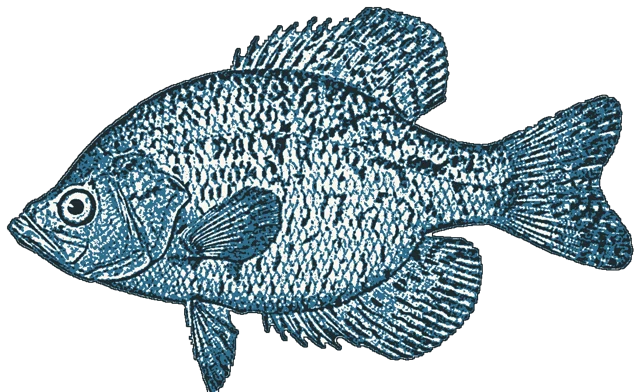 Black crappie
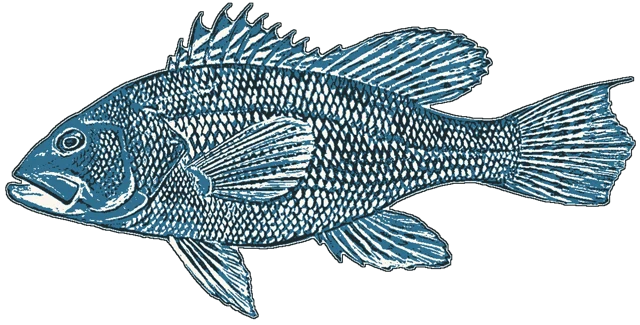 Black sea bass“blackfish”
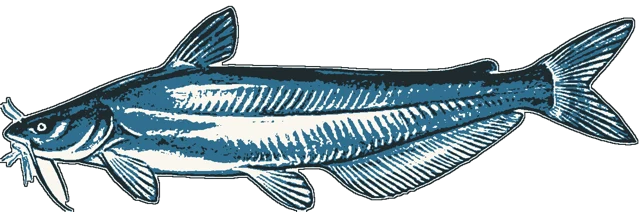 Blue catfish
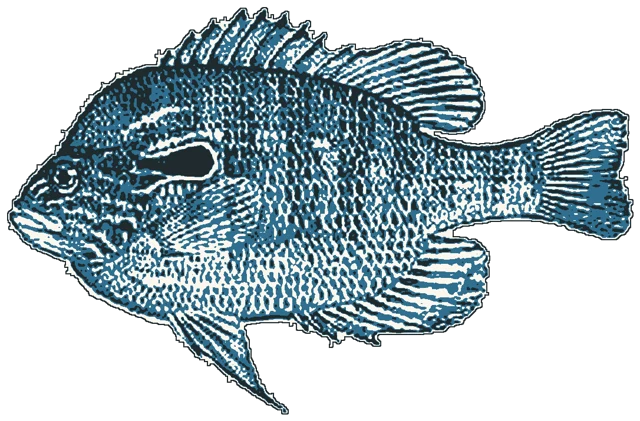 Bluegill“bream”
 Brown trout
 Channel catfish
 Cobia“ling”
 Flathead catfishHybrid striped bass
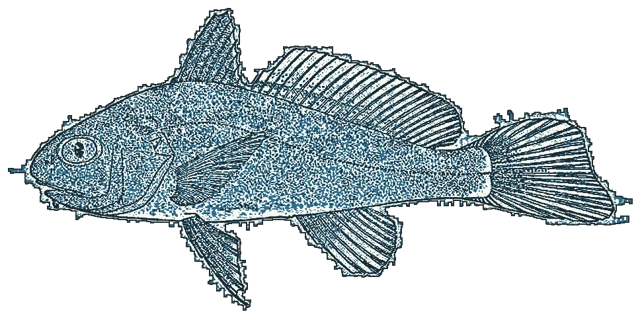 Kingfish (whiting)
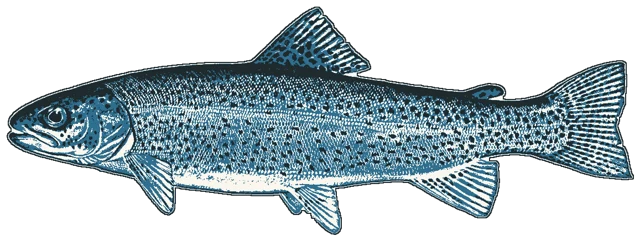 Rainbow trout
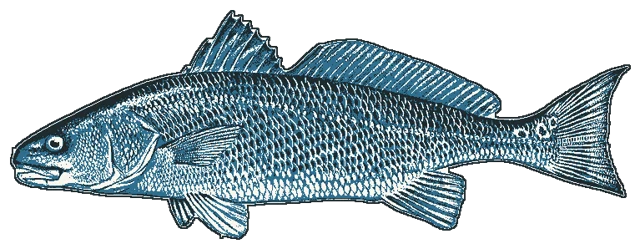 Red drum“redfish”
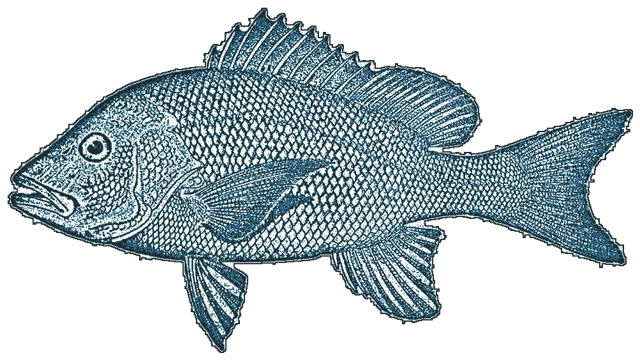 Red snapper“genuine red snapper”
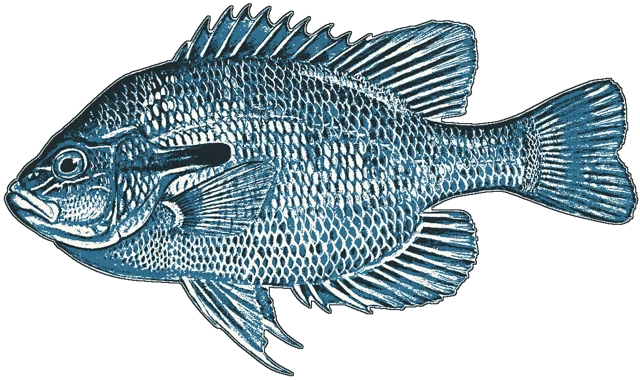 Redbreast sunfish“bream”
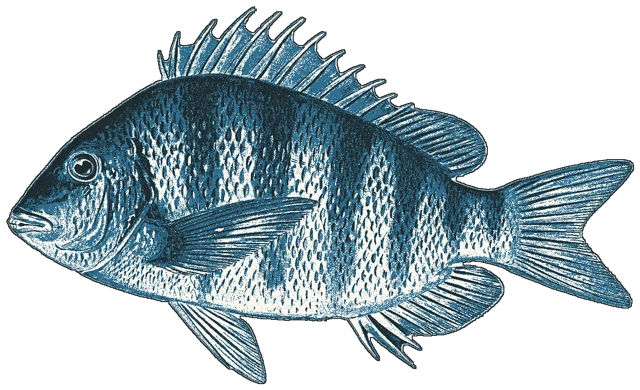 Sheepshead“convict fish”
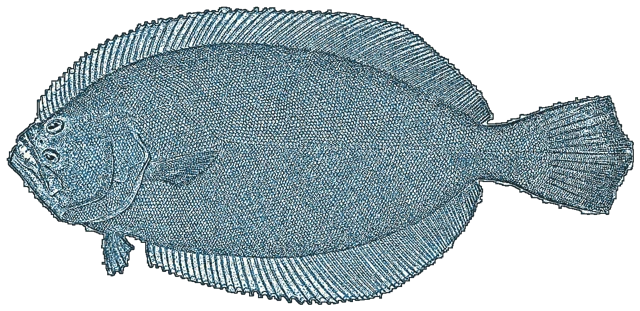 Southern flounder
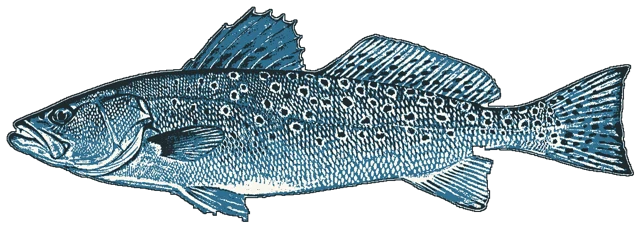 Spotted seatrout
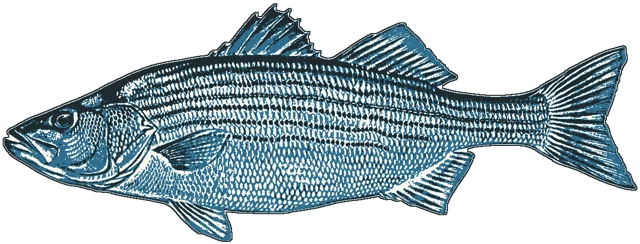 Striped bassTripletail“eddy fish”
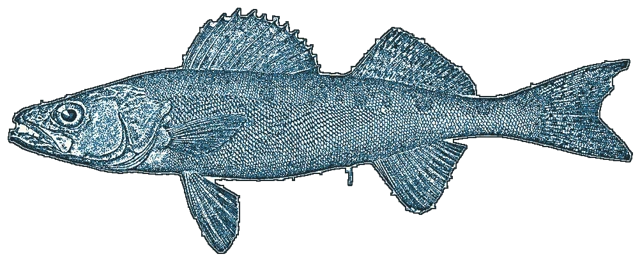 Walleye
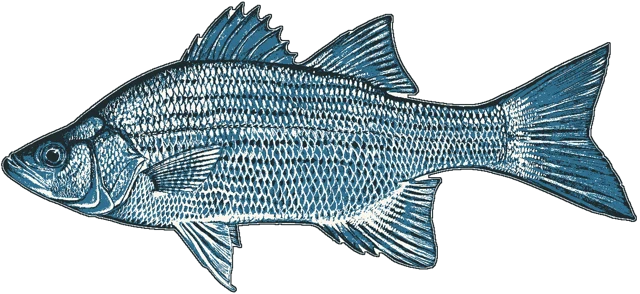 White bass
Just OK18
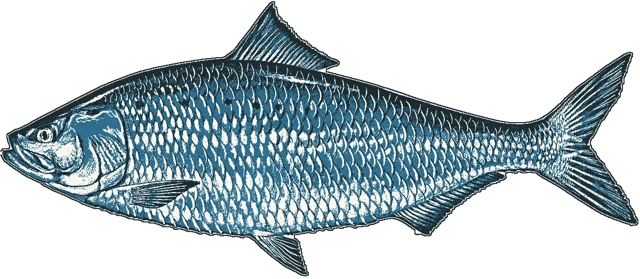 American shad
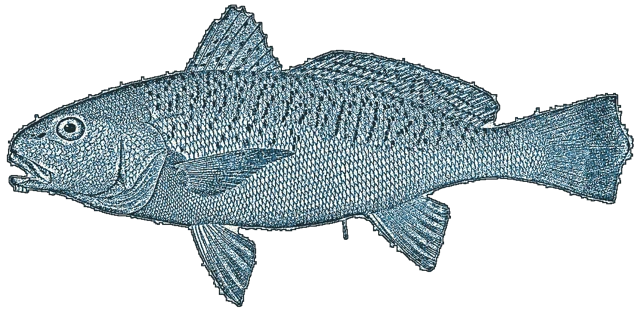 Atlantic croaker
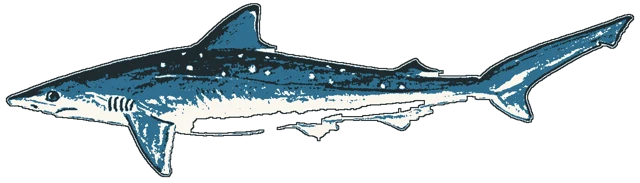 Atlantic sharpnose shark
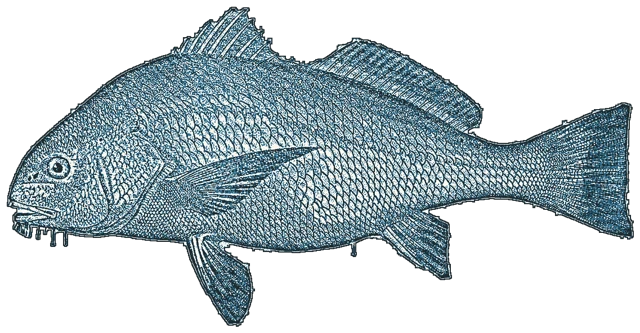 Black drum“striped drum”
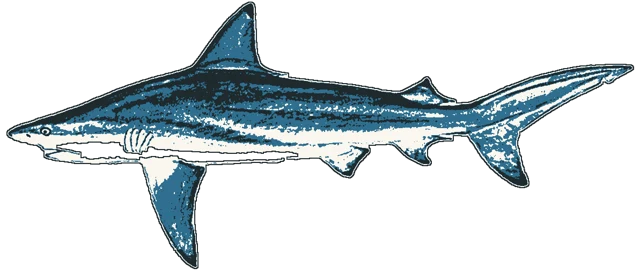 Blacktip shark
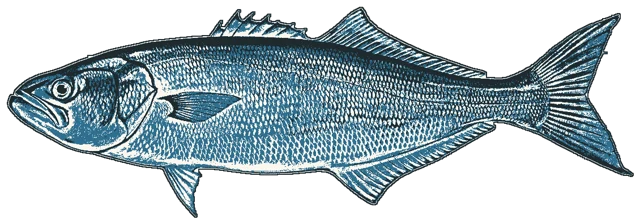 Bluefish
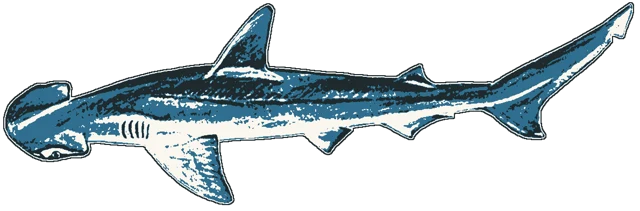 Bonnethead
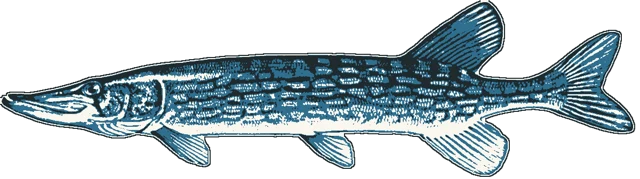 Chain pickerel“jackfish”
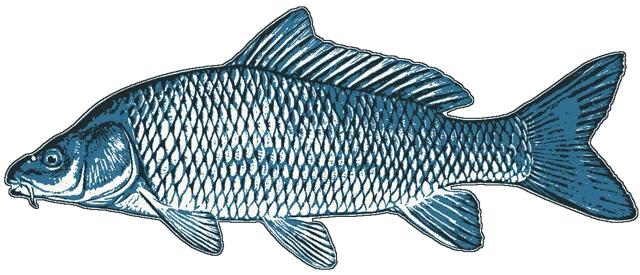 Common carp
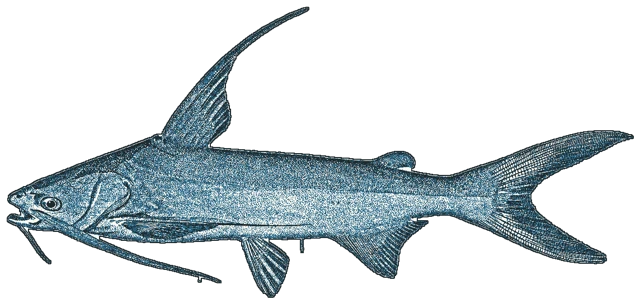 Gafftopsail catfish“sailcat”
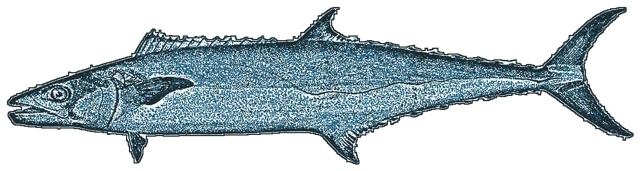 King mackerel“kingfish”
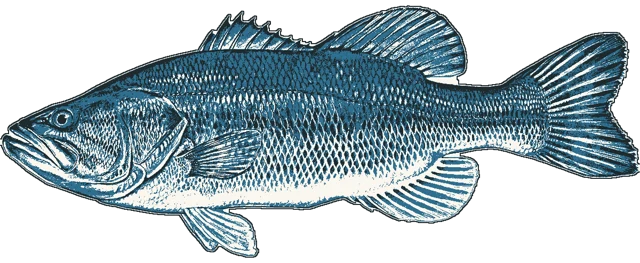 Largemouth bass“black bass”
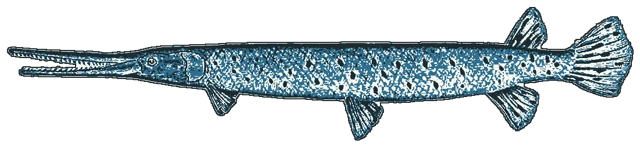 Longnose garShoal bass
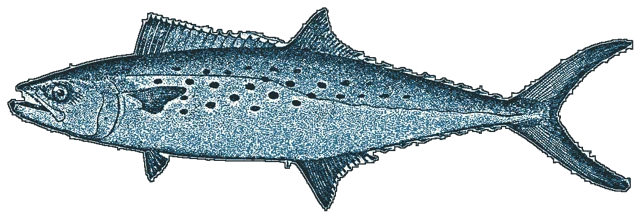 Spanish mackerel
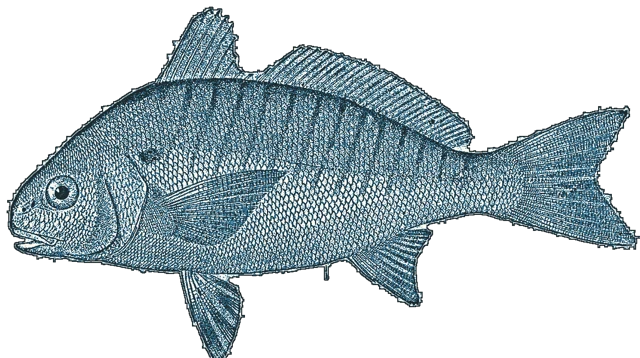 SpotSpotted bass“Alabama bass”
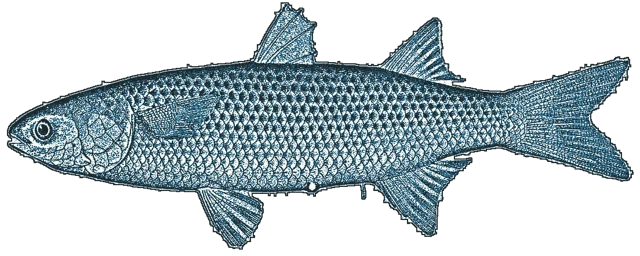 Striped mullet“jumping mullet”
Garbage fish4
Catch & release
What’s actually caught in Georgia
NOAA's MRIP estimates saltwater fish caught by recreational anglers. The numbers are the average fish caught per year (kept plus released) in 2023, 2024 and 2025 for Georgia, summed from MRIP's state-level catch files; stingray family (about 556,000 a year), silver perch (about 412,000), oyster toadfish (about 348,000), pinfish (about 291,000), menhaden (about 269,000), gray snapper (about 265,000, nearly all in 2023), striped mullet (about 217,000) and fish MRIP could not name to species are left out because they are not on this board, are mostly bait, or rest on one unusual year. NOAA recalibrated its survey in 2026, so its current query tool may show lower totals, and a different order, than the 2023-2025 estimate files used here.
- Kingfish (whiting) Best eating2.28M fish caught per year, average of 2023-2025 (2023 2.33M, 2024 1.91M, 2025 2.58M); 52% released. MRIP name: southern kingfish (whiting).
- Spotted seatrout Best eating1.94M fish caught per year, average of 2023-2025 (2023 1.47M, 2024 2.24M, 2025 2.11M); 76% released.
- Red drum Best eating1.48M fish caught per year, average of 2023-2025 (2023 1.24M, 2024 1.79M, 2025 1.39M); 77% released.
- Atlantic croaker Just OK1.39M fish caught per year, average of 2023-2025 (2023 1.66M, 2024 1.30M, 2025 1.21M); 80% released.
- Bluefish Just OK345K fish caught per year, average of 2023-2025 (2023 205K, 2024 184K, 2025 647K); 88% released.
- Sheepshead Best eating322K fish caught per year, average of 2023-2025 (2023 248K, 2024 405K, 2025 312K); 52% released.
- Black sea bass Best eating322K fish caught per year, average of 2023-2025 (2023 214K, 2024 331K, 2025 420K); 91% released.
- Bonnethead Just OK285K fish caught per year, average of 2023-2025 (2023 294K, 2024 222K, 2025 339K); 98% released.
- Black drum Just OK261K fish caught per year, average of 2023-2025 (2023 263K, 2024 259K, 2025 260K); 77% released.
- Southern flounder Best eating200K fish caught per year, average of 2023-2025 (2023 141K, 2024 193K, 2025 265K); 31% released. Flounder genus (lefteye) adds about 156,000 more, not counted here.
Source: NOAA Fisheries Marine Recreational Information Program (MRIP) . Saltwater only: it does not survey freshwater fishing.
Fish by fish
Why each one sits where it does, the current Georgia limits, and the bait that works.
Black crappie
Pomoxis nigromaculatus · Freshwater
One of the classic fish-fry fish: MeatEater counts crappie among the best-eating fish in freshwater.
- Tastes
- mild, sweet, delicate, flaky, white
- Limits
- Light regs. Black and white crappie combined: 30 per day, no statewide minimum size listed. Georgia-South Carolina border waters: the guide says South Carolina rules differ for crappie and does not print the numbers. All game fish together on the border waters: 40 in possession, catfish not counted. (July 1, 2026 to June 30, 2027 (2026-27 Georgia guide; eRegulations page updated Aug 27, 2026)) Source
- Spawns
- Spawns near shore at 62 to 65 F (WRD fish ID).
- Where
- Common throughout Georgia (WRD fish ID). Forecast best bets: Lanier, Allatoona, Clarks Hill, Hartwell, Oconee, Sinclair, Seminole, Walter F. George and Blackshear.
- live minnows
- jigs
- worms
- Do not eat (anyone): the Tallapoosa River at GA 27 (mercury, thallium).
- Do not eat (anyone), South Carolina's list: any fish from Lake Hartwell's Twelve Mile Creek and Seneca River arms.
Meal limits and other waters (4)
- Limit (pregnant, may become pregnant, nursing, under 7): 1 meal a month of any fish from the 65 counties named on this page, 1 a week from the other counties (EPD, 2008).
- Limit (everyone), 1 meal a week, EPD 2023: under 12 in from Black Shoals Lake (mercury); 12 to 16 in from Harding (PCBs); the Coosa from GA 100 to the state line (PCBs); the Ocmulgee in Bibb County below Tobesofkee Creek (mercury); the South River in Henry County (PCBs).
- Limit (everyone), 1 meal a week, South Carolina's list: the Savannah from SC 119 to US 17 and Lake Tugalo.
- No restrictions for other people (EPD 2023): Lanier, Clarks Hill, Allatoona (under 12 in), Sinclair, Seminole, Oconee and Walter F. George.
Black sea bass
Centropristis striata · also called blackfish, greenhead · Saltwater
Mild, delicate, firm white fillets; Maine Sea Grant calls it popular for its firm texture and mild, slightly sweet flavor.
- Tastes
- mild, fresh, delicate, tender but firm
- Limits
- Light regs. 15 per day, 12 in total length minimum, all year in state waters (0 to 3 nautical miles). Federal waters (3 to 200 nautical miles): 7 per day, 13 in total length minimum. From Jan 1, 2027 anglers landing black sea bass need the Reef & Migratory Fish Endorsement. (CRD limits page, read Nov 21, 2026; same in the 2026-27 Georgia guide (page updated Aug 27, 2026)) Source
- Best months
- A winter target on nearshore reefs 20 to 40 feet deep (CRD winter page).
- Where
- Rocky areas, wrecks, reefs, jetties and hard-bottom channels; nearshore reefs in winter (CRD, Marine Fishes of Georgia).
- small strips of squid
- live or dead shrimp
- seaworms
- cut bait
- artificial jigs
Before you eat it: Limit (pregnant, may become pregnant, nursing, under 7): 1 meal a month of any fish from Georgia's coastal counties, and from the Turtle River system and Terry and Dupree creeks (EPD, 2008).
Blue catfish
Ictalurus furcatus · Freshwater
TPWD calls it an excellent food fish; Maryland DNR says blues are very good to eat.
- Tastes
- mild, firm
- Limits
- No limits. Blue catfish are not on the game-species daily limit table, and the guide defines nongame fish as any fish not listed there, so no daily limit or size limit is listed for them. Hand grabbing (noodling) of flathead, channel and blue catfish is allowed Mar 1 to Jul 15. WRD staff are removing non-native blue catfish from the Satilla River. (July 1, 2026 to June 30, 2027 (2026-27 Georgia guide; eRegulations page updated Aug 27, 2026)) Source
- Spawns
- Spawns in early summer at 70 to 75 F (WRD fish ID).
- Where
- Coosa, Chattahoochee, Flint, Ocmulgee, Oconee, Altamaha, Satilla and Savannah basins (WRD fish ID). Forecast best bets: Andrews, Oconee and Seminole.
- live or cut bait
- sunfish
- gizzard shad
- carp
- large minnows
- skipjack herring
- Large, old blue catfish accumulate contaminants; some water bodies have size-based consumption advisories.
- Do not eat (anyone), South Carolina's list: any fish from Lake Hartwell's Twelve Mile Creek and Seneca River arms.
Meal limits and other waters (6)
- Limit (pregnant, may become pregnant, nursing, under 7): 1 meal a month of any fish from the 65 counties named on this page, 1 a week from the other counties (EPD, 2008).
- Limit (everyone), 1 meal a month, EPD 2023: the Coosa from Rome to GA 100 (PCBs; mercury too over 32 in).
- Limit (everyone), 1 meal a week: the Coosa from GA 100 to the state line (mercury).
- Limit (everyone), 1 meal a week, listed as catfish (mercury): over 16 in from Chatuge, Rabun and Cedar Creek Reservoir; 12 to 16 in from Nottely; the Ohoopee, the Ochlockonee from Moultrie to Thomasville, the Canoochee and the Satilla at GA 252.
- No restrictions for other people (EPD 2023): Lake Oconee, Lake Jackson (over 16 in) and the Altamaha at US 1.
- EPD leaves white and bullhead catfish out of waters with established invasive flathead and blue catfish.
Bluegill
Lepomis macrochirus · also called bream · Freshwater
MeatEater calls the flesh light, delicate and sweet; the original fish-fry panfish.
- Tastes
- mild, sweet, firm, flaky
- Limits
- Light regs. Sunfish (bluegill, flier, redbreast, redear, rock bass, spotted sunfish, warmouth and shadow bass) are one combined limit of 50 per day; no statewide minimum size listed. DNR Public Fishing Area lakes: 15 per day unless posted. Savannah border waters follow the South Carolina agreement for bream, and the page gives no number; all game fish together on those waters are 40 in possession, catfish not counted. Other listed waters differ. (July 1, 2026 to June 30, 2027 (2026-27 Georgia guide; eRegulations page updated Aug 27, 2026)) Source
- Spawns
- Spawns at 67 to 70 F and can spawn monthly in spring and summer (WRD fish ID).
- Where
- Common throughout Georgia (WRD fish ID). Forecast best bets: Blue Ridge, Chatuge, Oliver, Rabun, Tugalo, Blackshear, Big Haynes and the Oconee, Savannah, Satilla, Altamaha and St. Marys rivers.
- worms
- crickets
- meal worms
- small jigs
- spinners
- poppers
- Do not eat (anyone): Spirit Creek above Richmond Factory Pond, Richmond County (mercury, thallium).
- Do not eat (anyone), South Carolina's list: any fish from Lake Hartwell's Twelve Mile Creek and Seneca River arms.
Meal limits and other waters (5)
- Limit (pregnant, may become pregnant, nursing, under 7): 1 meal a month of any fish from the 65 counties named on this page, 1 a week from the other counties (EPD, 2008).
- Limit (everyone), 1 meal a month, EPD 2023: the Canoochee River (listed as sunfish, mercury) and Little Dry Creek, Floyd County (antimony, thallium).
- Limit (everyone), 1 meal a week: the Chattahoochee from Buford Dam to Morgan Falls Dam and from Peachtree Creek to Pea Creek (PCBs); the Savannah at US 301, the Satilla at GA 252, the Ogeechee at GA 119, the Ocmulgee at US 280 and the St. Marys at US 301 (mercury); Lake Oliver (antimony), Lake Rabun (selenium) and 8 more listed waters.
- Limit (everyone), 1 meal a week, South Carolina's list: the Savannah from SC 119 to US 17.
- No restrictions for other people (EPD 2023) in most other lakes and rivers listed.
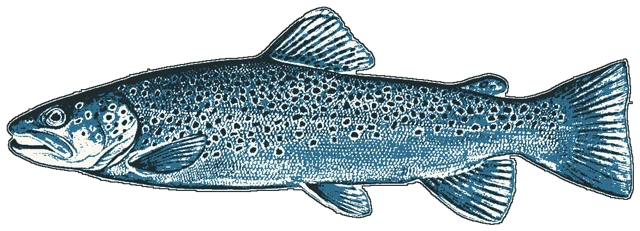
Brown trout
Salmo trutta · Freshwater
Good trout eating like rainbows; most kept browns are stocked fish.
- Tastes
- mild to rich, flaky
- Limits
- Heavy regs. Brook, rainbow and brown trout and their hybrids are one combined limit of 8 per day; no statewide minimum size, and designated trout waters are open all year. A trout license is required on top of the fishing license; one hand-held pole and line, no live fish for bait in trout streams. Waters Creek: 22 in minimum for brown trout. Noontootla Creek and tributaries on Blue Ridge WMA: 16 in minimum, artificial lures only. Delayed Harvest (all trout released, artificial lures with one single hook per lure, Nov 1 to May 14): Amicalola Creek (CR 192 to GA 53), Chattahoochee River (Sope Creek to US 41), Chattooga River (GA 28 bridge to Reed Creek), Smith Creek at Unicoi State Park, and the Toccoa River on U.S. Forest Service land. Dukes Creek (Smithgall Woods): reservation only, barbless artificial lures, all fish released. Chattahoochee River from GA 20 to Medlock Bridge: artificial lures only. Georgia-South Carolina border waters: 5 trout, no size limit. Other listed waters differ. (July 1, 2026 to June 30, 2027 (2026-27 Georgia guide; eRegulations page updated Aug 27, 2026)) Source
- Best months
- WRD and USFWS stock streams late March through October (WRD). Spawns in fall at 44 to 48 F (WRD fish ID).
- Where
- Tennessee, Coosa, Chattahoochee and Savannah basins (WRD fish ID). Forecast best bets: the Chattahoochee and Toccoa rivers and Lake Burton. WRD also names wild browns in the Chattahoochee below Buford Dam and the Noontootla Creek watershed.
- salmon eggs
- corn
- worms
- crickets
- spinners such as Panther Martins and rooster tails
- Limit (pregnant, may become pregnant, nursing, under 7): 1 meal a month of any fish from the 65 counties named on this page, 1 a week from the other counties (EPD, 2008).
Meal limits and other waters (2)
- Limit (everyone), 1 meal a week, EPD 2023: over 16 in from Lake Burton (mercury).
- No restrictions for other people (EPD 2023): the Chattooga River, Rock Creek and Jones Creek, and trout in the Chattahoochee from Buford Dam to Peachtree Creek.
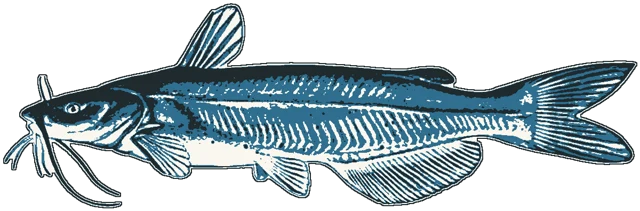
Channel catfish
Ictalurus punctatus · Freshwater
Very good to eat (Maryland DNR) and delicious when cooked (TPWD), and the basis of US catfish farming.
- Tastes
- mild, sweet, firm, moist
- Limits
- No limits. Channel and flathead catfish: no daily limit and no statewide size limit listed; they are excluded from the 50-fish game fish possession cap. DNR Public Fishing Area lakes: 5 channel catfish per day unless posted. Spearing of channel and flathead catfish is allowed in the Savannah River basin only. Noodling (hand grabbing) is open Mar 1 to Jul 15 statewide in fresh water. (July 1, 2026 to June 30, 2027 (2026-27 Georgia guide; eRegulations page updated Aug 27, 2026)) Source
- Best months
- Most active in the evening or early night; spawns at 70 to 75 F (WRD fish ID).
- Where
- Common throughout Georgia (WRD fish ID). Forecast best bets: Andrews, Blackshear, Oconee, Seminole, Sinclair, Walter F. George, West Point, Tobesofkee and the Savannah, Coosa, Satilla and Ocmulgee rivers.
- worms
- cut bait
- shrimp
- liver
- blood bait
- stink bait
- Do not eat (anyone), South Carolina's list: any fish from Lake Hartwell's Twelve Mile Creek and Seneca River arms.
Meal limits and other waters (6)
- Limit (pregnant, may become pregnant, nursing, under 7): 1 meal a month of any fish from the 65 counties named on this page, 1 a week from the other counties (EPD, 2008).
- Limit (everyone), 1 meal a month, EPD 2023: all sizes from Hartwell's main body (PCBs); over 16 in from Goat Rock (mercury, PCBs) and Oliver (chromium, PCBs); the Chattahoochee from Upatoi Creek to Omaha and the Coosa from GA 100 to the state line (PCBs); the Ogeechee at Black Creek, Bryan County (mercury).
- Limit (everyone), 1 meal a month, Alabama's 2026 list: Lake Eufaula's Cowikee Creek arm.
- Limit (everyone), 1 meal a week: over 16 in from West Point (PCBs), Chatuge and Rabun; 12 to 16 in from Goat Rock and Nottely; under 12 in and over 16 in from Harding (PCBs); the Satilla at GA 252, the Ogeechee at US 301, the Ocmulgee at Hawkinsville; 14 more listed waters.
- Limit (everyone), 1 meal a week, South Carolina's list: the Savannah from SC 119 to the coast.
- No restrictions for other people (EPD 2023): Lanier (listed as catfish), Clarks Hill, Oconee, Seminole, Sinclair and Walter F. George.
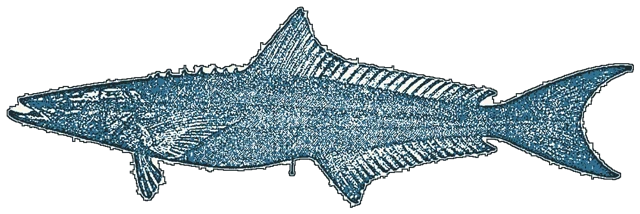
Cobia
Rachycentron canadum · also called ling, lemonfish, crab eater · Saltwater
Firm, white, sweet meat; TPWD calls it an exceptionally fine food fish.
- Tastes
- sweet, rich, firm, lean, moist
- Limits
- Heavy regs. State waters: open Mar 1 to Oct 31, 1 per angler, 6 per boat, 36 in fork length minimum. From Jan 1, 2027 anglers landing cobia need the Reef & Migratory Fish Endorsement ($10 resident, $20 nonresident). The federal council lists the same season and limits for federal waters off Georgia. (CRD limits page, read Nov 21, 2026; same in the 2026-27 Georgia guide (page updated Aug 27, 2026)) Source
- Best months
- State season March 1 to October 31 (CRD).
- Where
- Navigation markers, artificial reefs, bridges and piers, often following large rays and sharks; shallow flats and bays to open sea (Marine Fishes of Georgia).
- live grunts, jacks, cigar minnows or mullet
- live shrimp
- crabs
- dead fish or squid
- jigs
- spoons
Before you eat it: Limit (pregnant, may become pregnant, nursing, under 7): 1 meal a month of any fish from Georgia's coastal counties, and from the Turtle River system and Terry and Dupree creeks (EPD, 2008).
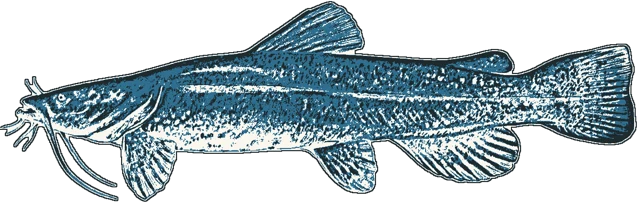
Flathead catfish
Pylodictis olivaris · Freshwater
Widely considered the best-tasting catfish because it eats live fish instead of scavenging; Maryland DNR notes its mild, white flesh.
- Tastes
- mild, clean, firm, white
- Limits
- No limits. Channel and flathead catfish: no daily limit and no statewide size limit listed; excluded from the 50-fish game fish possession cap. Spearing of flathead and channel catfish is allowed in the Savannah River basin only; noodling Mar 1 to Jul 15. WRD says flatheads are native only to the Coosa River in Georgia and are being removed from the Satilla River. (July 1, 2026 to June 30, 2027 (2026-27 Georgia guide; eRegulations page updated Aug 27, 2026)) Source
- Spawns
- Spawns at 70 to 80 F (WRD fish ID).
- Where
- Tennessee, Coosa, Chattahoochee, Flint, Ocmulgee, Oconee, Savannah, Altamaha and Satilla basins (WRD fish ID). Forecast best bets: Altamaha, upper and lower Flint, upper Ocmulgee, Andrews and Chehaw.
- live minnows
- chubs
- crayfish
- sunfish
- trotlines, setlines or jugs
- Do not eat (anyone), South Carolina's list: any fish from Lake Hartwell's Twelve Mile Creek and Seneca River arms.
Meal limits and other waters (5)
- Limit (pregnant, may become pregnant, nursing, under 7): 1 meal a month of any fish from the 65 counties named on this page, 1 a week from the other counties (EPD, 2008).
- Limit (everyone), 1 meal a month, EPD 2023: the Altamaha at Jesup (mercury, PCBs); the Ocmulgee at US 280 and the Satilla at GA 252, all sizes (mercury).
- Limit (everyone), 1 meal a week (mercury): the Altamaha at US 1; the Satilla near Waycross; the Flint from Dougherty to Mitchell counties at 16 in and up; the Ocmulgee at US 341; the Oconee at I-16; the Coosa from GA 100 to the state line.
- Limit (everyone), 1 meal a week, listed as catfish (mercury): over 16 in from Chatuge, Rabun and Cedar Creek Reservoir; 12 to 16 in from Nottely; the Ohoopee, Canoochee, and Ochlockonee from Moultrie to Thomasville.
- No restrictions for other people (EPD 2023): the Savannah at Plant Vogtle and US 301, and Lake Blackshear (over 16 in).
Hybrid striped bass
Morone saxatilis x M. chrysops · Freshwater
Indiana DNR says hybrids make great table fare; mild white fillets like a striper's.
- Tastes
- mild, firm, white
- Limits
- Light regs. Striped, white and hybrid striped bass are one combined limit of 15 per day, only 2 of which may be 22 in or longer. 2 per day, all 22 in or longer: North Newport, Medway (including Mount Hope Creek), Little Ogeechee and Ogeechee rivers, the Oconee River downstream of GA 22 in Milledgeville, the Ocmulgee River downstream of the GA 96 bridge, the Altamaha, St. Marys and Satilla rivers, their tributaries, and saltwater. Savannah River and tributaries downstream of J. Strom Thurmond Dam: 2 per day, 27 in minimum. Lake Richard B. Russell, from Russell Dam up to Lake Hartwell Dam and Lake Secession Dam, and its tributaries: 2 striped or hybrid bass in all per day, only 1 over 34 in. Georgia-South Carolina border: Lakes Hartwell and Clarks Hill 10 striped or hybrid combined, only 3 over 26 in. Closed to striped bass fishing May 1 to Oct 31: Flint River and tributaries (Albany dams to US 84), Chattahoochee River and tributaries (Columbia Lock and Dam to GA 91) and Spring Creek downstream to GA 253. Other listed waters differ. (July 1, 2026 to June 30, 2027 (2026-27 Georgia guide; eRegulations page updated Aug 27, 2026)) Source
- Where
- Stocked in reservoirs of the Tennessee, Coosa, Chattahoochee, Flint, Ocmulgee, Oconee, Altamaha and Savannah basins (WRD fish ID). Forecast best bets: Allatoona, Clarks Hill, Hartwell (do not eat from the main lake), Chatuge, Carters, Oconee, Sinclair, Blackshear, West Point, Walter F. George and Tobesofkee.
- jigs
- crankbaits
- live shad
- cut bait
- trolling and casting to schooling fish
- Do not eat (anyone): Lake Hartwell's main body, all sizes (PCBs; joint Georgia-South Carolina listing).
- Do not eat (anyone), South Carolina's list: any fish from Hartwell's Twelve Mile Creek and Seneca River arms, and hybrids over 16 in from its Tugaloo arm.
- Do not eat (pregnant, may become pregnant, nursing, under 7): any part of Lake Hartwell (EPD, 2008).
Meal limits and other waters (4)
- Limit (pregnant, may become pregnant, nursing, under 7): 1 meal a month of any fish from the 65 counties named on this page, 1 a week from the other counties (EPD, 2008).
- Limit (everyone), 1 meal a month, EPD 2023: 12 in and up from Hartwell's Tugaloo arm (mercury, PCBs) and Goat Rock Lake (PCBs).
- Limit (everyone), 1 meal a week: over 16 in from Allatoona, Clarks Hill and Chatuge (mercury) and Harding (mercury, PCBs); under 12 in and over 16 in from West Point (PCBs); the Altamaha at Jesup and the Ogeechee at US 25 (mercury).
- No restrictions for other people (EPD 2023): Oconee (under 12 in), Sinclair, Carters (over 16 in) and Walter F. George (12 in and up).
Kingfish (whiting)
Menticirrhus spp. (M. americanus, M. littoralis, M. saxatilis) · Saltwater
Firm, white, mild fillets with good flavor; small, but no smaller than the bluegill and crappie we also rate best. Fried whole or filleted, it's the Carolinas' favorite pier fish ("sea mullet" in NC).
- Tastes
- mild, sweet, firm, white
- Limits
- No limits. No statewide limit listed for southern kingfish (whiting): it is not on the CRD recreational limits page or the eRegulations finfish table. (CRD limits page, read Nov 21, 2026; same in the 2026-27 Georgia guide (page updated Aug 27, 2026)) Source
- Where
- Sandy-bottom areas in the surf; juveniles in low-salinity estuaries (Marine Fishes of Georgia).
- small crabs
- sand fleas
- shrimp
- squid
- jigs
- flies
- Do not eat (anyone): Purvis and Gibson creeks, Brunswick (mercury, PCBs).
Meal limits and other waters (4)
- Limit (pregnant, may become pregnant, nursing, under 7): 1 meal a month of any fish from Georgia's coastal counties, and from the Turtle River system and Terry and Dupree creeks (EPD, 2008).
- Limit (everyone), 1 meal a month, EPD 2023: the middle Turtle River (PCBs); Terry and Dupree creeks and the Back River down to St. Simons Sound (antimony, arsenic, PCBs, thallium, with mercury or toxaphene in some).
- Limit (everyone), 1 meal a week: the upper Turtle and Buffalo rivers; the lower Turtle and South Brunswick rivers (mercury, PCBs).
- No restrictions for other people (EPD 2023): St. Andrew Sound.
Rainbow trout
Oncorhynchus mykiss · Freshwater
TPWD calls rainbow trout an excellent fish to eat; the most-stocked put-and-take fish in America.
- Tastes
- mild, clean, delicate, flaky
- Limits
- Heavy regs. Brook, rainbow and brown trout and hybrids: 8 per day. A trout license is required on top of the fishing license; one hand-held pole and line, no live fish for bait. Delayed Harvest (all trout released, artificial lures with one single hook per lure, Nov 1 to May 14): Amicalola Creek (CR 192 to GA 53), Chattahoochee River (Sope Creek to US 41), Chattooga River (GA 28 bridge to Reed Creek), Smith Creek at Unicoi State Park, and the Toccoa River on U.S. Forest Service land. Noontootla Creek on Blue Ridge WMA: 16 in minimum, artificial lures only. Waters Creek: 22 in for brown and rainbow, 18 in for brook. Dukes Creek (Smithgall Woods): reservation only, barbless artificial lures, all fish released. Georgia-South Carolina border waters: 5 trout, no size limit. Other listed waters differ. (July 1, 2026 to June 30, 2027 (2026-27 Georgia guide; eRegulations page updated Aug 27, 2026)) Source
- Where
- Tennessee, Coosa, Tallapoosa, Chattahoochee and Savannah basins (WRD fish ID). Forecast best bets: Chattahoochee, Toccoa, Conasauga and Chattahoochee below Morgan Falls.
- salmon eggs
- corn
- worms
- crickets
- Panther Martin spinners
- Rooster Tail spinners
- Limit (pregnant, may become pregnant, nursing, under 7): 1 meal a month of any fish from the 65 counties named on this page, 1 a week from the other counties (EPD, 2008).
- No restrictions for other people (EPD 2023): the Chattahoochee below Buford Dam and below Morgan Falls Dam (listed as trout), the Coleman and Tallulah rivers, Rock Creek and the Conasauga headwaters.
Red drum
Sciaenops ocellatus · also called redfish, channel bass, spot tail, puppy drum, bull red (large fish) · Saltwater
Slot-size reds are firm, mild, white-fleshed fish that anglers keep specifically to eat; blackened redfish made the species famous.
- Tastes
- mild, slightly sweet, firm, moist, large flakes; coarse in big fish
- Limits
- Heavy regs. State waters (0 to 3 nautical miles): 5 per day, 14 to 23 in total length, all year. Effective Jan 1, 2027 the limit drops to 3 per day with a 15 to 24 in slot. Red drum are a gamefish: rod and reel only. CRD says harvest is prohibited in federal waters, so a nearshore reef is probably off limits for keeping them. (5 fish, 14 to 23 in through Dec 31, 2026; 3 fish, 15 to 24 in from Jan 1, 2027 (CRD limits page, read Nov 21, 2026)) Source
- Best months
- Schoolies year-round inshore; young-of-the-year appear June to August; fall is the best time for small school drum; winter schools on shallow mudflats and oyster banks (CRD).
- Where
- Estuaries and creeks, mudflats next to marsh, and the surf; large fish in the surf; winter schools on mudflats and oyster banks (CRD).
- live or dead shrimp
- small crabs
- fiddler crabs
- live finger mullet
- mud minnows
- fresh-cut mullet
- Slot-size fish eat best; large 'bull reds' are coarse and are usually released.
- Limit (pregnant, may become pregnant, nursing, under 7): 1 meal a month of any fish from Georgia's coastal counties, and from the Turtle River system and Terry and Dupree creeks (EPD, 2008).
Meal limits and other waters (4)
- Limit (everyone), 1 meal a month, EPD 2023: Terry and Dupree creeks and the Back River down to St. Simons Sound (arsenic, PCBs, thallium, with antimony in some).
- Limit (everyone), 1 meal a week: Purvis and Gibson creeks (PCBs); the upper Turtle and Buffalo rivers and the middle Turtle River (mercury).
- No restrictions for other people (EPD 2023): the lower Turtle and South Brunswick rivers.
- EPD's guide lists red drum nowhere else, so other waters are untested.
Red snapper
Lutjanus campechanus · also called genuine red snapper · Saltwater
Sweet, firm, succulent white fillets; Florida Sportsman's pick for best-eating bottom fish, and TPWD calls the throats a delicacy.
- Tastes
- sweet, mild, distinctive, semi-firm, lean, moist
- Limits
- Heavy regs. State waters (0 to 3 nautical miles): the CRD list shows 2 per day, 20 in total length minimum. In federal waters (3 to 200 nautical miles) the 2026 federal recreational season was Oct 9 to Oct 11 (1 per person, no size limit). Georgia's 2026 exempted fishing permit season ran Oct 9 to Oct 22 in federal waters: 1 red snapper per person, no minimum size, a valid Georgia license and SIP permit, the trip declared in VESL before leaving and reported within 24 hours of departure, trips starting and ending at a Georgia landing; harvest limit 4,859 fish. DNR told its board on Oct 27, 2026 that about 462 had been reported and that it may ask NOAA for December days; none had been announced by Nov 21, 2026. Federal waters are closed to red snapper outside those seasons. From Jan 1, 2027 anglers landing red snapper need the Reef & Migratory Fish Endorsement. (NOAA bulletin FB26-052, Sept 21, 2026; DNR releases Sept 22 and Oct 2, 2026; DNR board minutes Oct 27, 2026) Source
- Best months
- 2026 season Oct 9 to Oct 22 for Georgia anglers under the EFP.
- Where
- Rocky bottom offshore in 100 to 200 feet of water as adults; juveniles shallower over sand or mud (Marine Fishes of Georgia).
- live small baitfish
- dead minnows or pilchards
- cut fish
- squid
Before you eat it: Limit (pregnant, may become pregnant, nursing, under 7): 1 meal a month of any fish from Georgia's coastal counties, and from the Turtle River system and Terry and Dupree creeks (EPD, 2008).
Redbreast sunfish
Lepomis auritus · also called bream · Freshwater
A favorite river panfish across the Southeast; MeatEater counts panfish among the best-eating fish in freshwater.
- Tastes
- mild, sweet, flaky
- Limits
- Light regs. Sunfish (bluegill, flier, redbreast, redear, rock bass, spotted sunfish, warmouth and shadow bass) are one combined limit of 50 per day; no statewide minimum size listed. DNR Public Fishing Area lakes: 15 per day unless posted. Savannah border waters follow the South Carolina agreement for bream, and the page gives no number; all game fish together on those waters are 40 in possession, catfish not counted. Other listed waters differ. (July 1, 2026 to June 30, 2027 (2026-27 Georgia guide; eRegulations page updated Aug 27, 2026)) Source
- Spawns
- Spawns later than most sunfish, at 65 to 75 F (WRD fish ID). Unlike other sunfish, can be caught at night.
- Where
- Common throughout Georgia, favoring streams and rivers (WRD fish ID). Forecast best bets: Ochlockonee, Ogeechee, Satilla, St. Marys, Withlacoochee and lower Flint rivers and Lake Tugalo; WRD says introduced flatheads decimated the redbreast fishery on the Altamaha and threaten it on the Satilla.
- beetle spins
- small spinners
- Do not eat (anyone), South Carolina's list: any fish from Lake Hartwell's Twelve Mile Creek and Seneca River arms.
Meal limits and other waters (5)
- Limit (pregnant, may become pregnant, nursing, under 7): 1 meal a month of any fish from the 65 counties named on this page, 1 a week from the other counties (EPD, 2008).
- Limit (everyone), 1 meal a month, EPD 2023: Proctor Creek in Atlanta (PCBs, dieldrin, heptachlor epoxide) and the Canoochee River (listed as sunfish, mercury).
- Limit (everyone), 1 meal a week: the Ogeechee at Louisville, Midville, GA 119 and Black Creek; the Satilla at Waycross and GA 252; the St. Marys at US 17; the Withlacoochee, Alapaha and Ohoopee; the Ochlockonee from Moultrie to Thomasville; the Chattooga in Rabun County; Spring and Short creeks; Bear Creek Reservoir; Laura S. Walker and Reed Bingham lakes (mercury, with PCBs at Waycross and GA 119).
- Limit (everyone), 1 meal a week, South Carolina's list: the Savannah from SC 119 to US 17.
- No restrictions for other people (EPD 2023): the Ogeechee in Jenkins County and at US 301, the St. Marys at St. George and the Little Tennessee River.
Sheepshead
Archosargus probatocephalus · also called convict fish · Saltwater
Fine, white, mild flesh that agencies call excellent; the only knock is that the heavy scales and spines make it a chore to clean.
- Tastes
- mild, sweet (shellfish diet), firm, white, fine flake
- Limits
- Light regs. 15 per day, 10 in fork length minimum, all year (state waters). (CRD limits page, read Nov 21, 2026; same in the 2026-27 Georgia guide (page updated Aug 27, 2026)) Source
- Best months
- Winter into late winter: they school up and feed heavily before moving nearshore to spawn (CRD winter page).
- Where
- Docks, piers, jetties, bridge pilings and trees fallen into eroded banks, anything encrusted with barnacles and oysters (CRD).
- fiddler crabs
- oysters
- any crab
- shrimp
- clams
- marine worms
- Sharp gill covers and dorsal spines; heavy scales make filleting slow (TPWD).
- Limit (pregnant, may become pregnant, nursing, under 7): 1 meal a month of any fish from Georgia's coastal counties, and from the Turtle River system and Terry and Dupree creeks (EPD, 2008).
- Limit (everyone), 1 meal a week, EPD 2023: the Savannah River estuary (mercury); Purvis and Gibson creeks (mercury); the upper Turtle and Buffalo, middle Turtle, and lower Turtle and South Brunswick rivers (mercury, PCBs).
Southern flounder
Paralichthys lethostigma · Saltwater
Lean, white, mild fillets; TPWD says its reputation as table fare is unsurpassed in Texas.
- Tastes
- mild, sweet, lean, fine, delicate flakes
- Limits
- Light regs. Flounder (all species): 15 per day, 12 in total length minimum, all year. Gigs may be used only for flounder. (CRD limits page, read Nov 21, 2026; same in the 2026-27 Georgia guide (page updated Aug 27, 2026)) Source
- Where
- Open flat-bottom areas where seatrout and red drum concentrate; shallow soft-bottom areas and bridges (CRD, Marine Fishes of Georgia).
- live shrimp
- mud minnows
- finger-size mullet
- squid or cut bait
- jighead drag with mud minnows or shrimp
- Limit (pregnant, may become pregnant, nursing, under 7): 1 meal a month of any fish from Georgia's coastal counties, and from the Turtle River system and Terry and Dupree creeks (EPD, 2008).
Meal limits and other waters (3)
- Limit (everyone), 1 meal a week, EPD 2023: Purvis and Gibson creeks (PCBs).
- Limit (everyone), 1 meal a week, summer flounder: the DRH (mercury), HLHA, J, JY and SFC (arsenic) artificial reefs.
- No restrictions for other people (EPD 2023): Altamaha Sound (listed as flounder), Village Creek, the upper, middle and lower Turtle River, and summer flounder at the CDH reef.
Spotted seatrout
Cynoscion nebulosus · Saltwater
Excellent flavor and delicate texture; one of the most-kept inshore fish from the Carolinas to Texas.
- Tastes
- mild, sweet, delicate, soft to medium, fine flake
- Limits
- Light regs. 15 per day, 14 in total length minimum, all year (state waters). (CRD limits page, read Nov 21, 2026; same in the 2026-27 Georgia guide (page updated Aug 27, 2026)) Source
- Best months
- Live shrimp is the best year-round bait; from mid-November through March artificial lures work as well or better; in winter they move to deeper holes upriver and in creeks (CRD).
- Where
- Dead oyster shell and live oyster beds, banks, points, jetties and bars; deeper channels in cold water; open beaches in spring and summer (CRD).
- live shrimp
- finger mullet
- mud minnows
- menhaden (pogies)
- plastic tail grubs (mid-Nov to March)
- popping cork rigs
- Ice immediately; the meat loses quality quickly in warm weather (TPWD).
- Some fish carry harmless 'spaghetti worm' tapeworm larvae along the backbone (TPWD, Florida Museum).
- Limit (pregnant, may become pregnant, nursing, under 7): 1 meal a month of any fish from Georgia's coastal counties, and from the Turtle River system and Terry and Dupree creeks (EPD, 2008).
Meal limits and other waters (3)
- Limit (everyone), 1 meal a month, EPD 2023: Purvis and Gibson creeks (mercury, PCBs); Terry and Dupree creeks and the Back River down to St. Simons Sound (antimony, PCBs, thallium, with arsenic in some).
- Limit (everyone), 1 meal a week: the upper Turtle and Buffalo, middle Turtle, and lower Turtle and South Brunswick rivers (mercury, with PCBs in the middle Turtle).
- No restrictions for other people (EPD 2023): Wassaw Sound, the Altamaha Sound delta, Village Creek and St. Andrew Sound.
Striped bass
Morone saxatilis · Fresh and salt
Firm, large-flaked, slightly sweet white meat; one of the most kept and eaten gamefish in the country, fresh or salt.
- Tastes
- mild, slightly sweet, firm, large flakes
- Limits
- Light regs. Striped, white and hybrid striped bass are one combined limit of 15 per day, only 2 of which may be 22 in or longer. 2 per day, all 22 in or longer: North Newport, Medway (including Mount Hope Creek), Little Ogeechee and Ogeechee rivers, the Oconee River downstream of GA 22 in Milledgeville, the Ocmulgee River downstream of the GA 96 bridge, the Altamaha, St. Marys and Satilla rivers, their tributaries, and saltwater. Savannah River and tributaries downstream of J. Strom Thurmond Dam: 2 per day, 27 in minimum. Lake Richard B. Russell, from Russell Dam up to Lake Hartwell Dam and Lake Secession Dam, and its tributaries: 2 striped bass per day, only 1 over 34 in. Georgia-South Carolina border: Lakes Hartwell and Clarks Hill 10 striped or hybrid combined, only 3 over 26 in. Closed to striped bass fishing May 1 to Oct 31: Flint River and tributaries (Albany dams to US 84), Chattahoochee River and tributaries (Columbia Lock and Dam to GA 91) and Spring Creek downstream to GA 253. Other listed waters differ. (July 1, 2026 to June 30, 2027 (2026-27 Georgia guide; eRegulations page updated Aug 27, 2026)) Source
- Best months
- Spring spawning runs up the Chattahoochee into Lanier; in fall look for schools feeding at the surface under diving gulls (Don Carter State Park page, WRD fish ID).
- Where
- Reservoirs and rivers in the Tennessee, Coosa, Chattahoochee, Flint, Ocmulgee, Oconee, Ogeechee, Ochlockonee, St. Marys and Savannah basins (WRD fish ID). Forecast best bets: Lanier, Clarks Hill, Hartwell (do not eat from the main lake), Juliette, Nottely, Russell, Sinclair, West Point, Chattahoochee (Morgan Falls) and the Savannah River.
- large green or white jigs
- minnows
- shad
- live shrimp or mullet in coastal river estuaries
- Consumption advisories for striped bass vary from state to state (NOAA).
- Do not eat (anyone): Lake Hartwell's main body, all sizes (PCBs; joint Georgia-South Carolina listing).
- Do not eat (anyone), South Carolina's list: any fish from Hartwell's Twelve Mile Creek and Seneca River arms, and striped bass over 16 in from its Tugaloo arm.
- Do not eat (pregnant, may become pregnant, nursing, under 7): any part of Lake Hartwell (EPD, 2008).
Meal limits and other waters (5)
- Limit (pregnant, may become pregnant, nursing, under 7): 1 meal a month of any fish from the 65 counties named on this page, 1 a week from the other counties (EPD, 2008).
- Limit (everyone), 1 meal a month, EPD 2023: 12 in and up from Hartwell's Tugaloo arm (mercury, PCBs); the Chattahoochee from Morgan Falls Dam to and including West Point Lake (mercury, PCBs); the Coosa from Rome to the state line, the Etowah below Thompson-Weinman Dam and the Oostanaula (PCBs); 26 in and longer from the Savannah from New Savannah Bluff Lock and Dam to the estuary (mercury, PCBs, thallium).
- EPD says pregnant women, nursing mothers and young children may wish to eat less than that from the Savannah.
- Limit (everyone), 1 meal a week: over 16 in from Allatoona (PCBs) and Nottely (mercury); the Ogeechee at US 25 (mercury).
- No restrictions for other people (EPD 2023): Lanier (12 in and up), Clarks Hill, Juliette and Carters (over 16 in).
Tripletail
Lobotes surinamensis · also called eddy fish · Saltwater
Florida Sportsman calls it the top inshore eating fish: delicate, rich, flaky white meat.
- Tastes
- mild, rich, sweet, firm, white, flaky
- Limits
- Heavy regs. 2 per day, 18 in total length minimum, all year (state waters). (CRD limits page, read Nov 21, 2026; same in the 2026-27 Georgia guide (page updated Aug 27, 2026)) Source
- Best months
- A summer fish: tripletail and tarpon head south to Florida as water cools (CRD winter page).
- Where
- Weedlines and floating debris; navigation markers in some bays (Marine Fishes of Georgia). Tested in St. Simons Sound at the north end of Jekyll Island (EPD).
- live shrimp
- live fish
- cut bait
- dead shrimp
- jigs
- plugs
Before you eat it: Limit (pregnant, may become pregnant, nursing, under 7): 1 meal a month of any fish from Georgia's coastal counties, and from the Turtle River system and Terry and Dupree creeks (EPD, 2008). No restrictions for other people (EPD 2023): St. Simons Sound at the north end of Jekyll Island.
Walleye
Sander vitreus · Freshwater
Widely rated the best-eating freshwater fish: Maryland DNR calls it one of the best tasting, TPWD an excellent food fish.
- Tastes
- mild, clean, firm, tender, flaky white
- Limits
- Light regs. Walleye: 8 per day, no statewide minimum size listed. Georgia-South Carolina border waters: walleye or sauger combined 8, no size limit. (July 1, 2026 to June 30, 2027 (2026-27 Georgia guide; eRegulations page updated Aug 27, 2026)) Source
- Spawns
- Spawns in spring at 45 to 50 F over rocky river bottoms (WRD fish ID).
- Where
- Tennessee, Coosa, Chattahoochee and Savannah basins (WRD fish ID). Forecast best bets: Lanier, Blue Ridge, Carters, Chatuge, Rabun, Tugalo, Seed and Yonah.
- minnows
- nightcrawlers
- jigs
- plugs
- spinner combos
- Do not eat (anyone), South Carolina's list: any fish from Lake Hartwell's Twelve Mile Creek and Seneca River arms.
Meal limits and other waters (4)
- Limit (pregnant, may become pregnant, nursing, under 7): 1 meal a month of any fish from the 65 counties named on this page, 1 a week from the other counties (EPD, 2008).
- Limit (everyone), 1 meal a month, EPD 2023: over 16 in from Yonah Lake (mercury).
- Limit (everyone), 1 meal a week: 12 in and up from Blue Ridge (mercury, PCBs); over 16 in from Lanier, Carters, Rabun, Tugalo and Hartwell's Tugaloo arm (mercury).
- No restrictions for other people (EPD 2023): Lake Burton (over 16 in).
White bass
Morone chrysops · Freshwater
Texas Parks & Wildlife calls white bass superb table fare, and the spring runs fill a lot of coolers; light, flaky meat like walleye.
- Tastes
- mild, light, flaky
- Limits
- Light regs. Striped, white and hybrid striped bass are one combined limit of 15 per day, only 2 of which may be 22 in or longer; no statewide minimum size. 2 per day, all 22 in or longer (white bass included): North Newport, Medway (including Mount Hope Creek), Little Ogeechee and Ogeechee rivers, the Oconee River downstream of GA 22 in Milledgeville, the Ocmulgee River downstream of the GA 96 bridge, the Altamaha, St. Marys and Satilla rivers, their tributaries, and saltwater. Savannah River and tributaries downstream of J. Strom Thurmond Dam: 2 per day, 27 in minimum. Other Georgia-South Carolina border waters: 10 white bass, no size limit. (July 1, 2026 to June 30, 2027 (2026-27 Georgia guide; eRegulations page updated Aug 27, 2026)) Source
- Spawns
- Spawns when water reaches 53 to 64 F, moving up tributaries and onto wind-swept sand and gravel areas in lakes (WRD fish ID).
- Where
- Tennessee, Coosa, Chattahoochee, Flint, Ocmulgee, Oconee and Savannah basins (WRD fish ID). Forecast best bets: Allatoona (do not eat under 12 in), Blackshear and Oconee and the Coosa and Oostanaula rivers.
- small plugs or spinners (trolled)
- jigs
- minnows
- Do not eat (anyone): under 12 in from Lake Allatoona (thallium).
- Do not eat (anyone), South Carolina's list: any fish from Lake Hartwell's Twelve Mile Creek and Seneca River arms.
Meal limits and other waters (4)
- Limit (pregnant, may become pregnant, nursing, under 7): 1 meal a month of any fish from the 65 counties named on this page, 1 a week from the other counties (EPD, 2008).
- Limit (everyone), 1 meal a month, EPD 2023: Goat Rock Lake up to 16 in, and the Conasauga at Old Tilton Bridge (PCBs).
- Limit (everyone), 1 meal a week: 12 to 16 in from Lanier and Blue Ridge (mercury); over 16 in from Harding (mercury, PCBs); the Etowah above Allatoona (mercury); the Coosa from GA 100 to the state line (toxaphene).
- No restrictions for other people (EPD 2023): the Coosa below May's Bar.
American shad
Alosa sapidissima · Fresh and salt
Some of the best-flavored fish in North America and prized roe, but so bony that most modern anglers do not bother.
Worth a try: Debone, score and deep-fry (Hank Shaw's boneless tempura shad), bake for hours to soften bones, or smoke; the roe sautéed with bacon is a spring classic.
- Tastes
- rich, oily, sweet, soft, extremely bony
- Limits
- Light regs. American and hickory shad are one combined limit of 8 per day; no statewide minimum size listed. (July 1, 2026 to June 30, 2027 (2026-27 Georgia guide; eRegulations page updated Aug 27, 2026)) Source
- Best months
- American shad enter coastal rivers in winter and early spring (Dec to May); hickory shad Dec to Apr (WRD fish ID).
- Where
- St. Marys, Satilla, Ocmulgee, Oconee, Altamaha, Ogeechee and Savannah basins (American); Ocmulgee, Altamaha, Ogeechee and Savannah (hickory) (WRD fish ID). Forecast best bet on the upper Ocmulgee.
- flies
- small flashy lures
- small fish or minnows
Before you eat it: Limit (pregnant, may become pregnant, nursing, under 7): 1 meal a month of any fish from the 65 counties named on this page, 1 a week from the other counties (EPD, 2008). EPD's 2023 guide lists no shad, so no water is cleared.
Atlantic croaker
Micropogonias undulatus · Saltwater
Good mild meat (LSU Sea Grant rates it very good), but most catches are under half a pound, so yield is low and they are usually fried whole or as small fillets.
- Tastes
- mild, slightly sweet, medium-firm, small flakes
- Limits
- Light regs. 25 per day, no minimum size, all year (state waters). (CRD limits page, read Nov 21, 2026; same in the 2026-27 Georgia guide (page updated Aug 27, 2026)) Source
- Best months
- Abundant in inshore waters April to October (CRD); caught in deeper creek holes in winter (CRD winter page).
- Where
- Sandy hard bottom inshore; deeper holes in creeks in winter (CRD).
- shrimp
- squid
- cut fish
- crab
- fiddler crabs
- Do not eat raw; croaker can pass trematode parasites (TPWD).
- Do not eat (anyone): Purvis and Gibson creeks, Brunswick (PCBs).
Meal limits and other waters (3)
- Limit (pregnant, may become pregnant, nursing, under 7): 1 meal a month of any fish from Georgia's coastal counties, and from the Turtle River system and Terry and Dupree creeks (EPD, 2008).
- Limit (everyone), 1 meal a month, EPD 2023: the upper Turtle and Buffalo rivers and the middle Turtle River (PCBs); Terry and Dupree creeks and the Back River down to St. Simons Sound (arsenic, thallium, with antimony, PCBs or toxaphene in some).
- Limit (everyone), 1 meal a week: the lower Turtle and South Brunswick rivers (PCBs).
Atlantic sharpnose shark
Rhizoprionodon terraenovae · Saltwater
NOAA reports it is quite tasty; a common small surf and pier shark that some anglers keep and many use for bait.
- Tastes
- mild, firm
- Limits
- Heavy regs. Small shark composite (Atlantic sharpnose, bonnethead and spiny dogfish together): 1 per angler per day, 30 in fork length minimum, all year. Hook and line only, with non-offset, corrodible, non-stainless circle hooks unless fishing with flies or artificial lures. Landed with head and fins intact. Federal HMS rules also apply. (CRD limits page, read Nov 21, 2026; same in the 2026-27 Georgia guide (page updated Aug 27, 2026)) Source
- Best months
- Sharks move out of the sounds in winter (CRD winter page).
- Where
- Coastal waters, often close to the surf zone or in enclosed bays, sounds, harbors and estuaries (Marine Fishes of Georgia).
- small live or dead baitfish
- cut bait
- FDA/EPA list shark as a 'Choice to Avoid' (highest mercury).
Before you eat it: Do not eat (women who are or may become pregnant, nursing mothers, young children): any shark (mercury; EPD's Woman's Guides, 2008). EPD's 2023 guide lists no shark, so no water is cleared for anyone else.
Black drum
Pogonias cromis · also called striped drum · Saltwater
Small black drum are good eating, but big fish are coarse and often carry harmless but off-putting spaghetti worms, so the species' reputation is mixed.
Worth a try: Keep fish under about 5 lb (TPWD's cutoff) and skip the bulls. Small black drum fillets are white, mild and firm, and work anywhere redfish does: blackened, fried, or grilled on the half shell. LSU Sea Grant rates food value good, especially smaller fish.
- Tastes
- mild, sweet, firm; coarse in large fish
- Limits
- Light regs. 15 per day, 14 in total length minimum, all year (state waters). (CRD limits page, read Nov 21, 2026; same in the 2026-27 Georgia guide (page updated Aug 27, 2026)) Source
- Best months
- Abundant inshore April to October (CRD); structure-oriented in winter around bridges, piers and fallen trees (CRD winter page).
- Where
- Piers, docks, jetties, bridges and natural oyster shell mounds (CRD).
- shrimp
- fiddler crabs
- small whole crabs
- cut fish
- squid
- Large fish are coarse and often carry larval tapeworms ('spaghetti worms'); harmless to people but unappetizing (LSU Sea Grant).
- Limit (pregnant, may become pregnant, nursing, under 7): 1 meal a month of any fish from Georgia's coastal counties, and from the Turtle River system and Terry and Dupree creeks (EPD, 2008).
Meal limits and other waters (2)
- Limit (everyone), 1 meal a week, EPD 2023: Purvis and Gibson creeks and the middle Turtle River (PCBs).
- No restrictions for other people (EPD 2023): the upper Turtle and Buffalo, and lower Turtle and South Brunswick rivers.
Blacktip shark
Carcharhinus limbatus · Saltwater
Sweet, meaty and moist (NOAA), but like all sharks it must be bled and iced fast or it can taste of ammonia.
- Tastes
- sweet, meaty, thick, large flakes, moist
- Limits
- Heavy regs. Sharks other than hammerheads, the small shark composite and prohibited sharks: 1 per angler or boat, whichever is fewer, 54 in fork length minimum, all year (shortfin mako: 83 in, and only when federal quota is available). Hook and line only with non-offset, corrodible, non-stainless circle hooks unless fishing with flies or artificial lures. Sandbar, sand tiger and other listed sharks are no harvest. (CRD limits page, read Nov 21, 2026; same in the 2026-27 Georgia guide (page updated Aug 27, 2026)) Source
- Best months
- Sharks move out of the sounds in winter (CRD winter page).
- Where
- Shallow coastal waters, near river mouths, bays and estuaries (Marine Fishes of Georgia).
- fresh cut bait
- topwater plugs
- fly-rod poppers
- large streamer flies
- slow-swimming jigs
- FDA/EPA list shark as a 'Choice to Avoid' (highest mercury).
- Bleed and gut immediately to keep urea out of the meat.
Before you eat it: Do not eat (women who are or may become pregnant, nursing mothers, young children): any shark (mercury; EPD's Woman's Guides, 2008). EPD's 2023 guide lists no shark, so no water is cleared for anyone else.
Bluefish
Pomatomus saltatrix · Saltwater
Rich, oily and strong-tasting, with soft meat that does not freeze well; Hank Shaw calls it about as polarizing a food as there is.
Worth a try: Bleed and ice it, cook it the same day, and trim the dark strip (NOAA). Fresh blues are excellent grilled or smoked, and smoked bluefish pâté is a New England classic (Hank Shaw). Acid such as citrus or tomato cuts the oil.
- Tastes
- rich, full, coarse, moist
- Limits
- Heavy regs. 15 per day, 12 in fork length minimum, open May 1 to Feb 28 (state waters). DNR closed recreational bluefish and banned possession in March and April 2026, and its limits page lists the same closure every year. Federal waters (2026): 5 per person per day on private boats, 7 on permitted for-hire boats. (CRD limits page, read Nov 21, 2026; DNR closure notice dated Feb 11, 2026; NOAA 2026 federal limit) Source
- Best months
- April to December (CRD reef guide, Jan. 2022), but none may be kept in March or April.
- Where
- Juveniles inshore in rivers, creeks and estuaries; adults mostly offshore (Marine Fishes of Georgia). USFWS lists bluefish at Harris Neck refuge waters.
- shrimp
- squid
- baitfish
- cut bait
- noisy surface plugs
- jigs
- Large bluefish can carry higher mercury and PCBs; some states recommend limited consumption (NOAA).
- Raw fillets freeze poorly; cook or smoke before freezing (Hank Shaw).
- Limit (pregnant, may become pregnant, nursing, under 7): 1 meal a month of any fish from Georgia's coastal counties, and from the Turtle River system and Terry and Dupree creeks (EPD, 2008).
- Limit (everyone), 1 meal a week, EPD 2023: Terry Creek and the Back River above the Torras Causeway (arsenic); the Back River from the Torras Causeway to St. Simons Sound (mercury).
Bonnethead
Sphyrna tiburo · Saltwater
A small shark most anglers release; edible but held back by the usual shark handling and mercury caveats.
Worth a try: NOAA describes sweet, meaty flesh, and a Florida Sportsman chef-captain says bonnetheads are fantastic, rivaling swordfish, if gutted and iced as fast as possible.
- Tastes
- sweet, meaty, thick flakes, moist
- Limits
- Heavy regs. Small shark composite (Atlantic sharpnose, bonnethead, spiny dogfish): 1 per angler per day, 30 in fork length minimum, all year. Sharks may be taken by hook and line only, with non-offset, corrodible, non-stainless circle hooks unless fishing with flies or artificial lures. Landed with head and fins intact. Federal HMS rules also apply. (CRD limits page, read Nov 21, 2026; same in the 2026-27 Georgia guide (page updated Aug 27, 2026)) Source
- Best months
- Sharks move out of the sounds in winter (CRD winter page).
- Where
- Warm shallow water over muddy or sandy bottoms, grass flats, bays, deep channels and estuaries (Marine Fishes of Georgia).
- small live fish
- cut bait
- FDA/EPA list shark as a 'Choice to Avoid' (highest mercury).
Before you eat it: Do not eat (women who are or may become pregnant, nursing mothers, young children): any shark (mercury; EPD's Woman's Guides, 2008). EPD's 2023 guide lists no shark, so no water is cleared for anyone else.
Chain pickerel
Esox niger · also called jackfish · Freshwater
White, flaky and good-tasting meat, but quite bony with pike-style Y-bones.
- Tastes
- mild, white, flaky, bony
- Limits
- Light regs. Chain, grass and redfin pickerel are one combined limit of 15 per day; no statewide minimum size listed. (July 1, 2026 to June 30, 2027 (2026-27 Georgia guide; eRegulations page updated Aug 27, 2026)) Source
- Spawns
- Spawns over submerged vegetation at 45 to 50 F (WRD fish ID).
- Where
- Coosa, Chattahoochee, Flint, Ochlockonee, Suwannee, Satilla, St. Marys, Ocmulgee, Oconee, Altamaha, Ogeechee and Savannah basins (WRD fish ID). Forecast best bets: Suwannee River and Chattahoochee (Morgan Falls).
- surface lures
- spinner baits
- spoons
- live shiners
- Do not eat (anyone), South Carolina's list: any fish from Lake Hartwell's Twelve Mile Creek and Seneca River arms.
Meal limits and other waters (4)
- Limit (pregnant, may become pregnant, nursing, under 7): 1 meal a month of any fish from the 65 counties named on this page, 1 a week from the other counties (EPD, 2008).
- Limit (everyone), 1 meal a month, EPD 2023: Okefenokee Swamp at Billy's Lake (mercury).
- Limit (everyone), 1 meal a week (mercury): the Suwannee from the Sill to the state line; Patsiliga Creek above Beaver Creek, Taylor County.
- Limit (everyone), 1 meal a week, South Carolina's list: the Savannah from Stevens Creek to SC 119.
Common carp
Cyprinus carpio · Freshwater
Most US anglers call it a muddy, bony trash fish, but it is a prized food fish in Europe and Asia and eats well from clean, cold water.
Worth a try: Catch from clean water, remove the dark 'mud vein', and either score small fish and fry hard so the Y-bones soften, or hard-smoke large fish over fruitwood (Hank Shaw).
- Tastes
- mild from clean water, strong from muddy water, firm, fatty, Y-bones
- Limits
- No limits. Not on the game-species table, so no statewide daily limit, size limit or season is listed; nongame fish may be speared in fresh water but not sold. At DNR Public Fishing Areas grass carp must be released. (July 1, 2026 to June 30, 2027 (2026-27 Georgia guide; eRegulations page updated Aug 27, 2026)) Source
- Spawns
- Spawns in very shallow water at 59 to 77 F (WRD fish ID).
- Where
- Introduced; potentially found statewide (WRD fish ID). Chatuge is listed among forecast waters with carp as a best bet. State record: 35 lb 12 oz from Lake Jackson.
- doughballs
- worms
- corn
- Do not eat (anyone), South Carolina's list: any fish from Lake Hartwell's Twelve Mile Creek and Seneca River arms.
Meal limits and other waters (3)
- Limit (pregnant, may become pregnant, nursing, under 7): 1 meal a month of any fish from the 65 counties named on this page, 1 a week from the other counties (EPD, 2008).
- EPD's Coosa guide for women says to eat fewer fatty fish such as carp, catfish and suckers (PCBs).
- EPD's 2023 guide says carp are no longer tested, so no water is cleared.
Gafftopsail catfish
Bagre marinus · also called sailcat · Saltwater
Reputation is split: LSU Sea Grant rates it fair with a slightly fishy taste, and TPWD says it is hard to prepare and not usually eaten.
- Tastes
- mild to slightly fishy, firm, white
- Limits
- No limits. No statewide limit listed for gafftopsail catfish: it is not on the CRD recreational limits page or the eRegulations finfish table. A commercial license is needed to sell any seafood. (CRD limits page, read Nov 21, 2026; same in the 2026-27 Georgia guide (page updated Aug 27, 2026)) Source
- Where
- Coastal flats, channels and deeper areas, well into rivers (Marine Fishes of Georgia).
- live or dead bait
- artificial lures
- Spines carry a toxic slime; handle carefully (TPWD).
Before you eat it: Limit (pregnant, may become pregnant, nursing, under 7): 1 meal a month of any fish from Georgia's coastal counties, and from the Turtle River system and Terry and Dupree creeks (EPD, 2008).
King mackerel
Scomberomorus cavalla · also called kingfish · Saltwater
Rich, strong, oily meat that most people smoke or eat very fresh; LSU Sea Grant says the strong taste discourages most consumption.
- Tastes
- rich, pronounced, flaky, moist, oily
- Limits
- Heavy regs. 3 per day, 24 in fork length minimum, all year (state waters); federal rules apply 3 to 200 nautical miles. From Jan 1, 2027 anglers landing king mackerel need the Reef & Migratory Fish Endorsement. (CRD limits page, read Nov 21, 2026; same in the 2026-27 Georgia guide (page updated Aug 27, 2026)) Source
- Best months
- April to December, with large kings arriving as water nears 70°F (CRD reef guide, Jan. 2022).
- Where
- All along the coast out to the continental shelf; some of the largest close to beaches (Marine Fishes of Georgia).
- spoons
- feather-minnow combinations
- live baits
- shrimp
- strips
- FDA/EPA list king mackerel as a 'Choice to Avoid' (highest mercury) for pregnant women and children; every Gulf state has issued advisories (LSU Sea Grant).
- Some ciguatera reports, mainly in South Florida (Florida Museum; UF/Florida DOH study).
- Do not eat (anyone): over 39 in fork length (mercury).
- Do not eat (women who are or may become pregnant, nursing mothers, young children): any king mackerel (EPD's Woman's Guides, 2008).
Meal limits and other waters (4)
- Limit (children 12 and under): 1 meal a month at 33 to 39 in.
- Limit (other adults): 1 meal a week at 33 to 39 in.
- No restrictions for other people at 24 to 33 in (EPD 2023; joint advisory with North Carolina, South Carolina and Florida; a meal is 8 ounces).
- EPD's 2023 guide allows pregnant and nursing women 1 meal a month at 33 to 39 in, so follow the stricter line.
Largemouth bass
Micropterus nigricans (syn. M. salmoides) · also called black bass · Freshwater
Perfectly edible white fillets, but America's top catch-and-release fish and many anglers swear the meat tastes fishy or muddy, so reputation is split.
- Tastes
- mild to slightly 'fishy', firm, thick fillets
- Limits
- Light regs. Black bass (all Micropterus species) are one combined daily limit of 10, and no more than 5 of those may be Altamaha, Bartram's, Chattahoochee, Coosa, shoal, smallmouth, Suwannee or Tallapoosa bass. Largemouth minimum is 12 in statewide; 14 in on Lakes Blackshear, Lanier, Oconee, Walter F. George and West Point and on DNR Public Fishing Area lakes unless posted; no minimum on Lakes Blue Ridge, Burton and Juliette. Lake Lindsay Grace: bass 15 to 22 in must be released and only one over 22 in may be kept. Some Public Fishing Areas have their own slots (Dodge County and Hugh M. Gillis PFAs: 16 to 24 in released; Evans County PFA: 12 to 16 in released; Ocmulgee PFA is catch and release) and a PFA bass limit of 5. Georgia-South Carolina border lakes (Hartwell, Russell, Thurmond and others): 12 in, 10 black bass. Other listed waters differ. (July 1, 2026 to June 30, 2027 (2026-27 Georgia guide; eRegulations page updated Aug 27, 2026)) Source
- Spawns
- Starts when water reaches 63 to 68 F; best fishing early morning or late evening in warm summer months (WRD).
- Where
- Common throughout Georgia (WRD fish ID). WRD forecasts list it as a best bet at Lanier, Oconee, Sinclair, Seminole, Walter F. George, Hartwell, Clarks Hill and Richard B. Russell, and on the Altamaha, Savannah and Withlacoochee rivers.
- crankbaits
- spinner baits
- jigs
- plastic worms
- crayfish
- earthworms
- Water-body mercury advisories commonly list largemouth bass; check your state's advisory before eating large fish.
- Do not eat (anyone): Spirit Creek above Richmond Factory Pond, Richmond County (thallium).
- Do not eat (anyone), South Carolina's list: the Savannah from SC 119 to US 17, and any fish from Lake Hartwell's Twelve Mile Creek and Seneca River arms.
- Do not eat (anyone), Alabama's 2026 list: Lake Eufaula's Barbour, Cheneyhatchee, Cowikee and Thomas Mill creek arms, the Uchee Creek arm, and the Chattahoochee near the Alabama-Florida line.
- Do not eat (women of childbearing age, young children), Florida's list: the St. Marys.
Meal limits and other waters (5)
- Limit (pregnant, may become pregnant, nursing, under 7): 1 meal a month of any fish from the 65 counties named on this page, 1 a week from the other counties (EPD, 2008).
- Limit (everyone), 1 meal a month, EPD 2023: Hartwell's main body (PCBs); Laura S. Walker and Reed Bingham lakes; over 16 in from Lanier, Blue Ridge, Goat Rock, Harding, Little Ocmulgee and Lonice C. Barrett; 12 to 16 in from Banks Lake; under 12 in from Stone Mountain Lake; the Altamaha at Jesup; the Ohoopee, Ochlockonee, Canoochee, Satilla, St. Marys, Alapaha and Withlacoochee; the Ogeechee at Louisville, Midville, US 301 and Black Creek; the Savannah at US 301; the Chattahoochee from Oliver Dam to Upatoi Creek; Brier, Ebenezer and Mud (Hall County) creeks; Patsiliga Creek below Beaver Creek.
- Limit (everyone), 1 meal a week: 12 in and up from Clarks Hill; 12 to 16 in from Lanier and Oconee; over 16 in from Allatoona and West Point; the Altamaha at US 1; 61 more listed waters.
- No restrictions for other people (EPD 2023): Lake Seminole and Lake Sinclair.
- Waters not in the guide are untested, not cleared.
Longnose gar
Lepisosteus osseus · Freshwater
Most anglers treat it as a nuisance and few eat it, but the firm white backstraps are good once you get through the armor.
Worth a try: Cut down the back with shears or a hatchet to get past the armored scales, take the two white backstraps, and fry them or grind them into Louisiana gar balls.
- Tastes
- mild, firm, meaty, almost like alligator
- Limits
- No limits. Not on the game-species table, so no statewide daily limit, size limit or season is listed; nongame fish may be speared in fresh water but not sold. (July 1, 2026 to June 30, 2027 (2026-27 Georgia guide; eRegulations page updated Aug 27, 2026)) Source
- Where
- All major Georgia river basins except the Tallapoosa (WRD fish ID). The state record, 31 lb 14 oz, came from Lake Blackshear in March 2026 (WRD record list).
- live minnows suspended near the surface
- rope (frayed nylon) lures
- bowfishing
- Gar eggs (roe) are toxic to people and other warm-blooded animals; never eat them (Maryland DNR).
- Do not eat (anyone), South Carolina's list: any fish from Lake Hartwell's Twelve Mile Creek and Seneca River arms.
Meal limits and other waters (3)
- Limit (pregnant, may become pregnant, nursing, under 7): 1 meal a month of any fish from the 65 counties named on this page, 1 a week from the other counties (EPD, 2008).
- EPD's Woman's Guides put gar on the higher-risk list (2008).
- EPD's 2023 guide lists no gar, so no water is cleared.
Shoal bass
Micropterus cataractae · Freshwater
Alabama bars shoal bass harvest in the Chattahoochee tributaries and asks anglers to release them quickly and unharmed (Outdoor Alabama). We have no good source on how it eats, so it is rated Just OK by default.
- Tastes
- mild, firm, white
- Limits
- Heavy regs. Black bass (all Micropterus species) are one combined daily limit of 10, and no more than 5 of those may be Altamaha, Bartram's, Chattahoochee, Coosa, shoal, smallmouth, Suwannee or Tallapoosa bass. Shoal bass minimum is 15 in statewide. Flint River and its tributaries downstream of Warwick Dam (Lake Blackshear): shoal bass between 15 and 20 in must be released immediately; all others may be kept. (July 1, 2026 to June 30, 2027 (2026-27 Georgia guide; eRegulations page updated Aug 27, 2026)) Source
- Best months
- Spring through fall (WRD Lower Flint River guide).
- Where
- Native to the Chattahoochee and Flint River basins; introduced in the Ocmulgee and Oconee rivers (WRD fish ID). Forecast best bets: upper and lower Flint, upper Ocmulgee, Chattahoochee (Morgan Falls) and Chehaw.
- anything that will catch a largemouth bass (WRD)
- Limit (pregnant, may become pregnant, nursing, under 7): 1 meal a month of any fish from the 65 counties named on this page, 1 a week from the other counties (EPD, 2008).
Meal limits and other waters (3)
- Limit (everyone), 1 meal a month, EPD 2023: Patsiliga Creek below Beaver Creek, Taylor County (mercury).
- Limit (everyone), 1 meal a week (mercury): the Chattahoochee above Lake Lanier, from Morgan Falls Dam to I-285, and from Pea Creek to West Point Lake; the Flint at GA 18 and GA 49; Kinchafoonee and Muckalee creeks; the Ocmulgee at Popes Ferry.
- No restrictions for other people (EPD 2023): the Flint at GA 92, US 80, GA 32 and Bainbridge.
Spanish mackerel
Scomberomorus maculatus · Saltwater
Very good fresh and bled, but oily with a pronounced flavor that fades fast on ice; better broiled or smoked than fried (LSU Sea Grant).
- Tastes
- rich, pronounced, flaky, moist
- Limits
- Light regs. 15 per day, 12 in fork length minimum, all year (state waters 0 to 3 nautical miles); federal rules apply 3 to 200 nautical miles. From Jan 1, 2027 anglers landing Spanish mackerel need the Reef & Migratory Fish Endorsement. (CRD limits page, read Nov 21, 2026; same in the 2026-27 Georgia guide (page updated Aug 27, 2026)) Source
- Best months
- April to November, migrating each spring and fall (CRD reef guide, Jan. 2022).
- Where
- Along the coast, in bays and rivers or offshore (Marine Fishes of Georgia).
- small white nylon jigs
- silver spoons
- small silvery baitfish
- live shrimp
- drifted strips
Before you eat it: Limit (pregnant, may become pregnant, nursing, under 7): 1 meal a month of any fish from Georgia's coastal counties, and from the Turtle River system and Terry and Dupree creeks (EPD, 2008).
Spot
Leiostomus xanthurus · Saltwater
A pier and bridge staple kept by the cooler-full and fried whole; small size and a slightly rich flesh keep it in Just OK.
- Tastes
- medium, small flakes
- Limits
- Light regs. 25 per day, no minimum size, all year (state waters). (CRD limits page, read Nov 21, 2026; same in the 2026-27 Georgia guide (page updated Aug 27, 2026)) Source
- Best months
- Abundant in inshore waters April to October (CRD).
- Where
- Firm mud and clay bottoms in estuaries, bays and the surf (CRD, Marine Fishes of Georgia).
- shrimp
- squid
- cut fish
- marine worms
- fiddler crabs
- Do not eat (anyone): the upper Turtle and Buffalo rivers above GA 303, Brunswick (PCBs, thallium).
Meal limits and other waters (4)
- Limit (pregnant, may become pregnant, nursing, under 7): 1 meal a month of any fish from Georgia's coastal counties, and from the Turtle River system and Terry and Dupree creeks (EPD, 2008).
- Limit (everyone), 1 meal a month, EPD 2023: Purvis and Gibson creeks and the middle Turtle River (PCBs); Terry and Dupree creeks and the Back River down to St. Simons Sound (arsenic, PCBs, thallium, with antimony, dieldrin or toxaphene in some).
- Limit (everyone), 1 meal a week: the lower Turtle and South Brunswick rivers (PCBs).
- No restrictions for other people (EPD 2023): St. Andrew Sound.
Spotted bass
Micropterus punctulatus · also called Alabama bass, Kentucky bass · Freshwater
Eats like other black bass and is kept more often than largemouth because it is abundant and small; agencies in some states encourage harvest.
- Tastes
- mild, firm, white
- Limits
- Light regs. Black bass (all Micropterus species) are one combined daily limit of 10, and no more than 5 of those may be Altamaha, Bartram's, Chattahoochee, Coosa, shoal, smallmouth, Suwannee or Tallapoosa bass. No statewide minimum length for spotted bass; Lake Lanier has a 14 in minimum. Georgia-South Carolina border waters: bass (largemouth, spotted, redeye, smallmouth or combination) 10 per day, with the 12 in minimum applying to largemouth only. (July 1, 2026 to June 30, 2027 (2026-27 Georgia guide; eRegulations page updated Aug 27, 2026)) Source
- Spawns
- Spawns in spring at 62 to 68 F. Lanier: rocky shorelines in spring; open water chasing blueback herring or shad summer through fall (Don Carter State Park page).
- Where
- Most Georgia rivers and reservoirs above the fall line (WRD fish ID). WRD forecasts list it for Lanier, Allatoona, Hartwell, Burton, Nottely, Russell, Rabun, Jackson and West Point.
- natural or artificial crayfish
- worms
- shad-like crankbaits
- spinner baits
- worms fished near the bottom
- Do not eat (anyone), South Carolina's list: any fish from Lake Hartwell's Twelve Mile Creek and Seneca River arms.
Meal limits and other waters (4)
- Limit (pregnant, may become pregnant, nursing, under 7): 1 meal a month of any fish from the 65 counties named on this page, 1 a week from the other counties (EPD, 2008).
- Limit (everyone), 1 meal a month, EPD 2023: all sizes from Hartwell's main body (PCBs); over 16 in from Rabun (mercury).
- Limit (everyone), 1 meal a week: all sizes from Chatuge; up to 16 in from Tugalo; 12 in and up from Lanier (PCBs), Blue Ridge and Harding; 12 to 16 in from Jackson, Rabun and West Point; over 16 in from Allatoona, Burton, Carters and Yonah; 16 more listed waters, mostly rivers.
- No restrictions for other people (EPD 2023): Hartwell's Tugaloo arm at 12 to 16 in.
Striped mullet
Mugil cephalus · also called jumping mullet · Saltwater
Oily, rich meat that is a regional delicacy in Florida, especially smoked, but considered oily-tasting and used as bait in Texas and Louisiana.
- Tastes
- rich, oily, soft, oily
- Limits
- No limits. No statewide limit listed for striped mullet: it is not on the CRD recreational limits page or the eRegulations finfish table. A commercial license is needed to sell any seafood. (CRD limits page, read Nov 21, 2026; same in the 2026-27 Georgia guide (page updated Aug 27, 2026)) Source
- Where
- Shallow coastal waters and bays, well into fresh water (Marine Fishes of Georgia).
- plastic or real worms
- corn
- bacon
- cast net
- Do not eat (anyone): Purvis and Gibson creeks, Brunswick (PCBs).
- Do not eat (pregnant, may become pregnant, nursing, under 7): anywhere in the Turtle River system or Terry and Dupree creeks (EPD, 2008).
Meal limits and other waters (4)
- Limit (pregnant, may become pregnant, nursing, under 7): 1 meal a month of any fish from Georgia's coastal counties (EPD, 2008).
- Limit (everyone), 1 meal a month, EPD 2023: the upper Turtle and Buffalo rivers and the middle Turtle River (PCBs); Dupree and Terry creeks, and the Back River from the Torras Causeway to St. Simons Sound (antimony, arsenic, PCBs, thallium, with dieldrin, heptachlor epoxide and toxaphene in Dupree Creek).
- Limit (everyone), 1 meal a week: the lower Turtle and South Brunswick rivers (PCBs); the Back River from Terry Creek to the Torras Causeway.
- No restrictions for other people (EPD 2023): the Savannah River and its estuary, Ossabaw Sound, the upper North Newport River, Altamaha Sound and the Altamaha at Altamaha Park, the Ogeechee near Fort McAllister, and the St. Marys at US 17.
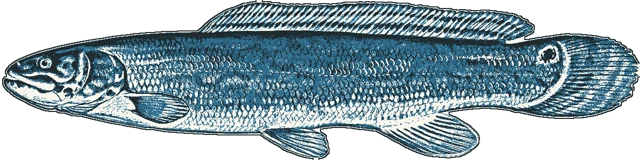
Bowfin
Amia calva (ruddy bowfin) and Amia ocellicauda (emerald bowfin) · Freshwater
TPWD calls it a rough fish rather than one for the table; the soft, pale flesh earned it the nickname 'cottonfish'.
Worth a try: Keep it alive until you clean it, cook it the same day, and use it smoked, fried as patties or stewed; MeatEater serves fried bowfin with a morel cream sauce.
- Tastes
- mild, soft, jelly-like unless very fresh
- Limits
- No limits. Not on the game-species table, so no statewide daily limit, size limit or season is listed; nongame fish may be speared in fresh water but not sold. (July 1, 2026 to June 30, 2027 (2026-27 Georgia guide; eRegulations page updated Aug 27, 2026)) Source
- Spawns
- Spawns in shallow quiet bays at 61 to 67 F (WRD fish ID).
- Where
- Tallapoosa, Chattahoochee, Flint, Ochlockonee, Suwannee, Satilla, Ocmulgee, Oconee, Altamaha, Ogeechee and Savannah basins; sluggish, swampy, vegetated bays (WRD fish ID). State record came from the Suwannee River (WRD record list).
- worms
- nightcrawlers
- minnows
- frogs
- crayfish
- in-line spinner baits
- Do not eat (anyone), South Carolina's list: the Savannah from Stevens Creek to US 17, and any fish from Lake Hartwell's Twelve Mile Creek and Seneca River arms.
Meal limits and other waters (3)
- Limit (pregnant, may become pregnant, nursing, under 7): 1 meal a month of any fish from the 65 counties named on this page, 1 a week from the other counties (EPD, 2008).
- Limit (everyone), 1 meal a month, EPD 2023 (mercury): the Savannah at Fort Howard, Okefenokee Swamp at Billy's Lake, and the Suwannee from the Sill to the state line.
- EPD says bowfin are no longer tested.
Hardhead catfish
Ariopsis felis · also called seacat · Saltwater
A bait-stealing pest with painful spines that most anglers throw back; TPWD says the flesh isn't very tasty and the fish is hard to clean.
- Tastes
- mild to fishy, soft
- Limits
- No limits. No statewide limit listed for hardhead catfish: it is not on the CRD recreational limits page or the eRegulations finfish table. A commercial license is needed to sell any seafood. (CRD limits page, read Nov 21, 2026; same in the 2026-27 Georgia guide (page updated Aug 27, 2026)) Source
- Where
- Soft-bottom coastal waters, bays, harbors and estuaries (Marine Fishes of Georgia).
- shrimp
- cut bait
- artificial jigs
- plugs
- Venomous, barbed dorsal and pectoral spines cause painful wounds; handle with pliers (TPWD).
Before you eat it: Limit (pregnant, may become pregnant, nursing, under 7): 1 meal a month of any fish from Georgia's coastal counties, and from the Turtle River system and Terry and Dupree creeks (EPD, 2008).
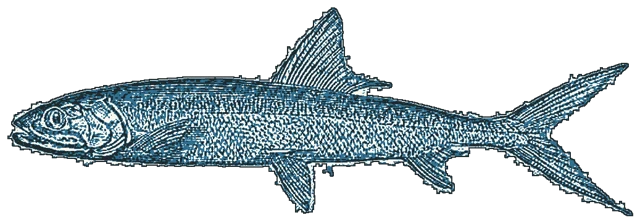
Ladyfish
Elops saurus · Saltwater
Bony, dry flesh with little food value; anglers catch them for sport and cut them up for bait.
- Tastes
- soft, very bony
- Limits
- No limits. No statewide limit listed for ladyfish: it is not on the CRD recreational limits page or the eRegulations finfish table. A commercial license is needed to sell any seafood. (CRD limits page, read Nov 21, 2026; same in the 2026-27 Georgia guide (page updated Aug 27, 2026)) Source
- Where
- Ocean beaches, inlets, bays and coastal streams (Marine Fishes of Georgia).
- small live fish
- shrimp
- cut strips
- most artificial lures
Before you eat it: Limit (pregnant, may become pregnant, nursing, under 7): 1 meal a month of any fish from Georgia's coastal counties, and from the Turtle River system and Terry and Dupree creeks (EPD, 2008).
Southern stingray
Hypanus americanus · Saltwater
Caught as bycatch on bottom baits (NC DMF) and almost always cut loose; rays are near the top of most anglers' 'inedible' list (Hank Shaw).
- Limits
- No limits. No statewide limit listed for southern stingray: it is not on the CRD recreational limits page or the eRegulations finfish table. A commercial license is needed to sell any seafood. (CRD limits page, read Nov 21, 2026; same in the 2026-27 Georgia guide (page updated Aug 27, 2026)) Source
- Where
- Soft bottoms, flats and shorelines (Marine Fishes of Georgia).
- shrimp
- crab
- Venomous barbed tail spine; cut the leader rather than handle the fish.
Before you eat it: Limit (pregnant, may become pregnant, nursing, under 7): 1 meal a month of any fish from Georgia's coastal counties, and from the Turtle River system and Terry and Dupree creeks (EPD, 2008).
Atlantic sturgeon
Acipenser oxyrinchus oxyrinchus · Fresh and salt
Endangered and illegal to fish for, catch or keep (NOAA); release any accidental catch with care.
- Limits
- No harvest. Sturgeon may not be taken in fresh or salt water in Georgia. Lake sturgeon season on the Coosa River and its tributaries is closed. (July 1, 2026 to June 30, 2027 (2026-27 Georgia guide; eRegulations page updated Aug 27, 2026)) Source
- Where
- Major estuaries, rivers and marine waters from Canada to Florida; listed under the Endangered Species Act (NOAA).
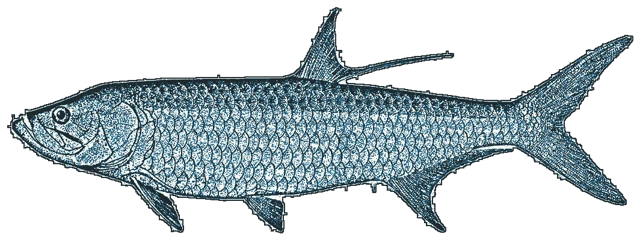
Tarpon
Megalops atlanticus · also called silver king · Saltwater
Bony and rarely eaten in the US; Florida's tarpon fishery is catch-and-release only except with a record tag.
- Limits
- Heavy regs. 1 per day, 68 in fork length minimum, all year (state waters); tarpon may not be sold. (CRD limits page, read Nov 21, 2026; same in the 2026-27 Georgia guide (page updated Aug 27, 2026)) Source
- Best months
- A summer fish: tarpon and tripletail migrate south to Florida in winter (CRD winter page).
- Where
- Estuaries, bays and rivers (Marine Fishes of Georgia); Harris Neck refuge waters list tarpon (USFWS).
- live mullet
- menhaden
- pinfish
- spot
- crabs
Before you eat it: Limit (pregnant, may become pregnant, nursing, under 7): 1 meal a month of any fish from Georgia's coastal counties, and from the Turtle River system and Terry and Dupree creeks (EPD, 2008).
Where to fish in Georgia
Fish named here are what people catch at each spot, not a promise they’re safe to eat. Read the eating advice on the fish’s card before you keep one.
# Salt or brackish# Freshwater
- 1Lake Lanier reservoir · fresh
WRD calls Lanier best known for spotted and striped bass; stripers make spawning runs up the Chattahoochee in spring, and spots follow herring or shad in open water summer through fall. Largemouth and spotted bass keepers must be 14 in. EPD: eat no more than 1 meal a month of largemouth over 16 in, and 1 a week of largemouth at 12 to 16 in, spotted bass from 12 in or walleye over 16 in; women who are or may become pregnant, nursing mothers and children under 7, 1 meal a week of any fish.
Known for: Spotted bass, Striped bass, Largemouth bass, Black crappie, Walleye
Access: Don Carter State Park on the lake (four paddling trails, kayak rentals, shore access).
- 2Lake Allatoona reservoir · fresh
WRD forecast best bets are Alabama (spotted) bass, hybrid striped bass, white bass and crappie. EPD: do not eat its white bass under 12 in (thallium). EPD: eat no more than 1 meal a week of spotted or hybrid bass over 16 in; women who are or may become pregnant, nursing mothers and children under 7, 1 meal a month of any fish from the Bartow County part and 1 a week elsewhere.
Known for: Spotted bass, Hybrid striped bass, Black crappie, White bass
Access: Red Top Mountain State Park is WRD's listed top fishing park on the lake.
- 3Lake Hartwell reservoir · fresh
WRD forecast best bets are largemouth, spotted bass, hybrid and striped bass, and crappie. Border-water rules apply: 10 striped or hybrid combined, only 3 over 26 in. EPD: do not eat striped or hybrid bass from the main body of the lake (PCBs). Do not eat any fish from the Twelve Mile Creek and Seneca River arms (South Carolina's list). EPD: eat no more than 1 meal a month of largemouth or spotted bass from the main body; women who are or may become pregnant, nursing mothers and children under 7 should eat no striped or hybrid bass from any part of the lake and 1 meal a week of other fish.
Known for: Largemouth bass, Spotted bass, Black crappie
Access: Hart State Park and Tugaloo State Park are listed top fishing parks; a Georgia or South Carolina license covers the lake.
- 4Clarks Hill Lake (J. Strom Thurmond) reservoir · fresh
WRD forecast best bets are striped bass, crappie, hybrids, largemouth bass, redear sunfish and catfish. Border-water rules: 10 striped or hybrid combined, only 3 over 26 in. EPD: eat no more than 1 meal a week of largemouth from 12 in or hybrids over 16 in; women who are or may become pregnant, nursing mothers and children under 7, 1 meal a month of any fish from Lincoln, Columbia, McDuffie and Wilkes counties.
Known for: Striped bass, Black crappie, Hybrid striped bass, Largemouth bass
Access: Elijah Clark State Park and Mistletoe State Park are listed top fishing parks; a Georgia or South Carolina license covers the lake.
- 5Lake Oconee reservoir · fresh
WRD forecast best bets are largemouth bass, black crappie, hybrid striped bass, blue and channel catfish and white bass. Largemouth minimum is 14 in. EPD: eat no more than 1 meal a week of largemouth at 12 to 16 in; women who are or may become pregnant, nursing mothers and children under 7, 1 meal a week of any fish.
Known for: Largemouth bass, Black crappie, Hybrid striped bass, Blue catfish, Channel catfish
Access: Oconee WMA borders the lake; the WRD forecast page says it covers boating and angling access points.
- 6Lake Sinclair reservoir · fresh
WRD forecast best bets are largemouth bass, crappie, hybrids, catfish and striped bass. EPD: women who are or may become pregnant, nursing mothers and children under 7, 1 meal a week of any fish.
Known for: Largemouth bass, Black crappie, Hybrid striped bass, Striped bass
Access: Oconee WMA borders the lake; the WRD forecast page says it covers boating and angling access points.
- 7Lake Seminole reservoir · fresh
WRD forecast best bets are largemouth bass, redear sunfish, black crappie and channel and blue catfish. Marked fish refuges are closed to all fishing May 1 to Oct 31. Do not eat largemouth from the Chattahoochee near the Alabama-Florida line above the lake (Alabama's 2026 list). EPD: women who are or may become pregnant, nursing mothers and children under 7, 1 meal a week of any fish; Florida's list allows women of childbearing age and young children 1 meal a month of largemouth.
Known for: Largemouth bass, Black crappie, Channel catfish, Blue catfish
Access: Seminole State Park is WRD's listed top fishing park; a Georgia or Florida license covers the Georgia-Florida part of the lake.
- 8Lake Walter F. George (Eufaula) reservoir · fresh
WRD forecast best bets are largemouth bass, crappie, channel catfish and hybrid striped bass; the WRD state parks page says many bass anglers equate "The Bass Capital of the World" with it. Largemouth minimum is 14 in. Do not eat largemouth from the Barbour, Cheneyhatchee, Cowikee or Thomas Mill creek arms, and eat no more than 1 meal a month of it at the dam, at US 82 or in White Oak Creek, or of channel catfish from the Cowikee arm (Alabama's 2026 list; EPD's 2023 guide lists no restriction). EPD: women who are or may become pregnant, nursing mothers and children under 7, 1 meal a week of any fish.
Known for: Largemouth bass, Black crappie, Channel catfish, Hybrid striped bass
Access: George T. Bagby State Park is WRD's listed top fishing park; a Georgia or Alabama license covers the lake.
- 9Chattahoochee River (Delayed Harvest, Sope Creek to US 41) tailrace · fresh
WRD forecast lists trout, shoal bass, largemouth and striped bass, chain pickerel, bream and catfish on the Chattahoochee below Morgan Falls. Delayed Harvest rules (catch and release, single-hook artificial lures) run Nov 1 to May 14 from Sope Creek to US 41. EPD: eat no more than 1 meal a month of striped bass from Morgan Falls Dam down, and 1 a week of shoal, largemouth or spotted bass from the dam to I-285; women who are or may become pregnant, nursing mothers and children under 7, 1 meal a week of any fish.
Known for: Rainbow trout, Shoal bass, Striped bass, Chain pickerel, Brown trout
Access: WRD says the Chattahoochee River National Recreation Area parks below Buford Dam offer bank, wading and boating access; fishing hours on the Chattahoochee from Buford Dam to Peachtree Creek are 30 minutes before sunrise to 30 minutes after sunset; a trout license is needed for trout.
- 10Toccoa River (Delayed Harvest on Forest Service land) river · fresh
WRD forecast lists rainbow and brown trout as the best bets. Delayed Harvest rules apply on the U.S. Forest Service reach (0.4 miles above Shallowford Bridge to 450 feet upstream of Sandy Bottom Canoe Access). EPD: women who are or may become pregnant, nursing mothers and children under 7, 1 meal a week of any fish.
Known for: Rainbow trout, Brown trout
Access: U.S. Forest Service land; a trout license is needed.
- 11Altamaha River river · fresh
WRD forecast best bets are largemouth bass, flathead catfish, crappie and bream; WRD says flatheads, introduced in the 1970s, have decimated the redbreast sunfish and bullhead fisheries. American shad run up the river in winter and spring. EPD: eat no more than 1 meal a month of largemouth or flathead catfish at Jesup and 1 a week at US 1; women who are or may become pregnant, nursing mothers and children under 7, 1 meal a month of any fish.
Known for: Largemouth bass, Flathead catfish, Black crappie
Access: Altamaha Regional Park (1605 Altamaha Park Road, Glynn County) has a fishing pier with restrooms (CRD).
- 12Savannah River (below Clarks Hill Dam) river · fresh
WRD forecast best bets are largemouth bass, striped bass, bluegill, redear sunfish and catfish. Below Thurmond Dam striped bass are 2 per day at 27 in minimum; flathead and channel catfish may be speared in the Savannah basin. Do not eat largemouth from SC 119 to US 17 (South Carolina's list). EPD: eat no more than 1 meal a month of largemouth at US 301 and of striped bass 26 in and longer below New Savannah Bluff Lock and Dam, and 1 a week of bluegill at US 301; women who are or may become pregnant, nursing mothers and children under 7, 1 meal a month of any fish.
Known for: Largemouth bass, Striped bass, Bluegill
Access: The Savannah River, Tugaloo and Chattooga channels are covered by the Georgia-South Carolina license agreement; South Carolina requires a saltwater license from a boat downstream of the CSX trestle on the SC side.
- 13St. Simons Island pier (Pier Village) pier · salt
The Golden Isles tourism pages describe the pier as popular with locals for fishing and crabbing, with tray tables and water hoses along the rails and bait and tackle nearby. EPD: women who are or may become pregnant, nursing mothers and children under 7, 1 meal a month of any fish caught in Glynn County; the Back River, Turtle River and Brunswick creeks close by have do-not-eat and 1-meal-a-month fish for everyone.
Access: St Simons Fishing Pier, 100 Mallery Street: restrooms, fish cleaning station, accessible rails. License plus free SIP permit required.
- 14Jekyll Island fishing pier (Clam Creek) pier · salt
A pier at the Clam Creek Picnic Area that Golden Isles tourism calls great for fishing and crabbing, next to the Jekyll Island Fishing Center, which sells ice, bait and gear. EPD: women who are or may become pregnant, nursing mothers and children under 7, 1 meal a month of any fish caught in Glynn County; the Back River, Turtle River and Brunswick creeks close by have do-not-eat and 1-meal-a-month fish for everyone.
Access: Public pier with restrooms and a fish cleaning station (CRD ADA table). License plus free SIP permit required.
- 15Offshore artificial reef MRY (one of 30+ CRD reefs) offshore · salt
CRD manages more than 30 permitted offshore reefs. It sank the 52-foot vessel Metalmorphosis at MRY on Jan 23, 2026 in 63 feet of water, and a CRD biologist expects a productive site for anglers and divers. The 19 Georgia reefs beyond 3 miles are federal Special Management Zones allowing only hand-held and spear fishing gear; red drum cannot be kept in federal waters.
Access: Boat access only. Coordinates and details for each reef are on the CRD offshore reefs page.
Georgia fishing license and rules
- Resident: $15 annual Fishing License (residents 16-64; covers fresh and salt water). A resident Trout License is $10 annual ($5 one-day).
- Nonresident: $50 annual Fishing License; Trout License $25 annual ($10 one-day).
- Nonresident short-term: $10 one-day Fishing License plus $3.50 per additional day, up to 11 consecutive days. Residents: the one-day option on the fee chart is the $5 Combo Hunting and Fishing License ($1 per additional day).
- Saltwater: Covered by the same fishing license, plus a free Saltwater Information Program (SIP) permit for anglers 16 and older, valid 365 days and renewed every year, for state (0-3 miles) and federal waters. Starting Jan 1, 2027, anglers landing amberjack, black sea bass, cobia, dolphin, gag, king mackerel, red porgy, red snapper or Spanish mackerel also need a Reef & Migratory Fish Endorsement ($10 resident, $20 nonresident).
- Who needs one: Anglers 16 and older need a license; nonresidents under 16 need none. Residents 65 and older: $7 Senior Sportsman's annual; residents born on or before June 30, 1952 get a free Lifetime Sportsman's License. Residents 12-15 may buy an optional $10 multi-year Youth Fishing License.
- Free fishing days: June 5 and June 12, 2027 (National Fishing & Boating Week) and Sept 25, 2027 (National Hunting and Fishing Day): Georgia residents need no fishing license or trout license. The notice does not mention the free saltwater SIP permit.
More license details
Transaction fee $3 online and at retail outlets, $5 by phone. A fishing license is not required in private ponds or for a resident and immediate family on their own land. Georgia licenses are valid on border waters under reciprocal agreements with Alabama, Florida, North Carolina and South Carolina (fresh water only; the agreements do not cover saltwater). The SIP is required from age 16 even with a lifetime, senior or other multi-year license; CRD says it is not needed on a trip with a saltwater guide whose license covers everyone aboard, or on a commercially licensed private pier. Resident Combo Hunting and Fishing $30; Sportsman's $65 (includes trout). Buy at gooutdoorsgeorgia.com.
Buy a license License types and fees
Fees: 2026 (eRegulations fee page updated Aug 27, 2026).
- Saltwater fishing needs the Georgia fishing license plus the free Saltwater Information Program (SIP) permit for anglers 16 and older; the SIP lasts 365 days and must be renewed even if you hold a lifetime license. Reciprocal border-state license agreements do not cover salt water.
- Red drum: 5 per day, 14 to 23 in, rod and reel only, until Dec 31, 2026; from Jan 1, 2027 the limit is 3 per day and the slot is 15 to 24 in. CRD says harvest is prohibited in federal waters.
- From Jan 1, 2027 a Reef & Migratory Fish Endorsement ($10 resident, $20 nonresident) is required to land amberjack, black sea bass, cobia, dolphin, gag, king mackerel, red porgy, red snapper or Spanish mackerel.
- Red snapper 2026: federal season Oct 9 to Oct 11; Georgia's exempted fishing permit season Oct 9 to Oct 22, 1 per person, no minimum size, with the trip declared in VESL before leaving and reported within 24 hours of departure. DNR may ask NOAA for December 2026 days; none had been announced by Nov 21, 2026.
- Freshwater black bass are one combined limit of 10 a day; largemouth are 12 in statewide, 14 in on Lanier, Oconee, Blackshear, Walter F. George, West Point and DNR Public Fishing Area lakes unless posted, and have no minimum on Blue Ridge, Burton and Juliette; shoal bass are 15 in, except that the Flint below Lake Blackshear has a 15 to 20 in release slot.
- Striped, white and hybrid bass are a combined 15 a day with only 2 at 22 in or longer, but 2 a day at 22 in on listed coastal rivers (Ogeechee, Altamaha, Satilla, St. Marys and others) and in salt water, 2 at 27 in below Thurmond Dam on the Savannah, 2 with one over 34 in on Lake Russell, and 10 striped or hybrid with only 3 over 26 in on Hartwell and Clarks Hill.
- Mountain trout need a trout license on top of the fishing license (residents $10, nonresidents $25), one hand-held rod, and no live fish for bait; Delayed Harvest streams are catch and release with single-hook artificial lures Nov 1 to May 14.
- Channel and flathead catfish have no daily limit; you may not keep more than 50 game fish in total, not counting those catfish. Once you take a species' daily limit it is unlawful to keep fishing for it.
- Saltwater finfish under a state or federal limit must be landed with head and fins intact and cannot be transferred to another person or boat on the water; only flounder may be taken with a gig; sharks need non-offset non-stainless circle hooks unless using flies or lures.
Limits here are summaries for convenience, checked on the date shown. The official Georgia regulations govern; check them before you keep a fish.
Before you eat it
- Do not eat (anyone), EPD's 2023 guide: striped or hybrid bass from the main body of Lake Hartwell (PCBs; joint Georgia-South Carolina listing); white bass under 12 in from Lake Allatoona (thallium); crappie from the Tallapoosa River at GA 27 (mercury, thallium); largemouth bass, bluegill or redear from Spirit Creek above Richmond Factory Pond (thallium, with mercury in bluegill); croaker, southern kingfish (whiting) or mullet from Purvis and Gibson creeks, and spot from the upper Turtle and Buffalo rivers (Brunswick; PCBs, with mercury or thallium in some); king mackerel over 39 in (mercury).
- Do not eat (women who are or may become pregnant, nursing mothers, young children), EPD's Woman's Guides, 2008: any shark, king mackerel, swordfish or tilefish; striped mullet from the Turtle River system or Terry and Dupree creeks; striped or hybrid bass from any part of Lake Hartwell.
- Do not eat clams, mussels or oysters from the Turtle River system, Terry and Dupree creeks or the Back River: harvest there is prohibited.
Do not eat, border waters, from the other state's list: any fish from Lake Hartwell's Twelve Mile Creek and Seneca River arms, largemouth bass from the Savannah River from SC 119 to US 17 … (see the full list)
Do not eat, border waters, from the other state's list: any fish from Lake Hartwell's Twelve Mile Creek and Seneca River arms, largemouth bass from the Savannah River from SC 119 to US 17, bowfin from the Savannah from Stevens Creek to US 17, and striped or hybrid bass over 16 in from Hartwell's Tugaloo arm (South Carolina); largemouth bass from Lake Eufaula's (Walter F. George) Barbour, Cheneyhatchee, Cowikee and Thomas Mill creek arms, the Uchee Creek arm, and the Chattahoochee near the Alabama-Florida line (Alabama, June 2026). Florida's list says women of childbearing age and young children should eat no largemouth bass from the St. Marys River. On a shared water, follow the stricter list.
- Offshore king mackerel, fork length (joint Georgia, South Carolina, North Carolina and Florida advisory, 8-ounce meals): over 39 in do not eat; 33 to 39 in 1 meal a week for other adults and 1 meal a month for children 12 and under; 24 to 33 in no restriction. The Woman's Guides are stricter: women who are or may become pregnant, nursing mothers and young children should eat none.
- Brunswick estuary (Turtle River, Purvis and Gibson creeks, Terry and Dupree creeks, Back River), everyone: red drum, seatrout, whiting, spot, croaker and mullet run from no restriction to 1 meal a month, and to do not eat in the waters named above. In Terry and Dupree creeks and the Back River all of them are 1 meal a month, except mullet at 1 meal a week from Terry Creek to the Torras Causeway.
Pregnant or nursing women, women who may become pregnant and children under 7: 1 meal a month of any fish from these 65 counties (EPD's Woman's Guides, 2008): Appling, Atkinson, Bacon … (see the full list)
Pregnant or nursing women, women who may become pregnant and children under 7: 1 meal a month of any fish from these 65 counties (EPD's Woman's Guides, 2008): Appling, Atkinson, Bacon, Bartow, Ben Hill, Berrien, Bleckley, Brantley, Brooks, Bryan, Bulloch, Burke, Camden, Candler, Charlton, Chatham, Chattooga, Clinch, Coffee, Colquitt, Columbia, Cook, Dodge, Echols, Effingham, Emanuel, Evans, Floyd, Glascock, Glynn, Gordon, Grady, Irwin, Jeff Davis, Jefferson, Jenkins, Johnson, Lanier, Laurens, Liberty, Lincoln, Long, Lowndes, McDuffie, McIntosh, Montgomery, Pierce, Pulaski, Richmond, Screven, Taliaferro, Tattnall, Telfair, Thomas, Tift, Toombs, Treutlen, Turner, Ware, Warren, Wayne, Wheeler, Wilcox, Wilkes and Worth. From the other 94 counties, 1 meal a week.
- The same people: no more than 1 meal a month of any fish from the Coosa River or from the Etowah and Oostanaula west of I-75 (PCBs), and of any other finfish or blue crab from the Turtle River system and Terry and Dupree creeks. EPD's booklet also repeats EPA's advice of 1 freshwater fish meal a week if you are pregnant, nursing or planning a pregnancy, or under 6.
- Largemouth bass, everyone: 1 meal a month from 32 listed waters, among them Hartwell's main body, Lanier and Blue Ridge over 16 in, the Altamaha at Jesup, the Satilla, Canoochee, Ochlockonee, St. Marys, Alapaha and Withlacoochee, most of the Ogeechee and the Savannah at US 301 (mercury; PCBs at Hartwell). Clarks Hill is 1 meal a week at 12 in and up.
- Also 1 meal a month for everyone: striped bass from the Chattahoochee from Morgan Falls Dam to West Point Lake, the Coosa, the lower Etowah and the Oostanaula, and at 26 in and longer from the lower Savannah; flathead catfish from the Altamaha at Jesup, the Ocmulgee at US 280 and the Satilla at GA 252; sunfish from the Canoochee; bluegill from Little Dry Creek (Floyd County); redbreast from Proctor Creek in Atlanta; walleye over 16 in from Yonah Lake.
- EPD's "Guidelines for Eating Fish from Georgia Waters" (2023, the edition on its page on Nov 22, 2026) gives advice by water, species and size. One meal is 4 to 8 ounces. If your water or fish is not in it, it is untested, not cleared: the guide says to keep smaller fish, vary the species and trim skin and fat (trimming does not lower mercury). Some Savannah River fish below Augusta contain cesium-137 and strontium-90; EPD has issued no separate limit for them.
- Other border limits: South Carolina lists 1 meal a month of largemouth from the Savannah from Stevens Creek to SC 119 and from Tugalo and Yonah lakes, and 1 meal a week of largemouth or spotted bass from Lake Russell; Alabama lists 1 meal a month of largemouth from Lake Eufaula at the dam, at US 82 and in White Oak Creek and from the Chattahoochee above Bluff Creek, and of channel catfish from the Cowikee Creek arm; Florida lists 1 meal a month of largemouth from Lake Seminole for women of childbearing age and young children.
- For people outside the groups above, panfish and channel catfish carry no restriction in most of the lakes tested, and neither do trout in the streams tested; brown trout over 16 in from Lake Burton are 1 meal a week.
Local lingo
- whiting: southern kingfish (Marine Fishes of Georgia lists the name)
- spot tail, puppy drum, bull red: red drum, the last for large fish
- ling: cobia
- jackfish: chain pickerel (WRD fish ID)
- shellcracker: redear sunfish (WRD fish ID)
- stumpknocker: spotted sunfish (WRD fish ID)
- Alabama bass: spotted bass, as WRD labels the species found in most reservoirs above the fall line
- bream: the regulation word for all sunfish combined, 50 a day
Questions anglers ask about Georgia
What is the most common fish in Georgia?
By count, the most-caught fish in Georgia salt water is the southern kingfish (whiting): NOAA MRIP (2023-2025 average) estimates about 2.3 million caught a year, ahead of spotted seatrout (about 1.9 million), red drum (about 1.5 million) and Atlantic croaker (about 1.4 million). Most of the seatrout, red drum and croaker are released. MRIP covers salt water only; we found no statewide freshwater catch survey. The WRD names largemouth bass (the state freshwater game fish), spotted bass, striped bass and hybrids, crappie and catfish as the best bets on its reservoir forecasts.
Do I need a saltwater fishing license in Georgia?
Covered by the same fishing license, plus a free Saltwater Information Program (SIP) permit for anglers 16 and older, valid 365 days and renewed every year, for state (0-3 miles) and federal waters. Starting Jan 1, 2027, anglers landing amberjack, black sea bass, cobia, dolphin, gag, king mackerel, red porgy, red snapper or Spanish mackerel also need a Reef & Migratory Fish Endorsement ($10 resident, $20 nonresident).
What is the best fish to eat in Georgia?
21 of the 45 fish on our Georgia board rate Best eating. Among the fish caught most: kingfish (whiting), spotted seatrout, red drum, sheepshead, black sea bass and southern flounder.
What is the state fish of Georgia?
Largemouth bass: State freshwater game fish. Red drum: State saltwater game fish. Brook trout: State coldwater game fish. Shoal bass: State riverine game fish.
Does Georgia have free fishing days?
June 5 and June 12, 2027 (National Fishing & Boating Week) and Sept 25, 2027 (National Hunting and Fishing Day): Georgia residents need no fishing license or trout license. The notice does not mention the free saltwater SIP permit.
Which Georgia fish are better to eat than their reputation?
We give the Worth a try badge to bowfin, longnose gar, common carp, American shad, black drum, bluefish and bonnethead: fish most anglers toss or rate low that eat well when they're cleaned and cooked right. Each card says how.
Neighboring states
Sources
Limits, prices and advisories come from these pages, read on or before Nov 21, 2026. Where a line gives its own date, that’s the date it rests on. Eating advice changes: check the state’s current list. Ratings are national and come from the fish’s own page.
85 sources
- coastalgadnr.org Atlantic croaker: where; Atlantic sharpnose shark: months; black drum: where; black sea bass: baits, months, where; blacktip shark: months; bonnethead: months;
- coastalgadnr.org Atlantic croaker: regs; Atlantic sharpnose shark: regs; Atlantic sturgeon: Atlantic sturgeon no harvest; Spanish mackerel: regs; black drum: regs; black sea bas
- coastalgadnr.org red snapper: VESL timing
- coastalgadnr.org bluefish: March-April closure
- coastalgadnr.org fishing spots
- coastalgadnr.org red drum: 2027 change
- coastalgadnr.org state records saltwater
- coastalgadnr.org Atlantic croaker: baits, months, where; black drum: baits, months, where; red drum: baits, months, where; sheepshead: baits, where; southern flounder: baits, wh
- coastalgadnr.org Spanish mackerel: months; bluefish: months; king mackerel: months
- coastalgadnr.org Atlantic sharpnose shark: Rule 391-2-4-.04; bluefish: rule text; red drum: rule in force and 2027 rule text; tarpon: sale ban
- content.govdelivery.com red snapper: EFP season
- des.sc.gov black crappie: advisory; blue catfish: advisory; bluegill: advisory; bowfin: advisory; chain pickerel: advisory; channel catfish: advisory; common carp: advisor
- des.sc.gov black crappie: advisory
- des.sc.gov black crappie: advisory; bluegill: advisory; bowfin: advisory; chain pickerel: advisory; channel catfish: advisory; largemouth bass: advisory; redbreast sunfish
- epd.georgia.gov Atlantic croaker: advisory; Atlantic sharpnose shark: advisory; Spanish mackerel: advisory; black drum: advisory; black sea bass: advisory; blacktip shark: advi
- epd.georgia.gov common carp: advisory
- epd.georgia.gov American shad: advisory; black crappie: advisory; blue catfish: advisory; bluegill: advisory; bowfin: advisory; brown trout: advisory; chain pickerel: advisory;
- epd.georgia.gov American shad: advisory; black crappie: advisory; blue catfish: advisory; bluegill: advisory; bowfin: advisory; brown trout: advisory; chain pickerel: advisory;
- epd.georgia.gov American shad: advisory; Atlantic croaker: advisory; Atlantic sharpnose shark: advisory; black crappie: advisory; black drum: advisory; blacktip shark: advisory
- epd.georgia.gov consumption advisories; consumption advisory
- gadnr.org red snapper: October harvest, December request
- georgiawildlife.com fishing spots; spotted bass: months; striped bass: months
- georgiawildlife.com rainbow trout: baits
- georgiawildlife.com blue catfish: Satilla removal; flathead catfish: flathead status; redbreast sunfish: flathead impact
- georgiawildlife.com American shad: where; black crappie: where; blue catfish: where; bluegill: where; brown trout: where; chain pickerel: where; channel catfish: where; common carp
- georgiawildlife.com American shad: baits, months, where; black crappie: baits, months, where; blue catfish: baits, months, where; bluegill: baits, months, where; bowfin: baits, mon
- georgiawildlife.com state records
- georgiawildlife.com brown trout: baits (trout in general), months, where
- georgiawildlife.com license info
- georgiawildlife.com free fishing days; rainbow trout: stocking months
- georgiawildlife.com largemouth bass: state freshwater game fish; state fish; top species
- georgiawildlife.com shoal bass: months
- goldenisles.com fishing spots
- gooutdoorsgeorgia.com license buy
- marinefishesofgeorgia.org Atlantic croaker: names, baits
- marinefishesofgeorgia.org Atlantic sharpnose shark: baits, where
- marinefishesofgeorgia.org black drum: names, baits
- marinefishesofgeorgia.org black sea bass: names, baits, where
- marinefishesofgeorgia.org blacktip shark: baits, where
- marinefishesofgeorgia.org bluefish: baits, where
- marinefishesofgeorgia.org bonnethead: baits, where
- marinefishesofgeorgia.org cobia: names, baits, where
- marinefishesofgeorgia.org gafftopsail catfish: names, baits, where
- marinefishesofgeorgia.org hardhead catfish: names, baits, where
- marinefishesofgeorgia.org king mackerel: names, baits, where
- marinefishesofgeorgia.org ladyfish: names, baits, where
- marinefishesofgeorgia.org red drum: names, baits
- marinefishesofgeorgia.org red snapper: names, baits, where
- marinefishesofgeorgia.org sheepshead: names, baits
- marinefishesofgeorgia.org southern flounder: baits, where
- marinefishesofgeorgia.org kingfish (whiting): names, baits, where
- marinefishesofgeorgia.org southern stingray: names, baits, where
- marinefishesofgeorgia.org Spanish mackerel: baits, where
- marinefishesofgeorgia.org spot: baits, where
- marinefishesofgeorgia.org spotted seatrout: baits
- marinefishesofgeorgia.org striped mullet: names, baits, where
- marinefishesofgeorgia.org tarpon: names, baits, where
- marinefishesofgeorgia.org tripletail: names, baits, where
- safmc.net cobia: federal waters
- safmc.net black sea bass: federal waters
- safmc.net red snapper: federal closure
- alabamapublichealth.gov channel catfish: advisory; largemouth bass: advisory
- eregulations.com black crappie: border waters; bluegill: border waters; brown trout: border waters; hybrid striped bass: border waters; largemouth bass: border waters; rainbow t
- eregulations.com blue catfish: regs; bowfin: nongame definition; common carp: nongame definition; longnose gar: nongame definition
- eregulations.com Atlantic sharpnose shark: regs; blacktip shark: shortfin mako season; bluefish: season conflict
- eregulations.com blue catfish: hand grabbing; bowfin: spearing; channel catfish: spearing; flathead catfish: spearing; longnose gar: spearing
- eregulations.com bowfin: record water; longnose gar: record
- eregulations.com American shad: regs; Atlantic sturgeon: regs; black crappie: regs; bluegill: regs; bowfin: regs; brown trout: regs; chain pickerel: regs; channel catfish: regs;
- eregulations.com Atlantic sturgeon: Coosa lake sturgeon closure; blue catfish: noodling dates; channel catfish: possession cap, noodling; flathead catfish: possession cap, noodl
- eregulations.com brown trout: trout license
- eregulations.com regs digest pdf
- eregulations.com bluegill: PFA limit; channel catfish: PFA limit; common carp: grass carp; largemouth bass: PFA rules
- eregulations.com Atlantic sharpnose shark: gear rules; Spanish mackerel: endorsement; black sea bass: endorsement; blacktip shark: gear rules; bonnethead: gear rules; cobia: end
- eregulations.com license fees
- eregulations.com brown trout: trout rules; fishing spots; rainbow trout: trout rules
- fisheries.noaa.gov red snapper: federal season, harvest limit
- fisheries.noaa.gov Atlantic sturgeon: where
- fisheries.noaa.gov bluefish: federal limit
- fisheries.noaa.gov cobia: ASMFC management
- floridahealth.gov largemouth bass: advisory
- fws.gov bluefish: where; tarpon: where
- law.cornell.edu blue catfish: Rule 391-4-3-.02: nongame fish may be taken; bowfin: Rule 391-4-3-.02: nongame fish may be taken; common carp: Rule 391-4-3-.02: nongame fish may
- law.cornell.edu white bass: Rule 391-4-3-.05
- law.cornell.edu shoal bass: Flint River slot
- st.nmfs.noaa.gov Atlantic sharpnose shark: catch; catch survey
Illustrations: stencils we made from public-domain art by John J. Baird (Black crappie); Duane Raver, U.S. Fish and Wildlife Service (Black sea bass, Blue catfish, Channel catfish, Flathead catfish, Rainbow trout, Red drum, Redbreast sunfish, Spotted seatrout, Striped bass, White bass, American shad, Atlantic sharpnose shark, Blacktip shark, Bluefish, Bonnethead, Chain pickerel, Bowfin); NOAA (Bluegill); U.S. Fish and Wildlife Service (Brown trout, Common carp, Largemouth bass); James Alexander Henshall (Cobia, Red snapper); William Welsh (Kingfish (whiting)); Sherman Foote Denton (Sheepshead); Charles Hugh Stevenson (Southern flounder); Hugh McCormick Smith (Walleye, Atlantic croaker, Black drum, Spanish mackerel, Spot, Striped mullet, Tarpon); H. L. Todd (Gafftopsail catfish); New York Fish and Game Commission (King mackerel); C. W. Nash (Longnose gar); Albert Günther (Ladyfish), via Wikimedia Commons.
Spotted an error or a rule that changed? Tell us and we will check it against the official source.