Wisconsin · freshwater
Fish in Wisconsin: what’s worth eating, and what’s garbage
Wisconsin fishing is known for walleye, northern pike and muskellunge (the state fish) in the northern lakes, the Winnebago system and the big rivers, and for bluegill, crappie and yellow perch through the ice and in summer. The Great Lakes add chinook and coho salmon, steelhead, brown and lake trout on Lake Michigan and Lake Superior, and the Winnebago system holds a lake sturgeon spearing season each February.
37 fish rated · limits checked Nov 21, 2026 against WDNR, then re-checked: 618 of 621 details confirmed or corrected on the official pages
Resident $20.00 (Fishing, Annual); 1-day $8.00; first-time buyer $5.00; junior (16-17) $7.00; senior (65+) $7.00. Full details
Buy a licenseLimits, seasons and size rules from Wisconsin Department of Natural Resources.
Freshwater limitsMuskellunge
Free Fishing Weekend, Jan. 16-17, 2027 and June 5-6, 2027 (DNR). Full details
The Wisconsin table-fare board
Fish Wisconsin anglers catch, sorted by how they eat. The bars show how heavily each one is regulated here. Tap a fish for the details.
No limits Light regs Heavy regs No harvest
Best eating17
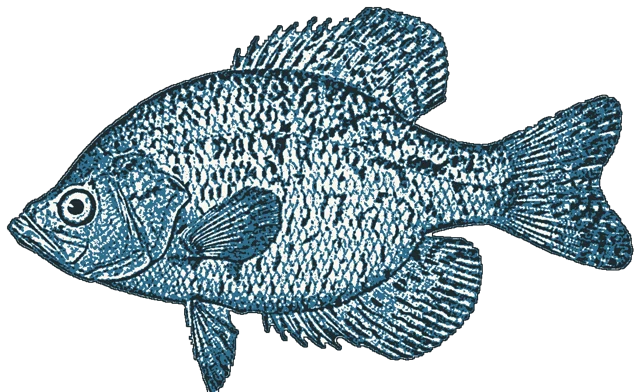 Black crappie“calico bass”
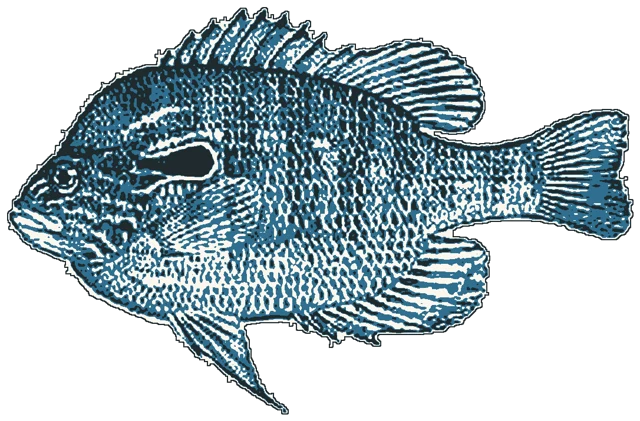 Bluegill“gills”
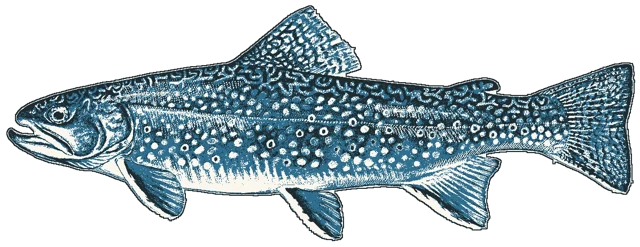 Brook trout“brookie”
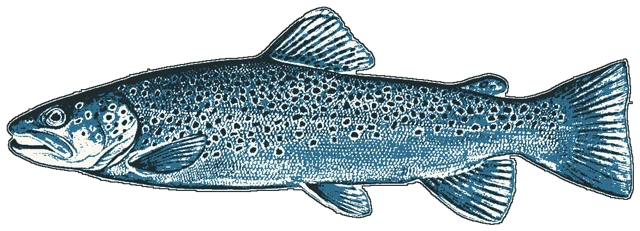 Brown trout“brownie”
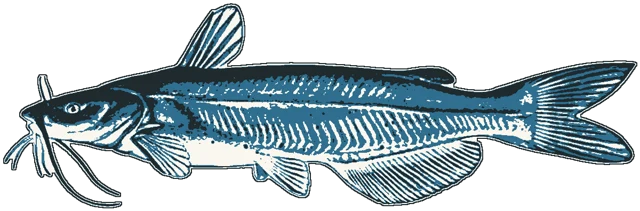 Channel catfish“fiddler”Chinook salmon“king salmon”Coho salmon“silver salmon”
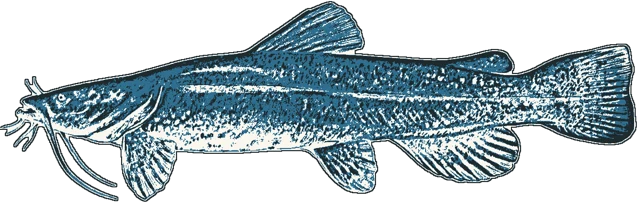 Flathead catfish“shovelhead cat”Lake whitefishPumpkinseed“common sunfish”
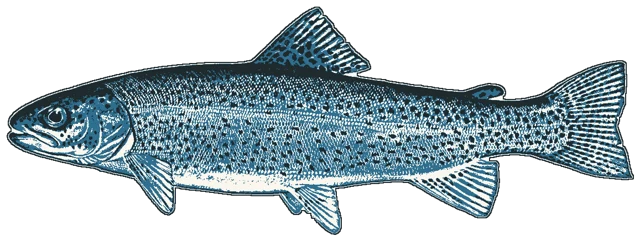 Rainbow trout“steelhead trout”SaugerSteelhead“steelhead trout”
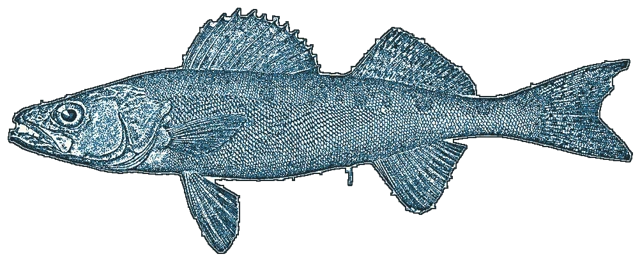 Walleye“walleyed pike”
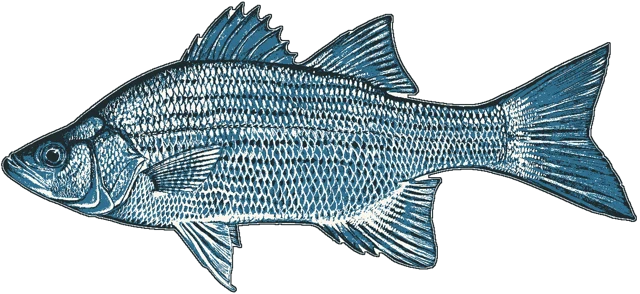 White bass
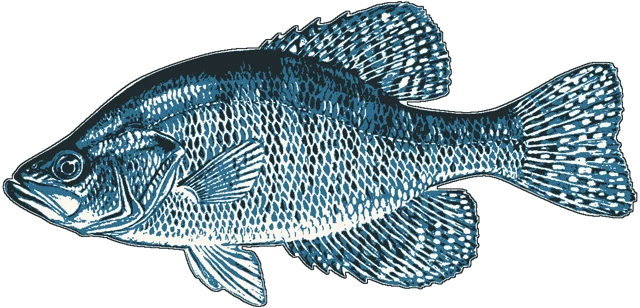 White crappie“silver crappie”
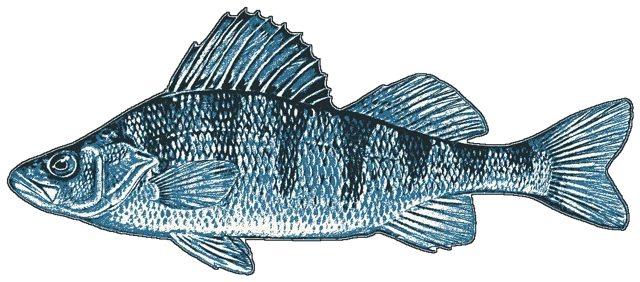 Yellow perch“lake perch”
Just OK14
Garbage fish3
Catch & release
What’s actually caught in Wisconsin
DNR's creel survey estimates the fish kept from Wisconsin's Lake Michigan and Green Bay waters in 2024 by boat, pier, shore and stream anglers together. Inland lakes and rivers are not part of it.
- Coho salmon Best eating210,891 kept in 2024, the most since the survey began in 1969.
- Yellow perch Best eating195,856 kept, 192,061 of them from Green Bay.
- Chinook salmon Best eating163,923 kept.
- Walleye Best eating67,715 kept.
- Steelhead Best eating67,566 kept (DNR counts them as rainbow trout).
- Lake trout Just OK14,636 kept.
- Brown trout Best eating9,183 kept.
- Northern pike Just OK2,590 kept.
- Smallmouth bass Just OK2,387 kept.
Fish by fish
Why each one sits where it does, the current Wisconsin limits, and the bait that works.
Black crappie
Pomoxis nigromaculatus · also called calico bass, strawberry bass, speckled crappie, papermouth, grass bass · Freshwater
One of the classic fish-fry fish: MeatEater counts crappie among the best-eating fish in freshwater.
- Tastes
- mild, sweet, delicate, flaky, white
- Limits
- Light regs. General inland waters: 25 panfish in total (bluegill, pumpkinseed, other sunfish, crappie and yellow perch combined), no minimum length, open all year. Many lakes, and all inland waters of St. Croix County except Lake George, are 10 in total (Pelican Lake and Willow Flowage in Oneida County among them), and some lakes cap bluegill, crappie or perch at 5. Mississippi River Pools 3-9 and the St. Croix River below the St. Croix Falls Dam: bluegill and sunfish 15 in total, crappie and yellow perch 15 of each; St. Croix above the dam and the St. Louis River 25 of each group. Wisconsin-Iowa boundary: bluegill and sunfish 25 in total, crappie 25, yellow perch 25. Wisconsin-Michigan boundary waters: 25 in total with white and yellow bass. Lake Michigan: 25 in total, of which only 5 may be yellow perch (perch open June 16, 2026 to April 30, 2027). Green Bay and the Fox River below the De Pere dam: 25 in total, of which only 15 may be yellow perch (perch open May 20, 2026 to March 15, 2027). Lake Superior: 25. (Wisconsin Administrative Code NR 20.20, Register October 2026 (code updated Nov. 1, 2026); inland season May 2, 2026 to March 7, 2027 unless noted) Source
- Best months
- Spring spawning (May and June) is the easiest; summer and fall are harder; ice fishing is popular on some lakes; feeds best early morning and evening.
- Where
- Clear, quiet glacial lakes, near submerged structure: shallows near emergent vegetation at spawning, deep holes and brush piles in summer. DNR says black crappie are absent from driftless-area streams. State record: Gile Flowage, Iron County.
- small minnows
- marabou jigs
- plastic minnows
- worms
- insect larvae
- spinners
- Do not eat (anyone): crappie from Petenwell Flowage (Adams, Juneau and Wood counties), Lake Mohawksin (Lincoln County), the Yahara chain in Dane and Rock counties (lakes Monona, Waubesa and Kegonsa, the Mud lakes, Wingra and Starkweather creeks, and the river to the Rock) or the La Crosse River from Angelo Pond to the Neshonoc Dam (with Perch and Neshonoc lakes; PFOS).
- Do not eat (anyone): any fish from Cedar Creek at Cedarburg, the South Branch Manitowoc River, the Moen Lake Chain, Snowden Lake or the Sheboygan River below Sheboygan Falls.
Meal limits and other waters (5)
- Limit (everyone): 6 meals a year from the Milwaukee River estuary (PCBs).
- Limit (everyone): 1 serving a month from the Black River below Black River Falls, the Fox River below the De Pere dam, Lake Wausau, Stevens Point Flowage, Castle Rock Lake and the Wisconsin River from the Dells dam to the Mississippi (with Lake Wisconsin).
- Limit (everyone): 4 servings a month from 45 more listed waters, Mississippi River Pools 3 to 6 among them; higher-risk people get 1 a month on 37 of the 45.
- Statewide guideline for most inland waters: crappie 4 servings a month for higher-risk people (under 15, pregnant, nursing or may become pregnant) and unrestricted for everyone else.
- Other listed waters differ (DNR fish consumption query tool, Nov. 22, 2026).
Bluegill
Lepomis macrochirus · also called gills, bluegill sunfish, bream · Freshwater
MeatEater calls the flesh light, delicate and sweet; the original fish-fry panfish.
- Tastes
- mild, sweet, firm, flaky
- Limits
- Light regs. General inland waters: 25 panfish in total (bluegill, pumpkinseed, other sunfish, crappie and yellow perch combined), no minimum length, open all year. Many lakes, and all inland waters of St. Croix County except Lake George, are 10 in total (Pelican Lake and Willow Flowage in Oneida County among them), and some lakes cap bluegill, crappie or perch at 5. Mississippi River Pools 3-9 and the St. Croix River below the St. Croix Falls Dam: bluegill and sunfish 15 in total, crappie and yellow perch 15 of each; St. Croix above the dam and the St. Louis River 25 of each group. Wisconsin-Iowa boundary: bluegill and sunfish 25 in total, crappie 25, yellow perch 25. Wisconsin-Michigan boundary waters: 25 in total with white and yellow bass. Lake Michigan: 25 in total, of which only 5 may be yellow perch (perch open June 16, 2026 to April 30, 2027). Green Bay and the Fox River below the De Pere dam: 25 in total, of which only 15 may be yellow perch (perch open May 20, 2026 to March 15, 2027). Lake Superior: 25. (Wisconsin Administrative Code NR 20.20, Register October 2026 (code updated Nov. 1, 2026); inland season May 2, 2026 to March 7, 2027 unless noted) Source
- Spawns
- Late May to early August, peaking in June; fly fishing is best during insect hatches in late spring and early summer; ice fishing among the weeds in winter.
- Where
- Nearly any water that holds fish except fast-moving streams. In summer DNR says a boat in 5 to 15 feet of water works best. DNR's 2026-27 Wisconsin Fishing Report calls the Chetek Chain (Barron County) a consistent producer of 7 to 9-inch bluegills.
- garden worms
- insects
- insect larvae
- wet and dry flies
- grubs and mousies on ice jigs
- Do not eat (anyone): bluegill from the La Crosse River from Angelo Pond to the Neshonoc Dam (with Perch and Neshonoc lakes; PFOS).
- Do not eat (anyone): any fish from Cedar Creek at Cedarburg, the South Branch Manitowoc River, the Moen Lake Chain, Snowden Lake or the Sheboygan River below Sheboygan Falls.
Meal limits and other waters (4)
- Limit (everyone): 1 serving a month from the Yahara chain (Dane and Rock counties), the Fox River below the De Pere dam, the Milwaukee River estuary, Hat Rapids Flowage, Lake Mohawksin, Lake Wausau, Stevens Point Flowage, Petenwell Flowage, Castle Rock Lake and the Wisconsin River from the Dells dam to the Mississippi (with Lake Wisconsin).
- Limit (everyone): 4 servings a month from 25 more listed waters, Green Bay and Mississippi River Pools 3 to 6 among them; higher-risk people get 1 a month on 18 of the 25.
- Statewide guideline for most inland waters: bluegill 4 servings a month for higher-risk people (under 15, pregnant, nursing or may become pregnant) and unrestricted for everyone else.
- Other listed waters differ (DNR fish consumption query tool, Nov. 22, 2026).
Brook trout
Salvelinus fontinalis · also called brookie, speckled trout, coaster · Freshwater
Often called the tastiest trout: MeatEater describes the meat as light and delicate with an almost sweet flavor.
- Tastes
- sweet, delicate, light, delicate
- Limits
- Heavy regs. Inland trout streams, springs and spring ponds: April 4 to Oct. 15, 2026 (the April opener is new in 2026); inland lakes: May 2, 2026 to March 7, 2027. The base rule in all 72 counties is 5 trout in total, any length (Pierce County: only one over 12 in); many named waters differ, for example 3 over 8 in, 2 over 12 in, or brook trout released. Listed streams also have an early catch-and-release season, artificial lures only, next Jan. 2 to April 2, 2027. Total daily bag 5 trout and salmon, possession 10. Lake Michigan, Green Bay and their major tributaries to the first dam: open all year, 5 trout and salmon in total, 10 in minimum; other Green Bay tributaries May 2, 2026 to March 7, 2027. Lake Superior: 5 trout in total, of which only 1 rainbow (26 in) and 1 brook trout (20 in); brown trout and splake 15 in; open all year. Lake Superior tributaries: 5 in total (only 2 brown trout over 15 in and only 1 rainbow), minimums brook 8 in, brown 10 in, salmon 12 in, rainbow 26 in, May 2 to Sept. 30, 2026; listed lower streams run to Nov. 15, some from the last Saturday in March. Wisconsin-Michigan boundary waters: April 25 to Sept. 30, 2026, 5 in total, 7 in (Brule River above U.S. 2: brook 8 in, brown 12 in). Needs an inland trout stamp (Great Lakes stamp on Lake Michigan, Green Bay, their tributaries to the first dam, and Lake Superior). (Wisconsin Administrative Code NR 20.16 and 20.20, Register October 2026 (code updated Nov. 1, 2026); inland streams April 4 to Oct. 15, 2026, inland lakes May 2, 2026 to March 7, 2027; next stream seasons Jan. 2, 2027 (catch and release) and April 3, 2027) Source
- Best months
- Inland streams open April 4 to Oct. 15, 2026 (first Saturday in April to Oct. 15).
- Where
- Cold inland streams statewide (NR 20.20 lists them by county). Lake Michigan holds few: DNR estimated 0 to 60 kept a year in 2021 to 2025.
- artificial flies
- small spoons
- spinners
- night crawlers
- spawn
- Do not eat (anyone): brook trout from Silver Creek (Monroe County) or the La Crosse River from Angelo Pond to the Neshonoc Dam (with Perch and Neshonoc lakes; PFOS).
- Do not eat (anyone): any fish from Cedar Creek at Cedarburg, the South Branch Manitowoc River, the Moen Lake Chain, Snowden Lake or the Sheboygan River below Sheboygan Falls.
- On the Ahnapee, Branch, Kewaunee, Pike, lower Root and East and West Twin rivers DNR's all-other-species line is the strict reading: 1 serving a month for higher-risk people and 4 for everyone else.
Meal limits and other waters (2)
- Statewide guideline for most inland waters: inland trout 4 servings a month for higher-risk people (under 15, pregnant, nursing or may become pregnant) and unrestricted for everyone else.
- Source: DNR fish consumption query tool and PFAS advisory pages, Nov. 22, 2026.
Brown trout
Salmo trutta · also called brownie, German brown trout · Freshwater
Good trout eating like rainbows; most kept browns are stocked fish.
- Tastes
- mild to rich, flaky
- Limits
- Heavy regs. Inland trout streams, springs and spring ponds: April 4 to Oct. 15, 2026 (the April opener is new in 2026); inland lakes: May 2, 2026 to March 7, 2027. The base rule in all 72 counties is 5 trout in total, any length (Pierce County: only one over 12 in); many named waters differ, for example 3 over 8 in, 2 over 12 in, or brook trout released. Listed streams also have an early catch-and-release season, artificial lures only, next Jan. 2 to April 2, 2027. Total daily bag 5 trout and salmon, possession 10. Lake Michigan, Green Bay and their major tributaries to the first dam: open all year, 5 trout and salmon in total, 10 in minimum; other Green Bay tributaries May 2, 2026 to March 7, 2027. Lake Superior: 5 trout in total, of which only 1 rainbow (26 in) and 1 brook trout (20 in); brown trout and splake 15 in; open all year. Lake Superior tributaries: 5 in total (only 2 brown trout over 15 in and only 1 rainbow), minimums brook 8 in, brown 10 in, salmon 12 in, rainbow 26 in, May 2 to Sept. 30, 2026; listed lower streams run to Nov. 15, some from the last Saturday in March. Wisconsin-Michigan boundary waters: April 25 to Sept. 30, 2026, 5 in total, 7 in (Brule River above U.S. 2: brook 8 in, brown 12 in). Needs an inland trout stamp (Great Lakes stamp on Lake Michigan, Green Bay, their tributaries to the first dam, and Lake Superior). (Wisconsin Administrative Code NR 20.16 and 20.20, Register October 2026 (code updated Nov. 1, 2026); inland streams April 4 to Oct. 15, 2026, inland lakes May 2, 2026 to March 7, 2027; next stream seasons Jan. 2, 2027 (catch and release) and April 3, 2027) Source
- Best months
- Lake Michigan year-round; best in spring on light tackle; summer trolling in Green Bay; Lake Superior: good on first ice in January in Chequamegon Bay; browns move into rivers in September and October.
- live bait
- small spoons
- jigs
- minnow-type plugs
- Do not eat (anyone): brown trout from Silver Creek (Monroe County) or the La Crosse River from Angelo Pond to the Neshonoc Dam (with Perch and Neshonoc lakes; PFOS).
- Do not eat (anyone): any fish from Cedar Creek at Cedarburg, the South Branch Manitowoc River, the Moen Lake Chain or Snowden Lake.
Meal limits and other waters (5)
- Limit (everyone): Green Bay and tributaries, 6 meals a year over 26 in and 1 serving a month under.
- Limit (everyone): 1 serving a month from Lake Michigan and tributaries up to the first dam, with the Ahnapee, Branch, Kewaunee, lower Manitowoc, Milwaukee, Pike, Root, Sheboygan and Twin rivers (PCBs and PFOS).
- Limit (everyone): 4 servings a month from Lake Superior and tributaries.
- Statewide guideline for most inland waters: inland trout 4 servings a month for higher-risk people (under 15, pregnant, nursing or may become pregnant) and unrestricted for everyone else.
- Source: DNR fish consumption query tool and PFAS advisory pages, Nov. 22, 2026.
Channel catfish
Ictalurus punctatus · also called fiddler · Freshwater
Very good to eat (Maryland DNR) and delicious when cooked (TPWD), and the basis of US catfish farming.
- Tastes
- mild, sweet, firm, moist
- Limits
- Light regs. General inland waters: 10 channel and flathead catfish in total, no minimum, open all year. 25 in Brown, Calumet, Fond du Lac, Outagamie, Shawano, Waupaca, Waushara and Winnebago counties; 25 with only 1 flathead on the Winnebago system and in Green Lake and Marquette counties. Lower Wisconsin River from the Prairie du Sac Dam to the U.S. 12 bridge: May 2 to Nov. 30, 2026. Lake Michigan tributaries 10; Green Bay tributaries 25 in Brown County and 10 elsewhere (smaller ones May 2, 2026 to March 7, 2027). Mississippi River Pools 3-9: 10 in total with only one over 30 in; St. Croix below the St. Croix Falls Dam: 5 channel catfish, only one over 24 in; St. Croix above the dam and St. Louis River 10. Wisconsin-Iowa: no limit; Wisconsin-Michigan: 10. All-waters total daily bag is 25 catfish. (Wisconsin Administrative Code NR 20.20, Register October 2026 (code updated Nov. 1, 2026); inland season May 2, 2026 to March 7, 2027 unless noted) Source
- Best months
- Nocturnal; best at night, and in deep daytime holes. Spawns May through July.
- Where
- Rivers: DNR names stink-bait fishing on the Wisconsin and Mississippi rivers; daytime fishing in deep holes below dams and power plants, nighttime from riverbanks and backwaters. State record: Wisconsin River, Columbia County.
- chicken liver
- nightcrawlers
- shrimp
- stinkbait
- cut shad
- cut mullet
- Do not eat (anyone): channel catfish of any size from the Fox River below the De Pere dam, over 20 in from Petenwell Flowage or the Manitowoc River below the Clarks Mills dam, or over 23 in from the East and West Twin rivers at Two Rivers.
- Do not eat (anyone): any fish from Cedar Creek at Cedarburg, the South Branch Manitowoc River, the Moen Lake Chain, Snowden Lake or the Sheboygan River below Sheboygan Falls.
- Do not eat (under 15, pregnant, nursing or may become pregnant): channel catfish over 25 in from Lake Arbutus in Clark and Jackson counties (everyone else 1 serving a month).
Meal limits and other waters (4)
- Limit (everyone): 6 meals a year from Green Bay and tributaries, the Milwaukee River from Grafton to Estabrook Falls, the Kewaunee River (over 13 in), the Manitowoc River below the Clarks Mills dam (under 20 in) and the East and West Twin rivers (15 to 23 in).
- Limit (everyone): 1 serving a month from the Fox River from Little Lake Butte des Morts to the De Pere dam, the Milwaukee River estuary, Mississippi River Pools 3 and 4, the St. Croix River below Stillwater, the Red Cedar River below Lake Menomin, the Black River below Black River Falls (over 25 in), the Fox (Illinois) River with Tichigan Lake, the Wisconsin River from the Castle Rock dam to the Dells dam, Petenwell Flowage (under 20 in), and smaller fish from the Kewaunee and Twin rivers.
- Statewide guideline for most inland waters: catfish 1 serving a month for higher-risk people and 4 for everyone else.
- Source: DNR fish consumption query tool and PFAS advisory pages, Nov. 22, 2026.
Chinook salmon
Oncorhynchus tshawytscha · also called king salmon, king, spring salmon, blackmouth · Freshwater
NOAA calls Chinook the most highly prized salmon in the culinary world: rich, buttery and oily.
- Tastes
- rich, buttery, oily, flaky, meaty
- Limits
- Heavy regs. Lake Michigan, Green Bay, Lake Michigan tributaries and major Green Bay tributaries to the first dam: 5 trout and salmon in total, 10 in minimum, open all year; other Green Bay tributaries May 2, 2026 to March 7, 2027. Lake Superior: 10 trout and salmon in total, of which 5 may be salmon, no minimum for salmon, open all year. Lake Superior tributaries: salmon 12 in minimum within 5 trout and salmon in total, May 2 to Sept. 30, 2026 (listed lower streams to Nov. 15). Wisconsin-Michigan boundary waters (Menominee River from its mouth to the first dam and the Montreal River below Superior Falls): 5 in total, 10 in minimum, no closed season. Needs the Great Lakes trout and salmon stamp (or the 2-day Great Lakes license). (Wisconsin Administrative Code NR 20.20, Register October 2026 (code updated Nov. 1, 2026); inland season May 2, 2026 to March 7, 2027 unless noted) Source
- Best months
- Lake Michigan early June through October, best early morning or evening; streams September to November. Lake Superior: trolling for salmon and trout is excellent in May from Superior to Saxon Harbor.
- Where
- Lake Michigan shore from Kenosha north to Gills Rock and into Green Bay; shore and pier anglers when west winds push cold water in; tributaries in autumn.
- plugs
- spoons
- alewives
- spawn bags
- yarn flies
- streamer flies
- Do not eat (anyone): any fish from Cedar Creek at Cedarburg, the South Branch Manitowoc River, the Moen Lake Chain or Snowden Lake.
Meal limits and other waters (3)
- Limit (everyone): 1 serving a month from Green Bay and tributaries, and from Lake Michigan and tributaries up to the first dam, with the Ahnapee, Branch, Kewaunee, lower Manitowoc, Milwaukee, Pike, Root, Sheboygan and Twin rivers (PCBs and PFOS).
- Limit (everyone): 4 servings a month from Lake Superior and tributaries.
- Source: DNR fish consumption query tool and PFAS advisory pages, Nov. 22, 2026.
Coho salmon
Oncorhynchus kisutch · also called silver salmon, blueback · Freshwater
High oil content, firm and flaky when cooked; NOAA notes smaller coho have a delicate flavor.
- Tastes
- mild to delicate, soft raw, firm and flaky cooked
- Limits
- Heavy regs. Lake Michigan, Green Bay, Lake Michigan tributaries and major Green Bay tributaries to the first dam: 5 trout and salmon in total, 10 in minimum, open all year; other Green Bay tributaries May 2, 2026 to March 7, 2027. Lake Superior: 10 trout and salmon in total, of which 5 may be salmon, no minimum for salmon, open all year. Lake Superior tributaries: salmon 12 in minimum within 5 trout and salmon in total, May 2 to Sept. 30, 2026 (listed lower streams to Nov. 15). Wisconsin-Michigan boundary waters (Menominee River from its mouth to the first dam and the Montreal River below Superior Falls): 5 in total, 10 in minimum, no closed season. Needs the Great Lakes trout and salmon stamp (or the 2-day Great Lakes license). (Wisconsin Administrative Code NR 20.20, Register October 2026 (code updated Nov. 1, 2026); inland season May 2, 2026 to March 7, 2027 unless noted) Source
- Best months
- Angling begins mid-April in Kenosha and moves north; most are caught trolling in early morning and evening; tributaries September to December.
- Where
- Lake Michigan from Kenosha north (stocked along the shoreline from Sheboygan south); piers and shore casting with spoons; tributaries in autumn.
- trolled plugs
- spoons
- dodgers with flies
- spawn bags
- spinners
- streamers
- Do not eat (anyone): any fish from Cedar Creek at Cedarburg, the South Branch Manitowoc River, the Moen Lake Chain or Snowden Lake.
Meal limits and other waters (3)
- Limit (everyone): 4 servings a month from Lake Michigan and tributaries up to the first dam, with the Ahnapee, Branch, Kewaunee, lower Manitowoc, Milwaukee, Pike, Root, Sheboygan and Twin rivers (PCBs and PFOS).
- Lake Superior and tributaries: 4 servings a month for higher-risk people (under 15, pregnant, nursing or may become pregnant), unrestricted for everyone else.
- Source: DNR fish consumption query tool and PFAS advisory pages, Nov. 22, 2026.
Flathead catfish
Pylodictis olivaris · also called shovelhead cat, yellow cat, mud cat · Freshwater
Widely considered the best-tasting catfish because it eats live fish instead of scavenging; Maryland DNR notes its mild, white flesh.
- Tastes
- mild, clean, firm, white
- Limits
- Light regs. General inland waters: 10 channel and flathead catfish in total, no minimum, open all year. Winnebago system and Green Lake and Marquette counties: 1 flathead a day (within 25 catfish in total), May 2 to Sept. 30, 2026, 30 in minimum, and flathead from 36 to 42 in may not be possessed. Lac La Belle (Waukesha County): no open season for flathead. Lower Wisconsin River from the Prairie du Sac Dam to the U.S. 12 bridge: May 2 to Nov. 30, 2026. St. Croix River below the St. Croix Falls Dam: 2 flathead, only one over 24 in. Mississippi River Pools 3-9: 10 catfish in total, only one over 30 in. Wisconsin-Iowa: no limit. (Wisconsin Administrative Code NR 20.20, Register October 2026 (code updated Nov. 1, 2026); inland season May 2, 2026 to March 7, 2027 unless noted) Source
- Best months
- Nocturnal; spawns May through July. Large flatheads are taken on big live baits.
- Where
- Large rivers; the DNR record flathead came from the Mississippi River, Vernon County. DNR's catfish sheet says catfish are held in high regard along the Mississippi and lower Wisconsin rivers.
- live suckers
- live carp
- live shad
- live sunfish
- live bullheads
- live channel catfish
- Do not eat (anyone): any fish from Cedar Creek at Cedarburg, the South Branch Manitowoc River, the Moen Lake Chain, Snowden Lake or the Sheboygan River below Sheboygan Falls.
Meal limits and other waters (3)
- Limit (everyone): flathead catfish 1 serving a month from Mississippi River Pools 4 to 8 (PCBs).
- Statewide guideline for most inland waters: catfish 1 serving a month for higher-risk people (under 15, pregnant, nursing or may become pregnant) and 4 for everyone else.
- Source: DNR fish consumption query tool and PFAS advisory pages, Nov. 22, 2026.
Lake whitefish
Coregonus clupeaformis · Freshwater
The Great Lakes' signature commercial food fish; smoked whitefish is a deli staple and fresh fillets are sweet and mild.
- Tastes
- mild, sweet, flaky, delicate
- Limits
- Light regs. 10 cisco, whitefish and their hybrids in total, no minimum, open all year, on inland waters, Lake Michigan and Green Bay, Lake Superior, and the Wisconsin-Michigan boundary waters. Lake Michigan tributaries and major Green Bay tributaries: 10 in total, open all year; other Green Bay tributaries May 2, 2026 to March 7, 2027. A state commercial quota also applies to Green Bay and Lake Michigan. (Wisconsin Administrative Code NR 20.20, Register October 2026 (code updated Nov. 1, 2026); inland season May 2, 2026 to March 7, 2027 unless noted) Source
- Best months
- Lake Superior: February and March, when whitefish and herring become part of the shallow-water ice fishery.
- Where
- Green Bay, mostly through the ice along the east shore south of Sturgeon Bay; Lake Superior's Chequamegon Bay and Apostle Islands in winter. State record: Lake Michigan, Sheboygan County.
- Do not eat (anyone): any fish from Cedar Creek at Cedarburg, the South Branch Manitowoc River, the Moen Lake Chain, Snowden Lake or the Sheboygan River below Sheboygan Falls.
Meal limits and other waters (4)
- Limit (everyone): 1 serving a month from Green Bay and tributaries and the Fox River below the De Pere dam (PCBs).
- Limit (everyone): 4 servings a month from Lake Michigan, Lake Superior and their tributaries.
- Inland lakes: 1 serving a month for higher-risk people (under 15, pregnant, nursing or may become pregnant) and 4 for everyone else (all other species).
- Source: DNR fish consumption query tool and PFAS advisory pages, Nov. 22, 2026.
Pumpkinseed
Lepomis gibbosus · also called common sunfish, sunfish, yellow sunfish, round sunfish · Freshwater
A standard northern panfish; MeatEater notes pond owners stock it partly for its quality as table fare.
- Tastes
- mild, sweet, flaky
- Limits
- Light regs. General inland waters: 25 panfish in total (bluegill, pumpkinseed, other sunfish, crappie and yellow perch combined), no minimum length, open all year. Many lakes, and all inland waters of St. Croix County except Lake George, are 10 in total (Pelican Lake and Willow Flowage in Oneida County among them), and some lakes cap bluegill, crappie or perch at 5. Mississippi River Pools 3-9 and the St. Croix River below the St. Croix Falls Dam: bluegill and sunfish 15 in total, crappie and yellow perch 15 of each; St. Croix above the dam and the St. Louis River 25 of each group. Wisconsin-Iowa boundary: bluegill and sunfish 25 in total, crappie 25, yellow perch 25. Wisconsin-Michigan boundary waters: 25 in total with white and yellow bass. Lake Michigan: 25 in total, of which only 5 may be yellow perch (perch open June 16, 2026 to April 30, 2027). Green Bay and the Fox River below the De Pere dam: 25 in total, of which only 15 may be yellow perch (perch open May 20, 2026 to March 15, 2027). Lake Superior: 25. (Wisconsin Administrative Code NR 20.20, Register October 2026 (code updated Nov. 1, 2026); inland season May 2, 2026 to March 7, 2027 unless noted) Source
- Best months
- Spring and summer, when pumpkinseeds defend their nests; they take grubs early in winter and are less active mid to late winter.
- Where
- Shallow weed beds in small lakes and ponds statewide; also Mississippi River backwaters, impoundments of smaller rivers and streams, and bays of Lake Michigan and Lake Superior. Less common in the southwestern driftless area.
- garden worms
- insects
- leeches
- pieces of fish
- small artificial lures
- wet and dry flies
- Do not eat (anyone): pumpkinseed from the La Crosse River from Angelo Pond to the Neshonoc Dam (with Perch and Neshonoc lakes) or Lake Mohawksin in Lincoln County (PFOS).
- Do not eat (anyone): any fish from Cedar Creek at Cedarburg, the South Branch Manitowoc River, the Moen Lake Chain, Snowden Lake or the Sheboygan River below Sheboygan Falls.
Meal limits and other waters (4)
- Limit (everyone): 1 serving a month from Green Bay and tributaries, the Yahara chain (Dane and Rock counties) and Hat Rapids Flowage in Oneida County (PFOS).
- Limit (everyone): 4 servings a month from 29 more listed waters (sunfish lines, or all other species where only bluegill is named); higher-risk people get 1 a month on 28 of the 29.
- Statewide guideline for most inland waters: sunfish 4 servings a month for higher-risk people (under 15, pregnant, nursing or may become pregnant) and unrestricted for everyone else.
- Other listed waters differ (DNR fish consumption query tool, Nov. 22, 2026).
Rainbow trout
Oncorhynchus mykiss · also called steelhead trout, Kamloops trout · Freshwater
TPWD calls rainbow trout an excellent fish to eat; the most-stocked put-and-take fish in America.
- Tastes
- mild, clean, delicate, flaky
- Limits
- Heavy regs. Inland trout streams, springs and spring ponds: April 4 to Oct. 15, 2026 (the April opener is new in 2026); inland lakes: May 2, 2026 to March 7, 2027. The base rule in all 72 counties is 5 trout in total, any length (Pierce County: only one over 12 in); many named waters differ, for example 3 over 8 in, 2 over 12 in, or brook trout released. Listed streams also have an early catch-and-release season, artificial lures only, next Jan. 2 to April 2, 2027. Total daily bag 5 trout and salmon, possession 10. Lake Michigan, Green Bay and their major tributaries to the first dam: open all year, 5 trout and salmon in total, 10 in minimum; other Green Bay tributaries May 2, 2026 to March 7, 2027. Lake Superior: 5 trout in total, of which only 1 rainbow (26 in) and 1 brook trout (20 in); brown trout and splake 15 in; open all year. Lake Superior tributaries: 5 in total (only 2 brown trout over 15 in and only 1 rainbow), minimums brook 8 in, brown 10 in, salmon 12 in, rainbow 26 in, May 2 to Sept. 30, 2026; listed lower streams run to Nov. 15, some from the last Saturday in March. Wisconsin-Michigan boundary waters: April 25 to Sept. 30, 2026, 5 in total, 7 in (Brule River above U.S. 2: brook 8 in, brown 12 in). Needs an inland trout stamp (Great Lakes stamp on Lake Michigan, Green Bay, their tributaries to the first dam, and Lake Superior). (Wisconsin Administrative Code NR 20.16 and 20.20, Register October 2026 (code updated Nov. 1, 2026); inland streams April 4 to Oct. 15, 2026, inland lakes May 2, 2026 to March 7, 2027; next stream seasons Jan. 2, 2027 (catch and release) and April 3, 2027) Source
- Best months
- Steelhead are caught in streams March through May and July through December in high water; pier and shore fishing in spring, summer and fall.
- spawn bags
- spoons
- spinners
- flatfish
- flies
- night crawlers
- Do not eat (anyone): any fish from Cedar Creek at Cedarburg, the South Branch Manitowoc River, the Moen Lake Chain or Snowden Lake.
Meal limits and other waters (5)
- Limit (everyone): 1 serving a month from Green Bay and tributaries, and from Lake Michigan and tributaries up to the first dam, with the Ahnapee, Branch, Kewaunee, lower Manitowoc, Milwaukee, Pike, Root, Sheboygan and Twin rivers (PCBs).
- Lake Superior and tributaries: 4 servings a month for higher-risk people, unrestricted for everyone else.
- On the La Crosse River from Angelo Pond to the Neshonoc Dam DNR's all-other-species line is the strict reading: 1 serving a month for higher-risk people and 4 for everyone else.
- Statewide guideline for most inland waters: inland trout 4 servings a month for higher-risk people (under 15, pregnant, nursing or may become pregnant) and unrestricted for everyone else.
- Source: DNR fish consumption query tool and PFAS advisory pages, Nov. 22, 2026.
Sauger
Sander canadensis · Freshwater
The walleye's smaller river cousin, with the same fillets; MeatEater says they taste just as good.
- Tastes
- mild, clean, firm, flaky white
- Limits
- Heavy regs. Walleye and sauger (including hybrids) share one limit. General inland waters: 3 in total, 15 in minimum for both, May 2, 2026 to March 7, 2027. Most Ceded Territory waters: 3 in total, 15 in, with 20 to 24 in released and only 1 over 24 in. Lower Wisconsin River below the Prairie du Sac Dam: sauger and hybrids 15 in (walleye 18 in), 3 in total, open all year; above it (Sauk and Columbia up through Adams, Juneau and Wood counties) 15 in, with 20 to 28 in released and only 1 over 28 in. Lake Winnebago system: 3 in total of which only 1 may be a sauger or hybrid, no minimum, open all year. Mississippi River, Wisconsin-Minnesota: Pools 3-8 4 in total, no minimum for sauger but only one walleye or sauger over 20 in; Pool 9 6 in total, no minimum for sauger. Wisconsin-Iowa Pools 9-12: 6 in total, no minimum for sauger. Lake Superior: 5 in total (15 in minimum, only 1 over 20 in); from April 1, 2027 waters west of Bark Point drop to 2 in total. Named waters in other counties differ. (Wisconsin Administrative Code NR 20.20, Register October 2026 (code updated Nov. 1, 2026); inland season May 2, 2026 to March 7, 2027 unless noted) Source
- Where
- Mississippi River and the Winnebago system. DNR lists sauger among the Mississippi River's favorite sport fish; Lake Winnebago trawl surveys follow a sauger year class.
- jig and minnow
- Do not eat (anyone): sauger or walleye from the Yahara chain in Dane and Rock counties (lakes Monona, Waubesa and Kegonsa, the Mud lakes, Wingra and Starkweather creeks, and the river to the Rock) or Biron Flowage in Portage and Wood counties (PFOS).
- Do not eat (anyone): any fish from Cedar Creek at Cedarburg, the South Branch Manitowoc River, the Moen Lake Chain, Snowden Lake or the Sheboygan River below Sheboygan Falls.
- Do not eat (under 15, pregnant, nursing or may become pregnant): sauger or walleye over the listed length from the 62 waters named for walleye in this page's eating advice.
Meal limits and other waters (7)
- Limit (everyone else): 1 serving a month of those longer fish.
- Limit (everyone): Milwaukee River estuary, 6 meals a year over 22 in and 1 serving a month under.
- Limit (everyone): 1 serving a month from Green Bay and tributaries, the Fox River from Little Lake Butte des Morts to Green Bay, the Milwaukee River from Grafton to Estabrook Falls, Lake Mohawksin, Petenwell Flowage, Castle Rock Lake and the Wisconsin River from the Dells dam to the Prairie du Sac dam (with Lake Wisconsin).
- Lake Superior and tributaries: 1 serving a month for higher-risk people and 4 for everyone else.
- Statewide guideline for most inland waters: 1 serving a month for higher-risk people and 4 for everyone else (all other species).
- The water-by-water lines are DNR's walleye lines, the careful reading for sauger.
- Other listed waters differ (DNR fish consumption query tool, Nov. 22, 2026).
Steelhead
Oncorhynchus mykiss (anadromous) · also called steelhead trout · Freshwater
Steelhead are sea-run rainbow trout, and bright fish eat like a mild salmon; hatchery fish are kept as food across the Pacific Northwest and Great Lakes.
- Tastes
- mild, rich, firm, pink-orange
- Limits
- Heavy regs. Lake Michigan, Green Bay, Lake Michigan tributaries and major Green Bay tributaries to the first dam: open all year, 5 trout and salmon in total, 10 in minimum; other Green Bay tributaries May 2, 2026 to March 7, 2027. Lake Superior tributaries: only 1 rainbow trout, 26 in minimum, May 2 to Sept. 30, 2026; listed lower streams such as the Brule below U.S. 2 are open from the last Saturday in March to Nov. 15. Lake Superior open water: only 1 rainbow of 5 trout in total, 26 in minimum. Needs the Great Lakes trout and salmon stamp (inland trout stamp for Lake Superior streams). On Lake Michigan tributaries and most Green Bay tributaries, from Sept. 15 to the first Saturday in May, only hooks with a gap of 1/2 in or less may be used and hook-and-line fishing is closed from one-half hour after sunset to one-half hour before sunrise; from Sept. 15 to Dec. 31 fishing by any method is closed at those hours. (Wisconsin Administrative Code NR 20.20, Register October 2026 (code updated Nov. 1, 2026); inland season May 2, 2026 to March 7, 2027 unless noted) Source
- Best months
- Skamania summer-run: stream fishing from mid-September, spawning Dec. to March. Chambers Creek winter-run: mid-November to December and again March to early April. Ganaraska: pulses Nov. to Dec. and late March through April. Lake Superior: browns, chinook, coho and some rainbows enter rivers in September.
- Where
- Lake Michigan tributaries (Kewaunee, Root, Oconto, Manitowoc, Menominee, Milwaukee, East and West Twin, Peshtigo, Ahnapee rivers); Lake Superior's Brule River.
- spawn bags
- spoons
- spinners
- jigs
- minnows
- night crawlers
- Do not eat (anyone): any fish from Cedar Creek at Cedarburg, the South Branch Manitowoc River, the Moen Lake Chain or Snowden Lake.
Meal limits and other waters (3)
- Limit (everyone): rainbow trout 1 serving a month from Green Bay and tributaries, and from Lake Michigan and tributaries up to the first dam, with the Ahnapee, Branch, Kewaunee, lower Manitowoc, Milwaukee, Pike, Root, Sheboygan and Twin rivers (PCBs).
- Lake Superior and tributaries: rainbow trout 4 servings a month for higher-risk people (under 15, pregnant, nursing or may become pregnant), unrestricted for everyone else.
- Source: DNR fish consumption query tool and PFAS advisory pages, Nov. 22, 2026.
Walleye
Sander vitreus · also called walleyed pike, yellow pike, glasseye, dory, jack · Freshwater
Widely rated the best-eating freshwater fish: Maryland DNR calls it one of the best tasting, TPWD an excellent food fish.
- Tastes
- mild, clean, firm, tender, flaky white
- Limits
- Heavy regs. General inland waters: 3 in total (walleye, sauger and hybrids), 15 in minimum, May 2, 2026 to March 7, 2027. The minimum is 18 in countywide in Kenosha, Racine, Sheboygan, Walworth, Washington and Waukesha counties, and in Shawano and Waupaca counties outside the Winnebago system; Lac La Belle (Waukesha County) is 1 at 28 in, and named waters in other counties differ. The Wisconsin River is open all year in Adams, Juneau, Wood, Columbia and Sauk counties down to the Prairie du Sac Dam: 3 in total, 15 in, with 20 to 28 in released and only 1 over 28 in. Below that dam the river is open all year too: 3 in total, walleye 18 in, sauger and hybrids 15 in. Most Ceded Territory waters in the north: 3 in total, 15 in, with 20 to 24 in released and only 1 over 24 in. Lake Winnebago system: 3 in total (only 1 may be a sauger or hybrid), no minimum, open all year. Mississippi River, Wisconsin-Minnesota: Pools 3-8 4 in total (walleye 15 in, only one walleye or sauger over 20 in); Pool 9 6 in total (walleye 15 in, 20 to 27 in released, one over 27 in); open all year. Wisconsin-Iowa Pools 9-12: 6 in total, same 20 to 27 in release rule. St. Croix River, May 2, 2026 to March 1, 2027: 6 in total above the St. Croix Falls Dam and 4 below it (walleye 15 in; below it only one walleye or sauger over 20 in). St. Louis River, May 9, 2026 to March 1, 2027: 2 in total, walleye 15 in (from April 1, 2027 only one over 20 in). Wisconsin-Michigan boundary waters, May 2, 2026 to March 1, 2027: 3 in total at 15 in inside the Ceded Territory and 5 outside it; rivers and impoundments are 1 at 15 in from March 2 to the Friday before the first Saturday in May. Green Bay and Lake Michigan north of Waldo Blvd (Manitowoc): 5 in total at 15 in, May 2, 2026 to March 7, 2027, then 1 at 15 in from March 8 to April 30, 2027; south of it 5 at 15 in, open all year. Fox River from its mouth to the De Pere dam: 3 in total, no minimum, May 2, 2026 to March 7, 2027, then 1 at 28 in from March 8 to April 30, 2027. Lake Superior: 5 in total, 15 in, only 1 over 20 in, open all year; from April 1, 2027 waters west of Bark Point drop to 2 in total. Many individual lakes have their own limits, listed by county in NR 20.20. (Wisconsin Administrative Code NR 20.20, Register October 2026 (code updated Nov. 1, 2026); inland season May 2, 2026 to March 7, 2027 unless noted) Source
- Best months
- Dawn, dusk and after dark in May, June and October; spring spawning runs mid-April to early May; active all winter, especially at first ice and before spring break-up.
- Where
- Large lakes and rivers statewide. DNR names the lower and central Wisconsin River, the Mississippi, the Fox and Wolf river basins and the northern lakes. The Winnebago system runs up the Wolf River each spring.
- minnows
- leeches
- nightcrawlers
- small plugs
- spoons
- spinners
- Do not eat (anyone): walleye from the Yahara chain in Dane and Rock counties (lakes Monona, Waubesa and Kegonsa, the Mud lakes, Wingra and Starkweather creeks, and the river to the Rock) or Biron Flowage in Portage and Wood counties (PFOS).
- Do not eat (anyone): any fish from Cedar Creek at Cedarburg, the South Branch Manitowoc River, the Moen Lake Chain, Snowden Lake or the Sheboygan River below Sheboygan Falls.
- Do not eat (under 15, pregnant, nursing or may become pregnant): walleye over the listed length from 62 waters, all named in this page's eating advice.
- The 62 include Turtle-Flambeau Flowage (over 24 in), Willow, High Falls and Caldron Falls flowages (17), Three Lakes Chain (26), Lake Nebagamon (23), Lake Arbutus (22), the St. Louis River and Superior Harbor (22), Big Elkhart Lake (19), Butternut Lake (16), and any walleye from Dairyland Flowage or Moose Lake (Sawyer County).
Meal limits and other waters (6)
- Limit (everyone else): 1 serving a month of those longer walleye.
- Limit (everyone): Milwaukee River estuary, 6 meals a year over 22 in and 1 serving a month under.
- Limit (everyone): 1 serving a month from Green Bay and tributaries, the Fox River from Little Lake Butte des Morts to Green Bay, the Milwaukee River from Grafton to Estabrook Falls, Lake Mohawksin, Petenwell Flowage, Castle Rock Lake and the Wisconsin River from the Dells dam to the Prairie du Sac dam (with Lake Wisconsin).
- Lake Superior and tributaries: 1 serving a month for higher-risk people and 4 for everyone else.
- Statewide guideline for most inland waters: 1 serving a month for higher-risk people and 4 for everyone else.
- Other listed waters differ (DNR fish consumption query tool, Nov. 22, 2026).
White bass
Morone chrysops · Freshwater
Texas Parks & Wildlife calls white bass superb table fare, and the spring runs fill a lot of coolers; light, flaky meat like walleye.
- Tastes
- mild, light, flaky
- Limits
- No limits. General inland waters, including the Winnebago system: no limit, no minimum, open all year. Mississippi River Pools 3-9 and the St. Croix below the St. Croix Falls Dam: 10 white and yellow bass in total; St. Croix above the dam and the St. Louis River 25 in total. Wisconsin-Iowa boundary: 25 in total (white and yellow bass). Wisconsin-Michigan boundary waters: 25 in total with yellow perch, yellow bass, crappie, bluegill and sunfish. Major Green Bay tributaries: no limit, open all year; other Green Bay tributaries: no limit, May 2, 2026 to March 7, 2027. (Wisconsin Administrative Code NR 20.20, Register October 2026 (code updated Nov. 1, 2026); inland season May 2, 2026 to March 7, 2027 unless noted) Source
- Best months
- Mid-April through May, often a week or two into June (Outdoor News, Wolf River at Fremont, June 10, 2024).
- Where
- Lake Winnebago system, where DNR calls it a highly targeted species; the Wisconsin River below the Kilbourn Dam and Lake Wisconsin, where most of the tailwater catch came in May 2023 during the spawning run; also the Mississippi River. State record: Mississippi River, Vernon County.
- minnows
- jig and minnow on a Wolf River rig
- Do not eat (anyone): white bass from the Yahara chain in Dane and Rock counties (lakes Monona, Waubesa and Kegonsa, the Mud lakes, Wingra and Starkweather creeks, and the river to the Rock), Petenwell Flowage, Castle Rock Lake, Biron Flowage or the La Crosse River from Angelo Pond to the Neshonoc Dam (with Perch and Neshonoc lakes; PFOS).
- Do not eat (anyone): any fish from Cedar Creek at Cedarburg, the South Branch Manitowoc River, the Moen Lake Chain, Snowden Lake or the Sheboygan River below Sheboygan Falls.
Meal limits and other waters (4)
- Limit (everyone): 6 meals a year from the Fox River below the De Pere dam.
- Limit (everyone): 1 serving a month from Green Bay and tributaries, the Fox River from Little Lake Butte des Morts to the De Pere dam, the Wisconsin River from the Dells dam to the Mississippi (with Lake Wisconsin), Mississippi River Pools 4 to 6 and 9, and the St. Croix River from St. Croix Falls to Stillwater.
- Statewide guideline for most inland waters: 1 serving a month for higher-risk people (under 15, pregnant, nursing or may become pregnant) and 4 for everyone else (all other species).
- Source: DNR fish consumption query tool and PFAS advisory pages, Nov. 22, 2026.
White crappie
Pomoxis annularis · also called silver crappie, ringed crappie, goggle-eye, speckled perch · Freshwater
Same top-tier panfish fillets as black crappie; one of the most popular panfish in the country.
- Tastes
- mild, sweet, delicate, flaky, white
- Limits
- Light regs. General inland waters: 25 panfish in total (bluegill, pumpkinseed, other sunfish, crappie and yellow perch combined), no minimum length, open all year. Many lakes, and all inland waters of St. Croix County except Lake George, are 10 in total (Pelican Lake and Willow Flowage in Oneida County among them), and some lakes cap bluegill, crappie or perch at 5. Mississippi River Pools 3-9 and the St. Croix River below the St. Croix Falls Dam: bluegill and sunfish 15 in total, crappie and yellow perch 15 of each; St. Croix above the dam and the St. Louis River 25 of each group. Wisconsin-Iowa boundary: bluegill and sunfish 25 in total, crappie 25, yellow perch 25. Wisconsin-Michigan boundary waters: 25 in total with white and yellow bass. Lake Michigan: 25 in total, of which only 5 may be yellow perch (perch open June 16, 2026 to April 30, 2027). Green Bay and the Fox River below the De Pere dam: 25 in total, of which only 15 may be yellow perch (perch open May 20, 2026 to March 15, 2027). Lake Superior: 25. (Wisconsin Administrative Code NR 20.20, Register October 2026 (code updated Nov. 1, 2026); inland season May 2, 2026 to March 7, 2027 unless noted) Source
- Where
- DNR says white crappies prefer warmer streams, while black crappies prefer clear, quiet lakes. State record: Cranberry Marsh, Monroe County.
- live minnows
- small jigs
- tube jigs
- small spinners
- Do not eat (anyone): crappie from Petenwell Flowage (Adams, Juneau and Wood counties), Lake Mohawksin (Lincoln County), the Yahara chain in Dane and Rock counties (lakes Monona, Waubesa and Kegonsa, the Mud lakes, Wingra and Starkweather creeks, and the river to the Rock) or the La Crosse River from Angelo Pond to the Neshonoc Dam (with Perch and Neshonoc lakes; PFOS).
- Do not eat (anyone): any fish from Cedar Creek at Cedarburg, the South Branch Manitowoc River, the Moen Lake Chain, Snowden Lake or the Sheboygan River below Sheboygan Falls.
Meal limits and other waters (6)
- Limit (everyone): 6 meals a year from the Milwaukee River estuary (PCBs).
- Limit (everyone): 1 serving a month from the Black River below Black River Falls, the Fox River below the De Pere dam, Lake Wausau, Stevens Point Flowage, Castle Rock Lake and the Wisconsin River from the Dells dam to the Mississippi (with Lake Wisconsin).
- Limit (everyone): 4 servings a month from 45 more listed waters, Mississippi River Pools 3 to 6 among them; higher-risk people get 1 a month on 37 of the 45.
- Statewide guideline for most inland waters: crappie 4 servings a month for higher-risk people (under 15, pregnant, nursing or may become pregnant) and unrestricted for everyone else.
- DNR's crappie and black crappie lines are both used here for white crappie.
- Other listed waters differ (DNR fish consumption query tool, Nov. 22, 2026).
Yellow perch
Perca flavescens · also called lake perch, river perch, ringed perch · Freshwater
A great food fish (MN DNR) and the centerpiece of Great Lakes perch fries; Iowa DNR calls a fried stringer of perch unsurpassed in flavor.
- Tastes
- mild, sweet, firm, flaky, white
- Limits
- Light regs. General inland waters: 25 panfish in total (bluegill, pumpkinseed, other sunfish, crappie and yellow perch combined), no minimum length, open all year. Many lakes, and all inland waters of St. Croix County except Lake George, are 10 in total (Pelican Lake and Willow Flowage in Oneida County among them), and some lakes cap bluegill, crappie or perch at 5. Mississippi River Pools 3-9 and the St. Croix River below the St. Croix Falls Dam: bluegill and sunfish 15 in total, crappie and yellow perch 15 of each; St. Croix above the dam and the St. Louis River 25 of each group. Wisconsin-Iowa boundary: bluegill and sunfish 25 in total, crappie 25, yellow perch 25. Wisconsin-Michigan boundary waters: 25 in total with white and yellow bass. Lake Michigan: 25 in total, of which only 5 may be yellow perch (perch open June 16, 2026 to April 30, 2027). Green Bay and the Fox River below the De Pere dam: 25 in total, of which only 15 may be yellow perch (perch open May 20, 2026 to March 15, 2027). Lake Superior: 25. (Wisconsin Administrative Code NR 20.20, Register October 2026 (code updated Nov. 1, 2026); inland season May 2, 2026 to March 7, 2027 unless noted) Source
- Best months
- Feeds in daylight, best early morning and late afternoon; spawns shortly after ice-out in April or early May; stays active all winter. Lake Superior calendar: productive off Ashland, Washburn and Bayfield from January, and in Chequamegon Bay in June and July.
- Where
- Glacial lakes statewide, dammed rivers, lower Green Bay, the Lake Michigan shore and Chequamegon Bay; less common in the southwestern driftless area. State record: Lake Winnebago.
- worms
- small minnows
- insect larvae
- crayfish tails
- wax worms and mousies on ice jigs
- Do not eat (anyone): yellow perch from the Yahara chain in Dane and Rock counties (lakes Monona, Waubesa and Kegonsa, the Mud lakes, Wingra and Starkweather creeks, and the river to the Rock) or the La Crosse River from Angelo Pond to the Neshonoc Dam (with Perch and Neshonoc lakes; PFOS).
- Do not eat (anyone): any fish from Cedar Creek at Cedarburg, the South Branch Manitowoc River, the Moen Lake Chain, Snowden Lake or the Sheboygan River below Sheboygan Falls.
Meal limits and other waters (5)
- Limit (everyone): 1 serving a month from Lake Michigan and tributaries, the Fox River from Little Lake Butte des Morts to the De Pere dam, Hat Rapids Flowage, Lake Mohawksin, Lake Wausau, Stevens Point Flowage, Petenwell Flowage, Castle Rock Lake and the Wisconsin River below the Prairie du Sac dam.
- Limit (everyone): 4 servings a month from 22 more listed waters, Green Bay, the Fox River below the De Pere dam, the Milwaukee River estuary and Lake Wisconsin among them; higher-risk people get 1 a month on 16 of the 22.
- Lake Superior: 4 a month for higher-risk people, unrestricted for everyone else.
- Statewide guideline for most inland waters: yellow perch 4 servings a month for higher-risk people (under 15, pregnant, nursing or may become pregnant) and unrestricted for everyone else.
- Other listed waters differ (DNR fish consumption query tool, Nov. 22, 2026).
Bigmouth buffalo
Ictiobus cyprinellus · Freshwater
A food fish many people consider worth keeping despite its many bones (TPWD), but and rarely caught on hook and line, so most anglers write it off as a rough fish.
Worth a try: TPWD says many people consider it quite a food fish despite its many bones; smoke it, or fry the rib sections.
- Tastes
- mild, rich, firm, bony
- Limits
- No limits. General inland waters: no limit, no minimum, open all year; state law lists suckers as rough fish, and buffalo are in the sucker family. On trout streams hook and line is open only during the trout season. Black buffalo is on the state threatened list and may not be taken. Green Bay, Lake Michigan and Lake Superior: no limit, open all year; smaller Green Bay tributaries May 2, 2026 to March 7, 2027. Live fish may not be moved away from the water without DNR approval. (Wisconsin Administrative Code NR 20.20, Register October 2026 (code updated Nov. 1, 2026); inland season May 2, 2026 to March 7, 2027 unless noted) Source
- Where
- Mississippi River and large rivers (DNR); the state-record bigmouth buffalo, 76 lb 8 oz, came from Petenwell Flowage (Adams County).
- dough baits (cottonseed meal)
- bowfishing
- Do not eat (anyone): bigmouth buffalo from the Fox River below the De Pere dam, for PCBs.
- Do not eat (anyone): any fish from Cedar Creek at Cedarburg, the South Branch Manitowoc River, the Moen Lake Chain, Snowden Lake or the Sheboygan River below Sheboygan Falls.
Meal limits and other waters (3)
- Limit (everyone): buffalo 1 serving a month from Lac La Belle (Waukesha County), Mississippi River Pools 3, 4, 7, 8 and 9, the St. Croix River from St. Croix Falls to Stillwater, and over 22 in below Stillwater (PCBs).
- Statewide guideline for most inland waters: 1 serving a month for higher-risk people (under 15, pregnant, nursing or may become pregnant) and 4 for everyone else (all other species).
- Source: DNR fish consumption query tool and PFAS advisory pages, Nov. 22, 2026.
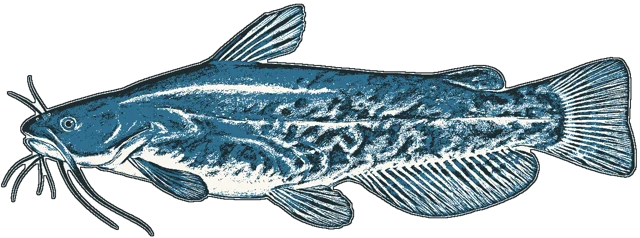
Bullhead (black, brown, yellow)
Ameiurus melas, A. nebulosus, A. natalis · also called horned pout, mudcat, bullpout, yellow catfish · Freshwater
Sweet, delicious catfish meat, but most are small and many come from warm, muddy water, so many anglers dismiss them.
- Tastes
- mild, sweet, firm, moist
- Limits
- No limits. General inland waters: no limit, no minimum, open all year. Same on major Green Bay tributaries, the Winnebago system, Lake Michigan tributaries, and the Wisconsin-Minnesota and Wisconsin-Iowa boundary waters. Other Green Bay tributaries: no limit, May 2, 2026 to March 7, 2027. (Wisconsin Administrative Code NR 20.20, Register October 2026 (code updated Nov. 1, 2026); inland season May 2, 2026 to March 7, 2027 unless noted) Source
- Where
- Lakes and streams statewide (black bullhead); brown bullhead mostly in the Rock, Fox and Wolf river systems and the Chippewa River system; also Lake Superior and Lake Michigan shallows.
- worms
- stink baits
- Do not eat (anyone): any fish from Cedar Creek at Cedarburg, the South Branch Manitowoc River, the Moen Lake Chain, Snowden Lake or the Sheboygan River below Sheboygan Falls.
Meal limits and other waters (4)
- Limit (everyone): 1 serving a month from the Fox River from Portage to Buffalo Lake and the Milwaukee River from Grafton to the harbor.
- Limit (everyone): 4 servings a month from the Manitowoc River between the Hayton dam and the Clarks Mills dam and the East and West Twin rivers at Two Rivers.
- Statewide guideline for most inland waters: bullheads 4 servings a month for higher-risk people (under 15, pregnant, nursing or may become pregnant) and unrestricted for everyone else.
- Source: DNR fish consumption query tool and PFAS advisory pages, Nov. 22, 2026.
Burbot
Lota lota · also called lawyer, eelpout, freshwater cod · Freshwater
Many anglers still throw back the slimy, eel-like 'eelpout' as trash, yet Alaskans keep them for their delicate white meat.
Worth a try: A freshwater cod: skin it, take the white loins and the liver, and boil-and-butter it like 'poor man's lobster', fry it or put it in chowder (Hank Shaw).
- Tastes
- mild, sweet, firm, white, lobster-like
- Limits
- No limits. General inland waters: no limit, no minimum, open all year; state law names burbot as a rough fish. On trout streams hook and line is open only during the trout season. Green Bay, Lake Michigan and Lake Superior: no limit, open all year; smaller Green Bay tributaries May 2, 2026 to March 7, 2027. Live fish may not be moved away from the water without DNR approval. (Wisconsin Administrative Code NR 20.20, Register October 2026 (code updated Nov. 1, 2026); inland season May 2, 2026 to March 7, 2027 unless noted) Source
- Where
- Cool waters of large rivers and their lower tributaries, and lakes, particularly in northern Wisconsin (DNR); Lake Superior (state record, Bayfield County) and Green Bay.
- cut sucker or cisco
- live minnows (gold shiners)
- jigging spoons tipped with bait
- bucktail jigs
- Burbot are among the large predators that can carry elevated mercury in parts of northern and western Alaska (ADF&G).
- Do not eat (anyone): any fish from Cedar Creek at Cedarburg, the South Branch Manitowoc River, the Moen Lake Chain, Snowden Lake or the Sheboygan River below Sheboygan Falls.
Meal limits and other waters (3)
- Limit (everyone): 4 servings a month from Green Bay and tributaries (PCBs) and from Lake Superior and tributaries.
- Statewide guideline for most inland waters: 1 serving a month for higher-risk people (under 15, pregnant, nursing or may become pregnant) and 4 for everyone else (all other species).
- Source: DNR fish consumption query tool and PFAS advisory pages, Nov. 22, 2026.
Cisco
Coregonus artedi · also called lake herring · Freshwater
Mild but soft and bony; mostly eaten smoked, where smoked ciscoes and chubs are a Great Lakes and deli tradition.
- Tastes
- mild, oily, soft, bony
- Limits
- Light regs. 10 cisco, whitefish and their hybrids in total, no minimum, open all year, on inland waters, Lake Michigan, Green Bay, Lake Superior and the Wisconsin-Michigan boundary waters (smaller Green Bay tributaries May 2, 2026 to March 7, 2027). (Wisconsin Administrative Code NR 20.20, Register October 2026 (code updated Nov. 1, 2026); inland season May 2, 2026 to March 7, 2027 unless noted) Source
- Best months
- Lake Superior: February and March, with whitefish, in the ice fishery.
- Where
- Lake Superior's Chequamegon Bay and Apostle Islands in winter; the state-record cisco came from Chain O' Lakes, Waupaca County.
- Do not eat (anyone): any fish from Cedar Creek at Cedarburg, the South Branch Manitowoc River, the Moen Lake Chain, Snowden Lake or the Sheboygan River below Sheboygan Falls.
- Lake Superior and tributaries: lake herring 4 servings a month for higher-risk people (under 15, pregnant, nursing or may become pregnant), unrestricted for everyone else (PCBs).
- Inland lakes: 1 serving a month for higher-risk people and 4 for everyone else (all other species).
- Source: DNR fish consumption query tool and PFAS advisory pages, Nov. 22, 2026.
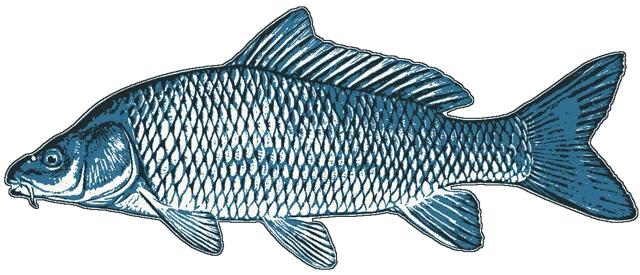
Common carp
Cyprinus carpio · Freshwater
Most US anglers call it a muddy, bony trash fish, but it is a prized food fish in Europe and Asia and eats well from clean, cold water.
Worth a try: Catch from clean water, remove the dark 'mud vein', and either score small fish and fry hard so the Y-bones soften, or hard-smoke large fish over fruitwood (Hank Shaw).
- Tastes
- mild from clean water, strong from muddy water, firm, fatty, Y-bones
- Limits
- No limits. General inland waters: no limit, no minimum, open all year; state law names common carp as a rough fish. On trout streams hook and line is open only during the trout season. Green Bay, Lake Michigan and Lake Superior: no limit, open all year; smaller Green Bay tributaries May 2, 2026 to March 7, 2027. Live fish may not be moved away from the water without DNR approval. (Wisconsin Administrative Code NR 20.20, Register October 2026 (code updated Nov. 1, 2026); inland season May 2, 2026 to March 7, 2027 unless noted) Source
- Where
- The state record carp came from Lake Wisconsin (Columbia County).
- dough balls
- canned corn
- worms
- boilies
- bread
- Do not eat (anyone): carp from Green Bay and tributaries, the Fox River below the De Pere dam, the Manitowoc River between the Hayton dam and the Clarks Mills dam, the Milwaukee River from Grafton to the harbor (with Lincoln Creek and the Menomonee and Kinnickinnic rivers), the Root River below the Horlick dam, Petenwell Flowage or Biron Flowage.
- Do not eat (anyone): carp over 28 in from the Fox River between Little Lake Butte des Morts and the De Pere dam.
- Do not eat (anyone): any fish from Cedar Creek at Cedarburg, the South Branch Manitowoc River, the Moen Lake Chain, Snowden Lake or the Sheboygan River below Sheboygan Falls.
Meal limits and other waters (4)
- Limit (everyone): 6 meals a year from that Fox River stretch (28 in and under), the Fox River from Portage through Buffalo Lake and the Kewaunee River.
- Limit (everyone): 1 serving a month from 21 more listed waters, with lakes Monona and Wingra, Castle Rock Lake and Lake Wisconsin among them (over 20 in below the Prairie du Sac dam, over 25 in on Mississippi River Pools 10 to 12).
- Statewide guideline for most inland waters: 1 serving a month for higher-risk people (under 15, pregnant, nursing or may become pregnant) and 4 for everyone else (all other species).
- Other listed waters differ (DNR fish consumption query tool, Nov. 22, 2026).
Freshwater drum
Aplodinotus grunniens · also called sheepshead · Freshwater
Many anglers call it a rough fish, but it is prized as food in some areas (TPWD); bled and iced, the boneless fillets eat like a redfish's.
Worth a try: Bleed it, ice it immediately and trim the red lateral meat; then fry thin fillets, grill on the half-shell like redfish, or smoke oily summer fish.
- Tastes
- mild, like other drum, firm but tender, large flake; goes soft if not iced
- Limits
- No limits. General inland waters: no limit, no minimum, open all year; state law names freshwater drum as a rough fish. On trout streams hook and line is open only during the trout season. Winnebago system: no limit, open all year by hook and line. Green Bay, Lake Michigan and Lake Superior: no limit, open all year; smaller Green Bay tributaries May 2, 2026 to March 7, 2027. Live fish may not be moved away from the water without DNR approval. (Wisconsin Administrative Code NR 20.20, Register October 2026 (code updated Nov. 1, 2026); inland season May 2, 2026 to March 7, 2027 unless noted) Source
- Where
- Lake Winnebago system, where DNR calls them plentiful; also the Mississippi River (state record, Crawford County).
- Do not eat (anyone): any fish from Cedar Creek at Cedarburg, the South Branch Manitowoc River, the Moen Lake Chain, Snowden Lake or the Sheboygan River below Sheboygan Falls.
Meal limits and other waters (3)
- Limit (everyone): 1 serving a month from Green Bay and tributaries, the Fox River below the De Pere dam, the Yahara chain (Dane and Rock counties), Castle Rock Lake, and the St. Louis River and Superior Harbor.
- Statewide guideline for most inland waters: 1 serving a month for higher-risk people (under 15, pregnant, nursing or may become pregnant) and 4 for everyone else (all other species).
- Source: DNR fish consumption query tool and PFAS advisory pages, Nov. 22, 2026.
Lake trout
Salvelinus namaycush · also called laker, mackinaw, grey trout · Freshwater
Edible and widely kept, but it is the trout most often knocked as too greasy; big fish are very fatty and best smoked.
- Tastes
- rich, oily, soft to firm, fatty
- Limits
- Heavy regs. Lake Michigan: no lake trout season on the Mid Lake Reef Complex, and lake trout may not be possessed there; other Lake Michigan and Green Bay waters open all year, 5 trout and salmon in total, 10 in minimum. Lake Superior: Dec. 1, 2026 to Sept. 30, 2027, 2 in total east of Bark Point and 3 in total west of it, 15 in minimum with only one over 25 in. DNR may close the waters east of Bark Point when the harvest there passes 75 percent of the quota (11,250 of 15,000 fish in the 2025-26 season). Inland: the total daily bag is 5 trout and salmon, only 2 of them lake trout. Green Lake, Lake Geneva, Big Cedar Lake and Goto Lake: Jan. 3 to Sept. 30, 2026 (next from Jan. 2, 2027), 17 in, 2 a day. Lucerne, Big Carr, Black Oak, Little Trout, Long, Trout and White Sand (Boulder Junction) lakes: May 2 to Sept. 30, 2026, 30 in, 1 a day. (Wisconsin Administrative Code NR 20.20, Register October 2026 (code updated Nov. 1, 2026); inland season May 2, 2026 to March 7, 2027 unless noted; Lake Superior lake trout Dec. 1, 2026 to Sept. 30, 2027) Source
- Best months
- Lake Michigan trolling May to October, shallow in spring and deeper as water warms. Lake Superior ice 'bobbing' January to March; trolling picks up in June; season closes Sept. 30.
- Where
- Lake Michigan shoreline, excellent from Sturgeon Bay to Kenosha; Lake Superior's Apostle Islands and Western Arm; deepwater ice fishing in Chequamegon Bay's main channel and around Long Island, Hermit, Basswood and Madeline Island.
- dodger and fly combinations
- plugs
- spoons
- spinners (from shore)
- Great Lakes and some western lakes carry contaminant advisories for large lake trout; check your state advisory.
- Do not eat (anyone): lake trout over 30 in from Lake Michigan and tributaries, for PCBs.
- Do not eat (anyone): any fish from Cedar Creek at Cedarburg, the South Branch Manitowoc River, the Moen Lake Chain, Snowden Lake or the Sheboygan River below Sheboygan Falls.
Meal limits and other waters (4)
- Limit (everyone): 1 serving a month of lake trout under 30 in from Lake Michigan, and of any lake trout or siscowet from Lake Superior and tributaries.
- Inland lakes: the statewide guideline gives inland trout 4 servings a month for higher-risk people and no limit for everyone else, but it does not name lake trout.
- The stricter all-other-species line is 1 serving a month for higher-risk people (under 15, pregnant, nursing or may become pregnant) and 4 for everyone else.
- Source: DNR fish consumption query tool and PFAS advisory pages, Nov. 22, 2026.
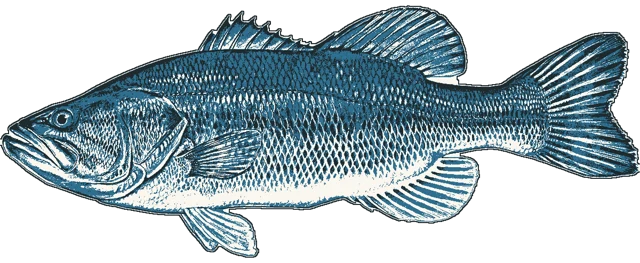
Largemouth bass
Micropterus nigricans (syn. M. salmoides) · Freshwater
Perfectly edible white fillets, but America's top catch-and-release fish and many anglers swear the meat tastes fishy or muddy, so reputation is split.
- Tastes
- mild to slightly 'fishy', firm, thick fillets
- Limits
- Heavy regs. Southern Zone: 5 largemouth or smallmouth in total, 14 in minimum, May 2, 2026 to March 7, 2027; catch and release only the rest of the year. Northern Zone (north of Highways 77, 27 and 64, and north of Highway 29 from the Fox River to Kewaunee except Green Bay tributaries): largemouth 5 at 14 in, May 2, 2026 to March 7, 2027; smallmouth harvest starts June 20, 2026; catch and release only at other times. Winnebago system and the Mississippi River: 5 in total, 14 in, open all year. St. Croix and St. Louis rivers: 5 at 14 in from May 23, 2026 to March 1, 2027 (above the St. Croix Falls Dam harvest ends Sept. 13, 2026). Wisconsin-Michigan boundary waters: 5 at 14 in, June 20 to Dec. 31, 2026; catch and release at other times. Lake Superior and the Kakagon River: 1 at 22 in, largemouth from May 2, 2026, largemouth or smallmouth from June 20, to March 7, 2027. Green Bay and Lake Michigan within 5 miles of Door County: largemouth 5 at 14 in from May 2, 2026, smallmouth added July 1; within 1/4 mile of Washington, Detroit, Plum, Pilot, Hog and Rock islands 5 at 12 in, July 1, 2026 to March 7, 2027, with no bass fishing before July 1. Some lakes differ (listed by county). (Wisconsin Administrative Code NR 20.20, Register October 2026 (code updated Nov. 1, 2026); inland season May 2, 2026 to March 7, 2027 unless noted) Source
- Best months
- Early morning and evening in the warm months; few bite in winter.
- Where
- Statewide, least widespread in the southwestern driftless area; DNR notes weeds are typical cover so weedless baits are often needed.
- minnows
- worms
- poppers
- plugs
- weedless baits
- Water-body mercury advisories commonly list largemouth bass; check your state's advisory before eating large fish.
- Do not eat (anyone): largemouth bass from the Yahara chain in Dane and Rock counties (lakes Monona, Waubesa and Kegonsa, the Mud lakes, Wingra and Starkweather creeks, and the river to the Rock; PFOS).
- Do not eat (anyone): any fish from Cedar Creek at Cedarburg, the South Branch Manitowoc River, the Moen Lake Chain, Snowden Lake or the Sheboygan River below Sheboygan Falls.
- Do not eat (under 15, pregnant, nursing or may become pregnant): largemouth bass of any size from Bass-Long lakes (Lincoln), Greater Bass Lake (Langlade), North Bass Lake (Iron), Pipe Lake (Polk), Summit Lake (Langlade) and Van Zile Lake (Forest and Florence); over 14 in from Long Lake (Bayfield); over 15 in from Broken Bow Lake (Vilas) and North Flowage (Monroe); over 16 in from Shannon Lake (Vilas) and Sherwood Lake (Clark); over 18 in from Big Bass Lake (Marathon), McGrath Lake (Oneida) and Potter's Flowage (Jackson); over 19 in from Upper Cranberry Flowage (Jackson); over 21 in from Lost Lake (Monroe).
Meal limits and other waters (4)
- Limit (everyone else): 1 serving a month of those bass.
- Limit (everyone): 1 serving a month from the La Crosse River from Angelo Pond to the Neshonoc Dam (PFOS), the Milwaukee River from Grafton to Estabrook Falls and the Pike River in Kenosha County.
- Statewide guideline for most inland waters: bass 1 serving a month for higher-risk people and 4 for everyone else.
- Source: DNR fish consumption query tool and PFAS advisory pages, Nov. 22, 2026.
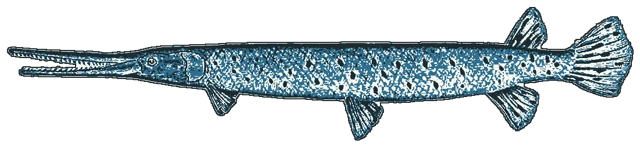
Longnose gar
Lepisosteus osseus · Freshwater
Most anglers treat it as a nuisance and few eat it, but the firm white backstraps are good once you get through the armor.
Worth a try: Cut down the back with shears or a hatchet to get past the armored scales, take the two white backstraps, and fry them or grind them into Louisiana gar balls.
- Tastes
- mild, firm, meaty, almost like alligator
- Limits
- No limits. General inland waters: no limit, no minimum, open all year; state law names garfish as rough fish, and longnose and shortnose gar are on DNR's record list. On trout streams hook and line is open only during the trout season. Green Bay, Lake Michigan and Lake Superior: no limit, open all year; smaller Green Bay tributaries May 2, 2026 to March 7, 2027. Live fish may not be moved away from the water without DNR approval. (Wisconsin Administrative Code NR 20.20, Register October 2026 (code updated Nov. 1, 2026); inland season May 2, 2026 to March 7, 2027 unless noted) Source
- Where
- The state record longnose gar came from the Wisconsin River, Richland County.
- live minnows suspended near the surface
- rope (frayed nylon) lures
- bowfishing
- Gar eggs (roe) are toxic to people and other warm-blooded animals; never eat them (Maryland DNR).
- Do not eat (anyone): any fish from Cedar Creek at Cedarburg, the South Branch Manitowoc River, the Moen Lake Chain, Snowden Lake or the Sheboygan River below Sheboygan Falls.
Meal limits and other waters (2)
- Statewide guideline for most inland waters: 1 serving a month for higher-risk people (under 15, pregnant, nursing or may become pregnant) and 4 for everyone else (all other species).
- Source: DNR fish consumption query tool and PFAS advisory pages, Nov. 22, 2026.
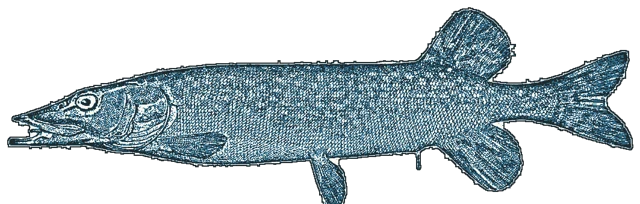
Northern pike
Esox lucius · also called pickerel, jackfish · Freshwater
The meat is white, flaky and great in flavor, but the Y-bones put many anglers off; reputation is split between 'too bony' and 'better than walleye once you learn to clean them'.
Worth a try: Remove the Y-bones with the five-fillet method, or grind, pickle or make fish balls from the meat; Hank Shaw's pike balls grind small pike so the bones vanish.
- Tastes
- mild, clean, firm, flaky white; Y-bones in the upper fillet
- Limits
- Heavy regs. Inland waters north of US Hwy 10: 5 in total, no minimum. Inland waters south of US Hwy 10: 2 in total, 26 in minimum. Both May 2, 2026 to March 7, 2027. Many named waters differ (for example the Yahara chain's Mendota Lake 1 at 40 in, and lakes that protect 25 to 35 in). Lake Michigan: Green Bay and waters north of Waldo Blvd (Manitowoc) 5, no minimum, open all year; south of it 2 at 26 in, open all year. Lake Superior: 2 at 26 in, open all year. Lake Winnebago system: 2 at 26 in, May 2, 2026 to March 7, 2027. Mississippi River, Wisconsin-Minnesota Pools 3-9 (open all year) and the St. Croix below the St. Croix Falls Dam (May 2, 2026 to March 1, 2027): 3, only one over 30 in; St. Croix above the dam 5; St. Louis River 2 (May 9, 2026 to March 1, 2027). Wisconsin-Iowa: 5, open all year. Wisconsin-Michigan: 5, no minimum, May 2, 2026 to March 1, 2027. (Wisconsin Administrative Code NR 20.20, Register October 2026 (code updated Nov. 1, 2026); inland season May 2, 2026 to March 7, 2027 unless noted) Source
- Best months
- Late spring and early summer, late summer and early fall, and winter soon after ice forms; bites best in cool water. Fish deep, cool water in midsummer.
- Where
- Marshy areas and weed beds in cool water; widely distributed, but sparse in the unglaciated southwest outside large rivers and impoundments, and DNR says populations in the southeastern quarter are seriously depressed.
- spoons
- small suckers
- chubs
- streamer flies
- tip-ups with live bait
- Large pike in parts of northern and western Alaska can carry enough mercury that eating large quantities can be harmful (ADF&G).
- Do not eat (anyone): northern pike from the Yahara chain in Dane and Rock counties (lakes Monona, Waubesa and Kegonsa, the Mud lakes, Wingra and Starkweather creeks, and the river to the Rock) or the La Crosse River from Angelo Pond to the Neshonoc Dam (with Perch and Neshonoc lakes; PFOS).
- Do not eat (anyone): northern pike from the Manitowoc River between the Hayton dam and the Clarks Mills dam, for PCBs.
- Do not eat (anyone): any fish from Cedar Creek at Cedarburg, the South Branch Manitowoc River, the Moen Lake Chain, Snowden Lake or the Sheboygan River below Sheboygan Falls.
- Do not eat (under 15, pregnant, nursing or may become pregnant): northern pike over 19 in from Tug Lake (Lincoln) and Windigo Lake (Sawyer); over 21 in from Twin Falls Flowage (Florence); over 22 in from Greater Bass Lake (Langlade), Lower Park Falls Flowage (Price) and White Tail Flowage (Jackson); over 24 in from Van Zile Lake (Forest and Florence); over 25 in from Little Sand Lake (Forest and Langlade); over 26 in from Deep Wood Lake (Langlade) and Lake Six (Iron); over 28 in from Sugar Camp Lake (Oneida).
Meal limits and other waters (5)
- Limit (everyone else): 1 serving a month of those longer pike.
- Limit (everyone): Fox River below the De Pere dam, 6 meals a year over 33 in and 1 serving a month under.
- Limit (everyone): 1 serving a month from Green Bay and tributaries (PFOS), the Manitowoc River below the Clarks Mills dam, the Milwaukee River from Grafton to the harbor, and over 27 in from the East and West Twin rivers.
- Statewide guideline for most inland waters: 1 serving a month for higher-risk people and 4 for everyone else.
- Source: DNR fish consumption query tool and PFAS advisory pages, Nov. 22, 2026.
Paddlefish
Polyodon spathula · also called spoonbill catfish · Freshwater
Valued for its caviar. We have no good source on how it eats, so it is rated Just OK by default.
- Tastes
- mild, firm, boneless
- Limits
- No harvest. No open season statewide: the Wisconsin-Minnesota and Wisconsin-Iowa boundary tables list paddlefish with no open season, and inland it falls under species with no open season. Fishing for a species outside an open season is illegal, so catch and release is off-limits too. Paddlefish is on the state threatened list. (Wisconsin Administrative Code NR 21.04 and NR 22.04 (Register June 2026), NR 20.20 (Register October 2026) and NR 27.03) Source
- Where
- Mississippi River (DNR lists paddlefish among its ancient fish).
- snagging with large treble hooks
Rock bass
Ambloplites rupestris · Freshwater
Light, flaky fillets that some anglers rate highly, while others find them oily and fishy compared with bluegill or crappie.
- Tastes
- mild to slightly fishy, light, flaky
- Limits
- No limits. General inland waters: no limit, no minimum, open all year. Mississippi, St. Croix and St. Louis rivers (Wisconsin-Minnesota) and the Wisconsin-Iowa boundary: 25. Winnebago system, Lake Michigan tributaries and major Green Bay tributaries: no limit; other Green Bay tributaries: no limit, May 2, 2026 to March 7, 2027. (Wisconsin Administrative Code NR 20.20, Register October 2026 (code updated Nov. 1, 2026); inland season May 2, 2026 to March 7, 2027 unless noted) Source
- Where
- State record: Shadow Lake, Waupaca County.
- live minnows
- crayfish
- nightcrawlers
- hellgrammites
- inline spinners
- small jigs
- Do not eat (anyone): rock bass from Lake Mohawksin (Lincoln County) or Petenwell Flowage (Adams, Juneau and Wood counties; PFOS).
- Do not eat (anyone): rock bass from the Manitowoc River between the Hayton dam and the Clarks Mills dam, for PCBs.
- Do not eat (anyone): any fish from Cedar Creek at Cedarburg, the South Branch Manitowoc River, the Moen Lake Chain, Snowden Lake or the Sheboygan River below Sheboygan Falls.
Meal limits and other waters (5)
- Limit (everyone): 1 serving a month from Green Bay and tributaries (PFOS), the Milwaukee River estuary, Hat Rapids Flowage, Lake Wausau, Stevens Point Flowage and the Wisconsin River below the Prairie du Sac dam.
- Limit (everyone): 4 servings a month from the Fox River below the De Pere dam and the Milwaukee River from Grafton to Estabrook Falls.
- On 134 more listed waters DNR's all-other-species line is the strict reading: 1 serving a month for higher-risk people and 4 for everyone else.
- Statewide guideline for most inland waters: rock bass 4 servings a month for higher-risk people (under 15, pregnant, nursing or may become pregnant) and unrestricted for everyone else.
- Other listed waters differ (DNR fish consumption query tool, Nov. 22, 2026).
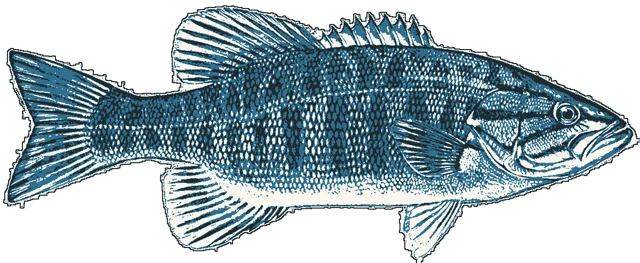
Smallmouth bass
Micropterus dolomieu · Freshwater
Firm, white and good, often rated above largemouth, but most smallmouth are released by custom and the flesh has a slight 'fishy' edge some anglers dislike.
- Tastes
- mild, slightly fishy edge, firm, thick white fillets
- Limits
- Heavy regs. Northern Zone: harvest June 20, 2026 to March 7, 2027, 5 largemouth or smallmouth in total, 14 in minimum; catch and release only at other times. Southern Zone: harvest May 2, 2026 to March 7, 2027. Green Bay, its major tributaries and Lake Michigan within 5 miles of the Door County shoreline: harvest July 1, 2026 to March 7, 2027, 5 in total at 14 in; other Lake Michigan waters from May 2. Within 1/4 mile of Washington, Detroit, Plum, Pilot, Hog and Rock islands: 5 in total at 12 in, July 1, 2026 to March 7, 2027, with no bass fishing before July 1. Lake Superior: 1 in total with largemouth, 22 in minimum, from June 20, 2026. Mississippi River and Winnebago system: open all year, 5 in total at 14 in. St. Croix and St. Louis rivers: 5 at 14 in from May 23, 2026. The Green Bay and Door County catch-and-release season to July 1 is new in 2026 (DNR). (Wisconsin Administrative Code NR 20.20, Register October 2026 (code updated Nov. 1, 2026); inland season May 2, 2026 to March 7, 2027 unless noted) Source
- Best months
- June during and just after spawning, and early fall (lakes); early morning or late evening for natural baits.
- Where
- Medium to large streams and large clearwater lakes statewide; rocky stream or lake habitat where crayfish are common. The Lake Superior calendar lists smallmouth action around the Kakagon Sloughs and Chequamegon Bay in May, June and September.
- hellgrammites
- dragonfly larvae
- surface lures
- Do not eat (anyone): any fish from Cedar Creek at Cedarburg, the South Branch Manitowoc River, the Moen Lake Chain, Snowden Lake or the Sheboygan River below Sheboygan Falls.
- Do not eat (under 15, pregnant, nursing or may become pregnant): smallmouth bass over 17 in from Lake Arbutus (Clark and Jackson counties) and Sugar Camp Lake (Oneida County).
Meal limits and other waters (4)
- Limit (everyone else): 1 serving a month of those bass.
- Limit (everyone): 1 serving a month from Green Bay and tributaries (over 14 in; 4 a month under), the Fox River below the De Pere dam and from Portage to Buffalo Lake, the Manitowoc River below the Clarks Mills dam, the Milwaukee River from Grafton to the harbor, the La Crosse River from Angelo Pond to the Neshonoc Dam, Lake Mohawksin, Petenwell Flowage and the Wisconsin River from the Dells dam to the Mississippi (with Lake Wisconsin).
- Statewide guideline for most inland waters: bass 1 serving a month for higher-risk people and 4 for everyone else.
- Source: DNR fish consumption query tool and PFAS advisory pages, Nov. 22, 2026.
Splake
Salvelinus namaycush × Salvelinus fontinalis · Freshwater
A hatchery cross of lake trout and brook trout. We found no agency or cook who says how it eats, so it sits with its lake-trout parent until one does.
- Limits
- Heavy regs. Lake Superior: 10 trout and salmon in total, of which only 5 may be trout (only 1 rainbow and 1 brook trout); minimums splake and brown trout 15 in, brook 20 in, rainbow 26 in; open all year. Lake Michigan and Green Bay: 5 trout and salmon in total, 10 in minimum, open all year. (Wisconsin Administrative Code NR 20.20, Register October 2026 (code updated Nov. 1, 2026); inland season May 2, 2026 to March 7, 2027 unless noted) Source
- Best months
- First ice in January is good for splake and browns in Chequamegon Bay; the splake fishery slows in the latter part of January. In November and December boats jig for splake.
- Where
- Chequamegon Bay and the Apostle Islands (stocked there). Ice anglers follow the forming ice along the main shore of Chequamegon Bay from Ashland to Houghton Point. A 2008 DNR sheet describes splake planted experimentally in Green Bay.
- shiners
- Large ones run fatty, like lake trout: trim the belly fat and smoke or grill
- Do not eat (anyone): any fish from Cedar Creek at Cedarburg, the South Branch Manitowoc River, the Moen Lake Chain, Snowden Lake or the Sheboygan River below Sheboygan Falls.
- DNR's advice for Lake Superior lake trout, one of splake's parent species, is 1 serving a month for everyone.
- Inland, species DNR does not list separately are 1 serving a month for higher-risk people (under 15, pregnant, nursing or may become pregnant) and 4 for everyone else.
- Confirm with the state's current list.
- Source: DNR fish consumption query tool and PFAS advisory pages, Nov. 22, 2026.
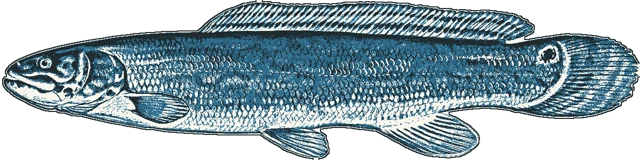
Bowfin
Amia calva (ruddy bowfin) and Amia ocellicauda (emerald bowfin) · also called dogfish · Freshwater
TPWD calls it a rough fish rather than one for the table; the soft, pale flesh earned it the nickname 'cottonfish'.
Worth a try: Keep it alive until you clean it, cook it the same day, and use it smoked, fried as patties or stewed; MeatEater serves fried bowfin with a morel cream sauce.
- Tastes
- mild, soft, jelly-like unless very fresh
- Limits
- No limits. General inland waters: no limit, no minimum, open all year; state law names bowfin as a rough fish. On trout streams hook and line is open only during the trout season. Green Bay, Lake Michigan and Lake Superior: no limit, open all year; smaller Green Bay tributaries May 2, 2026 to March 7, 2027. Live fish may not be moved away from the water without DNR approval. (Wisconsin Administrative Code NR 20.20, Register October 2026 (code updated Nov. 1, 2026); inland season May 2, 2026 to March 7, 2027 unless noted) Source
- Where
- The state record bowfin came from Willow Flowage, Oneida County.
- live minnows
- cut bait
- jigs
- topwater lures
- Do not eat (anyone): any fish from Cedar Creek at Cedarburg, the South Branch Manitowoc River, the Moen Lake Chain, Snowden Lake or the Sheboygan River below Sheboygan Falls.
Meal limits and other waters (2)
- Statewide guideline for most inland waters: 1 serving a month for higher-risk people (under 15, pregnant, nursing or may become pregnant) and 4 for everyone else (all other species).
- Source: DNR fish consumption query tool and PFAS advisory pages, Nov. 22, 2026.
Redhorse suckers
Moxostoma spp. · Freshwater
Seldom caught on hook and line and written off as bony bottom-feeders; MeatEater notes the bones.
Worth a try: Scored and deep-fried, the Y-bones disappear and the firm, sweet flesh is delicious; MeatEater recommends shorthead, golden or silver redhorse for deep-fried sucker balls.
- Tastes
- mild, sweet, firm, white, Y-bones
- Limits
- No limits. General inland waters: no limit, no minimum, open all year; state law lists suckers as rough fish, and redhorse are in the sucker family. On trout streams hook and line is open only during the trout season. Two redhorse are protected and may not be taken: black redhorse (endangered) and river redhorse (threatened). Green Bay, Lake Michigan and Lake Superior: no limit, open all year; smaller Green Bay tributaries May 2, 2026 to March 7, 2027. Live fish may not be moved away from the water without DNR approval. (Wisconsin Administrative Code NR 20.20, Register October 2026 (code updated Nov. 1, 2026); inland season May 2, 2026 to March 7, 2027 unless noted) Source
- Where
- Large rivers: DNR names shorthead redhorse on the Mississippi River; state-record redhorse came from the Yellow River (Burnett County), Wisconsin River (Sauk County), Mississippi River and Plum Creek.
- worms
- Several redhorse species are rare or state-protected; harvest only common species.
- Do not eat (anyone): any fish from Cedar Creek at Cedarburg, the South Branch Manitowoc River, the Moen Lake Chain, Snowden Lake or the Sheboygan River below Sheboygan Falls.
Meal limits and other waters (4)
- Limit (everyone): 6 meals a year from the Milwaukee River estuary and the Manitowoc River between the Hayton dam and the Clarks Mills dam (PCBs).
- Limit (everyone): 1 serving a month from the Milwaukee River from Grafton to Estabrook Falls and the Wisconsin River from Merrill to Nekoosa (with Lake Wausau, Stevens Point Flowage and Biron Flowage).
- Statewide guideline for most inland waters: 1 serving a month for higher-risk people (under 15, pregnant, nursing or may become pregnant) and 4 for everyone else (all other species).
- Source: DNR fish consumption query tool and PFAS advisory pages, Nov. 22, 2026.
White sucker
Catostomus commersonii · Freshwater
Suckers have perhaps the worst reputation of the rough fish (MeatEater) and are mostly raised and sold as bait (MN DNR); the many small bones keep most anglers from eating them.
Worth a try: Spring fish from cold water are light and sweet like walleye (MeatEater); score them deeply and fry hard, pickle them to dissolve the bones, or grind into fish cakes.
- Tastes
- light, sweet, firm, white, many small bones
- Limits
- No limits. General inland waters: rough fish, suckers included, have no limit, no minimum and no closed season, but the code's minnow row, which also takes in suckers, sets 600 in total a day there and on trout streams during the trout season. Lake Michigan tributaries and major Green Bay tributaries: 600 suckers in total, open all year by hook and line, dip net or minnow seine; other Green Bay tributaries: same cap, May 2, 2026 to March 7, 2027 by hook and line. Lake Michigan, Green Bay and Lake Superior: no limit. Live fish may not be moved away from the water without DNR approval. (Wisconsin Administrative Code NR 20.20, Register October 2026 (code updated Nov. 1, 2026); inland season May 2, 2026 to March 7, 2027 unless noted) Source
- Where
- State record: Miller Flowage, Taylor County; NR 20.20 allows dipnetting for suckers in Lake Michigan and Green Bay tributaries.
- nightcrawlers drifted on the bottom
- worms
- spearing/netting where legal
- Do not eat (anyone): any fish from Cedar Creek at Cedarburg, the South Branch Manitowoc River, the Moen Lake Chain, Snowden Lake or the Sheboygan River below Sheboygan Falls.
Meal limits and other waters (4)
- Limit (everyone): 6 meals a year from the Milwaukee River estuary (PCBs).
- Limit (everyone): 1 serving a month from Green Bay and tributaries (PFOS), the Fox River below the De Pere dam and from Portage to Buffalo Lake, and the Manitowoc River between the Hayton dam and the Clarks Mills dam.
- Statewide guideline for most inland waters: 1 serving a month for higher-risk people (under 15, pregnant, nursing or may become pregnant) and 4 for everyone else (all other species).
- Source: DNR fish consumption query tool and PFAS advisory pages, Nov. 22, 2026.
Lake sturgeon
Acipenser fulvescens · also called rock sturgeon, rubbernose, rock fish · Freshwater
Protected across most of its range after overharvest for flesh and caviar; Wisconsin DNR lists many of its lake sturgeon waters as catch and release only and requires a keeper to be at least 60 inches.
- Limits
- Heavy regs. Most inland waters: closed all year. Inland hook-and-line harvest is open only on the Chippewa River (West and East forks to the Mississippi), the Flambeau River (North and South forks), the Jump River, Butternut Lake (Price County), the Yellow, Little Yellow and Danbury Flowage chain, and the Wisconsin River below the Wisconsin Dells Dam: first Saturday in September to Sept. 30 (Sept. 5 to 30, 2026; Sept. 4 to 30, 2027), 1 per season, 60 in minimum, tag and registration required. Catch and release only, June 6, 2026 to March 7, 2027 (new in 2026): the Chippewa, Flambeau and Jump rivers and Butternut Lake outside the harvest season, the Wisconsin River below the Merrill Flowage Dam, and parts of the Namekagon, upper St. Croix, Bear, Manitowish, Little Turtle, Eau Claire, Red Cedar and Black rivers; DNR lists the exact stretches. Winnebago system: hook and line closed all year; the spearing season opens Feb. 13, 2027 and closes Feb. 28 unless a harvest cap closes it earlier (36 in minimum, 1 per season). Lake Superior: open all year, 1 per year, 60 in. Lake Michigan and Green Bay and their tributaries: closed. Wisconsin-Minnesota: St. Croix below the St. Croix Falls Dam Sept. 5 to 30, 2026, 1 at 60 in, catch and release from Oct. 1, 2026 to March 1, 2027; other boundary waters catch and release (to March 1, 2027, or April 14, 2027 on the St. Louis and the Mississippi below the Red Wing Dam). Wisconsin-Iowa: closed. Wisconsin-Michigan: Menominee River above the Grand Rapids Dam Sept. 5 to 30, 2026, 1 at 60 in, with catch and release June 6, 2026 to March 1, 2027 from the Sturgeon Falls Dam down; below it catch and release only in the September season. Selling flesh or roe is illegal. (Wisconsin Administrative Code NR 20.20, Register October 2026 (code updated Nov. 1, 2026); inland season May 2, 2026 to March 7, 2027 unless noted; hook-and-line dates from DNR's 2026 sturgeon page, 2027 spearing dates from DNR's spearing page) Source
- Best months
- Hook-and-line harvest runs the first Saturday in September to Sept. 30 on listed waters. Winnebago spearing opens Feb. 13, 2027, to Feb. 28 at the latest.
- Where
- Winnebago system (spearing), the Chippewa, Flambeau and Wisconsin rivers, the Yellow Lake flowage chain, the Menominee (do not eat from there) and St. Croix rivers and Lake Superior. Record hook-and-line fish: Yellow Lake, Burnett County.
- night crawlers
- dead minnows
- Do not eat (anyone): lake sturgeon from Green Bay and tributaries up to the first dam, or from the Menominee River from Piers Gorge through the Lower Scott Flowage, for PCBs.
- Do not eat (anyone): any fish from Cedar Creek at Cedarburg, the South Branch Manitowoc River, the Moen Lake Chain, Snowden Lake or the Sheboygan River below Sheboygan Falls.
Meal limits and other waters (4)
- Limit (everyone): Wisconsin River from the Dells dam to the Mississippi, 6 meals a year over 70 in and 1 serving a month under.
- Limit (everyone): 1 serving a month from the Chippewa River below the Holcombe dam, and over 60 in from Lake Superior and tributaries.
- Statewide guideline for most inland waters: 1 serving a month for higher-risk people (under 15, pregnant, nursing or may become pregnant) and 4 for everyone else (all other species).
- Source: DNR fish consumption query tool and PFAS advisory pages, Nov. 22, 2026.
Muskellunge
Esox masquinongy · also called muskie, musky · Freshwater
A trophy fish that is almost never kept: high minimum lengths and a strong release ethic mean most muskie anglers let their catch go.
- Limits
- Heavy regs. General inland waters: 1 at 40 in minimum, May 2 to Dec. 31, 2026, open water only. The statewide inland season opens the first Saturday in May, new in 2026. Many listed lakes and rivers are 50 in (the Chippewa Flowage, the Wisconsin River in Adams, Columbia, Juneau, Portage and Wood counties, and Geneva Lake, where the season ends Nov. 30, among them) and a few are 28 in. Lake Winnebago system 1 at 50 in (May 2 to Dec. 31, 2026). Wisconsin-Minnesota boundary rivers (Mississippi, St. Croix, St. Louis) 1 at 50 in (May 23 to Nov. 30, 2026). Wisconsin-Michigan boundary waters 1 at 50 in (June 1 to Dec. 31, 2026, open water); Menominee River below the Hattie Street Dam 54 in. Green Bay, its tributaries and Lake Michigan north of Waldo Blvd 54 in (May 23 to Dec. 31, 2026); Lake Michigan south of Waldo Blvd 40 in; Lake Superior 1 at 40 in (May 23 to Dec. 31, 2026). Tigers and other hybrids follow the muskellunge rule. (Wisconsin Administrative Code NR 20.20, Register October 2026 (code updated Nov. 1, 2026); inland season May 2, 2026 to March 7, 2027 unless noted; inland musky season May 2 to Dec. 31, 2026) Source
- Best months
- The inland season runs May 2 to Dec. 31, 2026, and DNR says anglers usually do best in the daytime. Spawning is mid-April to late May.
- Where
- Natural home is the northern lakes and rivers: DNR names the Chippewa, Flambeau, St. Croix, Black and Wisconsin rivers. Lurks at rock or sand bar drop-offs, weed beds and weed-covered bays. State record: Chippewa Flowage, Sawyer County.
- large plugs
- bucktail spinners
- spoons
- live suckers 10-14 inches
- Do not eat (anyone): musky from Green Bay and tributaries up to the first dam or the Fox River below the De Pere dam, for PCBs.
- Do not eat (anyone): any fish from Cedar Creek at Cedarburg, the South Branch Manitowoc River, the Moen Lake Chain, Snowden Lake or the Sheboygan River below Sheboygan Falls.
- Do not eat (under 15, pregnant, nursing or may become pregnant): muskellunge, the statewide guideline for most inland waters.
- Limit (everyone else): 1 serving a month.
- Source: DNR fish consumption query tool and PFAS advisory pages, Nov. 22, 2026.
Tiger muskie
Esox masquinongy x E. lucius · Freshwater
Managed like muskie, as a trophy fish with high size limits; Maryland DNR says most anglers release them.
- Limits
- Heavy regs. Counted as muskellunge, which the code defines to include musky-northern pike hybrids: inland waters 1 at 40 in, May 2 to Dec. 31, 2026, open water only. Boundary and Great Lakes exceptions are the same as for muskellunge (50 in on many listed lakes and rivers, the Winnebago system, Wisconsin-Minnesota rivers and Wisconsin-Michigan boundary waters; 54 in on Green Bay, its tributaries and northern Lake Michigan). (Wisconsin Administrative Code NR 20.20, Register October 2026 (code updated Nov. 1, 2026); inland season May 2, 2026 to March 7, 2027 unless noted; inland musky season May 2 to Dec. 31, 2026) Source
- Where
- The state record tiger muskellunge came from Lac Vieux Desert (Vilas County, on the Wisconsin-Michigan line).
- large crankbaits imitating suckers
- bucktail spinners
- large jerkbaits
- Do not eat (anyone): musky from Green Bay and tributaries up to the first dam or the Fox River below the De Pere dam, for PCBs.
- Do not eat (anyone): any fish from Cedar Creek at Cedarburg, the South Branch Manitowoc River, the Moen Lake Chain, Snowden Lake or the Sheboygan River below Sheboygan Falls.
- Do not eat (under 15, pregnant, nursing or may become pregnant): musky, the statewide guideline for most inland waters.
- Limit (everyone else): 1 serving a month.
- This is the muskellunge advice, since the code counts tiger muskies as muskellunge.
- Source: DNR fish consumption query tool and PFAS advisory pages, Nov. 22, 2026.
Where to fish in Wisconsin
Fish named here are what people catch at each spot, not a promise they’re safe to eat. Read the eating advice on the fish’s card before you keep one.
- 1Lake Winnebago lake · fresh
DNR's 2023 trawl report counts walleye and yellow perch among the most targeted fish on the system, calls white bass highly targeted and freshwater drum plentiful, and notes winter sturgeon spearing.
Known for: Walleye, Lake sturgeon, White bass, Freshwater drum, Yellow perch
Access: Boat landings and shore spots: DNR's boat access and shore fishing finder (https://dnr.wisconsin.gov/topic/Fishing/anglereducation/wheretofish).
- 2Bay of Green Bay estuary · fresh
DNR's 2026-27 fishing report lists lake whitefish through the ice along the east shore, smallmouth along Door County, brown trout near shore in early spring, walleye, and 192,061 yellow perch kept in the 2024 open-water season. Eating advice (everyone): walleye, lake whitefish, smallmouth over 14 in and brown trout up to 26 in 1 serving a month, bigger brown trout 6 meals a year, yellow perch 4 a month.
Known for: Smallmouth bass, Lake whitefish, Brown trout, Yellow perch, Walleye
Access: DNR says many shore spots and boat accesses line the bay and its tributaries; see its Lake Michigan tributary access maps (https://dnr.wisconsin.gov/topic/fishing/lakemichigan/TributaryAccess.html).
- 3Root River at Racine river · fresh
DNR's Root River Steelhead Facility traps spawning fish here; its fall 2026 count through Nov. 9 was 2,613 coho, 1,579 chinook, 26 brown and 15 rainbow trout. Eating advice (everyone): steelhead, chinook and brown trout 1 serving a month, coho 4.
Known for: Steelhead, Chinook salmon, Coho salmon, Brown trout
Access: DNR publishes a tributary access map for the Root River at Racine (https://dnr.wisconsin.gov/topic/fishing/lakemichigan/TributaryAccess.html).
- 4Kewaunee River river · fresh
Named by DNR among the most popular steelhead streams; DNR collects steelhead broodstock here. Eating advice (everyone): steelhead (rainbow trout) 1 serving a month.
Known for: Steelhead
Access: DNR publishes a tributary access map for the Kewaunee River (https://dnr.wisconsin.gov/topic/fishing/lakemichigan/TributaryAccess.html).
- 5Chequamegon Bay sound · fresh
DNR's Lake Superior calendar runs splake and browns on first ice, lake trout bobbing, walleye and smallmouth in summer, and whitefish and herring in late winter. Eating advice for Lake Superior: lake trout 1 serving a month for everyone, and walleye 1 a month for people under 15, pregnant, nursing or who may become pregnant.
Known for: Lake trout, Splake, Brown trout, Walleye, Yellow perch
Access: DNR's calendar names ice and shore spots off the first and second landings at Ashland, the Washburn coal dock, and the Washburn and Bayfield marinas.
- 6Bois Brule River river · fresh
Steelhead, lake-run brown trout, coho and chinook salmon run up from Lake Superior; DNR calls the fishing some of the best in the region. Eating advice for Lake Superior and its tributaries up to the first dam or falls: brown trout and chinook 4 servings a month for everyone, and steelhead and coho 4 for people under 15, pregnant, nursing or who may become pregnant.
Known for: Steelhead, Brown trout, Coho salmon, Chinook salmon
Access: Well-marked day-use access points north of U.S. Hwy. 2 and two state forest campgrounds; from Stones Bridge to just below Co. Hwy. B the land is mostly private, so access is limited.
- 7Chippewa Flowage lake · fresh
Produced the state-record muskellunge, 69 lb 11 oz in 1949; the flowage has its own limits in NR 20.20, including 1 musky at 50 in.
Known for: Muskellunge
Access: Boat landings and shore spots: DNR's boat access and shore fishing finder (https://dnr.wisconsin.gov/topic/Fishing/anglereducation/wheretofish).
- 8Mississippi River at La Crosse river · fresh
DNR lists walleye, sauger, bass, channel catfish, pike, bluegill and crappie as favorite Mississippi sport fish; Wisconsin-Minnesota boundary rules apply at La Crosse. Eating advice for Pools 7 and 8: walleye, sauger and channel catfish 1 serving a month for people under 15, pregnant, nursing or who may become pregnant, and 4 for everyone else.
Known for: Sauger, Walleye, Channel catfish
Access: DNR says anglers do not necessarily need a boat on the Mississippi River (https://dnr.wisconsin.gov/topic/Fishing/mississippi); carry a paper license copy on boundary waters.
- 9Wolf River at New London river · fresh
DNR calls the Winnebago-to-Wolf River spawning runs famous; fish bite readily then.
Known for: Walleye
Access: Winnebago system rules apply from the mouth up to the dam at Shawano: 3 walleye and sauger in total, only 1 of them a sauger or hybrid. Boat landings and shore spots: DNR's boat access and shore fishing finder (https://dnr.wisconsin.gov/topic/Fishing/anglereducation/wheretofish).
- 10Lake Wisconsin reservoir · fresh
A 2022-23 DNR creel survey found white bass had the highest harvest below the Kilbourn Dam, with bluegill and walleye the top harvests in the lake. Eating advice: walleye, white bass and bluegill 1 serving a month for everyone, and catfish 1 a month for people under 15, pregnant, nursing or who may become pregnant (4 for everyone else).
Known for: White bass, Walleye, Bluegill, Channel catfish, Flathead catfish
Access: About 16 public boat landings around the lake; most ramps are paved (DNR survey).
- 11Geneva Lake lake · fresh
One of four inland waters with a lake trout season of Jan. 3 to Sept. 30, 2026 (next from Jan. 2, 2027): 2 a day, 17 in minimum.
Known for: Lake trout
Access: Boat landings and shore spots: DNR's boat access and shore fishing finder (https://dnr.wisconsin.gov/topic/Fishing/anglereducation/wheretofish).
- 12Lac Vieux Desert lake · fresh
State-record tiger muskellunge (51 lb 3 oz, 1919); a Wisconsin-Michigan boundary water, so the 50 in musky rule and a paper license copy apply.
Known for: Tiger muskie
Access: Wisconsin-Michigan boundary water: Wisconsin residents need a Wisconsin license, Michigan residents a Michigan license, and everyone else a nonresident license from either state; follow the rules of the state you are fishing in (NR 23.04, 23.11).
- 13Petenwell Flowage reservoir · fresh
State-record bigmouth buffalo (76 lb 8 oz, 2013). DNR advises not eating crappie, white bass or rock bass from the flowage (PFOS) and not eating common carp or channel catfish over 20 in (PCBs/dioxin). Bigmouth buffalo falls under all other species: 1 serving a month for people under 15, pregnant, nursing or who may become pregnant, and 4 for everyone else.
Known for: Bigmouth buffalo
Access: Boat landings and shore spots: DNR's boat access and shore fishing finder (https://dnr.wisconsin.gov/topic/Fishing/anglereducation/wheretofish).
Wisconsin fishing license and rules
- Resident: $20.00 (Resident Fishing, Annual); 1-day $8.00; first-time buyer $5.00; junior (16-17) $7.00; senior (65+) $7.00
- Nonresident: $55.00 (Nonresident Fishing, Annual); family annual $70.00; first-time buyer $28.75
- Nonresident short-term: 1-day $15.00, 4-day $29.00, 15-day $33.00. A 2-day Great Lakes Fishing license ($14.00 resident or nonresident) covers the outlying waters of Lake Superior, Lake Michigan and Green Bay, plus Lake Michigan and Green Bay tributaries up to the first dam or lake, and includes the Great Lakes trout and salmon stamp.
- Who needs one: 16 and older, residents and nonresidents. Kids 15 and under fish without a license, as do Wisconsin residents born before Jan. 1, 1927 (DNR license page; s. 29.219, Stats.).
- Free fishing days: Free Fishing Weekend, Jan. 16-17, 2027 and June 5-6, 2027 (DNR). Residents and nonresidents of all ages fish without a license, trout stamp or salmon stamp; all bag, length and season rules still apply, so trout can be fished only where the trout season is open.
More license details
Inland Trout Stamp ($10) is required in addition to the license to fish for trout on inland waters, including streams that flow into Lake Superior (DNR asks for it for trout and salmon on the Bois Brule), but not on Lake Michigan and Green Bay tributaries up to the first dam or lake. Great Lakes Trout and Salmon Stamp ($10) is required to fish for trout or salmon on Lake Superior, Lake Michigan, Green Bay and the tributaries of Lake Michigan and Green Bay up to the first dam or lake. Anyone exempt from the fishing license is also exempt from the stamps. The 2-day Great Lakes ($14) and 2-day inland lake trout ($14, residents only) licenses include the matching stamp. Keeping a lake sturgeon caught on hook and line needs a $20 tag (nonresident $50), whatever the angler's age; no tag is needed to catch and release. Winnebago sturgeon spearing needs a separate license ($20 resident, $65 nonresident, Lake Winnebago deadline Oct. 31; Upriver Lakes by drawing, application deadline Aug. 1). On boundary waters and the Great Lakes anglers must carry the paper license and stamps; a phone copy, conservation card or driver's license is not accepted there. Resident junior and senior licenses are $7. Sources: DNR license, Go Wild and sturgeon pages; ss. 29.219, 29.228 and 29.2285, Stats.
Buy a license License types and fees
Fees: 2026-2027 license year: DNR says licenses are valid from April 1 through March 31 of the following year, and that 2026-27 fishing licenses and trout stamps run to March 31, 2027; fees from the DNR license page (Nov. 22, 2026)..
- It is illegal to fish with more than three hooks, baits or lures (NR 20.06).
- Live fish may not be moved away from a water. Minnows bought from a Wisconsin bait dealer may leave if they have not touched that water or its fish, or if they will be used on the same water (NR 19.05).
- Largemouth and smallmouth bass: catch and release only outside the harvest season. Harvest is 5 in total at 14 in; the Northern Zone smallmouth season starts June 20, 2026, the Southern Zone May 2, 2026.
- Muskellunge: 1 at 40 in on general inland waters, May 2 to Dec. 31, 2026, open water only. Many listed lakes and rivers, the Winnebago system, and Wisconsin-Minnesota and Wisconsin-Michigan boundary waters use 50 in; Green Bay and its tributaries, the Menominee River below the Hattie Street Dam and Lake Michigan north of Waldo Blvd use 54 in.
- Great Lakes and boundary waters: carry the paper license and stamps (an original or a reprint). Trout and salmon on Lake Michigan, Lake Superior and Green Bay need the Great Lakes Trout and Salmon Stamp; inland trout waters need the Inland Trout Stamp.
- Lake Michigan's Mid Lake Reef Complex has no open season for lake trout, and lake trout may not be possessed there (NR 20.20).
- In open water you must stay within 100 yards of your line; jug fishing and fishing with a drone are illegal (NR 20.03, 20.06).
- Ice fishing holes may not measure more than 12 in across. Shelters must come off the ice daily and when not in use after the first Sunday following March 12 on Lake Michigan, Green Bay, Lake Superior and inland waters north of Highway 64, and after the first Sunday following March 1 on inland waters south of it (every day on the Fox River below the De Pere dam); boundary waters use March 15 (Michigan), March 1 (Minnesota) and Feb. 20 (Iowa).
- Paddlefish: no open season, no fishing for paddlefish.
- Sept. 15 to the first Saturday in May: only hooks with a gap of 1/2 in or less may be used on Lake Michigan and most Green Bay tributaries, with hook-and-line fishing closed there from half an hour after sunset to half an hour before sunrise (NR 20.20, amended July 1, 2026).
- Gobies may not be used as bait. Gobies and ruffe have no bag limit, but each one kept must be gutted, beheaded or have its gills removed at once (rule in effect Nov. 1, 2026).
Limits here are summaries for convenience, checked on the date shown. The official Wisconsin regulations govern; check them before you keep a fish.
Before you eat it
Do not eat any fish (anyone) from: Cedar Creek from Bridge Road in Cedarburg to the Milwaukee River, with Zeunert Pond (Ozaukee County, PCBs); the South Branch Manitowoc River from Chilton … (see the full list)
Do not eat any fish (anyone) from: Cedar Creek from Bridge Road in Cedarburg to the Milwaukee River, with Zeunert Pond (Ozaukee County, PCBs); the South Branch Manitowoc River from Chilton to Hayton Millpond, with Pine and Jordan creeks and their tributaries (Calumet County, PCBs); the Moen Lake Chain (Moen, Second, Third, Fourth, Fifth and Sunset lakes, and Starks Creek up to Starks Spring) and Snowden Lake (Oneida County, PFOS); and the Sheboygan River from the Sheboygan Falls dam to the mouth (PCBs), where the only exceptions are brown trout, chinook and rainbow trout at 1 serving a month and coho at 4.
- Do not eat (anyone), PFOS: the Yahara chain in Dane and Rock counties (lakes Monona, Waubesa and Kegonsa, the Mud lakes, Wingra and Starkweather creeks, and the river to the Rock): crappie, largemouth bass, northern pike, walleye, white bass and yellow perch. The La Crosse River from Angelo Pond to the Neshonoc Dam (with Perch and Neshonoc lakes): black crappie, bluegill, brook trout, brown trout, northern pike, pumpkinseed, white bass and yellow perch. Silver Creek (Monroe County): brook and brown trout.
- Do not eat (anyone), Wisconsin River flowages: Lake Mohawksin (Lincoln County): crappie, pumpkinseed and rock bass. Biron Flowage (Portage and Wood counties): walleye, white bass and carp. Petenwell Flowage (Adams, Juneau and Wood counties): crappie, rock bass and white bass (PFOS), carp, and channel catfish over 20 in (PCBs and dioxin). Castle Rock Lake (Adams and Juneau counties): white bass.
Do not eat (anyone), PCBs: Green Bay and tributaries up to the first dam: carp, musky and lake sturgeon. Fox River below the De Pere dam: carp, channel catfish, musky and bigmouth buffalo. … (see the full list)
Do not eat (anyone), PCBs: Green Bay and tributaries up to the first dam: carp, musky and lake sturgeon. Fox River below the De Pere dam: carp, channel catfish, musky and bigmouth buffalo. Fox River from Little Lake Butte des Morts to the De Pere dam: carp over 28 in. Manitowoc River from the Hayton dam to the Clarks Mills dam: carp, northern pike and rock bass. Manitowoc River below the Clarks Mills dam: channel catfish over 20 in. East and West Twin rivers at Two Rivers: channel catfish over 23 in. Milwaukee River from Grafton to the harbor, with Lincoln Creek and the Menomonee and Kinnickinnic rivers: carp. Root River below the Horlick dam in Racine: carp. Menominee River from Piers Gorge through the Lower Scott Flowage: lake sturgeon. Lake Michigan and tributaries: lake trout over 30 in.
- Do not eat (higher-risk people: pregnant or nursing, may become pregnant in the next 3 to 5 years, or under 15): muskellunge and tiger musky, the statewide guideline for most inland waters; 1 serving a month for everyone else. DNR's query tool describes the higher-risk group as women up to age 50 and children under 15.
Do not eat (higher-risk people): walleye from these 62 waters (county in parentheses), at these lengths; everyone else 1 serving a month of those: of any size from Dairyland Flowage … (see the full list)
Do not eat (higher-risk people): walleye from these 62 waters (county in parentheses), at these lengths; everyone else 1 serving a month of those: of any size from Dairyland Flowage (Rusk), Diamond Lake (Taylor), Ike Walton Lake (Vilas), Island Lake (Iron), Moose Lake (Sawyer), Owl Lake (Iron) and Lake Tahkodah (Bayfield); over 15 in from Bass Lake (Price), Julia Lake (Oneida and Forest), Long Lake (Bayfield), Silver Lake (Barron), Spider Lake (Iron) and Windigo Lake (Sawyer); over 16 in from Butternut Lake (Price and Ashland), Currie Lake (Oneida), English Lake (Ashland), Lower Scott Flowage (Marinette) and Siskiwit Lake (Bayfield); over 17 in from Ballard Chain (Vilas), Caldron Falls Flowage (Marinette), Hemlock Lake (Oneida), High Falls Flowage (Marinette), Lyman Lake (Douglas) and Willow Flowage (Oneida); over 18 in from Bearskull Lake (Iron), Big Bass Lake (Marathon), Deep Hole Lake (Forest), Long Lake (Oneida), Lynx Lake (Vilas), Round Lake (Chippewa), Sand Lake (Florence) and Sugar Camp Lake (Oneida); over 19 in from Big Elkhart Lake (Sheboygan), Diamond Lake (Bayfield), Hodstradt Lake (Oneida), Sackett Lake (Taylor), Snipe Lake (Vilas) and South Harper Lake (Taylor); over 20 in from Annabelle Lake (Vilas), Collins Lake (Portage), Emma Lake (Oneida), Ghost Lake (Sawyer), Horseshoe Lake (Chippewa), Jag Lake (Vilas), the Menominee River from Piers Gorge to the Lower Scott Flowage, Lake Minnesuing (Douglas) and Willow Lake (Oneida); over 21 in from Franklin Lake (Oneida), Oxbow Lake (Vilas), Pine Lake (Iron) and Sand Lake (Rusk and Chippewa); over 22 in from Lake Arbutus (Clark and Jackson), Somo Lake (Lincoln), the St. Louis River and Superior Harbor and Virgin Lake (Oneida); over 23 in from Crowley Flowage (Price), Lake Nebagamon (Douglas) and Pixley Flowage (Price); over 24 in from Brule River Flowage (Florence), Musser Lake (Price) and Turtle-Flambeau Flowage and Trude Lake (Iron); over 26 in from Three Lakes Chain (Oneida).
Do not eat (higher-risk people), other fish (county in parentheses; everyone else 1 serving a month): northern pike over 19 in from Tug Lake (Lincoln) and Windigo Lake (Sawyer); over 21 in … (see the full list)
Do not eat (higher-risk people), other fish (county in parentheses; everyone else 1 serving a month): northern pike over 19 in from Tug Lake (Lincoln) and Windigo Lake (Sawyer); over 21 in from Twin Falls Flowage (Florence); over 22 in from Greater Bass Lake (Langlade), Lower Park Falls Flowage (Price) and White Tail Flowage (Jackson); over 24 in from Van Zile Lake (Forest and Florence); over 25 in from Little Sand Lake (Forest and Langlade); over 26 in from Deep Wood Lake (Langlade) and Lake Six (Iron); over 28 in from Sugar Camp Lake (Oneida). Largemouth bass of any size from Bass-Long lakes (Lincoln), Greater Bass Lake (Langlade), North Bass Lake (Iron), Pipe Lake (Polk), Summit Lake (Langlade) and Van Zile Lake (Forest and Florence); over 14 in from Long Lake (Bayfield); over 15 in from Broken Bow Lake (Vilas) and North Flowage (Monroe); over 16 in from Shannon Lake (Vilas) and Sherwood Lake (Clark); over 18 in from Big Bass Lake (Marathon), McGrath Lake (Oneida) and Potter's Flowage (Jackson); over 19 in from Upper Cranberry Flowage (Jackson); over 21 in from Lost Lake (Monroe). Smallmouth bass over 17 in from Lake Arbutus (Clark and Jackson) and Sugar Camp Lake (Oneida). Channel catfish over 25 in from Lake Arbutus (Clark and Jackson).
- Same guideline: walleye, northern pike, bass, catfish and all other species 1 serving a month for higher-risk people and 4 for everyone else; muskellunge is 'do not eat' for higher-risk people and 1 serving a month for everyone else.
- Statewide guideline for most inland waters (DNR): bluegill, crappie, yellow perch, sunfish, rock bass, bullheads and inland trout 4 servings a month for higher-risk people (pregnant or nursing, may become pregnant in the next 3-5 years, or under 15) and unrestricted for everyone else.
- DNR says that guideline is not the default on Lake Michigan, Lake Superior, Green Bay or parts of the lower Fox, Sheboygan, Cedar, Manitowoc and Milwaukee river systems. For a fish DNR does not list there, ask DNR (888-936-7463) before eating it.
- DNR's fish consumption query tool lists 154 waters and river stretches with their own advice; check the water there (https://apps.dnr.wi.gov/fishconsumptionadvisoryquery/) before keeping fish. DNR also prints its advice in the Choose Wisely 2026-2028 booklet (August 2026), linked from its consumption page below.
- Great Lakes limits (everyone): Lake Michigan: lake trout under 30 in, chinook, brown trout, rainbow trout and yellow perch 1 serving a month; coho and lake whitefish 4. Green Bay: channel catfish and brown trout over 26 in 6 meals a year; walleye, white bass, northern pike, lake whitefish, smallmouth over 14 in, chinook, rainbow trout, smaller brown trout, rock bass, pumpkinseed, drum and white sucker 1 serving a month; yellow perch, bluegill and burbot 4. Lake Superior: lake trout, and lake sturgeon over 60 in, 1 serving a month; most other listed species 4.
- Trimming fat, skinning and cooking on a rack so fat drips away lowers PCBs. It does not lower mercury or PFAS.
Local lingo
- the big pond: Lake Michigan (DNR's Lake Michigan page).
- lunge or musky: muskellunge, the state fish (DNR fact sheet).
- up north: the northern resort-country lakes, a walleye region (DNR walleye fact sheet).
- sheepshead: freshwater drum (DNR record list: 'Drum (Sheepshead)').
- coaster: a Lake Michigan or Lake Superior brook trout (DNR fact sheets).
- bobbing: deepwater ice fishing for lake trout on Lake Superior (DNR fishing calendar).
- the run: the spawning migration of steelhead or walleye up a river (DNR steelhead fact sheet).
- king: chinook salmon (DNR chinook fact sheet).
Questions anglers ask about Wisconsin
What is the most common fish in Wisconsin?
On Lake Michigan and Green Bay, coho salmon led DNR's 2024 open-water creel estimate (210,891 kept), ahead of yellow perch (195,856), chinook salmon (163,923) and walleye (67,715). That survey leaves out inland lakes and rivers, where DNR's walleye fact sheet says fishing surveys show walleye is Wisconsin's most popular sport fish.
What is the best fish to eat in Wisconsin?
17 of the 37 fish on our Wisconsin board rate Best eating. They include: walleye, sauger, bluegill, pumpkinseed, black crappie and white crappie.
What is the state fish of Wisconsin?
Muskellunge: Wis. Stat. 1.10(3)(g): 'The muskellunge (Esox masquinongy masquinongy Mitchell) is the state fish.'.
Does Wisconsin have free fishing days?
Free Fishing Weekend, Jan. 16-17, 2027 and June 5-6, 2027 (DNR). Residents and nonresidents of all ages fish without a license, trout stamp or salmon stamp; all bag, length and season rules still apply, so trout can be fished only where the trout season is open.
Which Wisconsin fish are better to eat than their reputation?
We give the Worth a try badge to northern pike, burbot, freshwater drum, common carp, bowfin, longnose gar, white sucker, redhorse suckers and bigmouth buffalo: fish most anglers toss or rate low that eat well when they're cleaned and cooked right. Each card says how.
Neighboring states
Sources
Limits, prices and advisories come from these pages, read on or before Nov 21, 2026. Where a line gives its own date, that’s the date it rests on. Eating advice changes: check the state’s current list. Ratings are national and come from the fish’s own page.
67 sources
- apps.dnr.wi.gov Chinook salmon: advisory; Coho salmon: advisory; bigmouth buffalo: advisory; black crappie: advisory; bluegill: advisory; bowfin: advisory; brook trout: advisor
- dnr.wisconsin.gov catch survey
- dnr.wisconsin.gov fishing spots; freshwater drum: baits; freshwater drum: where; sauger: where; white bass: where
- dnr.wisconsin.gov fishing spots; white bass: where
- dnr.wisconsin.gov bluegill: baits; bluegill: months; bluegill: names; bluegill: where
- dnr.wisconsin.gov brook trout: baits; brook trout: months; brook trout: names; brook trout: where; splake: where
- dnr.wisconsin.gov brown trout: baits; brown trout: months; brown trout: names; brown trout: where
- dnr.wisconsin.gov bullhead (black, brown, yellow): baits; bullhead (black, brown, yellow): months; bullhead (black, brown, yellow): names; bullhead (black, brown, yellow): where
- dnr.wisconsin.gov channel catfish: baits; channel catfish: months; channel catfish: names; channel catfish: where; flathead catfish: baits; flathead catfish: months; flathead cat
- dnr.wisconsin.gov Chinook salmon: baits; Chinook salmon: months; Chinook salmon: names; Chinook salmon: where
- dnr.wisconsin.gov Coho salmon: baits; Coho salmon: months; Coho salmon: names; Coho salmon: where
- dnr.wisconsin.gov black crappie: baits; black crappie: months; black crappie: names; black crappie: where; white crappie: baits; white crappie: months; white crappie: names; whit
- dnr.wisconsin.gov lake sturgeon: baits; lake sturgeon: months; lake sturgeon: names; lake sturgeon: where
- dnr.wisconsin.gov lake trout: baits; lake trout: months; lake trout: names; lake trout: where
- dnr.wisconsin.gov muskellunge: baits; muskellunge: months; muskellunge: names; muskellunge: where; tiger muskie: names
- dnr.wisconsin.gov northern pike: baits; northern pike: months; northern pike: names; northern pike: where
- dnr.wisconsin.gov pumpkinseed: baits; pumpkinseed: months; pumpkinseed: names; pumpkinseed: where
- dnr.wisconsin.gov fishing spots; rainbow trout: baits; rainbow trout: months; rainbow trout: names; rainbow trout: where; steelhead: baits; steelhead: names; steelhead: where
- dnr.wisconsin.gov steelhead: months
- dnr.wisconsin.gov fishing spots; walleye: baits; walleye: months; walleye: names; walleye: where
- dnr.wisconsin.gov yellow perch: baits; yellow perch: months; yellow perch: names; yellow perch: where
- dnr.wisconsin.gov white bass: where
- dnr.wisconsin.gov new regulations
- dnr.wisconsin.gov free fishing days
- dnr.wisconsin.gov cisco: advisory; lake trout: advisory; lake whitefish: advisory; rock bass: advisory
- dnr.wisconsin.gov Chinook salmon: names
- dnr.wisconsin.gov lake whitefish: where
- dnr.wisconsin.gov fishing spots
- dnr.wisconsin.gov lake trout: where; steelhead: where
- dnr.wisconsin.gov bigmouth buffalo: where; fishing spots; lake sturgeon: where; paddlefish: where; redhorse suckers: where; sauger: where
- dnr.wisconsin.gov license fees; license info
- dnr.wisconsin.gov bluegill: where; fishing spots; lake whitefish: where; redhorse suckers: where
- dnr.wisconsin.gov bigmouth buffalo: where; black crappie: where; bowfin: where; burbot: where; channel catfish: where; cisco: where; common carp: where; fishing spots; flathead c
- dnr.wisconsin.gov rock bass: advisory
- dnr.wisconsin.gov black crappie: advisory; bluegill: advisory; brook trout: advisory; brown trout: advisory; northern pike: advisory; pumpkinseed: advisory; white bass: advisory;
- dnr.wisconsin.gov black crappie: advisory; bluegill: advisory; pumpkinseed: advisory; rock bass: advisory; sauger: advisory; smallmouth bass: advisory; walleye: advisory; white b
- dnr.wisconsin.gov black crappie: advisory; largemouth bass: advisory; northern pike: advisory; sauger: advisory; walleye: advisory; white bass: advisory; white crappie: advisory;
- dnr.wisconsin.gov where to fish
- dnr.wisconsin.gov consumption advisories; consumption advisory
- dnr.wisconsin.gov fishing spots
- dnr.wisconsin.gov cisco: names; splake: where
- dnr.wisconsin.gov brown trout: months; brown trout: where; cisco: months; fishing spots; lake trout: months; lake whitefish: months; smallmouth bass: where; splake: baits; splake
- dnr.wisconsin.gov state records
- dnr.wisconsin.gov freshwater regs
- dnr.wisconsin.gov top species
- dnr.wisconsin.gov black crappie: baits; black crappie: where
- dnr.wisconsin.gov bluegill: months
- dnr.wisconsin.gov largemouth bass: baits; largemouth bass: months; largemouth bass: where
- dnr.wisconsin.gov muskellunge: baits; muskellunge: where
- dnr.wisconsin.gov northern pike: where
- dnr.wisconsin.gov smallmouth bass: baits; smallmouth bass: months; smallmouth bass: where
- dnr.wisconsin.gov bowfin: names; burbot: names; burbot: where
- dnr.wisconsin.gov top species
- dnr.wisconsin.gov walleye: baits; walleye: where
- dnr.wisconsin.gov yellow perch: months
- dnr.wisconsin.gov sturgeon hook and line
- dnr.wisconsin.gov lake sturgeon: months; sturgeon spearing regs
- dnr.wisconsin.gov trout regs
- dnrmaps.wi.gov sauger: advisory; walleye: advisory; white bass: advisory; white sucker: advisory
- docs.legis.wisconsin.gov admin code nr20; brook trout: where; brown trout: where; fishing spots
- docs.legis.wisconsin.gov admin code boundary minnesota
- docs.legis.wisconsin.gov admin code boundary iowa
- docs.legis.wisconsin.gov admin code boundary michigan
- docs.legis.wisconsin.gov state fish
- gowild.wi.gov license buy
- outdoornews.com white bass: baits; white bass: months
- outdoornews.com sauger: baits
Illustrations: stencils we made from public-domain art by John J. Baird (Black crappie); NOAA (Bluegill); Duane Raver, U.S. Fish and Wildlife Service (Brook trout, Channel catfish, Flathead catfish, Rainbow trout, White bass, White crappie, Yellow perch, Bullhead (black, brown, yellow), Smallmouth bass, Bowfin); U.S. Fish and Wildlife Service (Brown trout, Common carp, Largemouth bass); Hugh McCormick Smith (Walleye); C. W. Nash (Longnose gar); David Starr Jordan (Northern pike), via Wikimedia Commons.
Spotted an error or a rule that changed? Tell us and we will check it against the official source.