West Virginia · freshwater
Fish in West Virginia: what’s worth eating, and what’s garbage
West Virginia fishing runs from stocked and wild mountain trout streams and smallmouth rivers such as the New and the South Branch of the Potomac to large Army Corps lakes holding bass, crappie, hybrid striped bass, muskie and walleye. The Ohio, Kanawha and Monongahela rivers add channel and flathead catfish and white bass, with blue catfish in the Ohio and Kanawha and sauger in the Ohio, and rules change by water, with catch-and-release stretches, slot limits and Ohio River and Potomac reciprocal rules.
45 fish rated · limits checked Nov 21, 2026 against WVDNR, then re-checked: 845 of 849 details confirmed or corrected on the official pages
Resident $24.00 total: Class B license $19.00 plus the required $5.00 Conservation Stamp (Class CS). To fish for trout add the $10.00 trout stamp (Class O): $34.00. Full details
Buy a licenseLimits, seasons and size rules from West Virginia Division of Natural Resources.
Freshwater limitsBrook trout
Free Fishing Days were June 13 and 14, 2026: anyone could fish public waters without a license.
The West Virginia table-fare board
Fish West Virginia anglers catch, sorted by how they eat. The bars show how heavily each one is regulated here. Tap a fish for the details.
No limits Light regs Heavy regs No harvest
Best eating20
Just OK17
Garbage fish5
Catch & release
Fish by fish
Why each one sits where it does, the current West Virginia limits, and the bait that works.
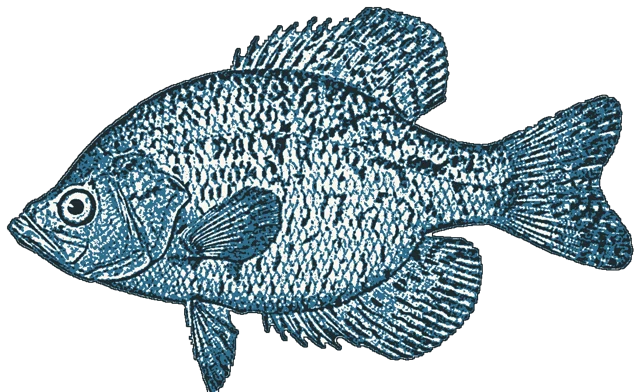
Black crappie
Pomoxis nigromaculatus · also called croppie, calico bass, speckled bass, papermouth · Freshwater
One of the classic fish-fry fish: MeatEater counts crappie among the best-eating fish in freshwater.
- Tastes
- mild, sweet, delicate, flaky, white
- Limits
- Light regs. Statewide: 30 a day and 60 in possession, black and white crappie combined, no minimum size. The Potomac River, its North Branch and Jennings Randolph Lake follow Maryland rules. Other listed waters differ. (2026 Fishing Regulations Summary (calendar year 2026)) Source
- Best months
- Early spring, when they gather near spawning areas; spawning starts at about 64 F.
- Where
- Bluestone, Burnsville, Cheat, East Lynn, North Bend, R.D. Bailey, Stonewall Jackson, Sutton, Summersville and Tygart lakes; state-managed lakes including Sleepy Creek and Plum Orchard; Ohio and Kanawha river backwaters. Brushy cover, standing timber and brush piles.
- minnows
- jigs
- minnow-imitating lures
- Limit (everyone): 1 meal a month from the Ohio River between the Pennsylvania line and Belleville Lock (Ohio's 2026 list, mercury and PCBs).
Meal limits and other waters (5)
- Limit (everyone): 1 meal a month from the Kanawha River between the I-64 bridge in Dunbar and Winfield Lock and Dam, its backwaters, Armour, Heizer and Manila creeks, the lower 2 miles of the Pocatalico River, or the Coal River below Lower Falls (dioxin, PCBs and mercury).
- Limit (everyone): 3 meals a month from the Potomac River between Dam 4 and Dam 5 (Maryland's list, mercury).
- Limit (everyone), statewide: 1 meal a week, the state's line for all other species (mercury and PCBs).
- State health office: areas of the Kanawha River and its tributaries downstream of Nitro likely became contaminated with dioxin.
- West Virginia's 2026 list (released May 27, 2026): oehs.wvdhhr.org/fish or (304) 558-2981.
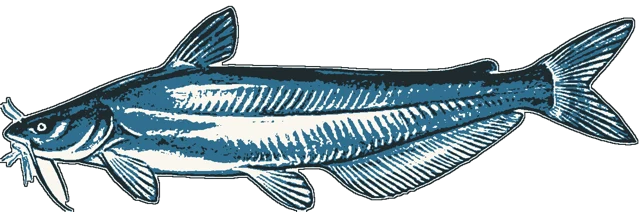
Blue catfish
Ictalurus furcatus · Freshwater
TPWD calls it an excellent food fish; Maryland DNR says blues are very good to eat.
- Tastes
- mild, firm
- Limits
- Heavy regs. Statewide: 2 a day, 25-in minimum, no possession limit. Kanawha River (mouth up to the New-Gauley confluence) and the Ohio River (Mill Creek, Hancock County, to the Big Sandy mouth, including Ohio reciprocal waters): 4 a day, 25-in minimum, only 1 over 35 in, possession 8 with only 2 over 35 in. Hand-fishing (catfish only) June 15 to Aug. 31, sunrise to sunset: 4 catfish a day in all, no more than 2 of them blue catfish and 1 over 35 in. The Potomac River, its North Branch and Jennings Randolph Lake follow Maryland rules. Other listed waters differ. (2026 Fishing Regulations Summary (calendar year 2026)) Source
- Best months
- Stay active and feed through the winter; hand-fishing season runs June 15 to Aug. 31.
- Where
- Ohio River and Kanawha River; deep flowing water with drop-offs and current seams.
- cut bait
- live bait on large circle hooks
- Large, old blue catfish accumulate contaminants; some water bodies have size-based consumption advisories.
- Limit (everyone): 1 meal a month from the Kanawha River between the I-64 bridge in Dunbar and Winfield Lock and Dam, its backwaters, Armour, Heizer and Manila creeks, the lower 2 miles of the Pocatalico River, or the Coal River below Lower Falls (dioxin, PCBs and mercury).
Meal limits and other waters (5)
- Limit (everyone), statewide: 1 meal a week, the state's line for all other species (mercury and PCBs).
- Eat the smaller, younger fish, which are less likely to contain contaminants (WVDNR 2026 summary).
- Eat fewer fish that feed on the bottom, such as carp, which are more likely to contain contaminants (WVDNR 2026 summary).
- State health office: areas of the Kanawha River and its tributaries downstream of Nitro likely became contaminated with dioxin.
- West Virginia's 2026 list (released May 27, 2026): oehs.wvdhhr.org/fish or (304) 558-2981.
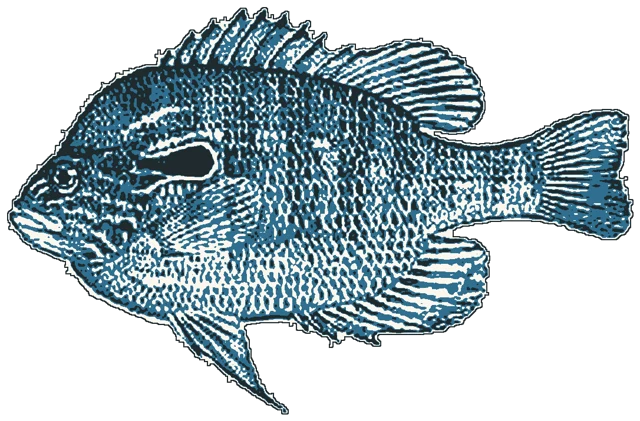
Bluegill
Lepomis macrochirus · Freshwater
MeatEater calls the flesh light, delicate and sweet; the original fish-fry panfish.
- Tastes
- mild, sweet, firm, flaky
- Limits
- Light regs. Statewide: 30 a day and 60 in possession for bluegill and all other sunfish combined, no minimum size. Mason Lake and Teter Creek Lake: 10 a day, only 5 of 8 in or longer. The Potomac River, its North Branch and Jennings Randolph Lake follow Maryland rules. Other listed waters differ. (2026 Fishing Regulations Summary (calendar year 2026)) Source
- Best months
- Summer, when large males build community nests in shallow water.
- Where
- Warm-water streams, lakes, ponds and reservoirs, around weeds and woody shoreline cover and near nests.
- mealworms
- earthworms
- small lures
- wet flies
- Limit (everyone): 1 meal a month from the Kanawha River between the I-64 bridge in Dunbar and Winfield Lock and Dam, its backwaters, Armour, Heizer and Manila creeks, the lower 2 miles of the Pocatalico River, or the Coal River below Lower Falls (dioxin, PCBs and mercury).
Meal limits and other waters (3)
- Limit (everyone), statewide: 1 meal a week, the state's line for all other species (mercury and PCBs).
- Upper Mud River Reservoir has its own selenium line, also 1 meal a week.
- West Virginia's 2026 list (released May 27, 2026): oehs.wvdhhr.org/fish or (304) 558-2981.
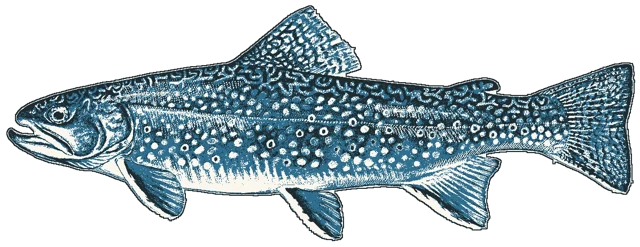
Brook trout
Salvelinus fontinalis · also called specks, brook char, speckled trout · Freshwater
Often called the tastiest trout: MeatEater describes the meat as light and delicate with an almost sweet flavor.
- Tastes
- sweet, delicate, light, delicate
- Limits
- Heavy regs. Statewide: 6 trout a day in any combination (rainbow, golden rainbow, brook, tiger, brown), possession 12, no minimum size; a trout stamp is needed on top of the license (waived for some groups). Catch and release only (creel 0, artificial flies and lures, no scented baits) on listed sections, including parts of the Blackwater River (Blackwater Falls), Cranberry River, Elk River, Glade Creek of New River and Seneca Creek, and the Guyandotte drainage above Mullens. Delayed harvest sections of Clear Fork of the Guyandotte, Middle Wheeling Creek, Paint Creek, Shavers Fork and Williams River: catch and release Nov. 1 to May 15, general rules May 16 to Oct. 31. Fly fishing only, all fish released, on Dogway Fork, Red Run and listed sections of Edwards Run, Milligan Creek, Second Creek, Spring Run and Thorn Creek. Stephens Lake: 2 trout a day. Class Q and youth waters in March to May: 4 trout, children 14 and under and permit holders only. No fish, including dead or packaged minnows, may be used as bait in the East and West Forks of the Greenbrier, the Gauley above the Route 55/20 bridge at Curtin (with the Cherry, Williams and Cranberry), Camp Creek (Mercer County) and Manns Creek systems. The Potomac River, its North Branch and Jennings Randolph Lake follow Maryland rules. Other listed waters differ. (2026 Fishing Regulations Summary (calendar year 2026)) Source
- Spawns
- Spawns September to November; WVDNR asks waders to avoid redds.
- Where
- Small mountain streams, rivers and spring lakes and ponds at higher elevations; the Blackwater, Cranberry, Williams and Shavers Fork systems are among year-round trout waters.
- worms
- minnows
- spinners
- jigs
Before you eat it: Limit (everyone), statewide: 1 meal a week, the state's line for all other species (mercury and PCBs). West Virginia's 2026 list (released May 27, 2026): oehs.wvdhhr.org/fish or (304) 558-2981.
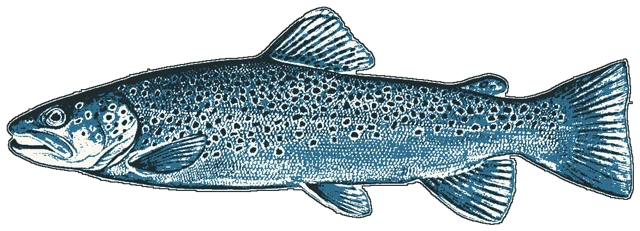
Brown trout
Salmo trutta · Freshwater
Good trout eating like rainbows; most kept browns are stocked fish.
- Tastes
- mild to rich, flaky
- Limits
- Heavy regs. Statewide: 6 trout a day in any combination (rainbow, golden rainbow, brook, tiger, brown), possession 12, no minimum size; a trout stamp is needed on top of the license (waived for some groups). Catch and release only (creel 0, artificial flies and lures, no scented baits) on listed sections, including parts of the Blackwater River (Blackwater Falls), Cranberry River, Elk River, Glade Creek of New River and Seneca Creek, and the Guyandotte drainage above Mullens. Delayed harvest sections of Clear Fork of the Guyandotte, Middle Wheeling Creek, Paint Creek, Shavers Fork and Williams River: catch and release Nov. 1 to May 15, general rules May 16 to Oct. 31. Fly fishing only, all fish released, on Dogway Fork, Red Run and listed sections of Edwards Run, Milligan Creek, Second Creek, Spring Run and Thorn Creek. Stephens Lake: 2 trout a day. Class Q and youth waters in March to May: 4 trout, children 14 and under and permit holders only. No fish, including dead or packaged minnows, may be used as bait in the East and West Forks of the Greenbrier, the Gauley above the Route 55/20 bridge at Curtin (with the Cherry, Williams and Cranberry), Camp Creek (Mercer County) and Manns Creek systems. The Potomac River, its North Branch and Jennings Randolph Lake follow Maryland rules. Other listed waters differ. (2026 Fishing Regulations Summary (calendar year 2026)) Source
- Spawns
- Spawns September to December; WVDNR asks anglers to avoid redds. Fall stocking starts the third Monday of October on listed lakes and streams; delayed harvest streams are catch and release Nov. 1 to May 15.
- Where
- Small streams and, where larger, bigger rivers, lakes and ponds with clean cool water; stocked trout waters listed in the regulations summary.
- worms
- minnows
- spinners
- jigs
Before you eat it: Limit (everyone), statewide: 1 meal a week, the state's line for all other species (mercury and PCBs). West Virginia's 2026 list (released May 27, 2026): oehs.wvdhhr.org/fish or (304) 558-2981.
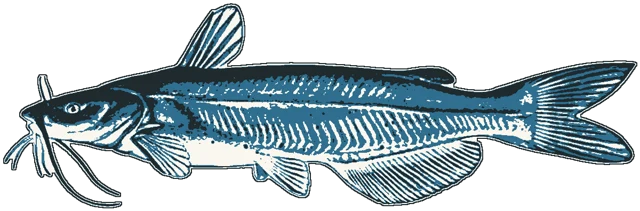
Channel catfish
Ictalurus punctatus · Freshwater
Very good to eat (Maryland DNR) and delicious when cooked (TPWD), and the basis of US catfish farming.
- Tastes
- mild, sweet, firm, moist
- Limits
- Heavy regs. State-managed impoundments (Public Fishing Lakes and Ponds chart): 4 a day, possession 8. Mt. Storm, Stonecoal, Cheat, Army Corps lakes and all rivers and streams: 30 a day, possession 60. The Potomac River, its North Branch and Jennings Randolph Lake follow Maryland rules. Hand-fishing for catfish June 15 to Aug. 31 with a combined daily limit of 4. Other listed waters differ. (2026 Fishing Regulations Summary (calendar year 2026)) Source
- Best months
- Hand-fishing season for catfish runs June 15 to Aug. 31.
- Where
- Beech Fork, Bluestone, Cheat, East Lynn, Burnsville, Stonecoal and Stonewall Jackson lakes; Kanawha (do not eat from there between Dunbar and Winfield Lock and Dam), Monongahela, Shenandoah, South Branch of the Potomac, Ohio (do not eat fish 18 in or longer from there above Belleville Lock) and West Fork rivers; most warmwater streams and state-managed impoundments.
- minnows
- night crawlers
- chicken livers
- cut shad
- cut bluegill
- stink baits
- Do not eat (anyone): channel catfish of any size from the Kanawha River between the I-64 bridge in Dunbar and Winfield Lock and Dam, its backwaters, Armour, Heizer and Manila creeks, the lower 2 miles of the Pocatalico River, or the Coal River below Lower Falls (dioxin, PCBs and mercury).
- Do not eat (anyone): channel catfish 18 inches or longer from the Ohio River between the Pennsylvania line and Belleville Lock (PCBs).
- Do not eat (anyone), Virginia's list: channel catfish from the Shenandoah River in Virginia, down to the West Virginia line (PCBs).
Meal limits and other waters (6)
- Limit (everyone): 6 meals a year of channel catfish under 18 inches from the Ohio River between the Pennsylvania line and Belleville Lock, or 18 inches or longer from the Ohio River between Belleville Lock and the Kentucky line (PCBs).
- Limit (everyone): 1 meal a month of channel catfish under 18 inches from the Ohio River between Belleville Lock and the Kentucky line (PCBs), or over 17 inches from R.D. Bailey Lake (PCBs and mercury).
- Limit (everyone), statewide: 2 meals a month of channel catfish over 17 inches and 1 meal a week of smaller ones (mercury and PCBs).
- Eat fewer fish that feed on the bottom, such as carp, which are more likely to contain contaminants (WVDNR 2026 summary).
- State health office: areas of the Kanawha River and its tributaries downstream of Nitro likely became contaminated with dioxin.
- West Virginia's 2026 list (released May 27, 2026): oehs.wvdhhr.org/fish or (304) 558-2981.
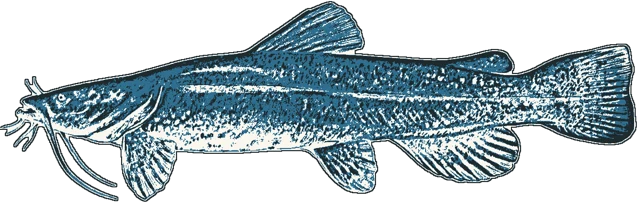
Flathead catfish
Pylodictis olivaris · Freshwater
Widely considered the best-tasting catfish because it eats live fish instead of scavenging; Maryland DNR notes its mild, white flesh.
- Tastes
- mild, clean, firm, white
- Limits
- Heavy regs. Statewide: 30 a day, possession 60. Kanawha River (mouth to the New-Gauley confluence), the entire Monongahela River in West Virginia (flatheads only) and the Ohio River (Big Sandy mouth to Mill Creek, including Ohio reciprocal waters): 4 a day, only 1 of 35 in or longer, possession 8. Hand-fishing for catfish June 15 to Aug. 31: 4 catfish a day in all, only 1 over 35 in. The Potomac River, its North Branch and Jennings Randolph Lake follow Maryland rules. Other listed waters differ. (2026 Fishing Regulations Summary (calendar year 2026); possession limit of 8 from 58 CSR 60 (effective Jan. 1, 2025)) Source
- Spawns
- Spawn June to August; hand-fishing season runs June 15 to Aug. 31.
- Where
- Deep pools of streams, rivers, canals, lakes and reservoirs with cloudy, slow water; solitary under trees or in coves, feeding in shallows at night.
- live bait
- cut bait
- stink baits
- nightcrawlers
- Limit (everyone): 1 meal a month from the Ohio River, Pennsylvania line to Kentucky line (PCBs) or Summersville Lake (mercury).
Meal limits and other waters (6)
- Limit (everyone): 1 meal a month from the Kanawha River between the I-64 bridge in Dunbar and Winfield Lock and Dam, its backwaters, Armour, Heizer and Manila creeks, the lower 2 miles of the Pocatalico River, or the Coal River below Lower Falls (dioxin, PCBs and mercury).
- Limit (everyone), statewide: 2 meals a month (mercury and PCBs).
- Eat the smaller, younger fish, which are less likely to contain contaminants (WVDNR 2026 summary).
- Eat fewer fish that feed on the bottom, such as carp, which are more likely to contain contaminants (WVDNR 2026 summary).
- State health office: areas of the Kanawha River and its tributaries downstream of Nitro likely became contaminated with dioxin.
- West Virginia's 2026 list (released May 27, 2026): oehs.wvdhhr.org/fish or (304) 558-2981.
Hybrid striped bass
Morone saxatilis x M. chrysops · also called mule, wiper, whiterock bass, palmetto bass, sunshine bass · Freshwater
Indiana DNR says hybrids make great table fare; mild white fillets like a striper's.
- Tastes
- mild, firm, white
- Limits
- Light regs. Statewide (except designated waters): 30 a day combined for hybrid striped bass, striped bass and white bass, with no more than 4 over 15 in; possession 30. Beech Fork, Bluestone, Mt. Storm and R.D. Bailey lakes and the Kanawha River from the New-Gauley confluence down to the Buffalo Bridge: 4 a day combined, 15-in minimum. Rollins Lake: all must be released at once. The Potomac River, its North Branch and Jennings Randolph Lake follow Maryland rules. Other listed waters differ. (2026 Fishing Regulations Summary (calendar year 2026)) Source
- Best months
- Gather below locks and dams in the warmer summer months.
- Where
- Kanawha, Monongahela and Ohio river dam tailwaters; Beech Fork, Bluestone, Mt. Storm and R.D. Bailey lakes.
- white jigs
- silver spoons
- chicken livers
- shad imitation lures
- live minnows
- umbrella rigs
- Limit (everyone): 6 meals a year from the Ohio River, Pennsylvania line to Kentucky line (PCBs).
Meal limits and other waters (7)
- Limit (everyone): 1 meal a month from the Kanawha River between the I-64 bridge in Dunbar and Winfield Lock and Dam, its backwaters, Armour, Heizer and Manila creeks, the lower 2 miles of the Pocatalico River, or the Coal River below Lower Falls (dioxin, PCBs and mercury).
- Limit (everyone): 1 meal a month of striped bass from Mount Storm Lake (PCBs), where the list has no separate line for hybrids.
- Limit (everyone), statewide: 2 meals a month (mercury and PCBs).
- Eat the smaller, younger fish, which are less likely to contain contaminants (WVDNR 2026 summary).
- Mercury drives most statewide advisories, and cleaning or cooking does not reduce it.
- State health office: areas of the Kanawha River and its tributaries downstream of Nitro likely became contaminated with dioxin.
- West Virginia's 2026 list (released May 27, 2026): oehs.wvdhhr.org/fish or (304) 558-2981.
Pumpkinseed
Lepomis gibbosus · Freshwater
A standard northern panfish; MeatEater notes pond owners stock it partly for its quality as table fare.
- Tastes
- mild, sweet, flaky
- Limits
- Light regs. Statewide: 30 a day and 60 in possession for all sunfish combined, no minimum size. Mason Lake and Teter Creek Lake: 10 a day, only 5 of 8 in or longer. The Potomac River, its North Branch and Jennings Randolph Lake follow Maryland rules. Other listed waters differ. (2026 Fishing Regulations Summary (calendar year 2026)) Source
- Where
- Cheat Lake in Monongalia County (the August 2026 state record); the Ohio, New, James and Potomac drainages in WVDNR's fish checklist.
- night crawlers
- Limit (everyone): 1 meal a month from the Kanawha River between the I-64 bridge in Dunbar and Winfield Lock and Dam, its backwaters, Armour, Heizer and Manila creeks, the lower 2 miles of the Pocatalico River, or the Coal River below Lower Falls (dioxin, PCBs and mercury).
- Limit (everyone), statewide: 1 meal a week, the state's line for all other species (mercury and PCBs).
- West Virginia's 2026 list (released May 27, 2026): oehs.wvdhhr.org/fish or (304) 558-2981.
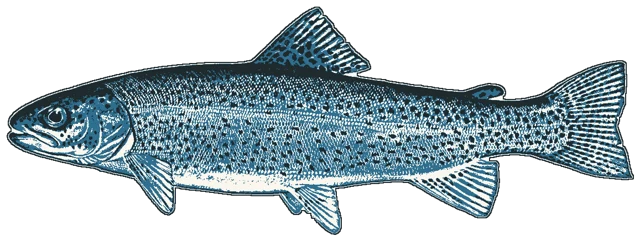
Rainbow trout
Oncorhynchus mykiss · Freshwater
TPWD calls rainbow trout an excellent fish to eat; the most-stocked put-and-take fish in America.
- Tastes
- mild, clean, delicate, flaky
- Limits
- Heavy regs. Statewide: 6 trout a day in any combination (rainbow, golden rainbow, brook, tiger, brown), possession 12, no minimum size; a trout stamp is needed on top of the license (waived for some groups). Catch and release only (creel 0, artificial flies and lures, no scented baits) on listed sections, including parts of the Blackwater River (Blackwater Falls), Cranberry River, Elk River, Glade Creek of New River and Seneca Creek, and the Guyandotte drainage above Mullens. Delayed harvest sections of Clear Fork of the Guyandotte, Middle Wheeling Creek, Paint Creek, Shavers Fork and Williams River: catch and release Nov. 1 to May 15, general rules May 16 to Oct. 31. Fly fishing only, all fish released, on Dogway Fork, Red Run and listed sections of Edwards Run, Milligan Creek, Second Creek, Spring Run and Thorn Creek. Stephens Lake: 2 trout a day. Class Q and youth waters in March to May: 4 trout, children 14 and under and permit holders only. No fish, including dead or packaged minnows, may be used as bait in the East and West Forks of the Greenbrier, the Gauley above the Route 55/20 bridge at Curtin (with the Cherry, Williams and Cranberry), Camp Creek (Mercer County) and Manns Creek systems. The Potomac River, its North Branch and Jennings Randolph Lake follow Maryland rules. Other listed waters differ. (2026 Fishing Regulations Summary (calendar year 2026)) Source
- Best months
- Fall stocking starts the third Monday of October on listed lakes and streams; delayed harvest streams are catch and release Nov. 1 to May 15. The 2026 Gold Rush golden rainbow stocking ran March 30 to April 11.
- Where
- Stocked lakes, ponds and streams listed in the regulations summary; year-round trout waters include Blackwater, Cranberry, Elk above Webster Springs, Glade Creek of New River, South Branch of the Potomac near Franklin, North Fork of the South Branch, Shavers Fork of Cheat and Williams rivers. Wild populations exist in several streams.
- worms
- minnows
- spinners
- jigs
- Limit (everyone): 1 meal a month of any fish without its own line, trout included, from the Kanawha River between the I-64 bridge in Dunbar and Winfield Lock and Dam, its backwaters, Armour, Heizer and Manila creeks, the lower 2 miles of the Pocatalico River, or the Coal River below Lower Falls (dioxin, PCBs and mercury).
Meal limits and other waters (3)
- Statewide (everyone): the 2026 list says Unlimited for rainbow trout.
- WVDNR's 2026 summary lists trout among the fish less likely to contain contaminants at levels that might affect health.
- West Virginia's 2026 list (released May 27, 2026): oehs.wvdhhr.org/fish or (304) 558-2981.
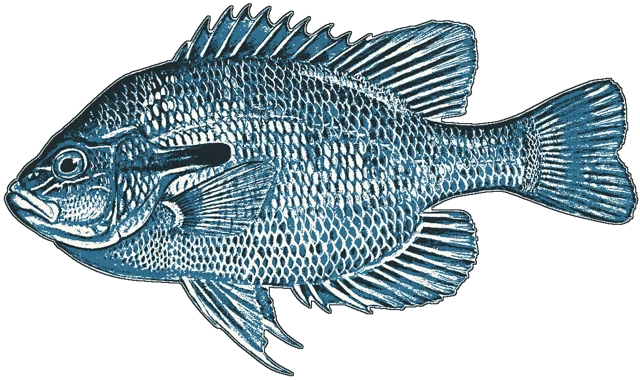
Redbreast sunfish
Lepomis auritus · Freshwater
A favorite river panfish across the Southeast; MeatEater counts panfish among the best-eating fish in freshwater.
- Tastes
- mild, sweet, flaky
- Limits
- Light regs. Statewide: 30 a day and 60 in possession for all sunfish combined, no minimum size. Mason Lake and Teter Creek Lake: 10 a day, only 5 of 8 in or longer. The Potomac River, its North Branch and Jennings Randolph Lake follow Maryland rules. Other listed waters differ. (2026 Fishing Regulations Summary (calendar year 2026)) Source
- Where
- Potomac River drainage in the Eastern Panhandle; introduced in streams such as the Greenbrier and New rivers. The state record (9.29 in) came from New Creek Lake.
- red worms
- crickets
- small spinners
- grubs
- tiny crankbaits
- Limit (everyone): 1 meal a month from the Kanawha River between the I-64 bridge in Dunbar and Winfield Lock and Dam, its backwaters, Armour, Heizer and Manila creeks, the lower 2 miles of the Pocatalico River, or the Coal River below Lower Falls (dioxin, PCBs and mercury).
- Limit (everyone), statewide: 1 meal a week, the state's line for all other species (mercury and PCBs).
- West Virginia's 2026 list (released May 27, 2026): oehs.wvdhhr.org/fish or (304) 558-2981.
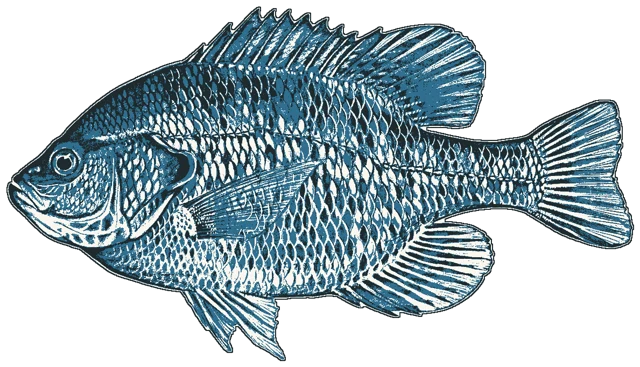
Redear sunfish
Lepomis microlophus · also called shellcracker, stumpknocker · Freshwater
Larger than bluegill, with the same sweet fillets; Indiana DNR calls sunfish, redear included, delicious fish.
- Tastes
- mild, sweet, firm, flaky
- Limits
- Light regs. Statewide: 30 a day and 60 in possession for all sunfish combined, no minimum size. Mason Lake and Teter Creek Lake: 10 a day, only 5 of 8 in or longer. The Potomac River, its North Branch and Jennings Randolph Lake follow Maryland rules. Other listed waters differ. (2026 Fishing Regulations Summary (calendar year 2026)) Source
- Where
- Still or slow, warm, productive lakes, ponds and large rivers with soft bottoms, vegetation, sunken trees and snails; Plum Orchard Lake in Fayette County produced the state record.
- red wigglers
- garden worms
- grubs
- nymphs
- small jigs on bottom
- Limit (everyone): 1 meal a month from the Kanawha River between the I-64 bridge in Dunbar and Winfield Lock and Dam, its backwaters, Armour, Heizer and Manila creeks, the lower 2 miles of the Pocatalico River, or the Coal River below Lower Falls (dioxin, PCBs and mercury).
- Limit (everyone), statewide: 1 meal a week, the state's line for all other species (mercury and PCBs).
- West Virginia's 2026 list (released May 27, 2026): oehs.wvdhhr.org/fish or (304) 558-2981.
Sauger
Sander canadensis · Freshwater
The walleye's smaller river cousin, with the same fillets; MeatEater says they taste just as good.
- Tastes
- mild, clean, firm, flaky white
- Limits
- Light regs. Statewide: 8 a day for sauger and saugeye, possession 16, no minimum size. Ohio River and the Kanawha River up to Winfield Lock and Dam: 6 a day in all for walleye, sauger and saugeye, possession 12, with only 2 walleye of 18 in or more. The Potomac River, its North Branch and Jennings Randolph Lake follow Maryland rules. Other listed waters differ. (2026 Fishing Regulations Summary (calendar year 2026); Kanawha River stretch and possession limit from 58 CSR 60 (effective Jan. 1, 2025)) Source
- Best months
- Most success in the early months of the year and in late fall; they migrate to spawning areas in late winter.
- Where
- Larger, deep, sluggish systems, especially the Ohio River and its dam tailwaters.
- silver spoons
- light-colored jigs
- lures that resemble forage fish
- Limit (everyone): 1 meal a month from the Ohio River between the Pennsylvania line and Belleville Lock (PCBs), the Little Kanawha River from its mouth to Wells Lock, or the Hughes River from its mouth to the North and South forks (mercury).
Meal limits and other waters (6)
- Limit (everyone): 1 meal a month from the Kanawha River between the I-64 bridge in Dunbar and Winfield Lock and Dam, its backwaters, Armour, Heizer and Manila creeks, the lower 2 miles of the Pocatalico River, or the Coal River below Lower Falls (dioxin, PCBs and mercury).
- Limit (everyone), statewide: 2 meals a month (mercury and PCBs).
- Eat the smaller, younger fish, which are less likely to contain contaminants (WVDNR 2026 summary).
- Mercury drives most statewide advisories, and cleaning or cooking does not reduce it.
- State health office: areas of the Kanawha River and its tributaries downstream of Nitro likely became contaminated with dioxin.
- West Virginia's 2026 list (released May 27, 2026): oehs.wvdhhr.org/fish or (304) 558-2981.
Saugeye
Sander vitreus x S. canadensis · Freshwater
Oklahoma's wildlife department says saugeye make first-class table fare.
- Tastes
- mild, clean, firm, flaky white
- Limits
- Light regs. Statewide: 8 a day for sauger and saugeye, possession 16, no minimum size. Ohio River and the Kanawha River up to Winfield Lock and Dam: 6 a day in all for walleye, sauger and saugeye, possession 12, with only 2 walleye of 18 in or more. The Potomac River, its North Branch and Jennings Randolph Lake follow Maryland rules. Other listed waters differ. (2026 Fishing Regulations Summary (calendar year 2026); Kanawha River stretch and possession limit from 58 CSR 60 (effective Jan. 1, 2025)) Source
- Best months
- Run upriver in winter and spring and gather in tailwaters below dams.
- Where
- Burnsville, East Lynn and Beech Fork lakes (Army Corps reservoirs) and the Ohio and Kanawha rivers.
- jigs tipped with minnows or shiners
- crankbaits
- blade baits
- grubs and ring worms
- nightcrawlers
- Limit (everyone): 1 meal a month from the Ohio River between the Pennsylvania line and Belleville Lock (PCBs).
Meal limits and other waters (6)
- Limit (everyone): 1 meal a month from the Kanawha River between the I-64 bridge in Dunbar and Winfield Lock and Dam, its backwaters, Armour, Heizer and Manila creeks, the lower 2 miles of the Pocatalico River, or the Coal River below Lower Falls (dioxin, PCBs and mercury).
- Limit (everyone), statewide: 2 meals a month (mercury and PCBs).
- Eat the smaller, younger fish, which are less likely to contain contaminants (WVDNR 2026 summary).
- Mercury drives most statewide advisories, and cleaning or cooking does not reduce it.
- State health office: areas of the Kanawha River and its tributaries downstream of Nitro likely became contaminated with dioxin.
- West Virginia's 2026 list (released May 27, 2026): oehs.wvdhhr.org/fish or (304) 558-2981.
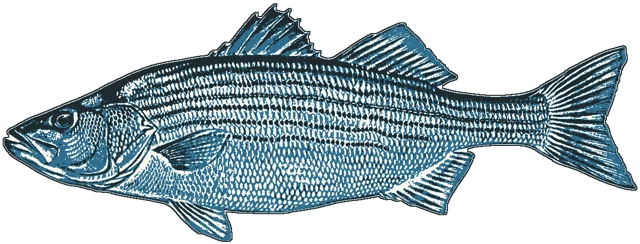
Striped bass
Morone saxatilis · Freshwater
Firm, large-flaked, slightly sweet white meat; one of the most kept and eaten gamefish in the country, fresh or salt.
- Tastes
- mild, slightly sweet, firm, large flakes
- Limits
- Light regs. Statewide (except designated waters): 30 a day combined for hybrid striped bass, striped bass and white bass, with no more than 4 over 15 in; possession 30. Beech Fork, Bluestone, Mt. Storm and R.D. Bailey lakes and the Kanawha River from the New-Gauley confluence down to the Buffalo Bridge: 4 a day combined, 15-in minimum. Rollins Lake: all must be released at once. The Potomac River, its North Branch and Jennings Randolph Lake follow Maryland rules. Other listed waters differ. (2026 Fishing Regulations Summary (calendar year 2026)) Source
- Best months
- Winter at Bluestone Reservoir (WVDNR winter guide, Feb. 5, 2026).
- Where
- Kanawha, Monongahela and Ohio river dam tailwaters; Beech Fork, Bluestone, Mt. Storm and R.D. Bailey lakes. The state record (47.16 in, 45.70 lb) came from Bluestone Lake.
- white jigs
- silver spoons
- chicken livers
- shad imitation lures
- live minnows
- umbrella rigs
- Consumption advisories for striped bass vary from state to state (NOAA).
- Limit (everyone): 6 meals a year from the Ohio River between Belleville Lock and the Kentucky line (PCBs); above Belleville Lock the list names hybrid striped bass, also at 6 meals a year.
Meal limits and other waters (7)
- Limit (everyone): 1 meal a month from the Kanawha River between the I-64 bridge in Dunbar and Winfield Lock and Dam, its backwaters, Armour, Heizer and Manila creeks, the lower 2 miles of the Pocatalico River, or the Coal River below Lower Falls (dioxin, PCBs and mercury).
- Limit (everyone): 1 meal a month from Mount Storm Lake (PCBs).
- Limit (everyone), statewide: 1 meal a week, the state's line for all other species (mercury and PCBs).
- Eat the smaller, younger fish, which are less likely to contain contaminants (WVDNR 2026 summary).
- Mercury drives most statewide advisories, and cleaning or cooking does not reduce it.
- State health office: areas of the Kanawha River and its tributaries downstream of Nitro likely became contaminated with dioxin.
- West Virginia's 2026 list (released May 27, 2026): oehs.wvdhhr.org/fish or (304) 558-2981.
Tiger trout
Salmo trutta × Salvelinus fontinalis · Freshwater
A sterile hybrid of brown trout and brook trout, both rated Best eating. We found no agency or cook reviewing tiger trout itself, so this is by parentage.
- Limits
- Heavy regs. Statewide: 6 trout a day in any combination (rainbow, golden rainbow, brook, tiger, brown), possession 12, no minimum size; a trout stamp is needed on top of the license (waived for some groups). Catch and release only (creel 0, artificial flies and lures, no scented baits) on listed sections, including parts of the Blackwater River (Blackwater Falls), Cranberry River, Elk River, Glade Creek of New River and Seneca Creek, and the Guyandotte drainage above Mullens. Delayed harvest sections of Clear Fork of the Guyandotte, Middle Wheeling Creek, Paint Creek, Shavers Fork and Williams River: catch and release Nov. 1 to May 15, general rules May 16 to Oct. 31. Fly fishing only, all fish released, on Dogway Fork, Red Run and listed sections of Edwards Run, Milligan Creek, Second Creek, Spring Run and Thorn Creek. Stephens Lake: 2 trout a day. Class Q and youth waters in March to May: 4 trout, children 14 and under and permit holders only. No fish, including dead or packaged minnows, may be used as bait in the East and West Forks of the Greenbrier, the Gauley above the Route 55/20 bridge at Curtin (with the Cherry, Williams and Cranberry), Camp Creek (Mercer County) and Manns Creek systems. The Potomac River, its North Branch and Jennings Randolph Lake follow Maryland rules. Other listed waters differ. (2026 Fishing Regulations Summary (calendar year 2026)) Source
- Best months
- Fall stocking starts the third Monday of October on listed lakes and streams; delayed harvest streams are catch and release Nov. 1 to May 15.
- Where
- Most state waters stocked with catchable-size trout; the state record (29.8 in, 13.32 lb) came from Summit Lake.
- worms
- minnows
- spinners
- jigs
Before you eat it: Limit (everyone), statewide: 1 meal a week, the state's line for all other species (mercury and PCBs). West Virginia's 2026 list (released May 27, 2026): oehs.wvdhhr.org/fish or (304) 558-2981.
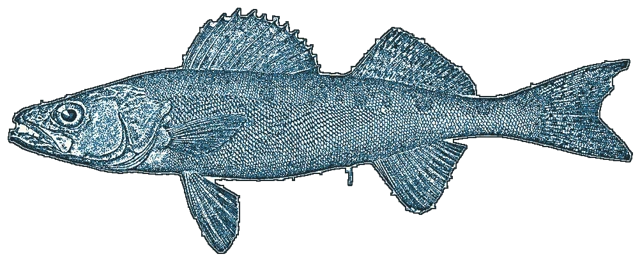
Walleye
Sander vitreus · Freshwater
Widely rated the best-eating freshwater fish: Maryland DNR calls it one of the best tasting, TPWD an excellent food fish.
- Tastes
- mild, clean, firm, tender, flaky white
- Limits
- Heavy regs. Statewide: 8 a day, possession 16, no minimum size. Catch and release only: New River from Meadow Creek access up to Sandstone Falls, Charles Fork Lake and Dog Run Lake. Ohio River (including Ohio reciprocal tributary boundaries) and the Kanawha River up to Winfield Lock and Dam: 2 a day, 18-in minimum (the Ohio River also has a 6-a-day walleye, sauger and saugeye combined limit with only 2 walleye). Slot, 2 a day with 1 over 30 in and 20 to 30 in released: Bluestone, Coal, Elk (with Sutton Lake), Greenbrier, Gauley (except Summersville Dam to Persinger Creek), Kanawha above Winfield and New rivers with tributaries. Summersville Lake (dam to Persinger Creek), Cheat Lake and the Cheat River: 8 a day, 20 to 30 in released, 1 over 30 in. 15-in minimum, 8 a day: Monongahela River, Tygart River (mouth to Valley Falls), West Fork River below Stonewall Jackson Dam, Burnsville, Stephens and Stonecoal lakes. The Potomac River, its North Branch and Jennings Randolph Lake follow Maryland rules. Other listed waters differ. (2026 Fishing Regulations Summary (calendar year 2026)) Source
- Spawns
- Spawn in early spring over rocky riffles and at reservoir heads; most active at dawn, dusk and on cloudy days.
- Where
- Cheat, Jennings Randolph, Mount Storm, Summersville, Stonecoal and Tygart lakes; Elk, lower Gauley and New rivers; Kanawha, Monongahela and Ohio river dam tailwaters; Stephens Lake.
- live minnows
- night crawlers
- jigs
- minnow-imitating crankbaits
- spinners
- Limit (everyone): 1 meal a month from the Ohio River between the Pennsylvania line and Belleville Lock (PCBs) or Summersville Lake (mercury).
Meal limits and other waters (6)
- Limit (everyone): 1 meal a month from the Kanawha River between the I-64 bridge in Dunbar and Winfield Lock and Dam, its backwaters, Armour, Heizer and Manila creeks, the lower 2 miles of the Pocatalico River, or the Coal River below Lower Falls (dioxin, PCBs and mercury).
- Limit (everyone), statewide: 2 meals a month (mercury and PCBs).
- Eat the smaller, younger fish, which are less likely to contain contaminants (WVDNR 2026 summary).
- Mercury drives most statewide advisories, and cleaning or cooking does not reduce it.
- State health office: areas of the Kanawha River and its tributaries downstream of Nitro likely became contaminated with dioxin.
- West Virginia's 2026 list (released May 27, 2026): oehs.wvdhhr.org/fish or (304) 558-2981.
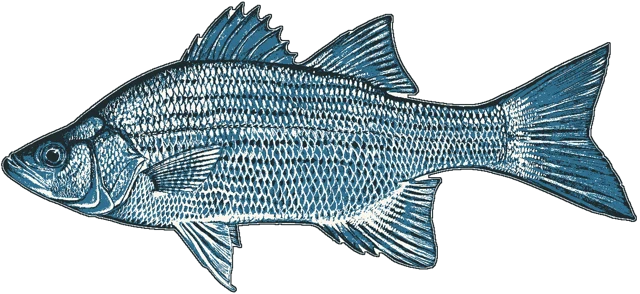
White bass
Morone chrysops · Freshwater
Texas Parks & Wildlife calls white bass superb table fare, and the spring runs fill a lot of coolers; light, flaky meat like walleye.
- Tastes
- mild, light, flaky
- Limits
- Light regs. Statewide (except designated waters): 30 a day combined for hybrid striped bass, striped bass and white bass, with no more than 4 over 15 in; possession 30. Beech Fork, Bluestone, Mt. Storm and R.D. Bailey lakes and the Kanawha River from the New-Gauley confluence down to the Buffalo Bridge: 4 a day combined, 15-in minimum. Rollins Lake: all must be released at once. The Potomac River, its North Branch and Jennings Randolph Lake follow Maryland rules. Other listed waters differ. (2026 Fishing Regulations Summary (calendar year 2026)) Source
- Best months
- Spring and early fall; spring spawning runs into tributaries and the heads of reservoirs.
- Where
- Cheat and Tygart lakes; Ohio, Kanawha and Monongahela rivers and tributaries.
- jigs
- crankbaits
- spinners
- spoons
- streamers
- live minnows
- Limit (everyone): 6 meals a year from the Ohio River between the Pennsylvania line and Belleville Lock (PCBs).
Meal limits and other waters (6)
- Limit (everyone), statewide: 1 meal a month (mercury and PCBs), and the same 1 meal a month from the Ohio River below Belleville Lock (PCBs).
- Limit (everyone): 1 meal a month from the Kanawha River between the I-64 bridge in Dunbar and Winfield Lock and Dam, its backwaters, Armour, Heizer and Manila creeks, the lower 2 miles of the Pocatalico River, or the Coal River below Lower Falls (dioxin, PCBs and mercury).
- Eat the smaller, younger fish, which are less likely to contain contaminants (WVDNR 2026 summary).
- Mercury drives most statewide advisories, and cleaning or cooking does not reduce it.
- State health office: areas of the Kanawha River and its tributaries downstream of Nitro likely became contaminated with dioxin.
- West Virginia's 2026 list (released May 27, 2026): oehs.wvdhhr.org/fish or (304) 558-2981.
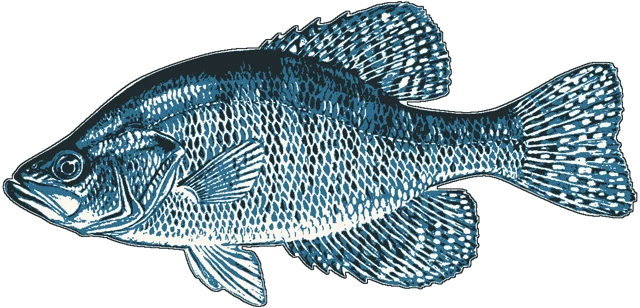
White crappie
Pomoxis annularis · also called croppie, calico bass, speckled bass, papermouth · Freshwater
Same top-tier panfish fillets as black crappie; one of the most popular panfish in the country.
- Tastes
- mild, sweet, delicate, flaky, white
- Limits
- Light regs. Statewide: 30 a day and 60 in possession, black and white crappie combined, no minimum size. The Potomac River, its North Branch and Jennings Randolph Lake follow Maryland rules. Other listed waters differ. (2026 Fishing Regulations Summary (calendar year 2026)) Source
- Best months
- Early spring, when they gather near spawning areas; spawning starts at about 64 F.
- Where
- Larger streams, rivers and reservoirs with brushy cover, standing timber and brush piles; the same lakes as black crappie, including Stonewall Jackson, Sutton, Tygart and Burnsville.
- minnows
- jigs
- minnow-imitating lures
- Limit (everyone): 1 meal a month from the Ohio River between the Pennsylvania line and Belleville Lock (Ohio's 2026 list, mercury and PCBs).
Meal limits and other waters (5)
- Limit (everyone): 1 meal a month from the Kanawha River between the I-64 bridge in Dunbar and Winfield Lock and Dam, its backwaters, Armour, Heizer and Manila creeks, the lower 2 miles of the Pocatalico River, or the Coal River below Lower Falls (dioxin, PCBs and mercury).
- Limit (everyone), statewide: 1 meal a week, the state's line for all other species (mercury and PCBs).
- Upper Mud River Reservoir has its own selenium line, also 1 meal a week.
- State health office: areas of the Kanawha River and its tributaries downstream of Nitro likely became contaminated with dioxin.
- West Virginia's 2026 list (released May 27, 2026): oehs.wvdhhr.org/fish or (304) 558-2981.
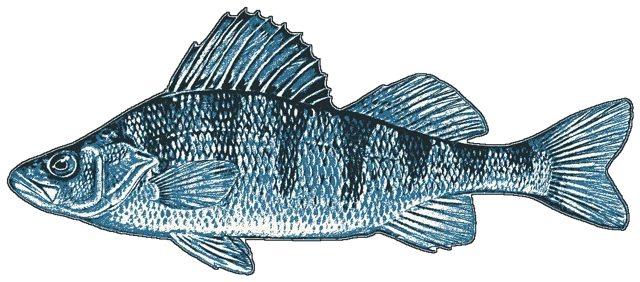
Yellow perch
Perca flavescens · Freshwater
A great food fish (MN DNR) and the centerpiece of Great Lakes perch fries; Iowa DNR calls a fried stringer of perch unsurpassed in flavor.
- Tastes
- mild, sweet, firm, flaky, white
- Limits
- Light regs. Statewide: 30 a day and 60 in possession, no minimum size, listed in the non-game table. Cheat Lake: 15 a day. East and West Forks of the Greenbrier River and their tributaries, the Gauley upstream of the Route 55/20 bridge at Curtin (with the Cherry, Williams, Cranberry and upper Gauley), and the Camp Creek and Manns Creek systems: limit for all non-game fish is zero. The Potomac River, its North Branch and Jennings Randolph Lake follow Maryland rules. Other listed waters differ. (2026 Fishing Regulations Summary (calendar year 2026)) Source
- Spawns
- Spawn in early spring.
- Where
- Several reservoirs, a few small impoundments, and the Ohio and Monongahela rivers; deep soft bottoms and shallow weeds.
- worms
- minnows
- small lures
- Limit (everyone): 1 meal a month from the Kanawha River between the I-64 bridge in Dunbar and Winfield Lock and Dam, its backwaters, Armour, Heizer and Manila creeks, the lower 2 miles of the Pocatalico River, or the Coal River below Lower Falls (dioxin, PCBs and mercury).
- Limit (everyone), statewide: 1 meal a week, the state's line for all other species (mercury and PCBs).
- West Virginia's 2026 list (released May 27, 2026): oehs.wvdhhr.org/fish or (304) 558-2981.
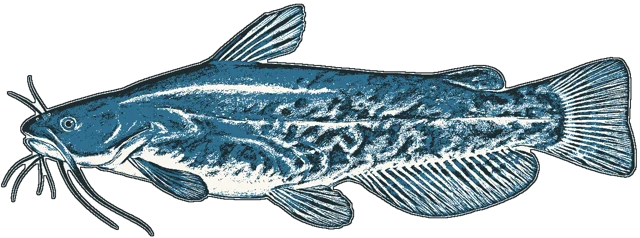
Bullhead (black, brown, yellow)
Ameiurus melas, A. nebulosus, A. natalis · Freshwater
Sweet, delicious catfish meat, but most are small and many come from warm, muddy water, so many anglers dismiss them.
- Tastes
- mild, sweet, firm, moist
- Limits
- No limits. Not on the game fish list, so no statewide daily or possession limit and no size limit, open all year. In the East and West Forks of the Greenbrier River and their tributaries, the Gauley upstream of the Route 55/20 bridge at Curtin (with the Cherry, Williams, Cranberry and upper Gauley), and Camp Creek and Manns Creek systems, the limit for all non-game fish is zero. No fish may be sold. The Potomac River, its North Branch and Jennings Randolph Lake follow Maryland rules. Other listed waters differ. (2026 Fishing Regulations Summary (calendar year 2026)) Source
- Where
- Lakes, reservoirs, streams and farm ponds; black bullhead in the Ohio and New drainages, yellow and brown bullhead in the Ohio, New and Potomac drainages.
- nightcrawlers
- chicken livers
- dough balls
- cut bait
- stinkbait
- Limit (everyone): 1 meal a month from the Kanawha River between the I-64 bridge in Dunbar and Winfield Lock and Dam, its backwaters, Armour, Heizer and Manila creeks, the lower 2 miles of the Pocatalico River, or the Coal River below Lower Falls (dioxin, PCBs and mercury).
Meal limits and other waters (3)
- Limit (everyone), statewide: 1 meal a week, the state's line for all other species (mercury and PCBs).
- Eat fewer fish that feed on the bottom, such as carp, which are more likely to contain contaminants (WVDNR 2026 summary).
- West Virginia's 2026 list (released May 27, 2026): oehs.wvdhhr.org/fish or (304) 558-2981.
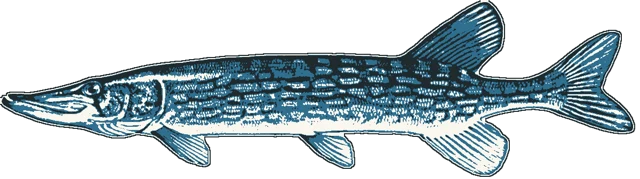
Chain pickerel
Esox niger · Freshwater
White, flaky and good-tasting meat, but quite bony with pike-style Y-bones.
- Tastes
- mild, white, flaky, bony
- Limits
- Heavy regs. Statewide: 1 a day, possession 2, no minimum size. The Potomac River, its North Branch and Jennings Randolph Lake follow Maryland rules. Other listed waters differ. (2026 Fishing Regulations Summary (calendar year 2026)) Source
- Where
- Small-stream pools, abandoned channels, backwaters and floodplain wetlands with vegetation and wood, including the Ohio and Potomac river systems; the Potomac and New drainages in WVDNR's fish checklist.
- live minnows
- spinnerbaits
- weedless spoons
- surface plugs
- jerkbaits
- Limit (everyone): 1 meal a month from the Kanawha River between the I-64 bridge in Dunbar and Winfield Lock and Dam, its backwaters, Armour, Heizer and Manila creeks, the lower 2 miles of the Pocatalico River, or the Coal River below Lower Falls (dioxin, PCBs and mercury).
Meal limits and other waters (4)
- Limit (everyone), statewide: 1 meal a week, the state's line for all other species (mercury and PCBs).
- Eat the smaller, younger fish, which are less likely to contain contaminants (WVDNR 2026 summary).
- Mercury drives most statewide advisories, and cleaning or cooking does not reduce it.
- West Virginia's 2026 list (released May 27, 2026): oehs.wvdhhr.org/fish or (304) 558-2981.
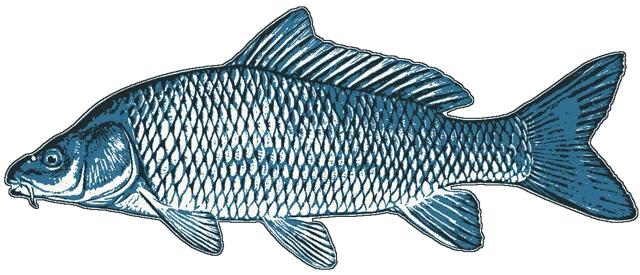
Common carp
Cyprinus carpio · Freshwater
Most US anglers call it a muddy, bony trash fish, but it is a prized food fish in Europe and Asia and eats well from clean, cold water.
Worth a try: Catch from clean water, remove the dark 'mud vein', and either score small fish and fry hard so the Y-bones soften, or hard-smoke large fish over fruitwood (Hank Shaw).
- Tastes
- mild from clean water, strong from muddy water, firm, fatty, Y-bones
- Limits
- No limits. No statewide daily or possession limit and no size limit, open all year. Snaring is legal year-round; bowfishing is legal year-round and fish may not be returned to the water or left on the bank; gigging and snagging run Jan. 1 to May 15 and July 15 to Dec. 31 (not within 100 ft of a lock and dam). East and West Forks of the Greenbrier River and their tributaries, the Gauley upstream of the Route 55/20 bridge at Curtin (with the Cherry, Williams, Cranberry and upper Gauley), and the Camp Creek and Manns Creek systems: limit for all non-game fish is zero. No fish may be sold. The Potomac River, its North Branch and Jennings Randolph Lake follow Maryland rules. Other listed waters differ. (2026 Fishing Regulations Summary (calendar year 2026)) Source
- Where
- Muddy, vegetated pools in small to large lakes and rivers; the Ohio, New and Potomac drainages.
- bread (topwater)
- dough baits
- prepared carp baits
- insect and crawfish fly imitations
- Do not eat (anyone): carp from the Kanawha River between the I-64 bridge in Dunbar and Winfield Lock and Dam, its backwaters, Armour, Heizer and Manila creeks, the lower 2 miles of the Pocatalico River, or the Coal River below Lower Falls (dioxin, PCBs and mercury).
- Do not eat (anyone): carp from the Shenandoah River (PCBs and mercury).
- Do not eat (anyone), Ohio's 2026 list: common carp from the Ohio River between the Pennsylvania line and Belleville Lock (PCBs), where West Virginia's list says 6 meals a year.
- Do not eat (anyone), Virginia's list: carp from the Shenandoah, New and Bluestone rivers in Virginia, down to the West Virginia line (PCBs).
Meal limits and other waters (4)
- Limit (everyone): 1 meal a month of common carp from the Ohio River between Belleville Lock and the Kentucky line, or of carp from the Bluestone River (PCBs).
- Limit (everyone), statewide: 1 meal a week, the state's line for all other species (mercury and PCBs).
- Eat fewer fish that feed on the bottom, such as carp, which are more likely to contain contaminants (WVDNR 2026 summary).
- West Virginia's 2026 list (released May 27, 2026): oehs.wvdhhr.org/fish or (304) 558-2981.
Fallfish
Semotilus corporalis · Freshwater
The largest native eastern minnow; edible but bony, and Virginia DWR says its taste is much debated, from bland to sweet and delicate. Most are released.
- Tastes
- bland to sweet, soft, small thin bones
- Limits
- No limits. No statewide daily or possession limit and no size limit, open all year. Snaring is legal year-round; other non-game fish may be bowfished all months except May and June, and bowfished fish may not be returned to the water or left on the bank; gigging and snagging run Jan. 1 to May 15 and July 15 to Dec. 31 (not within 100 ft of a lock and dam). East and West Forks of the Greenbrier River and their tributaries, the Gauley upstream of the Route 55/20 bridge at Curtin (with the Cherry, Williams, Cranberry and upper Gauley), and the Camp Creek and Manns Creek systems: limit for all non-game fish is zero. No fish may be sold. The Potomac River, its North Branch and Jennings Randolph Lake follow Maryland rules. Other listed waters differ. (2026 Fishing Regulations Summary (calendar year 2026)) Source
- Spawns
- Spawns in April.
- Where
- Pools and runs of Eastern Panhandle streams in the Potomac drainage, and the larger part of Potts Creek in the James drainage; the state record came from the North Fork of the South Branch.
- small jigs
- small spoons
- live baits
- nymphs and small streamers
Before you eat it: Limit (everyone), statewide: 1 meal a week, the state's line for all other species (mercury and PCBs). West Virginia's 2026 list (released May 27, 2026): oehs.wvdhhr.org/fish or (304) 558-2981.
Freshwater drum
Aplodinotus grunniens · Freshwater
Many anglers call it a rough fish, but it is prized as food in some areas (TPWD); bled and iced, the boneless fillets eat like a redfish's.
Worth a try: Bleed it, ice it immediately and trim the red lateral meat; then fry thin fillets, grill on the half-shell like redfish, or smoke oily summer fish.
- Tastes
- mild, like other drum, firm but tender, large flake; goes soft if not iced
- Limits
- No limits. No statewide daily or possession limit and no size limit, open all year. East and West Forks of the Greenbrier River and their tributaries, the Gauley upstream of the Route 55/20 bridge at Curtin (with the Cherry, Williams, Cranberry and upper Gauley), and the Camp Creek and Manns Creek systems: limit for all non-game fish is zero. No fish may be sold. Other listed waters differ. (2026 Fishing Regulations Summary (calendar year 2026)) Source
- Where
- Medium to large rivers, streams and reservoirs, largest in the bigger rivers; the Ohio drainage in WVDNR's fish checklist.
- crawdads
- Limit (everyone): 1 meal a month from the Ohio River, Pennsylvania line to Kentucky line (PCBs).
Meal limits and other waters (4)
- Limit (everyone): 1 meal a month from the Kanawha River between the I-64 bridge in Dunbar and Winfield Lock and Dam, its backwaters, Armour, Heizer and Manila creeks, the lower 2 miles of the Pocatalico River, or the Coal River below Lower Falls (dioxin, PCBs and mercury).
- Limit (everyone), statewide: 1 meal a week, the state's line for all other species (mercury and PCBs).
- Eat fewer fish that feed on the bottom, such as carp, which are more likely to contain contaminants (WVDNR 2026 summary).
- West Virginia's 2026 list (released May 27, 2026): oehs.wvdhhr.org/fish or (304) 558-2981.
Grass carp
Ctenopharyngodon idella · Freshwater
TPWD says grass carp are excellent table fare despite their bones, but as a 'carp' most anglers never consider eating one.
Worth a try: Illinois markets grass, silver and bighead carp as 'Copi', which Seafood Watch recommends; score or grind the fillets to deal with the bones.
- Tastes
- mild, clean, firm white, with intermuscular bones
- Limits
- No limits. No statewide daily or possession limit and no size limit, open all year. Bowfishing and snaring rules apply (bowfishing is legal year-round for common, bighead, silver and grass carp; fish may not be returned or left on the bank). East and West Forks of the Greenbrier River and their tributaries, the Gauley upstream of the Route 55/20 bridge at Curtin (with the Cherry, Williams, Cranberry and upper Gauley), and the Camp Creek and Manns Creek systems: limit for all non-game fish is zero. No fish may be sold. The Potomac River, its North Branch and Jennings Randolph Lake follow Maryland rules. Other listed waters differ. (2026 Fishing Regulations Summary (calendar year 2026)) Source
- Where
- Ohio, New and Potomac drainages in WVDNR's fish checklist.
- Do not eat (anyone): carp (the list names no kind) from the Kanawha River between the I-64 bridge in Dunbar and Winfield Lock and Dam, its backwaters, Armour, Heizer and Manila creeks, the lower 2 miles of the Pocatalico River, or the Coal River below Lower Falls (dioxin, PCBs and mercury).
- Do not eat (anyone): carp from the Shenandoah River (PCBs and mercury).
- Do not eat (anyone), Virginia's list: carp from the Shenandoah, New and Bluestone rivers in Virginia, down to the West Virginia line (PCBs).
Meal limits and other waters (4)
- Limit (everyone): 1 meal a month of carp from the Bluestone River (PCBs).
- Limit (everyone), statewide: 1 meal a week, the state's line for all other species (mercury and PCBs).
- Eat fewer fish that feed on the bottom, such as carp, which are more likely to contain contaminants (WVDNR 2026 summary).
- West Virginia's 2026 list (released May 27, 2026): oehs.wvdhhr.org/fish or (304) 558-2981.
Green sunfish
Lepomis cyanellus · Freshwater
Edible like any sunfish but usually stunted; many anglers treat it as a pest that steals bait meant for bigger fish.
- Tastes
- mild, flaky
- Limits
- Light regs. Statewide: 30 a day and 60 in possession for all sunfish combined, no minimum size. Mason Lake and Teter Creek Lake: 10 a day, only 5 of 8 in or longer. The Potomac River, its North Branch and Jennings Randolph Lake follow Maryland rules. Other listed waters differ. (2026 Fishing Regulations Summary (calendar year 2026)) Source
- Spawns
- Spawns April to June.
- Where
- Sluggish backwaters, lakes and ponds with gravel, sand or bedrock bottoms, around rocks, submerged logs and plants; the Ohio, New, James and Potomac drainages in WVDNR's fish checklist.
- worms
- grubs
- grasshoppers
- small jigs
- Limit (everyone): 1 meal a month from the Kanawha River between the I-64 bridge in Dunbar and Winfield Lock and Dam, its backwaters, Armour, Heizer and Manila creeks, the lower 2 miles of the Pocatalico River, or the Coal River below Lower Falls (dioxin, PCBs and mercury).
Meal limits and other waters (3)
- Limit (everyone), statewide: 1 meal a week, the state's line for all other species (mercury and PCBs).
- Upper Mud River Reservoir has its own selenium line, also 1 meal a week.
- West Virginia's 2026 list (released May 27, 2026): oehs.wvdhhr.org/fish or (304) 558-2981.
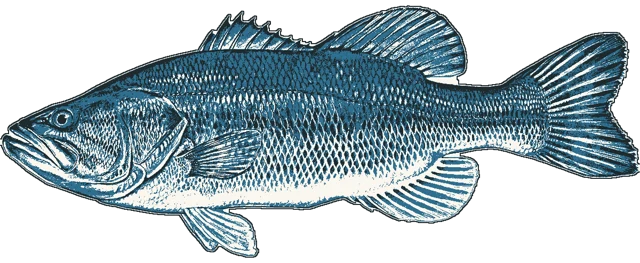
Largemouth bass
Micropterus nigricans (syn. M. salmoides) · Freshwater
Perfectly edible white fillets, but America's top catch-and-release fish and many anglers swear the meat tastes fishy or muddy, so reputation is split.
- Tastes
- mild to slightly 'fishy', firm, thick fillets
- Limits
- Light regs. Statewide: 6 black bass a day in any combination (smallmouth, largemouth, spotted), possession 12, no minimum size. Catch and release only (creel 0): Dunkard Fork, Edwards Run Pond, Kimsey Run, Millers Fork Pond, Rockhouse, Tuckahoe and Upper Mud lakes; the 12-mile New River section from the I-64 bridge at Sandstone to the Grandview Sandbar access; and two South Branch of the Potomac sections (Hardy and Hampshire counties). Stonewall Jackson Lake: 1 bass of 18 in or longer a day, smaller bass may be kept. Elk Fork, North Bend, O'Brien and Woodrum lakes: 6 a day, only 1 over 16 in. 12-in minimum: Barboursville, Beech Fork, Chief Logan and Conaway Run lakes, Wheeling Creek and the Ohio River (Mill Creek to the Big Sandy mouth, including Ohio reciprocal waters). Slot limits: New River upstream of the New-Gauley confluence to the Virginia line (14 to 22 in released, 6 a day with 1 over 22 in; excludes Bluestone Lake below Indian Creek and the catch-and-release section); South Mill Creek and Parker Hollow lakes (12 to 16 in released); Greenbrier River Caldwell to Ronceverte (12 to 20 in released, 1 over 20 in). The Potomac River, its North Branch and Jennings Randolph Lake follow Maryland rules. Other listed waters differ. (2026 Fishing Regulations Summary (calendar year 2026)) Source
- Spawns
- Spawns late April to early June.
- Where
- Beech Fork, Bluestone, Burnsville, Cheat, East Lynn, Elk Fork, Monongahela, O'Brien, R.D. Bailey, Stonewall Jackson and Sutton lakes; Ohio River backwaters; most farm ponds and state-managed lakes, including South Mill Creek and Kimsey Run; Upper Mud Reservoir.
- minnows
- night crawlers
- crayfish
- crankbaits
- spinnerbaits
- jigs
- Water-body mercury advisories commonly list largemouth bass; check your state's advisory before eating large fish.
- Limit (everyone): 1 meal a month from the Ohio River, Pennsylvania line to Kentucky line (PCBs).
Meal limits and other waters (6)
- Limit (everyone): 1 meal a month from the Kanawha River between the I-64 bridge in Dunbar and Winfield Lock and Dam, its backwaters, Armour, Heizer and Manila creeks, the lower 2 miles of the Pocatalico River, or the Coal River below Lower Falls (dioxin, PCBs and mercury).
- Limit (everyone), statewide: 2 meals a month of black bass (mercury and PCBs).
- Upper Mud River Reservoir has its own selenium line of 1 meal a week, but the statewide 2 meals a month is tighter.
- Eat the smaller, younger fish, which are less likely to contain contaminants (WVDNR 2026 summary).
- Mercury drives most statewide advisories, and cleaning or cooking does not reduce it.
- West Virginia's 2026 list (released May 27, 2026): oehs.wvdhhr.org/fish or (304) 558-2981.
Longear sunfish
Lepomis megalotis · Freshwater
Tasty like other sunfish but rarely big enough to fillet; TPWD calls it an important fish for young anglers, easy to catch on earthworms.
- Tastes
- mild, flaky
- Limits
- Light regs. Statewide: 30 a day and 60 in possession for all sunfish combined, no minimum size. Mason Lake and Teter Creek Lake: 10 a day, only 5 of 8 in or longer. The Potomac River, its North Branch and Jennings Randolph Lake follow Maryland rules. Other listed waters differ. (2026 Fishing Regulations Summary (calendar year 2026)) Source
- Spawns
- Spawns in early summer.
- Where
- Warm-water streams and lakes, especially medium-sized streams along the margins near vegetation and woody debris.
- worms
- crickets
- small lures
- dry flies
- Limit (everyone): 1 meal a month from the Kanawha River between the I-64 bridge in Dunbar and Winfield Lock and Dam, its backwaters, Armour, Heizer and Manila creeks, the lower 2 miles of the Pocatalico River, or the Coal River below Lower Falls (dioxin, PCBs and mercury).
- Limit (everyone), statewide: 1 meal a week, the state's line for all other species (mercury and PCBs).
- West Virginia's 2026 list (released May 27, 2026): oehs.wvdhhr.org/fish or (304) 558-2981.
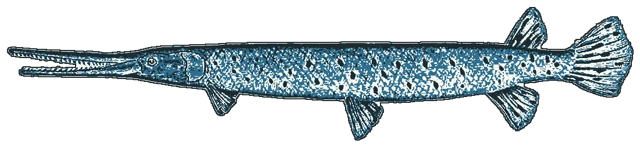
Longnose gar
Lepisosteus osseus · Freshwater
Most anglers treat it as a nuisance and few eat it, but the firm white backstraps are good once you get through the armor.
Worth a try: Cut down the back with shears or a hatchet to get past the armored scales, take the two white backstraps, and fry them or grind them into Louisiana gar balls.
- Tastes
- mild, firm, meaty, almost like alligator
- Limits
- No limits. No statewide daily or possession limit and no size limit, open all year. Other non-game fish may be bowfished all months except May and June, and spearfished July 1 to Sept. 30 in daylight. East and West Forks of the Greenbrier River and their tributaries, the Gauley upstream of the Route 55/20 bridge at Curtin (with the Cherry, Williams, Cranberry and upper Gauley), and the Camp Creek and Manns Creek systems: limit for all non-game fish is zero. No fish may be sold. Other listed waters differ. (2026 Fishing Regulations Summary (calendar year 2026)) Source
- Where
- Shallow, weedy, quiet water, found in most streams, rivers and reservoirs; the Ohio drainage in WVDNR's fish checklist.
- frayed rope lure
- pantyhose bag with bait and no hook
- Gar eggs (roe) are toxic to people and other warm-blooded animals; never eat them (Maryland DNR).
- Limit (everyone): 1 meal a month from the Kanawha River between the I-64 bridge in Dunbar and Winfield Lock and Dam, its backwaters, Armour, Heizer and Manila creeks, the lower 2 miles of the Pocatalico River, or the Coal River below Lower Falls (dioxin, PCBs and mercury).
- Limit (everyone), statewide: 1 meal a week, the state's line for all other species (mercury and PCBs).
- West Virginia's 2026 list (released May 27, 2026): oehs.wvdhhr.org/fish or (304) 558-2981.
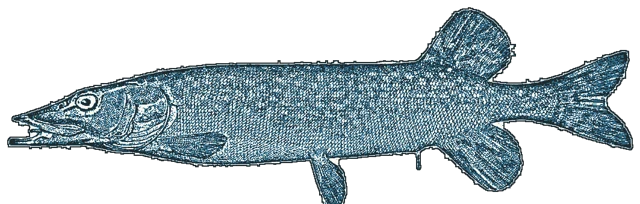
Northern pike
Esox lucius · Freshwater
The meat is white, flaky and great in flavor, but the Y-bones put many anglers off; reputation is split between 'too bony' and 'better than walleye once you learn to clean them'.
Worth a try: Remove the Y-bones with the five-fillet method, or grind, pickle or make fish balls from the meat; Hank Shaw's pike balls grind small pike so the bones vanish.
- Tastes
- mild, clean, firm, flaky white; Y-bones in the upper fillet
- Limits
- Heavy regs. Statewide: 1 a day, possession 2, 30-in minimum. The Potomac River, its North Branch and Jennings Randolph Lake follow Maryland rules. Other listed waters differ. (2026 Fishing Regulations Summary (calendar year 2026)) Source
- Where
- Slower lakes, deeper wetlands and bays of larger rivers with sunken timber and vegetation; few waters hold good numbers.
- large spoons
- minnow crankbaits
- spinnerbaits
- live or dead baitfish under tip-ups
- suckers
- Large pike in parts of northern and western Alaska can carry enough mercury that eating large quantities can be harmful (ADF&G).
- Limit (everyone): 1 meal a month from the Kanawha River between the I-64 bridge in Dunbar and Winfield Lock and Dam, its backwaters, Armour, Heizer and Manila creeks, the lower 2 miles of the Pocatalico River, or the Coal River below Lower Falls (dioxin, PCBs and mercury).
Meal limits and other waters (4)
- Limit (everyone), statewide: 1 meal a week, the state's line for all other species (mercury and PCBs).
- Eat the smaller, younger fish, which are less likely to contain contaminants (WVDNR 2026 summary).
- Mercury drives most statewide advisories, and cleaning or cooking does not reduce it.
- West Virginia's 2026 list (released May 27, 2026): oehs.wvdhhr.org/fish or (304) 558-2981.
Paddlefish
Polyodon spathula · Freshwater
Valued for its caviar. We have no good source on how it eats, so it is rated Just OK by default.
- Tastes
- mild, firm, boneless
- Limits
- No harvest. Zero daily and possession limit statewide: all fish must be returned to the water immediately, and state rule 58-60 makes it illegal to try to catch them. (2026 Fishing Regulations Summary (calendar year 2026); 58 CSR 60 (effective Jan. 1, 2025)) Source
- Where
- Slow, open-water and side-channel habitat of large rivers; the Ohio drainage in WVDNR's fish checklist.
- snagging with large treble hooks
Rock bass
Ambloplites rupestris · also called red eye, goggle eye, rock perch · Freshwater
Light, flaky fillets that some anglers rate highly, while others find them oily and fishy compared with bluegill or crappie.
- Tastes
- mild to slightly fishy, light, flaky
- Limits
- Light regs. No rule of its own: it falls under 'all other game fish' at 30 a day and 60 in possession, no minimum size. The Potomac River, its North Branch and Jennings Randolph Lake follow Maryland rules. Other listed waters differ. (2026 Fishing Regulations Summary (calendar year 2026)) Source
- Where
- Clear, rocky, vegetated shoreside pools in rivers, lakes and ponds; present in the Ohio, New, James and Potomac drainages.
- live minnows
- crayfish
- nightcrawlers
- hellgrammites
- inline spinners
- small jigs
- Limit (everyone): 1 meal a month from the Kanawha River between the I-64 bridge in Dunbar and Winfield Lock and Dam, its backwaters, Armour, Heizer and Manila creeks, the lower 2 miles of the Pocatalico River, or the Coal River below Lower Falls (dioxin, PCBs and mercury).
- Limit (everyone), statewide: 1 meal a week (mercury and PCBs).
- West Virginia's 2026 list (released May 27, 2026): oehs.wvdhhr.org/fish or (304) 558-2981.
Shovelnose sturgeon
Scaphirhynchus platorynchus · Freshwater
Indiana DNR says sturgeon flesh has an excellent flavor and is often smoked, but this small river sturgeon is rarely targeted and harvest is closed in some reaches.
- Tastes
- mild, firm
- Limits
- No harvest. Zero daily and possession limit statewide: all fish must be returned to the water immediately, and state rule 58-60 makes it illegal to try to catch them. (2026 Fishing Regulations Summary (calendar year 2026); 58 CSR 60 (effective Jan. 1, 2025)) Source
- Where
- Strong currents and deep channels of large rivers over sand and gravel; the Ohio drainage in WVDNR's fish checklist.
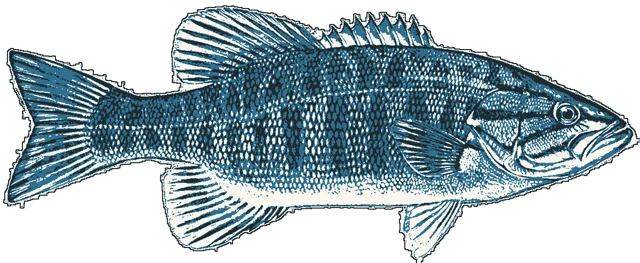
Smallmouth bass
Micropterus dolomieu · Freshwater
Firm, white and good, often rated above largemouth, but most smallmouth are released by custom and the flesh has a slight 'fishy' edge some anglers dislike.
- Tastes
- mild, slightly fishy edge, firm, thick white fillets
- Limits
- Light regs. Statewide: 6 black bass a day in any combination (smallmouth, largemouth, spotted), possession 12, no minimum size. Catch and release only (creel 0): Dunkard Fork, Edwards Run Pond, Kimsey Run, Millers Fork Pond, Rockhouse, Tuckahoe and Upper Mud lakes; the 12-mile New River section from the I-64 bridge at Sandstone to the Grandview Sandbar access; and two South Branch of the Potomac sections (Hardy and Hampshire counties). Stonewall Jackson Lake: 1 bass of 18 in or longer a day, smaller bass may be kept. Elk Fork, North Bend, O'Brien and Woodrum lakes: 6 a day, only 1 over 16 in. 12-in minimum: Barboursville, Beech Fork, Chief Logan and Conaway Run lakes, Wheeling Creek and the Ohio River (Mill Creek to the Big Sandy mouth, including Ohio reciprocal waters). Slot limits: New River upstream of the New-Gauley confluence to the Virginia line (14 to 22 in released, 6 a day with 1 over 22 in; excludes Bluestone Lake below Indian Creek and the catch-and-release section); South Mill Creek and Parker Hollow lakes (12 to 16 in released); Greenbrier River Caldwell to Ronceverte (12 to 20 in released, 1 over 20 in). The Potomac River, its North Branch and Jennings Randolph Lake follow Maryland rules. Other listed waters differ. (2026 Fishing Regulations Summary (calendar year 2026)) Source
- Best months
- Summer on the South Branch and New River (WVDNR summer guide, May 2024).
- Where
- Summersville and Tygart lakes; Buckhannon, Cacapon, Cheat, Elk, Greenbrier, Guyandotte, New, upper Ohio, South Branch of the Potomac, Shenandoah, Tug Fork and Tygart rivers. Fast streams with rocks, eddies, runs and pools.
- spinners and other minnow-like artificial lures
- night crawlers
- hellgrammites
- crayfish
- crankbaits
- jigs
- Limit (everyone): 1 meal a month from the Ohio River, Pennsylvania line to Kentucky line (PCBs), or of smallmouth over 12 inches from the Shenandoah River (mercury).
Meal limits and other waters (5)
- Limit (everyone): 1 meal a month from the Kanawha River between the I-64 bridge in Dunbar and Winfield Lock and Dam, its backwaters, Armour, Heizer and Manila creeks, the lower 2 miles of the Pocatalico River, or the Coal River below Lower Falls (dioxin, PCBs and mercury).
- Limit (everyone), statewide: 2 meals a month of black bass (mercury and PCBs).
- Eat the smaller, younger fish, which are less likely to contain contaminants (WVDNR 2026 summary).
- Mercury drives most statewide advisories, and cleaning or cooking does not reduce it.
- West Virginia's 2026 list (released May 27, 2026): oehs.wvdhhr.org/fish or (304) 558-2981.
Smallmouth buffalo
Ictiobus bubalus · Freshwater
Smallmouth buffalo is highly prized in many areas (TPWD), but some anglers still call it a rough fish because of its bones.
Worth a try: Many people do not realize smallmouth buffalo is quite a food fish (TPWD); fry the ribs or smoke it.
- Tastes
- mild, firm, bony
- Limits
- No limits. No statewide daily or possession limit and no size limit, open all year. Smallmouth buffalo are not carp and cannot be bowfished year-round; other non-game fish may be bowfished all months except May and June. East and West Forks of the Greenbrier River and their tributaries, the Gauley upstream of the Route 55/20 bridge at Curtin (with the Cherry, Williams, Cranberry and upper Gauley), and the Camp Creek and Manns Creek systems: limit for all non-game fish is zero. No fish may be sold. Other listed waters differ. (2026 Fishing Regulations Summary (calendar year 2026)) Source
- Where
- Ohio River drainage in WVDNR's fish checklist.
- dough baits
- bowfishing
- Do not eat (anyone): suckers (buffalo included) from the Kanawha River between the I-64 bridge in Dunbar and Winfield Lock and Dam, its backwaters, Armour, Heizer and Manila creeks, the lower 2 miles of the Pocatalico River, or the Coal River below Lower Falls (dioxin, PCBs and mercury).
Meal limits and other waters (4)
- Limit (everyone): 1 meal a month of smallmouth buffalo or suckers from the Ohio River, Pennsylvania line to Kentucky line (PCBs).
- Limit (everyone), statewide: 1 meal a week of all suckers (mercury and PCBs).
- Eat fewer fish that feed on the bottom, such as carp, which are more likely to contain contaminants (WVDNR 2026 summary).
- West Virginia's 2026 list (released May 27, 2026): oehs.wvdhhr.org/fish or (304) 558-2981.
Spotted bass
Micropterus punctulatus · Freshwater
Eats like other black bass and is kept more often than largemouth because it is abundant and small; agencies in some states encourage harvest.
- Tastes
- mild, firm, white
- Limits
- Light regs. Statewide: 6 black bass a day in any combination (smallmouth, largemouth, spotted), possession 12, no minimum size. Catch and release only (creel 0): Dunkard Fork, Edwards Run Pond, Kimsey Run, Millers Fork Pond, Rockhouse, Tuckahoe and Upper Mud lakes; the 12-mile New River section from the I-64 bridge at Sandstone to the Grandview Sandbar access; and two South Branch of the Potomac sections (Hardy and Hampshire counties). Stonewall Jackson Lake: 1 bass of 18 in or longer a day, smaller bass may be kept. Elk Fork, North Bend, O'Brien and Woodrum lakes: 6 a day, only 1 over 16 in. 12-in minimum: Barboursville, Beech Fork, Chief Logan and Conaway Run lakes, Wheeling Creek and the Ohio River (Mill Creek to the Big Sandy mouth, including Ohio reciprocal waters). Slot limits: New River upstream of the New-Gauley confluence to the Virginia line (14 to 22 in released, 6 a day with 1 over 22 in; excludes Bluestone Lake below Indian Creek and the catch-and-release section); South Mill Creek and Parker Hollow lakes (12 to 16 in released); Greenbrier River Caldwell to Ronceverte (12 to 20 in released, 1 over 20 in). The Potomac River, its North Branch and Jennings Randolph Lake follow Maryland rules. Other listed waters differ. (2026 Fishing Regulations Summary (calendar year 2026)) Source
- Spawns
- Spawns late April to early June.
- Where
- All drainages except the Potomac and James: Army Corps reservoirs, tailwaters, small impoundments and slow stretches of rivers, usually deeper than other black bass. State record fish came from R.D. Bailey Lake.
- finesse worm on a shaky head
- hammered silver jigging spoon
- football jig
- chrome topwater lure
- live crappie minnows
- Limit (everyone): 1 meal a month from the Ohio River, Pennsylvania line to Kentucky line (PCBs).
Meal limits and other waters (5)
- Limit (everyone): 1 meal a month from the Kanawha River between the I-64 bridge in Dunbar and Winfield Lock and Dam, its backwaters, Armour, Heizer and Manila creeks, the lower 2 miles of the Pocatalico River, or the Coal River below Lower Falls (dioxin, PCBs and mercury).
- Limit (everyone), statewide: 2 meals a month of black bass (mercury and PCBs).
- Eat the smaller, younger fish, which are less likely to contain contaminants (WVDNR 2026 summary).
- Mercury drives most statewide advisories, and cleaning or cooking does not reduce it.
- West Virginia's 2026 list (released May 27, 2026): oehs.wvdhhr.org/fish or (304) 558-2981.
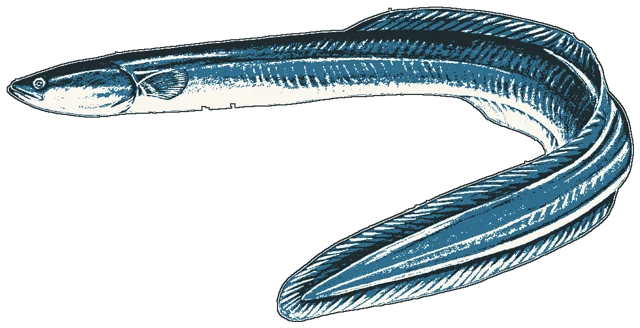
American eel
Anguilla rostrata · Freshwater
Few people in the US eat them (Maryland DNR) and most anglers cut them loose or use them as striper and crab bait, even though eel is a delicacy in Europe and Japan.
Worth a try: Eel is a popular food in Europe and Japan (Maryland DNR); skin it and smoke it hard.
- Tastes
- rich, sweet, dense, oily
- Limits
- No limits. No statewide daily or possession limit and no size limit, open all year. Eels may be taken by gigging, snagging or snaring Jan. 1 to May 15 and July 15 to Dec. 31 (gigging and snagging not within 100 ft of a lock and dam). East and West Forks of the Greenbrier River and their tributaries, the Gauley upstream of the Route 55/20 bridge at Curtin (with the Cherry, Williams, Cranberry and upper Gauley), and the Camp Creek and Manns Creek systems: limit for all non-game fish is zero. No fish may be sold. The Potomac River, its North Branch and Jennings Randolph Lake follow Maryland rules. Other listed waters differ. (2026 Fishing Regulations Summary (calendar year 2026)) Source
- Where
- State records came from the Elk River and Bunker Hill Quarry; the Ohio, New and Potomac drainages in WVDNR's fish checklist.
- cut bait
- nightcrawlers
- Eels in some rivers carry high PCB levels; check local advisories.
- Limit (everyone): 1 meal a month from the Kanawha River between the I-64 bridge in Dunbar and Winfield Lock and Dam, its backwaters, Armour, Heizer and Manila creeks, the lower 2 miles of the Pocatalico River, or the Coal River below Lower Falls (dioxin, PCBs and mercury).
- Limit (everyone), statewide: 1 meal a week, the state's line for all other species (mercury and PCBs).
- West Virginia's 2026 list (released May 27, 2026): oehs.wvdhhr.org/fish or (304) 558-2981.
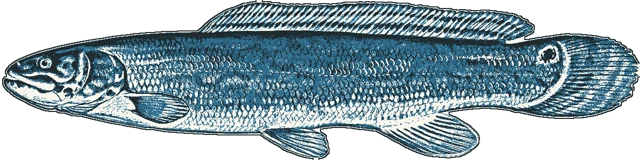
Bowfin
Amia calva (ruddy bowfin) and Amia ocellicauda (emerald bowfin) · Freshwater
TPWD calls it a rough fish rather than one for the table; the soft, pale flesh earned it the nickname 'cottonfish'.
Worth a try: Keep it alive until you clean it, cook it the same day, and use it smoked, fried as patties or stewed; MeatEater serves fried bowfin with a morel cream sauce.
- Tastes
- mild, soft, jelly-like unless very fresh
- Limits
- No limits. No statewide daily or possession limit and no size limit, open all year. Other non-game fish may be bowfished all months except May and June; fish may not be returned to the water or left on the bank. East and West Forks of the Greenbrier River and their tributaries, the Gauley upstream of the Route 55/20 bridge at Curtin (with the Cherry, Williams, Cranberry and upper Gauley), and the Camp Creek and Manns Creek systems: limit for all non-game fish is zero. No fish may be sold. Other listed waters differ. (2026 Fishing Regulations Summary (calendar year 2026)) Source
- Where
- Shallow, weedy lakes and sluggish rivers and streams; Ohio River backwaters near Green Bottom WMA; a state record from a Berkeley County pond.
- artificial lures
- Limit (everyone): 1 meal a month from the Kanawha River between the I-64 bridge in Dunbar and Winfield Lock and Dam, its backwaters, Armour, Heizer and Manila creeks, the lower 2 miles of the Pocatalico River, or the Coal River below Lower Falls (dioxin, PCBs and mercury).
Meal limits and other waters (3)
- Limit (everyone), statewide: 1 meal a week, the state's line for all other species (mercury and PCBs).
- Eat the smaller, younger fish, which are less likely to contain contaminants (WVDNR 2026 summary).
- West Virginia's 2026 list (released May 27, 2026): oehs.wvdhhr.org/fish or (304) 558-2981.
Redhorse suckers
Moxostoma spp. · Freshwater
Seldom caught on hook and line and written off as bony bottom-feeders; MeatEater notes the bones.
Worth a try: Scored and deep-fried, the Y-bones disappear and the firm, sweet flesh is delicious; MeatEater recommends shorthead, golden or silver redhorse for deep-fried sucker balls.
- Tastes
- mild, sweet, firm, white, Y-bones
- Limits
- No limits. No statewide daily or possession limit and no size limit, open all year. Snaring suckers is legal year-round; gigging, snagging and bowfishing (not May or June) rules for non-game fish apply. East and West Forks of the Greenbrier River and their tributaries, the Gauley upstream of the Route 55/20 bridge at Curtin (with the Cherry, Williams, Cranberry and upper Gauley), and the Camp Creek and Manns Creek systems: limit for all non-game fish is zero. No fish may be sold. The Potomac River, its North Branch and Jennings Randolph Lake follow Maryland rules. Other listed waters differ. (2026 Fishing Regulations Summary (calendar year 2026)) Source
- Where
- Silver redhorse in the Ohio drainage, golden redhorse in the Ohio, New and Potomac drainages, shorthead redhorse in the Ohio and Potomac drainages; the state record (25.43 in, 6.46 lb) came from Kanawha Falls.
- worms
- Several redhorse species are rare or state-protected; harvest only common species.
- Do not eat (anyone): suckers (redhorse included) from the Kanawha River between the I-64 bridge in Dunbar and Winfield Lock and Dam, its backwaters, Armour, Heizer and Manila creeks, the lower 2 miles of the Pocatalico River, or the Coal River below Lower Falls (dioxin, PCBs and mercury).
Meal limits and other waters (5)
- Limit (everyone): 1 meal a month of suckers from the Ohio River, Pennsylvania line to Kentucky line (PCBs).
- Limit (everyone), statewide: 1 meal a week of all suckers (mercury and PCBs).
- Eat fewer fish that feed on the bottom, such as carp, which are more likely to contain contaminants (WVDNR 2026 summary).
- State health office: areas of the Kanawha River and its tributaries downstream of Nitro likely became contaminated with dioxin.
- West Virginia's 2026 list (released May 27, 2026): oehs.wvdhhr.org/fish or (304) 558-2981.
Skipjack herring
Alosa chrysochloris · also called freshwater tarpon · Freshwater
It is bony and generally considered a rough fish (FWS); anglers mostly catch it for sport on light tackle or for catfish bait.
- Limits
- No limits. No statewide daily or possession limit and no size limit, open all year. Non-game fish may be bowfished all months except May and June, and bowfished fish may not be returned to the water or left on the bank; gigging and snagging run Jan. 1 to May 15 and July 15 to Dec. 31 (not within 100 ft of a lock and dam). East and West Forks of the Greenbrier River and their tributaries, the Gauley upstream of the Route 55/20 bridge at Curtin (with the Cherry, Williams, Cranberry and upper Gauley), and the Camp Creek and Manns Creek systems: limit for all non-game fish is zero. No fish may be sold. Other listed waters differ. (2026 Fishing Regulations Summary (calendar year 2026)) Source
- Where
- Ohio River: the state record (20.15 in, 3.1 lb) came from the RC Byrd tailwaters south of Point Pleasant; the Ohio drainage in WVDNR's fish checklist.
- Some states list it as a species of conservation concern
- Limit (everyone): 1 meal a month from the Kanawha River between the I-64 bridge in Dunbar and Winfield Lock and Dam, its backwaters, Armour, Heizer and Manila creeks, the lower 2 miles of the Pocatalico River, or the Coal River below Lower Falls (dioxin, PCBs and mercury).
- Limit (everyone), statewide: 1 meal a week, the state's line for all other species (mercury and PCBs).
- West Virginia's 2026 list (released May 27, 2026): oehs.wvdhhr.org/fish or (304) 558-2981.
White sucker
Catostomus commersonii · Freshwater
Suckers have perhaps the worst reputation of the rough fish (MeatEater) and are mostly raised and sold as bait (MN DNR); the many small bones keep most anglers from eating them.
Worth a try: Spring fish from cold water are light and sweet like walleye (MeatEater); score them deeply and fry hard, pickle them to dissolve the bones, or grind into fish cakes.
- Tastes
- light, sweet, firm, white, many small bones
- Limits
- No limits. No statewide daily or possession limit and no size limit, open all year. Snaring suckers is legal year-round. East and West Forks of the Greenbrier River and their tributaries, the Gauley upstream of the Route 55/20 bridge at Curtin (with the Cherry, Williams, Cranberry and upper Gauley), and the Camp Creek and Manns Creek systems: limit for all non-game fish is zero. No fish may be sold. The Potomac River, its North Branch and Jennings Randolph Lake follow Maryland rules. Other listed waters differ. (2026 Fishing Regulations Summary (calendar year 2026)) Source
- Where
- Present in the Ohio, New, James and Potomac drainages.
- nightcrawlers drifted on the bottom
- worms
- spearing/netting where legal
- Do not eat (anyone): suckers (white sucker included) from the Kanawha River between the I-64 bridge in Dunbar and Winfield Lock and Dam, its backwaters, Armour, Heizer and Manila creeks, the lower 2 miles of the Pocatalico River, or the Coal River below Lower Falls (dioxin, PCBs and mercury).
- Do not eat (anyone), Virginia's list: white sucker from the Shenandoah River in Virginia, down to the West Virginia line (PCBs).
Meal limits and other waters (4)
- Limit (everyone): 1 meal a month of suckers from the Ohio River, Pennsylvania line to Kentucky line (PCBs).
- Limit (everyone), statewide: 1 meal a week of all suckers (mercury and PCBs).
- Eat fewer fish that feed on the bottom, such as carp, which are more likely to contain contaminants (WVDNR 2026 summary).
- West Virginia's 2026 list (released May 27, 2026): oehs.wvdhhr.org/fish or (304) 558-2981.
Lake sturgeon
Acipenser fulvescens · Freshwater
Protected across most of its range after overharvest for flesh and caviar; Wisconsin DNR lists many of its lake sturgeon waters as catch and release only and requires a keeper to be at least 60 inches.
- Limits
- No harvest. Zero daily and possession limit statewide: all fish must be returned to the water immediately, and state rule 58-60 makes it illegal to try to catch them. (2026 Fishing Regulations Summary (calendar year 2026); 58 CSR 60 (effective Jan. 1, 2025)) Source
- Where
- Ohio River drainage in WVDNR's fish checklist, marked as extirpated (native, no recent records).
Muskellunge
Esox masquinongy · also called musky · Freshwater
A trophy fish that is almost never kept: high minimum lengths and a strong release ethic mean most muskie anglers let their catch go.
- Limits
- Heavy regs. Statewide: 1 a day, possession 2, 30-in minimum. Stonewall Jackson Lake and its upstream drainage: 52-in minimum, 1 a day. North Bend Lake and a 1.3-mile section of the North Fork Hughes River below the dam: 40-in minimum, 1 a day. Catch and release only (creel 0): Buckhannon River Pool at Buckhannon and a 6-mile Middle Island Creek section near Centerville. The Potomac River, its North Branch and Jennings Randolph Lake follow Maryland rules. Other listed waters differ. (2026 Fishing Regulations Summary (calendar year 2026)) Source
- Best months
- Early summer at Stonewall Jackson Lake, before the water gets too warm (WVDNR summer guide, May 2024).
- Where
- Burnsville, East Lynn, Kimsey Run, North Bend, Stonecoal, Stonewall Jackson and Woodrum lakes; Buckhannon, Elk (below Sutton), Gauley, Hughes, Little Kanawha, Monongahela, Mud, New, Potomac main stem, Tygart and West Fork rivers; Dunkard, Middle Island, Mill, Sandy and 18-Mile creeks.
- minnow-imitating lures
- glide baits
- jerkbaits
- large spinners
- Limit (everyone): 1 meal a month from the Kanawha River between the I-64 bridge in Dunbar and Winfield Lock and Dam, its backwaters, Armour, Heizer and Manila creeks, the lower 2 miles of the Pocatalico River, or the Coal River below Lower Falls (dioxin, PCBs and mercury).
Meal limits and other waters (4)
- Limit (everyone), statewide: 1 meal a week, the state's line for all other species (mercury and PCBs).
- Eat the smaller, younger fish, which are less likely to contain contaminants (WVDNR 2026 summary).
- Mercury drives most statewide advisories, and cleaning or cooking does not reduce it.
- West Virginia's 2026 list (released May 27, 2026): oehs.wvdhhr.org/fish or (304) 558-2981.
Tiger muskie
Esox masquinongy x E. lucius · also called tiger musky · Freshwater
Managed like muskie, as a trophy fish with high size limits; Maryland DNR says most anglers release them.
- Limits
- Heavy regs. Statewide: 1 a day, possession 2, 30-in minimum. The special muskellunge waters (Stonewall Jackson Lake, North Bend Lake and others) are written for muskellunge, and the 2026 table refers tiger musky anglers to the same list. The Potomac River, its North Branch and Jennings Randolph Lake follow Maryland rules. Other listed waters differ. (2026 Fishing Regulations Summary (calendar year 2026)) Source
- Where
- Big Ditch, Charles Fork and Mountwood lakes, stocked by WVDNR; slower lakes with dense aquatic vegetation and sunken timber.
- large crankbaits imitating suckers
- bucktail spinners
- large jerkbaits
- Limit (everyone): 1 meal a month from the Kanawha River between the I-64 bridge in Dunbar and Winfield Lock and Dam, its backwaters, Armour, Heizer and Manila creeks, the lower 2 miles of the Pocatalico River, or the Coal River below Lower Falls (dioxin, PCBs and mercury).
Meal limits and other waters (4)
- Limit (everyone), statewide: 1 meal a week, the state's line for all other species (mercury and PCBs).
- Eat the smaller, younger fish, which are less likely to contain contaminants (WVDNR 2026 summary).
- Mercury drives most statewide advisories, and cleaning or cooking does not reduce it.
- West Virginia's 2026 list (released May 27, 2026): oehs.wvdhhr.org/fish or (304) 558-2981.
Where to fish in West Virginia
Fish named here are what people catch at each spot, not a promise they’re safe to eat. Read the eating advice on the fish’s card before you keep one.
- 1Summersville Lake reservoir · fresh
WVDNR's 2026 summary names Summersville Lake a favorite water for smallmouth bass, walleye and crappie; walleye there have a 20 to 30 in no-harvest slot with 8 a day and only 1 over 30 in. State eating advice (anyone): no more than 1 meal a month of walleye from this lake, for mercury.
Known for: Smallmouth bass, Walleye, Black crappie
Access: Army Corps of Engineers lake of 2,790 acres; boating: unlimited horsepower, with no-wake, speed or other restricted zones (WVDNR 2026 Public Lakes and Ponds chart).
- 2Stonewall Jackson Lake reservoir · fresh
Listed by WVDNR as a favorite water for largemouth bass, crappie, muskie and channel catfish; special rules allow 1 black bass of 18 in or longer and a 52-in muskie minimum.
Known for: Largemouth bass, Muskellunge, Black crappie, Channel catfish
Access: Army Corps of Engineers lake of 2,650 acres; boating: unlimited horsepower, with no-wake, speed or other restricted zones (WVDNR 2026 Public Lakes and Ponds chart).
- 3Bluestone Lake reservoir · fresh
Named by WVDNR as a favorite water for hybrid striped and striped bass, largemouth bass, crappie and channel catfish; hybrid and striped bass are limited to 4 a day with a 15-in minimum.
Known for: Hybrid striped bass, Largemouth bass, Black crappie, Channel catfish
Access: Army Corps of Engineers lake of 2,040 acres; boating: unlimited horsepower, with no-wake, speed or other restricted zones (WVDNR 2026 Public Lakes and Ponds chart).
- 4R.D. Bailey Lake reservoir · fresh
WVDNR lists R.D. Bailey for hybrid striped and striped bass, largemouth bass and crappie; hybrid and striped bass are limited to 4 a day with a 15-in minimum. State eating advice (anyone): no more than 1 meal a month of channel catfish over 17 inches from this lake, for PCBs and mercury.
Known for: Hybrid striped bass, Largemouth bass, Black crappie
Access: Army Corps of Engineers lake of 630 acres; boating: unlimited horsepower, with no-wake, speed or other restricted zones (WVDNR 2026 Public Lakes and Ponds chart).
- 5Tygart Lake reservoir · fresh
WVDNR lists Tygart Lake among favorite waters for smallmouth bass, white bass, walleye and crappie.
Known for: Smallmouth bass, White bass, Walleye, Black crappie
Access: Army Corps of Engineers lake of 1,750 acres; boating: unlimited horsepower, with no-wake, speed or other restricted zones (WVDNR 2026 Public Lakes and Ponds chart).
- 6Cheat Lake reservoir · fresh
Named by WVDNR for largemouth bass, white bass, walleye, crappie and channel catfish; yellow perch are limited to 15 a day there, and walleye have a 20 to 30 in no-harvest slot with 8 a day.
Known for: Largemouth bass, White bass, Walleye, Black crappie, Channel catfish
Access: 1,730 acres; boating: unlimited horsepower, with no-wake, speed or other restricted zones (WVDNR 2026 Public Lakes and Ponds chart).
- 7Burnsville Lake reservoir · fresh
WVDNR lists Burnsville for largemouth bass, crappie, muskie and channel catfish; walleye there have a 15-in minimum and 8 a day.
Known for: Largemouth bass, Black crappie, Muskellunge, Channel catfish
Access: Army Corps of Engineers lake of 968 acres; boating: unlimited horsepower, with no-wake, speed or other restricted zones (WVDNR 2026 Public Lakes and Ponds chart).
- 8East Lynn Lake reservoir · fresh
Named by WVDNR as a favorite water for largemouth bass, crappie, muskie and channel catfish.
Known for: Largemouth bass, Black crappie, Muskellunge, Channel catfish
Access: Army Corps of Engineers lake of 1,005 acres; boating: unlimited horsepower, with no-wake, speed or other restricted zones (WVDNR 2026 Public Lakes and Ponds chart).
- 9Mount Storm Lake reservoir · fresh
WVDNR lists Mount Storm for hybrid striped and striped bass and walleye; hybrid and striped bass are limited to 4 a day with a 15-in minimum, and channel catfish run to 30 a day. State eating advice (anyone): no more than 1 meal a month of striped bass from this lake, for PCBs.
Known for: Hybrid striped bass, Walleye
Access: 1,170 acres; boating: unlimited horsepower, with no-wake, speed or other restricted zones (WVDNR 2026 Public Lakes and Ponds chart).
- 10Beech Fork Lake reservoir · fresh
WVDNR lists Beech Fork for hybrid striped and striped bass, largemouth bass and channel catfish; black bass have a 12-in minimum and hybrid and striped bass are limited to 4 a day.
Known for: Hybrid striped bass, Largemouth bass, Channel catfish
Access: Army Corps of Engineers lake of 720 acres; boating: 10 horsepower maximum, with no-wake, speed or other restricted zones (WVDNR 2026 Public Lakes and Ponds chart).
- 11New River at Sandstone river · fresh
WVDNR names the New River a favorite water for smallmouth bass, muskie and walleye; a 12-mile stretch from the I-64 bridge at Sandstone to the Grandview Sandbar is catch and release for black bass, and a 5-mile section up to Sandstone Falls is catch and release for walleye.
Known for: Smallmouth bass, Muskellunge, Walleye
Access: Public river access by state Route 20 at Sandstone and state Route 41 at Quinnimont (the catch-and-release bass section), per the 2026 regulations summary.
- 12Ohio River at Willow Island Lock and Dam river · fresh
The 2026 summary lists the upper Ohio for smallmouth bass, the Ohio dam tailwaters for hybrid striped bass and walleye, and the river for white bass and channel catfish; blue and flathead catfish and walleye have Ohio River limits. State eating advice for this stretch (anyone): do not eat channel catfish 18 inches or longer; smaller channel catfish, hybrid striped bass and white bass, 6 meals a year; smallmouth bass, walleye, sauger and flathead catfish, 1 meal a month (PCBs).
Known for: Smallmouth bass, Channel catfish, White bass, Hybrid striped bass, Walleye
Access: A West Virginia or Ohio resident license covers the river from either bank (Ohio River Reciprocal Agreement); West Virginia rules apply on the river and West Virginia banks.
- 13Kanawha River at Winfield river · fresh
WVDNR lists the Kanawha dam tailwaters for hybrid striped bass and walleye, and the river for white bass and channel catfish; blue and flathead catfish have special limits there and walleye are 2 a day with an 18-in minimum up to Winfield Lock and Dam. State health office on the Kanawha River: "Areas downstream of Nitro likely became contaminated through the release and transport of dioxin into the Kanawha River and its tributaries." (oehs.wvdhhr.org/fish/fish-advisories) Do not eat channel catfish, carp or suckers (anyone) from the Kanawha River between the I-64 bridge in Dunbar and Winfield Lock and Dam, so channel catfish is left off the fish listed for this spot. Any other fish from that stretch: no more than 1 meal a month (dioxin, PCBs and mercury).
Known for: Hybrid striped bass, White bass, Walleye, Blue catfish, Flathead catfish
- 14Sutton Lake reservoir · fresh
WVDNR's 2026 summary lists Sutton Lake for largemouth bass and crappie; walleye there are 2 a day with 20 to 30 in fish released and 1 over 30 in.
Known for: Largemouth bass, Black crappie
Access: Army Corps of Engineers lake of 1,440 acres; boating: unlimited horsepower, with no-wake, speed or other restricted zones (WVDNR 2026 Public Lakes and Ponds chart).
- 15South Branch of the Potomac at Romney river · fresh
WVDNR names the South Branch of the Potomac a favorite water for smallmouth bass and channel catfish; the 9.5 miles from the Romney bridge (routes 28 and 50) down to the Blue Beach bridge are catch and release for black bass, as are 8 miles in Hardy County below Petersburg. The pin is at Romney.
Known for: Smallmouth bass, Channel catfish
Access: WVDNR's float-trip list runs Romney Bridge to Hanging Rock (5 miles) and Hanging Rock to Blues Beach Bridge (4.5 miles), per the 2026 regulations summary.
West Virginia fishing license and rules
- Resident: $24.00 total: Class B license $19.00 plus the required $5.00 Conservation Stamp (Class CS). To fish for trout add the $10.00 trout stamp (Class O): $34.00. Resident 5-day license (Class L) $8.00 plus the $5.00 stamp: $13.00. Agent issuing fee extra.
- Nonresident: $50.00 total: Class F license $37.00 plus the required $13.00 Conservation/Law Enforcement Stamp (Class CS/LE). To fish for trout add the $16.00 trout stamp (Class OO): $66.00. Fishing National Forest land adds the $2.00 Class I stamp.
- Nonresident short-term: $16.00 total for one day: Class LL $3.00 plus the required $13.00 CS/LE stamp. To fish for trout add the $16.00 trout stamp: $32.00.
- Who needs one: 15 and older; residents and nonresidents under 15 need no license and no trout stamp. Residents born before Jan. 1, 1947 need neither. Residents who turned 65 on or after Jan. 1, 2012 need the Class XS senior license ($25, trout stamp included) unless they hold a lifetime Class A-L or AB-L license.
- Free fishing days: Free Fishing Days were June 13 and 14, 2026: anyone could fish public waters without a license.
More license details
Licenses are good for the calendar year. Issuing fees are extra: $3 at an agent for the first purchase and $1 for later ones, and $2 per transaction online or by phone. The stamps are required on top of the posted license price, so the totals above are what a person pays before the issuing fee. Anglers with a valid West Virginia or Ohio resident license may fish the Ohio River from either bank; West Virginia and Maryland resident licenses cover the Potomac River, the North Branch and Jennings Randolph Lake; West Virginia and Kentucky residents may fish the main stems of the Big Sandy and Tug Fork.
Buy a license License types and fees
Fees: 2026 (calendar year).
- Required stamps are added to the posted price: a resident pays $24 ($19 license plus $5 Conservation Stamp) and $34 to fish for trout; a nonresident pays $50 ($37 plus the $13 CS/LE stamp), or $66 with the $16 trout stamp; a nonresident one-day license is $16 ($3 plus the $13 stamp).
- Trout are 6 a day in any combination. Delayed harvest sections of Clear Fork of the Guyandotte, Middle Wheeling Creek, Paint Creek, Shavers Fork and Williams River are catch and release Nov. 1 to May 15; scented baits are banned on catch-and-release trout streams.
- Black bass are catch and release on the 12-mile New River stretch from Sandstone to Grandview Sandbar and on the South Branch of the Potomac sections; Stonewall Jackson Lake allows 1 bass of 18 in or longer.
- Ohio River: a valid West Virginia or Ohio resident license covers either bank; West Virginia rules apply on the river and West Virginia banks, Ohio rules on Ohio banks. Potomac, North Branch and Jennings Randolph Lake follow Maryland rules.
- Paddlefish, shovelnose sturgeon and lake sturgeon must be returned to the water immediately.
- Carp, suckers and fallfish may be snared year-round; gigging and snagging of non-game fish run Jan. 1 to May 15 and July 15 to Dec. 31, not within 100 ft of a lock and dam; bowfishing carp is legal year-round and other non-game fish except in May and June, and bowfished fish may not be returned to the water or left on the bank.
- Hand-fishing (noodling) for catfish is legal June 15 to Aug. 31, sunrise to sunset, with a combined daily limit of 4 catfish.
- It is illegal to sell fish or to release unused bait or any fish into public waters other than where it was caught; darters may not be possessed or used as bait.
- Wasting edible meat of a game fish is a misdemeanor with fines of $100 to $500; the fillet from gill plate to tail counts as edible.
Limits here are summaries for convenience, checked on the date shown. The official West Virginia regulations govern; check them before you keep a fish.
Before you eat it
- Do not eat (anyone): carp, channel catfish of any size or suckers (redhorse and buffalo included) from the Kanawha River between the I-64 bridge in Dunbar and Winfield Lock and Dam, its backwaters, Armour, Heizer and Manila creeks, the lower 2 miles of the Pocatalico River, or the Coal River below Lower Falls (dioxin, PCBs and mercury). Any other fish from those waters: 1 meal a month.
- Do not eat (anyone): channel catfish 18 inches or longer from the Ohio River between the Pennsylvania line (East Liverpool) and Belleville Lock (PCBs), or carp from the Shenandoah River (PCBs and mercury).
- Do not eat (anyone), Ohio's 2026 list: common carp from the Ohio River between the Pennsylvania line and Belleville Lock (PCBs), where West Virginia's list says 6 meals a year. Upstream in Virginia, down to the West Virginia line, Virginia's list says do not eat carp, channel catfish or white sucker from the Shenandoah River, or carp from the New River below Claytor Lake Dam or the Bluestone River (PCBs).
- Do not eat (pregnant or may become pregnant, nursing, young children), Virginia's list: any fish Virginia lists on its part of the Shenandoah, New and Bluestone rivers, which also means rock bass, sunfish and smallmouth and largemouth bass on the Shenandoah, flathead and channel catfish on the New River, and white sucker, rock bass and largemouth bass on the Bluestone (2 meals a month for everyone else).
- Ohio River, Pennsylvania line to Belleville Lock: 6 meals a year of channel catfish under 18 inches, common carp, hybrid striped bass or white bass; 1 meal a month of flathead catfish, drum, largemouth, smallmouth or spotted bass, sauger, saugeye, walleye, smallmouth buffalo or suckers (PCBs). Ohio's list adds crappie at 1 meal a month.
- Ohio River, Belleville Lock to the Kentucky line: 6 meals a year of channel catfish 18 inches or longer, striped bass or hybrid striped bass; 1 meal a month of smaller channel catfish, common carp, flathead catfish, drum, largemouth, smallmouth or spotted bass, suckers or white bass (PCBs).
- 1 meal a month (everyone): carp from the Bluestone River, sauger from the Little Kanawha River (mouth to Wells Lock) and the Hughes River (mouth to the North and South forks), channel catfish over 17 inches from R.D. Bailey Lake, smallmouth bass over 12 inches from the Shenandoah River, walleye or flathead catfish from Summersville Lake, and striped bass from Mount Storm Lake. Upper Mud River Reservoir: 1 meal a week of largemouth bass, white crappie, bluegill or green sunfish (selenium), with the tighter statewide limit on largemouth.
- Statewide, every other water (West Virginia's 2026 list, released May 27, 2026): white bass 1 meal a month; black bass (largemouth, smallmouth, spotted), channel catfish over 17 inches, flathead catfish, hybrid striped bass, walleye, sauger and saugeye 2 meals a month; rock bass, smaller channel catfish, all suckers and all other species 1 meal a week; rainbow trout unlimited. Mercury drives most of it and PCBs are much less widespread.
- The advice protects pregnant and nursing women, women who may become pregnant and small children most. The state asks them, and anyone who eats fish often, to be especially careful with meal sizes and to space meals out: after a 1-meal-a-month fish, wait a month before eating another restricted fish. A meal is 8 ounces before cooking for a person over 150 pounds, 3 ounces at 51 to 70 pounds and 1 ounce at 20 pounds or less.
- Eat fewer fish that feed on the bottom, such as carp, and choose smaller, younger walleye, bass and other predatory fish (WVDNR 2026 summary). Skinning and trimming fat reduces PCBs and dioxin; cooking and cleaning do not reduce mercury or selenium. Where an algae bloom sign is posted, throw out the fat, skin and organs and rinse the fillets in clean water before cooking or freezing.
- The state health office names dioxin, PCBs and mercury as the chemicals of most concern; dioxin sites are in the lower Kanawha Valley around Nitro, and areas downstream likely became contaminated. Fish move: unless a dam or other barrier stops them, the state says fish can carry contaminants into the next reach or into tributaries.
- More neighbor-state limits on shared rivers. Kentucky's list for the Big Sandy and Tug Fork: 1 meal a month of predatory fish such as bass, muskie, walleye and flathead or blue catfish, and 6 meals a year for women who are pregnant, nursing or may become pregnant and children 6 and younger. Maryland's list for the Potomac: 3 meals a month of black crappie from Dam 4 to Dam 5; for children up to 6, 1 meal a month of flathead catfish (Dam 3 to Dam 4) or walleye (North Branch, Old Town to Jennings Randolph), 2 a month of channel catfish (Dam 3 to Dam 5) and 3 a month of sunfish (Town Creek).
- The state updates its full list and map at the link below; oehs.wvdhhr.org/fish and (304) 558-2981 have it too. Maryland's list covers the Potomac River, its North Branch and Jennings Randolph Lake.
Local lingo
- Noodling: hand-fishing for catfish, legal June 15 to Aug. 31.
- Gold Rush: WVDNR's spring stocking of golden rainbow trout with tagged fish and prizes (March 30 to April 11 in 2026).
- Golden rainbow: a gold color form of rainbow trout.
- Specks or brookies: brook trout, also called speckled trout and brook char.
- Musky: how WVDNR spells muskellunge, with tiger musky for the hybrid.
- Class Q waters: small ponds and streams limited to children 14 and under and permit holders in March to May.
- Delayed harvest: trout streams that are catch and release Nov. 1 to May 15.
- Poor man's lobster: freshwater drum boiled with seasoning and served chilled with cocktail sauce; WVDNR says it is often called that.
Questions anglers ask about West Virginia
What is the most common fish in West Virginia?
WVDNR calls largemouth bass the most popular gamefish in West Virginia, found in all Army Corps reservoirs, small impoundments and slow river stretches. Its 2026 regulations summary lists bass, catfish, crappie, walleye and muskie waters as favorites, and the agency stocks about 1 million trout a year.
What is the best fish to eat in West Virginia?
20 of the 45 fish on our West Virginia board rate Best eating. They include: rainbow trout, brook trout, brown trout, tiger trout, hybrid striped bass and striped bass.
What is the state fish of West Virginia?
Brook trout: Official state fish, selected in 1973.
Does West Virginia have free fishing days?
Free Fishing Days were June 13 and 14, 2026: anyone could fish public waters without a license.
Which West Virginia fish are better to eat than their reputation?
We give the Worth a try badge to northern pike, freshwater drum, common carp, grass carp, bowfin, longnose gar, redhorse suckers, white sucker, smallmouth buffalo and American eel: fish most anglers toss or rate low that eat well when they're cleaned and cooked right. Each card says how.
Neighboring states
Sources
Limits, prices and advisories come from these pages, read on or before Nov 21, 2026. Where a line gives its own date, that’s the date it rests on. Eating advice changes: check the state’s current list. Ratings are national and come from the fish’s own page.
61 sources
- apps.sos.wv.gov American eel: regs; black crappie: regs; blue catfish: regs; bluegill: regs; bowfin: regs; brook trout: regs; brown trout: regs; bullhead (black, brown, yellow)
- health.wv.gov smallmouth bass: advisory
- mde.maryland.gov black crappie: advisory
- node2.wvdhhr.org American eel: advisory; black crappie: advisory; blue catfish: advisory; bluegill: advisory; bowfin: advisory; brook trout: advisory; brown trout: advisory; bul
- odh.ohio.gov black crappie: advisory; common carp: advisory; white crappie: advisory
- oehs.wvdhhr.org black crappie: advisory; blue catfish: advisory; channel catfish: advisory; flathead catfish: advisory; hybrid striped bass: advisory; redhorse suckers: advisor
- wvdnr.gov skipjack herring: names; skipjack herring: where
- wvdnr.gov state fish
- wvdnr.gov license info
- wvdnr.gov brook trout: baits; brown trout: baits; rainbow trout: baits; tiger trout: baits
- wvdnr.gov American eel: advisory (page modified Dec. 8, 2025); black crappie: advisory (page modified Dec. 8, 2025); blue catfish: advisory (page modified Dec. 8, 2025);
- wvdnr.gov freshwater regs; rainbow trout: months
- wvdnr.gov American eel: where; bowfin: where; fallfish: where; redbreast sunfish: where; redear sunfish: where; redhorse suckers: where; spotted bass: where; state record
- wvdnr.gov free fishing days
- wvdnr.gov black crappie: months; black crappie: names
- wvdnr.gov blue catfish: baits; blue catfish: months; blue catfish: where
- wvdnr.gov bluegill: baits; bluegill: months; bluegill: where
- wvdnr.gov bowfin: baits; bowfin: where
- wvdnr.gov brook trout: months; brook trout: names; brook trout: where
- wvdnr.gov brown trout: months; brown trout: where
- wvdnr.gov bullhead (black, brown, yellow): where
- wvdnr.gov chain pickerel: where
- wvdnr.gov channel catfish: baits
- wvdnr.gov common carp: baits; common carp: where
- wvdnr.gov fallfish: months; fallfish: where
- wvdnr.gov flathead catfish: months; flathead catfish: where
- wvdnr.gov freshwater drum: baits; freshwater drum: where
- wvdnr.gov rainbow trout: evidence
- wvdnr.gov green sunfish: months; green sunfish: where
- wvdnr.gov hybrid striped bass: months; hybrid striped bass: names
- wvdnr.gov largemouth bass: evidence; largemouth bass: months
- wvdnr.gov longear sunfish: baits; longear sunfish: months; longear sunfish: where
- wvdnr.gov longnose gar: baits; longnose gar: where
- wvdnr.gov muskellunge: evidence; muskellunge: names; tiger muskie: where
- wvdnr.gov northern pike: where
- wvdnr.gov paddlefish: where
- wvdnr.gov rainbow trout: evidence
- wvdnr.gov redbreast sunfish: where
- wvdnr.gov redear sunfish: names; redear sunfish: where
- wvdnr.gov rock bass: names; rock bass: where
- wvdnr.gov sauger: baits; sauger: months; sauger: where
- wvdnr.gov saugeye: months; saugeye: where
- wvdnr.gov shovelnose sturgeon: where
- wvdnr.gov smallmouth bass: where
- wvdnr.gov spotted bass: months; spotted bass: where
- wvdnr.gov tiger muskie: names; tiger muskie: where
- wvdnr.gov tiger trout: where
- wvdnr.gov walleye: evidence; walleye: months
- wvdnr.gov white bass: months
- wvdnr.gov white crappie: months; white crappie: names
- wvdnr.gov yellow perch: baits; yellow perch: months; yellow perch: where
- wvdnr.gov pumpkinseed: baits; pumpkinseed: where
- wvdnr.gov muskellunge: months; smallmouth bass: months
- wvdnr.gov flathead catfish: baits
- wvdnr.gov smallmouth bass: months; striped bass: months
- wvdnr.gov American eel: where; bullhead (black, brown, yellow): where; chain pickerel: where; common carp: where; freshwater drum: where; grass carp: where; green sunfish
- wvdnr.gov American eel: regs; black crappie: baits; black crappie: regs; black crappie: where; blue catfish: advisory; blue catfish: regs; blue catfish: where; bluegill:
- mapwv.gov where to fish
- vdh.virginia.gov common carp: advisory; grass carp: advisory
- vdh.virginia.gov channel catfish: advisory; common carp: advisory; grass carp: advisory; white sucker: advisory
- wvhunt.com license buy
Illustrations: stencils we made from public-domain art by John J. Baird (Black crappie); Duane Raver, U.S. Fish and Wildlife Service (Blue catfish, Brook trout, Channel catfish, Flathead catfish, Rainbow trout, Redbreast sunfish, Redear sunfish, Striped bass, White bass, White crappie, Yellow perch, Bullhead (black, brown, yellow), Chain pickerel, Smallmouth bass, American eel, Bowfin); NOAA (Bluegill); U.S. Fish and Wildlife Service (Brown trout, Common carp, Largemouth bass); Hugh McCormick Smith (Walleye); C. W. Nash (Longnose gar); David Starr Jordan (Northern pike), via Wikimedia Commons.
Spotted an error or a rule that changed? Tell us and we will check it against the official source.