South Dakota · freshwater
Fish in South Dakota: what’s worth eating, and what’s garbage
South Dakota fishing is built on walleye: the four Missouri River reservoirs (Oahe, Sharpe, Francis Case and Lewis and Clark Lake) and the northeast glacial lakes draw anglers for walleye, sauger, yellow perch and smallmouth bass. The Black Hills hold stocked and wild trout, Lake Oahe has Chinook salmon with an October and November snagging season, and the Missouri River adds lottery-permit paddlefish seasons and, on the inland reservoirs, no limit on channel catfish.
43 fish rated · limits checked Nov 21, 2026 against SDGFP, then re-checked: 318 of 321 details confirmed or corrected on the official pages
Resident $31 Annual Fishing (ages 18 to 64); $17 Senior Annual (65 and over); $10 One-Day; plus a $10 Habitat Stamp once a license year (no stamp needed with a One-Day license). Full details
Buy a licenseWalleye
Free Fishing Weekend was May 15-17 in 2026. GFP's notice for the 2024 weekend says no fishing license is required and that regulations and limits still apply.
The South Dakota table-fare board
Fish South Dakota anglers catch, sorted by how they eat. The bars show how heavily each one is regulated here. Tap a fish for the details.
No limits Light regs Heavy regs No harvest
Best eating18
Just OK19
Garbage fish4
Catch & release
Fish by fish
Why each one sits where it does, the current South Dakota limits, and the bait that works.
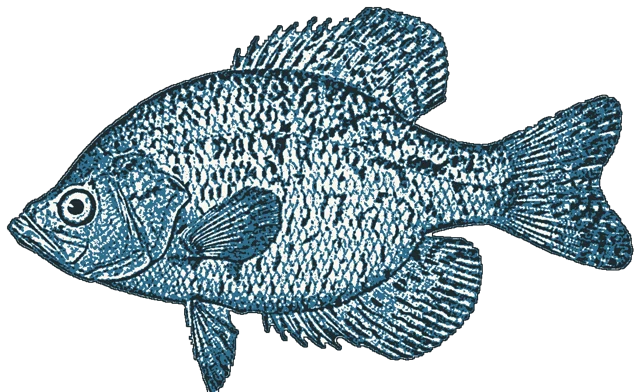
Black crappie
Pomoxis nigromaculatus · Freshwater
One of the classic fish-fry fish: MeatEater counts crappie among the best-eating fish in freshwater.
- Tastes
- mild, sweet, delicate, flaky, white
- Limits
- Light regs. Statewide inland: 15 a day in any combination of crappie, 30 in possession, no length limit. Minnesota border waters: 10 and 10. Iowa, Nebraska and Missouri River inland waters: 15 and 30. (2026 South Dakota Fishing Handbook (license period Dec. 15, 2025 to Jan. 31, 2027); in force on Nov. 21, 2026) Source
- Best months
- Early April after ice-out and late summer, Missouri River near Springfield (NPS); from shore, spring (GFP guide).
- Where
- Ponds, lakes and impoundments throughout the state; less tolerant of turbidity and warm water than white crappie (GFP).
- worm or minnow under a bobber
- small minnows
- plugs
- spoons
- jigs
- spinners
- Limit (everyone), waters and sizes below: one 7-ounce meal a week on average (mercury).
Meal limits and other waters (6)
- Limit (pregnant, may become pregnant or nursing), same fish: 7 ounces a month.
- Limit (children under 7), same fish: 4 ounces a month.
- Over 12 in: Pudwell Dam (Corson Co.).
- Over 13 in: New Wall Lake (Pennington Co.).
- Limit, North Dakota's part of Lake Oahe, meals a month: everyone else 4 at 9 to 11 in and 1 over 11 in; pregnant, may become pregnant or breastfeeding 2 at 8 to 12 in and 1 over 12 in; 15 or younger 2 at 7 to 9 in and 1 over 9 in; smaller fish allow more.
- Limit (everyone): where the state has no advice for a water or a fish, one serving and no other fish that week (Department of Health).
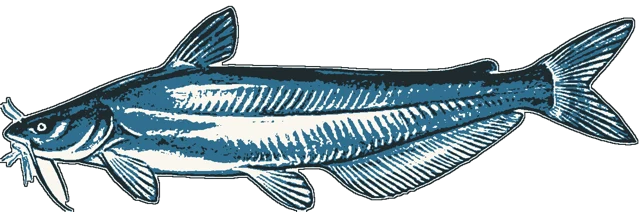
Blue catfish
Ictalurus furcatus · Freshwater
TPWD calls it an excellent food fish; Maryland DNR says blues are very good to eat.
- Tastes
- mild, firm
- Limits
- Heavy regs. Statewide inland, blue catfish count in the catfish limit: 10 a day in any combination, 20 in possession; no catfish limit on Missouri River inland waters and the Bad, Belle Fourche, Cheyenne, Grand, Little Missouri, Moreau and White rivers. Nebraska border waters (Missouri River) and Iowa border waters (Big Sioux River): 1 a day, 1 in possession. Minnesota border waters: 5 catfish combined, only one 24 in or longer. Blue catfish may not be taken on setlines, floatlines, hoop nets or traps in western tributaries of the Missouri River. (2026 South Dakota Fishing Handbook (license period Dec. 15, 2025 to Jan. 31, 2027); in force on Nov. 21, 2026) Source
- cut gizzard shad
- cut skipjack herring
- live shad
- chicken liver
- shrimp
- Large, old blue catfish accumulate contaminants; some water bodies have size-based consumption advisories.
Before you eat it: Limit (everyone): where the state has no advice for a water or a fish, one serving and no other fish that week (Department of Health).
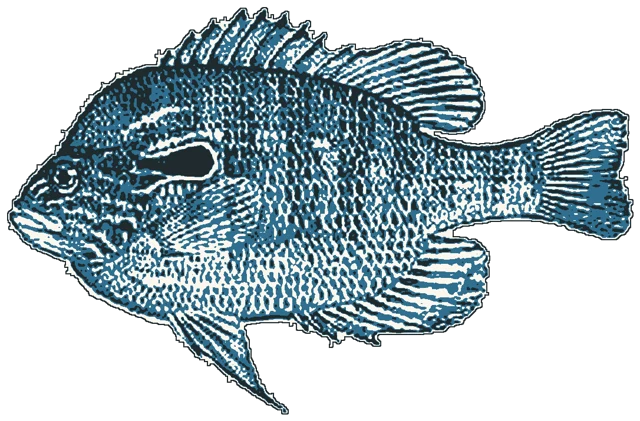
Bluegill
Lepomis macrochirus · Freshwater
MeatEater calls the flesh light, delicate and sweet; the original fish-fry panfish.
- Tastes
- mild, sweet, firm, flaky
- Limits
- Light regs. Statewide inland: 15 a day in any combination of sunfish (bluegill, green, pumpkinseed, redear, orangespotted), 30 in possession. Minnesota border waters: 10 and 10. Bluegill may be used as bait with hook and line. (2026 South Dakota Fishing Handbook (license period Dec. 15, 2025 to Jan. 31, 2027); in force on Nov. 21, 2026) Source
- Where
- Shallow vegetated areas of lakes, ponds and impoundments statewide (GFP).
- worms
- canned corn
- small jigs
- small spinners
- Limit, North Dakota's part of Lake Oahe (its July 2003 chart, crappie and sunfish), meals a month: everyone else 4 at 9 to 11 in and 1 over 11 in; pregnant, may become pregnant or breastfeeding 2 at 8 to 12 in and 1 over 12 in; 15 or younger 2 at 7 to 9 in and 1 over 9 in; smaller fish allow more.
- Limit (everyone): where the state has no advice for a water or a fish, one serving and no other fish that week (Department of Health).
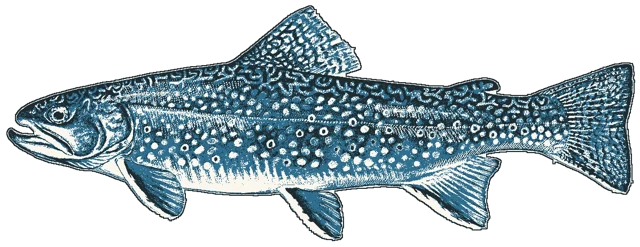
Brook trout
Salvelinus fontinalis · Freshwater
Often called the tastiest trout: MeatEater describes the meat as light and delicate with an almost sweet flavor.
- Tastes
- sweet, delicate, light, delicate
- Limits
- Heavy regs. Statewide: 5 a day in any combination of trout, salmon and splake, 10 in possession. Black Hills streams: only one trout 14 in or longer a day through Dec. 2, 2026; the amended rule effective Dec. 3, 2026 (ARSD 41:07:03:03) reads one trout harvested daily from Black Hills streams, at least 14 in (lake trout and splake 24 in). No high grading of trout in the Black Hills Fish Management Area. Catch and release for all trout on Rapid Creek from below Pactola Dam to Placerville Camp, Rapid Creek in Rapid City (Park Drive to Jackson Boulevard) and Yates Ponds at Cheyenne Crossing; artificial lures only there, with no organic bait within 100 ft. Spearfish Creek from Homestake Hydro Plant No. 2 to Maurice Intake Dam: artificial lures only, brook trout may be kept within limits. (2026 South Dakota Fishing Handbook (license period Dec. 15, 2025 to Jan. 31, 2027); Black Hills stream rule amended effective Dec. 3, 2026) Source
- Where
- Small headwater streams in the Black Hills (GFP).
- worms
- small spinners
Before you eat it: Limit (everyone): where the state has no advice for a water or a fish, one serving and no other fish that week (Department of Health).
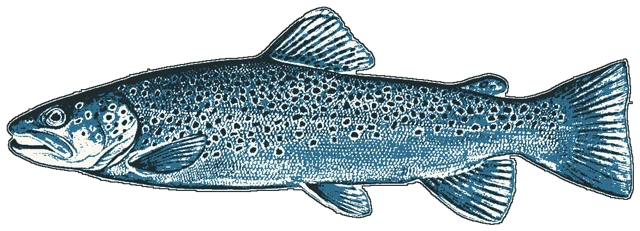
Brown trout
Salmo trutta · Freshwater
Good trout eating like rainbows; most kept browns are stocked fish.
- Tastes
- mild to rich, flaky
- Limits
- Heavy regs. Statewide: 5 a day in any combination of trout, salmon and splake, 10 in possession; Nebraska border waters 5 trout a day, 5 in possession. Black Hills streams: only one trout 14 in or longer a day through Dec. 2, 2026; the amended rule effective Dec. 3, 2026 (ARSD 41:07:03:03) reads one trout harvested daily from Black Hills streams, at least 14 in (lake trout and splake 24 in). No high grading of trout in the Black Hills Fish Management Area. Catch and release for all trout on Rapid Creek from below Pactola Dam to Placerville Camp, Rapid Creek in Rapid City (Park Drive to Jackson Boulevard) and Yates Ponds at Cheyenne Crossing; artificial lures only there, with no organic bait within 100 ft. Spearfish Creek from Homestake Hydro Plant No. 2 to Maurice Intake Dam: artificial lures only, brown trout may be kept within limits. (2026 South Dakota Fishing Handbook (license period Dec. 15, 2025 to Jan. 31, 2027); Black Hills stream rule amended effective Dec. 3, 2026) Source
- Where
- Cold water of Black Hills streams and impoundments (GFP); research and management on Rapid Creek brown trout (GFP Black Hills plan).
- nightcrawlers
- spinners
- minnow-imitating flies
Before you eat it: Limit (everyone): where the state has no advice for a water or a fish, one serving and no other fish that week (Department of Health).
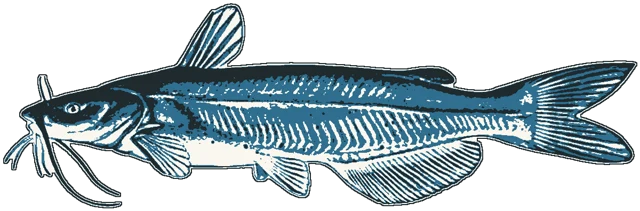
Channel catfish
Ictalurus punctatus · Freshwater
Very good to eat (Maryland DNR) and delicious when cooked (TPWD), and the basis of US catfish farming.
- Tastes
- mild, sweet, firm, moist
- Limits
- Light regs. Statewide inland: 10 a day in any combination of catfish, only one flathead catfish 30 in or longer, 20 in possession. Missouri River inland waters (Lakes Oahe, Sharpe and Francis Case and the 5.5 miles below Fort Randall Dam) and the Bad, Belle Fourche, Cheyenne, Grand, Little Missouri, Moreau and White rivers: no limit, but only one flathead 30 in or longer a day on the Missouri. Minnesota border waters: 5 catfish a day, only one 24 in or longer, 5 in possession. Iowa and Nebraska border waters: 10 channel catfish a day, 20 in possession. Residents may buy setline, floatline and hoop net licenses for the inland Missouri River, its western tributaries, Angostura, Belle Fourche and Shadehill reservoirs and Nebraska border waters (no floatlines there). (2026 South Dakota Fishing Handbook (license period Dec. 15, 2025 to Jan. 31, 2027); in force on Nov. 21, 2026) Source
- Best months
- Late June, July and August for catfish in general, Missouri River near Springfield (NPS).
- Where
- Statewide, mainly in larger streams, rivers, lakes and impoundments; larger fish hold in pools with logs and brush in turbid rivers (GFP). GFP netted and tagged channel and flathead catfish on the lower James River, from the Missouri River confluence to Olivet, in 2018.
- chicken liver
- nightcrawlers
- shrimp
- stinkbait
- cut shad
- cut mullet
- Do not eat (15 or younger): channel catfish over 27 in from North Dakota's part of Lake Oahe (its July 2003 chart).
Meal limits and other waters (3)
- Limit, North Dakota's part of Lake Oahe, meals a month: everyone else 4 at 22 to 24 in and 1 over 24 in; pregnant, may become pregnant or breastfeeding 4 at 19 to 22 in and 1 over 22 in; 15 or younger 2 at 19 to 22 in and 1 at 22 to 27 in; smaller fish allow more.
- Limit (under 15; may become pregnant, pregnant, breastfeeding or planning to): 1 serving a month from the Minnesota border waters, such as Big Stone Lake and Lake Traverse (Minnesota, Mar. 10, 2026).
- Limit (everyone): where the state has no advice for a water or a fish, one serving and no other fish that week (Department of Health).
Chinook salmon
Oncorhynchus tshawytscha · Freshwater
NOAA calls Chinook the most highly prized salmon in the culinary world: rich, buttery and oily.
- Tastes
- rich, buttery, oily, flaky, meaty
- Limits
- Heavy regs. Statewide: 5 a day in any combination of trout, salmon and splake, 10 in possession. Snagging season on Lake Oahe, Oahe Dam to the North Dakota border: Oct. 1 to Nov. 30; one line with one hook; other species snagged must be released at once; catch and release salmon tournaments are not approved. (2026 South Dakota Fishing Handbook (license period Dec. 15, 2025 to Jan. 31, 2027); in force on Nov. 21, 2026) Source
- Best months
- Snagging season Oct. 1 to Nov. 30 (Handbook).
- Where
- Lake Oahe and the Oahe tailwaters; they feed on rainbow smelt and lake herring (GFP).
Before you eat it: Limit (everyone): where the state has no advice for a water or a fish, one serving and no other fish that week (Department of Health).
Cutthroat trout
Oncorhynchus clarkii · Freshwater
Eats like other trout; kept where legal, especially stocked fish and coastal sea-run cutts.
- Tastes
- mild, clean, delicate, flaky
- Limits
- Heavy regs. Statewide: 5 a day in any combination of trout, salmon and splake, 10 in possession; Nebraska border waters 5 trout a day, 5 in possession. Black Hills streams: only one trout 14 in or longer a day through Dec. 2, 2026; the amended rule effective Dec. 3, 2026 (ARSD 41:07:03:03) reads one trout harvested daily from Black Hills streams, at least 14 in (lake trout and splake 24 in). No high grading of trout in the Black Hills Fish Management Area. Catch and release for all trout on Rapid Creek from below Pactola Dam to Placerville Camp, Rapid Creek in Rapid City (Park Drive to Jackson Boulevard) and Yates Ponds at Cheyenne Crossing; artificial lures only there, with no organic bait within 100 ft. Spearfish Creek from Homestake Hydro Plant No. 2 to Maurice Intake Dam: artificial lures only, cutthroat trout may be kept within limits. (2026 South Dakota Fishing Handbook (license period Dec. 15, 2025 to Jan. 31, 2027); Black Hills stream rule amended effective Dec. 3, 2026) Source
- Where
- Stocked in western South Dakota and in Black Hills streams and impoundments, and in put-and-take waters around the state (GFP guide).
Before you eat it: Limit (everyone): where the state has no advice for a water or a fish, one serving and no other fish that week (Department of Health).
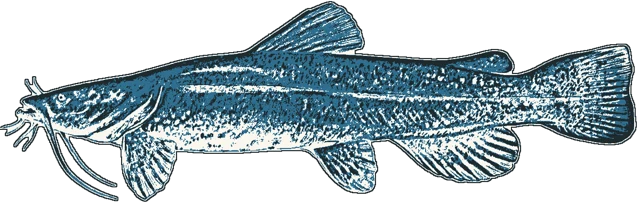
Flathead catfish
Pylodictis olivaris · Freshwater
Widely considered the best-tasting catfish because it eats live fish instead of scavenging; Maryland DNR notes its mild, white flesh.
- Tastes
- mild, clean, firm, white
- Limits
- Light regs. Counted in the catfish limit: 10 a day in any combination, only one flathead catfish 30 in or longer, 20 in possession statewide inland. Missouri River inland waters and the Bad, Belle Fourche, Cheyenne, Grand, Little Missouri, Moreau and White rivers: no limit on catfish, but only one flathead 30 in or longer a day on the Missouri. Nebraska and Iowa border waters: 5 flathead a day, only one 30 in or longer, 10 in possession. Minnesota border waters: 5 catfish combined, only one 24 in or longer, 5 in possession. (2026 South Dakota Fishing Handbook (license period Dec. 15, 2025 to Jan. 31, 2027); in force on Nov. 21, 2026) Source
- Best months
- Late June, July and August for catfish in general, Missouri River near Springfield (NPS).
- Where
- Large rivers of southeast South Dakota and Lake Mitchell (Davison Co.), in deep pools with cover (GFP).
- live sunfish
- live gizzard shad
- crayfish
- live bullheads
Before you eat it: Limit (everyone): where the state has no advice for a water or a fish, one serving and no other fish that week (Department of Health).
Pumpkinseed
Lepomis gibbosus · Freshwater
A standard northern panfish; MeatEater notes pond owners stock it partly for its quality as table fare.
- Tastes
- mild, sweet, flaky
- Limits
- Light regs. Counted in the sunfish limit: 15 a day in any combination of sunfish, 30 in possession; Minnesota border waters 10 and 10. May be used as bait with hook and line. (2026 South Dakota Fishing Handbook (license period Dec. 15, 2025 to Jan. 31, 2027); in force on Nov. 21, 2026) Source
- Where
- Statewide, most abundant in shallow vegetated areas of lakes and ponds and in backwaters and pools of smaller streams (GFP).
- garden worms
- red wigglers
- grubs
- crickets
- wet flies
- nymphs
- Limit, North Dakota's part of Lake Oahe (its July 2003 chart, crappie and sunfish), meals a month: everyone else 4 at 9 to 11 in and 1 over 11 in; pregnant, may become pregnant or breastfeeding 2 at 8 to 12 in and 1 over 12 in; 15 or younger 2 at 7 to 9 in and 1 over 9 in; smaller fish allow more.
- Limit (everyone): where the state has no advice for a water or a fish, one serving and no other fish that week (Department of Health).
Rainbow smelt
Osmerus mordax · Freshwater
Maine Sea Grant says smelt are marketed for their sweet, delicate flavor; fried whole, they are a classic northern winter and spring meal.
- Tastes
- mild, sweet (fresh fish smell like cucumber), delicate, fine bones you eat
- Limits
- No limits. Daily limit 5 gallons, no possession limit. Live smelt may not be transported. Taken by hook and line, dip nets, lift nets, cast nets and seines; a fishing license is required. (2026 South Dakota Fishing Handbook (license period Dec. 15, 2025 to Jan. 31, 2027); in force on Nov. 21, 2026) Source
- Where
- Spread downstream from Lake Sakakawea into Lake Oahe; a self-sustaining population in Pactola Reservoir (GFP guide).
- baited hooks
- dip net (where legal)
Before you eat it: Limit (everyone): where the state has no advice for a water or a fish, one serving and no other fish that week (Department of Health).
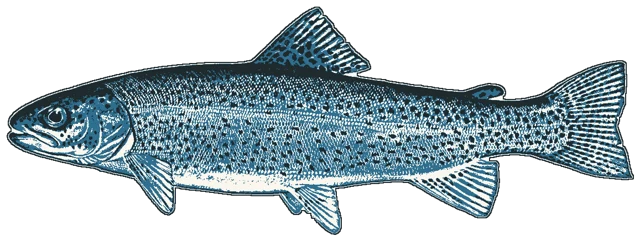
Rainbow trout
Oncorhynchus mykiss · Freshwater
TPWD calls rainbow trout an excellent fish to eat; the most-stocked put-and-take fish in America.
- Tastes
- mild, clean, delicate, flaky
- Limits
- Heavy regs. Statewide: 5 a day in any combination of trout, salmon and splake, 10 in possession; Nebraska border waters 5 trout a day, 5 in possession. Black Hills streams: only one trout 14 in or longer a day through Dec. 2, 2026; the amended rule effective Dec. 3, 2026 (ARSD 41:07:03:03) reads one trout harvested daily from Black Hills streams, at least 14 in (lake trout and splake 24 in). No high grading of trout in the Black Hills Fish Management Area. Catch and release for all trout on Rapid Creek from below Pactola Dam to Placerville Camp, Rapid Creek in Rapid City (Park Drive to Jackson Boulevard) and Yates Ponds at Cheyenne Crossing, and for rainbow trout on Spearfish Creek from Homestake Hydro Plant No. 2 to Maurice Intake Dam; artificial lures only there, with no organic bait within 100 ft. (2026 South Dakota Fishing Handbook (license period Dec. 15, 2025 to Jan. 31, 2027); Black Hills stream rule amended effective Dec. 3, 2026) Source
- Where
- Stocked in Missouri River impoundments and tailwaters, ponds across the state and Black Hills streams and impoundments (GFP); Sheridan, Pactola and Deerfield reservoirs get about 25% of catchable rainbow trout stocked in the Black Hills.
- worm under a bobber
- small plugs
- spoons
- jigs
- spinners
- flies
Before you eat it: Limit (everyone): where the state has no advice for a water or a fish, one serving and no other fish that week (Department of Health).
Sauger
Sander canadensis · Freshwater
The walleye's smaller river cousin, with the same fillets; MeatEater says they taste just as good.
- Tastes
- mild, clean, firm, flaky white
- Limits
- Heavy regs. Counted in the walleye limit: 4 a day in any combination of walleye, sauger and saugeye, only one 20 in or longer; 8 in possession. Walleye rules on listed waters cover sauger too, including the 15 in minimum on Lake Sharpe and Lake Francis Case from Sept. 1 to June 30 and year-round on Nebraska border waters above Gavins Point Dam. Same Missouri River, border water, East River and West River exceptions as walleye. (2026 South Dakota Fishing Handbook (license period Dec. 15, 2025 to Jan. 31, 2027); in force on Nov. 21, 2026) Source
- Best months
- Early April into the latter half of May on Lake Francis Case (In-Fisherman guide interview); they move deeper after about the third week of May.
- Where
- Large streams, rivers, lakes and reservoirs (GFP); Lake Francis Case, especially south of Chamberlain toward the White River (In-Fisherman guide interview).
- minnow-tipped jigs
- live-bait rigs with minnows
- crankbaits
- Limit: the 2026 Handbook counts sauger as walleye, so use the walleye waters, sizes and amounts on this page for sauger too.
Meal limits and other waters (2)
- Limit (under 15; may become pregnant, pregnant, breastfeeding or planning to): 1 serving a month from the Minnesota border waters, such as Big Stone Lake and Lake Traverse (Minnesota, Mar. 10, 2026).
- Limit (everyone): where the state has no advice for a water or a fish, one serving and no other fish that week (Department of Health).
Saugeye
Sander vitreus x S. canadensis · Freshwater
Oklahoma's wildlife department says saugeye make first-class table fare.
- Tastes
- mild, clean, firm, flaky white
- Limits
- Heavy regs. Counted in the walleye limit: 4 a day in any combination of walleye, sauger and saugeye, only one 20 in or longer; 8 in possession. Walleye rules on listed waters cover sauger too, including the 15 in minimum on Lake Sharpe and Lake Francis Case from Sept. 1 to June 30 and year-round on Nebraska border waters above Gavins Point Dam. Same Missouri River, border water, East River and West River exceptions as walleye. (2026 South Dakota Fishing Handbook (license period Dec. 15, 2025 to Jan. 31, 2027); in force on Nov. 21, 2026) Source
- Where
- Northeast lakes and impoundments GFP stocked with saugeye from 2016 to 2018; its Northeast plan names the Richmond, Mina and Elm reservoirs.
- jigs tipped with minnows or shiners
- crankbaits
- blade baits
- grubs and ring worms
- nightcrawlers
- Limit: the 2026 Handbook counts saugeye as walleye, so use the walleye waters, sizes and amounts on this page for saugeye too (Elm Lake, which GFP has stocked with saugeye, is over 25 in).
Meal limits and other waters (2)
- Limit (under 15; may become pregnant, pregnant, breastfeeding or planning to): 1 serving a month from the Minnesota border waters, such as Big Stone Lake and Lake Traverse (Minnesota, Mar. 10, 2026).
- Limit (everyone): where the state has no advice for a water or a fish, one serving and no other fish that week (Department of Health).
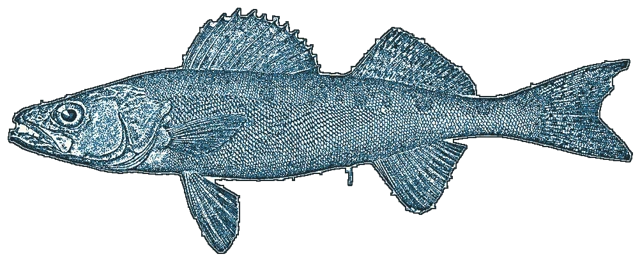
Walleye
Sander vitreus · Freshwater
Widely rated the best-eating freshwater fish: Maryland DNR calls it one of the best tasting, TPWD an excellent food fish.
- Tastes
- mild, clean, firm, tender, flaky white
- Limits
- Heavy regs. Inland default: 4 a day in any combination of walleye, sauger and saugeye, only one 20 in or longer; 8 in possession. No more than one walleye 20 in or longer a day across all waters fished. High grading (culling) walleye is prohibited statewide, border waters included. Missouri River: Lake Oahe follows the inland default. Lake Sharpe and Lake Francis Case: 15 in minimum from Sept. 1 to June 30, no minimum in July and August, one 20 in or longer at most. Missouri River below Fort Randall Dam to the Nebraska line (5.5 miles): 15 in minimum year-round, one 20 in or longer at most. Nebraska border waters: 4 a day, 8 in possession, 15 in minimum from Gavins Point Dam (Lewis and Clark Lake) upstream to the point where the river is entirely in South Dakota. Minnesota border waters: 4 a day, only one 20 in or longer, 4 in possession. Iowa border waters: 4 a day, only one 20 in or longer, 8 in possession. East River exceptions: Horseshoe Lake (Day Co.) and Twin Lake (Minnehaha Co.) 1 a day, 28 in minimum; Lynn, Middle Lynn and Opitz lakes 2 a day, 15 in minimum, only one 20 in or longer. West River exceptions: Angostura and Shadehill reservoirs 15 in minimum, only one 20 in or longer; Belle Fourche Reservoir, Newell Lake and Curlew Lake 2 a day, 15 in minimum, only one 20 in or longer. (2026 South Dakota Fishing Handbook (license period Dec. 15, 2025 to Jan. 31, 2027); in force on Nov. 21, 2026) Source
- Where
- Missouri River reservoirs (Oahe, Sharpe, Francis Case, Lewis and Clark Lake), where GFP creel surveys show walleye as the most harvested fish; Northeast natural lakes are managed primarily for walleye, yellow perch and northern pike; West River reservoirs such as Belle Fourche.
- crawler harnesses
- crankbaits
- jigs
- Do not eat (under 15; may become pregnant, pregnant, breastfeeding or planning to): walleye 20 in or longer from the Minnesota border waters, such as Big Stone Lake and Lake Traverse (Minnesota, Mar. 10, 2026; smaller ones 1 serving a month).
- Do not eat (15 or younger): walleye over 23 in from North Dakota's part of Lake Oahe (its July 2003 chart).
Meal limits and other waters (14)
- Limit (everyone), waters and sizes below: one 7-ounce meal a week on average (mercury).
- Limit (pregnant, may become pregnant or nursing), same fish: 7 ounces a month.
- Limit (children under 7), same fish: 4 ounces a month.
- Any size: Bitter Lake (Day Co.) and Twin Lakes (Minnehaha Co.).
- Over 16 in: Horseshoe Lake (Day Co.; 2026 Handbook, the department's list says over 18) and Kiesz Dam (McPherson Co.).
- Over 17 in: Long Lake (Codington Co.).
- Over 18 in: Goose Lake, Lynn Lake, Middle Lynn Lake, Lake Minnewasta, Newell Lake, North Island Lake, Pudwell Dam and Twin Lakes (Kingsbury and Brookings Co.).
- Over 21 in: Cottonwood Lake (Spink Co.), Dry Lake No. 1 (Clark Co.), Hazeldon Lake, North and South Buffalo lakes and Swan Lake (Clark Co.).
- Over 22 in: Dry Lake No. 2 (Clark Co.).
- Over 23 in: Reid Lake.
- Over 24 in: Enemy Swim Lake and Lake Henry (Kingsbury Co.).
- Over 25 in: Elm Lake, Lake Alice, Lardy Lake and Scott Lake.
- Meal limits by size from North Dakota (Lake Oahe) and Nebraska (Lewis and Clark Lake, Missouri River) are in the eating advice on this page.
- Limit (everyone): where the state has no advice for a water or a fish, one serving and no other fish that week (Department of Health).
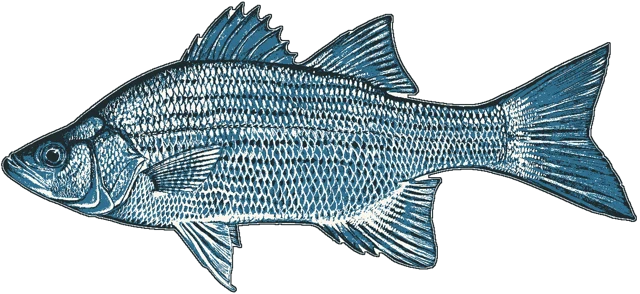
White bass
Morone chrysops · Freshwater
Texas Parks & Wildlife calls white bass superb table fare, and the spring runs fill a lot of coolers; light, flaky meat like walleye.
- Tastes
- mild, light, flaky
- Limits
- No limits. No statewide limit on inland waters. Missouri River below Fort Randall Dam to the Nebraska line (5.5 miles): 15 a day, 30 in possession. Nebraska border waters: 15 and 30. Minnesota and Iowa border waters: no limit. (2026 South Dakota Fishing Handbook (license period Dec. 15, 2025 to Jan. 31, 2027); in force on Nov. 21, 2026) Source
- Where
- Missouri River and its impoundments, larger tributaries and some glacial lakes; a schooling fish of river pools and open water (GFP).
- small jig with a minnow
- spinners
- plastics
- Do not eat (anyone): white bass over 21 in from North Dakota's part of Lake Oahe (its July 2003 chart).
- Do not eat (pregnant, may become pregnant or breastfeeding): white bass over 17 in from North Dakota's part of Lake Oahe.
- Do not eat (15 or younger): white bass over 13 in from North Dakota's part of Lake Oahe.
Meal limits and other waters (8)
- Limit (everyone), waters and sizes below: one 7-ounce meal a week on average (mercury).
- Limit (pregnant, may become pregnant or nursing), same fish: 7 ounces a month.
- Limit (children under 7), same fish: 4 ounces a month.
- Over 15 in: Goose Lake (Codington Co.; new in 2026).
- Over 16 in: Pickerel Lake (Day Co.).
- Meal limits by size from North Dakota (Lake Oahe) and Nebraska (Lewis and Clark Lake, Missouri River) are in the eating advice on this page.
- Limit (under 15; may become pregnant, pregnant, breastfeeding or planning to): 1 serving a month from the Minnesota border waters, such as Big Stone Lake and Lake Traverse (Minnesota, Mar. 10, 2026).
- Limit (everyone): where the state has no advice for a water or a fish, one serving and no other fish that week (Department of Health).
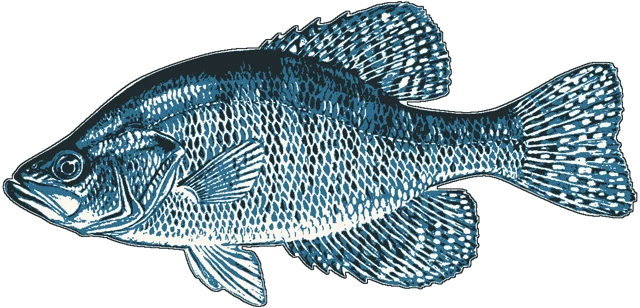
White crappie
Pomoxis annularis · Freshwater
Same top-tier panfish fillets as black crappie; one of the most popular panfish in the country.
- Tastes
- mild, sweet, delicate, flaky, white
- Limits
- Light regs. Statewide inland: 15 a day in any combination of crappie, 30 in possession. Minnesota border waters: 10 and 10. (2026 South Dakota Fishing Handbook (license period Dec. 15, 2025 to Jan. 31, 2027); in force on Nov. 21, 2026) Source
- Best months
- Early April after ice-out and late summer, Missouri River near Springfield (NPS); from shore, spring (GFP guide).
- Where
- Abundant statewide in warm and cool water ponds, lakes and impoundments (GFP).
- worm or minnow under a bobber
- small minnows
- plugs
- spoons
- jigs
- spinners
- Limit (everyone), waters and sizes below: one 7-ounce meal a week on average (mercury).
Meal limits and other waters (5)
- Limit (pregnant, may become pregnant or nursing), same fish: 7 ounces a month.
- Limit (children under 7), same fish: 4 ounces a month.
- Over 13 in: New Wall Lake (Pennington Co.).
- Limit, North Dakota's part of Lake Oahe, meals a month: everyone else 4 at 9 to 11 in and 1 over 11 in; pregnant, may become pregnant or breastfeeding 2 at 8 to 12 in and 1 over 12 in; 15 or younger 2 at 7 to 9 in and 1 over 9 in; smaller fish allow more.
- Limit (everyone): where the state has no advice for a water or a fish, one serving and no other fish that week (Department of Health).
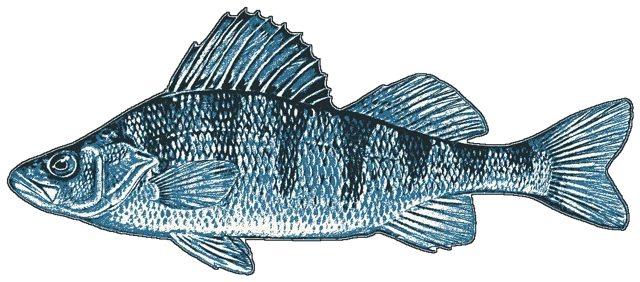
Yellow perch
Perca flavescens · Freshwater
A great food fish (MN DNR) and the centerpiece of Great Lakes perch fries; Iowa DNR calls a fried stringer of perch unsurpassed in flavor.
- Tastes
- mild, sweet, firm, flaky, white
- Limits
- Light regs. Statewide inland: 15 a day, 30 in possession, no length limit. The same 15 and 30 apply on Iowa, Nebraska and Minnesota border waters and Missouri River inland waters. (2026 South Dakota Fishing Handbook (license period Dec. 15, 2025 to Jan. 31, 2027); in force on Nov. 21, 2026) Source
- Best months
- Dry Lake No. 2 near Clark: January best for one In-Fisherman writer, early March preferred by others, before ice gets iffy.
- Where
- Statewide in rivers, lakes and impoundments (GFP); Clark-area lakes (Dry Lake No. 1 and 2, Indian Springs), Bitter Lake, Waubay Lake and Lake Poinsett (In-Fisherman).
- wax worms
- blood worms
- night crawlers
- Do not eat (anyone): perch over 14 in from North Dakota's part of Lake Oahe (its July 2003 chart).
- Do not eat (pregnant, may become pregnant or breastfeeding): perch over 13 in from North Dakota's part of Lake Oahe.
- Do not eat (15 or younger): perch over 11 in from North Dakota's part of Lake Oahe.
Meal limits and other waters (2)
- Limit, North Dakota's part of Lake Oahe, meals a month: everyone else 2 at 10 to 12 in and 1 at 12 to 14 in; pregnant, may become pregnant or breastfeeding 2 at 9 to 11 in and 1 at 11 to 13 in; 15 or younger 2 at 9 to 10 in and 1 at 10 to 11 in; smaller fish allow more.
- Limit (everyone): where the state has no advice for a water or a fish, one serving and no other fish that week (Department of Health).
Bighead carp
Hypophthalmichthys nobilis · Freshwater
Indiana DNR says its meat tastes very mild and is great in a classic fish fry, but as an invasive 'Asian carp' it is usually killed and discarded.
Worth a try: Fish fry, spiced or marinated (Indiana DNR); marketed as 'Copi' and recommended by Seafood Watch.
- Tastes
- mild, clean, white, intermuscular bones
- Limits
- No limits. No limit. Bighead carp is a listed aquatic invasive species: it may not be possessed, shipped or transported alive in South Dakota, and only dead fish may be possessed, transported or used as bait (SDCL 41-13A-2; ARSD 41:10:04:02). Fish that jump into a boat or are netted from the air with a dip net may be kept, and dip nets are legal. Spear, speargun, bow and crossbow are legal year-round, any time of day or night, and fish taken that way must be retained. Fish not native to South Dakota may not be released into public waters without written GFP authorization. (2026 South Dakota Fishing Handbook (license period Dec. 15, 2025 to Jan. 31, 2027); in force on Nov. 21, 2026) Source
- Where
- Missouri River and its tributaries below Gavins Point Dam (GFP guide); the Handbook also lists the Big Sioux River below Falls Park, James River, Lake Byron, McCook Lake, Mud Lake (Beadle Co.) and the Vermillion River below East Vermillion State Recreation Area.
Before you eat it: Limit (pregnant, may become pregnant, breastfeeding, young children): 1 serving a week, a Good Choices fish on the chart the department posts. Limit (everyone): where the state has no advice for a water or a fish, one serving and no other fish that week (Department of Health).
Bigmouth buffalo
Ictiobus cyprinellus · Freshwater
A food fish many people consider worth keeping despite its many bones (TPWD), but and rarely caught on hook and line, so most anglers write it off as a rough fish.
Worth a try: TPWD says many people consider it quite a food fish despite its many bones; smoke it, or fry the rib sections.
- Tastes
- mild, rich, firm, bony
- Limits
- No limits. Rough fish: no limit. May be speared or bowfished year-round, any time of day or night. (2026 South Dakota Fishing Handbook (license period Dec. 15, 2025 to Jan. 31, 2027); in force on Nov. 21, 2026) Source
- Where
- Larger tributaries, impoundments and free-flowing Missouri River reaches in eastern South Dakota and some glacial lakes (GFP guide).
- dough baits (cottonseed meal)
- bowfishing
- Limit (pregnant, may become pregnant, breastfeeding, young children): 1 serving a week, a Good Choices fish on the chart the department posts.
Meal limits and other waters (2)
- Limit (under 15; may become pregnant, pregnant, breastfeeding or planning to): 1 serving a month from the Minnesota border waters, such as Big Stone Lake and Lake Traverse (Minnesota, Mar. 10, 2026).
- Limit (everyone): where the state has no advice for a water or a fish, one serving and no other fish that week (Department of Health).
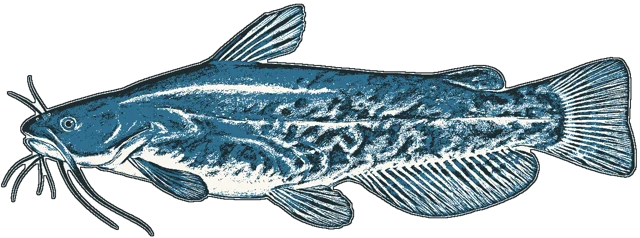
Bullhead (black, brown, yellow)
Ameiurus melas, A. nebulosus, A. natalis · Freshwater
Sweet, delicious catfish meat, but most are small and many come from warm, muddy water, so many anglers dismiss them.
- Tastes
- mild, sweet, firm, moist
- Limits
- No limits. No statewide limit on bullheads (Lake herring/lake whitefish/bullhead/rough fish: no limit). Minnesota border waters: 100 a day and 100 in possession. Bullheads (all species) may be used as bait with hook and line. (2026 South Dakota Fishing Handbook (license period Dec. 15, 2025 to Jan. 31, 2027); in force on Nov. 21, 2026) Source
- Where
- Black bullhead is widespread and abundant in South Dakota, particularly in standing water (GFP guide).
- nightcrawlers
- chicken livers
- dough balls
- cut bait
- stinkbait
Before you eat it: Limit (everyone): where the state has no advice for a water or a fish, one serving and no other fish that week (Department of Health).
Burbot
Lota lota · Freshwater
Many anglers still throw back the slimy, eel-like 'eelpout' as trash, yet Alaskans keep them for their delicate white meat.
Worth a try: A freshwater cod: skin it, take the white loins and the liver, and boil-and-butter it like 'poor man's lobster', fry it or put it in chowder (Hank Shaw).
- Tastes
- mild, sweet, firm, white, lobster-like
- Limits
- No limits. No limit statewide. State law makes every species outside the game fish families a rough fish, and burbot (codfish family) is outside them. (2026 South Dakota Fishing Handbook (license period Dec. 15, 2025 to Jan. 31, 2027); in force on Nov. 21, 2026) Source
- Spawns
- Spawns in midwinter under ice cover (GFP guide).
- Where
- Restricted to the Missouri River and its reservoirs (GFP guide).
- cut sucker or cisco
- live minnows (gold shiners)
- jigging spoons tipped with bait
- bucktail jigs
- Burbot are among the large predators that can carry elevated mercury in parts of northern and western Alaska (ADF&G).
Before you eat it: Limit (everyone): where the state has no advice for a water or a fish, one serving and no other fish that week (Department of Health).
Cisco
Coregonus artedi · Freshwater
Mild but soft and bony; mostly eaten smoked, where smoked ciscoes and chubs are a Great Lakes and deli tradition.
- Tastes
- mild, oily, soft, bony
- Limits
- No limits. Lake herring: no limit. May be taken by hook and line, seines, lift nets, cast nets and dip nets. (2026 South Dakota Fishing Handbook (license period Dec. 15, 2025 to Jan. 31, 2027); in force on Nov. 21, 2026) Source
- Where
- Lake Oahe, where a self-sustaining lake herring population feeds sport fish (GFP Missouri River plan); also listed in Waubay Lake.
Before you eat it: Limit (everyone): where the state has no advice for a water or a fish, one serving and no other fish that week (Department of Health).
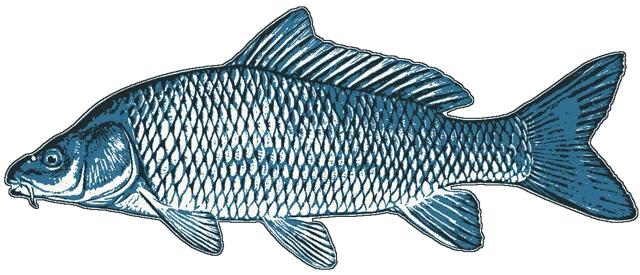
Common carp
Cyprinus carpio · Freshwater
Most US anglers call it a muddy, bony trash fish, but it is a prized food fish in Europe and Asia and eats well from clean, cold water.
Worth a try: Catch from clean water, remove the dark 'mud vein', and either score small fish and fry hard so the Y-bones soften, or hard-smoke large fish over fruitwood (Hank Shaw).
- Tastes
- mild from clean water, strong from muddy water, firm, fatty, Y-bones
- Limits
- No limits. No limit on rough fish. Common carp may not be used as bait. May be taken by legal spear, speargun, dip net, bow and arrow or crossbow year-round, any time of day or night, on inland and border waters; fish taken by spearing or archery must be retained. Common carp is on the state's aquatic invasive species list, so it may be possessed or moved only dead (ARSD 41:10:04:01 and 41:10:04:02). (2026 South Dakota Fishing Handbook (license period Dec. 15, 2025 to Jan. 31, 2027); in force on Nov. 21, 2026) Source
- Where
- Widespread in South Dakota (GFP guide); ubiquitous across the Northeast Fisheries Management Area (GFP plan).
- dough balls
- canned corn
- worms
- boilies
- bread
- Limit (pregnant, may become pregnant, breastfeeding, young children): 1 serving a week, a Good Choices fish on the chart the department posts.
Meal limits and other waters (2)
- Limit (under 15; may become pregnant, pregnant, breastfeeding or planning to): 1 serving a month from the Minnesota border waters, such as Big Stone Lake and Lake Traverse (Minnesota, Mar. 10, 2026).
- Limit (everyone): where the state has no advice for a water or a fish, one serving and no other fish that week (Department of Health).
Freshwater drum
Aplodinotus grunniens · Freshwater
Many anglers call it a rough fish, but it is prized as food in some areas (TPWD); bled and iced, the boneless fillets eat like a redfish's.
Worth a try: Bleed it, ice it immediately and trim the red lateral meat; then fry thin fillets, grill on the half-shell like redfish, or smoke oily summer fish.
- Tastes
- mild, like other drum, firm but tender, large flake; goes soft if not iced
- Limits
- No limits. Rough fish: no limit. May be speared or bowfished year-round. (2026 South Dakota Fishing Handbook (license period Dec. 15, 2025 to Jan. 31, 2027); in force on Nov. 21, 2026) Source
- Where
- Eastern river basins, the Missouri River and its impoundments (GFP guide); the most harvested fish below Gavins Point Dam in GFP creel surveys.
- Limit (under 15; may become pregnant, pregnant, breastfeeding or planning to): 1 serving a month from the Minnesota border waters, such as Big Stone Lake and Lake Traverse (Minnesota, Mar. 10, 2026).
- Limit (everyone): where the state has no advice for a water or a fish, one serving and no other fish that week (Department of Health).
Green sunfish
Lepomis cyanellus · Freshwater
Edible like any sunfish but usually stunted; many anglers treat it as a pest that steals bait meant for bigger fish.
- Tastes
- mild, flaky
- Limits
- Light regs. Counted in the sunfish limit: 15 a day, 30 in possession; Minnesota border waters 10 and 10. May be used as bait with hook and line. (2026 South Dakota Fishing Handbook (license period Dec. 15, 2025 to Jan. 31, 2027); in force on Nov. 21, 2026) Source
- Where
- Most abundant in small waters such as wetlands, stock ponds and small streams; less common in large lakes and reservoirs (GFP).
- worms
- grubs
- grasshoppers
- small jigs
- Limit, North Dakota's part of Lake Oahe (its July 2003 chart, crappie and sunfish), meals a month: everyone else 4 at 9 to 11 in and 1 over 11 in; pregnant, may become pregnant or breastfeeding 2 at 8 to 12 in and 1 over 12 in; 15 or younger 2 at 7 to 9 in and 1 over 9 in; smaller fish allow more.
- Limit (everyone): where the state has no advice for a water or a fish, one serving and no other fish that week (Department of Health).
Lake trout
Salvelinus namaycush · Freshwater
Edible and widely kept, but it is the trout most often knocked as too greasy; big fish are very fatty and best smoked.
- Tastes
- rich, oily, soft to firm, fatty
- Limits
- Heavy regs. Statewide: 5 a day in any combination of trout, salmon and splake, 10 in possession. Black Hills Fish Management Area: 1 a day of lake trout or splake, 24 in minimum. The stilling basin below Pactola Dam is catch and release for all trout. (2026 South Dakota Fishing Handbook (license period Dec. 15, 2025 to Jan. 31, 2027); in force on Nov. 21, 2026) Source
- Where
- Pactola and Deerfield reservoirs in the Black Hills (GFP).
- trolled spoons
- jigged bait
- dead bait under tip-ups
- Great Lakes and some western lakes carry contaminant advisories for large lake trout; check your state advisory.
Before you eat it: Limit (everyone): where the state has no advice for a water or a fish, one serving and no other fish that week (Department of Health).
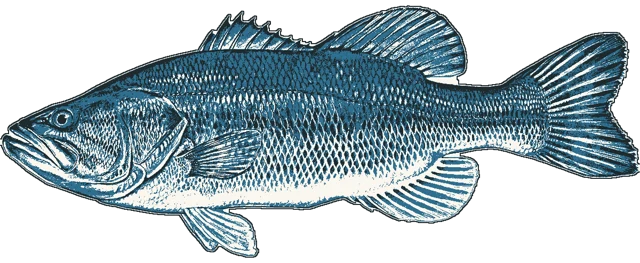
Largemouth bass
Micropterus nigricans (syn. M. salmoides) · Freshwater
Perfectly edible white fillets, but America's top catch-and-release fish and many anglers swear the meat tastes fishy or muddy, so reputation is split.
- Tastes
- mild to slightly 'fishy', firm, thick fillets
- Limits
- Heavy regs. Statewide inland: 5 a day in any combination of largemouth and smallmouth bass, 10 in possession. Minnesota border waters: 6 and 6. Yankton Lake and Mitchell Lake: 15 in minimum. New Wall Dam (Pennington Co.): only fish under 14 in or 18 in and longer may be kept, and no more than one of those 18 in or longer. (2026 South Dakota Fishing Handbook (license period Dec. 15, 2025 to Jan. 31, 2027); in force on Nov. 21, 2026) Source
- Best months
- May, June, September and October, Missouri River near Springfield (NPS).
- Where
- Warm water ponds, lakes and impoundments statewide, most abundant where protected from wind with submerged vegetation (GFP).
- plastic worm
- plastic frog
- minnow
- plug
- spinner
- spoon
- Water-body mercury advisories commonly list largemouth bass; check your state's advisory before eating large fish.
- Do not eat (anyone): largemouth over 18 in from Lewis and Clark Lake or the Missouri River along Nebraska (Not Recommended in Nebraska's 2014 brochure).
Meal limits and other waters (9)
- Limit (everyone), waters and sizes below: one 7-ounce meal a week on average (mercury).
- Limit (pregnant, may become pregnant or nursing), same fish: 7 ounces a month.
- Limit (children under 7), same fish: 4 ounces a month.
- Over 15 in: Lake Louise (Hand Co.; added Mar. 19, 2026).
- Over 16 in: New Wall Lake (Pennington Co.).
- Over 17 in: Lake Isabel (Dewey Co.).
- Over 18 in: Lake Hurley (Potter Co.) and Roosevelt Lake (Tripp Co.).
- Limit (under 15; may become pregnant, pregnant, breastfeeding or planning to): 1 serving a month from the Minnesota border waters, such as Big Stone Lake and Lake Traverse (Minnesota, Mar. 10, 2026).
- Limit (everyone): where the state has no advice for a water or a fish, one serving and no other fish that week (Department of Health).
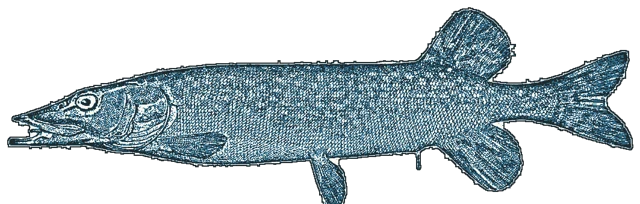
Northern pike
Esox lucius · Freshwater
The meat is white, flaky and great in flavor, but the Y-bones put many anglers off; reputation is split between 'too bony' and 'better than walleye once you learn to clean them'.
Worth a try: Remove the Y-bones with the five-fillet method, or grind, pickle or make fish balls from the meat; Hank Shaw's pike balls grind small pike so the bones vanish.
- Tastes
- mild, clean, firm, flaky white; Y-bones in the upper fillet
- Limits
- Light regs. Statewide inland: 6 a day, 12 in possession, no length limit. Nebraska border waters: 3 a day, 6 in possession. Minnesota border waters: 6 and 6. Iowa border waters: 6 and 12. Missouri River inland waters: 6 and 12. Spearing and archery for northern pike are open year-round on inland waters with the exceptions listed in the Handbook. (2026 South Dakota Fishing Handbook (license period Dec. 15, 2025 to Jan. 31, 2027); in force on Nov. 21, 2026) Source
- Best months
- Early April after ice-out and late summer, Missouri River near Springfield (NPS).
- Where
- Statewide in lakes, rivers, streams, impoundments and ponds (GFP); GFP stocks northern pike into Northeast community fisheries.
- live white suckers
- Large pike in parts of northern and western Alaska can carry enough mercury that eating large quantities can be harmful (ADF&G).
- Do not eat (under 15; may become pregnant, pregnant, breastfeeding or planning to): pike 28 in or longer from the Minnesota border waters, such as Big Stone Lake and Lake Traverse (Minnesota, Mar. 10, 2026; smaller ones 1 serving a month).
- Do not eat, North Dakota's part of Lake Oahe (its July 2003 chart): pike over 28 in at 15 or younger, or over 34 in if pregnant, may become pregnant or breastfeeding.
Meal limits and other waters (13)
- Limit (everyone), waters and sizes below: one 7-ounce meal a week on average (mercury).
- Limit (pregnant, may become pregnant or nursing), same fish: 7 ounces a month.
- Limit (children under 7), same fish: 4 ounces a month.
- Over 18 in: Newell Lake.
- Over 19 in: Twin Lakes (Kingsbury and Brookings Co.).
- Over 24 in: Roosevelt Lake (Tripp Co.).
- Over 25 in: Coal Springs Reservoir and Lake Isabel (Dewey Co.).
- Over 26 in: Little Moreau Lake and Opitz Lake.
- Over 29 in: Lynn Lake (new in 2026).
- Over 30 in: Bitter Lake.
- Over 32 in: Reid Lake.
- Meal limits by size from North Dakota (Lake Oahe) and Nebraska (Lewis and Clark Lake, Missouri River) are in the eating advice on this page.
- Limit (everyone): where the state has no advice for a water or a fish, one serving and no other fish that week (Department of Health).
Paddlefish
Polyodon spathula · Freshwater
Valued for its caviar. We have no good source on how it eats, so it is rated Just OK by default.
- Tastes
- mild, firm, boneless
- Limits
- Heavy regs. Available by special permit only (lottery drawing, one fish per permit and tag). Lake Francis Case snagging or archery, May 1 to 31, residents only ($30). Missouri River below Gavins Point Dam: archery June 1 to 30 ($30 resident, $50 nonresident); snagging Oct. 1 to 31 ($30 resident, $50 nonresident), and snagged fish 35 to 45 in (eye to fork) must be released. Minnesota border waters: season closed. Transport from below Gavins Point Dam: only the snout in front of the eyes, gills and entrails may be removed, and the head, skin and tail stay on until you are home or about to eat the fish; from Dec. 3, 2026 this covers snagged fish only, so fish taken by archery may be cleaned before transport. (2026 South Dakota Fishing Handbook (license period Dec. 15, 2025 to Jan. 31, 2027); in force on Nov. 21, 2026) Source
- Best months
- Lake Francis Case May 1 to 31; below Gavins Point Dam archery June 1 to 30 and snagging Oct. 1 to 31 (Handbook).
- Where
- Open water of free-flowing, un-channelized large rivers; in South Dakota also large impoundments and free-flowing Missouri River reaches (GFP); Lake Francis Case from Fort Randall Dam to Big Bend Dam, and the Missouri River below Gavins Point Dam.
- snagging with large treble hooks
Before you eat it: Limit (everyone): where the state has no advice for a water or a fish, one serving and no other fish that week (Department of Health).
Rock bass
Ambloplites rupestris · Freshwater
Light, flaky fillets that some anglers rate highly, while others find them oily and fishy compared with bluegill or crappie.
- Tastes
- mild to slightly fishy, light, flaky
- Limits
- No limits. No statewide limit (White bass/rock bass: no limit). Minnesota border waters: 20 a day and 20 in possession. Missouri River inland, Nebraska and Iowa border waters: no limit. (2026 South Dakota Fishing Handbook (license period Dec. 15, 2025 to Jan. 31, 2027); in force on Nov. 21, 2026) Source
- Where
- Deerfield Reservoir in the Black Hills has abundant rock bass that compete with other sport fish (GFP Black Hills plan).
- live minnows
- crayfish
- nightcrawlers
- hellgrammites
- inline spinners
- small jigs
- Limit (under 15; may become pregnant, pregnant, breastfeeding or planning to): 1 serving a month from the Minnesota border waters, such as Big Stone Lake and Lake Traverse (Minnesota, Mar. 10, 2026).
- Limit (everyone): where the state has no advice for a water or a fish, one serving and no other fish that week (Department of Health).
Shortnose gar
Lepisosteus platostomus · Freshwater
Small gar with little meat; usually tossed, though the backstraps eat like any gar.
Worth a try: Cut down the back with shears or a hatchet to get past the armored scales, take the two white backstraps, and fry them or grind them into Louisiana gar balls.
- Tastes
- mild, firm, meaty
- Limits
- No limits. Rough fish: no limit. May be speared or bowfished year-round. (2026 South Dakota Fishing Handbook (license period Dec. 15, 2025 to Jan. 31, 2027); in force on Nov. 21, 2026) Source
- Where
- Quiet pools and backwaters, especially with submerged vegetation (GFP guide); collected in the James River (GFP Northeast plan).
- Gar eggs (roe) are toxic to people and other warm-blooded animals; never eat them (Maryland DNR).
Before you eat it: Limit (everyone): where the state has no advice for a water or a fish, one serving and no other fish that week (Department of Health).
Shovelnose sturgeon
Scaphirhynchus platorynchus · Freshwater
Indiana DNR says sturgeon flesh has an excellent flavor and is often smoked, but this small river sturgeon is rarely targeted and harvest is closed in some reaches.
- Tastes
- mild, firm
- Limits
- No harvest. Season closed year-round. Shovelnose sturgeon is federally listed as threatened because it looks like the endangered pallid sturgeon, which is also protected; state and federally listed species cannot be taken or possessed. (2026 South Dakota Fishing Handbook (license period Dec. 15, 2025 to Jan. 31, 2027); in force on Nov. 21, 2026) Source
- Where
- Impounded and free-flowing reaches of the Missouri River, in fast current (GFP guide).
Silver carp
Hypophthalmichthys molitrix · Freshwater
A clean, mild white fish that most US anglers only encounter while bowfishing and throw away because it is extremely bony and invasive.
Worth a try: Sold as 'Copi' and recommended by Seafood Watch; grind or score the fillets to beat the bones.
- Tastes
- mild, clean, white, many intermuscular bones
- Limits
- No limits. No limit. Silver carp is a listed aquatic invasive species: it may not be possessed, shipped or transported alive in South Dakota, and only dead fish may be possessed, transported or used as bait (SDCL 41-13A-2; ARSD 41:10:04:02). Fish that jump into a boat or are netted from the air with a dip net may be kept, and dip nets are legal. Spear, speargun, bow and crossbow are legal year-round, any time of day or night, and fish taken that way must be retained. Fish not native to South Dakota may not be released into public waters without written GFP authorization. (2026 South Dakota Fishing Handbook (license period Dec. 15, 2025 to Jan. 31, 2027); in force on Nov. 21, 2026) Source
- Where
- Missouri River and its tributaries below Gavins Point Dam (GFP guide); the Handbook also lists the Big Sioux River below Falls Park, James River, Lake Byron, McCook Lake, Mud Lake (Beadle Co.) and the Vermillion River below East Vermillion State Recreation Area.
- Leaping silver carp injure boaters; the hazard is physical, not dietary.
Before you eat it: Limit (pregnant, may become pregnant, breastfeeding, young children): 1 serving a week, a Good Choices fish on the chart the department posts. Limit (everyone): where the state has no advice for a water or a fish, one serving and no other fish that week (Department of Health).
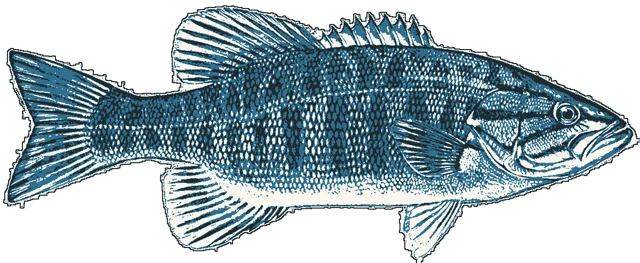
Smallmouth bass
Micropterus dolomieu · Freshwater
Firm, white and good, often rated above largemouth, but most smallmouth are released by custom and the flesh has a slight 'fishy' edge some anglers dislike.
- Tastes
- mild, slightly fishy edge, firm, thick white fillets
- Limits
- Heavy regs. Statewide inland: 5 a day in any combination of largemouth and smallmouth bass, 10 in possession. Minnesota border waters: 6 and 6. Yankton Lake and Mitchell Lake: 15 in minimum. New Wall Dam: only fish under 14 in or 18 in and longer may be kept, no more than one 18 in or longer. (2026 South Dakota Fishing Handbook (license period Dec. 15, 2025 to Jan. 31, 2027); in force on Nov. 21, 2026) Source
- Best months
- May, June, September and October, Missouri River near Springfield (NPS); spring and fall on rocky shores (GFP guide).
- Where
- Rocky, clear water of lakes, impoundments and small to medium streams statewide (GFP); Lake Oahe and Lake Sharpe anglers harvest smallmouth bass; a primary species in Waubay Lake.
- jigs
- crankbaits
- live minnows on a jig
- shiny lures
- Do not eat (anyone): smallmouth over 18 in from Lewis and Clark Lake or the Missouri River along Nebraska (Not Recommended in Nebraska's 2014 brochure).
Meal limits and other waters (6)
- Limit (everyone), waters and sizes below: one 7-ounce meal a week on average (mercury).
- Limit (pregnant, may become pregnant or nursing), same fish: 7 ounces a month.
- Limit (children under 7), same fish: 4 ounces a month.
- Over 19 in: North Island Lake (McCook and Minnehaha Co.).
- Limit (under 15; may become pregnant, pregnant, breastfeeding or planning to): 1 serving a month from the Minnesota border waters, such as Big Stone Lake and Lake Traverse (Minnesota, Mar. 10, 2026).
- Limit (everyone): where the state has no advice for a water or a fish, one serving and no other fish that week (Department of Health).
Smallmouth buffalo
Ictiobus bubalus · Freshwater
Smallmouth buffalo is highly prized in many areas (TPWD), but some anglers still call it a rough fish because of its bones.
Worth a try: Many people do not realize smallmouth buffalo is quite a food fish (TPWD); fry the ribs or smoke it.
- Tastes
- mild, firm, bony
- Limits
- No limits. Rough fish: no limit. May be speared or bowfished year-round, any time of day or night. (2026 South Dakota Fishing Handbook (license period Dec. 15, 2025 to Jan. 31, 2027); in force on Nov. 21, 2026) Source
- Where
- Most common in the Missouri River including impoundments, and in the James and Big Sioux rivers (GFP guide).
- dough baits
- bowfishing
Before you eat it: Limit (pregnant, may become pregnant, breastfeeding, young children): 1 serving a week, a Good Choices fish on the chart the department posts. Limit (everyone): where the state has no advice for a water or a fish, one serving and no other fish that week (Department of Health).
Splake
Salvelinus namaycush × Salvelinus fontinalis · Freshwater
A hatchery cross of lake trout and brook trout. We found no agency or cook who says how it eats, so it sits with its lake-trout parent until one does.
- Limits
- Heavy regs. Statewide: 5 a day in any combination of trout, salmon and splake, 10 in possession. Black Hills Fish Management Area: 1 a day of lake trout or splake, 24 in minimum. The amended stream rule effective Dec. 3, 2026 (ARSD 41:07:03:03) also sets 24 in for splake harvested from Black Hills streams, one trout a day. No high grading of trout in the Black Hills Fish Management Area. (2026 South Dakota Fishing Handbook (license period Dec. 15, 2025 to Jan. 31, 2027); Black Hills stream rule amended effective Dec. 3, 2026) Source
- Where
- Stocked in Deerfield Reservoir in the Black Hills (GFP guide).
- Large ones run fatty, like lake trout: trim the belly fat and smoke or grill
Before you eat it: Limit (everyone): where the state has no advice for a water or a fish, one serving and no other fish that week (Department of Health).
Gizzard shad
Dorosoma cepedianum · Freshwater
Soft, tasteless, bony and strong-smelling; TPWD calls it worthless as a food fish and Maryland says it is almost always discarded.
- Tastes
- bland, strong odor, soft, many fine bones
- Limits
- No limits. No limit by hook and line, spear or bow. Taken with seines, lift nets, cast nets, dip nets or traps: 144 a day and 144 in possession, all listed baitfish combined; must be dead to move away from the water where taken. Many eastern streams and some lakes are closed to bait netting. (2026 South Dakota Fishing Handbook (license period Dec. 15, 2025 to Jan. 31, 2027); in force on Nov. 21, 2026) Source
- Where
- All Missouri River reservoirs in South Dakota (GFP guide); rarely caught by anglers.
Before you eat it: Limit (everyone): where the state has no advice for a water or a fish, one serving and no other fish that week (Department of Health).
Goldeye
Hiodon alosoides · Freshwater
MeatEater describes its flesh as soft and bony, and US anglers mostly treat it as a trash fish or cut bait.
Worth a try: Brine and hot-smoke it: smoking firms the soft, bony flesh, which is how Winnipeg goldeye became a delicacy (MeatEater).
- Tastes
- rich, mild when smoked, soft, bony
- Limits
- No limits. Rough fish: no limit. May be speared or bowfished year-round. (2026 South Dakota Fishing Handbook (license period Dec. 15, 2025 to Jan. 31, 2027); in force on Nov. 21, 2026) Source
- Where
- Common throughout the Missouri River and its major tributaries (GFP guide).
- flies
- fly-and-spinner combos
- grasshoppers
- crickets
- small minnows
Before you eat it: Limit (everyone): where the state has no advice for a water or a fish, one serving and no other fish that week (Department of Health).
Redhorse suckers
Moxostoma spp. · Freshwater
Seldom caught on hook and line and written off as bony bottom-feeders; MeatEater notes the bones.
Worth a try: Scored and deep-fried, the Y-bones disappear and the firm, sweet flesh is delicious; MeatEater recommends shorthead, golden or silver redhorse for deep-fried sucker balls.
- Tastes
- mild, sweet, firm, white, Y-bones
- Limits
- No limits. Shorthead redhorse: no daily, possession or size limit. State law makes every species outside the game fish families a rough fish, and rough fish have no limit. The law also files suckers under baitfish; redhorse is not on the Handbook's list of fish that may be taken for bait with seines, lift nets, cast nets or traps. May be speared or bowfished year-round, any time of day or night, and fish taken that way must be retained. (2026 South Dakota Fishing Handbook (license period Dec. 15, 2025 to Jan. 31, 2027); in force on Nov. 21, 2026) Source
- Where
- Widespread; most abundant in larger streams and rivers with gravel or rock bottoms (GFP guide, shorthead redhorse).
- worms
- Several redhorse species are rare or state-protected; harvest only common species.
- Limit (under 15; may become pregnant, pregnant, breastfeeding or planning to): 1 serving a month from the Minnesota border waters, such as Big Stone Lake and Lake Traverse (Minnesota, Mar. 10, 2026).
- Limit (everyone): where the state has no advice for a water or a fish, one serving and no other fish that week (Department of Health).
White sucker
Catostomus commersonii · also called chub minnow · Freshwater
Suckers have perhaps the worst reputation of the rough fish (MeatEater) and are mostly raised and sold as bait (MN DNR); the many small bones keep most anglers from eating them.
Worth a try: Spring fish from cold water are light and sweet like walleye (MeatEater); score them deeply and fry hard, pickle them to dissolve the bones, or grind into fish cakes.
- Tastes
- light, sweet, firm, white, many small bones
- Limits
- No limits. No limit by hook and line, spear or bow. Taken with seines, lift nets, cast nets, dip nets or traps: 144 a day and 144 in possession, all listed baitfish combined. Many eastern streams and some lakes are closed to bait netting. (2026 South Dakota Fishing Handbook (license period Dec. 15, 2025 to Jan. 31, 2027); in force on Nov. 21, 2026) Source
- Where
- Widespread and abundant in South Dakota; schools move upstream to spawn in riffles (GFP guide); widely used as live bait for northern pike.
- nightcrawlers drifted on the bottom
- worms
- spearing/netting where legal
- Limit (under 15; may become pregnant, pregnant, breastfeeding or planning to): 1 serving a month from the Minnesota border waters, such as Big Stone Lake and Lake Traverse (Minnesota, Mar. 10, 2026).
- Limit (everyone): where the state has no advice for a water or a fish, one serving and no other fish that week (Department of Health).
Lake sturgeon
Acipenser fulvescens · Freshwater
Protected across most of its range after overharvest for flesh and caviar; Wisconsin DNR lists many of its lake sturgeon waters as catch and release only and requires a keeper to be at least 60 inches.
- Limits
- No harvest. Catch and release only, and only on Big Stone Lake from June 16 to April 14. All other sturgeon seasons are closed. (2026 South Dakota Fishing Handbook (license period Dec. 15, 2025 to Jan. 31, 2027); in force on Nov. 21, 2026) Source
- Where
- Big Stone Lake, where GFP began stocking lake sturgeon fingerlings in 2014 and anglers have caught and released fish (GFP Northeast plan).
Muskellunge
Esox masquinongy · Freshwater
A trophy fish that is almost never kept: high minimum lengths and a strong release ethic mean most muskie anglers let their catch go.
- Limits
- No harvest. Muskellunge and tiger muskie: catch and release only on all waters statewide. GFP manages muskellunge in Lynn, Middle Lynn, West 81, North Island and Sinai lakes. (2026 South Dakota Fishing Handbook (license period Dec. 15, 2025 to Jan. 31, 2027); in force on Nov. 21, 2026) Source
- Where
- Lynn, Middle Lynn, West 81, North Island and Sinai lakes, also Amsden, East 81 Lake, Little Brush WPA, East Oakwood and the lower Missouri River (GFP).
- large crankbaits imitating suckers
- bucktail spinners
- large jerkbaits
- live suckers
- Do not eat (under 15; may become pregnant, pregnant, breastfeeding or planning to): any muskellunge from Minnesota waters, the border lakes included (Minnesota, Mar. 10, 2026).
- Do not eat (may become pregnant, pregnant or breastfeeding, or under 12): any from Iowa waters, such as the Big Sioux River along Iowa (on Iowa's list of choices to avoid).
- Muskellunge must be released in South Dakota.
Where to fish in South Dakota
Fish named here are what people catch at each spot, not a promise they’re safe to eat. Read the eating advice on the fish’s card before you keep one.
- 1Lake Oahe reservoir · fresh
GFP creel surveys name walleye 88% of the fish caught May to July 2017; smallmouth bass, channel catfish, northern pike, yellow perch and white bass are also harvested; Chinook salmon are stocked and snagged Oct. 1 to Nov. 30. Eating advice: North Dakota's chart (July 2003) says nobody should eat white bass over 21 in or yellow perch over 14 in from its part of the lake, and children 15 and younger should not eat walleye over 23 in, northern pike over 28 in or channel catfish over 27 in.
Known for: Walleye, Smallmouth bass, Channel catfish, Northern pike, Yellow perch
Access: Missouri River impoundment; state license covers the lake, but fishing from shore on tribal lands may need a tribal license or permit.
- 2Lake Sharpe reservoir · fresh
Walleye are the most commonly harvested fish, then smallmouth bass, white bass and channel catfish.
Known for: Walleye, Smallmouth bass, White bass, Channel catfish
Access: Missouri River impoundment; a no boating zone runs from the T-Dike below the Oahe powerhouse to a signed point 2,100 ft downstream. See GFP Public Water Access map for ramps and shore access (Handbook FAQ).
- 3Lake Francis Case reservoir · fresh
Walleye are the most harvested fish, then white bass, smallmouth bass, channel catfish and sauger; a lottery paddlefish snagging season runs each May.
Known for: Walleye, White bass, Smallmouth bass, Channel catfish, Sauger
Access: Missouri River impoundment; waters between the railroad bridge and I-90 bridge causeway (Brule and Lyman counties) are open year-round. See GFP Public Water Access map for ramps and shore access (Handbook FAQ).
- 4Lewis and Clark Lake reservoir · fresh
GFP surveys list walleye as the most harvested species from Gavins Point Dam upstream to Fort Randall Dam, followed by white bass and channel catfish. Eating advice: Nebraska's 2014 brochure limits walleye over 15 in and white bass of any size to 8 ounces a week for adults and 2 to 4 ounces for children.
Known for: Walleye, White bass, Channel catfish
Access: Nebraska border water; boats launched from Nebraska ramps need a Nebraska AIS stamp, South Dakota ramps do not. Zebra mussels are listed in the lake.
- 5Gavins Point Dam tailwater tailrace · fresh
Lottery paddlefish archery (June) and snagging (October) seasons below the dam; freshwater drum are the most harvested fish below Gavins Point Dam.
Known for: Paddlefish, Freshwater drum
Access: Anyone who is not a resident of Nebraska or South Dakota needs a Nebraska nonresident fishing permit from the dam to 0.6 miles downstream; lottery permit needed for paddlefish.
- 6Big Stone Lake lake · fresh
Lake sturgeon have been stocked since 2014; catch and release fishing for them runs June 16 to April 14. Eating advice: lake sturgeon must be released, and Minnesota says anyone under 15, or who may become pregnant, is pregnant, breastfeeding or planning to, should not eat walleye 20 in or longer or northern pike 28 in or longer from this border lake.
Known for: Lake sturgeon
Access: Minnesota border water: anglers licensed in South Dakota or Minnesota may fish it, two lines per angler, and fish houses come off the ice by midnight March 5.
- 7Waubay Lake lake · fresh
GFP manages it primarily for smallmouth bass, walleye and yellow perch; black crappie, bluegill, northern pike, rock bass and white bass are also listed.
Known for: Smallmouth bass, Walleye, Yellow perch
Access: GFP's 2015 profile lists eight public access sites; Kanago and Grenville are GFP sites, six are privately kept and ask a fee or donation. No boating or fishing in the Waubay National Wildlife Refuge part during open water; fishing allowed in winter.
- 8Lake Poinsett lake · fresh
In-Fisherman names it among eastern lakes that often produce fine perch.
Known for: Yellow perch
Access: See GFP Public Water Access map for ramps and shore access (Handbook FAQ).
- 9Pactola Reservoir reservoir · fresh
Stocked with catchable rainbow trout and holds lake trout; rainbow smelt are self-sustaining; the stilling basin below the dam is catch and release for trout.
Known for: Rainbow trout, Lake trout
Access: Black Hills reservoir on Black Hills National Forest lands; lake trout and splake 1 a day, 24 in minimum.
- 10Belle Fourche Reservoir reservoir · fresh
A GFP survey published in 2005 found 95% of anglers there targeted walleye; walleye rule is 2 a day, 15 in minimum with only one 20 in or longer.
Known for: Walleye
Access: Large West River reservoir with access through state parks and recreation areas; Bureau of Reclamation controls water levels.
- 11Angostura Reservoir reservoir · fresh
A GFP survey published in 2004 or 2005 found 43% of anglers targeted walleye; black crappie, smallmouth bass, yellow perch and northern pike are also targeted in large West River reservoirs.
Known for: Walleye
Access: Large West River reservoir with access through state parks and recreation areas; walleye 15 in minimum, only one 20 in or longer.
- 12Shadehill Reservoir reservoir · fresh
Anglers there reported the highest trip satisfaction of the large West River reservoirs (92%, in a survey published in 2004).
Known for: Walleye
Access: Large West River reservoir with access through state parks and recreation areas; walleye 15 in minimum, only one 20 in or longer.
- 13James River (lower) river · fresh
GFP's lower James River catfish study caught 852 channel catfish and 1,148 flathead catfish in 2018 between the Missouri River confluence and Olivet; anglers fish it for trophy catfish.
Known for: Channel catfish, Flathead catfish
Access: See GFP Public Water Access map for ramps and shore access (Handbook FAQ).
South Dakota fishing license and rules
- Resident: $31 Annual Fishing (ages 18 to 64); $17 Senior Annual (65 and over); $10 One-Day; plus a $10 Habitat Stamp once a license year (no stamp needed with a One-Day license)
- Nonresident: $80 Annual Fishing plus a $25 Habitat Stamp
- Nonresident short-term: $26 One-Day (no Habitat Stamp); $45 Three-Day plus the $25 Habitat Stamp
- Who needs one: Anglers 18 and older need a fishing license plus a Habitat Stamp; the One-Day license needs no stamp. Residents and nonresidents under 18 do not need a license and take their own limits.
- Free fishing days: Free Fishing Weekend was May 15-17 in 2026. GFP's notice for the 2024 weekend says no fishing license is required and that regulations and limits still apply.
More license details
Habitat Stamp is bought once per license year. Agent fee up to $4 per license. License period Dec. 15, 2025 to Jan. 31, 2027. Paddlefish permits are by lottery: Lake Francis Case $30 (residents only), Gavins Point Dam archery and snagging $30 resident and $50 nonresident. Residents only may buy hoop net or trap ($10) and floatline or setline ($5) licenses. Non-tribal anglers on inland waters over Indian trust property need a tribal license; shore fishing the Missouri River from tribal lands may need a tribal license or access permit. Border waters: fish only the waters of the state where you are licensed, with the Minnesota, Nebraska and Iowa exceptions in the Handbook.
Buy a license License types and fees
Fees: 2026 (license period Dec. 15, 2025 to Jan. 31, 2027).
- Daily limits add up across every water you fish in a day, and only one day's limit may be possessed while on the water (on the ice, a possession limit taken within the daily limits). Nonresidents cannot go over the possession limit because they have no South Dakota domicile (hotels, cabins and campers are not domiciles).
- No more than one walleye 20 in or longer per day across all waters, and culling (high grading) walleye is prohibited statewide, border waters included.
- Where a water has its own size limit for a species, those fish must stay measurable and countable while you are on the water, ice or shore: whole, with head, skin and fins on (the statewide one-over-20 walleye rule does not trigger this). Fillets in transport must be readily countable, and two fillets equal one fish.
- Aquatic invasive species: pull all plugs and keep them out except when loading or launching, stop at open inspection stations, and no felt-sole waders. Bait and fish may not be moved in lake, river or stream water. Boats launched at Nebraska ramps need a Nebraska AIS stamp.
- Border waters: as a rule, enter, return to shore and fish only in the state where you are licensed. On Minnesota border waters, the flowing Missouri River along Nebraska and the Big Sioux River along Iowa, anglers licensed in either state may fish from a boat or either bank; on Nebraska and Iowa waters the stricter state's rules apply. From Gavins Point Dam to 0.6 miles downstream, anyone who is not a resident of Nebraska or South Dakota needs a Nebraska nonresident permit.
- Bait: do not use common carp, goldfish or game fish as bait (bullhead and Lepomis sunfish may be used with hook and line). Never empty a bait bucket into the water. Live baitfish are prohibited at Cedar Creek Dams #1 and #2.
- Snagging is illegal except for permit paddlefish seasons and the Lake Oahe salmon snagging season, Oct. 1 to Nov. 30 (one line, one hook).
- Two lines in open water and four through the ice (Minnesota border waters: two lines year-round); three hooks per line. Ice shelters need the owner's name and address in letters at least 2 in tall, unless they are portable and taken off the ice daily.
- Spearing and bowfishing: rough fish may be taken year-round, day or night; northern pike and catfish year-round on most inland waters; other game fish May 1 to Mar. 31 on inland waters (July 1 to Dec. 31 on the Nebraska border waters; on Minnesota border waters only pike and catfish, Nov. 15 to the last Sunday in February). No muskie or sturgeon, no paddlefish outside its permit seasons, no walleye from lakes with a one-walleye limit, and no trout or salmon in the Black Hills.
Limits here are summaries for convenience, checked on the date shown. The official South Dakota regulations govern; check them before you keep a fish.
Before you eat it
- Do not eat (anyone), neighbors' advice for shared waters: largemouth or smallmouth bass over 18 in from Lewis and Clark Lake or the Missouri River along Nebraska (Not Recommended in Nebraska's 2014 brochure), and white bass over 21 in or yellow perch over 14 in from North Dakota's part of Lake Oahe (its July 2003 chart). South Dakota's own list sets limits and has no do-not-eat line.
Do not eat (under 15; may become pregnant, pregnant, breastfeeding or planning to), Minnesota's advice (Mar. 10, 2026) for the Minnesota border waters, such as Big Stone Lake, Lake … (see the full list)
Do not eat (under 15; may become pregnant, pregnant, breastfeeding or planning to), Minnesota's advice (Mar. 10, 2026) for the Minnesota border waters, such as Big Stone Lake, Lake Traverse, Mud Lake (Roberts Co.), Hendricks Lake and the Bois de Sioux River: walleye 20 in or longer, northern pike 28 in or longer, or any muskellunge. That group: 1 serving a month of bass, catfish, smaller walleye or pike and fish not named, or 1 a week of bullhead, crappie, sunfish or yellow perch. Everyone else: 1 serving a week of walleye, pike, bass, catfish and fish not named. Each number is a total for its group of fish. Some lakes have stricter lines of their own, so check Minnesota's LakeFinder (mndnr.gov/lakefinder).
- Do not eat, North Dakota's part of Lake Oahe (its July 2003 chart, mercury). Age 15 or younger: walleye over 23 in, northern pike over 28 in, channel catfish over 27 in, white bass over 13 in or yellow perch over 11 in. Pregnant, may become pregnant or breastfeeding: northern pike over 34 in, white bass over 17 in or yellow perch over 13 in. The guide says pregnant or breastfeeding women and children 15 and younger should avoid larger fish altogether. Its meal limits by size are below and on the fish.
Limit, North Dakota's part of Lake Oahe, meals a month (same chart; smaller fish allow more). Everyone else: walleye 4 at 17 to 21 in, 2 over 21 in; northern pike 4 at 24 to 26 in, 1 over … (see the full list)
Limit, North Dakota's part of Lake Oahe, meals a month (same chart; smaller fish allow more). Everyone else: walleye 4 at 17 to 21 in, 2 over 21 in; northern pike 4 at 24 to 26 in, 1 over 26 in; white bass 2 at 13 to 16 in, 1 at 16 to 21 in. Pregnant, may become pregnant or breastfeeding: walleye 2 at 18 to 23 in, 1 over 23 in; northern pike 2 at 25 to 28 in, 1 at 28 to 34 in; white bass 2 at 12 to 13 in, 1 at 13 to 17 in. Age 15 or younger: walleye 2 at 15 to 17 in, 1 at 17 to 23 in; northern pike 2 at 23 to 25 in, 1 at 25 to 28 in; white bass 2 at 11 to 12 in, 1 at 12 to 13 in. Perch, channel catfish, crappie and sunfish limits are on those fish.
- South Dakota's own advisories are for mercury, issued by the Department of Health with DANR and GFP. The department's list (last edited Nov. 4, 2026) covers 186 tested waters and limits fish from 36 of them. Questions: 605-937-8422.
- Where no advice is available for a water or a fish, the department says to eat only one serving and no other fish that week. A serving is 4 ounces for an adult and 2 ounces for a child of 4 to 7. Young children: 1 or 2 servings of fish a week, starting at age 2.
- On waters with an advisory (2026 Fishing Handbook) the general limit averages one seven-ounce meal a week. Women who are pregnant, plan to become pregnant or are nursing: seven ounces a month. Children under seven: four ounces a month. For Bitter Lake, Twin Lakes (Minnehaha Co.) and Pickerel Lake the list singles out children under 7 and women who are pregnant, might become pregnant or are breastfeeding.
- Walleye of any size: limit from Bitter Lake (Day Co.) and Twin Lakes (Minnehaha Co.); 25 more waters have a walleye advisory by size, all named on the walleye on this page.
- Northern pike have an advisory by size on Bitter, Isabel, Little Moreau, Lynn, Newell, Opitz, Reid and Roosevelt lakes, Coal Springs Reservoir and Twin Lakes (Kingsbury and Brookings Co.).
- Other fish by size: largemouth bass on lakes Hurley, Isabel, Louise, Roosevelt and New Wall; smallmouth bass on North Island Lake; white bass on Goose and Pickerel lakes; crappie on New Wall Lake and Pudwell Dam (black crappie).
- New in 2026: Enemy Swim Lake (walleye over 24 in), Lynn Lake (northern pike over 29 in), Goose Lake (walleye over 18 in, white bass over 15 in), Lake Alice (walleye over 25 in) and Lake Louise (largemouth bass over 15 in, added Mar. 19, 2026).
- Trim off the fat and skin, and broil instead of frying, because fish can hold contaminants besides mercury (Department of Health). Filleting or cooking does not remove mercury.
- Pregnant, may become pregnant, breastfeeding, and young children: the chart the department posts says 1 serving a week of carp or buffalofish (Good Choices), or 2 to 3 servings a week of Best Choices such as catfish, freshwater perch, trout, salmon and smelt. It warns that larger carp, catfish, trout and perch caught by family and friends are more likely to have advisories.
- Limit, Nebraska's 2014 brochure, Lewis and Clark Lake and the Missouri River along Nebraska: walleye over 15 in, northern pike over 30 in and white bass of any size, 8 ounces a week for adults and 2 to 4 ounces for children.
- Big Sioux River along Iowa: Iowa tells women who might become or are pregnant or breastfeeding, and children under 12, to avoid muskellunge and to eat no more than 1 serving a week of northern pike, shorthead redhorse, walleye over 19 in, white bass over 15 in, largemouth or smallmouth bass over 13 in, channel catfish over 24 in, flathead catfish over 18 in or drum over 17 in.
- Algae blooms: GFP says to limit eating fish from a water where a bloom has recently occurred. DANR lists the lakes under a harmful algal bloom advisory at danr.sd.gov/Conservation/WatershedProtection/HAB.aspx.
Local lingo
- East River / West River: the Missouri River splits the state, and the Handbook sorts rules into East River, Missouri River, West River and Black Hills sections.
- Rough fish: every species outside the game fish families (paddlefish, sturgeon, salmon and trout, pike, catfish, sunfish, perch and bass); no limit except smelt (5 gallons). Catfish count as rough fish on the inland Missouri River for management.
- Chub minnow: the common name for white sucker used as bait.
- High grading: culling a fish you are holding for a bigger one; banned for walleye statewide and for trout in the Black Hills.
- Meandered / nonmeandered waters: meandered lakes are open to fishing when reached legally; nonmeandered waters are open unless marked Closed.
- Tailwaters: the Missouri River just below a dam, such as Gavins Point or Oahe.
Questions anglers ask about South Dakota
What is the most common fish in South Dakota?
South Dakota Game, Fish and Parks' Guide to the Fishes of South Dakota calls the fathead minnow one of the most widespread and abundant fishes in the state, and describes black bullhead, white sucker and green sunfish as widespread and abundant. On Lake Oahe, walleye made up 88% of the fish anglers caught from May to July 2017 (GFP Missouri River plan, 2019-2023).
What is the best fish to eat in South Dakota?
18 of the 43 fish on our South Dakota board rate Best eating. They include: walleye, sauger, saugeye, yellow perch, black crappie and white crappie.
What is the state fish of South Dakota?
Walleye: Official state fish under SDCL 1-6-15.
Does South Dakota have free fishing days?
Free Fishing Weekend was May 15-17 in 2026. GFP's notice for the 2024 weekend says no fishing license is required and that regulations and limits still apply.
Which South Dakota fish are better to eat than their reputation?
We give the Worth a try badge to northern pike, burbot, common carp, silver carp, bighead carp, bigmouth buffalo, smallmouth buffalo, freshwater drum, goldeye, shortnose gar, white sucker and redhorse suckers: fish most anglers toss or rate low that eat well when they're cleaned and cooked right. Each card says how.
Neighboring states
Sources
Limits, prices and advisories come from these pages, read on or before Nov 21, 2026. Where a line gives its own date, that’s the date it rests on. Eating advice changes: check the state’s current list. Ratings are national and come from the fish’s own page.
59 sources
- deq.nd.gov black crappie: advisory; bluegill: advisory; channel catfish: advisory; green sunfish: advisory; northern pike: advisory; pumpkinseed: advisory; walleye: adviso
- dhhs.ne.gov largemouth bass: advisory; northern pike: advisory; smallmouth bass: advisory; walleye: advisory; white bass: advisory
- doh.sd.gov northern pike: advisory; walleye: advisory; white bass: advisory
- doh.sd.gov largemouth bass: advisory
- doh.sd.gov Chinook salmon: advisory; bighead carp: advisory; bigmouth buffalo: advisory; black crappie: advisory; blue catfish: advisory; bluegill: advisory; brook trout:
- experience.arcgis.com state records
- experience.arcgis.com where to fish
- gfp.sd.gov brown trout: where; fishing spots; rainbow trout: where; rock bass: where
- gfp.sd.gov black crappie: baits; black crappie: months; bluegill: baits; largemouth bass: baits; rainbow trout: baits; smallmouth bass: baits; smallmouth bass: months; whi
- gfp.sd.gov Chinook salmon: regs; bighead carp: regs; bighead carp: where; bigmouth buffalo: regs; black crappie: advisory; black crappie: regs; blue catfish: regs; bluegil
- gfp.sd.gov blue catfish: regs; channel catfish: baits; channel catfish: regs
- gfp.sd.gov cisco: where; fishing spots; smallmouth bass: where
- gfp.sd.gov black crappie: where
- gfp.sd.gov bluegill: where
- gfp.sd.gov brook trout: where
- gfp.sd.gov brown trout: where
- gfp.sd.gov channel catfish: where
- gfp.sd.gov Chinook salmon: where
- gfp.sd.gov bigmouth buffalo: regs; black crappie: regs; bluegill: regs; brook trout: regs; brown trout: regs; bullhead (black, brown, yellow): regs; burbot: regs; channel
- gfp.sd.gov flathead catfish: where
- gfp.sd.gov green sunfish: where
- gfp.sd.gov lake trout: regs; lake trout: where; splake: regs
- gfp.sd.gov largemouth bass: where
- gfp.sd.gov license info
- gfp.sd.gov muskellunge: where
- gfp.sd.gov northern pike: where
- gfp.sd.gov paddlefish: where
- gfp.sd.gov channel catfish: where; fishing spots
- gfp.sd.gov freshwater regs
- gfp.sd.gov pumpkinseed: regs; pumpkinseed: where
- gfp.sd.gov rainbow trout: where
- gfp.sd.gov sauger: regs; sauger: where
- gfp.sd.gov smallmouth bass: where
- gfp.sd.gov Chinook salmon: where; cisco: where; fishing spots; freshwater drum: where; paddlefish: where; smallmouth bass: where; walleye: where; white bass: where; yellow
- gfp.sd.gov lake sturgeon: where; northern pike: where; saugeye: where; shortnose gar: where; walleye: where
- gfp.sd.gov fishing spots; walleye: where
- gfp.sd.gov bighead carp: where; bigmouth buffalo: where; bullhead (black, brown, yellow): where; burbot: months; burbot: where; common carp: where; cutthroat trout: where;
- gfp.sd.gov muskellunge: regs
- gfp.sd.gov saugeye: regs; walleye: regs
- gfp.sd.gov white bass: regs; white bass: where
- gfp.sd.gov white crappie: where
- gfp.sd.gov yellow perch: where
- license.gooutdoorssouthdakota.com license buy
- openprairie.sdstate.edu channel catfish: baits; flathead catfish: baits
- rules.sd.gov brook trout: regs; brown trout: regs; cutthroat trout: regs; muskellunge: regs; paddlefish: regs; rainbow trout: regs; splake: regs
- rules.sd.gov brook trout: regs; brown trout: regs; cutthroat trout: regs; rainbow trout: regs; splake: regs
- sdlegislature.gov bighead carp: regs; cisco: regs; sauger: regs; saugeye: regs; silver carp: regs
- sdlegislature.gov paddlefish: regs
- sdlegislature.gov bighead carp: regs; common carp: regs; silver carp: regs
- sdlegislature.gov state fish
- sdlegislature.gov bigmouth buffalo: regs; burbot: regs; freshwater drum: regs; gizzard shad: regs; goldeye: regs; redhorse suckers: regs; shortnose gar: regs; smallmouth buffalo:
- sdlegislature.gov bighead carp: regs; silver carp: regs
- gameandfishmag.com northern pike: months
- health.state.mn.us bigmouth buffalo: advisory; channel catfish: advisory; common carp: advisory; freshwater drum: advisory; largemouth bass: advisory; muskellunge: advisory; north
- in-fisherman.com fishing spots; yellow perch: months; yellow perch: where
- in-fisherman.com walleye: baits; walleye: where
- in-fisherman.com sauger: baits; sauger: months; sauger: where
- iowadnr.gov muskellunge: advisory
- nps.gov black crappie: months; channel catfish: months; flathead catfish: months; largemouth bass: months; northern pike: months; smallmouth bass: months; white crappie
Illustrations: stencils we made from public-domain art by John J. Baird (Black crappie); Duane Raver, U.S. Fish and Wildlife Service (Blue catfish, Brook trout, Channel catfish, Flathead catfish, Rainbow trout, White bass, White crappie, Yellow perch, Bullhead (black, brown, yellow), Smallmouth bass); NOAA (Bluegill); U.S. Fish and Wildlife Service (Brown trout, Common carp, Largemouth bass); Hugh McCormick Smith (Walleye); David Starr Jordan (Northern pike), via Wikimedia Commons.
Spotted an error or a rule that changed? Tell us and we will check it against the official source.