North Dakota · freshwater
Fish in North Dakota: what’s worth eating, and what’s garbage
North Dakota fishing centers on walleye, which the Fishing Guide says takes more than 80% of fishing effort, on the big Missouri River System reservoirs of Sakakawea and Oahe, and on Devils Lake. Northern pike is the state fish, and the state adds tailrace trout and chinook salmon below Garrison Dam, a May paddlefish snagging season, catfish on the Red River and winter perch and darkhouse spearing.
40 fish rated · limits checked Nov 21, 2026 against NDGF, then re-checked: 638 of 645 details confirmed or corrected on the official pages
Resident $27 Individual fishing license plus the $2 Fishing, Hunting and Furbearer Certificate (one per person per year). Full details
Buy a licenseLimits, seasons and size rules from North Dakota Game and Fish Department.
Freshwater limitsNorthern pike
Residents only: June 6-7 and Dec 26-27, 2026; June 5-6 and Dec 26-27, 2027. The resident fishing license is waived; the licensing page excludes paddlefish.
The North Dakota table-fare board
Fish North Dakota anglers catch, sorted by how they eat. The bars show how heavily each one is regulated here. Tap a fish for the details.
No limits Light regs Heavy regs No harvest
Best eating16
Just OK17
Garbage fish4
Catch & release
Fish by fish
Why each one sits where it does, the current North Dakota limits, and the bait that works.
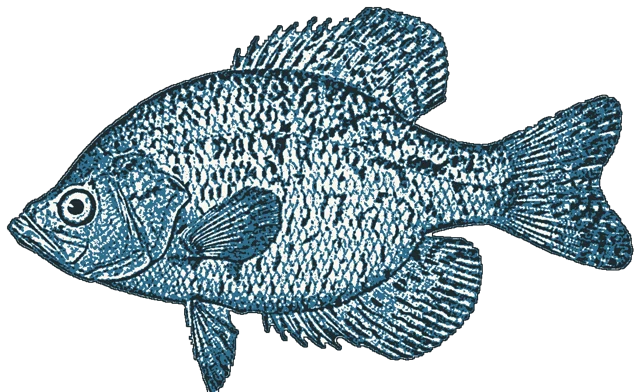
Black crappie
Pomoxis nigromaculatus · Freshwater
One of the classic fish-fry fish: MeatEater counts crappie among the best-eating fish in freshwater.
- Tastes
- mild, sweet, delicate, flaky, white
- Limits
- Light regs. Black and white crappie count together: 10 daily, 20 in possession; no size limit. (2026-28 Fishing Proclamation, in force April 1, 2026 through March 31, 2028 (checked Nov 21, 2026)) Source
- Best months
- Open all year.
- Where
- Jamestown Reservoir (abundant), Nelson Lake in Oliver Co. (quality crappie), Lake Elsie, Larimore Dam; state crappie record (species not given) 3 lb 4 oz, from Lake Oahe (1998) and Jamestown Reservoir (2013).
- small minnows under a bobber (no live baitfish at Nelson Lake)
- small plastics, jigged
- 1/16-ounce jigs with twister tails
- Crappie and sunfish from any water (state chart, July 2003, mercury), meals a month: 8 under 9 in, 4 at 9 to 11 in, 1 over 11 in; at age 15 or younger 8 under 7 in, 2 at 7 to 9 in, 1 over 9 in; if pregnant, may become pregnant or breastfeeding 8 under 8 in, 2 at 8 to 12 in, 1 over 12 in.
- The guide says breastfeeding and pregnant women and children 15 and younger should avoid larger fish altogether.
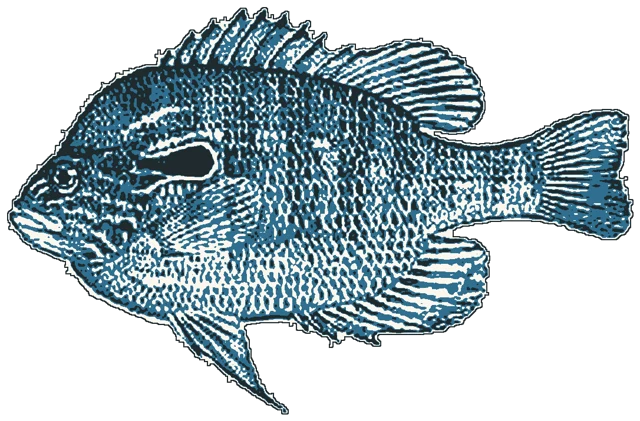
Bluegill
Lepomis macrochirus · also called sunfish, sunny · Freshwater
MeatEater calls the flesh light, delicate and sweet; the original fish-fry panfish.
- Tastes
- mild, sweet, firm, flaky
- Limits
- Light regs. 10 daily, 20 in possession; no size limit. (2026-28 Fishing Proclamation, in force April 1, 2026 through March 31, 2028 (checked Nov 21, 2026)) Source
- Best months
- Open all year.
- Where
- Nelson Lake in Oliver Co., Lake Metigoshe, Brewer Lake, Clausen Springs; state record from Strawberry Lake in McLean Co. (2 lb 12 oz, 1963). NDGF notes bluegill can stunt from overpopulation.
- worms or nightcrawlers under a bobber
- jigs
- Crappie and sunfish from any water (state chart, July 2003, mercury), meals a month: 8 under 9 in, 4 at 9 to 11 in, 1 over 11 in; at age 15 or younger 8 under 7 in, 2 at 7 to 9 in, 1 over 9 in; if pregnant, may become pregnant or breastfeeding 8 under 8 in, 2 at 8 to 12 in, 1 over 12 in.
- The guide says breastfeeding and pregnant women and children 15 and younger should avoid larger fish altogether.
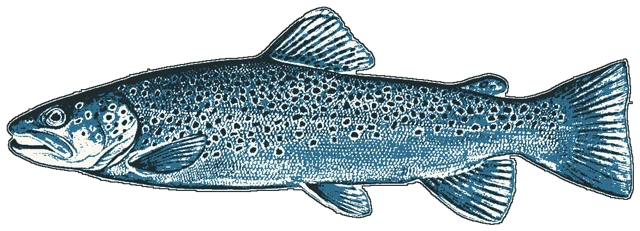
Brown trout
Salmo trutta · Freshwater
Good trout eating like rainbows; most kept browns are stocked fish.
- Tastes
- mild to rich, flaky
- Limits
- Heavy regs. Brown, cutthroat, lake, rainbow and tiger trout combined: 3 daily, 6 in possession; no size limit. (2026-28 Fishing Proclamation, in force April 1, 2026 through March 31, 2028 (checked Nov 21, 2026)) Source
- Best months
- Open all year.
- Where
- Missouri River System, with trophy fish below Garrison Dam; a few lakes where it is regularly stocked. State record 31 lb 11 oz from Garrison Tailrace (2005).
- worms or nightcrawlers
- small light jigs
- Do not eat larger ones if you are pregnant, breastfeeding or 15 or younger: the state guide (July 2003, mercury) tells those groups to avoid larger fish altogether.
- Its chart has no line for brown trout.
- For a fish with no advisory, the FDA and EPA advice DEQ posts (July 2019) is 1 serving and no other fish that week for anyone who is or might become pregnant or is breastfeeding, and for young children.
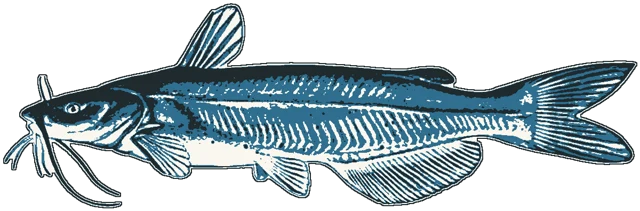
Channel catfish
Ictalurus punctatus · Freshwater
Very good to eat (Maryland DNR) and delicious when cooked (TPWD), and the basis of US catfish farming.
- Tastes
- mild, sweet, firm, moist
- Limits
- Heavy regs. West of ND Highway 1: 20 daily, 40 in possession. East of ND Highway 1 (including the Red and Bois de Sioux rivers): 5 daily and in possession, and only 1 over 24 in total length; head, fillets and tail must stay attached (only gills and entrails removed) until the fish is at your residence. Channel catfish may be taken by bow, spear and darkhouse spearing (bow and spear fishing is closed on the Missouri River from Garrison Dam downstream three miles) on Lakes Sakakawea and Oahe and the Missouri and Yellowstone rivers (up to the first tributary bridge or road crossing). (2026-28 Fishing Proclamation, in force April 1, 2026 through March 31, 2028 (checked Nov 21, 2026)) Source
- Best months
- Garrison Dam Tailrace fishing is best for smaller catfish in summer (NDGF 2026 outlook). Red River catfish spawn in early summer.
- Where
- Red River (abundant, larger fish common), Lake Sakakawea (best in the upper end), Missouri River below Garrison Dam (abundant, underutilized), Lake Oahe, Heart Butte Reservoir; state record 42 lb 1 oz from Moon Lake (2009).
- worms or nightcrawlers
- minnows, leeches and prepared baits fished on the bottom with a sliding sinker rig
- Do not eat (state chart, July 2003, mercury): catfish over 27 in at age 15 or younger, or Red River catfish over 38 in if pregnant, may become pregnant or breastfeeding.
- Red River: Minnesota's health department applies its statewide list (updated August 2026): 1 serving a week, or 1 a month for children under 15 and people who are or may become pregnant, are breastfeeding or plan to.
- The guide tells those groups to avoid larger fish altogether.
Meal limits and other waters (2)
- Everyone else, meals a month: Red River 8 under 22 in, 4 to 25 in, 1 above; other waters 8 under 22 in, 4 to 24 in, 1 above.
- Other waters if pregnant, may become pregnant or breastfeeding: 8 under 19 in, 4 to 22 in, 1 above; at 15 or younger: 4 under 19 in, 2 to 22 in, 1 to 27 in.
Chinook salmon
Oncorhynchus tshawytscha · also called king salmon · Freshwater
NOAA calls Chinook the most highly prized salmon in the culinary world: rich, buttery and oily.
- Tastes
- rich, buttery, oily, flaky, meaty
- Limits
- Heavy regs. Salmon: 5 daily, 10 in possession, whether taken by hook and line, snagging, bow or spear. Snagging, bow fishing and spearing are legal sunup to sundown, Sept 25 through Oct 31, on Lake Sakakawea from Garrison Dam upstream to the Highway 23 bridge near New Town (and up tributaries to the first bridge or road crossing). Only salmon and nongame fish may be taken in that season, with no more than one snag hook or lure per line. Bow fishing and spearing are illegal inside Lake Sakakawea and Fort Stevenson state parks. Hook and line fishing for salmon is open all year. (2026-28 Fishing Proclamation, in force April 1, 2026 through March 31, 2028 (checked Nov 21, 2026)) Source
- Best months
- Snagging season Sept 25 to Oct 31 (sunup to sundown).
- Where
- Lake Sakakawea and the Missouri River System (NDGF: average about 7.5 lb in 2025, larger fish about 16 lb); state record 31 lb 2 oz from Garrison Tailrace (1986).
- plastic squids
- needlefish plastic baits
- No. 4 or 5 Mepps spinners
- crankbaits
- spoons
- nightcrawlers under a bobber
- Lake Sakakawea salmon (state chart, July 2003, mercury), meals a month: 8 under 27 in, 4 at 27 to 33 in, 2 over 33 in; at age 15 or younger 4 under 25 in, 2 at 25 to 28 in, 1 over 28 in; if pregnant, may become pregnant or breastfeeding 8 under 25 in, 4 at 25 to 28 in, 1 over 28 in.
- The guide says breastfeeding and pregnant women and children 15 and younger should avoid larger fish altogether.
Cutthroat trout
Oncorhynchus clarkii · Freshwater
Eats like other trout; kept where legal, especially stocked fish and coastal sea-run cutts.
- Tastes
- mild, clean, delicate, flaky
- Limits
- Heavy regs. Brown, cutthroat, lake, rainbow and tiger trout combined: 3 daily, 6 in possession; no size limit. (2026-28 Fishing Proclamation, in force April 1, 2026 through March 31, 2028 (checked Nov 21, 2026)) Source
- Best months
- Open all year.
- Where
- Garrison Tailrace (state record 10 lb 1 oz, 2003).
- Do not eat larger ones if you are pregnant, breastfeeding or 15 or younger: the state guide (July 2003, mercury) tells those groups to avoid larger fish altogether.
- Its chart has no line for cutthroat trout.
- For a fish with no advisory, the FDA and EPA advice DEQ posts (July 2019) is 1 serving and no other fish that week for anyone who is or might become pregnant or is breastfeeding, and for young children.
Lake whitefish
Coregonus clupeaformis · Freshwater
The Great Lakes' signature commercial food fish; smoked whitefish is a deli staple and fresh fillets are sweet and mild.
- Tastes
- mild, sweet, flaky, delicate
- Limits
- No limits. Nongame fish: no daily or possession limit, no size limit and no closed season in the proclamation. Any nongame fish other than legal live baitfish may be kept only if killed immediately after being taken. NDGF's record list puts lake whitefish under nongame. (2026-28 Fishing Proclamation, in force April 1, 2026 through March 31, 2028 (checked Nov 21, 2026)) Source
- Best months
- Open all year.
- Where
- Garrison Tailrace (state record whitefish 9 lb 3 oz, 2025).
- Do not eat larger ones if you are pregnant, breastfeeding or 15 or younger: the state guide (July 2003, mercury) tells those groups to avoid larger fish altogether.
- Its chart has no line for whitefish.
- For a fish with no advisory, the FDA and EPA advice DEQ posts (July 2019) is 1 serving and no other fish that week for anyone who is or might become pregnant or is breastfeeding, and for young children.
Rainbow smelt
Osmerus mordax · Freshwater
Maine Sea Grant says smelt are marketed for their sweet, delicate flavor; fried whole, they are a classic northern winter and spring meal.
- Tastes
- mild, sweet (fresh fish smell like cucumber), delicate, fine bones you eat
- Limits
- No limits. Smelt: 5 gallons daily and in possession. Taking is allowed on Lakes Sakakawea and Oahe and the Missouri and Yellowstone rivers (up to the first tributary bridge or road crossing); all smelt taken there must be dead when transported. Live smelt are legal bait only on the Missouri River System (dip net, minnow trap or by hand). (2026-28 Fishing Proclamation, in force April 1, 2026 through March 31, 2028 (checked Nov 21, 2026)) Source
- Best months
- Open all year.
- Where
- Lake Sakakawea and the Missouri River System; first stocked in Lake Sakakawea in 1971 (NDGF).
- baited hooks
- dip net (where legal)
- The state guide (July 2003, mercury) says all species and sizes of tested fish contain some mercury; its chart has no line for smelt.
- For a fish with no advisory, the FDA and EPA advice DEQ posts (July 2019) is 1 serving and no other fish that week for anyone who is or might become pregnant or is breastfeeding, and for young children.
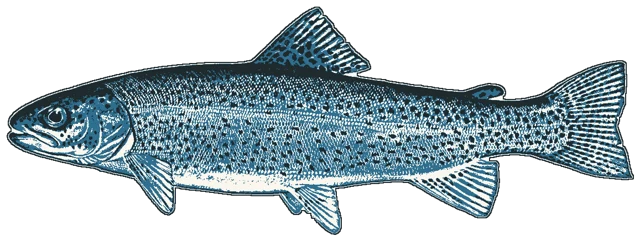
Rainbow trout
Oncorhynchus mykiss · Freshwater
TPWD calls rainbow trout an excellent fish to eat; the most-stocked put-and-take fish in America.
- Tastes
- mild, clean, delicate, flaky
- Limits
- Heavy regs. Brown, cutthroat, lake, rainbow and tiger trout combined: 3 daily, 6 in possession; no size limit. (2026-28 Fishing Proclamation, in force April 1, 2026 through March 31, 2028 (checked Nov 21, 2026)) Source
- Best months
- NDGF: rainbows are most active in winter, spring and fall in most lakes.
- Where
- Garrison Dam Tailrace (trophy fish); Strawberry Lake near Bottineau, Mooreton Pond and Northgate Dam (rainbows stocked annually); Hooker Lake (trout stocked annually).
- worms or nightcrawlers
- small light jigs
- Do not eat larger ones if you are pregnant, breastfeeding or 15 or younger: the state guide (July 2003, mercury) tells those groups to avoid larger fish altogether.
- Its chart has no line for rainbow trout.
- For a fish with no advisory, the FDA and EPA advice DEQ posts (July 2019) is 1 serving and no other fish that week for anyone who is or might become pregnant or is breastfeeding, and for young children.
Sauger
Sander canadensis · Freshwater
The walleye's smaller river cousin, with the same fillets; MeatEater says they taste just as good.
- Tastes
- mild, clean, firm, flaky white
- Limits
- Heavy regs. Combined with walleye and saugeye: 5 daily, 10 in possession. Red and Bois de Sioux rivers (up to the first vehicular bridge or crossing on any of their tributaries): 3 daily and in possession for walleye, sauger and saugeye combined. 14 in minimum length (walleye and sauger) on Lake Elsie, Buffalo Lake (Sargent Co.), and Jamestown and Pipestem reservoirs. (2026-28 Fishing Proclamation, in force April 1, 2026 through March 31, 2028 (checked Nov 21, 2026)) Source
- Best months
- Open all year.
- Where
- Turbid, fairly fast-moving rivers such as the Yellowstone River; state record came from Lake Sakakawea.
- jigs tipped with minnows, worms or leeches
- spoons and crankbaits
- Do not eat (state chart, July 2003, mercury): Lake Sakakawea sauger over 20 in at age 15 or younger, or over 24 in if pregnant, may become pregnant or breastfeeding.
- Meals a month, everyone else: 8 under 17 in, 4 at 17 to 18 in, 1 over 18 in; at 15 or younger 4 under 15 in, 2 to 17 in, 1 to 20 in; if pregnant, may become pregnant or breastfeeding 8 under 15 in, 4 to 17 in, 1 to 24 in.
- The chart gives sauger for Lake Sakakawea only.
Saugeye
Sander vitreus x S. canadensis · Freshwater
Oklahoma's wildlife department says saugeye make first-class table fare.
- Tastes
- mild, clean, firm, flaky white
- Limits
- Heavy regs. Combined with walleye and sauger: 5 daily, 10 in possession. Red and Bois de Sioux rivers (up to the first vehicular bridge or crossing on any of their tributaries): 3 daily and in possession for walleye, sauger and saugeye combined. NDGF says saugeye cannot be positively identified by external physical characteristics, so the combined limit is the rule to follow. (2026-28 Fishing Proclamation, in force April 1, 2026 through March 31, 2028 (checked Nov 21, 2026)) Source
- Best months
- Open all year.
- Where
- Yellowstone River (state record saugeye, 12 lb, 2013).
- jigs tipped with minnows or shiners
- crankbaits
- blade baits
- grubs and ring worms
- nightcrawlers
- Do not eat larger ones if you are pregnant, breastfeeding or 15 or younger: the state guide (July 2003, mercury) tells those groups to avoid larger fish altogether.
- Its chart names walleye and sauger but not saugeye.
- The walleye line for other waters, meals a month: 8 under 15 in, 4 to 17 in, 2 to 23 in and 1 above; at 15 or younger 4 under 14 in, 2 to 16 in, 1 to 19 in and none over 19 in; if pregnant, may become pregnant or breastfeeding 4 under 16 in, 2 to 19 in, 1 to 23 in and none over 23 in.
Tiger trout
Salmo trutta × Salvelinus fontinalis · Freshwater
A sterile hybrid of brown trout and brook trout, both rated Best eating. We found no agency or cook reviewing tiger trout itself, so this is by parentage.
- Limits
- Heavy regs. Brown, cutthroat, lake, rainbow and tiger trout combined: 3 daily, 6 in possession; no size limit. (2026-28 Fishing Proclamation, in force April 1, 2026 through March 31, 2028 (checked Nov 21, 2026)) Source
- Best months
- Open all year.
- Where
- Hooker Lake (low abundance; state record 6 lb 2 oz, 2026). NDGF describes tiger trout as a brown/brook trout cross.
- Do not eat larger ones if you are pregnant, breastfeeding or 15 or younger: the state guide (July 2003, mercury) tells those groups to avoid larger fish altogether.
- Its chart has no line for tiger trout.
- For a fish with no advisory, the FDA and EPA advice DEQ posts (July 2019) is 1 serving and no other fish that week for anyone who is or might become pregnant or is breastfeeding, and for young children.
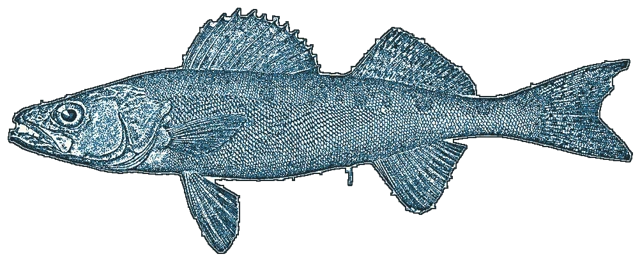
Walleye
Sander vitreus · Freshwater
Widely rated the best-eating freshwater fish: Maryland DNR calls it one of the best tasting, TPWD an excellent food fish.
- Tastes
- mild, clean, firm, tender, flaky white
- Limits
- Heavy regs. Walleye, sauger and saugeye combined: 5 daily, 10 in possession. Red and Bois de Sioux rivers (up to the first vehicular bridge or crossing on any of their tributaries): 3 daily and in possession for walleye, sauger and saugeye combined. 14 in minimum length (walleye and sauger) on Lake Elsie, Buffalo Lake (Sargent Co., including connected waters north to Sargent Co. Rd. 1), and Jamestown and Pipestem reservoirs upstream to and including the first bridge crossing. Spiritwood and Alkali lakes (Stutsman Co.): zander count in the combination. No other size limit statewide. Culling is illegal: a fish held on a stringer or in a livewell cannot be released. (2026-28 Fishing Proclamation, in force April 1, 2026 through March 31, 2028 (checked Nov 21, 2026)) Source
- Best months
- Open all year. Darkhouse spearing and darkhouse bow fishing for walleye are legal Nov 15 to Mar 15 on the Devils Lake complex south of US Highway 2, Stump Lake, Lakes Sakakawea and Oahe, and the Missouri and Yellowstone rivers (up to the first tributary bridge or road crossing).
- Where
- Lake Sakakawea, Lake Oahe, the Missouri River and Devils Lake; stocked prairie lakes across the state; Red River.
- jigs tipped with minnows, worms or leeches
- crankbaits and spinnerbaits
- nightcrawlers on a bobber or slip rig
- Do not eat (state chart, July 2003, mercury): Devils Lake walleye over 26 in (17 in at age 15 or younger, 22 in if pregnant, may become pregnant or breastfeeding); Red River over 33 in (17 and 25 in); other waters over 19 in at 15 or younger or 23 in if pregnant, may become pregnant or breastfeeding; Oahe and the Missouri over 23 in and Sakakawea over 26 in at 15 or younger.
- Those two groups get at most 4 meals a month, and 1 over these sizes (15 or younger, then the pregnant group): Devils Lake 15 and 17 in, Red River 14 and 17, Oahe and the Missouri 17 and 23, Sakakawea 19 and 26, other waters 16 and 19.
- The guide tells them to avoid larger fish altogether.
- Red River is stricter in Minnesota's advice (March 2026): none of any size for children under 15 and people who are or may become pregnant, are breastfeeding or plan to; 1 serving a month for everyone else.
- Everyone else, meals a month: Devils Lake 4 under 17 in, 2 to 20 in, 1 to 26 in; Oahe and Sakakawea 8 under 17 or 18 in, 4 to 21 or 22 in, 2 above; other waters 8 under 15 in, 4 to 17 in, 2 to 23 in, 1 above.
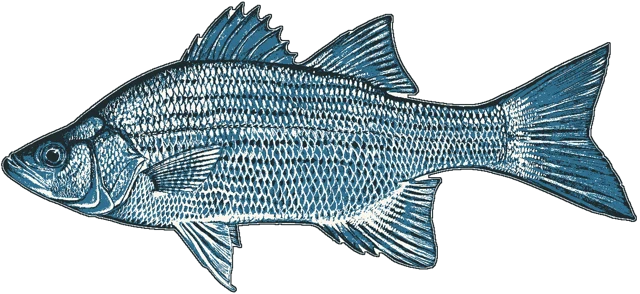
White bass
Morone chrysops · also called silver bass · Freshwater
Texas Parks & Wildlife calls white bass superb table fare, and the spring runs fill a lot of coolers; light, flaky meat like walleye.
- Tastes
- mild, light, flaky
- Limits
- Light regs. 30 daily, 60 in possession (raised from 20 and 40 for 2026-28); no size limit. (2026-28 Fishing Proclamation, in force April 1, 2026 through March 31, 2028 (checked Nov 21, 2026)) Source
- Best months
- Open all year.
- Where
- Devils Lake (abundant, mostly 14 to 16 in), Stump Lake, Heart Butte Reservoir; state record from Devils Lake (4 lb 10 oz, 2012).
- minnows
- shad-shaped crankbaits
- jigs with soft plastics
- spoons
- Do not eat (state chart, July 2003, mercury; any water): white bass over 21 in, or over 13 in at age 15 or younger, or over 17 in if pregnant, may become pregnant or breastfeeding.
- Meals a month, everyone else: 8 under 11 in, 4 to 13 in, 2 to 16 in, 1 to 21 in; at 15 or younger 8 under 10 in, 4 to 11 in, 2 to 12 in, 1 to 13 in; if pregnant, may become pregnant or breastfeeding 8 under 11 in, 4 to 12 in, 2 to 13 in, 1 to 17 in.
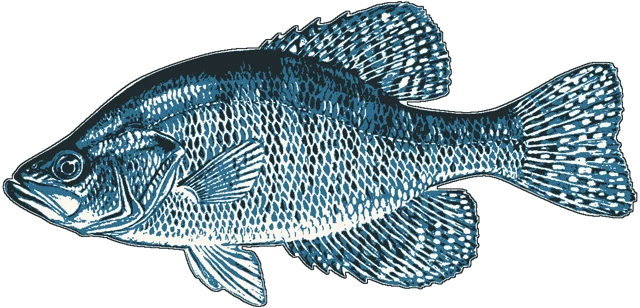
White crappie
Pomoxis annularis · Freshwater
Same top-tier panfish fillets as black crappie; one of the most popular panfish in the country.
- Tastes
- mild, sweet, delicate, flaky, white
- Limits
- Light regs. Black and white crappie count together: 10 daily, 20 in possession; no size limit. (2026-28 Fishing Proclamation, in force April 1, 2026 through March 31, 2028 (checked Nov 21, 2026)) Source
- Best months
- Open all year.
- Where
- Reservoirs with turbid water; NDGF says black and white crappies are commonly captured together.
- small minnows under a bobber
- small plastics, jigged
- 1/16-ounce jigs with twister tails
- Crappie and sunfish from any water (state chart, July 2003, mercury), meals a month: 8 under 9 in, 4 at 9 to 11 in, 1 over 11 in; at age 15 or younger 8 under 7 in, 2 at 7 to 9 in, 1 over 9 in; if pregnant, may become pregnant or breastfeeding 8 under 8 in, 2 at 8 to 12 in, 1 over 12 in.
- The guide says breastfeeding and pregnant women and children 15 and younger should avoid larger fish altogether.
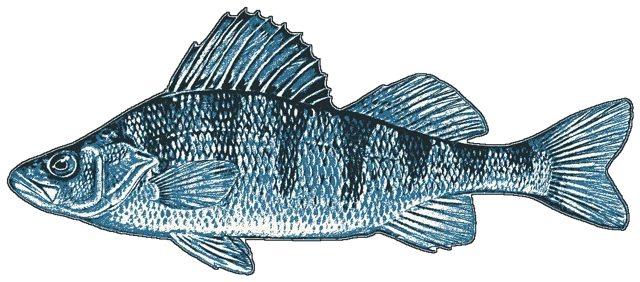
Yellow perch
Perca flavescens · Freshwater
A great food fish (MN DNR) and the centerpiece of Great Lakes perch fries; Iowa DNR calls a fried stringer of perch unsurpassed in flavor.
- Tastes
- mild, sweet, firm, flaky, white
- Limits
- Light regs. 20 daily, 40 in possession; no size limit. (2026-28 Fishing Proclamation, in force April 1, 2026 through March 31, 2028 (checked Nov 21, 2026)) Source
- Best months
- Open all year. NDGF calls perch a popular ice fishing target.
- Where
- Devils Lake (2026 outlook: slower than usual), Stump Lake (abundant, many about 8 in), Pipestem Reservoir, Moon Lake; state record from Devils Lake (3 lb, 2026).
- live bait under a slip float
- flash spoons tipped with minnow heads
- jigging Raps
- Do not eat (state chart, July 2003, mercury; any water): perch over 14 in, or over 11 in at age 15 or younger, or over 13 in if pregnant, may become pregnant or breastfeeding.
- Meals a month, everyone else: 8 under 9 in, 4 to 10 in, 2 to 12 in, 1 to 14 in; at 15 or younger 4 under 9 in, 2 to 10 in, 1 to 11 in; if pregnant, may become pregnant or breastfeeding 4 under 9 in, 2 to 11 in, 1 to 13 in.
Bigmouth buffalo
Ictiobus cyprinellus · Freshwater
A food fish many people consider worth keeping despite its many bones (TPWD), but and rarely caught on hook and line, so most anglers write it off as a rough fish.
Worth a try: TPWD says many people consider it quite a food fish despite its many bones; smoke it, or fry the rib sections.
- Tastes
- mild, rich, firm, bony
- Limits
- No limits. Nongame fish: no daily or possession limit, no size limit and no closed season in the proclamation. Any nongame fish other than legal live baitfish may be kept only if killed immediately after being taken. A primary target for bow fishing, which is legal April 1 through March 31. (2026-28 Fishing Proclamation, in force April 1, 2026 through March 31, 2028 (checked Nov 21, 2026)) Source
- Best months
- Open all year.
- Where
- Heart Butte Reservoir (abundant, up to 40 lb). NDGF also lists buffalo, species not given, as abundant in the Heart River; the state bow record for buffalo (species not given) is 60 lb 8 oz from Heart Butte Reservoir (2022).
- dough baits (cottonseed meal)
- bowfishing
- Do not eat larger ones if you are pregnant, breastfeeding or 15 or younger: the state guide (July 2003, mercury) tells those groups to avoid larger fish altogether.
- Its chart has no line for buffalo.
- For a fish with no advisory, the FDA and EPA advice DEQ posts (July 2019) is 1 serving and no other fish that week for anyone who is or might become pregnant or is breastfeeding, and for young children.
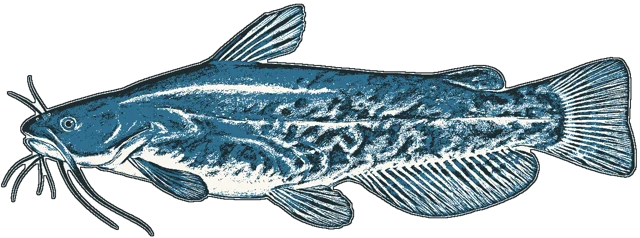
Bullhead (black, brown, yellow)
Ameiurus melas, A. nebulosus, A. natalis · also called black bullhead, yellow bullhead, brown bullhead · Freshwater
Sweet, delicious catfish meat, but most are small and many come from warm, muddy water, so many anglers dismiss them.
- Tastes
- mild, sweet, firm, moist
- Limits
- No limits. Nongame fish: no daily or possession limit, no size limit and no closed season in the proclamation. Any nongame fish other than legal live baitfish may be kept only if killed immediately after being taken. Black, yellow and brown bullheads all count as nongame. (2026-28 Fishing Proclamation, in force April 1, 2026 through March 31, 2028 (checked Nov 21, 2026)) Source
- Best months
- Open all year.
- Where
- Heart Butte Reservoir (abundant, up to 2 lb), Dickinson Reservoir, Lake Darling, Arnegard Dam; state record from Devils Lake (4 lb 9 oz, 2024).
- nightcrawlers
- chicken livers
- dough balls
- cut bait
- stinkbait
- Do not eat larger ones if you are pregnant, breastfeeding or 15 or younger: the state guide (July 2003, mercury) tells those groups to avoid larger fish altogether.
- Its chart has no line for bullhead.
- For a fish with no advisory, the FDA and EPA advice DEQ posts (July 2019) is 1 serving and no other fish that week for anyone who is or might become pregnant or is breastfeeding, and for young children.
Burbot
Lota lota · also called ling · Freshwater
Many anglers still throw back the slimy, eel-like 'eelpout' as trash, yet Alaskans keep them for their delicate white meat.
Worth a try: A freshwater cod: skin it, take the white loins and the liver, and boil-and-butter it like 'poor man's lobster', fry it or put it in chowder (Hank Shaw).
- Tastes
- mild, sweet, firm, white, lobster-like
- Limits
- Light regs. 10 daily, 20 in possession; no size limit. (2026-28 Fishing Proclamation, in force April 1, 2026 through March 31, 2028 (checked Nov 21, 2026)) Source
- Best months
- Open all year.
- Where
- Garrison Dam Tailrace (state record 19 lb 8 oz, 2023); NDGF lists lakes and reservoirs, big rivers and rivers and streams as habitat.
- cut sucker or cisco
- live minnows (gold shiners)
- jigging spoons tipped with bait
- bucktail jigs
- Burbot are among the large predators that can carry elevated mercury in parts of northern and western Alaska (ADF&G).
- Do not eat larger ones if you are pregnant, breastfeeding or 15 or younger: the state guide (July 2003, mercury) tells those groups to avoid larger fish altogether.
- Its chart has no line for burbot.
- For a fish with no advisory, the FDA and EPA advice DEQ posts (July 2019) is 1 serving and no other fish that week for anyone who is or might become pregnant or is breastfeeding, and for young children.
Cisco
Coregonus artedi · Freshwater
Mild but soft and bony; mostly eaten smoked, where smoked ciscoes and chubs are a Great Lakes and deli tradition.
- Tastes
- mild, oily, soft, bony
- Limits
- No limits. Nongame fish: no daily or possession limit, no size limit and no closed season in the proclamation. Any nongame fish other than legal live baitfish may be kept only if killed immediately after being taken. The Fishing Guide lists cisco as nongame. (2026-28 Fishing Proclamation, in force April 1, 2026 through March 31, 2028 (checked Nov 21, 2026)) Source
- Best months
- Open all year.
- Where
- Lake Oahe (state record 2 lb 9 oz, 2015).
- Do not eat larger ones if you are pregnant, breastfeeding or 15 or younger: the state guide (July 2003, mercury) tells those groups to avoid larger fish altogether.
- Its chart has no line for cisco.
- For a fish with no advisory, the FDA and EPA advice DEQ posts (July 2019) is 1 serving and no other fish that week for anyone who is or might become pregnant or is breastfeeding, and for young children.
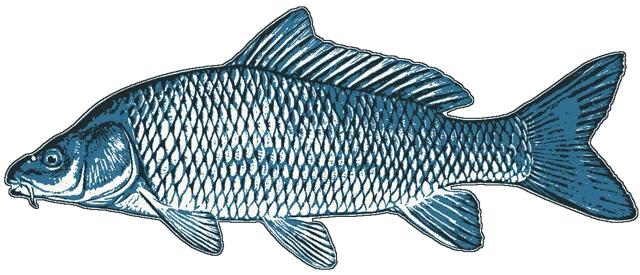
Common carp
Cyprinus carpio · Freshwater
Most US anglers call it a muddy, bony trash fish, but it is a prized food fish in Europe and Asia and eats well from clean, cold water.
Worth a try: Catch from clean water, remove the dark 'mud vein', and either score small fish and fry hard so the Y-bones soften, or hard-smoke large fish over fruitwood (Hank Shaw).
- Tastes
- mild from clean water, strong from muddy water, firm, fatty, Y-bones
- Limits
- No limits. Nongame fish: no daily or possession limit, no size limit and no closed season in the proclamation. Any nongame fish other than legal live baitfish may be kept only if killed immediately after being taken. Bow fishing is legal April 1 through March 31. NDGF treats common carp as an aquatic nuisance species. (2026-28 Fishing Proclamation, in force April 1, 2026 through March 31, 2028 (checked Nov 21, 2026)) Source
- Best months
- Open all year. Bow fishing runs April 1 through March 31; darkhouse bow fishing Nov 15 to Mar 15. Minnesota DNR says Red River carp are good tasting, especially in spring and early summer.
- Where
- Most North Dakota waters; Sheyenne River (hook-and-line record 31 lb, 2003), Heart River, Dickinson Reservoir, Larimore Dam.
- natural baits such as worms fished on the bottom with a sliding sinker rig
- Do not eat larger ones if you are pregnant, breastfeeding or 15 or younger: the state guide (July 2003, mercury) tells those groups to avoid larger fish altogether.
- Its chart has no line for carp.
- For a fish with no advisory, the FDA and EPA advice DEQ posts (July 2019) is 1 serving and no other fish that week for anyone who is or might become pregnant or is breastfeeding, and for young children.
Freshwater drum
Aplodinotus grunniens · also called sheepshead, grunter · Freshwater
Many anglers call it a rough fish, but it is prized as food in some areas (TPWD); bled and iced, the boneless fillets eat like a redfish's.
Worth a try: Bleed it, ice it immediately and trim the red lateral meat; then fry thin fillets, grill on the half-shell like redfish, or smoke oily summer fish.
- Tastes
- mild, like other drum, firm but tender, large flake; goes soft if not iced
- Limits
- No limits. Nongame fish: no daily or possession limit, no size limit and no closed season in the proclamation. Any nongame fish other than legal live baitfish may be kept only if killed immediately after being taken. (2026-28 Fishing Proclamation, in force April 1, 2026 through March 31, 2028 (checked Nov 21, 2026)) Source
- Best months
- Open all year. Minnesota DNR says Red River drum are good tasting, especially in spring and early summer.
- Where
- Red River and other deep, calm waters; state record 26 lb 2 oz from Lake Sakakawea (1988).
- natural baits such as worms fished on the bottom with a sliding sinker rig
- Do not eat larger ones if you are pregnant, breastfeeding or 15 or younger: the state guide (July 2003, mercury) tells those groups to avoid larger fish altogether.
- Its chart has no line for drum.
- For a fish with no advisory, the FDA and EPA advice DEQ posts (July 2019) is 1 serving and no other fish that week for anyone who is or might become pregnant or is breastfeeding, and for young children.
Green sunfish
Lepomis cyanellus · Freshwater
Edible like any sunfish but usually stunted; many anglers treat it as a pest that steals bait meant for bigger fish.
- Tastes
- mild, flaky
- Limits
- No limits. Nongame fish: no daily or possession limit, no size limit and no closed season in the proclamation. Any nongame fish other than legal live baitfish may be kept only if killed immediately after being taken. Green sunfish is not on the game fish list. (2026-28 Fishing Proclamation, in force April 1, 2026 through March 31, 2028 (checked Nov 21, 2026)) Source
- Best months
- Open all year.
- Where
- Most common in southwestern North Dakota; NDGF's 2026 outlook lists small bluegill and green sunfish as abundant at Mott Watershed Dam (Hettinger Co.) and Larson Lake (Sioux Co.).
- worms
- grubs
- grasshoppers
- small jigs
- Crappie and sunfish from any water (state chart, July 2003, mercury), meals a month: 8 under 9 in, 4 at 9 to 11 in, 1 over 11 in; at age 15 or younger 8 under 7 in, 2 at 7 to 9 in, 1 over 9 in; if pregnant, may become pregnant or breastfeeding 8 under 8 in, 2 at 8 to 12 in, 1 over 12 in.
- The guide says breastfeeding and pregnant women and children 15 and younger should avoid larger fish altogether.
Lake trout
Salvelinus namaycush · Freshwater
Edible and widely kept, but it is the trout most often knocked as too greasy; big fish are very fatty and best smoked.
- Tastes
- rich, oily, soft to firm, fatty
- Limits
- Heavy regs. Brown, cutthroat, lake, rainbow and tiger trout combined: 3 daily, 6 in possession; no size limit. (2026-28 Fishing Proclamation, in force April 1, 2026 through March 31, 2028 (checked Nov 21, 2026)) Source
- Best months
- Open all year.
- Where
- Garrison Tailrace (state record 16 lb 6 oz, 2012).
- trolled spoons
- jigged bait
- dead bait under tip-ups
- Great Lakes and some western lakes carry contaminant advisories for large lake trout; check your state advisory.
- Do not eat larger ones if you are pregnant, breastfeeding or 15 or younger: the state guide (July 2003, mercury) tells those groups to avoid larger fish altogether.
- Its chart has no line for lake trout.
- For a fish with no advisory, the FDA and EPA advice DEQ posts (July 2019) is 1 serving and no other fish that week for anyone who is or might become pregnant or is breastfeeding, and for young children.
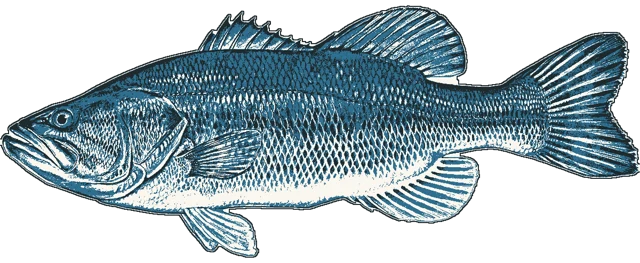
Largemouth bass
Micropterus nigricans (syn. M. salmoides) · Freshwater
Perfectly edible white fillets, but America's top catch-and-release fish and many anglers swear the meat tastes fishy or muddy, so reputation is split.
- Tastes
- mild to slightly 'fishy', firm, thick fillets
- Limits
- Heavy regs. Largemouth and smallmouth bass combined: 5 daily, 10 in possession; no size limit. (2026-28 Fishing Proclamation, in force April 1, 2026 through March 31, 2028 (checked Nov 21, 2026)) Source
- Best months
- Open all year.
- Where
- Nelson Lake in Oliver Co. (NDGF: best largemouth bass lake in the state), Brewer Lake, Clausen Springs, Sather Dam; NDGF says largemouth prefer small lakes with shallow water and weeds.
- artificial plastic baits on an offset wide gap (EWG) worm hook
- crankbaits
- jigs
- worms or nightcrawlers
- Water-body mercury advisories commonly list largemouth bass; check your state's advisory before eating large fish.
- Do not eat larger ones if you are pregnant, breastfeeding or 15 or younger: the state guide (July 2003, mercury) tells those groups to avoid larger fish altogether.
- Its chart has no line for largemouth bass.
- For a fish with no advisory, the FDA and EPA advice DEQ posts (July 2019) is 1 serving and no other fish that week for anyone who is or might become pregnant or is breastfeeding, and for young children.
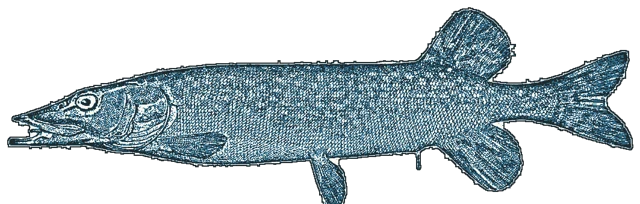
Northern pike
Esox lucius · Freshwater
The meat is white, flaky and great in flavor, but the Y-bones put many anglers off; reputation is split between 'too bony' and 'better than walleye once you learn to clean them'.
Worth a try: Remove the Y-bones with the five-fillet method, or grind, pickle or make fish balls from the meat; Hank Shaw's pike balls grind small pike so the bones vanish.
- Tastes
- mild, clean, firm, flaky white; Y-bones in the upper fillet
- Limits
- Heavy regs. 5 daily, 10 in possession; no size limit. Red and Bois de Sioux rivers (up to the first vehicular bridge or crossing on any of their tributaries): 3 daily and in possession. Pike may be taken by darkhouse spearing and darkhouse bow fishing Nov 15 to Mar 15, except in the listed waters closed to it and, with bow equipment, on the Red River. Other bow fishing and above-water spearing for pike is illegal. (2026-28 Fishing Proclamation, in force April 1, 2026 through March 31, 2028 (checked Nov 21, 2026)) Source
- Best months
- Open all year. Darkhouse spearing for pike is legal Nov 15 to Mar 15.
- Where
- Lake Sakakawea and Lake Oahe (trophy pike over 15 lb); Devils Lake, Stump Lake and the Irvine-Alice-Mikes complex; many prairie lakes.
- tip-up rig with a colorful blade, treble hook and large dead bait such as smelt
- spoons, crankbaits and other lures
- Large pike in parts of northern and western Alaska can carry enough mercury that eating large quantities can be harmful (ADF&G).
- Do not eat (state chart, July 2003, mercury): pike over 28 in at age 15 or younger (Devils Lake 27; Sakakawea 1 meal a month over 29), or over 34 in if pregnant, may become pregnant or breastfeeding (Devils Lake 33; Sakakawea 2 meals a month over 22).
- Minnesota is stricter for the Red River (March 2026): none 30 in or longer (28 in on its statewide list) for children under 15 and people who are or may become pregnant, are breastfeeding or plan to, and 1 serving a month for everyone else.
- The guide tells both groups to avoid larger fish altogether.
Meal limits and other waters (2)
- Everyone else, meals a month: Devils Lake 8 under 22 in, 4 to 25 in, 1 above; Sakakawea 8 under 27 in, 4 to 36 in, 1 above; other waters 8 under 24 in, 4 to 26 in, 1 above.
- At 15 or younger, at most 4 a month at any size, 1 over 24 in (Devils Lake), 29 in (Sakakawea) or 25 in (others); if pregnant, may become pregnant or breastfeeding, at most 4 (Sakakawea 8 under 19 in), 1 over 26 in (Devils Lake) or 28 in (others).
Paddlefish
Polyodon spathula · also called spoonbill · Freshwater
Valued for its caviar. We have no good source on how it eats, so it is rated Just OK by default.
- Tastes
- mild, firm, boneless
- Limits
- Heavy regs. Snagging only, May 1 through May 21 of each fishing year, 7 a.m. to 7 p.m. Central Time, with a paddlefish tag ($15 resident, $35 nonresident, plus the license and certificate). Season creel limit is 1 paddlefish per snagger; the tag is not transferable. Harvest days are Tuesdays, Wednesdays, Fridays and Saturdays, when every paddlefish snagged must be kept and tagged at once; Sundays, Mondays and Thursdays are snag-and-release only. Open area: the Yellowstone River in North Dakota and the Missouri River west of the US Highway 85 bridge to the Montana border, excluding river mile 1577 downstream to river mile 1565 (the pipeline crossing to the upper end of the Lewis and Clark WMA). No snagging from a boat, and one snag hook per line. NDGF can close the harvest on 24 hours' notice as it nears the maximum of 1,000 fish (the 2026 harvest closed May 8); snag-and-release in a smaller area may then run up to seven days, but not past May 21. Paddlefish caught on hook and line must be released at once. (2026-28 Fishing Proclamation, in force April 1, 2026 through March 31, 2028 (checked Nov 21, 2026)) Source
- Best months
- May 1 to May 21 (snagging season).
- Where
- Missouri River west of the US Highway 85 bridge and the Yellowstone River near the Montana line; harvested fish are cleaned at the Confluence cleaning operation. State record 131 lb, a tie: upper Missouri River (2016) and Yellowstone River (2024).
- snagging with large treble hooks
- Do not eat larger ones if you are pregnant, breastfeeding or 15 or younger: the state guide (July 2003, mercury) tells those groups to avoid larger fish altogether.
- Its chart has no line for paddlefish.
- For a fish with no advisory, the FDA and EPA advice DEQ posts (July 2019) is 1 serving and no other fish that week for anyone who is or might become pregnant or is breastfeeding, and for young children.
Rock bass
Ambloplites rupestris · Freshwater
Light, flaky fillets that some anglers rate highly, while others find them oily and fishy compared with bluegill or crappie.
- Tastes
- mild to slightly fishy, light, flaky
- Limits
- No limits. Nongame fish: no daily or possession limit, no size limit and no closed season in the proclamation. Any nongame fish other than legal live baitfish may be kept only if killed immediately after being taken. Rock bass is not on the game fish list. (2026-28 Fishing Proclamation, in force April 1, 2026 through March 31, 2028 (checked Nov 21, 2026)) Source
- Best months
- Open all year.
- live minnows
- crayfish
- nightcrawlers
- hellgrammites
- inline spinners
- small jigs
- The state chart (July 2003, mercury) does not name rock bass; its panfish line (crappie and sunfish, any water), in meals a month, is 8 under 9 in, 4 at 9 to 11 in, 1 over 11 in; at age 15 or younger 8 under 7 in, 2 at 7 to 9 in, 1 over 9 in; if pregnant, may become pregnant or breastfeeding 8 under 8 in, 2 at 8 to 12 in, 1 over 12 in.
- The guide says breastfeeding and pregnant women and children 15 and younger should avoid larger fish altogether.
Shortnose gar
Lepisosteus platostomus · Freshwater
Small gar with little meat; usually tossed, though the backstraps eat like any gar.
Worth a try: Cut down the back with shears or a hatchet to get past the armored scales, take the two white backstraps, and fry them or grind them into Louisiana gar balls.
- Tastes
- mild, firm, meaty
- Limits
- No limits. Nongame fish: no daily or possession limit, no size limit and no closed season in the proclamation. Any nongame fish other than legal live baitfish may be kept only if killed immediately after being taken. Bow fishing is legal April 1 through March 31. (2026-28 Fishing Proclamation, in force April 1, 2026 through March 31, 2028 (checked Nov 21, 2026)) Source
- Best months
- Open all year. NDGF says bowfishers find them sunning near the surface.
- Where
- Missouri River, including quiet backwaters; NDGF says it was probably more abundant before the large Missouri River dams were built.
- Gar eggs (roe) are toxic to people and other warm-blooded animals; never eat them (Maryland DNR).
- Do not eat larger ones if you are pregnant, breastfeeding or 15 or younger: the state guide (July 2003, mercury) tells those groups to avoid larger fish altogether.
- Its chart has no line for gar.
- For a fish with no advisory, the FDA and EPA advice DEQ posts (July 2019) is 1 serving and no other fish that week for anyone who is or might become pregnant or is breastfeeding, and for young children.
Shovelnose sturgeon
Scaphirhynchus platorynchus · Freshwater
Indiana DNR says sturgeon flesh has an excellent flavor and is often smoked, but this small river sturgeon is rarely targeted and harvest is closed in some reaches.
- Tastes
- mild, firm
- Limits
- No harvest. Pallid, shovelnose and lake sturgeon must be released immediately to the water they came from; it is illegal to take, possess or transport them. Sturgeon may not be landed with a gaff or taken by underwater spearfishing. NDGF says all sturgeon must be released to protect the pallid sturgeon, which looks a lot like the shovelnose at a young age; its species page lists pallid sturgeon as Endangered. (2026-28 Fishing Proclamation, in force April 1, 2026 through March 31, 2028 (checked Nov 21, 2026)) Source
- Best months
- No harvest season.
- Where
- NDGF says North Dakota's sturgeon live in the Missouri, Yellowstone and Red rivers and calls the shovelnose the most abundant.
Silver carp
Hypophthalmichthys molitrix · Freshwater
A clean, mild white fish that most US anglers only encounter while bowfishing and throw away because it is extremely bony and invasive.
Worth a try: Sold as 'Copi' and recommended by Seafood Watch; grind or score the fillets to beat the bones.
- Tastes
- mild, clean, white, many intermuscular bones
- Limits
- No limits. Nongame fish: no daily or possession limit, no size limit and no closed season in the proclamation. Any nongame fish other than legal live baitfish may be kept only if killed immediately after being taken. Live silver carp may not be possessed or transported, stocked in any water, or used as bait (illegal live bait is a $250 fine); dead nongame fish are legal bait. A fish may be released only into the water it came from. NDGF lists silver carp as a Class 3 aquatic nuisance species. (2026-28 Fishing Proclamation, in force April 1, 2026 through March 31, 2028 (checked Nov 21, 2026)) Source
- Best months
- Open all year.
- Where
- James River in Stutsman, LaMoure and Dickey counties (NDGF infested waters list).
- Leaping silver carp injure boaters; the hazard is physical, not dietary.
- Do not eat larger ones if you are pregnant, breastfeeding or 15 or younger: the state guide (July 2003, mercury) tells those groups to avoid larger fish altogether.
- Its chart has no line for silver carp.
- For a fish with no advisory, the FDA and EPA advice DEQ posts (July 2019) is 1 serving and no other fish that week for anyone who is or might become pregnant or is breastfeeding, and for young children.
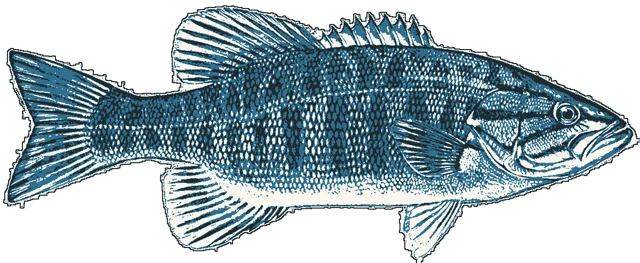
Smallmouth bass
Micropterus dolomieu · also called smallies · Freshwater
Firm, white and good, often rated above largemouth, but most smallmouth are released by custom and the flesh has a slight 'fishy' edge some anglers dislike.
- Tastes
- mild, slightly fishy edge, firm, thick white fillets
- Limits
- Heavy regs. Largemouth and smallmouth bass combined: 5 daily, 10 in possession; no size limit. Underwater spearfishing for smallmouth is legal on the Missouri River (not the first three miles below Garrison Dam), Lakes Sakakawea and Oahe, Lake Audubon where it is open to fishing, Devils Lake, Stump Lake and Spiritwood Lake. (2026-28 Fishing Proclamation, in force April 1, 2026 through March 31, 2028 (checked Nov 21, 2026)) Source
- Best months
- Open all year.
- Where
- Lake Audubon (trophy fish abundant), New Johns Lake, Lake Sakakawea, Spiritwood Lake, Lake Ashtabula, Sheyenne and Heart rivers; state record from Lake Darling (6 lb 13 oz, 2007). NDGF says smallmouth are particularly fond of crayfish.
- jigs
- crankbaits
- worms or nightcrawlers
- Do not eat larger ones if you are pregnant, breastfeeding or 15 or younger: the state guide (July 2003, mercury) tells those groups to avoid larger fish altogether.
- Its chart has no line for smallmouth bass.
- For a fish with no advisory, the FDA and EPA advice DEQ posts (July 2019) is 1 serving and no other fish that week for anyone who is or might become pregnant or is breastfeeding, and for young children.
Smallmouth buffalo
Ictiobus bubalus · Freshwater
Smallmouth buffalo is highly prized in many areas (TPWD), but some anglers still call it a rough fish because of its bones.
Worth a try: Many people do not realize smallmouth buffalo is quite a food fish (TPWD); fry the ribs or smoke it.
- Tastes
- mild, firm, bony
- Limits
- No limits. Nongame fish: no daily or possession limit, no size limit and no closed season in the proclamation. Any nongame fish other than legal live baitfish may be kept only if killed immediately after being taken. (2026-28 Fishing Proclamation, in force April 1, 2026 through March 31, 2028 (checked Nov 21, 2026)) Source
- Best months
- Open all year.
- dough baits
- bowfishing
- Do not eat larger ones if you are pregnant, breastfeeding or 15 or younger: the state guide (July 2003, mercury) tells those groups to avoid larger fish altogether.
- Its chart has no line for buffalo.
- For a fish with no advisory, the FDA and EPA advice DEQ posts (July 2019) is 1 serving and no other fish that week for anyone who is or might become pregnant or is breastfeeding, and for young children.
Gizzard shad
Dorosoma cepedianum · Freshwater
Soft, tasteless, bony and strong-smelling; TPWD calls it worthless as a food fish and Maryland says it is almost always discarded.
- Tastes
- bland, strong odor, soft, many fine bones
- Limits
- No limits. Nongame fish: no daily or possession limit, no size limit and no closed season in the proclamation. Any nongame fish other than legal live baitfish may be kept only if killed immediately after being taken. (2026-28 Fishing Proclamation, in force April 1, 2026 through March 31, 2028 (checked Nov 21, 2026)) Source
- Best months
- Open all year.
- The state guide (July 2003, mercury) says all species and sizes of tested fish contain some mercury; its chart has no line for gizzard shad.
- For a fish with no advisory, the FDA and EPA advice DEQ posts (July 2019) is 1 serving and no other fish that week for anyone who is or might become pregnant or is breastfeeding, and for young children.
Goldeye
Hiodon alosoides · also called skipjack, shiner · Freshwater
MeatEater describes its flesh as soft and bony, and US anglers mostly treat it as a trash fish or cut bait.
Worth a try: Brine and hot-smoke it: smoking firms the soft, bony flesh, which is how Winnipeg goldeye became a delicacy (MeatEater).
- Tastes
- rich, mild when smoked, soft, bony
- Limits
- No limits. Nongame fish: no daily or possession limit, no size limit and no closed season in the proclamation. Any nongame fish other than legal live baitfish may be kept only if killed immediately after being taken. (2026-28 Fishing Proclamation, in force April 1, 2026 through March 31, 2028 (checked Nov 21, 2026)) Source
- Best months
- Open all year.
- Where
- Red River and Missouri River systems; state record 4 lb 3 oz from Lake Audubon (2014). NDGF says they are bony and best prepared by smoking.
- small spinnerbaits
- bait under a sliding float rig
- Do not eat larger ones if you are pregnant, breastfeeding or 15 or younger: the state guide (July 2003, mercury) tells those groups to avoid larger fish altogether.
- Its chart has no line for goldeye.
- For a fish with no advisory, the FDA and EPA advice DEQ posts (July 2019) is 1 serving and no other fish that week for anyone who is or might become pregnant or is breastfeeding, and for young children.
Redhorse suckers
Moxostoma spp. · Freshwater
Seldom caught on hook and line and written off as bony bottom-feeders; MeatEater notes the bones.
Worth a try: Scored and deep-fried, the Y-bones disappear and the firm, sweet flesh is delicious; MeatEater recommends shorthead, golden or silver redhorse for deep-fried sucker balls.
- Tastes
- mild, sweet, firm, white, Y-bones
- Limits
- No limits. Nongame fish: no daily or possession limit, no size limit and no closed season in the proclamation. Any nongame fish other than legal live baitfish may be kept only if killed immediately after being taken. NDGF lists shorthead, silver, golden and greater redhorse. (2026-28 Fishing Proclamation, in force April 1, 2026 through March 31, 2028 (checked Nov 21, 2026)) Source
- Best months
- Open all year.
- Where
- Rivers (shorthead redhorse, per NDGF); few anglers target them.
- worms
- Several redhorse species are rare or state-protected; harvest only common species.
- Do not eat larger ones if you are pregnant, breastfeeding or 15 or younger: the state guide (July 2003, mercury) tells those groups to avoid larger fish altogether.
- Its chart has no line for redhorse.
- For a fish with no advisory, the FDA and EPA advice DEQ posts (July 2019) is 1 serving and no other fish that week for anyone who is or might become pregnant or is breastfeeding, and for young children.
White sucker
Catostomus commersonii · Freshwater
Suckers have perhaps the worst reputation of the rough fish (MeatEater) and are mostly raised and sold as bait (MN DNR); the many small bones keep most anglers from eating them.
Worth a try: Spring fish from cold water are light and sweet like walleye (MeatEater); score them deeply and fry hard, pickle them to dissolve the bones, or grind into fish cakes.
- Tastes
- light, sweet, firm, white, many small bones
- Limits
- No limits. North Dakota lists white suckers as legal live baitfish, so they fall under that limit, not the no-limit line for nongame fish: 150 daily and in possession, all legal live baitfish species together; no size limit and no closed season. Live white suckers are legal bait on the Red and Bois de Sioux rivers, Lake Audubon, the Devils Lake complex south of US Highway 2, Stump Lake, Lakes Sakakawea and Oahe, and the Missouri and Yellowstone rivers. In other North Dakota waters live white suckers are not legal bait. (2026-28 Fishing Proclamation, in force April 1, 2026 through March 31, 2028 (checked Nov 21, 2026)) Source
- Best months
- Open all year.
- Where
- Rivers and lakes (NDGF).
- worms fished on the bottom
- Do not eat larger ones if you are pregnant, breastfeeding or 15 or younger: the state guide (July 2003, mercury) tells those groups to avoid larger fish altogether.
- Its chart has no line for suckers.
- For a fish with no advisory, the FDA and EPA advice DEQ posts (July 2019) is 1 serving and no other fish that week for anyone who is or might become pregnant or is breastfeeding, and for young children.
Lake sturgeon
Acipenser fulvescens · Freshwater
Protected across most of its range after overharvest for flesh and caviar; Wisconsin DNR lists many of its lake sturgeon waters as catch and release only and requires a keeper to be at least 60 inches.
- Limits
- No harvest. Lake sturgeon must be released immediately to the water they came from, regardless of condition; it is illegal to take, possess or transport them. Sturgeon may not be landed with a gaff or taken by underwater spearfishing. The same rule covers pallid and shovelnose sturgeon. (2026-28 Fishing Proclamation, in force April 1, 2026 through March 31, 2028 (checked Nov 21, 2026)) Source
- Best months
- No harvest season.
- Where
- Red River, where Minnesota DNR began stocking lake sturgeon in 1997 to re-establish them.
Muskellunge
Esox masquinongy · also called muskie · Freshwater
A trophy fish that is almost never kept: high minimum lengths and a strong release ethic mean most muskie anglers let their catch go.
- Limits
- Heavy regs. 1 daily and 1 in possession, pure or hybrid combined; 48 in minimum total length anywhere in the state. Gaffing is illegal, and muskie may not be taken with underwater spearfishing gear. Fish under 48 in must be released at once. (2026-28 Fishing Proclamation, in force April 1, 2026 through March 31, 2028 (checked Nov 21, 2026)) Source
- Best months
- Open all year.
- Where
- Lake Audubon, Lake Ashtabula, New Johns Lake (periodically stocked) and the upper Sheyenne River; state record 46 lb 8 oz from New Johns Lake (2007).
- large crankbaits imitating suckers
- bucktail spinners
- large jerkbaits
- live suckers
- Do not eat larger ones if you are pregnant, breastfeeding or 15 or younger: the state guide (July 2003, mercury) tells those groups to avoid larger fish altogether.
- Its chart has no line for muskellunge.
- For a fish with no advisory, the FDA and EPA advice DEQ posts (July 2019) is 1 serving and no other fish that week for anyone who is or might become pregnant or is breastfeeding, and for young children.
Tiger muskie
Esox masquinongy x E. lucius · Freshwater
Managed like muskie, as a trophy fish with high size limits; Maryland DNR says most anglers release them.
- Limits
- Heavy regs. Pure and tiger muskie share one rule: 1 daily and 1 in possession, 48 in minimum total length anywhere in the state; no gaffing. (2026-28 Fishing Proclamation, in force April 1, 2026 through March 31, 2028 (checked Nov 21, 2026)) Source
- Best months
- Open all year.
- Where
- State record tiger muskie, 40 lb, came from Gravel Lake (1975).
- oversized swimbaits
- Do not eat larger ones if you are pregnant, breastfeeding or 15 or younger: the state guide (July 2003, mercury) tells those groups to avoid larger fish altogether.
- Its chart has no line for tiger muskie.
- For a fish with no advisory, the FDA and EPA advice DEQ posts (July 2019) is 1 serving and no other fish that week for anyone who is or might become pregnant or is breastfeeding, and for young children.
Where to fish in North Dakota
Fish named here are what people catch at each spot, not a promise they’re safe to eat. Read the eating advice on the fish’s card before you keep one.
- 1Lake Sakakawea reservoir · fresh
NDGF 2026 outlook: walleye abundance is above the long-term average, trophy pike over 15 lb are still present, salmon fishing on the Missouri River System was good in 2025 and catfish are strongest in the upper end. State chart (July 2003, mercury): do not eat Sakakawea walleye over 26 in, sauger over 20 in or channel catfish over 27 in at age 15 or younger, or sauger over 24 in if pregnant, may become pregnant or breastfeeding; everyone else, 2 meals a month of walleye over 22 in or salmon over 33 in and 1 of pike over 36 in or catfish over 24 in.
Known for: Walleye, Northern pike, Chinook salmon, Smallmouth bass, Channel catfish
Access: More than 30 boat access sites in the Fishing Guide, including Lewis and Clark State Park, Fort Stevenson State Park and Lake Sakakawea State Park. NDGF said on Nov 2, 2026 that low water is projected to make boating access hard through the 2027 season, and on Oct 27, 2026 that zebra mussels were confirmed at the far eastern end; check gf.nd.gov for ramps and ANS rules.
- 2Garrison Dam Tailrace tailrace · fresh
NDGF 2026 outlook: continues to produce trophy brown and rainbow trout and holds walleye and salmon; smaller catfish fish well in summer. State chart (July 2003, mercury), Missouri River: do not eat walleye over 23 in or channel catfish over 27 in at age 15 or younger; everyone else, 2 meals a month of walleye over 21 in and 1 of channel catfish over 24 in.
Known for: Rainbow trout, Brown trout, Walleye, Chinook salmon, Channel catfish
Access: Garrison Dam Tailrace access run by the Corps of Engineers (paved road, fish cleaning, camping). Areas near the dam posted by the Corps are closed to fishing; fish released from bridges and wing walls go in a basket first.
- 3Lake Oahe (North Dakota reach) reservoir · fresh
NDGF 2026 outlook: walleye reproduction has been good to excellent, small walleye are abundant but slow growing and in poor condition, and the fishery still gives up trophy fish; pike over 15 lb are present in Sakakawea and Oahe. State chart (July 2003, mercury): do not eat Oahe walleye over 23 in or pike over 28 in at age 15 or younger, or pike over 34 in if pregnant, may become pregnant or breastfeeding; everyone else, 2 meals a month of walleye over 21 in and 1 of pike over 26 in.
Known for: Walleye, Northern pike
Access: North Dakota ramps in the Fishing Guide include Fort Rice, Beaver Bay, Jennerville, Cattail Bay (Winona) and Prairie Knights Marina. NDGF said on Nov 2, 2026 that low water is projected to make boating access hard through the 2027 season.
- 4Devils Lake lake · fresh
NDGF 2026 outlook: walleye doing well, white bass above average, pike a little below average and catchable perch low. State chart (July 2003, mercury): do not eat Devils Lake walleye over 26 in (over 17 in at age 15 or younger, over 22 in if pregnant, may become pregnant or breastfeeding), white bass over 21 in (13 and 17 in) or perch over 14 in (11 and 13 in), or pike over 27 and 33 in for those two groups; everyone else, 2 meals a month of walleye 17 to 20 in and 1 of walleye 20 to 26 in or pike over 25 in.
Known for: Walleye, Northern pike, White bass, Yellow perch
Access: Ramps in the Fishing Guide include Grahams Island State Park, Schwab Landing, Creel Bay, Henegar Landing, East Bay and Estenson Landing; ramp use changes with lake level.
- 5Stump Lake lake · fresh
NDGF 2026 outlook: walleye doing very well with many fish 20 in and longer, abundant white bass and perch of about 8 in. The state chart (July 2003, mercury) does not name Stump Lake. Its other-waters line is no walleye over 19 in at age 15 or younger or over 23 in if pregnant, may become pregnant or breastfeeding; its Devils Lake lines are stricter. From any water, do not eat white bass over 21 in (13 and 17 in for those two groups) or perch over 14 in (11 and 13 in); other waters, no pike over 28 in at 15 or younger or over 34 in if pregnant, may become pregnant or breastfeeding.
Known for: Walleye, Northern pike, White bass, Yellow perch
Access: Stump Lake Park (Nelson County) and Tolna Landing ramps.
- 6Lake Audubon reservoir · fresh
NDGF 2026 outlook: excellent smallmouth fishery with trophy fish abundant, a good muskie fishery, walleye below the long-term average. State chart (July 2003, mercury), other waters: do not eat walleye over 19 in or pike over 28 in at age 15 or younger, or walleye over 23 in or pike over 34 in if pregnant, may become pregnant or breastfeeding; everyone else, 1 meal a month of walleye over 23 in or pike over 26 in.
Known for: Smallmouth bass, Muskellunge, Walleye
Access: Fishing pier north of Coleharbor. The southern half of the lake (Audubon NWR) is open to ice fishing only, with no boating; darkhouse spearing is not allowed on the lake; the north arm is idle speed.
- 7Lake Darling reservoir · fresh
NDGF 2026 outlook: good walleye population with perch, pike, smallmouth bass and black bullhead present. State chart (July 2003, mercury), other waters: do not eat walleye over 19 in or pike over 28 in at age 15 or younger, or walleye over 23 in or pike over 34 in if pregnant, may become pregnant or breastfeeding; everyone else, 1 meal a month of walleye over 23 in or pike over 26 in. Any water: do not eat perch over 14 in (11 in at age 15 or younger, 13 in if pregnant, may become pregnant or breastfeeding).
Known for: Walleye, Yellow perch, Northern pike, Smallmouth bass, Bullhead (black, brown, yellow)
Access: Fishing pier. Upper Souris NWR: shore and ice fishing in designated areas all year; boat fishing May 1 through Sept 30 in designated areas only.
- 8Red River (Wahpeton to Pembina) river · fresh
NDGF 2026 outlook: catfish abundant with larger fish common, moderate walleye numbers with some larger fish. Minnesota (March 2026): children under 15 and people who are or may become pregnant, are breastfeeding or plan to should not eat Red River walleye; 1 serving a month for everyone else. State chart (July 2003): do not eat walleye over 33 in, or catfish over 27 in at age 15 or younger or over 38 in if pregnant, may become pregnant or breastfeeding; 1 meal a month of catfish over 25 in for everyone else.
Known for: Channel catfish, Walleye
Access: Fishing pier; Minnesota DNR Red River guide maps public access at Wahpeton, Fargo, Grand Forks, Drayton and Pembina. A license from either North Dakota or Minnesota covers boat and ice fishing between the banks.
- 9Lake Ashtabula reservoir · fresh
NDGF 2026 outlook: walleye, pike and smallmouth abundant with good numbers of larger fish; muskellunge present. State chart (July 2003, mercury), other waters: do not eat walleye over 19 in or pike over 28 in at age 15 or younger, or walleye over 23 in or pike over 34 in if pregnant, may become pregnant or breastfeeding; everyone else, 1 meal a month of walleye over 23 in or pike over 26 in.
Known for: Walleye, Northern pike, Smallmouth bass, Muskellunge
Access: Fishing pier 10 miles north of Valley City. Zebra mussels present; darkhouse spearing is not allowed.
- 10Jamestown Reservoir reservoir · fresh
NDGF 2026 outlook: moderate numbers of pike and walleye, abundant crappie; 14 in minimum on walleye. State chart (July 2003, mercury), other waters: do not eat walleye over 19 in or pike over 28 in at age 15 or younger, or walleye over 23 in or pike over 34 in if pregnant, may become pregnant or breastfeeding; everyone else, 1 meal a month of walleye over 23 in, pike over 26 in or crappie over 11 in.
Known for: Northern pike, Walleye, Black crappie
Access: Fishing pier 2 miles north of Jamestown.
- 11Spiritwood Lake lake · fresh
NDGF 2026 outlook: smallmouth bass abundant with moderate walleye and perch. State chart (July 2003, mercury), other waters: do not eat walleye over 19 in or pike over 28 in at age 15 or younger, or walleye over 23 in or pike over 34 in if pregnant, may become pregnant or breastfeeding; everyone else, 1 meal a month of walleye over 23 in or pike over 26 in. Any water: do not eat perch over 14 in (11 in at age 15 or younger, 13 in if pregnant, may become pregnant or breastfeeding).
Known for: Smallmouth bass, Walleye, Yellow perch
Access: Fishing pier 11 miles north and 4 miles east of Jamestown; underwater spearfishing is allowed here.
- 12Lake Metigoshe lake · fresh
NDGF 2026 outlook: several sizes of bluegill including some large fish, walleye up to 26 in and good pike fishing. State chart (July 2003, mercury), other waters: do not eat walleye over 19 in or pike over 28 in at age 15 or younger, or walleye over 23 in or pike over 34 in if pregnant, may become pregnant or breastfeeding; everyone else, 1 meal a month of walleye over 23 in, pike over 26 in or bluegill over 11 in.
Known for: Bluegill, Walleye, Northern pike
Access: Fishing pier; fishing is not allowed from or within 100 feet of the bridge between North and South Lake Metigoshe.
- 13Heart Butte Reservoir (Lake Tschida) reservoir · fresh
NDGF 2026 outlook: walleye to 8 lb, catfish to 12 lb, pike to 10 lb, white bass, bigmouth buffalo to 40 lb, bullhead to 2 lb and carp to 20 lb. State chart (July 2003, mercury), other waters: do not eat walleye over 19 in or pike over 28 in at age 15 or younger, or walleye over 23 in or pike over 34 in if pregnant, may become pregnant or breastfeeding; everyone else, 1 meal a month of walleye over 23 in, pike over 26 in or catfish over 24 in. Also do not eat channel catfish over 27 in at age 15 or younger, or white bass over 21 in (13 in at 15 or younger, 17 in if pregnant, may become pregnant or breastfeeding).
Known for: Walleye, Channel catfish, Northern pike, White bass, Bigmouth buffalo
Access: Fishing pier 15 miles south of Glen Ullin; idle speed in designated areas.
- 14Missouri-Yellowstone confluence (paddlefish area) river · fresh
The only paddlefish snagging water in the state: the Yellowstone River and the Missouri River west of the US 85 bridge, May 1 to May 21, with a tag. The state guide (July 2003, mercury) says breastfeeding and pregnant women and children 15 and younger should avoid larger fish altogether.
Known for: Paddlefish
Access: Confluence Area ramp 1.5 miles south of Buford on ND Highway 1804 (camping); the Confluence fish cleaning operation processes harvested fish. Snagging from a boat is illegal.
North Dakota fishing license and rules
- Resident: $27 Resident Individual fishing license plus the $2 Fishing, Hunting and Furbearer Certificate (one per person per year). Resident Married Couple $42; resident 65 or older $10; resident totally or permanently disabled $10; resident veteran with 50% or more disability $10; Resident Combination License (16 and older; fishing, small game, general game and habitat, furbearer) $62.
- Nonresident: $68 Nonresident Individual plus the $5 Fishing, Hunting and Furbearer Certificate. Nonresident Married Couple $108.
- Nonresident short-term: Nonresident 3-Day $48 and Nonresident 10-Day $58, each plus the $5 certificate.
- Who needs one: 16 and older need a license. Residents under 16 may take and possess a limit without a license. A nonresident under 16 may fish without a nonresident license if accompanied by someone holding a valid fishing license. North Dakota residents on leave from active duty with the US military can fish without a license. Paddlefish tags are required of every paddlefish snagger, including anglers under 16.
- Free fishing days: Residents only: June 6-7 and Dec 26-27, 2026; June 5-6 and Dec 26-27, 2027. The resident fishing license is waived; the licensing page excludes paddlefish.
More license details
Licenses run April 1 to March 31. A person fishing also buys the Fishing, Hunting and Furbearer Certificate once a year ($2 resident, $5 nonresident). Paddlefish snagging needs a paddlefish tag ($15 resident, $35 nonresident) in addition to the license and certificate. No trout or salmon stamp is listed. Motorized boats not licensed in North Dakota need an aquatic nuisance species (ANS) sticker, good for one calendar year and sold on the NDGF website. A digital image of the license on a phone is accepted. On the Red and Bois de Sioux rivers, a license from either North Dakota or Minnesota covers fishing in a boat or on the ice between the banks; fishing from shore needs the license of the state whose bank you stand on. Nonresident full-time students at a North Dakota college may qualify for resident licenses. Licenses are sold online, in the NDGF mobile app, at NDGF offices and at retail vendors.
Buy a license License types and fees
Fees: 2026-27 license year (April 1, 2026 to March 31, 2027); 2026-28 North Dakota Fishing Guide.
- Seasons: hook and line fishing is open all year in waters open to fishing; closures include national wildlife refuges outside their designated areas and seasons, areas posted near Garrison Dam, and within 100 feet of the bridge between North and South Lake Metigoshe. Darkhouse spearing and darkhouse bow fishing run Nov 15 to Mar 15, with no registration. Salmon snagging runs Sept 25 to Oct 31 and paddlefish snagging May 1 to 21. Pallid, shovelnose and lake sturgeon must always be released, and so must paddlefish caught on hook and line. NDGF posts emergency changes on gf.nd.gov.
- Live bait depends on the water. Statewide the only legal live baitfish are fathead minnows, creek chubs and brook sticklebacks. White suckers are also legal on the Red and Bois de Sioux rivers, Lake Audubon, the Devils Lake complex south of US Highway 2 and Stump Lake; Lakes Sakakawea and Oahe and the Missouri and Yellowstone rivers add white suckers and rainbow smelt. No live baitfish at the ten waters NDGF lists, including Lightning Lake and Raleigh Reservoir. Live aquatic bait (minnows, leeches and the like) cannot be brought into the state; the fine for illegal live bait is $250.
- Game fish and their parts are illegal bait except yellow perch eyes and trout and salmon eggs. Dead nongame fish are legal bait. Nightcrawlers, waxworms and other terrestrial bait are legal.
- Ice fishing: up to four poles (two in open water if a water has both); each tip-up counts as one pole; poles within 150 feet and checked at least hourly. Holes over 10 in must be marked. Fish houses must be at least 50 feet apart and holes at least 10 feet from a house unless the occupant agrees; unoccupied houses need an equipment registration number or a name with phone or address, and unoccupied houses must come off the ice beginning March 15.
- Darkhouse spearing and darkhouse bow fishing (Nov 15 to Mar 15): only northern pike (not with bow equipment on the Red River) and nongame fish, plus walleye on the Devils Lake complex south of US Highway 2, Stump Lake, Sakakawea, Oahe and the Missouri and Yellowstone rivers, and channel catfish on Sakakawea, Oahe and the Missouri and Yellowstone rivers. Closed to it: East Park Lake, Heckers Lake, Lake Audubon, Lake Ashtabula, Larimore Dam, McClusky Canal, New Johns Lake, Red Willow Lake, West Park Lake, Whitman Dam and Wood Lake. Fish shot or speared cannot be returned to the water.
- Fillets can be carried only if each portion is a fillet, two fillets count as one fish, and packages are separated so they can be counted without thawing; no fillets where size limits apply. Channel catfish east of ND Highway 1 must keep head, fillets and tail attached until home. Fish given to someone count in the giver's limit and need a note with name, license number, phone, date, species and number.
- No culling: a fish held on a stringer or in a livewell cannot be released. Outside the paddlefish and salmon snagging seasons, snagged or foul-hooked fish (hooked behind the gill cover) must be returned and cannot be kept. Release a fish immediately after unhooking, with time only to measure or photograph it. Each angler must take his or her own fish.
- Aquatic nuisance species: drain all water from boats, livewells, motors and other equipment before leaving a lake or entering the state, pull drain plugs in transit, and remove plants. Legal live bait may travel in the state in a container of 5 gallons or less, but in open water the bait water must be drained before leaving the access on Class 1 (zebra mussel) waters, listed at gf.nd.gov/ans/infested-waters. NDGF announced zebra mussels at the far eastern end of Lake Sakakawea on Oct 27, 2026; check gf.nd.gov/ans for that lake's rules. Motorized boats not licensed in North Dakota need an ANS sticker for the calendar year.
- Red River: a license from either North Dakota or Minnesota covers a boat or the ice between the banks, and you follow the rules of the state you are licensed in while on the water. From shore you need the license of the state you stand in. Limits there differ: 3 walleye, sauger or saugeye combined, 3 northern pike and 5 channel catfish with only 1 over 24 in.
- Catch-and-release ponds: release everything at OWLS Pond (Burleigh Co.) all year, at State Fair Pond (Ward Co.) April 1 through July 31, and at McDowell Dam (Burleigh Co.) while ice fishing. OWLS and State Fair ponds are closed from sunset to sunrise.
Limits here are summaries for convenience, checked on the date shown. The official North Dakota regulations govern; check them before you keep a fish.
Before you eat it
- Do not eat fish over these sizes (state chart, July 2003, mercury). Anyone: walleye 26 in from Devils Lake or 33 in from the Red River, white bass 21 in, yellow perch 14 in. Age 15 or younger: walleye 17 in (Devils Lake and Red River), 23 in (Oahe and the Missouri), 26 in (Sakakawea) or 19 in (other waters); northern pike 27 in (Devils Lake) or 28 in (other waters except Sakakawea); channel catfish 27 in; Sakakawea sauger 20 in; white bass 13 in; perch 11 in.
- Do not eat fish over these sizes if you are or may become pregnant or are breastfeeding (same chart): walleye 22 in (Devils Lake), 25 in (Red River) or 23 in (other waters except Oahe, the Missouri and Sakakawea); northern pike 33 in (Devils Lake) or 34 in (other waters except Sakakawea); Red River channel catfish 38 in; Sakakawea sauger 24 in; white bass 17 in; perch 13 in. The guide also says breastfeeding and pregnant women and children 15 and younger should avoid larger fish altogether.
- Red River (Minnesota Department of Health, March 2026): 1 serving a month of walleye or northern pike. Children under 15 and people who are or may become pregnant, are breastfeeding or plan to should not eat Red River walleye of any size or pike 30 in or longer (Minnesota's statewide list draws the pike line at 28 in). Other species follow Minnesota's statewide list, for example catfish 1 serving a week, or 1 a month for that group. Where North Dakota's advice differs, follow the stricter.
- Everyone else, meals a month: walleye from Devils Lake 4 under 17 in, 2 to 20 in, 1 to 26 in; from Oahe, the Missouri and Sakakawea 8 under 17 or 18 in, 4 to 21 or 22 in, 2 above; from other waters 8 under 15 in, 4 to 17 in, 2 to 23 in, 1 above. Northern pike over 25 in (Devils Lake), 36 in (Sakakawea) or 26 in (other waters) and channel catfish over 25 in (Red River) or 24 in (other waters): 1. Crappie and sunfish over 11 in and Sakakawea sauger over 18 in: 1. White bass over 16 in and perch over 12 in: 1. Each fish has smaller-size lines on the chart.
- The limits are for all fish together: the guide says not to go over them by adding meals of other kinds, and to keep the smaller fish for eating. Its chart has no line for trout, bass, muskellunge, burbot, drum, carp or most other fish; for a fish with no advisory, the FDA and EPA advice DEQ posts (July 2019) is 1 serving and no other fish that week for anyone who is or might become pregnant or is breastfeeding, and for young children.
- The guide is dated July 2003 and is the one the Department of Environmental Quality posts at https://deq.nd.gov/wq/WQ_FishAdvisory.aspx (read Nov 22, 2026). Questions: 701-328-5150.
Local lingo
- Ling: the Fishing Guide's other name for burbot.
- The Big 3: Devils Lake, Lake Sakakawea, and the Missouri River and Lake Oahe below Garrison Dam, which NDGF says are colloquially called the Big 3 walleye fisheries.
- Tailrace: the water below Garrison Dam, home of the state-record brown trout, rainbow trout and chinook salmon.
- Snagging: legal foul-hooking, for paddlefish May 1 to 21 and for salmon Sept 25 to Oct 31 on Lake Sakakawea.
- Darkhouse: a shelter on the ice used for spearing pike through a hole.
- Whopper Club: NDGF recognition for fish above a set weight; the Catch and Release Club recognizes fish above a set length.
- Skipjack and shiner: other names for goldeye. Sheepshead and grunter: other names for freshwater drum.
Questions anglers ask about North Dakota
What is the most common fish in North Dakota?
The 2026-28 North Dakota Fishing Guide gives no fish counts by species. It says more than 80% of the fishing effort in any given year goes to walleye, which makes walleye the most targeted fish; northern pike is the state fish, and yellow perch, bluegill, bass, crappie, trout and chinook salmon round out the Guide's list. That ranks effort, not fish caught.
What is the best fish to eat in North Dakota?
16 of the 40 fish on our North Dakota board rate Best eating. They include: walleye, sauger, saugeye, yellow perch, black crappie and white crappie.
What is the state fish of North Dakota?
Northern pike: Named North Dakota's state fish in 1969.
Does North Dakota have free fishing days?
Residents only: June 6-7 and Dec 26-27, 2026; June 5-6 and Dec 26-27, 2027. The resident fishing license is waived; the licensing page excludes paddlefish.
Which North Dakota fish are better to eat than their reputation?
We give the Worth a try badge to northern pike, burbot, common carp, silver carp, bigmouth buffalo, smallmouth buffalo, freshwater drum, goldeye, shortnose gar, white sucker and redhorse suckers: fish most anglers toss or rate low that eat well when they're cleaned and cooked right. Each card says how.
Neighboring states
Sources
Limits, prices and advisories come from these pages, read on or before Nov 21, 2026. Where a line gives its own date, that’s the date it rests on. Eating advice changes: check the state’s current list. Ratings are national and come from the fish’s own page.
61 sources
- deq.nd.gov bigmouth buffalo: advisory; brown trout: advisory; bullhead (black, brown, yellow): advisory; burbot: advisory; cisco: advisory; common carp: advisory; cutthroa
- deq.nd.gov Chinook salmon: advisory; bigmouth buffalo: advisory; black crappie: advisory; bluegill: advisory; brown trout: advisory; bullhead (black, brown, yellow): advis
- deq.nd.gov Chinook salmon: advisory; bigmouth buffalo: advisory; black crappie: advisory; bluegill: advisory; brown trout: advisory; bullhead (black, brown, yellow): advis
- files.dnr.state.mn.us channel catfish: baits, months; common carp: baits, months; freshwater drum: baits, months, where; goldeye: baits; lake sturgeon: where; northern pike: baits; s
- gf.nd.gov silver carp: where
- gf.nd.gov silver carp: nuisance species class
- gf.nd.gov license buy
- gf.nd.gov burbot: where
- gf.nd.gov shovelnose sturgeon: pallid status
- gf.nd.gov northern pike: baits
- gf.nd.gov bluegill: baits; brown trout: baits; channel catfish: baits; largemouth bass: baits; northern pike: baits; rainbow trout: baits; smallmouth bass: baits; walleye
- gf.nd.gov license info
- gf.nd.gov fishing spots; paddlefish: where, months
- gf.nd.gov state records
- gf.nd.gov Chinook salmon: where (record list); bigmouth buffalo: where (record list); black crappie: where (record list); bluegill: where (record list); brown trout: wher
- gf.nd.gov paddlefish: tag fee
- gf.nd.gov paddlefish: tag fee
- gf.nd.gov black crappie: baits; smallmouth bass: names; white bass: baits; white crappie: baits
- gf.nd.gov Chinook salmon: where; bigmouth buffalo: where; black crappie: where; bluegill: where; brown trout: where; bullhead (black, brown, yellow): where; channel catfi
- gf.nd.gov Chinook salmon: snagging season; white bass: limit change; white sucker: bait rule
- gf.nd.gov catch survey
- gf.nd.gov Chinook salmon: regs; bigmouth buffalo: regs; black crappie: baits; black crappie: regs; bluegill: regs; brown trout: regs; bullhead (black, brown, yellow): reg
- gf.nd.gov free fishing days
- gf.nd.gov paddlefish: names
- gf.nd.gov bigmouth buffalo: where
- gf.nd.gov bullhead (black, brown, yellow): names
- gf.nd.gov bluegill: names
- gf.nd.gov brown trout: where
- gf.nd.gov channel catfish: where
- gf.nd.gov Chinook salmon: names
- gf.nd.gov common carp: where
- gf.nd.gov cisco: species list; gizzard shad: where; lake whitefish: species list; redhorse suckers: species list; rock bass: where; smallmouth buffalo: where
- gf.nd.gov freshwater drum: names, where
- gf.nd.gov goldeye: names, where
- gf.nd.gov green sunfish: where
- gf.nd.gov largemouth bass: where
- gf.nd.gov muskellunge: names; muskellunge: where; tiger muskie: hybrid
- gf.nd.gov northern pike: why common; state fish
- gf.nd.gov rainbow smelt: where
- gf.nd.gov rainbow trout: months
- gf.nd.gov sauger: where; saugeye: identification
- gf.nd.gov redhorse suckers: where
- gf.nd.gov shortnose gar: where, months
- gf.nd.gov shovelnose sturgeon: where
- gf.nd.gov smallmouth bass: where
- gf.nd.gov walleye: where
- gf.nd.gov white bass: names
- gf.nd.gov white crappie: where
- gf.nd.gov white sucker: baits, where
- gf.nd.gov yellow perch: months
- gfappspublic.nd.gov bigmouth buffalo: where (record list); bluegill: where (state record); lake whitefish: regs (nongame), where (record list); yellow perch: where (state record)
- gfappspublic.nd.gov where to fish
- gameandfishmag.com Chinook salmon: baits
- health.state.mn.us channel catfish: advisory (Red River); northern pike: advisory (Red River); walleye: advisory (Red River)
- health.state.mn.us channel catfish: advisory (Red River); northern pike: advisory (statewide length)
- in-fisherman.com white bass: baits
- in-fisherman.com yellow perch: baits
- in-fisherman.com white bass: baits
- minotdailynews.com Chinook salmon: baits
- minotdailynews.com tiger muskie: baits
- minotdailynews.com tiger muskie: baits
Illustrations: stencils we made from public-domain art by John J. Baird (Black crappie); NOAA (Bluegill); U.S. Fish and Wildlife Service (Brown trout, Common carp, Largemouth bass); Duane Raver, U.S. Fish and Wildlife Service (Channel catfish, Rainbow trout, White bass, White crappie, Yellow perch, Bullhead (black, brown, yellow), Smallmouth bass); Hugh McCormick Smith (Walleye); David Starr Jordan (Northern pike), via Wikimedia Commons.
Spotted an error or a rule that changed? Tell us and we will check it against the official source.