New Mexico · freshwater
Fish in New Mexico: what’s worth eating, and what’s garbage
New Mexico fishing is built on trout in mountain streams and tailwaters, from the San Juan River below Navajo Dam to the Rio Grande Gorge, the Pecos and Rio Costilla, with the state fish Rio Grande cutthroat and the Gila trout in the Gila wilderness. The big reservoirs (Elephant Butte, Caballo, Navajo, Ute and Conchas) add white and striped bass, walleye, smallmouth bass and large catfish, and the state has no coastline.
32 fish rated · limits checked Nov 21, 2026 against NMDOW, then re-checked: 583 of 592 details confirmed or corrected on the official pages
Resident $39 total: $35 annual fishing license + $4 Habitat Management and Access Validation (HMAV, adults 18 and older, once each license year); add a $10 Habitat Stamp to fish on U.S. Full details
Buy a licenseRio Grande cutthroat trout
June 6-7, 2026 (New Mexico Free Fishing Day) and September 26-27, 2026 (National Hunting and Fishing Day): no license required, all other fishing rules apply. Full details
The New Mexico table-fare board
Fish New Mexico anglers catch, sorted by how they eat. The bars show how heavily each one is regulated here. Tap a fish for the details.
No limits Light regs Heavy regs No harvest
Best eating16
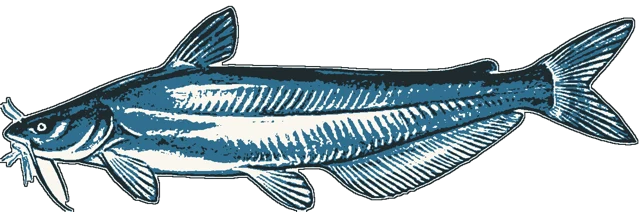 Blue catfish
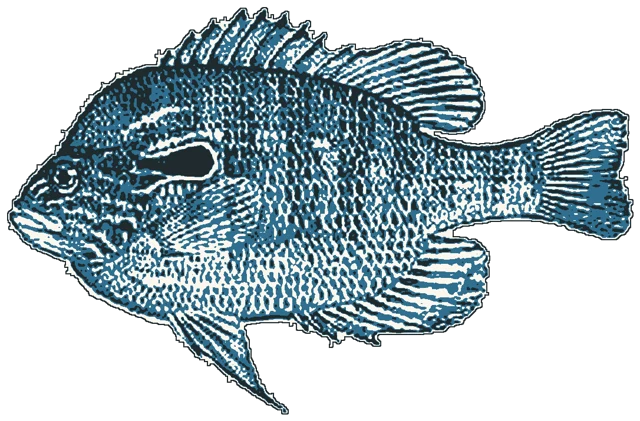 Bluegill
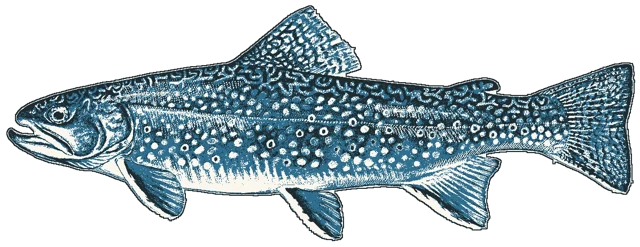 Brook trout
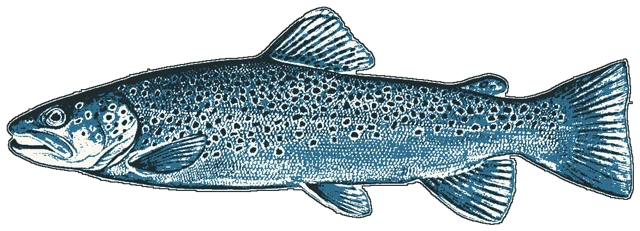 Brown trout
 Channel catfish“channel cats”Cutthroat trout“Rio Grande cutthroat”
 Flathead catfish“flatheads”Gila troutHybrid striped bass“wiper”Kokanee salmon“landlocked sockeye”
 Rainbow trout
 Striped bass“stripers”
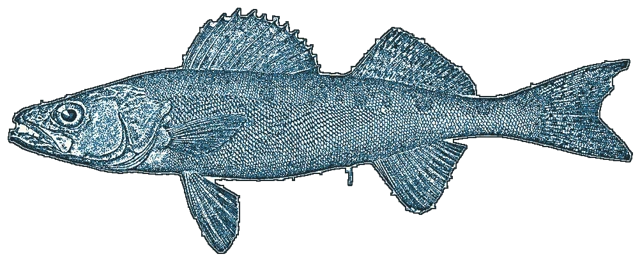 Walleye“walleyed pike”
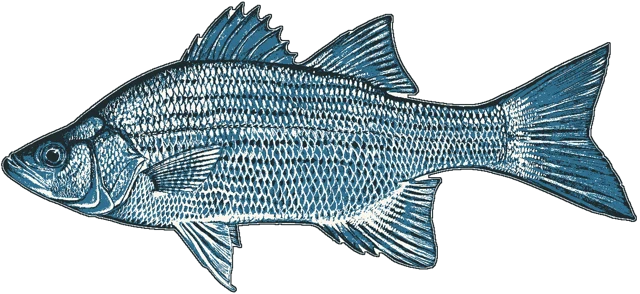 White bass“sand bass”
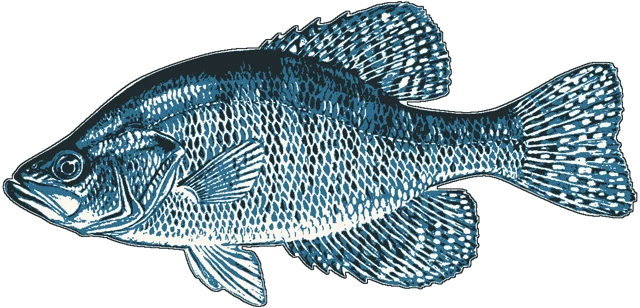 White crappie
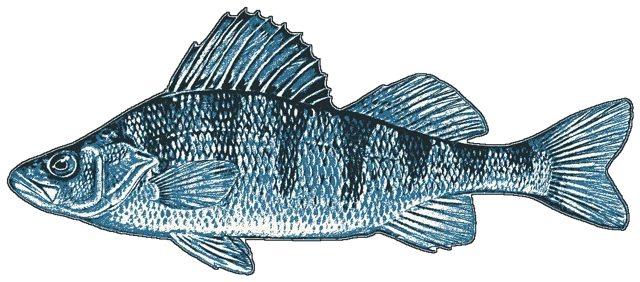 Yellow perch
Just OK12
Garbage fish2
Catch & release
Fish by fish
Why each one sits where it does, the current New Mexico limits, and the bait that works.
Blue catfish
Ictalurus furcatus · Freshwater
TPWD calls it an excellent food fish; Maryland DNR says blues are very good to eat.
- Tastes
- mild, firm
- Limits
- Light regs. 15 per day for all catfish species (bullheads excluded) and 30 in possession. Blue catfish live only in Elephant Butte and Caballo reservoirs. (2026-27 Fishing Rules and Information booklet, version v.08.04.26 (license year April 1, 2026 to March 31, 2027); rule in force on Nov. 21, 2026, checked Nov 21, 2026) Source
- Best months
- Spring through early summer in 60 to 72 degree water; fish the bottom after dark.
- Where
- NMDOW: only Elephant Butte and Caballo reservoirs; blue catfish up to 40 pounds are common at Elephant Butte. Trotlines are allowed on both lakes.
- cut gizzard shad
- cut skipjack herring
- live shad
- chicken liver
- shrimp
- Large, old blue catfish accumulate contaminants; some water bodies have size-based consumption advisories.
- Limit (everyone), mercury, half a meal a month (one every 2 months): 26 in and longer from Elephant Butte Lake.
Meal limits and other waters (6)
- Limit (everyone), mercury, 2 meals a month: 14 to 22 in from Elephant Butte Lake.
- Limit (everyone), mercury, 3 meals a month: 14 to 22 in from Caballo Lake; 10 to 14 in from Elephant Butte Lake.
- Limit (everyone), mercury, 4 meals a month: 10 to 14 in from Caballo Lake.
- A meal is 8 oz, and one number is the most for the month from all sources, so don't add waters together.
- Sizes not named were not analyzed; for a fish longer than the longest size named for its water, assume fewer meals.
- NM Environment Department list, August 2026 (env.nm.gov or 505-827-0187).
Bluegill
Lepomis macrochirus · Freshwater
MeatEater calls the flesh light, delicate and sweet; the original fish-fry panfish.
- Tastes
- mild, sweet, firm, flaky
- Limits
- Light regs. 20 per day (40 in possession) under 'all other warmwater game fish'; no size limit listed. Bluegill and sunfish caught by angling may be used live or dead as bait in the water where taken. (2026-27 Fishing Rules and Information booklet, version v.08.04.26 (license year April 1, 2026 to March 31, 2027); rule in force on Nov. 21, 2026, checked Nov 21, 2026) Source
- Best months
- Early spring on insect nymphs; they feed hardest in 64 to 72 degree water.
- Where
- NMDOW: Elephant Butte, Sumner, Santa Rosa, Ute and Conchas lakes and small warm-water ponds.
- live bait on a small wire hook under a bobber
- insect nymphs on a fly rod
- Limit (everyone), mercury, 1 meal a month: under 10 in from Clayton Lake (2026-27 booklet; the August 2026 list prints no advisory).
Meal limits and other waters (7)
- Limit (everyone), mercury, 3 meals a month: under 10 in from Cochiti Lake, Conchas Lake, Navajo Lake, Santa Rosa Lake or Ute Lake.
- Limit (everyone), mercury, 4 meals a month: under 10 in from Bear Canyon Dam or Bill Evans Lake.
- The list prints "No advisory" for: under 10 in from Lake Roberts.
- Pecos River in Brantley WMA: all species are listed for DDT, as per Brantley Lake, which has no number for this fish.
- A meal is 8 oz, and one number is the most for the month from all sources, so don't add waters together.
- Sizes not named were not analyzed; for a fish longer than the longest size named for its water, assume fewer meals.
- NM Environment Department list, August 2026 (env.nm.gov or 505-827-0187).
Brook trout
Salvelinus fontinalis · Freshwater
Often called the tastiest trout: MeatEater describes the meat as light and delicate with an almost sweet flavor.
- Tastes
- sweet, delicate, light, delicate
- Limits
- Heavy regs. Statewide 5 per day and 10 in possession, one combined limit with rainbow, brown and Gila trout and kokanee. Special Trout Waters (signed Chile waters) differ: Red Chile Water is catch-and-release with an artificial fly or lure on a single barbless hook; Green Chile Water is 2 trout with the same tackle; Xmas Chile Water is 2 trout with any legal tackle; bait fish and chumming are not allowed in any of them. In the Native Trout Conservation Red Chile waters (for example Cabresto Creek above Cabresto Canyon, Columbine Creek, Rio Santa Barbara above the West and Middle forks, Rio Cebolla above the Seven Springs Day Use Area) brook trout have an unlimited bag and Rio Grande cutthroat and Gila trout must be released. Other listed waters differ. (2026-27 Fishing Rules and Information booklet, version v.08.04.26 (license year April 1, 2026 to March 31, 2027); rule in force on Nov. 21, 2026, checked Nov 21, 2026) Source
- Where
- NMDOW: brook trout are uncommon and found in smaller streams; Cabresto Creek above Questa is the easy one, plus Cabresto Lake, Hopewell Lake and the Cruces Basin wilderness. NMDOW's trout page also names Tecolote Creek near Las Vegas.
- worms
- small spinners
- Limit (everyone), mercury, 4 meals a month: under 10 in from Cabresto Lake.
Meal limits and other waters (4)
- The list prints "No advisory" for: under 14 in from Canjilon Lakes.
- A meal is 8 oz, and one number is the most for the month from all sources, so don't add waters together.
- Sizes not named were not analyzed; for a fish longer than the longest size named for its water, assume fewer meals.
- NM Environment Department list, August 2026 (env.nm.gov or 505-827-0187).
Brown trout
Salmo trutta · Freshwater
Good trout eating like rainbows; most kept browns are stocked fish.
- Tastes
- mild to rich, flaky
- Limits
- Heavy regs. Statewide 5 per day and 10 in possession, one combined limit with rainbow, brook and Gila trout and kokanee. Special Trout Waters (signed Chile waters) differ: Red Chile Water is catch-and-release with an artificial fly or lure on a single barbless hook; Green Chile Water is 2 trout with the same tackle; Xmas Chile Water is 2 trout with any legal tackle; bait fish and chumming are not allowed in any of them. Examples: San Juan River Red Chile reach below Navajo Dam (catch-and-release, no more than 2 flies or lures on a line); Cimarron River Tolby Campground reach (catch-and-release); Rio Grande from the Colorado line to the Taos Junction Bridge and Rio Chama from the U.S. 84 bridge at Abiquiu 7 miles up to Abiquiu Dam (Xmas Chile, 2 trout); Pecos River box canyon to Cowles and Red River from Goose Creek up 1.1 miles (Green Chile, 2 trout, artificial single barbless hook). Native Trout Conservation waters (the listed upper reaches of Jack's Creek, Cabresto Creek, Rio Chiquito and others) have an unlimited bag for brown trout, with the Red Chile tackle. Valle Vidal streams (Red Chile) are open July 1 to Dec. 31. Other listed waters differ. (2026-27 Fishing Rules and Information booklet, version v.08.04.26 (license year April 1, 2026 to March 31, 2027); rule in force on Nov. 21, 2026, checked Nov 21, 2026) Source
- Where
- NMDOW: wild brown trout live in the Rio Grande Gorge, the Pecos River, the San Juan River, the Rio Guadalupe in the Jemez and the Cimarron River below Eagle Nest Dam.
- nightcrawlers
- spinners
- minnow-imitating flies
- Limit (everyone), mercury, 2 meals a month: 14 to 22 in from Abiquiu Lake.
Meal limits and other waters (5)
- Limit (everyone), mercury, 4 meals a month: 10 to 14 in from Abiquiu Lake; 14 to 18 in from the Pecos River from Pecos National Historical Park to its headwaters.
- The list prints "No advisory" for: 10 to 18 in from El Vado Lake; under 14 in from the Pecos River from Pecos National Historical Park to its headwaters; under 14 in from the Rio Grande from Embudo Creek to Rio Pueblo de Taos.
- A meal is 8 oz, and one number is the most for the month from all sources, so don't add waters together.
- Sizes not named were not analyzed; for a fish longer than the longest size named for its water, assume fewer meals.
- NM Environment Department list, August 2026 (env.nm.gov or 505-827-0187).
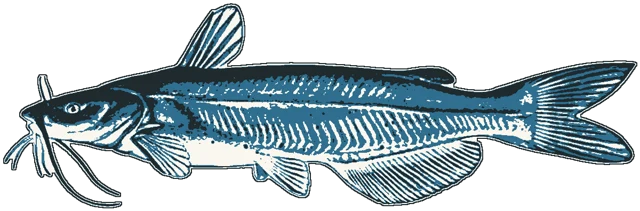
Channel catfish
Ictalurus punctatus · also called channel cats · Freshwater
Very good to eat (Maryland DNR) and delicious when cooked (TPWD), and the basis of US catfish farming.
- Tastes
- mild, sweet, firm, moist
- Limits
- Light regs. 15 per day for all catfish species (bullheads excluded) and 30 in possession. Special Summer Catfish Waters (more than 30 listed waters, mostly small lakes and ponds, including Tingley Beach, Bataan Lake, Ned Houk, Oasis State Park, Lake Van and the Pecos River within Villanueva State Park): 2 per day and 4 in possession, no trotlines. Animas River and San Juan River in San Juan County (not Navajo Lake): no bag or possession limit for channel catfish. Other listed waters differ. (2026-27 Fishing Rules and Information booklet, version v.08.04.26 (license year April 1, 2026 to March 31, 2027); rule in force on Nov. 21, 2026, checked Nov 21, 2026; rule 19.31.4 NMAC, in force April 1, 2026 to March 31, 2030, read Nov 22, 2026) Source
- Best months
- Spring through early summer in 60 to 72 degree water; fish the bottom after dark. Small ponds are stocked with big channel catfish May through September.
- Where
- NMDOW: Ute, Conchas, Caballo and Storrie lakes have very good populations of large channel catfish, and Elephant Butte has some very large fish; also Bluewater (midday in summer), Cochiti, Navajo, Brantley, Abiquiu, Sumner and Santa Rosa; stocked small lakes such as Bear Canyon, Eunice and Jal. In rivers: the Gila, Rio Chama (Abiquiu to El Vado), parts of the Rio Grande and the Pecos below Sumner and Brantley.
- shrimp
- chicken or beef liver
- worms and nightcrawlers
- cut bait
- stinkbait
- Limit (everyone), half a meal a month (one every 2 months): 22 to 26 in from Brantley Lake (and the Pecos River in Brantley WMA) or Elephant Butte Lake; 26 to 30 in from Navajo Lake; 30 in and longer from Springer Lake.
Meal limits and other waters (9)
- Limit (everyone), 1 meal a month: 22 to 26 in from Abiquiu Lake or Cochiti Lake; 14 to 18 in from Carlsbad Municipal Lakes (Lake Carlsbad, Bataan Lake); 26 to 30 in from Clayton Lake or Santa Rosa Lake; 18 to 22 in from Conchas Lake; 10 to 22 in from Elephant Butte Lake; 14 to 26 in from Storrie Lake.
- Limit (everyone), 2 meals a month: 14 to 22 in from Abiquiu Lake; 18 to 22 in from Brantley Lake (and the Pecos River in Brantley WMA), Carlsbad Municipal Lakes (Lake Carlsbad, Bataan Lake), Cochiti Lake, Navajo Lake, Sumner Lake or Ute Lake; 18 to 26 in from Caballo Lake; 14 to 18 in from Conchas Lake; 14 to 26 in from Santa Rosa Lake; 26 to 30 in from Springer Lake.
- Limit (everyone), 3 meals a month: 10 to 14 in from Abiquiu Lake, Lake Farmington or Santa Rosa Lake; 14 to 18 in from Caballo Lake or Cochiti Lake; under 14 in from Heron Lake; 10 to 18 in from Sumner Lake.
- Limit (everyone), 4 meals a month: 10 to 18 in from Bear Canyon Dam or Brantley Lake (and the Pecos River in Brantley WMA); 18 to 22 in from Clayton Lake; 10 to 14 in from Cochiti Lake; under 18 in from Navajo Lake; 14 to 18 in from the Pecos River from below Carlsbad Municipal Lakes to the Texas border; 14 to 22 in from the Rio Grande from Cochiti Lake to Otowi Bridge; 18 to 30 in from the Rio Grande from Otowi Bridge to the Rio Chama; 18 to 26 in from Stubblefield Lake; under 10 in from Sumner Lake; 14 to 18 in from Ute Lake.
- Contaminants: mercury, with DDT at Brantley Lake and PCBs at Conchas and Storrie lakes; DDT and PCBs at Carlsbad Municipal Lakes and on the Pecos River from there to the Texas border.
- Remove skin, fat and organs, and grill, bake or broil instead of frying: that lowers PCBs and DDT but not mercury.
- A meal is 8 oz, and one number is the most for the month from all sources, so don't add waters together.
- Sizes not named have no advisory or were not analyzed; for a fish longer than the longest size named for its water, assume fewer meals.
- NM Environment Department list, August 2026 (env.nm.gov or 505-827-0187).
Cutthroat trout
Oncorhynchus clarkii · also called Rio Grande cutthroat, RGCT · Freshwater
Eats like other trout; kept where legal, especially stocked fish and coastal sea-run cutts.
- Tastes
- mild, clean, delicate, flaky
- Limits
- Heavy regs. 2 per day and 2 in possession, counted inside the 5-trout limit (19.31.4.11 NMAC; the 2026-27 booklet prints 4 in possession, so keep to 2); any trout with red slash marks below the jaw counts as a cutthroat. Seven Springs Hatchery Kid's Pond: 5 cutthroat (no more than 5 trout in all). NMDOW says most Rio Grande cutthroat conservation populations are catch-and-release and the rest have a 2-fish limit with tackle rules. Red Chile (catch-and-release, artificial single barbless hook) examples: Capulin Creek, Rio Costilla from Latir Creek up 2.4 miles, Pecos River above Pecos Falls, Rio Valdez, Nabor Creek; Native Trout Conservation waters require release of cutthroat. Valle Vidal streams are open July 1 to Dec. 31. Other listed waters differ. (2026-27 Fishing Rules and Information booklet, version v.08.04.26 (license year April 1, 2026 to March 31, 2027); rule in force on Nov. 21, 2026, checked Nov 21, 2026; rule 19.31.4 NMAC, in force April 1, 2026 to March 31, 2030, read Nov 22, 2026) Source
- Where
- NMDOW: Comanche Creek and the Rio Costilla in the Valle Vidal, Jack's Creek in the Pecos watershed and Alamitos Creek in the Rio Pueblo watershed are easy to reach; Canones Creek, El Rito and the Pecos headwaters are remote. Stocked in Trampas Lakes, Horseshoe Lake, the Rio Grande and the Rio Chama. NMDOW also names the Rio Costilla, upper Pecos and Jemez regions.
- Limit (everyone), mercury, 4 meals a month: under 10 in from Cabresto Lake.
Meal limits and other waters (4)
- The list says cutbow trout, a rainbow and cutthroat cross; the 2026-27 booklet says cutthroat trout.
- A meal is 8 oz, and one number is the most for the month from all sources, so don't add waters together.
- Sizes not named were not analyzed; for a fish longer than the longest size named for its water, assume fewer meals.
- NM Environment Department list, August 2026 (env.nm.gov or 505-827-0187).
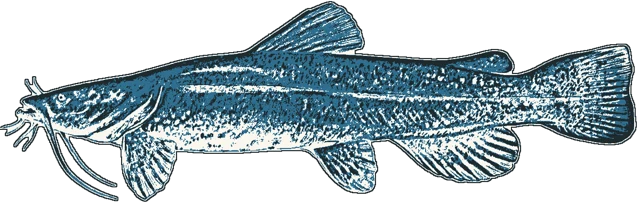
Flathead catfish
Pylodictis olivaris · also called flatheads · Freshwater
Widely considered the best-tasting catfish because it eats live fish instead of scavenging; Maryland DNR notes its mild, white flesh.
- Tastes
- mild, clean, firm, white
- Limits
- Light regs. 15 per day for all catfish species (bullheads excluded) and 30 in possession. (2026-27 Fishing Rules and Information booklet, version v.08.04.26 (license year April 1, 2026 to March 31, 2027); rule in force on Nov. 21, 2026, checked Nov 21, 2026) Source
- Best months
- Daytime fishing is best from May through early June and again from July through September.
- Where
- NMDOW calls Ute Lake best for both channel and flathead catfish; Sumner Lake flatheads are in the advisory table, and the state record came from Elephant Butte Lake (Ash Canyon).
- live bluegill
- live sunfish
- live shad
- large live bait of a pound or more
- Limit (everyone), mercury, 2 meals a month: 18 to 22 in from Sumner Lake.
Meal limits and other waters (5)
- Limit (everyone), mercury, 4 meals a month: 10 to 14 in from Sumner Lake.
- Pecos River in Brantley WMA: all species are listed for DDT, as per Brantley Lake, which has no number for this fish.
- A meal is 8 oz, and one number is the most for the month from all sources, so don't add waters together.
- Sizes not named were not analyzed; for a fish longer than the longest size named for its water, assume fewer meals.
- NM Environment Department list, August 2026 (env.nm.gov or 505-827-0187).
Gila trout
Oncorhynchus gilae · Freshwater
Eats like other stream trout; New Mexico and Arizona allow harvest in some stocked or recovered waters.
- Tastes
- mild, delicate
- Limits
- Heavy regs. A free Gila Trout Fishing Permit is required on Black Canyon, Gilita Creek, Mineral Creek, Mogollon Creek, Sapillo Creek, the West Fork Gila River (headwaters to East Fork confluence), Whitewater Creek and Willow Creek, including tributaries. Statewide bag is the 5-trout limit (Gila trout count in it). Gilita Creek, Mineral Creek, Willow Creek (above Snow Creek) and Whitewater Creek from the Catwalk parking area up are Xmas Chile (2 trout, any tackle). Mogollon Creek from the waterfall to Trail Canyon and Black Canyon from Forest Road 150 up are Red Chile: catch-and-release for Gila trout, artificial single barbless hook, open July 1 to Oct. 31 only (closed Nov. 1 to June 30). Mogollon Creek above Trail Canyon, all tributaries of the West Fork Gila and several small Gila-area creeks are closed to fishing all year. Other listed waters differ. (2026-27 Fishing Rules and Information booklet, version v.08.04.26 (license year April 1, 2026 to March 31, 2027); rule in force on Nov. 21, 2026, checked Nov 21, 2026) Source
- Best months
- Stocked in Sapillo Creek below the Highway 15 bridge and in the Gila Forks area during cooler months of the year; Mogollon Creek and Black Canyon open July 1 to Oct. 31.
- Neither the NM Environment Department's August 2026 list nor the 2026-27 booklet has a Gila trout row.
- If a species or water is not listed, the Environment Department says to assume smaller fish are generally lower in contaminants, and to remove skin, fat and organs.
- NM Environment Department: env.nm.gov or 505-827-0187.
Hybrid striped bass
Morone saxatilis x M. chrysops · also called wiper, wipers · Freshwater
Indiana DNR says hybrids make great table fare; mild white fillets like a striper's.
- Tastes
- mild, firm, white
- Limits
- Light regs. 25 per day (50 in possession), the same as white bass. (2026-27 Fishing Rules and Information booklet, version v.08.04.26 (license year April 1, 2026 to March 31, 2027); rule in force on Nov. 21, 2026, checked Nov 21, 2026) Source
- Where
- NMDOW: Caballo Lake, stocked with wipers since 2022; the booklet lists no other lake.
- live shad
- bucktail jigs
- jigging spoons
- Neither the NM Environment Department's August 2026 list nor the 2026-27 booklet has a wiper row.
- At Caballo Lake, where wipers are stocked, white bass are limited to half an 8-ounce meal a month (one every two months) at 14 to 18 in and 1 meal a month at 10 to 14 in (mercury).
- If a species or water is not listed, the Environment Department says to assume smaller fish are generally lower in contaminants, and to remove skin, fat and organs.
- NM Environment Department: env.nm.gov or 505-827-0187.
Kokanee salmon
Oncorhynchus nerka (landlocked) · also called landlocked sockeye · Freshwater
Landlocked sockeye with vivid orange, rich flesh; kokanee anglers fish specifically to fill a cooler.
- Tastes
- rich, salmon-like, slightly soft, orange
- Limits
- Heavy regs. Outside the snagging season, kokanee count in the 5-per-day, 10-in-possession trout limit. Special Kokanee Snagging Season: 12 per day and 24 in possession, in addition to the daily and possession limits for trout (19.31.4.11 NMAC). It is Oct. 1 to Dec. 31 at the Rio Chama (from El Vado Lake up to the west boundary of the Rio Chama Wildlife and Fishing Area), Navajo Lake, Pine River, El Vado Lake and Eagle Nest Lake, and Nov. 11 to Dec. 31 at Heron Lake and Willow Creek (closed Oct. 1 to Nov. 10, with no kokanee in possession then). The buoyed no-wake areas and shoreline at the Pine and Sims Mesa boat ramps at Navajo Lake are closed to kokanee Oct. 1 to Dec. 31 (no fishing, snagging or possession). Kokanee are the only fish that may be snagged; any other snagged fish must be released. (2026-27 Fishing Rules and Information booklet, version v.08.04.26 (license year April 1, 2026 to March 31, 2027); rule in force on Nov. 21, 2026, checked Nov 21, 2026; rule 19.31.4 NMAC, in force April 1, 2026 to March 31, 2030, read Nov 22, 2026) Source
- Best months
- Snagging season Oct. 1 to Dec. 31 (Nov. 11 to Dec. 31 at Heron Lake and Willow Creek); trolling at Navajo Lake and Eagle Nest Lake.
- Where
- NMDOW: Navajo Lake and Eagle Nest Lake (trolling and fall snagging); the snagging season also covers the Rio Chama from El Vado Lake up to the Rio Chama Wildlife and Fishing Area, Pine River, El Vado Lake, Heron Lake and Willow Creek.
- Limit (everyone), 3 meals a month: 10 to 14 in from Heron Lake.
Meal limits and other waters (6)
- The list prints "No advisory" for: 10 to 22 in from Eagle Nest Lake; under 18 in from El Vado Lake or Navajo Lake; under 10 in and 14 to 18 in from Heron Lake.
- Contaminants: mercury, with DDT and PCBs at Heron Lake.
- Remove skin, fat and organs, and grill, bake or broil instead of frying: that lowers PCBs and DDT but not mercury.
- A meal is 8 oz, and one number is the most for the month from all sources, so don't add waters together.
- Sizes not named were not analyzed; for a fish longer than the longest size named for its water, assume fewer meals.
- NM Environment Department list, August 2026 (env.nm.gov or 505-827-0187).
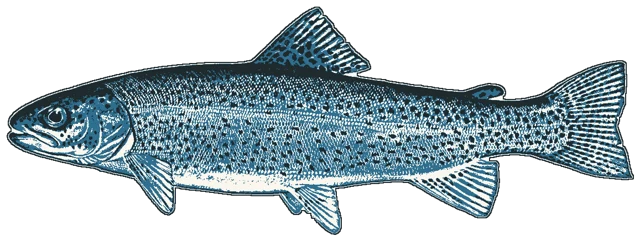
Rainbow trout
Oncorhynchus mykiss · Freshwater
TPWD calls rainbow trout an excellent fish to eat; the most-stocked put-and-take fish in America.
- Tastes
- mild, clean, delicate, flaky
- Limits
- Heavy regs. Statewide 5 per day and 10 in possession, counted as one limit with brown trout, brook trout, Gila trout and kokanee salmon (no more than 2 lake trout and no more than 2 cutthroat trout in that 5). Special Trout Waters (signed Chile waters) differ: Red Chile Water is catch-and-release with an artificial fly or lure on a single barbless hook; Green Chile Water is 2 trout with the same tackle; Xmas Chile Water is 2 trout with any legal tackle; bait fish and chumming are not allowed in any of them. Red Chile examples: San Juan River from Navajo Dam downstream 3.75 miles to the Crusher Hole Day Use Area (Red Chile, no more than 2 flies or lures on a line); Cimarron River from the east end of Tolby Campground downstream 1.4 miles to the first U.S. 64 bridge. Green Chile and Xmas Chile (2 trout) examples: Red River, Rio Guadalupe, Valles Caldera National Preserve waters; Rio Grande from the Colorado line to the Taos Junction Bridge. In the Native Trout Conservation Red Chile waters (for example Cabresto Creek above Cabresto Canyon, Jack's Creek above the waterfalls, Rio Cebolla above the Seven Springs Day Use Area) rainbow trout have an unlimited bag with the same tackle. Trout bag is 3 at Laguna del Campo (open May 1 to Oct. 31). Winter Trout Waters are stocked with hatchery rainbows Nov. 1 to March 31. Other listed waters differ. (2026-27 Fishing Rules and Information booklet, version v.08.04.26 (license year April 1, 2026 to March 31, 2027); rule in force on Nov. 21, 2026, checked Nov 21, 2026) Source
- Best months
- November through March at the Winter Trout Waters (stocked weekly at Tingley Beach and the Albuquerque-area drains).
- Where
- NMDOW names the Albuquerque-area drains and Tingley Beach (stocked weekly in winter), the Red River, San Juan River, Fenton Lake and Monastery Lake. Winter Trout Waters include the Rio Grande from Elephant Butte Reservoir to Caballo Lake, the Pecos River below Villanueva State Park to Santa Rosa Lake, Bottomless Lakes State Park and many town ponds.
- nightcrawlers
- salmon eggs
- corn
- inline spinners
- small spoons
- Limit (everyone), mercury, 3 meals a month: 18 to 22 in from Abiquiu Lake.
Meal limits and other waters (5)
- Limit (everyone), mercury, 4 meals a month: under 10 in from Cabresto Lake (listed as cutbow, a rainbow and cutthroat cross); 18 to 22 in from Eagle Nest Lake (2026-27 booklet; the August 2026 list prints no advisory); 14 to 18 in from Navajo Lake.
- The list prints "No advisory" for: 10 to 14 in from Abiquiu Lake, Charette Lakes or El Vado Lake; under 14 in from Canjilon Lakes or Lake Maloya; 10 to 18 in from Eagle Nest Lake; 14 to 22 in from Maxwell Lakes; 10 to 14 in from the Rio Grande from Embudo Creek to Rio Pueblo de Taos; 10 to 22 in from the San Juan River from Navajo Dam to Canon Largo; 10 to 22 in from Shuree Ponds.
- A meal is 8 oz, and one number is the most for the month from all sources, so don't add waters together.
- Sizes not named were not analyzed; for a fish longer than the longest size named for its water, assume fewer meals.
- NM Environment Department list, August 2026 (env.nm.gov or 505-827-0187).
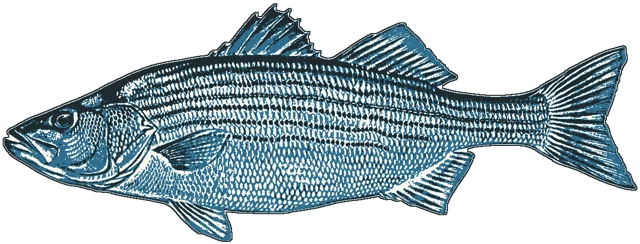
Striped bass
Morone saxatilis · also called stripers · Freshwater
Firm, large-flaked, slightly sweet white meat; one of the most kept and eaten gamefish in the country, fresh or salt.
- Tastes
- mild, slightly sweet, firm, large flakes
- Limits
- Heavy regs. 1 per day (2 in possession). Animas River and San Juan River in San Juan County (not Navajo Lake): no bag or possession limit. No size limit listed. (2026-27 Fishing Rules and Information booklet, version v.08.04.26 (license year April 1, 2026 to March 31, 2027); rule in force on Nov. 21, 2026, checked Nov 21, 2026; rule 19.31.4 NMAC, in force April 1, 2026 to March 31, 2030, read Nov 22, 2026) Source
- Best months
- Daytime from late fall through early spring; late evening through first light in summer. In fall they chase shad on shallow flats.
- Where
- NMDOW: Elephant Butte and Caballo lakes, at 20 to 50 feet or suspended over deeper water; stocked at Elephant Butte Lake.
- live shad
- live bluegill
- jigs
- jigging spoons
- Consumption advisories for striped bass vary from state to state (NOAA).
- Limit (everyone), mercury, 1 meal a month: 18 to 30 in from Elephant Butte Lake (the December 2023 list it replaced had half a meal at 26 to 30 in).
Meal limits and other waters (3)
- A meal is 8 oz, and one number is the most for the month from all sources, so don't add waters together.
- Sizes not named were not analyzed; for a fish longer than the longest size named for its water, assume fewer meals.
- NM Environment Department list, August 2026 (env.nm.gov or 505-827-0187).
Walleye
Sander vitreus · also called walleyed pike · Freshwater
Widely rated the best-eating freshwater fish: Maryland DNR calls it one of the best tasting, TPWD an excellent food fish.
- Tastes
- mild, clean, firm, tender, flaky white
- Limits
- Heavy regs. 5 per day and 10 in possession. No length limit: the rule (19.31.4.12 NMAC) sets sizes only for black bass and tiger muskie, and the booklet lists none. (2026-27 Fishing Rules and Information booklet, version v.08.04.26 (license year April 1, 2026 to March 31, 2027); rule in force on Nov. 21, 2026, checked Nov 21, 2026; rule 19.31.4 NMAC, in force April 1, 2026 to March 31, 2030, read Nov 22, 2026) Source
- Best months
- April and May, just after the spawn; night fishing from shore in summer.
- Where
- NMDOW: Ute (do not eat those 26 in or longer from there), Caballo and Conchas lakes have good walleye numbers; also Santa Rosa, Cochiti, Sumner (do not eat those 26 in or longer from there), Abiquiu and Clayton (Clayton Lake is open noon March 1 to noon Oct. 31).
- jigs tipped with minnows or worms
- bottom bouncer rigs
- shallow-running crankbaits
- curly-tail grubs
- Do not eat (anyone), mercury: walleye 26 to 30 in from Ute Lake or Sumner Lake.
- Do not eat (anyone): walleye over 30 in from those two lakes; the list stops at 30 in there, and the department says to assume fewer meals for longer fish.
Meal limits and other waters (10)
- Limit (everyone), mercury, half a meal a month (one every 2 months): 14 to 18 in from Abiquiu Lake; 26 to 30 in from Clayton Lake (2026-27 booklet; the August 2026 list prints no advisory) or Conchas Lake; 18 to 26 in from Cochiti Lake; 22 to 26 in from Sumner Lake; 10 to 18 in and 22 to 26 in from Ute Lake.
- Limit (everyone), mercury, 1 meal a month: 18 to 22 in from Abiquiu Lake, Sumner Lake or Ute Lake (the December 2023 list it replaced had half a meal); 18 to 30 in from Caballo Lake or Santa Rosa Lake; 14 to 18 in from Cochiti Lake; 10 to 26 in from Conchas Lake (the August 2026 list prints 4 at 14 to 18 in and the 2026-27 booklet 4 at 10 to 14 in; the stricter is shown).
- Limit (everyone), mercury, 2 meals a month: 14 to 18 in from Caballo Lake; 18 to 26 in from Clayton Lake or Stubblefield Lake.
- Limit (everyone), mercury, 3 meals a month: 14 to 18 in from Santa Rosa Lake or Sumner Lake.
- Limit (everyone), mercury, 4 meals a month: 10 to 14 in from Caballo Lake.
- The list prints "No advisory" for: 10 to 14 in from Clayton Lake.
- Pecos River in Brantley WMA: all species are listed for DDT, as per Brantley Lake, which has no number for this fish.
- A meal is 8 oz, and one number is the most for the month from all sources, so don't add waters together.
- Sizes not named were not analyzed; for a fish longer than the longest size named for its water, assume fewer meals.
- NM Environment Department list, August 2026 (env.nm.gov or 505-827-0187).
White bass
Morone chrysops · also called sand bass, sandies, silvers · Freshwater
Texas Parks & Wildlife calls white bass superb table fare, and the spring runs fill a lot of coolers; light, flaky meat like walleye.
- Tastes
- mild, light, flaky
- Limits
- Light regs. 25 per day (50 in possession); the booklet lists white bass and hybrid striped bass (wipers) on one line. No size limit listed. (2026-27 Fishing Rules and Information booklet, version v.08.04.26 (license year April 1, 2026 to March 31, 2027); rule in force on Nov. 21, 2026, checked Nov 21, 2026) Source
- Best months
- Late spring to early summer where shad congregate; spawning mid-April to mid-May; daytime from late fall through early spring.
- Where
- NMDOW: Elephant Butte, Caballo and the Rio Grande between them, plus Cochiti, Brantley, Sumner, Ute and Conchas lakes.
- jigs
- spinner-jig combinations
- crankbait spoons
- jigging spoons
- topwater plugs
- Limit (everyone), half a meal a month (one every 2 months): under 14 in from Brantley Lake (and the Pecos River in Brantley WMA); 14 to 18 in from Caballo Lake or Elephant Butte Lake; 10 to 14 in from Ute Lake.
Meal limits and other waters (8)
- Limit (everyone), 1 meal a month: 14 to 18 in from Brantley Lake (and the Pecos River in Brantley WMA) or Ute Lake; 10 to 14 in from Caballo Lake, Cochiti Lake or Elephant Butte Lake; under 14 in from the Rio Grande from I-25 to US 550.
- Limit (everyone), 2 meals a month: under 10 in from Elephant Butte Lake; 10 to 14 in from Lake Farmington or Sumner Lake.
- Limit (everyone), 3 meals a month: under 10 in from Sumner Lake.
- Contaminants: mercury, with DDT at Brantley Lake and PCBs on the Rio Grande from I-25 to US 550.
- Remove skin, fat and organs, and grill, bake or broil instead of frying: that lowers PCBs and DDT but not mercury.
- A meal is 8 oz, and one number is the most for the month from all sources, so don't add waters together.
- Sizes not named were not analyzed; for a fish longer than the longest size named for its water, assume fewer meals.
- NM Environment Department list, August 2026 (env.nm.gov or 505-827-0187).
White crappie
Pomoxis annularis · Freshwater
Same top-tier panfish fillets as black crappie; one of the most popular panfish in the country.
- Tastes
- mild, sweet, delicate, flaky, white
- Limits
- Light regs. 20 per day (40 in possession), crappie of all kinds; no size limit listed. (2026-27 Fishing Rules and Information booklet, version v.08.04.26 (license year April 1, 2026 to March 31, 2027); rule in force on Nov. 21, 2026, checked Nov 21, 2026) Source
- Where
- NMDOW: Conchas and Navajo lakes are best; also the southern Rio Grande and Pecos rivers, Ute, Cochiti, Caballo and Elephant Butte lakes.
- small crankbaits
- spinnerbaits
- marabou jigs
- tube jigs
- minnows
- Limit (everyone), mercury, half a meal a month (one every 2 months): under 10 in from Bear Canyon Dam.
Meal limits and other waters (9)
- Limit (everyone), mercury, 1 meal a month: 14 to 18 in from Navajo Lake; 10 to 14 in from Storrie Lake.
- Limit (everyone), mercury, 2 meals a month: under 10 in from Abiquiu Lake or Cochiti Lake; 10 to 14 in from Elephant Butte Lake.
- Limit (everyone), mercury, 3 meals a month: 10 to 14 in from Caballo Lake; under 14 in from Santa Rosa Lake.
- Limit (everyone), mercury, 4 meals a month: under 14 in from Navajo Lake.
- The list says crappie (white crappie at Storrie Lake).
- Pecos River in Brantley WMA: all species are listed for DDT, as per Brantley Lake, which has no number for this fish.
- A meal is 8 oz, and one number is the most for the month from all sources, so don't add waters together.
- Sizes not named were not analyzed; for a fish longer than the longest size named for its water, assume fewer meals.
- NM Environment Department list, August 2026 (env.nm.gov or 505-827-0187).
Yellow perch
Perca flavescens · Freshwater
A great food fish (MN DNR) and the centerpiece of Great Lakes perch fries; Iowa DNR calls a fried stringer of perch unsurpassed in flavor.
- Tastes
- mild, sweet, firm, flaky, white
- Limits
- Light regs. 30 per day (60 in possession); no size limit listed. (2026-27 Fishing Rules and Information booklet, version v.08.04.26 (license year April 1, 2026 to March 31, 2027); rule in force on Nov. 21, 2026, checked Nov 21, 2026) Source
- Best months
- Spring near shore while spawning; open water in summer; deep and inactive in winter.
- Where
- NMDOW: Lower Charette Lake (open noon March 1 to noon Oct. 31), Springer Lake and Stubblefield Lake, plus Eagle Nest Lake, where NMDOW's September 2026 brief says perch catch rates have fallen to historic lows.
- worms
- small minnows
- insect larvae
- crawdads
- shrimp
- pieces of fish
- Limit (everyone), mercury, 1 meal a month: 10 to 18 in from Charette Lakes.
Meal limits and other waters (5)
- Limit (everyone), mercury, 3 meals a month: 10 to 14 in from Eagle Nest Lake; under 10 in from Navajo Lake.
- Limit (everyone), mercury, 4 meals a month: under 14 in from Springer Lake; 10 to 14 in from Stubblefield Lake.
- A meal is 8 oz, and one number is the most for the month from all sources, so don't add waters together.
- Sizes not named were not analyzed; for a fish longer than the longest size named for its water, assume fewer meals.
- NM Environment Department list, August 2026 (env.nm.gov or 505-827-0187).
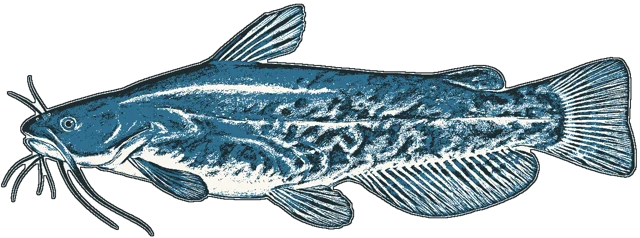
Bullhead (black, brown, yellow)
Ameiurus melas, A. nebulosus, A. natalis · Freshwater
Sweet, delicious catfish meat, but most are small and many come from warm, muddy water, so many anglers dismiss them.
- Tastes
- mild, sweet, firm, moist
- Limits
- Light regs. 20 per day (40 in possession) under 'all other warmwater game fish'; bullheads are not in the 15-a-day catfish limit. (2026-27 Fishing Rules and Information booklet, version v.08.04.26 (license year April 1, 2026 to March 31, 2027); rule in force on Nov. 21, 2026, checked Nov 21, 2026) Source
- Where
- NMDOW: black and yellow bullheads at Clayton Lake; black bullheads are also in the advisory tables for Charette Lakes, Springer Lake and Stubblefield Lake. Clayton and Charette lakes are open noon March 1 to noon Oct. 31.
- nightcrawlers
- chicken livers
- dough balls
- cut bait
- stinkbait
- Limit (everyone), 1 meal a month: 10 to 14 in from Charette Lakes.
Meal limits and other waters (8)
- Limit (everyone), 4 meals a month: under 10 in from Springer Lake; 10 to 14 in from Stubblefield Lake.
- The list says black bullhead.
- Contaminants: mercury, and PCBs at Springer Lake in the 2026-27 booklet.
- Remove skin, fat and organs, and grill, bake or broil instead of frying: that lowers PCBs and DDT but not mercury.
- Pecos River in Brantley WMA: all species are listed for DDT, as per Brantley Lake, which has no number for this fish.
- A meal is 8 oz, and one number is the most for the month from all sources, so don't add waters together.
- Sizes not named were not analyzed; for a fish longer than the longest size named for its water, assume fewer meals.
- NM Environment Department list, August 2026 (env.nm.gov or 505-827-0187).
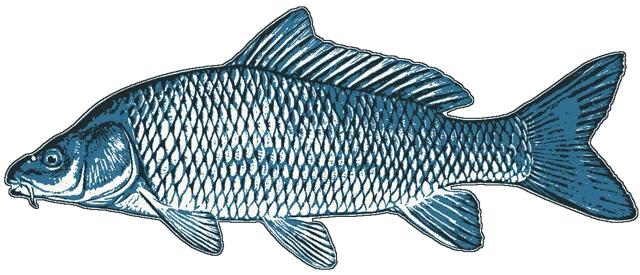
Common carp
Cyprinus carpio · Freshwater
Most US anglers call it a muddy, bony trash fish, but it is a prized food fish in Europe and Asia and eats well from clean, cold water.
Worth a try: Catch from clean water, remove the dark 'mud vein', and either score small fish and fry hard so the Y-bones soften, or hard-smoke large fish over fruitwood (Hank Shaw).
- Tastes
- mild from clean water, strong from muddy water, firm, fatty, Y-bones
- Limits
- No limits. The booklet calls common carp an unprotected fish: no bag, size or season rule is listed, and carp may be taken by bowfishing and spearfishing in all waters open to angling (game fish may be bowfished only in lakes and reservoirs). Common carp may be used as bait only dead (cut bait), statewide. Trotlines are allowed only in the listed lakes and river reaches. (2026-27 Fishing Rules and Information booklet, version v.08.04.26 (license year April 1, 2026 to March 31, 2027); rule in force on Nov. 21, 2026, checked Nov 21, 2026) Source
- Where
- Carp are in the booklet's advisory tables for Abiquiu, Cochiti, Navajo, Elephant Butte, Storrie, Sumner and Springer lakes, Lake Farmington, Carlsbad Municipal Lakes, the Rio Grande and the Pecos River.
- dough balls
- canned corn
- worms
- boilies
- bread
- Limit (everyone), 1 meal a month: 14 to 22 in from Abiquiu Lake; 22 to 26 in from Storrie Lake.
Meal limits and other waters (10)
- Limit (everyone), 2 meals a month: 18 to 26 in from Cochiti Lake; 18 to 22 in from Navajo Lake.
- Limit (everyone), 3 meals a month: 18 to 22 in from Elephant Butte Lake; 18 to 26 in from the Rio Grande from the Rio Chama to Embudo Creek.
- Limit (everyone), 4 meals a month: 14 to 22 in from Carlsbad Municipal Lakes (Lake Carlsbad, Bataan Lake); 14 to 18 in from Elephant Butte Lake; 22 to 26 in from Lake Farmington; 14 to 26 in from the Rio Grande from Cochiti Lake to Otowi Bridge (14 to 18 in is the 2026-27 booklet's line; blank on the August 2026 list); 10 to 22 in from Sumner Lake.
- The list prints "No advisory" for: 18 to 22 in from Lake Farmington; 10 to 18 in from the Pecos River from the north boundary of Brantley WMA to US 70; 10 to 22 in from the Pecos River from below Carlsbad Municipal Lakes to the Texas border; 14 to 22 in from Springer Lake; 10 to 22 in from Storrie Lake.
- Contaminants: DDT and PCBs at Carlsbad Municipal Lakes and on both Pecos River reaches, DDT on the Rio Grande from the Rio Chama to Embudo Creek, and mercury at the others, with PCBs at Cochiti and Elephant Butte lakes.
- Remove skin, fat and organs, and grill, bake or broil instead of frying: that lowers PCBs and DDT but not mercury.
- Pecos River in Brantley WMA: all species are listed for DDT, as per Brantley Lake, which has no number for this fish.
- A meal is 8 oz, and one number is the most for the month from all sources, so don't add waters together.
- Sizes not named were not analyzed; for a fish longer than the longest size named for its water, assume fewer meals.
- NM Environment Department list, August 2026 (env.nm.gov or 505-827-0187).
Freshwater drum
Aplodinotus grunniens · Freshwater
Many anglers call it a rough fish, but it is prized as food in some areas (TPWD); bled and iced, the boneless fillets eat like a redfish's.
Worth a try: Bleed it, ice it immediately and trim the red lateral meat; then fry thin fillets, grill on the half-shell like redfish, or smoke oily summer fish.
- Tastes
- mild, like other drum, firm but tender, large flake; goes soft if not iced
- Limits
- Light regs. 20 per day (40 in possession) under 'all other warmwater game fish'; no size limit listed. (2026-27 Fishing Rules and Information booklet, version v.08.04.26 (license year April 1, 2026 to March 31, 2027); rule in force on Nov. 21, 2026, checked Nov 21, 2026) Source
- Neither the NM Environment Department's August 2026 list nor the 2026-27 booklet has a freshwater drum row.
- If a species or water is not listed, the Environment Department says to assume smaller fish are generally lower in contaminants, and to remove skin, fat and organs.
- Pecos River in Brantley WMA: all species are listed for DDT, as per Brantley Lake, which has no number for this fish.
- NM Environment Department: env.nm.gov or 505-827-0187.
Green sunfish
Lepomis cyanellus · Freshwater
Edible like any sunfish but usually stunted; many anglers treat it as a pest that steals bait meant for bigger fish.
- Tastes
- mild, flaky
- Limits
- Light regs. 20 per day (40 in possession) under 'all other warmwater game fish'; no size limit listed. Sunfish caught by angling may be used live or dead as bait in the water where taken. (2026-27 Fishing Rules and Information booklet, version v.08.04.26 (license year April 1, 2026 to March 31, 2027); rule in force on Nov. 21, 2026, checked Nov 21, 2026) Source
- Best months
- Early spring on insect nymphs; they feed hardest in 64 to 72 degree water.
- Where
- NMDOW: parts of the Canadian River and Rio Grande and the Pecos, Gila and Black rivers, plus small warm ponds; native to the Pecos and Canadian drainages. The state record (1 lb 6 oz) came from Elephant Butte Lake.
- live bait on a small wire hook under a bobber
- insect nymphs on a fly rod
- Neither the NM Environment Department's August 2026 list nor the 2026-27 booklet has a green sunfish row.
- Bluegill under 10 in are limited to 3 or 4 eight-ounce meals a month at seven listed waters, and 1 at Clayton Lake in the 2026-27 booklet (mercury).
- If a species or water is not listed, the Environment Department says to assume smaller fish are generally lower in contaminants, and to remove skin, fat and organs.
- Pecos River in Brantley WMA: all species are listed for DDT, as per Brantley Lake, which has no number for this fish.
- NM Environment Department: env.nm.gov or 505-827-0187.
Lake trout
Salvelinus namaycush · Freshwater
Edible and widely kept, but it is the trout most often knocked as too greasy; big fish are very fatty and best smoked.
- Tastes
- rich, oily, soft to firm, fatty
- Limits
- Heavy regs. 2 per day and 4 in possession, counted inside the 5-trout limit. Lake trout are in Heron Lake, where the booklet's state record (31 lb 6 oz, 1999) was caught. (2026-27 Fishing Rules and Information booklet, version v.08.04.26 (license year April 1, 2026 to March 31, 2027); rule in force on Nov. 21, 2026, checked Nov 21, 2026) Source
- Best months
- Spring and fall at Heron Lake.
- Where
- NMDOW: lake trout were introduced at Heron Lake in the 1980s and have a self-sustaining population there.
- trolled spoons
- jigged bait
- dead bait under tip-ups
- Great Lakes and some western lakes carry contaminant advisories for large lake trout; check your state advisory.
- Limit (everyone), mercury, 4 meals a month: 26 to 30 in from Heron Lake.
Meal limits and other waters (4)
- The list prints "No advisory" for: 10 to 22 in from Heron Lake.
- A meal is 8 oz, and one number is the most for the month from all sources, so don't add waters together.
- Sizes not named were not analyzed; for a fish longer than the longest size named for its water, assume fewer meals.
- NM Environment Department list, August 2026 (env.nm.gov or 505-827-0187).
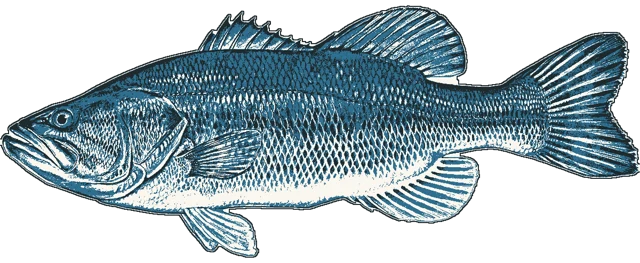
Largemouth bass
Micropterus nigricans (syn. M. salmoides) · Freshwater
Perfectly edible white fillets, but America's top catch-and-release fish and many anglers swear the meat tastes fishy or muddy, so reputation is split.
- Tastes
- mild to slightly 'fishy', firm, thick fillets
- Limits
- Heavy regs. 5 per day, all black bass together, with a 14-inch minimum for largemouth and spotted bass (12 inches for smallmouth). Trophy Bass Waters (Bill Evans Lake, Clayton Lake, Lake Roberts): 2 largemouth per day, 14 inches or longer, 2 in possession; no bow fishing or spearfishing for largemouth there. Clayton Lake is open only from noon March 1 to noon Oct. 31. Possession is twice the daily limit elsewhere. (2026-27 Fishing Rules and Information booklet, version v.08.04.26 (license year April 1, 2026 to March 31, 2027); rule in force on Nov. 21, 2026, checked Nov 21, 2026) Source
- Best months
- March through June are the prime bass months (pre-spawn, spawn and post-spawn).
- Where
- NMDOW: Elephant Butte, Ute and Conchas are the best largemouth reservoirs; Clayton Lake, Bill Evans Lake and Lake Roberts offer trophy fish; the small lakes can be the best.
- spinnerbaits
- plastic worms
- jig and pig
- crankbaits
- buzzbaits and prop baits (topwater)
- jerkbaits
- Water-body mercury advisories commonly list largemouth bass; check your state's advisory before eating large fish.
- Limit (everyone), half a meal a month (one every 2 months): 18 to 22 in from Navajo Lake.
Meal limits and other waters (9)
- Limit (everyone), 1 meal a month: 14 to 18 in from Bill Evans Lake; 14 to 22 in from Conchas Lake, Elephant Butte Lake or Ute Lake.
- Limit (everyone), 2 meals a month: 10 to 14 in from Bill Evans Lake, Conchas Lake, Navajo Lake or Ute Lake; 10 to 18 in from Brantley Lake (and the Pecos River in Brantley WMA); under 14 in from Elephant Butte Lake; 18 to 22 in from Lake Roberts.
- Limit (everyone), 3 meals a month: 14 to 18 in from Bear Canyon Dam, Lake Farmington or Lake Roberts.
- Limit (everyone), 4 meals a month: 10 to 14 in from Bear Canyon Dam or Lake Farmington.
- Contaminants: mercury, with DDT at Brantley Lake and PCBs at Bill Evans Lake.
- Remove skin, fat and organs, and grill, bake or broil instead of frying: that lowers PCBs and DDT but not mercury.
- A meal is 8 oz, and one number is the most for the month from all sources, so don't add waters together.
- Sizes not named were not analyzed; for a fish longer than the longest size named for its water, assume fewer meals.
- NM Environment Department list, August 2026 (env.nm.gov or 505-827-0187).
Longear sunfish
Lepomis megalotis · Freshwater
Tasty like other sunfish but rarely big enough to fillet; TPWD calls it an important fish for young anglers, easy to catch on earthworms.
- Tastes
- mild, flaky
- Limits
- Light regs. 20 per day (40 in possession) under 'all other warmwater game fish'; no size limit listed. (2026-27 Fishing Rules and Information booklet, version v.08.04.26 (license year April 1, 2026 to March 31, 2027); rule in force on Nov. 21, 2026, checked Nov 21, 2026) Source
- Where
- NMDOW's record list shows the state-record longear sunfish (1 lb 12 oz, 1985) came from Elephant Butte Lake.
- earthworms
- small poppers
- small jigs
- Neither the NM Environment Department's August 2026 list nor the 2026-27 booklet has a longear sunfish row.
- Bluegill under 10 in are limited to 3 or 4 eight-ounce meals a month at seven listed waters, and 1 at Clayton Lake in the 2026-27 booklet (mercury).
- If a species or water is not listed, the Environment Department says to assume smaller fish are generally lower in contaminants, and to remove skin, fat and organs.
- Pecos River in Brantley WMA: all species are listed for DDT, as per Brantley Lake, which has no number for this fish.
- NM Environment Department: env.nm.gov or 505-827-0187.
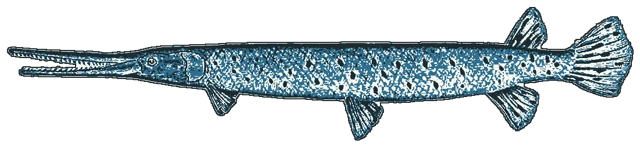
Longnose gar
Lepisosteus osseus · Freshwater
Most anglers treat it as a nuisance and few eat it, but the firm white backstraps are good once you get through the armor.
Worth a try: Cut down the back with shears or a hatchet to get past the armored scales, take the two white backstraps, and fry them or grind them into Louisiana gar balls.
- Tastes
- mild, firm, meaty, almost like alligator
- Limits
- No limits. No statewide limit is listed in the booklet; longnose gar is not on the booklet's game fish list. The state record is a 12 lb 8 oz fish from the Pecos River (1986). (2026-27 Fishing Rules and Information booklet, version v.08.04.26 (license year April 1, 2026 to March 31, 2027); rule in force on Nov. 21, 2026, checked Nov 21, 2026) Source
- Where
- NMDOW: longnose gar live in the Rio Grande, Rio Mimbres and Rio Yaqui and the Gila and Zuni rivers; the state record came from the Pecos River.
- live minnows suspended near the surface
- rope (frayed nylon) lures
- bowfishing
- Gar eggs (roe) are toxic to people and other warm-blooded animals; never eat them (Maryland DNR).
- Neither the NM Environment Department's August 2026 list nor the 2026-27 booklet has a longnose gar row.
- If a species or water is not listed, the Environment Department says to assume smaller fish are generally lower in contaminants, and to remove skin, fat and organs.
- Pecos River in Brantley WMA: all species are listed for DDT, as per Brantley Lake, which has no number for this fish.
- NM Environment Department: env.nm.gov or 505-827-0187.
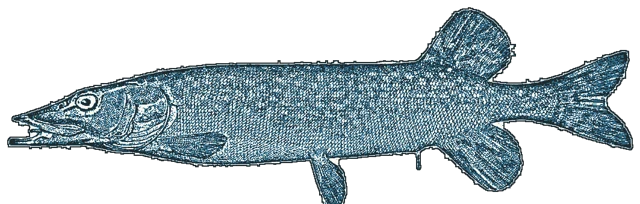
Northern pike
Esox lucius · Freshwater
The meat is white, flaky and great in flavor, but the Y-bones put many anglers off; reputation is split between 'too bony' and 'better than walleye once you learn to clean them'.
Worth a try: Remove the Y-bones with the five-fillet method, or grind, pickle or make fish balls from the meat; Hank Shaw's pike balls grind small pike so the bones vanish.
- Tastes
- mild, clean, firm, flaky white; Y-bones in the upper fillet
- Limits
- Light regs. 10 per day and 20 in possession; no size limit listed. Eagle Nest Lake: no bag or possession limit, every pike caught must be kept, and none may be intentionally returned to the lake. (2026-27 Fishing Rules and Information booklet, version v.08.04.26 (license year April 1, 2026 to March 31, 2027); rule in force on Nov. 21, 2026, checked Nov 21, 2026) Source
- Where
- NM State Parks says Eagle Nest Lake is good for northern pike, and NMDOW says pike were illegally introduced to Eagle Nest in the mid-2000s. Pike also appear in the booklet's advisory tables for Cochiti, Navajo, Springer and Lake Farmington.
- large spoons
- minnow crankbaits
- spinnerbaits
- live or dead baitfish under tip-ups
- suckers
- Large pike in parts of northern and western Alaska can carry enough mercury that eating large quantities can be harmful (ADF&G).
- Limit (everyone), mercury, 1 meal a month: 30 in and longer from Cochiti Lake; 22 in and longer from Navajo Lake (the December 2023 list it replaced had half a meal at 30 in and longer).
Meal limits and other waters (7)
- Limit (everyone), mercury, 2 meals a month: 26 to 30 in from Cochiti Lake; 26 in and longer from Springer Lake.
- Limit (everyone), mercury, 3 meals a month: 22 to 26 in from Cochiti Lake; 30 in and longer from Lake Farmington.
- Limit (everyone), mercury, 4 meals a month: 18 to 26 in and 30 in and longer from Eagle Nest Lake; 22 to 26 in from Springer Lake.
- The list prints "No advisory" for: 14 to 18 in from Eagle Nest Lake.
- A meal is 8 oz, and one number is the most for the month from all sources, so don't add waters together.
- Sizes not named were not analyzed; for a fish longer than the longest size named for its water, assume fewer meals.
- NM Environment Department list, August 2026 (env.nm.gov or 505-827-0187).
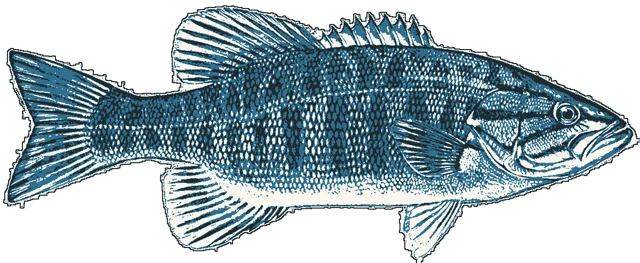
Smallmouth bass
Micropterus dolomieu · also called bronzebacks · Freshwater
Firm, white and good, often rated above largemouth, but most smallmouth are released by custom and the flesh has a slight 'fishy' edge some anglers dislike.
- Tastes
- mild, slightly fishy edge, firm, thick white fillets
- Limits
- Heavy regs. 5 per day, all black bass together; 12-inch minimum, but 14 inches at Conchas Reservoir and Ute Reservoir (smaller fish must be released there). Rio Grande in Taos County and Rio Arriba County: no minimum size. Possession is twice the daily limit. (2026-27 Fishing Rules and Information booklet, version v.08.04.26 (license year April 1, 2026 to March 31, 2027); rule in force on Nov. 21, 2026, checked Nov 21, 2026) Source
- Best months
- March through June are the prime bass months; around rocky ledges spring through fall.
- Where
- NMDOW: Navajo, Ute and Conchas lakes are very good (most abundant at Navajo); also Elephant Butte and Abiquiu. They hold around rocky areas and ledges.
- spinnerbaits
- plastic worms and grubs on a light line
- jigging spoons
- crankbaits
- Limit (everyone), mercury, 1 meal a month: 14 to 18 in from Abiquiu Lake, Elephant Butte Lake or Navajo Lake; 10 to 18 in from Conchas Lake or Ute Lake.
Meal limits and other waters (6)
- Limit (everyone), mercury, 2 meals a month: 10 to 14 in from Abiquiu Lake, Elephant Butte Lake, Navajo Lake or Santa Rosa Lake.
- Limit (everyone), mercury, 3 meals a month: under 10 in from Navajo Lake.
- The list prints "No advisory" for: under 14 in from Lake Farmington; under 10 in from the Rio Grande from Embudo Creek to Rio Pueblo de Taos.
- A meal is 8 oz, and one number is the most for the month from all sources, so don't add waters together.
- Sizes not named were not analyzed; for a fish longer than the longest size named for its water, assume fewer meals.
- NM Environment Department list, August 2026 (env.nm.gov or 505-827-0187).
Smallmouth buffalo
Ictiobus bubalus · Freshwater
Smallmouth buffalo is highly prized in many areas (TPWD), but some anglers still call it a rough fish because of its bones.
Worth a try: Many people do not realize smallmouth buffalo is quite a food fish (TPWD); fry the ribs or smoke it.
- Tastes
- mild, firm, bony
- Limits
- No limits. No statewide limit is listed in the booklet; smallmouth buffalo is not on the booklet's game fish list. (2026-27 Fishing Rules and Information booklet, version v.08.04.26 (license year April 1, 2026 to March 31, 2027); rule in force on Nov. 21, 2026, checked Nov 21, 2026) Source
- Where
- NMDOW's wildlife action plan describes smallmouth buffalo in perennial warm-water streams of the Chihuahuan Desert region, rarely over 18.5 inches in New Mexico; it appears in the Caballo Lake advisory table.
- dough baits
- bowfishing
- Limit (everyone), mercury, 1 meal a month: 26 to 30 in from Caballo Lake.
Meal limits and other waters (5)
- Limit (everyone), mercury, 2 meals a month: 18 to 26 in from Caballo Lake.
- Pecos River in Brantley WMA: all species are listed for DDT, as per Brantley Lake, which has no number for this fish.
- A meal is 8 oz, and one number is the most for the month from all sources, so don't add waters together.
- Sizes not named were not analyzed; for a fish longer than the longest size named for its water, assume fewer meals.
- NM Environment Department list, August 2026 (env.nm.gov or 505-827-0187).
Spotted bass
Micropterus punctulatus · Freshwater
Eats like other black bass and is kept more often than largemouth because it is abundant and small; agencies in some states encourage harvest.
- Tastes
- mild, firm, white
- Limits
- Heavy regs. 5 per day, all black bass together, with a 14-inch minimum for largemouth and spotted bass. Trophy Bass Waters limits apply to largemouth only. (2026-27 Fishing Rules and Information booklet, version v.08.04.26 (license year April 1, 2026 to March 31, 2027); rule in force on Nov. 21, 2026, checked Nov 21, 2026) Source
- Best months
- March through June are the prime black bass months.
- Where
- NMDOW: spotted bass are in a few reservoirs; the state record (5 lb 14.72 oz, 2019) came from Lake Carlsbad, and NMDOW habitat work at Carlsbad Municipal Lake and Bataan Lake targets largemouth and spotted bass.
- spinnerbaits
- plastic worms
- jig and pig
- crankbaits
- buzzbaits and prop baits (topwater)
- jerkbaits
- The list prints "No advisory" for: 10 to 14 in from Carlsbad Municipal Lakes (Lake Carlsbad, Bataan Lake).
- Contaminants listed there: mercury, DDT and PCBs.
- Remove skin, fat and organs, and grill, bake or broil instead of frying: that lowers PCBs and DDT but not mercury.
- Pecos River in Brantley WMA: all species are listed for DDT, as per Brantley Lake, which has no number for this fish.
- A meal is 8 oz, and one number is the most for the month from all sources, so don't add waters together.
- Sizes not named were not analyzed; for a fish longer than the longest size named for its water, assume fewer meals.
- NM Environment Department list, August 2026 (env.nm.gov or 505-827-0187).
Gizzard shad
Dorosoma cepedianum · Freshwater
Soft, tasteless, bony and strong-smelling; TPWD calls it worthless as a food fish and Maryland says it is almost always discarded.
- Tastes
- bland, strong odor, soft, many fine bones
- Limits
- No limits. A nongame baitfish: the booklet lists no bag, size or season limit for shad, and shad are not on its game fish list. The booklet says shad without naming a species; the state's bait-dealer rule names gizzard and threadfin shad. Shad may be used as bait, live or dead, only in the Rio Grande, Canadian River and Pecos River drainages, Elephant Butte and Caballo reservoirs included, and not in Special Trout Waters, Bitter Lake National Wildlife Refuge, Bottomless Lakes State Park or the BLM overflow wetlands on the Pecos. They may be taken for personal use only, by licensed anglers or anglers 11 and younger, by angling, dip nets, cast nets, traps and seines (no longer than 20 feet, mesh no larger than 3/8 inch). No live fish may be released into any water without a permit, except fish caught legally in that same water, or imported into the state without one. Fish taken home must be dead before they leave the water, and the booklet says not to transfer water from one location to another when using live bait. (2026-27 Fishing Rules and Information booklet, version v.08.04.26 (license year April 1, 2026 to March 31, 2027); rule in force on Nov. 21, 2026, checked Nov 21, 2026) Source
- Neither the NM Environment Department's August 2026 list nor the 2026-27 booklet has a shad row.
- If a species or water is not listed, the Environment Department says to assume smaller fish are generally lower in contaminants, and to remove skin, fat and organs.
- Pecos River in Brantley WMA: all species are listed for DDT, as per Brantley Lake, which has no number for this fish.
- NM Environment Department: env.nm.gov or 505-827-0187.
White sucker
Catostomus commersonii · Freshwater
Suckers have perhaps the worst reputation of the rough fish (MeatEater) and are mostly raised and sold as bait (MN DNR); the many small bones keep most anglers from eating them.
Worth a try: Spring fish from cold water are light and sweet like walleye (MeatEater); score them deeply and fry hard, pickle them to dissolve the bones, or grind into fish cakes.
- Tastes
- light, sweet, firm, white, many small bones
- Limits
- No limits. No statewide limit is listed in the booklet; white sucker is not on the game fish list. It is an approved live or dead baitfish in the Canadian River drainage and dead-only cut bait at Heron Reservoir. Minnows and baitfish may be taken for personal use by licensed anglers (or anglers 11 and younger) by angling, dip nets, cast nets, traps and seines (seines no longer than 20 feet, mesh no larger than 3/8 inch). (2026-27 Fishing Rules and Information booklet, version v.08.04.26 (license year April 1, 2026 to March 31, 2027); rule in force on Nov. 21, 2026, checked Nov 21, 2026) Source
- Where
- White sucker rows are in the booklet's advisory tables for El Vado, Heron, Navajo, Eagle Nest, Lake Maloya, Charette, Storrie and Stubblefield lakes and several rivers.
- nightcrawlers drifted on the bottom
- worms
- spearing/netting where legal
- Limit (everyone), mercury, 2 meals a month: 14 to 18 in from Heron Lake.
Meal limits and other waters (5)
- Limit (everyone), mercury, 4 meals a month: 10 to 18 in from Charette Lakes; 10 to 14 in from Eagle Nest Lake, El Vado Lake, Heron Lake or Lake Maloya; 14 to 18 in from the Rio Grande from the Rio Chama to Embudo Creek; 14 to 18 in from Storrie Lake.
- The list prints "No advisory" for: under 10 in from Lake Maloya; 10 to 14 in from Navajo Lake or Storrie Lake; under 10 in from the Pecos River from Pecos National Historical Park to its headwaters; 14 to 18 in from Stubblefield Lake.
- A meal is 8 oz, and one number is the most for the month from all sources, so don't add waters together.
- Sizes not named were not analyzed; for a fish longer than the longest size named for its water, assume fewer meals.
- NM Environment Department list, August 2026 (env.nm.gov or 505-827-0187).
Roundtail chub
Gila robusta · Freshwater
Arizona lists roundtail chub as catch and release only (take banned since January 2014), though it is not itself federally listed.
- Limits
- No harvest. Listed as endangered in the state list (19.33.6 NMAC): it is unlawful to take or possess a threatened or endangered species except as the Wildlife Conservation Act allows, and the booklet makes it illegal to fail to release such fish at once. Fish netted or seined while taking baitfish must be returned to the water. (19.33.6 NMAC list as posted by the NM State Records Center (checked Nov 21, 2026); booklet rule for 2026-27 license year; NMDOW says the current list is kept on BISON-M) Source
- Where
- NMDOW's wildlife action plan: the San Juan River basin (Rio Arriba and San Juan counties) and the Gila River basin (Catron, Grant, Hidalgo, Sierra and Socorro counties), in pools and rapids of creeks and rivers and in some large reservoirs.
Before you eat it: No harvest is allowed, and neither the NM Environment Department's August 2026 list nor the 2026-27 booklet has roundtail chub rows.
Tiger muskie
Esox masquinongy x E. lucius · also called tiger muskies · Freshwater
Managed like muskie, as a trophy fish with high size limits; Maryland DNR says most anglers release them.
- Limits
- Heavy regs. 1 per day, 40 inches or longer. Tiger muskie are only in Bluewater Lake and Quemado Lake. Boats at Quemado Lake are limited to oars or electric motors. (2026-27 Fishing Rules and Information booklet, version v.08.04.26 (license year April 1, 2026 to March 31, 2027); rule in force on Nov. 21, 2026, checked Nov 21, 2026) Source
- Best months
- Summer, when Bluewater Lake catch rates are above average.
- Where
- NMDOW: Bluewater Lake has a high-density population; Quemado Lake has a healthy one. NMDOW stocks them to control goldfish and white suckers.
- large crankbaits imitating suckers
- bucktail spinners
- large jerkbaits
- Limit (everyone), mercury, 1 meal a month: 30 in and longer from Bluewater Lake or Quemado Lake.
Meal limits and other waters (4)
- Limit (everyone), mercury, 2 meals a month: 22 to 26 in from Bluewater Lake (2026-27 booklet; blank on the August 2026 list) or Quemado Lake.
- A meal is 8 oz, and one number is the most for the month from all sources, so don't add waters together.
- Sizes not named were not analyzed; for a fish longer than the longest size named for its water, assume fewer meals.
- NM Environment Department list, August 2026 (env.nm.gov or 505-827-0187).
Where to fish in New Mexico
Fish named here are what people catch at each spot, not a promise they’re safe to eat. Read the eating advice on the fish’s card before you keep one.
- 1Elephant Butte Lake reservoir · fresh
NMDOW names it for striped bass, white bass and blue catfish and as a top largemouth and smallmouth bass reservoir. State eating advice (anyone, mercury): no more than half a meal a month (one every two months) of white bass 14 to 18 in, channel catfish 22 to 26 in or blue catfish 26 in and longer, and 1 meal a month of striped bass 18 to 30 in, largemouth 14 to 22 in, smallmouth 14 to 18 in, white bass 10 to 14 in or channel catfish 10 to 22 in.
Known for: Striped bass, White bass, Blue catfish, Channel catfish, Largemouth bass
Access: Elephant Butte Lake State Park has a boat ramp, marina and accessible fishing pier; the lake is open to trotlines under the booklet's rules.
- 2Caballo Lake reservoir · fresh
The booklet lists Caballo with Ute and Conchas for good walleye numbers, says wipers have been stocked there since 2022, and names it for very good populations of large channel catfish. State eating advice (anyone, mercury): no more than 1 meal a month of walleye 18 to 30 in and 2 a month of channel catfish 18 to 26 in; the list has no wiper line, but white bass here are half a meal a month at 14 to 18 in.
Known for: Walleye, Hybrid striped bass, Channel catfish
Access: Caballo Lake State Park has a boat ramp and two boat docks; the lake is open to trotlines.
- 3Navajo Lake reservoir · fresh
NMDOW lists Navajo for very good smallmouth bass (most abundant of the big lakes) and kokanee trolling; kokanee snagging is open Oct. 1 to Dec. 31 outside the closed no-wake areas. State eating advice (anyone, mercury): no more than 1 meal a month of smallmouth bass 14 to 18 in, 2 a month of those 10 to 14 in and 3 a month of smaller ones; the list prints "No advisory" for kokanee under 18 in.
Known for: Smallmouth bass, Kokanee salmon
Access: Navajo Lake State Park has boat ramps, two marinas and accessible piers; the lake is open to trotlines.
- 4San Juan River below Navajo Dam tailwater · fresh
NMDOW calls the tailwater below Navajo Dam world-class trout fishing, with both rainbow and brown trout.
Known for: Rainbow trout, Brown trout
Access: Public river with a state-park campground, day-use areas and a river trail; the 3.75 miles from the dam to Crusher Hole Day Use Area is catch-and-release with no more than 2 flies or lures on a line.
- 5Ute Lake reservoir · fresh
NMDOW names Ute among the best smallmouth, largemouth, walleye and white bass waters and the best lake for both channel and flathead catfish. Do not eat walleye 26 in or longer from this lake (mercury). State eating advice (anyone, mercury): no more than half a meal a month (one every two months) of walleye 10 to 18 in or 22 to 26 in or white bass 10 to 14 in, 1 meal a month of walleye 18 to 22 in, smallmouth 10 to 18 in, largemouth 14 to 22 in or white bass 14 to 18 in, and 2 a month of channel catfish 18 to 22 in; the list has no flathead line here.
Known for: Smallmouth bass, Largemouth bass, Walleye, White bass, Channel catfish
Access: Ute Lake State Park has a boat ramp and boat dock; the lake is open to trotlines; smallmouth under 14 inches must be released.
- 6Conchas Lake reservoir · fresh
NMDOW lists Conchas for smallmouth, largemouth, walleye, white crappie, white bass and large channel catfish. State eating advice (anyone, mercury, with PCBs in the catfish): no more than half a meal a month (one every two months) of walleye 26 to 30 in, 1 meal a month of walleye 10 to 26 in, smallmouth 10 to 18 in, largemouth 14 to 22 in or channel catfish 18 to 22 in, and 2 a month of channel catfish 14 to 18 in; the list has no crappie or white bass line here.
Known for: Smallmouth bass, Largemouth bass, Walleye, White crappie, White bass
Access: Conchas Lake State Park has six boat ramps and a boat dock; the lake is open to trotlines; smallmouth under 14 inches must be released.
- 7Eagle Nest Lake reservoir · fresh
NMDOW manages the lake mainly for rainbow trout and kokanee, with mandatory harvest of northern pike (no bag or possession limit); kokanee snagging runs Oct. 1 to Dec. 31. State eating advice (anyone, mercury): no more than 4 meals a month of northern pike 18 to 26 in or 30 in and longer, or of rainbow trout 18 to 22 in (2026-27 booklet; the August 2026 list prints no advisory for them or for kokanee 10 to 22 in).
Known for: Rainbow trout, Kokanee salmon, Northern pike
Access: Eagle Nest Lake State Park has a boat ramp and dock; fishing from the bank or by boat and ice fishing in winter; day use only on the lake, with camping in the park.
- 8Heron Lake reservoir · fresh
The booklet lists the state-record lake trout (31 lb 6 oz, 1999) from Heron Lake; kokanee snagging there opens Nov. 11 and runs to Dec. 31. State eating advice (anyone): no more than 3 meals a month of kokanee 10 to 14 in (mercury, DDT and PCBs) and 4 a month of lake trout 26 to 30 in (mercury).
Known for: Lake trout, Kokanee salmon
Access: Heron Lake State Park, a no-wake lake; check the park's alerts for boat ramp status before towing a boat.
- 9Cochiti Lake reservoir · fresh
NMDOW lists Cochiti for white bass, walleye, white crappie and channel catfish. State eating advice (anyone, mercury): no more than half a meal a month (one every two months) of walleye 18 to 26 in, 1 meal a month of walleye 14 to 18 in, white bass 10 to 14 in or channel catfish 22 to 26 in, and 2 a month of crappie under 10 in or channel catfish 18 to 22 in.
Known for: Walleye, White bass, Channel catfish, White crappie
Access: The booklet says Cochiti Lake requires a New Mexico fishing license although a license is not required on reservation waters generally; boats are limited to trolling speeds; the spillway is closed to fishing; the lake is open to trotlines.
- 10Bluewater Lake reservoir · fresh
NMDOW says the lake holds a high-density tiger muskie population (1 per day, 40 inches or longer) and lists it for midday summer channel catfish fishing. State eating advice (anyone, mercury): no more than 1 meal a month of tiger muskie 30 in and longer; the list has no channel catfish line here.
Known for: Tiger muskie, Channel catfish
Access: Bluewater Lake State Park has a boat ramp and boat dock.
- 11Rio Grande Gorge river · fresh
NMDOW says the Rio Grande Gorge supports a thriving wild brown trout population; the river from the Colorado line to the Taos Junction Bridge is Xmas Chile Water (2 trout, any tackle), and smallmouth bass have no minimum size in Taos and Rio Arriba counties.
Known for: Brown trout
Access: The booklet says every watercourse that can be legally accessed is open to public recreation and private property damage is illegal; a Habitat Stamp is required on Forest Service and BLM land.
- 12Pecos River at Villanueva State Park river · fresh
The booklet lists the Pecos River within Villanueva State Park as a Special Summer Catfish Water (2 a day) and the Pecos from the park's southeast boundary to Santa Rosa Lake as a Winter Trout Water stocked with rainbows Nov. 1 to Mar. 31.
Known for: Channel catfish, Rainbow trout
Access: Villanueva State Park on the Pecos River; NM State Parks says quality catfish fishing is available in summer and trout are abundant in winter.
- 13Whitewater Creek (Catwalk), Gila National Forest river · fresh
The booklet calls Whitewater Creek at the Catwalk Recreation Area an easily accessible, excellent place to fish for native Gila trout (Xmas Chile Water, 2 trout, any tackle).
Known for: Gila trout
Access: Catwalk Recreation Area near Glenwood; a free Gila Trout Fishing Permit is required and a Habitat Stamp applies on Forest Service land.
- 14Brantley Lake reservoir · fresh
NMDOW lists Brantley among the lakes with good white bass fishing and for catfish. State eating advice (anyone, mercury and DDT): no more than half a meal a month (one every two months) of white bass under 14 in or channel catfish 22 to 26 in, 1 meal a month of white bass 14 to 18 in, and 2 a month of channel catfish 18 to 22 in.
Known for: White bass, Channel catfish
Access: Brantley Lake State Park has two boat ramps; the lake is open to trotlines.
New Mexico fishing license and rules
- Resident: $39 total: $35 annual fishing license + $4 Habitat Management and Access Validation (HMAV, adults 18 and older, once each license year); add a $10 Habitat Stamp to fish on U.S. Forest Service, National Park Service (where fishing is allowed) or Bureau of Land Management land (12 and older); vendors add a per-transaction fee
- Nonresident: $94 total: $90 annual fishing license + $4 HMAV; add a $10 Habitat Stamp to fish on U.S. Forest Service, National Park Service (where fishing is allowed) or Bureau of Land Management land (12 and older); vendors add a per-transaction fee
- Nonresident short-term: One-day license $12 and five-day license $30 (same price for residents and nonresidents). With the $4 HMAV, which anglers 18 and older buy once each license year, that is $16 and $34; add the $10 Habitat Stamp on the listed federal land. Vendors add a per-transaction fee
- Who needs one: 12 and older need a license; 11 and younger fish without one. HMAV is required at 18 and older; the Habitat Stamp at 12 and older on the listed federal land; residents 70 and older get a free license
- Free fishing days: June 6-7, 2026 (New Mexico Free Fishing Day) and September 26-27, 2026 (National Hunting and Fishing Day): no license required, all other fishing rules apply. The rule (19.31.4.16 NMAC) makes the first Saturday and Sunday in June and the last in September free fishing weekends through March 31, 2030: June 5-6 and September 25-26 in 2027.
More license details
License year April 1 to March 31. Second Rod Validation $10 (two rods maximum; a trotline does not count as a rod). Junior annual (12-17) $5 resident, $20 nonresident; resident senior (65-69) $8; resident disabled $8. The free Gila Trout Fishing Permit is required on listed waters. A New Mexico license is not required on tribal reservations or Class-A lakes, but Cochiti Lake requires one; tribal permission is needed for reservation waters. The agency is the New Mexico Department of Wildlife (NMDOW), formerly the Department of Game and Fish.
Buy a license License types and fees
Fees: 2026-27 license year (Apr. 1, 2026 to Mar. 31, 2027); booklet v.08.04.26.
- Anglers 18 and older need the $4 Habitat Management and Access Validation each license year. Anglers 12 and older need a $10 Habitat Stamp to fish on U.S. Forest Service, National Park Service (where fishing is allowed) or BLM land. Free-license holders need neither.
- Special Trout Waters carry signs: Red Chile Water is catch-and-release with an artificial fly or lure on a single barbless hook, Green Chile Water is 2 trout with the same tackle, and Xmas Chile Water is 2 trout with any legal tackle. No baitfish or chumming, and no disturbing rocks, plants or sediment to attract fish.
- Fishing stops when you reach the daily bag for a Special Trout Water, and those fish count toward your overall daily limit. On the San Juan River Special Trout Water you may not fish more than 2 flies or lures on a line.
- A free Gila Trout Fishing Permit is required on Black Canyon, Gilita Creek, Mineral Creek, Mogollon Creek, Sapillo Creek, the West Fork Gila (headwaters to East Fork), Whitewater Creek and Willow Creek.
- Kokanee are the only fish you may snag, and only in the special season, when 12 a day are allowed on top of the trout limit (Oct. 1 to Dec. 31; Nov. 11 to Dec. 31 at Heron Lake and Willow Creek). Any other fish snagged must be released at once.
- Eagle Nest Lake has no bag or possession limit on northern pike, you must keep every pike you catch, and none may be returned to the lake. Tiger muskie (Bluewater and Quemado lakes only) are 1 per day at 40 inches or longer.
- It is illegal to possess or transport live game fish away from the water where they were caught or to stock fish without a permit. Baitfish are approved by drainage; goldfish and bullfrogs (including tadpoles) are banned as bait.
- Trotlines are limited to 25 hooks, one line per person, with your customer ID tag above the water, checked every calendar day, and only in the lakes and river reaches the booklet lists; they are not allowed in Special Summer Catfish Waters.
- Bow fishing and spearfishing for game fish are legal only in lakes and reservoirs open to angling, never in rivers, streams or Special Trout Waters, and not for largemouth bass in Trophy Bass Waters; unprotected fish such as common carp may be taken in all waters open to angling.
- Seasonal closures: Black Canyon above Forest Road 150 and Mogollon Creek from Forest Trail 153 to Trail Canyon are closed Nov. 1 to June 30. Charette and Clayton lakes and Maxwell Lakes 13 and 14 open at noon March 1 and close at noon Oct. 31; Morphy Lake (weather permitting) is open March 1 to Oct. 31, Valles Caldera National Preserve waters May 1 to Oct. 15, Laguna del Campo May 1 to Oct. 31 and the Red River City Ponds March 1 to Nov. 15. Valle Vidal streams and Shuree Ponds are open July 1 to Dec. 31.
- Closed all year in the Gila country: Mogollon Creek above Trail Canyon, all tributaries of the West Fork Gila, South Diamond, Trail Canyon, Woodrow Canyon, Sheep Corral and Spruce creeks, and the upper parts of Main Diamond, Iron, Little and Big Dry creeks.
Limits here are summaries for convenience, checked on the date shown. The official New Mexico regulations govern; check them before you keep a fish.
Before you eat it
- Do not eat (anyone), mercury: walleye 26 to 30 inches from Ute Lake or Sumner Lake (both print 0 on the NM Environment Department list, updated August 2026). Do not eat longer walleye from those two lakes: the list stops at 30 inches there, and the department says to assume fewer meals for a fish longer than the longest size listed.
Half a meal a month (one every two months), everyone: walleye at Abiquiu (14-18 in), Conchas (26-30 in), Cochiti (18-26 in), Sumner (22-26 in), Ute (10-18 and 22-26 in) and Clayton (26-30 … (see the full list)
Half a meal a month (one every two months), everyone: walleye at Abiquiu (14-18 in), Conchas (26-30 in), Cochiti (18-26 in), Sumner (22-26 in), Ute (10-18 and 22-26 in) and Clayton (26-30 in, 2026-27 booklet; the August 2026 list prints no advisory for that size); white bass at Brantley and the Pecos River in Brantley WMA (under 14 in), Caballo and Elephant Butte (14-18 in) and Ute (10-14 in); channel catfish at Brantley, the Pecos River in Brantley WMA and Elephant Butte (22-26 in), Navajo (26-30 in) and Springer (30 in and up); Elephant Butte blue catfish of 26 in and up; Navajo largemouth bass (18-22 in); Bear Canyon crappie (under 10 in).
- One meal a month on the August 2026 list, half a meal in the December 2023 table it replaced: Elephant Butte striped bass of 26-30 in, Navajo northern pike of 30 in and up and Ute walleye of 18-22 in. New or stricter in August 2026: Bill Evans largemouth bass 1 at 14-18 in (mercury and PCBs), Conchas walleye 1 at 10-14 in, Eagle Nest northern pike 4 at 18-22 in and 30 in and up.
New Mexico's advisories cover mercury, PCBs and DDT. The NM Environment Department's list, updated August 2026, gives the number of 8-ounce meals a month by fish length and water; 0 means … (see the full list)
New Mexico's advisories cover mercury, PCBs and DDT. The NM Environment Department's list, updated August 2026, gives the number of 8-ounce meals a month by fish length and water; 0 means eat none of that size, 1/2 means one meal every two months, NA means no advisory, and a blank means that size was not analyzed. The numbers are one set for everyone; the department's written procedure (2022) says its mercury numbers are meant to protect children and pregnant or nursing women. Where the list and NMDOW's 2026-27 booklet differ, the stricter is shown. Do not add cells together: one cell is the most to eat from all sources. Confirm with the current list.
- If your fish is longer than the longest size listed, assume fewer meals. If a water or species is not listed, the Environment Department says smaller fish are generally lower in contaminants, and to remove skin, fat and organs. Mercury is not stored in fat, so cooking does not reduce it; grilling, baking or broiling lets PCB and DDT fat drip away, and frying seals it in.
PCBs are listed for carp at Cochiti and Elephant Butte lakes, channel catfish at Storrie and Conchas lakes, Bill Evans largemouth bass, black bullhead at Springer Lake (2026-27 booklet) … (see the full list)
PCBs are listed for carp at Cochiti and Elephant Butte lakes, channel catfish at Storrie and Conchas lakes, Bill Evans largemouth bass, black bullhead at Springer Lake (2026-27 booklet), kokanee at Heron Lake, fish at Carlsbad Municipal Lakes, carp and channel catfish on the Pecos River (Texas line to Carlsbad, and Brantley WMA to US 70), channel catfish on the Rio Grande from I-25 to US 550 and from Rio Chama to Embudo Creek, and white bass from I-25 to US 550. DDT is listed at Brantley Lake, Carlsbad Municipal Lakes, the Pecos River reaches, Heron Lake kokanee and the Rio Grande from Rio Chama to Embudo Creek. The Pecos River in Brantley WMA is listed for all species (DDT), as per Brantley Lake, which has numbers for channel catfish, largemouth bass and white bass.
- Algae blooms come and go, so look at the state HAB Advisory Map (https://www.env.nm.gov/surface-water-quality/habs/) before you fish. Under a HAB Danger advisory the department says eating fish is not recommended. Under a Watch or Warning, rinse the fish, cook it thoroughly and eat only the fillet. At a bloom with no advisory, the department says when in doubt not to eat the fish. The golden algae fact sheet it posts says dead or dying fish should not be consumed.
- Questions: NM Environment Department Surface Water Quality Bureau 505-827-0187; NM Department of Health 1-888-878-8992.
Local lingo
- Chile waters: Red, Green and Xmas Chile, the signed Special Trout Waters categories
- Wipers: hybrid striped bass, stocked in Caballo Lake
- Sandies and silvers: white bass
- Bronzebacks: smallmouth bass
- Drains: the Albuquerque-area Rio Grande drains, stocked weekly with rainbow trout November through March
- Snagging season: the fall kokanee season, the only time snagging is legal
- Yo-yo line: a trotline-type set line without a rod, one of the booklet's trotline names
Questions anglers ask about New Mexico
What is the most common fish in New Mexico?
NMDOW's warm-water species page calls white bass the most frequently caught warm-water sport fish in the state, says anglers can find bluegill in almost any warm water and says channel catfish are widely distributed. For trout, NMDOW's 2026-27 fishing booklet says numerous wild populations of brown trout occur throughout New Mexico.
What is the best fish to eat in New Mexico?
16 of the 32 fish on our New Mexico board rate Best eating. They include: rainbow trout, brown trout, brook trout, cutthroat trout, Gila trout and Kokanee salmon.
What is the state fish of New Mexico?
Rio Grande cutthroat trout: State fish (New Mexico Secretary of State, state symbols).
Does New Mexico have free fishing days?
June 6-7, 2026 (New Mexico Free Fishing Day) and September 26-27, 2026 (National Hunting and Fishing Day): no license required, all other fishing rules apply. The rule (19.31.4.16 NMAC) makes the first Saturday and Sunday in June and the last in September free fishing weekends through March 31, 2030: June 5-6 and September 25-26 in 2027.
Which New Mexico fish are better to eat than their reputation?
We give the Worth a try badge to northern pike, freshwater drum, common carp, smallmouth buffalo, longnose gar and white sucker: fish most anglers toss or rate low that eat well when they're cleaned and cooked right. Each card says how.
Neighboring states
Sources
Limits, prices and advisories come from these pages, read on or before Nov 21, 2026. Where a line gives its own date, that’s the date it rests on. Eating advice changes: check the state’s current list. Ratings are national and come from the fish’s own page.
58 sources
- cloud.env.nm.gov Gila trout: advisory; Kokanee salmon: advisory; blue catfish: advisory; bluegill: advisory; brook trout: advisory; brown trout: advisory; bullhead (black, brown
- onlinesales.wildlife.state.nm.us license buy
- prod-rf-lambda.rtssaas.com Kokanee salmon: regs: 19.31.4 NMAC, April 1, 2026 to March 31, 2030 (New Mexico Register, Dec. 9, 2025); Kokanee salmon: regs: Rio Chama reach runs upstream fro
- service.web.env.nm.gov Gila trout: advisory: NM Environment Department list, updated August 2026; Kokanee salmon: advisory: NM Environment Department list, updated August 2026; blue c
- swap.dgf.nm.gov longnose gar: where
- swap.dgf.nm.gov roundtail chub: where
- swap.dgf.nm.gov smallmouth buffalo: where
- wildlife.dgf.nm.gov fishing spots; regs digest pdf
- wildlife.dgf.nm.gov Kokanee salmon: regs: snagging; common carp: regs; gizzard shad: regs: release and import permits; roundtail chub: regs: release threatened and endangered fish
- wildlife.dgf.nm.gov bluegill: regs: bait; common carp: regs: cut bait; gizzard shad: regs: baitfish waters, taking baitfish, fish dead before leaving; roundtail chub: regs: baitfis
- wildlife.dgf.nm.gov lake trout: where: Heron Lake record
- wildlife.dgf.nm.gov cutthroat trout: names: Rio Grande cutthroat, state fish
- wildlife.dgf.nm.gov Gila trout: where; months; Kokanee salmon: where; months; brook trout: where; brown trout: where; cutthroat trout: where; rainbow trout: where
- wildlife.dgf.nm.gov Gila trout: regs: 5-trout limit; Kokanee salmon: regs: trout limit; brook trout: regs; brown trout: regs; cutthroat trout: regs; lake trout: regs; rainbow trout
- wildlife.dgf.nm.gov Kokanee salmon: regs
- wildlife.dgf.nm.gov rainbow trout: regs: Special Trout Waters
- wildlife.dgf.nm.gov brown trout: regs: Red Chile waters; cutthroat trout: regs: Red Chile waters; rainbow trout: regs: Red Chile waters
- wildlife.dgf.nm.gov Gila trout: regs: Black Canyon; brook trout: regs: native trout conservation waters; brown trout: regs: native trout conservation waters; cutthroat trout: regs:
- wildlife.dgf.nm.gov Gila trout: regs: Xmas Chile waters; brown trout: regs: Green and Xmas Chile waters; rainbow trout: regs: Green and Xmas Chile waters
- wildlife.dgf.nm.gov flathead catfish: where: record, Ash Canyon/Elephant Butte
- wildlife.dgf.nm.gov hybrid striped bass: where: Caballo only
- wildlife.dgf.nm.gov blue catfish: where; channel catfish: where; hybrid striped bass: where; smallmouth bass: where; months: rocky areas and ledges, spring through fall; walleye: w
- wildlife.dgf.nm.gov blue catfish: where: trotlines
- wildlife.dgf.nm.gov blue catfish: regs; bluegill: regs; bullhead (black, brown, yellow): regs; channel catfish: regs; flathead catfish: regs; freshwater drum: regs; green sunfish:
- wildlife.dgf.nm.gov channel catfish: regs: Special Summer Catfish Waters; largemouth bass: regs: Trophy Bass Waters
- wildlife.dgf.nm.gov Gila trout: regs: Black Canyon closed Nov. 1-June 30; bullhead (black, brown, yellow): where: Clayton and Charette seasons; largemouth bass: regs: Clayton Lake
- wildlife.dgf.nm.gov northern pike: regs: Eagle Nest; smallmouth bass: regs: Conchas
- wildlife.dgf.nm.gov Gila trout: regs: Mogollon Creek
- wildlife.dgf.nm.gov tiger muskie: regs: Quemado
- wildlife.dgf.nm.gov smallmouth bass: regs: Ute
- wildlife.dgf.nm.gov Gila trout: regs: West Fork Gila tributaries
- wildlife.dgf.nm.gov gizzard shad: regs: do not transfer water with live bait
- wildlife.dgf.nm.gov Kokanee salmon: advisory (booklet pp. 40-44, NM Environment Department data); blue catfish: advisory (booklet pp. 40-44, NM Environment Department data); bluegi
- wildlife.dgf.nm.gov common carp: regs: baitfish list; gizzard shad: regs: shad is a nongame baitfish
- wildlife.dgf.nm.gov gizzard shad: regs: game fish definition; longnose gar: regs: game fish definition; smallmouth buffalo: regs: game fish definition
- wildlife.dgf.nm.gov free fishing days; gizzard shad: regs: BLM overflow wetlands; hybrid striped bass: regs
- wildlife.dgf.nm.gov license fees
- wildlife.dgf.nm.gov Gila trout: regs: permit
- wildlife.dgf.nm.gov brook trout: why_common; brown trout: why_common; catch survey; channel catfish: why_common; cutthroat trout: why_common; largemouth bass: why_common; rainbow t
- wildlife.dgf.nm.gov fishing spots; yellow perch: where: Eagle Nest perch decline
- wildlife.dgf.nm.gov fishing spots; northern pike: where: illegal introduction; spotted bass: where: Carlsbad and Bataan; tiger muskie: where: management
- wildlife.dgf.nm.gov flathead catfish: where: record; green sunfish: where: record; longear sunfish: where; longnose gar: where: record; spotted bass: where: record; state records;
- wildlife.dgf.nm.gov where to fish
- wildlife.dgf.nm.gov walleye: regs: 2022-23 change notice, no walleye length limit statewide
- wildlife.dgf.nm.gov Kokanee salmon: where; months: trolling at Navajo and Eagle Nest lakes; brook trout: where: Tecolote Creek; lake trout: where; months
- wildlife.dgf.nm.gov blue catfish: baits; months; where; bluegill: baits; months; where; bullhead (black, brown, yellow): where; channel catfish: baits; months; where; names; fishin
- wildlife.dgf.nm.gov license info
- wildlife.dgf.nm.gov Gila trout: where
- wildlife.dgf.nm.gov cutthroat trout: regs: conservation populations catch-and-release or 2 fish; cutthroat trout: where
- wildlife.dgf.nm.gov freshwater regs
- wildlife.dgf.nm.gov roundtail chub: regs: no change in the status of any listed species recommended in the Draft 2026 Biennial Review
- wildlife.dgf.nm.gov rainbow trout: baits: salmon egg or worm under a bobber, spinners and flies (Albuquerque drains); rainbow trout: months: stocked every week November through Mar
- emnrd.nm.gov northern pike: where: good for northern pike
- env.nm.gov Gila trout: advisory; Kokanee salmon: advisory: how to read the chart, contaminants; blue catfish: advisory: how to read the chart, contaminants; bluegill: advi
- env.nm.gov cutthroat trout: advisory: NM Environment Department table, December 2023; northern pike: advisory: NM Environment Department table, December 2023; spotted bass
- sos.nm.gov state fish
- srca.nm.gov gizzard shad: regs: gizzard and threadfin shad named as bait fish (19.31.9 NMAC)
- srca.nm.gov roundtail chub: regs
Illustrations: stencils we made from public-domain art by Duane Raver, U.S. Fish and Wildlife Service (Blue catfish, Brook trout, Channel catfish, Flathead catfish, Rainbow trout, Striped bass, White bass, White crappie, Yellow perch, Bullhead (black, brown, yellow), Smallmouth bass); NOAA (Bluegill); U.S. Fish and Wildlife Service (Brown trout, Common carp, Largemouth bass); Hugh McCormick Smith (Walleye); C. W. Nash (Longnose gar); David Starr Jordan (Northern pike), via Wikimedia Commons.
Spotted an error or a rule that changed? Tell us and we will check it against the official source.