Alaska · fresh and salt
Fish in Alaska: what’s worth eating, and what’s garbage
Alaska's sport fishing is built around five Pacific salmon species, Pacific halibut and rockfish, with rainbow trout, Dolly Varden and Arctic grayling in the rivers. Rules come as four regional ADF&G booklets plus emergency orders that change salmon limits through the season.
30 fish rated · limits checked Nov 21, 2026 against ADF&G and federal sources, then re-checked: 314 of 321 details confirmed or corrected on the official pages
Resident $20 annual sport fishing license (valid from purchase through Dec 31). Nonresident $100 annual sport fishing license.
Buy a licenseCovered by the same sport fishing license; a king salmon stamp is required to fish for king salmon (resident $10 annual; nonresident $15 1-day, $30 3-day, $45 7-day, $75 14-day, $100 annual)
Saltwater limitsFreshwater limits, seasons and size rules from Alaska Department of Fish and Game.
Freshwater limitsKing (Chinook) salmon
The Alaska table-fare board
Fish Alaska anglers catch, sorted by how they eat. The bars show how heavily each one is regulated here. Tap a fish for the details.
No limits Light regs Heavy regs No harvest
Best eating18
Just OK9
Garbage fish3
What’s actually caught in Alaska
The ADF&G Alaska Sport Fishing Survey is a mail survey of anglers; its statewide estimates for 2016 through 2025 (2025 is the latest year posted) give the catch, kept plus released. The figures here are the average fish caught per year over those 10 years.
- Sockeye salmon Best eatingStatewide catch (kept plus released), 2016-2025 average 978,882 fish a year
- Coho salmon Best eatingStatewide catch (kept plus released), 2016-2025 average 741,416 fish a year
- Pacific halibut Best eatingStatewide catch (kept plus released), 2016-2025 average 557,038 fish a year
- Pink salmon Just OKStatewide catch (kept plus released), 2016-2025 average 552,246 fish a year
- Rainbow trout Best eatingStatewide catch (kept plus released), 2016-2025 average 526,952 fish a year
- Rockfish Best eatingStatewide catch (kept plus released), 2016-2025 average 509,087 fish a year
- Dolly Varden Best eatingStatewide catch (kept plus released), 2016-2025 average 282,883 fish a year (reported as Dolly Varden/Arctic char combined)
- Chinook salmon Best eatingStatewide catch (kept plus released), 2016-2025 average 254,867 fish a year
- Arctic grayling Best eatingStatewide catch (kept plus released), 2016-2025 average 175,139 fish a year
- Chum salmon Just OKStatewide catch (kept plus released), 2016-2025 average 108,125 fish a year
Source: ADF&G Alaska Sport Fishing Survey (Statewide Harvest Survey) .
Fish by fish
Why each one sits where it does, the current Alaska limits, and the bait that works.
Arctic char
Salvelinus alpinus · Freshwater
Delicate pink flesh, milder than salmon with a light, flaky texture (Seafood Watch); the farmed fish is a restaurant staple.
- Tastes
- mild, between trout and salmon, light, flaky, pink
- Limits
- Heavy regs. Counted with Dolly Varden in most regional bag limits: Kenai River drainage flowing waters 1 per day under 16 inches, other Kenai Peninsula flowing waters 2 per day (lakes 5), West Cook Inlet 5 per day with only 1 of them 12 inches or longer, Bristol Bay 3 per day June 8-Oct 31, Tanana 10 per day combined. Alexander Creek (Susitna) and the Tok River are catch and release only. Emergency orders override these limits. (2026 ADF&G regional summaries (SC, SE, SW, Northern); emergency orders checked through Nov 21, 2026) Source
- Where
- In Alaska, Arctic char populations live in lakes (Brooks Range, Kigluaik and Kuskokwim mountains, Alaska Peninsula, Kenai Peninsula, Kodiak and near Denali).
- Gibbs Alaskan spoons
- Mepps Cyclops spoons
- Mepps spinners
- Pixee spoons
- salmon eggs
- shrimp
- Do not eat (anyone): any fish from Kimberly Lake in North Pole or, in the Eielson Air Force Base area near Fairbanks, from Bathing Beauty Pond, Polaris, Bear and Moose lakes, Piledriver Slough, the Moose Creek drainage or Garrison Slough (PFAS, and PCBs in Garrison Slough).
- The state's 2014 guidance says too few Arctic char were tested to base eating advice on.
- Alaska Department of Health general advice: pregnant women, women who may become pregnant, nursing mothers and children should choose fish carefully because of mercury, and smaller, younger fish have less.
Arctic grayling
Thymallus arcticus · Freshwater
Flaky, white meat that MeatEater calls a versatile food fish; Alaskans commonly keep a couple for the pan.
- Tastes
- mild, clean, flaky white
- Limits
- Heavy regs. Tanana drainage (general limit) and Kenai Peninsula: 5 per day, 5 in possession, no size limit. Chena River at Fairbanks: catch and release only above the Chena River dam and 1 per day below it (June 1-Mar 31). Delta Clearwater River: 1 per day, 12 inches or less. Southeast: 10 per day. Bristol Bay and West Cook Inlet: 2 per day. Emergency orders override these limits. (2026 ADF&G regional summaries (SC, SE, SW, Northern); emergency orders checked through Nov 21, 2026) Source
- Where
- Grayling are found throughout most of Alaska except Southeast, Kodiak Island and the Aleutian Islands.
- small spinners
- small spoons
- salmon eggs
- shrimp
- worms
- ADF&G lists grayling among large predatory fish that can carry elevated mercury in parts of northern and western Alaska.
- Do not eat (anyone): any fish from Kimberly Lake in North Pole or, in the Eielson Air Force Base area near Fairbanks, from Bathing Beauty Pond, Polaris, Bear and Moose lakes, Piledriver Slough, the Moose Creek drainage or Garrison Slough (PFAS, and PCBs in Garrison Slough).
Meal limits and other waters (2)
- Limit (women who are or can become pregnant, nursing mothers and children): 4 meals a month of grayling from the George River in the middle Kuskokwim area (state report, July 2016), and 16 a month from Copper Lake (National Park Service).
- From other waters the Alaska Department of Health lists grayling as unrestricted for the same people.
Chinook salmon
Oncorhynchus tshawytscha · also called king salmon · Fresh and salt
NOAA calls Chinook the most highly prized salmon in the culinary world: rich, buttery and oily.
- Tastes
- rich, buttery, oily, flaky, meaty
- Limits
- Heavy regs. King salmon stamp required with the license (resident $10 annual; nonresident $15 1-day to $100 annual). Rules differ sharply by region, and emergency orders override the booklets every year. Southcentral fresh waters (Susitna, Knik Arm, Anchorage, Kenai River and the rest of the Kenai Peninsula): the 2026 booklet lists king salmon fishing as closed by emergency order, except Ship Creek, the Eklutna Tailrace and short hatchery-king seasons on the Kasilof and Ninilchik rivers. An ADF&G emergency order closes West Cook Inlet fresh waters to king fishing through Dec 31, 2026, and the Ship Creek order bars keeping king salmon for the rest of 2026. Where open, kings 20 inches or longer from Cook Inlet salt water (Apr 1-Aug 31), West Cook Inlet, Susitna, Knik Arm, Anchorage Bowl and the Kenai Peninsula count toward a combined annual limit of 5, and each one kept must be recorded. Cook Inlet and Kachemak Bay winter fishery (Sept 16-Mar 31): 2 per day, no size limit, no annual limit or recording, stamp required. Resurrection Bay salt water (Seward): 2 per day May 1-Aug 31, 1 per day Sept 1-Apr 30. Bristol Bay fresh water: 3 per day 20 inches or longer, only 1 of them 28 inches or longer. Southeast salt water: 28 inches or longer only. The 2026 orders, in force to Apr 30, 2027, allow residents 2 per day and nonresidents 1 per day, with a nonresident annual limit of 3 from Jan 1 to June 30 and 1 from July 1 to Dec 31 (counting fish kept earlier in the year) and a harvest record; larger summer limits ended Sept 30, 2026. Some areas near Haines, Juneau, Petersburg, Wrangell and Ketchikan have tighter rules. Southeast fresh waters outside the Yakutat area are closed, except listed waters near Juneau, Sitka, Petersburg/Wrangell and Ketchikan. Upper Copper River: a free king salmon permit is required as well as the stamp (new in 2026), and the king fishery there was closed by emergency order from July 10, 2026. Yukon, Tanana, Northwest Alaska and Aniak River drainage kings were closed by emergency order in 2026. (2026 ADF&G regional summaries (SC, SE, SW, Northern); emergency orders checked through Nov 21, 2026; Cook Inlet salt-water king order expired Sept 15, 2026; West Cook Inlet fresh-water closure runs to Dec 31, 2026) Source
- Best months
- Bristol Bay king season is May 1-July 31 (2026 booklet). Peak timing elsewhere not sourced.
- Where
- ADF&G profile names the Yukon, Kuskokwim, Nushagak, Susitna, Kenai, Copper, Alsek, Taku and Stikine rivers among major runs.
- Pixee spoons
- Tee Spoons
- Vibrax spinners
- Mepps spinners
- Buzz Bombs
- herring
- Do not eat (anyone): any fish from the all-fish waters on this page, all near Fairbanks, among them Kimberly Lake, Piledriver Slough and, by Eielson Air Force Base, the Moose Creek drainage and Polaris, Bear and Moose lakes (PFAS).
- The Alaska Department of Health lists Chinook (king) salmon at 0 points a meal, unrestricted, for women who are or can become pregnant, nursing mothers and children.
Coho salmon
Oncorhynchus kisutch · also called silver salmon · Fresh and salt
High oil content, firm and flaky when cooked; NOAA notes smaller coho have a delicate flavor.
- Tastes
- mild to delicate, soft raw, firm and flaky cooked
- Limits
- Heavy regs. Cook Inlet salt water: 6 per day combined with chum, pink and sockeye, only 3 of them coho. Middle Kenai River: coho 2 per day July 1-Aug 31 and 3 per day Sept 1-Oct 31 by regulation, but an emergency order holds the Kenai River drainage at 2 per day Sept 1-Nov 30, 2026. Susitna and Little Susitna drainages: no keeping coho 16 inches or longer under emergency orders from Aug 19 through Dec 31, 2026. Ship Creek: 6 salmon (not king) per day, 6 in possession, Aug 7-Dec 31, 2026 by emergency order. Resurrection Bay salt water: 6 per day combined, all may be coho; outside the bay only 3 may be coho. Southeast: 6 per day 16 inches or longer, 12 in possession (Yakutat-area fresh water 4 per day, Juneau road-system streams 2 per day). Bristol Bay: 5 per day combined. Kuskokwim River drainage: closed to coho fishing by emergency order Aug 9-Dec 31, 2026. A coho 16 inches or longer taken out of the water in Cook Inlet fresh waters (West Cook Inlet, Susitna, Knik Arm, Anchorage, Kenai) must be kept and counts toward the limit. Emergency orders override these limits. (2026 ADF&G regional summaries (SC, SE, SW, Northern); emergency orders checked through Nov 21, 2026; Kenai River coho order Sept 1-Nov 30, 2026; Susitna coho closures to Dec 31, 2026; Ship Creek order to Dec 31, 2026) Source
- Best months
- Coho enter spawning streams from July to November (ADF&G profile). Kenai River coho season July 1-Oct 31 (2026 booklet).
- Where
- Coho are found in coastal waters from Southeast Alaska to Point Hope and in the Yukon River to the Alaska-Yukon border.
- Vibrax spinners
- Mepps spinners
- Pixee spoons
- Krocodile spoons
- Coyote spoons
- herring
- Do not eat (anyone): any fish from the all-fish waters on this page, all near Fairbanks, among them Kimberly Lake, Piledriver Slough and, by Eielson Air Force Base, the Moose Creek drainage and Polaris, Bear and Moose lakes (PFAS).
- The Alaska Department of Health lists coho (silver) salmon at 0 points a meal, unrestricted, for women who are or can become pregnant, nursing mothers and children.
Cutthroat trout
Oncorhynchus clarkii · Fresh and salt
Eats like other trout; kept where legal, especially stocked fish and coastal sea-run cutts.
- Tastes
- mild, clean, delicate, flaky
- Limits
- Heavy regs. Southeast (fresh and salt water): cutthroat and rainbow trout combined, 2 per day, 2 in possession, 11-inch minimum and 22-inch maximum size limit. Some Southeast lakes have a 14-inch or 25-inch minimum or are catch and release. Prince William Sound unstocked lakes, flowing waters and salt water: rainbow, steelhead and cutthroat combined, 2 per day June 15-Apr 14, 11-inch minimum and 16-inch maximum. Emergency orders override these limits. (2026 ADF&G regional summaries (SC, SE, SW, Northern); emergency orders checked through Nov 21, 2026) Source
- Best months
- Sea-run cutthroat begin migrating to sea in April; spawning April to early June (ADF&G profile).
- Where
- Coastal cutthroat occur from lower Southeast Alaska to Prince William Sound and are the most common trout species in the region.
Before you eat it: The Alaska Department of Health's points guide has no line for cutthroat trout. Alaska Department of Health general advice: pregnant women, women who may become pregnant, nursing mothers and children should choose fish carefully because of mercury, and smaller, younger fish have less.
Dolly Varden
Salvelinus malma · Fresh and salt
ADF&G calls Dolly Varden relatively easy to catch and delicious; ocean-bright sea-run fish have pink, flavorful flesh.
- Tastes
- mild, rich, firm, pink
- Limits
- Light regs. Southeast: 10 per day, 10 in possession, no size limit (Juneau road-system streams 2 per day). Cook Inlet salt water and North Gulf Coast salt water: 5 per day, no size limit. Kenai River drainage flowing waters: 1 per day, must be under 16 inches (char and Dolly Varden combined). Other Kenai Peninsula flowing waters: 2 per day; lakes 5 per day. Bristol Bay: 3 per day June 8-Oct 31, 10 per day Nov 1-June 7. Tanana and Kodiak: 10 per day. West Cook Inlet: 5 per day, only 1 of them 12 inches or longer. Emergency orders override these limits. (2026 ADF&G regional summaries (SC, SE, SW, Northern); emergency orders checked through Nov 21, 2026) Source
- Best months
- Late spring to early fall in the Ketchikan area; August at Salmon Creek near Seward (ADF&G guides).
- Where
- The southern form ranges from Southeast Alaska through the Gulf of Alaska; a northern form ranges from the north side of the Alaska Peninsula to the Mackenzie River.
- Mepps spinners
- Vibrax spinners
- Pixee spoons
- Krocodile spoons
- salmon eggs
- Do not eat (anyone): any fish from Kimberly Lake in North Pole or, in the Eielson Air Force Base area near Fairbanks, from Bathing Beauty Pond, Polaris, Bear and Moose lakes, Piledriver Slough, the Moose Creek drainage or Garrison Slough (PFAS, and PCBs in Garrison Slough).
- Alaska Department of Health lists Dolly Varden as unrestricted for women who are or can become pregnant, nursing mothers and children.
Kelp greenling
Hexagrammos decagrammus · Saltwater
Lingcod's smaller cousin with the same white, mild meat; good quality and especially good pan-fried (pierfishing.com, Hank Shaw).
- Tastes
- mild, large flakes, moderate fat
- Limits
- No limits. No limit listed. Southeast: 'No bag, possession, annual, or size limits' for fish not listed; Cook Inlet and North Gulf Coast: other finfish, no limit. Emergency orders override these limits. (2026 ADF&G regional summaries (SC, SE, SW, Northern); emergency orders checked through Nov 21, 2026) Source
- clams
- sand shrimp
- mussels
- pile or tube worms
- small piece of shrimp
- Flesh is sometimes turquoise; it cooks white (Hank Shaw)
Before you eat it: The state's 2014 guidance says too few kelp greenling were tested to base eating advice on. Alaska Department of Health general advice: pregnant women, women who may become pregnant, nursing mothers and children should choose fish carefully because of mercury, and smaller, younger fish have less.
Lingcod
Ophiodon elongatus · Saltwater
Mild, lean, large-flaked white meat; Hank Shaw rates it tastier than rockfish, and NOAA describes it as mild and tender.
- Tastes
- mild, tender, large flakes
- Limits
- Heavy regs. Cook Inlet and Kachemak Bay and North Gulf Coast outside Resurrection Bay: July 1-Dec 31, 1 per day, 2 in possession, at least 35 inches with head on. Prince William Sound: July 1-Dec 31, 1 per day, 1 in possession, same size rule. Resurrection Bay: closed to lingcod fishing year-round. Kodiak, Alaska Peninsula and Aleutians: July 1-Dec 31, 2 per day, 4 in possession, no size limit, except north Afognak and Shuyak islands where the limit is 1 per day, 35 inches or longer by emergency order through Dec 31, 2026. Southeast residents (all areas): May 16-Nov 30, 1 per day, 2 in possession, no size limit. Southeast nonresidents: 1 per day, 1 in possession, 30-35 inches or 55 inches and longer only, with an annual limit of 2 (one of each size) and a harvest record; their season is May 16-Nov 30 in Southern Inside waters but closes for part of the summer in the Northern, Central Outside and Southern Outer Coast areas, and Yakutat has its own size rule. Emergency orders override these limits. (2026 ADF&G regional summaries (SC, SE, SW, Northern); emergency orders checked through Nov 21, 2026; Southeast lingcod order expires Nov 30, 2026) Source
- Best months
- Season dates by region are in the regs summary; peak months not sourced.
- Where
- Lingcod are common throughout Southeast Alaska, the outer Kenai Peninsula, Kodiak and Prince William Sound, from the Alaska Peninsula south.
- chrome jigs
- leadhead jigs
- herring
- heads or tails of marine fishes
- Fillets occasionally hold worms (Hank Shaw)
- Limit (women who are or can become pregnant, nursing mothers and children), up to 12 points a week: lingcod 45 inches or longer is 12 points a 6-ounce meal (no more than 4 meals a month); 40 to 45 inches, 4 (12 a month); 35 to 40 inches, 2 (16 a month); under 35 inches, 0.
- Points are from the Alaska Department of Health guide of 2025 and monthly limits from its 2014 bulletin.
Pacific cod
Gadus macrocephalus · Saltwater
Mild, lean, flaky white meat (NOAA), a little softer and moister than Atlantic cod.
- Tastes
- mild, lean, flaky; less firm than Atlantic cod
- Limits
- No limits. No limit listed. Cook Inlet salt water, North Gulf Coast and Bristol Bay list other finfish as 'No limit'; Southeast lists fish not named as 'No bag, possession, annual, or size limits'. Emergency orders override these limits. (2026 ADF&G regional summaries (SC, SE, SW, Northern); emergency orders checked through Nov 21, 2026) Source
- Best months
- May through September in northern Southeast Alaska (ADF&G).
- Where
- Northern Southeast Alaska salt water, on underwater ledges, reefs and in channels 5 to 40 fathoms deep.
- herring
- chrome jigs
- colored weighted jigs
Before you eat it: Alaska Department of Health lists Pacific cod as unrestricted for women who are or can become pregnant, nursing mothers and children.
Pacific halibut
Hippoglossus stenolepis · Saltwater
Very mild, sweet white meat that cooks up flaky and firm, in thick boneless fillets. One of the most prized table fish on the coast.
- Tastes
- very mild, sweet, flaky, tender and firm when cooked
- Limits
- Heavy regs. Unguided anglers statewide: 2 per day, 2 daily bag limits in possession, no size limit, no annual limit; season Feb 1-Dec 31, 2026. Charter (guided) anglers, Southeast (Area 2C): 1 per day, must be 34 inches or less or 80 inches or more, no keeping on Thursdays June 18-Sept 10, 2026. Charter anglers, Southcentral (Area 3A): 2 per day, one of any size and one 27 inches or less, no keeping on any Wednesday or on Tuesdays June 2-Aug 25, 2026. Both charter areas: anglers 18 and older need a $20 charter halibut stamp for each charter fishing day. In the other Alaska areas (3B and 4) charter anglers follow the unguided rules. These are federal rules (NOAA/IPHC), not ADF&G, and federal in-season changes override them; on board, each fish may be cut into no more than 2 ventral, 2 dorsal and 2 cheek pieces with a patch of skin on each. (2026 season, NOAA Alaska Region guides dated March 2026) Source
- Best months
- Season Feb 1-Dec 31 (NOAA, 2026). ADF&G profile: halibut return to nearshore feeding areas in early summer.
- Where
- 2026 booklets list halibut seasons for Cook Inlet, North Gulf Coast, Southeast, Kodiak and Bristol Bay salt waters; ADF&G profile: found on or near the continental shelf from California to the Chukchi Sea.
- whole or chunked herring
- salmon heads or tails
- octopus
- squid
- chrome jigs
- lead-head jigs
- Limit (women who are or can become pregnant, nursing mothers and children), up to 12 points a week: halibut over 220 pounds is 12 points a 6-ounce meal (no more than 4 meals a month); 140 to 220 pounds, 6 (8 a month); 80 to 140 pounds, 4 (12 a month); 40 to 80 pounds, 2 (16 a month); under 40 pounds, 0.
- Points are from the Alaska Department of Health guide of 2025 and monthly limits from its 2014 bulletin.
- The state encourages mercury testing of a halibut of 80 pounds or more (DEC, 907-375-8200).
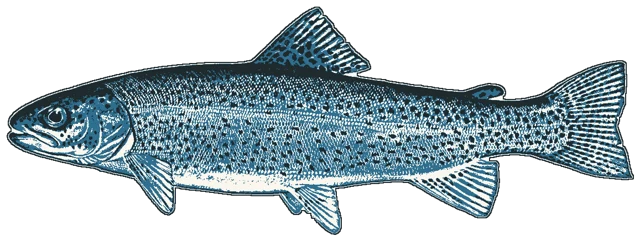
Rainbow trout
Oncorhynchus mykiss · Freshwater
TPWD calls rainbow trout an excellent fish to eat; the most-stocked put-and-take fish in America.
- Tastes
- mild, clean, delicate, flaky
- Limits
- Heavy regs. Bristol Bay: 2 per day June 8-Oct 31, only 1 of them 20 inches or longer; 5 per day Nov 1-June 7, only 1 of them 20 inches or longer. Kenai River drainage flowing waters: 1 per day, must be under 16 inches. Other Kenai Peninsula flowing waters: 2 per day, only 1 of them 20 inches or longer, with the Anchor, Ninilchik and Kasilof rivers and Deep and Stariski creeks catch and release only; lakes 5 per day, only 1 of them 20 inches or longer. West Cook Inlet flowing waters: catch and release Apr 15-June 14. Anchorage Bowl and other Cook Inlet waters: total annual limit of 2 rainbow/steelhead 20 inches or longer north of Point Adam, recorded when kept. Southeast: rainbow and cutthroat combined 2 per day, 11-inch minimum and 22-inch maximum. Kodiak Road Zone: catch and release except stocked lakes. Tanana stocked lakes: 10 per day combined with char, grayling, lake trout and landlocked salmon, only 2 of them lake trout and only 1 of them 18 inches or longer. Emergency orders override these limits. (2026 ADF&G regional summaries (SC, SE, SW, Northern); emergency orders checked through Nov 21, 2026) Source
- Best months
- Spring and fall on Trail River near Seward; spring and early summer in the Ketchikan area (ADF&G guides)
- Where
- Near Seward on the Kenai Peninsula (ADF&G): Trail River, Vagt Lake and the outlet of Ptarmigan Lake.
- Mepps spinners
- Vibrax spinners
- Pixee spoons
- salmon eggs
- Prince Nymph flies
- bead-head flies
- Do not eat (anyone): any fish from Kimberly Lake in North Pole or, in the Eielson Air Force Base area near Fairbanks, from Bathing Beauty Pond, Polaris, Bear and Moose lakes, Piledriver Slough, the Moose Creek drainage or Garrison Slough (PFAS, and PCBs in Garrison Slough).
- Alaska Department of Health lists rainbow trout as unrestricted for women who are or can become pregnant, nursing mothers and children.
Rockfish
Sebastes spp. (more than 70 species) · Saltwater
White, firm, lean meat that works in any white-fish recipe; rockfish are the backbone of West Coast bottom-fishing limits.
- Tastes
- firm, lean, white
- Limits
- Heavy regs. Black rockfish and other pelagic rockfish (black, dark, deacon, dusky, widow, yellowtail). Southeast: pelagic 3 per day, 6 in possession, no size limit (nonresidents in the Sitka area 2 per day, 4 in possession by emergency order through Dec 31, 2026). Cook Inlet and North Gulf Coast: an emergency order cut pelagic rockfish to 2 per day, 4 in possession from Apr 1 through Sept 15, 2026, within a total rockfish limit of 3 per day, 6 in possession; that order has expired. Prince William Sound: 3 per day, 6 in possession, only 1 of them nonpelagic. Kodiak (west and northeast sides) and Afognak: 5 per day, 10 in possession, only 2 per day of one species and only 1 black rockfish, and 3 per day in northern Afognak and Shuyak, by emergency order through Dec 31, 2026. Bristol Bay: no limit. All vessels must carry a deepwater release device and release unkept rockfish at depth. Emergency orders override these limits. (2026 ADF&G regional summaries (SC, SE, SW, Northern); emergency orders checked through Nov 21, 2026; Cook Inlet/North Gulf Coast order expired Sept 15, 2026; Kodiak order to Dec 31, 2026) Source
- Best months
- Open year-round in Cook Inlet and the North Gulf Coast (2026 booklet).
- Where
- Black rockfish have a small home range and are caught nearshore; 2026 booklets list rockfish limits for Southeast, Cook Inlet, North Gulf Coast and Kodiak.
- herring
- jigs
- spoons
- flies
- buzz-bombs
- Spiny fins; handle with care
- Fish brought up from depth suffer barotrauma; release with a descending device (NOAA)
- Limit (women who are or can become pregnant, nursing mothers and children): yelloweye rockfish is 6 of 12 points a week for each 6-ounce meal, and no more than 8 meals a month.
Meal limits and other waters (2)
- The Alaska Department of Health lists black, dusky and rougheye rockfish as unrestricted for the same people.
- The state's 2014 guidance says too few copper, quillback, silvergray and yellowtail rockfish were tested to base eating advice on.
Sablefish
Anoplopoma fimbria · also called black cod · Saltwater
Oil-rich, buttery, melt-in-your-mouth meat with large white flakes; NOAA calls it exceptionally flavorful.
- Tastes
- rich, buttery, soft, velvety, large flakes
- Limits
- Heavy regs. Southeast: residents 6 per day, 6 in possession; nonresidents 4 per day with an 8-fish annual limit and a harvest record. Other regions do not name sablefish; other finfish there have no limit. Emergency orders override these limits. (2026 ADF&G regional summaries (SC, SE, SW, Northern); emergency orders checked through Nov 21, 2026) Source
- Best months
- Sablefish spawn in winter to spring.
- Where
- Sablefish in the Gulf of Alaska and Bering Sea are considered one population.
Before you eat it: The Alaska Department of Health lists sablefish (black cod) at 0 points a meal, unrestricted, for women who are or can become pregnant, nursing mothers and children.
Sheefish
Stenodus leucichthys · Freshwater
A large Arctic whitefish that the Alaska Department of Fish and Game praises for its fine eating qualities; eaten frozen raw with seal oil, dried, baked and fried in Alaska.
- Limits
- Light regs. Tanana drainage: 2 per day, 2 in possession, no size limit. Yukon (outside the Tanana), Kuskokwim, Northwest and North Slope waters: 10 per day, no size limit, but 5 per day on the Kuskokwim below the Holitna and 2 per day on the upper Kobuk, upper Selawik, Aniak and Holitna rivers. Emergency orders override these limits. (2026 ADF&G regional summaries (SC, SE, SW, Northern); emergency orders checked through Nov 21, 2026) Source
- Where
- Sheefish live in large northern rivers and associated lakes, often glacial silt-laden rivers (Kuskokwim, Yukon, Selawik and Kobuk).
- large spoons (Doctor Spoon, Blue Fox Strobe)
- swimbaits
- jigs
- Large fish are rich: dry, smoke or freeze raw (quaq) traditionally
- Do not eat (anyone): any fish from the all-fish waters on this page, all near Fairbanks, among them Kimberly Lake, Piledriver Slough and, by Eielson Air Force Base, the Moose Creek drainage and Polaris, Bear and Moose lakes (PFAS).
- Alaska Department of Health lists sheefish as unrestricted for women who are or can become pregnant, nursing mothers and children.
Sockeye salmon
Oncorhynchus nerka · also called red salmon · Fresh and salt
The reddest, richest flesh of the wild salmon; NOAA says its flavor rivals Chinook.
- Tastes
- rich, firm, fatty, deep red
- Limits
- Heavy regs. Lower Kenai River (mouth to Skilak Lake): 16 inches or longer, 3 per day, 6 in possession with chum and coho, but 6 per day, 12 in possession June 20-Aug 15. Middle Kenai River: 3 per day, 6 in possession (chum and sockeye combined). Russian River: open June 11-Aug 20, 3 per day, 6 in possession (a 6-per-day emergency order on the Russian and upper Kenai ended July 14, 2026). Bristol Bay and Cook Inlet salt water: chum, coho, pink and sockeye count together (Bristol Bay 5 per day; Cook Inlet salt water 6 per day, only 3 coho). Southeast: 6 per day per species 16 inches or longer, 12 in possession. Kodiak Road Zone: 5 per day with only 2 sockeye. Emergency orders raise or cut sockeye limits on named rivers all season (through Dec 31, 2026: Kasilof River 6 per day, 12 in possession; Nushagak-Mulchatna and Wood River drainages 10 per day; Buskin River closed to sockeye), and they override these numbers, so check the order list before fishing. (2026 ADF&G regional summaries (SC, SE, SW, Northern); emergency orders checked through Nov 21, 2026) Source
- Best months
- Most sockeye return to spawn in June and July (ADF&G profile). Russian River sockeye season June 11-Aug 20 (2026 booklet).
- Where
- Sockeye range from the Klamath River in Oregon to Point Hope, and most return to freshwater drainages that contain one or more lakes.
- Russian River Coho flies
- Sockeye Oranges
- Sockeye Magics
- Comets
- Green Lanterns
- Dean River Lanterns
Before you eat it: The Alaska Department of Health lists sockeye (red) salmon at 0 points a meal, unrestricted, for women who are or can become pregnant, nursing mothers and children.
Steelhead
Oncorhynchus mykiss (anadromous) · also called steelhead trout · Fresh and salt
Steelhead are sea-run rainbow trout, and bright fish eat like a mild salmon; hatchery fish are kept as food across the Pacific Northwest and Great Lakes.
- Tastes
- mild, rich, firm, pink-orange
- Limits
- Heavy regs. Southeast: 36 inches or longer, 1 per day, 2 in possession, annual limit of 2, harvest record required; many listed streams, including all Juneau road-system drainages, are catch and release only. Kodiak Remote Zone: 2 per day, only 1 of them 20 inches or longer, annual limit 2 fish 20 inches or longer, harvest record. Kodiak Road Zone, Cook Inlet salt water, the Anchor, Ninilchik and Kasilof rivers, and Deep and Stariski creeks: catch and release only. North Gulf Coast salt water: closed to rainbow and steelhead fishing. Susitna, West Cook Inlet, Knik Arm, Anchorage and other Kenai Peninsula waters count steelhead with rainbow trout (see rainbow trout). Emergency orders override these limits. (2026 ADF&G regional summaries (SC, SE, SW, Northern); emergency orders checked through Nov 21, 2026) Source
- Best months
- Spring-run steelhead return March to early June (ADF&G profile).
- Where
- Fall-run steelhead are the main form along the Gulf of Alaska west of Yakutat, including Kodiak; summer-run fish are rare and found in a few Southeast systems.
- salmon eggs
Before you eat it: The Alaska Department of Health's points guide has no line for steelhead. Alaska Department of Health general advice: pregnant women, women who may become pregnant, nursing mothers and children should choose fish carefully because of mercury, and smaller, younger fish have less.
Wolf-eel
Anarrhichthys ocellatus · Saltwater
CDFW calls it a good-eating fish and Ken Jones rates the mild, white, dense meat delicious; a wolffish rather than a true eel, without an eel's oily meat.
- Tastes
- mild, clean, white, dense
- Limits
- No limits. No limit listed. Southeast: 'No bag, possession, annual, or size limits' for fish not listed; Cook Inlet and North Gulf Coast: other finfish, no limit. Emergency orders override these limits. (2026 ADF&G regional summaries (SC, SE, SW, Northern); emergency orders checked through Nov 21, 2026) Source
- shrimp
- small crabs
- squid
- mussels
- anchovy
- Recreational harvest is closed in Puget Sound marine areas
- Powerful jaws and canine teeth: keep hands clear; a big one can give a painful bite (FishBase, ODFW)
Before you eat it: The Alaska Department of Health's points guide has no line for wolf-eel. Alaska Department of Health general advice: pregnant women, women who may become pregnant, nursing mothers and children should choose fish carefully because of mercury, and smaller, younger fish have less.
Yelloweye rockfish
Sebastes ruberrimus · also called red snapper, Pacific red snapper, red rock cod, yellow belly · Saltwater
Eats like the best rockfish, and ADF&G calls it one of the most prized rockfish in Alaska. The catch is that California bans keeping it.
- Limits
- Heavy regs. Demersal shelf rockfish (yelloweye, quillback, copper, canary, China, tiger, rosethorn). Southeast residents: 1 per day, 2 in possession, no size limit; nonresidents July 1-Aug 25 only, with a limit of 1 fish per year and a harvest record (emergency order through Dec 31, 2026). Cook Inlet and North Gulf Coast: no retention of yelloweye Apr 1-June 30, 2026 by emergency order. Prince William Sound: no retention Jan 1-June 30. Kodiak (west and northeast sides) and Afognak: 1 per day, 2 in possession by emergency order through Dec 31, 2026. Emergency orders override these limits. (2026 ADF&G regional summaries (SC, SE, SW, Northern); emergency orders checked through Nov 21, 2026; Southeast nonresident season order through Dec 31, 2026) Source
- Best months
- May to August for rockfish at Sitka (ADF&G Sitka guide).
- Where
- Yelloweye are brilliantly colored, prized rockfish that grow to about 36 inches.
- herring
- jigs
- spoons
- flies
- Lives up to 120-150 years and recovers slowly; where retention is closed, release with a descending device (NOAA, ADF&G)
Before you eat it: Limit (women who are or can become pregnant, nursing mothers and children): 6 of 12 points a week for each 6-ounce meal (Alaska Department of Health), and no more than 8 meals a month (2014 state bulletin).
Burbot
Lota lota · Freshwater
Many anglers still throw back the slimy, eel-like 'eelpout' as trash, yet Alaskans keep them for their delicate white meat.
Worth a try: A freshwater cod: skin it, take the white loins and the liver, and boil-and-butter it like 'poor man's lobster', fry it or put it in chowder (Hank Shaw).
- Tastes
- mild, sweet, firm, white, lobster-like
- Limits
- Heavy regs. Tanana drainage: lakes 5 per day, flowing waters 15 per day, no size limit; set lines may be used in lakes Oct 15-May 15 and in flowing waters year-round. Bristol Bay: 15 per day. Kenai Peninsula and Kenai River: 2 per day (Hidden Lake is closed to burbot). Emergency orders override these limits. (2026 ADF&G regional summaries (SC, SE, SW, Northern); emergency orders checked through Nov 21, 2026) Source
- Best months
- Burbot spawn in winter under the ice.
- Where
- Burbot occupy most large clear and glacial rivers and many lakes across most of Alaska and are absent from Southeast Alaska.
- herring
- whitefish
- smelt
- red and silver spoons
- orange and white spoons
- Burbot are among the large predators that can carry elevated mercury in parts of northern and western Alaska (ADF&G).
- Do not eat (anyone): any fish from Kimberly Lake in North Pole or, in the Eielson Air Force Base area near Fairbanks, from Bathing Beauty Pond, Polaris, Bear and Moose lakes, Piledriver Slough, the Moose Creek drainage or Garrison Slough (PFAS, and PCBs in Garrison Slough).
Meal limits and other waters (3)
- Limit (women who are or can become pregnant, nursing mothers and children), in 6-ounce meals: 8 a month of burbot meat from the George River, and 16 a month of burbot meat from the middle Kuskokwim River or burbot liver from the George (state report, July 2016).
- Limit (the same people), middle Kuskokwim area: eat more of the burbot under 2 feet and less of the larger and the dried (2014 state bulletin).
- The Alaska Department of Health's points guide has no line for burbot.
Chum salmon
Oncorhynchus keta · also called dog salmon · Fresh and salt
ADF&G says chum are generally regarded as one of the less desirable salmon: lower oil and paler flesh than the others (NOAA).
- Tastes
- mild, lean, firm, meaty, pale
- Limits
- Heavy regs. In most of Southcentral, Kodiak and Bristol Bay chum count in a combined bag with coho and sockeye (and usually pink). Middle Kenai River: chum and sockeye 3 per day, 6 in possession June 11-Aug 31 (only 2 may be coho). Tanana River drainage (Fairbanks): chum and coho 3 per day combined (a June 22, 2026 chum closure was rescinded July 8). Yukon River drainage outside the Tanana: state waters are closed to chum fishing by emergency order July 22-Dec 31, 2026. Southeast: 6 per day 16 inches or longer. Bristol Bay: 5 per day combined. Cook Inlet salt water: 6 per day combined, 3 coho at most. Emergency orders override these limits. (2026 ADF&G regional summaries (SC, SE, SW, Northern); emergency orders checked through Nov 21, 2026; Tanana chum order issued June 17, 2026 then rescinded July 8, 2026; Yukon chum closure runs to Dec 31, 2026) Source
- Best months
- Summer and fall races; spawning mainly in fall. Best fishing months not sourced.
- Where
- Chum are the most widely distributed Pacific salmon and occur throughout Alaska.
- Vibrax spinners
- Mepps spinners
- Pixee spoons
- Krocodile spoons
- Coyote spoons
- Buzz Bombs
- Do not eat (anyone): any fish from the all-fish waters on this page, all near Fairbanks, among them Kimberly Lake, Piledriver Slough and, by Eielson Air Force Base, the Moose Creek drainage and Polaris, Bear and Moose lakes (PFAS).
- The Alaska Department of Health lists chum salmon at 0 points a meal, unrestricted, for women who are or can become pregnant, nursing mothers and children.
Humpback whitefish
Coregonus pidschian · Freshwater
White, flaky, mild meat and a dried-fish staple in Northwest Alaska, but the taste follows the water: fish from muddy places can taste like mud, and Interior spearers like theirs smoked.
- Tastes
- mild; can taste muddy from some waters, white, flaky
- Limits
- Light regs. Tanana drainage: whitefish 15 per day, 15 in possession, no size limit. Whitefish may be taken by spear or bow and arrow only Sept 1-Apr 30 (or by a submerged spearer) in open waters; Chatanika River whitefish spearing needs a household permit. ADF&G lists whitefish as one group here; this entry covers the humpback whitefish. Emergency orders override these limits. (2026 ADF&G regional summaries (SC, SE, SW, Northern); emergency orders checked through Nov 21, 2026) Source
- Best months
- Spawning September through November.
- Where
- Humpback whitefish occur in the Yukon, Tanana, Kvichak, Susitna, Copper and Alsek river drainages.
- Flavor varies by water: people around Kotzebue Sound describe fish from some places as delicious and from others as muddy
- An ADF&G biologist says whitefish are hard to catch on hook and line; Chatanika fish are speared
- Do not eat (anyone): any fish from the all-fish waters on this page, all near Fairbanks, among them Kimberly Lake, Piledriver Slough and, by Eielson Air Force Base, the Moose Creek drainage and Polaris, Bear and Moose lakes (PFAS).
- Alaska Department of Health lists humpback whitefish as unrestricted for women who are or can become pregnant, nursing mothers and children.
Irish lord
Hemilepidotus species (red H. hemilepidotus, yellow H. jordani, brown H. spinosus) · Saltwater
Oregon's ODFW lists the red Irish lord as good eating, but it is mostly head and spines with little meat, and ODFW notes that sculpins are considered a nuisance in some places.
- Limits
- No limits. No limit listed. Southeast: 'No bag, possession, annual, or size limits' for fish not listed; Cook Inlet and North Gulf Coast: other finfish, no limit. Emergency orders override these limits. (2026 ADF&G regional summaries (SC, SE, SW, Northern); emergency orders checked through Nov 21, 2026) Source
- Big bony head and small body, so the yield is low
- Sharp head and fin spines; handle with care and cut the fins off first
Before you eat it: The state's 2014 guidance says too few red and yellow Irish lords were tested to base eating advice on. Alaska Department of Health general advice: pregnant women, women who may become pregnant, nursing mothers and children should choose fish carefully because of mercury, and smaller, younger fish have less.
Lake trout
Salvelinus namaycush · Freshwater
Edible and widely kept, but it is the trout most often knocked as too greasy; big fish are very fatty and best smoked.
- Tastes
- rich, oily, soft to firm, fatty
- Limits
- Heavy regs. Tanana drainage: 2 per day, 2 in possession, no size limit. Kenai Peninsula and Kenai River: 20 inches or longer 2 per day, fish under 20 inches 10 per day. Bristol Bay: 4 per day. West Cook Inlet: 2 per day. Emergency orders override these limits. (2026 ADF&G regional summaries (SC, SE, SW, Northern); emergency orders checked through Nov 21, 2026) Source
- Where
- Lake trout live in large, deep, cold lakes and spawn over rocky lake bottoms in September or October.
- herring
- whitefish
- smelt
- red and silver spoons
- orange and white spoons
- Great Lakes and some western lakes carry contaminant advisories for large lake trout; check your state advisory.
- Do not eat (anyone): any fish from Kimberly Lake in North Pole or, in the Eielson Air Force Base area near Fairbanks, from Bathing Beauty Pond, Polaris, Bear and Moose lakes, Piledriver Slough, the Moose Creek drainage or Garrison Slough (PFAS, and PCBs in Garrison Slough).
Meal limits and other waters (3)
- Limit (women who are or can become pregnant, nursing mothers and children): 8 meals a month of lake trout 14 to 25 inches from Lake Clark or 19 to 25 inches from Tanada Lake (National Park Service, from state mercury limits).
- Limit (the same people), statewide: 2 of 12 points a week for each 6-ounce meal, and no more than 16 meals a month (2014 state bulletin).
- The Park Service advises eating lake trout less often as their size goes up.
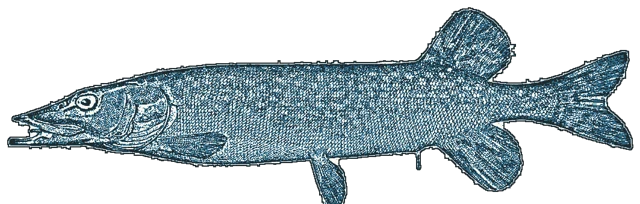
Northern pike
Esox lucius · Freshwater
The meat is white, flaky and great in flavor, but the Y-bones put many anglers off; reputation is split between 'too bony' and 'better than walleye once you learn to clean them'.
Worth a try: Remove the Y-bones with the five-fillet method, or grind, pickle or make fish balls from the meat; Hank Shaw's pike balls grind small pike so the bones vanish.
- Tastes
- mild, clean, firm, flaky white; Y-bones in the upper fillet
- Limits
- Heavy regs. Invasive in Southcentral (Susitna Valley, West Cook Inlet, Knik Arm, Anchorage Bowl, Kenai Peninsula): no limit, and releasing a live pike back into the water is prohibited. Tanana drainage (Fairbanks) and Bristol Bay: 5 per day, 5 in possession, only 1 of them 30 inches or longer; pike caught on set lines cannot be kept in the Tanana drainage. Minto Flats, the Chatanika and the rest of the Tolovana drainage are open to pike fishing Apr 15-Oct 14 only, and Harding Lake is catch and release. In the Tanana drainage only 2 closely attended lines may be used for pike through the ice. Pike may be taken by spear in Southcentral and, in Tanana waters with an open season, by spear or bow and arrow Sept 1-Apr 30. Emergency orders override these limits. (2026 ADF&G regional summaries (SC, SE, SW, Northern); emergency orders checked through Nov 21, 2026) Source
- Best months
- Pike spawn in the spring soon after ice-out and overwinter in deep, slow river water.
- Where
- Pike range from Interior Alaska to the Arctic coast and occur as an invasive fish in the Susitna drainage south of the Alaska Range.
- buzzbaits
- spinnerbaits
- Hot Shots
- Wiggle Warts
- Coyote spoons
- Rapala top water baits
- Large pike in parts of northern and western Alaska can carry enough mercury that eating large quantities can be harmful (ADF&G).
- Do not eat (anyone): any fish from Kimberly Lake in North Pole or, in the Eielson Air Force Base area near Fairbanks, from Bathing Beauty Pond, Polaris, Bear and Moose lakes, Piledriver Slough, the Moose Creek drainage or Garrison Slough (PFAS, and PCBs in Garrison Slough).
Meal limits and other waters (5)
- Limit (women who are or can become pregnant, nursing mothers and children), in 6-ounce meals, 1 a month: dried pike from the lower Yukon, or dried pike 2 feet or longer from the lower Kuskokwim.
- Limit (the same people), 4 a month: Takotna River pike, pike 2 feet or longer from the lower Yukon (Holy Cross down) or upper Yukon (Beaver to the Black River), or dried pike under 2 feet from the lower Kuskokwim.
- Limit (the same people), 8 a month: Holitna and George river pike, mid-Yukon pike (Kaltag to Ruby, and the Koyukuk, Innoko and Nowitna refuges), smaller lower Yukon pike, or lower Kuskokwim pike (Aniak down) 2 feet or longer.
- Ten more waters or sizes are limited to 12 or 16 meals a month (state tables of 2011 to 2016 and the National Park Service).
- The Alaska Department of Health's points guide has no line for pike.
Pink salmon
Oncorhynchus gorbuscha · also called humpy · Fresh and salt
Lean and mild with softer meat than other salmon (NOAA); good fresh from salt water, but quality falls fast once fish enter rivers and hump up.
- Tastes
- mild, lean, soft, small flake
- Limits
- Light regs. Kenai River and Susitna River drainages: pink salmon 6 per day, 6 in possession. West Cook Inlet, Knik Arm, Anchorage-area and other Kenai Peninsula streams count pink in a 3-per-day combined bag. Cook Inlet salt water and Resurrection Bay: 6 per day combined with chum, coho and sockeye. Southeast: 6 per day 16 inches or longer. Bristol Bay: 5 per day combined. Pink salmon may be used as bait in Southeast and in Cook Inlet, North Gulf Coast and Prince William Sound salt water (in those Southcentral salt waters they count toward the bag limit). Emergency orders override these limits. (2026 ADF&G regional summaries (SC, SE, SW, Northern); emergency orders checked through Nov 21, 2026) Source
- Best months
- ADF&G profile gives spawning June through late October; best fishing months not sourced.
- Where
- Pink salmon occur in coastal waters of the North Pacific and Arctic Ocean; ADF&G lists spawning June through late October.
- Vibrax spinners
- Mepps spinners
- Pixee spoons
- Krocodile spoons
- Coyote spoons
- Buzz Bombs
Before you eat it: The Alaska Department of Health lists pink salmon at 0 points a meal, unrestricted, for women who are or can become pregnant, nursing mothers and children.
Starry flounder
Platichthys stellatus · Fresh and salt
Generally good, though some fish have only a fair flavor (pierfishing.com); best fried or baked.
- Tastes
- mild to fair, medium flake
- Limits
- No limits. No limit listed. Southeast: 'No bag, possession, annual, or size limits' for fish not listed; Cook Inlet, North Gulf Coast and Bristol Bay: other finfish, no limit. Emergency orders override these limits. (2026 ADF&G regional summaries (SC, SE, SW, Northern); emergency orders checked through Nov 21, 2026) Source
- pile worms
- live or ghost shrimp
- cut anchovy
- squid
- small spinners near the bottom
- May be unsafe to eat from heavily polluted areas (pierfishing.com)
Before you eat it: The Alaska Department of Health's points guide has no line for starry flounder. Alaska Department of Health general advice: pregnant women, women who may become pregnant, nursing mothers and children should choose fish carefully because of mercury, and smaller, younger fish have less.
Walleye pollock
Gadus chalcogrammus · Saltwater
Mild, fine-textured white fish (NOAA), but it is mostly a commercial surimi and fillet fish, and little angler-focused eating information exists.
- Tastes
- mild, like cod or haddock, fine
- Limits
- No limits. No limit listed in the regional summaries (other finfish: no limit in Cook Inlet salt water, North Gulf Coast, Bristol Bay and Kodiak; no bag, possession, annual or size limits in Southeast). Emergency orders override these limits. (2026 ADF&G regional summaries (SC, SE, SW, Northern); emergency orders checked through Nov 21, 2026) Source
- Where
- Pollock are distributed broadly in the North Pacific and Bering Sea; the Gulf of Alaska stock is separate from the Bering Sea stock.
Before you eat it: Alaska Department of Health lists walleye pollock as unrestricted for women who are or can become pregnant, nursing mothers and children.
Arrowtooth flounder
Atheresthes stomias · Saltwater
Its flesh carries a protease enzyme that turns it to mush in the pan; ADF&G says it is generally considered inedible, and it has never been a fishermen's favorite.
- Tastes
- mild, sweet (NOAA), turns mushy when cooked
- Limits
- No limits. No limit listed. Southeast: 'No bag, possession, annual, or size limits' for fish not listed; Cook Inlet, North Gulf Coast and Bristol Bay: other finfish, no limit. Emergency orders override these limits. (2026 ADF&G regional summaries (SC, SE, SW, Northern); emergency orders checked through Nov 21, 2026) Source
Before you eat it: The Alaska Department of Health's points guide has no line for arrowtooth flounder. Alaska Department of Health general advice: pregnant women, women who may become pregnant, nursing mothers and children should choose fish carefully because of mercury, and smaller, younger fish have less.
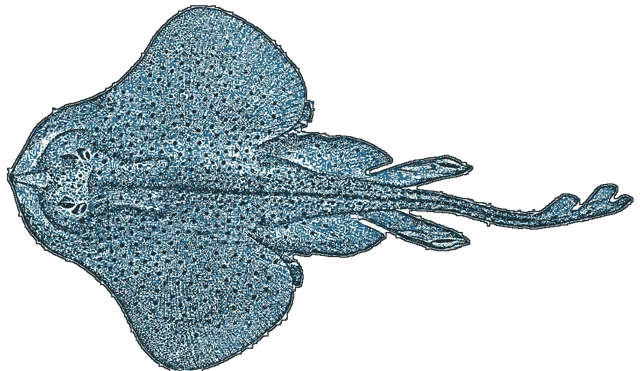
Skate
Rajidae (mainly Raja eglanteria, Leucoraja erinacea, L. ocellata) · Saltwater
Almost every US angler throws skates back or uses them for trap bait; Hank Shaw notes no one he knew growing up in New York and New Jersey kept one.
Worth a try: Kill the fish and cut off the wings right away, refrigerate a day or two so the meat firms up, and brine to remove any ammonia (Hank Shaw). NOAA describes winter skate as mild with a flavor similar to scallops. Classic prep: dredged and sautéed in brown butter with capers.
- Tastes
- mild, scallop-like, firm, stringy, corduroy grain
- Limits
- No limits. No limit listed. Southeast: 'No bag, possession, annual, or size limits' for fish not listed; Cook Inlet and North Gulf Coast: other finfish, no limit. Emergency orders override these limits. (2026 ADF&G regional summaries (SC, SE, SW, Northern); emergency orders checked through Nov 21, 2026) Source
- cut bait
- squid
- clams
- Poorly handled skates and rays can smell of ammonia; bleed, ice and brine (Hank Shaw).
- Barndoor and thorny skates are protected; possession is prohibited (NOAA).
Before you eat it: Limit (women who are or can become pregnant, nursing mothers and children): longnose skate is 4 of 12 points a week for each 6-ounce meal, and no more than 12 meals a month (2014 state bulletin). Big skate is 0 points, unrestricted.
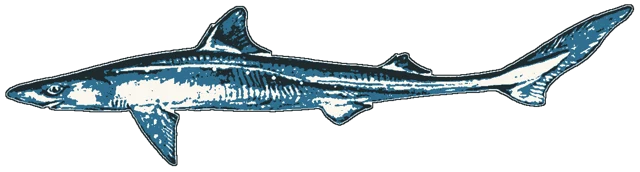
Spiny dogfish
Squalus acanthias · Saltwater
To most US anglers dogfish are a nuisance that swarms baits; NOAA says there is little consumer demand for it in the United States.
Worth a try: NOAA describes the meat as mild, sweet, flaky but firm. It is the fish in British fish and chips, and North Carolina Sea Grant's chef panels served it as 'cape shark' blackened, fried and in chowder. Bleed and gut it quickly like any shark.
- Tastes
- mild, sweet, flaky but firm, oilier than other sharks
- Limits
- Heavy regs. Cook Inlet salt water, North Gulf Coast salt water and Southeast: 5 per day, 5 in possession, no size limit; no harvest record needed (Southeast). Other sharks are 1 per day with an annual limit of 2. Emergency orders override these limits. (2026 ADF&G regional summaries (SC, SE, SW, Northern); emergency orders checked through Nov 21, 2026) Source
- strips of squid
- cut pieces of fish
Before you eat it: Limit (women who are or can become pregnant, nursing mothers and children): spiny dogfish is 12 points a 6-ounce meal, the whole week's limit (Alaska Department of Health), and no more than 4 meals a month (2014 state bulletin).
Where to fish in Alaska
Fish named here are what people catch at each spot, not a promise they’re safe to eat. Read the eating advice on the fish’s card before you keep one.
# Salt or brackish# Freshwater
- 1Kenai River (Soldotna) river · fresh
Lower Kenai River in the 2026 booklet: sockeye 6 per day June 20-Aug 15 (3 the rest of the year), coho and pink seasons, and rainbow and Dolly Varden 1 per day under 16 inches. Below the Moose River, bait is allowed Aug 16-Nov 30 only.
Known for: Sockeye salmon, Coho salmon, Pink salmon, Rainbow trout, Dolly Varden
Access: Public access points and riverbank closures are mapped in the Southcentral booklet (pages 49-51).
- 2Kasilof River river · fresh
ADF&G issued 2026 orders on Kasilof sockeye limits (raised, to Dec 31, 2026) and king salmon rules.
Known for: Sockeye salmon, Chinook salmon, Coho salmon
Access: Public access; see the Southcentral booklet and emergency orders.
- 3Russian River and Kenai confluence river · fresh
Booklet: fly-fishing-only June 11-Aug 20 on the lower river with sockeye 3 per day, 6 in possession.
Known for: Sockeye salmon, Coho salmon, Rainbow trout
Access: Forest Service campground and ferry/landing access listed in the Southcentral booklet.
- 4Homer Spit and Kachemak Bay pier · salt
Cook Inlet and Kachemak Bay salt-water rules cover halibut, lingcod, rockfish and winter kings; the Nick Dudiak Fishing Lagoon has a youth-only salmon fishery.
Known for: Pacific halibut, Lingcod, Rockfish, Chinook salmon, Coho salmon
Access: Nick Dudiak Fishing Lagoon on the Spit; Homer Barge Basin is closed to all sport fishing year-round.
- 5Seward and Resurrection Bay offshore · salt
Resurrection Bay has its own king (2 per day May 1-Aug 31) and coho rules and is closed to lingcod fishing.
Known for: Pacific halibut, Coho salmon, Chinook salmon, Rockfish, Lingcod
Access: Boat charters and Seward lagoon youth fishery; see the North Gulf Coast pages of the Southcentral booklet.
- 6Valdez and Prince William Sound offshore · salt
Prince William Sound has its own general regulations and terminal harvest areas in the Southcentral booklet.
Known for: Pacific halibut, Coho salmon, Pink salmon, Lingcod, Rockfish
Access: Terminal harvest areas and regulations on Southcentral booklet pages 74-76.
- 7Kodiak and Kodiak Road Zone offshore · both
Kodiak Road Zone rules limit coho and sockeye in the combined 5-per-day bag; Afognak rockfish and lingcod limits were cut by 2026 orders.
Known for: Pacific halibut, Coho salmon, Sockeye salmon, Lingcod, Rockfish
Access: Road Zone fresh waters east of Anton Larsen Bay and Saltery Cove; see the Southwest booklet.
- 8Dillingham and the Nushagak (Bristol Bay) river · both
Bristol Bay general rules: king season May 1-July 31, combined salmon 5 per day, and 2026 orders raised sockeye limits in the Nushagak-Mulchatna and Wood River drainages.
Known for: Chinook salmon, Sockeye salmon, Rainbow trout, Arctic grayling, Northern pike
Access: Fly-in and road-system lodges; see the Bristol Bay booklet and Dillingham area office.
- 9Talkeetna and the Susitna Valley river · fresh
2026 emergency orders bar keeping coho in the Susitna and Little Susitna drainages through Dec 31, 2026; pike are invasive with no limit.
Known for: Coho salmon, Rainbow trout, Northern pike, Arctic grayling
Access: Road and boat access; see Susitna River Units 1-6 in the Southcentral booklet.
- 10Ship Creek (Anchorage) river · fresh
Hatchery coho stream in town; a 2026 order raised the non-king salmon limit to 6 per day, 6 in possession through Dec 31, 2026, and kings may not be kept for the rest of 2026.
Known for: Coho salmon, Chinook salmon
Access: Downtown Anchorage; the limit applies from the mouth to a cable 100 feet below the Chugach Power Plant dam.
- 11Fairbanks and the Chena/Tanana rivers river · fresh
Tanana drainage general rules: grayling and pike 5 per day, burbot 15 per day in flowing waters. The Chena is tighter: grayling are catch and release above the Chena River dam and 1 per day below it. Nobody should eat fish from Kimberly Lake, Piledriver Slough, the Moose Creek drainage, Garrison Slough, Bathing Beauty Pond, or Polaris, Bear and Moose lakes, in North Pole and the Eielson Air Force Base area (PFAS).
Known for: Arctic grayling, Northern pike, Burbot, Lake trout
Access: Road-accessible Chena and Tanana river waters; see Tanana General Regulations in the Northern booklet.
- 12Ketchikan offshore · salt
Southeast general rules: coho 6 per day, lingcod 1 per day for residents, pelagic rockfish 3 per day; ADF&G has a Ketchikan area regulations page.
Known for: Pacific halibut, Coho salmon, Lingcod, Rockfish, Yelloweye rockfish
Access: Charter boats and shore; see the Southeast Ketchikan area summary.
- 13Sitka Sound offshore · salt
Sitka area has a reduced pelagic rockfish limit for nonresidents by 2026 order (to Dec 31, 2026) and a Bear Cove/Deep Inlet coho closure (expired Oct 31, 2026).
Known for: Pacific halibut, Coho salmon, Lingcod, Rockfish, Yelloweye rockfish
Access: Boat access; see the Southeast Sitka area summary.
- 14Juneau and Gastineau Channel offshore · salt
2026 orders closed Montana Creek, Peterson Creek and lagoon to coho fishing through Dec 31, 2026; King salmon opened in a Juneau hatchery area June 1-Aug 31.
Known for: Coho salmon, Chinook salmon, Pacific halibut, Lingcod, Dolly Varden
Access: Road-system shoreline and boat access; see the Juneau/Glacier Bay area summary.
Alaska fishing license and rules
- Resident: $20 resident annual sport fishing license (valid from purchase through Dec 31)
- Nonresident: $100 nonresident annual sport fishing license
- Nonresident short-term: Nonresident 1-day $15; 3-day $30; 7-day $45; 14-day $75
- Saltwater: Covered by the same sport fishing license; a king salmon stamp is required to fish for king salmon (resident $10 annual; nonresident $15 1-day, $30 3-day, $45 7-day, $75 14-day, $100 annual)
- Who needs one: Residents 18 and older; nonresidents 16 and older. Resident seniors 60+ get a free permanent identification card instead of a license
More license details
King salmon stamp not required for residents under 18, nonresidents under 16, or holders of the senior PID, blind, low-income or disabled-veteran licenses. A free harvest record card is required for residents under 18, nonresidents under 16 and PID or disabled-veteran card holders when they keep fish with an annual limit. Fishing for kings in the Upper Copper River also needs a free permit (new in 2026). Stocked-lake king salmon need no stamp. Regulations are published as regional summaries (Southeast, Southcentral, Southwest, Northern/Interior). Subsistence and personal-use fisheries are for Alaska residents only and are not covered here. Alaska residents must follow nonresident limits in federal waters (EEZ, 3 to 200 nautical miles) in Southeast.
Buy a license License types and fees
Fees: 2026 calendar year; ADF&G price list re-checked Nov 21, 2026 (resident $20; nonresident 1/3/7/14-day $15/$30/$45/$75, annual $100; king stamp resident $10, nonresident $15/$30/$45/$75/$100).
- Emergency orders override the printed regional booklets and change salmon limits all season; check https://www.adfg.alaska.gov/sf/EONR/ before every trip.
- King salmon stamp is required in addition to the license to fish for king salmon. Kings 20 inches or longer kept in Cook Inlet fresh waters, or in Cook Inlet salt water Apr 1-Aug 31, count toward an annual limit of 5 and must be recorded, and one that size taken out of the water there must be kept. Nonresidents need a harvest record for kings in Southeast.
- Pacific halibut is federally managed: unguided anglers keep 2 per day of any size; charter anglers follow separate NOAA rules (Area 2C: 1 per day, 34 inches or less or 80 inches or more, no Thursdays June 18-Sept 10; Area 3A: 2 per day, one of them 27 inches or less, no Wednesdays and no Tuesdays June 2-Aug 25) and need a $20 stamp per day at 18 and older.
- Anglers must carry a deepwater release device and release unkept rockfish at depth or 100 feet, whichever is shallower.
- The 2026 booklets print a new page-7 rule on keeping skin on fillets and lingcod and king carcasses in one piece; ADF&G says it is not in effect until further notice.
- Southeast fresh water: bait is allowed only Sept 15-Nov 15, unless special regulations say otherwise.
- Live pike may not be released in Southcentral; pike not kept must be killed.
- Alaska residents must follow nonresident limits in federal waters (3 to 200 nautical miles) in Southeast.
- Subsistence and personal-use fisheries (dip nets, gillnets) are for residents only and are outside this page.
Limits here are summaries for convenience, checked on the date shown. The official Alaska regulations govern; check them before you keep a fish.
Before you eat it
- Do not eat any fish (anyone) from the all-fish waters near Fairbanks: Kimberly Lake in North Pole and, in the Eielson Air Force Base area, Bathing Beauty Pond, Polaris Lake, Bear Lake, Moose Lake, Piledriver Slough, the Moose Creek drainage and Garrison Slough (PFAS, and PCBs in Garrison Slough).
- Everyone else: the Department of Health says adult men, and women not at risk of pregnancy, can eat as much Alaska fish as they want, and its 2014 bulletin says to eat salmon shark only sparingly. The do-not-eat waters above still apply. Questions: Environmental Public Health Program, 907-269-8000.
- ADF&G's 2026 rules make Bathing Beauty Pond, Polaris, Bear and Moose lakes, Piledriver Slough and the Moose Creek drainage catch and release only for every fish, and DEC says that keeps people from eating them. Garrison Slough has its own base fishing advisory. ADF&G's 2026 rules no longer name Kimberly Lake, last stocked in 2018, but DEC's fact sheet, linked from its page updated May 1, 2026, keeps the state's interim advice not to eat its fish.
Rivers with tighter limits for women who are or can become pregnant, nursing mothers and children, in 6-ounce meals (state tables of 2014 and 2016, the stricter printed, and 2011 for the … (see the full list)
Rivers with tighter limits for women who are or can become pregnant, nursing mothers and children, in 6-ounce meals (state tables of 2014 and 2016, the stricter printed, and 2011 for the Stony River). 1 a month: dried pike from the lower Yukon, and dried pike 2 feet or longer from the lower Kuskokwim. 4 a month: Takotna River pike, George River grayling, pike 2 feet or longer from the lower and upper Yukon, and dried pike under 2 feet from the lower Kuskokwim. 8 a month: Holitna and George River pike, George River burbot, mid-Yukon pike, smaller lower Yukon pike, and lower Kuskokwim pike 2 feet or longer. 12 a month: Hoholitna River pike, and pike under 2 feet from the lower Kuskokwim and upper Yukon. 16 a month: middle Kuskokwim pike and burbot, George River burbot liver, pike from the Stony, Kobuk and Noatak rivers, and Selawik and Buckland pike 2 feet or longer. State table: https://epi.alaska.gov/bulletins/docs/rr2016_01.pdf
- National Park Service lines from state mercury limits, for the same people: 8 meals a month of lake trout from Lake Clark (14 to 25 inches) or Tanada Lake (19 to 25 inches); 16 a month of lake trout from Kontrashibuna Lake (12 to 16 inches) or Copper Lake (16 to 22 inches), Copper Lake grayling, or Lake Clark pike (17 to 30 inches).
Statewide, the Alaska Department of Health guide for women who are or can become pregnant, nursing mothers and children allows up to 12 points of fish a week, with a meal at 6 ounces … (see the full list)
Statewide, the Alaska Department of Health guide for women who are or can become pregnant, nursing mothers and children allows up to 12 points of fish a week, with a meal at 6 ounces uncooked, and its 2014 bulletin adds a monthly limit. 12 points a meal (no more than 4 meals a month): spiny dogfish, salmon shark, lingcod 45 inches or longer, halibut over 220 pounds. 6 points (8 a month): yelloweye rockfish, halibut of 140 to 220 pounds. 4 points (12 a month): longnose skate, lingcod of 40 to 45 inches, halibut of 80 to 140 pounds. 2 points (16 a month): lake trout, lingcod of 35 to 40 inches, halibut of 40 to 80 pounds. 0 points, unrestricted outside the waters above: salmon, sablefish, Pacific cod, pollock, black, dusky and rougheye rockfish, big skate, rainbow trout, Dolly Varden, grayling, sheefish, humpback whitefish, halibut under 40 pounds, lingcod under 35 inches. The 2014 bulletin counts children as under 18.
- Alaska has set no PFAS eating limits for fish. Its August 2026 bulletin tested marine fish and crab, reported low levels, and left freshwater fish for later study.
- Alaska health officials recommend eating fish twice a week; pregnant women, women who may become pregnant, nursing mothers and children should choose fish carefully to avoid too much mercury.
- Long-lived or predatory fish such as shark have more mercury than small fish low in the food chain; smaller, younger fish generally have less.
- The Alaska Department of Health names wild Alaska salmon and black cod (sablefish) among fish high in omega-3 fatty acids and low in mercury.
- The Department of Health page says state officials have not found cases of unsafe mercury exposure from eating Alaska fish.
Local lingo
- silvers (coho salmon, in the 2026 booklet as 'coho (silver)')
- kings (Chinook salmon, the state fish)
- reds (sockeye, listed as 'Salmon, Red' in the ADF&G harvest survey)
- dog salmon (chum, ADF&G profile)
- black cod (sablefish, ADF&G booklet)
- red snapper (yelloweye rockfish, ADF&G profile)
Questions anglers ask about Alaska
What is the most common fish in Alaska?
By ADF&G's Alaska Sport Fishing Survey (statewide catch, kept plus released, 2016-2025 average), sockeye salmon is the most-caught fish in Alaska at about 978,882 a year, ahead of coho salmon (about 741,416), Pacific halibut (about 557,038) and pink salmon (about 552,246). Rainbow trout and rockfish follow. Sockeye catch reached 2,079,626 in 2025, the highest in ADF&G's online estimates (1996-2025).
Do I need a saltwater fishing license in Alaska?
Covered by the same sport fishing license; a king salmon stamp is required to fish for king salmon (resident $10 annual; nonresident $15 1-day, $30 3-day, $45 7-day, $75 14-day, $100 annual)
What is the best fish to eat in Alaska?
18 of the 30 fish on our Alaska board rate Best eating. They include: Chinook salmon, sockeye salmon, Coho salmon, steelhead, rainbow trout and cutthroat trout.
What is the state fish of Alaska?
King (Chinook) salmon: Official state fish since March 25, 1963 (ADF&G species profile).
Which Alaska fish are better to eat than their reputation?
We give the Worth a try badge to northern pike, burbot, spiny dogfish and skate: fish most anglers toss or rate low that eat well when they're cleaned and cooked right. Each card says how.
Sources
Limits, prices and advisories come from these pages, read on or before Nov 21, 2026. Where a line gives its own date, that’s the date it rests on. Eating advice changes: check the state’s current list. Ratings are national and come from the fish’s own page.
93 sources
- adfg.alaska.gov Pacific halibut: baits; rockfish: baits; yelloweye rockfish: baits
- dec.alaska.gov Chinook salmon: advisory; Coho salmon: advisory; Dolly Varden: advisory; arctic char: advisory; arctic grayling: advisory; burbot: advisory; chum salmon: adviso
- dec.alaska.gov Chinook salmon: advisory; Coho salmon: advisory; Dolly Varden: advisory; arctic char: advisory; arctic grayling: advisory; burbot: advisory; chum salmon: adviso
- epi.alaska.gov Pacific halibut: advisory; burbot: advisory; lake trout: advisory; lingcod: advisory; rockfish: advisory; skate: advisory; spiny dogfish: advisory; yelloweye ro
- epi.alaska.gov arctic grayling: advisory; burbot: advisory; northern pike: advisory
- health.alaska.gov Chinook salmon: advisory; Coho salmon: advisory; arctic char: advisory; arrowtooth flounder: advisory; chum salmon: advisory; consumption advisories; consumptio
- health.alaska.gov Chinook salmon: advisory; Coho salmon: advisory; Dolly Varden: advisory; Pacific cod: advisory; Pacific halibut: advisory; arctic grayling: advisory; arrowtooth
- web.archive.org arctic char: advisory; irish lord: advisory; kelp greenling: advisory; northern pike: advisory; rockfish: advisory
- adfg.alaska.gov arctic char: where
- adfg.alaska.gov arctic grayling: where
- adfg.alaska.gov rockfish: where
- adfg.alaska.gov burbot: months; burbot: where
- adfg.alaska.gov Chinook salmon: names; Chinook salmon: where; state fish; top species
- adfg.alaska.gov chum salmon: months; chum salmon: names; chum salmon: where
- adfg.alaska.gov Coho salmon: months; Coho salmon: where
- adfg.alaska.gov cutthroat trout: months; cutthroat trout: where
- adfg.alaska.gov Dolly Varden: where
- adfg.alaska.gov where to fish
- adfg.alaska.gov northern regs
- adfg.alaska.gov southcentral regs
- adfg.alaska.gov southeast regs
- adfg.alaska.gov freshwater regs; lingcod: regs; saltwater regs
- adfg.alaska.gov southwest regs
- adfg.alaska.gov Pacific halibut: months; Pacific halibut: where
- adfg.alaska.gov humpback whitefish: months; humpback whitefish: where
- adfg.alaska.gov lake trout: where
- adfg.alaska.gov license fees
- adfg.alaska.gov lingcod: where
- adfg.alaska.gov northern pike: months; northern pike: where
- adfg.alaska.gov pink salmon: months; pink salmon: where
- adfg.alaska.gov sablefish: months; sablefish: where
- adfg.alaska.gov sheefish: where
- adfg.alaska.gov sockeye salmon: months; sockeye salmon: where
- adfg.alaska.gov license info
- adfg.alaska.gov steelhead: months; steelhead: names; steelhead: where
- adfg.alaska.gov walleye pollock: where
- adfg.alaska.gov yelloweye rockfish: names; yelloweye rockfish: where
- adfg.alaska.gov Chinook salmon: regs; Coho salmon: regs; chum salmon: regs; emergency orders; fishing spots; sockeye salmon: regs
- adfg.alaska.gov yelloweye rockfish: regs
- adfg.alaska.gov rockfish: regs
- adfg.alaska.gov Chinook salmon: regs
- adfg.alaska.gov rockfish: regs; yelloweye rockfish: regs
- adfg.alaska.gov Chinook salmon: regs
- adfg.alaska.gov lingcod: regs
- adfg.alaska.gov rockfish: regs; yelloweye rockfish: regs
- adfg.alaska.gov lingcod: regs
- adfg.alaska.gov lingcod: regs
- adfg.alaska.gov lingcod: regs
- adfg.alaska.gov lingcod: regs
- adfg.alaska.gov Chinook salmon: regs
- adfg.alaska.gov sockeye salmon: regs
- adfg.alaska.gov sockeye salmon: regs
- adfg.alaska.gov sockeye salmon: regs
- adfg.alaska.gov sockeye salmon: regs
- adfg.alaska.gov sockeye salmon: regs
- adfg.alaska.gov Chinook salmon: regs
- adfg.alaska.gov chum salmon: regs
- adfg.alaska.gov chum salmon: regs
- adfg.alaska.gov Chinook salmon: regs
- adfg.alaska.gov Chinook salmon: regs; Coho salmon: regs; fishing spots
- adfg.alaska.gov Coho salmon: regs
- adfg.alaska.gov Coho salmon: regs
- adfg.alaska.gov Coho salmon: regs
- adfg.alaska.gov Coho salmon: regs
- adfg.alaska.gov Chinook salmon: catch; Coho salmon: catch; Dolly Varden: catch; Pacific cod: catch; Pacific halibut: catch; arctic char: catch; arctic grayling: catch; burbot:
- adfg.alaska.gov Coho salmon: baits; rockfish: baits; yelloweye rockfish: months
- adfg.alaska.gov Dolly Varden: months; rainbow trout: months; rainbow trout: where
- adfg.alaska.gov Chinook salmon: baits; Coho salmon: baits; Dolly Varden: baits; arctic char: baits; arctic grayling: baits; chum salmon: baits; northern pike: baits; pink salmo
- adfg.alaska.gov top species
- adfg.alaska.gov arctic char: baits; arctic grayling: baits; burbot: baits; lake trout: baits
- adfg.alaska.gov Pacific cod: baits; Pacific cod: months; Pacific cod: where
- adfg.alaska.gov Dolly Varden: months; arctic grayling: baits; lingcod: baits; rainbow trout: months; steelhead: baits
- adfg.alaska.gov Chinook salmon: months; burbot: regs; fishing spots; lake trout: regs; northern pike: regs; rainbow trout: regs
- adfg.alaska.gov state records
- adfg.alaska.gov fishing spots; lingcod: regs; rockfish: regs
- adfg.alaska.gov steelhead: regs
- adfg.alaska.gov sheefish: regs
- adfg.alaska.gov sheefish: regs
- adfg.alaska.gov Chinook salmon: advisory; Coho salmon: advisory; Dolly Varden: advisory; arctic char: advisory; arctic char: regs; arctic grayling: advisory; arctic grayling: r
- adfg.alaska.gov Chinook salmon: regs
- adfg.alaska.gov sheefish: regs
- adfg.alaska.gov Chinook salmon: regs; Coho salmon: names; Coho salmon: regs; Dolly Varden: regs; Pacific cod: regs; arctic char: regs; arctic grayling: regs; arrowtooth flounde
- adfg.alaska.gov Chinook salmon: regs; Coho salmon: regs; Dolly Varden: regs; Pacific cod: regs; arrowtooth flounder: regs; cutthroat trout: regs; irish lord: regs; kelp greenli
- adfg.alaska.gov Coho salmon: regs; Dolly Varden: regs; fishing spots; steelhead: regs
- adfg.alaska.gov fishing spots
- adfg.alaska.gov fishing spots
- adfg.alaska.gov license buy
- fisheries.noaa.gov Pacific halibut: regs; halibut noaa
- fisheries.noaa.gov Pacific halibut: regs
- fisheries.noaa.gov Pacific halibut: regs
- iphc.int Pacific halibut: regs
- nps.gov lake trout: advisory; northern pike: advisory
- nps.gov arctic grayling: advisory; lake trout: advisory
Illustrations: stencils we made from public-domain art by Duane Raver, U.S. Fish and Wildlife Service (Rainbow trout, Spiny dogfish); David Starr Jordan (Northern pike); New York Fish and Game Commission (Skate), via Wikimedia Commons.
Spotted an error or a rule that changed? Tell us and we will check it against the official source.