Indiana · freshwater
Fish in Indiana: what’s worth eating, and what’s garbage
Indiana fishing is about panfish and largemouth bass on its glacial lakes and reservoirs, stocked walleye, saugeye, muskie and hybrid striped bass, and big catfish and sauger on the Ohio and Wabash rivers. Its 43 miles of Lake Michigan shoreline add steelhead, coho and Chinook salmon, lake trout, brown trout and yellow perch.
36 fish rated · limits checked Nov 21, 2026 against IDNR, then re-checked: 484 of 495 details confirmed or corrected on the official pages
Limits, seasons and size rules from Indiana Department of Natural Resources, Division of Fish, Wildlife & Nature Preserves.
Freshwater limitsMay 10, June 6-7 and Sept. 26, 2026 (IDNR page heading): Indiana residents need no fishing license or trout/salmon stamp on public waters; all seasons, bag and size limits apply. Full details
The Indiana table-fare board
Fish Indiana anglers catch, sorted by how they eat. The bars show how heavily each one is regulated here. Tap a fish for the details.
No limits Light regs Heavy regs No harvest
Best eating19
Just OK14
Garbage fish2
Catch & release
Fish by fish
Why each one sits where it does, the current Indiana limits, and the bait that works.
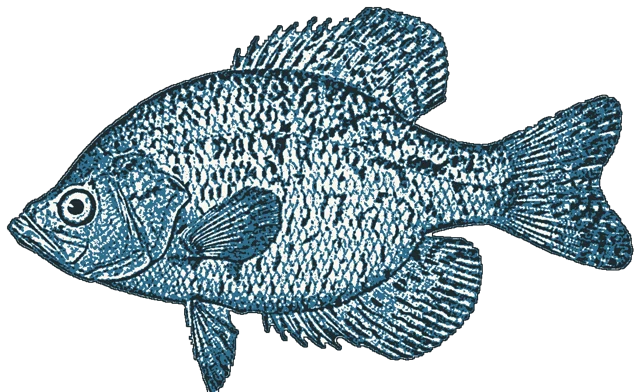
Black crappie
Pomoxis nigromaculatus · Freshwater
One of the classic fish-fry fish: MeatEater counts crappie among the best-eating fish in freshwater.
- Tastes
- mild, sweet, delicate, flaky, white
- Limits
- Light regs. 25 per day statewide, no minimum size, black and white crappie combined. Ohio River main stem: 30 per day. 9 in minimum at Dogwood Lake (Daviess County) and Hardy Lake (Scott County). Fidler Pond, Failing Lake and Flat Fork Creek Park ponds A and B: 15 per day of bluegill, redear and crappie combined. Other listed waters differ. (2026-27 Indiana Fishing Regulations on eRegulations (main limits table last updated Oct. 20, 2026); license year April 1, 2026 to March 31, 2027) Source
- Best months
- Spring and fall, when crappie move shallow; spawning late April and May near 55 F.
- Where
- Sunken logs, standing timber, brush piles and docks at lakes such as Monroe, Brookville, Salamonie, Mississinewa, Wawasee, Webster, Hudson and Geist (IDNR crappie lake list).
- minnows
- small jigs
- soft plastic baits
- Do not eat (anyone): any fish from the all-fish waters on this page.
Meal limits and other waters (4)
- Limit (sensitive group: females under 50, males under 15, weak immune systems): 1 meal a month from Monroe Lake, Ruble Park Pond West (Vigo County), Sand Creek (Bartholomew, Decatur, Jennings), the West Fork White River from Stony Creek to Broad Ripple Dam, and crappie 10 in or longer from Starve Hollow Lake (Jackson) and the Wabash River (Fountain, Parke, Tippecanoe, Vermillion, Warren).
- Limit (everyone): 1 meal a week, statewide and from the Ohio River.
- Limit (everyone): where a water has no line for this fish, the any-fish limits on this page apply.
- Other listed waters differ (state advisory map and 2026-27 fishing guide, Nov. 22, 2026).
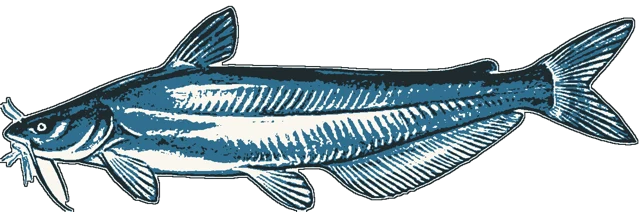
Blue catfish
Ictalurus furcatus · Freshwater
TPWD calls it an excellent food fish; Maryland DNR says blues are very good to eat.
- Tastes
- mild, firm
- Limits
- Light regs. Lakes: 10 per day, no minimum size (no limit on channel catfish at Turtle Creek Reservoir). Rivers and streams: no daily limit, 13 in minimum. Everywhere: no more than one blue catfish of 35 in or longer, one flathead of 35 in or longer, and one channel catfish of 28 in or longer may be kept. Ohio River main stem: no daily limit, 13 in minimum, no more than one blue 35 in or longer, one flathead 35 in or longer, one channel 28 in or longer. Other listed waters differ. (2026-27 Indiana Fishing Regulations on eRegulations (main limits table last updated Oct. 20, 2026); license year April 1, 2026 to March 31, 2027) Source
- Spawns
- Spawns in early summer in the mid-70s F (IDNR catfish page).
- Where
- IDNR says blue catfish are found only in large rivers and streams; the state record (104 lb, 1999) came from the Ohio River.
- hot dogs
- cheese
- live nightcrawlers
- artificial worms
- Large, old blue catfish accumulate contaminants; some water bodies have size-based consumption advisories.
- Do not eat (anyone): any fish from the all-fish waters on this page.
Meal limits and other waters (5)
- Limit (everyone): 1 meal a month from the Ohio River below J.T. Myers Dam (Posey County).
- Limit (everyone): 1 meal a week from the Ohio River above that dam.
- The statewide guides (Jan. 23, 2026) do not name blue catfish.
- Limit (everyone): where a water has no line for this fish, the any-fish limits on this page apply.
- Check your water on the Indiana Fish Consumption Guidelines map.
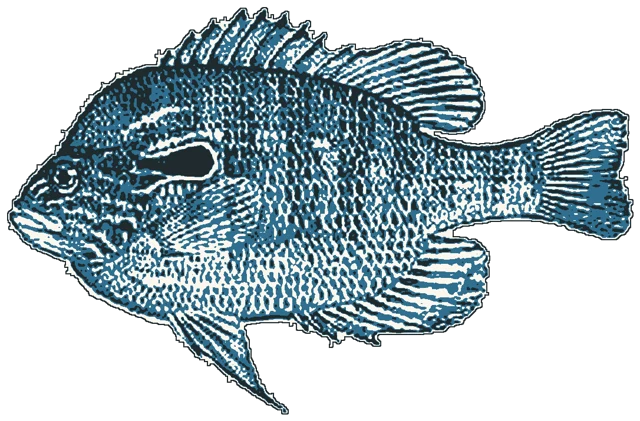
Bluegill
Lepomis macrochirus · Freshwater
MeatEater calls the flesh light, delicate and sweet; the original fish-fry panfish.
- Tastes
- mild, sweet, firm, flaky
- Limits
- Light regs. No statewide bag or size limit. J.C. Murphey Lake (Newton County): 25 per day, bluegill and redear combined. Fidler Pond, Failing Lake (Gentian Lake) and Flat Fork Creek Park ponds A and B: 15 per day of bluegill, redear and crappie combined. Other listed waters differ. (2026-27 Indiana Fishing Regulations on eRegulations (main limits table last updated Oct. 20, 2026); license year April 1, 2026 to March 31, 2027) Source
- Best months
- May and early summer, when bluegill spawn near 65 F; early morning and late evening; deeper water in late fall and winter.
- Where
- Most Indiana waters, including midsize streams, small ponds, lakes and large rivers, near submerged trees or plants.
- red worms
- bee moth larvae (waxworms)
- crickets
- chartreuse or white curly-tail grubs
- inline spinners
- Do not eat (anyone): sunfish, bluegill included, from the Wabash River in Fountain, Parke, Tippecanoe, Vermillion and Warren counties.
- Do not eat (anyone): any fish from the all-fish waters on this page.
Meal limits and other waters (5)
- Limit (everyone): 1 meal a month from Clear Lake (LaPorte County), Pleasant Run Creek (Lawrence, Monroe), South Fork Wildcat Creek (Clinton), Stony Creek below State Road 37 (Hamilton) and Stouts Creek (Monroe).
- Limit (sensitive group: females under 50, males under 15, weak immune systems): 1 meal a month from Deer Creek (Putnam), Eagle Creek above Eagle Creek Reservoir (Boone, Marion), Fish Creek (DeKalb), Indian Creek (Harrison), Laughery Creek (Dearborn, Ohio), Ruble Park Pond East (Vigo), Salt Creek (Porter), Spurgeon Hollow Lake (Washington) and the West Fork White River from Stony Creek to Broad Ripple Dam.
- Limit (everyone): 1 meal a week, statewide and from Lake Michigan and its tributaries.
- Limit (everyone): where a water has no line for this fish, the any-fish limits on this page apply.
- Other listed waters differ (state advisory map and 2026-27 fishing guide, Nov. 22, 2026).
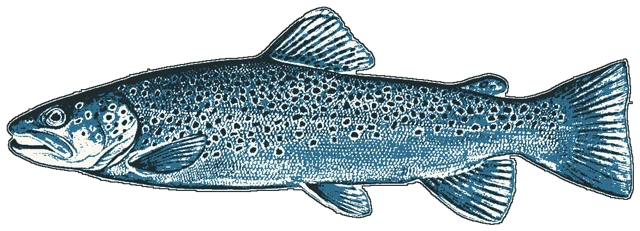
Brown trout
Salmo trutta · Freshwater
Good trout eating like rainbows; most kept browns are stocked fish.
- Tastes
- mild to rich, flaky
- Limits
- Heavy regs. Lake Michigan and tributaries: 5 per day, salmon and trout combined, no more than 3 lake trout, 14 in minimum, trout/salmon stamp required. Inland: 5 per day combined brook, rainbow and brown trout, no more than one brown; 7 in minimum in streams, none in lakes except 18 in for brown trout at Oliver, Olin and Martin lakes (LaGrange County) and the Brookville Lake tailwater. Other listed waters differ. (2026-27 Indiana Fishing Regulations, Lake Michigan Regulations page (last updated Feb. 19, 2026); license year April 1, 2026 to March 31, 2027) Source
- Best months
- Winter at warmwater discharges (January to March); returns to stocking sites in autumn to spawn.
- Where
- Warmwater discharges along the Lake Michigan shore and stocking sites; discharge areas open to anglers may close when the lake is too treacherous.
- small alewives
- nightcrawlers
- spawn bags
- shrimp
- small spoons
- Do not eat (anyone): any fish from the Grand Calumet River, the Indiana Harbor Canal, the Marquette, Grand Calumet and Miller lagoons or the other all-fish waters on this page.
Meal limits and other waters (6)
- Limit (everyone): 1 meal a month from Lake Michigan and its tributaries.
- Limit (sensitive group: females under 50, males under 15, weak immune systems): 1 meal a month for brown trout 19 in or longer from Olin Lake (LaGrange County).
- Limit (everyone): 1 meal a week from Olin Lake (any other size) and Oliver Lake.
- The statewide guides (Jan. 23, 2026) do not name brown trout.
- Limit (everyone): where a water has no line for this fish, the any-fish limits on this page apply.
- Check your water on the Indiana Fish Consumption Guidelines map.
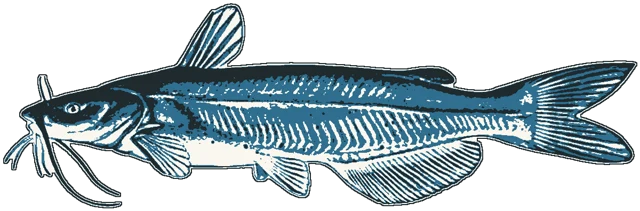
Channel catfish
Ictalurus punctatus · Freshwater
Very good to eat (Maryland DNR) and delicious when cooked (TPWD), and the basis of US catfish farming.
- Tastes
- mild, sweet, firm, moist
- Limits
- Light regs. Lakes: 10 per day, no minimum size (no limit on channel catfish at Turtle Creek Reservoir). Rivers and streams: no daily limit, 13 in minimum. Everywhere: no more than one blue catfish of 35 in or longer, one flathead of 35 in or longer, and one channel catfish of 28 in or longer may be kept. Ohio River main stem: no daily limit, 13 in minimum, no more than one blue 35 in or longer, one flathead 35 in or longer, one channel 28 in or longer. Other listed waters differ. (2026-27 Indiana Fishing Regulations on eRegulations (main limits table last updated Oct. 20, 2026); license year April 1, 2026 to March 31, 2027) Source
- Spawns
- Spawns in early summer in the mid-70s F; in fall catfish move shallow in early morning and evening (Patoka Lake report Oct. 5, 2026).
- Where
- Lakes IDNR district biologists list for channel catfish include Lake of the Woods, Bass, Shafer, Freeman, Cedar, Roush, Mississinewa, Salamonie, Brookville, Cagles Mill, Eagle Creek, Morse, Harden, Dogwood and Monroe; also midsize streams, ponds and large rivers.
- hot dogs
- cheese
- live nightcrawlers
- artificial worms
- chicken liver
- punch or stink bait
- Do not eat (anyone): channel catfish from the Mississinewa River in Randolph County, or from the West Fork White River in Delaware and Madison counties and in Hamilton County down to Stony Creek (any size on the state map; 21 in or longer in the 2026-27 guide, with smaller fish 1 meal every 2 months).
- Do not eat (anyone): any fish from the all-fish waters on this page.
Meal limits and other waters (7)
- Limit (everyone): 6 meals a year from Fall Creek below Keystone Avenue (Marion), the West Fork White River from Stony Creek to Broad Ripple Dam, Burns Ditch (Porter) and the St. Joseph River below Twin Branch Dam (guide: 28 in or longer).
- Limit (everyone): 6 meals a year for longer fish from the Elkhart River (18 in or longer), the Ohio River down to J.T. Myers Dam (18), Eagle Creek below 10th Street in Marion County (19), Pigeon Creek in Vanderburgh County (19), Wildcat Creek in Tippecanoe County (21), Lake Michigan and its tributaries (26; guide: 1 meal a month, any size) and Wildcat Creek above Dam 3 in Howard County (29).
- Limit (everyone): 1 meal a month for smaller fish there (Ohio River 1 a week; Wildcat above Dam 3 from 19 in) and from 24 more waters (longer fish only at many), with the Wabash and Patoka rivers, Mississinewa Lake and Brookville Lake (15 in or longer) among them.
- Limit (sensitive group: females under 50, males under 15, weak immune systems): 1 meal a month from Monroe Lake, Deer Creek and Glenn Flint Lake (Putnam), Tanners Creek (Dearborn), Eagle Creek Reservoir (21 in or longer), upper Richland Creek (22) and the Eel River in Clay, Greene, Owen and Putnam counties (23).
- Limit (everyone): 1 meal a week, statewide.
- Limit (everyone): where a water has no line for this fish, the any-fish limits on this page apply.
- Other listed waters differ (state advisory map and 2026-27 fishing guide, Nov. 22, 2026).
Chinook salmon
Oncorhynchus tshawytscha · also called king salmon · Freshwater
NOAA calls Chinook the most highly prized salmon in the culinary world: rich, buttery and oily.
- Tastes
- rich, buttery, oily, flaky, meaty
- Limits
- Heavy regs. Lake Michigan and tributaries: 5 per day, salmon and trout combined (Atlantic, Chinook, coho and pink salmon; brown, lake and steelhead trout), no more than 3 may be lake trout; 14 in minimum. Trout/salmon stamp required with a fishing license. St. Joseph River from Twin Branch Dam to the Michigan line: 14 in minimum, single-hook rules and fishing closures near the fish ladders. Foul-hooked trout and salmon must be released. Other listed waters differ. (2026-27 Indiana Fishing Regulations, Lake Michigan Regulations page (last updated Feb. 19, 2026); license year April 1, 2026 to March 31, 2027) Source
- Best months
- September through mid-November in streams; Chinook also contribute to the summer offshore catch in 70 to 200 feet of water.
- Where
- Lake Michigan offshore in summer; Trail Creek and other tributaries in the fall run.
- trolled ThinFins
- Rapalas
- Thunder-Sticks
- spoons
- spinners
- dodgers and flies
- Do not eat (anyone): any fish from the Grand Calumet River, the Indiana Harbor Canal, the Marquette, Grand Calumet and Miller lagoons or the other all-fish waters on this page.
Meal limits and other waters (3)
- Limit (everyone): 1 meal a month from Lake Michigan and its tributaries, Trail Creek and the St. Joseph River included.
- The statewide guides (Jan. 23, 2026) do not name Chinook.
- Check your water on the Indiana Fish Consumption Guidelines map.
Coho salmon
Oncorhynchus kisutch · Freshwater
High oil content, firm and flaky when cooked; NOAA notes smaller coho have a delicate flavor.
- Tastes
- mild to delicate, soft raw, firm and flaky cooked
- Limits
- Heavy regs. Lake Michigan and tributaries: 5 per day, salmon and trout combined (Atlantic, Chinook, coho and pink salmon; brown, lake and steelhead trout), no more than 3 may be lake trout; 14 in minimum. Trout/salmon stamp required with a fishing license. St. Joseph River from Twin Branch Dam to the Michigan line: 14 in minimum, single-hook rules and fishing closures near the fish ladders. Foul-hooked trout and salmon must be released. Other listed waters differ. (2026-27 Indiana Fishing Regulations, Lake Michigan Regulations page (last updated Feb. 19, 2026); license year April 1, 2026 to March 31, 2027) Source
- Best months
- March (as early as mid-February) through April from shore; March to mid-May by boat; September to mid-November in streams.
- Where
- Lake Michigan within two miles of shore in spring; Michigan City pier; Trail Creek and East Branch Little Calumet in the fall run.
- trolled ThinFins
- Rapalas
- Thunder-Sticks
- spoons
- spinners
- dodgers and flies
- Do not eat (anyone): any fish from the Grand Calumet River, the Indiana Harbor Canal, the Marquette, Grand Calumet and Miller lagoons or the other all-fish waters on this page.
Meal limits and other waters (3)
- Limit (everyone): 1 meal a month from Lake Michigan and its tributaries, Trail Creek and the St. Joseph River included.
- The statewide guides (Jan. 23, 2026) do not name coho.
- Check your water on the Indiana Fish Consumption Guidelines map.
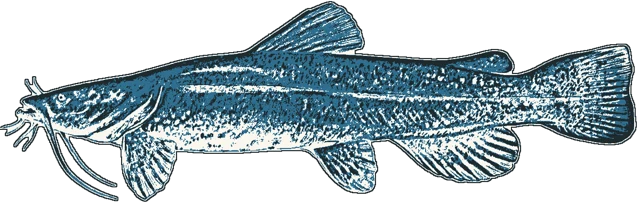
Flathead catfish
Pylodictis olivaris · Freshwater
Widely considered the best-tasting catfish because it eats live fish instead of scavenging; Maryland DNR notes its mild, white flesh.
- Tastes
- mild, clean, firm, white
- Limits
- Light regs. Lakes: 10 per day, no minimum size (no limit on channel catfish at Turtle Creek Reservoir). Rivers and streams: no daily limit, 13 in minimum. Everywhere: no more than one blue catfish of 35 in or longer, one flathead of 35 in or longer, and one channel catfish of 28 in or longer may be kept. Ohio River main stem: no daily limit, 13 in minimum, no more than one blue 35 in or longer, one flathead 35 in or longer, one channel 28 in or longer. Other listed waters differ. (2026-27 Indiana Fishing Regulations on eRegulations (main limits table last updated Oct. 20, 2026); license year April 1, 2026 to March 31, 2027) Source
- Spawns
- Spawns in early summer in the mid-70s F (IDNR catfish page).
- Where
- Large lakes and large rivers and streams; IDNR lists Pike, Mississinewa, Brookville, Cagles Mill, Dogwood and Monroe lakes for flatheads.
- hot dogs
- cheese
- live nightcrawlers
- artificial worms
- Do not eat (anyone): flathead catfish over 44 in, any water.
- Do not eat (anyone): any fish from the all-fish waters on this page.
Meal limits and other waters (8)
- Limit (everyone): 6 meals a year for fish 39 to 44 in statewide, and for any flathead from Sugar Creek in Parke County.
- Limit (everyone): 6 meals a year for longer fish from Clear Creek in Monroe County (15 in or longer), Wildcat Creek in Tippecanoe County (21), the Great Miami River (22), Eagle Creek below 10th Street in Marion County (24), the Maumee River (24), the West Fork White River from Broad Ripple Dam through Morgan County (25) and the Mississinewa River in Delaware, Grant, Miami and Wabash counties (29).
- Limit (everyone): 1 meal a month for smaller flathead from those waters, and for any from the Ohio River, lower Richland Creek (Greene) and Sugar Creek below State Road 32 (Montgomery).
- Limit (everyone): 1 meal a month for longer fish from Boggs Creek in Martin County (14 in or longer), the Wabash River in Adams, Jay and Wells counties (17), the East Fork White River from Washington County down (24) and the West Fork White River from Owen County to the Wabash (26).
- Limit (sensitive group: females under 50, males under 15, weak immune systems): 1 meal a month under 39 in, statewide.
- Limit (everyone else): 1 meal a month at 29 to 39 in and 1 a week under 29 in, statewide.
- Limit (everyone): where a water has no line for this fish, the any-fish limits on this page apply.
- Other listed waters differ (state advisory map and 2026-27 fishing guide, Nov. 22, 2026).
Hybrid striped bass
Morone saxatilis x M. chrysops · also called wipers · Freshwater
Indiana DNR says hybrids make great table fare; mild white fillets like a striper's.
- Tastes
- mild, firm, white
- Limits
- Light regs. Statewide: 12 per day, white bass and hybrid striped bass combined, no minimum size, no more than 2 over 17 in. Ohio River main stem: 30 per day, hybrid, striped, white and yellow bass combined, no more than 4 of 15 in or longer. Other listed waters differ. (2026-27 Indiana Fishing Regulations on eRegulations (main limits table last updated Oct. 20, 2026); license year April 1, 2026 to March 31, 2027) Source
- Best months
- Spring and fall, at surface water of 45 to 80 F; fall surface feeding in early morning and evening.
- Where
- Stocked lakes (Monroe, Patoka, Hardy, Cedar, Worster, Gilbert, Shafer, Freeman, Clare, Shadyside), the tailwaters below Freeman, Shafer and Monroe (do not eat from the Monroe tailwater, which is Salt Creek), and the Ohio, Wabash, White and Tippecanoe rivers.
- baitfish-imitating lures
- chicken livers
- live or cut baitfish
- trolled baitfish baits
- Do not eat (anyone): any fish from the all-fish waters on this page, among them Salt Creek below the Monroe Lake dam.
Meal limits and other waters (6)
- Limit (everyone): 1 meal every 2 months from the Ohio River down to J.T. Myers Dam.
- Limit (everyone): 1 meal a month from the Ohio River below that dam (Posey County) and the Patoka River (Dubois, Gibson, Pike).
- Limit (sensitive group: females under 50, males under 15, weak immune systems): 1 meal a month over 13 in and 1 a week under, statewide.
- Limit (everyone else): 1 meal a week, statewide.
- Limit (everyone): where a water has no line for this fish, the any-fish limits on this page apply.
- Other listed waters differ (state advisory map and 2026-27 fishing guide, Nov. 22, 2026).
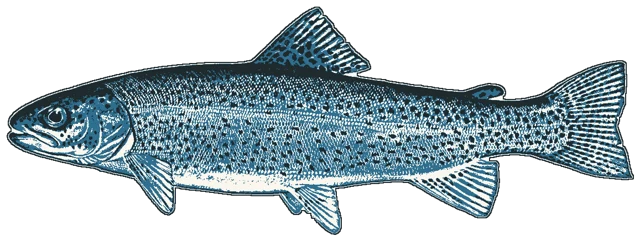
Rainbow trout
Oncorhynchus mykiss · Freshwater
TPWD calls rainbow trout an excellent fish to eat; the most-stocked put-and-take fish in America.
- Tastes
- mild, clean, delicate, flaky
- Limits
- Heavy regs. Inland waters: 5 per day, brook, rainbow and brown trout combined, no more than one brown; 7 in minimum in streams, none in lakes (18 in for brown at Oliver, Olin, Martin and the Brookville tailwater). Stream season opens 6 a.m. on the last Saturday in April and runs through Dec. 31; catch-and-release Jan. 1 to April 14 on all trout streams; listed streams close April 15 to opening day. Three Elkhart County streams are year-round catch-and-release, artificial lures or flies only. Trout/salmon stamp required. Lake Michigan: 5 per day, salmon and trout combined, 14 in minimum. Other listed waters differ. (2026-27 Indiana Fishing Regulations, Inland Trout Regulations page (last updated Feb. 19, 2026); license year April 1, 2026 to March 31, 2027) Source
- Where
- Stocked inland streams such as the Pigeon River and Little Elkhart River (LaGrange and Elkhart counties); no closed season on inland lakes.
- red wigglers
- bee moth larvae (wax worms)
- kernel of corn
- store-bought trout bait
- inline spinners
- spoons
- Do not eat (anyone): any fish from the Grand Calumet River, the Indiana Harbor Canal, the Marquette, Grand Calumet and Miller lagoons or the other all-fish waters on this page.
Meal limits and other waters (4)
- Limit (everyone): 1 meal a week from Lake Michigan and its tributaries and from Olin Lake (LaGrange County; for the sensitive group, trout 14 in or longer there).
- The statewide guides (Jan. 23, 2026) do not name rainbow trout.
- Limit (everyone): where a water has no line for this fish, the any-fish limits on this page apply.
- Check your water on the Indiana Fish Consumption Guidelines map.
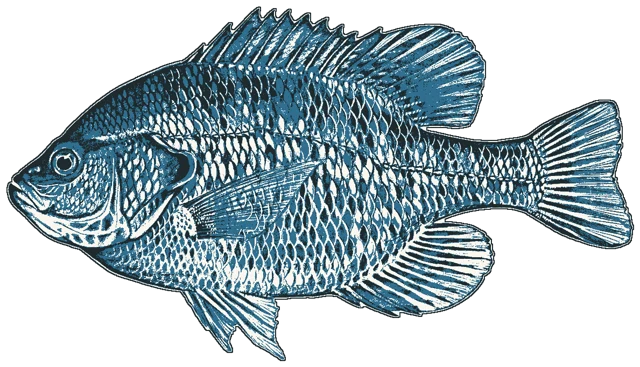
Redear sunfish
Lepomis microlophus · also called shellcrackers · Freshwater
Larger than bluegill, with the same sweet fillets; Indiana DNR calls sunfish, redear included, delicious fish.
- Tastes
- mild, sweet, firm, flaky
- Limits
- Light regs. 25 per day statewide, no minimum size. J.C. Murphey Lake (Newton County): 25 bluegill and redear combined. Fidler Pond, Failing Lake and Flat Fork Creek Park ponds A and B: 15 per day of bluegill, redear and crappie combined. Other listed waters differ. (2026-27 Indiana Fishing Regulations on eRegulations (main limits table last updated Oct. 20, 2026); license year April 1, 2026 to March 31, 2027) Source
- Best months
- May and early summer, when redear spawn near 65 F; early morning and late evening.
- Where
- Most Indiana waters, including midsize streams, small ponds, lakes and large rivers.
- red worms
- bee moth larvae (waxworms)
- chartreuse or white curly-tail grubs
- inline spinners
- Do not eat (anyone): sunfish, redear included, from the Wabash River in Fountain, Parke, Tippecanoe, Vermillion and Warren counties.
- Do not eat (anyone): any fish from the all-fish waters on this page.
Meal limits and other waters (5)
- Limit (everyone): 1 meal a month from Pleasant Run Creek (Lawrence, Monroe counties), South Fork Wildcat Creek (Clinton), Stony Creek below State Road 37 (Hamilton) and Stouts Creek (Monroe).
- Limit (sensitive group: females under 50, males under 15, weak immune systems): 1 meal a month from Deer Creek (Putnam), Eagle Creek above Eagle Creek Reservoir (Boone, Marion), Fish Creek (DeKalb), Indian Creek (Harrison), Laughery Creek (Dearborn, Ohio), Salt Creek (Porter), Tucker Lake (Orange) and the West Fork White River from Stony Creek to Broad Ripple Dam.
- Limit (everyone): 1 meal a week, statewide.
- Limit (everyone): where a water has no line for this fish, the any-fish limits on this page apply.
- Other listed waters differ (state advisory map and 2026-27 fishing guide, Nov. 22, 2026).
Sauger
Sander canadensis · Freshwater
The walleye's smaller river cousin, with the same fillets; MeatEater says they taste just as good.
- Tastes
- mild, clean, firm, flaky white
- Limits
- Light regs. 6 per day, walleye, sauger and saugeye combined; no size limit on sauger statewide. Ohio River main stem: 6 per day combined, 14 in minimum. Other listed waters differ. (2026-27 Indiana Fishing Regulations on eRegulations (main limits table last updated Oct. 20, 2026); license year April 1, 2026 to March 31, 2027) Source
- Best months
- March and April, when adult sauger run upstream to spawn below locks and dams on the Ohio River.
- Where
- Large rivers, mainly the Ohio and Wabash; below the locks and dams on the Ohio River.
- vertical jigging
- crankbaits
- soft plastics
- live bait
- Do not eat (sensitive group: females under 50, males under 15, weak immune systems): sauger over 23 in, any water.
- Do not eat (anyone): any fish from the all-fish waters on this page.
Meal limits and other waters (4)
- Limit (everyone): 1 meal a month, statewide and from the Ohio River below J.T. Myers Dam (Posey County).
- Limit (everyone): 1 meal a week from the Ohio River above that dam.
- Limit (everyone): where a water has no line for this fish, the any-fish limits on this page apply.
- Other listed waters differ (state advisory map and 2026-27 fishing guide, Nov. 22, 2026).
Saugeye
Sander vitreus x S. canadensis · Freshwater
Oklahoma's wildlife department says saugeye make first-class table fare.
- Tastes
- mild, clean, firm, flaky white
- Limits
- Light regs. 6 per day, walleye, sauger and saugeye combined; no minimum size on saugeye except 14 in at Huntingburg Lake (Dubois), Glenn Flint Lake (Putnam) and Sullivan Lake (Sullivan). Ohio River main stem: 6 per day combined, 14 in minimum. Other listed waters differ. (2026-27 Indiana Fishing Regulations on eRegulations (main limits table last updated Oct. 20, 2026); license year April 1, 2026 to March 31, 2027) Source
- Best months
- Walleye-family fishing in tailwaters runs March through May and October through November (IDNR walleye page, which covers walleye, sauger and saugeye).
- Where
- Stocked lakes including Cecil M. Harden, Cedar, Clare, Glenn Flint, Huntingburg and Koteewi Park lakes (IDNR stocking list).
- jigs tipped with minnows or shiners
- crankbaits
- blade baits
- grubs and ring worms
- nightcrawlers
- Do not eat (anyone): walleye or saugeye from the Wabash River in Carroll, Cass, Miami and Tippecanoe counties.
- Do not eat (anyone): any fish from the all-fish waters on this page.
Meal limits and other waters (5)
- Limit (everyone): 1 meal a month from the Ohio River.
- Limit (sensitive group: females under 50, males under 15, weak immune systems): 1 meal a month over 17 in and 1 a week under, statewide.
- Limit (everyone else): 1 meal a week, statewide.
- Limit (everyone): where a water has no line for this fish, the any-fish limits on this page apply.
- Other listed waters differ (state advisory map and 2026-27 fishing guide, Nov. 22, 2026).
Steelhead
Oncorhynchus mykiss (anadromous) · also called Skamania (summer-run), winter-run (Michigan strain) · Freshwater
Steelhead are sea-run rainbow trout, and bright fish eat like a mild salmon; hatchery fish are kept as food across the Pacific Northwest and Great Lakes.
- Tastes
- mild, rich, firm, pink-orange
- Limits
- Heavy regs. Lake Michigan and tributaries: 5 per day, salmon and trout combined (Atlantic, Chinook, coho and pink salmon; brown, lake and steelhead trout), no more than 3 may be lake trout; 14 in minimum. Trout/salmon stamp required with a fishing license. St. Joseph River from Twin Branch Dam to the Michigan line: 14 in minimum, single-hook rules and fishing closures near the fish ladders. Foul-hooked trout and salmon must be released. Other listed waters differ. Inland trout streams and lakes follow the inland trout rule (5 per day combined, 7 in minimum in streams, closed seasons on listed streams). (2026-27 Indiana Fishing Regulations, Lake Michigan Regulations page (last updated Feb. 19, 2026); license year April 1, 2026 to March 31, 2027) Source
- Best months
- Skamania run from mid-July to mid-October and again January to March; winter-run mid-November to mid-March; March and April at the pier heads.
- Where
- Trail Creek, the St. Joseph River (South Bend Fish Ladder), the East Branch of the Little Calumet River and Salt Creek.
- spawn bags
- skein
- jigs with waxworms
- nightcrawlers
- spinners
- steelhead spinner baits
- Do not eat (anyone): any fish from the Grand Calumet River, the Indiana Harbor Canal, the Marquette, Grand Calumet and Miller lagoons or the other all-fish waters on this page.
- The do-not-eat Salt Creek is the one in Monroe and Lawrence counties, not the Lake Michigan tributary in Porter County.
Meal limits and other waters (3)
- Limit (everyone): 1 meal a week from Lake Michigan and its tributaries (listed as rainbow trout).
- The statewide guides (Jan. 23, 2026) do not name steelhead.
- Check your water on the Indiana Fish Consumption Guidelines map.
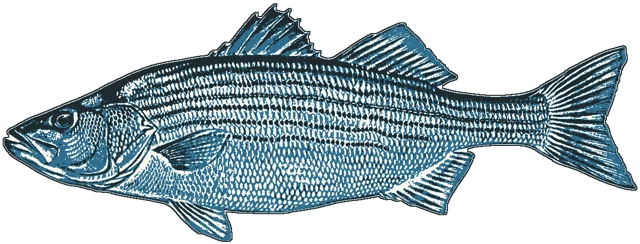
Striped bass
Morone saxatilis · Freshwater
Firm, large-flaked, slightly sweet white meat; one of the most kept and eaten gamefish in the country, fresh or salt.
- Tastes
- mild, slightly sweet, firm, large flakes
- Limits
- Heavy regs. Statewide: 2 per day, no minimum size. Ohio River main stem: 30 per day, hybrid, striped, white and yellow bass combined, no more than 4 of 15 in or longer. Other listed waters differ. (2026-27 Indiana Fishing Regulations on eRegulations (main limits table last updated Oct. 20, 2026); license year April 1, 2026 to March 31, 2027) Source
- Best months
- Fall, when they chase baitfish in the shallows (IDNR fishing tips).
- Where
- IDNR says striped bass are no longer stocked in Indiana; the only location recently stocked is the Ohio River, by Kentucky.
- lures that look like minnows
- lures that look like shad
- Consumption advisories for striped bass vary from state to state (NOAA).
- Do not eat (anyone): any fish from the all-fish waters on this page.
Meal limits and other waters (5)
- Limit (everyone): 1 meal a month from the Ohio River, the Patoka River (Dubois, Gibson, Pike counties), and fish 16 in or longer from the Wabash River (Knox, Sullivan, Vigo).
- Limit (sensitive group: females under 50, males under 15, weak immune systems): 1 meal a month over 13 in and 1 a week under, statewide, and 1 a month at any size from that stretch of the Wabash.
- Limit (everyone else): 1 meal a week, statewide.
- Limit (everyone): where a water has no line for this fish, the any-fish limits on this page apply.
- Other listed waters differ (state advisory map and 2026-27 fishing guide, Nov. 22, 2026).
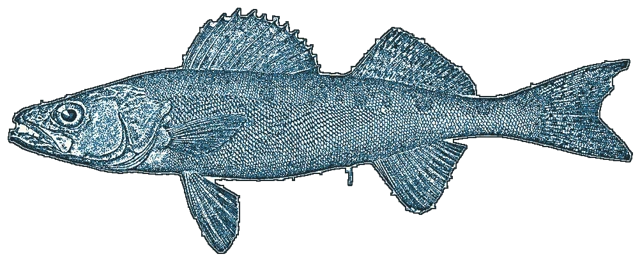
Walleye
Sander vitreus · Freshwater
Widely rated the best-eating freshwater fish: Maryland DNR calls it one of the best tasting, TPWD an excellent food fish.
- Tastes
- mild, clean, firm, tender, flaky white
- Limits
- Light regs. 6 per day, walleye, sauger and saugeye combined. Walleye minimum: 14 in south of State Road 26, 16 in north of it. Exceptions: Bass Lake (Starke) and Wolf Lake (Lake) 14 in; Lake George (Steuben) 15 in; Wall Lake (LaGrange) 16 in and 2 per day. Ohio River main stem: 6 per day, 14 in minimum. Other listed waters differ. (2026-27 Indiana Fishing Regulations on eRegulations (main limits table last updated Oct. 20, 2026); license year April 1, 2026 to March 31, 2027) Source
- Best months
- Tailwaters fish well March through May and October through November; spawning late March and early April.
- Where
- Stocked in about three dozen listed waters, including Monroe, Patoka, Brookville, Freeman, Shafer, Mississinewa and the northern glacial lakes; IDNR has also improved walleye in the tailwaters below Cagles Mill, Freeman, Shafer, Mississinewa, Monroe (do not eat from there; it is Salt Creek) and Salamonie, and says many reservoir tailwaters have shore fishing.
- leadhead jigs with white or chartreuse soft plastics
- Do not eat (anyone): walleye or saugeye from the Wabash River in Carroll, Cass, Miami and Tippecanoe counties.
- Do not eat (anyone): any fish from the all-fish waters on this page, among them Salt Creek below the Monroe Lake dam.
Meal limits and other waters (6)
- Limit (everyone): 1 meal a month from Lake Michigan and its tributaries, the Ohio River, the Maumee River (Allen County), the West Fork White River from Broad Ripple Dam through Morgan County, fish 18 in or longer from Wolf Lake (Lake), and fish 22 in or longer from the St. Joseph River below Twin Branch Dam.
- Limit (sensitive group: females under 50, males under 15, weak immune systems): 1 meal a month over 17 in and 1 a week under, statewide.
- Limit (sensitive group): 1 meal a month at any size from Indian Creek (Martin), Lake Maxinkuckee, Patoka Lake, Summit Lake (Henry), the St. Marys River (Allen), the St. Joseph River (Elkhart) and the Wabash River (Huntington, Wabash), and over 16 in from Deer Creek (Putnam).
- Limit (everyone else): 1 meal a week, statewide.
- Limit (everyone): where a water has no line for this fish, the any-fish limits on this page apply.
- Other listed waters differ (state advisory map and 2026-27 fishing guide, Nov. 22, 2026).
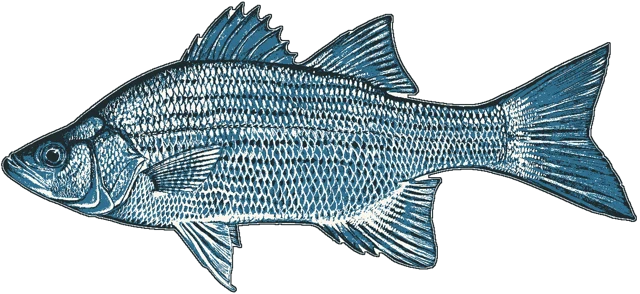
White bass
Morone chrysops · Freshwater
Texas Parks & Wildlife calls white bass superb table fare, and the spring runs fill a lot of coolers; light, flaky meat like walleye.
- Tastes
- mild, light, flaky
- Limits
- Light regs. Statewide: 12 per day, white bass and hybrid striped bass combined, no minimum size, no more than 2 over 17 in. Ohio River main stem: 30 per day, hybrid, striped, white and yellow bass combined, no more than 4 of 15 in or longer. Other listed waters differ. (2026-27 Indiana Fishing Regulations on eRegulations (main limits table last updated Oct. 20, 2026); license year April 1, 2026 to March 31, 2027) Source
- Best months
- Spring in the Salamonie River just upstream of Salamonie Lake; warmer months in the lake tailwater (IDNR).
- live minnows
- slab spoon
- inline spinner
- small crankbait
- small topwater
- Do not eat (anyone): any fish from the all-fish waters on this page.
Meal limits and other waters (6)
- Limit (everyone): 1 meal a month from the Ohio River, Pike Lake (Kosciusko County) and the West Fork White River from Broad Ripple Dam through Morgan County.
- Limit (sensitive group: females under 50, males under 15, weak immune systems): 1 meal a month over 13 in and 1 a week under, statewide.
- Limit (sensitive group): 1 meal a month at any size from the Wabash River in Fountain, Knox, Parke, Sullivan, Tippecanoe, Vermillion, Vigo and Warren counties.
- Limit (everyone else): 1 meal a week, statewide.
- Limit (everyone): where a water has no line for this fish, the any-fish limits on this page apply.
- Other listed waters differ (state advisory map and 2026-27 fishing guide, Nov. 22, 2026).
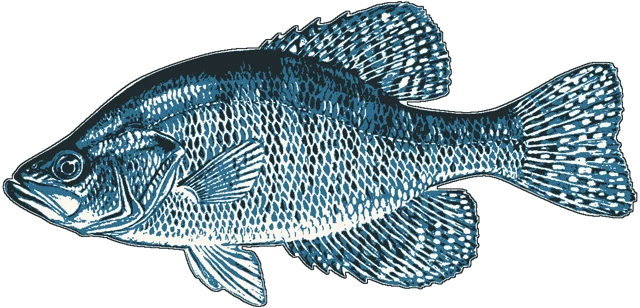
White crappie
Pomoxis annularis · Freshwater
Same top-tier panfish fillets as black crappie; one of the most popular panfish in the country.
- Tastes
- mild, sweet, delicate, flaky, white
- Limits
- Light regs. 25 per day statewide, no minimum size, black and white crappie combined. Ohio River main stem: 30 per day. 9 in minimum at Dogwood Lake (Daviess County) and Hardy Lake (Scott County). Fidler Pond, Failing Lake and Flat Fork Creek Park ponds A and B: 15 per day of bluegill, redear and crappie combined. Other listed waters differ. (2026-27 Indiana Fishing Regulations on eRegulations (main limits table last updated Oct. 20, 2026); license year April 1, 2026 to March 31, 2027) Source
- Best months
- Spring and fall, when crappie move shallow; spawning late April and May near 55 F.
- Where
- Sunken logs, standing timber, brush piles and docks at lakes such as Monroe, Brookville, Salamonie, Mississinewa, Wawasee, Webster, Hudson and Geist (IDNR crappie lake list).
- minnows
- small jigs
- soft plastic baits
- Do not eat (anyone): any fish from the all-fish waters on this page.
Meal limits and other waters (4)
- Limit (sensitive group: females under 50, males under 15, weak immune systems): 1 meal a month from Monroe Lake, Ruble Park Pond West (Vigo County), Sand Creek (Bartholomew, Decatur, Jennings), the West Fork White River from Stony Creek to Broad Ripple Dam, and crappie 10 in or longer from Starve Hollow Lake (Jackson) and the Wabash River (Fountain, Parke, Tippecanoe, Vermillion, Warren).
- Limit (everyone): 1 meal a week, statewide and from the Ohio River.
- Limit (everyone): where a water has no line for this fish, the any-fish limits on this page apply.
- Other listed waters differ (state advisory map and 2026-27 fishing guide, Nov. 22, 2026).
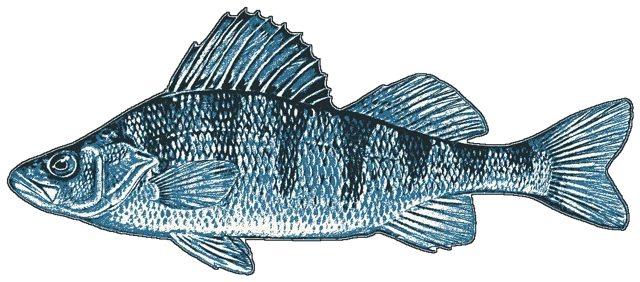
Yellow perch
Perca flavescens · Freshwater
A great food fish (MN DNR) and the centerpiece of Great Lakes perch fries; Iowa DNR calls a fried stringer of perch unsurpassed in flavor.
- Tastes
- mild, sweet, firm, flaky, white
- Limits
- Light regs. Lake Michigan: 15 per day, no minimum size, and the 15 limit applies in Indiana waters even with a neighboring state license. Inland waters: no statewide limit listed (table reads unlimited). (2026-27 Indiana Fishing Regulations on eRegulations (main limits table last updated Oct. 20, 2026); license year April 1, 2026 to March 31, 2027) Source
- Best months
- Summer is most consistent (20 to 50 feet, 60 to 70 F); pre-spawn schools in 50 to 80 feet in spring; spawn mid-April to mid-June; scattered near piers and harbors from late September.
- Where
- Indiana waters of Lake Michigan: boat fishing off Gary Light and the Cal Park area, harbors, and shoreline piers in summer.
- perch minnows (fatheads or shiners)
- soft-shell crayfish
- cut strips of alewife
- cooked shrimp
- wigglers
- soft plastics that mimic minnows
- Do not eat (anyone): any fish from the Grand Calumet River, the Indiana Harbor Canal, the Marquette, Grand Calumet and Miller lagoons or the other all-fish waters on this page.
Meal limits and other waters (5)
- Limit (everyone): 1 meal a week from Lake Michigan and its tributaries.
- Limit (sensitive group: females under 50, males under 15, weak immune systems): 1 meal a week from Monroe Lake.
- The statewide guides (Jan. 23, 2026) do not name yellow perch.
- Limit (everyone): where a water has no line for this fish, the any-fish limits on this page apply.
- Other listed waters differ (state advisory map and 2026-27 fishing guide, Nov. 22, 2026).
Bigmouth buffalo
Ictiobus cyprinellus · Freshwater
A food fish many people consider worth keeping despite its many bones (TPWD), but and rarely caught on hook and line, so most anglers write it off as a rough fish.
Worth a try: TPWD says many people consider it quite a food fish despite its many bones; smoke it, or fry the rib sections.
- Tastes
- mild, rich, firm, bony
- Limits
- No limits. No statewide daily limit, size limit or season is listed for buffalo. Bow and arrow or crossbow is legal year-round; gigs and spears are allowed in listed rivers and non-flowing waters. (2026-27 Indiana Fishing Regulations on eRegulations (main limits table last updated Oct. 20, 2026); license year April 1, 2026 to March 31, 2027) Source
- Best months
- Bow fishing is legal year-round (IDNR regulations).
- dough baits (cottonseed meal)
- bowfishing
- Do not eat (anyone): buffalo 29 in or longer from the East Fork White River (Daviess, Dubois, Lawrence, Martin, Pike, Washington).
- Do not eat (anyone): any fish from the all-fish waters on this page.
Meal limits and other waters (7)
- Limit (everyone): 6 meals a year for buffalo 23 to 29 in from that river, and for longer fish from Hovey Lake in Posey County (17 in or longer), the Maumee River (20), the West Fork White River from Broad Ripple Dam through Morgan County (20) and the West Fork White River from Owen County to the Wabash (22).
- Limit (everyone): 1 meal a month for smaller buffalo there (18 to 23 in on the East Fork), and for any from the Great Miami River and Sugar Creek in Parke County.
- Limit (everyone): 1 meal a month for longer fish from Boggs Creek in Martin County (14 in or longer), the Muscatatuck River (24), the Wabash River in Fountain, Parke, Tippecanoe, Vermillion and Warren counties (24) and Burns Ditch (25).
- Limit (sensitive group: females under 50, males under 15, weak immune systems): 1 meal a month, any size, statewide.
- Limit (everyone else): 1 meal a week, statewide.
- Limit (everyone): where a water has no line for this fish, the any-fish limits on this page apply.
- Other listed waters differ (state advisory map and 2026-27 fishing guide, Nov. 22, 2026).
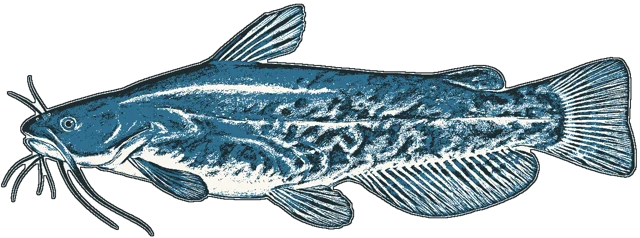
Bullhead (black, brown, yellow)
Ameiurus melas, A. nebulosus, A. natalis · Freshwater
Sweet, delicious catfish meat, but most are small and many come from warm, muddy water, so many anglers dismiss them.
- Tastes
- mild, sweet, firm, moist
- Limits
- No limits. No daily limit and no minimum size statewide. (2026-27 Indiana Fishing Regulations on eRegulations (main limits table last updated Oct. 20, 2026); license year April 1, 2026 to March 31, 2027) Source
- Where
- IDNR lists black, brown and yellow bullheads among Indiana catfish; yellow bullhead turned up in 61% of impoundments IDNR sampled in 2016 to 2023.
- nightcrawlers
- chicken livers
- dough balls
- cut bait
- stinkbait
- Do not eat (anyone): any fish from the all-fish waters on this page.
Meal limits and other waters (5)
- Limit (everyone): 1 meal a month from the Mississinewa River in Randolph County.
- Limit (sensitive group: females under 50, males under 15, weak immune systems): 1 meal a month for bullhead over 6 in from the Salamonie River (Blackford, Huntington, Jay, Wabash, Wells).
- Limit (everyone): 1 meal a week, statewide.
- Limit (everyone): where a water has no line for this fish, the any-fish limits on this page apply.
- Other listed waters differ (state advisory map and 2026-27 fishing guide, Nov. 22, 2026).
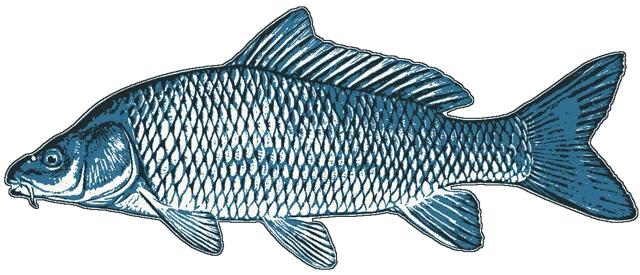
Common carp
Cyprinus carpio · Freshwater
Most US anglers call it a muddy, bony trash fish, but it is a prized food fish in Europe and Asia and eats well from clean, cold water.
Worth a try: Catch from clean water, remove the dark 'mud vein', and either score small fish and fry hard so the Y-bones soften, or hard-smoke large fish over fruitwood (Hank Shaw).
- Tastes
- mild from clean water, strong from muddy water, firm, fatty, Y-bones
- Limits
- No limits. No statewide daily limit, size limit or season is listed. Live carp may not be used as bait anywhere. Bow and arrow or crossbow is legal year-round for carp; one snare may be used between sunrise and sunset. (2026-27 Indiana Fishing Regulations on eRegulations (main limits table last updated Oct. 20, 2026); license year April 1, 2026 to March 31, 2027) Source
- Best months
- Bow fishing is legal year-round (IDNR regulations).
- Where
- 46 of the impoundments IDNR surveyed in 2016 to 2023.
- dough balls
- canned corn
- worms
- boilies
- bread
- Do not eat (anyone): carp from Lake Michigan and its tributaries, Clear Lake (LaPorte County), Palestine Lake (Kosciusko), the St. Joseph River below Twin Branch Dam, Fall Creek below Keystone Avenue (Marion) or Stony Creek below State Road 37 (Hamilton), or carp 23 in or longer from Wildcat Creek (Tippecanoe).
- Do not eat (anyone): any fish from the all-fish waters on this page.
Meal limits and other waters (7)
- Limit (everyone): 6 meals a year for smaller carp from Wildcat Creek (Tippecanoe), and for longer carp from the Little Mississinewa River in Randolph County (18 in or longer), Lake George North and South at Whiting (19), South Fork Wildcat Creek in Clinton County (21), Wolf Lake in Lake County (22), the East Fork Whitewater River in Union and Wayne counties (23) and the Mississinewa River in Randolph County (30).
- Limit (everyone): 1 meal a month for smaller carp there (15 in or longer on the Mississinewa) and from 29 more waters (longer carp only at many), with the Wabash, White, Maumee and lower Ohio rivers and Mississinewa Lake (21 in or longer) among them.
- Limit (sensitive group: females under 50, males under 15, weak immune systems): 1 meal a month from Monroe Lake, Cagles Mill Lake (19 in or longer), Big Raccoon Creek in Parke County (20), Black Creek in Knox County (20), the Anderson River (22), Pipe Creek in Hamilton and Madison counties (23) and the Patoka River (27).
- Limit (everyone): 1 meal a week, statewide.
- The older 2018 statewide guide, which the state map still links, is stricter: no carp over 30 in for the sensitive group, 6 meals a year for everyone else.
- Limit (everyone): where a water has no line for this fish, the any-fish limits on this page apply.
- Other listed waters differ (state advisory map and 2026-27 fishing guide, Nov. 22, 2026).
Freshwater drum
Aplodinotus grunniens · Freshwater
Many anglers call it a rough fish, but it is prized as food in some areas (TPWD); bled and iced, the boneless fillets eat like a redfish's.
Worth a try: Bleed it, ice it immediately and trim the red lateral meat; then fry thin fillets, grill on the half-shell like redfish, or smoke oily summer fish.
- Tastes
- mild, like other drum, firm but tender, large flake; goes soft if not iced
- Limits
- No limits. No statewide daily limit, size limit or season is listed for freshwater drum. Not on the list of fish that may be bow-fished or speared; drum are named in the rule on white perch ("not freshwater drum"), which is illegal to possess alive. (2026-27 Indiana Fishing Regulations on eRegulations (main limits table last updated Oct. 20, 2026); license year April 1, 2026 to March 31, 2027) Source
- Best months
- Summer, when drum come close to Lake Michigan shorelines (60 to 66 F water); also caught at warmwater discharges in winter.
- Where
- Lake Michigan shoreline in summer and at warmwater discharges; the state record (30 lb, 1963) came from the White River in Martin County.
- Do not eat (sensitive group: females under 50, males under 15, weak immune systems): drum 20 in or longer from the Muscatatuck River (Jackson, Scott, Washington counties).
- Do not eat (anyone): any fish from the all-fish waters on this page.
Meal limits and other waters (4)
- Limit (sensitive group): 6 meals a year for drum 24 in or longer from the West Fork White River from Owen County to the Wabash.
- Limit (everyone): 1 meal a month, any size, statewide and from the Ohio River.
- Limit (everyone): where a water has no line for this fish, the any-fish limits on this page apply.
- Other listed waters differ (state advisory map and 2026-27 fishing guide, Nov. 22, 2026).
Lake trout
Salvelinus namaycush · Freshwater
Edible and widely kept, but it is the trout most often knocked as too greasy; big fish are very fatty and best smoked.
- Tastes
- rich, oily, soft to firm, fatty
- Limits
- Heavy regs. Lake Michigan and tributaries: 5 per day, salmon and trout combined (Atlantic, Chinook, coho and pink salmon; brown, lake and steelhead trout), no more than 3 may be lake trout; 14 in minimum. Trout/salmon stamp required with a fishing license. St. Joseph River from Twin Branch Dam to the Michigan line: 14 in minimum, single-hook rules and fishing closures near the fish ladders. Foul-hooked trout and salmon must be released. Other listed waters differ. (2026-27 Indiana Fishing Regulations, Lake Michigan Regulations page (last updated Feb. 19, 2026); license year April 1, 2026 to March 31, 2027) Source
- Best months
- A shoreline run near the Port of Indiana from mid-October to mid-November; also taken offshore in summer.
- Where
- Breakwalls near the Port of Indiana, Hammond, Michigan City and East Chicago, and the Indiana Shoals by the Gong (IDNR report Nov. 19, 2026).
- blade baits
- swimbaits
- spoons
- Great Lakes and some western lakes carry contaminant advisories for large lake trout; check your state advisory.
- Do not eat (anyone): lake trout 29 in or longer from Lake Michigan and its tributaries.
- Do not eat (anyone): any fish from the Grand Calumet River, the Indiana Harbor Canal, the Marquette, Grand Calumet and Miller lagoons or the other all-fish waters on this page.
Meal limits and other waters (3)
- Limit (everyone): 1 meal a month at 23 to 29 in and 1 a week under 23 in, Lake Michigan and its tributaries.
- The statewide guides (Jan. 23, 2026) do not name lake trout.
- Check your water on the Indiana Fish Consumption Guidelines map.
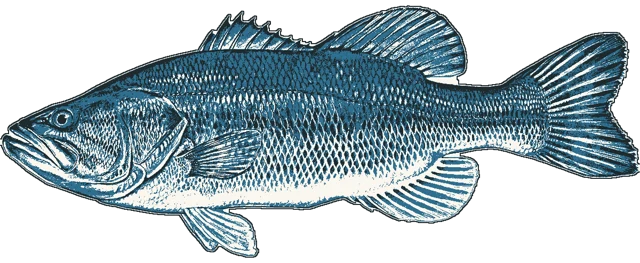
Largemouth bass
Micropterus nigricans (syn. M. salmoides) · Freshwater
Perfectly edible white fillets, but America's top catch-and-release fish and many anglers swear the meat tastes fishy or muddy, so reputation is split.
- Tastes
- mild to slightly 'fishy', firm, thick fillets
- Limits
- Heavy regs. Statewide, any combination of largemouth, smallmouth and spotted bass: 5 per day. Lakes: 14 in minimum. Rivers and streams: no fish 12 to 15 in may be kept and no more than 2 over 15 in. Lake Michigan: 3 per day, 14 in minimum. Ohio River main stem: 6 per day, 12 in minimum for largemouth and smallmouth, no size limit on spotted bass. Exceptions include a 12 in minimum (5 per day) on all rivers and streams in Posey, Vanderburgh, Warrick, Spencer, Perry, Crawford, Harrison, Floyd, Clark, Jefferson, Switzerland, Ohio and Dearborn counties (the Blue River keeps the slot), Sugar Creek 20 in and 1 per day, and special lake limits: Patoka Lake 15 in; Cecil M. Harden Lake 16 in; Turtle Creek Reservoir 20 in and 1 per day; 18 in and 2 per day at Ball Lake, Blue Grass Pit, Loon Pit, Fidler Pond, Failing Lake, Kunkel Lake, Robinson Lake, all Tri-County lakes and others; no minimum size at a list of small waters. Other listed waters differ; read the Bass Regulations page for the water you fish. (2026-27 Indiana Fishing Regulations, Bass Regulations page (last updated Feb. 19, 2026); license year April 1, 2026 to March 31, 2027) Source
- Best months
- May, near spawning beds as the water nears 65 F; in summer early morning, late afternoon and night; in fall on inside weedlines and near docks as the water cools (IDNR fishing tips and reports).
- Where
- Nearly all Indiana waterbody types: ponds, lakes, reservoirs, streams and rivers (IDNR). Lake Monroe had many fish of 2 to 5 pounds in a fall 2026 survey.
- soft plastic worms
- soft plastic stick baits
- spinnerbaits
- topwater
- jerkbaits
- chatterbaits
- Water-body mercury advisories commonly list largemouth bass; check your state's advisory before eating large fish.
- Do not eat (anyone): any fish from the all-fish waters on this page.
- Do not eat (sensitive group: females under 50, males under 15, weak immune systems): largemouth 17 in or longer from Hominy Ridge Lake (Wabash County), or any largemouth from Spurgeon Hollow Lake (Washington County).
Meal limits and other waters (7)
- Limit (everyone): 2 meals a year from Clear Lake (LaPorte County).
- Limit (everyone): 1 meal a month from Hominy Ridge and Spurgeon Hollow lakes, the Ohio River, Cedar Creek (Allen, DeKalb), Clear Creek (Monroe), Fall Creek below Keystone Avenue (Marion), and fish 11 in or longer (any size for the sensitive group) from Fox Lake (Steuben) and Tucker Lake (Orange).
- Limit (sensitive group): 1 meal a month over 13 in and 1 a week under, statewide.
- Limit (sensitive group): 1 meal a month for smaller bass too from 39 more waters, with Brookville, Patoka, Cagles Mill, Harden and Maxinkuckee lakes among them.
- Limit (everyone else): 1 meal a week, statewide.
- Limit (everyone): where a water has no line for this fish, the any-fish limits on this page apply.
- Other listed waters differ (state advisory map and 2026-27 fishing guide, Nov. 22, 2026).
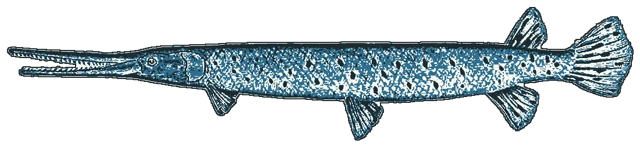
Longnose gar
Lepisosteus osseus · Freshwater
Most anglers treat it as a nuisance and few eat it, but the firm white backstraps are good once you get through the armor.
Worth a try: Cut down the back with shears or a hatchet to get past the armored scales, take the two white backstraps, and fry them or grind them into Louisiana gar balls.
- Tastes
- mild, firm, meaty, almost like alligator
- Limits
- No limits. No statewide daily limit, size limit or season is listed for gar. Bow and arrow or crossbow is legal year-round; one snare may be used between sunrise and sunset; gigging and spearing is allowed in listed rivers and non-flowing waters. (2026-27 Indiana Fishing Regulations on eRegulations (main limits table last updated Oct. 20, 2026); license year April 1, 2026 to March 31, 2027) Source
- Best months
- Bow fishing is legal year-round (IDNR regulations).
- Where
- Ohio River: the state record longnose gar (23 lb 12.2 oz, 2025) came from Floyd County.
- live minnows suspended near the surface
- rope (frayed nylon) lures
- bowfishing
- Gar eggs (roe) are toxic to people and other warm-blooded animals; never eat them (Maryland DNR).
Before you eat it: Do not eat (anyone): any fish from the all-fish waters on this page. Limit (everyone): where a water has no line for this fish, the any-fish limits on this page apply. No statewide or water listing names gar. Check your water on the Indiana Fish Consumption Guidelines map.
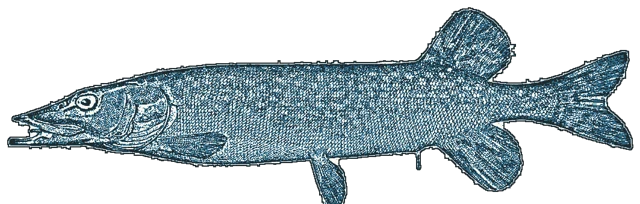
Northern pike
Esox lucius · Freshwater
The meat is white, flaky and great in flavor, but the Y-bones put many anglers off; reputation is split between 'too bony' and 'better than walleye once you learn to clean them'.
Worth a try: Remove the Y-bones with the five-fillet method, or grind, pickle or make fish balls from the meat; Hank Shaw's pike balls grind small pike so the bones vanish.
- Tastes
- mild, clean, firm, flaky white; Y-bones in the upper fillet
- Limits
- Heavy regs. Statewide: 3 per day, 24 in minimum, no more than one 30 in or longer. Hamilton Lake (Steuben County): 6 per day, no minimum size, no more than 1 per day over 30 in. Other listed waters differ. (2026-27 Indiana Fishing Regulations on eRegulations (main limits table last updated Oct. 20, 2026); license year April 1, 2026 to March 31, 2027) Source
- Spawns
- Spawns right after ice-off on natural lakes (IDNR).
- Where
- Natural lakes in the north, especially Wawasee, Syracuse, James, Big Chapman and Dewart, and northern rivers including the Iroquois, Kankakee, Tippecanoe, St. Joseph and Wabash.
- large spoons
- minnow crankbaits
- spinnerbaits
- live or dead baitfish under tip-ups
- suckers
- Large pike in parts of northern and western Alaska can carry enough mercury that eating large quantities can be harmful (ADF&G).
- Do not eat (sensitive group: females under 50, males under 15, weak immune systems): northern pike from the Lake James chain in Steuben County (James, Snow, Jimmerson, Big Otter and Little Otter lakes).
- Do not eat (anyone): any fish from the all-fish waters on this page.
Meal limits and other waters (7)
- Limit (everyone else): 6 meals a year from Lake James (state map; the 2026-27 guide says 1 meal a month for the chain).
- Limit (everyone): 1 meal a month from Wolf Lake (Lake County).
- Limit (sensitive group): 1 meal a month over 27 in from the St. Joseph River (Elkhart County) and over 30 in statewide, 1 a week under.
- Limit (everyone else): 1 meal a week, statewide.
- The statewide pike lines are from the 2018 guide that the state map still links; the Jan. 23, 2026 guides do not name pike.
- Limit (everyone): where a water has no line for this fish, the any-fish limits on this page apply.
- Other listed waters differ (state advisory map and 2026-27 fishing guide, Nov. 22, 2026).
Paddlefish
Polyodon spathula · Freshwater
Valued for its caviar. We have no good source on how it eats, so it is rated Just OK by default.
- Tastes
- mild, firm, boneless
- Limits
- No harvest. All paddlefish caught with sport fishing gear must be released; it is illegal to take paddlefish from any Indiana waters on a sport fishing license, and snagging is illegal. (2026-27 Indiana Fishing Regulations on eRegulations (main limits table last updated Oct. 20, 2026); license year April 1, 2026 to March 31, 2027) Source
- snagging with large treble hooks
Before you eat it: Do not eat (anyone): any fish from the all-fish waters on this page. Limit (everyone): where a water has no line for this fish, the any-fish limits on this page apply. No statewide or water listing gives meal advice for paddlefish. Check your water on the Indiana Fish Consumption Guidelines map.
Rock bass
Ambloplites rupestris · Freshwater
Light, flaky fillets that some anglers rate highly, while others find them oily and fishy compared with bluegill or crappie.
- Tastes
- mild to slightly fishy, light, flaky
- Limits
- Light regs. Statewide: 25 per day, no minimum size. Ohio River main stem: 15 per day. Other listed waters differ. (2026-27 Indiana Fishing Regulations on eRegulations (main limits table last updated Oct. 20, 2026); license year April 1, 2026 to March 31, 2027) Source
- Best months
- Fall, when rock bass feed in the shallows (IDNR).
- Where
- Wadeable streams (IDNR suggests wading for smallmouth and rock bass in fall).
- lures that look like minnows
- lures that look like shad
- Do not eat (anyone): any fish from the all-fish waters on this page.
Meal limits and other waters (6)
- Limit (everyone): 1 meal a month from the Little Mississinewa River (Randolph County), Stony Creek below State Road 37 (Hamilton), and rock bass 8 in or longer from Clear Creek (Monroe).
- Limit (sensitive group: females under 50, males under 15, weak immune systems): 1 meal a month from the Driftwood River, the Fawn River, the St. Joseph River in Allen County and Wildcat Creek in Tippecanoe County.
- Limit (sensitive group): 1 meal a month for longer fish from Little Walnut Creek in Putnam County (5 in or longer), Indian Creek in Harrison County (6), the Wabash River in Adams, Jay and Wells counties (6), the East Fork Whitewater River (7), Eagle Creek above Eagle Creek Reservoir (7), the West Fork White River above Stony Creek (8) and Cedar Creek in Allen and DeKalb counties (11).
- Limit (everyone): 1 meal a week, statewide.
- Limit (everyone): where a water has no line for this fish, the any-fish limits on this page apply.
- Other listed waters differ (state advisory map and 2026-27 fishing guide, Nov. 22, 2026).
Shovelnose sturgeon
Scaphirhynchus platorynchus · Freshwater
Indiana DNR says sturgeon flesh has an excellent flavor and is often smoked, but this small river sturgeon is rarely targeted and harvest is closed in some reaches.
- Tastes
- mild, firm
- Limits
- Light regs. No daily limit, 25 in minimum (fork length), statewide and on the Ohio River main stem. Lake sturgeon are endangered and must be released; learn the difference before keeping one. (2026-27 Indiana Fishing Regulations on eRegulations (main limits table last updated Oct. 20, 2026); license year April 1, 2026 to March 31, 2027) Source
- Where
- Wabash River: the state record (14 lb 8 oz, 1999) came from Fountain County.
Before you eat it: Do not eat (anyone): any fish from the all-fish waters on this page. Limit (everyone): where a water has no line for this fish, the any-fish limits on this page apply. No statewide or water listing names shovelnose sturgeon. Check your water on the Indiana Fish Consumption Guidelines map.
Silver carp
Hypophthalmichthys molitrix · Freshwater
A clean, mild white fish that most US anglers only encounter while bowfishing and throw away because it is extremely bony and invasive.
Worth a try: Sold as 'Copi' and recommended by Seafood Watch; grind or score the fillets to beat the bones.
- Tastes
- mild, clean, white, many intermuscular bones
- Limits
- No limits. Illegal to possess alive; a silver carp must be killed immediately by removing the head, removing the gills from at least one side, or gutting. No daily limit is listed. Bow and arrow or crossbow is legal year-round. (2026-27 Indiana Fishing Regulations on eRegulations (main limits table last updated Oct. 20, 2026); license year April 1, 2026 to March 31, 2027) Source
- Where
- West Fork White River in Greene County produced the state record silver carp (15 lb 8 oz, 2003).
- Leaping silver carp injure boaters; the hazard is physical, not dietary.
- Do not eat (anyone): any fish from the all-fish waters on this page.
Meal limits and other waters (6)
- Limit (sensitive group: females under 50, males under 15, weak immune systems): 1 meal a month for silver carp 24 in or longer from the Patoka River (Dubois, Gibson, Pike counties).
- Limit (everyone): 1 meal a week, any size, from the Patoka River, the East Fork White River from Washington County down, the Wabash River (Gibson, Posey) and the West Fork White River from Owen County to the Wabash.
- Limit (sensitive group): 1 meal a week, any size, statewide.
- Limit (everyone else): 1 meal a week over 25 in, statewide; the state guide lists smaller ones as unlimited (4.5 meals a week).
- Limit (everyone): where a water has no line for this fish, the any-fish limits on this page apply.
- Other listed waters differ (state advisory map and 2026-27 fishing guide, Nov. 22, 2026).
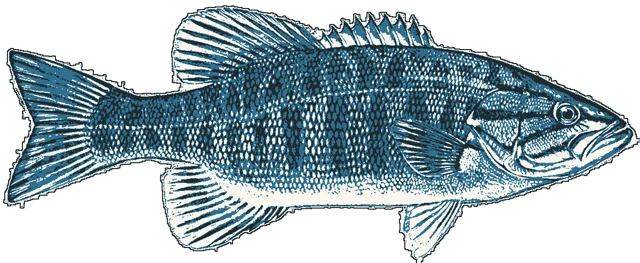
Smallmouth bass
Micropterus dolomieu · Freshwater
Firm, white and good, often rated above largemouth, but most smallmouth are released by custom and the flesh has a slight 'fishy' edge some anglers dislike.
- Tastes
- mild, slightly fishy edge, firm, thick white fillets
- Limits
- Heavy regs. Statewide, any combination of largemouth, smallmouth and spotted bass: 5 per day. Lakes: 14 in minimum. Rivers and streams: no fish 12 to 15 in may be kept and no more than 2 over 15 in. Lake Michigan: 3 per day, 14 in minimum. Ohio River main stem: 6 per day, 12 in minimum for largemouth and smallmouth, no size limit on spotted bass. Exceptions include a 12 in minimum (5 per day) on all rivers and streams in Posey, Vanderburgh, Warrick, Spencer, Perry, Crawford, Harrison, Floyd, Clark, Jefferson, Switzerland, Ohio and Dearborn counties (the Blue River keeps the slot), and Sugar Creek 20 in and 1 per day. The special lake limits on the Bass Regulations page (Patoka, Cecil M. Harden, Turtle Creek and others) are largemouth bass limits. Read that page for the water you fish. (2026-27 Indiana Fishing Regulations, Bass Regulations page (last updated Feb. 19, 2026); license year April 1, 2026 to March 31, 2027) Source
- Best months
- Fall, when bass feed up before winter (Lake Michigan and the St. Joseph River, IDNR reports Nov. 19, 2026); low-light periods on rivers; after dark on Lake Michigan reefs.
- Where
- Lake Michigan reefs and the land side of breakwaters, the St. Joseph River below Twin Branch Dam, and wadeable streams.
- crankbaits
- jerkbaits
- ned rigs
- topwater
- goby imitations
- soft plastic and minnow combos
- Do not eat (anyone): any fish from the all-fish waters on this page.
Meal limits and other waters (8)
- Limit (everyone): 6 meals a year from the Little Mississinewa River (Randolph County).
- Limit (everyone): 1 meal a month from the Ohio River, Big Lick Creek (Blackford, Delaware, Grant, Jay), Little Lick Creek (Blackford), Little Walnut Creek (Putnam), South Fork Wildcat Creek (Clinton), Stony Creek below State Road 37 (Hamilton), Wildcat Creek (Tippecanoe) and the West Fork White River from Stony Creek to Broad Ripple Dam.
- Limit (sensitive group: females under 50, males under 15, weak immune systems): 1 meal a month over 12 in and 1 a week under, statewide.
- Limit (sensitive group): 1 meal a month for smaller bass too from 20 more waters, with Brookville Lake, Lake James and the Driftwood River among them.
- Limit (everyone): 1 meal a week from Lake Michigan and its tributaries.
- Limit (everyone else): 1 meal a week, statewide.
- Limit (everyone): where a water has no line for this fish, the any-fish limits on this page apply.
- Other listed waters differ (state advisory map and 2026-27 fishing guide, Nov. 22, 2026).
Spotted bass
Micropterus punctulatus · Freshwater
Eats like other black bass and is kept more often than largemouth because it is abundant and small; agencies in some states encourage harvest.
- Tastes
- mild, firm, white
- Limits
- Heavy regs. Statewide, any combination of largemouth, smallmouth and spotted bass: 5 per day. Lakes: 14 in minimum. Rivers and streams: no fish 12 to 15 in may be kept and no more than 2 over 15 in. Lake Michigan: 3 per day, 14 in minimum. Ohio River main stem: 6 per day, 12 in minimum for largemouth and smallmouth, no size limit on spotted bass. Exceptions include a 12 in minimum (5 per day) on all rivers and streams in Posey, Vanderburgh, Warrick, Spencer, Perry, Crawford, Harrison, Floyd, Clark, Jefferson, Switzerland, Ohio and Dearborn counties (the Blue River keeps the slot), and Sugar Creek 20 in and 1 per day. The special lake limits on the Bass Regulations page (Patoka, Cecil M. Harden, Turtle Creek and others) are largemouth bass limits. Read that page for the water you fish. (2026-27 Indiana Fishing Regulations, Bass Regulations page (last updated Feb. 19, 2026); license year April 1, 2026 to March 31, 2027) Source
- Where
- Rivers and reservoirs with moderate current (IDNR fish identification page).
- finesse worm on a shaky head
- hammered silver jigging spoon
- football jig
- chrome topwater lure
- live crappie minnows
- Do not eat (anyone): any fish from the all-fish waters on this page.
Meal limits and other waters (5)
- Limit (everyone): 1 meal a month from the Ohio River, Clear Creek (Monroe County), the Wabash River (Knox, Sullivan, Vigo), Wildcat Creek (Tippecanoe), and fish 15 in or longer from the East Fork White River from Washington County down.
- Limit (sensitive group: females under 50, males under 15, weak immune systems): 1 meal a month, any size, statewide.
- Limit (everyone else): 1 meal a week, statewide.
- Limit (everyone): where a water has no line for this fish, the any-fish limits on this page apply.
- Other listed waters differ (state advisory map and 2026-27 fishing guide, Nov. 22, 2026).
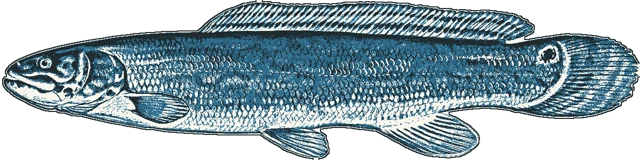
Bowfin
Amia calva (ruddy bowfin) and Amia ocellicauda (emerald bowfin) · Freshwater
TPWD calls it a rough fish rather than one for the table; the soft, pale flesh earned it the nickname 'cottonfish'.
Worth a try: Keep it alive until you clean it, cook it the same day, and use it smoked, fried as patties or stewed; MeatEater serves fried bowfin with a morel cream sauce.
- Tastes
- mild, soft, jelly-like unless very fresh
- Limits
- No limits. No statewide daily limit, size limit or season is listed for bowfin. Bow and arrow or crossbow is legal year-round; one snare may be used between sunrise and sunset. (2026-27 Indiana Fishing Regulations on eRegulations (main limits table last updated Oct. 20, 2026); license year April 1, 2026 to March 31, 2027) Source
- Best months
- Bow fishing is legal year-round (IDNR regulations).
- live minnows
- cut bait
- jigs
- topwater lures
- Do not eat (anyone): any fish from the all-fish waters on this page.
Meal limits and other waters (5)
- Limit (sensitive group: females under 50, males under 15, weak immune systems): 1 meal a month from Olin Lake (LaGrange County) and 1 a week from Oliver Lake.
- Limit (everyone else): 1 meal a week from Olin Lake, and from Oliver Lake for bowfin 21 in or longer.
- The statewide guides (Jan. 23, 2026) do not name bowfin.
- Limit (everyone): where a water has no line for this fish, the any-fish limits on this page apply.
- Check your water on the Indiana Fish Consumption Guidelines map.
White sucker
Catostomus commersonii · Freshwater
Suckers have perhaps the worst reputation of the rough fish (MeatEater) and are mostly raised and sold as bait (MN DNR); the many small bones keep most anglers from eating them.
Worth a try: Spring fish from cold water are light and sweet like walleye (MeatEater); score them deeply and fry hard, pickle them to dissolve the bones, or grind into fish cakes.
- Tastes
- light, sweet, firm, white, many small bones
- Limits
- No limits. No statewide daily limit, size limit or season is listed for suckers. One snare may be used between sunrise and sunset; bow and arrow or crossbow is legal year-round; gigs and spears are allowed in listed rivers and non-flowing waters. (2026-27 Indiana Fishing Regulations on eRegulations (main limits table last updated Oct. 20, 2026); license year April 1, 2026 to March 31, 2027) Source
- Best months
- Bow fishing is legal year-round (IDNR regulations).
- nightcrawlers drifted on the bottom
- worms
- spearing/netting where legal
- Do not eat (anyone): any fish from the all-fish waters on this page.
Meal limits and other waters (9)
- Limit (everyone): 6 meals a year for white suckers 9 in or longer from the Little Mississinewa River (Randolph County), 1 a month under 9 in.
- Limit (everyone): 1 meal a month from the Ohio River (sucker species; below J.T. Myers Dam, 19 in or longer), Clear Creek and Stouts Creek (Monroe), upper Richland Creek (Greene, Monroe, Owen) and South Fork Wildcat Creek (Clinton).
- Limit (everyone): 1 meal a month for fish 10 in or longer from Stony Creek below State Road 37 (Hamilton), 12 in from Cedar Creek (Allen, DeKalb) and 22 in from the St. Joseph River below Twin Branch Dam.
- Limit (sensitive group: females under 50, males under 15, weak immune systems): 1 meal a month from the St. Joseph River in Allen County.
- Limit (everyone): 1 meal a week from Lake Michigan and its tributaries, Palestine Lake and 8 more listed waters.
- Limit (sensitive group): 1 meal a week from 23 more.
- The statewide guides (Jan. 23, 2026) do not name white sucker.
- Limit (everyone): where a water has no line for this fish, the any-fish limits on this page apply.
- Other listed waters differ (state advisory map and 2026-27 fishing guide, Nov. 22, 2026).
Muskellunge
Esox masquinongy · also called muskie, musky · Freshwater
A trophy fish that is almost never kept: high minimum lengths and a strong release ethic mean most muskie anglers let their catch go.
- Limits
- Heavy regs. Statewide: 1 per day, muskellunge and tiger muskellunge combined, 36 in minimum; 44 in minimum at Backwater, Kiser and Webster lakes (Kosciusko County). Ohio River main stem: 2 per day combined, 30 in minimum. Other listed waters differ. (2026-27 Indiana Fishing Regulations on eRegulations (main limits table last updated Oct. 20, 2026); license year April 1, 2026 to March 31, 2027) Source
- Best months
- Fall for trophy fish (consistent action on trolling and casting presentations, report Nov. 12, 2026); March and April in the shallows near vegetation.
- Where
- Stocked waters include Webster, Barbee Lakes chain, Tippecanoe chain, Bruce, Bass, Brookville and Loon Pit; the state record (42 lb 8 oz) came from James Lake in 2002.
- large baits (trolled or cast)
- Do not eat (anyone): any fish from the all-fish waters on this page.
Meal limits and other waters (4)
- Limit (sensitive group: females under 50, males under 15, weak immune systems): 1 meal a month from Brookville Lake (the state's limit there for any fish it does not list).
- Limit (everyone): where a water has no line for this fish, the any-fish limits on this page apply.
- No statewide or water listing names muskellunge.
- Check your water on the Indiana Fish Consumption Guidelines map.
Where to fish in Indiana
Fish named here are what people catch at each spot, not a promise they’re safe to eat. Read the eating advice on the fish’s card before you keep one.
- 1Michigan City pier and Trail Creek estuary · fresh
Chinook and coho return to streams from late August to early November and brown trout return to stocking sites in autumn; Trail Creek is one of the stocked steelhead streams (IDNR). Limit (everyone): 1 meal a month of coho, Chinook or brown trout and 1 a week of steelhead.
Known for: Steelhead, Coho salmon, Chinook salmon, Brown trout
Access: Michigan City pier, basin and ramp (city-owned) serve shore and boat anglers; Trail Creek has 10 public fishing sites, two handicap accessible. Most Lake Michigan tributaries cross private land and need landowner permission.
- 2Port of Indiana, Burns Harbor (Lake Michigan) surf · fresh
A lake trout run develops along the shoreline near the Port of Indiana from mid-October to mid-November (IDNR). Do not eat (anyone): lake trout 29 in or longer; those 23 to 29 in are 1 meal a month.
Known for: Lake trout
Access: A public shoreline fishing site, handicap accessible, is available at the Port of Indiana.
- 3St. Joseph River, South Bend river · fresh
IDNR stocks Skamania (summer-run) steelhead in the St. Joseph River. Limit (everyone): 1 meal a week of steelhead, and do not eat carp from this stretch.
Known for: Steelhead
Access: Special rules apply from Twin Branch Dam to the Michigan line: 14 in trout minimum, no fishing at the East Race Waterway or the fish ladders, no boat fishing 200 feet below the South Bend Dam.
- 4Webster Lake (Kosciusko County) lake · fresh
IDNR stocks Webster Lake with 3,096 muskie (4 per acre) under a 44 in minimum size.
Known for: Muskellunge
- 5Lake Wawasee lake · fresh
IDNR biologists say pike appear to be thriving in larger lakes such as Wawasee, Syracuse and James.
Known for: Northern pike
Access: IDNR says the Wawasee/Syracuse lakes chain has decent public access.
- 6Mississinewa Lake tailwater tailwater · fresh
Mississinewa is stocked with walleye, and IDNR names its tailwater among those where walleye populations have been improved. Limit (everyone): 1 meal a week of walleye from this river, and 1 a month over 17 in for females under 50, males under 15 and people with weak immune systems.
Known for: Walleye
Access: IDNR says many reservoir tailwaters give shore-fishing areas and multiple species; fishing there depends on dam discharge.
- 7Lake Freeman reservoir · fresh
IDNR lists Lake Freeman as a hybrid striped bass water and its tailwater, with Lake Shafer, as a popular hybrid fishery.
Known for: Hybrid striped bass
- 8Cagles Mill Lake (Cataract) reservoir · fresh
IDNR district biologists list Cagles Mill among the best channel catfish lakes and a good flathead lake. Limit (everyone): 1 meal a week at most of flathead from this lake, and nobody should eat one over 44 in.
Known for: Channel catfish, Flathead catfish
- 9Brookville Lake reservoir · fresh
IDNR stocks Brookville with 5,260 muskie (1 per acre) under standard rules. The state limits fish it does not list here, muskie included, to 1 meal a month for females under 50, males under 15 and people with weak immune systems.
Known for: Muskellunge
- 10Lake Monroe reservoir · fresh
A fall 2026 IDNR report called crappie fishing very good with many large fish, and a survey found many largemouth of 2 to 5 pounds (report dated Oct. 30, 2026). Limit: crappie is 1 meal a month for females under 50, males under 15 and people with weak immune systems, and 1 a week for everyone else.
Known for: Black crappie, White crappie, Largemouth bass
Access: IDNR notes shore anglers can fish from several boat docks and piers; follow the posted property rules.
- 11Patoka Lake reservoir · fresh
An Oct. 5, 2026 IDNR report describes largemouth on topwater and cranking baits, hybrids on main-lake points, and crappie on small jigs and minnows (the report says "crappie", not black or white). Limit: largemouth is 1 meal a month for females under 50, males under 15 and people with weak immune systems, and 1 a week for everyone else.
Known for: Largemouth bass, Hybrid striped bass, Black crappie, White crappie
- 12Ohio River at Newburgh Dam river · fresh
IDNR says adult sauger run upstream in March and April and gather below the locks and dams on the Ohio River. Limit (everyone): 1 meal a week of sauger from this part of the Ohio; the statewide guide is stricter, 1 a month, and none over 23 in for females under 50, males under 15 and people with weak immune systems.
Known for: Sauger
Access: Newburgh Dam is in the town of Newburgh off SR 66; within 200 yards below the dam only a fishing pole or hand line may be used.
Indiana fishing license and rules
- Resident: $23 (Resident Annual Fishing)
- Nonresident: $60 (Nonresident Annual Fishing)
- Nonresident short-term: $15 (Nonresident One-Day Fishing, includes trout/salmon privilege); Nonresident Seven-Day is $35
- Who needs one: 18 and older; residents and nonresidents under 18 need no fishing license or trout/salmon stamp. Indiana residents born before April 1, 1943 are exempt.
- Free fishing days: May 10, June 6-7 and Sept. 26, 2026 (IDNR page heading): Indiana residents need no fishing license or trout/salmon stamp on public waters; all seasons, bag and size limits apply. IDNR has not posted 2027 dates on the page we read.
More license details
Trout/Salmon Stamp ($11, resident or nonresident) is required with a fishing license to fish for or take trout and salmon, including on Lake Michigan; one-day licenses include the trout/salmon privilege. Resident one-day is $10. Annual Senior Fishing is $3 and Senior Fish-for-Life is $23 for residents 64 and older (both include the stamp). A $3 tech fee per license plus a card processing fee applies online or in the GoOutdoorsIN app; $1 tech fee by mail, at a DNR property or at a retailer. Resident = permanent home in Indiana for 60 consecutive days. No license reciprocity on Lake Michigan except the Calumet Harbor zone with Illinois; Indiana and Kentucky licenses are valid on the Ohio River main stem, and Indiana and Illinois licenses on the Wabash River boundary stretch. Annual licenses run April 1 to March 31. The official digest is on eRegulations.
Buy a license License types and fees
Fees: 2026 license year (April 1, 2026 to March 31, 2027); IDNR fee page updated 9/04/2026.
- Anglers 18 and older need a fishing license, and a trout/salmon stamp ($11) to fish for or keep trout or salmon, including on Lake Michigan; one-day licenses include the stamp. Residents born before April 1, 1943 and landowners fishing their own farmland have exemptions.
- Black bass (largemouth, smallmouth, spotted): 5 per day combined, except 3 on Lake Michigan and 6 on the Ohio River main stem; 14 in minimum in lakes; in rivers and streams no fish 12 to 15 in may be kept and no more than 2 over 15 in, with a 12 in minimum in rivers of 13 southern counties (the Blue River keeps the 12 to 15 in rule). Many lakes have their own largemouth limits, so check the Bass Regulations page.
- Catfish: no more than one blue (35 in or longer), one flathead (35 in or longer) and one channel catfish (28 in or longer) may be kept per day; rivers and streams have a 13 in minimum and no daily limit, lakes a 10 per day limit.
- Walleye: 14 in minimum south of State Road 26 and 16 in north of it; the daily limit is 6, combined with sauger and saugeye.
- Paddlefish caught on sport gear must be released, and it is illegal to snag fish in Indiana, including the Ohio River. Lake sturgeon and cisco are endangered and may not be taken or possessed.
- Bighead, black and silver carp, snakehead, white perch (not freshwater drum), round goby and several other exotic fish are illegal to possess alive; kill them immediately by removing the head, the gills from one side, or gutting.
- Limb lines and bank poles are now prohibited on the Ohio River, and on the river you may use unlimited poles and hand lines but not more than 2 trot lines; elsewhere the limit is three poles or hand lines, three hooks per line.
- Float or jug fishing is not allowed on lakes and reservoirs, and live carp or gizzard shad may not be used as bait except gizzard shad at a short list of waters including Monroe, Patoka and the Ohio River main stem.
- Indiana licenses are good across the line on the Ohio River main stem (Kentucky), the Wabash River boundary (Illinois) and the Calumet Harbor zone of Lake Michigan (Illinois), but not in the rivers' tributaries or backwaters. Indiana residents may also fish the whole of five lakes shared with Michigan (Clear/South Clear, Indiana, Fish, George and Long). Anywhere else on Lake Michigan, fishing Michigan or Illinois waters needs that state's license.
Limits here are summaries for convenience, checked on the date shown. The official Indiana regulations govern; check them before you keep a fish.
Before you eat it
Do not eat any fish (anyone) from the all-fish waters: Elliott Ditch and Wea Creek (Tippecanoe County); Fairfield Ditch (Allen); Government Ditch (Cass, Miami); Little Deer Creek (Cass) … (see the full list)
Do not eat any fish (anyone) from the all-fish waters: Elliott Ditch and Wea Creek (Tippecanoe County); Fairfield Ditch (Allen); Government Ditch (Cass, Miami); Little Deer Creek (Cass); the Grand Calumet River and the Indiana Harbor Canal (Lake); the Marquette, Grand Calumet and Miller lagoons (Lake); Hankins Ditch (Shelby); Kokomo Creek (Howard; the 2026-27 fishing guide says below the Highland Park dam, the state map marks the whole creek); Wildcat Creek below Waterworks Dam 3 in Kokomo through Howard and Carroll counties (the state map draws it from the Kokomo Reservoir dam down); Little Sugar Creek and Walnut Fork (Montgomery); Salt Creek from the Monroe Lake dam down (Monroe, Lawrence); Treaty Creek (Wabash); and a tributary of Lost Creek (Vigo).
Do not eat (anyone): flathead catfish over 44 in from any water; common carp from Lake Michigan and its tributaries, Clear Lake (LaPorte), Palestine Lake (Kosciusko), the St. Joseph River … (see the full list)
Do not eat (anyone): flathead catfish over 44 in from any water; common carp from Lake Michigan and its tributaries, Clear Lake (LaPorte), Palestine Lake (Kosciusko), the St. Joseph River from Twin Branch Dam to the Michigan line, Fall Creek from Keystone Avenue to the White River (Marion) and Stony Creek from State Road 37 to the White River (Hamilton), and carp 23 in or longer from Wildcat Creek in Tippecanoe County; lake trout 29 in or longer from Lake Michigan and its tributaries; channel catfish from the Mississinewa River in Randolph County and from the West Fork White River in Delaware and Madison counties and in Hamilton County down to Stony Creek; walleye and saugeye from the Wabash River in Carroll, Cass, Miami and Tippecanoe counties; sunfish (bluegill and redear included) from the Wabash River in Fountain, Parke, Tippecanoe, Vermillion and Warren counties; and buffalo 29 in or longer from the East Fork White River (Daviess, Dubois, Lawrence, Martin, Pike, Washington).
Do not eat (sensitive group): flathead over 44 in or sauger over 23 in from any water; largemouth 17 in or longer from Hominy Ridge Lake (Wabash) or any largemouth from Spurgeon Hollow … (see the full list)
Do not eat (sensitive group): flathead over 44 in or sauger over 23 in from any water; largemouth 17 in or longer from Hominy Ridge Lake (Wabash) or any largemouth from Spurgeon Hollow Lake (Washington); northern pike from the Lake James chain (Steuben: James, Snow, Jimmerson, Big Otter and Little Otter lakes); and drum 20 in or longer from the Muscatatuck River (Jackson, Scott, Washington). Everyone else: 1 meal a month of those bass and drum, and 6 meals a year of Lake James pike. The sensitive group is females under 50 (anyone pregnant, nursing or who could become pregnant), males under 15, and people with weak immune systems.
- Statewide (guides dated Jan. 23, 2026), for a fish or water with no listing: for the general population most game fish, carp, catfish and sunfish are one meal a week; freshwater drum and sauger one a month; flathead catfish one a week under 29 in, one a month at 29 to 39 in, six a year at 39 to 44 in and do not eat over 44 in.
- Statewide for the sensitive group there is no unlimited fish. One meal a month: largemouth over 13 in, smallmouth over 12 in, spotted bass, buffalo, freshwater drum, flathead catfish under 39 in, sauger under 23 in, walleye and saugeye over 17 in, and striped bass, white bass or wipers over 13 in. Flathead 39 to 44 in are six meals a year; flathead over 44 in and sauger over 23 in are do not eat.
- Lake Michigan and its tributaries, except the Grand Calumet River and Indiana Harbor Canal (do not eat any fish there): common carp do not eat; lake trout 29 in and over do not eat, 23 to 29 in one meal a month, under 23 in one a week; Chinook, coho, brown trout, walleye, channel catfish, rainbow smelt, bloater chubs and redhorse one meal a month (channel catfish 26 in and over six a year on the state map); yellow perch, bluegill, smallmouth, rainbow trout and steelhead, white sucker and lake whitefish one a week.
Where the state's two lists differ, this page prints the stricter line. The 2026-27 fishing guide eased or dropped lines that the health department's map still shows: channel catfish under … (see the full list)
Where the state's two lists differ, this page prints the stricter line. The 2026-27 fishing guide eased or dropped lines that the health department's map still shows: channel catfish under 21 in from the upper West Fork White River, under 28 in from the St. Joseph River below Twin Branch Dam and 26 in and over from Lake Michigan, plus the Mississinewa River in Randolph County, Sugar Creek in Parke County and two lower stretches of the West Fork White River. The guide also has do-not-eat lines the map lacks: Fairfield Ditch, Hankins Ditch, the Lost Creek tributary, Palestine Lake carp, Spurgeon Hollow largemouth (sensitive group), and Wabash River walleye, saugeye and sunfish.
- The state rates advice on a 1 to 5 scale (1 unrestricted, 2 one meal a week, 3 one a month, 4 one every two months or six a year, 5 do not eat); mercury and PCBs drive most of it, with PFOS also considered. Removing fat, skin and organs lowers PCBs but not mercury or PFOS. A meal is about 6 ounces cooked for a 150-pound person.
Any-fish limits (everyone): 1 meal a month of any fish the state does not list separately from 12 streams: the Great Miami River (Dearborn), Fall Creek below Keystone Avenue and Eagle … (see the full list)
Any-fish limits (everyone): 1 meal a month of any fish the state does not list separately from 12 streams: the Great Miami River (Dearborn), Fall Creek below Keystone Avenue and Eagle Creek below 10th Street (Marion), Stony Creek below State Road 37 (Hamilton), Pleasant Run Creek (Lawrence, Monroe), Clear Creek and Stouts Creek (Monroe), Sugar Creek from I-74 through Shades and Turkey Run state parks (Montgomery, Parke), South Fork Wildcat Creek (Clinton), the Mississinewa River (Randolph), the Eel River (Cass, Kosciusko, Miami, Wabash, Whitley) and the East Fork White River (Daviess, Dubois, Lawrence, Martin, Pike, Washington). Clear Lake (LaPorte) is 6 meals a year, with largemouth 2 a year and bluegill 1 a month. Sugar Creek from Parke County to the Wabash, the Mississinewa River (Delaware, Grant, Miami, Wabash) and South Fork Wildcat Creek (Tippecanoe) are 1 meal a week.
- Any-fish limits (sensitive group): 1 meal a month of any fish the state does not list separately from Brookville Lake, Indian Creek (Martin), Deer Creek (Putnam), the Driftwood River (Bartholomew), Bean Blossom Creek (Monroe) and the West Fork White River from Stony Creek in Noblesville through Morgan County.
- Ohio River, same advice for everyone: down to J.T. Myers Dam, hybrid striped bass and channel catfish 18 in and over are one meal every two months; black bass, flathead, drum, striped and white bass, suckers, walleye and saugeye one a month; blue catfish, smaller channel catfish, carp, crappie and sauger one a week. Below that dam (Posey County), blue catfish, sauger, hybrid striped bass and carp 22 in and over are one a month.
- Check the Indiana Department of Health interactive map for your water before keeping fish, then the 2026-27 fishing guide's advice page (updated Sept. 23, 2026).
Local lingo
- Skamania: the summer-run strain of steelhead stocked in Lake Michigan tributaries (IDNR Lake Michigan fishing page).
- Winter-run or Michigan strain: steelhead that return from mid-November to mid-March (IDNR).
- Wipers: hybrid striped bass (IDNR striped and hybrid striped bass page).
- Shellcrackers: redear sunfish (eRegulations fish identification page).
- King salmon: Chinook salmon (eRegulations fish identification page).
- Musky: muskellunge; IDNR reports use "musky" and "muskies".
- Perch pack: the cluster of boats over a school of Lake Michigan yellow perch (IDNR Yellow Perch Fishing 101).
- Limb line, drop line or bank pole: a passive line with one hook tied to a stationary object over the water (eRegulations).
Questions anglers ask about Indiana
What is the most common fish in Indiana?
IDNR calls sunfish the most fished species in Indiana, with bluegill and redear the two most fished, and says about one-third of all Indiana anglers target largemouth bass. Bluegill was also the most abundant fish in IDNR's 2016 to 2023 surveys of 88 impoundments: 19,727 of the 62,085 fish collected.
What is the best fish to eat in Indiana?
19 of the 36 fish on our Indiana board rate Best eating. They include: bluegill, redear sunfish, black crappie, white crappie, yellow perch and walleye.
Does Indiana have free fishing days?
May 10, June 6-7 and Sept. 26, 2026 (IDNR page heading): Indiana residents need no fishing license or trout/salmon stamp on public waters; all seasons, bag and size limits apply. IDNR has not posted 2027 dates on the page we read.
Which Indiana fish are better to eat than their reputation?
We give the Worth a try badge to northern pike, freshwater drum, common carp, bigmouth buffalo, longnose gar, bowfin, white sucker and silver carp: fish most anglers toss or rate low that eat well when they're cleaned and cooked right. Each card says how.
Neighboring states
Sources
Limits, prices and advisories come from these pages, read on or before Nov 21, 2026. Where a line gives its own date, that’s the date it rests on. Eating advice changes: check the state’s current list. Ratings are national and come from the fish’s own page.
37 sources
- isdh.maps.arcgis.com Chinook salmon: advisory; Coho salmon: advisory; bigmouth buffalo: advisory; black crappie: advisory; blue catfish: advisory; bluegill: advisory; bowfin: adviso
- eregulations.com common carp: regs
- eregulations.com largemouth bass: regs; smallmouth bass: regs; spotted bass: regs
- eregulations.com Chinook salmon: advisory; Coho salmon: advisory; bigmouth buffalo: advisory; black crappie: advisory; blue catfish: advisory; bluegill: advisory; bowfin: adviso
- eregulations.com Chinook salmon: names; redear sunfish: names; spotted bass: where
- eregulations.com bigmouth buffalo: regs|months; black crappie: regs; blue catfish: regs; bluegill: regs; bowfin: regs|months; bullhead (black, brown, yellow): regs; channel catf
- eregulations.com brown trout: regs; rainbow trout: regs|where; steelhead: regs; top species
- eregulations.com Chinook salmon: regs; Coho salmon: regs; brown trout: regs; lake trout: regs; rainbow trout: regs; steelhead: regs; top species; yellow perch: regs
- eregulations.com black crappie: regs; blue catfish: regs; channel catfish: regs; flathead catfish: regs; hybrid striped bass: regs; largemouth bass: regs; muskellunge: regs; pad
- eregulations.com regs digest pdf
- gooutdoorsin.com license buy
- in.gov yellow perch: baits|months|where|why
- in.gov bigmouth buffalo: advisory; black crappie: advisory; bluegill: advisory; bullhead (black, brown, yellow): advisory; channel catfish: advisory; common carp: advi
- in.gov Chinook salmon: advisory; Coho salmon: advisory; bigmouth buffalo: advisory; black crappie: advisory; blue catfish: advisory; bluegill: advisory; bowfin: adviso
- in.gov bluegill: baits
- in.gov bluegill: baits|months; channel catfish: baits; fishing spots; freshwater drum: months|where; largemouth bass: baits|months; muskellunge: months; redear sunfish
- in.gov black crappie: why; bluegill: why; bullhead (black, brown, yellow): where; common carp: where|why; redear sunfish: why; white crappie: why
- in.gov blue catfish: baits|months|where; bullhead (black, brown, yellow): where; channel catfish: baits|months|where|why; fishing spots; flathead catfish: baits|months
- in.gov black crappie: regs|baits|months|where|why; white crappie: regs|baits|months|where|why
- in.gov fishing spots; northern pike: where
- in.gov freshwater regs
- in.gov free fishing days
- in.gov black crappie: baits|where; channel catfish: baits|months; fishing spots; hybrid striped bass: baits|where; lake trout: baits|where; largemouth bass: baits|wher
- in.gov state records
- in.gov blue catfish: where; freshwater drum: where; longnose gar: where; shovelnose sturgeon: where; silver carp: where; white bass: where
- in.gov Chinook salmon: baits|months|where; Coho salmon: baits|months|where|why; brown trout: baits|months|where; fishing spots; freshwater drum: months|where; lake tro
- in.gov largemouth bass: where|why
- in.gov fishing spots; muskellunge: where|why|names
- in.gov northern pike: where|months
- in.gov fishing spots; hybrid striped bass: regs|baits|months|where|names|why; striped bass: where; white bass: regs
- in.gov bluegill: regs|baits|months|where|why; redear sunfish: regs|where|months|why
- in.gov rainbow trout: baits
- in.gov fishing spots; sauger: where; saugeye: months|where; walleye: regs|baits|months|where|why
- in.gov where to fish
- in.gov license fees; license info
- in.gov white bass: months
- in.gov consumption advisories; consumption advisory
Illustrations: stencils we made from public-domain art by John J. Baird (Black crappie); Duane Raver, U.S. Fish and Wildlife Service (Blue catfish, Channel catfish, Flathead catfish, Rainbow trout, Redear sunfish, Striped bass, White bass, White crappie, Yellow perch, Bullhead (black, brown, yellow), Smallmouth bass, Bowfin); NOAA (Bluegill); U.S. Fish and Wildlife Service (Brown trout, Common carp, Largemouth bass); Hugh McCormick Smith (Walleye); C. W. Nash (Longnose gar); David Starr Jordan (Northern pike), via Wikimedia Commons.
Spotted an error or a rule that changed? Tell us and we will check it against the official source.