Montana · freshwater
Fish in Montana: what’s worth eating, and what’s garbage
Montana fishing centers on trout and other salmonids, which FWP's 2023 angler survey puts as the primary target for 69.18% of anglers, with native cutthroat and bull trout west of the Continental Divide and native Arctic grayling in the upper Missouri River drainage. East of the divide, reservoirs such as Fort Peck and Canyon Ferry are known for walleye, and the Missouri and Yellowstone rivers hold the state's tagged paddlefish seasons.
32 fish rated · limits checked Nov 21, 2026 against FWP, then re-checked: 315 of 349 details confirmed or corrected on the official pages
Resident $31 total for ages 18-61: $21 season fishing license + $8 conservation license + $2 angler AIS Prevention Pass. Full details
Buy a licenseBlackspotted cutthroat trout
Mother's Day and Father's Day weekends: May 9-10 and June 20-21 in 2026 (already passed). 2027 dates are not yet in FWP's posted regulations; the law ties them to those two weekends. Full details
The Montana table-fare board
Fish Montana anglers catch, sorted by how they eat. The bars show how heavily each one is regulated here. Tap a fish for the details.
No limits Light regs Heavy regs No harvest
Best eating14
Just OK11
Garbage fish4
Catch & release
Fish by fish
Why each one sits where it does, the current Montana limits, and the bait that works.
Arctic grayling
Thymallus arcticus · Freshwater
Flaky, white meat that MeatEater calls a versatile food fish; Alaskans commonly keep a couple for the pan.
- Tastes
- mild, clean, flaky white
- Limits
- Heavy regs. WESTERN district: counts in the combined trout limit (lakes 5 daily and 10 in possession, only 1 over 22 in; rivers 3 daily, only 1 over 14 in). CENTRAL district: lakes count in the combined trout limit of 5 daily and 10 in possession, but in rivers and streams all arctic grayling must be released immediately. EASTERN district: counts in the combined trout limit (lakes 5 daily and 10 in possession; rivers 5 daily). Several waters are catch-and-release for grayling, including Hyalite Reservoir. (2026 Fishing Regulations, valid Mar 1, 2026 through end of Feb 2027 (adopted Nov 12, 2024)) Source
- Where
- Hyalite Reservoir and Rogers Lake (FWP ice-fishing pages); see the 2026 regulations for catch-and-release waters.
- red maggots
- worms (jig or hook tipped)
- ADF&G lists grayling among large predatory fish that can carry elevated mercury in parts of northern and western Alaska.
- Do not eat (anyone): any fish from the Clark Fork River between the Bitterroot and Flathead rivers.
Meal limits and other waters (3)
- Limit (women of childbearing age and children): 4 meals a month of 10 to 14 in grayling from Chrome Lake; everyone else 8.
- Other listed waters and sizes differ, and a blank on the chart means not tested (FWP chart, April 2026).
- FWP's guide gives no number for waters not on the chart; it says to keep smaller fish and remove the skin and fat.
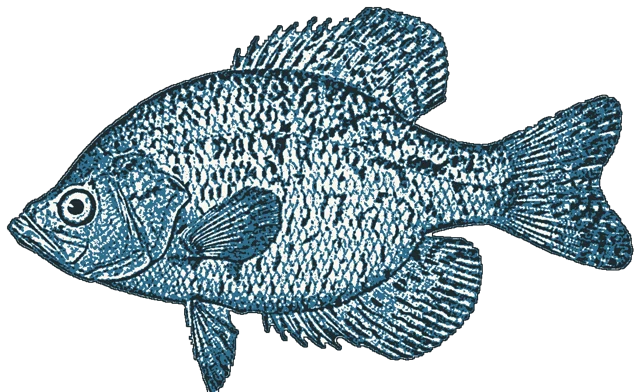
Black crappie
Pomoxis nigromaculatus · Freshwater
One of the classic fish-fry fish: MeatEater counts crappie among the best-eating fish in freshwater.
- Tastes
- mild, sweet, delicate, flaky, white
- Limits
- Light regs. The regulations list one limit for crappie (black and white). WESTERN district: no limit. CENTRAL and EASTERN districts: 15 daily and 30 in possession. Tongue River Reservoir: 5 daily and in possession. (2026 Fishing Regulations, valid Mar 1, 2026 through end of Feb 2027 (adopted Nov 12, 2024)) Source
- Best months
- Mid-May for crappie in general at Tongue River Reservoir (Montana Outdoors, May-June 2012).
- Where
- Fort Peck Reservoir around flooded timber, upper main arm near Fourchette Bay; Tongue River Reservoir.
- maggots and worms on small jigs just off the bottom (ice fishing)
- Do not eat (anyone): any fish from the Clark Fork River between the Bitterroot and Flathead rivers.
- Do not eat (women of childbearing age and children): black crappie 10 to 14 in from Fresno Reservoir.
- Limit, meals a month (women of childbearing age and children/everyone else): Castlerock Lake 3/7 at 10 to 14 in; Fresno Reservoir 4/8 at 6 to 10 in and none/1 at 10 to 14 in; Nelson Reservoir 4/9 at 6 to 10 in.
Meal limits and other waters (3)
- Limit, white crappie 6 to 10 in from Tongue River Reservoir: 2 meals a month for women of childbearing age and children and 4 for everyone else.
- Waters not on the chart: FWP's guide puts crappie in its eat-more-often group, with no meal number of its own.
- Other listed waters and sizes differ, and a blank on the chart means not tested (FWP chart, April 2026).
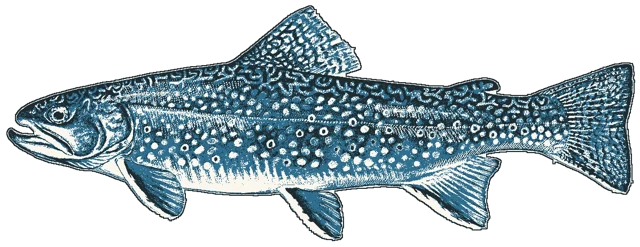
Brook trout
Salvelinus fontinalis · Freshwater
Often called the tastiest trout: MeatEater describes the meat as light and delicate with an almost sweet flavor.
- Tastes
- sweet, delicate, light, delicate
- Limits
- Light regs. Separate from the combined trout limit. WESTERN district 20 daily and in possession; CENTRAL district 20 daily and in possession; EASTERN district 10 daily and in possession. Exceptions: Blackfoot River mainstem from the Landers Fork mouth to the Clark Fork, catch-and-release for brook trout; Georgetown Lake, brook trout count in the 5-trout combined limit, only 1 may be a brook trout and only brook trout over 16 in can be kept. (2026 Fishing Regulations, valid Mar 1, 2026 through end of Feb 2027 (adopted Nov 12, 2024)) Source
- Where
- Hyalite Reservoir and Wild Bill Lake (ice fishing); Georgetown Lake has trophy brook trout (FWP ice-fishing page).
- red maggots
- worms (jig or hook tipped)
- Do not eat (anyone): any fish from the Clark Fork River between the Bitterroot and Flathead rivers, or any fish from Snow Creek (Carpenter Creek tributary).
- Do not eat (anyone): brook trout 6 to 10 in from Browns Gulch near Rocker; 10 to 18 in from the Fifth Street pond at Libby.
- Do not eat (women of childbearing age and children): brook trout 6 to 10 in from Dry Fork Belt Creek near Monarch; 10 to 14 in from Browns Gulch near Rocker; 14 to 18 in from Mountain View Lake (Stillwater drainage).
- Limit, meals a month (women of childbearing age and children/everyone else; one number is for the first group): Belt Creek above Neihart 3/6 at 6 to 10 in and 3/7 at 10 to 14 in; Blacktail Creek in Butte 1/4 at 10 to 14 in and 3/6 at 14 to 18 in; Browns Gulch near Rocker none/1 at 10 to 14 in; Carpenter Creek near Belt Creek 2/4 at 6 to 10 in; Clear Lake south of Superior 5/11 at 6 to 10 in; Dry Fork Belt Creek near Monarch none/1 at 6 to 10 in; Georgetown Lake 6 at 10 to 18 in; Leigh Lake 1/3 at 6 to 10 in; Mountain View Lake (Stillwater drainage) 3/7 at 10 to 14 in and none/1 at 14 to 18 in; Mystic Lake south of Bozeman 8 at 10 to 18 in; Silver Bow Creek at Lower Area One 3/7 at 10 to 14 in.
- Waters not on the chart: FWP's guide puts brook trout in its eat-more-often group, with no meal number of its own.
- Other listed waters and sizes differ, and a blank on the chart means not tested (FWP chart, April 2026).
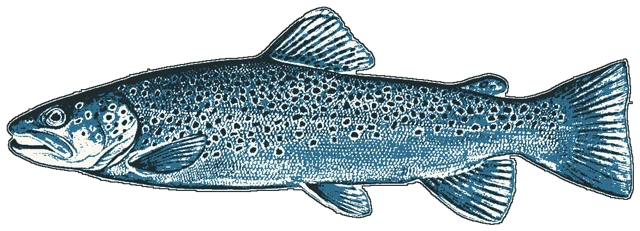
Brown trout
Salmo trutta · Freshwater
Good trout eating like rainbows; most kept browns are stocked fish.
- Tastes
- mild to rich, flaky
- Limits
- Heavy regs. Counts in the combined trout limit (same numbers as rainbow trout): WESTERN district lakes 5 daily and 10 in possession, only 1 over 22 in; rivers 3 daily, only 1 over 14 in. CENTRAL district lakes 5 daily and 10 in possession; rivers 3 daily, only 1 over 18 in. EASTERN district lakes 5 daily and 10 in possession; rivers 5 daily. Exceptions: Kootenai River from Libby Dam to Kootenai Falls, no limit and every brown trout caught must be killed, kept and the whole fish presented to FWP; Lake Creek (near Troy), no limit; Thompson River, 3 daily any size; Canyon Ferry Reservoir, Hauser Reservoir, Lake Helena, Holter Reservoir and the Missouri River from Toston Dam to Canyon Ferry, catch-and-release for brown trout except anglers 14 and younger may keep 1 daily; Missouri River from Hauser Dam to American Bar Gulch, catch-and-release for brown trout; Missouri River from Holter Dam to Black Eagle Dam, 3 combined trout daily, only 1 a brown trout; Beaverhead River, catch-and-release for brown trout from Clark Canyon Dam to High Bridge FAS and from Barretts Diversion to the mouth, and 5 daily, all under 18 in, from High Bridge to Barretts Diversion (open third Saturday in May through Sept 30 from Clark Canyon Dam to Pipe Organ Bridge, April 1 through Sept 30 below Barretts Diversion); Big Hole River, 5 combined trout daily above Dickie Bridge, and below it catch-and-release only, open April 1 through Sept 30; Madison River from the Quake Lake outlet to Varney Bridge, catch-and-release for all trout (anglers 14 and younger may keep 1 daily); Ruby River, catch-and-release for brown trout from Ruby Dam to Alder Bridge (open April 1 through Sept 30) and 1 daily, under 18 in, from Alder Bridge to the mouth. (2026 Fishing Regulations, valid Mar 1, 2026 through end of Feb 2027 (adopted Nov 12, 2024)) Source
- Best months
- Fall, on the last 10 miles of the Gallatin River (Montana Outdoors, May-June 2015).
- Where
- Hebgen Reservoir (wild brown trout, ice fishing); Missouri River below Canyon Ferry and Toston Dam; Kootenai River (2026 regulations exceptions).
- maggots
- worms
- Do not eat (anyone): any fish from the Clark Fork River between the Bitterroot and Flathead rivers, or any fish from Snow Creek (Carpenter Creek tributary).
- Do not eat (anyone): brown trout 10 to 14 in from the Firehole River near Madison Junction (Yellowstone Park).
- Do not eat (women of childbearing age and children): brown trout 6 to 14 in from the Firehole River near Lower Geyser; 10 to 14 in from the Gibbon River or Lower Willow Creek near Drummond; 10 to 18 in from Prickly Pear Creek downstream of ASARCO; 14 to 18 in from Flint Creek (Fred Burr Creek to Boulder Creek) or the Madison River above Hebgen Lake; 18 to 22 in from Cabinet Gorge Reservoir; 22 to 26 in from Hebgen Reservoir; 22 to 30 in from Bighorn Lake; everyone else 1 meal a month of those.
Meal limits and other waters (2)
- Limit (women of childbearing age and children), 1 meal a month: 6 to 10 in from the Firehole River near Madison Junction, Fred Burr Creek below Rumsey Mill, Fred Burr Creek downstream of the Swimming Hole or the Madison River above Hebgen Lake; 6 to 10 in and 14 to 22 in from the Gibbon River; 10 to 14 in from Flint Creek (Fred Burr Creek to Boulder Creek); 14 to 18 in from Cabinet Gorge Reservoir; 14 to 22 in from Hebgen Reservoir; 18 to 22 in from Bighorn Lake or the Missouri River downstream of Black Eagle Dam; 18 in and over from Martinsdale Reservoir.
- Limit (everyone), waters not on the chart: 1 meal a month over 20 in, 1 meal a week at 15 to 20 in and 2 meals a week under 15 in. 20 more listed places have looser limits, and a blank on the chart means not tested (FWP chart, April 2026).
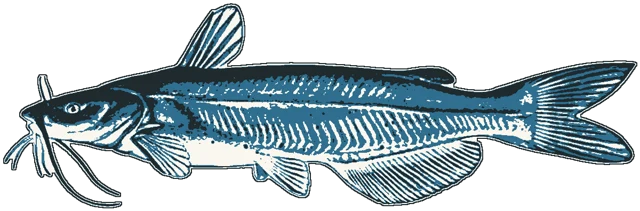
Channel catfish
Ictalurus punctatus · Freshwater
Very good to eat (Maryland DNR) and delicious when cooked (TPWD), and the basis of US catfish farming.
- Tastes
- mild, sweet, firm, moist
- Limits
- Light regs. WESTERN district: no limit listed. CENTRAL district 10 daily and in possession; EASTERN district 10 daily and 20 in possession. Exceptions: Bighorn Lake 6 daily and in possession; Musselshell River from the North and South Fork confluence to Fort Peck, 10 daily and in possession. (2026 Fishing Regulations, valid Mar 1, 2026 through end of Feb 2027 (adopted Nov 12, 2024)) Source
- Best months
- Missouri River setline fishing: May.
- Where
- Missouri River between the mouths of the Marias and Musselshell rivers; upper riverine arms of Fort Peck Reservoir; Bighorn Lake.
- cured sucker meat or fresh goldeye pieces on circle hooks (setlines)
- worms
- Do not eat (women of childbearing age and children): channel catfish 14 to 26 in from Bighorn Lake; 22 to 26 in from the Yellowstone River near the Powder River.
- Limit, meals a month (women of childbearing age and children/everyone else): Bighorn Lake 1/2 at 6 to 14 in, none/2 at 14 to 18 in and none/1 at 18 to 26 in; Fort Peck Reservoir 4/8 at 18 to 22 in; Yellowstone River near the Powder River none/1 at 22 to 26 in.
Meal limits and other waters (2)
- Other listed waters and sizes differ, and a blank on the chart means not tested (FWP chart, April 2026).
- FWP's guide gives no number for waters not on the chart; it says to keep smaller fish and remove the skin and fat.
Chinook salmon
Oncorhynchus tshawytscha · Freshwater
NOAA calls Chinook the most highly prized salmon in the culinary world: rich, buttery and oily.
- Tastes
- rich, buttery, oily, flaky, meaty
- Limits
- Heavy regs. CENTRAL district: kokanee and chinook together 10 daily and in possession. EASTERN district (includes Fort Peck): kokanee and chinook together 5 daily and 10 in possession. Fort Peck Reservoir exceptions: snagging allowed only for chinook salmon Oct 1 through Nov 30; bow and arrow allowed for chinook Oct 1 through Oct 15; chinook and lake trout may be taken by spear or gig through the ice Dec 1 through March 31. (2026 Fishing Regulations, valid Mar 1, 2026 through end of Feb 2027 (adopted Nov 12, 2024)) Source
- Best months
- Adults gather along the dam face from about July 1; bite lasts a few months in fall. Snagging Oct 1-Nov 30.
- Where
- Fort Peck Reservoir, lower part nearest the dam.
- Limit (women of childbearing age and children): 1 meal a month of Chinook 26 in and over from Fort Peck Reservoir; everyone else 2 (mercury).
Meal limits and other waters (2)
- Other listed waters and sizes differ, and a blank on the chart means not tested (FWP chart, April 2026).
- FWP's guide gives no number for waters not on the chart; it says to keep smaller fish and remove the skin and fat.
Cutthroat trout
Oncorhynchus clarkii · also called westslope cutthroat, Yellowstone cutthroat, blackspotted cutthroat (state fish) · Freshwater
Eats like other trout; kept where legal, especially stocked fish and coastal sea-run cutts.
- Tastes
- mild, clean, delicate, flaky
- Limits
- Heavy regs. The regulations use one rule for all cutthroat trout; they do not separate westslope from Yellowstone cutthroat in the standard tables. WESTERN district: lakes and reservoirs 3 daily, no size limit; rivers and streams 3 daily, none over 12 in. CENTRAL district: counted inside the combined trout limit (lakes 5 daily and 10 in possession; rivers 3 daily, only 1 over 18 in, and only 1 can be a cutthroat). EASTERN district: counted inside the combined trout limit (lakes 5 daily and 10 in possession; rivers 5 daily). Many waters are catch-and-release for cutthroat, for example Flathead Lake north of the Flathead Indian Reservation boundary, the Flathead River from the North and Middle Fork confluence to Flathead Lake, the Clark Fork River from Perkins Lane Bridge to Idaho, the Thompson River, and the Yellowstone River from the Park boundary to Pine Creek Bridge. Absaroka-Beartooth Wilderness lakes allow 10 combined trout daily and in possession, and some small streams list higher limits for cutthroat. (2026 Fishing Regulations, valid Mar 1, 2026 through end of Feb 2027 (adopted Nov 12, 2024)) Source
- Best months
- Ice season: Jan-Mar (Cad, Rogers and Vinal lakes in Northwest Montana).
- Where
- Hyalite Reservoir (Yellowstone cutthroat), Nevada Reservoir (westslope cutthroat), Thompson Chain of Lakes and Rogers Lake (FWP ice-fishing pages).
- red maggots
- worms (jig or hook tipped)
- jigging spoon or marabou jig tipped with maggot or worm
- Do not eat (anyone): any fish from the Clark Fork River between the Bitterroot and Flathead rivers, or any fish from Snow Creek (Carpenter Creek tributary).
- Do not eat (anyone): cutthroat trout 6 to 10 in from Carpenter Creek near Belt Creek; 10 to 18 in from Lower Willow Creek Reservoir; 14 to 22 in from Silver Creek north of Helena.
- Do not eat (women of childbearing age and children): cutthroat trout 6 to 10 in from Dry Fork Belt Creek near Monarch or Lower Willow Creek Reservoir; 6 to 14 in from Browns Gulch near Rocker; 10 to 14 in from Piedmont Pond or Silver Creek north of Helena; everyone else 1 meal a month of those.
Meal limits and other waters (2)
- Limit (women of childbearing age and children), 1 meal a month: 6 to 10 in from Piedmont Pond or Silver Creek north of Helena; 10 to 14 in from Silver Bow Creek in Durant Canyon or Spring Meadow Lake. 16 more listed places have looser limits, and a blank on the chart means not tested (FWP chart, April 2026).
- FWP's guide gives no number for waters not on the chart; it says to keep smaller fish and remove the skin and fat.
Golden trout
Oncorhynchus mykiss aguabonita · Freshwater
A small high-country trout eaten like any stream trout where harvest is allowed.
- Tastes
- mild, clean, delicate
- Limits
- Heavy regs. Counts in the combined trout limit with brown trout, rainbow trout and arctic grayling (and cutthroat in the Central and Eastern districts): WESTERN district lakes 5 daily and 10 in possession, only 1 over 22 in; rivers 3 daily, only 1 over 14 in. CENTRAL district lakes 5 daily and 10 in possession; rivers 3 daily, only 1 over 18 in. EASTERN district lakes 5 daily and 10 in possession; rivers 5 daily. Exception: Absaroka-Beartooth Wilderness lakes (CENTRAL district), 10 combined trout daily and in possession. (2026 Fishing Regulations, valid Mar 1, 2026 through end of Feb 2027 (adopted Nov 12, 2024)) Source
- Best months
- July and August for better high-country weather; the writer waits for September and October (Outside Bozeman).
- Where
- Stillwater drainage, Beartooth Range: Asteroid, Dryad, Incisor, Lightning, Little Lightning and Sunken Rock lakes. Crazy Mountains: Cave Lake (FWP mountain lakes guide, 2024).
- black ant fly
- moth fly
- small hopper fly
- scud
- nymph
- FWP's April 2026 chart has no row for golden trout.
- For a fish it does not list, the chart points to its general advice: keep smaller fish, remove the skin and trim the fat, and choose carefully if you are pregnant, might become pregnant, are nursing or have children.
- FWP says contamination increases as fish get larger and older.
Kokanee salmon
Oncorhynchus nerka (landlocked) · Freshwater
Landlocked sockeye with vivid orange, rich flesh; kokanee anglers fish specifically to fill a cooler.
- Tastes
- rich, salmon-like, slightly soft, orange
- Limits
- Light regs. Counted as salmon, separate from trout. WESTERN district 20 daily and 40 in possession; CENTRAL district (kokanee and chinook together) 10 daily and in possession; EASTERN district (kokanee and chinook together) 5 daily and 10 in possession. Exceptions: Lake Koocanusa 50 daily and 100 in possession; Georgetown Lake no daily or possession limit; Ashley Lake 35 daily and 70 in possession; Hauser Reservoir, Lake Helena and Holter Reservoir count with trout in a 5-fish daily combination (Holter: rainbow trout and kokanee). Snagging is open on some waters, for example Kootenai Falls area Sept 15 to Nov 30. (2026 Fishing Regulations, valid Mar 1, 2026 through end of Feb 2027 (adopted Nov 12, 2024)) Source
- Best months
- Ice season: Jan-Mar on most Northwest Montana lakes; Ashley Lake Mar-Apr.
- Where
- Georgetown Lake, Lake Koocanusa, Ashley Lake, Little Bitterroot Lake and Lake Mary Ronan.
- small jigging spoon or Swedish pimple with glow hook, tipped with maggot or corn
- Do not eat (anyone): any fish from the Clark Fork River between the Bitterroot and Flathead rivers.
Meal limits and other waters (3)
- Limit, meals a month (women of childbearing age and children/everyone else; one number is for the first group): Georgetown Lake 10 at 10 to 14 in; Hauser Reservoir 10 at 6 to 14 in; Holter Reservoir 7 at 10 to 18 in and 10 at 18 to 22 in; Kootenai River (Libby Dam to Troy) 10 at 6 to 10 in and 8 at 10 to 14 in; Kootenai River (Troy to Idaho) 7 at 10 to 14 in; Lake Koocanusa 8 at 6 to 10 in and 9 at 10 to 14 in; Lake Mary Ronan 7 at 6 to 10 in and 5 at 10 to 14 in; Swan Lake 5/11 at 6 to 10 in, 7 at 10 to 14 in and 6 at 14 to 18 in.
- Other listed waters and sizes differ, and a blank on the chart means not tested (FWP chart, April 2026).
- FWP's guide gives no number for waters not on the chart; it says to keep smaller fish and remove the skin and fat.
Lake whitefish
Coregonus clupeaformis · Freshwater
The Great Lakes' signature commercial food fish; smoked whitefish is a deli staple and fresh fillets are sweet and mild.
- Tastes
- mild, sweet, flaky, delicate
- Limits
- Light regs. The tables list one whitefish limit and do not split lake from mountain whitefish: 20 daily and 40 in possession in all three districts (WESTERN, CENTRAL and EASTERN). Exception: Tiber Reservoir (Lake Elwell) in the Central district, all whitefish and cisco must be released immediately or killed and counted in your limit, and live ones may not be possessed. (2026 Fishing Regulations, valid Mar 1, 2026 through end of Feb 2027 (adopted Nov 12, 2024)) Source
- Best months
- Flathead Lake: river-mouth delta Apr, May, Jul, Aug; main lake Feb-Mar, Jul-Aug, Oct-Nov; Polson bridge Oct-Nov. Flathead River run starts mid-Sep, peaks mid-Oct to mid-Nov, lasts into Jan.
- Where
- Flathead Lake, 20 to 60 ft over sand and gravel bars and off points; Flathead River from the Stillwater River to Blankenship Bridge during the fall run.
- Kastmaster spoon
- leadhead jig with 1.5-2 in Mr. Twister or Fuzzygrub body
- maggots (sometimes added)
- Do not eat (anyone): any fish from the Clark Fork River between the Bitterroot and Flathead rivers.
Meal limits and other waters (4)
- Limit, meals a month (women of childbearing age and children/everyone else; one number is for the first group): Cabinet Gorge Reservoir 2/5 at 10 to 14 in, 1/3 at 14 to 18 in and 3/7 at 18 to 22 in; Flathead Lake 3/7 at 14 to 18 in and 1/2 at 18 to 22 in; Lake McDonald 6 at 14 to 18 in and 3/7 at 18 to 22 in; Nelson Reservoir 7 at 10 to 14 in, 1/2 at 18 to 22 in and 8 at 22 to 26 in; Noxon Rapids Reservoir 4/9 at 10 to 18 in; St. Mary Lake 3/7 at 14 to 22 in; Waterton Lakes 9 at 6 to 10 in, 7 at 10 to 14 in, 4/8 at 14 to 18 in, 3/7 at 18 to 22 in, 3/6 at 22 to 26 in and 3/7 at 30 in and over; Whitefish Lake 9 at 10 to 14 in, 8 at 14 to 18 in and 2/5 at 18 to 22 in.
- Limit (everyone), waters not on the chart (whitefish): 1 meal a week over 18 in and 2 meals a week under 18 in.
- Flathead Reservation meal limits are in the eating advice on this page.
- Other listed waters and sizes differ, and a blank on the chart means not tested (FWP chart, April 2026).
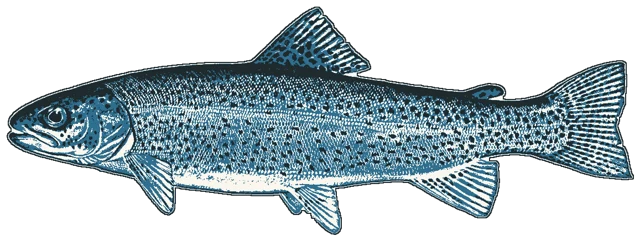
Rainbow trout
Oncorhynchus mykiss · Freshwater
TPWD calls rainbow trout an excellent fish to eat; the most-stocked put-and-take fish in America.
- Tastes
- mild, clean, delicate, flaky
- Limits
- Heavy regs. Combined trout limit (brown, rainbow and golden trout and arctic grayling together; the Central and Eastern districts also count cutthroat). WESTERN district: lakes and reservoirs 5 daily and 10 in possession, only 1 over 22 in; rivers and streams 3 daily and in possession, only 1 over 14 in. CENTRAL district: lakes 5 daily and 10 in possession; rivers and streams 3 daily, only 1 over 18 in. EASTERN district: lakes 5 daily and 10 in possession; rivers and streams 5 daily. Exceptions by water: Kootenai River from Libby Dam to the Highway 37 bridge near Fisher River, rainbow trout 1 daily, 28 in minimum; Kootenai River from that bridge to the Idaho border, 4 daily with 3 under 13 in and only 1 over 18 in; Flathead River (North and Middle Fork confluence to Flathead Lake), rainbow trout 5 daily; Absaroka-Beartooth Wilderness lakes, 10 combined trout daily and in possession; Beaverhead River, catch-and-release for rainbow trout; Big Hole River, 5 combined trout daily above Dickie Bridge, and below it catch-and-release only, open April 1 through Sept 30; Madison River, catch-and-release for all trout from the Quake Lake outlet to Varney Bridge, and for rainbow trout from the Park boundary to Hebgen Reservoir and from Varney Bridge to Ennis Lake (anglers 14 and younger may keep 1 daily); Ruby River below Ruby Dam, catch-and-release for rainbow trout. (2026 Fishing Regulations, valid Mar 1, 2026 through end of Feb 2027 (adopted Nov 12, 2024)) Source
- Best months
- Ice season: Jan-Mar on Northwest Montana lakes (Murray, Loon, Foy and Cibid lakes).
- Where
- Hebgen Reservoir, Holter Reservoir, Browns Lake and Georgetown Lake (ice fishing); Kootenai River below Libby Dam and the Flathead River (2026 regulations exceptions).
- nightcrawlers
- salmon eggs
- corn
- inline spinners
- small spoons
- Do not eat (anyone): any fish from the Clark Fork River between the Bitterroot and Flathead rivers, or any fish from Snow Creek (Carpenter Creek tributary).
- Do not eat (anyone): rainbow trout 6 to 10 in from Dry Fork Belt Creek near Monarch.
- Do not eat (women of childbearing age and children): rainbow trout 10 to 14 in from the Clark Fork River (Blackfoot River to Bitterroot River) or the Firehole River near Lower Geyser (Yellowstone Park); everyone else 1 meal a month of those.
- Do not eat (tribal members, Confederated Salish and Kootenai Tribes advisory, June 24, 2025): rainbow trout from the Bitterroot and Blackfoot rivers, or from the Clark Fork between Rock Creek and the Bitterroot.
Meal limits and other waters (2)
- Limit (women of childbearing age and children), 1 meal a month: 6 to 10 in from the Firehole River near Lower Geyser; 6 to 14 in from Carpenter Creek near Belt Creek; 10 to 14 in from Dry Fork Belt Creek near Monarch or Prickly Pear Creek downstream of ASARCO; 10 to 18 in from the Gibbon River; 10 to 14 in and 18 to 22 in from the Madison River above Hebgen Lake; 14 to 18 in from the Bitterroot River, the Clark Fork River (Blackfoot River to Bitterroot River) or the Firehole River near Madison Junction; 14 to 22 in from Hebgen Reservoir; 18 to 22 in from Canyon Ferry Reservoir; 22 to 26 in from Pishkun Reservoir.
- Limit (everyone), waters not on the chart: 1 meal a week over 18 in and 2 meals a week under 18 in. 37 more listed places have looser limits, and a blank on the chart means not tested (FWP chart, April 2026).
Sauger
Sander canadensis · Freshwater
The walleye's smaller river cousin, with the same fillets; MeatEater says they taste just as good.
- Tastes
- mild, clean, firm, flaky white
- Limits
- Heavy regs. Shares the walleye limit. CENTRAL district: 5 daily and 10 in possession combined, only 2 daily and 4 in possession may be sauger. EASTERN district: the standard table lists sauger/walleye 5 daily and 10 in possession, and Fort Peck Reservoir, the Missouri River from Fort Peck Dam to Fort Benton, and the Bighorn, Judith, Marias and Musselshell rivers and parts of the Yellowstone River add the 2-sauger cap. Exceptions: Tongue River Reservoir and the Tongue River from the reservoir to the Wyoming border, 5 daily with only 1 sauger and 10 in possession with only 2 sauger; Bighorn Lake, 6 daily with only 3 sauger. Sauger are any sauger/walleye with multiple small distinct black spots on the spiny first dorsal fin membranes. (2026 Fishing Regulations, valid Mar 1, 2026 through end of Feb 2027 (adopted Nov 12, 2024)) Source
- Best months
- May, from shore at the Marias-Teton-Missouri confluence (Montana Outdoors, May-June 2012).
- Where
- Fort Peck Reservoir's Upper Missouri Arm from Timber Creek to Crooked Creek; Missouri River.
- cured sucker or goldeye pieces on bottom setlines (Missouri River)
- Do not eat (anyone): sauger 22 to 26 in from Bighorn Lake.
- Do not eat (women of childbearing age and children): sauger 18 to 22 in from Bighorn Lake.
- Limit, meals a month (women of childbearing age and children/everyone else): Bighorn Lake 2/4 at 6 to 10 in, 1/2 at 10 to 18 in and none/1 at 18 to 22 in.
Meal limits and other waters (3)
- Other listed waters and sizes differ, and a blank on the chart means not tested (FWP chart, April 2026).
- FWP says predatory fish often build up more contaminants.
- FWP's guide gives no number for waters not on the chart; it says to keep smaller fish and remove the skin and fat.
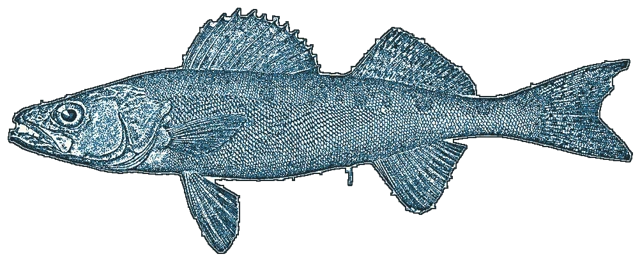
Walleye
Sander vitreus · Freshwater
Widely rated the best-eating freshwater fish: Maryland DNR calls it one of the best tasting, TPWD an excellent food fish.
- Tastes
- mild, clean, firm, tender, flaky white
- Limits
- Heavy regs. Walleye and sauger share one limit. CENTRAL district: 5 daily, only 2 may be sauger, 10 in possession with only 4 sauger. EASTERN district standard table: sauger/walleye 5 daily and 10 in possession; Fort Peck Reservoir, the Missouri River from Fort Peck Dam to Fort Benton, the Bighorn, Judith, Marias and Musselshell rivers and parts of the Yellowstone River add 'only 2 may be sauger'. Exceptions: Canyon Ferry Reservoir, Hauser Reservoir, Lake Helena and the Missouri River from Toston Dam to Canyon Ferry, 10 daily with only 1 over 15 in; Holter Reservoir and the Missouri River from Hauser Dam to American Bar Gulch, 5 daily with only 1 over 25 in; Missouri River from Holter Dam to Black Eagle Dam, 10 daily and 20 in possession; Bighorn Lake, 6 daily (only 3 sauger), 12 in possession. WESTERN district standard: every walleye caught must be killed, kept, reported to FWP within 24 hours and the whole fish presented to FWP within 10 days; Clark Fork reservoirs downstream of Thompson Falls Dam (Noxon Rapids, Cabinet Gorge) have no limit and no reporting. (2026 Fishing Regulations, valid Mar 1, 2026 through end of Feb 2027 (adopted Nov 12, 2024)) Source
- Best months
- Fort Peck: big fish from about Father's Day in the Big Dry Arms (right after the spawn); hottest bite late June-July in the middle reach (Duck Creek to Hell Creek State Park).
- jig tipped with minnow, leech, nightcrawler or plastic
- spinner-and-crawler harness
- crankbaits such as Rapalas
- half a nightcrawler on a floating jighead with slip sinker
- sucker minnow (shore, Tiber Reservoir)
- Do not eat (anyone): any fish from the Clark Fork River between the Bitterroot and Flathead rivers.
- Do not eat (anyone): walleye 18 to 30 in from Bighorn Lake; 22 to 26 in from Cabinet Gorge Reservoir, Lake Frances, Lake Helena or South Sandstone Reservoir; 30 in and over from Noxon Rapids Reservoir.
- Do not eat (anyone), waters not on the chart: walleye over 22 in.
- Do not eat (women of childbearing age and children): walleye 6 to 30 in from Noxon Rapids Reservoir (so no size there); 10 to 22 in from Bynum Reservoir; 10 to 26 in from Tiber Reservoir; 14 to 18 in from Bighorn Lake; 14 to 22 in from Cabinet Gorge Reservoir; 18 to 22 in from Lake Frances; 18 to 26 in from Fresno Reservoir; 22 to 26 in from Fort Peck Reservoir or Nelson Reservoir; 30 in and over from Canyon Ferry Reservoir; everyone else 1 meal a month of those (2 at 14 to 18 in from Cabinet Gorge Reservoir).
Meal limits and other waters (3)
- Limit (women of childbearing age and children), 1 meal a month: 6 to 10 in from Bynum Reservoir; 10 to 14 in from Bighorn Lake or Cabinet Gorge Reservoir; 10 to 18 in from Fresno Reservoir or Lake Frances; 10 to 22 in from Fort Peck Reservoir; 14 to 26 in from Tongue River Reservoir; 18 to 22 in from Castlerock Lake or Lake Helena; 18 to 26 in from Cooney Reservoir or Holter Reservoir; 18 to 30 in from Canyon Ferry Reservoir.
- Limit (everyone), waters not on the chart: 1 meal a month under 22 in. 3 more listed places have looser limits, and a blank on the chart means not tested (FWP chart, April 2026).
- FWP says predatory fish often build up more contaminants.
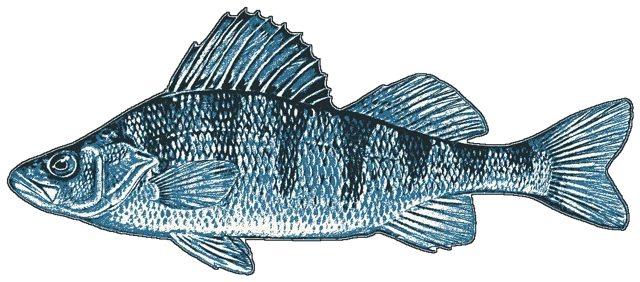
Yellow perch
Perca flavescens · Freshwater
A great food fish (MN DNR) and the centerpiece of Great Lakes perch fries; Iowa DNR calls a fried stringer of perch unsurpassed in flavor.
- Tastes
- mild, sweet, firm, flaky, white
- Limits
- Light regs. No yellow perch limit is listed in the WESTERN, CENTRAL or EASTERN standard tables. Listed waters: Flathead Lake north of the reservation boundary, no limit, only 10 daily over 10 in; Canyon Ferry Reservoir 10 daily and in possession; Hauser Reservoir and Lake Helena 10 daily July 1 through March 31, and April 1 through June 30 only 1 daily, 14 in minimum; Holter Reservoir and Box Elder Reservoir 25 daily and 50 in possession. (2026 Fishing Regulations, valid Mar 1, 2026 through end of Feb 2027 (adopted Nov 12, 2024)) Source
- Best months
- Flathead Lake: Polson Bay in winter and in April at spawning. Ice season: Dec-Mar (Smith, Stillwater lakes), Jan-Mar elsewhere.
- Where
- Flathead Lake (Polson Bay, Big Arm Bay); Holter Reservoir; Echo Lake; East Fork Reservoir; Lower Clark Fork reservoirs.
- small leadhead or marabou jig tipped with maggot, piece of worm or small fish
- jigging spoons
- Do not eat (anyone): any fish from the Clark Fork River between the Bitterroot and Flathead rivers.
Meal limits and other waters (3)
- Limit (women of childbearing age and children), 1 meal a month: 6 to 10 in from Pishkun Reservoir; 6 to 14 in from Noxon Rapids Reservoir; 6 to 18 in from Lake Frances; 10 to 14 in from Fresno Reservoir, Holter Reservoir or Tiber Reservoir.
- Limit (everyone else), 2 meals a month: 10 to 14 in from Noxon Rapids Reservoir; 14 to 18 in from Lake Frances.
- Limit (everyone), waters not on the chart: 1 meal a week at 10 to 14 in and 2 meals a week under 10 in. 17 more listed places have looser limits, and a blank on the chart means not tested (FWP chart, April 2026).
Burbot
Lota lota · also called ling · Freshwater
Many anglers still throw back the slimy, eel-like 'eelpout' as trash, yet Alaskans keep them for their delicate white meat.
Worth a try: A freshwater cod: skin it, take the white loins and the liver, and boil-and-butter it like 'poor man's lobster', fry it or put it in chowder (Hank Shaw).
- Tastes
- mild, sweet, firm, white, lobster-like
- Limits
- Heavy regs. Listed as burbot (ling). WESTERN district 2 daily and in possession; CENTRAL and EASTERN districts 5 daily and in possession. Exceptions: Bighorn Lake 3 daily; Lake Sutherlin and Newlan Creek Reservoir 3 daily, only 1 over 30 in; Clark Canyon Reservoir 3 daily, over 23 in. (2026 Fishing Regulations, valid Mar 1, 2026 through end of Feb 2027 (adopted Nov 12, 2024)) Source
- Best months
- Ice season, for example Holter Reservoir from late January for 4 to 6 weeks.
- Where
- Holter Reservoir; Cooney Reservoir; Newlan Creek Reservoir; Missouri River.
- cut bait such as sucker meat fished near the bottom
- dead minnows at night
- Burbot are among the large predators that can carry elevated mercury in parts of northern and western Alaska (ADF&G).
- Do not eat (women of childbearing age and children): burbot 30 in and over from St. Mary Lake.
- Limit, meals a month (women of childbearing age and children/everyone else; one number is for the first group): Bighorn Lake 1/3 at 14 to 18 in and 1/2 at 18 to 30 in; Canyon Ferry Reservoir 2/5 at 14 to 18 in; Clark Canyon Reservoir 4/8 at 18 to 22 in; Lake Koocanusa 8 at 14 to 18 in, 3/6 at 18 to 22 in, 2/5 at 22 to 26 in, 2/4 at 26 to 30 in and 1/3 at 30 in and over; St. Mary Lake 3/6 at 14 to 18 in, 1/3 at 18 to 26 in and none/2 at 30 in and over.
Meal limits and other waters (2)
- Other listed waters and sizes differ, and a blank on the chart means not tested (FWP chart, April 2026).
- FWP's guide gives no number for waters not on the chart; it says to keep smaller fish and remove the skin and fat.
Cisco
Coregonus artedi · Freshwater
Mild but soft and bony; mostly eaten smoked, where smoked ciscoes and chubs are a Great Lakes and deli tradition.
- Tastes
- mild, oily, soft, bony
- Limits
- No limits. No limit listed in the standard tables for any district. Tiber Reservoir (Lake Elwell): all cisco and whitefish must be released immediately or killed and counted as part of your limit; live cisco may not be possessed. Fort Peck Reservoir: dead cisco may be used as bait if collected from the Missouri River below Fort Peck Dam or from Fort Peck Reservoir. (2026 Fishing Regulations, valid Mar 1, 2026 through end of Feb 2027 (adopted Nov 12, 2024)) Source
- Where
- Tiber Reservoir and Fort Peck Reservoir (2026 regulations exceptions).
- FWP's April 2026 chart has no row for cisco.
- For a fish it does not list, the chart points to its general advice: keep smaller fish, remove the skin and trim the fat, and choose carefully if you are pregnant, might become pregnant, are nursing or have children.
- FWP says contamination increases as fish get larger and older.
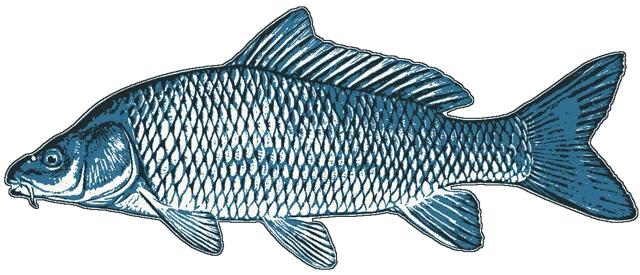
Common carp
Cyprinus carpio · Freshwater
Most US anglers call it a muddy, bony trash fish, but it is a prized food fish in Europe and Asia and eats well from clean, cold water.
Worth a try: Catch from clean water, remove the dark 'mud vein', and either score small fish and fry hard so the Y-bones soften, or hard-smoke large fish over fruitwood (Hank Shaw).
- Tastes
- mild from clean water, strong from muddy water, firm, fatty, Y-bones
- Limits
- No limits. No limit listed in the WESTERN, CENTRAL or EASTERN standard tables. (2026 Fishing Regulations, valid Mar 1, 2026 through end of Feb 2027 (adopted Nov 12, 2024)) Source
- Where
- Missouri River between the Marias and Musselshell rivers (one of the species caught there).
- dough balls
- canned corn
- worms
- boilies
- bread
- FWP's April 2026 chart has no row for carp.
- For a fish it does not list, the chart points to its general advice: keep smaller fish, remove the skin and trim the fat, and choose carefully if you are pregnant, might become pregnant, are nursing or have children.
- FWP says contamination increases as fish get larger and older.
Freshwater drum
Aplodinotus grunniens · Freshwater
Many anglers call it a rough fish, but it is prized as food in some areas (TPWD); bled and iced, the boneless fillets eat like a redfish's.
Worth a try: Bleed it, ice it immediately and trim the red lateral meat; then fry thin fillets, grill on the half-shell like redfish, or smoke oily summer fish.
- Tastes
- mild, like other drum, firm but tender, large flake; goes soft if not iced
- Limits
- No limits. No limit listed in the WESTERN, CENTRAL or EASTERN standard tables. (2026 Fishing Regulations, valid Mar 1, 2026 through end of Feb 2027 (adopted Nov 12, 2024)) Source
- Where
- Fort Peck Reservoir, Upper Missouri Arm from Bone Trail to Turkey Joe; middle Missouri River.
- leeches
- worms
- FWP's April 2026 chart has no row for freshwater drum.
- For a fish it does not list, the chart points to its general advice: keep smaller fish, remove the skin and trim the fat, and choose carefully if you are pregnant, might become pregnant, are nursing or have children.
- FWP says contamination increases as fish get larger and older.
Lake trout
Salvelinus namaycush · also called mackinaw, mac, laker · Freshwater
Edible and widely kept, but it is the trout most often knocked as too greasy; big fish are very fatty and best smoked.
- Tastes
- rich, oily, soft to firm, fatty
- Limits
- Heavy regs. WESTERN district 20 daily and 40 in possession; CENTRAL district 3 daily and in possession; EASTERN district 3 daily and 6 in possession. Flathead Lake north of the Flathead Indian Reservation boundary: 100 daily and in possession, only 1 over 36 in, and all fish 30 to 36 in must be released (a tribal permit is needed on the southern part of the lake). Catch-and-release for lake trout at Twin Lakes (Big Hole River drainage) and Elk Lake (Beaverhead County); Tally Lake, 1 daily and in possession, over 42 in. (2026 Fishing Regulations, valid Mar 1, 2026 through end of Feb 2027 (adopted Nov 12, 2024)) Source
- Best months
- Shore: May-Jun and Oct-Nov. Trolling near the surface: Apr-Jun and Oct-Nov. Best fishing dawn to mid-morning. Ice: Jan-Mar (McGregor, Whitefish and Swan lakes). Fort Peck: best in late summer.
- Where
- Flathead Lake; Swan, McGregor and Whitefish lakes; Fort Peck Reservoir near the dam.
- leadhead jigs with grub or Mr. Twister bodies, tipped with sucker, northern pikeminnow or perch (no salmonids)
- jigging spoons (Kastmaster, Buzz Bomb)
- cut fish bait or worms from shore
- Great Lakes and some western lakes carry contaminant advisories for large lake trout; check your state advisory.
- Do not eat (anyone): any fish from the Clark Fork River between the Bitterroot and Flathead rivers.
- Do not eat (anyone): lake trout 30 in and over from Flathead Lake.
- Do not eat (anyone), waters not on the chart: lake trout over 28 in.
- Do not eat (women of childbearing age and children): lake trout 22 to 26 in from Bowman Lake; 22 to 26 in and 30 in and over from Waterton Lakes; 26 to 30 in from Flathead Lake or Noxon Rapids Reservoir; 30 in and over from Fort Peck Reservoir, Harrison Lake or Swan Lake; everyone else 1 meal a month of those (2 at 30 in and over from Harrison Lake).
- Do not eat (under 14, pregnant, may become pregnant or breastfeeding), Flathead Reservation waters: lake trout over 25 in.
Meal limits and other waters (4)
- Limit (women of childbearing age and children), 1 meal a month: 14 to 22 in and 26 to 30 in from St. Mary Lake; 18 to 22 in from Waterton Lakes; 18 to 26 in from Lake McDonald; 18 to 30 in from Harrison Lake or Swan Lake; 22 to 26 in from Flathead Lake, McGregor Lake or Whitefish Lake; 22 to 30 in from Fort Peck Reservoir; 26 in and over from Bowman Lake.
- Limit (everyone), waters not on the chart: 1 meal a month at 20 to 28 in, 1 meal a week at 15 to 20 in and 2 meals a week under 15 in.
- Flathead Reservation meal limits are in the eating advice on this page. 2 more listed places have looser limits, and a blank on the chart means not tested (FWP chart, April 2026).
- FWP says predatory fish often build up more contaminants.
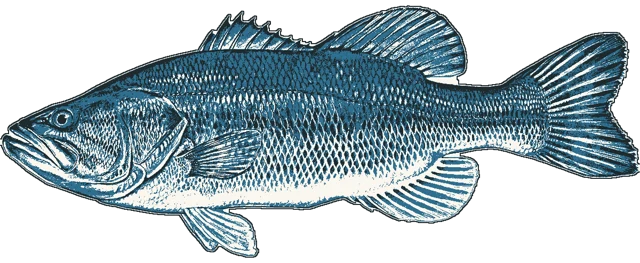
Largemouth bass
Micropterus nigricans (syn. M. salmoides) · Freshwater
Perfectly edible white fillets, but America's top catch-and-release fish and many anglers swear the meat tastes fishy or muddy, so reputation is split.
- Tastes
- mild to slightly 'fishy', firm, thick fillets
- Limits
- Heavy regs. WESTERN district: 5 daily and in possession, only 1 greater than 12 in; third Saturday in May through June 30, 1 daily and in possession, must be over 22 in. CENTRAL and EASTERN districts: bass 5 daily and in possession. Exceptions: Placid Lake, Upsata Lake, Frenchtown Pond and Horseshoe Lake (near Ferndale), catch-and-release for largemouth bass; Blanchard Lake (near Whitefish), 1 daily and in possession, over 22 in; Seeley Lake, no bass limit; Spring Meadow Lake, 3 bass daily and in possession, none over 10 in; Clark Fork reservoirs from Thompson Falls Dam to Idaho, largemouth and smallmouth combined 5 daily, June 15 through July 15 only 1 daily, 22 in minimum. (2026 Fishing Regulations, valid Mar 1, 2026 through end of Feb 2027 (adopted Nov 12, 2024)) Source
- Where
- Upsata Lake and Fort Peck Trout Pond (FWP ice-fishing page); Noxon Rapids Reservoir (bass fishing named in the 2023 angler survey).
- live shiners
- nightcrawlers
- live minnows
- Texas-rigged plastic worm
- jig
- spinnerbait
- Water-body mercury advisories commonly list largemouth bass; check your state's advisory before eating large fish.
- Do not eat (anyone): any fish from the Clark Fork River between the Bitterroot and Flathead rivers.
- Do not eat (women of childbearing age and children): largemouth bass 18 to 22 in from the Ninepipe refuge.
- Do not eat (under 14, pregnant, may become pregnant or breastfeeding), Flathead Reservation waters: bass over 20 in.
- Limit, meals a month (women of childbearing age and children/everyone else; one number is for the first group): Castlerock Lake 2/4 at 10 to 14 in; Whistlers Pond (Lee Metcalf refuge) 6 at 6 to 10 in, 4/9 at 10 to 14 in and 1/3 at 14 to 18 in; Ninepipe refuge 3/6 at 6 to 10 in, 2/5 at 10 to 14 in, 1/2 at 14 to 18 in and none/1 at 18 to 22 in; Noxon Rapids Reservoir 2/4 at 10 to 14 in; Spring Meadow Lake 3/6 at 6 to 10 in and 2/5 at 10 to 14 in.
- Flathead Reservation meal limits are in the eating advice on this page.
Meal limits and other waters (2)
- Other listed waters and sizes differ, and a blank on the chart means not tested (FWP chart, April 2026).
- FWP's guide gives no number for waters not on the chart; it says to keep smaller fish and remove the skin and fat.
Mountain whitefish
Prosopium williamsoni · Freshwater
Tasty but admittedly bony (Idaho Fish and Game), so many trout anglers dismiss them as trash; excellent smoked or pickled.
Worth a try: Smoke or pickle it like Great Lakes whitefish; smoking makes the bones easy to pick out. Idaho and MeatEater both push anglers to keep them.
- Tastes
- light, mild, soft, very bony
- Limits
- Light regs. The tables list one whitefish limit and do not split mountain from lake whitefish: 20 daily and 40 in possession in all three districts (WESTERN, CENTRAL and EASTERN). Extended season for whitefish, Dec 1 to the third Saturday in May, on the Bitterroot River (artificial lures, maggots and aquatic insects only) and the Clark Fork River from Perkins Lane Bridge to the mouth of the Flathead River (artificial lures and maggots only); other bait is prohibited on both. (2026 Fishing Regulations, valid Mar 1, 2026 through end of Feb 2027 (adopted Nov 12, 2024)) Source
- Best months
- Extended season Dec 1 to third Saturday in May on the Bitterroot and Clark Fork rivers.
- Where
- Bitterroot River and Clark Fork River (extended whitefish season; do not eat from the Clark Fork between the Bitterroot and Flathead rivers).
- maggots (extended-season rule)
- artificial lures
- Do not eat (anyone): any fish from the Clark Fork River between the Bitterroot and Flathead rivers (dioxins/furans, PCBs and PFOS).
Meal limits and other waters (3)
- Limit, meals a month (women of childbearing age and children/everyone else; one number is for the first group): Clark Fork River (Warm Springs Ponds to Galen) 7 at 10 to 14 in and 4/9 at 14 to 18 in; Clark Fork River (Gold Creek to Flint Creek) 5 at 6 to 10 in and 3/6 at 10 to 14 in; Clark Fork River (Flint Creek to Rock Creek) 2/5 at 10 to 14 in and 1/2 at 14 to 18 in; Flint Creek (Boulder Creek to Lower Willow Creek) 2/4 at 10 to 14 in and 1/2 at 14 to 18 in; Flint Creek (Lower Willow Creek to the Clark Fork) 2/4 at 10 to 14 in and 1/2 at 14 to 18 in; Kootenai River (Libby Dam to Troy) 7 at 10 to 14 in and 8 at 14 to 18 in; Kootenai River (Troy to Idaho) 10 at 6 to 10 in and 5/12 at 10 to 14 in; Lake Koocanusa 2/4 at 10 to 14 in; Missouri River upstream of Black Eagle Dam 4/8 at 14 to 18 in; Missouri River downstream of Black Eagle Dam 5/11 at 6 to 10 in and 3/7 at 10 to 14 in; Seeley Lake 5/11 at 10 to 14 in; Yellowstone River (Clarks Fork to Bighorn River) 3/6 at 10 to 14 in and 2/4 at 14 to 18 in.
- Limit (everyone), waters not on the chart (whitefish): 1 meal a week over 18 in and 2 meals a week under 18 in.
- Other listed waters and sizes differ, and a blank on the chart means not tested (FWP chart, April 2026).
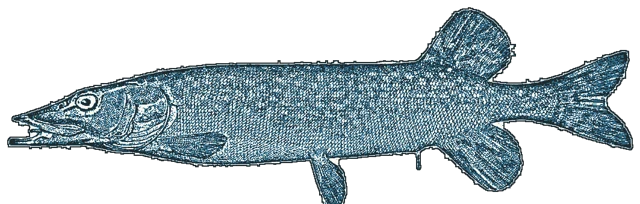
Northern pike
Esox lucius · Freshwater
The meat is white, flaky and great in flavor, but the Y-bones put many anglers off; reputation is split between 'too bony' and 'better than walleye once you learn to clean them'.
Worth a try: Remove the Y-bones with the five-fillet method, or grind, pickle or make fish balls from the meat; Hank Shaw's pike balls grind small pike so the bones vanish.
- Tastes
- mild, clean, firm, flaky white; Y-bones in the upper fillet
- Limits
- Light regs. WESTERN district 15 daily, no possession limit (open for spearing through the ice); CENTRAL and EASTERN districts 10 daily and in possession. No limit on many waters, including the Clark Fork River from Perkins Lane Bridge to the Flathead River mouth (third Saturday in May to Nov 30), Canyon Ferry, Hauser and Holter reservoirs, Lake Helena, the Gallatin, Jefferson and upper Missouri rivers, Lake Alva, Lake Inez and Upsata Lake. At Placid Lake every pike must be killed, kept and presented to FWP. (2026 Fishing Regulations, valid Mar 1, 2026 through end of Feb 2027 (adopted Nov 12, 2024)) Source
- Best months
- Ice season: Jan-Mar (Church Slough, Stillwater Lakes, Thompson Lakes, Lower Clark Fork reservoirs); Bull Lake and Island Lake in Feb.
- Where
- Fort Peck Reservoir (shallow weedy bays); Lake Frances; East Fork Reservoir; Lower Clark Fork reservoirs near Noxon.
- tip-ups with smelt, dead minnows or suckers
- jigging darters and high-visibility spoons
- Large pike in parts of northern and western Alaska can carry enough mercury that eating large quantities can be harmful (ADF&G).
- Do not eat (anyone): any fish from the Clark Fork River between the Bitterroot and Flathead rivers.
- Do not eat (anyone): northern pike 26 in and over from the Bitterroot River; 30 in and over from Tiber Reservoir.
- Do not eat (anyone), waters not on the chart: northern pike over 28 in.
- Do not eat (women of childbearing age and children): northern pike 22 to 26 in from South Sandstone Reservoir; 22 to 30 in from Pishkun Reservoir or Tiber Reservoir; 26 in and over from Cabinet Gorge Reservoir or Noxon Rapids Reservoir; 30 in and over from Fort Peck Reservoir, Fresno Reservoir or Swan Lake; everyone else 1 meal a month of those (2 at 22 to 26 in from Pishkun Reservoir or Tiber Reservoir and at 30 in and over from Swan Lake).
- Do not eat (under 14, pregnant, may become pregnant or breastfeeding), Flathead Reservation waters: northern pike over 25 in.
- Do not eat (tribal members, Confederated Salish and Kootenai Tribes advisory, June 24, 2025): northern pike from the Bitterroot River, or from the Clark Fork between Rock Creek and the Bitterroot.
Meal limits and other waters (4)
- Limit (women of childbearing age and children), 1 meal a month: 10 to 14 in and 18 to 22 in from Tiber Reservoir; 14 to 18 in from South Sandstone Reservoir; 14 to 22 in from Pishkun Reservoir; 18 to 22 in from the Bitterroot River or Swan Lake; 18 to 26 in from Castlerock Lake, Lake Frances or Noxon Rapids Reservoir; 18 to 30 in from Fort Peck Reservoir or Fresno Reservoir; 22 to 26 in from Cabinet Gorge Reservoir; 26 to 30 in from Medicine Lake refuge; 30 in and over from Thompson Falls Reservoir.
- Limit (everyone), waters not on the chart: 1 meal a month at 20 to 28 in and 1 meal a week under 20 in.
- Flathead Reservation meal limits are in the eating advice on this page. 11 more listed places have looser limits, and a blank on the chart means not tested (FWP chart, April 2026).
- FWP says predatory fish often build up more contaminants.
Paddlefish
Polyodon spathula · Freshwater
Valued for its caviar. We have no good source on how it eats, so it is rated Just OK by default.
- Tastes
- mild, firm, boneless
- Limits
- Heavy regs. EASTERN district: 1 per season, tag required. Anglers pick one of four tag areas and fish only there. White tag: Missouri River upstream from Fort Peck Dam to Fort Benton, May 1 through June 15, tags by lottery (1,000 available, application deadline April 1, 2026). Green tag: Missouri River below Fort Peck Dam to the North Dakota line, May 15 through June 15. Yellow tag: Yellowstone River from the Tongue River confluence to Sullivan Creek near Calypso Bridge, and from Glendive Black Bridge to the North Dakota line, May 15 through June 15 (harvest days Tue, Wed, Fri, Sat; catch-and-release days Sun, Mon, Thu). Blue tag: Fort Peck Dredge Cuts, archery only, July 1 through Aug 31, no snagging. Tags cost $6.50 resident and $15 nonresident ($5 drawing fee for the white tag). Every harvested paddlefish must be reported; the yellow and green tag areas share a 1,000-fish harvest target and close with 24-hour notice. (2026 paddlefish seasons (dates above); license year Mar 1, 2026 through end of Feb 2027) Source
- Best months
- May 1-Jun 15 (white tag); May 15-Jun 15 (green and yellow tags); Jul 1-Aug 31 (blue tag, archery).
- Where
- Missouri River from Fort Peck Dam to Fort Benton; Missouri River below Fort Peck Dam; lower Yellowstone River near Intake and Sidney Bridge; Fort Peck Dredge Cuts.
- snagging with large treble hooks
- FWP's April 2026 chart has no row for paddlefish.
- For a fish it does not list, the chart points to its general advice: keep smaller fish, remove the skin and trim the fat, and choose carefully if you are pregnant, might become pregnant, are nursing or have children.
- FWP says contamination increases as fish get larger and older.
Shovelnose sturgeon
Scaphirhynchus platorynchus · Freshwater
Indiana DNR says sturgeon flesh has an excellent flavor and is often smoked, but this small river sturgeon is rarely targeted and harvest is closed in some reaches.
- Tastes
- mild, firm
- Limits
- Heavy regs. CENTRAL district 5 daily and in possession, none over 40 in; EASTERN district the same, and any sturgeon over 40 in must stay partly in the water and be released immediately. Bighorn Lake 2 daily. WESTERN district: all sturgeon closed (0). Pallid sturgeon are endangered and all waters are closed to fishing for them; release any you cannot identify. (2026 Fishing Regulations, valid Mar 1, 2026 through end of Feb 2027 (adopted Nov 12, 2024)) Source
- Best months
- Through mid-June near the Milk River mouth below Fort Peck Dam (Montana Outdoors, May-June 2012).
- Where
- Missouri River between the mouths of the Marias and Musselshell rivers; Fort Peck Reservoir.
- cured sucker or goldeye pieces on bottom setlines
- FWP's April 2026 chart has no row for sturgeon.
- For a fish it does not list, the chart points to its general advice: keep smaller fish, remove the skin and trim the fat, and choose carefully if you are pregnant, might become pregnant, are nursing or have children.
- FWP says contamination increases as fish get larger and older.
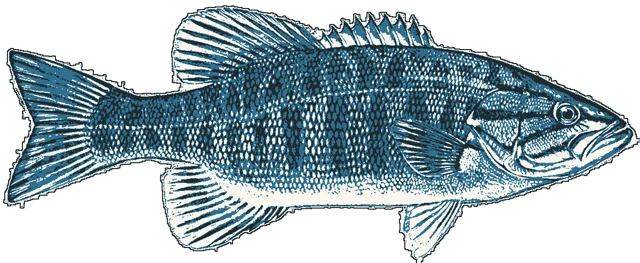
Smallmouth bass
Micropterus dolomieu · Freshwater
Firm, white and good, often rated above largemouth, but most smallmouth are released by custom and the flesh has a slight 'fishy' edge some anglers dislike.
- Tastes
- mild, slightly fishy edge, firm, thick white fillets
- Limits
- Heavy regs. WESTERN district 15 daily and in possession, no size limit all year; CENTRAL and EASTERN districts: bass (largemouth and smallmouth) 5 daily and in possession. Exceptions: Yellowstone River from Springdale Bridge FAS to the North Dakota border, Missouri River from Morony Dam to Fort Benton, Tongue River Reservoir, 10 daily; Bighorn Lake, bass 10 daily and 20 in possession; Clark Fork from Thompson Falls Dam to Idaho (Noxon Rapids and Cabinet Gorge reservoirs), largemouth and smallmouth combined 5 daily, and June 15 through July 15 only 1 daily, 22 in minimum; Yellowstone River from the Park boundary to Springdale Bridge FAS, the Shields River and the Bitterroot River from Florence Bridge to its mouth, every smallmouth must be killed, kept, reported within 24 hours and presented to FWP; Placid Lake, no limit, all smallmouth must be killed and presented to FWP; Frenchtown Pond, Horseshoe Lake (near Ferndale) and Upsata Lake, catch-and-release for bass; Seeley Lake, no bass limit; Spring Meadow Lake, 3 bass daily and in possession, none over 10 in. (2026 Fishing Regulations, valid Mar 1, 2026 through end of Feb 2027 (adopted Nov 12, 2024)) Source
- Best months
- Hottest days of midsummer (Montana Outdoors, July-August 2017).
- Where
- Fort Peck Reservoir: Upper Big Dry Arm and the main arm from Gilbert Creek up-lake to Crooked Creek; Yellowstone River; Noxon Rapids Reservoir (bass fishing named in the 2023 angler survey).
- Dahlberg Diver fly
- deer-hair popper fly
- crayfish-imitating crankbaits
- nightcrawlers
- Do not eat (anyone): any fish from the Clark Fork River between the Bitterroot and Flathead rivers.
- Do not eat (anyone): smallmouth bass 14 to 18 in from Bighorn Lake; 18 to 22 in from Noxon Rapids Reservoir.
- Do not eat (anyone), waters not on the chart: smallmouth bass over 15 in.
- Do not eat (women of childbearing age and children): smallmouth bass 10 to 18 in from Cabinet Gorge Reservoir; 14 to 18 in from Noxon Rapids Reservoir.
- Limit, meals a month (women of childbearing age and children/everyone else): Bighorn Lake 1/2 at 10 to 14 in; Cabinet Gorge Reservoir none/1 at 10 to 18 in; Noxon Rapids Reservoir 1/2 at 10 to 14 in and none/1 at 14 to 18 in; Thompson Falls Reservoir 2/5 at 10 to 14 in; Tongue River Reservoir 4/8 at 6 to 10 in and 2/4 at 10 to 14 in; Yellowstone River (Clarks Fork to Bighorn River) 2/4 at 10 to 14 in.
Meal limits and other waters (4)
- Limit (everyone), waters not on the chart: 1 meal a month at 13 to 15 in, 1 meal a week at 11 to 13 in and 2 meals a week under 11 in.
- Flathead Reservation meal limits are in the eating advice on this page.
- Other listed waters and sizes differ, and a blank on the chart means not tested (FWP chart, April 2026).
- FWP says predatory fish often build up more contaminants.
Goldeye
Hiodon alosoides · Freshwater
MeatEater describes its flesh as soft and bony, and US anglers mostly treat it as a trash fish or cut bait.
Worth a try: Brine and hot-smoke it: smoking firms the soft, bony flesh, which is how Winnipeg goldeye became a delicacy (MeatEater).
- Tastes
- rich, mild when smoked, soft, bony
- Limits
- No limits. No limit listed in the WESTERN, CENTRAL or EASTERN standard tables. (2026 Fishing Regulations, valid Mar 1, 2026 through end of Feb 2027 (adopted Nov 12, 2024)) Source
- Where
- Fort Peck Reservoir uplake from Timber Creek; Missouri River.
- worms
- lures
- FWP's April 2026 chart has no row for goldeye.
- For a fish it does not list, the chart points to its general advice: keep smaller fish, remove the skin and trim the fat, and choose carefully if you are pregnant, might become pregnant, are nursing or have children.
- FWP says contamination increases as fish get larger and older.
Northern pikeminnow
Ptychocheilus oregonensis · also called northern pike minnow · Freshwater
A bounty fish, not a food fish: the Pikeminnow Sport-Reward Program pays anglers per fish to remove them, and very few of the tens of thousands caught each year reach the dinner table (MeatEater).
- Tastes
- bland
- Limits
- No limits. No limit listed in the WESTERN, CENTRAL or EASTERN standard tables. WESTERN district: may be captured and used as dead bait (live fish bait is prohibited there). (2026 Fishing Regulations, valid Mar 1, 2026 through end of Feb 2027 (adopted Nov 12, 2024)) Source
- Where
- Western Montana waters (native range per the Western district bait rules).
- Do not eat (anyone): any fish from the Clark Fork River between the Bitterroot and Flathead rivers.
Meal limits and other waters (3)
- Limit, meals a month (women of childbearing age and children/everyone else): Kootenai River (Libby Dam to Troy) 2/4 at 6 to 10 in and 1/2 at 10 to 14 in; Kootenai River (Troy to Idaho) 3/8 at 10 to 18 in; Lake Koocanusa 3/6 at 10 to 14 in, 2/5 at 14 to 18 in, 1/4 at 18 to 22 in and 2/3 at 22 to 26 in.
- Other listed waters and sizes differ, and a blank on the chart means not tested (FWP chart, April 2026).
- FWP's guide gives no number for waters not on the chart; it says to keep smaller fish and remove the skin and fat.
Redhorse suckers
Moxostoma spp. · also called shorthead redhorse · Freshwater
Seldom caught on hook and line and written off as bony bottom-feeders; MeatEater notes the bones.
Worth a try: Scored and deep-fried, the Y-bones disappear and the firm, sweet flesh is delicious; MeatEater recommends shorthead, golden or silver redhorse for deep-fried sucker balls.
- Tastes
- mild, sweet, firm, white, Y-bones
- Limits
- No limits. No limit listed in the WESTERN, CENTRAL or EASTERN standard tables. (2026 Fishing Regulations, valid Mar 1, 2026 through end of Feb 2027 (adopted Nov 12, 2024)) Source
- Where
- Missouri River between the Marias and Musselshell rivers.
- worms
- Several redhorse species are rare or state-protected; harvest only common species.
- Do not eat (women of childbearing age, pregnant or nursing, and children 6 and under): shorthead redhorse from the Yellowstone River between Bratten Fishing Access Site and Itch-Kep-Pe Park in Columbus (state notice, February 4, 2025, hydrocarbons).
- FWP's April 2026 chart has no row for redhorse.
- For a fish it does not list, the chart points to its general advice: keep smaller fish, remove the skin and trim the fat, and choose carefully if you are pregnant, might become pregnant, are nursing or have children.
- FWP says contamination increases as fish get larger and older.
White sucker
Catostomus commersonii · Freshwater
Suckers have perhaps the worst reputation of the rough fish (MeatEater) and are mostly raised and sold as bait (MN DNR); the many small bones keep most anglers from eating them.
Worth a try: Spring fish from cold water are light and sweet like walleye (MeatEater); score them deeply and fry hard, pickle them to dissolve the bones, or grind into fish cakes.
- Tastes
- light, sweet, firm, white, many small bones
- Limits
- No limits. No limit listed in the WESTERN, CENTRAL or EASTERN standard tables. WESTERN district: white sucker is not on the list of native nongame fish that may be captured for dead bait (large scale sucker, longnose sucker, northern pikeminnow, peamouth chub, redside shiner, longnose dace). (2026 Fishing Regulations, valid Mar 1, 2026 through end of Feb 2027 (adopted Nov 12, 2024)) Source
- nightcrawlers drifted on the bottom
- worms
- spearing/netting where legal
- Do not eat (anyone): any fish from the Clark Fork River between the Bitterroot and Flathead rivers.
- Do not eat (anyone): largescale sucker 10 to 18 in from the Fifth Street pond at Libby (the chart names no white sucker there).
Meal limits and other waters (3)
- Limit, meals a month (women of childbearing age and children/everyone else): Missouri River upstream of Black Eagle Dam 2/4 at 10 to 14 in and 3/6 at 14 to 18 in; Missouri River downstream of Black Eagle Dam 3/7 at 10 to 14 in and 4/8 at 14 to 18 in.
- Other listed waters and sizes differ, and a blank on the chart means not tested (FWP chart, April 2026).
- FWP's guide gives no number for waters not on the chart; it says to keep smaller fish and remove the skin and fat.
Bull trout
Salvelinus confluentus · Freshwater
Federally threatened; in most waters it cannot be fished for or kept, and incidental catches must be released in the water.
- Limits
- No harvest. Closed to angling for bull trout in the Western district standard rules, and all bull trout must be released with no delay, except three waters that need a free Bull Trout Catch Card (pick one area, Lake Koocanusa or Hungry Horse Reservoir with the South Fork Flathead River). Hungry Horse Reservoir (dam to Crossover Boat Ramp): 1 bull trout per license year, third Saturday in May through Aug 15, with a Hungry Horse/South Fork Flathead permit validation on the fishing license; catch-and-release the rest of the year. Lake Koocanusa: catch-and-release only, no harvest. South Fork Flathead River: catch-and-release only, July 1 through July 31. No intentional bull trout angling anywhere else, including the Kootenai River and tributaries of the South Fork Flathead. (2026 Fishing Regulations, valid Mar 1, 2026 through end of Feb 2027 (adopted Nov 12, 2024)) Source
- Best months
- Hungry Horse Reservoir harvest: third Saturday in May to Aug 15. South Fork Flathead River catch-and-release: July 1-31.
- Where
- Hungry Horse Reservoir, Lake Koocanusa and part of the South Fork Flathead River only.
- Do not eat (anyone): any fish from the Clark Fork River between the Bitterroot and Flathead rivers.
- Bull trout are federally listed as threatened.
- FWP's chart lists bull trout for six waters (mercury, plus arsenic at Lake Koocanusa) but has no row for Hungry Horse Reservoir, the one water where a bull trout can be kept.
Meal limits and other waters (3)
- Limit, meals a month (women of childbearing age and children/everyone else): Kootenai River (Libby Dam to Troy) 4/9 at 14 to 18 in; Lake Koocanusa 5/11 at 10 to 14 in, 5/12 at 14 to 18 in, 2/5 at 18 to 22 in and 2/6 at 22 to 26 in; Lake McDonald 2/5 at 14 to 18 in, 3/7 at 18 to 22 in and 3/6 at 22 to 26 in; St. Mary Lake 1/2 at 22 to 26 in; Swan Lake 3/8 at 10 to 14 in, 1/3 at 14 to 18 in, 1/2 at 18 to 22 in, 1/3 at 22 to 26 in and 1/2 at 26 in and over.
- Other listed waters and sizes differ, and a blank on the chart means not tested (FWP chart, April 2026).
- FWP's guide gives no number for waters not on the chart; it says to keep smaller fish and remove the skin and fat.
Tiger muskie
Esox masquinongy x E. lucius · Freshwater
Managed like muskie, as a trophy fish with high size limits; Maryland DNR says most anglers release them.
- Limits
- Heavy regs. CENTRAL and EASTERN districts: 1 daily and in possession, must be over 40 in. The WESTERN district standard table lists no limit, but Horseshoe Lake (Thompson Chain of Lakes) is 1 daily and in possession, over 40 in. (2026 Fishing Regulations, valid Mar 1, 2026 through end of Feb 2027 (adopted Nov 12, 2024)) Source
- Where
- Lake Josephine in Billings (occasional tiger muskie, FWP ice-fishing page).
- large crankbaits imitating suckers
- bucktail spinners
- large jerkbaits
- FWP's April 2026 chart has no row for tiger muskie.
- For a fish it does not list, the chart points to its general advice: keep smaller fish, remove the skin and trim the fat, and choose carefully if you are pregnant, might become pregnant, are nursing or have children.
- FWP says contamination increases as fish get larger and older.
- FWP says predatory fish often build up more contaminants.
White sturgeon
Acipenser transmontanus · Freshwater
Most white sturgeon must be released: Washington allows no recreational harvest in Willapa Bay, Grays Harbor, Puget Sound or other coastal areas, and other fisheries are slot-limited or catch-and-release.
- Limits
- No harvest. WESTERN district: 0. All waters are closed to angling for sturgeon and captured sturgeon must be released immediately. The standard table says 'sturgeon', not white sturgeon by name. (2026 Fishing Regulations, valid Mar 1, 2026 through end of Feb 2027 (adopted Nov 12, 2024)) Source
- FWP's April 2026 chart has no row for sturgeon.
- For a fish it does not list, the chart points to its general advice: keep smaller fish, remove the skin and trim the fat, and choose carefully if you are pregnant, might become pregnant, are nursing or have children.
- FWP says contamination increases as fish get larger and older.
Where to fish in Montana
Fish named here are what people catch at each spot, not a promise they’re safe to eat. Read the eating advice on the fish’s card before you keep one.
- 1Fort Peck Reservoir reservoir · fresh
FWP calls it Montana's most diverse fishery, with 47 native and introduced species and walleye as the main draw. Eating advice: women of childbearing age and children should not eat walleye 22 to 26 in, or northern pike or lake trout 30 in and over, and everyone else should eat no more than 1 meal a month of those; Chinook salmon 26 in and over are 1 meal a month for women of childbearing age and children and 2 for everyone else (FWP chart, April 2026).
Known for: Walleye, Northern pike, Smallmouth bass, Black crappie, Lake trout
Access: Hell Creek State Park and the boat ramps marked on FWP's Fort Peck guide map.
- 2Fort Peck Dam and Missouri River below the dam river · fresh
Lower Missouri River paddlefish season (green tag) runs May 15 to June 15 below the dam; the Fort Peck Dredge Cuts have an archery-only season July 1 to Aug 31.
Known for: Paddlefish, Shovelnose sturgeon, Sauger, Walleye, Channel catfish
Access: Public fishing areas are limited on this stretch of river; the dam area has posted closures.
- 3Canyon Ferry Lake reservoir · fresh
FWP's fisheries plan calls it consistently the top flatwater fishery in Montana, with rainbow trout, yellow perch, brown trout and walleye among the species of greatest interest. Eating advice: women of childbearing age and children should not eat walleye 30 in and over (everyone else 1 meal a month), and should eat no more than 1 meal a month of walleye 18 to 30 in (everyone else 2) or rainbow trout 18 to 22 in (everyone else 3) (FWP chart, April 2026).
Known for: Walleye, Yellow perch, Rainbow trout, Brown trout
Access: Find fishing access sites on FWP's FishMT map.
- 4Holter Reservoir reservoir · fresh
FWP's ice-fishing page calls it a very popular yellow perch, rainbow trout and ling fishery. Eating advice: women of childbearing age and children should eat no more than 1 meal a month of yellow perch 10 to 14 in (everyone else 4), or 4 of rainbow trout 18 to 22 in (everyone else 9) (FWP chart, April 2026).
Known for: Yellow perch, Rainbow trout, Burbot
Access: Find fishing access sites on FWP's FishMT map.
- 5Flathead Lake lake · fresh
Co-managed by FWP and the Confederated Salish and Kootenai Tribes; FWP's guide covers lake trout, lake whitefish and yellow perch, and every bull trout and cutthroat must be released. Eating advice: nobody should eat lake trout 30 in and over; women of childbearing age and children should not eat lake trout 26 in and over (everyone else 1 meal a month at 26 to 30 in), or on the tribal half any over 25 in if under 14, pregnant, may become pregnant or breastfeeding; lake whitefish 18 to 22 in are 1 meal a month for women of childbearing age and children and 2 for everyone else (FWP chart, April 2026).
Known for: Lake trout, Lake whitefish, Yellow perch
Access: Woods Bay, Yellow Bay, Blue Bay and West Shore State Park ramps; Polson City Docks for shore fishing.
- 6Hungry Horse Reservoir reservoir · fresh
The one water where a bull trout can be kept (1 per license year, third Saturday in May to Aug 15, with a catch card).
Known for: Bull trout
Access: Crossover Boat Ramp area (regulations); catch cards from FWP Region 1 in Kalispell.
- 7Lake Koocanusa reservoir · fresh
Kokanee limit is 50 a day; bull trout are catch-and-release with a free catch card. Eating advice: women of childbearing age and children should eat no more than 2 meals a month of bull trout 18 to 26 in, which must be released here, and 8 of kokanee 6 to 10 in or 9 of kokanee 10 to 14 in (FWP chart, April 2026).
Known for: Kokanee salmon, Bull trout
Access: Find fishing access sites on FWP's FishMT map; the Kootenai River from Libby Dam to Idaho has its own rules.
- 8Georgetown Lake reservoir · fresh
FWP says it fishes well all season through the ice for kokanee and rainbow trout, with opportunities for trophy brook trout. Eating advice: women of childbearing age and children should eat no more than 6 meals a month of brook trout 10 to 18 in and 10 of kokanee 10 to 14 in (FWP chart, April 2026).
Known for: Kokanee salmon, Rainbow trout, Brook trout
Access: Find fishing access sites on FWP's FishMT map. Open the third Saturday in May through March 31; the south and east shoreline only July 1 through March 31 (2026 regulations).
- 9Noxon Rapids Reservoir reservoir · fresh
FWP's fisheries plan says bass are popular from spring through fall and yellow perch, northern pike and walleye are fished year-round; the reservoir hosts up to seven bass tournaments a year. Eating advice: nobody should eat walleye 30 in and over or smallmouth bass 18 to 22 in; women of childbearing age and children should not eat any walleye 6 in and over, smallmouth bass 14 to 22 in or northern pike 26 in and over; everyone else should eat no more than 1 meal a month of walleye 6 to 30 in, smallmouth bass 14 to 18 in or northern pike 26 in and over (FWP chart, April 2026).
Known for: Smallmouth bass, Largemouth bass, Northern pike, Walleye, Yellow perch
Access: Find fishing access sites on FWP's FishMT map.
- 10Tiber Reservoir (Lake Elwell) reservoir · fresh
FWP's fisheries plan says Tiber holds a highly valued walleye fishery; northern pike are managed for harvest with a chance at a trophy. Eating advice: nobody should eat northern pike 30 in and over; women of childbearing age and children should not eat walleye 10 to 26 in or northern pike 22 in and over; everyone else should eat no more than 1 meal a month of walleye 10 to 26 in or northern pike 26 to 30 in (FWP chart, April 2026).
Known for: Walleye, Northern pike
Access: Find fishing access sites on FWP's FishMT map.
- 11Bighorn Lake reservoir · fresh
Its own limits: 6 sauger/walleye daily (only 3 sauger), 10 bass, 6 channel catfish, 2 shovelnose sturgeon. Eating advice: nobody should eat walleye 18 to 30 in, sauger 22 to 26 in or smallmouth bass 14 to 18 in; women of childbearing age and children should not eat walleye 14 to 30 in, sauger 18 to 26 in, smallmouth bass 14 to 18 in or channel catfish 14 to 26 in, and should eat no more than 1 meal a month of burbot 14 to 30 in (FWP chart, April 2026, as Bighorn Reservoir).
Known for: Walleye, Sauger, Channel catfish, Smallmouth bass, Burbot
Access: Find fishing access sites on FWP's FishMT map; live bait fish obtained in Montana may be used only in the Montana portion of the lake.
- 12Tongue River Reservoir reservoir · fresh
FWP calls it a prime ice-fishing destination for walleye, yellow perch, northern pike and crappie. Eating advice: women of childbearing age and children should eat no more than 1 meal a month of walleye 14 to 26 in, 2 of smallmouth bass 10 to 14 in, 2 of white crappie 6 to 10 in or 3 of northern pike 22 to 30 in; everyone else 2 of walleye 22 to 26 in, 4 of smallmouth bass 10 to 14 in, 4 of white crappie 6 to 10 in or 6 of northern pike 22 to 30 in (FWP chart, April 2026).
Known for: Walleye, Northern pike, Black crappie, Smallmouth bass, Channel catfish
Access: Find fishing access sites on FWP's FishMT map.
- 13Clark Canyon Reservoir reservoir · fresh
FWP manages it for dense rainbow trout numbers and trophy rainbows, plus wild brown trout and burbot. Eating advice: women of childbearing age and children should eat no more than 2 meals a month of brown trout 18 to 22 in (everyone else 4), 3 of rainbow trout 18 to 22 in (everyone else 6) or 4 of burbot 18 to 22 in (everyone else 8) (FWP chart, April 2026).
Known for: Burbot, Rainbow trout, Brown trout
Access: Find fishing access sites on FWP's FishMT map.
- 14Hebgen Lake reservoir · fresh
FWP lists it as an ice-fishing water for wild brown and rainbow trout, with the occasional brook and westslope cutthroat trout. Eating advice: women of childbearing age and children should not eat brown trout 22 to 26 in (everyone else 1 meal a month), and should eat no more than 1 meal a month of brown or rainbow trout 14 to 22 in (everyone else 2 of brown trout 18 to 22 in and 3 of rainbow trout 14 to 22 in) (FWP chart, April 2026).
Known for: Rainbow trout, Brown trout
Access: Find fishing access sites on FWP's FishMT map; FWP warns of uneven ice across the big reservoir.
Montana fishing license and rules
- Resident: $31 total for ages 18-61: $21 season fishing license + $8 conservation license + $2 angler AIS Prevention Pass. Resident youth 12-17 and seniors 62+: $4 conservation + $10.50 license (+ $2 AIS pass at 16+), $14.50 to $16.50 total.
- Nonresident: $117.50 total for ages 16 and older: $100 season fishing license + $10 conservation license + $7.50 angler AIS Prevention Pass. Nonresident ages 12-15: $110 ($10 + $100, no AIS fee).
- Nonresident short-term: Nonresident 1-calendar-day license $31.50 total ($14 + $10 conservation + $7.50 AIS pass); 5 consecutive calendar days $73.50 total ($56 + $10 + $7.50). Resident 2-calendar-day license $15 total ($5 + $8 + $2).
- Who needs one: Fishing license required at 12 and older. Anglers 11 and under need no license, conservation license or AIS pass but must follow all limits. The regulations table shows no AIS fee for ages 12-15 (pass required at 16 and older).
- Free fishing days: Mother's Day and Father's Day weekends: May 9-10 and June 20-21 in 2026 (already passed). 2027 dates are not yet in FWP's posted regulations; the law ties them to those two weekends. No fishing license is needed on those weekends; limits and seasons still apply, and paddlefish and bull trout still need conservation, fishing and AIS licenses plus a tag or catch card.
More license details
Season licenses run March 1 through the end of February. A conservation license is needed before any fishing or hunting license, and every person 12 and older using a fishing access site needs one. Paddlefish need a paddlefish tag ($6.50 resident, $15 nonresident; $5 drawing fee for the Upper Missouri white tag) on top of a conservation license, AIS pass and fishing license. Bull trout fishing needs a free catch card (Lake Koocanusa, or Hungry Horse Reservoir and South Fork Flathead River; pick one). A tribal permit is required on waters inside the Flathead Indian Reservation (406-675-2700); non-tribal anglers on Fort Peck Reservation boundary waters follow the limits listed in the Eastern District section. Nonresident watercraft also need a Vessel AIS Prevention Pass ($30 motorized, $10 non-motorized, good through Dec 31) and must be inspected.
Buy a license License types and fees
Fees: 2026 license year (Mar 1, 2026 through Feb 28, 2027); prices from the 2026 Fishing Regulations table (p. 12) and FWP's fishing licenses page, Nov 21, 2026.
- Pick your district first: Western is everything west of the Continental Divide, Central is east of the divide to a boundary line near I-15, Hwy 2, Hwy 87 and I-90, and Eastern is the rest. Read the district standard limits, then the water's exceptions, which replace the standard rule for that water.
- Western District rivers and streams are open the third Saturday in May through Nov. 30 unless the exceptions say otherwise; lakes and reservoirs are open all year, except where an exception closes them (Georgetown Lake is closed from April 1 to the third Saturday in May). Central and Eastern waters are open all year unless the exceptions say otherwise.
- Hoot-owl restrictions: FWP's regulations say drought has led many Montana streams to hoot-owl fishing restrictions (2pm-Midnight) or closures. FWP posts emergency restrictions on its Restrictions and Closures page and at access sites, and the regulations say to check before you go.
- Aquatic invasive species: anglers 16 and older need the angler AIS Prevention Pass ($2 resident, $7.50 nonresident). Stop at every open watercraft inspection station; out-of-state watercraft must be inspected before launching, and failure to stop can bring a fine up to $700. Nonresident boats need a Vessel AIS Prevention Pass ($30 motorized, $10 non-motorized, through Dec 31).
- Bull trout are closed statewide except three waters that need a free catch card, and you may pick only one area: Lake Koocanusa (catch-and-release only) or Hungry Horse Reservoir (1 bull trout per license year, third Saturday in May to Aug 15) with part of the South Fork Flathead River (catch-and-release July 1-31).
- Western District walleye must be killed, kept and presented to FWP, with a report to FWP within 24 hours; the Clark Fork reservoirs downstream of Thompson Falls Dam are exempt. Smallmouth bass caught in the Yellowstone River above Springdale Bridge FAS, the Shields River, the Bitterroot River below Florence Bridge and Placid Lake must also be killed, kept and presented to FWP.
- Paddlefish need a tag, one fish per season, and you fish only the one tag area you choose (white, green, yellow or blue). Every harvested paddlefish must be reported, and harvest closes on 24-hour notice when the 1,000-fish target for the Yellowstone and lower Missouri areas is met.
- No fish may be used as live bait in the Western District, and setlines (unattended lines) are not allowed there. In the Central and Eastern districts whole game fish may not be used as bait, except dead cisco on Fort Peck Reservoir.
- Waters inside the Flathead Indian Reservation (including the south end of Flathead Lake) need a tribal permit; all sturgeon are closed to angling in the Western District, and all waters are closed to fishing for pallid sturgeon.
- Shortnose gar (Eastern District): 3 per season. Anyone bowfishing for them needs a shortnose gar Catch Card, available at the FWP Region 6 office in Glasgow.
Limits here are summaries for convenience, checked on the date shown. The official Montana regulations govern; check them before you keep a fish.
Before you eat it
- Do not eat any fish (anyone): the Clark Fork River from the Bitterroot River to the Flathead River, all species at every size listed (dioxins/furans, PCBs and PFOS), and Snow Creek, a tributary to Carpenter Creek, all species (arsenic and mercury). From FWP's Montana Sport Fish Consumption Guidelines, April 2026, the chart behind the waters and sizes on this page.
- Do not eat (anyone), by length: walleye 18 to 30 in from Bighorn Lake (the chart says Bighorn Reservoir), 22 to 26 in from Cabinet Gorge Reservoir, Lake Frances, Lake Helena or South Sandstone Reservoir, and 30 in and over from Noxon Rapids Reservoir; sauger 22 to 26 in and smallmouth bass 14 to 18 in from Bighorn Lake; smallmouth bass 18 to 22 in from Noxon Rapids Reservoir; northern pike 26 in and over from the Bitterroot River and 30 in and over from Tiber Reservoir; lake trout 30 in and over from Flathead Lake.
- Do not eat (anyone), by length, trout and suckers: brown trout 10 to 14 in from the Firehole River near Madison Junction (Yellowstone Park); rainbow trout 6 to 10 in from Dry Fork Belt Creek near Monarch; cutthroat trout 6 to 10 in from Carpenter Creek near Belt Creek, 10 to 18 in from Lower Willow Creek Reservoir and 14 to 22 in from Silver Creek north of Helena; brook trout 6 to 10 in from Browns Gulch near Rocker; brook trout or largescale sucker 10 to 18 in from the Fifth Street pond at Libby (Libby Ponds).
Do not eat (anyone), waters not on the chart (FWP's guide): walleye over 22 in, smallmouth bass over 15 in, and northern pike and lake trout over 28 in. Smaller ones: walleye 1 meal a … (see the full list)
Do not eat (anyone), waters not on the chart (FWP's guide): walleye over 22 in, smallmouth bass over 15 in, and northern pike and lake trout over 28 in. Smaller ones: walleye 1 meal a month; smallmouth bass 1 a month at 13 to 15 in, 1 a week at 11 to 13 in and 2 a week under 11 in; northern pike 1 a month at 20 to 28 in and 1 a week under 20 in; lake trout 1 a month at 20 to 28 in, 1 a week at 15 to 20 in and 2 a week under 15 in. Brown trout: 1 a month over 20 in, 1 a week at 15 to 20 in and 2 a week under 15 in. Rainbow trout and whitefish: 1 a week over 18 in and 2 a week under 18 in. Perch: 1 a week at 10 to 14 in and 2 a week under 10 in.
- Do not eat (women of childbearing age and children): the chart has do-not-eat sizes for this group at 41 places, named on each fish on this page. They include any walleye 6 in and over from Noxon Rapids Reservoir, walleye 10 to 26 in from Tiber Reservoir and 10 to 22 in from Bynum Reservoir, and sizes at Bighorn Lake, Cabinet Gorge, Canyon Ferry, Flathead Lake, Fort Peck, Fresno, Hebgen, Lake Frances, Nelson, Pishkun and Swan Lake.
- Do not eat (women of childbearing age, including pregnant or nursing, and children 6 and under): shorthead redhorse from the Yellowstone River between Bratten Fishing Access Site and Itch-Kep-Pe Park in Columbus (hydrocarbons; notice from the state's health, environment and fish agencies, February 4, 2025). It lifted the 2023 and 2024 advisories for that river, and the April 2026 chart has no row for redhorse.
- Do not eat (tribal members), Confederated Salish and Kootenai Tribes advisory of June 24, 2025, in place until further notice: any fish from the Clark Fork between the Bitterroot and Flathead rivers, rainbow trout and northern pike from the Bitterroot River and from the Clark Fork between Rock Creek and the Bitterroot, and rainbow trout from the Blackfoot River (PCBs, dioxins and furans).
- Do not eat, Flathead Reservation waters (tribal and FWP regulations, March 2026 to February 2027): lake trout over 36 in (adults); lake trout or northern pike over 25 in and bass over 20 in (under 14, pregnant, may become pregnant or breastfeeding). Where FWP's chart or guide is stricter, as for lake trout 30 in and over from Flathead Lake, follow the stricter line.
Limit, Flathead Reservation waters, 8-ounce meals. Under 14, pregnant, may become pregnant or breastfeeding: lake trout and northern pike 1 a month at 20 to 25 in, 1 a week at 16 to 20 in … (see the full list)
Limit, Flathead Reservation waters, 8-ounce meals. Under 14, pregnant, may become pregnant or breastfeeding: lake trout and northern pike 1 a month at 20 to 25 in, 1 a week at 16 to 20 in and 2 a week at 12 to 16 in; bass 1 a month at 18 to 20 in, 1 a week at 15 to 17 in and 2 a week at 12 to 14 in; lake whitefish 1 a month at 20 to 22 in, 1 a week at 17 to 19 in and 2 a week under 16 in. Other adults: lake trout 1 a month at 28 to 35 in, 1 a week at 24 to 27 in and 2 a week at 18 to 23 in; northern pike 1 a month over 36 in, 1 a week at 28 to 36 in and 2 a week at 26 to 27 in; bass 1 a month over 22 in, 1 a week at 20 to 21 in and 2 a week at 18 to 19 in; lake whitefish 1 a week over 20 in and 2 a week at 18 to 19 in.
- Limit (everyone), Big Spring Creek above the East Fork (PCBs): 4 meals a month of brown trout 14 to 18 in or rainbow trout 10 to 14 in. Bitterroot River (dioxins/furans and PCBs): rainbow trout 14 to 18 in 1 meal a month for women of childbearing age and children and 2 for everyone else; northern pike 18 to 22 in 1 and 3.
- FWP's sport fish consumption guidelines are recommendations, not regulatory standards. Meal limits are by water, species and fish length. A meal is 8 ounces uncooked, or 4 ounces for women of childbearing age and children 6 and under.
- A blank size on the chart means fish of that length have not been analyzed. FWP says contamination increases as fish get larger and older, so keep smaller fish for eating.
- Predatory fish such as lake trout, walleye, smallmouth bass and northern pike often accumulate more contaminants; smaller panfish such as bluegill, crappie, brook trout, yellow perch and smaller rainbow trout usually have low levels.
- Mercury: the guide recommends that women of reproductive age avoid species known to contain high concentrations. Nothing in cooking or cleaning reduces mercury.
- To cut PCBs and dioxins, fillet and skin the fish, cut away fat from the back, sides and belly, and bake, broil or grill it on a rack so the remaining fat drips away.
- PFAS: the state announced 21 new or updated advisories with the April 2026 guidelines (April 24, 2026). The chart lists PFOS, a PFAS chemical, for some fish from the Clark Fork, East Gallatin, Missouri and Yellowstone rivers, Prickly Pear Creek, Fort Peck and Nelson reservoirs and Lake Helena.
- Algae blooms: the state advises avoiding fish from waters with a known or potential harmful algal bloom, particularly if the fish look sickly or sluggish (DEQ and DPHHS fact sheet, 2024). Bloom reports are at HAB.mt.gov.
- Questions: health risks of eating fish, Montana Health and Human Services, 406-417-9848; fish testing, FWP, 406-444-2449.
Local lingo
- ling: the burbot, which the regulations list as 'Burbot (Ling)'.
- mac, mackinaw, laker: lake trout (FWP's Flathead Lake guide).
- kokanee: listed as kokanee salmon in the Western table and with chinook under salmon in the Central and Eastern tables.
- catch card: the free permit for bull trout fishing on Lake Koocanusa and Hungry Horse Reservoir.
- tag colors (white, green, yellow, blue): the four paddlefish areas and seasons.
- FAS: fishing access site, an FWP-owned access point that needs a conservation license.
- hoot-owl: the drought restriction on trout streams, listed as 2pm-Midnight in the regulations.
- ALS number: one of the details FWP may ask for when you report a required catch such as walleye in the Western District.
Questions anglers ask about Montana
What is the most common fish in Montana?
FWP's 2023 Angler Pressure Survey did not count fish by species; it reports the share of trips by the species anglers were fishing for. Rainbow trout led at 18.50% of trips, then brown trout at 12.93%, cutthroat trout at 8.02% and walleye at 6.58%, with another 23.02% of trips listed only as 'trout'. That makes trout the most targeted fish in Montana, but it is a target ranking, not a catch count.
What is the best fish to eat in Montana?
14 of the 32 fish on our Montana board rate Best eating. They include: rainbow trout, brown trout, brook trout, cutthroat trout, golden trout and arctic grayling.
What is the state fish of Montana?
Blackspotted cutthroat trout: Official state fish, MCA 1-1-507 (enacted 1977).
Does Montana have free fishing days?
Mother's Day and Father's Day weekends: May 9-10 and June 20-21 in 2026 (already passed). 2027 dates are not yet in FWP's posted regulations; the law ties them to those two weekends. No fishing license is needed on those weekends; limits and seasons still apply, and paddlefish and bull trout still need conservation, fishing and AIS licenses plus a tag or catch card.
Which Montana fish are better to eat than their reputation?
We give the Worth a try badge to mountain whitefish, northern pike, burbot, freshwater drum, goldeye, common carp, white sucker and redhorse suckers: fish most anglers toss or rate low that eat well when they're cleaned and cooked right. Each card says how.
Neighboring states
Sources
Limits, prices and advisories come from these pages, read on or before Nov 21, 2026. Where a line gives its own date, that’s the date it rests on. Eating advice changes: check the state’s current list. Ratings are national and come from the fish’s own page.
30 sources
- cskt.org northern pike: advisory; rainbow trout: advisory
- cskt.org lake trout: advisory; lake whitefish: advisory; largemouth bass: advisory; northern pike: advisory; smallmouth bass: advisory
- deq.mt.gov redhorse suckers: advisory
- fwp.mt.gov fishing spots; lake trout: baits, months, names; lake whitefish: baits, months, where; northern pikeminnow: names; yellow perch: baits, months, where
- fwp.mt.gov fishing spots
- fwp.mt.gov fishing spots
- fwp.mt.gov fishing spots
- fwp.mt.gov fishing spots
- fwp.mt.gov Chinook salmon: why common (Table 14); Kokanee salmon: why common (Table 14); arctic grayling: why common (Table 14); black crappie: why common (Table 14); broo
- fwp.mt.gov bull trout: regs, months, where; fishing spots
- fwp.mt.gov Kokanee salmon: baits, months, where; arctic grayling: where; cutthroat trout: months, baits; lake trout: months, where; northern pike: baits, months, where; ra
- fwp.mt.gov golden trout: where
- fwp.mt.gov Chinook salmon: advisory; Kokanee salmon: advisory; arctic grayling: advisory; black crappie: advisory; brook trout: advisory; brown trout: advisory; bull trout
- fwp.mt.gov Chinook salmon: regs; Kokanee salmon: regs; arctic grayling: regs; black crappie: regs; brook trout: regs; brown trout: regs; bull trout: regs; burbot: regs; ch
- fwp.mt.gov walleye: baits, where
- fwp.mt.gov Chinook salmon: months, where; black crappie: where; channel catfish: where; fishing spots; freshwater drum: baits, where, names; goldeye: baits, where; lake tr
- fwp.mt.gov brown trout: months
- fwp.mt.gov smallmouth bass: baits; smallmouth bass: months
- fwp.mt.gov burbot: where; channel catfish: baits, months, where; common carp: where; freshwater drum: where; goldeye: baits, where; redhorse suckers: where, names; sauger:
- fwp.mt.gov black crappie: months; sauger: months; shovelnose sturgeon: months
- fwp.mt.gov license fees; license info
- fwp.mt.gov state records
- fwp.mt.gov Kokanee salmon: where; arctic grayling: baits, where; black crappie: baits, where; brook trout: baits, where; brown trout: baits, where; burbot: baits, months,
- fwp.mt.gov catch survey
- fwp.mt.gov freshwater regs
- fwp.mt.gov paddlefish: regs, months, where, tags
- mca.legmt.gov cutthroat trout: names (state fish); state fish
- myfwp.mt.gov where to fish
- ols.fwp.mt.gov license buy
- outsidebozeman.com golden trout: baits; golden trout: months
Illustrations: stencils we made from public-domain art by John J. Baird (Black crappie); Duane Raver, U.S. Fish and Wildlife Service (Brook trout, Channel catfish, Rainbow trout, Yellow perch, Smallmouth bass); U.S. Fish and Wildlife Service (Brown trout, Common carp, Largemouth bass); Hugh McCormick Smith (Walleye); David Starr Jordan (Northern pike), via Wikimedia Commons.
Spotted an error or a rule that changed? Tell us and we will check it against the official source.